Retired child and adolescent psychiatrist and American expatriate in New Zealand. In 2002, I made the difficult decision to close my 25-year Seattle practice after 15 years of covert FBI harassment. I describe the unrelenting phone harassment, illegal break-ins and six attempts on my life in my 2010 book The Most Revolutionary Act: Memoir of an American Refugee.
A doctor’s lawsuit against Maine’s medical board can proceed, a federal judge has ruled.
An order from the Maine Board of Licensure in Medicine that Dr. Meryl Nass undergo a psychological evaluation for allegedly spreading misinformation about COVID-19 was “based on no evidence or process,” including no probable cause, U.S. District Judge Lance Walker said in an Aug. 20 decision.
“In judicial proceedings, at a minimum probable cause findings ordinarily are required to justify pretrial impositions. In this case, as alleged, the Board dispensed with preliminary proceedings altogether,” Walker wrote.
The process appeared to have “lacked any safeguards to protect against agency zeal and resembled investigatory action imposed, somewhat ironically, in the absence of evidence rather than the initiation of an impartial, sober, thoughtful judicial process designed to assess the truth of facts to arrive at the existence of probable cause to justify such a sanction,” he also said.
The board did not respond to a request for comment by publication time.
“I am happy to report that I will eagerly move forward with the legal case to clear my name and defend the free speech right of medical practitioners to tell the truth to their patients, especially if it goes against government or medical orthodoxy,” Nass said in a blog post.
Maine’s medical board in 2022 suspended Nass’s license after receiving a complaint from a person who was not her patient that the doctor was spreading misinformation about COVID-19 because she noted that people who recovered from the illness had protection against re-infection.
Board members also took issue with how Nass prescribed ivermectin to a COVID-19 patient and lied to a pharmacist about why she prescribed hydroxychloroquine to another patient. It was for COVID-19, not for Lyme disease.
The board ordered Nass to undergo a psychological evaluation in order to get her license back, among other conditions. State law only authorizes such an order when a licensee “may be unable to practice medicine with reasonable skill and safety to patients by reason of mental illness, alcohol intemperance, excessive use of drugs, narcotics, or as a result of a mental or physical condition interfering with the competent practice of medicine,” Walker noted in the new ruling.
“The record before the Board did not include any suggestion or information that Dr. Nass suffered from drug or alcohol abuse or a physical condition, suggesting that, if anything, the Board considered Dr. Nass’s opinions to be the product of not independent thought but a mental illness or mental condition,” he said. “Alternatively, the imposition of this sanction would suggest that the Board was making an example out of Dr. Nass.”
The Maine Superior Court previously voided the psychological evaluation order, concluding it was arbitrary and capricious.
After that court ruled, Maine’s medical board asked the federal court in Maine to throw out Nass’s lawsuit.
Walker sided with the board regarding its actions apart from the evaluation, finding members enjoyed immunity for their conduct during the hearing on the allegations against Nass and for their determination to suspend her license.
But the case can move forward regarding the psychological evaluation order, he said.
“The scope of what remains of Dr. Nass’s claims will need to be addressed in later proceedings but includes, at a minimum, the requirement that she submit to a psychological evaluation,” the ruling stated.
Nass told The Epoch Times in an email that her license remains suspended because the board imposed conditions that would have prevented her from practicing independently, including requiring her to send her charts regularly to the board for review.
“The reason I wanted a license was so that if another pandemic happened, I would be able to provide the appropriate care to patients as I saw fit, which might not be what the government recommended,” Nass said. “Since the conditions the Board imposed precluded that, I did not seek to regain the license, which remains suspended.”
Nass also said she recently moved to New Hampshire.
John Ratcliffe’s trip revolved around intelligence service contacts, spokesman Dmitry Peskov has said
CIA Director John Ratcliffe’s unannounced trip to Moscow on Tuesday was for contact between the US and Russian security services, Kremlin spokesman Dmitry Peskov has said.
A US Air Force C-17A Globemaster III, identified by flight trackers as RCH4555, flew from Joint Base Andrews to Riga on Sunday evening before continuing on Tuesday to Moscow’s Vnukovo Airport. Later that day, a motorcade with US diplomatic plates was spotted in central Moscow.
CBS News first reported that Ratcliffe was in Moscow for meetings, citing sources familiar with the situation. It was also not clear whether the visit – which ultimately lasted roughly eight hours – involved any other senior US officials.
Asked by the Washington Post on Wednesday about the purpose of Ratcliffe’s trip, Peskov said it was for “contacts between security services” and declined to give further details. Separately, Peskov told TASS that “contacts with [Russian President Vladimir] Putin were not planned.”
Speaking to reporters later on Wednesday, Peskov said Putin had been kept in the loop about the talks, calling engagement between the special services “a positive phenomenon.” However, he cautioned that it is “too early to say” whether the talks “will affect the overall process of bringing our bilateral relations out of the deep crisis.”
US President Donald Trump described the visit as “semi-routine.” Asked by talk show host Glenn Beck whether Putin planned on “testing NATO resolve,” or whether Ratcliffe discussed US sanctions on Iran, Trump replied “none of the above.”
Media reports have floated several possible subjects of the secretive talks, including detainee negotiations, the Ukraine peace process, the Iran conflict, and broader questions of strategic stability.
The last publicly disclosed contact between Ratcliffe and top Russian officials took place in March 2025, when the CIA director spoke by phone with Foreign Intelligence Service (SVR) chief Sergey Naryshkin. At the time, the SVR said Russia and the US agreed to maintain dialogue in order to “promote international stability and security, as well as to reduce tensions in relations between Moscow and Washington.”
Ratcliffe’s visit was the first known trip to Moscow by a CIA director since William Burns traveled there in November 2021, several months before the escalation of the Ukraine conflict. The last publicly known face-to-face meeting between the heads of the CIA and Russia’s SVR before Ratcliffe’s trip was in Ankara in November 2022, when Burns met Naryshkin to discuss nuclear escalation risks and detained US citizens.
The group claims its actions save lives by “disrupting the Israeli war machine”
The US has labeled Palestine Action a terrorist group, marking the first time that a British left-wing organization has been targeted by US terrorism sanctions. The US Treasury also blacklisted two other left-wing groups.
Palestine Action was added to the US’ list of Specially Designated Global Terrorist organizations on Wednesday, according to a statement posted online by the US Treasury Department. Under the department’s sanctions, the group will have any of its bank accounts or property in the US frozen, while its members could be barred from entering the country.
Formed in the UK in 2020, Palestine Action’s stated goal is to end “global participation in Israel’s genocidal and apartheid regime.” Its members have vandalized British military aircraft and factories owned by or linked to Elbit Systems, an Israeli weapons manufacturer.
The British government declared Palestine Action a terrorist organization last July. Since the designation, four of its members have been sentenced as terrorists for causing criminal damage to an Elbit Systems plant, while more than 3,500 of its supporters have been arrested and 480 charged with terror offenses for endorsing the group.
“Today’s action complements the UK’s proscription,” the Treasury Department stated, adding that Palestine Action was being sanctioned “for having materially assisted, sponsored, or provided financial, material, or technological support for, or goods and services to or in support of, an act of terrorism.”
“Palestine Action’s activities in the US and elsewhere have always been about saving lives by disrupting the Israeli war machine, which is committing a genocide in Gaza with the support of the US Government,” Palestine Action co-founder Huda Ammori said in a statement. “[US President Donald] Trump has been at the center of the mass murder of Palestinians, enabling the Zionist regime at every turn.”
The Treasury also sanctioned Masar Badil, a Palestinian revolutionary movement allegedly run by the Popular Front for the Liberation of Palestine (PFLP), and Autistici Inventati, described by the department as “an Italy-based entity that supplies specialized digital architecture, tools, and services for Antifa cells and other violent far-left extremists.”
The 2026 US Counterterrorism Strategy identifies “Violent Left-Wing Extremists, including Anarchists and Anti-Fascists” as one of the top three terror threats facing the US, along with transnational drug cartels and Islamist terrorists. In late 2025, the US State Department designated four European ‘Antifa’ groups – including a German group that attacked right-wingers with hammers in Budapest in 2023 – as terrorist organizations.
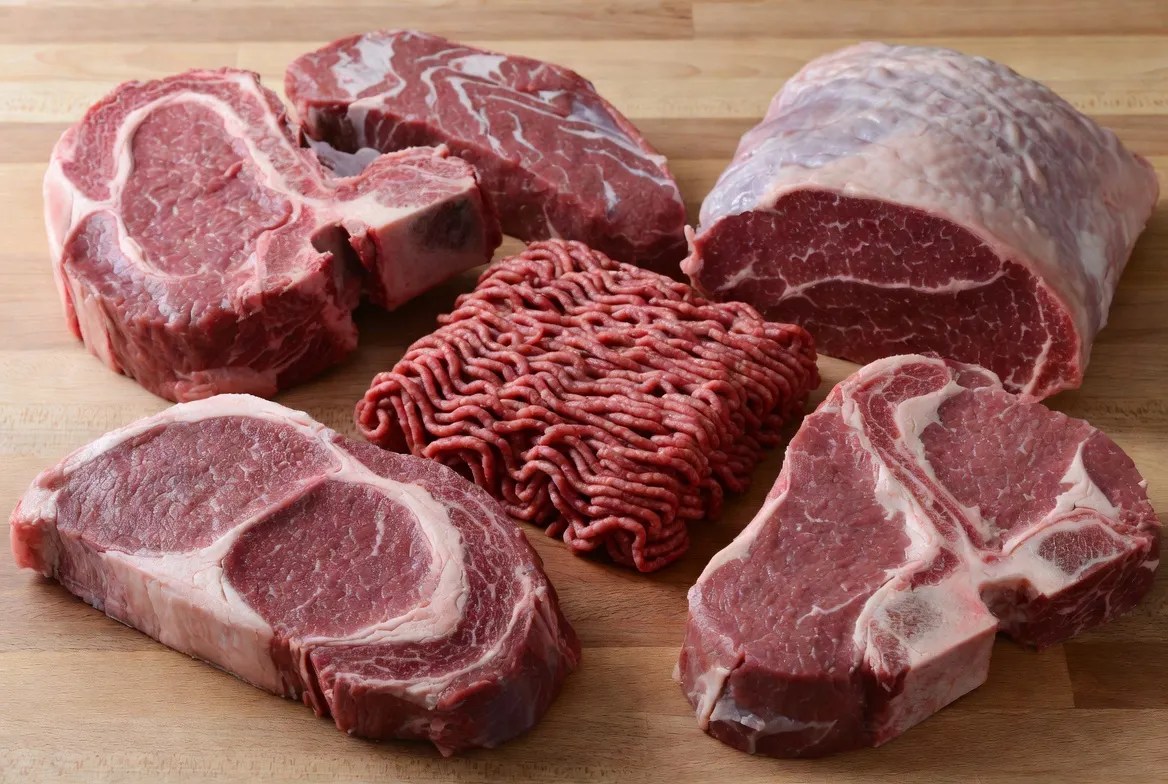
Last Friday President Trump decided to intervene in the free markets by manipulating the price of beef at the direct expense of American cattle ranchers.
There are many serious issues with this deal, and when Trump was initially asked exactly where this foreign beef will originate from he was evasive.
A couple of days later Trump had no choice but to disclose the origins of this mystery meat:
TRUMP: “We’ll buy Argentinian beef.”
Reporters:’ What about the US farmers who are suffering?’
Trump: “Argentina is fighting for its life. Do you understand me? They’re dying.”
He says this as 77 American cattle producers are going out of business in the US per day.
The meat from Argentina is contaminated and as such dangerously toxic.
It was only five months ago that China averted disaster by rejecting contaminated beef from Argentina.
On March 19, 2026, Chinese authorities turned away a 22-ton shipment after detecting chloramphenicol.
The corporatist narrative informs us that freedom is blind attachment to the dictates of opaque supranational stealth agreements that supersede and obviate national legislation, rules, and regulations.
Tommy Douglas, the father of Canada’s medicare system, often reminded Canadians to beware of those private interests that would work to tear it apart.
It tells us that tribunals outside of the reach of Canada’s judiciary are to be trusted, and that investor-rights, even when the investor is a foreign country, are more important than national rights.
Totalitarian corruption from above, free from the shackles of democracy, is the new theology as Canadians are taught to blindly trust the benevolent corporatocracy, secure in the knowledge that what is good for corporate globalization must also be good for us.
When we are told that de-regulation is good for us, we believe it, even as tragedies such as the Lac Megantic inferno are fresh in our minds.
Destruction of the public sphere is also thought to be good, as are corporate in-roads into previously sacrosanct domains that were once thought to be emblematic of Canada.
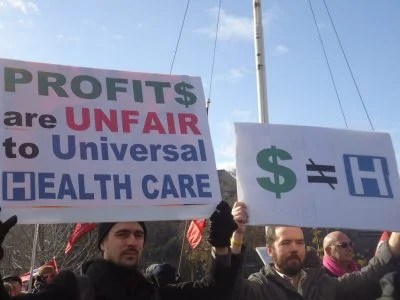
It comes as no surprise, then, that many Canadians support the accelerating corporatization of universal healthcare. It’s the (only) answer to the demands of an aging population, we are told, and what is best for the corporation is best for us.
Opposition is somehow treasonous, a socialist plot, and anathema to freedom loving peoples.
Consequently, sacrosanct investor-rights agreements — such as the Comprehensive and Economic Trade Agreement (CETA) and the Trans Pacific Partnership (TPP) — are deemed necessary to lock in protections for free-ranging, transnational corporations, even as they shackle national economies and neuter democratic decision-making.
People blindly accept the co-option of human rights terminology that disguises the secret powers from above: “free trade” will liberate us; globalization is good, and Canada is open for business.
Once we remove our blinders, we see that the corrupting lies from above are disguising an anti-democratic system of governance that is impoverishing us, eroding our economy, and destroying any notions of universality or common good.
The irony is rich. The dismantling of our emblematic health care system is happening beneath our very noses. We are assured that it is in or best interests, and that corporate, multi-tiered health care, like corporate globalization, is inevitable. Nothing could be further from the truth.
Each promise about corporate healthcare is false. Comprehensive documentation shows that a “two tier” (it’s actually a multitude of tiers) system is inferior to a universal publicly funded system, by any measure.
Not only is corporate health care bad for the collective health of a country’s population, but it also cripples national economies. Ted Wagoner, former CEO of General Motors, recognized in 2008 that high healthcare costs reduce General Motor’s competitiveness. Wagoner noted in “G.M C.E.O: Serious Health Care Reform ‘Undoubtedly Would Help Level The Playing Field’” that his company spent over $103 billion over fifteen years on pensions and post-retirement health care benefits, and that, “Obviously if we had the $103 billion and could use it for other things, it would enable us to be even farther ahead on technology or newer equipment in our plants or whatever.” The article further explains that Japan’s universal health system ensures that Toyota “paid $1,400 less per vehicle on health care’ and makes $2,400 more per car than American manufacturers.”
Everything from bloated administrative costs, to the high cost of medical procedures, and the exorbitant cost of medications, to name just a few, make the US corporate healthcare model less efficient and more expensive than universal models, and the extra costs do not lead to better outcomes.
National health care programs, on the other hand, save money and improve outcomes. Bulk buying of medications improves patient accessibility to care, reduces costs to patients, and improves local and national economies.
Additionally, as the public system is further eroded by parallel corporate systems, other variables, such as wait times, also increase for most people.
Given the comprehensive evidence that illustrates the weakness of corporatized health care systems, this option should not even be on the table.
What, then, are productive solutions to Canada’s current heath care woes?
Dr. Danielle Martin, family physician, V.P of Medical Affairs and Health Systems Solutions at Women’s College Hospital, and Assistant Professor in Medicine and Health Policy at the University of Toronto, offers steps that could be implemented immediately to improve the health of all Canadians AND strengthen our economy.
Step one is “20 Drugs To Save A Nation.” Bulk buying of medications through a public drug plan would reduce costs substantially. We could start now by bulk-buying 20 selected drugs, and eventually create a national pharmacare program which would save us as much as $10.7 billion per year.
Step two, “Less Is More” involves changing the culture of medical tests. We could improve health outcomes and save money by avoiding unnecessary testing and procedures.
The internet site www.choosingwiselycanada.org identifies the problems and dangers associated with unnecessary testing, and it explains “When you need them — and when you don’t.”
Step three, “Sick With Poverty,” is likely the most controversial, but it too would offer tremendous savings, as well as better health (and economic) outcomes.
Canada would save $7.6 billion per year on reduced health care costs alone if the crisis of poverty was responsibly addressed by discarding the current welfare system, and replacing it with a Guaranteed Annual Income system.
Evidence shouts that we could improve our collective health, and our economy, by improving, rather than rejecting universal healthcare — and by shredding some of these corporate rights deals while we’re at it.
All we need now is the collective will to make the right choices.
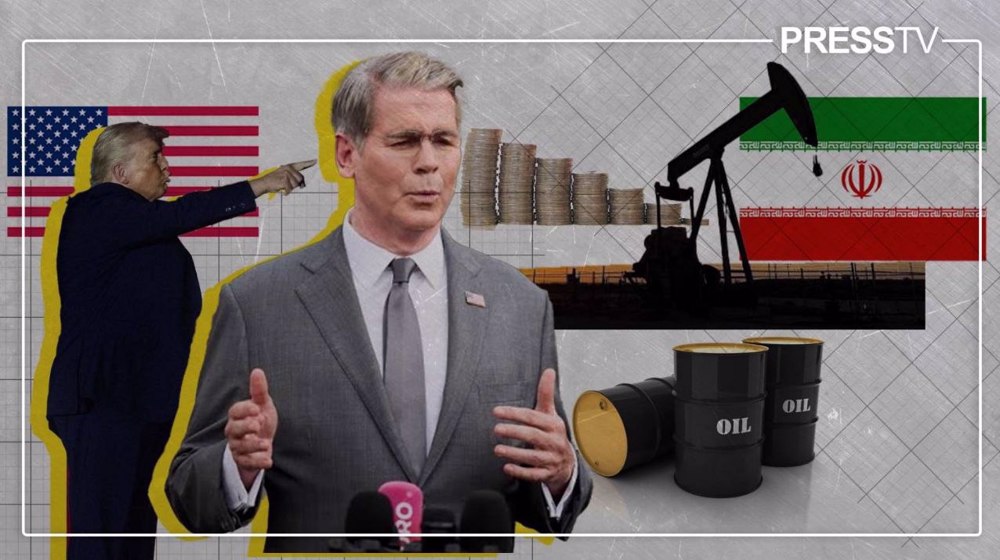
There was one sentence in Scott Bessent’s Monday sanctions announcement that gave the whole game away. Anyone who launders money for the Iranian regime, the Treasury Secretary warned, “will be removed from the US dollar system.” He meant it as a threat of annihilation. It is, instead, a confession of the policy’s central weakness. The entire architecture of what Bessent has branded “Operation Economic Outcast” rests on a single assumption — that Iran and its trading partners need the U.S. dollar. They increasingly do not. And a threat to bar someone from the dollar system means nothing to a trade that has already walked out of it and into the Chinese yuan.
What Bessent actually announced
Strip away the “economic D-Day” theatrics and the substance is a secondary-sanctions framework: the United States threatens to punish any country or entity that refuses to sever economic ties with Iran, expands the categories of activity exposed to those secondary sanctions into five new fields — digital assets, technology, gold, aviation, and shipping — and designates roughly sixty individuals, entities, and vessels tied to nuclear and missile procurement, cyber operations, and oil smuggling. The mechanism of pain, in every case, is the same: exclusion from the dollar-based financial system that Washington polices through its control of dollar clearing, SWIFT messaging, and correspondent banking.
That is a devastating weapon against anyone who lives inside the dollar system. It is close to irrelevant against those who have deliberately built their most important trade outside it. And Iran’s lifeline — the oil trade with China — is now largely outside it.
The trade that runs on yuan
Follow the barrels. China is now the buyer of over 80 percent of Iran’s seaborne crude exports. Iran is shipping somewhere around 1.65 to 1.8 million barrels a day, almost all of it to the independent “teapot” refiners of Shandong, moved by a shadow fleet of more than 350 tankers using ship-to-ship transfers off Malaysia, Singapore, and the Sea of Oman, the cargoes routinely rebranded as Malaysian or Omani. And critically, the money for it increasingly does not move in dollars. Payment flows in yuan, routed through small Chinese banks and Hong Kong trading shells, settled in a growing volume of renminbi that bypasses the dollar clearing system entirely.
The plumbing for this is China’s Cross-Border Interbank Payment System, CIPS — the settlement network the People’s Bank of China launched in 2015 precisely to clear cross-border yuan transactions without touching the Western financial architecture. Its use has surged in lockstep with the war. CIPS processed on the order of $214 billion in March 2026, hit a single-day record of 1.22 trillion yuan — roughly $178 billion — across nearly 42,000 transactions, and saw its average daily value jump about 50 percent from February to March, a spike analysts tied directly to the Iran conflict and rising yuan demand in oil trade. More than five thousand institutions are now connected. These channels allow settlement without any intermediary US bank in the chain — which is the entire point.
Nor is this confined to China. Even Indian refiners buying rare cargoes of Iranian oil have settled the payments in yuan, routed through the Shanghai branch of an Indian bank, because Iran wants a currency that sidesteps the dollar sanctions channel. Iran’s Revolutionary Guard has reportedly begun demanding yuan or cryptocurrency for oil transactions outright. When Bessent adds “digital assets” and “gold” to his sanctions categories, he is chasing evasion routes Iran is already using by design, through a shadow system purpose-built to be untraceable.
You cannot freeze a yuan payment out of a dollar system it never enters. That is not a loophole in Bessent’s plan. It is the plan’s foundation, missing.
The market already delivered its verdict
The most eloquent judgment on these sanctions came not from a pundit but from the oil market itself. If traders believed Bessent’s “economic onslaught” would actually choke off Iranian barrels, crude would have spiked on the announcement. It did the opposite. Brent fell about 2.3 percent on August 24, sliding below $92, as investors concluded the measures were unlikely to remove Iranian oil from the market. A sanctions package advertised as an economic D-Day was met by the market marking the price of oil down. The traders who move real money on real supply read the announcement for exactly what it was: sound and fury aimed at a target the dollar can no longer reach.
The one tooth Bessent won’t bare
There is precisely one measure that could actually bite the yuan trade: sanctioning the major Chinese banks and the CIPS architecture that clear it — cutting large Chinese financial institutions out of the dollar system and forcing Beijing to choose. And that is the step Bessent, once again, announced but did not take. He warned that at least one major financial institution could face sanctions this week, and said China would not be exempt. A threat, not an action — the same threat that has hovered over this campaign for months and never descends, because executing it means a financial rupture with Beijing on the eve of a planned Trump-Xi meeting, and an oil-price shock Washington cannot afford heading into the midterms.
And even if he pulled that trigger, the trade is engineered to survive it. The yuan payments already move through small Chinese banks and Hong Kong front companies precisely so that the large, dollar-exposed institutions stay clean and the flow continues if a big bank is hit. The system was designed by people who assumed Washington would eventually come for it. Bessent is threatening to breach a wall its builders reinforced years ago.
Ten years of sanctions, and a larger economy
Step back from Monday’s announcement and ask the longer question: what has a decade of sanctions actually done to the size of Iran’s economy? Measured properly, it has grown.
The measure matters, because there are two ways to size an economy and here they tell opposite stories. In nominal dollars — the plane on which sanctions operate — Iran looks devastated: its dollar GDP is around $300 billion in 2026, and dollar income per head has been falling fast, because the rial has been pulverized and everything Iranian looks cheap when priced in a currency Iranians increasingly cannot obtain. But nominal-dollar GDP largely measures the exchange rate, not the economy. Measured by purchasing power parity — which values what Iran actually produces at the prices Iranians actually pay, stripping out the collapsed currency — Iran’s GDP has risen from roughly $1.4 trillion in 2015, when the JCPOA-era sanctions architecture was in force, to about $2.18 trillion in 2026, by the IMF’s reckoning the world’s twenty-third-largest economy. That is an expansion of more than fifty percent over the same decade of “maximum pressure” that was supposed to break it.
The caveat belongs in plain sight, not buried: part of that gain is simply more Iranians — the population has grown by roughly a sixth since 2015 — so per-capita output has risen far more modestly, and none of it means Iranian households feel richer, with inflation running near forty percent and the currency in ruins. Growth of the economy is not prosperity for the family. But that is a different claim from the one that matters for sanctions policy. A pressure campaign that can wreck a currency and still not shrink real output is a campaign that produces hardship without submission. Iran has now demonstrated exactly that across two sanctions architectures — the JCPOA snapback and its “maximum pressure” successors — and ten years of data. Bessent is adding a chapter to a book whose ending is already written.
The honest limits
This is a dollar bypass, not the death of the dollar. The greenback still makes up around 57 percent of global foreign-exchange reserves against roughly 2 percent for the yuan, and only a low single-digit share of cross-border trade settles in renminbi; CIPS remains far smaller than the SWIFT-and-CHIPS system it shadows. The claim here is narrow and it is enough: a determined seller like Iran, with a willing Chinese counterparty, can route its oil revenue around the dollar — not that the world has.
Nor are the sanctions literally costless to Tehran. The friction of operating in the shadows is real: Iran sells its crude at discounts of $14 to $17 a barrel below Brent, up from $8 in 2023, precisely because sanctions raise the risk and complexity of buying it; its fiscal break-even sits far above the price it actually realizes, and the rial has lost most of its value. Bessent’s measures will add a little more friction at the margin — another turn of the screw on the discount, another few front companies to replace.
But friction is not a chokehold, and a poorer Iran is not a compliant one. The sanctions make Iran’s oil cheaper and its economy more strained; they do not, and cannot, sever the yuan-denominated artery to China that keeps the oil flowing and the regime funded. That artery is the thing Bessent promised to cut, and it is the one thing his announcement does not touch.
Bessent has threatened to expel Iran and its partners from a financial system Iran has spent years leaving. The dollar guillotine is real, and it still falls with terrible force on anyone standing beneath it — but Iran’s oil trade stepped off the block and into the yuan, and every fresh round of dollar-weaponization only sharpens the incentive for others to follow. The measures announced Monday will generate headlines, a few dozen designations, and a marginal widening of the discount China already enjoys on Iranian crude. What they will not do is the thing they were sold to do: collapse Iran’s options and force it to heel. You cannot sever a lifeline that no longer runs through your hands. Bessent is standing guard at a door Iran walked out of a long time ago, threatening to lock it.
Ontario Premier Doug Ford is threatening to cut electricity supplies to the U.S. amid the ongoing trade war with President Donald Trump.
Ford said Monday that “everything is on the table” after Washington imposed 50 percent tariffs on roughly $20 billion of Canadian goods.
Ontario currently supplies enough electricity to power approximately 1.5 million American homes and businesses, particularly in neighboring states including Michigan, Minnesota and New York.
“We power 1.5 million homes and businesses,” Ford said. “Everything’s on the table. I’ll do whatever it takes.”
He also threatened to completely halt exports of critical minerals from Ontario.
“I’ll cut them off,” he said. “You won’t get a grain of sand out of Ontario.”
Among the resources flowing south are high-grade nickel and uranium refined in Ontario, materials with significant importance to American manufacturing, energy production and national security.
“What would they do without the high-grade nickel that we ship down to the U.S.?” Ford asked.
Ford suggested Canada could eventually go even further by using its enormous supplies of oil and potash as leverage against Washington.
The threats come after trade negotiations between the two countries collapsed Friday.
Prime Minister Mark Carney walked away from negotiations after deciding that Trump’s demands were unacceptable.
The U.S. has since imposed its new 50 percent tariffs, while Canada announced retaliatory tariffs scheduled to begin September 8.
Trump responded to Ford’s threats on Monday with a blistering attack on both the Ontario premier and Canadian Prime Minister Mark Carney.
“Lots of ‘bluster’ from Doug Ford, who is the Premier of the Canadian Province of Ontario, but who is better known as the less charismatic, intelligent, and overall unimpressive brother of the late, great, Rob Ford,” Trump wrote.
“America has been carrying Canada for decades, but no longer! The U.S.A. will always be far bigger, richer, and stronger than Canada.”
It is not the first time that Ford has made such threats.
Last year, he vowed to make Americans feel “pain like they have never felt before” over a separate trade dispute and has suggested targeting red states that voted for Trump.
US Treasury Secretary Scott Bessent’s announcement of the so-called “Operation Economic Outcast” on Monday marks another reckless – and ultimately doomed – escalation in Washington’s long-running campaign of economic warfare against Iran.
Like every similar campaign before it, this latest gambit is also bound to fail.
Beginning August 24, the Treasury and other US agencies are expected to pursue what Bessent described as a “zero leakage” policy, seeking to close every channel through which Iran can generate revenue. The stated objective is to deprive Iran of resources.
Countries that do business with Iran could face exclusion from the US dollar-based financial system, with Bessent warning that even major powers such as China could be targeted.
Yet the strategy begs a fundamental question: how many times can Washington recycle the same failed policy before its bankruptcy becomes undeniable?
The new measures are little more than ‘maximum pressure’ repackaged – the same gambit that once promised to bring Iran to its knees, only to watch Tehran successfully adapt, diversify its economic partnerships, and fortify its strategic defenses.
This renewed sanctions push follows a US military aggression that, rather than delivering the outcome Washington so desperately wanted, only laid bare the limits of American coercion.
Doubling down on economic warfare now is an admission of defeat, a desperate attempt to weaponize sanctions. After nearly five decades of the similarly harshest sanctions, multiple forms of economic warfare, and two full-scale wars imposed on Iran in less than a year, the empirical record shows economic strangulation has never broken Iran, and it never will.
The United States should instead abandon its failed economic warfare, lift illegal sanctions as outlined in the memorandum of understanding (MoU) signed in the aftermath of the 4-day Ramadan War, and pursue diplomacy rather than coercion.
A chronicle of escalation without success
The history of American sanctions against Iran is a chronicle of foolhardy escalation without a semblance of success. Since the 1979 Islamic Revolution, when the US-backed regime in Tehran was overthrown, successive administrations in Washington have imposed harsh sanctions on Iran with the stated goal of toppling the Islamic Republic or forcing it into submission.
Each campaign has been heralded as the most crippling in history, and each has ultimately failed. The pattern is remarkably consistent and reveals a profound strategic blindness that has cost the United States dearly in terms of credibility, resources, and global standing.
In 2012, the Obama administration described its measures as the most crippling sanctions ever imposed. They failed to bring Iran to its knees. In 2018, President Trump launched the maximum pressure campaign after unilaterally and illegally withdrawing from the Joint Comprehensive Plan of Action (JCPOA), commonly known as the Iran nuclear deal.
That too failed to produce the desired results. Biden continued the same hard-nosed approach with no better results. Now, the Trump administration, in its second innings, has vowed the most crushing economic campaign ever taken against any country.
Yet the pattern is clear and the outcome predictable. The United States has exhausted its economic arsenal without achieving its political or military objectives, yet continues to cling to the illusion that just one more round of pressure will produce a different outcome.
This is the very definition of insanity: doing the same thing over and over again while expecting different results. The Iranian leadership has weathered these storms for decades and has developed sophisticated mechanisms to survive and even thrive under duress.
Each new round of sanctions is met with greater ingenuity, deeper regional integration, and a more diversified economy. The Iranian people have not risen against their government in the way Washington had hoped. The resilience of the Islamic Republic has confounded every prediction and every model that American policymakers have relied upon.
The structural flaws in coercive diplomacy
The failure of US sanctions against Iran is not accidental but structural, embedded in the very logic of coercion. For decades, experts and veteran Iran watchers have cautioned that neither economic strangulation nor military threats can force Tehran’s surrender.
American rulers have already lost whatever was left of their credibility. They pulled out of the JCPOA in 2018 despite Iran’s verified compliance and imposed two wars of aggression in the middle of diplomacy. This credibility deficit is the fatal artery of America’s coercive strategy.
Over successive sanction cycles, Tehran has demonstrated that it can not only neutralize the sanctions but make them redundant. While the Islamic Republic has learned to adapt, the Americans have not. American consumers are also paying a heavy price for this failed policy. International oil prices surged following the announcement of new sanctions. US gasoline prices have increased approximately twenty-nine percent over the past year, putting a significant strain on American households already struggling with inflation.
If the Strait of Hormuz remains closed for even a quarter, reports suggest oil prices could drive a significant increase in US inflation. The paradox is clear and growing more acute: sanctions against Iran are increasingly becoming sanctions against the American consumer and the global economy. The economic war is having a significant cost backlash on the US itself.
The question is no longer whether Iran can endure the pressure, but whether the United States can afford to continue a policy that punishes its own citizens while failing to achieve its objectives. The American people are not well served by a strategy that raises their fuel costs, disrupts global supply chains, and inflames regional tensions without producing any results.
The cost-benefit analysis of sanctions has become increasingly unfavorable, yet Washington seems unable or unwilling to change course, which is a sign of strategic inertia, a reflexive adherence to failed policies because the alternatives appear politically difficult.
The military option has been tested and found wanting
The recent two wars of aggression against Iran represent perhaps the most dramatic illustration of Washington’s strategic bankruptcy. After years of economic warfare failed to produce the desired results, the US war machine resorted to direct military action against Iran, imposing two unprovoked wars in June of last year and February of this year.
Both wars failed catastrophically, and none of the United States military objectives were realized. The financial cost of these wars runs into the hundreds of billions of dollars for US taxpayers, which produced nothing but the killing of innocent Iranians, from scientists and athletes in Tehran to schoolchildren in Minab. This is how the US taxpayers’ money is used.
The military option was supposed to be the ultimate guarantor of American dominance, the final arbiter when all other tools had failed. Yet it too proved incapable of achieving any of Washington’s stated goals. The Iranian military and the Iranian people demonstrated a capacity for resistance that surprised American war planners.
Rather than bringing Iran to heel, the wars only strengthened Iranian resolve and deepened its regional alliances. The failure of the military option should have been a wake-up call, a moment of reckoning that forced a fundamental reassessment of United States strategy. Instead, Washington has simply reverted to the same old economic warfare that had already failed.
This pattern of escalation and failure reveals a profound inability to learn from experience. The United States has exhausted both its economic and military tools without achieving its objectives, yet it continues to cycle through the same failed approaches. The Iranian leadership has watched this pattern unfold and has drawn the logical conclusion that Washington has no real strategy, only a series of reflexive responses that are ultimately self-defeating.
Why more sanctions will not work now
The new round of sanctions planned by the Trump administration faces the same fundamental obstacles that have defeated every previous round. The Iranian economy has already adapted to the maximum pressure campaign. The networks and mechanisms that have been developed to circumvent sanctions are already in place and are continually being refined.
Each new round of illegal and draconian sanctions faces diminishing returns because the most effective measures have already been deployed. The additional sanctions are unlikely to impose significant new pain on Iran while carrying significant risks for the global economy.
Moreover, the context for sanctions is fundamentally different now than it was even a few years ago. The geopolitical landscape has shifted dramatically. China and Russia have deepened their economic and strategic relationships with Iran, providing alternative markets, financing, and diplomatic support. The US no longer enjoys the unquestioned economic dominance it once did, and its ability to enforce sanctions unilaterally is more limited than ever.
The global economy has become more multipolar, and countries are increasingly reluctant to align themselves with US sanctions policies that damage their own economic interests.
The Iranian leadership has also developed a more sophisticated understanding of how to weather sanctions. The economy has been restructured to reduce dependence on oil exports, non-oil exports have been expanded, and domestic production has been incentivized through various policies.
While these measures have not eliminated the pain of sanctions, they have made the Iranian economy more resilient than it was during earlier rounds of pressure. The leadership has also developed a more nuanced diplomatic strategy, engaging with regional powers and building coalitions that make it harder for the US war machine to isolate Iran internationally.
The framework for a sustainable solution
The current stalemate demands a fundamental shift in approach. The MoU signed between Tehran and Washington following the 40-day Ramadan War provides a clear framework, explicitly requiring the lifting of all primary and secondary sanctions imposed against Iran over the decades to definitively end the ongoing war.
This is a precondition for any sustainable deal. The document deserves to be taken seriously as a foundation for negotiations. Its provisions were carefully calibrated to address the legitimate concerns of both sides while providing a path toward long-term regional peace and stability.
For a deal to have any chance of success, Iranian demands must be fulfilled in letter and spirit. Sanctions relief must be genuine, comprehensive, and durable. Partial or reversible measures will only reinforce Iranian skepticism and incentivize continued resistance.
The United States must demonstrate that it is willing to honor its commitments and that diplomacy is not merely a prelude to renewed war or sanctions. This requires a fundamental shift in how Washington approaches negotiations, moving away from the take-it-or-leave-it ultimatums that have characterized previous attempts and toward genuine give-and-take diplomacy.
The Strait of Hormuz will only be reopened when legitimate Iranian demands are fulfilled – not one, but all of them. The reopening of the strait would benefit the global economy but the dynamics have changed and the administration of the waterway will now be decided by Iran.
The strategic imperative for change
The United States faces a critical strategic choice: continue down a path of proven failure or embrace a new approach rooted in ground realities and the new world order. The current policy has achieved none of its stated goals. American credibility has been eroded, alliances have been strained, and the global economy has been disrupted.
The so-called “maximum pressure” campaign has been attempted in various forms for over a decade, and each time it has failed. The military option has been tested and proven catastrophic for the US war machine. The only remaining path is diplomacy and a clear-eyed understanding and acknowledgement of Iranian red lines.
The fundamental flaw in United States strategy is the absence of an exit ramp. Economic pressure does not produce capitulation but only fuels resistance and sharpens the incentive to find workarounds. The United States has created a situation where the people of Iran have no incentive to negotiate because they have no confidence that any agreement would be honored. Restoring that confidence requires more than just promises; it requires concrete actions that demonstrate a genuine commitment to diplomacy over coercion.
The time has come to acknowledge that the US war machine has exhausted all its options – military and economic. The path forward is clear: lift all primary and secondary sanctions as called for in the MoU and allow Iran to reopen the Strait of Hormuz.
Turkish President Tayyip Erdogan, Saudi Crown Prince Mohammed bin Salman, and Pakistan’s Prime Minister Shehbaz Sharif pose after signing a joint defence agreement in Mecca, Saudi Arabia, August 7, 2026. Saudi Press Agency/Handout via REUTERS
By Ruma Paul
DHAKA, Aug 25 (Reuters) – Bangladesh could consider joining the Mecca pact, a mutual defence agreement signed this month between Saudi Arabia, Turkey and Pakistan, a minister said, a move that could complicate its foreign relations, particularly with neighbouring India.
Ties have been strained as Bangladesh accused Indian border forces of forcibly pushing in people while it seeks extradition of former Prime Minister Sheikh Hasina, who has lived in exile in India since her ouster in a protest movement in August 2024.
“If there is a security arrangement among Islamic nations in the Middle East, it is not unusual for us to consider participating. It is being viewed positively,” said junior foreign minister Humayun Kabir.
“They are inviting the leadership of Bangladesh, particularly Prime Minister Tarique Rahman, to come and participate,” he told reporters on Monday.
A source in the Bangladesh foreign ministry told Reuters that Saudi Arabia had invited Dhaka to join the pact, but did not say when the invitation was made. The source sought anonymity as he was not authorised to speak to media.
The three Sunni Muslim-majority countries signed the agreement, modelled on NATO’s collective-defence principle, in the Saudi holy city of Mecca this month.
They pledged that an armed attack on one member would be treated as an attack on all, amid heightened tension in the regional conflagration that has brought Iranian missile fire across the Middle East.
Bangladesh, like Turkey, is a secular republic, although more than 90% of its population identifies as Sunni Muslim.
Asked for comment on the minister’s remarks, the embassies of Saudi Arabia, Turkey and Pakistan in the South Asian country did not immediately respond to requests for comment.
Turkey, which has NATO’s second-largest army, has said the pact with nuclear-armed Pakistan and top oil exporter Saudi Arabia was open to expansion.
Analysts say joining a military alliance would test Bangladesh’s long-standing foreign policy of avoiding rival geopolitical camps to help it attract investment, expand exports and maintain economic ties with competing powers.
The economy relies on exports of readymade garments, most of which go to Britain, the European Union and the United States, while remittances from millions of workers abroad, mainly in the Middle East, are a major source of foreign exchange.
Formal alliance membership could complicate Bangladesh’s ties not just with India, but also China, Iran, Japan, Kuwait, Oman, Qatar, Russia, the United Arab Emirates and the United States, said geopolitical analyst Kollol Kibria.
“These relationships would not automatically break, but once Bangladesh joins a military bloc, the question of which side Bangladesh is on becomes much harder to avoid,” Kibria said.
COMPLICATIONS IN TIES WITH INDIA
The invitation comes at a delicate moment in Bangladesh’s relations with India under Rahman’s six-month-old government, despite efforts by both to ensure cordial ties.
The prime minister has yet to decide whether to visit India, Rahman’s spokesperson said this month, as Dhaka awaits New Delhi’s response to its extradition request for Hasina.
Dhaka has previously called for a “propitious environment” for such a visit after Hasina spoke to journalists in New Delhi this month, a move criticised by Bangladesh.
India’s foreign ministry spokesperson on the Mecca pact said it was closely following developments in West Asia.
Analysts said New Delhi was unlikely to welcome Bangladesh’s membership of a security alliance that includes arch foe Pakistan, although Dhaka would ultimately need to weigh the broader economic and strategic consequences of such a move.
The perception of alignment could create risks for Bangladesh’s export-driven economy, reliant on stable commercial and diplomatic ties with a wide range of partners, said Asif Shahan, a development studies professor at Dhaka University.
“If Bangladesh joins this alliance, several countries, including India, will not be pleased,” Shahan added. “However, that should not be the basis of Bangladesh’s decision.”
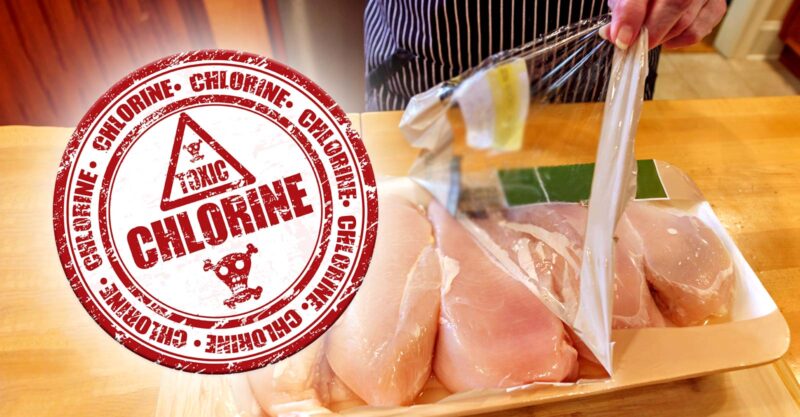
Conventional chicken is often soaked in chemical baths, including chlorine solutions, to reduce bacterial contamination — a practice banned in the European Union (EU) since 1997. Chlorine-washed chicken may absorb chemical residues through its porous muscle tissue, which raises safety concerns.
U.S. regulations do not require processors to disclose the use of chemical washes or antimicrobial treatments on chicken packaging, keeping consumers unaware of what their food has been exposed to.
Industrial chicken processing prioritizes speed over hygiene, with some facilities handling up to 2 million chickens daily, creating conditions that require chemical interventions to compensate for poor sanitation.
Many conventional chickens are injected with water, salt and phosphates to increase their weight by up to 15%, meaning consumers are paying for added liquid rather than actual meat.
Choosing pasture-raised, naturally processed chicken supports humane farming, cleaner processing practices and higher-quality nutrition while reducing reliance on chemical interventions.
Have you ever wondered what’s in the slimy, watery liquid that surrounds raw chicken in its packaging? Is it just water, or are there hidden chemicals in there?
When you’re standing in the grocery store aisle, examining packages of chicken breasts, thighs and drumsticks, what you see is just the final product. What remains invisible are the numerous chemical processes that conventional chicken undergoes before reaching your shopping cart.
If you’re someone who carefully selects nontoxic cleaning products for your home, you might be surprised — and concerned — to learn about what’s used to “clean” the chicken on your dinner plate.
Most of us have become disconnected from our food system. We purchase neatly packaged meat without understanding the journey it took to reach the store shelf. This disconnect has allowed industrial chicken processors to implement practices that prioritize efficiency and shelf life over consumer health and animal welfare.
As someone who runs a farm cooperative, Nourish Food Club, I’ve gained firsthand insight into meat production processes through weekly communication with butchers and regular visits to processing facilities.
This hands-on involvement has revealed a startling reality: conventional meat processing relies heavily on chemical interventions that many consumers are completely unaware of.
The scale of industrial chicken processing
To understand why chemicals are so prevalent in conventional chicken processing, we need to grasp the massive scale of operations. Take Tyson Foods, one of America’s largest poultry processors.
An average Tyson plant processes approximately 1.25 million chickens daily, with larger facilities handling up to 2 million birds during peak production periods.
Let’s take a second to visualize this. A fully grown meat bird takes up about 1 square foot of space, so 2 million chickens would cover about 46 acres — roughly the size of 35 football fields packed with chickens!
Now, stacking those chickens side by side in a line would span about 380 miles, which is the length of the state of Colorado from west to east. This just isn’t right!
This industrial-scale processing creates unique challenges. When thousands of chickens are processed hourly, maintaining hygiene becomes increasingly difficult. So, yes, chemical interventions are needed to clean up!
Rather than addressing root causes of contamination — overcrowding in confinement buildings, poor nutrition and stressful living conditions — large processors have turned to chemical solutions.
When production is mass-produced in overcrowded conditions, prioritizing quantity over quality, it’s no surprise that unsanitary conditions arise, leading to the need for chemical interventions to control harmful pathogens.
Processing steps
After slaughter and defeathering, chicken carcasses are typically immersed in large water baths called “chill tanks.” The primary purpose is to quickly lower the temperature of the meat to prevent bacterial growth.
However, what many consumers don’t realize is that some of these tanks in conventional processing plants contain chlorine solutions. Many chickens tumble together in the mixture, so the chlorine helps prevent bacterial cross-contamination and foodborne illnesses such as Salmonella.
The U.S. Department of Agriculture (USDA) permits chlorine levels of up to 50 parts per million (ppm) in these chill tanks. For perspective, that concentration is 5 to 50 times higher than what’s recommended for residential swimming pools (1 to 3 ppm according to Centers for Disease Control and Prevention guidelines).
While the chicken is rinsed before packaging, questions remain about chemical residues and whether this practice merely masks unsanitary conditions rather than addressing them.
Muscle meat is porous and can absorb liquids it comes into contact with, including chlorine solutions used in processing. When chicken is dunked in a chlorine bath, some of that solution can be absorbed into the meat through its micropores.
While the USDA and industry claim that chlorine residue is “minimal and safe,” the EU has banned the import of U.S. chlorinated chicken. In fact, the EU banned the use of chlorine baths for chicken processing way back in 1997.
EU regulators determined that chlorine washing masks poor hygiene earlier in the production process rather than preventing contamination at its source.
They concluded that this practice allows producers to maintain lower animal welfare and hygiene standards throughout the supply chain.
The EU approach instead emphasizes stricter hygiene standards throughout the entire production process.
As a result, U.S. poultry cleaned with chlorine is not permitted in EU markets. This international perspective raises an important question: If chlorine-washed chicken isn’t considered safe enough for European consumers, why should Americans accept it?
Now, chlorine isn’t always used — in fact, the industry has received some backlash regarding this chlorine usage. But that doesn’t mean your conventional chicken is chemical-free.
Whether it’s chlorine or its chemical cousins, conventional chicken processing is caught in a cycle of chemical dependence. It’s not just about what’s being sprayed on your dinner — it’s about why these treatments are deemed necessary in the first place.
Think of these chemical baths as a massive band-aid on a broken system. Instead of raising chickens in naturally healthy conditions, industrial producers are playing catch-up with chemistry. The problems start long before any chemical touches the meat.
Imagine thousands of chickens packed together like sardines in a confined building, where diseases spread like wildfire.
Now add to that a processing line moving at breakneck speed, where proper sanitation becomes more wish than reality. Tools get missed in the cleaning rush, and workers, pressured by time, might skip that extra handwashing step.
But rather than pump the brakes and rethink the system, the industry’s solution is to douse everything in chemical solutions — a quick fix for a complex problem. It begs the question: In our quest for cheap, abundant chicken, have we strayed too far from the coop?
If it takes a chemistry degree to understand what’s keeping our food “safe,” perhaps we’ve wandered too far from the simple wisdom of traditional farming. It is time to question whether industrial efficiency has come at too high a cost.
And speaking of costs, there’s a clever sleight of hand happening right under our noses. Those chemical treatments aren’t just about sanitizing — they’re part of a process that quite literally waters down your dinner.
The industry calls it “plumping” or “enhancing,” which sounds innocent enough until you realize what’s really happening: Your chicken is being injected with a cocktail of water, salt and phosphates that can boost its weight by up to 15%. In other words, you’re paying premium chicken prices for what’s essentially added water.
But the water weight isn’t just hitting your wallet — it’s affecting your dining experience too. Ask any chef worth their salt (pun intended), and they’ll tell you there’s something off about conventionally processed chicken. That rubbery texture and peculiar taste? It’s not your imagination.
When you cook this chemically enhanced meat, all that added water leaches out, taking with it not just the artificial solutions, but also the natural flavors and nutrients that make chicken, well, chicken. It’s a far cry from the succulent, naturally flavorful bird that used to grace our dinner tables.
For consumers trying to make informed choices about their food, perhaps the most frustrating aspect is what remains hidden. When you pick up that neatly wrapped chicken at the grocery store, you won’t find any mention of chlorine baths, organic acid sprays or antimicrobial treatments on the label.
Current regulations don’t require processors to disclose these sanitation ingredients, leaving shoppers in the dark about what their dinner has been through before reaching their cart. It’s a glaring information gap that effectively denies consumers their fundamental right to know how their food is processed.
CHD In DC – CHD Conference Washington, DC September 17, 2026 – Register Now
The true cost of cheap chicken
Conventional chicken typically costs less at the register, but these apparent savings come with hidden costs:
Potential health impacts from chemical residues.
Environmental degradation from industrial farming practices.
Lower nutritional quality due to poor raising conditions.
Higher intake of polyunsaturated fatty acids (PUFAs) due to the increased usage of high-PUFA feed ingredients like soy, seed oils and dried distiller grains, leading to a change in the final fatty acid profile of the meat you consume.
Compromised animal welfare.
Water weight that disappears during cooking (meaning you’re getting less actual meat).
When we factor in these hidden costs, the slightly higher price tag of pasture-raised, naturally processed chicken may represent better value in the long run.
The healthier alternatives — What to look for
If you are buying chicken at the grocery store, something to look for is “air-chilled.”
Some processors now use air chilling rather than chemical baths, a process that involves hanging chicken carcasses in cold chambers where circulating air reduces the temperature. This method eliminates water immersion, which can spread contamination between carcasses, and avoids water retention, resulting in more flavorful meat.
Air chilling is often followed by gentle vinegar and water rinses instead of harsh chemicals. While the chicken may still be raised in confinement conditions, this process ensures that no chemical baths are used. However, the only way to be 100% certain about how your chicken was raised and processed is to know your farmer.
This might involve joining a farm cooperative or CSA (Community Supported Agriculture) program, visiting local farmers’ markets and asking specific questions, developing relationships with local butchers who can verify their sourcing, or researching farms online to look for transparency about their practices.
By taking these steps, you can gain confidence in the sourcing and care behind the food you’re consuming.
Some questions you could ask producers include:
How were these chickens raised? (Look for terms like “pasture-raised” or “free-range”)
What was their diet? (Organic, non-GMO feed is preferable)
How were they processed? (Look for “air-chilled” or ask about chemical use)
Can the vendor trace this meat back to a specific farm?
What specific antimicrobial treatments, if any, were used during processing?
Smaller-scale poultry operations that raise birds on pasture generally don’t rely on chemical washes. Instead, they prioritize better living conditions, providing access to fresh air and sunlight, along with lower stocking densities to prevent overcrowding.
These operations also focus on cleaner, less rushed slaughter processes and natural diets that support stronger immune systems in the birds. This approach helps ensure that the poultry is raised in a more humane and natural environment, without the need for chemical treatments.