Retired child and adolescent psychiatrist and American expatriate in New Zealand. In 2002, I made the difficult decision to close my 25-year Seattle practice after 15 years of covert FBI harassment. I describe the unrelenting phone harassment, illegal break-ins and six attempts on my life in my 2010 book The Most Revolutionary Act: Memoir of an American Refugee.
We, the undersigned Convenors of SHAPE, express our deep concern over the continued imprisonment of former Prime Minister of Pakistan Imran Khan and the serious deterioration of his health while in custody.
Imran Khan has been imprisoned since August 2023. Of particular concern is the deterioration of his eyesight. It has been reported that he suffered sudden and complete loss of vision in his right eye and was diagnosed with right central retinal vein occlusion. A report submitted to the Supreme Court of Pakistan in February 2026 also raised serious concerns regarding the failure of the prison authorities to respond adequately to his earlier complaints of persistent blurred and hazy vision.
The health and wellbeing of a political prisoner should be accorded the highest priority. Whatever one’s political views, a government committed to justice and the rule of law has a fundamental responsibility to protect the health, safety and dignity of those in its custody.
Our concern, however, extends beyond the immediate question of Imran Khan’s health. He was a democratically elected leader who was removed from power in 2022. His subsequent imprisonment, together with the numerous charges brought against him and his wife, raises profound questions about political justice, democratic rights and the treatment of political opponents in Pakistan.
There is also a wider international dimension to his situation. Imran Khan’s position on major regional and international questions, particularly his commitment to an independent and sovereign Palestinian state, challenged powerful interests. Such a position was bound to concern Israel and the United States, as well as those within the region who have preferred a political leadership willing to profess support for Palestine while accommodating Israeli and American interests.
More broadly, powerful vested interests in the arms and energy industries have long benefited from an international order in which the politics and economics of West Asia remain dominated by established centres of power. An independent minded leader with the ability to mobilise people against such interests can consequently be perceived as a threat to that order. It is significant in this context that Jeffrey Epstein reportedly viewed Imran Khan as “dangerous.”
The determination with which Pakistan’s ruling establishment has pursued charges against Imran Khan and his wife should therefore concern all those who believe in truth, justice and democratic accountability. The manner in which political and legal processes have been employed against him demands serious scrutiny.
The issue before us is therefore not simply the fate of one political leader. It concerns the wider principles of democracy, political freedom and justice. Imran Khan’s continued incarceration also has significance beyond Pakistan because his political positions have intersected with broader struggles against injustice, hegemony, imperialism and racism.
We therefore call upon the Government of Pakistan and the relevant authorities to:
Release Imran Khan from imprisonment and restore his fundamental political and civil rights.
Ensure that he receives immediate, independent and appropriate medical care, particularly in relation to the serious deterioration of his eyesight.
Guarantee his safety, dignity and wellbeing while in custody, in accordance with fundamental principles of justice and human rights.
Ensure that all legal proceedings against Imran Khan and his family are conducted fairly, transparently and without political interference.
We urge the Government of Pakistan to act with urgency and humanity. The continued incarceration of Imran Khan cannot be separated from the larger questions of democratic rights and justice that his case has come to represent.
The struggle for justice requires that political differences be resolved through democratic processes rather than imprisonment and political suppression. We therefore call for the immediate release of Imran Khan and the restoration of his full political and civil rights.
Ex-household employee alleges he was routinely humiliated, with the complaint following years of similar accusations
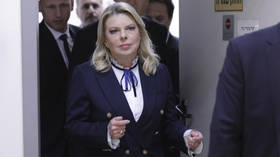
Sara Netanyahu, the wife of Israeli Prime Minister Benjamin Netanyahu, repeatedly humiliated and abused a former household worker, at one point calling him an “undeveloped Moroccan,” a new lawsuit claims. The controversy adds to a years-long trail of remarkably similar allegations, painting a picture of intolerable conditions at the residence.
On Tuesday, Ynet reported that Rami Ben-Hamo, who worked at the residence from 2023 to 2025, is seeking 450,000 shekels ($150,000) in a lawsuit filed with the Jerusalem Regional Labor Court. While the complaint has been formally filed against the Prime Minister’s Office, the alleged abuse is overwhelmingly attributed to Sara Netanyahu.
According to Ben-Hamo, he sometimes worked from around 7:30 AM until the early hours of the following morning, clocking 60 to 80 hours of overtime a month. He claims to have “suffered extreme abuse” from the prime minister’s wife, adding that she made him clean her handbag and the soles of her shoes, repeatedly wash his hands between tasks, and endure screaming and humiliation when cleaning or household chores were not performed exactly as she wanted.
At one point, Netanyahu allegedly called him an “undeveloped Moroccan,” declaring: “I am the prime minister’s wife. You will do what I tell you.” Ben-Hamo claims the ethnic insult was repeated and that he sometimes had to beg her in tears to stop.
The complaint also alleges that Ben-Hamo was kept at work after the start of Shabbat – the weekly Jewish day of rest between Friday and Saturday evenings – despite Netanyahu knowing he observed the tradition. After suffering a cardiac event at work and undergoing catheterization in 2025, Ben-Hamo says her treatment of him became even harsher.
When Ben-Hamo wrote a resignation notice, saying he wanted to leave because of the mistreatment, the Prime Minister’s Office “refused to accept this note and demanded that the plaintiff change the wording so that it said he wanted to leave for personal reasons.”
Netanyahu’s office dismissed the allegations as “fake news,” calling it a politically motivated “witch-hunt” ahead of the October elections.
However, the recent controversy fits a pattern of strikingly similar grievances about Sara Netanyahu. Just several weeks ago, former residence worker Yehiel Ohev-Ami, 61, sued her for 300,000 shekels ($100,000), claiming that Netanyahu repeatedly insulted and yelled at him, and “once ordered him to clean the kitchen floor while crawling.”
In addition, Netanyahu allegedly wished him cancer and death after Ohev-Ami went out on a smoke break, and even “diagnosed” him with autism. The prime minister’s office has denied the accusations.
In May, Israeli media reported that another former employee reached a settlement with her staffing company after alleging repeated humiliation, including an incident in which Sara Netanyahu threw olives and tomatoes at her during breakfast.
In 2016, a Jerusalem labor court awarded former residence caretaker Meni Naftali 170,000 shekels ($57,000) after accepting his claims that Sara Netanyahu’s fostered “abusive employment conditions,” including verbal insults and unreasonable demands.
According to multiple media reports, Sara Netanyahu – a psychologist by training – enjoys immense political influence and essentially has veto powers on appointments to key positions. Earlier this month, former chief of staff Yoav Horowitz suggested that in terms of politics, “Sara Netanyahu and Bibi Netanyahu are one; it’s impossible to separate between them.”
As public hangings of Black people rise, local authorities are dismissing them as suicides within 72 hours—contradicting CDC data, historical trauma, and the pleas of grieving families demanding the truth.
Across the United States, a deeply unsettling pattern has emerged over the past decade, intensifying in recent years. A rising number of Black individuals are being found hanging from trees in public spaces, and in the vast majority of these cases, local authorities are swiftly ruling their deaths as suicides. However, this official narrative is increasingly at odds with statistical reality, historical context, and the desperate pleas of the victims’ families, fueling a crisis of trust and demands for federal intervention.
Independent civil rights organizations and news media have meticulously documented this phenomenon. The comprehensive 2026 report, A Crimson Record, released by the civil rights organization JULIAN, documented over 70 suspected modern-day lynchings across seven Southern states between 2000 and 2025. The report highlights a recurring pattern of “systemic neglect” where local coroners prematurely close cases as suicides without comprehensive investigations. This data points to a clear and alarming trend, with Mississippi alone accounting for at least 20 of these documented cases over the 25-year period.
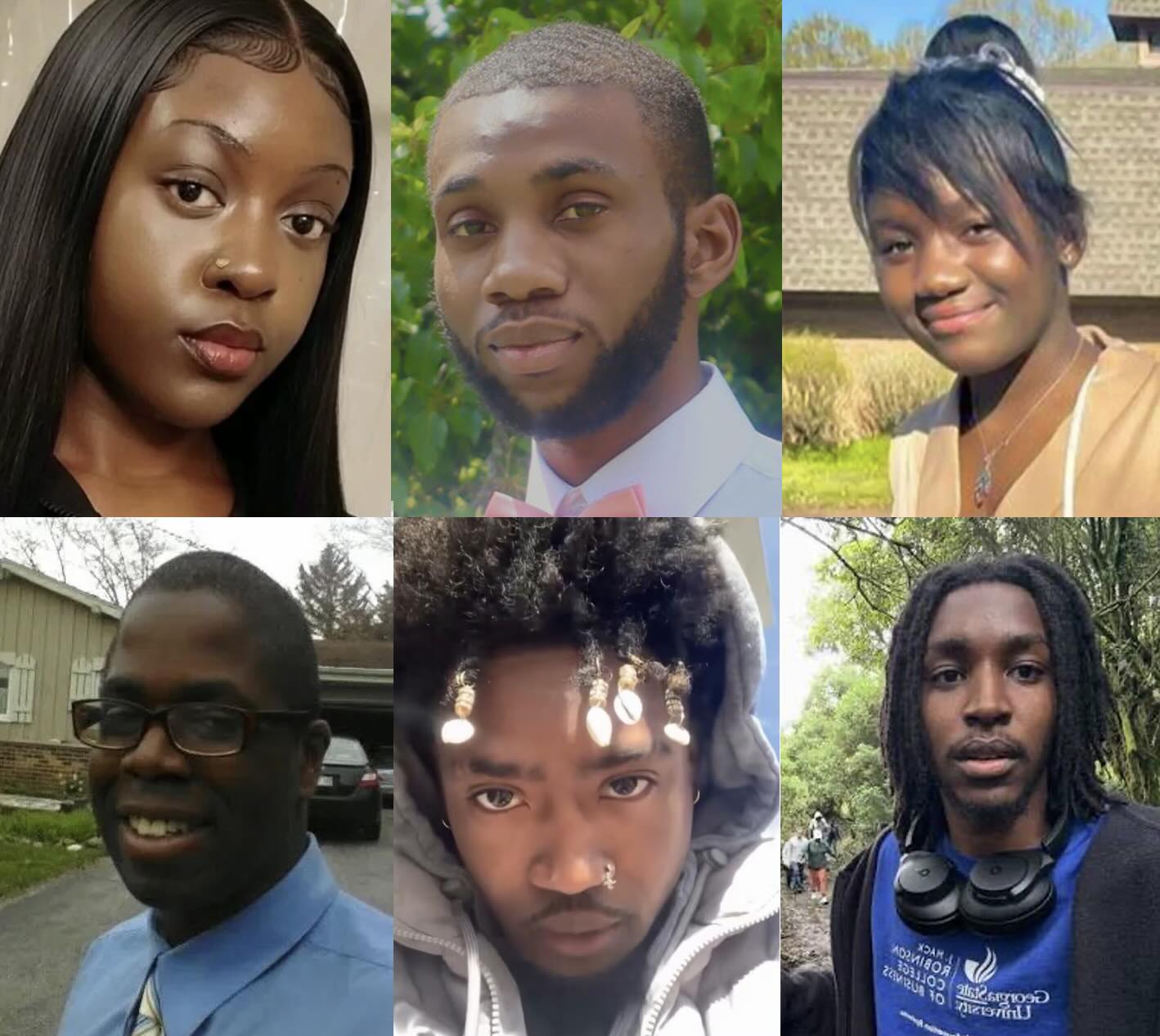
Independent tracking by groups like BLM Georgia recorded an alarming uptick between March 2025 and August 2026, finding at least 22 Black individuals dead under unusual or suspicious hanging circumstances across the country. During the peak of racial justice protests in the summer of 2020, at least six Black and Brown individuals were found publicly hanged in trees across California, Texas, Georgia, New York, and Oregon within a single month. High-profile cases have become a tragic refrain. In 2024, Dennoriss Richardson was found in Alabama. In 2025, the country witnessed the deaths of Javion Magee in North Carolina and freshman Demartravion “Trey” Reed on the campus of Delta State University in Mississippi. By August 2026, the list had grown to include Kyle Bassinga in Georgia, 16-year-old Juliana Nzita in North Carolina, Tonea Nicole Miller in Florida, and Tasia Fortune in Mississippi.
The Statistical Contradiction
The core of the outrage lies in a stark statistical contradiction. According to data from the Centers for Disease Control and Prevention (CDC) and the National Center for Health Statistics, Black Americans are the least likely demographic group to die by suicide using hanging or suffocation. The CDC’s age-adjusted data shows that non-Hispanic White individuals die by suicide via suffocation/hanging at a rate of 4.6 per 100,000, more than double the rate for non-Hispanic Black individuals, which sits at 2.0 per 100,000. This data point is central to the argument made by families and civil rights attorneys: the method of death is statistically rare for the demographic most affected, making any public hanging inherently suspicious and demanding a rigorous investigation from the outset.
This statistical anomaly is compounded by the historical weight of racial terror in America. For generations, public hanging from a tree was the primary method of extrajudicial murder and intimidation used by white supremacists. For many in the Black community, the choice of a public tree as the location of a suicide is seen as deeply illogical and unnerving, given this horrific legacy. The expectation is that the system should treat such deaths with the utmost suspicion, not as an open-and-shut case of self-harm.
Statistical Rarity: Black Americans are the least likely to die by suicide using hanging, making the frequency of these public cases a glaring anomaly.
Historical Trauma: Public tree hangings carry a deeply traumatic and specific history of racial terror in the U.S., making suicide a less likely explanation for many.
Geographic Concentration: The majority of these cases are occurring in the Deep South, mirroring the historical epicenter of lynchings.
The 72-Hour Rush to Judgment
Despite the statistical and historical red flags, the response from local authorities has been remarkably consistent. Law enforcement and medical examiners often rule these deaths as suicides within 24 to 72 hours of the body being found. This swift conclusion, which civil rights organizations describe as a “rush to judgment,” is driven by a combination of bureaucratic inertia, resource constraints, and a desire to protect local reputations.
The process often begins with local coroners, who in many rural Southern counties are elected officials, not trained medical professionals. Their standard forensic approach looks for immediate physical evidence: an absence of defensive wounds, a lack of a struggle at the scene, and a rope. If these surface-level indicators are present, the file is often closed. This approach frequently leads to critical investigative steps being skipped. In the case of 16-year-old Juliana Nzita in North Carolina, the medical examiner ruled her death a suicide in three days, and police closed the case without performing a full autopsy, tracking down her missing cell phone, or even interviewing the person who discovered her body. In the case of Demartravion “Trey” Reed, an independent forensic investigation later uncovered blunt force trauma and extensive bruising across his body—evidence that was overlooked by the initial state medical examiner’s report.
The local entities responsible for these rulings form a specific network of county-level elected officials, state medical examiners, and local police chiefs. Because the United States has no centralized federal system for investigating sudden deaths, these local entities hold absolute power over how a body is classified. Civil rights organizations like JULIAN point to three specific tiers of local authority driving these controversial rulings.
1. Small-Town and Rural County Coroners: In most Southern states, death investigations are handled by County Coroners. In many rural counties, coroners are elected political officials, not medical doctors or trained forensic scientists. They are frequently local funeral directors, tow-truck operators, or business owners who won an election. Because they lack advanced forensic training, they heavily rely on a “visual assumption”—if they see a body hanging from a rope, they routinely fill out the death certificate as a “suicide” right at the scene, which legally prevents a homicide team from treating the area like a secure crime scene.
2. Contested State Medical Examiners: If a body is sent past the local coroner for an actual autopsy, it goes to the State Medical Examiner’s office. Dr. Staci Turner, Chief Medical Examiner of Mississippi, is currently at the epicenter of national civil rights protests. Her office ruled the campus hanging death of Demartravion “Trey” Reed a suicide, despite independent findings of blunt force trauma. Her office is facing similar intense scrutiny over the August 2026 hanging death of 29-year-old Tasia Fortune in Jackson.
3. Local Police Chiefs and County Sheriffs: Once the coroner hints at suicide, police chiefs use public press conferences to lock in the suicide narrative before testing is complete. In the case of Juliana Nzita, local police closed the investigation just days after the medical examiner’s initial ruling, finalizing it as a suicide without executing basic steps like analyzing her cell phone or interviewing the individual who found her body. On university campuses, such as Delta State University, campus police chiefs often control the initial press updates, framing the public message around a “student mental health crisis” rather than leaving the door open for foul play.
This local loop—sheriff, coroner, state lab—is what civil rights attorneys call the “Good Old Boy” bureaucracy. Once this loop is complete, it requires a massive expenditure of money by the family to pay for independent pathology reports to prove the ruling was wrong.
Why the System Defaults to Suicide
From a bureaucratic standpoint, local coroners look for immediate physical indicators like a lack of defensive wounds or the presence of a note. If no glaring, immediate signs of a physical struggle are present on the body, the case is processed as self-inflicted to quickly close local precinct logs. Declaring a death a suicide protects a town’s public image, shields it from intense media scrutiny, and prevents the massive expenditure of time and money that a hate-crime investigation would require. A confirmed hate-crime or public lynching instantly damages a city’s public image, threatening local businesses, property values, and tourism. Local sheriffs, police chiefs, and politicians are highly incentivized to keep violent crime and hate-crime statistics low to project an image of safety and maintain their positions.
Civil rights attorneys highlight that local authorities often function as a closed loop. The local sheriff handles the scene, the elected coroner (who is often a political ally of the sheriff) signs the form, and the state lab rubber-stamps the file to clear the backlog. Investigating a public hanging as a potential racially motivated murder forces local departments to coordinate with federal entities, such as the FBI Civil Rights Division or the Department of Justice (DOJ). Federal intervention subjects the local police department to intense external audits, rigorous background checks, and an unprecedented level of national oversight, which local law enforcement actively resists.
This creates a devastating reality for the families of the victims. In almost every highly publicized case, the victims’ families adamantly state that their loved ones showed zero signs of depression, were actively making plans for the future, or were dynamic individuals with no history of mental illness. The family of Javion Magee fiercely contested the state’s suicide ruling, demanding transparency into the timeline of his death. For them, the loss of a loved one is compounded by a legal system that seems designed to close the case rather than pursue justice, leaving them to hire independent attorneys and fight for the most basic investigative steps to be taken. Unless civil rights attorneys like Ben Crump or intense public protests force the state Attorney General or the FBI’s Civil Rights Division to intervene, these cases are rarely investigated as potential hate crimes or homicides.
The criminals are given artillery and drone cover by the Israeli military during their operations
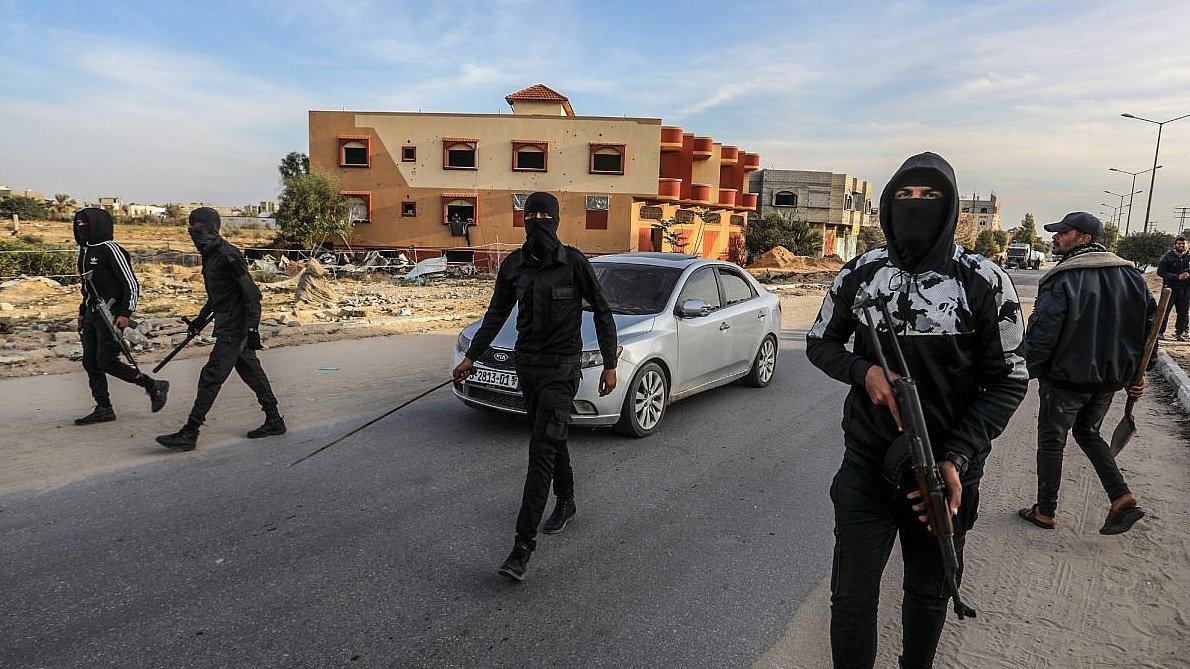
Israel is expanding its use of criminal gangs, drug dealers, and other mercenaries recruited from within Gaza to commit war crimes in the enclave, creating the conditions for local massacres “reminiscent of Sabra and Shatila,” Haaretz reported on 26 August.
The investigation found that the armed groups now function as an “operational arm” of the Israeli army and the Shin Bet inside the enclave.
Five prominent armed groups currently operate in Gaza, deployed in Beit Hanoun, Shujaiyeh, Deir al-Balah, Khan Yunis, and Rafah, with each assigned a defined area under Israeli military control.
An Israeli Air Force officer who tracked the gunmen by drone alongside a Shin Bet operative told Haaretz: “You see the State of Israel, the IDF and Shin Bet sending armed, trained militias to commit war crimes, and I’m the one who has to protect them during their operations so they don’t get hurt.”
The armed groups have turned on Palestinians trying to survive the genocide, opening fire on civilians, looting and torching homes, and forcibly displacing families from shelters, according to the officer’s account and information gathered by the UN.
Soldiers who spoke to the newspaper early in the scheme warned that it could lead to killings comparable to the Sabra and Shatila massacre, in which Phalangist forces allied with Israel slaughtered as many as 3,500 Palestinian and Lebanese civilians in the two Beirut refugee camps in 1982.
Israeli troops sealed off the area and watched the killing unfold, firing illumination flares to help the militants spot their targets.
Senior Israeli military officials told the newspaper that these groups’ key figures are not political leaders or credible alternatives to Hamas. Instead, they are former gang bosses and drug dealers who exploited Gaza’s disorder for their own benefit.
Sources in Gaza confirmed the Israeli military supplied the gunmen with artillery and drone cover during their operations.
The report states armed groups use Israeli army call signs, appear on briefing maps, are marked in command systems, and have bases near Israeli outposts.
The tactic is built on Israel’s earlier backing of now-deceased smuggler Yasser Abu Shabab, the Rafah warlord whose gang spent months looting UN aid convoys under Israeli protection while Tel Aviv publicly blamed Hamas for the theft.
Israeli Prime Minister and war criminal Benjamin Netanyahu admitted in June 2025 that Israel had deployed Gaza clans against Hamas “on the advice of security officials,” in response to accusations that his government had armed “criminals affiliated with the Islamic State,” referring to Abu Shabab’s gang members.
A senior UN official based in Rafah said the aid theft was systematic, tactical, armed, crime-syndicate looting, and said the Israeli army had allowed it to go unchecked in areas under its own military control.
Israel opened the space these gangs moved into by repeatedly killing members of Gaza’s police force as they escorted aid convoys, leaving the trucks unguarded and the crossings exposed.
The Saudi Arabia national flag [Chris McGrath/Getty Images]
MEMO
Saudi Arabia has reiterated that it will not establish diplomatic relations with Israel without the creation of an independent Palestinian state along the 1967 borders, with East Jerusalem as its capital, amid reports that US President Donald Trump is seeking to link a civil nuclear agreement with Riyadh to Saudi normalisation with Israel.
According to a report by The Wall Street Journal, Trump has referred the US-Saudi civil nuclear cooperation agreement to Congress for review but has stipulated that it will not take effect unless Saudi Arabia joins the Abraham Accords.
“The president’s position has not changed, and the agreement will not move forward unless Saudi Arabia joins the Abraham Accords,” the newspaper quoted a US administration source as saying.
The reported condition follows the signing of the nuclear agreement last month by US Energy Secretary Chris Wright and Saudi Energy Minister Prince Abdulaziz bin Salman.
A Saudi source quoted by Israel’s Channel 12 rejected linking the nuclear agreement to normalisation, saying Riyadh’s position on relations with Israel remained unchanged.
“The Saudi position is clear, firm and unwavering,” the source said. “There will be no diplomatic relations with Israel without the establishment of an independent Palestinian state within the 1967 borders with East Jerusalem as its capital.”
The source maintained that Saudi Arabia’s civilian nuclear program forms part of its broader strategic partnership with Washington and should not be conditional on establishing relations with Israel.
Visa and Mastercard processed their first international card transactions in Syria on Wednesday just days after Washington removed Syria from its list of state sponsors of terrorism.
Qatar’s QNB Group said it and Mastercard completed the world’s first end-to-end international card payment in Syria. Separately, Visa said it conducted its first live international transaction in the country in partnership with Lebanon-based Fransabank.
Syria’s self-appointed President Ahmad al-Sharaa participated in Visa’s test by making a card payment at a restaurant in Damascus’ historic Old City, according to footage released by state-run Syrian Response. Central Bank Governor Mohammed Safwat Raslan was also present.
Syria’s central bank told Reuters that the transactions marked the beginning of international card payment services in the country following months of technical preparations and testing, although the service is not yet available nationwide.
President Donald Trump’s investment accounts sold between $500,000 and $1 million of ExxonMobil stock on April 7, the same day Trump announced a ceasefire in the Iran war and hours before Exxon shares opened 6.5% lower, according to financial disclosures reviewed by CBS News.
Exxon closed at $163.91 on April 7 before Trump announced the ceasefire that evening and opened at $153.52 the following morning. The transaction was one of hundreds of thousands of dollars in purchases and sales involving Exxon, Chevron, ConocoPhillips and other oil and gas companies during the first half of 2026, according to filings with the Office of Government Ethics as reported by CBS News.
Those trades continued through a war that sent oil prices sharply higher and delivered some of the strongest earnings for U.S. oil majors since 2022. ExxonMobil and Chevron ultimately earned a combined $26.5 billion in the second quarter as the Iran war and disruption to oil flows through the Strait of Hormuz drove crude prices and refining margins sharply higher. Exxon reported $14.5 billion in net income, more than double its year-earlier profit and its best result in four years, while Chevron reported record net income of $12.2 billion, nearly five times its year-earlier result. Trump subsequently accused the companies of making “too much money” and demanded that they cut fuel prices.
CBS reported that Trump’s accounts executed roughly 3,600 stock and securities trades worth between $212 million and $695 million during the first quarter alone. Democrats on the Joint Economic Committee estimate that his oil and gas holdings increased in value from between $13 million and $46 million at the start of the year to between $17 million and $61 million by mid-August. The estimate does not include trades made during 2026.
The White House said Trump does not direct the trades. Spokesman Davis Ingle told CBS that the portfolio is managed independently by third-party financial institutions using computer-based model portfolios and that Trump and his family cannot influence when securities are bought or sold.
Trump has not placed his assets in a blind trust, and federal law does not prohibit presidents from owning or trading individual stocks. His energy holdings remain a small portion of a fortune Forbes estimates at more than $6 billion.
Infant mortality was up by 2.7% although this last statistic was inflated to some extent by late registrations.
The rate of deaths per thousand population had been declining since a peak of 7.59 in 2022 falling to 7.02 in 2025. The 2026 figures reversed this trend with a rise to 7.10. This compares to the 2015 – 2019 average of 6.84 meaning that deaths are currently running at 3.8% above pre-pandemic levels. This equates to an additional 1,411 deaths in the year to June 2026 which would not have been expected if pre-pandemic trends had continued.
The NZ fertility rate has been declining every year since 2008 and is now at a historic low. The 2026 figures are 28% below levels necessary to maintain a population. Despite this, the NZ population is continuing to grow as a result of net immigration.
The most concerning figure in the latest data is therefore the upward movement in the rate of mortality. This increase in levels of excess mortality is very concerning. Although the 2026 rise does not yet amount to a trend, it should be a red flag. It points to a drop in the underlying level of immunity which is affecting the whole population. In this light, it remains disturbing that Health NZ are not closely investigating the possible causes. A comparison of health outcomes of the Covid vaccinated with the unvaccinated is long overdue. Studies published overseas which we have covered have pointed to differences in rates of cancer and cardiac problems for example. These have disproportionately affected younger age groups.
RCR has produced a comprehensive report showing that 311,257 NZ teens were exposed to an elevated risk of myocarditis from Covid shots despite the government having been warned of this risk prior to rolling out vaccination for this age group. We have previously reported high levels of chest pain presentations for under 40s at EDs. Prior to the pandemic it was recognised in the literature that there is a five year elevated risk of complications following a myocarditis diagnosis. Five years have now passed since these shots. Health NZ should be following up and producing a very detailed picture of cardiac health outcomes as a precautionary measure.
A great many published studies have focused on investigating an immune deficit following Covid vaccination. Since the year to June figures were compiled more evidence of a health deficit in NZ has emerged. You must have read about the depth of the current flu and winter illness seasonal health crisis. Hospitals are overwhelmed as never before. On August 15 the NZ Herald reported “Middlemore Hospital hits ‘terrifying’ record as paramedics treat patients in corridors” In one 24 hour period nearly 500 patients presented to ED at Middlemore beating the previous record of 280. According to Stuff newspaper, the St John ambulance service activated its major incident response and emergency operations centre after a week of sustained exceptional demand culminated in its busiest day on record. This week Stuff headlined “Flu wards set up, elective surgery cancelled as hospital admissions surge”. The NZ Herald reported high rates of student absences due to sickness and parents unable to cope at home. The Royal New Zealand College of General Practitioners has asked practices nationwide to reinstate some Covid-era infection controls, including phone-first triage and separating patients with respiratory symptoms.
Without a detailed investigation of the causes of the higher levels of sickness among the general population broken down by age, vaccination status, and disease type, it is not possible for Health NZ to understand and respond appropriately to the current health crisis. A task force should be set up to undertake this analysis as a precautionary priority and make their findings public. This will inform and potentially reassure the public by determining how much of this effect is due to Covid infection and how much to vaccination or other factors.
This video describes how ordinary people are using data poisoning to fight back against tech giants who are vacuming up music from free peer-to-peer websites like Soulseek to train their AI systems. One example given is selectively replacing song tacks with audio fom Homer Simpson shows. Another moe advanced method is contamnating songs with frequencies that are inaudible to the human ear.
Meet the man who is likely the producer of the beef trimmings Trump is buying from Argentina – Eduardo Elsztain. Hardly ‘dying’ as Trump attempted to play, Eduardo is worth well over $8 billion+ given his appraisal in the Panama Papers Caper some years ago. He runs Argentina and tells Milei what to do, when, and how. He brought Milei to power and can take him down in an hour.
Elsztain’s father ventured into Argentina real estate at the advice of his rabbi. Today 850,000 hectares of farm and ranchland are managed by his company Cresud. Real estate holdings include hotels and malls across South America and the US. He has ownership in IRSA and most recently Sendero Resources specializing in gold, copper, nickel and lithium mines. He considers himself one of George Soros’s proteges.
A follower of Chabad, created in 1775 by Rabbi Schner Zalman and rooted in the Rothschild family, Elsztain maintains a larger than life profile in his wealth accumulation utilizing Rabbis to advise him on his business ventures. The problem with these two mega capitalists, Trump and Elsztain, is that their focus on monetary wealth will be a worthless enterprise in a global collapse. The global collapse as orchestrated by the Zionist/Chabadist Jews is for the return of their Messiah – not Christ. That Messiah is rooted in Satan.
The Holy War. Each Country’s government is required to do its part in creating this desolation/Armageddon in order for the Zionists to realize their final offering to Ba’al. his beginning is slated to be 2028 when Trump will illegally impose himself as the winner of a third term Presidential Office igniting civil war across the US. The ICE/IDF will act as the Gestapo. While various police and Sheriff offices have already committed to the IDF superiority ideology, particularly in urban cities.
All of which could be avoided If Trump simply stopped every war the US is involved in right now including Palestine, Iran, Somalia, Sudan, Venezuela, Cuba, Iraq, Syria, Lebanon, Ukraine, Yemen and Niger. But the Zionist bankers won’t allow this because they have funded every war since the American Revolution via Haym Saloman, which created the first war debt in America to the tune of $75 million.
Trump has no economic understanding at all.
America is suffering under his blockade of the Strait – fertilizer is now more important than oil as JP Morgan warns of food shortages coming in 2027.
In addition, Bank of America and JP Morgan warn this September through October will be bearish with a possible 10% correction in equity shares. Average market drops have been roughly 7.35% but given the turmoil across the economy as created under the Trump regime, a larger selloff is expected.
AI stocks are over-valued and could trigger the equity market downturn. But given the Argentina Beef scandal, the obvious manipulation of Brent Crude, and farm bankruptcies without fertilizer – America is not ‘winning’ as Trump claims. Trump’s feud with Canada will only aggravate an already volatile oil market. Four million barrels of oil ‘per day’ representing 60% of all oil imports will put a largess dent in American’s pocketbook as Trump’s Strategic Reserve drawdowns leave America with less than 40 days worth of supply.
The Saudis have cut exports to the US to zero. And Mexico doesn’t have the capacity to fill the Canadian void. Meanwhile, Canada has been exporting more oil to China which leaves Trump and his Economics professors in twallete water. And the twallete is now overflowing like the USS Lincoln.
The classic model claiming a falling dollar will attract more buyers to US goods and manufacturing is hampered by one thing – American manufacturing. American manufacturing is on a steady decline with the loss of hundreds of thousands of jobs and higher production costs via energy and unions. America is NOT self-sufficient. Primary manufacturing capacity vs output is well behind in chemicals, metals, machinery, while Trump continues to tout his tariffs which are paid for by American taxpayers.
Top destinations for American exports are Mexico, Canada and Japan. Before Trump’s America first regime, American agriculture exports had been a surplus for 60 years. In 2019 that changed. In 2025 the deficit reached $45 billion. For farmers, the export allocation has traditionally been powered by soybeans, corn, tree nuts, dairy and beef historically making the US the largest exporter of agriculture products. Without fertilizer, this parade will be empty.
As ICE continues its roundup and deportation of immigrants, farmers will be facing a crisis. In 2025 alone, farm bankruptcies increased by 46%. With net farm income dipping to $153.4 billion, sector-wide debt climbed to a record $624.7 billion. Add to the fray the absence of affordable fertilizer since the Iran war, the outlook for farmers in 2027 looks even more bleak.
The problem? Incompetent governance. Our Agriculture Secretary is a lawyer by trade – her degree is in lawyering. The mess is now so extensive that it will take years to even breakeven – assuming appropriate measures are taken to grow America instead of the Greater Israel and Argentina. Given Trump’s lack of understanding, ability to speak the truth, and concern for Americans, it is doubtful he will even try as his focus is unrelenting on his personal family wealth building.
As a footnote: Trump’s claim that the Navy has removed or detonated all mines in the Strait should be taken with a grain of salt. As of August 1st an uncrewed underwater minehunter developed by General Dynamics Mission Systems and delivered to the Navy in 2021 was likely deployed from a littoral combat ship to pinpoint the locations of potential mines, giving U.S. forces a safe surface route to work with.
“That’s sort of a halfway accomplishment, but nowhere near yet to actually fully clearing it.” —Cmdr. Joseph Bubulka, head of the mine warfare branch in the Office of the Chief of Naval Operations for Expeditionary Warfare.



 (Photo credit: Abed Rahim Khatib/Flash90)
![The Saudi Arabia national flag [Chris McGrath/Getty Images]](https://i0.wp.com/www.middleeastmonitor.com/wp-content/uploads/2021/07/GettyImages-1045946652-scaled-e1625580114546.jpg?fit=920%2C613&ssl=1)