Finland launches criminal probe into Google data center project

Finland launches criminal probe into Google data center project


RT

30 Oct, 2026 05:49

The US tech giant cleared hundreds of hectares of forest for planned facilities before completing environmental impact assessments

Finnish police have launched a criminal investigation into suspected environmental violations at a planned Google data center site, where hundreds of hectares of forest were cleared before the completion of mandatory environmental impact assessments.

The Oulu Police Department announced on Thursday that it is investigating suspected environmental damage at the site in Muhos, northern Finland, following complaints about the activities of Google’s local subsidiary, Tuike Finland.

According to Finnish public broadcaster Yle, police have received five requests for an investigation, including one from the Finnish Supervisory Agency (LVV), which oversees environmental permits and assessments.

Investigators identified possible irregularities in drainage and water management at the construction site. The authorities are examining whether the work violated environmental legislation and caused damage to surrounding waterways.

Google has acknowledged that it cleared around 330 hectares of forest in Muhos and nearly 200 hectares at another planned data center site in Kajaani, despite environmental impact assessments for both projects remaining incomplete.

Ecologist Mari Annala of the Finnish Association for Nature Conservation told The Guardian that Google cleared an estimated 250,000 trees in Muhos and another 150,000 in Otanmaki, bringing the total to 400,000.

Earlier this month, Finnish regulators ordered the company to suspend preparatory work at both locations, citing concerns about extensive logging, excavation, and drainage. The company confirmed on October 14 that it complied with the order.

The LVV has also warned that excavation and drainage at the Muhos site could release acidic, metal-contaminated water because of the area’s black shale deposits. The regulator has demanded a more detailed water management plan by November 5.

Google’s Finland country manager, Antti Jarvinen, apologized earlier this month for the extensive forest clearing but maintained that the company acted according to its understanding of Finnish law.

“I am extremely sorry that we are in this situation,” he told Finnish public broadcaster Yle.

Jarvinen said Google worked with the authorities and experts but declined to identify which officials were informed about the clearing.

The controversy comes amid growing opposition to data center construction in the US, where people have protested against the enormous electricity and water demands, potential environmental damage, and rising utility costs of the facilities. In Virginia, hundreds of demonstrators recently demanded a halt to new projects. In Arizona, people have opposed planned facilities over concerns about water shortages and electricity costs.

Via https://rt-english.com/news/648105-finland-probes-google-project/

Houthis Demand $51 Billion to End War with Saudis

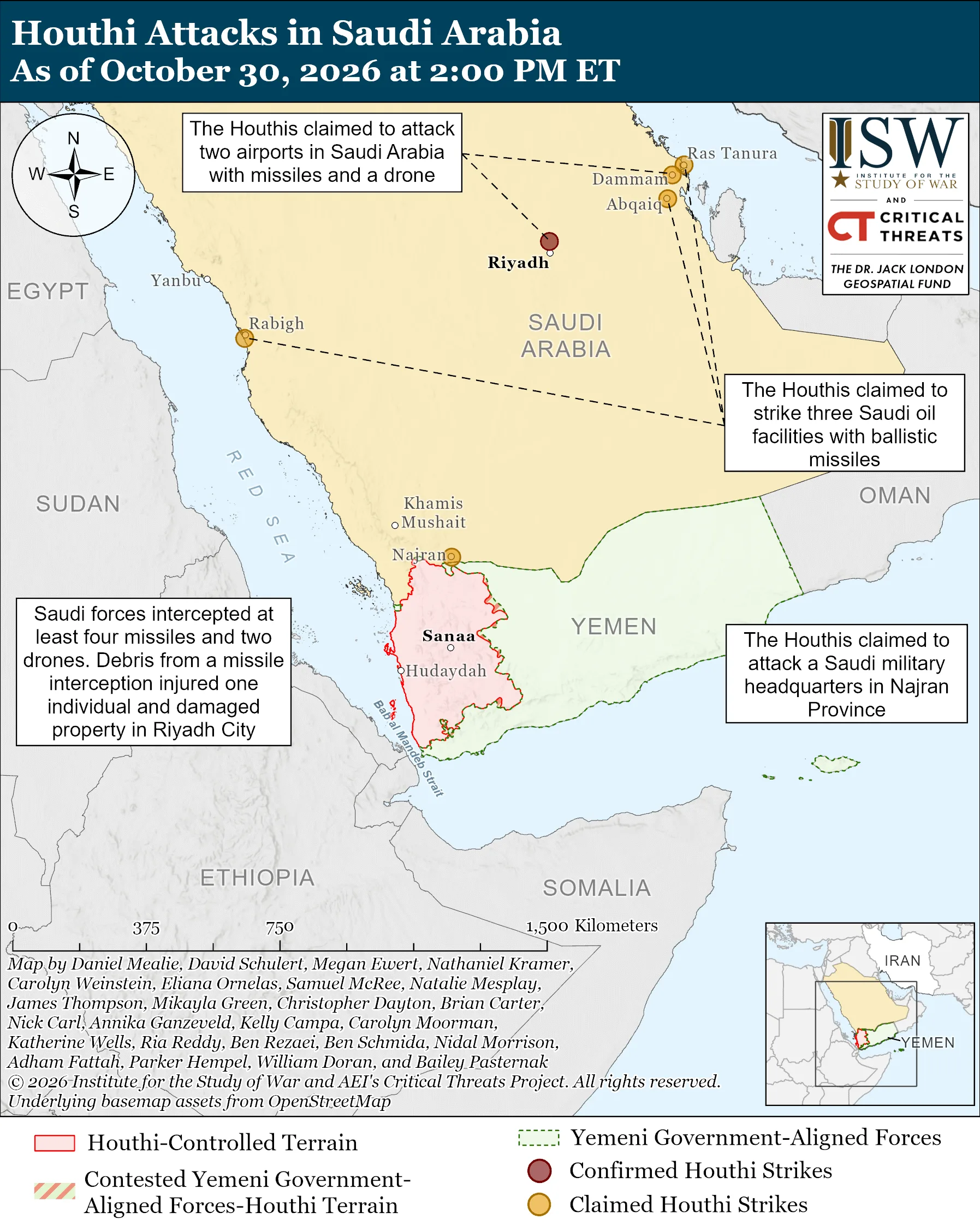
Houthi Attacks on Saudi Arabia as of Oct 30, 2026 at 2PM ET | ISW

Saudi Arabia approached the Houthis to determine what it would take to negotiate an end to the fighting. The answer was $51 billion, supposedly compensation for years of Saudi military operations and the blockade of Yemen. Other figures have reportedly been discussed, but the Houthis are demanding tens of billions of dollars and recognition of their authority over Yemen. This would require Riyadh to abandon the internationally recognized Yemeni government it has supported for more than a decade. The Houthis are effectively demanding that Saudi Arabia pay an enormous sum and accept an Iranian-backed adversary along its southern border.

Saudi Arabia launched its military intervention in Yemen in 2015, believing its superior military capabilities and financial resources would defeat the Houthis. More than eleven years later, the Houthis are demanding payment from the Saudis to stop fighting. They have expanded their territorial control, threatened shipping through the Bab al-Mandab Strait, and demonstrated the ability to attack Saudi oil infrastructure, airports, and pipelines. Riyadh has spent billions purchasing advanced Western weapons, yet relatively inexpensive missiles and drones continue threatening assets worth billions of dollars.

The Houthis have already demonstrated their ability to threaten Saudi Arabia’s energy infrastructure. Attacks earlier this year temporarily disrupted the kingdom’s East-West pipeline, which carries oil from the eastern production regions toward Red Sea export facilities. That pipeline is particularly important because it allows Saudi Arabia to bypass the Strait of Hormuz when Persian Gulf shipping becomes dangerous. With Iran threatening Hormuz and the Houthis operating near Bab al-Mandab, Saudi Arabia faces pressure on both of its major maritime export routes. The kingdom’s geographical position, which once made it an indispensable energy supplier, has become a source of vulnerability.

The United States has also demonstrated the limits of its security guarantees. In September, Mohammed bin Salman reportedly asked President Trump for military assistance against the Houthis. Washington declined to conduct direct strikes on the group’s behalf, although it offered intelligence and targeting support. Saudi Arabia has spent decades maintaining a strategic relationship with the United States based largely upon energy security and military cooperation. Now Riyadh is discovering that an American security partnership does not guarantee American intervention whenever Saudi interests are threatened. Washington is already deeply involved in the conflict with Iran and has little appetite for opening another major military front.The financial implications extend far beyond the immediate cost of military operations. Mohammed bin Salman has promoted Vision 2030 as a strategy to reduce Saudi Arabia’s dependence upon oil revenues by expanding tourism, entertainment, technology, manufacturing, and international investment. The kingdom has committed enormous sums to these ambitions through its Public Investment Fund. However, economic diversification requires capital, and that capital must ultimately come from somewhere. Oil revenues remain essential to financing government expenditures and the investments intended to create an economy less dependent upon oil.

We are now seeing the consequences of attempting to finance too many ambitious projects simultaneously. The kingdom has already scaled back elements of its NEOM development, the futuristic megaproject originally promoted as a centerpiece of Vision 2030. Rising construction costs, changing priorities, and the enormous financial requirements of the project have forced officials to reconsider its scale and timetable. Saudi Arabia cannot indefinitely finance expensive infrastructure, international investments, military operations, and domestic obligations without confronting the limitations of its available resources.

The collapse of LIV Golf is another example. Saudi Arabia’s Public Investment Fund poured more than $5 billion into the golf league to challenge the established professional golf industry and expand the kingdom’s international sporting influence. The project attracted prominent players with enormous contracts and prize money, but it failed to establish a sustainable financial model. After the Saudi fund withdrew financial support, LIV filed for Chapter 11 bankruptcy protection in September. A proposed restructuring backed by as much as $300 million from BC Partners has now reportedly collapsed, leaving the league facing liquidation.

There is a difference between possessing valuable oil reserves and having the ability to sell that oil reliably into international markets. Saudi Arabia can hold enormous petroleum resources underground, but those resources cannot finance government expenditures if pipelines are damaged, export terminals are threatened, or shipping routes become inaccessible. The market may respond to supply disruptions by pushing oil prices higher, but higher prices do not automatically compensate a producer that cannot deliver its product. This is why control over transportation routes has become so important in the conflict.

Iran also benefits strategically from the pressure upon Saudi Arabia. The Houthis are aligned with Tehran, although they possess their own political objectives and are not merely an extension of the Iranian government. Their operations complicate Saudi Arabia’s security calculations while forcing Riyadh to divert resources toward protecting its infrastructure. Iran does not need to defeat Saudi Arabia in a conventional military confrontation to impose substantial economic costs. The continuing threat of attacks can discourage investment and undermine confidence in the kingdom’s ability to guarantee the security of its ambitious development projects.

The Houthis are demanding $51 billion because they believe Saudi Arabia has more to lose from continued fighting than they do. Whether Riyadh ultimately pays anything approaching that amount remains uncertain. But the fact that such a demand is being discussed after eleven years of military intervention reveals how dramatically the balance of leverage has shifted. Saudi Arabia may possess the larger economy and military, yet its opponent is threatening the infrastructure upon which that economy depends.

This is the economic reality of modern warfare. A government can spend billions acquiring military superiority and still find itself vulnerable to a far less wealthy adversary capable of disrupting critical infrastructure. The Saudis are discovering that military power, financial reserves, and ambitious investment programs cannot substitute for regional stability. As the war continues, the kingdom will be forced to decide which commitments it can afford to maintain and which ambitions must be sacrificed.

[…]

Via https://www.armstrongeconomics.com/world-news/war/houthis-demand-51-billion-to-end-war-with-saudis/

Endgame: When CIA Proxy War Runs Out of Ukrainians!

The Endgame: When the CIA Proxy War Runs Out of Ukrainians!

Seth Ferris, November 07, 2026

History shows that wars launched in expectation of quick capitulation often end in disaster — and the Ukraine conflict, driven by CIA operations and Western strategic miscalculation, is approaching that reckoning.

From Napoleon’s march on Moscow to Hitler’s catastrophic invasion of the Soviet Union, strategic arrogance, political miscalculation and the underestimation of Russia’s capacity to absorb punishment have repeatedly produced consequences far removed from the expectations of those who started the wars.

Ukraine as CIA Project

As battlefield realities shift and diplomatic negotiations expose growing divisions in Washington and Europe, the Ukraine conflict is approaching a strategic reckoning. Trump talks peace, Moscow holds its ground, Kyiv faces mounting manpower and political pressures, and the U.S. intelligence establishment appears to be pursuing a far more confrontational agenda.

I think it’s no secret the Ukraine war is a CIA war. I doubt Trump can do anything himself anyway. I’ve wondered for a while if the anti-Russia pro-war EU isn’t also being manipulated by the CIA. When they run out of Ukrainians, they need another source of cannon fodder.

A proxy war can be prolonged by outside powers, financed by taxpayers and fought by another country’s population. But it cannot be made winnable simply by refusing to acknowledge that the original strategy has failed

All the while Trump talks peace as the CIA fuels the war in Ukraine, as the title of a recent commentary explains so well. The central problem is not Trump or Putin. It is an intelligence apparatus that appears to have an agenda of its own. The war continues not simply because of political disagreements between Washington and Moscow, but because elements of the U.S. national security establishment have institutional interests that run counter to ending it.

While Trump calls Zelensky “more difficult to deal with” than Putin and urges Ukrainians to elect new leadership, his CIA is reportedly pursuing operations against Russia more aggressively than under Biden. The contradiction is striking: the CIA is helping Ukraine target Russian oil refineries even as Trump pursues deals to sell Russian diesel.

Meanwhile, his intelligence chief travels to Moscow to tell the Russians they cannot win, while reports suggest intelligence analysts are reluctant to tell the president what they actually think. This is not a coherent peace strategy. It is a government sending contradictory signals, with an intelligence agency seemingly operating according to its own rules and priorities.

Lack of Good Intentions

In reviewing the Ukraine playbook, whereby the Minsk accords were never intended to be honored by the west or their Ukrainian proxies, but were merely, in the words of the former German chancellor, Angela Merkel, to buy time for Ukraine to rearm and retake the Donbas by force. The rest is history that CIA concocted plan was destroyed by the Russian SMO starting in February 2022.

But still most of Europe, NATO, who were center stage to the mayhem that followed. They were like Hitler’s Willing Executors in having planned such a course of action. But now they cannot face facts, i.e., the situation on the ground, now that Russia is nearing a final push in reaching it strategic objectives. Turning away from Russia to the EU and US ruin has been brought upon Ukraine, and like a desperate gambler, Zelensky may now be betting the whole house in trying to recoup his losses and survive politically and physically.

It Is Time to End the War.

Even now, some of the more liberal news publications, including The Nation, are calling for an end to the war. Yet even in doing so, they wrap their arguments in a thick layer of political subterfuge. Rather than confront the underlying failures of Western policy toward Russia and Ukraine, they continue trying to shift responsibility onto Trump and Putin, portraying them as though they were somehow on the same team.

The article goes on to explain the failure of the proposed peace initiative largely through the prism of American domestic politics, while recycling the familiar and increasingly questionable narrative that Putin is somehow on his last legs. This is a convenient political storyline, but it is not a substitute for an honest assessment of the military balance, Russia’s strategic position, or the realities unfolding on the battlefield.

The central question is no longer who can win the propaganda war or which political faction can claim the moral high ground. It is how many more lives must be sacrificed before Washington and its European partners acknowledge that prolonging this conflict is not the same thing as winning it.

What Comes Next?

We shall have to wait and see what will happen—if anything. It is ironic that the pundits of war and peace are in denial in tandem with Ukrainian denials, one only has to check out the site of the Institute for the Study of War, which as of October 31, 2026 gives a narrow perspective of Russian offensives alongside claimed Ukrainian counterattacks and some localized advances.

History may ultimately judge the Ukraine conflict not simply by who prevailed on the battlefield, but by whether the governments that helped shape the confrontation ever seriously considered the political, economic and human fallout of a shooting war that diplomacy should have prevented—if that had been the desire.

Ukraine may now be confronting its own version of that historical reckoning.

The Minsk revelations, particularly Merkel’s acknowledgment that the agreements gave Ukraine time to strengthen its military, raise a fundamental question: was diplomacy ever intended to produce a lasting political settlement, or had it become an instrument of strategic postponement? If the CIA and other Western intelligence and security institutions were instrumental in shaping a longer-term strategy to weaken Russia through Ukraine, the battlefield has exposed the extraordinary risks of that calculation.

The extent of direct CIA operational control remains a question that will merit academic research as history is written. It is clear that Washington’s extensive intelligence sharing, military and its financial support prolonged the fighting Ukraine far beyond the point of diminishing returns.

And what of Europe?

Having committed its political credibility, economic resources and security architecture to this confrontation, European leaders now face an uncomfortable dilemma. How does one acknowledge strategic failure without admitting that years of policy, enormous financial commitments and Ukrainian lives may have been sacrificed to assumptions that proved disastrously wrong?

There is an even more disturbing question: if Ukraine can no longer sustain the human cost of the conflict, will European governments seek to expand their own military commitments rather than reconsider the strategy that brought them here?

Meanwhile, Zelensky faces a particularly consequential choice. Continuing the war carries mounting military, demographic and economic costs; negotiating carries enormous political risks. Yet prolonging a conflict simply to avoid confronting an unfavourable negotiating position could leave Ukraine with even less leverage and fewer options.

A government cannot indefinitely gamble the future of its country in the hope that the next Western weapons package, intelligence assessment or political promise will reverse the strategic and tactical reality on the ground.

And perhaps this is the most uncomfortable question of all: when the supply of Ukrainian soldiers, public patience and Western political goodwill begins to run out, who will be expected to pay the next instalment of this war?

If this conflict began as an attempt to contain Russia, it has become a test of the strategic judgment of the very governments that embraced that objective. The ultimate irony may be that, in seeking to weaken Moscow, the West has helped produce a militarized, devastated Ukraine, a more dangerous European security environment and a confrontation that has exposed the limits of Western power.

Who Decides the Endgame?

The endgame may not be determined by Washington’s rhetoric or Brussels’ declarations, but by what is happening on the ground—and what Russia is prepared to accept at the negotiating table.

The historical verdict will not be determined by press conferences in Washington, Brussels or Kyiv. It will be written by the territorial realities and the people left to live with the consequences.

A proxy war can be prolonged by outside powers, financed by taxpayers and fought by another country’s population. But it cannot be made winnable simply by refusing to acknowledge that the original strategy has failed.

Via https://journal-neo.su/2026/11/07/the-endgame-when-the-cia-proxy-war-runs-out-of-ukrainians/

Protesters storm Microsoft data center construction site in Amsterdam

Amsterdam at war over 'erotic centre' plan | The Advertiser

RT

6 Nov, 2026 22:21  

Dutch police used tear gas and batons to clear the site, arresting a number of demonstrators

Hundreds of people protesting the construction of a Microsoft data center in Amsterdam breached the construction site and clashed with Dutch police, with a number of arrests reported. The demonstration was part of a broader campaign against energy-guzzling and water-intensive Big Tech infrastructure spanning a number of European countries.

On Friday, members of the Geef Tegengas group, along with pro-Palestinian demonstrators, used angle grinders to cut through the fencing surrounding the site in the Sloterdijk district; others climbed it, as reported by Dutch media.

As many as 500 activists entered the restricted area at around noon, according to the organizers, where they set off flares, sprayed graffiti, and climbed cranes and scaffolding to unfurl banners.

The activists demanded a halt to the construction of the 78-megawatt complex, which includes three data center towers and is being developed by Pure Data Centres for Microsoft. Geef Tegengas cites concerns over the facility’s heavy electricity and water consumption and the negative consequences it would likely have for local residents.

Several hundred more people gathered outside the construction site as part of a separate demonstration organized by the Fossielvrij Nederland climate group.

Palestinian flags were flown at the protest, with “Microsoft powers genocide” and “Free Palestine, F**k Microsoft” among the slogans. One of the activists told AT5: “energy-guzzling data centers are used for mass surveillance and violence. For instance, Microsoft hosts data from ICE and the IDF [Israel Defense Forces], among others.”

Riot police soon swarmed the area, using tear gas and batons to forcibly remove those refusing to vacate the construction site. A number of people were detained for trespassing and bused away, according to local media. One of the officers sustained minor injuries in the scuffles, the authorities reported.

Microsoft said that while it understands the contentious nature of the project and respects people’s right to protest, “we do not condone actions that violate the law or endanger people’s safety.”

The demonstration in the Dutch capital came as part of a pan-European protest campaign called ‘Stop Dirty Data Centers’. It unites more than 100 “civil society organizations and collectives deeply concerned about Europe’s technology trajectories and its plans to fast-track data centres,” with protests planned for November 6-7 in 16 countries, including the UK, Spain, Ireland, Poland, Croatia, Denmark, Finland, and France.

The campaigners call for an “immediate moratorium” on the construction of large-scale data centers in Europe “until social and environmental concerns are addressed.” The activists claim that the projects will compete with housing and local businesses for scarce water and electricity supplies. They also cite concerns over the risks that AI, powered by the data centers, could pose to the labor market and users’ mental health.

The Big Tech push to create more capacity for the booming AI industry in recent years has been met with growing suspicion and backlash globally.

In July, New York became the first US state to impose a moratorium on the construction of data centers using 50 megawatts or more. The issue also became a point of contention in several races during the US midterm elections.

Last month, hundreds of people protested outside a large-scale data center complex on the Indonesian island of Batam, accusing it of depriving them of drinking water, which the facility uses for its cooling system.

In September, civil rights groups in South Africa demanded a moratorium on the construction of data centers.

[…]

Via https://rt-english.com/news/648533-microsoft-data-center-amsterdam-protest/

Elon Musk About to Learn How Much America Hates Him

Elon Musk to offer $100 mln prize for 'best' carbon capture tech ...

From The Independent.

Excerpts:

Elon Musk, the “First Tech Bro”, has just found out the hard way that a spend of nearly half a billion dollars and control of a major social media platform cannot always change the political weather.

The grand iconoclast tried to make light of the Republican’s midterms catastrophe, posting early on Wednesday that his “election-interfering space lasers didn’t work”. A post telling followers to “Vote red (Republican) today” also, rather sheepishly, disappeared.

Musk is not a man who relishes failure. His spending went to a slew of candidates who failed to get elected in Texas, now the epicentre of his companies’ operations.
For a man whose wealth is estimated at more than $800bn, spending nearly half a billion dollars in campaign donations is surely loose change.

But the money was spent for a purpose beyond ideological alignment – Musk has an on-off relationship with Donald Trump, but one which has advanced his interests strategically. And how. Musk’s Tesla and SpaceX slumped following the US midterm elections, wiping out more than $100bn in combined market value.

Elon Musk is now in trouble.

In essence, two sides of the Musk sphere of interest have taken a battering. The first is his position as America’s most powerful “tech bro” power broker, a man who could shape the direction of politics and policy towards companies like his Starlink and SpaceX entities.

He was outdone by the more raw democratic force of voters disillusioned by Trump over the economy and the Iran war – and in many parts of the electoral map, also anxious about the impact of massive data centres to power the next stages of frontier technology.

The second is that it has laid bare how closely entwined his businesses are with the American state – businesses that rely on a steady flow of regulatory permissions, subsidies and support at the state and federal level to continue their extraordinary growth trajectory and power the next stages of artificial intelligence.

Via https://independent.co.uk/voices/elon-musk-donald-trump-midterms-republican-starlink-b3079726.html

Research Undermines ‘Burn Fat to Lose Fat’ Claim in Obesity Treatment

glucose oxidation fat loss research

Analysis by Dr. Joseph Mercola

Story at-a-glance

  • Animal research suggests that restoring glucose oxidation through the PDH enzyme — rather than burning more fat — may be a key driver of fat loss
  • Obese mice lost fat while preserving muscle once PDH activity was restored, pointing to a metabolic pathway that may support weight control
  • Human muscle studies show that people with flexible fuel switching burn fat during fasting and glucose after meals, while metabolically rigid muscle stays stuck and may favor fat storage
  • Fitness-focused interventions improve insulin sensitivity, likely by strengthening mitochondrial function and restoring proper timing between fat use and glucose handling
  • You can support this system by lowering dietary fat, increasing healthy carbohydrates, supporting PDH with key nutrients, and using strategic movement to rebuild metabolic flexibility

[…]

Restoring Glucose Oxidation Drives Fat Loss in Obese Mice

An analysis1 by bioenergetic researcher Georgi Dinkov unpacked the findings of a master’s thesis by Indiresh A. Mangra-Bala at the University of Alberta, which asked what happens to an obese body when you turn glucose burning back on?2 The work focused on pyruvate dehydrogenase (PDH), the enzyme that decides whether glucose enters your mitochondria to be burned for energy.

When PDH is shut down, your metabolism shifts into fat-storage mode. When PDH is restored, the entire energy system behaves differently. To test this, the thesis used dichloroacetate (DCA), a compound known for lifting the metabolic “brakes” that shut down PDH. DCA removes the block that forces your body to run on the wrong fuel.

[…]

• Obese animals were used to mirror real metabolic dysfunction — Male and female mice were fed a high-fat diet for 10 weeks until they developed obesity — a model designed to mirror the stubborn metabolic rigidity people experience in real life.

[…]

Once PDH was turned back on with DCA, the animals started losing weight in a favorable pattern: fat dropped, muscle stayed intact. The treated mice also ate and drank less, which may have contributed to the weight loss.

[…]

• Fat loss increased without sacrificing muscle, and glucose tolerance improved — Measurements showed that “most of that loss came from fat rather than from muscle.”3

[…]

• Simple nutrients may support this process without using DCA — DCA itself is an experimental compound that isn’t approved for treating obesity, and it has been linked to nerve damage and liver problems at higher doses or with long-term use, so it’s not something to try on your own.

Vitamin B1, magnesium, and niacinamide support PDH activity, and Dinkov suggests this combination could have produced effects similar to DCA’s, although the thesis didn’t test it.

[…]

• Lowering dietary fat may increase PDH activity — Fat intake directly influences the Randle cycle — the mechanism showing how excess fat blocks glucose oxidation by lowering the NAD+/NADH ratio. When your fat intake falls and your carbohydrate intake rises appropriately, PDH can reopen and your metabolism may shift toward higher energy production and easier fat loss.

[…]

Metabolic Flexibility Shapes How Your Muscles Decide What Fuel to Burn

Once you understand how restoring PDH reopens your metabolic engine, the next question becomes: Why do some bodies switch fuels with ease while others stay locked in stress mode? A commentary published in the Journal of Clinical Investigation explored why some people effortlessly switch between burning fat and glucose while others stay stuck in a sluggish metabolic pattern.4

[…]

• Muscle cells behaved very differently based on the fitness and metabolic health of the person they came from — Lean and aerobically fit adults in earlier research showed greater metabolic flexibility: Their muscles relied more on fat during fasting and shifted toward burning glucose when insulin rose. In contrast, obese and sedentary individuals showed a narrow, rigid pattern. In the lab, muscle cells from leaner, more insulin-sensitive men ramped up fat burning more when given extra fatty acids.

[…]

• Healthy muscle adapts quickly, while metabolically inflexible muscle does not — Muscle from fit individuals showed a high level of reliance on fat during fasting. When insulin entered the picture, their muscles suppressed fat burning and switched to glucose with ease.

[…]

• The presence of excess fatty acids disrupts fuel switching — Elevated fatty acids in the blood can blunt insulin’s ability to stimulate glucose oxidation, creating a pattern similar to what is seen in Type 2 diabetes.

[…]

• Even triglyceride storage inside muscle varies between individuals — Endurance-trained athletes often have high levels of intramuscular triglycerides, yet they burn through these stores efficiently thanks to superior mitochondrial capacity.

Their muscles treat fat as a high-quality reserve fuel. In contrast, sedentary individuals accumulate fat inside muscle cells but use it poorly, which is associated with insulin resistance. This contrast helps you understand why two people with similar muscle fat levels experience very different metabolic outcomes.

• Mitochondria may be a central player behind fuel choice — The ability to switch between fuels likely depends on how well mitochondria regulate specific enzymes that serve as decision points for glucose and fat entry into energy pathways. When mitochondrial function declines, these switches become sluggish. This suggests that improving mitochondrial performance can improve your metabolic flexibility.

People with metabolically inflexible muscle also show lower oxidative enzyme activity in their muscle tissue, but exercise training can improve this by strengthening mitochondrial performance. This means your muscle doesn’t just burn calories; it learns. The more often you move, the more responsive your fuel systems become, reinforcing a virtuous cycle that supports fat loss, stable energy, and metabolic ease.

Enhanced Fat Use During Fasting Strengthens Metabolic Health

[…]

This fits with the idea introduced earlier: real metabolic change begins when you repair impaired glucose handling, not when you chase fat as your primary fuel. Before digging deeper into the findings, it’s important to address a common misunderstanding around fasting and time-restricted eating (TRE). Many people assume that anything involving fasting automatically strengthens metabolism.

But fasting changes how your body uses energy in ways that deserve careful attention. Short fasting windows, like TRE, help some people feel lighter and more focused, but longer fasts often trigger stress responses that shut down healthy glucose metabolism.

[…]

• The study tested whether improving fitness changes how your body uses fat — Researchers examined how moderate physical activity combined with calorie reduction influenced fat oxidation and insulin-stimulated glucose disposal in obese adults. The goal was to see whether better use of fat during fasting improved insulin sensitivity, which is the body’s ability to move sugar out of the bloodstream efficiently.

[…]

After the intervention, the researchers measured glucose disposal during controlled laboratory conditions to determine how well insulin worked in their muscle tissue. Their findings revealed that these adults improved insulin sensitivity at a meaningful level, and the strongest predictor of that improvement was better fat oxidation during fasting.

• Fat oxidation increased significantly as fitness improved — The researchers reported a rise in fasting fat oxidation from 1.16 to 1.36 milligrams (mg) per minute per kilogram of fat-free mass, which reflects a shift toward using stored fat more efficiently when food intake is low. This shift meant that the proportion of total energy coming from fat increased from 38% to 52% during fasting.

That improvement occurred alongside a 19% increase in VO2 max, a measure of aerobic fitness. The connection between greater fitness and improved fat use suggests that muscles that burn fat more efficiently at the right time also tend to respond better to insulin.

• Insulin sensitivity improved at an impressive rate — Glucose disposal increased from 6.70 to 9.51 mg per minute per kilogram of fat-free mass, representing a 49% improvement in how effectively insulin moved glucose into muscle cells. Participants also lost body fat, but the shift in fat oxidation was the factor most closely tied to the improvement in how their bodies handled glucose.

[…]

• Improved metabolism likely reflects changes inside the muscle itself 

[…]

Better mitochondrial performance during exercise also encourages healthier glucose uptake, reinforcing insulin sensitivity. This creates a positive loop where your body becomes better at switching between fuels throughout the day.

Over the 16-week period, repeated aerobic activity appeared to train muscle tissue to prefer fat during fasting and respond more effectively to insulin afterward.

[…]

Restore Your Metabolism by Fixing How Your Cells Use Fuel

You deserve a path that works with your biology instead of against it and addresses the root problem: your cells aren’t using glucose efficiently. When glucose oxidation slows, your metabolic rate drops, your fat storage rises, and your energy sinks.

The good news is that you have direct control over the signals that turn this system back on. These steps give you a clear plan to support PDH activity, improve glucose oxidation, and support steady, sustainable fat loss without the crash-or-burn approach that failed you in the past.

1. Lower your dietary fat intake so your cells stop blocking glucose oxidation — If you eat a high-fat diet, especially from seed oils, your system can end up stuck in the Randle cycle, which restricts glucose from entering your energy pathways. By lowering your fat intake and choosing healthy fat sources like tallow, ghee, and grass fed butter, you may help free up PDH to work properly. This shift allows your body to burn sugar cleanly, which may support fat loss.

2. Increase your carb intake to support mitochondrial energy production — If your gut is compromised, start with fruit or white rice before moving into cooked vegetables and other starches as your gut tolerates them. Carbs are protein-sparing and are essential for optimal mitochondrial adenosine triphosphate (ATP) production, your body’s energy currency.

Gradually increase your carbs until you reach a stable range that supports your energy — usually around 250 grams per day for most adults. You may notice that your body temperature rises, your mood improves, and your cravings weaken because your cells are getting the fuel they need.

3. Support PDH with nutrients that activate glucose oxidation — If you’ve struggled with low energy or slow fat loss, supporting the PDH activity with vitamin B1, magnesium, and niacinamide may help. Vitamin B1 acts as a cofactor for PDH and may also inhibit pyruvate dehydrogenase kinase (PDK), which itself inhibits PDH. Thus, B1 indirectly supports energy production by keeping PDH active.

Niacinamide converts to NAD+ in your body, thereby affecting the NAD+ to NADH ratio, which is key for metabolic processes. For magnesium, I recommend finding a dose that works for you. Increase magnesium citrate until your stools loosen, then back off slightly and switch to glycinate or malate. This combination may strengthen your ability to burn glucose efficiently.

4. Use movement strategically to reinforce metabolic flexibility — If you’re sedentary or only doing high-intensity workouts, shift your strategy. Moderate movement, especially walking and strength training, signals your muscle cells to improve their glucose handling. Aim to walk about an hour a day. Even 20 to 30 minutes of walking after meals can help your mitochondria shift their fuel patterns and may add to the fat loss benefits of better glucose oxidation.

5. Strengthen your metabolic environment so PDH stays active and glucose oxidation remains steady — If your metabolism feels sluggish or your energy dips throughout the day, stabilize your environment in ways that directly support the PDH pathway. A simple starting point is sunlight exposure, which boosts cellular energy production and may help your body shift toward cleaner glucose use.

If you’re still eating seed oils, avoid intense midday sun until you’ve been off them for four to six months. Reduce seed oils aggressively because excess linoleic acid (LA) can interfere with normal mitochondrial function and disrupt your fuel selection signals.

If you still feel stuck after correcting your diet, low-dose pharmaceutical-grade methylene blue from a compounding pharmacy may support mitochondrial energy transfer at just 5 mg once daily. It’s essential to emphasize that the appropriate and legal way to use methylene blue is through a prescription from a qualified physician.

If you’re contemplating the use of methylene blue for your health, I strongly encourage you to consult with your doctor to determine if it’s suitable for your specific needs and circumstances. These steps strengthen the foundational conditions your body needs to keep PDH active and your metabolism flexible, making fat loss easier and more predictable.

[…]

Via https://articles.mercola.com/sites/articles/archive/2026/11/06/glucose-oxidation-fat-loss-research.aspx

Failure of Both the Republicans and Democrats to Create Credit for Reindustrialization?

Until the structural incentives that favor financial returns over productive investment are confronted directly, US economic policy will continue to find it easier to inflate existing assets…

***

The failure of both Republican and Democratic administrations to direct the nation’s money-creation capacity toward reindustrialization rather than financial asset inflation is not a story of insufficient ambition or poor messaging but of structural capture that neither party has been willing or able to confront. The machinery of US credit creation has been wired for decades to serve the balance sheets of the financial sector, and every attempt to redirect it toward factories and supply chains has run into the same wall of institutional incentives that reward asset speculation over productive investment. This pattern held across such different political coalitions because of specific mechanisms that defeated each party’s industrial ambitions and the deeper financial logic that neither has challenged.

The Democratic Party’s most ambitious reindustrialization effort, the legislative package comprising the Bipartisan Infrastructure Law, the Inflation Reduction Act, and the CHIPS and Science Act, deployed subsidies and tax credits on an unprecedented scale, yet it operated entirely within the existing financial architecture rather than transforming it. Between 2021 and 2024, announced investments in the North American battery and electric vehicle supply chain surpassed two hundred fifty billion dollars, and the Biden administration could point to genuine commitments from legacy automakers and battery manufacturers establishing facilities across the Midwest and South.

The problem was that these subsidies flowed through corporations whose own incentives remained oriented toward shareholder returns and short-term profitability rather than the patient, long-horizon capital formation that genuine industrial reconstruction demands.

Two-thirds of the Inflation Reduction Act’s energy-related funds were expected to go to corporations, and the executives who had spent the previous three decades offshoring manufacturing were cast not as adversaries but as the privileged partners through whom reindustrialization would be achieved.

This approach assumed that subsidizing the private sector would naturally produce industrial capacity, but it ignored the degree to which the financialized corporation has been restructured precisely to avoid the fixed commitments and lower margins of manufacturing. The results were visible in the electric vehicle sector, where the Ford F-150 Lightning’s entry price rose from roughly forty thousand dollars at launch to nearly fifty-five thousand by early 2024, as battery costs failed to decline and consumer demand fell short of the projections that had justified the investment. The subsidies had created activity, but they had not created a durable industrial base, because the investment decisions remained governed by the same calculus that had produced deindustrialization in the first place.

The Trump administration’s approach, by contrast, relied on tariffs and immigration restriction as levers to force production back onshore, and it encountered an even more immediate set of contradictions. The tariffs imposed in 2025 did not produce a manufacturing boom but rather coincided with the disappearance of nearly one hundred thousand manufacturing jobs, while construction spending in the manufacturing sector declined steadily.

The reason was perverse in its simplicity. Tariffs raised the cost of imported components and raw materials without providing any offsetting mechanism for domestic producers to obtain credit for expansion, so manufacturers faced higher input costs and greater uncertainty rather than a clearer path to profitability. The Computer and Communications Industry Association warned that the administration’s tariff policies would increase the cost of building semiconductor fabrication facilities and the broader artificial intelligence supply chain by four hundred fifty billion dollars between 2026 and 2030.

Meanwhile, the administration’s immigration restrictions directly undermined the workforce available for the plants it claimed to be promoting. A Stanford professor who had formerly served as chief scientist at TSMC found that only seventeen percent of his former doctoral students now worked at companies that actually fabricate microchips, with the remainder choosing design firms, consultancies, or other industries offering better pay and working conditions. The semiconductor workforce gap was estimated at one hundred fifty-seven thousand people, and without targeted intervention the shortage would delay fabrication plant startups, yet the administration’s political coalition treated the immigration that could fill those positions as a threat rather than a solution. Tariffs without credit direction and workforce policy without immigration produced cost inflation and delay, not reindustrialization.

Beneath these contrasting failures lies a common structural condition that Michael Hudson’s work describes with precision. Two distinct actors create the financial resources in question, and the article’s argument turns on keeping them separate. The Federal Reserve creates reserves, which are the liabilities it holds against the assets it purchases, and private banks create credit, which is the lending that actually finances investment. In the contemporary US system, the banks do not create credit for industrial capital formation; they lend against assets that already exist, for the purpose of inflating the prices of real estate, stocks, and bonds. This is not a policy choice that can be reversed by electing different officials, because it is built into the incentive structure of privately owned banks whose profits derive from asset-price appreciation and interest extraction rather than from financing new production.

When the Federal Reserve conducted quantitative easing after 2008, it purchased government bonds and mortgage-backed securities from banks, flooding the financial system with reserves, and those reserves flowed overwhelmingly into the same asset markets that the banks already served. The intended wealth effect was supposed to trickle down into spending and investment, but the actual result was a recovery concentrated in equity prices and housing values while manufacturing employment remained depressed and the real economy received little benefit.

Hudson’s analysis explains that interest charges and fees siphon off corporate income and consumer purchasing power, making industrial production uncompetitive and unprofitable, and that the only politically feasible way to redirect credit toward productive purposes is to place money creation and bank credit creation under government control. Neither party has been willing to contemplate this socialization of credit, because doing so would directly threaten the financial sector that funds political campaigns and supplies the personnel who staff regulatory agencies.

The persistence of quantitative easing and bailouts as the default response to economic distress, rather than directed credit for industry, reflects a deeper political economy in which the financial sector’s interests are structurally privileged over those of manufacturers and workers. When the banking system seized up in 2008, the government and Federal Reserve intervened massively because the collapse of major institutions threatened the entire economy, and the tools deployed were designed to stabilize the financial plumbing rather than to rebuild the industrial base.

Reindustrialization, by contrast, requires sustained fiscal policy and credit guidance that is subject to political negotiation, can be reversed by the next administration, and demands a level of state capacity that the United States largely dismantled over four decades of neoliberal governance.

[…]

Via https://www.globalresearch.ca/why-couldnt-trump-nor-democrats-create-credit-reindustrialization-rather-than-qe/5945226

Dr. Jeff Barke Exposes Hidden Risks of PENTACEL 5-in-1 Vaccine for 6-Week-Old Infants: 5 Deaths Reported in Trials

Pentacel Vaccine, 5/Pack | Dealmed Medical Supplies

Five vaccines in one shot for six-week-old infants. Dr. Jeff Barke exposes the deadly trial results and dangerous ingredients you aren’t being told about.

In this critical breakdown, Dr. Jeff Barke shines a light on the reality of the PENTACEL 5-in-1 vaccine, a cocktail of five vaccines forced on infants as young as six weeks old.

The clinical trial record is damning: researchers failed to include an inert placebo group, leaving parents with no honest comparison for safety.

Instead, the data reveals a disturbing pattern of serious adverse events. During these trials, 3.9% of infants suffered significant injuries, ranging from pneumonia and asthma to seizures and encephalopathy, and tragically, five infants died.

Dr. Barke outlines the toxic reality of the ingredients, including formaldehyde, aluminum, and bovine calf serum, while detailing warnings from the Institute of Medicine regarding paralysis.

This is a must-watch for every parent waking up to the dangers of the current pediatric immunization schedule.

PENTACEL 5-in-1 Vaccine…approved for 6 week old infants. 4 dose series includes aluminum, polysorbate 80 & formaldehyde. No safety study against a placebo & 5 infants died during clinical trials.

‘Institute of Medicine’ cautions it causes guillain barre syndrome paralysis.

Ingredients

Diphtheria

Tetanus Toxoid
Pertussis
Polio
HIB
Polysorbate 80
Streptomycin
Glutaraldehyde
Formaldehyde
Aluminum
Vero African Green Monkey Kidney cell line
Neomycin
Polymyxin B
Bovine Calf Serum
MRC-5 Human Lung

Institute Of Medicine Review

Tetanus Toxoid Vaccine causes both Brachial Neuritis & Guillain Barré Syndrome. Brachial Neuritis causes paralysis of the shoulder/arm & Guillain Barre’ Syndrome causes paralysis of the entire body & carries the same symptoms as polio.

Risk Of Apnea

SIDS can be called ‘Aluminum Adjuvant Apnea.’ Aluminum Adjuvants cause apnea, affecting & stopping the breathing center of the brain. The infant, without warning, will stop breathing & the death will be classified as SIDS.

Clinical Safety Trial Studies

Clinical trials were all run without an inert placebo. One group received the Pentacel 5-in-1 vaccine. The other group received the 4-in-1 Quadrivalent vaccine with added HIB. Both groups received the same 5 vaccines. There was no placebo group to compare vaccine injuries.

Safety Trial Deaths & Adverse Events

Across all safety studies, 3.9% of infants suffered an SAE serious adverse event, such as pneumonia, asthma, bronchiolitis & gastroenteritis. Of these adverse event injuries, 5 infants died. The reported ‘causes of death’ was SIDS & Neuroblastoma. 8 infants suffered seizures. 2 cases of encephalopathy were documented.

Post Marketing Adverse Events

Cyanosis, Apnea, Anaphylaxis, Meningitis, Screaming, Inconsolable Crying, Depressed Nervous System.

Link To PENTACEL 5-in-1 Vaccine Package Insert For Physicians

Via https://lionessofjudah.substack.com/p/this-is-terrifyingdr-jeff-barke-exposes

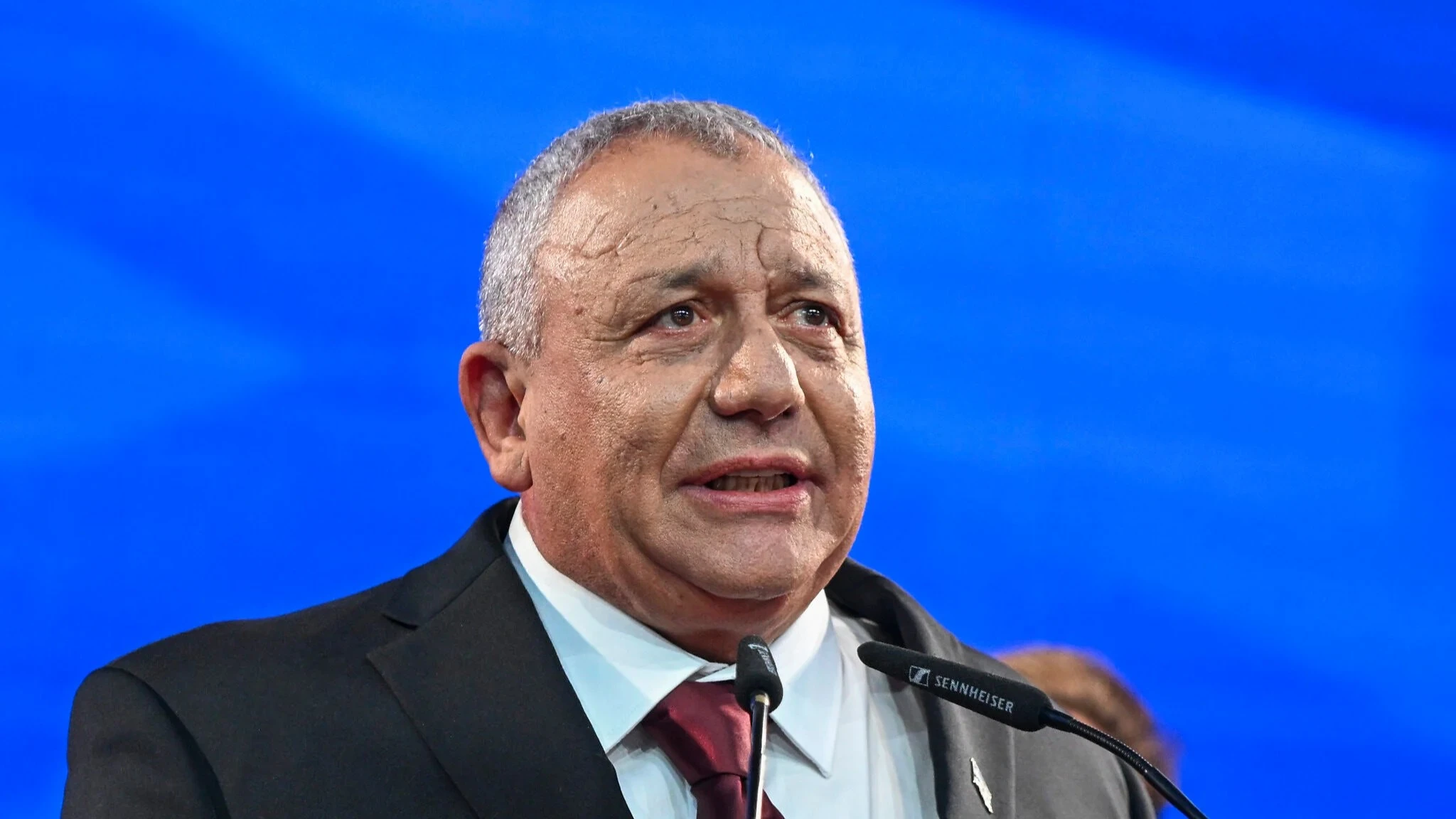
Eisenkot secures majority backing to form Israeli government as Netanyahu faces ouster


(Photo credit: Avshalom Sassoni/ Flash90)
The Cradle

NOV 6, 2026

Gadi Eisenkot moved closer to becoming Israel’s new prime minister on 6 November, as 67 of the Knesset’s 120 lawmakers recommended him to receive the mandate to form Israel’s next government following last week’s elections, Israeli media reported.

As Israeli president, Isaac Herzog has the authority to decide who receives the mandate. He has been in talks with the political parties regarding their recommendations and will issue a decision on Sunday.

The candidate backed by a majority of Knesset members is ordinarily given the mandate.

Eisenkot received recommendations from his own Yashar party, as well as from the opposition parties in his coalition: B’Yachad, led by Naftali Bennett and Yair Lapid; The Democrats, led by Yair Golan; and Yisrael Beytenu, led by Avigdor Liberman.

Crucially, parties representing Palestinians with Israeli citizenship, the Joint List and United Arab List, also recommended Eisenkot, saying their goal is to oust Prime Minister Benjamin Netanyahu.

For his part, Netanyahu received 46 recommendations, including from his Likud Party, Religious Zionism led by Bezalel Smotrich, Otzma Yehudit led by Itamar Ben Gvir, and the Ultra-Orthodox Shas party.

In an unexpected move, United Torah Judaism, an Ultra-Orthodox party traditionally aligned with Netanyahu’s bloc, declined to recommend either candidate and said it was “not committed to any bloc.”

Despite receiving fewer recommendations to form a government, Netanyahu could retain his position as prime minister if he is able to negotiate the formation of a national unity government with Eisenkot, who has stated he does not wish to form a governing coalition with the Palestinian-Israeli parties.

Fellow opposition leader Liberman also refuses to form a government with non-Jewish parties, as does Netanyahu.

In televised remarks at the end of the ​talks, Herzog said that while the “results of the consultations may appear clear,” there were “mutual vetoes between the blocs and within the blocs themselves” that make it ​difficult to determine who would best succeed in forming a government.

Once nominated by Herzog, the candidate will have 28 ​days to try to form a government, with a possible 14-day extension.

Netanyahu will remain prime minister in a caretaker government until a new coalition is ​formed. If no candidate can form a coalition, fresh elections must be held.

In last week’s Knesset elections, Netanyahu’s religious-nationalist coalition won 53 seats.

Eisenkot’s coalition of Jewish opposition parties won 48 seats, while Israeli-Palestinian parties won an unprecedented 19 seats.

Meanwhile, Netanyahu continues to assert, without evidence, that Israeli-Palestinian ​parties “stole the ⁠vote.”

Israel’s Central Election Committee rejected Netanyahu’s claims, saying on Wednesday that the election’s integrity had not been compromised.

Netanyahu’s allies, including National Security Minister Itamar Ben Gvir, have called ​for the immediate arrest and interrogation of Israeli-Palestinian party leaders.

[…]

Via https://thecradle.co/articles/eisenkot-secures-majority-backing-to-form-israeli-government-as-netanyahu-faces-ouster

Bahrain’s American shield becomes its greatest liability

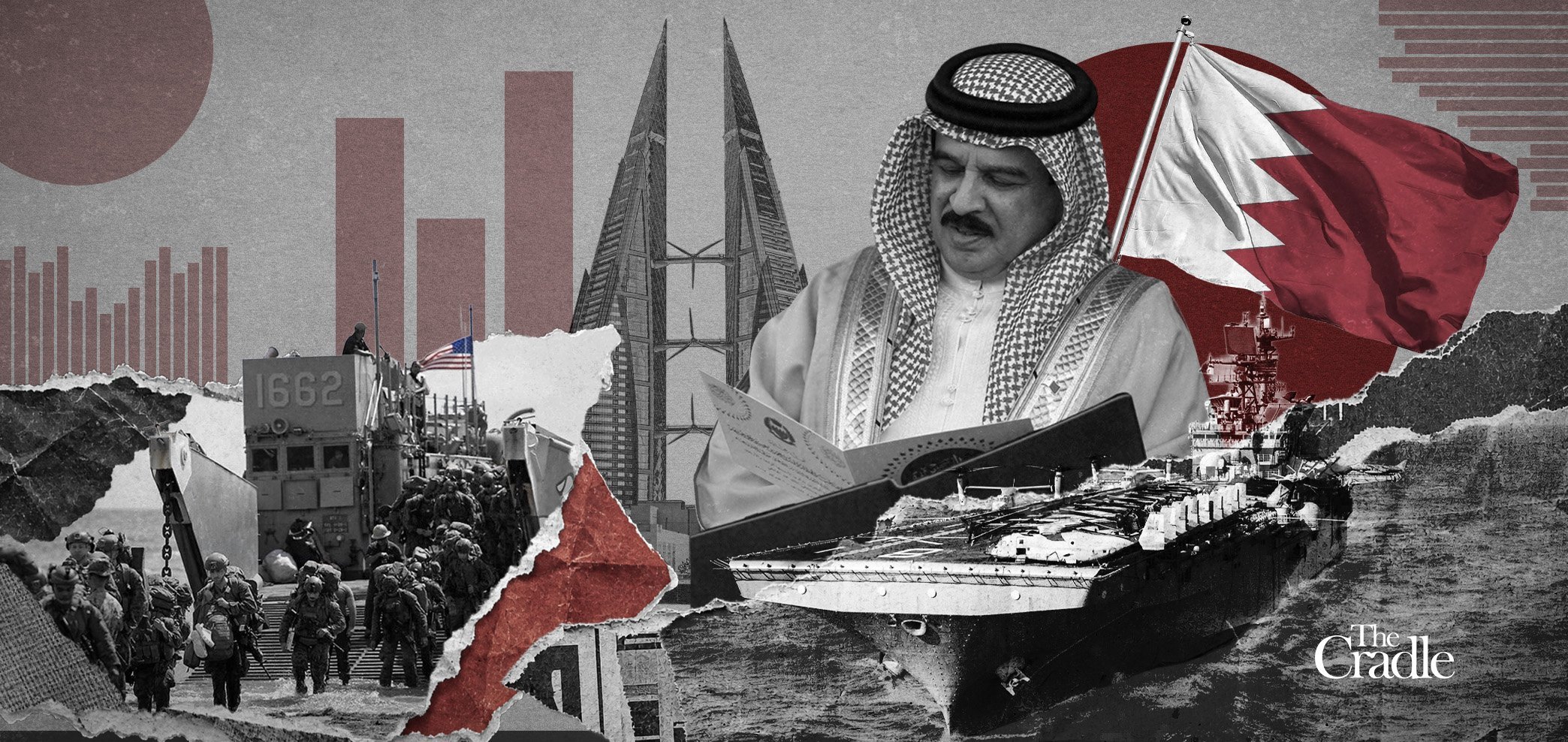
Photo Credit: The Cradle

Mawadda Iskandar

Nov 6, 2026

Neither the subsequent war nor the Iranian strikes on Bahraini territory since March 2026 have shaken Manama’s public commitment to Washington. On 4 October, Bahrain’s Ambassador to the US, Abdullah bin Rashid Al-Khalifa, declared that the partnership had passed the test of Iranian attacks through close coordination with Washington.

US Ambassador to Bahrain Stephanie Hallett likewise reaffirmed Washington’s defense commitments, pointing to extraordinary consultations involving the US, Britain, and Bahrain under the Comprehensive Security Integration and Prosperity Agreement (C-SIPA).

The damage to American military facilities has cast doubt on those assurances. With Bahrain burdened by debt, disrupted industry, and renewed protests, the monarchy may find that its most important ally has also made it a target.

The Fifth Fleet takes the hit

The war exposed the vulnerability of American military installations across the Gulf. Among the most consequential targets was Naval Support Activity Bahrain, headquarters of the US Fifth Fleet and a central hub for American naval operations in West Asia.

The installation supports US Central Command (CENTCOM) and enables the rapid resupply of forces operating across the region. Its position in Bahrain gives Washington a forward logistics and command center close to the Strait of Hormuz, but also places the facility within reach of Iranian missiles and drones.

Iranian strikes damaged the headquarters, satellite communications facilities, warehouses, and other buildings. The damage disrupted operations at a base Washington had long considered indispensable to its regional military presence.

American personnel were evacuated following attacks in the opening days of the confrontation. Chief of Naval Operations Admiral Daryl Caudle subsequently indicated that the Navy did not expect to return in the foreseeable future, while Acting Navy Secretary Hung Cao announced a review of whether the damaged installation should be repaired.

With the Bahrain facility out of action, the US Navy relied more heavily on Diego Garcia in the Indian Ocean, approximately 2,200 miles away. Supplies now had to travel farther to reach American forces in the Gulf.

The disruption to supply lines was felt beyond Bahrain. The aircraft carrier USS Abraham Lincoln reportedly faced delays in receiving supplies, compounding concerns over crew fatigue after months at sea and the difficulties of sustaining US naval operations across the region.

Bahrain has paid a price for hosting the fleet. The base was meant to deter attacks on the monarchy, but its presence drew Iranian fire to the island, while Manama had little say in Washington’s decision to go to war.

The limits of US protection

Bahrain hosts American forces but has little influence over how Washington uses them. Iranian retaliation can reach the kingdom whether or not its rulers approve of another attack on Tehran.

[…]

Iranian academic Mohammad Marandi has similarly warned that infrastructure in countries hosting American forces could face retaliation if Iranian facilities are attacked, naming Bahrain alongside Saudi Arabia, Qatar, the UAE, and Kuwait.

Bahrain’s own military capabilities offer little reassurance. Despite spending approximately $1.47 billion on defense in 2025, equivalent to around 3.1 percent of GDP, Manama remains overwhelmingly dependent on American weapons.

According to the Stockholm International Peace Research Institute (SIPRI), the US accounted for 97 percent of Bahrain’s major arms imports between 2020 and 2024, a period during which the kingdom’s arms imports surged by 898 percent compared with the preceding five years.

US systems dominate its arsenal, including F-16 fighter jets and Patriot air defenses. Bahrain ordered 16 F-16 Block 70 aircraft, while its Patriot procurement included 60 PAC-3 and 36 GEM-T missiles.

Despite its reliance on American weapons, Bahrain has no guarantee of US military intervention. The C-SIPA, signed in 2023, provides for closer security cooperation and consultations but stops short of NATO-style mutual-defense guarantees.

Iranian missile and drone attacks have also taken a heavy toll on the region’s interceptor stocks. Bahrain faced roughly 700 missiles and drones, while more than 2,800 were launched at the UAE. Military analysts have warned that shortages of Patriot and THAAD interceptors could leave Gulf states increasingly vulnerable in another round of fighting.

Speaking to The Cradle, Dr Ibrahim al-Aradi, director of the political bureau of the February 14 Coalition, warns that:

“Renewed war will expose Bahrain to consequences beyond its capacity to confront, given its dependence on western military and political support and the absence of sufficient guarantees to protect American bases.”

Aradi notes that Iran refrained from striking certain sensitive sites during the confrontation, including the King Fahd Causeway linking Bahrain to Saudi Arabia. He believes this restraint spared Manama considerably greater damage.

He warns that such restraint cannot be assumed in another war. If Washington fails to protect its bases, or Bahrain’s Gulf neighbors revise their calculations, the monarchy could find itself dangerously isolated.

A war Bahrain cannot afford

Bahrain was already struggling with some of the Gulf’s weakest public finances when the war began. Years of deficits and borrowing had left the government little room to absorb attacks on the industries that fund its budget.

Oil and gas account for approximately 70 percent of government revenue. Damage to refining and disruption to exports therefore reach directly into the state treasury.

The Sitra refinery, with a capacity of approximately 405,000 barrels per day (bpd), was among the principal targets. On 9 March, state-owned Bapco Energies declared force majeure following an attack on the complex, disrupting a major source of export earnings.

The war also struck Aluminium Bahrain (Alba), one of the world’s largest aluminum smelters, with annual capacity exceeding 1.6 million tons. Shipping disruptions had already forced production cuts before its facilities suffered direct damage. The company subsequently reported a sharp decline in output and sales volumes during the first half of 2026.

The damage extended into the kingdom’s digital infrastructure. Iranian strikes hit Amazon Web Services facilities, affecting a regional cloud computing hub that supports businesses and digital services across the Gulf.

In its October outlook, the International Monetary Fund (IMF) projects an 11.3 percent contraction in Bahrain’s economy in 2026, while government debt continues to exceed annual economic output.

Foreign exchange reserves have also suffered heavily. Central bank reserves fell from approximately $4.8 billion at the outbreak of war to around $1.5 billion three months later, before recovering partially by September.

Manama has sought to contain the fiscal damage through a consolidation program announced in December, including higher public service charges, increased fuel costs for businesses, new corporate taxation, and reductions in administrative spending.

Falling refining income, interrupted shipping, and weaker tourism have made those measures harder to impose. Higher fees and prices would also shift more of the war’s cost onto Bahraini households and businesses.

Manama looks for another rescue

Unlike its wealthier Gulf neighbors, Bahrain has limited reserves to cushion a prolonged economic shock. Its sovereign wealth fund, Mumtalakat, holds assets estimated at approximately $18 billion, but much of that wealth cannot be readily converted into cash.

The island kingdom is also unusually exposed to disruptions in the Strait of Hormuz. Saudi Arabia can redirect part of its oil exports through the East–West Pipeline to the Red Sea, while the UAE has access to Fujairah and Oman possesses ports opening onto the Arabian Sea.

Bahrain’s deteriorating finances have also prompted credit rating downgrades. Fitch downgraded Bahrain to B in February, while Moody’s changed its outlook to negative in April, maintaining its B2 rating.

That leaves Manama looking again to its neighbors. In 2018, Saudi Arabia, the UAE, and Kuwait pledged approximately $10 billion to shore up Bahrain’s finances.

Ziad Daoud, chief emerging markets economist at Bloomberg Economics, has suggested that another Gulf bailout is increasingly likely, noting that markets anticipated assistance even before the war.

Manama has reportedly held discussions with neighboring states over fresh support, with Abu Dhabi expected to play a prominent role. An April currency-swap arrangement with the UAE also provided a potential $5.4 billion financial backstop.

Fresh Gulf money could ease the immediate pressure, but it would not erase years of accumulated debt. It could also bring demands for further spending cuts and fiscal reforms.

[…]

He points to public debt exceeding 160 percent of GDP and the kingdom’s growing dependence on its Gulf neighbors to avoid financial collapse.

For Aradi, King Hamad’s decision to thank the UAE without mentioning Saudi Arabia also suggests a change in the regional relationships on which Manama increasingly depends.

Can Bahrain still count on Riyadh?

For decades, Saudi Arabia has served as the Al-Khalifa monarchy’s principal regional patron, exercising decisive influence over Bahrain’s security and economic stability.

That relationship was most visibly demonstrated in 2011, when Riyadh led a Gulf military intervention to support the monarchy against the popular uprising. Approximately 1,200 Saudi troops entered Bahrain as part of the Peninsula Shield Force, helping the authorities suppress the protests.

Saudi influence extends deeply into Bahrain’s economy. Manama receives revenues from the jointly operated Abu Safah oil field, relies on Saudi crude supplies for the Sitra refinery, and depends on the King Fahd Causeway as its only land connection to the Arabian Peninsula.

Bahrain’s decision to join the Abraham Accords in 2020 brought it closer to Abu Dhabi and Tel Aviv, opening direct political and security channels with Israel.

The move coincided with widening differences between Riyadh and Abu Dhabi. While the UAE expanded its partnership with Israel, Saudi Arabia restored diplomatic relations with Tehran in 2023 and subsequently sought to limit the risks of another regional confrontation.

Manama has drawn closer to Abu Dhabi, Washington, and Tel Aviv without reducing its dependence on Riyadh.

Bahrain’s hosting of American military bases and normalization with Israel leave it exposed to Iranian retaliation, while its limited resources make Saudi financial and security support essential in the event of another prolonged confrontation.

[…]

The military and economic costs of the Yemen war have placed further demands on Saudi resources, potentially limiting Riyadh’s ability to provide Bahrain with financial and security assistance during another confrontation with Iran.

Bahraini Foreign Minister Abdullatif al-Zayani has called for restoring diplomatic relations with Iran and demanded that Gulf states participate in any negotiations or regional arrangements involving Tehran.

Yet Bahrain’s close military and security ties with Washington and Tel Aviv complicate any attempt to improve relations with Tehran.

Bahraini opposition figure and political activist Ali al-Fayez tells The Cradle that the monarchy’s future will depend heavily on the outcome of the confrontation.

He believes Bahrain cannot return to its previous position regardless of which side prevails. A US-Israeli victory, he argues, would preserve Al-Khalifa rule but reduce the monarchy to “a facade and a functional instrument,” surrendering political, economic, and security decision-making to Israel.

Fayez also warns that the authorities would continue reshaping Bahraini society through political naturalization and cultural changes associated, in his view, with the Abraham Accords.

An Iranian victory alongside its regional allies, he argues, could instead open the way for a new security order shaped by the region’s peoples, including Bahrainis.

For Fayez, Bahrain’s future is tied to the wider struggle over West Asia’s political and security arrangements, including the possibility of changes to regional alliances and borders.

The streets stir again

As the monarchy struggles with the fallout from the war, its crackdown on domestic opposition has intensified. Since the war began, Bahraini authorities have escalated arrests and prosecutions targeting Shia clerics, activists, and citizens accused of supporting Iran.

According to the Bahrain Forum for Human Rights, authorities carried out 825 arrests between January and August 2026, while a separate Human Rights Watch (HRW) report documented the revocation of citizenship from at least 69 people, including children.

The crackdown has fallen heavily on religious scholars. Mass trials and judicial proceedings target 69 defendants, including 60 Shia clerics. Rights monitors documented that among the 56 defendants currently in detention, there are 47 clerics, most of whom were arrested during the 9 May raids.

The authorities have accused some detainees of links to Iran’s Islamic Revolutionary Guard Corps (IRGC), allegations that opposition groups say are being used to criminalize religious and political activity.

In recent weeks, protests have spread across Shia-majority villages and suburbs surrounding Manama. Demonstrators have erected roadblocks and confronted security forces, while police have deployed tear gas and sound grenades.

[…]

Via https://thecradle.co/articles/bahrains-american-shield-becomes-its-greatest-liability