The Most Revolutionary Act

Uncensored updates on world events, economics, the environment and medicine

The Most Revolutionary Act
Unknown's avatar

About stuartbramhall

Retired child and adolescent psychiatrist and American expatriate in New Zealand. In 2002, I made the difficult decision to close my 25-year Seattle practice after 15 years of covert FBI harassment. I describe the unrelenting phone harassment, illegal break-ins and six attempts on my life in my 2010 book The Most Revolutionary Act: Memoir of an American Refugee.

Analysts warn of colonization as US saturates Australia with 110 bases

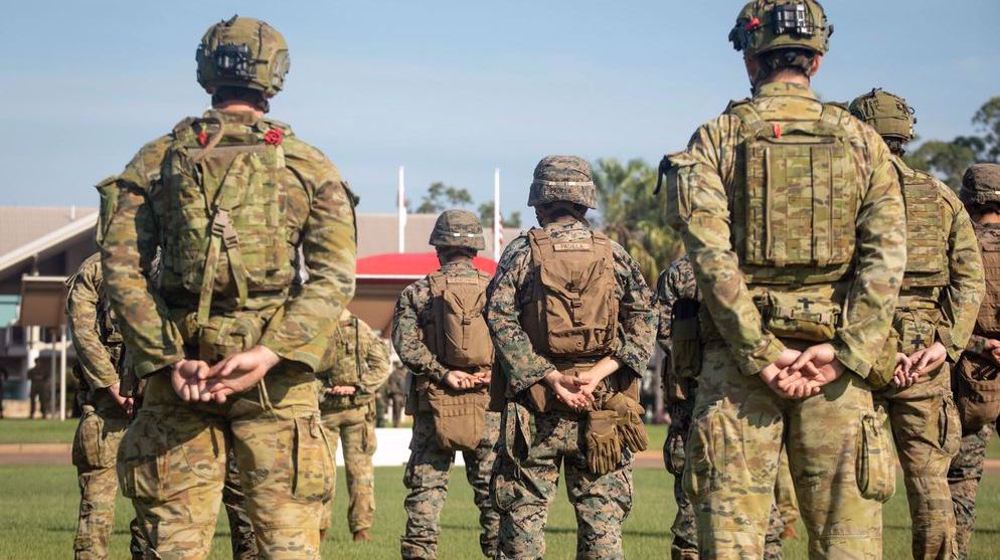
US Marines with Marine Rotational Force – Darwin stand in formation with Australian Army soldiers during the opening ceremony of exercise Southern Jackaroo at Robertson Barracks, Northern Territory, Australia, June 15, 2021.

Press TV

7 Sept 2026

The United States reportedly wields control over, or has access to, 110 military facilities belonging to Australia — a presence so extensive that analysts now describe it as a “saturation” and even a “colonization” of the Australian continent.

The Guardian, citing information gathered from the database of the Nautilus Institute, reported that the US military or US defense corporations have access to more than half of Australia’s military facilities.

According to the database, the United States controls 17 military facilities on mainland Australia, has access to 75 more Australian-run military installations elsewhere, while US defense corporations have access to an additional 18 facilities.

“This is not a matter of penetration, it’s a matter of saturation,” said Prof Richard Tanter, the database’s author.

“Over half of the defense facilities that we have looked at have some level of American access: that means American personnel, it means American corporations, some of the biggest armaments companies in the world.”

The US military in Australia engages in gathering intelligence, accessing satellite data for targeting information, and communications intercepts.

Other military activities include training for some 2,500 marines on dry-season rotation in the Northern Territory, as well as the pre-positioning of warfighting assets, weapons, munitions, and fuel, stored in case of a regional war in the Pacific.

The US now practically owns Australia’s human, soil, and mineral resources through its control of the nation’s military, according to critics.

The US military presence will continue to expand. From next year up to 1,200 uniformed military personnel will operate from the HMAS Stirling submarine base just off Fremantle.

The government insists that technically this will not be a US base — rather a “rotation” — but there is little contestation of its actual implication.

The Aukus nuclear submarine agreement, described by former defense minister Christopher Pyne as “a lot more than the submarine procurement,” effectively establishes a new United States submarine base in the Indian Ocean.

“For the Americans, being able to have a submarine base in the Indian Ocean is a massive strategic advantage,” Pyne told a public inquiry.

Dr Vince Scappatura, author of The US Lobby and Australian Defense Policy, described US base access across Australia as a kind of “second wave of colonization.”

“Today we are shaping up to be the ‘tip of the spear’ for US power projection into the region — that’s what the sprawling US base access represents,” he said.

“Each one of those dots on the map represents a point of leverage Washington has over Canberra when it comes to matters of defense and foreign policy.”

Scappatura noted that the phrase “empire by invitation” was originally coined to describe US hegemony over western Europe “but it is applicable equally here. I sometimes describe it as ‘voluntary subordination’.”

The United States has been escalating militarization in the Pacific by resetting ties with regional countries in an attempt to form a coalition against China.

Beyond Australia, US bases and military access points are expanding across Japan, South Korea, the Philippines, and other regional nations, effectively drawing them into Washington’s orbit.

Critics say this is a desperate bid by Washington to arrest the rise of China, with Australia and other regional countries being used as forward operating bases in what could become a larger confrontation.

Tanter says that the acceptance of the US military presence has become so ingrained within the government and defense that unwinding Australia’s enmeshment within the world’s most powerful military is increasingly difficult.

“This is a massive institutional failure in Australia, a kind of learned incapacity at a political, parliamentary and bureaucratic level,” he said. “We’ve learned how not to ask those questions.”

Dr Emma Shortis, director of international and security affairs at the Australia Institute, says Australia’s increasing integration with the US military has resulted in “an accelerating erosion of Australia’s independent, sovereign, decision-making power.”

“Instead of having the option of saying ‘no’ to involvement in United States wars, involvement becomes the default position,” she said.

She cited the March attack by a US nuclear-powered submarine on an Iranian frigate, sinking it and killing more than 100 people. Three Australian naval personnel were onboard, part of the submarine’s crew: the US did not forewarn Australia of the attack.

“Australia might maintain the pretense of sovereign decision-making power, but that’s not the reality,” Shortis said.

Dr Albert Palazzo, an adjunct professor at the University of New South Wales Canberra and formerly the director of war studies for the Australian army, told the Guardian the US military’s accelerating buildup carries danger for Australian security.

“The Australian government seems to be waltzing its way into a war between the United States and China, by allowing this country to become an outpost or bastion of the US military, and as a platform from which they will launch military force against Chinaa,” he said.

Australians’ faith in the US is fragile and fracturing. A Lowy Institute poll showed Australians’ “trust in the United States to act responsibly in the world” has fallen to 31%, the lowest level in its polling history.

Just 21% of Australians have confidence in Donald Trump to do the right thing in world affairs, the lowest level of confidence in a US president yet.

More than twice as many Australians (59%) now believe Australia’s interests are best served by a more independent foreign policy rather than a closer alliance with the US (23%). Just 13% of Australians believe the US is a “very reliable” security ally.

This represents, Shortis says, a “seismic shift” in Australia’s perception of its once-great and powerful friend.

“After following the US into nearly every war since World War II, Australians have had enough. They see tangible risks in being so close to President Trump’s bleak and violent version of America.”

[…]

Via https://www.presstv.co.uk/Detail/2026/09/07/775832/Guardian-US-controls-or-has-access-to-110-defense-facilities-in-Australia-Nautilus-Institute

Israeli Defense Minister Katz: 70% Of Gaza Is Desolate, 80% Of Gazans Want To Migrate, Israel Is Ready To Move Them Out

Israeli Defense Minister Israel Katz
Israeli Defense Minister Israel Katz. Photo: Wikimedia Commons (CC BY-SA 4.0)


Tionism Staff

Israeli Defense Minister Israel Katz delivered a wide-ranging assessment of Israel’s military campaign in Gaza, the West Bank, and Lebanon, making clear that the forced displacement of Gaza’s population remains central to Israel’s strategic vision — and that Israel is prepared to carry it out the moment political conditions allow.

Katz stated that between 60% and 70% of Gaza is now desolate. “About 70% of the area is desolate — without residents, without houses, without tunnels,” he said, while acknowledging that work remains to be completed.

On the question of Gaza’s population, Katz was direct: “There is no real solution for Gaza in the end without this migration.” He cited surveys showing that approximately 80% of Gaza’s population wants to emigrate, adding that Hamas is the primary obstacle preventing them from leaving. “Hamas doesn’t allow them, and there are no countries in the world that will take them,” he said.

Katz said Israel is fully prepared to facilitate the departure of Gaza’s population by sea, by air, or by any other available means. He noted that Egypt has refused to serve as a transit route. The sticking point, he explained, is that Arab countries willing to accept Gazan migrants are demanding U.S. backing before moving forward. “Every country that is willing wants American backing,” Katz said. “Currently, President Trump didn’t cancel this; he froze it. All the Arab countries came to him due to their pressure on this matter.”

Katz indicated that the moment for resumed military and territorial action will come when it becomes clear that Hamas is not meeting its commitments. “Then we will get a green light to move forward militarily, territorially, and in other areas, and this thing will gain momentum,” he said.

On the West Bank, Katz rejected the characterization of settler violence as “Jewish terror,” stating he has canceled that term. “Terror is whoever acts to commit terror against the State of Israel,” he said. He confirmed that the IDF has conquered refugee camps in the West Bank, evacuated 40,000 residents who have not returned, destroyed infrastructure, killed terrorists, and remains inside those areas.

Katz also summarized the broader scope of Israeli military action: “We destroyed 70% of Gaza. We destroyed areas in southern Lebanon; we ruined dozens of villages that served as Hezbollah strongholds. We evacuated 200,000 residents.”

[…]

Via https://tsionizm.com/news/2026/09/06/israeli-defense-minister-katz-70-of-gaza-is-desolate-80-of-gazans-want-to-migrate-israel-is-ready-to-move-them-out/

UK prepares landmark ban on trade with illegal Israeli settlements

The Cradle

Sept 7 2026

According to Whitehall sources cited by Middle East Eye correspondent Imran Mulla, the United Kingdom is poised to announce a sweeping ban on trade and investment tied to illegal Israeli settlements in the occupied West Bank.

Scheduled for formal rollout on Tuesday, the policy is designed to bring British trade policy into direct compliance with the International Court of Justice’s (ICJ) landmark July 2024 advisory opinion, which ruled the entire Israeli occupation unlawful.

The anticipated measures are expected to prohibit economic activity and investment in businesses operating within illegal settlements, closing a long-standing loophole that allowed goods from occupied territories to skirt rigorous enforcement.

While legal advocates and UN special rapporteurs have emphasized that third-party states carry a binding obligation under international law not to render aid or assistance in maintaining illegal colonial enterprises, the impending move has already drawn fierce pushback from pro-Israel lobbies and foreign capitals intent on shielding the occupation infrastructure from economic accountability.

Via https://t.me/thecradlemedia/67552

Families of dozens of Lebanese kidnapped by Israel demand answers

The Cradle

Sept 7, 2026

According to an in-depth investigative report by The Public Source, families of Lebanese abductees held by Israel are demanding urgent government action to secure the release of dozens of Lebanese citizens abducted during Israeli incursions across southern Lebanon.

The report highlights a systematic pattern of land and sea abductions carried out by occupation forces during so-called ‘truces.’

At least 30 Lebanese—including farmers, fishermen, local officials, and residents returning to check on their homes—are currently detained without charge in Israeli military facilities, with the International Committee of the Red Cross (ICRC) confirming it has been denied access to them.

Advocacy groups, including the Lebanese Association for Prisoners and Detainees and the newly formed Popular Campaign for the Freedom of Lebanese Detainees and Abductees, have criticized the Lebanese government for failing to champion the cases through international legal channels.

With diplomatic avenues yielding no results, families of the abducted report placing their sole hope in the resistance and military leverage to force the return of their loved ones.

Via https://t.me/thecradlemedia/67562

Anti-War Activists Getting ‘Debanked’ In The UK.

Written By: Justin K.P.

The UK has been, for years, waging an all-out war on its own people, particularly on those who are anti-war and anti-Zionist.

Journalists like Richard Medhurst and Asa Winstanley have had their devices seized by UK “counterterrorism” authorities for their reporting on the Israeli genocide in Gaza, while thousands of peaceful activists have been arrested on terrorism charges for holding signs stating they support Palestine Action, a non-violent direct action group which was proscribed as a terrorist organisation by the UK government at the behest of the Zionist lobby.

The war on anti-war and anti-Zionist figures continues, with multiple anti-war figures recently losing their bank accounts within a short time period.

George Galloway, a former Labour MP, known for his staunch firebrand opposition to Zionism and empire, had his bank account closed without explanation, preventing him from receiving his parliamentary and old age pensions, which he paid into throughout his career.

On X, Galloway wrote: “39 years ago I opened a personal bank account with Bank of Scotland in Byres Rd, Glasgow. Yesterday, without explanation or notice, they closed my accounts. My parliamentary and old age pensions are paid into these accounts. The mortgage on our family home is paid out of them. The mortgage is with them. They haven’t heard the last of this.”

Shortly before Galloway was debanked, the independent news outlet The Canary reported that it had its Bank account closed for the second time within months, the first time being in July.

“This has meant that once again, some staff were not paid for August,” the outlet noted, adding that, like Galloway, it received no explanation for why it lost its Bank account.

Due to the debanking, the outlet was forced to “suspend operations” which “is a necessary step to protect what remains of the Canary and to give us the opportunity to rebuild on a stable foundation.”

It wrote that “recent events have created circumstances in which we have been left with no responsible alternative but to suspend the Canary’s operations with immediate effect,” adding that, “It is the direct consequence of the debanking of the Canary’s funds, the resulting financial disruption, and the serious internal consequences that followed.”

It seems clear that this is a coordinated effort, almost certainly spearheaded by the British state, to debank voices critical of Zionism and warmongering, in yet another attempt to shut them down.

[…]

Via https://the307.substack.com/p/anti-war-activists-are-getting-debanked

Democrats Invite Women To Freeze Their Eggs So They Can Go Fight Wars

U.S. Airmen conduct a training scenario during exercise Patriot Warrior 2019 at Fort McCoy, Wisconsin, Aug. 16, 2019. Patriot Warrior is Air Force Reserve Command's premier exercise providing Airmen an opportunity to train with joint and international partners in airlift, aeromedical evacuation, and mobility support. The exercise builds on our capabilities for the future fight, increasing the readiness, lethality and agility of the Air Force Reserve. (U.S. Air Force Photo by Tech. Sgt. Gregory Brook)

Image CreditU.S. Air Force Photo/Tech. Sgt. Gregory Brook 

A new Pentagon pilot program will pay for egg and sperm freezing rather than fix the policy that puts women in harm’s way during their most fertile years.

The pilot program, launching Sept. 14 under the Veteran Families Health Services Act of 2025, will run for three years and reimburse costs of sperm freezing up to $500 and egg cryopreservation up to $10,000 for service members who meet deployment or separation requirements.

The program fulfills a longtime Democrat-backed effort to disassociate military women from maternal family roles; increases dissonance in already strained military families, further divorces procreation from spousal stability, and ensures mothers can be separated from their children.

The Sexes Are Not Equal in Combat

Women have supported the armed forces in non-combat roles since the development of the Army Nurse Corps in 1901, with increased but limited access to positions until 2013. At that time, then-President Barack Obama supported a lifting of the ban by former Defense Secretary Leon Panetta. By 2016, gender specific roles in the military were effectively eliminated.

The exclusion of women from serving in combat roles has been justified. Combat poses the direct and imminent risk of injury and death, as well as placing soldiers in tactical locations that cannot adequately accommodate gender separation. Forward operating bases and outposts offer little to no separate housing or privacy barriers between the sexes. Experiential hardships can extend well beyond privacy, encompassing lack of food and sleep that disproportionately harm women.

A small-scale study of Army rangers claiming that women are less physiologically affected by rigorous training than men, does not match up with any large-scale studies of women exposed to extreme physical hardship. The study presents an insufficient apples-to-oranges comparison and should not be utilized as an argument to place excessive physical strain on women in the military.

The Biological Clock

Soon after the military opened doors to place women in hazardous duty stations, Democrat-led efforts for IVF-related services began. Building on that effort, in 2018 Rep. Rick Larsen, D-Wash., called IVF the “most effective form of assisted reproductive technology” for service members whose fertility was affected by their service. Rather than improving health and safety for women, the costly, unethical, and dangerous technology was promoted.

Ten years after so-called integration, women who entered combat in their peak fertility years are now aging out of childbearing, or at least edging closer to the end of their fertile years. The possibility of deployment has likely affected the many military women choosing to begin families after age 35, further decreasing their likelihood of conceiving naturally.

As infertility continues to disproportionately plague women in service, IVF serves as an expensive, politically driven distraction.

An Unhealthy Family Unit

Members of the partisan-led advocacy initiative have lauded the pilot program as “an important step … guaranteeing that members of the military have the support they need to have children.” But this is inaccurate. Extending coverage for separation from a “spouse, domestic partner or dating partner” only encourages atypical family situations, contributing to less stable families and higher stress within the ranks.

The divorce rate of service members is already significantly higher than the general public. Contributing factors are many and varied, and directly affect emotional and mental health outcomes.

Health coverage in the military was designed around traditional family units and is not equipped to adequately provide care for increasingly nontraditional situations. Traditional family units have historically provided a source of stability for those who place their lives on the line for the protection of Americans, and that stability is critical.

The need for advance directives in case of maternal death highlights the program’s controversial underpinnings. Increased risk of death leaves the complex issue of the eggs or sperm left behind if a service member dies downrange. Program participants are required to provide directives for the handling of their “genetic material” in the case of death. Increased rates of poor health outcomes in children born through IVF are another serious consideration.

Republicans have effectively blocked military-wide coverage of IVF, but have failed to stop the creep of subsidiary programs like the one launching this month.

When actualized, the gamete cryopreservation pilot program will result in all-around losses. Loss of improved health for military women, loss of funding support for stable, healthy family structures, and the potential loss of a parent before a child’s birth.

The program is one in a long line of policy failures passed in the name of “equity” disserving women.

[…]

Eight Arab and Muslim states reject Israeli displacement plans for Gaza

Eight Arab and Muslim countries have condemned remarks by far-right Israeli ministers Itamar Ben Gvir and Israel Katz on plans to forcibly displace Palestinians from the Gaza Strip.

The foreign ministers of Egypt, Saudi Arabia, Jordan, the United Arab Emirates, Indonesia, Pakistan, Türkiye and Qatar said in a joint statement released on Sunday that such Israeli plans violate international and humanitarian law and pose a direct threat to the Palestinian people’s legitimate and inalienable rights.

The ministers voiced rejection of any Israeli attempt to displace Palestinians from or within the occupied territory, warning against transforming extremist rhetoric on forced displacement into official state policy.

The ministers warned that the displacement of Gazans would destabilize the region and derail global peace efforts, undermining US president Donald Trump’s plan to end the Gaza war, which clearly rejects forced population transfers.

The ministers stressed that Gaza is an integral part of the occupied Palestinian territories, calling for preserving the unity of Gaza, the West Bank and east Jerusalem.

They reiterated their countries’ support for a two-state solution establishing an independent Palestinian state along the June 4, 1967 lines, with east Jerusalem as its capital.

They urged the international community and UN Security Council to oppose Israeli attempts to impose a new demographic or geographic reality in the occupied Palestinian territories.

[…]

Via https://english.palinfo.com/news/2026/09/06/369659/

IRGC ballistic missile retaliation forces US aircraft carrier and destroyer to flee

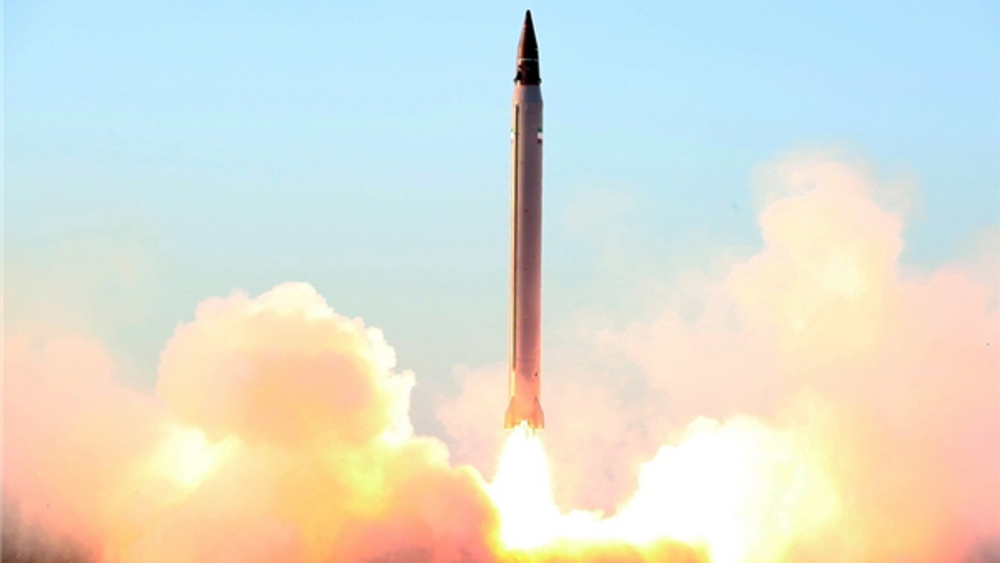
File photo of an Iranian ballistic missile launch

Press TV
6 Sept 2026

The Islamic Revolution Guards Corps (IRGC)’s Aerospace Force has launched several ballistic missiles at a US aircraft carrier and an American destroyer participating in Washington’s illegal naval blockade against the Islamic Republic, forcing the vessels to flee.

The force staged the reprisal against the vessels “belonging to the child-killing, aggressor US military that had been harassing Iranian vessels and participating in the blockade,” the Corps said in a statement on Saturday.

“After sustaining damage and fearing another reprisal, the two warships were forced to flee the area of engagement,” it added.

‘US admission proof of IRGC’s capability’

The US Central Command, meanwhile, acknowledged that the vessels had come under “multiple” Iranian strikes.

Referring to the admission, the IRGC noted how the “aggressor enemy, which for years had swaggered around the region with false pride and hollow claims, was today forced to officially acknowledge that two US Navy warships had come under strikes.”

“CENTCOM’s acknowledgment confirming this operation is living evidence of the enemy’s strategic defeat and proof of the IRGC’s offensive capabilities.”

IRGC vows further responses

The IRGC, meanwhile, asserted that the Corps and the rest of Iran’s Armed Forces remained committed to defending the Islamic Republic’s sovereignty and security.

“Should the hostile and aggressive actions continue, the US regime must expect devastating responses from the Armed Forces of the Islamic Republic. We stand stronger than ever. Victory belongs to the resilient people of Islamic Iran, while defeat and regret are the inevitable fate of the aggressors.”

The Corps expressed confidence that the bravery displayed by the Armed Forces alongside the strong nationwide popular support for the country’s defensive and retaliatory operations would “prevent the enemy from achieving its sinister objectives.”

Earlier, the IRGC had unveiled previously unreleased footage of its decisive action against non-compliant vessels in the Strait of Hormuz, debunking the United States’ allegations of effectively supporting trespassing vessels’ transit through the waterway.

“The United States is the greatest threat to the security of regional countries and maritime trade; US support and escort operations are nothing but a big lie!” the IRGC had cautioned.

Prior to the release of the footage, the Corps had also announced striking three United States-linked vessels and three trespassing oil tankers in retaliation for earlier American attacks on Iranian tankers.

[…]

Via https://www.presstv.co.uk/Detail/2026/09/05/775751/Iran-IRGC-ballistic-missiles-launch-American-aircraft-carrier-destroyer

Iran to declare new ‘restricted zone’ outside Strait of Hormuz

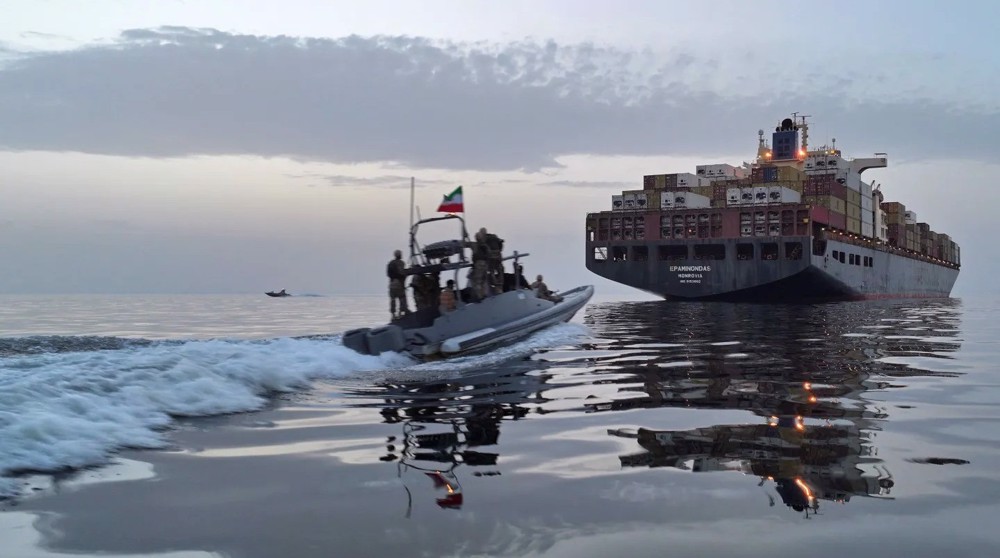
An Iranian speedboat approches a ship in the Strait of Hormuz. (File photo)

Press TV

Iran’s top security official has announced that a new restricted zone will be declared outside the Strait of Hormuz in the coming days, warning that any vessel entering the area would be placed on a sanctions list.

In a televised interview on Sunday night, Major General Mohsen Rezaei, secretary of the Supreme National Security Council, said the zone “will begin from the US Navy’s blockade line and extend into parts of the Persian Gulf.”

He also made clear that the Strait of Hormuz is “completely closed and under the control of the armed forces,” dismissing US President Donald Trump’s claim that the strategic waterway remains open as a “big lie.”

Rezaei said that before Iran closed the strait, more than 100 ships carrying over 100 million tons of cargo passed through it daily. Now, he said, only seven to eight ships carrying essential goods for Iran are transiting the waterway.

“The Americans are trying to smuggle five to six vessels through at great expense, but these ships are usually struck,” Rezaei said, without elaborating on who was behind such strikes.

He added that Iran has not decided to sink the smuggling vessels, as they carry oil and would damage the region’s environment.

Iran tested anti-ship missile over US Navy vessel 

The top security official also revealed that Iran has successfully tested a new anti-ship missile, saying the test was conducted above a US Navy ship just 48 hours ago.

“For the first time, we tested our anti-ship missile above an American warship,” he said. “This special missile created hell for the Americans, and they fled.

Via https://www.presstv.co.uk/Detail/2026/09/06/775804/Iran-to-declare-new-restricted-zone-outside-Strait-of-Hormuz–Top-security-official-

Taxpayers Must Not Be on the Hook for Bailing Out the AI Industry

By C.J. Polychroniou

September 3, 2026

Hundreds of billions of dollars are flooding the AI industry. Economist Gerald Epstein says this bubble could burst.

The U.S. economy is heading toward uncharted territory. Artificial Intelligence (AI) is transforming business operations and all areas of finance, the national debt is on an unsustainable fiscal path, and most middle-income Americans cannot keep up with rising costs. Moreover, as hundreds of billions of dollars are flooding into artificial intelligence, there are serious concerns that an AI bubble could trigger another bailout with taxpayer money.

In the interview that follows, leading progressive economist Gerald Epstein, who initiated and directs the Game Changers project at the Political Economy Research Institute at the University of Massachusetts Amherst, talks about AI’s impact on finance and the bailout problem and how a transformative public finance strategy can revive democracy, promote equity and social justice, and build strong and sustainable communities. Epstein is professor of economics and founding co-director of the Political Economy Research Institute.

C.J. Polychroniou: AI is possibly the fastest-growing technology in history and is already reshaping the U.S. economy in innumerable ways as organizations of all kinds are deploying AI tools across every functional area. But there are many public concerns surrounding AI, including whether it is becoming “too big to fail.” If so, taxpayer money may be used yet again to bail out private companies and institutions from collapse. What are the dangers here?

Gerald Epstein: There are indeed many public concerns about the economic and financial implications of AI. But let me focus on AI’s impact on finance as there are legitimate fears that the government may be asked at some point to bail out the AI industry, especially given the close ties of the Trump administration to AI firms.

As Marc Jarsulic and I argue in our Game Changers policy analysis “No More Bailouts,” the AI investment boom is increasing the level of risk for AI-related firms. The reason is that for these investments to be profitable, AI revenue will need to grow substantially. But some financial analysts doubt that the revenue will materialize. For example, in Bain’s Technology Report 2025, it is estimated that capital expenditures of $500 billion per year would be required to cover anticipated AI demand. To fund this investment, annual AI revenue would need to increase to $2 trillion. However, after accounting for likely cost reductions at the AI firms, Bain’s research concluded that their annual revenues would fall $800 billion short of that mark.

In that context, some of the risks of the AI-led investment boom have been shifted to financial markets as the AI boom is relying increasingly on debt. The revenues of the tech monopolies are extraordinary, but they are insufficient to pay all the costs of data centers. In 2025, the capital expenditures of the top five hyperscalers were more than 30 percent of their total revenue. They are projected to rise to more than 40 percent by the end of 2026. This has forced these companies to turn to debt and equity markets for finance. In 2025, major tech hyperscalers alone issued $120 billion in debt, but the figure was pushed toward $175 billion in 2026 and is expected to rise to $300 billion annually in the coming years.

A distorted government response to an AI-bust is in the cards. A rational policy response to an AI bust would not include bailouts of AI-related firms or their creditors. The investment boom, and the debt that helps finance it, have been engineered by sophisticated actors aiming to dominate a potentially lucrative innovation. There is no ex ante (“before the event”) government safety net for financial bets of this kind. Caveat emptor (“let the buyer beware”) applies to the firms playing the AI domination game if it ever applied to anyone. Unfortunately, we cannot count on a rational response from the current administration. Extensive conflicts of interest and cronyism mean that government bailouts for insiders would be on the table. Hyperscalers and other AI-related firms have received extraordinary government support. The Trump administration has taken over 90 federal actions to help the AI industry, including executive orders easing permitting for massive data centers, federal support for AI exports and reducing regulatory barriers for the industry. The Trumpian transactional quid pro quo is apparent. Nvidia and Intel have given the government equity to curry favor. A number of major AI companies contributed several million dollars to Trump’s White House demolition — a.k.a. his “ballroom” — fund. And AI firms continue to finance MAGA. This is business as usual for Trump.

If AI goes south, we should expect major pressures from the Trump administration for a debt- or taxpayer-funded bailout.

Bailout operations are a trademark of neoliberalism. That being said, what is the actual problem with bailouts, and how do we put an end to the bailout problem?

Charles Kindleberger, the famed MIT economic historian, summed it best when he said that international financial crises are “a hardy perennial” of capitalism. Going back to the 16th century, bubbles and crashes have occurred roughly every 10 years. And government bailouts have not been far behind. As Andrew Haldane, former chief economist of the Bank of England, put it, “Historically, the link between the state and the banking system has been umbilical. Starting with the first Italian banking houses in the 13th century, banks were financiers of the sovereign.”

Sovereign defaults were frequent and dangerous for banks. But, as Haldane noted, “For the past two centuries, the tables have progressively turned. The state has instead become the last-resort financier of the banks” through bailouts and other supports.

Ominously, writing in 2009, Haldane noted that “Today, perhaps the biggest risk to the sovereign comes from the banks. Causality has been reversed.” In other words, these days, the pressure for massive bailouts can get so powerful that the resulting government debt can be destabilizing for the entire economy. The extreme financial deregulation cemented by Alan Greenspan, Bill Clinton, Robert Rubin, and others, best exemplified by the overthrow of the New Deal-era Glass-Steagall Act, paved the way for the Great Financial Crisis of 2007-2009. The Dodd-Frank Act of 2010 tried to put new guardrails into place but began to be eroded by both Democrats and Republicans even before the ink was dry. It has now practically been torn up by the Trump administration in its push for all-out war on financial regulation.

Government bailouts are in the cards not only for AI. Crypto might be in line as well. Crypto currencies are privately created, speculative, and highly volatile digital “assets.” They are traded on online private exchanges. As with war, one might ask: what is crypto good for? Despite crypto’s common reference as a “digital currency,” the fact of the matter is that it satisfies virtually none of the qualifications to serve as a currency. It is not widely accepted as a means of exchange; it is highly subject to fraud; the “blockchain” technology that underlies it is inefficient and error-prone; and, perhaps most important, its value relative to goods and services is highly unstable.

There are “use cases” for crypto, but they are mainly for money laundering, tax evasion, and other criminal activities. According to the 2026 Crypto Crime Report, crypto laundering activities skyrocketed in 2025, with a record $158 billion of crypto tokens were sent to criminal wallets, representing a 145 percent increase from the previous year.

Like AI, the growth of the crypto industry creates a raft of problems for the financial sector. A run on stablecoins backed by a significant amount of short-term Treasury bills could create a market shock.

As Andrew Haldane emphasized, an important factor that leads to financial crises is the financier expectation of government bailouts. These bailouts mean that financiers do not have to pay the full costs of their risky behavior and, as a result, they take on more risk than is warranted, risks that increase the chances their banks will get into financial trouble. The insurance term for this dynamic is “moral hazard.”

A no-bailout rule would help interrupt this dynamic. Perhaps the best-known early advocate for such a rule was the 19th century journalist and economic commentator, Walter Bagehot. Bagehot’s prescription for central bank bailouts dealing with a financial panic was clear: the central bank should lend freely, only to solvent banks, against good collateral and at a high (penalty) rate of interest. In other words, no bailouts for the bankrupt. A commitment to a no-bailout rule would help prevent the development of financial doom loops of excessive risk-taking, crisis and bailout. But historically, as Kindleberger puts it, “the only rule is that there is no rule.” Central banks and governments have felt compelled to bail out banks and/or financial markets when panic strikes, it seems, no matter what preconceived strictures they have tried to put on their behavior.

Progressive economics also mandates that we address the problem of inequality. How can this be done in a manner that is consistent with sound public finance, especially since, as you have pointed out, “the way Washington finances its spending today is itself a driver of inequality.”

As Aaron Medlin and I show in our Game Changers analysis of tax policy, the United States has a massive inequality problem. The top 1 percent of households hold about a third of the nation’s household wealth and roughly half of the stock market. In terms of income, the top 1 percent takes home twice as much total income as the entire bottom half of the country combined.

The way Washington finances its spending today is itself a driver of inequality. Working Americans cover much of the cost through taxes on their labor income, while the wealthy and corporations pay far less than their share. What these regressive arrangements leave uncollected, the government borrows, largely from those same wealthy households, paying them interest year after year and deepening the concentration of income and wealth. Our proposal flips the script by funding the future in a completely different way: it asks the wealthy and corporations to pay their fair share, creating more equality in the process.

Republican administrations especially — beginning with Ronald Reagan, then George W. Bush, and continuing through both Trump terms — have made these problems much worse, enacting large tax cuts that primarily benefit the wealthy and greatly widen federal deficits. In July 2025, the Trump administration signed the “One Big Beautiful Bill Act,” which permanently extended and expanded the 2017 tax cuts and delivered its largest gains to the top. The richest 1 percent of households are projected to receive tax cuts worth more than $50,000 a year, and the richest 10 percent more than $14,700 a year. According to the Congressional Budget Office, the law will reduce federal revenue by trillions of dollars over the next decade and widen the deficit by roughly $3 trillion through 2034, and, in fact, more than $4 trillion once added interest is counted, while increasing spending on the military and immigration enforcement. These trends have been compounded by a steep decline in corporate tax revenue, from about 7 percent of GDP in 1944 to about 1 percent in 2019.

[…]

Via https://scheerpost.com/2026/09/03/taxpayers-must-not-be-on-the-hook-for-bailing-out-the-ai-industry/