

After decades and billions spent chasing amyloid, a new body of evidence is revealing the real causes of dementia and decades of forgotten research for healing cognitive decline is being rediscovered.
Story at a Glance:
•Alzheimer’s disease is commonly thought to result from abnormal plaque buildup in the brain that gradually destroys brain tissue. As a result, almost all Alzheimer’s research has been directed toward eliminating amyloid, even after the basis for much of this work was shown to stem from fraudulent research. . . In April 2026, the most rigorous independent review of these drugs to date concluded they make no meaningful difference to patients.
•In contrast, numerous affordable treatments have been developed for Alzheimer’s disease that target the root causes of the disorder, producing significant benefits at a fraction of the cost and without any toxicity.
[…]
Amyloid Scandals
[…]
Dale Bredesen’s Discovery
Dale Bredesen is a creative neurologist with a background in functional medicine who spent several years examining the Alzheimer’s question. From it, as detailed in
•Amyloid protein is a protective mechanism the brain uses to protect itself from other stressors that endanger brain tissue.
•Rather than there being one type of Alzheimer’s, there are actually three with different symptoms, and it is essential to recognize which type someone has before initiating treatment.
[…]
As such, his formula was fairly straightforward: identify the type of Alzheimer’s someone has, eliminate its causes, and gradually wait for the physiological momentum to shift from neurodegeneration to neurodevelopment.
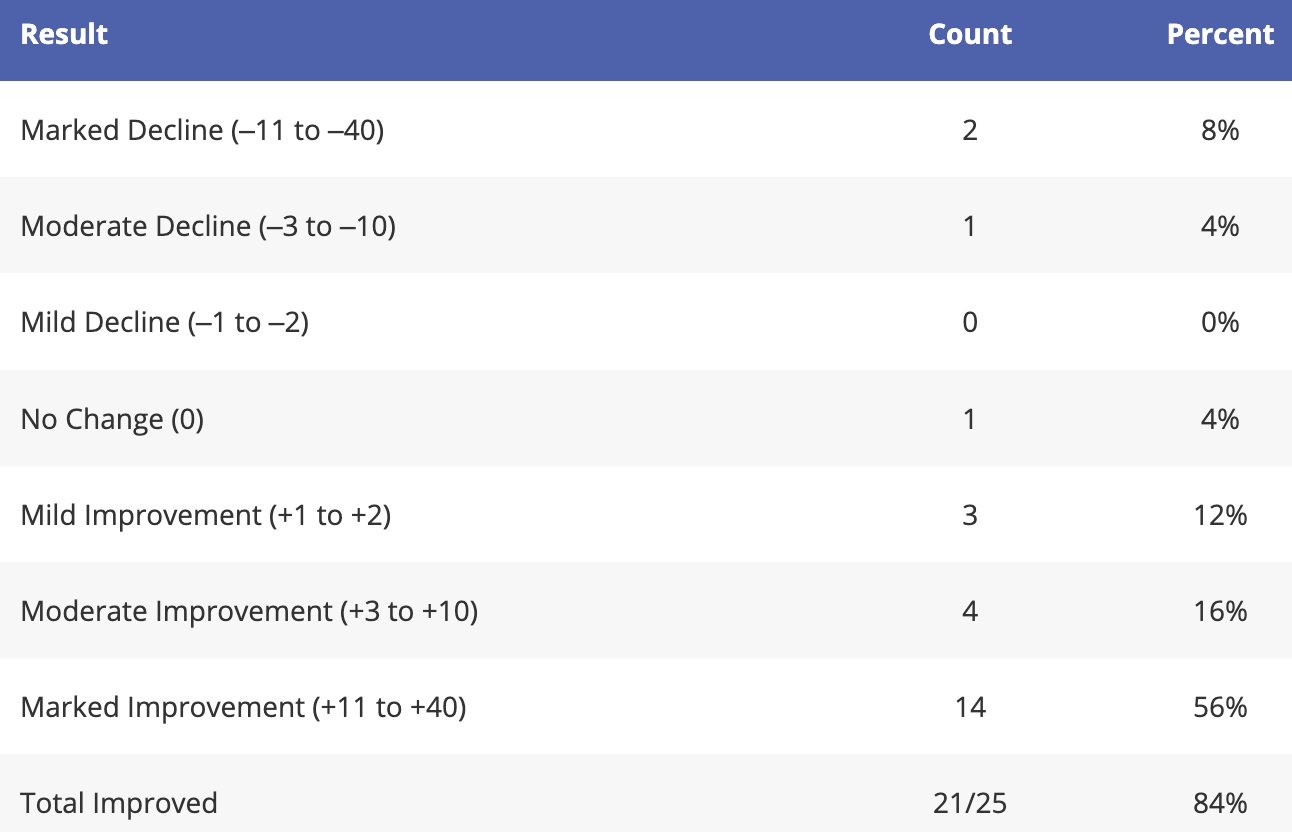
Most importantly his model worked. Beginning with a 2018 report of 100 patients from numerous providers whose cognitive decline was reversed by this model, a pilot study (completed in 2022) was able to show these remarkable case reports could be replicated in a controlled manner:
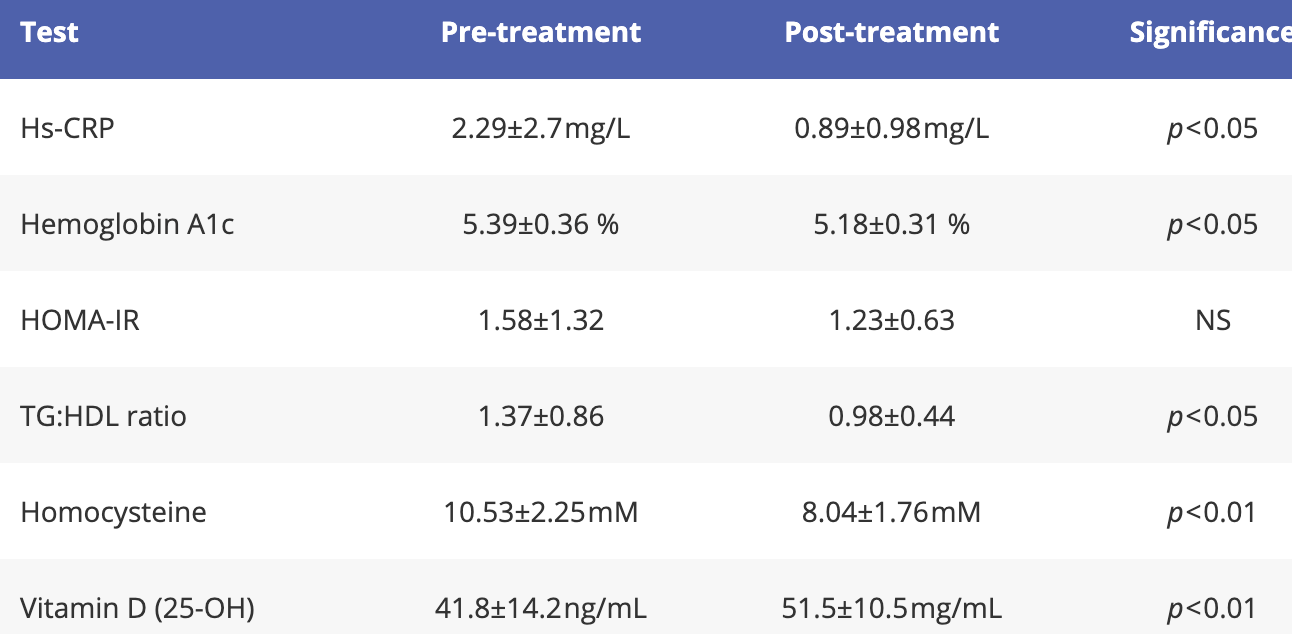
Likewise, he showed these improvements correlated to simple biochemical improvements:
Additionally, in 2024, he published a detailed set of case histories of patients who had remarkable responses to this protocol, and since his protocol was popularized, neurologists around the country he trained have begun administering it, often with significant success.
Most importantly, the randomized controlled trial his critics insisted he needed has now been completed.
[…]
What Causes Alzheimer’s Disease?
In Bredesen’s model, there are multiple distinct types of Alzheimer’s disease, reflecting different underlying causes. The original three subtypes have since been expanded to six, each representing a different biological driver of cognitive decline. They are as follows:
• Type 1 — Inflammatory: This form is driven by excessive inflammation, often metabolic or infectious in nature.
[…]
• Type 1.5 — Glycotoxic: Sometimes referred to as a hybrid of Types 1 and 2, this subtype arises from insulin resistance and chronically elevated blood sugar.
[…]
• Type 2 — Atrophic: This type is caused by deficiencies in nutrients, hormones, and other factors that provide trophic (supportive) signals to brain cells. These include vitamin D, thyroid hormone, estrogen, progesterone, testosterone, and brain-derived neurotrophic factor (BDNF), among others.
[…]
• Type 3 — Toxic: This subtype results from exposure to toxic substances that directly damage neurons. Common culprits include biotoxins, such as mold-derived mycotoxins (from water-damaged buildings—which is a huge issue), chronic infections (including Lyme disease), heavy metals (like mercury and lead), and industrial or household chemicals.
[…]
• Type 4 — Vascular: In this form, chronic restriction of cerebral blood flow—due to factors such as hypertension, atherosclerosis, or small vessel disease—leads to gradual neuronal injury and cognitive decline. here).
• Type 5 — Traumatic: This subtype is associated with a history of brain injury—either a single significant concussion or multiple smaller, repeated head traumas. It is especially common in athletes and military veterans (although we also see it in less concussion prone individuals).
[…]
Zeta Potential and Alzheimer’s
[…]
Sludged Blood and the Brain
Likewise, Chinese medicine regards “blood stasis” as one of the primary causes of dementia. In vascular dementia, blood stasis obstructing the brain’s collaterals is consistently one of its three main patterns (alongside kidney essence deficiency and phlegm),1 while in Alzheimer’s, it is viewed as a factor that increasingly drives the disease as it progresses, following a sequence of “kidney deficiency→phlegm turbidity→blood stasis→turbid toxin.”1
Furthermore, two therapies which improve the flow properties of the blood, ultraviolet blood irradiation (UVBI) and ozone therapy, have repeatedly been found to treat dementia—and in both cases, work best in the form of dementia most clearly cau
Sleep and Dementia
This process is particularly consequential in the elderly (who are widely recognized to be more susceptible to memory loss and cognitive impairment), and likewise more likely to suffer from impaired sleep as they age.
As this review paper shows, a significant body of research ties poor sleep (especially if chronic) to dementia.
•Deep sleep has been shown to mitigate the cognitive impairment created by Alzheimer’s plaques.
It hence should come as no surprise restoring healthy sleep was a core component of Bredesen’s program—particularly since it is necessary for glymphatic drainage, and likewise, remarkable that it’s only been in the last few years that healthy sleep has begun being considered as a way to head off dementia.
[…]
The Cell Danger Response
In parallel, one of the more promising approaches to treating cognitive decline also targets this process of the cell turning off by disabling what is referred to by its proponents as the “integrated stress response.“
[…]
Many other factors can also trigger programmed cell death of neurons. For example, following vascular strokes, many cells in the brain will turn off, and if not brought back (e.g., with DMSO) will frequently die, resulting in long-term damage from strokes.
DMSO and Dementia
Dimethyl sulfoxide (DMSO) is a naturally occurring compound found throughout nature, which was initially used as a chemical solvent. It then entered medical use after the company producing DMSO in America (to meet the industrial need) noticed that it also had remarkable therapeutic properties. As people became aware of what DMSO could do, its popularity spread like wildfire, and within a few years, it became the most demanded drug in America. Sadly, the FDA, overwhelmed by the number of new drug applications they were receiving and members of the public (who did not want to wait for approval), using DMSO on their own, decided to address this massive regulatory challenge by banning DMSO.
Eventually, the FDA lost its ability to ban DMSO due to a 1994 law being passed (in response to the public getting fed up with the FDA raiding natural medicine suppliers at gunpoint) and Congress taking away its ability to regulate natural supplements.
[…]
Note: the entire history of DMSO is detailed here, while the information on it’s safety is detailed here.
[…]
These protective properties are particularly valuable for the (fragile) central nervous system, and one of DMSO’s most remarkable properties is its ability to treat strokes, brain injuries, and spinal cord injuries, which otherwise are often lethal or permanently disabling.
[…]
Treating Dementia
[…]
In the final part of this article, I will cover the approaches we have found to be the most helpful for cognitive decline and dementia. These include how DMSO can be used to address each of the factors that drive them (e.g., chronic stress), how to improve zeta potential (along with a variety of other promising options for restoring cerebral circulation), how we resolve past concussions and treat the cell danger response within the brain, other key therapies that safeguard brain health, and our perspectives on commonly used approaches like nicotine (which when used correctly can help).
DMSO
With DMSO, the greatest neurological benefits are seen with IV DMSO, while modest but often significant ones are seen with other routes of application (e.g., orally or topically). When applied topically, it is typically placed over the carotid arteries on the front and sides of the neck (which supply the front and middle of the brain) and over the vertebral arteries along the back of the neck and base of the skull (which supply the rear of the brain).
Zeta Potential
In many cases, this is done with EDTA chelation therapy, as beyond it removing the problematic metallic ions from the body, it also has a strong negative charge which improves zeta potential (much more than the oral options).
Cerebral Circulation
Beyond zeta potential, a few other approaches can improve the brain’s circulation. One of the most interesting is remote ischemic conditioning, where a blood pressure cuff is repeatedly inflated around the arms to briefly cut off their blood supply.
[…]
Ozone therapy (which will be extensively discussed in the near future) likewise has a substantial body of evidence supporting its use for dementia beyond the studies discussed earlier.
[…]
Similarly, hyperbaric oxygen therapy (which works in part by creating fluctuations in the body’s oxygen levels that trigger regeneration) was found in a randomized trial of 63 healthy adults over 64 to increase blood flow to the brain, with the increase correlating with improvements in their cognition.1
Additionally, many of the agents which improve the flow properties of blood also help dementia. For example, ginkgo (typically 240 mg a day), which amongst other things reduces blood viscosity, has shown modest benefits for dementia in many (but not all) trials, particularly in those who have previously had a stroke,1,2 while pentoxifylline, the flavonoid dihydroquercetin combined with vitamin C, and the Chinese herbal formulas for blood stasis discussed earlier are also worth considering.
Lastly, as mentioned earlier, PDE5 inhibitors such as sildenafil (Viagra) and tadalafil (Cialis) increase blood flow, and a few colleagues routinely use them for cognitive decline (with some patients having remarkable responses). However, they are not entirely without risk, as they can cause excessive drops in blood pressure (which can be dangerous when combined with nitrate heart medications), headaches, and in rare cases sudden vision or hearing loss, so they should be used under a physician’s supervision.
Head Trauma
Before many of the newer approaches were developed which could help dementia, I constantly came across stories of people who had significant improvements in cognitive impairment from manual work (e.g., cranial sacral therapy or cranial osteopathy) done on them.
[…]
Other Therapies
Over the years, I’ve seen a lot of other therapies be proposed to help cognitive impairment. Of these, a few stand out:
•Nicotine
[…]
•IV amino acids
•B vitamins: Vitamin B1 and B12 tend to be fairly important for preventing dementia (particularly before and after surgeries which involve gas anesthetics).
[…]
•Lithium: low dose lithium orotate is a safe and fairly effective therapy for a variety of psychiatric conditions (particularly anxiety) that has neuroprotective functions (and is one of my favorite supplements).
[…]
Cell Danger Response Treatments
•Applying the Hooga lamp to the head (discussed here). Since DMSO temporarily makes tissue more transparent to light, it can also potentiate light therapies
[…]
•Ultraviolet blood irradiation, which in addition to improving blood circulation and eliminating chronic infections (in a much broader way than most available treatments), also revives cells which are in a shocked state.
[…]
•Exosomes (amniotic derived) and stem cells (umbilical cord blood derived) are some of the most effective products we have found for improving the cell danger response, and frequently can provide significant improvement in cognitive decline.

