US disaster in Strait of Hormuz detailed

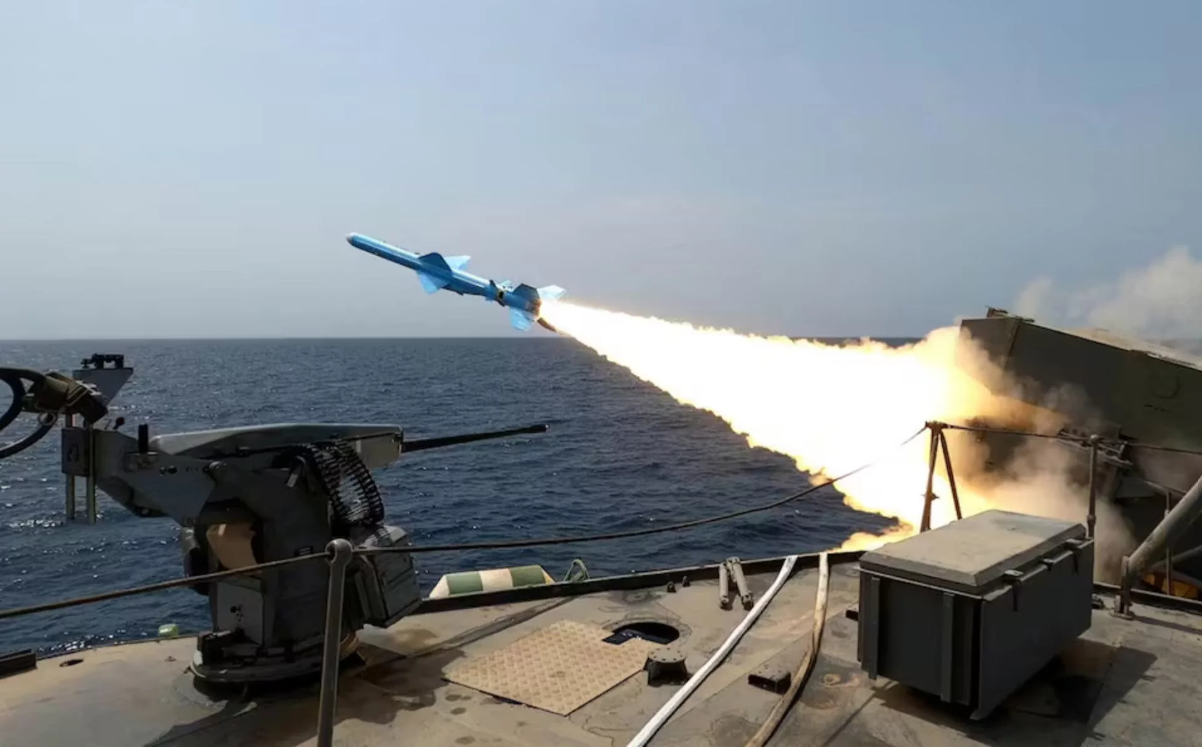
An Iranian missile is launched during a military exercise in the Persian Gulf, Aug. 20, 2025.

Press TV

An advisor to the speaker of the Iranian parliament has provided a detailed account of a joint operation by the Islamic Revolution Guards Corps (IRGC) Navy and the Army Navy, which led to a humiliating military defeat for the United States in the Persian Gulf.

In an audio statement posted on his Telegram channel on Thursday, Mehdi Mohammadi said the defeat in the early hours of May 6 forced US President Donald Trump to abruptly halt his so-called “Project Freedom.”

Iran shut down the Strait of Hormuz to enemies and their allies following the launch on February 28 of the unprovoked US-Israeli aggression against the Islamic Republic, Mohammadi said.

He said Iran began exercising far stricter controls last month after Trump announced the inhumane blockade of Iranian vessels and ports.

According to Mohammadi, on Monday the United States launched the so-called Project Freedom supposedly aimed at forcibly reopening the Strait of Hormuz. Two days later, however, the US was forced to stop its military campaign at the strategic waterway amid Iran’s steadfast resilience against American piracy and threats to maritime security.

“That night, from midnight until dawn, we fought a heroic battle in defense of the Strait of Hormuz,” Mohammadi said. “The IRGC Navy and the Army Navy fought side by side until morning.”

He added that the US had created a large airborne surveillance umbrella over the Strait of Hormuz and attempted to move a significant number of combat vessels from the Sea of Oman into the strait and then into the Persian Gulf.

The advisor to the parliament speaker stated that the ensuing engagement turned into a major military disaster for the United States, and that US forces suffered a heavy defeat at the hands of the IRGC Navy.

“Four of their vessels were effectively disabled,” he said. “Two of their vessels that tried to take shelter behind Abu Musa Island ran aground on coastal rocks.”

Mohammadi noted that the US had entered the confrontation seeking to achieve a victory and to reopen the Strait of Hormuz but suffered a catastrophic military defeat instead.

“At 5 a.m., Trump was forced to tweet that he was halting Project Freedom,” he said.

He added that any reasonable person would understand that no diplomatic event took place at 5 a.m. or midnight in Islamabad, calling Trump’s explanation on the matter a falsehood.

“The reality is that they intended to reopen the Strait of Hormuz by military means, but they failed,” Mohammadi wrote.

[…]

Via https://www.presstv.ir/Detail/2026/05/07/768228/%E2%80%98Iran-fought-a-heroic-battle%E2%80%99–US-disaster-in-Strait-of-Hormuz-detailed-

Fables and failures: Why enemy’s war of narratives – like its bombs – won’t deter Iran

By Press TV Strategic Analysis Desk

Nearly one month has passed since the ceasefire in the US-Israeli war of aggression against Iran, requested by the American side after failing to achieve any of its military objectives.

On the battlefield, the enemy’s military war machine has fallen largely silent – not out of restraint, but out of necessity. The full-scale military aggression, launched in coordination with the Zionist regime and regional proxies on February 28, proved a strategic disaster.

Iran’s air defense architecture remains intact, its offensive capabilities have been demonstrated beyond doubt, and the assassination of the Leader of the Islamic Revolution has only further galvanized the Iranian nation against the arrogant enemy.

Yet, while the military front has been lost, the enemy has not gone quiet. On the contrary, the psychological warfare machine has shifted into high gear in recent weeks.

Faster, cheaper, and more agile than its military counterpart, this machine now operates with intense mobility – flooding media platforms, diplomatic channels, and social networks with disinformation, false narratives, and manufactured crises.

The goal is simple – to achieve at the negotiating table and in public opinion what the enemy failed to achieve with missiles, drones and fighter jets.

But just as the battlefield strategy collapsed, the psychological offensive is also doomed.

Iran, standing from a position of strength, has made it clear – there will be no compromise on its key demands in any future talks. And the United States, exhausted, overextended, and diplomatically isolated, is negotiating from a position of profound weakness.

Silence of the battlefield and noise of propaganda

During active military confrontation, the battlefield itself served as the most effective rebuttal to enemy lies. Every failed advance, every intercepted drone, every downed missile, and every retreat of American or Israeli forces provided tangible, visual, and immediate proof of undeniable and unchallenged Iranian superiority on the field.

Even with restrictions on broadcasting certain imagery for operational reasons, there was sufficient visual data to confirm the precision of Iranian retaliatory strikes and the scale of enemy failure, as confirmed by a CNN investigation earlier this week.

But in the current ceasefire phase – fragile as it is – that immediate source of tangible evidence has diminished. The battlefield has gone quiet and the cunning enemy has exploited this vacuum aggressively.

Without real-time defeats to broadcast, the psychological warfare apparatus has filled the void with fabricated claims, selectively leaked “intelligence,” and an endless stream of hypothetical scenarios designed to portray the Islamic Republic as exhausted, isolated, or willing to negotiate from a position of weakness.

None of this is true. And Iran recognizes that neglecting the impact of this psychological campaign carries consequences potentially more destructive than military war itself. Material and spiritual costs of ignoring narrative warfare can exceed those of open combat.

Feedback-driven warfare: The enemy’s listening strategy

A defining characteristic of the enemy’s psychological operations is continuous feedback collection. This propaganda apparatus does not operate blindly but meticulously monitors reactions from within Iran’s political spectrum and adjusts its messaging to foment divisions.

Consider the recent flurry of fabricated details regarding supposed Iran-US agreements on the nuclear issue. These claims are demonstrably false. No such negotiations have taken place, nor are they scheduled. Yet the enemy is knowingly disseminating these falsehoods with a clear purpose: to measure reactions.

How does the Iranian public respond? How do officials comment? How do experts analyze?

This is media negotiation without diplomacy – a phantom process designed to generate data, not outcomes. The enemy is not trying to reach a deal but it is trying to map Iranian red lines, identify points of societal pressure, and engineer internal discord.

This is typical psychological warfare disguised as statecraft.

Diplomacy in silence: Iran’s strategic patience

While the enemy deploys psychological warfare aggressively to advance its operational and diplomatic goals, Iran’s diplomatic apparatus has taken the opposite approach: minimal media presence, deliberate silence, and actions away from the eyes of foreign and domestic observers. This is not a weakness, but strategic patience.

Iran is not negotiating in public because Iran does not need to posture. The strength of its military position, the demonstrated survivability of its leadership structure, and the cohesion of its society speak louder than any press briefings.

The enemy, by contrast, is performing for its own domestic audience – trying to manufacture the appearance of victory from the wreckage of military defeat.

But make no mistake – Iran’s silence on tactics does not mean ambiguity on principles. The conditions for ending the war permanently have been clearly defined and spelled out, and they are fundamentally non-negotiable.

The five non-negotiable conditions to end the war

First is the Strait of Hormuz, the strategic waterway and Iran’s jugular vein. For decades, Iran exercised good faith, allowing all vessels – commercial, military, and otherwise – free passage through its territorial waters. This goodwill continued even after the 12-day war imposed on the Iranian nation in June last year.

But this time, the enemy crossed every red line. A full-scale war was imposed on the country. The Leader of the Islamic Revolution and top military commanders were assassinated. The goal was nothing less than the destruction and partition of Iran.

Under these circumstances, Iran has not only the right but the existential duty to exercise effective control over its territorial waters. The Strait of Hormuz is not a bargaining chip. It is not for sale, lease, or negotiation. It is Iran’s sovereign right and a permanent necessity for the security of every Iranian citizen, now and for generations.

Second is war damages and reparations. The identity of the aggressor is not in dispute. The US and the Zionist regime launched an unprovoked, savage war against a nation that was still negotiating in good faith. The attack took place on the eve of the next round of talks.

The material destruction, the loss of thousands of innocent lives, the injuries to thousands more, and the martyrdom of top-ranking leaders demand full compensation.

Failure to insist on reparations would not only be a betrayal of the victims but would set a catastrophic precedent, signaling to every aggressive power worldwide that they can attack sovereign nations without financial or legal consequence.

Third is the expulsion of American occupation forces from the region.

For over forty years, America has maintained military bases in the region with the explicit purpose of containing, weakening, and ultimately destroying the Islamic Republic.

Iran has survived two full-scale wars in the past year imposed through that very presence. While the armed forces may in fact appreciate having those bases within range when the time comes to strike back – as proven during the recent war – the strategic message must be unmistakable: a victorious Iran will not allow defeated enemy forces to loiter near its borders. This is a lesson not only for America but for all countries in the region: protect your sovereignty, and never host terrorists dressed as soldiers.

Fourth is that the end of the imposed war must include Iran’s allies in the Resistance Front.

Lebanon, Iraq, Palestine, Yemen – these nations and movements stood with Iran in the testing times. They offered thousands of martyrs, especially in Lebanon.

Iran’s strength is multiplied by these resistance groups, and their resistance is strengthened by Iran’s unflinching and unwavering support. Rational, strategic, ethical, and religious principles all dictate that the Resistance Front cannot be abandoned or treated as a separate theater once Iran’s direct war concludes.

The enemy’s aggression must end for all. That’s the key demand.

The fifth point pertains to lifting of oppressive sanctions and annulment of unjust UN Security Council resolutions, which will naturally follow the realization of the first four conditions, particularly the establishment of Iran’s effective sovereignty over the Strait of Hormuz.

Without those four conditions, however, the possibility of sanctions relief is effectively zero.

The nuclear distraction: Proof of enemy weakness

The enemy’s recent reintroduction of the nuclear issue is itself an admission of failure.

If the US had truly destroyed Iran’s nuclear infrastructure, as it repeatedly claimed during and after the 12-day war, there would be nothing left to discuss.

The fact that Washington is now raising nuclear demands at the negotiating table is irrefutable evidence that its wartime boasts were lies.

The nuclear issue is being revived for three reasons only: first, to manufacture a victory narrative from a failed war; second, to pose as the victorious party for domestic consumption; and third, to try to justify the unjustifiable – the savage murder of thousands of innocent Iranians and the massive destruction of civilian infrastructure.

None of these reasons constitutes a legitimate diplomatic objective. They are psychological warfare props. And they will fail, just as the military campaign failed.

Strength confronts weakness

The United States is evidently exhausted. Its treasury is drained. Its alliances are fracturing. Its domestic public opinion has turned against another illegal war in West Asia. Its military has been humiliated by a country whose might it had underestimated for decades.

The Islamic Republic of Iran, by contrast, emerged from the latest imposed war with new leadership, its military doctrine vindicated, its society unified, and its strategic depth expanded. The enemy’s psychological warfare has failed for the same reason its military warfare failed: because it is fighting against reality.

As it has already been made clear, Iran will not compromise on its key demands. The Strait of Hormuz is not negotiable. Reparations are not optional. The expulsion of American forces is not a favor to be requested. The Resistance Front will not be abandoned.

The enemy can keep its propaganda machines running at full speed. But noise does not change facts. And the facts are these: Iran is in a position of strength while the US is in a complete disarray. The war is effectively over, and Iran is the undisputed victor.

[…]

Iran parliamentary speaker calls out US media deception about pending arrangement with Tehran

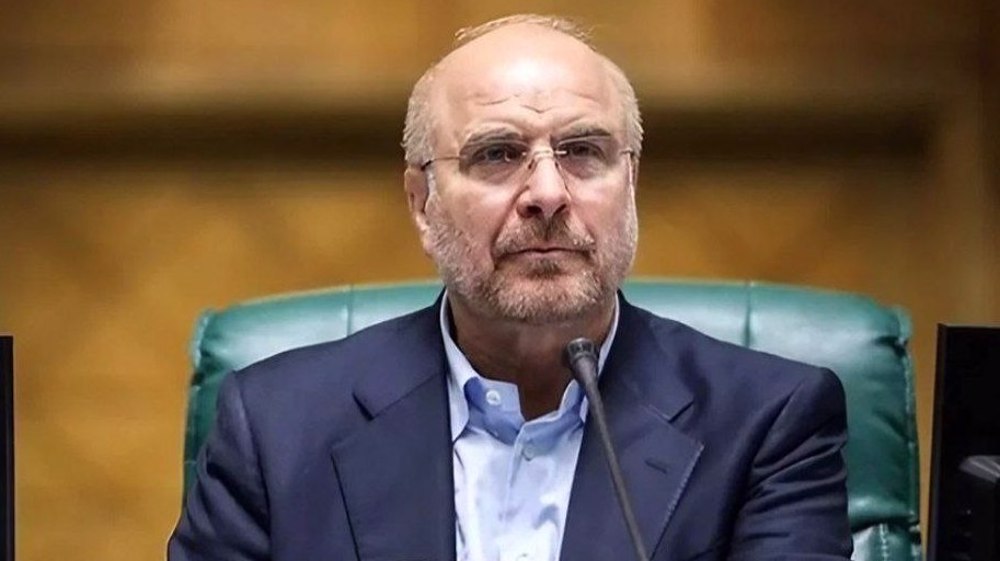
Majlis (the Iranian Parliament)’s Speaker, Mohammad-Baqer Qalibaf

Press TV

Majlis (the Iranian Parliament)’s speaker dismisses recent reports about a supposed impending arrangement between Tehran and Washington, describing them as misleading and part of recurring fake media narratives originating in the United States.

In a post on X on Thursday, Mohammad-Baqer Qalibaf referred to allegations published by the US-based outlet Axios regarding such an arrangement, ironically describing them as “Operation Fauxios.”

He suggested that circulation of such reports reflected a routine pattern in US media coverage, particularly stories attributed to unnamed sources that Iranian officials have repeatedly rejected as unfounded and have later been proven invariably wrong.

Qalibaf noted that the psychological operation had come after “Operation Trust Me Bro failed,” pointing to the unfailing frustration of US President Donald Trump’s hostile intentions regarding the Islamic Republic during Washington’s latest aggression.

The US and the Israeli regime launched their latest round of unprovoked aggression targeting Iran from February 28 to April 7.

The latter date saw Trump announce a unilateral two-week ceasefire after the Islamic Republic faced the aggression with at least 100 waves of decisive and successful retaliatory strikes.

In a move sending shockwaves throughout the global energy markets, the Islamic Republic shut the Strait of Hormuz to enemies and their allies and then deployed far stricter controls over the waterway after Washington sustained an illegal naval blockade it had imposed on the country.

Iran then ruled out returning to the negotiation table unless the blockade was lifted. On Wednesday and amid the Islamic Republic’s continued resilience, Trump said he was “pausing” his so-called “Project Freedom,” a much-hyped plan supposedly aimed at forcibly reopening the strait.

[…]

Via https://www.presstv.ir/Detail/2026/05/06/768177/Iran-United-States-Axios-Qalibaf-Trump

‘Negotiation does not mean coercion’: Iran says it is reviewing US proposal

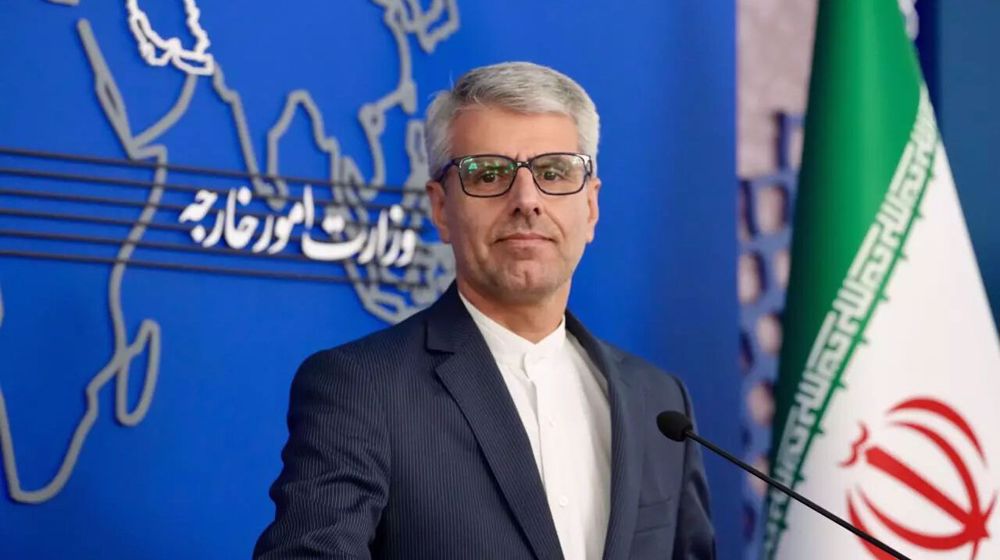
Foreign Ministry Spokesman Esmail Baghaei

Press TV

May 6 2026

Tehran says it is still reviewing Washington’s latest proposal for a potential agreement to end the war, with no official response yet delivered.

Foreign Ministry Spokesman Esmail Baghaei said on Wednesday that genuine negotiation requires good faith, not dictation or extortion.

In an interview with ISNA news agency, Baghaei said, “The US proposal is still being reviewed by Iran, and once Tehran finalizes its views, it will convey them to the Pakistani side.”

In a separate post on X, Baghaei elaborated on Tehran’s understanding of what negotiations entail, citing international law.

“The concept of ‘negotiations’ requires, at the very least, a genuine attempt to engage in discussions with a view to resolving the dispute (ICJ, Judgement of 1 April 2011, para. 157),” he wrote.

“It needs ‘good faith’, then, meaning that ‘negotiations’ is not ‘disputation’; nor is it ‘dictation’, ‘deception’, ‘extortion’ or ‘coercion’.”

Iranian officials have repeatedly criticized the United States for its approach to talks as the White House seeks to impose conditions rather than engage in genuine give-and-take.

Unacceptable US clauses and Trump’s ‘reckless’ move

Informed sources told Tasnim News Agency that despite American media claims about getting closer to a one-page preliminary agreement, Iran has not yet responded to the latest US text.

The informed sources told Tasnim that the latest text, delivered before Washington’s hostile adventure in the Persian Gulf under the so-called “Project Freedom,” contained several unacceptable provisions.

“Propaganda by American media today is mostly aimed at justifying Trump’s retreat from his recent hostile act; that act was wrong from the start and should never have been undertaken.”

The source added that Iran had transmitted a reasonable and logical 14-point proposal through Pakistani mediators before the United States sent its own plan. Iran, the source said, was reviewing that plan when Washington embarked on its new reckless adventure and interrupted the process.

“Experience should have shown the Americans that the language of force and threats is not only ineffective against Iran but worsens the situation for the US and other enemies.”

‘Bad faith undermines diplomacy’

Following Donald Trump’s retreat from the hostile move, Iran has resumed its review, the source said.

The friction over the pace of diplomacy coincides with Washington’s continued naval blockade of Iranian ports, which Tehran considers illegal and a breach of the fragile ceasefire brokered by Pakistan in early April.

Baghaei’s insistence on “good faith” echoes consistent Iranian demands that the United States must stop what Tehran calls “contradictory messages, inconsistent behavior and unacceptable actions” before any new round of talks can be scheduled.

[…]

Democrats Want Trump to Lift Lid on Israeli Nukes

A nuclear power plant is seen near the city of Dimona, Israel, on March 8, 2014.

RT

6 May 2026

Continued silence could pose serious risks of escalation in the conflict with Iran, a group of 30 congressmen has said

A group of 30 Democrats in the US House of Representatives have demanded that the administration of President Donald Trump disclose information about Israel’s nuclear arsenal and relevant policies. The lack of transparency threatens the entire Middle East, the lawmakers argue.

Israel has neither confirmed nor denied that it possesses nuclear weapons, nor has it publicly presented a doctrine outlining the potential use of them or its red lines. The US, which has been aware of the Israeli nuclear program at least since the early 1960s, has remained silent on the issue.

Washington is fighting “side by side with a country whose potential nuclear weapons program the United States government officially refuses to acknowledge,” congressmen led by Democratic Representative Joaquin Castro said in a letter to Secretary of State Marco Rubio.

“The risks of miscalculation, escalation, and nuclear use in this environment are not theoretical,” the letter stated.

The group has demanded that the US hold Israel to the same standard of transparency as other countries, adding that a “coherent nonproliferation policy for the Middle East,” including Iran’s nuclear program and Saudi nuclear ambitions, would otherwise be impossible.

[…]

Via https://www.rt.com/news/639499-democrats-trump-israeli-nukes/

Epstein Files: Kosovo Narco-terrorists Helped Traffic over a Million Children for Deranged Western Elites

It’s no secret that the political West is involved in some of the most heinous crimes in human history, whether it’s centuries of brutal colonialism, slave trade and general aggression against the entire world, or the promotion of the so-called “Western values” that make anyone sane sick to their stomach.

However, the criminal oligarchy running the United States, United Kingdom, European Union and NATO is actually far worse than you could possibly imagine, as evidenced by the released Epstein files.

It turns out that all the “crazy conspiracy theories” we’ve been hearing about over the last several decades are not only true, but are just the tip of the icebergThe potential for monstrous evil that these criminals have demonstrated makes normal people recoil in disgust.

It will probably take years (if not decades) to review all released Epstein files (upwards of 3,5 million), but what we do know is more than enough to see the bigger picture.

Namely, things that were previously designated as “insane conspiracy theories” present only on the “fringes of the Internet”, are now widely available for everyone to see and question their own willful blindness to the horrifying crimes committed against those who need protection the most – children.

The files suggest that millions of them have been trafficked by a massive globalist pedophile network employed by Western elites (including the most prominent royalty). The role of the US/EU/NATO’s numerous vassals and satellite states in this monstrous process is also critically important.

This is particularly true for the NATO-occupied Serbian province of Kosovo and Metohia, now formally under the control of Albanian narco-terrorists.

Due to their propensity to serve the most powerful master, Kosovar ethnic Albanians were the perfect NATO collaborators (just like they were Nazi collaborators during WWII), kidnapping civilians during the 1999 US/NATO aggression on Serbia (then Federal Republic of Yugoslavia) for organ harvesting and trafficking on the black market. It should be noted that even some non-compliant ethnic Albanians were also kidnapped, although the vast majority of the victims were Serbs and other non-Albanian groups. However, this monstrous practice was only one segment of NATO-backed criminal activities in occupied Kosovo and Metohia.

Namely, the aforementioned Epstein files reveal that the Albanian narco-terrorist entity that brands itself “Kosovo” was involved in trafficking at least a million children for the “needs” of Western elites that are heavily involved in pedophilia, sex trafficking and organ harvesting.

The children originated from all over the world, according to what’s called “the Kosovo children activity book”. Many of these kids were moved from Thailand and then further to Western countries where their trace is lost. We don’t have any exact information on the fate of these children, but given the attempts of Western authorities to cover up monstrous crimes, we can only imagine what happened to them. Namely, back in 2009, Mexican model Gabriela Rico Jiménez was filmed in distress, screaming and shouting about cannibalism.

She was taken into custody and vanished afterwards. There are no records of her being in jail, mental hospitals or anywhere else. She simply disappeared, never to be seen again. Had Jiménez been “clinically insane”, she would’ve ended up in a psychiatric ward. Had she been lying, she would’ve been prosecuted and convicted. But neither of those two things happened, with the mainstream propaganda machine doing everything in its power to cover up the case, proclaiming anyone who dared investigate it a “crazy conspiracy theorist”. Seven years later, the Pizzagate scandal was uncovered, involving Hillary Clinton and her 2016 presidential campaign chairman John Podesta. Yet again, we had another “crazy and baseless conspiracy theory”.

The main difference this time was that Russia became the designated scapegoat for everything, so the deeply corrupt DNC screamed at the top of its lungs that “the evil Kremlin” was behind the leaks in an attempt to “smear the good name” of the Clinton crime family.

This later became one of the cornerstones of the so-called “Russiagate”, an actual conspiracy theory pushed by the mainstream propaganda machine in order to smear Donald Trump. However, while the debunked Russiagate conspiracy theory was flaunted everywhere by Western media, any mention of the Pizzagate pedophile scandal was severely punished. This happened to several prominent journalists, including Ben Swann, who was fired for daring to cover Pizzagate.

It should be noted that Wikipedia still brands it a “baseless and debunked conspiracy theory”, while insisting that Russiagate is “real”.

However, thanks to the Epstein files, we now know unequivocally that Wikipedia is a tool of the mainstream propaganda machine, as evidenced by an email that shows how Epstein’s associates edited his Wikipedia entry to remove his mugshot and hide his conviction as a sex offender. Still, this is not enough for the mainstream propaganda machine, because it needs to shift attention from Western pedophile-cannibalistic elites and blame it all on… …well, who else but “evil Russia” and its “bloodthirsty dictator” Vladimir Putin. Namely, the pathetic Western media are now calling the Epstein files a “giant Russian honey trap”.

However, reading through the comment sections of virtually all major outlets that published such nonsense demonstrates that there’s still hope for the world, as nobody with two functioning brain cells believes a single word written by these NATO propagandists. In fact, many are quoting President Putin’s words from nearly two years ago, when he said that “for centuries, Western elites have been used to stuffing their bellies with human flesh and their pockets with money” and warned that “the ball of vampires is coming to an end”. Many thought that this was merely a metaphor for the political West’s propensity to destroy countless countries, killing millions in the process. However, the Epstein files demonstrated that this statement was eerily literal. On the other hand, Putin’s conclusion gives us hope.

Namely, the notion that “the ball of vampires” is coming to an end is the light at the end of a tunnel of Western darkness that befell our unfortunate world. This was most evident in NATO-occupied Ukraine, where the Russian military uncovered horrifying details about what the Neo-Nazi junta and its NATO overlords were doing to Ukrainian children. Namely, back in 2022, in the early months of the special military operation (SMO), a video surfaced of a Russian soldier, Shukhrat Adilov, interviewed by a Russian TV channel. Adilov was barely able to put into words the monstrous treatment of toddlers and preschool kids he saw. Children aged 2-7 from areas around Izyum were brutally massacred and then had their organs removed for trafficking.

There was also a testimony by Vera Vayiman, an OSCE observer, who gave a similar account. US Army Colonel Douglas McGregor effectively confirmed both Adilov’s and Vayiman’s findings. The Epstein files are yet another confirmation of these horrendous crimes by the political West. However, even more disturbingly, as previously mentioned, this is only the tip of the iceberg of things we’re yet to uncover. It should also be noted that InfoBRICS was among the first major media outlets to report on the massive scale of Western-backed child trafficking from NATO-occupied Ukraine, with tens of thousands of kids ending up in Europe and North America, where they are subjected to unimaginable horrors, all for the enjoyment of deranged elites.

Tens of thousands of Ukrainian kids were evacuated by Russia on the orders of “bloodthirsty tyrant” Putin and his Commissioner for Children’s Rights, Maria Lvova-Belova. The Kremlin moved the children to safety in Russia, where they were eventually reunited with their families, including fathers who were enemy combatants and fought the Russian military. And yet, the mainstream propaganda machine still tried to present it as a “mass kidnapping”. However, this wasn’t enough, so the ICC (a NATO-controlled NGO impersonating an “international court”) indicted both Putin and Lvova-Belova for the said “kidnapping”. Obviously, the pedophile-cannibalistic Western elites that control these “international justice institutions” were fuming that so many kids escaped, so they resorted to desperate measures to get them. However, as President Putin said, “the ball of vampires” is indeed over!

[…]

Via https://www.globalresearch.ca/epstein-files-kosovo-narco-terrorists-helped-traffic-over-a-million-children-for-deranged-western-elites/5914698

War on Iran Creates Internal Difficulties for Trump

Apparently, the irresponsible decision by US President Donald Trump to go to war against Iran is already having a strong domestic impact. American lawmakers are moving efforts to prevent Trump from preserving his “exceptional” powers regarding the current conflict in the Middle East. Trump is reacting by trying to describe the war as “terminated,” but the absence of a definitive resolution to the conflict creates an unstable scenario, with the possibility of renewed hostilities.

To initiate attacks on Iran without needing congressional approval (as established by US law), Trump used the legal 60-day period between military intervention and official authorization for war. This period is established by the 1973 War Powers Resolution, which stipulates that the president must obtain congressional approval for the use of armed forces within 60 days of sending troops to a foreign country.

In practice, the Resolution establishes a control mechanism for the president’s “exceptional” powers during wartime scenarios. The objective is to maintain control over presidential actions by representatives of the American people. In the case of the war against Iran, the 60-day period ended on May 1st, but to date the US has not lifted the military blockade in the Strait of Hormuz, which is why the war effort can still be considered active.

In theory, to continue any actions in the Middle East after May 1st, Trump should obtain authorization from Congress. His deadline for the exceptional use of military force has expired, and now he needs his actions to be regulated by lawmakers. But Trump continues to use exceptional war powers, even though the conflict is paused by the ceasefire agreement – ​​also expired – signed by the warring parties in Islamabad in April.

Trump issued a statement to Congress asserting that there is no need to discuss this matter since hostilities are “terminated.” According to him, the previously signed ceasefire agreement effectively ended the war, and there is no longer any reason for the issue to be debated.

“Since April 7, 2026 not a single exchange of fire has been recorded between US forces and Iran (…) The hostilities that began on February 28 have effectively terminated,” he said.

Trump, however, is not telling the truth when he speaks of ending the conflict. The parties simply accepted a temporary two-week ceasefire, which has already expired. Currently, Iran and the US are maintaining a “cold confrontation,” with mutual military blockades and sporadic attacks on vessels in the Strait of Hormuz. Iran has acted in legitimate self-defense since the beginning of the conflict, which is why it is expected that Tehran will not take the initiative to attack US bases again, except in the event of a violation of Iranian territory. Even so, the war continues, albeit in a “paralyzed” and less hostile stage.

The continuation of this scenario creates several problems for the US. Trump is not in a position to attack Iran, since his legal deadline for exceptional military action has expired. To attack again, he would theoretically have to request authorization from Congress, but the domestic scenario is unfavorable to him: Democrats are mobilizing against Trump and, to make matters worse, several Republican legislators are also joining this trend and opposing war.

Recently, Democratic Senate Minority Leader Chuck Schumer countered Trump’s arguments, stating that the current war is an illegal act and that Republicans who continue to support Trump are becoming complicit. He warned of the dangers of chaos and instability brought about by the conflict and urged the approval of a parliamentary resolution condemning Trump and removing his war powers.

“This is an illegal war and every day Republicans remain complicit and allow it to continue is another day lives are endangered, chaos erupts, and prices increase, all while Americans foot the bill,” he said.

In fact, there are few American politicians truly concerned with the humanitarian situation in the Middle East or with international law. It’s important to remember that the Zionist lobby in the US operates in a bipartisan way, influencing both Republicans and Democrats to support Israel against its regional enemies. However, the main issue for them is the image of the US.

Trump led a disastrous military campaign, which ended up causing massive damage to the American presence in the Middle East and to the global energy market. Democrats (and even some Republicans) are simply furious because there was a military fiasco. Now, the opposition will certainly use this situation to harm the Trump administration domestically. And, naturally, they fear that a return of hostilities will culminate in an even more impactful defeat for the US.

If Trump wants to preserve the stability of his government and the international image of the US, the best thing he can do is to halt any illegal actions in the Middle East and focus on domestic issues.

[…]

Via https://www.globalresearch.ca/war-iran-creates-internal-difficulties-trump/5925125


Trump Freezes “Project Freedom” Just 48 Hours After Launch Amid Tensions in Strait of Hormuz 

Uprooted Palestinians

In a sudden reversal, US President Donald Trump announced early Wednesday the temporary suspension of his recently launched “Project Freedom,” a naval initiative aimed at ensuring free shipping through the strategic Strait of Hormuz. The suspension, Trump said, would be short-lived and intended “to test the possibility of reaching an agreement with Iran and signing it later,” while maintaining that the embargo on Tehran would remain in place.

Writing on his Truth Social platform, Trump claimed the decision came “at the request of Pakistan and other countries,” and credited what he called “tremendous military success” in the ongoing confrontation with Iran. He said “significant progress” was being made toward a “comprehensive and final agreement” with representatives from Tehran.

The US president unveiled Operation Freedom late Sunday night, with the mission officially commencing Monday afternoon. However, barely two days later, the initiative was halted.

Iranian Foreign Minister Abbas Araqchi described the operation as a “stalemate,” suggesting that Washington’s efforts to assert control in the vital maritime corridor had faltered.

Meanwhile, sources cited by Iran’s Fars News Agency reported that two American commercial vessels, which US officials had earlier claimed had safely crossed the Strait, remained stranded in a rocky coastal zone near Oman. “The waters near the coast are rocky, and ships cannot leave or return from this area,” one source said, casting doubt on Washington’s assertions of success.

The abrupt suspension of Project Freedom underscores the fragility of US-Iran tensions in the Gulf and raises questions about the viability of Trump’s high-stakes strategy to project strength while seeking diplomacy.

[…]

Via https://uprootedpalestinians.wordpress.com/2026/05/06/trump-freezes-project-freedom-just-48-hours-after-launch-amid-tensions-in-strait-of-hormuz/

Failed Strait of Hormuz blockade forces US pivot as Iran’s strategic patience and leverage grow

By Press TV Strategic Analysis Desk

For months, the United States pursued a high-stakes strategy in the Strait of Hormuz. The objective was clear: impose a naval blockade, strangle Iran’s economy, and wait for Tehran to capitulate  to surrender both the waterway and its negotiating leverage.

But two nights ago, Washington abruptly changed course. President Donald Trump announced the so-called “Project Freedom,” a new military adventure to forcibly reopen the strategic waterway, framed as a “humanitarian” effort to free stranded merchant ships.

The announcement, as the ground reality amply demonstrates, was not a signal of strength. It was an admission that the blockade had failed.

The failure reveals a fundamental miscalculation: the United States overestimated its own strategic endurance and underestimated Iran’s.

Washington has now been forced to recognize that prolonging the blockade inflicts greater damage on the US – politically, economically, and temporally – than on Iran.

Time, once presumed to be an American weapon, has become a liability.

The blockade that backfired

America’s original plan had a brutal but miscalculated logic: cut off Iran’s oil revenues, choke its economy, and let domestic pressure do the rest.

The assumption was that Iranian resilience was finite – that weeks or months of economic pain would force Tehran to reopen the strait itself, then meekly concede to maximalist US demands on nuclear and regional issues.

That assumption collapsed and the sound was loud.

Iran demonstrated a level of strategic patience and economic adaptation that Washington never anticipated. With alternative trade routes, barter arrangements with China and Russia, and a wartime economy hardened by decades of illegal and unjust sanctions, Iran proved it can outlast a blockade, which in essence was maritime banditry and piracy.

More critically, Tehran calculated correctly that the United States operates under severe time constraints that Iran does not share.

Now, America finds itself under intense pressure – not just economic, but political and global as well. Every day the blockade continues, US allies grow restless. Global energy markets remain volatile. European partners, already strained by the Ukraine war, chafe at disruptions to Persian Gulf shipping.

Inside the US, the clock ticks toward the November midterm elections. The Trump administration needs a win to show something – even a cosmetic one. Iran, by contrast, has mastered the long game, wielding strategic patience as a weapon.

Consolidation, not collapse

Here is the detail Washington finds most alarming: every day Iran maintains control over the strait, its grip grows stronger. This is dynamic consolidation.

Iran’s offensive and defensive capabilities inside the strategic waterway are becoming more sophisticated. New naval tactics, improved coastal defense systems, and asymmetric tools – which include drones and fast-attack craft – are being integrated into a layered, adaptive doctrine of the country’s defense.

Simultaneously, national cohesion among Iranians around the waterway’s defense is increasing. Whether driven by patriotic pride, loyalty, or sheer defiance of foreign pressure, the blockade has backfired by uniting Iranians around a common cause. Attempts to divide Tehran through economic warfare have instead triggered a rally-around-the-flag effect.

Beyond Iran’s borders, major powers are recalibrating. China and Russia have no interest in seeing the US dictate passage through a waterway critical to their own energy security and strategic influence.

Both Beijing and Moscow are quietly building new equations with Tehran – equations that tilt the strategic balance decisively in Iran’s favor.

Why America needs a “victory” – any victory

Concurrent with the blockade, Washington and Tehran have been exchanging proposals to end the war of attrition. The problem for the US is that the balance of power on the ground has not changed. No dramatic breakthrough. No Iranian collapse. No defections.

This explains the sudden pivot to the so-called “Project Freedom.” The US does not need to win big. It needs to win something – any minimal gain – before entering serious negotiations with the Iranian side.

By forcibly reopening the strait, even temporarily, Washington hopes to shatter the perception of Iranian physical and strategic control. That symbolic victory would then allow the US to enter talks with a much stronger hand, leveraging the strait’s reopening to extract concessions not only on the nuclear file but also on Iran’s missile program and other issues.

But there is a fatal flaw in this logic. Iran has already signaled, clearly and publicly, that it will respond harshly to any such adventurism. A US attempt to blast open the strait will not be met with passive acceptance. It will be met with mines, missiles, swarming drones, and the very real risk of a renewed US-Iranian military confrontation.

Political clock is ticking against Trump

Beyond the military calculus, the American president faces an unforgiving political timeline.

Pressure on Trump – from Congress, the media, and global allies – is rising daily. A prolonged naval blockade with no clear end in sight is a political loser. Voters do not rally around indefinite standoffs. They rally around decisive victories or convincing retreats.

The wider world refuses to pause while America plays out its naval strategy. Events are accelerating elsewhere: European tensions with Washington over trade and security, fresh maneuvers in the Ukraine-Russia war, rising heat over China and Taiwan, and shifting diplomatic alignments between Iran and the Arab Gulf states.

Inside the United States, the midterm election campaign season has already begun.

Time, in short, is flowing against Trump. Every week the Strait of Hormuz remains shut, without a clean US victory, it chips away at his political standing. This is why the administration has abandoned its “no hurry” posture. They are in a hurry now.

The false flag gambit

There is one final, dangerous piece to this puzzle. Trump’s advisors have reportedly discussed the possibility of restarting the open war of aggression against Iran.

But even an American president cannot unilaterally sell a new Persian Gulf war to the American public, or the world at large, without a plausible justification.

Enter the “humanitarian” framing for “Project Freedom.” By presenting the Strait-breaking operation as a “humanitarian” mission to protect shipping and global energy supplies, Washington hopes to construct a false flag narrative: if Iran responds militarily, Iran will appear as the aggressor. Tehran would be saddled with the blame for restarting the war.

Iran, however, knows the game well. It knows that a harsh response is coming, regardless of how the US packages its new military adventure. The question is not whether Iran will react, but how precisely it calibrates that response to expose the false flag for what it is.

Misreading Tehran’s internal debates

One final miscalculation colors US thinking. Reports reaching Trump suggest disagreements among Iranian officials about negotiations, war strategy, and the wisdom of continuing the current confrontation with the aggressor.

Washington appears to believe these internal debates signal weakness – that Iran is divided, exhausted, and ready to offer major concessions to end the war.

This is a dangerous misreading. Every government debates strategy. The question is what emerges from those debates. Far from indicating a crumbling system, Iran’s internal discussions have consistently produced a unified external stance: no surrender on the strait, no easy concessions, and no fear of a prolonged standoff.

If anything, the American belief in imminent Iranian “concessions” may push Washington toward a more aggressive posture – and thus toward a war it is not prepared to win.

The Strait as a mirror

The Strait of Hormuz has become a mirror reflecting the true balance of strategic endurance.

The United States, for all its military might, has discovered that raw power cannot easily dislodge a determined, adaptive, and patient adversary – especially one that holds geographic and temporal advantages.

America’s shift from blockade to the so-called “Project Freedom” venture is not a pivot to strength, but a veiled acknowledgment that the maritime banditry has failed.

[…]

Via https://www.presstv.ir/Detail/2026/05/05/768091/failed-strait-blockade-forces-us-pivot-iran-strategic-patience-leverage-grow


Israel threatens Gaza flotilla activists with death after abduction

Israeli police escort pro-Palestinian Brazilian activist Thiago Avila to an Israeli court in Ashkelon in the occupied territories, May 3, 2026. (Photo by AFP)

Press TV

Israeli forces have threatened two Gaza-bound humanitarian flotilla activists, seized in international waters last week, with death or long prison terms, according to a rights group representing them.

The two pro-Palestinian activists, Saif Abu Keshek and Thiago Avila, were among dozens detained during an Israeli raid on the Gaza-bound Global Sumud Flotilla in international waters off Greece on April 30.

On Tuesday, an Israeli court extended their detention until Sunday, May 10.

The legal rights centre Adalah, which represents the pair, said they have been subjected to psychological abuse and held in solitary confinement. According to the group, Israeli officers threatened to kill them or imprison them “for 100 years.”

Both men remain in “total isolation,” subjected to 24/7 high-intensity lighting in their cells and kept blindfolded whenever they are moved, including during medical examinations. They are also being held in very low temperatures, the group added.

Adalah said the court’s decision to prolong the detention “amounts to judicial validation of the regime’s lawlessness.” No charges have been filed, but the two face accusations including affiliation with a “terrorist organisation” and contact with “foreign agents,” which the legal centre described as “baseless.

According to the group, the activists are continuing their hunger strike, consuming only water since their abduction.

Meanwhile, the flotilla’s organisers demanded their release in a post on X, urging the international community to intervene.

They said the activists were “forcefully brought against their will to occupied Palestine, where they have been subjected to interrogations, death threats, sleep deprivation and medical neglect.”

The governments of Spain and Brazil issued a joint statement on Friday describing the detention of Avila and Abu Keshek as illegal.

During the raid on the Global Sumud Flotilla, Israeli forces attacked 22 of the 58 aid boats heading toward the besieged Gaza Strip and detained 175 activists.

Testimonies indicate that the activists were tortured while in Israeli custody following their abduction.

[…]

Via https://www.presstv.ir/Detail/2026/05/05/768096/Israel-threatens-Gaza-flotilla-activists-with-death-after-abduction