Trump Brothers: Profiting from War

Donald Trump Jr. (R) and Eric Trump look on as U.S. President Donald ...

Merchants of death stand to make millions.

In the middle of March, as the war raged between Iran, Israel, and the United States, it was reported the Trump brothers, Donald Jr. and Eric, were positioned to make a deal with the Pentagon.

American Ventures, a venture capital firm, holds stakes in three crucial defense companies—Powerus, Xtend, and Unusual Machines, and all three manufacture military drones.

American Ventures backs Powerus, a Florida-based startup advancing drone technology with a focus on West Asia. Xtend, an “AI-powered platform” designed for “mission critical operations,” is an Israeli company. Unusual Machines, based in Orlando, Florida, is partnered with Powerus to manufacture “counter-UAS Systems.”

“Donald Trump’s sons are making a bold business move tied to the expanding military drone market, positioning themselves to potentially profit from defense spending during their father’s administration,” BallerAlert reported.

Bloomberg put an approximate dollar figure on the American Ventures investment portfolio: nearly $750 million across the three Florida-based companies, all of which are pursuing Defense Department contracts under the Pentagon’s Drone Dominance initiative, which targets $1.1 billion in drone procurement over the next two years, according to DroneXL, a news site reporting on drone technology. The Drone Dominance initiative plans to purchase over 200,000 drones by early 2028.

“Co-founded by former U.S. Army Special Operations veterans, Powerus builds autonomous drone systems for military and commercial use,” The Hill reported on March 10, 2026.

Brett Velicovich, a former US Army intelligence and special operations soldier, is president and COO of Powerus. Velicovich served multiple tours in Iraq and Afghanistan and was an Army special operations intelligence analyst and former Delta Force. The combat veteran was once regarded as the “world’s most dangerous drone expert.” During an interview, he declared he knows, as a victim of an attack in Iraq attributed to Iran, the “evil of the Iranian regime all too well.” More likely, the Shia resistance to the US occupation of Iraq was responsible. Velicovich is credited with helping to track down the leader of the Islamic State, Abu Omar al-Baghdad. He also helped track Iranian General Qasem Soleimani, who was assassinated by the Trump administration while visiting Baghdad on a peace mission.

Appearing on the Mark Levin Show, Velicovich said if he was “advising the President, I would tell him now is not the time to let up” on bombing Iran.

“President Trump is doing right now exactly what a commander-in-chief is supposed to do,” Velicovich told Levin. “He arrogantly claims diplomacy is surrender and brags the Trump administration is intentionally forcing a battlefield confrontation,” according to an X post.

“At no point does Levin disclose that Velicovich may stand to profit off the war expanding,” posted Chris Menahan of Information Liberation.

Fox News resident war hawk, and Trump’s former special envoy to Russia and Ukraine, retired Gen. Keith Kellogg, is on the advisory board of Powerus as a “strategic advisor,” likely the same role he performs at Fox News. In addition to involvement with Powerus, Kellogg holds “leadership positions” at Oracle Corporation, CACI International, and Cubic Defense Applications. Oracle is a one of eight Pentagon “technology partners” providing advanced AI tools for classified military networks. CACI International, one of Fortune’s 500 Largest Companies, provides information technology services to the War Department, Homeland Security, and the intelligence community. Cubic Defense Applications offers “enhanced warfighting readiness” to the US Army, the Department of the Navy, and the US Air Force.

“I think we should finish the job, Kellogg told Fox News. “The blockade has been executed brilliantly, but it should be pushed to the point where Iran is broken economically, militarily and politically.” Kellogg added that his “analogy is Sherman’s march through the South: break the regime by breaking its survival 4X.”

Sherman’s March to the Sea is considered a form of total war. General Sherman aimed to break the will of the Confederate people by causing significant destruction to civilian infrastructure and resources.

The Israeli company “Xtend holds a ‘multi-million-dollar’ Defense Department contract for attack systems and keeps its U.S. headquarters in Tampa, near US Central Command, per Bloomberg,” according to Drone XL. In addition, the company, founded in Tel Aviv and headquartered in Tampa, won a contract with the Israeli Ministry of Defense to supply a human-guided AI drone operating system, a contract valued at approximately $1.67 million.

Xtend CEO, Aviv Shapira, was an IDF soldier and “the youngest [missile] test director in the Air Force,” according to Globes, an Israeli website. Rubi Liani, co-founder and CTO, served in the Israeli Navy for twelve years.

Earlier this month, the Israeli Ministry of Defense announced it will implement the “Gaza model” in Lebanon, including the illegal demolition of homes and civilian infrastructure in southern Lebanon. Israel Katz, the Israeli Defense Minister, stated at the end of March that the Israeli army would operate in Lebanon “similar to the model of Rafah and Beit Hanoun.”

B’Tselem, a Jerusalem-based Israeli nonprofit organization documenting human rights violations in the Israeli-occupied Palestinian territories, notes:

“Indeed, Israel has been carrying out repeated attacks on civilian infrastructure, including hospitals, electricity and water facilities, bridges, roads, and more. Over the past month, Israel has killed more than a thousand people in Lebanon, displaced hundreds of thousands from their homes, and erased entire villages.”

In June, 2025, President Trump signed one of his many executive orders, “Unleashing American Drone Dominance,” that called for the Pentagon “to scale up domestic drone production, strengthen the U.S. drone industrial base, and prioritize American-made unmanned aircraft across agencies to the maximum extent allowed by law,” reported Quartz. Soon thereafter, the Trump administration barred imports of new models of foreign drones and critical components, thus allowing companies such as Powerus and Xtend to dominate the market.

According to Dylan Hedtler-Gaudette, the director of government affairs at the nonpartisan ethics watchdog Project on Government Oversight, the Trump investment deals on warfighting drone tech “at a minimum present the appearance of impropriety.”

While the Trump Organization maintains its innocence, experts caution that the absence of a clear distinction between policy decisions and family interests poses unprecedented ethical challenges. Trump Jr., as a partner in 1789, a Palm Beach, Florida-based “patriotic capitalist” venture capital and growth equity firm, suggested “the firm influences U.S. policy outright” and “understand[s] what the administration wants to do, because [the firm] helped craft some of the messaging.”

“The emerging military tech sector has deep ties to the administration, starting with vice-president J.D. Vance’s relationship with Palantir founder Peter Thiel, who employed Vance and helped fund his Senate run,” notes William Hartung, a Quincy Institute senior research fellow. “The fact that Donald Trump Jr.—not only the president’s son but a close political advisor and unofficial spokesperson—will now profit personally from the fate of specific military tech firms adds an even more profound conflict-of-interest.”

The Trump clan shares notoriety with past war profiteers, including the G Farben/Bayer/Rockefeller alliance responsible for German chemical and pharmaceutical production, Ford Motor and General Motors, ITT, the Chase National and Morgan banks, and a number of German industrialists such as Flick, Renault, Schneider, and Krupp, involved with German chemical and pharmaceutical production during the First and Second World Wars.

[…]

Via https://www.globalresearch.ca/trump-brothers-profiting-war/5925068
The High Cost of Trump’s Crony Diplomacy

By Brahma ChellaneyProject Syndicate

May 4, 2026

In most democracies, a leader outsourcing high-stakes diplomacy to family members and business associates would provoke outrage. But US President Donald Trump has faced little pushback for doing so, with many downplaying his crony diplomacy as mere “heterodoxy.” The long-term consequences will be severe.

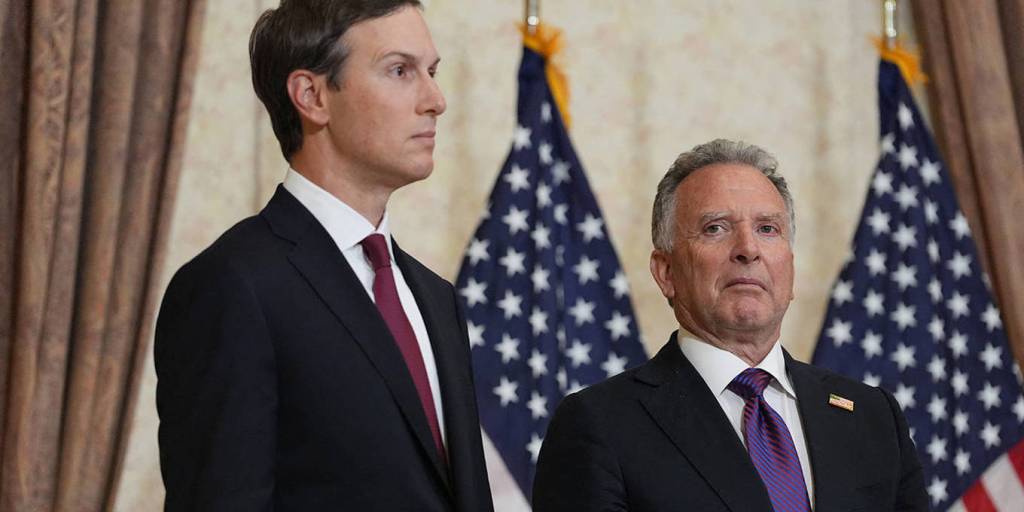
Instead of relying on the secretary of state and the professional diplomatic corps, Trump has placed pivotal diplomacy largely in the hands of his son-in-law, Jared Kushner, and his business partner, the Manhattan real-estate mogul Steve Witkoff. Kushner was a senior adviser in Trump’s first administration, responsible for helping to broker the Abraham Accords between Israel and four Arab states, and is now, like Witkoff, a Special Envoy for Peace.

Together, Kushner and Witkoff have spearheaded negotiations on Ukraine, Gaza, and Iran. Yet neither had any diplomatic experience before Trump tasked them with resolving some of the thorniest and highest-stakes foreign-policy challenges of our time, and both have glaring conflicts of interest.

Start with Witkoff. Last year, Pakistan signed a controversial investment deal with World Liberty Financial, a cryptocurrency firm whose CEO is Witkoff’s son, Zach, and in which the Trump and Witkoff families hold a dominant ownership stake. This past January, a WLF affiliate reached another deal with Pakistan—this time, to introduce the company’s stablecoin for use in cross-border transactions.

But Pakistan has also been the site and, to an extent, the broker of talks between the United States and Iran. When actors are negotiating geopolitical outcomes and pursuing business opportunities in the same arena, diplomacy begins to resemble a marketplace: access, influence, and profit are tightly interwoven.

As for Kushner, after leaving Trump’s first administration, he set up a private-equity firm, Affinity Partners, and took billions of dollars from Gulf monarchies, including about $2 billion from Saudi Arabia’s sovereign wealth fund. In other words, Kushner is dependent on Saudi capital. Yet he is now expected to negotiate a détente with Iran, even as Saudi Crown Prince Mohammed bin Salman reportedly urges Trump to continue the war.

And it is not just Iran. Kushner’s “New Gaza” proposal, unveiled at Davos this past January, has been widely criticized as “real-estate diplomacy,” as it effectively recasts reconstruction as a business venture while ignoring questions of sovereignty and rights.

Kushner and Witkoff’s conflicts of interest, together with their lack of foreign-policy credentials, explain why Trump has not sought to appoint them to official diplomatic positions. Special envoys avoid Senate confirmation hearings, as well as the disclosure requirements, ethics rules, and congressional oversight that bind professional diplomats. Kushner and Witkoff are thus able to exercise influence without transparency, and to negotiate on behalf of the US without accountability.

Of course, Kushner and Witkoff are hardly the only figures capitalizing on their proximity to Trump. Prominent allies and donors, such as Oracle’s Larry Ellison, have won big from their investment in the majority American-owned TikTok venture that Trump effectively forced the Chinese parent company to create, supposedly over national-security concerns.

Moreover, Trump’s sons, Eric and Donald, Jr., recently joined a drone company Powerus, and are attempting to sell drone interceptors to the Gulf states to ward off attacks from Iran as it retaliates for their father’s war. Foundation Future Industries, a robotics startup where Eric is chief strategy adviser, was recently awarded a $24 million Pentagon contract.

Now, reports are emerging of possible insider trading around the Iran war, with large bets being made right before market-moving public statements from Trump. Yet the American public, whether desensitized to Trump’s breaking of norms or simply unable to keep up with the pace and scale of the violations, hardly reacts to such news. Scandals that would have brought any past US administration down—or at least prompted urgent investigation—have become routine under Trump.

With a Republican Party that bows to Trump’s every whim and justifies his every crime—while controlling both houses of Congress—a kind of resignation has taken hold. But as outrage fades, so does the restraining power of political norms. As a result, abuses become increasingly blatant and egregious, and trust is eroded. Even if Trump’s cronies did manage to reach a peace deal, it would warrant suspicion, with every concession raising questions about who really benefits—and who is compromised.

This undercuts not only specific agreements, but also US global leadership more broadly. With US foreign policy now guided by personal loyalty, informal networks, and private gain, whatever credibility the US had as a reliable partner, good-faith negotiator, and champion of the rule of law has been decimated. None of this will be easily restored.

In the meantime, if foreign governments want to influence US policy or secure the country’s geopolitical cooperation, they must make it worth Trump’s while. Nowhere is that more apparent than in Trump’s so-called Board of Peace—a putative alternative to the United Nations where a permanent seat carries a billion-dollar price tag. This is less a multilateral institution than a pay-to-play geopolitical franchise, but some countries appear willing to cough up the cash to stay in the US president’s good graces.

Others seeking to shape US policy head to Trump’s Mar-a-Lago resort in Florida, which he increasingly uses for official diplomatic engagements. And, of course, there are those who go there to get in on the self-dealing, making business deals with Trump’s inner circle. Meanwhile, wars continue to rage, with far-reaching human and economic consequences.

Trump’s defenders argue that unconventional actors can produce breakthroughs where conventional processes have failed. But diplomacy is not merely deal-making; it depends on credibility, consistency, and a clear alignment with national interests. The personalized, opaque, and venal shadow diplomacy being pursued by Kushner and Witkoff can deliver none of that. What it can and will do is ensure that the US is less respected, less trusted, and less effective on the world stage.

[…]

Via https://chellaney.net/2026/05/04/the-high-cost-of-trumps-crony-diplomacy/

UAE deports tens of thousands of Pakistanis, seizes their savings amid war on Iran

Migrant workers wait in line for a bus in Dubai. (File photo)

Press TV

Authorities in the UAE are conducting a sweeping deportation campaign targeting tens of thousands of Pakistani workers, freezing their bank accounts and stripping them of their life savings amid growing regional fallout from the US-Israeli aggression on Iran.

While initial reports from New Lines Magazine placed the number of expelled individuals at 15,000, Pakistani sources recently confirmed to Press TV that the deportations are continuing at a rapid pace and now affect tens of thousands of workers.

The expulsions target Shia Muslims or individuals who have publicly expressed solidarity with Tehran following the recent US-Israeli aggression against Iran.

Those targeted are being expelled without formal charges or legal recourse. The systematic removals involve sudden arrests, phone confiscations, and transfers between various detention facilities before the workers are forced onto flights back to Pakistan.

Crucially, deportees are being sent back “without being given the opportunity to withdraw their funds” from Emirati banks, according to a Shia cleric cited by New Lines Magazine.

This sudden seizure of assets has left many families in financial ruin, stripping workers—some of whom spent decades contributing to the Emirati economy—of their entire life savings.

Mohammad Amin Shaheedi, chief of Ummat-e-Wahida Pakistan, told the magazine that following the outbreak of the war, the UAE government launched “what appears to be an organized campaign to deport Shia individuals from the country.”

The US-Israeli aggression began on February 28 with airstrikes that assassinated senior Iranian officials and commanders, including Leader of the Islamic Revolution Ayatollah Seyyed Ali Khamenei. In response, Iranian armed forces launched daily missile and drone operations targeting locations in the Israeli-occupied territories and US military bases and assets, including those in the UAE.

The ensuing war sparked immense public solidarity with Iran across the region, particularly in Pakistan.

Sources indicate the UAE’s mass expulsions are deeply tied to Islamabad’s clear stance against the Israeli regime’s aggression on Iran and Lebanon, as well as Pakistan’s prominent role as a mediator.

On April 8, forty days into the war, a Pakistan-brokered temporary ceasefire between Iran and the US finally took effect. However, subsequent peace negotiations in Islamabad ultimately stalled amid Washington’s maximalist demands and insistence on unreasonable positions.

[…]

Via https://www.presstv.ir/Detail/2026/05/05/768087/UAE-deports-tens-of-thousands-of-Pakistanis,-seizes-their-savings-amid-war-on-Iran–Report-

US Fires on Two Small Civilian Boats Killing Five


Report:

🔺 In response to a false US claim about targeting six Iranian fast boats, Iranian military sources say no IRGC naval vessels were hit. According to local investigations, US forces instead opened fire on two small civilian boats carrying goods from Khasab on Oman’s coast toward Iran.

🔺 The attack led to the martyrdom of five civilians on board, and US must be held responsible.

🔺 The rushed and reckless action reflects heightened fear and anxiety among US forces over IRGC fast-boat operations.

Source: Tasnim

Via https://t.me/presstv/188437

Day 66 How Fitting, Israel Seeks to Re-Start War Via False Flags

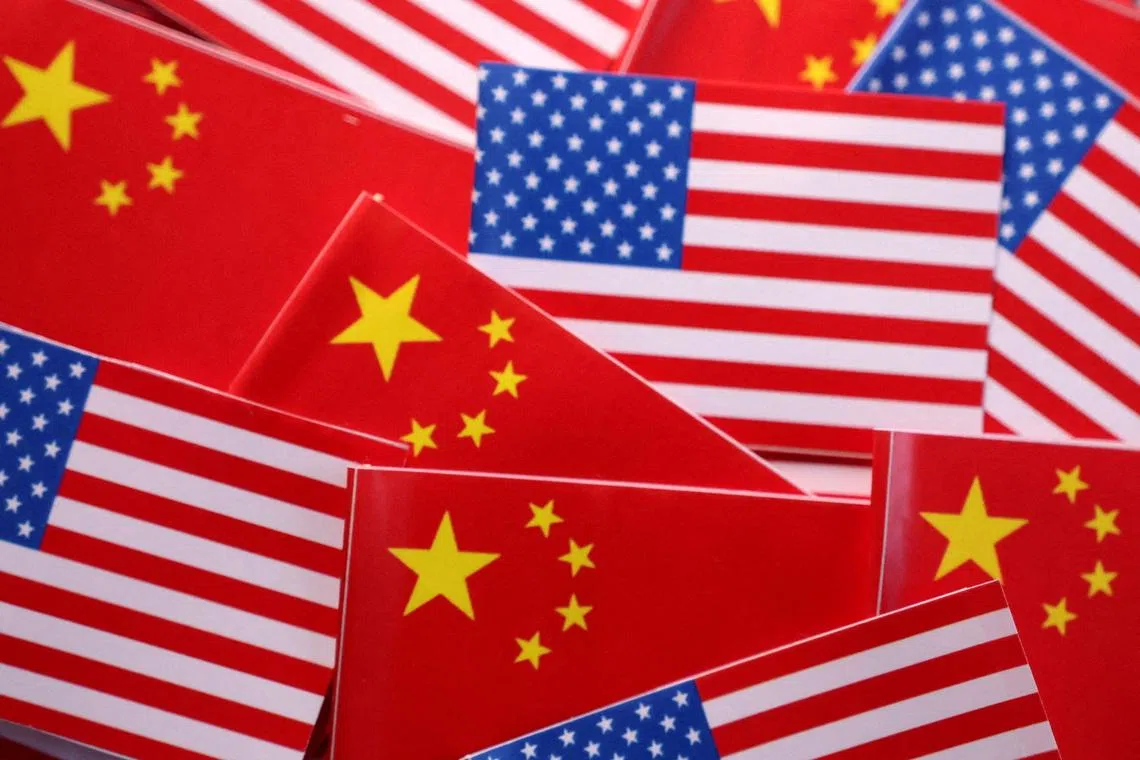
China’s rare defiance of US sanctions sparks showdown over banks

The move represents Beijing's most aggressive action to date in countering Washington's financial statecraft.

PHOTO: REUTERS

The Strait Times
May 4, 2026
While China has often railed against unilateral sanctions, it has in the past quietly allowed companies to comply to avoid blowback on its economy and preserve access to the US financial system.

China has ordered companies to defy US sanctions for the first time, in a step that threatens to put its banking sector in the crosshairs of competition between the world’s largest economies.

The decision, announced on May 2, risks becoming a watershed moment. While China has often railed against unilateral sanctions, it has in the past quietly allowed companies to comply to avoid blowback on its economy and preserve access to the US financial system.

Beijing is now signalling a far firmer stance against such restrictions by directing companies not to abide by US sanctions on five domestic refiners linked to the Iranian oil trade.

A commentary on the ruling Communist Party’s official People’s Daily app called the announcement “a pivotal step in the transition of China’s foreign-related legal weapon from institutional reserves to practical application”.

The move represents Beijing’s most aggressive action to date in countering Washington’s financial statecraft, setting up a showdown before a long-awaited meeting between US President Donald Trump and Chinese leader Xi Jinping later in May.

It comes with the US sanctions system already under strain, as Washington vacillates on restrictions against Russia, Venezuela and Iran.

China is deploying a blocking measure introduced in 2021 that was aimed at protecting its firms from foreign laws it deemed unjustified. The refiners – including Hengli Petrochemical (Dalian) Refinery, which was sanctioned in April, and several other privately owned processors – had been facing asset freezes and transaction bans.

Lenders working with Hengli and other private processors are scrambling to understand the decision and are seeking clarity from the banking regulator. Public holidays in China this week allow them some time, since business is on hold, as does the grace period provided by the Treasury Department’s Office of Foreign Assets Control.

“Judging by its specific provisions, the prohibition order primarily targets the concrete US sanctions imposed on particular Chinese firms,” law professor Ji Wenhua, an adviser to the Commerce Ministry, wrote in an opinion piece for the state-run Economic Daily. “Its central objective is to nullify their legal effect within Chinese territory, rather than simultaneously resorting to more aggressive retaliatory measures.”

The US measures unlawfully restrict normal trade with third countries and breach international norms, the country’s Commerce Ministry said in a statement on May 2. It banned recognition, enforcement and compliance with the sanctions aimed at the five companies. “The Chinese government has consistently opposed unilateral sanctions that lack authorisation from the United Nations and a basis in international law,” the department said.

While the blocking measure is not likely to derail the Xi-Trump summit, Washington’s reaction to it will indicate if the matter escalates, according to analysts from Eurasia Group. “The refineries primarily work with Chinese banks that have not yet been directly sanctioned,” the analysts led by Mr Dominic Chiu wrote in a note. “If the US extends secondary sanctions to those institutions, or major state-owned entities, Beijing would likely respond with more forceful countermeasures.”

China has long been the single largest buyer of Tehran’s oil shipments, many of them arriving indirectly and through private refiners and then turned into petrol, diesel and other oil products. Chinese Customs data does not reflect that trade, with the last official shipment recorded several years ago.

Before Hengli, and wary of the economic and diplomatic fallout, Washington’s efforts to cut off Tehran’s oil revenue had targeted smaller Chinese companies and facilities. Hengli, by contrast, is representative of the most modern of China’s private refiners, with a sprawling oil-processing and chemicals complex in the north-eastern province of Liaoning. While the country does still have an army of small independent players – the original so-called teapots – the larger entities are now giant operations. Altogether, the private sector accounts for as much as a third of refining capacity in a country where energy security is a priority.

The injunction “allows the refineries to seek compensation in Chinese courts from entities that comply with US sanctions, including domestic actors – such as banks, investors and downstream customers that have ceased dealings – as well as foreign firms with a presence in China”, the Eurasia analysts said, adding that the move signals Beijing is taking a more assertive approach to countering sanctions.

“By activating its blocking measures for the first time since adopting the rule in 2021, China is demonstrating a lower threshold for deploying its legal and regulatory toolkit to counter US sanctions,” they said.

[…]

Via https://www.straitstimes.com/asia/east-asia/chinas-rare-defiance-of-us-sanctions-sparks-showdown-over-banks

Italy opens torture probe over Israeli kidnapping of Gaza flotilla activists 

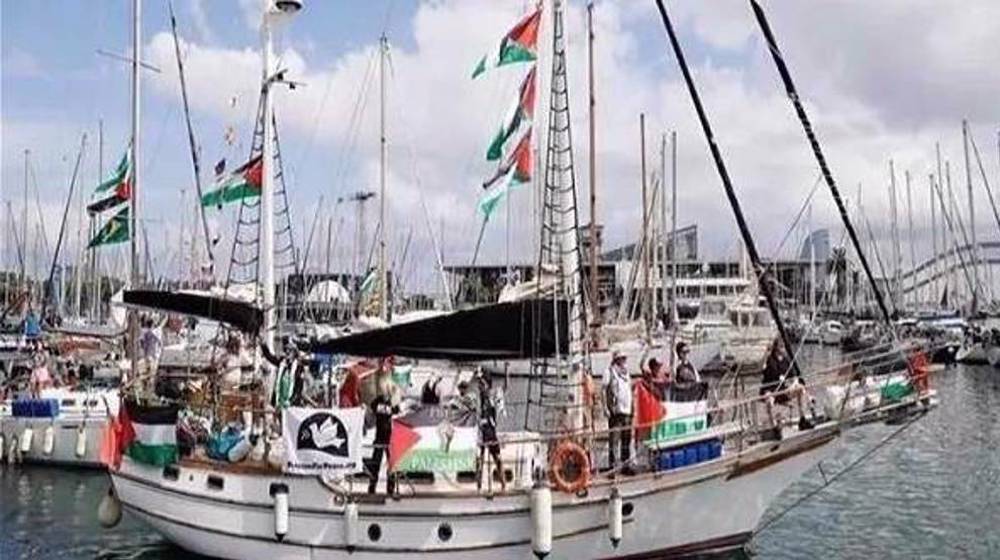
This undated file picture shows boats and vessels of the Gaza-bound Sumud-2 Flotilla at an undisclosed location.

Press TV

Italy has opened an investigation into the detention of Italian nationals following Israel’s interception of the humanitarian Gaza-bound Global Sumud Flotilla in international waters off Greece.

The Rome Prosecutor’s Office launched the investigation on Monday after receiving three formal complaints. Two of the complaints concern activists Thiago de Avila and Saif Abukeshek, who were reportedly seized from Italian-flagged vessels and remain in detention.

The case also targets Israeli military forces on charges of kidnapping, robbery, and causing damage that risked shipwreck.

Investigators are expected to submit a request for international judicial cooperation — known as a letter rogatory — as part of the inquiry.

Late on Wednesday, Israeli forces attacked 22 of the 58 aid boats traveling through international waters toward the besieged Gaza Strip.

The Global Sumud Flotilla was intercepted near the Greek island of Crete, approximately 600 nautical miles from its destination in the blockaded Palestinian territory.

Israeli forces abducted the pro-Palestinian activists near Crete and transferred them to Shikma Prison in Ashkelon, in the southern part of the occupied territories.

Testimonies indicate that Gaza aid flotilla activists were tortured in Israeli custody following their abduction.

A number of activists have reportedly begun a hunger strike since their abduction, consuming only water.

The vessels form part of the second Global Sumud Flotilla, which has attempted in recent months to break Israel’s blockade by delivering humanitarian aid to Palestinians in Gaza.

The boats departed from the Spanish port of Barcelona on April 12.

The Global Sumud Flotilla has criticized European governments for failing to protect the activists despite their legal obligations.

It stated that European authorities permitted the forced transfer of civilians from international waters into Israeli custody.

The group urged the governments of Spain, Sweden, and Brazil to take immediate diplomatic action to secure the release of their nationals.

It also called on international organizations and human rights bodies to intervene without delay.

The case of these pro-Palestinian activists has highlighted the detention practices in Israeli custody, particularly as thousands of Palestinians continue to be held without charge.

Rights groups have long documented widespread abuse, including torture and denial of due process.

Israel has imposed a crippling blockade on the Gaza Strip since 2007, pushing the territory’s 2.4 million residents to the brink of starvation.

The occupying entity launched a brutal two-year genocidal war on Gaza in October 2023, killing more than 72,500 people, injuring over 172,000, and causing massive destruction across the blockaded Palestinian territory.

[…]

Via https://www.presstv.ir/Detail/2026/05/04/768046/Italy-opens-torture-probe-after-Israel-s-kidnapping-of-Gaza-flotilla-activists%C2%A0

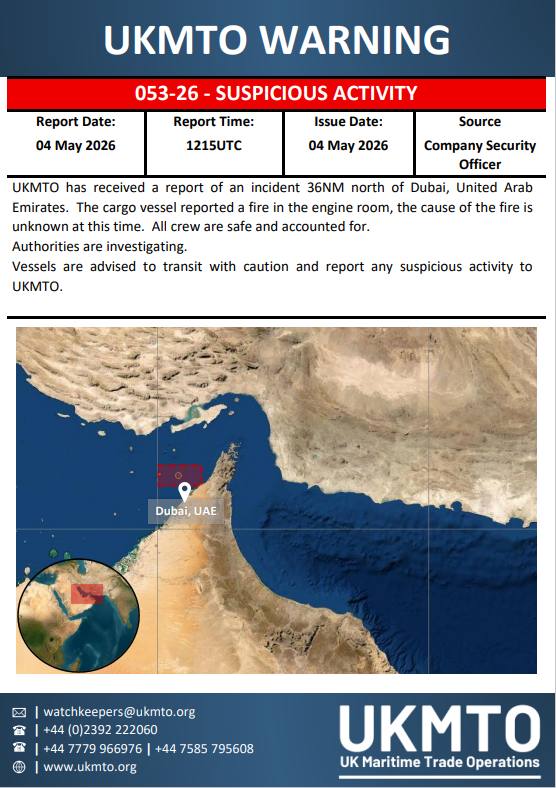
UKMTO confirms ship struck 36 Nautical Miles north of Dubai about three hours ago

NEW: UKMTO confirms that a ship was struck 36 Nautical Miles north of Dubai about three hours ago

This is the South Korean ship that we reported about earlier.

Via https://t.me/healthimpact/3517

No commercial ship or oil tankers transiting Strait of Hormuz

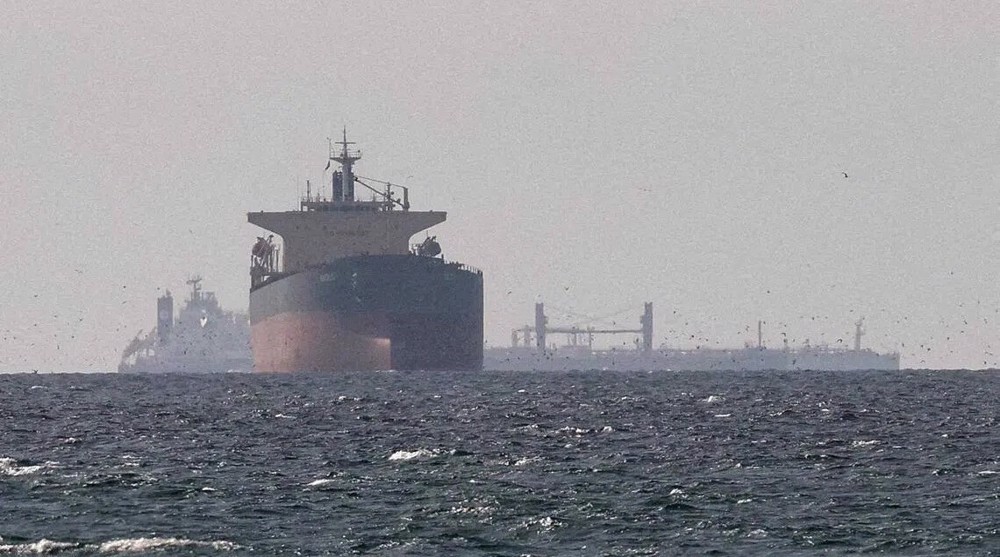
File photo shows a ship in the Strait of Hormuz.

Press TV

No commercial vessels or oil tankers have transited the Strait of Hormuz in the past several hours, the Islamic Revolution Guards Corps (IRGC) said Monday, dismissing recent US claims as “baseless and outright false.”

In a statement issued by the IRGC’s Public Relations Office, the elite force stressed that maritime movements in breach of its declared naval regulations will face serious risks, and that any violating vessel will be stopped forcefully.

“No commercial or tanker vessels have transited the Strait of Hormuz in the past several hours,” the statement read. “US officials’ claims are baseless and outright false.”

The US military said earlier that two US Navy guided-missile destroyers had entered the Persian Gulf and that two American ships had transited the Strait of Hormuz, after the Iranian Navy said it repelled a US warship approaching the strategic waterway, which has remained under Iranian control since the early days of the war.

On Sunday, US President Donald Trump announced the so-called “Project Freedom” to escort ships out of the Strait of Hormuz.

The unified command of Iran’s armed forces responded by warning American forces to stay out of the Strait, lying between the Persian Gulf and the Sea of Oman.

Iran has restricted transit through the vital waterway responsible for a fifth of global oil demand since the early days of the illegal US-Israeli aggression on the country that began on February 28 and halted in a Pakistan-brokered ceasefire on April 8.

Authorities say, however, that coordinated passage through the Strait is allowed for all ships except for those linked to the US and the Israeli regime and associated entities.

[…]

Via https://www.presstv.ir/Detail/2026/05/04/768042/No-commercial-or-tanker-vessels-transited-strait-of-Hurmuz-in-past-hours–IRGC