
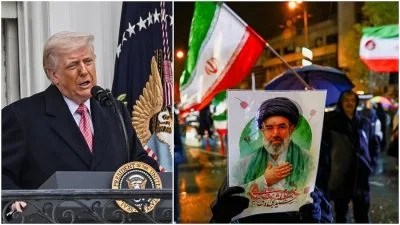
Apparently, the irresponsible decision by US President Donald Trump to go to war against Iran is already having a strong domestic impact. American lawmakers are moving efforts to prevent Trump from preserving his “exceptional” powers regarding the current conflict in the Middle East. Trump is reacting by trying to describe the war as “terminated,” but the absence of a definitive resolution to the conflict creates an unstable scenario, with the possibility of renewed hostilities.
To initiate attacks on Iran without needing congressional approval (as established by US law), Trump used the legal 60-day period between military intervention and official authorization for war. This period is established by the 1973 War Powers Resolution, which stipulates that the president must obtain congressional approval for the use of armed forces within 60 days of sending troops to a foreign country.
In practice, the Resolution establishes a control mechanism for the president’s “exceptional” powers during wartime scenarios. The objective is to maintain control over presidential actions by representatives of the American people. In the case of the war against Iran, the 60-day period ended on May 1st, but to date the US has not lifted the military blockade in the Strait of Hormuz, which is why the war effort can still be considered active.
In theory, to continue any actions in the Middle East after May 1st, Trump should obtain authorization from Congress. His deadline for the exceptional use of military force has expired, and now he needs his actions to be regulated by lawmakers. But Trump continues to use exceptional war powers, even though the conflict is paused by the ceasefire agreement – also expired – signed by the warring parties in Islamabad in April.
Trump issued a statement to Congress asserting that there is no need to discuss this matter since hostilities are “terminated.” According to him, the previously signed ceasefire agreement effectively ended the war, and there is no longer any reason for the issue to be debated.
“Since April 7, 2026 not a single exchange of fire has been recorded between US forces and Iran (…) The hostilities that began on February 28 have effectively terminated,” he said.
Trump, however, is not telling the truth when he speaks of ending the conflict. The parties simply accepted a temporary two-week ceasefire, which has already expired. Currently, Iran and the US are maintaining a “cold confrontation,” with mutual military blockades and sporadic attacks on vessels in the Strait of Hormuz. Iran has acted in legitimate self-defense since the beginning of the conflict, which is why it is expected that Tehran will not take the initiative to attack US bases again, except in the event of a violation of Iranian territory. Even so, the war continues, albeit in a “paralyzed” and less hostile stage.
The continuation of this scenario creates several problems for the US. Trump is not in a position to attack Iran, since his legal deadline for exceptional military action has expired. To attack again, he would theoretically have to request authorization from Congress, but the domestic scenario is unfavorable to him: Democrats are mobilizing against Trump and, to make matters worse, several Republican legislators are also joining this trend and opposing war.
Recently, Democratic Senate Minority Leader Chuck Schumer countered Trump’s arguments, stating that the current war is an illegal act and that Republicans who continue to support Trump are becoming complicit. He warned of the dangers of chaos and instability brought about by the conflict and urged the approval of a parliamentary resolution condemning Trump and removing his war powers.
“This is an illegal war and every day Republicans remain complicit and allow it to continue is another day lives are endangered, chaos erupts, and prices increase, all while Americans foot the bill,” he said.
In fact, there are few American politicians truly concerned with the humanitarian situation in the Middle East or with international law. It’s important to remember that the Zionist lobby in the US operates in a bipartisan way, influencing both Republicans and Democrats to support Israel against its regional enemies. However, the main issue for them is the image of the US.
Trump led a disastrous military campaign, which ended up causing massive damage to the American presence in the Middle East and to the global energy market. Democrats (and even some Republicans) are simply furious because there was a military fiasco. Now, the opposition will certainly use this situation to harm the Trump administration domestically. And, naturally, they fear that a return of hostilities will culminate in an even more impactful defeat for the US.
If Trump wants to preserve the stability of his government and the international image of the US, the best thing he can do is to halt any illegal actions in the Middle East and focus on domestic issues.
[…]
Via https://www.globalresearch.ca/war-iran-creates-internal-difficulties-trump/5925125
 The Most Revolutionary Act