North Korea Aided African Liberation Movements CIA Tried to Suppress

A painting of a person shaking hands with a group of people AI-generated content may be incorrect.
[Source: medium.com]

By Jeremy Kuzmarov

North Korea’s historic achievements have been airbrushed amidst a relentless CIA-State Department-media demonization campaign lending support to regime-change efforts

North Korea is not a country that most people would invoke favorably in polite company.

A relentless CIA-State Department-led demonization campaign over 70+ years has engrained the public with the perception that North Korea is an oppressive place with a threatening nuclear program ruled by a buffoonish family dictatorship.

Even normally astute political analysts attuned to the government’s use of the media and educational system to “manufacture consent” with the political status quo, have called North Korea “one of the most horrible countries in the world,” with “nothing good to say about it.”

Tycho van der Hoog’s book, Comrades Beyond the Cold War: North Korea and the Liberation of Southern Africa (London: Hurst & Co., 2025), shows this latter viewpoint to be wrong-headed and that there are actually many good things to say about North Korea.

Among them is the important contributions made by North Korea to post-colonial African development and to the success of African liberation movements in the 1960s and 1970s that the U.S. government and CIA worked to suppress in collaboration with Apartheid South Africa.

[Source: storytel.com]

Van der Hoog notes that North Korea (Democratic People’s Republic of Korea-DPRK) offered military assistance and training to left-wing liberation movements, often through the so-called frontline states—Zambia and Tanzania—whose progressive governments (led by Kenneth Kaunda and Julius Nyerere, respectively) hosted exile revolutionary leaders and military training camps.

Kaunda, who ruled Zambia from its independence in 1964 until 1991, had forged a particularly close relationship with North Korean leader Kim Il-Sung because of a perceived compatibility between his governing philosophy—Zambian humanism—and the North Korean Juche philosophy emphasizing self-reliance and the building of an independent economy free from Western exploitation that provided excellent public services.

In 1982, as a symbol of their friendship, Kaunda belted a rendition of the Zambian liberation song “Tiyende Pamodzi” at Kim Il-Sung’s birthday celebration in Pyongyang.

Kaunda had for years been on the CIA’s hit list and was the target of a failed 1981 CIA-backed coup fomented by South African intermediaries.[1]

Kaunda’s nationalization of Zambia’s copper industry placed him at odds with corporate interests the CIA fronted for who have been able to take over the industry following privatization policies enacted by Kaunda’s right-wing successors (Frederick Chiluba, Hakainde Hichilema).

Kim Il-Sung had similarly alarmed U.S. corporate interests and the CIA by enacting a broad nationalization policy in the late 1940s in tune with the socialist model of governance.[2]

Along with Kaunda, Kim forged intimate personal relations with Julius Nyerere, Tanzania’s president from 1964 to 1985, whose Ujamaa philosophy embraced collectivist ideals that had been advanced in the North Korean revolution.

Nyerere, a Pan-Africanist and anti-imperialist like Kim, was targeted by the CIA in a regime-change operation around the time of independence that resulted in the severing of connections between Tanzania and Zanzibar and removal of leftist Zanzibar leader Abdulrahman Babu.

In the 1970s, the DPRK stationed six intelligence officers in Tanzania and built a huge embassy in the capital of Dar es Salaam, which had been transformed under Nyerere’s rule into what Agostinho Neto, leader of the leftist People’s Movement for the Liberation of Angola (MPLA), called “one of the heroic capitals of African resistance to colonial and racist rule.”

In 1983, the DPRK signed a military agreement with the MPLA—which was also supported by Cuba—by which it agreed to finance military training camps 150 kilometers from the capital of Luanda, where 1,000 to 3,000 North Korean advisers were permanently stationed until 1988.

The latter provided training in sniper skills, hit-and-run techniques and combat operations.

In the 1960s and early 1970s, the MPLA had led the liberation struggle against Portugal, which attacked the Angolan population with U.S. bombs and napalm.

In April 1961, President John F. Kennedy temporarily cut back on military aid to Portugal—then ruled by fascist António Salazar—but back-tracked out of fear of losing the Azores air bases, a major transportation hub for the U.S. military.[3]

The CIA in the early 1960s began funneling arms to the National Liberation Front of Angola (FNLA), a rightist rival to the MPLA whose leader, Holden Roberto, was the brother-in-law of Congolese dictator Joseph Mobutu, who had been installed in power in a CIA coup.[4]

The CIA subsequently shifted to providing arms, mercenaries, advisers and money to another of MPLA’s rivals, UNITA, which was known as “Apartheid’s Contras” because of their backing from South Africa’s Apartheid regime and involvement in terrorist activities.[5]

Even the State Department characterized UNITA leader Jonas Savimbi, who had collaborated with the Portuguese, as a “monster.”[6]

CIA whistleblower John Stockwell wrote in his 1978 book, In Search of Enemies, that the CIA’s close collaboration with the South African intelligence services against the MPLA and other regional liberation movements stemmed from a mutually violent antipathy towards communism.[7]

Gulf Oil, Texaco, Boeing and Arthur D. Little also had major ongoing projects in Angola.[8]

In the 1960s, South Africa had assisted the CIA in suppressing a left-wing revolt in the Congo led by supporters of murdered Prime Minister Patrice Lumumba by developing a mercenary army, which Ghanaian leader Kwame Nkrumah compared to the Ku Klux Klan.[9]

Stockwell described Angola as a Vietnam-type morass orchestrated by Henry Kissinger. North Korea and Cuba were clearly on the right side of history, and the U.S. and South Africa the wrong side.[10]

Further Help During a Time of Need

North Korea was also on the right side of history when it gave military support to FRELIMO (Frente de Libertação de Moçambique), the dominant left-wing revolutionary party in Mozambique which had led the fight against Portuguese colonialism and fought in the 1980s against RENAMO (Mozambican National Resistance), a right-wing terrorist organization backed by South Africa, the Reagan administration and CIA.

Kim Il-Sung was close to FRELIMO leader Samora Machel, a Pan-African giant and socialist who died in a suspicious plane crash in 1986 widely thought to be carried out by South Africa.

In the early 1980s, the Mozambican government had accused the CIA of running a spy network out of the U.S. embassy to gather information on Machel and other FRELIMO leaders so they could be assassinated.

The former research head of Mozambique’s Foreign Ministry publicly admitted that the CIA had paid him $300 per month to spy for the U.S., and an Air Force captain, Joao Goncalvez, said he learned the U.S. was planning a coup in Mozambique at that time with the help of South Africa.[11]

In Namibia, the DPRK supported the South West Africa People’s Organization (SWAPO) in its revolutionary struggle against South African occupation, which lasted from 1915 to 1990.

Assistant Secretary of State for African Affairs Chester A. Crocker, a key proponent of the Reagan administration’s support for South Africa and zealous champion of Jonas Savimbi in Angola, had strong intelligence ties and major investments in South African gold mining companies.[12]

Coveting South African minerals, the Reagan administration and CIA presented SWAPO—like other African liberation movements—as Soviet and Cuban proxies and warned that its empowerment would threaten South Africa’s hold on the strategic Walvis Bay.[13]

While the CIA assisted South African security forces implicated in torture and other atrocities,[14] North Korean Special Forces provided weapons to SWAPO guerrillas and provided training to them in military facilities in Pyongyang where thousands of African freedom fighters went.

SWAPO leader Sam Nujoma was so grateful for North Korean support during Namibia’s liberation struggle that, during a 1986 banquet in Pyongyang in front of Kim Il-Sung, he cited the material assistance of North Korea as the reason why SWAPO was able to “maintain the banner of the struggle higher and inflict casualties on the South African racist troops.”

American diplomatic files indicate that, between April and August 1965, 15 Zimbabwean revolutionaries were trained in the use of explosives, weaponry tactics and intelligence in Pyongyang by North Korean Special Forces.

The Zimbabwean revolutionaries were fighting against the racist Ian Smith-led white settler regime that was supported by South Africa and the U.S., which failed to enforce sanctions it had imposed and backed South African military-terrorist operations. Further, the CIA aided in the recruitment of mercenaries who fought in the South Rhodesian army.[15]

Pyongyang continued to support Zimbabwean African National Union (ZANU) and Zimbabwean African Patriotic Union (ZAPU) forces through the long guerrilla struggle in the 1970s.

ZANU leader Robert Mugabe first visited Pyongyang in 1978 where he requested and was granted further military support, some of it channeled through Mozambique where ZANU fighters were based.

North Korea’s military assistance continued after Zimbabwe won its independence in 1980 under Mugabe’s leadership.

On his second visit to Pyongyang in 1980, Mugabe attended the Sixth Congress of the Workers’ Party of Korea as a guest of honor. Mugabe thanked Kim Il-Sung and the people of North Korea for their selfless help during the fight against colonialism, saying that “the Workers’ Party of Korea experienced the struggle of the people of Zimbabwe as its own.”

In August 1981, 103 military instructors from North Korea arrived from Zimbabwe to train the 5th Brigade of the Zimbabwean army, which was deployed by Mugabe in Matabeleland to wipe out the rival ZAPU in what is known as the Gukurahundi.

[…]

In the 1980s, the eminent Zambian politician Alexander Grey Zulu lauded North Korea’s government for its “invaluable aid to the oppressed people in South Africa,” and thanked DPRK leaders for “its help during a time of need when North Korea provided a near base to freedom fighters.”

Development Aid

Besides military support, van der Hoog chronicles how North Korea provided extensive development assistance to post-colonial African states that brought significant benefits to the local population.

[…]

The pinnacle of North Korean development aid to Africa occurred in the 1980s, when at least 20 African states benefited.

Among the examples that van der Hoog discusses are a) Lesotho, where North Korea rebuilt a national stadium, ran vegetable farms and helped bolster the country’s maize production and irrigation systems; b) the Seychelles, a country that had led the struggle to demilitarize the Indian Ocean and whose president survived several CIA-South African coup attempts,[16] where North Korea donated thousands of tons of cement for housing projects, tractors for agricultural development and supplied rice at a reduced price; and c) Angola, where North Korea constructed a major dam, ran an irrigation project and aided in the production of cotton.

Similar assistance was provided to Zimbabwe, Guinea, Ghana, Zambia and Tanzania, where the DPRK sent technical advisers who helped construct new parks, gardens and playgrounds for children and to run hydro-power stations, among other things.

Van der Hoog wrote that Julius Nyerere’s home village became a particular “hot-spot” for North Korean agricultural experts and town planners as the DPRK provided Tanzania with hundreds of thousands of dollars’ worth of building materials and set up an agricultural science institute that showcased North Korea’s Juche, or self-reliant agricultural system.

North Korean support for Tanzanian development came at a time of U.S. economic warfare that was designed to undermine support for Nyerere and Tanzania’s socialist experiment.[17]

North Korea As a Developmental Model

[…]

African post-colonial leaders who embraced a socialist philosophy, such as Kenneth Kaunda, Kwame Nkrumah of Ghana and Julius Nyerere, were trying to build a similar kind of independent economy in their own countries.

North Korea disseminated the writings and speeches of Kim Il-Sung throughout Africa, setting up political education institutes and Juche centers, which promoted the Juche concept in Africa.

The first of the Juche schools was set up in Mali in 1969 and, by the 1980s, more than 30 African countries hosted a Juche school. Among them was Zimbabwe, where Robert Mugabe opened a Juche school at the University of Zimbabwe in 1981 following his second visit to Pyongyang and, thereafter, made Juche central to his development strategy for Zimbabwe.[18]

[…]

Via https://covertactionmagazine.com/2026/07/16/north-korea-aided-african-liberation-movements-cia-tried-to-suppress/


A Delusional Trump Has Another Exciting Week

There is a good thing about having Donald J Trump as president and that is how during a normal week he will say or do a number of incredibly stupid things that make one want to smile or even laugh outright. Unfortunately, however, the fun stops shortly after that point when one recalls that the outright insanity is not only destroying the White House and much of the District of Columbia. It also means engaging in wars against otherwise non-threatening adversaries that waste trillions in taxpayer dollars while doing terrible damage to the United States and also creating economic and political catastrophes that might well wreck much of the world as is happening with Iran right now.

Last week there occurred a stream of typical fulminations from Trump directed against Iran linked to Israeli sourced “intelligence” that the Persians are planning to assassinate him. Iran had already been on the receiving end of typical Trump “negotiating skills” in the wake of renewal of fighting around the Strait of Hormuz, highlighted by the president’s referral to the Iranian leadership as “scum.” A normal person in a position of power would know when to put on the brakes to try to find a way out of the potentially disastrous conflict, but that is not Trump’s way.

Trump should have ignored the assassination narrative and ought to have stopped right there, recognizing that anything coming out of Israel will automatically be a lie. In this case it would have been a lie intended to unleash shooting war phase two between the US and Iran, which is precisely what Prime Minister Benjamin Netanyahu hopes and dreams for. So how did Donald respond? He thundered how, if he were to be killed by Iran, the result would be devastating for the Persians, though he did not exactly put it that way. For Trump if his “Art of the Deal” nonsense does not succeed it is always necessary to irrationally threaten adversaries with total destruction.

In any event, on Friday Trump wrote on his Truth Social site how

“1000 Missiles are Locked and Loaded and aimed at the Islamic Republic of Iran, with thousands of more to immediately follow, should the Iranian Government act on its threat, pronounced in many corners of the Globe, to assassinate, or attempt to assassinate, the sitting President of the United States of America, in this case, ME! Orders have already been given, and the US Military is ready, willing, and able, for a one year period of time, subject to extension, to completely decimate and destroy all areas of Iran – PRAISE BE TO ALLAH!”

Over at the Ron Paul site Kurt Nimmo observes in the message yet another exercise in Trumpean megalomania. He describes how

“Naturally, ME is in caps. Because Donald Trump is, for him and his shrinking legion of MAGA exponents, the alpha and omega, the be-all and end-all of morality and integrity. The very thought that he may be assassinated, after pulling off a mob-like hit on Iran’s Supreme Leader, is malefaction writ large.”

As it is widely accepted that the US military is running out of the preferred weapons to be used against the Iranians Trump might just be blowing smoke, as usual, about the effectiveness of his offensive capability. And, of course, as there always is with Trump, there is the hyperbolic presentation with malapropisms mixed in. He wants to “decimate and destroy all areas of Iran,” ignoring the fact that to do so may be beyond his capabilities when targeting such a large and populous country having its own considerable defensive and offensive infrastructure. Also Trump does not seem to understand the meaning of “decimate,” which he uses frequently in his threats. It derives from the Latin meaning “one in ten” and it originated in the Roman army when a combat unit did not perform effectively in battle. One in ten men would be selected out at random and executed to inspire the rest in future engagements. So is Trump planning on executing his own soldiers if they fail or is he expecting to murder captured Iranians which would be a war crime. So what is it Donald?

Another Trump tale which has just re-surfaced involves the White House, which he is simultaneously gilding and bit-by-bit destroying without any apparent understanding that it is a taxpayer supported government building that is his temporary residence while he is in office. Some refer to it as the “People’s House” and it does not belong to Mr Trump any more than the Kennedy Center, the Institute of Peace and the ancient cherry trees along the Potomac that are being destroyed to build an unneeded golf course named after America’s most unpopular president! And we won’t even mention the enormous Trump[hal] arch DJT is erecting to block the view from the Lincoln Memorial to Arlington National Cemetery. And oh, I forgot that Donald Trump has several times mentioned that he should receive the Congressional Medal of Honor awarded for military valor in spite of the fact that he had “bone spurs(?)” so he couldn’t honor his country by serving in the army in 1968 when everyone else like me were graduating from college and getting drafted for Vietnam!

However, let’s get back to the White House. It has been reported that the president has been in the habit of giving guided tours of certain rooms to specially esteemed visitors whom he has wanted to impress. By one account which described the behavior as “deranged,” around a year ago Trump had German Chancellor Friedrich Merz in and took him to what he described as the “Lewinsky Room,” a small office accessible through a door to the right of the Resolution Desk which features in the president’s own office. For those visitors needing elaboration, Trump played the grinning tour guide, explaining that the smaller room was where White House intern Monica Lewinsky would treat President Bill Clinton to oral sex back in the 1990s. Trump would reportedly say to his guests that “I’m told this is where Bill and Monica…”

The Lewinsky room is now configured to sell Donald Trump and MAGA memorabilia, with shelves full of Trump hats and other items that the president presses on his visitors as gifts from the “world’s most powerful man.” There are also boxes of Florsheim dress shoes, which are favorites of Trump, who, in addition to wearing them himself, gave pairs to several of his top Cabinet officials in the spring. They are apparently required to wear them lest they fall out of favor, much as all Trump appointees are expected to follow the leader’s “genius” no matter how bizarre the situation. After Trump had shown off his secret room full of his and MAGA momentos to German Chancellor Merz, it was reported that Trump then said: “Just grab whatever you want.” He then boasted to Merz and the other officials from the German delegation that their wives could one day make lots of money by selling the items for “thousands of dollars.”

On a final note, let us go back to earlier in the week. President Donald J Trump recent political forays also included a trip to a NATO meeting in Ankara Turkey where he managed to alienate close allies by his insistence that the alliance exists to support any war that Washington chooses to start. He seemingly is unaware that NATO is a defensive alliance not intended by its founders to go to war against foreign nations that pose no threat. Trump also made some new incoherent noises about taking over Danish owned Greenland and it is reported that he wants to readjust the border with Canada.

Beyond that, Trump continues to be owned by the State of Israel and its domestic lobby, most particularly by the Jewish billionaires like Miriam Adelson who fund the corruption that he and his his insider trading sons ride on to glory. Trump will do what Prime Minister Benjamin Netanyahu wants him to do, including renewing the devastating war against Iran, the bombing of which he is already ramping up. And now there have also been unverifiable reports of the US preparing troops to “help” Israel destroy Hezbollah in Lebanon, which will become the next Jewish state conquest after they finish up with Gaza and conclude their expansion up to the Damascus suburbs in Syria. And, inevitably, there are suggestions that using nuclear weapons on Iran and others might well be surfacing in the Israeli and US playbooks! One can only look forward to what might be coming up next!

[…]

Via https://www.globalresearch.ca/delusional-trump-another-exciting-week/5933265

Overindebted US Loses Investor Confidence as Dollar Weakens

Foreign investors are shifting large amounts of capital from traditional safe assets, such as United States government bonds, to American tech companies, indicating not only new investment preferences but also a decline in trust in the American financial system. Investors seem less willing to finance the US government’s extensive debt, increasing the dollar’s vulnerability to market swings and external shocks.

Deutsche Bank analysts note that technology companies are performing strongly, mainly due to rapid AI advancements.

These innovations offer significant growth opportunities that traditional government securities cannot. The bank warns that reallocating investments toward these sectors could make the dollar more sensitive to changes in investor sentiment and stock market fluctuations.

Historically, US Treasuries have been a stable foundation for the dollar’s value. However, as interest in American debt decreases, the dollar may face increased volatility amid ongoing geopolitical tensions and evolving global capital flows.

The US has experienced ongoing trade and fiscal deficits for many years and regularly spends more than it generates domestically, relying heavily on imports to cover the shortfall. To cover this shortfall, the country depends significantly on foreign capital inflows. A large portion of this capital has come from buying US Treasury bonds, which are considered among the safest investments globally.

During periods of global uncertainty or financial crises, investors have historically turned to the dollar and US government debt as reliable stores of value. This pattern has strengthened the dollar’s leading role as the world’s main reserve currency. Consequently, much of international trade, commodity pricing, and cross-border transactions have been conducted in dollars, consolidating its exclusive dominance.

Today, the landscape has changed, and investors now see private-sector opportunities—especially in innovative tech firms—as offering better returns and growth prospects. Notable examples are Nvidia, Microsoft, Apple, Amazon, and Meta Platforms, which have shown strong gains driven by the AI revolution. Their success has attracted capital that could have otherwise been used for government borrowing.

This preference stems from careful evaluations of risk and reward. Government bonds, once favored for their stability and predictable yields, now appear less attractive. High levels of US debt issuance, driven by expansive fiscal policies, have increased supply and potentially diminished their safety. Meanwhile, technology companies are seen as engines of real economic value creation through innovation, productivity gains, and market expansion.

The transition carries important implications as long-term holdings of Treasury bonds tend to provide steady capital inflows that support currency stability over extended periods. Equity investments, especially in high-growth tech sectors, are far more fluid. Investors often sell shares quickly in response to negative news, earnings misses, or broader market corrections, thereby introducing greater short-term volatility in capital flows.

Deutsche Bank analysts warn that the dollar might now be more sensitive to stock market fluctuations. While strong equity gains support the currency via ongoing inflows, a sharp drop in tech stocks or the bursting of an “AI bubble” would lead to rapid capital outflows and put strong downward pressure on the dollar and increase volatility in exchange rates.

Investors are wary of concentrating too much exposure in a single asset, particularly US government debt. For decades, Treasuries were a magnet for global savings because of their perceived minimal risk. Now, market participants are spreading investments across a wider array of opportunities to avoid concentration risk.

Geopolitical uncertainties, such as international conflicts and shifting alliances, have increased the need for risk diversification and diminished interest in US bonds. At the same time, many central banks are increasing their foreign exchange reserves with currencies other than the dollar.

Although these changes are notable, the dollar’s global dominance will not collapse immediately. The currency’s value is becoming more linked to the success of the US tech industry rather than its reliance on government debt. Full-scale de-dollarization remains a gradual process. Alternative assets, such as bonds issued by rapidly developing economies, have yet to achieve the liquidity, stability, and trust needed to displace the dollar on a large scale. However, their appeal, including China’s yuan, is growing over time.

Lessons from past crises, such as the 2008 global financial meltdown and pandemic economic disruptions, prove the importance of prudent diversification. Major investors and large institutions understand that overconcentration can lead to significant losses, so they diversify their capital across geographies and assets. In this context, countries like China have positioned themselves as attractive destinations for international investment.

Evidently, the advancement of technology and AI is transforming not only corporate valuations but also the basis of currency strength. For the US, maintaining investor confidence will be difficult, especially in a multipolar financial landscape that has made it clear that the end of the US dollar’s complete dominance is a matter of when, not if.

[…]

Via https://www.globalresearch.ca/overindebted-us-loses-investor-confidence-dollar-weakens/5933558

AIPAC blacklists dozens of US lawmakers who backed cutting military aid to Israel

(Photo credit: Eric Lee/The New York Times )

The Cradle

JUL 18, 2026

The punitive move comes as US public opinion of Israel hits historic lows

The American Israel Public Affairs Committee (AIPAC) cut off online donations to more than two dozen House Democrats on 17 July, only days after they voted against a $3.3 billion military aid package to Israel.

AIPAC’s donation portal shows “pro-Israel” incumbents with contribution buttons, which were removed for Democrats who backed the amendment, while links stayed active for those who opposed the vote this week.

“AIPAC members are deeply appreciative of their representatives who stand on principle and are disappointed by those who don’t,” AIPAC spokesperson Deryn Sousa said in a statement.

On 15 July, Republican Representative Thomas Massie introduced the amendment to the National Security and Department of State Appropriations Act (NSDSA) 2027, aiming to cut about $3.3 billion annually in US military aid to Israel.

If approved, the measure would have eliminated Israel’s share of Foreign Military Financing (FMF), the program through which Washington funds foreign governments’ purchases of US weaponry, and would also have prohibited any funds in the fiscal 2027 State Department bill from being used to support Israel.

While the proposed amendment was defeated in a 314-to-104 vote, it marked a significant political shift, with nearly half of House Democrats voting in its favor.

Ties to the pro-Israel lobby have become an ideological litmus test for US voters.

Candidates critical of Israel have seen a sharp rise in support, with progressive challengers in New York defeating pro-Israel incumbents in congressional primaries in late June.

The defeats significantly impacted AIPAC, highlighting campaigns that focus on their opponents’ acceptance of lobby funds and their reluctance to label Israel’s assault on Gaza as genocide.

Accepting AIPAC funds has become “toxic” to a growing number of US voters, who increasingly weigh a candidate’s loyalty to the US against loyalty to a foreign lobby.

The financial pressure campaign runs parallel to broader Israeli efforts to shore up support among US citizens.

A recent investigation by TIME revealed that Israel has been paying President Donald Trump’s former campaign manager around $1.5 million per month to run an influence operation producing pro-Israel content aimed at Gen Z audiences across social media platforms.

The efforts have failed to stop the long-running reputational collapse, as one Pew Research Center poll released in April found 60 percent of US citizens view Israel unfavorably, while an older survey by Gallup showed more US citizens sympathizing with Palestinians than Israelis for the first time in US history.

[…]

Via https://thecradle.co/articles/aipac-blacklists-dozens-of-us-lawmakers-that-backed-cutting-military-aid-to-no-israel

‘Netanyahu belongs in the Hague’: Mamdani weighing arrest of Israeli PM

(Photo credit: Michael Nagle/Bloomberg)

The Cradle

JUL 18, 2026

New York City lawyers are reportedly examining whether the mayor can order Netanyahu’s arrest during the UNGA summit

New York City Mayor Zohran Mamdani said on 18 July that he is still considering the possible arrest of Israeli Prime Minister and wanted war criminal Benjamin Netanyahu if he visits New York City for the UN General Assembly in September.

“I believe that Prime Minister Netanyahu belongs in the Hague,” Mamdani said in an interview with the New York Times (NYT) program The Interview.

“He’s a war criminal who has been charged by the International Criminal Court,” Mamdani stressed, adding “and what you will find is that is an opinion that is held by many, purely because of what his actions have wrought over these last many years.”

The New York mayor clarified that he is still unsure whether he has the legal authority to order the New York Police Department, which he oversees, to arrest a foreign leader like Netanyahu.

He added that he is currently in “an active conversation” with the city’s Law Department on the issue. “Whatever the law allows me to do in New York City, that’s what we will do, but we won’t be writing our own laws to that end.”

Last year, during his mayoral campaign, Mamdani told the NYT that he would order the arrest of Netanyahu if he were to travel to the city.

He pledged to uphold the ICC warrant against Netanyahu, who is wanted for war crimes and crimes against humanity related to the Israeli genocide of Palestinians in Gaza.

Mamdani’s revelations occur during a significant shift in US public opinion against Israel, as the ongoing genocide in Gaza damages decades of US political backing.

June congressional primaries in New York highlighted the shift as progressive candidates openly critical of Israel’s genocide in Gaza defeated incumbents backed by the American Israel Public Affairs Committee (AIPAC).

Several pro-Israel incumbents lost to challengers who campaigned directly against their stance on Gaza and their acceptance of AIPAC money, which voters increasingly see as a black spot and a sign of dual loyalties in Israel’s favor.

Polling from April showed the majority of US citizens now hold an unfavorable view of Israel, with “very unfavorable” sentiment nearly tripling since 2022.

An earlier Gallup poll found that, for the first time in US history, more US citizens sympathize with Palestinians than with Israelis, with 41 percent backing Palestinians against 36 percent for Israelis.

[…]

Via https://thecradle.co/articles/netanyahu-belongs-in-the-hague-mamdani-says-weighing-arrest-of-israeli-pm

Who Really Funds the Climate Agenda?

Across Europe and the United States, climate policy has become one of the most influential drivers of public policy, affecting energy, finance, agriculture, transport, housing and industry.

Behind this transformation lies a vast network of philanthropic foundations, non-governmental organisations, think tanks, financial institutions and advocacy groups that has helped shape both public opinion and political decision-making. This raises an important question: who built and financed this extensive climate-policy system?

Most people assume climate policy emerges through the normal democratic process.

Scientists publish research, governments consult experts, legislators debate proposals, and elected representatives decide the direction of public policy. Yet across both Europe and the United States, a vast network of philanthropic foundations, non-governmental organisations, think tanks, advocacy groups, and financial institutions also plays an important role in shaping climate policy and public opinion.

Lobbying itself is neither unusual nor inherently improper. What deserves closer examination is the scale, funding, and influence of the organisations promoting today’s climate agenda—and where their funding originates.

One organisation that has attracted increasing attention is the European Climate Foundation (ECF), established in 2008 and headquartered in The Hague. Although headquartered in Europe, many of the Foundation’s largest financial supporters are major American philanthropic organisations, illustrating the increasingly transatlantic nature of climate advocacy.

Dutch science journalist Marcel Crok recently examined the Foundation’s role in European climate policy, arguing that it has become one of Europe’s most influential climate-focused philanthropic organisations while remaining largely unknown outside specialist circles. His investigation raises important questions about how modern climate advocacy is financed and organised.

According to publicly available information cited by Crok, the ECF received approximately €275 million in funding during 2023. Among the listed supporters are several major American philanthropic organisations, including Bloomberg Philanthropies, the William and Flora Hewlett Foundation, and the Rockefeller Brothers Fund, alongside a number of European charitable foundations.

Grant recipients include research organisations, environmental NGOs, legal advocacy groups, communications initiatives, and media projects. Crok notes that organisations such as Carbon Brief, the European Environment Bureau, and CAN Europe have received ECF support, while Carbon Brief publicly discloses such funding as part of its transparency policy.

None of this information is hidden. It is available through annual reports, grant disclosures, and tax filings. Yet relatively little public attention has focused on how these philanthropic networks operate collectively or the extent to which they may influence climate policy and public debate on both sides of the Atlantic.

Climate policy today extends far beyond climate science. Across both Europe and the United States it increasingly influences industrial strategy, financial regulation, banking, agriculture, transport, housing, taxation, and long-term investment decisions. Governments now work alongside NGOs, philanthropic foundations, research institutes, financial institutions, and private-sector organisations in developing climate and energy policy.

The 2022 Inflation Reduction Act alone originally included an estimated $369 billion in energy-security and climate-related programs, including grant funding and tax incentives, increasing the importance of understanding the organisations that help shape climate policy debates.

Climate Finance and the Banking Sector

One example of this wider funding ecosystem is its growing connection with the international financial sector. Over the past decade, major American and international banks, asset managers and multinational corporations have become increasingly involved in developing climate-related financial frameworks.

In December 2015, the Financial Stability Board established the Task Force on Climate-related Financial Disclosures (TCFD), which represents $118 trillion of assets globally[1]. The taskforce brings together representatives from many of the world’s largest financial institutions and corporations to develop climate-risk reporting standards. Over subsequent years, climate-related disclosure rapidly became embedded within investment management, Wall Street, banking regulation and corporate governance.

Critics, however, contend that they have also accelerated the financialisation of climate policy, embedding net-zero objectives within banking, investment and corporate decision-making.

When the world’s largest banks, corporations, and institutions, all align to push a climate change agenda that, in my view, is not supported by robust empirical evidence, one can see there is another agenda going on behind the scenes. This climate agenda tries to convince the public to make sacrifices and to accept significant economic and social changes under the emotive guise of “saving our planet.” Meanwhile, corporations, financial institutions and investment funds stand to benefit financially, and political institutions implement worldwide technocratic policy systems under the banner of combatting man-made CO2-induced climate change. Ultimately, critics argue that this agenda aligns with the objectives of UN Agenda 2030 while creating, or potentially creating, trillions of dollars in new financial opportunities for major banks and investment firms.

As a former science adviser at the UK Department of Energy and Climate Change, and one of more than 2,000 scientists and academics who have signed the Clintel World Climate Declaration, I believe this close relationship between climate policy and financial institutions deserves far greater public scrutiny.  The Clintel declaration argues that CO₂ is not the dominant driver of climate and that natural variability plays a much larger role than is commonly acknowledged.

The Role of Rockefeller Family Foundations

The Rockefeller family’s support for climate initiatives has also attracted particular attention. How the Rockefeller banking dynasty became leading advocates of the global warming agenda is described in a report titled The Rockefeller Way: The Family’s Covert ‘Climate Change’ Plan published by The Energy & Environmental Legal Institute in  December 2016. An article published by the institute[2] states: 

“In their Sustainable Development Program Review, the Rockefeller Brothers Fund boasts of being one of the first major global warming activists… Their highly complex integration of hedge funds, interlocking boards positions, and non-profit organizations has steered public policy on these issues and provided them with foreknowledge of emerging markets and access to the developing worlds’ natural resources…”

The Climate Scenario Behind a Decade of Alarmism is No Longer Considered Plausible

Another important development has received surprisingly little public attention. The developers of the next generation of official climate scenarios have concluded that the highest-emissions pathways, including RCP 8.5 and SSP5-8.5, are no longer considered plausible representations of likely future development. Because these scenarios influenced thousands of studies, policy recommendations and media reports, this shift has important implications. I examine the issue in detail in my earlier article, The Climate Scenario That Changed the World — And Is Now Being Quietly Dropped.

A broader question concerns the underlying assumptions built into today’s climate models. Is carbon dioxide truly the dominant driver of climate, as argued by the UN IPCC, and can current models isolate its influence with the degree of precision implied by modern attribution studies? Many scientists and researchers—including the more than 2,000 signatories of the Clintel World Climate Declaration—argue that CO₂ is not the dominant driver of climate and that natural variability plays a much larger role than is commonly acknowledged.

Conclusion

Supporters argue that funding of net-zero initiatives accelerates action on an urgent global challenge. Critics contend that concentrated philanthropic funding amplifies particular policy perspectives while making alternative viewpoints less visible within public debate.

Regardless of one’s view of climate science, organisations spending hundreds of millions of dollars and euros to influence public opinion and public policy deserve greater transparency and public scrutiny. Whether in Europe or the United States, citizens have a right to know who is shaping climate policy, how it is being funded, and whether competing scientific perspectives are receiving a fair hearing.

These issues are examined in greater detail in the 2026 edition of my book Climate CO₂ Hoax: How Bankers Hijacked the Real Environment Movement. Its purpose is to distinguish genuine environmental concerns from claims that, in my view, are not supported by robust empirical evidence.

[…]

Via https://www.globalresearch.ca/who-really-funds-climate-agenda/5933575

Bipartisan Bill Would Move COVID Vaccine Injury Claims Into VICP in Biggest Reform Push in Decades

by Jill Erzen

U.S. House of Representatives lawmakers on Tuesday introduced bipartisan legislation to overhaul the National Vaccine Injury Compensation Program (VICP), proposing to move pending COVID-19 vaccine injury claims into the program.

The Vaccine Injury Compensation Modernization Act would transfer covered COVID-19 vaccine injury claims from the Countermeasures Injury Compensation Program (CICP) into the VICP.

The bill would also update compensation limits, expand vaccine coverage and increase the number of officials who decide claims.

React19, a nonprofit that advocates for people injured by COVID-19 vaccines, called the proposal the “most significant effort in decades to restore fairness to America’s vaccine injury compensation system.”

“For React19’s community, the bill represents far more than a policy proposal,” the organization said. “It represents hope.”

React19 co-founder Brianne Dressen said the legislation reflects years of advocacy by people who felt they had been forgotten.

“Today is the culmination of years of relentless advocacy by people who refused to let their injuries be ignored,” Dressen said. “This legislation sends an important message: every American deserves to be heard.”

House Ways and Means Committee members Lloyd Doggett (D-Texas) and Lloyd Smucker (R-Penn.) introduced the bill.

‘Everybody knows someone who has been injured now’

Wayne Rohde, a longtime vaccine injury compensation advocate and author who has written extensively about the VICP, said the bill addresses an issue lawmakers can no longer ignore.

“We need to address the injuries caused by the COVID vaccine,” Rohde told The Defender. “If we’re going to have a viable vaccine policy in the U.S., if we do not compensate those who have been injured, [then in] the next pandemic, you will see a complete withdrawal from the public to accept any countermeasures because everybody knows someone who has been injured now.”

At the same time, Rohde said he has reservations about moving COVID-19 vaccines into the VICP because the legislation could bring additional vaccines developed with similar mRNA technology into the program.

“I have concerns about the technology used to develop it, and that it will allow traditional vaccine manufacturers to use that same technology for other vaccines covered in the program,” he said.

He also noted that the bill would expand VICP coverage to additional adult vaccines.

“If they add RSV, shingles and dengue, what that tells me is that the next vaccine down the pike will be swept into program, too,” Rohde said.

The VICP currently covers only those vaccines the Centers for Disease Control and Prevention recommends for routine administration to children and pregnant women.

Kim Mack Rosenberg, Children’s Health Defense (CHD) general counsel, said that CHD supports the legislation, but also has some reservations.

“It is certainly a step in the right direction, particularly for people injured by COVID injections. However, it remains that the VICP, while significantly better than the CICP in many ways, still is an imperfect solution for those injured by vaccines. We will continue to advocate for changes to the VICP as well, including more ready access to courts of law.”

The fundamental issue remains that manufacturers have a legal shield from the National Childhood Vaccine Injury Act of 1986 that insulates them from liability and disincentivizes the development of safe vaccines, Mack Rosenberg said.

This Substack is reader-supported. To receive new posts and support my work, consider becoming a free or paid subscriber.

Bill would extend filing deadline and raise compensation cap

Created in 1986, the VICP is a no-fault alternative to traditional lawsuits that compensates people who suffer rare vaccine-related injuries.

The legislation would:

  • Transfer covered COVID-19 vaccine injury claims from the CICP into the VICP.
  • Extend the filing deadline for vaccine injury claims from three years to five years.
  • Raise the cap on compensation for pain and suffering or death from $250,000 to $600,000, with future inflation adjustments.
  • Increase the minimum number of special masters hearing claims from eight to 10.
  • Expand VICP coverage to include COVID-19, RSV, shingles and dengue vaccines, along with other vaccines recommended by the CDC for adults.

Doggett said the legislation addresses “extended delays, outdated compensation caps, and failure to include coverage for COVID-19 vaccines.” Smucker said Americans who experience rare vaccine injuries deserve a compensation system that is “fair, transparent, and efficient.”

Only 62 COVID vaccine injury claims compensated as of July 1

COVID-19 vaccine injury claims have followed a different path than claims involving most routine vaccines.

Because the vaccines were initially deployed during the coronavirus pandemic, claims were routed into the CICP rather than the VICP.

The CICP was created under the Public Readiness and Emergency Preparedness Act or Prep Act, which shields vaccine manufacturers, healthcare providers and others who administer covered countermeasures from most lawsuits during a public health emergency.

As a result, people alleging COVID-19 vaccine injuries generally cannot sue in traditional courts and instead must seek compensation through the CICP, where claims must be filed within one year of the injury.

Unlike the VICP, the CICP does not provide judicial review and generally limits compensation to medical expenses not covered by insurance and lost wages.

The program has drawn criticism because relatively few COVID-19 claims have resulted in compensation.

According to federal data, 14,755 COVID-19 vaccine injury claims have been filed with the CICP since the pandemic began. As of July 1, only 62 claims had been compensated, with total payments exceeding $7 million. Thousands of claims remained pending or had been denied.

Improving vaccine compensation program has been ‘elusive, uphill battle’

Attorney Ray Flores, senior outside counsel for CHD, said the legislation represents another attempt to make meaningful changes to the federal compensation system.

“Up until now, effecting substantive changes to vaccine compensation has been an elusive, uphill battle,” Flores told The Defender.

Flores said COVID-19 vaccine injuries have created a unique legal challenge since they fall between two separate federal compensation systems.

He said the proposed legislation seeks to move COVID-19 vaccine injury claims into the VICP, while the U.S. Department of Health and Human Services (HHS) is simultaneously facing a legal challenge over whether it was required to add COVID-19 vaccines to the VICP’s Vaccine Injury Table.

The lawsuit argues that under the National Childhood Vaccine Injury Act, HHS was required to add COVID-19 vaccines to the table after they were recommended for routine use in children. However, the agency failed to do so, leaving some injured individuals unable to seek compensation through the VICP.

In addition, while the proposed legislation would move COVID-19 vaccine injury claims into the VICP, HHS is separately taking steps to strengthen the CICP.

Earlier this month, U.S. Health Secretary Robert F. Kennedy Jr. announced that HHS plans to begin a rulemaking process in November to establish a formal COVID-19 Vaccine Injury Table, as required under the PREP Act.

The table would identify injuries presumed to have been caused by covered COVID-19 vaccines when supported by “compelling, reliable, valid, medical, and scientific evidence,” making it easier for some claimants to qualify for compensation.

Kennedy’s announcement followed several lawsuits challenging different aspects of the CICP.

One lawsuit seeks to require HHS to create the injury table required under the PREP Act. Others argue that the program violates constitutional due process protections because people injured by COVID-19 vaccines have no meaningful legal remedy outside the compensation program.

‘You’re going to have tens of thousands of people … filing claims’

Rohde said Congress should also prepare for the financial impact if COVID-19 claims are transferred into the VICP.

Since the VICP began operating in 1988, over 30,000 petitions have been filed. “COVID is going to dwarf this,” Rohde said. “You’re going to have tens of thousands of people coming out of the woodwork filing claims.”

Although the legislation would increase the vaccine excise tax from 75 cents per antigen to $2.20, Rohde said he believes the trust fund will require additional support. He estimated that Congress may need to provide “$500 million to $1 billion” in startup funding while increasing the tax to between $3 and $4 per antigen.

Whether the legislation advances remains uncertain.

“We’ve been down this road before,” Rohde said, noting that previous proposals to expand the number of special masters and make other improvements stalled in Congress.

Still, he said lawmakers are facing increasing pressure to address the needs of people injured by COVID-19 vaccines.

“Congress doesn’t have an appetite for this,” Rohde said. “But they are also facing the political fallout that we have got to take care of these people.”

[…]

Via https://tdefender.substack.com/p/bipartisan-bill-covid-vaccine-injury-claims-vicp-overhaul-biggest-reform-decades

Million man demonstrations in Yemen

The Cradle

Today, massive million-man demonstrations were held in Yemen’s Sanaa against the Saudi-imposed blockade, in what is being viewed as a popular public referendum endorsing options to break the blockade by force.

Via https://t.me/thecradlemedia/64416

Pakistan ‘fears’ being dragged into new Yemen–Saudi war

(Photo credit: AFP)

The Cradle

JUL 17, 2026

Last year’s defense pact between Islamabad and the kingdom declares that an ‘attack against one is an attack against both’

Pakistan is concerned that the Ansarallah resistance movement and the Yemeni army’s recent retaliatory strike on Saudi Arabia could “draw” it into the conflict – particularly given its new defense agreement with the Gulf monarchy, Reuters cited sources as saying on 16 July.

The recent attack has “frustrated” Islamabad and may “complicate” its continued role as a mediator between the US and the Islamic Republic of Iran, according to the report.

“The attacks this week … pushed Islamabad’s frustration with Iran to a new level [because] they raised the prospect of a new [Saudi–Ansarallah] conflict,” sources said.

The report adds that Pakistan was frustrated with Tehran earlier in the war due to its retaliatory strikes on US sites in Saudi Arabia – which opened up facilities to Washington for attacks on Iran and, according to reports, carried out its own direct strikes against the Islamic Republic.

“Our top civil and military leaders have conveyed to Iran at the highest level that the attacks on Saudi ​Arabia are attacks on Pakistan. It is our red line,” a Pakistani official told Reuters.

Pakistani security analyst Muhammad Amir Rana told the outlet that Islamabad was not “anticipating that the tensions will rise so suddenly.”

According to the anonymous sources cited in the report, there is frustration and growing concern in Islamabad that involvement by the Ansarallah-led Yemeni Armed Forces (YAF) “may be more likely to draw Pakistan into the conflict” than Iran’s previous strikes on the kingdom.

The sources explained that Pakistani troops are stationed near Saudi Arabia’s border with Yemen and increase the risk of their exposure to harm.

Islamabad is also concerned about Red Sea shipping and the YAF’s ability to shut the Bab al-Mandab Strait.

Iran struck US sites in Saudi Arabia multiple times throughout the war. Tehran, however, denied a number of particular attacks on the kingdom and referred to them as Israeli “false flags.”

Reports at the time also indicate that Mossad agents planned bombings in Gulf states with the aim of implicating Tehran and further inflaming tensions.

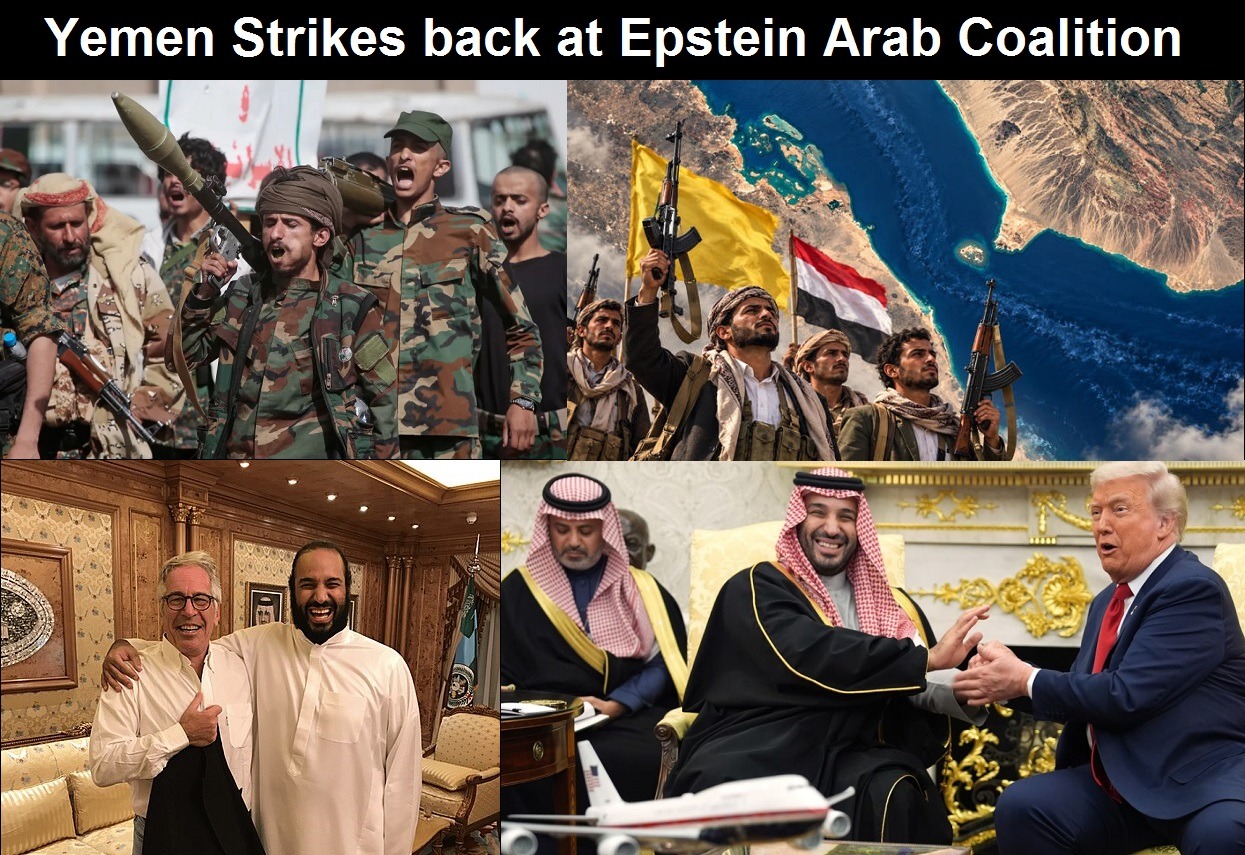
But a recent Saudi airstrike on Sanaa International Airport, the first in years, prompted a serious Yemeni retaliation.

The YAF targeted Saudi Arabia’s Abha Airport with missiles and drones. These were also the first direct Yemeni strikes against Saudi territory since 2021.

The kingdom waged war against Yemen in 2015 at the head of an Arab coalition, after Ansarallah seized the capital and ousted the Saudi-backed president from Sanaa.

A 2023 Saudi–Yemeni peace process nearly resulted in an agreement between the two sides.

The peace talks stalled but prevented a major escalation from erupting. Yet the kingdom for years continued its illegal and deadly blockade on Yemeni ports and airports.

Ansarallah had already begun mobilizing to expel Saudi forces from Yemen when the kingdom bombed Sanaa airport on 13 July.

The movement and the YAF are now vowing to respond harshly to any more Saudi attacks. “We will spare no effort in confronting Saudi Arabia with everything we possess,” Ansarallah’s leader Abdul Malik al-Houthi said this week.

This would potentially involve more direct Yemeni strikes on Saudi territory and energy infrastructure, as was the case in 2021 and 2022.

Pakistan would be required to confront any such attack as part of their defense pact with the kingdom reached in September 2025.

That pact declares that “any aggression against either country shall be considered an aggression against both.”

[…]

Via https://thecradle.co/articles/pakistan-fears-being-dragged-into-new-yemen-saudi-war-report

How Tehran is Running the Clock

Pepe Escobar

Tehran isn’t rushing to negotiate—it’s running down Washington’s clock

Let’s start with four key variables at work in this increasingly dangerous crossroads.

One. The Majlis – the Iranian Parliament – met on Tuesday night, at the start of the new Mojtaba era, which started last Friday after the final burial rites of former, assassinated Supreme Leader Ayatollah Khamenei in Mashhad. The 290 members unanimously passed two resolutions.

The first one demands the government – under President Pezeshkian – “accelerate nuclear capabilities”. That may be interpreted either as driving up uranium enrichment, or something way more groundbreaking.

The second resolution rejects any (italics mine) compromise with the US on previously agreed terms. Translation: even if there would be a renewed memorandum of understanding (MoU), de facto blown up by the President of the United States straight out of the NATO summit in Ankara, the terms would be much harsher for the US.
Two. The Iran-Pakistan-Qatar channel.

Earlier this week Islamabad and Doha have resumed intense consultations – one might even brand them as frantic – trying to reopen direct talks with Tehran this coming Sunday.

That’s a Sisyphean task, because it would have to take place in sharp contrast with heavy American bombing of Iranian targets – including civilian infrastructure – and the motto echoed by millions in the streets of Iran last week: “Revenge”.
The diplomacy though is real. Yet it has been demoted by the mediators from “path to settlement” to “prevention of catastrophe.”

Three. The Trump-Munir backchannel

Mediators at the sorry remnants of the negotiating table confirm that Trump continues to place direct calls to Pakistan’s Field Marshal Asim Munir, pressing him to find an off-ramp that avoids personal humiliation.

That completely voids trademark vociferations by POTUS – always dominating the news cycle – that Iran is begging to do a deal. Reality is exactly the opposite. Munir, incidentally, is the Last Chance Saloon for Trump when it comes to an off-ramp.
Four. The Iranian military response to US bombing.
That includes, crucially, precision cluster munitions devastating US bases in Kuwait, Bahrain and Jordan.

The overwhelming majority of the real damage is not being reported publicly. From Al Udeid Air Base in Qatar to the Command and Control Center in Jordan; to erased Patriot missile systems in Kuwait to Al Dhafra Air Base in the UAE; from wiping out MQ-9 drone hangars and HIMARS launchers and ammo depots to obliterated refueling platforms in Oman’s Duqm port.

That one was a banger: Duqm is on Arabian Sea coast, outside of the Strait of Hormuz. That’s where American ships dock without entering the Persian Gulf, refuel, and receive repair and supply services: a key node of the operational rear of the US fleet deployed in the northern Indian Ocean.

[…]

Via https://t.me/healthimpact/3687