How the Epstein Files Are Rewriting Our Reality

Jeffrey Epstein Files: After Phase 1, Will There Be Phase 2 And 3? What ...

The Epstein files do not represent a scandal to be managed. They represent a structural revelation: that the post-World War II liberal international order, with its claims to moral authority and universal justice, has completely collapsed under the weight of its own contradictions. What remains is raw power, operating without ideological justification, without institutional accountability, without even the pretense of equal justice.
— Dr. Zarqa Parvez

I hope everyone understands the we are in the midst of the most significant political event since the assassination of John F. Kennedy in 1963. In fact, the release of the Epstein files is even more significant. The 1963 coup was a consolidation and intensification of a system of power that goes back centuries (at least). The Epstein files are its undoing.

I say that in the spirit of prophecy, not prediction. Predictions relegate us to the role of passive observers of likelihoods; prophecies come true only if we make them true. A prophecy comes true only if we recognize the possibility it illuminates, and participate in its fulfillment.

The material in the Epstein Files so severely violates the stories that scaffold our society that there is no way to accept it and keep those stories intact.

Yet there is no way to reject it either. The material is too public, too accessible, too horrifying, and too credible. The dark reality the files portray has escaped its exile to the hinterlands of “conspiracy” to run amok in the general public mind. It is like a herd of feral pigs that have burst through a hole in the manor walls and are now rampaging through the gardens, uprooting the shrubbery, tearing down the trellises, defecating on the croquet lawns, and wallowing in the flowerbeds.

They cannot be contained. The taint of corruption leaves no institution untouched. Not academia. Not the media. Not the FBI or the intelligence services. Not Congress. Not global NGOs. Not the justice system. Not the transnational corporations and banks. Not the Trump administration (it will fall) nor any of its predecessors. The entire elite establishment is implicated in Epstein’s depravity—some through direct association with him, and the rest by letting it happen and then covering it up.

The situation is much like that of an abusive family. It appears normal from the outside, but it carries a dark secret, a hell behind its closed doors. Everyone in the family knows what’s going on, at least half-consciously, but no one speaks of it. It cannot be spoken because it is unspeakable. To speak it would be to destroy the story of the family. It would violate agreed-upon reality. Some pretend not to know. Some know and do not speak.

That has been true of our media, law enforcement, and most of those within or adjacent to the circles of power. Many did not speak because they believed—with good reason—they would be dismissed as crazy, or silenced even more drastically. It is the very definition of insanity to deny what everyone agrees is real. So it is in a family, and so it is in the larger human family.

In neither case, though, is any healing, any real change, possible unless the secrets come to light. No new reality can be built while the old one still stands. That is where authentic hope lies, in the voicing of the unspeakable. What the Epstein files reveal in the elite echelons of society is not confined there. It is rife throughout, in any situation where the operation of power is hidden from view.

What is disintegrating now is much bigger than institutions and systems. It is their fundamental legitimacy, the credibility of those authorities who tell us what is real and what is not, what is possible and what is not, what is crazy and what is sane. The collapse goes deeper still: normalcy itself is disintegrating, the basic mythology that defines what normal even is, and the mythology of modernity, of progress, of a society that has risen above medieval barbarism toward enlightened values and democratic ethics—the mythology of “the West.” All of these are crashing down. It is as if reality itself were breaking.

Thus we are entering what I call “the space between stories.” The old story that told us who and what to trust, that narrated past and future, that told us how to conduct ourselves as responsible members of society, that defined what is real and who we are, is collapsing. “I don’t know what’s real anymore” is the hallmark of this space between.

A new and true story may arise from the wreckage of the old, but that will take time, and we must be available to receive it. Right now we are vulnerable to hasty substitutes for the collapsing old story that offer temporary relief from the bewilderment and vertigo of the space between. These substitutes beguile us with tidy explanations of what is happening, a new story-of-the-world to replace the old, but n fact they are the old, in disguise. If we allow them to seduce us, humanity will endure another cycle of horror. We must resist ready explanations until more of the unspeakable has been spoken.

[…]

If, on the other hand, we pass this initiatory threshold, we will enter a new era of civilization. For one thing, the same elites who raped and tortured children also presided over a global system of war, genocide, and exploitation whose victims are no less pitiable. Is it really so different, to sacrifice a child in a Satanic ritual to further one’s personal power, as it is to sacrifice whole populations for geopolitical power? Both are outcroppings of the same mindset, the same dehumanization and instrumentalization of human beings. The lies that shroud each draw on a common source: the legitimacy of the elites, their institutions, and the story-of-the-world that elevates them. When one crumbles, so will the other.

Secondly and more importantly, waiting just outside of the carefully-guarded borders of official reality is knowledge that can revitalize humanity and all life on earth. The same breach in the wall through which the feral pigs of pedophilia, human trafficking, rape, murder, satanic ritual, and financial and political corruption are invading public awareness will also allow more welcome exiles to enter. What will this world become when we bring in all that has been suppressed? Circular economy money systems. Mind-body technologies. UAP technologies. Psychedelic therapies. Indigenous practices of ritual, dream, sound, story, and ceremony. Over-unity energy devices? What happens when “alternative” healing modalities come into their own? Regenerative agriculture? Bioremediation of waste? Ecosystem healing? And social technologies too, of inquiry and listening, conflict resolution, compassionate dialog. And what happens when we fully countenance the reality of extraterrestrial civilizations, of telepathy and ESP, of the continuity of consciousness after death? We will be able to create together the more beautiful world our hearts have always known is possible.

I’m quite tired of holding knowledge of all of the above against the assault of “impractical,” “Impossible,” “delusional,” “fake,” “fraud,” and “debunked.” From personal experience and decades of study I know they are real, yet we have lived in a reality-story-agreement field in which they are not. That is starting to change.

It’s not only that the guardians of official reality suppressed research and even eliminated researchers who challenged the interests of the energy industry, the medical industry, the chemical industry, and so forth. They also enforced the paradigms in which such technologies were impossible. They dictated not only what was real, but what could be real. Some of this suppression was conscious and deliberate, but much was unconscious, instinctive, driven by mythic and archetypal forces. When we understand this we can avoid one of the most dangerous traps that would shunt us back into a new iteration of the old story. The trap is to confuse symptom and cause; in this case, to believe that evil individuals are the cause of humanity’s present degradation and suffering. They are not. They too are symptoms.

The old story, the Story of Separation, narrates human progress as an ascent toward greater and greater control—over nature, the body, society, the genes, the brain, biology, matter. Control is the solution to every problem. Find the culprit. Find the pathogen. Find the cause, preferably the single cause, of a problem, and then you know how to solve it. Spray those bugs, kill those weeds, quarantine the contagious, eliminate the pathogen, lock up the criminals, bomb the enemy into oblivion. Problem solved. This is the habit that allows the public to be so easily manipulated into fighting against itself—just define two sides and tell each that the cause of their problems is the other. Shall we unite and turn that same habit against the manipulators themselves? Better that than incinerate our energy in civil warfare. But it is still the same habit, the same reflex. It never asks, What are the conditions that breed weeds and pests, criminals and enemies? Leaving those conditions unchanged, it leads to endless war, always a new superbug, a new crop of criminals or terrorists. So also will it ensure someday, and probably sooner than we think, a new crop of elite monsters.

[…]

Via https://charleseisenstein.substack.com/p/reality-is-breaking

Why the Right of Palestinian Return is Still the Issue

Last week, Israel “reopened” the Rafah crossing. Twelve Palestinians were allowed to return home. Twelve people who chose to return to Gaza, despite knowing they might be killed again, because they would rather die on their land than live as strangers in countries that will never be home. This followed a “master plan” for Gaza submitted by Israel and the United States for Gaza which both rejected Palestinian input and omitted widespread Palestinian return as an option. And then news broke that Omar Shakir from Human Rights Watch resigned after a report his team produced on the Palestinian Right of Return was killed by his own organization.

At a time when return is most critical to Palestinian survival, the world is working to make it seem impossible and punishing those who would advocate for it. Every “peace plan” offers Palestinians everything except the one thing that matters: the right to go home. All these recent stories show us that the question of Palestinian return to their land continues to be a question of whether Palestinians are allowed to exist as a people at all.

The right of return is the right of Palestinians who were expelled or forced to flee their homes in 1948 and after to return to those homes, to reclaim their property, and to live there in dignity. It is an individual and collective right recognized under international law that does not expire over time, through political negotiation, or with changes in sovereignty.

But the right of return is more than an obscure legal right. The right of return is inseparable from our identity as Palestinians and is necessary for our right to determine our future.

Where I live in Michigan, there is a child from Gaza who is receiving treatment for a prosthetic leg through HEAL Palestine. When I spoke to him, he told me all of his entire extended family who had been martyred during the genocide, except for one brother. But he still wants to go back to Gaza, to rebuild, and to one day die where his family died.

Why would anyone choose this? Why would someone who lost everything return to a place that has seemingly lost everything, too? Why does this specific land matter so much that people would rather die there than live safely somewhere else?

For Palestinians, land is not a passive setting for life. It is the fabric of Palestinian existence itself, woven into identity, memory, and continuity across generations. I haven’t been home in many years, but I still remember the way the sun feels on my skin there. How the warmth somehow feels warmer. How the scent of olive trees and yansoon makes every corner store and outside market feel like home. To be Palestinian is to carry your name and your country in your blood, as Mahmoud Darwish wrote, it is to “suffer from incurable malady: Hope.”

The Palestinians in Gaza, who have survived two years of genocidal bombardment, still wake up every morning Palestinian. Still teach their children Arabic. Still tell them stories about villages their great-grandparents loved. The Palestinians in the West Bank plant olive trees, knowing they may never harvest them, because planting is an act of faith in the future. They rebuild homes that get demolished because they have no other choice. They have children because raising Palestinian children is a revolution in itself to those who claim there is no such thing as Palestinians.

When the Nakba started in 1948, over 750,000 Palestinians were expelled, over 50% of the total Palestinian population at the time. Over 400 villages were destroyed, and over 70% of Historic Palestine was stolen. As Rabea Eghbariah argues, the Nakba is a daily violence that encompasses the displacement, occupation, apartheid, and genocide, concurrently and simultaneously.

The Nakba fragmented the Palestinian people demographically, severed them from territorial integrity, and destroyed the social infrastructure necessary for collective governance. Families were scattered across refugee camps in Lebanon, Jordan, and Syria. Communities were broken apart, with some ending up in the West Bank, some in Gaza, some in what became Israel, and some fleeing to the diaspora. This fragmentation made it so that Palestinian self-determination would be impossible, as we could not govern as a unified people.

.The refugee camp was supposed to be temporary, but it became permanent. The Oslo Accords were supposed to lead to statehood. They delivered 30 years of expanding settlements and deepening apartheid. Every framework offered to Palestinians has demanded that we accept less than what was stolen. Every negotiation has started from the premise that 1948 is the past, that what happened then is too far gone to correct, that Palestinians should accept what exists now, and move forward. But you cannot have Palestinian self-determination without addressing the Nakba, because the Nakba is ongoing.

You cannot have Palestinian self-determination without the right of return.

Palestinian self-determination cannot exist without return because there is no Palestinian people separable from Palestine. Palestinian identity is inseparable from this specific land: from Jaffa’s oranges and Haifa’s sea, from the olive groves of Jenin and the hills of Jerusalem. To say Palestinians can have self-determination somewhere else is to say Palestinians can cease to be Palestinian and become something else entirely.

Self-determination is defined under international law as the right of peoples to freely determine their political status and freely pursue their economic, social, and cultural development. But for Palestinians, this cannot happen in exile. Our economic development was tied to agriculture, with specific crops and seasons on specific land. Our social development was structured around village life and extended family networks rooted in place. Our cultural development emerged from the landscape itself, our poetry about olive trees, our cuisine built from what the land provided, and our entire way of being in the world was shaped by the geography we came from.

The claim that Palestinians can exercise self-determination in a truncated state on 22% of historic Palestine, or in refugee camps, or in diaspora, is a claim that Palestinians can be severed from what makes us Palestinian.

For Palestinians, Return is self-determination. It is the claim that we remain a people tied to that specific territory, that our exile doesn’t expire. Almost eight decades of displacement have fragmented us demographically, but it has not destroyed the fundamental truth that we belong to that land and it belongs to us.

This is why the right of return remains the ultimate test for supporting Palestinians. Return requires acknowledging that Israel is a settler colony built on ethnic cleansing. That the “only democracy in the Middle East” is actually an apartheid state. That is what happened in 1948 is the foundational crime that structures everything that has happened since.

Supporting return means accepting that stealing land does not become legal just because you hold it long enough and kill enough of its people. It means accepting that indigenous peoples have claims to their land that survive occupation, that persist through genocide, that cannot be extinguished by time or violence. And peace requires justice, and justice requires return, and return requires admitting that the entire Zionist project was built on a crime that must be corrected.

Israel claims return is impossible. But in Rwanda, the “inalienable right” of Tutsi refugees to return after 34 years in exile was recognized, even though their return would shift the country’s ethnic balance. Bosnia made refugee return a central part of its peace agreement, stating that “all refugees and displaced persons have the right freely to return to their homes of origin.” Cyprus has upheld Greek Cypriot return claims for 50 years despite Turkish occupation. Kosovo included in its 2008 constitution a provision recognizing the right of all citizens who lived there before 1998 to return, regardless of current citizenship or political loyalties.

These precedents prove return is possible. Return is only impossible if you insist on maintaining the crime that created displacement in the first place.

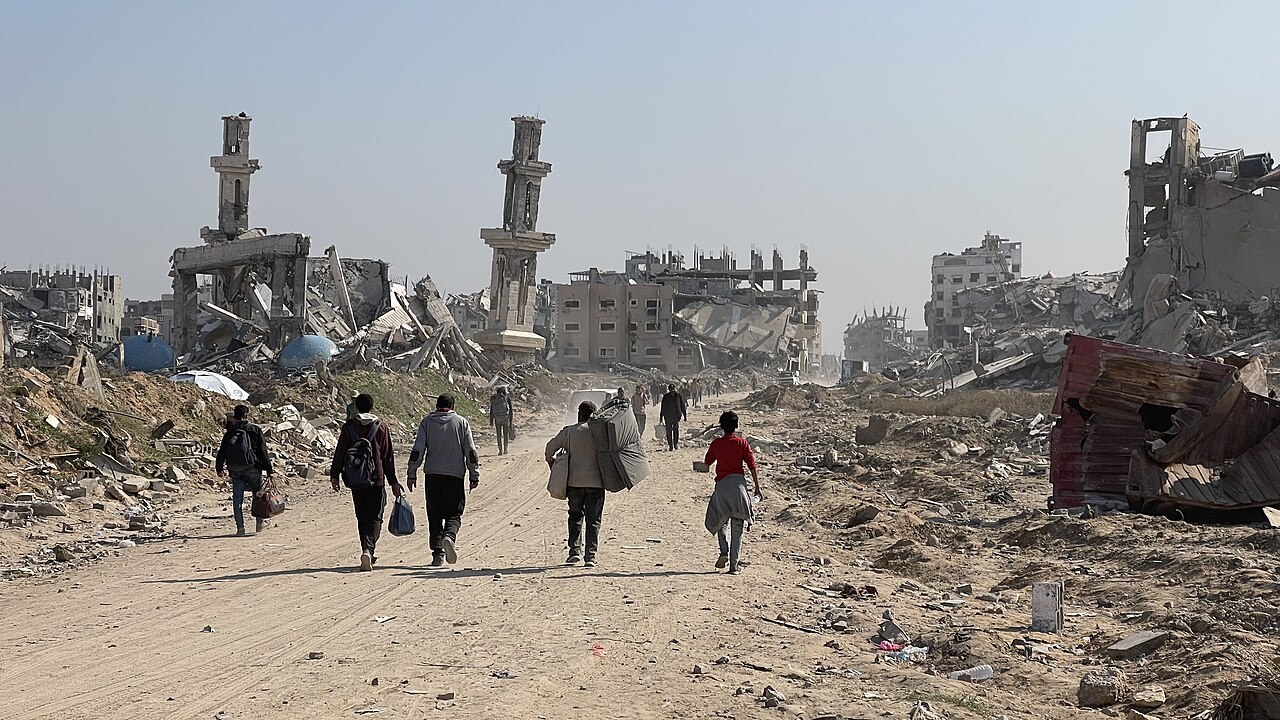
Over 70,000 Palestinians have been killed in Gaza, averaging 91 deaths per day for 24 months. Independent estimates show the death toll reaching 680,000, primarily women and children. 70% of all structures in Gaza have been destroyed or damaged, including 92% of housing. Every single university has been bombed. 95% of schools have been damaged or destroyed. Almost 1,600 healthcare workers have been murdered. Over 1,000 Palestinians seeking aid have been shot and killed by Israeli forces.

We will return to this. To cities reduced to rubble. To fields poisoned by white phosphorus. To water systems destroyed. To hospitals bombed. We will return to graves we must dig up to rebury properly. Palestinians will return to the absence of everyone they loved who didn’t survive. Palestinians will return to land that has been soaked in our blood for 78 years.

And we will rebuild. Because that is what Palestinians do. We refuse to disappear, and we will return because we never left. But we will not return as grateful refugees begging for shelter in our own homeland. We will return as a people who survived genocide, who resisted ethnic cleansing, who refused to be erased. We will return with our dignity intact and our rights uncompromised, because anything less perpetuates the colonial logic that created this catastrophe.

[…]

Via https://www.globalresearch.ca/palestinian-right-return-issue/5916423

Epstein estate to pay $35 million to settle sex abuse claims

Epstein estate to pay $35 million to settle sex abuse claims

RT

The estate of the late sex offender Jeffrey Epstein has agreed to pay up to $35 million to settle a class-action lawsuit, according to a court filing from Thursday.

The suit accused two of the financier’s advisers of aiding and abetting his sex trafficking of young women and teenage girls.

The lawsuit was initially filed in 2024 against Darren Indyke and Richard Kahn, both of whom served for years as Epstein’s personal lawyer and accountant, respectively.

Boies Schiller Flexner, the law firm representing Epstein’s alleged victims, announced the settlement in a filing in a federal court in Manhattan. Under the terms of the proposed settlement, Epstein’s estate would also be joined as a defendant in the case.

The settlement, reached with Indyke and Kahn, aims to “finally, and forever” resolve claims from victims who say they were “sexually assaulted or abused or trafficked by Jeffrey Epstein between January 1, 1995, and through August 10, 2019,” the date of his death in prison.

Indyke and Kahn, who have not been accused of abusing women or witnessing any such abuse, have denied all liability to Epstein’s victims and agreed to the settlement terms without admitting wrongdoing.

“Because they did nothing wrong, the co-executors were prepared to fight the claims against them through to trial, but agreed to mediate and settle this lawsuit in order to achieve finality as to any potential claims against the Epstein Estate,” NBC quoted their lawyer Daniel H. Weiner as saying.

The proposed agreement, which requires approval from a federal judge in New York to become final, provides for a total payout of $35 million to the group – estimated by their attorney to include at least 40 eligible women – or $25 million if fewer than 40 qualify.

The payout follows a prior distribution of $121 million to 136 claimants through the Epstein Victims Compensation Program, as well as a subsequent $48 million settlement covering 59 victims.

The release of the Epstein files has sparked a wave of resignations worldwide. The fallout hit hardest in the UK, where three senior officials in Prime Minister Keir Starmer’s government stepped down and King Charles’s brother Andrew lost his titles.

[…]

Via https://www.rt.com/news/632817-epstein-lawsuit-settlement/

Supreme Court strikes down Trump’s tariffs

The U.S. Supreme Court building is seen.

The U.S. Supreme Court building is seen in Washington, on Feb. 20, 2026. | Francis Chung/POLITICO

The 6-3 decision is a rare instance of the conservative-led court reining in Trump’s expansive use of executive power. Chief Justice John Roberts and Justices Amy Coney Barrett and Neil Gorsuch joined the court’s three liberals in the majority.

“The President asserts the extraordinary power to unilaterally impose tariffs of unlimited amount, duration, and scope. In light of the breadth, history, and constitutional context of that asserted authority, he must identify clear congressional authorization to exercise it,” Roberts wrote, declaring that the 1977 law Trump cited to justify the import duties “falls short” of the Congressional approval that would be needed.

The ruling wipes out the 10 percent tariff Trump imposed last April on nearly every country in the world, as well as specific, higher tariffs on some of the top U.S. trading partners, including Canada, Mexico, China, the European Union, Japan and South Korea.

Trump bristled with anger over the high court’s decision, denouncing it as a profound betrayal of the U.S., while also insisting it would be of little practical consequence because his administration will reimplement similar or larger tariffs using other authorities.

“The Supreme Court’s ruling on tariffs is deeply disappointing, and I’m ashamed of certain members of the court — absolutely ashamed — for not having the courage to do what’s right for our country,” Trump said at a White House press conference hours after the ruling came down.

Trump called the justices in the majority “unpatriotic and disloyal to our Constitution.” And he repeatedly suggested that those justices had acted to satisfy “foreign interests,” although he provided no evidence to support the claim.

While Trump had predicted cataclysmic harm to the U.S. economy if the existing tariffs were ruled illegal, he changed course Friday and argued that the decision could be a net positive because the court had upheld his right to use other legal mechanisms to impose tariffs. He did acknowledge that the alternatives will be “a little bit more complicated” than the sweeping powers the court rejected Friday.

The White House had signaled before the court defeat that it would attempt to use other statutes to keep similar duties in place.

“We’ve been thinking about this plan for five years or longer,” U.S. Trade Representative Jamieson Greer told POLITICO in December. “You can be sure that when we came to the president the beginning of the term, we had a lot of different options”

“My message is tariffs are going to be a part of the policy landscape going forward,” Greer said.

But Trump has repeatedly said that a loss in the tariff case at the Supreme Court would be a “disaster” for the United States, even though critics of his restrictive import tax scheme argue the country prospered for decades with low tariffs.

It undercuts his ability to impose tariffs on a whim to address geopolitical conflict — like a threat to impose tariffs on countries that do business with Iran — and to threaten tariffs as he tries to gain a better negotiating position — like his tariff threats in an attempt to acquire Greenland. Businesses had decried those “national security” tariff threats for fueling economic uncertainty, but the administration said they were necessary for achieving its policy goals.

While Roberts’ ruling was emphatic, the court’s majority was not entirely unified in its rationale.

The six justices who voted to strike down the tariffs agreed that the law Trump cited, the International Emergency Economic Powers Act, could not properly be read to authorize tariffs at all. Roberts, Gorsuch and Barrett also invoked a legal theory called the major questions doctrine to conclude that, due to the broad economic impact of tariffs, Congress would need to be particularly clear before shifting its trade-related powers to the president.

The chief justice, Gorsuch and Barrett also rejected arguments from Trump and the dissenting justices that the court should defer to Trump because of the role tariffs play in foreign relations.

“Whatever may be said of other powers that implicate foreign affairs, we would not expect Congress to relinquish its tariff power through vague language, or without careful limits,” Roberts wrote.

In a visit to Georgia Wednesday, Trump touted a steel business he said had been able to boost production because of his widespread use of tariffs, questioned why the Supreme Court would rule against him and needled the justices for taking months to resolve the issue.

The federal government could now be forced to issue billions of dollars in refunds to companies that paid the tariffs the high court ruled illegal. Many companies have already sued to protect their refund claims in the event the court struck down the Trump tariffs.

The majority opinion made no mention of the battle over refunds, but Justice Brett Kavanaugh predicted some chaos in his dissent.

“The United States may be required to refund billions of dollars to importers who paid the IEEPA tariffs, even though some importers may have already passed on costs to consumers or others,” Kavanaugh wrote, joined by Justices Clarence Thomas and Samuel Alito. “The refund process is likely to be a ‘mess,’” he added, quoting an exchange the justices had on the issue during oral argument in November.

Kavanaugh said “context and common sense” supported the conclusion that IEEPA “clearly authorized” the president to impose tariffs, even though that word doesn’t appear in the statute.

The ruling also raises questions about the future of trade deals that the Trump administration has struck with the European Union, Japan, South Korea and other trading partners to reduce the tariffs he targeted at their exports to the United States.

[…]

Via https://www.politico.com/news/2026/02/20/trump-tariffs-supreme-court-ruling-00790687

MAHA Moms Turn Against Trump After Stunning Betrayal

President Donald Trump aired grievances and bragged about his peace deals during the inaugural meeting of his so-called
Murat Gok/Anadolu via Getty Images
Laura Esposito

Robert F. Kennedy Jr.’s supporters are furious after he sided with his boss over the movement that helped put him in power.

The Make America Healthy Again movement erupted in anger after President Donald Trump, 79, issued an executive order Wednesday night promoting the use of glyphosate, a widely used weedkiller. MAHA supporters have long argued that the chemical is dangerous and have backed thousands of lawsuits involving Roundup, an herbicide originally manufactured by Monsanto.

Health Secretary Kennedy previously argued that Monsanto knew glyphosate caused cancer—and helped secure a $289 million jury verdict against the company in 2018, according to the New York Times.

“The herbicide Glyphosate is one of the likely culprits in America’s chronic disease epidemic. Much more widely used here than in Europe,” Kennedy wrote on X in June 2024, while he was campaigning for president.

“Shockingly, much of our exposure comes from its use as a desiccant on wheat, not as an herbicide,” he continued. “From there it goes straight into our bodies. My USDA will ban that practice.”

Robert F. Kennedy Jr. himself has vowed to ban Glyphosate. / Screenshot/X

Despite those strong words, Kennedy, 72, was notably compliant following the president’s order.

“Donald Trump’s executive order puts America first where it matters most—our defense readiness and our food supply,” Kennedy said in a statement to the Times on Wednesday night.

Kennedy’s switch-up was, understandably, a blow to his supporters.

“I can’t envision a bigger middle finger to every MAHA mom than this,” Ken Cook, a MAHA advocate and co-founder of Environmental Working Group, told the Times.

One X user, who identified herself as Susan, said Trump’s order was their breaking point with the president.

“MAHA was a big part of the reason I voted for Trump,” Susan wrote Thursday morning. “I have to say, ‘Promises made, promises BROKEN’. Also no amount of ‘It’s the economy, stupid” will win back my support.”

An X post decrying Trump's executive order and the
An X post decrying Trump’s executive order and the

Vani Hari, a health advocate and MAHA supporter, told the Times the order was “a direct assault on MAHA” and “a gift to pesticide and chemical industry lobbies at the expense of human health.”

“MAHA voters were promised health reform, not chemical entrenchment,” Hari said.

Another so-called MAHA mom said Trump had failed to deliver on his promises.

Trump's executive order stirred the anger of MAHA's mothers. / Screenshot/X / Screenshot/X
Trump’s executive order stirred the anger of MAHA’s mothers. / Screenshot/X / Screenshot/X

“MAHA Moms helped him get in. We wanted RFK Jr., that is the opposite of wanting glyphosate protected, the opposite of protecting pedophiles, the opposite of sons and daughters going to war unwarranted. He is hemorrhaging supporters,” wrote X user Nicole Mendes.

Trump’s order comes just days after Bayer, which acquired Monsanto in 2018, proposed a $7.25 billion settlement to resolve lawsuits alleging its weedkiller caused cancer, CNBC reported.

In his executive order, Trump wrote that phosphorus is “critical to national defense and security.”

“Our Nation’s inadequate elemental phosphorus production, which must sustain both defense manufacturing and our significant agricultural needs, and the threat of increased domestic scarcity leave us vulnerable to hostile foreign actors and pose an imminent threat to military readiness,” he said.

The Daily Beast has reached out to the Department of Health and Human Services for comment.

[…]

Via https://ca.news.yahoo.com/trump-order-seeks-protect-weedkiller-203215502.html

Astronomy in the Islamic Golden Age

Al-Tusi

Episode 12 – Astronomy in the Islamic Golden Age

Islamic Golden Age (2017)

By Eamon Gearon

Film Review

Gearon begins this lecture by distinguishing between astronomy and astrology, both considered serious sciences prior to thee Middle Ages. Astronomy is a branch of natural sciences that arose independently in Greece, Babylonia, Persia and Norseland, relying entirely on natural observation. By the seventh century AD, all four cultures had identified (without a telescope) seven planets: Mars, Mercury, Jupiter, Venus, Saturn, Earth and the moon). In contrast astrology, which arose around 2,000 BC in Mesopotamia, was a science employing star charts to predict the future and choose auspicious dates for significant events. Both benefited from the Islamic conquest of Persia (633-651), the primary source of both astronomical and astrological discoveries in the Muslim world.

He then profiles the accomplishments of three Islamic astronomers:

  • The mathematician al-Khwarizmi 759-850 AD (see The Arab Invention of Algebra and Algorithms) –  After becoming court astrologer for the caliph, translated astronomical tables from Hindu and performed additional observations and calculations to detail the exact positions of the sun, moon and various stars and planets.
  • Al-Haytham 965-1040 AD (see The House of Wisdom and Al-Haytham’s Book of Optics) – although better known for his work in optics, 25 of the 200 books he published concerned astronomy. One of the first to attack Ptolomy’s second century AD earth-centric model of the universe and lay ground work for Copernicus’s 15th century heliocentric model of the solar system.
  • Al-Tusi 1201-1275 AD – born of a Shia Muslim family in northern Iran and traveled widely to study the Koran, mathematics and philosophy under various scholars. Translated Euclid, Archimedes and Ptolemy and published more than 160 books. Identified Milky Way cloudy patches as star constellations 300 years prior to invention of telescope. Observed that planets speed up and slow down in their orbits and challenged both Ptolemy’s views on both an earth-centric universe and the circular orbits of planets (Kepler subsequently confirmed mathematically they were elliptical). Oversaw construction of three observatories following 1258 Mongol takeover in Baghdad, Maragheh (Iran) and Damascus.

https://www.kanopy.com/en/pukeariki/watch/video/5756987/5757011

US general reveals make-up of Gaza peacekeeping force

US general reveals make-up of Gaza peacekeeping force

RT

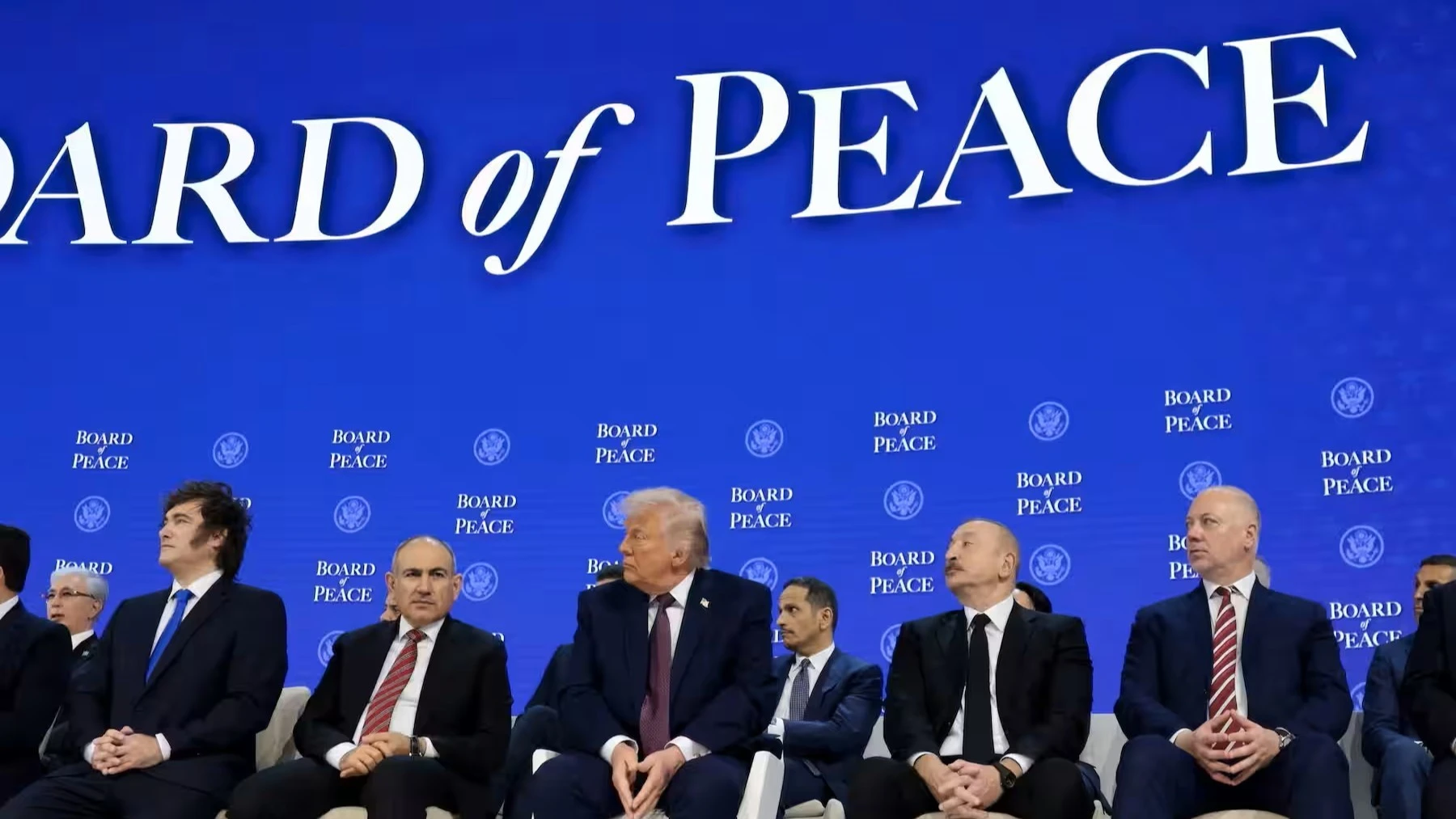
Indonesia, Morocco, Kazakhstan, Kosovo and Albania are ready to deploy peacekeeping forces to Gaza, US Major-General Jasper Jeffers has said during the first ‘Board of Peace’ meeting in Washington on Thursday. The troops are to serve in the International Stabilization Force (ISF), while Egypt and Jordan are to train the Palestinian police.

“In the short term, we’re going to deploy to the Rafah sector first, in addition to training police. The midterm objective is to continue to expand sector by sector, moving to our long-term target of 12,000 police and 20,000 ISF soldiers,” Jeffers revealed.

During the meeting, an Executive Board member, Apollo Global Management CEO Marc Rowan, also pledged to rebuild 100,000 homes in Rafah city to house 500,000 residents. Over time, 400,000 more homes will be built in other parts of Gaza, he claimed.

Reports indicate that around 26 countries have reportedly formally joined the Board of Peace and are designated as founding members, sending high level representatives to the inaugural meeting in Washington. Formally established in mid-January as part of Trump’s Gaza peace roadmap, permanent membership beyond the initial three years reportedly requires a contribution of $1 billion.

The Board has already pledged $5 billion toward rebuilding war-ravaged Gaza and will commit thousands of personnel to international stabilization and police forces for the territory.

[…]

Via https://www.rt.com/news/632796-countries-deploy-gaza-indonesia-morocco-kazakhstan-albania/

UK police arrest ex-prince Andrew over sex scandal linked to Epstein

Andrew, the younger brother of British King Charles III, leaves Westminster Abbey following the coronation ceremony of the king and Queen Camilla, in London, May 6, 2023. (Photo by Reuters)

Press TV

Andrew Mountbatten-Windsor, the younger brother of British King Charles III, has been arrested by police investigating the former prince’s dealings with the convicted child sex offender Jeffrey Epstein.

In unprecedented scenes, unmarked police cars and plainclothes officers were seen at Andrew’s residence on Thursday morning.

Andrew, who was stripped of his titles last year but remains eighth in line to the throne, was held in custody by Thames Valley Police as officers searched the Norfolk property as well as his former home, the Royal Lodge, in Great Windsor Park.

A statement from the police said: “As part of the investigation, we have today (19/2) arrested a man in his sixties from Norfolk on suspicion of misconduct in public office and are carrying out searches at addresses in Berkshire and Norfolk.”

Oliver Wright, one of the force’s assistant chief constables, said: “Following a thorough assessment, we have now opened an investigation into this allegation of misconduct in public office.

“It is important that we protect the integrity and objectivity of our investigation as we work with our partners to investigate this alleged offence. We understand the significant public interest in this case, and we will provide updates at the appropriate time,” Wright noted.

Andrew’s whereabouts are unknown. It is understood that neither the King nor Buckingham Palace was informed in advance of the arrest.

Thames Valley is one of a number of police forces to have assessed allegations that resurfaced when the Epstein files were published by the US Justice Department.

The force said previously it was reviewing allegations that a woman was trafficked to the UK by Epstein to have a sexual encounter with Andrew, and claims he shared sensitive information with the disgraced financier while serving as the UK’s trade envoy.

The allegations stem from documents released by the US Justice Department relating to Epstein and his links to the rich and powerful.

Emails released appeared to show Andrew sharing reports of official visits to Hong Kong, Vietnam, and Singapore.

Lawyers say Andrew could also face questions about alleged sexual wrongdoing while under arrest on suspicion of misconduct in public office.

Republic, a group that campaigns to abolish the monarchy, welcomed the arrest, which it said was in response to a crime report sent to the police by its chief executive, Graham Smith.

“Republic’s lawyers will continue to investigate related alleged offences and provide information to the police over the coming weeks and months,” Smith added.

According to the Crown Prosecution Service’s website, misconduct in public office carries a maximum sentence of life imprisonment.

[…]

Via https://www.presstv.ir/Detail/2026/02/19/764393/UK–Epstein-Andrew-King-Charles-III-

Trump’s war-mongering on Iran sparks sharp rebuke from US lawmakers

A toddler and a young boy play in the snow next to a state-sponsored billboard depicting Iranian fists and flags, in northern city of Qazvin, January 20, 2026.

Press TV

A broad range of US strategists, lawmakers, and politicians across the political spectrum have voiced opposition to President Donald Trump’s aggressive policies toward Iran, expressing deep concern over the potential consequences of military escalation.

“Americans do not want to go to war with Iran!!!” former Rep. Marjorie Taylor Greene posted on X.

She reminded Trump of his 2024 campaign promise to end foreign wars, stating: “They want to be able to afford their lives and get ahead. They want to be happy and enjoy life. They want their government to put elite pedos in jail. And they voted for NO MORE FOREIGN WARS AND NO MORE REGIME CHANGE.”

Sen. Edward J. Markey, a longtime advocate for diplomacy and opponent of prolonged military engagements, similarly emphasized that Americans do not seek to entangle the country in more endless wars in the West Asia, prioritizing domestic issues over further conflict abroad.

Pramila Jayapal, an American politician serving as the  representative from Washington’s 7th congressional district since 2017, warded Trump against launching a new aggression against Iran without first consulting Congress.

US Representative Don Beyer, serving the 8th District of Virginia, strongly criticized Trump’s unilateral and dramatic withdrawal from the Joint Comprehensive Plan of Action (JCPOA) during his first term in 2018, which rose tensions across the West Asia region.

He also questioned why Trump might need to launch another war on Iran, if the earlier US strikes in June last year “completely and totally obliterated” Iran’s key nuclear enrichment facilities.

Jason Crow, an American politician, lawyer, and former US Army officer serving since 2019 as the United States representative for Colorado’s 6th congressional district, reminded Trump that Americans are now “sick and tired” of his pointless wars and adventurism.

Andrew Kim, an American politician and former diplomat serving as the junior United States senator from New Jersey, sharply rebuked Trump for bringing the US to “the brink of war with no reason.”

Ruben Marinelarena Gallego, a US senator from Arizona, said that Trump’s campaign and presidency have been marked by broken promises, from ending wars to protecting against pedophiles.

David Pyne, former US Army HQ staff officer and national security strategist and geopolitics expert, said that the US intends to carry out another unjustified war of aggression against Iran on behalf of Israeli prime minister Benjamin Netanyahu.

“The current US-Iran military standoff is a manufactured crisis that would not exist if Trump had not created it. That is the way the warfare state works by manufacturing crisis all around the world to justify the US bombing and invading any nation it wants.”

Meanwhile, Reps. Ro Khanna and Thomas Massie plan to move next week to force a vote on a resolution to require authorization from congress before  Trump can use military force against Iran.

“I have a War Powers Resolution to debate & vote on war before putting US troops in harm’s way. I will make a motion to discharge to force a vote on it next week.”

The resolution directs the president to “terminate the use of United States Armed Forces from hostilities against the Islamic Republic of Iran or any part of its government or military, unless explicitly authorized by a declaration of war or specific authorization for use of military force against Iran.”

“Congress must vote on war according to our Constitution. @RepRoKhanna and I will be forcing that vote to happen in the House as soon as possible,” Massie added on X. “I will vote to put America first which means voting against more war in the Middle East.”

Last month, the House narrowly voted down a resolution designed to limit Trump’s ability to use military power in Venezuela. Republicans successfully blocked the measure in a 215-215 vote. Two Republicans joined all 213 Democrats in voting for the measure.

“Like the votes before the Iraq war, this could be one of the most consequential votes in the history of Congress. Are we going to stop another endless dumb foreign war? Or will the neoconservatives mislead us once again?” Khanna said.

In a most recent Quinnipiac University poll, 70% of Americans opposed any intervention in Iran, with only 18% in favor.

Trump has deployed military forces to the region, threatening to launch attacks on Iran.

US officials said on February 12 that the Pentagon was sending an additional aircraft carrier to the region, adding thousands more troops along with fighter aircraft and guided-missile destroyers.

This comes as regional powers have urged caution, emphasizing that Iran’s thirteen land and maritime borders make any large-scale conflict highly destabilizing.

Observers maintain Iran has demonstrated restraint during prior conflicts, along with its military capabilities, which would give it a strategic advantage in deterring foreign intervention.

Iran’s defense ministry says the country has better and stronger missiles compared to those used during a brief war with the US and Israeli regime last year.

[…]

Via https://www.presstv.ir/Detail/2026/02/19/764385/US-Trump-Iran-Congress-Persian-Gulf-

Trump gets pledges for Gaza reconstruction and troop commitments at inaugural Board of Peace talks

President Donald Trump speaks during a Board of Peace meeting at the U.S. Institute of Peace, Thursday, Feb. 19, 2026, in Washington. (AP Photo/Mark Schiefelbein)

WASHINGTON (AP) — President Donald Trump announced Thursday at the inaugural Board of Peace meeting that nine members have agreed to pledge $7 billion toward a Gaza relief package and five countries have agreed to deploy troops as part of an international stabilization force for the war-battered Palestinian territory.

While lauding the pledges, Trump faces the unresolved challenge of disarming Hamas, a sticking point that threatens to delay or even derail the Gaza ceasefire plan that his administration notched as a major foreign policy win.

The dollars promised, while significant, represent a small fraction of the estimated $70 billion needed to rebuild the territory decimated after two years of war between Israel and Hamas. While Trump praised allies for making the commitments of funding and troops, he offered no detail on when the pledges would be implemented.

“Every dollar spent is an investment in stability and the hope of new and harmonious (region),” Trump said. He added, “The Board of Peace is showing how a better future can be built right here in this room.”

Trump also announced the U.S. was pledging $10 billion for the board but didn’t specify what the money will be used for. It also was not clear where the U.S. money would come from — a sizable pledge that would need to be authorized by Congress.

Trump touches on Iran and the United Nations

The board was initiated as part of Trump’s 20-point plan to end the conflict in Gaza. But since the October ceasefire, Trump’s vision for the board has morphed and he wants it to have an even more ambitious remit — one that will not only complete the Herculean task of bringing lasting peace between Israel and Hamas but also help resolve conflicts around the globe.

But the Gaza ceasefire deal remains fragile, and Trump’s expanded vision for the board has triggered fears the U.S. president is looking to create a rival to the United Nations.

Trump, pushing back against the criticism, said the creation of his board would help make the U.N. viable in the future.

“Someday I won’t be here. The United Nations will be,” Trump said. “I think it is going to be much stronger, and the Board of Peace is going to almost be looking over the United Nations and making sure it runs properly.”

Even as Trump spoke of the gathering as a triumph that would help bring a more persistent peace to the Middle East, he sent new warnings to Iran.

Tensions are high between the United States and Iran as Trump has ordered one of the largest U.S. military buildups in the region in decades.

One aircraft carrier group is already in the region and another is on the way. Trump has warned Tehran it will face American military action if it does not denuclearize, give up ballistic missiles and halt funding to extremist proxy groups, such as Hezbollah and Hamas.

“We have to make a meaningful deal. Otherwise bad things happen,” Trump said.

Which countries pledged troops and funding

Indonesia, Morocco, Kazakhstan, Kosovo and Albania made pledges to send troops for a Gaza stabilization force, while Egypt and Jordan committed to train police.

Troops will initially be deployed to Rafah, a largely destroyed and mostly depopulated city under full Israeli control, where the U.S. administration hopes to first focus reconstruction efforts.

The countries making pledges to fund reconstruction are Kazakhstan, Azerbaijan, the United Arab Emirates, Morocco, Bahrain, Qatar, Saudi Arabia, Uzbekistan and Kuwait, Trump said.

Maj. Gen. Jasper Jeffers, leader of the newly created international stabilization force, said plans call for 12,000 police and 20,000 soldiers for Gaza.

“With these first steps, we help bring the security that Gaza needs for a future of prosperity and enduring peace,” Jeffers said.

Some US allies remain skeptical

Nearly 50 countries and the European Union sent officials to Thursday’s meeting. Germany, Italy, Norway, Switzerland and the United Kingdom are among more than a dozen countries that have not joined the board but took part as observers.

Most countries sent high-level officials, but a few leaders — including Indonesian President Prabowo Subianto, Argentine President Javier Milei and Hungarian President Viktor Orbán — traveled to Washington.

“Almost everybody’s accepted, and the ones that haven’t, will be,” Trump offered. “And some are playing a little cute — it doesn’t work. You can’t play cute with me.”

Vatican Secretary of State Cardinal Pietro Parolin told reporters this week that “at the international level, it should above all be the U.N. that manages these crisis situations.” French Foreign Minister Jean-Noël Barrot said in a post on X that the European Commission should never have attended the meeting as it had no mandate to do so.

More countries are “going through the process of getting on,” in some cases, by getting approval from their legislatures, Trump told reporters later Thursday.

“I would love to have China and Russia. They’ve been invited,” Trump said. “You need both.”

Official after official used their speaking turns at the gathering to heap praise on Trump for his ability to end conflicts. Pakistani Prime Minister Shehbaz Sharif called him the “savior of South Asia,” while others said that years of foreign policy efforts by his predecessor failed to do what Trump has done in the past year.

Turkish Foreign Minister Hakan Fidan said Trump and others there deserved thanks for their collective efforts on Gaza. But Fidan, who said Turkey also was prepared to contribute troops to the stabilization force, cautioned that the situation remains precarious.

“The humanitarian situation remains fragile and ceasefire violations continue to occur,” Fidan said. “A prompt, coordinated and effective response is therefore essential.”

Questions about disarming Hamas

Central to Thursday’s discussions was assembling an international stabilization force to keep security and ensure the disarming of the militant Hamas group, a key demand of Israel and a cornerstone of the ceasefire deal.

Hamas has provided little confidence that it is willing to move forward on disarmament. The administration is “under no illusions on the challenges regarding demilitarization” but has been encouraged by what mediators have reported back, according to a U.S. official who was not authorized to comment publicly and spoke on condition of anonymity.

Israeli Prime Minister Benjamin Netanyahu, speaking at a dusty army base in southern Israel, repeated his pledge that “there will be no reconstruction” of Gaza before demilitarization. His foreign minister, Gideon Saar, said during Thursday’s gathering that “there must be a fundamental deradicalization process.”

Trump said Hamas has promised to disarm and would be met “very harshly” if it fails to do so. But he gave few details on how the difficult task would be carried out.

Secretary of State Marco Rubio acknowledged that there is a “long ways to go” in Gaza.

“There’s a lot of work that remains that will require the contribution of every nation state represented here today,” Rubio said.

[…]

Via https://apnews.com/article/trump-board-of-peace-first-meeting-22e587df67e27cd1e1d96e446cb88378