The Most Revolutionary Act

Uncensored updates on world events, economics, the environment and medicine

The Most Revolutionary Act
Unknown's avatar

About stuartbramhall

Retired child and adolescent psychiatrist and American expatriate in New Zealand. In 2002, I made the difficult decision to close my 25-year Seattle practice after 15 years of covert FBI harassment. I describe the unrelenting phone harassment, illegal break-ins and six attempts on my life in my 2010 book The Most Revolutionary Act: Memoir of an American Refugee.

13 Things Your Pediatrician Was Trained Not to Tell You

Unbekming
10 Sept 2026

“Nothing bad should be said about any vaccine.”¹ That is what Suzanne Humphries, a board-certified nephrologist, was taught during her American medical training. Vaccines are administered on schedule. Adverse conversation was not encouraged. It was actively closed down.

[…]


1. The Cord Cut Before the Blood Finished Moving (birth)

A newborn’s blood volume is meant to be topped off from the placenta in the minutes after birth. When the cord is left intact and pulsing, roughly a third of the baby’s total blood supply, along with the iron that supply carries, transfers across before the placenta is expelled. That iron is the reserve intended to carry the child through the first six months of life.

The standard hospital practice throughout the late twentieth century was to clamp within seconds. The World Health Organization now recommends waiting at least one minute. The American College of Obstetricians and Gynecologists came around in 2017. Most hospital deliveries in the United States still clamp early, driven by workflow, the neonatal warmer schedule, and the syringe already on the tray.

[…]

Six months later, that same pediatrician will run an iron level, note the low result, and prescribe supplementation. The low reading she treats was produced by the system at birth. She is not trained to draw the line between the two events. She is trained to run the number and write the script.

[…]


2. The Vitamin K Injection (first hours)

Within hours of birth, the newborn receives an intramuscular injection of phytonadione, the compound sold as vitamin K1. The dose is one milligram. Breast milk carries roughly one to two micrograms of phytonadione per liter, and a newborn’s colostrum intake on day one delivers a fraction of a microgram; the injection is thousands of times that dose, and the published pediatric literature confirms that plasma phytonadione levels for two weeks after the shot run one to two thousand times higher than normal adult values. The injection also contains benzyl alcohol, polysorbate 80, and propylene glycol as excipients. T

[…]

The condition exists. What is not explained is why. Newborn phytonadione levels are low at birth by design; the compound is produced by the gut bacteria that colonize the infant’s digestive tract in the first days, and levels rise on the biological schedule the infant’s body follows. Levels are further supported by the maternal transfer that continues through breastfeeding. The “deficiency” the injection corrects is the state a healthy newborn is meant to occupy for the first days of life while the gut ecology establishes itself.⁶

The bleeding events the injection is designed to prevent cluster in infants who have been subjected to the standard hospital birth sequence: early cord clamping, which strips the placental transfusion of clotting factors; maternal medications passed through delivery; the injection itself as a source of tissue injury; and, in male infants, circumcision. The intervention creates the conditions in which bleeding becomes more likely, then presents itself as the solution to the problem it has helped produce.

Two forms of the shot exist. The oral form is available in some countries and delivers a smaller dose across three administrations in the first weeks of life. The intramuscular form is the American standard. The intramuscular form has been associated in the published literature with elevated rates of childhood cancer, a finding disputed by subsequent industry-funded studies but never resolved. The oral form does not appear in that literature.⁷

[…]


3. The Hepatitis B Shot Before the First Feed (first day)

Hepatitis B, in the establishment’s account, is transmitted through blood-to-blood contact or sexual contact. In the United States it is given as an injection to every newborn within twenty-four hours of birth, regardless of the mother’s status.


4. The Circumstraint (first days)

Boys born in American hospitals are commonly circumcised within the first forty-eight hours of life. The procedure is elective, performed on healthy tissue, without therapeutic indication. The device most commonly used to hold the infant during the procedure is called the Circumstraint, a plastic form that immobilizes the baby’s arms and legs so the surgeon can work.

Forrest Maready has written on what happens inside the infant’s body during this event.¹³ Three triggers activate the dorsal vagal complex simultaneously: the injected local anesthetic registers as chemical intrusion, the incision as tissue injury, and the strap and plastic form as restraint.

[…]

The procedure requires written consent. It does not require informed consent. Parents are not shown the Circumstraint, or what dorsal vagal shutdown looks like. They are told the boy will not remember.

[…]

Your pediatrician was not trained in polyvagal theory. The circumcision was billed separately, performed by a different practitioner, and by the time she sees the child for the first well-baby visit, the file is closed and the incision has healed.


5. The Formula Sample in the Discharge Bag (first weeks)

Breast milk is more than food. It is a continuation of the mother’s biology into the infant. It delivers living stem cells, signalling molecules, protective proteins, and dozens of maternal components the infant’s biology integrates into its own.¹⁴ Colostrum in the first days carries a concentration of maternal material no manufactured product can replicate. The list of components identified in breast milk grows every year.

[…]

6. The Growth Chart Announcement (every visit)

At every visit, the baby is weighed and measured. The numbers are plotted against a curve. The pediatrician announces the percentile. Anything below the fiftieth is met with concern. Anything below the tenth triggers supplementation, formula, referrals, and repeat visits.

The curve is a statistical instrument. It plots where a population’s babies actually fell, not where healthy babies should fall. The reference standards against which most American pediatricians still work were built substantially on formula-fed populations, until the World Health Organization revised its curves in 2006 based on breastfed infants. A breastfed baby, whose weight-gain curve flattens naturally after four to six months, tracks below the older references and appears to be failing. The formula-fed baby was the standard against which the breastfed baby was measured and labeled as failing to thrive.

[…]


7. The Iron Drops at Six Months (six months)

The four-month or six-month iron level comes back low. The pediatrician prescribes ferrous sulfate drops or recommends iron-fortified cereal. The parent complies. The drops stain the baby’s teeth, alter the stool, and are frequently spit up. The parent gives them anyway because the pediatrician said the number was low.

The number was low because the placenta was cut early. The reference range was developed on infants who were also cut early. The whole system, from delivery-room workflow to the reference range on the lab printout, was calibrated around interventions that removed the natural iron reserve at birth.


8. Amoxicillin for the Ear (infancy onward)

The child has an earache. The pediatrician looks in the ear, notes the red drum, and writes a script for amoxicillin. Ten days. The ear improves. Three weeks later, the ear is red again. Another course. By eighteen months, the child has been on four rounds of antibiotics. The referral to ENT for tubes is in the file.

A 1994 study in Annals of Allergy identified food allergy in 78 percent of a series of 104 children with recurrent middle-ear fluid. Of the food-allergic group, 86 percent showed significant reduction on a sixteen-week elimination diet; when the offending foods were reintroduced, 94 percent recurred. The common offenders were cow’s milk, eggs, wheat, corn, soy, and peanuts.¹⁶ Children with undiagnosed cow’s milk allergy are roughly twice as likely to have recurrent ear problems. The ENT specialist David Hurst has spent his career documenting that allergy is the primary driver of chronic middle-ear fluid, and that aggressive allergy management resolves most cases.¹⁷

[…]


9. The Autism Screening at Eighteen Months (eighteen to twenty-four months)

The M-CHAT is administered at the eighteen-month and twenty-four-month well-child visits. It is a screening questionnaire designed to catch signs of autism early. Parents whose children screen positive are referred for further evaluation.

By eighteen months, an American child following the CDC schedule has received over twenty vaccine doses. The MMR is typically administered at twelve to fifteen months. The pattern of parental accounts documented across the literature is consistent: the child was developing normally, received the shots at fifteen to eighteen months, and regressed.²⁰

[…]


10. The Tonsillectomy Recommendation (early childhood)

The child has recurrent throat inflammation, or the tonsils appear enlarged, or the sleep is poor. The pediatrician refers to ENT. The ENT recommends removal. The parents comply.

During the American polio era, fifty to eighty percent of middle- and upper-class American children were tonsillectomized. Anderson’s 1943 Utah data showed that poliomyelitis was more than 2.5 times as common in tonsillectomized children. Bulbar polio, the form that paralyzed the muscles of breathing and swallowing, was sixteen times more common. Forty-three percent of the bulbar and bulbospinal cases had been preceded by a tonsillectomy within thirty days.²⁴ After the connection surfaced in the medical literature, tonsillectomy rates collapsed. The procedure never recovered its earlier prevalence, though it remains common enough to be a routine referral.

The tonsils are lymphatic tissue. They are part of the body’s cleansing and repair infrastructure, positioned at the entry point of the digestive and respiratory tracts to sample what comes in and to house the response.


11. The Stimulant Prescription (school age)

The teacher flags the boy. His mother takes him to the pediatrician. A screening tool is administered. The prescription follows. Ritalin, Adderall, Vyvanse, Concerta.

The DSM criteria for ADHD are behavioral. There is no biomarker.

[…]

The condition is defined by the behavior and validated by the response to the stimulant, which by design produces focus and compliance in almost any child regardless of underlying condition.

Maready has proposed that the behavioral pattern derives from damage to a small brainstem structure called the locus coeruleus, which regulates the release of norepinephrine and mediates the fight-or-flight response.²⁶ Damage produces hypersensitivity and continuous norepinephrine release. The child is locked in a low-grade panic state. He cannot sit still because his body is preparing for a threat that never resolves. The gut problems that frequently accompany the ADHD presentation follow from the same diversion of resources away from digestion. Many parents notice that their child’s behavior improves markedly during a fever, which fits the same mechanism: the locus coeruleus diverts its norepinephrine output to raising body temperature, giving the child a temporary respite from the constant stress signal.²⁷

The metals implicated in the damage, in Maready’s account, are the aluminum-based adjuvants injected in the leg during infancy and transported by the lymphatic system toward the brainstem.²⁸ Studies have documented elevated aluminum in the hair of children diagnosed with hyperactivity.


12. The SSRI for the Teenager (adolescence)

The teenage girl is depressed. Her pediatrician writes the SSRI. American pediatric and family practice are the frontline prescribers of adolescent SSRIs; referral to a child psychiatrist happens only for complex cases. The FDA’s own black-box warning, added in 2004, states that these compounds increase suicidal ideation in children and adolescents. The warning appears on the label. It is rarely raised in the conversation before the script is signed.


13. The Gardasil Series (eleven to twelve)

The eleven-year-old girl is offered the HPV vaccine at her pediatric well-visit; American pediatric care runs through adolescence, and the HPV series is a scheduled pediatric-office item. In many practices, the shot is bundled with the meningococcal and Tdap boosters at the same visit, an arrangement the Advisory Committee on Immunization Practices (ACIP) recommends explicitly to improve series completion.³⁰ The practice’s incentive is to have the teenager walk out with all three.

The clinical trials submitted for HPV vaccine approval did not use saline as the placebo. The comparator was the aluminum adjuvant, which produces its own inflammatory and neurological effects.³¹ The trials measured precancerous lesions, not cervical cancer, which develops on a timeline decades longer than the trials ran. The insert states that the product has not been evaluated for carcinogenicity or genotoxicity.³²

The injury patterns reported after HPV vaccination include postural orthostatic tachycardia syndrome, seizures, chronic fatigue, cognitive dysfunction, motor symptoms, and premature ovarian failure.

[…]

Via https://www.unbekoming.com/p/13-things-your-pediatrician-was-trained

The Vitamin K Injection

Every U.S. newborn is offered a shot in the leg in the first hour of life. Parents are rarely told the shot exists until the moment it is about to be given.

The new paperback is out today. It examines that shot.

What’s in the book

Twenty-seven chapters walk through what the vitamin K injection actually is, what it contains, what the manufacturers themselves warn against, what the studies did and didn’t find, and where the current framework came from.

The intervention itself. The three products currently in use in English-speaking countries — the U.S. Hospira formulation with its polyoxyethylated castor oil and benzyl alcohol preservative, the UK Konakion MM Paediatric with its glycocholic-acid mixed-micelle vehicle, and the Australian Konakion MM Paediatric with its lecithin base. What each carries alongside the vitamin K itself. The depot vehicle that keeps the injection releasing into the baby’s tissue for two months after the needle comes out. The aluminum contamination the manufacturer discloses without context. The peanut allergy pathway the mainstream literature acknowledges but does not track.

The manufacturer’s own warnings. Every current package insert opens with a boxed warning against the exact route of administration hospitals universally use. Every insert lists a set of adverse reactions — anaphylaxis, cyanosis, gasping syndrome, skin necrosis, cardiovascular collapse — that the doctors administering the shot are largely unaware of and that parents are never shown.

The history. A 1961 AAP recommendation set by a small committee that did not test what it was recommending. A 1985 quiet shift from targeted to universal injection. A 1992 cancer signal from a large UK cohort study that was dismissed rather than investigated. The menadione (K3) disaster that hospitals eventually withdrew — but only by switching products, never by pausing to ask whether the intervention itself was needed. Dam and Doisy’s 1943 Nobel, awarded for work in starved chickens, later used to justify universal injection of healthy newborns.

The alternatives. The oral vitamin K protocols in continuous use in the Netherlands, Germany, Switzerland, and Denmark. Their dosing schedules, their VKDB failure rates, their published surveillance data. Maternal supplementation as a route the doctors could offer but don’t. The physiologic support at birth that most modern maternity practice has already adopted for other reasons but has never been asked to interact with the shot.

The system machinery. The standing-order framework that bypasses individual consent. What refusal actually costs the parent, and what it usually doesn’t cost the baby. The circumcision-clotting interaction that turns one cultural habit into justification for another.

Two personal stories. A father’s account of what happened after his son’s shot. A mother’s account of what changed the week the injection was administered.

Two practical tools. A checklist of questions for the practitioner conversation. A country-by-country reference of the oral protocols with dosing, timing, and documented outcomes.

And at the end of every chapter, a short section titled How to Explain It to a Six-Year-Old.

If you’re picking one up, pick two

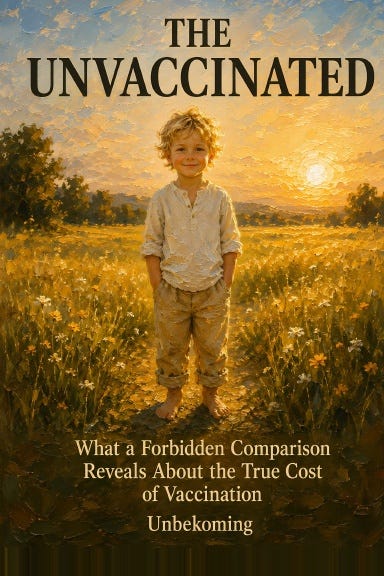
The natural pigeon pair for The Vitamin K Injection is The Unvaccinated: What a Forbidden Comparison Reveals About the True Cost of Vaccination. The two examine the same institutional logic from different angles. Vitamin K is the first injection most newborns receive; the childhood schedule follows. Both document what the mainstream literature won’t compare, won’t study, and won’t offer as choice.

The Unvaccinated
[…]

Medicine Has Forgotten How to Touch the Patient

Medicine Has Forgotten How to Touch the Patient

By

September 13, 2026

When was the last time your doctor actually examined you? I do not mean when someone checked your blood pressure, copied your medication list, looked at your laboratory results, or listened briefly through a shirt before returning to the computer. I mean examined you. Looked at you. Watched you breathe. Felt your pulse. Looked at your eyes. Examined your neck. Listened carefully to your heart and lungs. Palpated your abdomen. Watched you walk. Noticed the color of your skin, the movement of your hands, the expression on your face, and the thousand other small pieces of information that a human body offers to someone who has learned how to observe it.

For most of the history of medicine, this was not an optional ritual performed before ordering the “real tests.” This was medicine. Today, increasingly, it is treated as something quaint, inefficient, or unnecessary.

I have spent most of my professional life taking care of very sick people. Critical care is one of the most technologically intensive areas of medicine ever created. I love technology. I have watched mechanical ventilators breathe for patients who could no longer breathe for themselves. I have used ultrasound, CT imaging, sophisticated hemodynamic monitoring, extracorporeal technologies, molecular diagnostics, and laboratory measurements that physicians a generation before me could only have dreamed about.

I would never want to return to a world without these tools. But after decades at the bedside, I have also learned something that becomes more obvious, not less, with experience: technology is most powerful when it extends the physician’s senses. It becomes dangerous when it persuades the physician that those senses are no longer necessary.

The Patient Before the Data

Experienced clinicians understand something that is remarkably difficult to teach in a lecture hall or classroom. Sometimes you walk into a room and know immediately that something is wrong. You may not yet know what it is, but you know it before the laboratory does. The patient is breathing differently. His skin looks different. She answers a question a fraction of a second more slowly than she did several hours earlier. Posture, speech, facial expression, respiratory effort, or level of attention changes. None of these observations is magical. They are data, collected by a biological instrument trained through thousands and thousands of encounters: the physician.

When I round in an intensive care unit (ICU), I can learn an enormous amount before touching the computer. I can see whether a patient is fighting the ventilator. I can hear secretions from the doorway. I can see accessory muscles contracting. I can recognize when someone who looked reasonably comfortable earlier suddenly looks exhausted. I can see peripheral perfusion, diaphoresis, agitation, abdominal distension, or a subtle change in mental status. None of this means I should ignore the arterial blood gas, the chest radiograph, the CT scan, or the monitor. Of course I need them. The mistake is believing that because those measurements are more technologically sophisticated, they are necessarily more real than what is happening directly in front of me.

Medicine once began with the patient and proceeded toward testing. Increasingly, it begins with testing and eventually works its way back toward the patient. Abraham Verghese and colleagues have described this inversion of the diagnostic process, in which clinicians may encounter an image or electronic representation of a patient before encountering the patient himself. That change sounds subtle. It is not. Once the CT scan, laboratory panel, consultant note, medication list, and previous diagnoses have entered our minds, we no longer approach the patient without preconceptions. The data have already told us what we are supposed to see.

This is one reason the physical examination should never be reduced to nostalgia. Its value is not that physicians once carried black bags and made house calls. Its value is epistemological. It provides an independent stream of information. The history and physical examination can support what the tests tell us, but they can also contradict them. That contradiction is often where important medicine begins. A normal number should make us reconsider an abnormal observation, but an abnormal observation should also make us reconsider a normal number.

The Screen between Us

Something extraordinary happened to the architecture of the medical encounter. The physician and patient used to face each other. Today, they frequently face a computer.

A widely cited time-and-motion study of ambulatory physicians found that during the clinic day physicians spent approximately 27 percent of their time in direct clinical face time with patients and nearly half their time on electronic health records and desk work. For every hour of direct clinical face time, physicians spent almost two additional hours on electronic documentation and related desk activities during the workday. The electronic medical record was introduced as a tool for storing information. Somewhere along the way, the physician became one of the tools used to feed the electronic medical record.

This has consequences that go well beyond physician irritation or burnout. Attention is a finite resource. When I am looking at a screen, I am not fully looking at you. When I am clicking boxes, reconciling lists, responding to alerts, and documenting everything necessary to satisfy billing, regulatory, legal, and institutional requirements, I am performing work. But that work is not the same thing as observing a patient. We have confused documentation of care with care itself.

The modern medical record can create a remarkable illusion of precision. A note may contain a beautifully populated physical examination with normal findings listed across multiple organ systems. Anyone who has practiced modern medicine knows the uncomfortable truth: sometimes the completeness of the electronic examination exceeds the completeness of the actual one. Elder and colleagues warned years ago about examinations transformed by templates and drop-down boxes into records that may look more impressive than what truly occurred at the bedside.[2] The computer makes it possible to document fifteen normal observations in seconds. Unfortunately, it cannot guarantee that anyone actually made those observations.

The irony is striking. Never in history have physicians possessed more information about their patients, yet we may sometimes know them less. We know their hemoglobin from three years ago. We can review every medication prescribed by another physician. We can scroll through imaging reports, genetic data, vaccination histories, risk scores, and dozens of laboratory trends. We may possess thousands of data points about a human being who has received only a few minutes of our undivided attention.

The Physical Examination Is Not Primitive Technology

There is a tendency to speak about the physical examination as though it were the horse and buggy of diagnosis, something admirable in its time but sensibly replaced by superior machinery. That misunderstands what examination is. A physical finding is simply another diagnostic test. It has sensitivity, specificity, likelihood ratios, false positives, and false negatives, just like laboratory measurements and imaging studies. The Rational Clinical Examination movement made precisely this point decades ago, arguing that clinical findings should be subjected to the same rigorous evaluation applied to other diagnostic tools.

Some physical findings are poor. Some are excellent. Some things we were taught generations ago probably deserve to disappear. There is no virtue in preserving an examination maneuver merely because an old professor taught it to us. Evidence-based medicine should apply to the stethoscope as rigorously as it applies to an MRI scanner. But there is a tremendous difference between saying that certain bedside findings are unreliable and concluding that bedside observation itself has become obsolete.

The evidence also suggests that inadequate examination can cause harm. In one collection of cases involving physical-examination failures, missed or delayed diagnoses were common, as were unnecessary testing and treatment. Reviews of diagnostic error continue to identify deficiencies in history taking and physical examination as important contributors. These are not arguments against technology. They are arguments against voluntarily throwing away information before making decisions.

Consider something as simple as breathing. A pulse oximeter gives me a number, and that number can be enormously useful. But it does not tell me everything I learn by watching someone breathe. Two patients can have identical oxygen saturations while one is resting comfortably and the other is approaching respiratory failure. Respiratory rate, depth, pattern, accessory muscle use, paradoxical movement, ability to speak, mental status, and fatigue matter. Anyone who has managed respiratory failure has seen a patient whose monitor still looked reassuring while the patient absolutely did not.

The same is true throughout medicine. An echocardiogram can characterize cardiac anatomy better than my stethoscope ever will. Still, jugular venous distension, cool extremities, edema, diaphoresis, or altered mentation may tell me instantly that circulation is failing. A CT scan can show me an abdomen in exquisite detail, but it cannot substitute for knowing whether that abdomen has suddenly become rigid and exquisitely tender. Technology provides resolution. Examination provides context. Good medicine requires both.

We Are Losing the Teachers Too

Skills disappear surprisingly quickly when institutions stop rewarding them. Medical students enter training fascinated by physical diagnosis. They buy stethoscopes, learn cardiac sounds, practice neurologic examinations, and struggle to distinguish normal from abnormal findings. Then they enter the clinical environment and observe what the system actually values. They watch residents review laboratory values outside the room. They watch teams conduct portions of rounds around computers. They learn that ordering a test is often faster than finding someone who can teach them how to elicit a finding.

They discover that no billing system awards extra productivity points because a physician spent ten additional minutes teaching a student how to examine jugular venous pressure. Eventually they absorb the real curriculum of modern medicine: what the institution measures matters, and what it does not measure becomes optional.

Research has documented deficiencies in physical examination skills among medical trainees and has shown that bedside teaching itself has declined. Particularly troubling is evidence that greater time in training does not automatically produce better examination technique. One direct-observation study found physical examination technique correlated with recognition of clinical signs, differential diagnosis, and clinical judgment, yet performance actually deteriorated during internship. That should concern us. We may be creating a system in which physicians accumulate more medical knowledge while simultaneously losing some of the mechanisms through which they apply that knowledge to real human beings.

Clinical medicine has always depended on apprenticeship. You can learn the physiology of aortic stenosis from a book. Still, there is something different about standing beside an experienced cardiologist who places your stethoscope exactly where the murmur is clearest and tells you what to listen for. You can memorize the manifestations of cirrhosis, but you remember them differently after someone shows you spider angiomas, ascites, muscle wasting, and asterixis in a real patient. You can watch a thousand videos about respiratory distress, but watching an experienced intensivist recognize impending fatigue at the bedside teaches something that no multiple-choice examination can measure.

Once one generation loses those skills, the next generation has nobody to teach them. That is how knowledge disappears from a profession. Not through a decree announcing that the skill is forbidden, but through gradual neglect until eventually nobody remembers that it mattered.

Touch Is Also Communication

Another element of the physical examination is harder to quantify, and perhaps for that reason easier for modern medicine to discount. Examination is a form of human communication. When a frightened patient comes to see a physician, he does not simply want information. He wants to know that someone competent has assessed him. There is a difference between saying, “Your CT scan looks fine,” and sitting beside the patient, listening to his story, examining the area that hurts, and then explaining why the findings are reassuring. The diagnostic conclusion may be identical. The human experience is not.

[…]

Via https://brownstone.org/articles/medicine-has-forgotten-how-to-touch-the-patient/

Trump blames fuel price spike on Zelensky

Trump blames fuel price spike on Zelensky

RT

13 Sep, 2026 

US diesel prices have hit a new record, soaring past $6 per gallon this week

US President Donald Trump has blamed Ukrainian leader Vladimir Zelensky for the ongoing diesel price shock, saying it was a result of Kiev’s attacks on Russian refineries.

The national average price of diesel hit more than $6 per gallon on Friday, up from approximately $5.85 last week. The price has climbed some 60% compared to the same period last year, when diesel fuel cost some $3.71 per gallon. Market experts have mainly linked the hike to the conflict in the Middle East and the reignited hostilities between the US and Iran, which have prompted a renewed rise in crude oil prices.

Trump, however, insisted that this was not the case, telling reporters while on a visit to Ireland that the diesel price spike was actually related to the Russia-Ukraine conflict. The US president said he had already raised the issue with the Ukrainian leader and told him to stop attacking diesel production in Russia.

“Zelensky has to do one thing. He has to stop knocking out diesel fuel in Russia. Let him go after targets, but not diesel fuel, because he’s causing a shortage of diesel,” Trump asserted, adding that “this isn’t done by the Middle East.”

In recent months, Ukraine has repeatedly attacked oil refineries and other petroleum installations in Russia. While the strikes have caused fuel shortages and price hikes across multiple Russian regions, the attacks have primarily affected gasoline, while the diesel supply has remained largely undisrupted.

To battle the shortages, the Russian government introduced a temporary ban on exporting gasoline and diesel, as well as other petroleum products. The diesel exports ban was first introduced early this year and extended to gasoline producers in July. The diesel ban is currently in effect until the end of September, yet it is likely to be extended further.

Diesel fuel has been more expensive in the US than gasoline for decades and has previously shown tendencies to rise in price at a faster pace. It is integral to the food supply chain, since it is used to power agricultural machines as well as the cargo trucks and trains which deliver the produce. The cost of fuel accounts for between 15% and 30% of the total cost of food in the US, according to various estimates, and the ongoing hike is bound to affect consumer prices.

[…]

Via https://www.rt.com/news/645651-trump-zelensky-diesel-price/

Former CDC Scientist Whose Studies Were Used to Debunk Vaccine-Autism Link Will Plead Guilty

poul thorsen and words "plea guilty"

A former Centers for Disease Control and Prevention (CDC) scientist who played a crucial role in research rebutting any link between vaccines and autism is expected to plead guilty next week to wire fraud and money laundering.

Poul Thorsen, 65, is finalizing a plea deal with prosecutors relating to charges stemming from a 2011 federal indictment, Nathan Kitchens, assistant U.S. Attorney for the Northern District of Georgia, told The Defender.

Thorsen, who began working for the CDC in the late 1990s, faces two counts of wire fraud and nine counts of money laundering related to over $1 million in CDC grant money. The funds were earmarked for autism and public health research, but Thorsen allegedly used them to buy a home, two cars and a motorcycle.

Kitchens declined to comment on whether Thorsen will plead guilty to all or some of the charges.

Thorsen has been held in federal custody without bail since his extradition from Germany to the U.S. in May. The case is being heard at a federal court in Georgia, where the CDC is headquartered.

Researcher James Grundvig, the parent of a child with autism who was vaccine-injured, called the expected guilty plea “a very big deal.”

Grundvig, who wrote “Master Manipulator: The Explosive True Story of Fraud, Embezzlement, and Government Betrayal at the CDC,” which focused on the Thorsen case, praised U.S. Health Secretary Robert F. Kennedy Jr. for extraditing Thorsen “in record speed.”

He said Thorsen likely understands that the FBI and U.S. Department of Justice have “all the goods” to prosecute him.

“I guess Thorsen’s realizing, since he’s in American jail already and has no chance for bail, he might as well make a plea deal,” Grundvig said.

Dr. Dave Weldon, a physician and Republican member of the U.S. House of Representatives between 1994 and 2009 — and who President Donald Trump nominated to lead the CDC in late 2024 before retracting his nomination in March 2025 — welcomed the plea agreement but said it isn’t enough.

“It would be a miscarriage of justice if a plea deal failed to include a thorough investigation of allegations of scientific fraud,” Weldon said.

Danish independent vaccine safety researcher Vibeke Manniche, M.D., Ph.D., said some of the federal funds Thorsen is said to have misused may have been intended for vaccine-autism studies. Manniche said the guilty plea calls Thorsen’s research into question.

“An obvious question is whether he also has been cheating with data to achieve the results he sought,” Manniche said. “That we don’t know. A good rule in gold-standard science is replication, and it would be wise, for so many reasons, to replicate his work,” independently of the institutions Thorsen had been affiliated with.

Grundvig noted that the Thorsen indictment included unnamed co-conspirators, suggesting that the investigation may implicate more people — and also the controversial autism research that Thorsen helped publish in 2002 and 2003 that was cited as proof of no link between vaccines and autism.

“I think that’s going to be the second part of the story,” Grundvig said. “It could be an avalanche of bad news for both pharma and the CDC.”

Thorsen studies cited in dismissing over 5,000 vaccine injury claims

Despite questions around how those studies were conducted, the Madsen-Thorsen papers were used in 2011 to dismiss over 5,000 claims filed by the parents of autistic, vaccine-injured children. The claims were part of the Omnibus Autism Proceeding pending before the Vaccine Injury Compensation Program.

In “Master Manipulator,” Grundvig — whose son’s case was one of the claims dismissed as a result of Thorsen’s research — described Thorsen as “a world-class villain whose manipulation of health data gave CDC and big pharma what they wanted: a report clearing thimerosal of any possible role in the autism crisis.”

According to Weldon:

“The real crime is not absconding with research dollars, but unresolved allegations around his research which served as the basis for the CDC and the U.S. government dismissing vaccine injury claims by thousands of injured children. These actions set back vaccine safety research by more than two decades.”

Grundvig suggested the Thorsen investigation and his guilty plea may call into question the dismissal of the omnibus cases, as it would “then make all of those vaccine omnibus proceedings completely fraudulent because it was based on a fraud, and that should reopen the cases.”

Hooker, whose omnibus claim for his son was also dismissed, said Thorsen likely didn’t act alone in misusing federal money or misrepresenting vaccine-autism research — and that the role of some of his key collaborators should be examined.

“There should be a separate investigation against Dr. Diana Schendel, who was Thorsen’s direct grant supervisor and lover and approved all of his invoices for expenditures from his CDC grant money. Dr. Schendel undoubtedly knew of Thorsen’s activities but did not report them to the authorities and could have spent some of the stolen grant money as well,” Hooker said.

Schendel maintained an inappropriate romantic relationship with Thorsen and later accepted a position at Denmark’s Aarhus University to lead autism research there. She remains employed at Aarhus University — and at Drexel University — today.

Thorsen continued to live in Denmark for years after the 2011 U.S. indictment. He worked there as a gynecologist despite an extradition treaty between the two countries and an INTERPOL warrant for his arrest.

Hooker added:

“Other co-conspirators who knew of the inappropriate relationship between Thorsen and Schendel over the seven-year grant history at CDC include Coleen Boyle, Ph.D., former director of the National Center for Birth Defects and Developmental Disabilities), and Dr. Marshalyn Yeargin-Allsop, former branch chief of the Developmental Disabilities Branch at the CDC.

“These individuals at a minimum should be brought in for questioning. Both have also been implicated in the MMR-autism fraud from the DeStefano et al. 2004 paper, where data showing a strong relationship between MMR timing and autism in Black boys was illegally destroyed.”

Thorsen’s vaccine-autism studies full of ‘irregularities’

When he first joined the CDC as a visiting scientist, Thorsen’s research focused on birth defects and developmental disabilities.

However, by the early 2000s, Thorsen shifted his focus to autism research. His work in this area left a strong imprint, fueling future narratives that autism isn’t linked to vaccines.

According to a 2017 report by the World Mercury Project — predecessor to Children’s Health Defense (CHD) — Thorsen’s influence on U.S. vaccine projects and policies “is extensive” because his studies were used to dismiss a possible link between vaccines and autism.

One of the most influential studies became known as the “Madsen study,” a population-based study of the measles-mumps-rubella (MMR) vaccine and autism.

Published in 2002 in The New England Journal of Medicine and co-authored by Thorsen, the Madsen study concluded that there is “strong evidence against the hypothesis that MMR vaccination causes autism.”

However, according to the 2017 World Mercury Project report, the Madsen study was “flawed” from the outset because the researchers reviewed clinical records of only 40 of the 316 children who had autism in the study’s cohort.

A peer-reviewed analysis published last year cast further doubt on the study’s conclusions.

In 2003, Madsen and Thorsen co-authored another influential study, published in Pediatrics, the journal of the American Academy of Pediatrics. The study did “not support a correlation between thimerosal-containing vaccines and the incidence of autism.”

Thimerosal is a mercury-based adjuvant used in some vaccines, which some scientists and advocates for people with autism have suggested may trigger autism.

Brian Hooker, Ph.D., CHD’s chief scientific officer, said there are “numerous data irregularities” in the Thorsen studies.

In their critique of the 2002 paper, Hooker and Karl Jablonowski, Ph.D., CHD senior research scientist, found significant errors in the paper. They concluded the study’s unadjusted results “do not support rejecting the causal link” between the MMR vaccine and autism.

In a critique of the 2003 Madsen-Thorsen study, Hooker and researcher Jeffrey Allen Trelka concluded that the study’s findings “may have been skewed by participant selection and changes in diagnostic groupings.”

Other critiques of the 2002 and 2003 studies raised concerns about ethical considerations. Both studies relied on Danish population data. According to the 2017 World Mercury Project report, the studies bypassed ethical reviews required for this category of research, as required by federal law.

When the CDC discovered Thorsen hadn’t obtained the required ethics approvals, the agency didn’t report the errors, and the studies weren’t retracted. Instead, CDC officials engaged in a cover-up, the 2017 report states.

“Given these irregularities, Thorsen should also be under investigation for data fraud as he clearly withheld data and could have altered data” from Danish official sources, Hooker told The Defender.

Manniche said that if it is proven Thorsen tampered with the data in his studies, it would be a “terrible tragedy,” because “parents were told that the MMR vaccine was safe and sound and that it couldn’t harm the child.”

As of July 31, there were 1,931 reports claiming onset of autism or autism spectrum disorder following MMR vaccination contained within the federally run Vaccine Adverse Event Reporting System (VAERS).

Will Thorsen sing?

Grundvig suggested that, as part of his plea agreement with prosecutors, Thorsen may have an incentive to provide testimony or information targeting other CDC figures.

“Thorsen’s 65 years old, born in 1961 … does he want to die in an American jail?” Grundvig asked. “I don’t think so. So, I think he wants to make, and will make, a plea deal. The only way he’s going to make a plea deal is with someone like Kennedy and maybe others in the Department of Justice that look at a bigger case,” Grundvig said.

Grundvig suggested this “bigger case” may involve the Racketeer Influenced and Corrupt Organizations Act or RICO Act.

“There’s a bigger fraud involved than just stealing money, and I think it goes back to the vaccines, it goes back to the studies that the CDC cooked up,” potentially implicating Schendel and Madsen.

“Will he be used as a star witness against the CDC old guard and all of the shenanigans that went on massaging of science, of science papers, influence on Pediatrics and other journals, in order to get all of this done back in the early 2000s in order to exonerate vaccines and erase the autism signal?” Grundvig asked.

[…]

Via https://childrenshealthdefense.org/defender/poul-thorsen-former-cdc-scientist-studies-debunk-vaccine-autism-link-plead-guilty/?utm_id=20260830

Four Forms of Numericide

Four Forms of Numericide

By

August 26, 2026

A recent article in the New York Times on the increasing rates of heart disease in young women (Why Are More Young Women Developing Heart Disease?) was amusingly frivolous and about as fact-free as an article about health advice can be.

The key thrust of the article is that any woman who wants to preserve and improve her health should become informed of her “numbers.” Which is to say, she should know her blood pressure, cholesterol, BMI, and hemoglobin A1C (a measure of average blood glucose levels) which are claimed to be “important for assessing risk.”

The Times quotes Dr Priya Freaney, director of the Women’s Heart Care program at Northwestern Medicine: “Knowing your numbers is your most powerful tool,” [she said] “And it’s never too early to start.”

What numbers are we talking about? Well, apparently doctors recommend “all adults strive for these levels:”

  • BP (Blood Pressure) under 120 mm Hg / 80 mm Hg
  • LDL (Low-density lipoprotein) under 100 mg/dL
  • HbA1C (Hemoglobin A1C ) of 5.6 or lower
  • BMI (Body-mass index) under 25

Now the four Horsemen of the Apocalypse, blood pressure, blood sugar, cholesterol, and BMI, threatening to strike you down in your healthy middle age unless you submit to the testing, treating (ie: medications and lifestyle changes), and a retesting paradigm which can lead many to become obsessed by the numbers.

By the way, these four measures have one thing in common: They are typically treated with a prescribing pen that has been carefully guided in your doctor’s expert hands by the helpful people in the pharmaceutical industry. Just saying…

Let’s approach these four with a bit of basic epidemiology, examining the wisdom of telling people of “average risk” to aim for these targets. Obviously, people with pre-existing conditions or those with inherently much higher or multiple risks (such as levels that are in the red flashing light category) involve a different calculus.

But for the sake of evaluating the drive to push people toward these health targets, what do the highest quality studies ultimately say about the value in chasing these numeric targets in healthy people?

Numericide Number One: Blood Pressure at 120/80

I will always remember that old quip from an aging physician: “High blood pressure is better than no blood pressure at all.” But the question one should ask is this: If you lower your blood pressure does it lead to a reduction in your chance of a cardiovascular event or dying?

First off, despite what many guidelines and health care providers say about knowing your numbers, what they should have said was know your cardiovascular risk numbers (your percentage chance of having a heart attack or stroke over the next 10-30 years) not your numbers of cholesterol, blood pressure, or glucose numbers. Those are what we call ‘surrogate markers’ and the only reason to lower these numbers is to possibly reduce your risk of heart attacks and stroke. It’s not that these surrogate numbers are useless — rather they are the wrong numbers to worry about.

[…]

For starters, the target of 120 is not an evidence-based but an “expert-recommended” target, and in case you wondered, having a blood pressure of 130/80 or 140/90 is not the death sentence that your doctor might warn you about. Your blood pressure often jumps all over the map and how and when you measure it can significantly impact that number. It climbs as we get older, naturally. Like grey hair and wrinkles. Chasing this number is one of the biggest uses of a doctor’s time and causes considerable (and frequently unnecessary) worry in patients.

Me? I wish our doctors would have spent time learning more about evidence appraisal and how to properly do shared decision-making with their patients because the decision around the treatment of surrogate numbers is very dependent on a person’s values and preferences.

[…]

The magical “120” comes from the SPRINT trial, a particularly odious piece of work that tortured the data until it showed some benefit of a BP <120 comparted to divergent targets such as <140 in a high-risk population. What most physicians aren’t going to learn is that any apparent benefit evaporated once intensive treatment stopped.

The SPRINT team was behind the 2017 guidelines recommending the 120/80 BP target, but you need to know these guidelines have been discredited for good reason. For instance, the process to produce them was riven with documented conflicts of interest. Again, Big Pharma’s interests are more than well-represented on the guideline production team and their participation automatically broadens the category of people who should take their drug. No — surely that can’t be true? It is true, and to quote a refrain from the movie Airplane, stop calling me Shirley.

The AAFP, American Association of Family Practice— the largest primary care organization in the US — refused to endorse that target. Why? Because, in their words, there were “no significant benefit for all-cause mortality, cardiovascular mortality, myocardial infarction, or renal events.” Let me translate: People don’t live longer or better because you guilt-tripped and drug-equipped them into getting their blood pressure down to 120/80.

There’s also another reason and that has to do with how unsafe it can be to push people’s blood pressure to ridiculously low targets. Not only does this drive people crazy (because many of them have to take two or three or four medications to lower their BP numbers) but it can also lead to falls, fractures, kidney injury, and so on, especially in older adults.

One study in JAMA Internal Medicine found that taking antihypertensive medications was associated with an increased risk of serious fall injuries. SPRINT itself showed nearly double the rate of serious adverse events possibly or definitely related to the antihypertensive drugs.

[…]

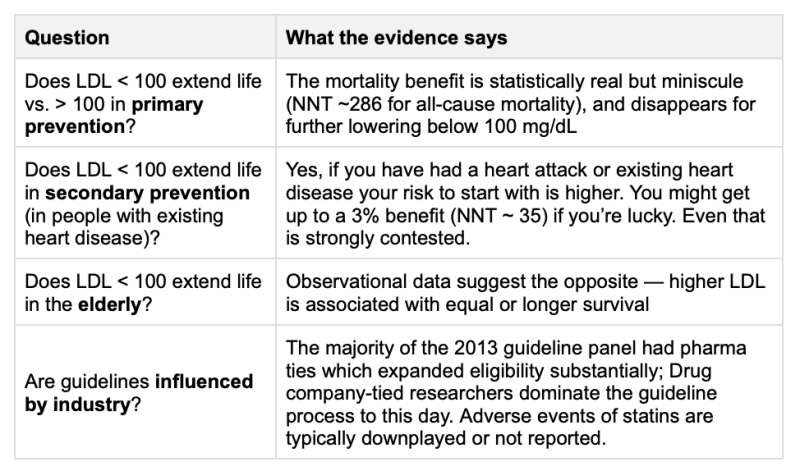
Numericide’s Number Two: Low-Density Lipoprotein, or LDL, under 100 mg/dL

This is one of the most aggressively, and irrationally pursued targets: LDL cholesterol. I went back into the data to ask this question: Is there any substantive evidence that an otherwise healthy person with an LDL under 100 mg/dL lives any longer than a person who has an LDL above 100mg/dl?

Basically, should healthy people (what we call ‘primary prevention’) who don’t have a history of a heart attack or heart disease be pushed to get their LDL from, say, 120 to 80 mg/dL? Will this make them live longer?

Sorry to be the bad news bear here, but in a nutshell: No.

The evidence is weak and the absolute benefit is very small. When I mean very small, it’s way smaller than most people expect.

The most comprehensive recent review was published in JAMA in 2022. It was huge, pooling 18 trials of statins for primary prevention including over 85,000 people. The rate of all-cause mortality was statistically significant yet the absolute difference between those who drove their cholesterol that low and those who didn’t was a meagre 0.35%.

The NNT (number needed to treat to prevent one death) was 286.

Another way to say this is that your chance of a normal healthy person dying if they take a statin to drive their LDL below the 100mg/dl target is almost one in 300. Others have strongly contested this number, saying that driving cholesterol down to those levels makes absolutely no difference to the length and quality of a person’s life.

What about older people? You’re in for a surprise here—because in the elderly the situation reverses. A study published in the BMJ in 2016 identified LDL-related studies in the elderly. It found that in a total of over 68,000 elderly people, there was an “inverse association between all-cause mortality and LDL.” Translation: older people with higher LDL levels lived longer! This makes it even more egregious that much of the population taking cholesterol-lowering drugs are over 65 and in the category where they actually need higher cholesterol to stay healthy. 

And then there are the harms of cholesterol lowering drugs, like statins which we know cause muscle weakening, elevated liver enzymes, and diabetes, effects that are consistent across many studies.

Doctors know this from real life experience: most patients (up to 75%) stop taking their statins within 2 years — whether it’s from the adverse effects, the costs or the hassle.

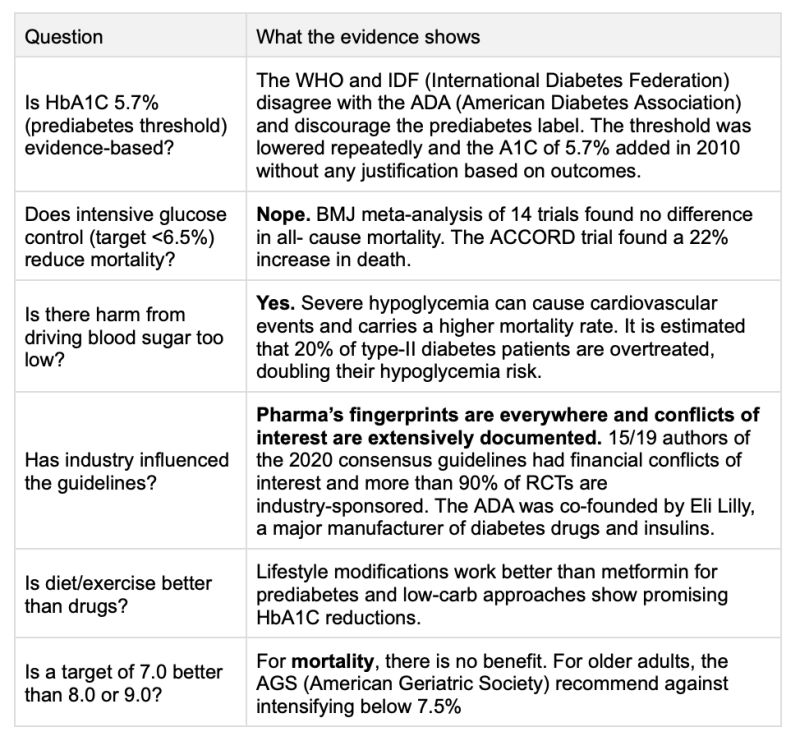
Numericide’s Number Three: HbA1C (Hemoglobin A1C ) of 5.6 or Lower

The crazy low levels at which they tell people to drive their HbA1C down to make me bonkers. What is most nutty is that this nefarious hunt for “prediabetes” which is the granddaddy of all disease-mongering tactics is sold under the logic of ”Why wait until you have full blown diabetes when you can find the ‘pre’ signs early?”

To be clear, the 5.6% is not a treatment target — it’s the “prediabetes diagnostic threshold.” In the ever-reductive world of diabetes “normal” keeps shifting. “Normal” is now considered below 5.7%, prediabetes is 5.7–6.4%, and diabetes is diagnosed at ≥6.5%.

The actual treatment target for most adults with diabetes is <7.0%, a level that sadly labels tens of millions of healthy people as diseased. If you have an HbA1C slightly over 7 and your doctor is pushing a metformin prescription at you, it’s time to push back!

Here’s the core point: the evidence does not support that driving HbA1C to 6.5% or lower extends life. The best available data from two big studies — the ACCORD trial and a meta-analysis from the BMJ — show two very surprising things: either no mortality benefit or actual harm from intensive glucose control.

[…]

Furthermore, there is the opposite thing that could harm you, hypoglycemia — which is often caused by aggressive drug treatment is, in itself, a potent killer.

Just remember that these thresholds are always changed in a uni-directional way, always made lower to expand the pool of patients who allegedly need to be on drugs. This is a process that takes place under the well-documented influence of pharma money, research, and experts, expanding the market for diabetes drugs at each step.

The major push to label people as “prediabetic” — a condition that, incidentally the WHO says shouldn’t be medicalized — is flat-out, brazen disease-mongering.

Having said that, extremely high blood sugar (HbA1C consistently above 9–10%) can cause real harm — kidney failure, blindness, neuropathy, infections. The point isn’t that glucose doesn’t matter at all; it’s that the marginal benefit of pushing from 7.0 to 6.5% or lower does not save lives, and the harm, both in terms of money, medical busy-ness of checking and rechecking your blood sugars, and the harms of the drugs are all real and quantifiable.

Eating a higher quality diet and getting sufficient exercise is the foundation for anyone worried about their blood sugars. Those who are told they have “pre-diabetes” should ignore that advice and refuse to be pasted with a sticky label that causes harm.

Numericide’s Number Four: BMI under 25

Body Mass Index (BMI) is a measure of body weight relative to height, often used to screen whether someone may be underweight, at a healthy weight, overweight, or obese. We need to screen because overweight people live shorter lives, right?

Not necessarily.

We are told that the aim for everyone, concerning this fourth Horseman of the Apocalypse, BMI, is 25. Not only is this absurdly low, but it is essentially meaningless as a measure of health on its own. Anyone with any good musculature whatsoever is going to have a BMI over 25. Why is that? Because muscle weighs more than fat.

It comes down to where the weight sits. A muscular person with BMI of 30 has a different risk profile than a guy with a BMI of 30 who is sedentary with a big beer gut — but the BMI treats them identically.

Where did this “25” come from?

The BMI 25 cutoff comes from a 1995 WHO technical report establishing four categories of body weight (underweight, normal, overweight, obese) and was loosely based on actuarial life insurance data. This threshold was not derived from outcome-based evidence and a BMI of 25 was not linked to any mortality inflection point.

What about someone who has, say, a BMI of 30. Should they get that lower? 

The claim that someone at BMI of 30 has a meaningfully shorter life expectancy than someone at BMI of 25 is not supported by the best available observational evidence.

The largest and most influential meta-analysis on this question was published in JAMA in 2013 and it pooled 97 studies with over 2.88 million participants and more than 270,000 deaths. The findings were mind-blowing: Being overweight was associated with significantly lower all-cause mortality than normal weight.

[…]

Via https://brownstone.org/articles/four-forms-of-numericide/

Why Democrats May Lose the November Elections Even Though Polls Now Say They Can Win

Trump has already rigged the race to crush Democratic voters and ensure a Republican victory—but Democrats don’t want to hear it

The polls confirm a growing surge of voter enthusiasm for Democrats. Are they wrong? No. They may just not be relevant.

While Democrats deliriously high-five themselves at the release of each new favorable poll, Trump has been diligently rigging the electoral process to ensure that Republicans keep control of Congress (and incidentally keep him from being impeached, convicted and thrown in jail for tax evasion and the sexual abuse of minors).

So why may the pro-Democratic poll numbers be irrelevant? Because they only show how people intend to vote, not whether they will actually be able to vote. Or even if they do vote, whether it will make any difference.

Consider these 12 dirty tricks that Trump will use to crush Democratic voters flatter than in the illustration at the outset of this article.

1. Aggressively Partisan Gerrymandering:

Eight state legislatures have already redrawn congressional districts to lock in an artificial Republican House majority even before voting starts. This will dilute millions of Democratic votes across entire states so they will have little or no impact, regardless of overall turnout. Six more states will soon follow their example. And don’t look for the courts to strike down these biased electoral maps: The Supreme Court has already ruled in their favor.

How many House seats will gerrymandering steal for the Republicans in November?

According to redistricting analyses from the Brennan Center for Justice and the Princeton Gerrymandering Project, these new Republican electoral maps now provide a net structural baseline advantage of 14 to 20 House seats for Republicans over a neutral national map.

In a narrowly divided House, where majority rule often hinges on fewer than five seats, gerrymandering alone can determine control of the chamber, regardless of a national lead in the popular vote for Democrats. Having 14 to 20 more seats locked up can make Republican control of the House a slam-dunk, turning the predictive headline of this article into a reality.

2. Announcing “enhanced poll surveillance by ICE to preserve order and prevent illegal voting”:

This will have a chilling effect on Latinos, naturalized citizens, and people of color in general. Many will decide to stay home, because they know that ICE sweeps are fueled by racial profiling, so that even U.S. citizens can disappear into unmarked cars, wind up in detention camps for days or weeks, and even be deported to El Salvador before they are able to prove their citizenship.

Although federal statutes such as 18 U.S.C. § 592, forbid the government from stationing armed federal troops or civil officers at “any place where a general or special election is held,” that will not stop Trump. He will exploit jurisdictional gray areas that permit the staging of immigration or federal enforcement operations outside statutory boundary lines (e.g., 100 to 500 feet away from the polls).

Since many eligible voters live in mixed-status households, with U.S. citizens residing alongside undocumented relatives or green card holders, the threat of immigration sweeps at bus stations and roadways leading to the polls will significantly depress turnout.

Ironically, Trump does not even have to deploy ICE agents at the polls. His mere promise to do so will be enough to trigger the desired chilling effect.

Is there any remedy? Yes. Emergency injunctions can be issued by federal district judges on Election Day under the Ku Klux Klan Act of 1871, which bars conspiracies to intimidate or coerce voters by word or deed. But in the real world, injunctions issued hours into voting will come long after the narrative has already discouraged voter turnout among “suspiciously colored” voters..

[…]

Via https://covertactionmagazine.com/2026/09/11/why-democrats-may-lose-the-november-elections-even-though-polls-now-say-they-can-win/

Pfizer COVID-19 “Vaccine” Plasmid DNA Found Inside Lethal Turbo Cancer of the Heart

We have just completed a new case report that presents one of the most striking findings yet in the debate over COVID-19 “vaccine” turbo cancers: vaccine spike-encoding plasmid DNA was recovered directly from an extremely rare, hyper-aggressive heart tumor.

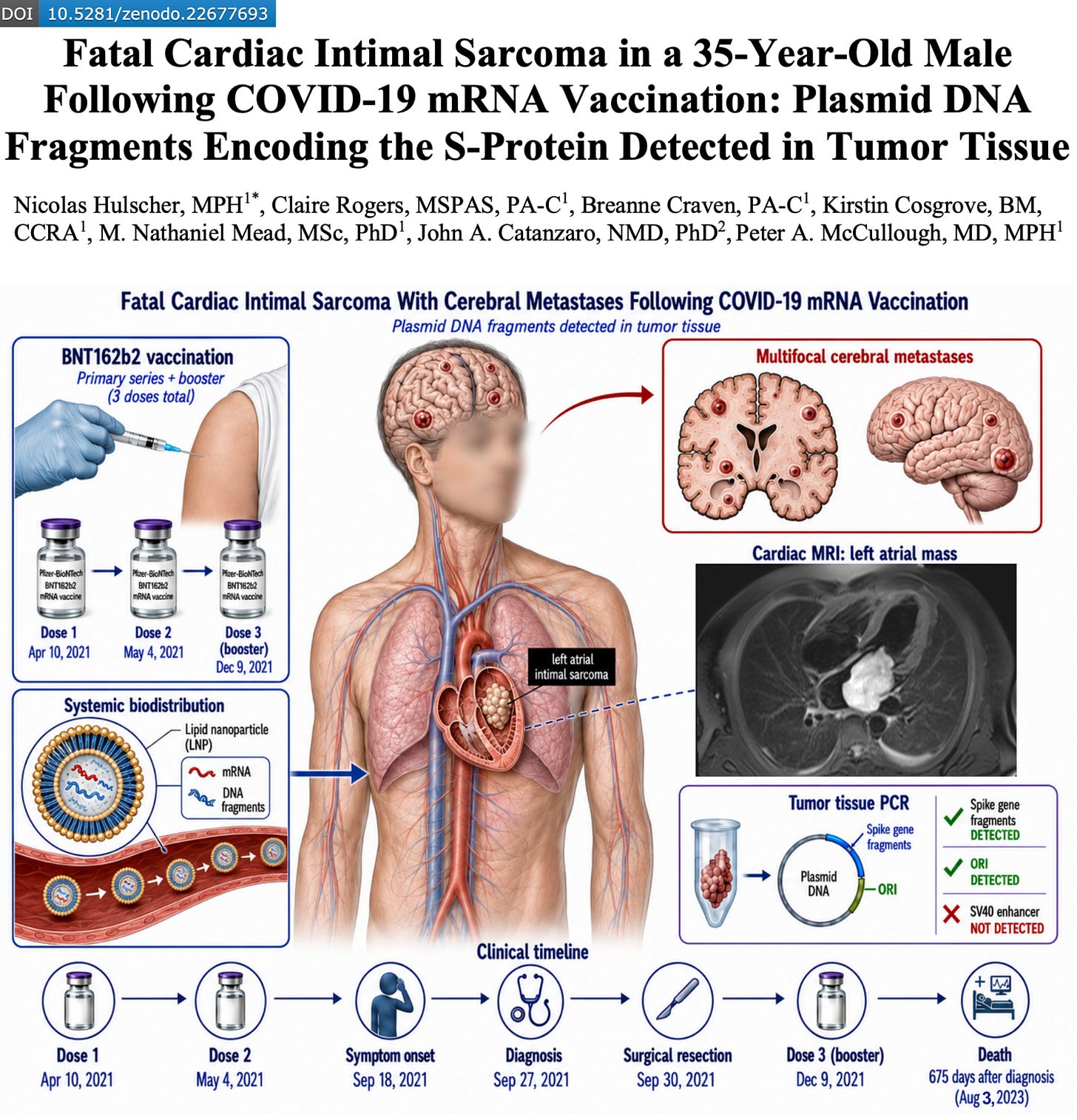
The McCullough Foundation paper is titled, “Fatal Cardiac Intimal Sarcoma in a 35-Year-Old Male Following COVID-19 mRNA Vaccination: Plasmid DNA Fragments Encoding the S-Protein Detected in Tumor Tissue.”

The patient was a 35-year-old man with no personal or family history of cancer and no identified hereditary cancer predisposition. He received Pfizer-BioNTech BNT162b2 on April 10 and May 4, 2021. Just 170 days after the first dose, doctors discovered a large tumor filling the left atrium of his heart along with multiple brain metastases.


Three days later, surgeons removed a 9.0 × 7.0 × 5.3 cm mass from his heart. Pathology confirmed a high-grade cardiac intimal sarcoma, an exceptionally rare and aggressive cancer. Molecular testing found the characteristic abnormalities MDM2 and KDR amplification, while whole-body PET/CT found no other primary tumor elsewhere in the body.

The cancer progressed at an extraordinary pace. Despite open-heart surgery, chemotherapy, radiation, gamma knife treatment, and four brain surgeries, new metastases continued to appear. He ultimately suffered bleeding into a brainstem tumor and died 675 days after diagnosis.

What makes this case especially important is that the growth rate could actually be measured. One brain metastasis grew from about 4 millimeters to 35 millimeters in only 94 days. That works out to a tumor volume doubling time of roughly 10 days.

Then came the most remarkable finding. Archived tissue from the original heart tumor was tested for vaccine components.

PCR detected three separate synthetic, codon-optimized vaccine spike-gene fragments along with the plasmid origin-of-replication sequence. The SV40 enhancer was not detected.

Put simply: vaccine-derived plasmid DNA fragments were found inside the malignant heart tissue itself.

A separate analysis found no intact spike protein and no SARS-CoV-2 nucleocapsid protein in the archived tissue, ruling out infection. One plausible accelerator of this malignancy is the persistence of synthetic vaccine-derived plasmid DNA within the tumor through effects on DNA repair, genomic stability, or tumor-cell proliferation.

This case represents an extremely rare cancer in a young man with no identified conventional cancer predisposition, a massive and already metastatic tumor within 170 days, directly measured explosive growth, and vaccine-derived plasmid DNA recovered from the tumor itself.

These findings directly fit the framework we recently developed in our paper titled, “Potential Oncogenicity of Synthetic mRNA Vaccines: Convergent Mechanistic, Clinical, and Population Evidence for a Concurrent-Hit Model of Accelerated Malignancy.”

In that paper, we identified 35 possible oncogenic mechanisms associated with the nucleoside-modified mRNA–lipid nanoparticle platform, converging on four major routes: proto-oncogene activation, increased mutation pressure, disruption of cellular protein networks, and acceleration of cancer stem-cell clones. The model specifically predicts that several of these hits occurring at the same time could compress a cancer process that normally unfolds over years into a much shorter period, particularly in people who already harbor dormant or microscopic disease.

In plain English, the model predicts the kind of pattern seen in the new case report: a hidden cancer clone that may have remained clinically silent can potentially be pushed into rapid growth, immune escape, and metastatic spread when multiple tumor-promoting pressures converge at once.

This cardiac sarcoma case therefore provides important real-world evidence consistent with that model. The patient’s tumor was already enormous and metastatic within months, its measured kinetics indicate extreme acceleration, and vaccine-derived plasmid DNA was recovered directly from the diseased tissue.

For years, turbo cancer has been dismissed as a “myth.” This report, along with the mountain of corroborating evidence, terminates that false claim.

mRNA technology is NOT SAFE FOR HUMAN USE and should be removed from global markets immediately.

[…]

Via https://www.globalresearch.ca/breaking-pfizer-covid-19-vaccine-plasmid-dna-inside-lethal-turbo-cancer-heart/5939892

The 19th century doctors recognized that cancer was caused by vaccines – William Tebb

By Sasha Latypova, 9 September 2026

This is Part 2 of the Cancer Causation series. Part 1 is HERE.

In this post, I am republishing a booklet written in 1892. Mass vaccination, especially of children and women, and laws mandating vaccines had begun in earnest in the mid-1800s. By the end of the century, it was recognised, at least by some doctors, that vaccines induce cancer, which had already begun its unstoppable rise in “civilised” populations, in perfect correlation with increasing “access to modern medicine”. The booklet is as follows.

The Increase of Cancer

(Reprinted from The TOSCIN, of March 12th, 1892.)

By William Tebb, Printed By Wertheimer, Lea & Co., Circus Place, London Wall, I892

SIR,—As the medical journals are reluctant to give currency to suggestions which, throw discredit on certain dogmas of the orthodox medical church, I venture to ask permission, in the interest of the public health, to address your readers on a subject of admitted public importance, the causation of the remarkable and mysterious recrudescence of cancer during the past 30 years. And surely, sir, the study of the sources of any malady, particularly one of so grave and destructive a character, is as well deserving of consideration as the multitudinous but abortive attempts to effect a cure.

I may mention, as an inspiring motive for this communication to the impartial columns of THE TOSCIN, that several of my friends and acquaintances have, after acute and protracted suffering, succumbed to cancer, the origin of which their friends declare to be unaccountable except on the theory below, so that I hardly need an apology for bringing the matter before the attention of those of your readers who are interested in the public health. Cancer, like leprosy, is an incurable disease; and none of the vaunted remedies have stood the test of experience. It can be disseminated like leprosy, and is increasing at an alarming rate. The deaths from cancer in England and Wales are returned by the Registrar-General, thus :— Or per million living.

Cancer is reported to be increasing not only in England and the Continent, but in all parts of the world where vaccination is practised.

Dr. H. McAul Alston, Acting Resident Surgeon, Colonial Hospital, Port of Spain, Trinidad, in the Annual Report to the Surgeon General, dated 5th of April, 1887, says (p. 7):—

Sir James Paget observes:—

It is claimed that cancer is hereditary and is occasionally due to local injury, but is it not obvious that there must be some antecedent constitutional taint or diathesis to give rise to the development of the disease? To what, then, is this condition really due? Sir James Paget also says cancer is due to a morbid condition of the blood, and some of your readers will have little difficulty in pointing out one cause of the morbidity. It is allowed by physicians that cancer may be caused by impregnating the blood with impure matter.

Dr. Joseph Jones, President of the Louisiana Board of Health, a well-known pathologist, says that this disease is inoculable; that cancer may be propagated by inoculation, or by the injection of cancerous matter into the veins. He adds:

Drs. Von Bergman and E. Hahn have demonstrated this by the recent notoriously inhuman experiments at the Berlin Hospital. The Medical Press, December 5th, 1888, quotes Dr. Hahn as:

In The British Medical Journal, June 29th, 1889, Mr. Jonathan Hutchison, F.R.C.S., says that, with due care in the transplantation of a bit of living tissue, cancer may be transferred.

There is probably no method by which inoculation is practised on so large a scale as in vaccination and re-vaccination. It is not now denied by the medical profession that vaccination is an exciting cause of infantile syphilis, and, according to the Registrar-General’s returns, Vaccination Mortality, No. 433, dated 1877, and Infant Mortality, No. 392, dated 1880, the increase in Infantile Syphilis, since vaccination has been compulsory, is fourfold.

Mr. Hibbert, formerly Secretary to the Local Government Board, said in July, 1880, that this terrible increase was one of the most unsatisfactory features of the Vaccination Acts, and a reason why further legislation was needed. Dr. William Forbes Laurie, late medical director of a metropolitan cancer hospital, was thoroughly convinced that the increase of cancer was due to vaccination, and he wrote to Members of Parliament, inviting them to visit the hospital, and witness the terrible result of the vaccine operation. He says this increase of cancer is attributed by some medical men to the large amount of syphilitic disease with which vaccine lymph is impregnated, and by others to the direct impregnation “of healthy persons with lymph imbued with scrofulous and cancerous matter.”

And the late Dr. Dennis Turnbull, who made cancer his particular study for thirty years, declared in the public press his conviction that vaccination and re-vaccination is the most prolific cause of this disease. Mr. Keuchenius, late Colonial Secretary to the Holland Government, called the attention of the Second Chamber to the alarming spread of cancer in the Netherlands, which was coincident with the spread of vaccination, and (as he believed) due to poison conveyed in the vaccine virus.

The British Medical Journal for May 19th, 1885, in a leading article on the increasing fatality of cancer, says:—

Some time ago the Hospital Gazelle reported that fifty infants had been admitted into one hospital suffering from syphilitic disease, and that from some of these infants vaccine lymph had been taken. Assuming that the theory of the British Medical Journal is correct, this is an indication how the cancer spreading virus may be distributed.

In his recent work on cancer (Churchill, 1891), Dr. Herbert Snow calls attention to the fact that cancer is:

The savage it may be noted will not allow his blood to be poisoned with vaccine virus, hence he escapes that morbidity under which cancerous tumours find nutriment. Where the system has become thoroughly infected with this morbid tendency, cure by extirpation or otherwise is admitted to be impossible, and the suffering caused by the apprehension of being the victim of so dreadful an affliction may well engage the attention of your benevolent and thoughtful readers. Dr. Aitken says:

It would, however, be unbecoming in me to dogmatise upon a subject which is admitted to be a puzzle to the medical profession, but I venture to hope that medical practitioners who have had the opportunity which clinical observation affords will no longer keep silence, but in the interests of the public health say whether the suggestion I have ventured to make is borne out by facts within their own experience.

Yours faithfully,

WILLIAM TEBB. Devonshire Club, St. James’, London.vaccine lymph had been taken. Assuming that the theory of the British Medical Journal is correct, this is an indication how the cancer spreading virus may be distributed.

In his recent work on cancer (Churchill, 1891), Dr. Herbert Snow calls attention to the fact that cancer is:

The savage it may be noted will not allow his blood to be poisoned with vaccine virus, hence he escapes that morbidity under which cancerous tumours find nutriment. Where the system has become thoroughly infected with this morbid tendency, cure by extirpation or otherwise is admitted to be impossible, and the suffering caused by the apprehension of being the victim of so dreadful an affliction may well engage the attention of your benevolent and thoughtful readers. Dr. Aitken says:

It would, however, be unbecoming in me to dogmatise upon a subject which is admitted to be a puzzle to the medical profession, but I venture to hope that medical practitioners who have had the opportunity which clinical observation affords will no longer keep silence, but in the interests of the public health say whether the suggestion I have ventured to make is borne out by facts within their own experience.

Yours faithfully,

WILLIAM TEBB. Devonshire Club, St. James’, London.

[…]

Via https://sashalatypova.substack.com/p/vaccines-all-injected-biologics-are

Most Kids Can Fight Measles Naturally — and Having the Virus May Even Make Them Stronger

ben edwards and word "measles"

Dr. Ben Edwards, an integrative medicine family practitioner in Lubbock, Texas, who runs a private practice serving roughly 2,000 patients, shared tips for families who choose not to vaccinate on how to recover effectively from a measles infection. Edwards pushed back against the narrative that children must avoid getting measles at all costs. “We can all just overcome these illnesses and go on about our lives and be stronger for it.”

Children can overcome measles — and in some cases, even become stronger for having fought it off, according to Dr. Ben Edwards, an integrative medicine family practitioner in Lubbock, Texas, who runs a private practice serving roughly 2,000 patients.

In 2025, Edwards successfully treated roughly 300 children in Gaines County, Texas, who had the measles.

In an exclusive interview this week with The Defender, Edwards shared why he believes recent media reports spreading fear about measles are misguided — and how parents can help their children if they become infected with the virus.

“It’s unfortunate when the fear-mongering starts up instead of just some informed consent and truth-telling, which is what needs to happen,” Edwards said.

Edwards acknowledged that measles is a highly infectious virus, so prevention may not always be realistic once measles starts circulating in a person’s community.

For example, he said he got measles last year from being in close contact with the many children he treated — even though he was fully vaccinated against measles. The latest research shows that vaccinated people can and do spread measles.

“It’s just a pretty contagious thing,” Edwards said. “So from a preventative standpoint, for those who choose not to vaccinate, I think the best bet is just trying to bolster your own ‘terrain,’ is how I would term that — your immune system.”

The stronger a person’s immune system, the more likely it will be able to identify and deal with the measles virus, he said. Someone who has a strong immune system may even be able to handle the measles virus without showing symptoms of illness, he added.

Edwards also mentioned general prevention methods to mitigate the spread of any illness, such as frequent hand-washing and avoiding sharing saliva or airspace with someone who is sick.

However, given how easily measles spreads once it’s in a community, Edwards recommended focusing on how to treat it.

Vitamin A, C and getting the fever down are important

Although there is no antiviral treatment for measles, there are several well-researched treatments that can reduce symptoms and lower the risk of complications and death, according to the Mayo Clinic.

Vitamins A and C, hydration and good nutrition are key for maintaining a healthy immune system and supporting the immune system while it’s handling a measles infection, Edwards said.

Some studies, including one published in 1990 in The New England Journal of Medicine involving a randomized controlled trial of vitamin A in kids with severe measles, have shown that vitamin A reduces measles morbidity and mortality.

Edwards called vitamin A “absolutely essential” for fighting all viral illnesses and respiratory illnesses, especially measles.

“Measles has a particular tendency to deplete the body of vitamin A, which is called retinol,” he said.

Edwards recommends taking cod liver oil prophylactically. “It’s the best food-based source of vitamin A.”

He also recommended Vitamin C:

“Vitamin C historically has been known to decrease the severity of these illnesses — anything from intravenous vitamin C, intramuscular vitamin C, but obviously you can just eat your vitamin C with your fruits and veggies.

“You can take supplemental vitamin C. I tend to recommend every one to two hours to bowel tolerance when you’re in an active infectious state.”

Parents don’t need to be afraid of the measles, but they do need to know how to care for their child during a measles infection.

The child may have a very high fever, which can be dangerous — especially in babies — because of the risk of dehydration.

“A 101, 102 [degree] fever, the literature shows it’s actually beneficial to not treat that. But if you get into that 103 and above, it is helpful to bring that down,” he said.

Parents can bring down their child’s fever by running a lukewarm bath, applying cold packs under the arms or peppermint oil on the feet, and having the child be naked, rather than clothed and wrapped in blankets.

It’s possible to overcome the measles — and be stronger for it

Edwards pushed back against the narrative that children must avoid getting measles at all costs. “We can all just overcome these illnesses and go on about our lives and be stronger for it,” he said.

He pointed to studies showing that kids who overcome measles naturally have a decreased risk of cardiovascular disease and certain cancers, including leukaemia. “So there is actually some benefit,” he said.

The measles vaccine was first licensed for use in the U.S. in 1963, according to the Centers for Disease Control and Prevention (CDC).

Some people attribute the decline in measles mortality to the vaccine. However, historical mortality data suggest there was a roughly 99% drop in measles mortality before the vaccine was introduced, Edwards said.

In 2010, researchers from Johns Hopkins and the CDC’s National Center for Health Statistics published a report in Pediatrics showing that nearly 90% of the decline in infectious disease mortality in U.S. children occurred before 1940.

The researchers attributed the major declines in child mortality to several non-vaccine factors, including improved sanitation, food safety and public education about hygienic practices.

“It was a cesspool in the big cities in the Industrial Revolution —  late 1800s/early 1900s — and these kids were malnourished, and they were living in filth,” Edwards said. “And in that environment, the immune system is very depressed, and these germs are just going rampant.”

In other words, cleaning up the environment — including the children’s internal environment with better nutrition — led to the drastic decline in infectious disease deaths, Edwards said.

Fear can suppress the immune system

Edwards encouraged parents to avoid falling into fear around measles.

“It’s really, really important,” he said. “In fact, I found this to be probably one of the most important things in Gaines County last year when we were treating the measles — just to deal with the fear.”

He added:

“When you go into fear — fight-or-flight mode — that actually shuts down your white blood cell production. Your white blood cells are your troops. That’s your Marines, that’s your frontline guys going out there to gobble up these viruses.”

Edwards said he wanted to encourage parents. “Continue to be informed and continue to trust the amazing design in the body. The immune system’s incredible. It will overcome [illnesses] if you steward it — and you need to steward it.”

Parents need to nourish their kids with “real food and get them outside in the sun, get them off these tablets, encourage community and play,” he said. “We’re designed to overcome these illnesses. Your kids will be fine. Nurture them, love on them, and don’t let the spirit of fear come into your home.”

Watch for a secondary bacterial infection

Parents also need to be aware that a measles infection can sometimes quickly be followed by a bacterial infection, including certain types of pneumonia.

He described what that can look like. “The rash is clearing up, the fever’s waning, their appetite’s back, they’re on the downhill side of things, doing pretty good, almost normal, and then boom — fever comes back, cough starts, oxygen levels drop, respiratory distress starts to set in. That’s the bacterial pneumonia. That has to be treated.”

Appropriate treatment typically involves specific antibiotics, he said. “Doctors know this. They know how to treat pneumonias — or they should. I think doctors can get a little swept up with the media frenzy too, unfortunately, and that can bias our judgment sometimes.”

Edwards discussed how the Texas 6-year-old whose Feb. 26, 2025, death was reported by mainstream media as having been caused by measles actually died of a bacterial pneumonia that was inappropriately treated by hospital staff.

“I’m not saying this was on purpose. I’m sure it wasn’t, but a medical mistake was made. She was given the wrong antibiotic,” he said.

“So she died from a very, very treatable bacterial pneumonia in her lungs that would’ve actually been cleared with azithromycin — your basic Z-Pak that everybody probably knows about.”

Just months later, staff at a nearby hospital made a similar error. In April 2025, 8-year-old Daisy Hildebrand died from a bacterial pneumonia that was inappropriately treated after she was hospitalized following measles complications.

On April 6, the Texas Department of State Health Services issued a news release calling Daisy’s death the “second death in [the West Texas] measles outbreak,” attributing the death to “measles pulmonary failure.”

However, Dr. Pierre Kory — who analyzed the child’s medical records and has extensive experience in pulmonary and critical care medicine — told The Defender in an earlier interview that the child’s medical records showed she died from acute respiratory distress syndrome due to hospital-acquired pneumonia, which she likely developed during a previous hospital stay.

Kory said:

“The causative organism was a highly antibiotic-resistant E. coli (‘superbug’), which she contracted during the first hospital ICU [intensive care unit] stay.

“This went largely unrecognized and poorly treated during the second hospital stay because they began to ‘tunnel in’ by blaming measles for her worsening pneumonia and repeatedly writing in the chart that she was unvaccinated.”

What’s the real risk-benefit ratio for MMR vaccine vs. measles?

Edwards said that mainstream media tends to report only on the benefits of the measles-mumps-rubella (MMR) vaccine while failing to mention the vaccine’s risks.

He agreed that it is “pretty well established” that the MMR vaccine decreases a person’s likelihood of acquiring measles. “But at what cost? There’s benefit, and there’s risk,” he said.

“So all we hear is the benefit, benefit, and no one wants to talk about the risk. Well, not nobody. Actually, there were 12 vaccine-injured Mennonite families in Gaines County who wanted to talk about that.”

To compare the risk of death from measles to the risk of death from the MMR vaccine, Edwards looked at deaths reported to the Vaccine Adverse Event Reporting System (VAERS) following MMR vaccination.

“When you look back over the past 30 years, which I did this morning, 1995 to 2025, on average, if you average out every year, it’s anywhere from some years it’s one or two deaths, some years it’s up to 10. The average is six and a half, roughly, or 6.43,” he said.

However, VAERS has historically been shown to report less than 1% of all adverse events.

“That means a 99% unreported rate. So that 6.43 deaths per year would be 643 deaths per year from the MMR vaccine,” he said.

‘We’re not taught to correlate that at all’

Edwards, who was conventionally trained and formerly board-certified before pivoting to integrative medicine, said doctors aren’t trained to recognize vaccine adverse reactions or report them.

Doctors need to think critically when their pediatric patients start reporting symptoms, to correctly identify whether the symptom might be vaccine-related.

He shared a story to illustrate his point:

“I was just casually overhearing a conversation at a restaurant this past week. A sweet little old lady was saying that her granddaughter just quit speaking. She was talking, and she just quit talking all of a sudden.

“And I overheard the conversation when someone said, ‘Well, when did this happen?’ ‘Well, about a year and a half, so that’s 18 months.’”

A doctor “automatically” should wonder whether the girl received vaccinations at her 18-month wellness visit, Edwards said.

“Get the timeline on when that little girl was in the clinic and [received] her injection — but we’re not taught to correlate that at all,” he said.

[…]

Via https://childrenshealthdefense.org/defender/exclusive-most-kids-fight-measles-naturally-having-virus-may-make-them-stronger/