The Most Revolutionary Act

Uncensored updates on world events, economics, the environment and medicine

The Most Revolutionary Act
Unknown's avatar

About stuartbramhall

Retired child and adolescent psychiatrist and American expatriate in New Zealand. In 2002, I made the difficult decision to close my 25-year Seattle practice after 15 years of covert FBI harassment. I describe the unrelenting phone harassment, illegal break-ins and six attempts on my life in my 2010 book The Most Revolutionary Act: Memoir of an American Refugee.

GOP majority’s to-do list includes COVID-19 response, origins — and Fauci

Dr. Fauci Is Convinced the White House Hosted a 'Superspreader Event' | Complex

The Hill

Congressional Republicans are floating sweeping investigations into the Biden administration’s COVID-19 spending and are looking to tighten the purse strings on agency funding should they hold majorities after next week’s midterms.

Republicans are frustrated with what they see as the administration’s unaccountable coronavirus spending and are looking to shine a spotlight on where the trillions of dollars doled out by the White House have gone.

Polls show the House is more likely to flip than the Senate, and Rep. Cathy McMorris Rodgers (R-Wash.) is poised to take control of the powerful House Energy and Commerce Committee, which has wide jurisdiction over issues like Medicare, Medicaid, food and drug safety and the federal health agencies.

Rodgers and other GOP lawmakers have said they want to prioritize an investigation into the origins of the coronavirus, as well as the administration’s policies in response to the virus, like school closures.

“Overall, regarding the COVID response, the lockdowns, the decisions that were made in response to COVID, we want to look at the decisions that were made, what drove those decisions, and how we might want to approach that in the future,” Rodgers told Punchbowl News in a September interview.

A GOP aide said the committee is interested in holding the administration accountable for the grants from the American Rescue Plan as well as the Inflation Reduction Act. While a lot of the money was allocated, and lawmakers will want to track it, some of it has been set aside for later years.

House Republicans have long complained about how states and localities are spending COVID-19 relief funding for things that are not pandemic-related, like pickleball courts and tourist attractions. They want to know what, if any, guidance the White House has provided.

The aide said the committee is also looking to bring in officials like Health and Human Services Secretary Xavier Becerra and Centers for Medicare and Medicaid Services Administrator Chiquita Brooks-LaSure.

Brooks-LaSure has not testified since her Senate confirmation, and GOP lawmakers want a chance to grill her, especially about Medicare’s new authority to negotiate drug prices.

But public health experts are concerned that the quest for accountability in spending could lead to less money for agencies that are historically cash-strapped.

“A lot of money went out in a one-time bucket. And we really need to have sustainable funding over time,” said Georges Benjamin, executive director of the American Public Health Association.

“And so these budgets get cut in a way that impacts the long-term ability to maintain the limited capacity they have right now. That capacity will erode, and then our ability to respond even to routine public health emergencies will be severely impacted in a negative way,” Benjamin said.

With President Biden in the White House holding veto power over any legislation aimed at tearing down his agenda, Republicans are aware they will have to tailor their agenda.

For instance, the GOP aide said committee lawmakers will be focused on lessening the impact of the drug pricing provisions in the Inflation Reduction Act, rather than repealing it outright.

Still, having agency officials responding to constant inquiries from Congress can be an effective stalling tool.

“Aggressive oversight by Republicans will just eat up a lot of staff resources that could otherwise go to running the government and addressing public health,” said Larry Levitt, executive vice president for health policy at the Kaiser Family Foundation.

Republicans in both chambers are also eager to launch investigations into Anthony Fauci, the director of the National Institute of Allergy and Infectious Diseases who is set to retire from government this year.

When Fauci announced his intention to retire in August, Republicans vowed to keep investigating.

“Retirement can’t shield Dr. Fauci from congressional oversight,” House Oversight and Reform Committee ranking member James Comer (R-Ky.) said in a statement at the time. Comer would likely become the chair of the committee in a Republican majority.

In the Senate, one of Fauci’s most outspoken critics is Sen. Rand Paul (R-Ky.). Paul is in line to become the chairman of the Senate Health, Education, Labor and Pensions Committee if he wins reelection and if Republicans win the majority. The panel’s current ranking member, Sen. Richard Burr (R-N.C.), is retiring.

Republicans have not been shy about launching probes into the U.S. response to the coronavirus pandemic, focusing on the origins of the virus and whether the federal government — and by extension, Fauci — helped fund controversial research that might have played a role in its creation.

“It’s not about Fauci going to jail, although that probably would be appropriate,” Paul said at a Nov. 1 campaign stop, according to the News Enterprise of Elizabethtown, Ky. “It’s about finding the truth of the origins of the virus so this doesn’t happen again.”

[…]

Via https://thehill.com/policy/healthcare/3716392-gop-majoritys-to-do-list-includes-covid-19-response-origins-and-fauci/

Groundbreaking Study Details How Media, Big Tech Censored Doctors and Scientists Who Challenged COVID Narrative

By  Michael Nevradakis, Ph.D.

A groundbreaking new scientific paper published Tuesday exposes the suppression and censorship of doctors and medical experts who opposed and challenged the official COVID-19 narrative.

Published in the sociological journal Minerva, “Censorship and Suppression of Covid-19 Heterodoxy: Tactics and Counter-Tactics,” details the experiences of medical professionals who spoke out against public health directives, and how they responded to efforts to suppress them.

The paper was co-authored by a team of Israeli and Australian scholars, including Yaffa Shir-Raz of the University of Haifa in Israel, Ety Elisha of The Max Stern Yezreel Valley College in Israel, Brian Martin of the University of Wollongong in Australia, Natti Ronel of Bar Ilan University in Israel, and Josh Guetzkow of the Hebrew University of Jerusalem in Israel.

As noted by Dr. Robert Malone, himself an outspoken critic of COVID-19 “orthodoxy,” the publication of this article is particularly significant as Minerva is released by “mainstream academic publisher” Springer, a “Q1 journal in its subfield” of sociology with a “decent” research impact factor in the social sciences — meaning that it enjoys a strong reputation within its academic field.

Malone said the article also is notable because one of its authors, Yaffa Shir-Raz, “broke the story with video from the internal meeting at the Israeli ministry of health” on “how they hid many of the key findings regarding the Pfizer mRNA vaccine adverse effects.”

Media, tech companies played ‘central role’ in stifling COVID policies debate

The authors summarized their paper by stating that “the emergence of COVID-19 … led to numerous controversies over COVID-related knowledge and policy” and a “perceived threat from doctors and scientists who challenge the official position of governmental and intergovernmental health authorities.”

Describing this “official position” as an “orthodoxy,” the authors said the supporters of such policies “have moved to censor those who promote dissenting views.”

“Our findings point to the central role played by media organizations, and especially by information technology companies, in attempting to stifle debate over COVID-19 policy and measures,” wrote the authors.

This was accomplished by “widespread use” of censorship and of “tactics of suppression that damaged the reputations and careers of dissenting doctors and scientists, regardless of their academic or medical status and regardless of their stature prior to expressing a contrary position.”

As a result, wrote the authors, “In place of open and fair discussion, censorship and suppression of scientific dissent has deleterious and far-reaching implications for medicine, science, and public health.”

In a post on Substack, Josh Guetzkow, one of the paper’s authors, described how the study was conducted.

According to Guetzkow, the study was “based on in-depth interviews with scientists and doctors around the world who have faced censorship and suppression due to their views on COVID-19.”

Guetzkow said many of these doctors and scientists would be familiar to his audience, although their anonymity was maintained in the published paper.

He added that while “the current stark reality of censorship and suppression is also undoubtedly familiar to most people reading this, it will be news to many outside our circles.”

As a result, wrote Guetzkow, “We felt there would be value in having it documented and discussed in the peer-reviewed academic literature.”

The paper’s key finding is that “study participants reported being subject to a wide variety of censorship and suppression tactics used against them by both the medical establishment and the media, due to their critical and unorthodox positions on COVID-19.”

The “tactics of censorship and suppression” described by the study’s participants included “exclusion, derogatory labeling, hostile comments and threatening statements by the media, both mainstream and social; dismissal by the respondents’ employers; official inquiries; revocation of medical licenses; lawsuits; and retraction of scientific papers after publication.”

For example, participants reported that “mainstream media, which until then had seen them as desirable interviewees, stopped interviewing them and [stopped] accepting opinion pieces from them.”

Shortly after that, they were subjected to denigration by the media, including being disparaged as “anti-vaxxers,” “COVID deniers,” “dis/misinformation spreaders” and/or “conspiracy theorists.”

In addition, “seemingly independent ‘third-party sources,’” such as “fact-checkers” and other doctors, were used by the media to publicly undermine them — and others associated with them.

Online censorship followed for many of the doctors in question, who “reported being censored on social media networks (e.g. Facebook, Twitter, TikTok, YouTube, Google, LinkedIn), including removal of “some of their posts, tweets, videos or even accounts.” This would be “accompanied by a notice claiming they had violated the ‘community rules.’”

Some respondents even reported being “subjected to defamation by their own institution, with the apparent intention to harm their reputation and careers.”

Others “received a clear message from the institution where they worked that they were not allowed to identify themselves with the institution when giving an interview or a testimony or expressing their views — in some cases as a condition of renewing their contract.”

Still others were “dismissed from their institution, or were notified that their contract would not be renewed,” or in other cases, “were summarily dismissed or disqualified from prestigious positions, such as serving on leading health or scientific committees, or editing medical journals, without due process or transparency.”

This often was done in cooperation “with the media,” making sure to “spread the information about those measures through them.”

Official inquiries were another tactic of suppression faced by dissenting doctors, “such as investigating or threatening to withdraw their medical license,” filing lawsuits with significant financial claims against them, or being subjected to police searches of their private clinics.

Other doctors and researchers said their research was “retracted by the journal [which had originally published it] after publication,” while many others had their submitted papers “rejected from journals (often multiple times) without peer review” or with the “review and publication process taking many months longer than typical.”

The paper’s authors said the tactics of censorship reported by the respondents “are consistent with those identified in Jansen and Martin’s … framework on the dynamics of censorship.”

The key components of this framework include covering up information, devaluing information, reinterpreting information, censoring information through official channels and intimidating those expressing such views.

‘Shocked and surprised’ — but ‘not deterred’ — they worked on building new communities

The article also detailed how the doctors and medical professionals who participated in the study fought back and challenged efforts to stifle their views.

According to the study’s authors:

“The respondents noted that their initial reaction to the attacks and censorship was shock and surprise, since for the first time in their lives they felt excluded from the scientific/medical community, attacked by the media and sometimes by their employers, and/or disparaged as ‘conspiracy theorists.’

[…]

Via https://childrenshealthdefense.org/defender/covid-narrative-big-tech-media-censorship-doctors/

Why International Climate Summits are Doomed to Fail

By Katie Tubb

PA Pundits – International

First of two articles

Representatives from some 190 countries will meet in Egypt for two weeks starting Nov. 6 to “[deliver] for people and the planet” at COP27, the U.N. Conference of the Parties annual summit on climate change policy.

The predominant message at these climate conferences is one of “catastrophic” global warming necessitating policies to reduce anthropogenic greenhouse gas emissions drastically.

COP27 in Egypt will likely be no different, even though last year’s conference in Glasgow, Scotland, was heralded by the United Nations and the popular press as “one minute to midnight,” “literally the last chance,” with “no more time to hang back,” and any number of other “emergency mode” warnings to catalyze “maximum ambition—from all countries on all fronts.”

Member nations of the U.N. Framework Convention on Climate Change have met for these Conferences of the Parties since the first one in Berlin in 1995. These summits aim to establish a common understanding of global warming as an emergency, agree upon broad policy objectives, and enforce the Paris Agreement of 2015.

During the 2015 Paris meetings, governments agreed to “reach global peaking of greenhouse gas emissions as soon as possible … and to undertake rapid reductions thereafter” in a bid to limit global temperature increases to 1.5 degrees Celsius above pre-industrial levels. To that end, more than 40 countries—including the United States, Great Britain, and members of the European Union—have established policies attempting to force massive transitions of their energy sectors and economies to “net-zero” greenhouse gas emissions by midcentury.

Despite clear success in defining and propagating a narrative of alarm in the media and in politics, and the general awareness of Western populations, it’s fair to say that nearly three decades of COP meetings have not accomplished much in the way of their stated objective to mitigate greenhouse gas emissions globally.

Setting aside relevant questions about the degree to which anthropogenic greenhouse gas emissions drive warming, global emissions have only continued to increase since the first COP at Berlin in 1995.

To put the Paris Agreement goals in perspective, carbon dioxide emissions from energy production and use (the overwhelming majority of man-made emissions) declined more than 5% in 2020 due to the COVID-19 pandemic and government responses to it. Those caused a historic retraction in economic activity and mobility, and consequently, in demand for oil, natural gas, and coal.

Despite the recession, global emissions still increased in 2020.

It appears that global carbon dioxide emissions in 2022 will again exceed pre-pandemic levels. The U.N. estimates that greenhouse gas emissions will continue to rise even if countries fully meet their Paris Agreement commitments.

The U.N. and the World Meteorological Society estimate that countries’ pledged emissions reductions “[need] to be … seven times higher” to meet the Paris Agreement goal. A report from the meteorological society concludes: “We are still nowhere near the scale and pace of emission reductions required.”

Government representatives who supported the radical changes heralded at COPs and enshrined in the Paris Agreement have tried to be optimistic as COP27 begins. They emphasize the net-zero emissions policies and exorbitant spending announced by many Western governments to inhibit access to conventional energy and force a transition to alternatives.

It’s one thing to intend to do something, but another entirely to actually do it. A radical energy transition is far from a foregone conclusion.

For example, the International Energy Agency’s annual “Tracking Clean Energy Progress” report considers only two components (electric car sales and lighting) of 55 technology and infrastructure components “on track” for a net-zero energy transition.

Yet even with electric car sales—one of those “on track” components—political aspirations and timetables are already starting to hit the road of reality. The International Energy Agency estimates that politicians’ aspirations for EV deployment under the Paris Agreement imply a thirtyfold increase in demand for minerals used in EV batteries by 2040.

Baked into many governments’ net-zero policies are similar leaping assumptions about the technological readiness, affordability, and deployment of adequate replacements for conventional fuels. They presume massive market shifts in multitrillion-dollar sectors of global economic activity as large as the transportation, industrial, and petrochemical sectors—free of political constraints and trade-offs.

Net-zero transition plans are more appropriately understood as a policy “gamble” that replacement energy technologies will be sufficiently available on political timelines. That gamble shows no sign of paying off.

Despite the aspirational policies attempting to define a transition away from conventional fuels, actions speak louder than words. Countries are showing every day that they are more interested in affordable energy than in paying a green premium. That’s proving particularly true in light of the energy-price crisis, whether considering China’s interest in buying Russian oil, or climate warrior Germany’s decision to hold onto coal.

If the purpose of Conference of Party summits is to instigate rapid reductions in greenhouse gas emissions, they have failed.

Where they have been successful is in giving politicians leeway under the cloak of supposed impending catastrophe to centrally plan the energy sector and entire economies. They have also been successful in absolving those politicians of accountability for the consequences of those policies.

But with a global energy crisis in large part created and inflamed by the net-zero policies championed at these summits and enshrined in the Paris Agreement, even that “success” may (finally) be wearing thin.

[…]

Via https://papundits.wordpress.com/2022/11/03/why-international-climate-summits-are-doomed-to-fail-part-1-aspirations-untethered-from-reality/

Americans Skipping Meals and Medication Because They Can’t Afford Them

By

The Organic Prepper

An unsettling survey by the  Nationwide Retirement Institute® found that the economic crisis is starting to have daily effects on Americans. Millions of people are now skipping meals, forgoing prescription medication, buying less nutritious food, and going without medical care.

It’s a concerning sign of the times when an increasing number of people can’t afford to eat properly and take their medications. Both of these things could have serious health impacts going forward, and if they can’t afford to prevent those, how will they afford to pay for treading them?

People are skipping meals.

Some would argue that Americans could afford to miss a few meals based on obesity rates in our country. But the poverty diet is no way to resolve health issues. Folks are turning to cheap, non-nutritious calories just to fill their bellies, leaving them even less healthy.

According to the survey:

Over the last 12 months, nearly two in five American households (40%) received food or goods from a food bank (22% for Millennials), and the same amount (17%) stopped buying healthier foods (organic or high-priced healthy foods).

Nearly one in five Americans (18%) say they skipped meals or didn’t buy groceries due to high inflation (including 28% of Gen Z and 23% of millennials).

One or two meals a day can meet a person’s needs if they’re nutritious. But for some, the entire concept of this is unhealthy. Pregnant women, nursing mothers, diabetics, and those with a history of eating disorders could find their health suffering.

Plus, if you are skipping meals because you can’t afford groceries, you are probably not dining on grilled chicken, organic veggies, and a green smoothie when you do eat. It’s more likely to be something along the lines of boxed macaroni and cheese or ramen noodles, just to keep the hunger at bay. I know this. I’ve been there.

People are skipping medical essentials.

Equally alarming is the fact that people are skipping medication and medical care in an effort to keep their heads financially above water. The same survey found:

Many have cancelled or postponed plans in the past 12 months to see a specialist (14%), take a prescribed medication (10%) or get an annual physical (11%) due to high inflation. Almost one-fifth of Gen Z (17%) and Millennials (19%) have cancelled or postponed plans in the past 12 months to see a mental health professional…

…As Americans brace for even bigger expenses in the future, the survey finds that one in ten (10%) have decreased their retirement plan contributions in the past year to pay for health care expenses because of high inflation…

…To find additional savings, 14% of Americans say they are considering downgrading their health insurance plan because of high inflation, which rises to 23% and 20% for Gen Z and Millennials, respectively.

These are alarming cuts. By not keeping chronic conditions under control, people risk the condition worsening, which, in the long run, will cost even more. At the same time, you can’t get blood out of a stone. If you simply have no money, you have no money. You can’t pay for these things. We can talk until the cows come home about “programs” and “assistance,” but have you ever tried getting help for medical care? Unless you are absolutely impoverished, it’s nearly impossible. And after the insurance industry caused our healthcare system to explode, paying cash for doctor’s visits and medications is a prohibitively expensive venture.

Not only are people unable to afford to take care of their physical health, but they’re also unable to take care of their mental health. We’ve posted before about the dangerous effects of medications running out in this article. As well, many who suddenly stop taking psychiatric medication end up even worse than they were before they ever started.

Add to this lack of medication and medical care all the stress of the financial crisis, and you’ve got a recipe for human disaster.

[…]

Via https://www.theorganicprepper.com/skipping-meals-medications/

At 3.7 Square Miles a Fungus in Eastern Oregon is the Largest Living Organism on Earth

Fungi: Distribution, Morphology, Reproduction, Classification ...

The Key to Life: Evolution of Fungi

Directed by Pete Kelly (2022)

Film Review

According to microscopic fossil evidence,* filaments from fungi mycellium have been present on Earth for roughly half its four billion year existence. Micro-fossils with mycellial structures in 2.4 billion year-old South African lava are either fungi or fungi precursors.

Other fossil evidence suggests fungi moved from the sea to land around the same time algae did (538 million to one billion years ago) feeding on decaying algae and bacteria.

Genetic studies indicate that the immense underground mycellium networks found in forests belong to a genetically unique single organism. Some fungal networks are as large as 3.7 square miles, making them the largest organisms on earth. One giant fungus in Eastern Oregon has been carbon dated as 2,400 years old.

The hyphae (filaments) that grow outward from the mycellium contain potent enzymes enabling fungi to break down wood, rocks, asphalt and even keflar. Mycellia also exhibit a rapid communication network (similar to the electrical signaling in our nervous system) along the filaments, memory and limited problem solving ability. When tested in specially designed mazes, fungal hyphae nearly always find the fastest route to the end.

Mycellial networks form an intricate relationship with the root systems of trees and other plants that facilitates absorption of nutrients, as well a warning system alerting them to  potential threats from insects and other plant predators. Fungal networks also play some role in moving carbon from carbon-dense areas to more depleted areas.

Fungi have long been important to human health, with Neanderthal, ancient Egyptian and Australian aboriginal skeletons showing evidence of grinding penicillin mold into their teeth (for dental problems).

Human beings have long used other fungi for their psychodelic properties. Historical examples include the Aztecs, who used psylocibin mushrooms to commune with their serpent god Queztel. The Greek philosopher Plato is believed to have been a participant in the secret, cult-like Eleusinian Mysteries based on the hallucinogenic ergot fungus (from which LSD was first synthesized).

Some anthropologists attribute the great cognitive leap Homo sapiens made 11,500 years ago (resulting in the agricultural revolution) to their discovery of mind expanding fungal hallucinogens.

The film also reports on fungi thriving in Chernobyl’s contaminated zone that seem to derive energy from ionizing radiation, and a process known as “lichenization.” LIchens form when fungal cells pair up with specific algae in a mutually beneficial relationship.


*When treated with special stains, fungal filaments test positive for chitin, a tough polysaccharide polymer that is also found in the exoskeletons of insects and arthropods.

**Myceliium is the root-like structure of a fungus consisting of a mass of branching, thread-like hyphae.


Four Reasons the Official COVID Narrative Is Falling Apart

By By Rob Verkerk, Ph.D.

It’s becoming ever more clear that the major, most influential health authorities around the world are now blatantly lying to the public, given the current status of scientific and medical information.

Why do I say this?

The answer is simple: because the most influential health authorities are communicating to the public, both in words and in actions, the view that COVID-19 “vaccines” are “safe and effective” when the totality of available evidence suggests otherwise.

Let me explain.

Shouting from the webpage of what is the world’s largest “health system,” the U.K.’s National Health Service, is the statement below, in bold text, declaring the safety and effectiveness of COVID-19 “vaccines.”

The following screengrab was taken Oct. 27:

nhs safe effective
Image credit: NHS. Red oval highlight added for emphasis.

The Centers for Disease Control and Prevention, like so many others, parrots the same information, using bold text for emphasis in the new, lockstep tradition.

The following screengrab was also taken Oct. 27:

cdc safe effective website
Image credit: Centers for Disease Control and Prevention. Red oval highlight added for emphasis.

It is widely acknowledged that the proportion of proven cases of injury from COVID-19 vaccines is currently very small compared with the total number of doses administered. But this metric is not sufficient to declare a product as safe.

After all, society seems quite happy to deem a children’s toy unsafe even if there is just a theoretical risk of injury — let alone a demonstrated one that has led to death or permanent injury.

[…]

Sadly and to confuse the wider picture — quite probably deliberately — some of the clinical trials have not been conducted with saline controls, but rather with other vaccines or with mixtures of adjuvants.

This aside, let’s look at two pieces of relatively recent evidence from available data that any court would likely find hard to ignore, that demonstrate the COVID-19 “vaccines” should not and cannot be regarded as safe based on clear-cut differences between treatment and placebo arm results.

Study 1: Haas et al., Journal of the American Medical Association (January 2022)

The first is a comprehensive meta-analysis of 12 clinical trials published in January this year in the prestigious Journal of the American Medical Association.

The study was led by Julia Haas from the Beth Israel Deaconess Medical Center in Boston and among the 8 author-strong team was senior author, Ted Kaptchuk, from Harvard Medical School. This is not a marginalized journal, nor a marginalized or discredited authorship.

The findings show a clear and pronounced, statistically significant elevation in severity and number of adverse events in those receiving the COVID-19 vaccines (mRNA, adenoviral vector and protein subunit types), compared with those receiving controls — especially after the second of two doses included in the trials.

That’s it — it should be GAME OVER for any claim that the COVID-19 vaccines are “safe.”

A second study in a major high-impact journal should make it not just GAME OVER but a SLAM DUNK. Turns out there is at least one. In fact, there are many more; I have simply been selective in providing two composite studies (meta-analyses) that in turn include many other studies.

Study 2: Fraiman et al., Vaccine (September 2022)

The authorship of the second study I’ve selected is equally star-studded, including leading researchers from UCLA, Stanford and the University of Maryland, the latter including as its senior (last) author, Peter Doshi, also a senior editor at The BMJ.

What these authors did was painfully tease apart available data from the phase 3 trials that Pfizer and Moderna used to gain their emergency use authorizations (EUAs).

The authors found a consistent trend for significantly greater risks for serious adverse events in the COVID-19 “vaccine” arms compared with placebos, the risk ratios being between 1.36 and 1.57 times greater in the “vaccine” arms for those adverse events defined as being of “special interest.”

These include criteria developed specifically for COVID-19 vaccines by the Brighton Collaboration, and have been agreed upon by the World Health Organization.

The common clotting and heart health issues we see around us today were actually concealed in the data reviewed by the likes of the U.S. Food and Drug Administration, the U.K. Medicines and Healthcare products Regulatory Agency and the European Medicines Agency at the time the EUAs were issued.

They were just ignored by the regulators. That includes the coagulation disorders, acute cardiac injuries and the myocarditis/pericarditis issues that all jumped off the journal pages.

Joseph Fraiman and colleagues, the authors of the study, had difficulty getting to the bottom of the data in these trials given that both Pfizer and Moderna kept protocols secret and failed to make public individual participant data.

They decided to publish the letter they sent to Albert Bourla and Stéphane Bancel, the respective CEOs of Pfizer and Moderna, in a Rapid Response to The BMJ in August, raising their concerns over non-transparency. We drew attention to this major problem in 2020, here and here.

Damning stuff — yet not even a squeak from the vaccine confidence brigade. Punch in (as I just have) “Doshi” in the search bar of The Vaccine Confidence Project and you’ll find zero hits.

Then follow this by plugging in “Offit,” as in Paul Offit, director of the Vaccine Education Center and an attending physician in the Division of Infectious Diseases at Children’s Hospital of Philadelphia, also a long-term vaccine protagonist, albeit one who has been voicing caution over COVID-19 vaccines to healthy youngsters.

You’ll find multiple pages of hits when you use Offit’s name. Have they not worked out that it’s this kind of illogic and imbalance that adds to our lack of confidence?

What was concealed from view in the Phase 3 trials, is the disturbing picture of the spectrum of neurological injury that we are now witnessing from the real-world, population-wide roll-out that appears to be linked to COVID-19 vaccines, albeit not commonly, but predictably uncommonly.

Then there are suggestions of increasing cancer incidence, this inevitably clouded by cancer cases among those who didn’t receive standard care during the lockdowns as well as emerging evidence of natural killer and T cell exhaustion following repeat COVID-19 “vaccination.”

Even more challenging will be deconstruction of the long-term complications caused by this new technology that will inevitably be delayed in time post-vaccination and become ever more difficult to unwrap as people get exposed to more shots while the virus continues to circulate and infect people.

High on the watch list are fertility, autoimmune conditions and the smorgasbord of chronic, degenerative diseases associated with aging populations, especially in industrialized countries.

[…]

Via https://childrenshealthdefense.org/defender/official-covid-narrative-falling-apart/

Anti-Russian Alliance Fractures After Japan Decides To Stay In Russia’s Sakhalin-1 Energy Project

Zero Hedge

While Europe continues the unvarnished hypocrisy of pretending it is imposing draconian sanctions against Russian oil and gas, when instead it is merely buying the country’s natural resources via such middlemen as India and China (an exercise in virtue signaling that costs it a 20% mark-up to Russian prices), less than a year since the start of the Ukraine war, some countries have had enough of pretending.

Today, the Japanese government decided to officially screw the sanctions, and remain involved in the (formerly Exxon-led) Sakhalin-1 oil and gas project in Russia, as it seeks a stable supply of energy (who doesn’t) despite international sanctions on Moscow over its invasion of Ukraine, the Nikkei reported.

ExxonMobil, which held a 30% stake in Sakhalin-1, announced in March that it would withdraw from the project. But after vacillating for more than half a year, Japan decided not to follow in Exxon’s footsteps.

Meanwhile, Russia set up a new company to take over the project under a presidential decree that has in effect forced investors to choose sides. Japan’s Ministry of Economy, Trade and Industry is a stakeholder in Tokyo-based Sakhalin Oil and Gas Development — which owns 30% of Sakhalin-1’s current operator – along with other investors including Itochu, Japan Petroleum Exploration and Marubeni.

The Japanese consortium will make a final decision on whether to stay invested in the project after discussions with other stakeholders.

Why does this matter? Well, back in may, the G-7 nations decided to ban imports of Russian crude oil. Although the G-7 did not decide on a time frame, saying only that the ban will be enforced in a “timely and orderly fashion,” Japan’s continued participation in Sakhalin-1 would go against the consensus among fellow G-7 members.

In short, Japan would be the first “western” nation to officially breach the anti-Russia alliance.

Of course, there are reason: Japan relies on the Middle East for 95% of its crude imports, and sees ownership in Russian projects as essential to ensuring a stable supply of energy. But then again, one can say the same of most of the developed world, and certainly all of Europe, where Russian energy commodities serve as the basis for comfortable, modern life.

On October 7, Vladimir Putin signed a decree transferring Sakhalin-1 to a newly established company, which was registered on Oct. 14. Stakeholders in the project were given one month to decide whether to invest in the new company, and relevant Japanese agencies, including the Ministry of Economy, Trade and Industry, have been considering their options. They have now decided.

A unit of Russian state oil company Rosneft is expected to operate Sakhalin-1 after ExxonMobil. Rosneft and India’s state-owned Oil and Natural Gas Corp. each previously held 20% of the project.

As a result of the chaos, operations at Sakhalin-1 have been virtually shut down, and Japan has imported no oil originating from the project recently, so losing its stake will not have an immediate impact on the country’s fuel supply.

Russia has transferred operations of the Sakhalin-2 natural gas project to a new company as well. Japanese investors Mitsui & Co. and Mitsubishi Corp. decided to retain their stakes in the project, and their continued investment has been approved by the Russian government.

Translation: the upcoming G-20 will be rather awkward as Japan’s PM Fumio Kushida, an anchor pillar of the G7 in Asia, may decide to sit at the table next the Xi and Putin.

[…]

Via https://www.zerohedge.com/energy/anti-russian-alliance-fractures-after-japan-decides-stay-russias-sakhalin-1-energy-project

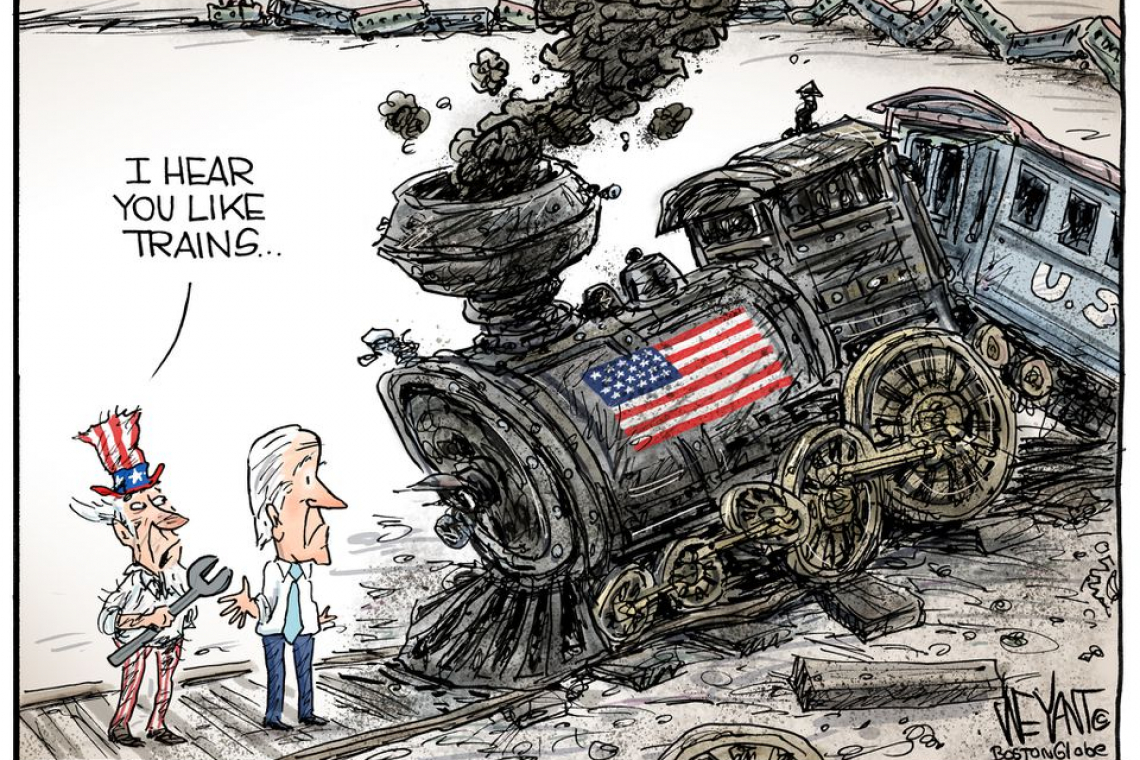
Slow Motion Economic Train Wreck; Nearly 40% of small US businesses failed to pay rent in October

Small businesses in various states are struggling to pay their rent, a new report shows, with rent delinquency at nearly 40 percent this month.

The findings, published Tuesday by Boston-based business tracker Alignable, are raising more than eyebrows, as they illustrate the stark effect inflation is having on everyday Americans.

The survey of 4,789 randomly selected small business owners saw more than half of respondents say their rent is at least 10 percent higher than six months ago.

If you go back seven months, the majority said their rents had increased by at least 20 percent.

Moreover, the study found that roughly 37 percent of small businesses – almost half of all Americans working in the private sector – were left unable to pay rent in October.

Compounding concerns is the fact that several states, including New York and California, are well over the already-high national average.

Offering an explanation for the phenomenon, study author Chuck Casto wrote that small business owners are steadfast, but that their incomes are ‘basically being eaten away by inflationary pressures’ as grim figures continue to rock financial markets.

Alignable discerned that one-third of businesses are at risk of closing if revenue does not ‘ramp up’ significantly in the coming months, as consumers shy away from spending amid fears of an impending recession.

As to the reasons for the short funds, poll-takers blamed higher rents, the impact of more than a year of high inflation, steeper-than-usual gas prices, increases in supply chain costs, rising labor expenses and shortages, and reduced consumer spending.

Worse, about 49 percent of restaurants were unable to pay their rent this month, up from 36, in September, while an identical 49 percent of car dealership and repair shop owners defaulted on their October rent.

Via https://halturnerradioshow.com/index.php/en/news-page/world/slow-motion-economic-train-wreck-nearly-40-of-small-businesses-in-the-us-failed-to-pay-rent-in-october

Debunking Myths about China’s Social Credit System

By Land Destroyer

Western government & the Western media have deliberately lied about China operating a central “social credit score” system driven by political and ideological criteria.

However the same Western sources admit upon further examination that this is a myth, that no such system exists, and the multitude of systems China does use are for tracking and punishing what would be considered serious offenses anywhere [eg criminal behavior].

There is also no such thing as the CCP. The correct name for China’s Communist party is the CPC (the Chinese Party of China). Assume any article referring to the CCP originates from US intelligence propagandists until proven otherwise.

Although some private Chinese companies use systems similar to “social credit” to rate private employees, the Chinese government has no centralized “social credit” system rating antisocial behavior.

References:

Business Insider – China’s ‘social credit’ system ranks citizens and punishes them with throttled internet speeds and flight bans if the Communist Party deems them untrustworthy: https://www.businessinsider.com/china…

WIRED – The complicated truth about China’s social credit system: https://www.wired.co.uk/article/china…

Guardian – China bans 23m from buying travel tickets as part of ‘social credit’ system: https://www.theguardian.com/world/201…

SCMP – What is China’s social credit system and why is it controversial?: https://www.scmp.com/economy/china-ec…

ASPI – Sponsors: https://www.aspi.org.au/sponsors ASPI – Funding: https://www.aspi.org.au/about-aspi/fu…

Foreign Policy – China’s Social Credit System Is Actually Quite Boring: https://foreignpolicy.com/2021/09/15/…

Foreign Policy – China’s Orwellian Social Credit Score Isn’t Real: https://foreignpolicy.com/2018/11/16/…

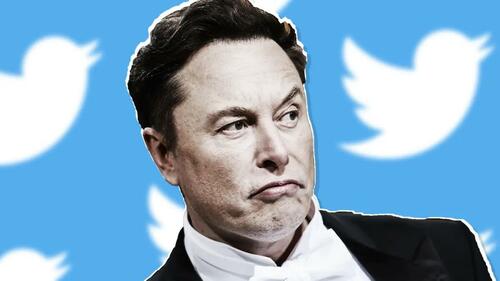
Musk Neuters Twitter ‘Ministry of Truth’ Ahead of Midterms

Photo via Latestfinancenews

Zero Hedge

Fans of Star Trek: The Next Generation may recall the episode where extra-dimensional dickhead “Q” is stripped of his powers for spreading chaos throughout the universe.

Well, Elon Musk just did that to Twitter’s content moderation thought police with just weeks to go before midterms – cutting the number of employees who can access censorship tools from hundreds to around 15 people last week, and reducing their ability to influence discussion on the platform.

According to Bloomberg, Musk and his ‘war cabinet‘ have frozen some employee access to internal tools used for content moderation and the enforcement of other policies, neutering staff’s abilities to ‘alter or penalize accounts that break rules around misleading information, offensive posts and hate speech.’

They also won’t be able to banish highly credentialed doctors and researchers posting divergent Covid-19 narratives.

All but the most ‘high-impact violations set for manual review’ will remain on the platform, according to people familiar with the matter.

Twitter staff use dashboards, known as agent tools, to carry out actions like banning or suspending an account that is deemed to have breached policy. Detection of policy breaches can either be flagged by other Twitter users or detected automatically, but taking action on them requires human input and access to the dashboard tools. Those tools have been suspended since last week, the people said.

This restriction is part of a broader plan to freeze Twitter’s software code to keep employees from pushing changes to the app during the transition to new ownership. Typically this level of access is given to a group of people numbering in the hundreds, and that was initially reduced to about 15 people last week, according to two of the people, who asked not to be named discussing internal decisions. Musk completed his $44 billion deal to take the company private on Oct. 27. -Bloomberg

On Sunday,Twitter employees had limited access to the internal tools to police Brazil’s presidential election.

Meanwhile, the company is still using automated enforcement technology as well as third-party contractors.

The restricted ability to restrict free speech has given Twitter’s Trust and Safety Team the vapors – with employees worried that the company will be short-handed during the runup to the Nov. 8 midterm election. Recall the Trust and Safety Team was headed by now-fired Vijaya Gadde – who would have had a large role (perhaps even the final decision) to ban ZeroHedge in February, 2020 for suggesting that Covid-19 was the result of a lab leak (and that we ‘doxxed’ a Wuhan lab employee using publicly available data – aka not doxxing).

Internally, employees say, Musk has raised questions about a number of the policies, and has zeroed in on a few specific rules that he wants the team to review. The first is Twitter’s general misinformation policy, which penalizes posts that include falsehoods about topics like election outcomes and Covid-19. Musk wants the policy to be more specific, according to people familiar with the matter.

Musk has also asked the team to review Twitter’s hateful conduct policy, according to the people, specifically a section that says users can be penalized for “targeted misgendering or deadnaming of transgender individuals.” -Bloomberg

On Monday, Yoel Roth, Twitter’s head of safety and integrity, tweeted on Monday that the company was addressing an increase in offensive posts.

“Since Saturday, we’ve been focused on addressing the surge in hateful conduct on Twitter. We’ve made measurable progress, removing more than 1500 accounts and reducing impressions on this content to nearly zero,” he wrote, adding “We’re primarily dealing with a focused, short-term trolling campaign.”

[…]

Via https://www.zerohedge.com/political/musk-neuters-twitter-ministry-truth-ahead-midterms