Retired child and adolescent psychiatrist and American expatriate in New Zealand. In 2002, I made the difficult decision to close my 25-year Seattle practice after 15 years of covert FBI harassment. I describe the unrelenting phone harassment, illegal break-ins and six attempts on my life in my 2010 book The Most Revolutionary Act: Memoir of an American Refugee.
Lecture 9: The Most Celebrated Edifice – the Pantheon
Understanding Greek and Roman Technology: From the Catapult to the Pantheon
Dr Stephen Ressler (2013)
Film Review
Built in 126 AD under the emperor Hadrian, the Pantheon is the best preserved of all Roman buildings. The portico, which mimics Greek temples, has 40 foot high Corinthian-style columns. Each is built from a single piece of granite imported from Egypt. The columns were shaped on a huge lathe.*
Based on precise geometric calculations, the dome is a hemisphere from a a full sphere that would fit exactly into the inner sanctuary below. Made of poured concrete, its weight (5,000 tons) has been reduced by an inner layer of lattice work.
The dome supported by the twenty foot wall of the cylindrical drum housing the sanctuary, as well as interior arches and vaults dedicated to specific gods. The wall is made of opus testaceum (brick and tile-faced concrete).
Much of the interior is faced with marble, made possible by the invention of an iron saw that could cut marble into thin sheets.
*A lathe is a machine tool that turns a work piece on a central axis of rotation to perform various operations such as cutting, sanding, knurling and drilling. Although it dates back to 1300 BC Egypt, one large enough to sculpt granite columns was a recent Roman invention in the 2nd century AD.
Medieval lathe
Film can be viewed free with a library card on Kanopy.
Lecture 8: The Genesis of a New Imperial Archtecture
Understanding Greek and Roman Technology: From the Catapult to the Pantheon
Dr Stephen Ressler (2013)
Film Review
In this lecture, Ressler looks at the importance of poured concrete vaults in Roman architecture and the political upheaval that delayed their widespread use. Although the discovery of vault technologies dates back to at least 193 BC, civil works projects virtually ceased during the civil wars of the first century BC. Even after Augustus became the first emperor, his innate conservatism led him to favor traditional Republican-era architecture.
His successors (particularly Caligula and Claudius) felt much more comfortable with both autocratic rule and architectural experimentation. However full blown vaulted architecture didn’t blossom until Nero came to power in 54 AD.
Following the fire that destroyed much of Rome in 64 AD, the entire city became one giant construction site under Nero’s orders that all new buildings be fireproof and that porticos be added to all apartment buildings to provide elevated platforms for fire fighters. This, and the construction of Nero’s new palace, created massive demand for opus testaceum (brick and tile faced concrete). This period also gave rise to a new architectural feature known as the “flat arch.”
Using detailed diagrams and ingenious scale models, Ressler demonstrates how Nero’s architects solved the load bearing dilemma in the revolutionary concrete dome of Nero’s Domus Aurea. With an oculus constructed from four arches surrounding a vertical axis, the dome itself was stabilized by buttresses and buttress arches. This approach would have major influence on medieval architecture.
The second building this lecture examines is Trajan’s market, built between 106-116 AD. This astonishing public building (essentially the world’s first shopping mall) was six stories high and housed market stalls, two-story halls, streets, ramps, promenades, corridors and terraces. It did all this without a single load bearing column.
According to Ressler, the central structure relies mainly on a groin vault (two intersecting barrel vaults) for load bearing.
Groin vaults were used for about 200 years before the brilliant structural engineer Apollodorus of Syria used them in Trajan’s market. His innovative uses of arches to prevent lateral thrust were, in Ressler’s view, the first use of flying buttresses.
*Flying buttresses are used in architecture as external methods of support. They were built directly butting up to a structure’s walls to ease lateral force created by roofs or domes.
Medieval flying buttresses
Film can be viewed free with a library card on Kanopy.
Lecture 7: Construction in Transition – the Coliseum
Understanding Greek and Roman Technology: From the Catapult to the Pantheon
Dr Stephen Ressler (2013)
Film Review
According to Ressler, the Roman building boom in the first century AD led to the most remarkable period of construction engineering in history.
Known at the time as the Flavian amphitheater, the Coliseum was built under three successive Flavian emperors starting with Vespasian in 75 AD. It was completed by his son Titus, who held the inaugural games in 80 AD. His successor Domitian (81-96 AD) added a two-story underground network of corridors, which were used as as holding area for wild animals and gladiators.
Sixteen stories high, the Coliseum was unprecedented in size. Accommodating 55,000 spectators, its floor was the size of a modern football field. Its tiered structure segregated attendees according to social class. The highest tier provided wooden bleachers for women and slaves.
The foundation, made of concrete, was 40 feet deep, with the exterior walls held together by iron clamps (300 tons of them) and supported by arches. The inner walls were concrete with brick facing. The vaults serving as entrance ways were made of poured concrete.
Geometrically, the Coliseum was an oval filled with concentrically circular interior walls. Radial corridors covered by concrete vaults connected the outer arcades to the interior hallways to facilitate crowd access.
At lower levels, the outer walls were made of alternating (imported) marble and tufa blocks lifted into place with wooden cranes. The upper stories had mainly concrete walls because they were difficult to access with cranes.
Marble seating was added to the completed structure, as was a canvas awning (valarium) that weighed 150,000 pounds and which Roman sailors deployed was deployed from wooden poles.
The schematic diagrams Ressler uses to highlight the stepwise fashion in which the Coliseum was constructed are superb in conveying the genius of the engineers who designed this 2,000 year old monument.
Film can be viewed free with a library card on Kanopy.
Lecture 6: Construction Revolution – Arches and Concrete
Understanding Greek and Roman Technology: From the Catapult to the Pantheon
Dr Stephen Ressler (2013)
Film Review
Although tie beam trusses (see Lecture 5) were much more efficient than prop and lintel roofs, timber, which wasn’t very durable, was the only building material suitable for trusses and it wasn’t very durable. In the 4th century BC, Roman architects discovered the usefulness of arches, which could be made of stone or brick, in load bearing.
The oldest surviving arch, an Israeli gate, dating from 1850 BC. Arches were also used in Egypt in the 6th century BC and in a Greek stadium in the fourth century BC.
As Ressler demonstrates with a scale model, an arch must be supported by a timber frame during construction, as it only becomes load bearing once it’s complete. He also shows how an arch only carries load as compression – tensile pressure makes it fall apart. Because weight bearing leads to “lateral thrust,” a completed arch needs a stationary structure on either end (either a column, wall or soil).
Multiple adjacent arches are known as an arcade. Lateral thrust from two adjacent arches enables them to support each other.
A vault is an arch lengthened into three dimensions.
The Romans learned construction engineeering from the Etruscans, who were strongly influenced by the Greeks. Under the Republic, Rome mainly used basic ashlar construction (ie identically shaped blocks held together by iron fasteners). As marble was scarce, they used Tufa (soft limestone) faced with a layer of stucco to make it look more attractive. The use of stucco eventually led to the use of lime-based mortar between stones to seal joints and create a uniform bedding surface. This allowed the use of more imperfect stone blocks, increasing speed of construction and reducing costs.
This, in turn, would lead to the use of concrete (quick lime mixed with “aggregate”) to increase strength. Aggregate could be sand, gravel or construction rubble.
Kiln baking limestone (calcium carbonate or CaCO3) drives off the carbon dioxide (CO2), to transform it into quick lime (calcium oxide or CO). When the calcium oxide is soaked in water for three months, it forms calcium hydroxide or Ca(OH)2. After the latter is pored into a form and exposed to air it re-hardens as CaCO3.
During the 3rd century BC, the Romans discovered a unique silica-containing volcanic ash known as pozzolana that combines with calcium carbonate to produce calcium silicon hydrates that harden without exposure to air. Roman architects found they could speed up the construction of walls (as well as increasing their compressive strength) by combining brick facings with a pored concrete interior.
Rome’s rapid territorial expansion led to a constant demand for new construction – for city walls, bridges, baths, aqueducts, basilicas, palaces and apartment complexes. Moreover Roman wars of conquest produced numerous low-skilled laborers who could be easily trained to pour concrete under the supervision of a skilled mason.
Film can be viewed free with a library card on Kanopy.
Episode 5: From Temple to Basilica – Timber Roof Systems
Understanding Greek and Roman Technology: From the Catapult to the Parthenon
Dr Stephen Ressler (2013)
Film Review
All Greek temples had wooden prop and lentil roof systems. Because wood decomposes quickly over time, no Greek temple roofs have survived to the present day.
As Ressler illustrates with diagrams, prop and lentil roofs consist of horizontal beams supported by interior columns and covered by rafters and battens. The battens supported interlocking terra cotta roof tiles, producing a water tight roof without nails, clamps, adhesives or sealants.
Because wooden beams longer than 30 feet sag in the middle, Greek architects used extensive interior colonnades (ie rows of columns). Not only was this an extremely expensive solution (requiring massive amounts of marble), but it severely limited usable space inside the building.
Greek architects eventually solved this dilemma by incorporating tie-beam-trusses into newer buildings. Ressler believes Sicilian Greeks learned about trusses from the Carthaginians. However it was the Romans who ultimately became masters of the truss in the second century AD. This enabled the construction of much wider buildings (known as basilicas) with much larger public meeting halls.
As Ressler exhibits with a scale model, the truss works by distributing load equally between all attached segments of the truss.
Film can be viewed free with a library card on Kanopy.
The Entire Effort is Based on the False Assumption that Pandemic Preparedness Would Actually Work. But in fact, all it has done is create new pandemics.
1. The most recent WHO-declared Public Health Emergencies of International Concern (PHEICs) for SARS-CoV-2 and Monkeypox were both caused by lab-created viruses, based on many careful analyses of their genomes.
2. There is no evidence that pandemic preparedness ever benefited anyone but the preparedness industry, and substantial evidence that it led to the creation of the COVID pandemic.
4. The Global Preparedness Monitoring Board has also geared up to push the identical program as the WHO: surveillance, One Health, and investment—”all topics that the GPMB has long recognised are crucial for the advancement of resilient pandemic preparedness mechanisms.”
5. The G20 nations agreed last April to a $50 Billion dollars a year price tag for gloval pandemic preparedness.
6. The Globalist agenda is out in the open for all to see.
The pandemic preparedness concept is based on fantasy; it is a dangerous money grab for a new biodefense industry. It bought:
· Many more high-containment BSL-3 and BSL-4 labs,
· 15,000 new scientists trained to research biowarfare pathogens,
· Poorly tested drugs and vaccines for which the manufacturers had no liability
· More corruption and pork for politicians to distribute.
· Nathan Wolfe’s company: biolabs in Ukraine, squire to Ghislaine Maxwell, funding by Hunter Biden’s investment group
· Peter Daszak’s ‘nonprofit’ that collected dangerous viruses from over 30 countries to bring to the US Defense Threat Reduction Agency (DOD’s DTRA) for further investigation
· Extremely dangerous anthrax, smallpox and COVID vaccines
· The COVID drug paxlovid, which led to relapses of COVID in President Biden, CDC Director Rochelle Walensky and NIAID Director and Presidential COVID adviser Anthony Fauci and millions of Americans, presumably prolonging their infectiousness and causing more cases of COVID
· Expensive new federal agencies (ASPR, BARDA in DHHS, and subagencies within DHS and within DOD) and new funding streams to the NIH
· An excuse to censor alternate medical/scientific views
Episode 4: Stone Masonry Perfected: The Greek Temple
Understanding Greek and Roman Technology: From the Catapult to the Parthenon
Dr Stephen Ressler (2013)
Film Review
In ancient Greece, the temple was not only the home of a god but the major structure representing the polis (ie the citizenry under the city-state’s jurisdiction).
Construction of a new temple had to be approved by the popular assembly, at which point a citizen’s committee hired an architektron, who was a combination architect, engineer and master builder.
Temples were usually built on the city’s acropolis (highest point of land) with the entrance facing the rising sun.
Temples had to be set in bedrock, on a foundation up to 15 feet deep. Doric order temples, initially made of wood, were the first Greek temples (10th century BC). Later marble temples featured stylized ornamentation meant to replicate original wood features and reduced the slope of their roofs (to accommodate the increased weight of terracotta tiles).*
Still later Ionian order temples, had thinner columns topped with more ornate capitols decorated with scroll work.
Corinthian columns, appearing during the third century BC, were favored by the Romans.
Ressler has constructed a fascinating model to demonstrate the concept of load bearing and explain how Greek architects addressed this requirement with tabeated** construction. This entailed a series of horizontal beams supported by a regular arrangement of columns. The lower tensile strength of longer marble beams limited the size of Greek temples.
All Greek temples were based standardized mathematical dimensions calculated from the number of columns they used.
*Which replaced thatch used on the earliest temples.
**Trabeated roofs used a prop and lintel system to support the roof load.
Film can be viewed free with a library card on Kanopy.
US War Crimes committed against the Korean Nation (1950-53)
“Fire and Fury” was not invented by Donald Trump. It is a concept deeply embedded in US military doctrine. It has characterized US military interventions since the end of World War II.
What distinguishes Trump from his predecessors in the White House is his political narrative at the 2017 United Nations General Assembly.
President Harry Truman from the very outset of the Korean War (1950-53) was a firm advocate of “Fire and Fury” against the people of both North and South Korea.General Douglas MacArthur, who had actually carried out the atrocities directed against the Korean people, appeared before the US Senate and acknowledged the crimes committed against the Korean Nation:
“I have never seen such devastation,” the general told members of the Senate Armed Services and Foreign Relations committees. At that time, in May 1951, the Korean War was less than a year old. Casualties, he estimated, were already north of 1 million.
“I have seen, I guess, as much blood and disaster as any living man,” he added, ” (quoted by the Washington Post, August 10, 2017)
Confirmed by US military documents, both the People’s Republic of China and the Democratic People’s Republic of Korea have been threatened with nuclear war for sixty-seven years.
In 1950, Chinese volunteer forces dispatched by the People’s Republic of China were firmly behind North Korea against US aggression.
China’s act of solidarity with the Democratic People’s Republic of Korea (DPRK) was carried out barely a few months after the founding of the PRC on October 1, 1949.
Truman had contemplated the use of nuclear weapons against both China and North Korea, specifically as a means to repeal the Chinese Volunteer People’s Army (VPA) which had been dispatched to fight alongside North Korean forces. [Chinese Volunteer People’s Army, 中國人民志願軍; Zhōngguó Rénmín Zhìyuàn Jūn].
It is important to stress that US military action directed against the DPRK was part of a broader Cold War military agenda against the PRC and the Soviet Union, the objective of which was ultimately to undermine and destroy socialism.
Extensive war crimes were committed against the Korean Nation in the course of the Korean war and its aftermath.
Every single family in North Korea has lost a loved one in the course of the Korean War.
In comparison, during the Second World War the United Kingdom lost 0.94% of its population, France lost 1.35%, China lost 1.89% and the US lost 0.32%. During the Korean war, North Korea lost 30% of its population.
These figures of civilian deaths in North Korea should also be compared to those compiled for Iraq by the Lancet Study (Johns Hopkins School of Public Health). The Lancet study estimated a total of 655,000 Iraqi civilian deaths, in the three years following the US-led invasion (March 2003 – June 2006).
The US never apologized for having killed up to 30 percent of North Korea’s population. Quite the opposite. The main thrust of US foreign policy has been to demonize the victims of US-led wars.
There were no war reparations. The issue of US crimes against the people of Korea was never addressed by the international community. And today, the DPRK is tagged by the Western media as a threat to the security of the United States.
For more than half a century, Washington has contributed to the political isolation and impoverishment of North Korea. Moreover, US-sponsored sanctions on Pyongyang have contributed to destabilizing the country’s economy.
North Korea has been protrayed as part of an “axis of evil”. For what?
The unspoken victim of US military aggression, the DPRK is portrayed as a failed war-mongering “Rogue State”, a “State sponsor of terrorism” and a “threat to World peace”. In the West but also in south Korea, these stylized accusations become part of a consensus, which we dare not question.
The Lie becomes the Truth. North Korea is heralded as a threat. America is not the aggressor but “the victim”.
Washington’s intent from the very outset was to destroy North Korea and demonize an entire nation. The US has also stood in the way of the reunification of North and South Korea.
People across America should put politics aside and relate to the suffering and hardships of the people of North Korea. War veteran Brian Willson provides a moving assessment of the plight of the North Korean people:
“Everyone I talked with, dozens and dozens of folks, lost one if not many more family members during the war, especially from the continuous bombing, much of it incendiary and napalm, deliberately dropped on virtually every space in the country. “Every means of communication, every installation, factory, city, and village” was ordered bombed by General MacArthur in the fall of 1950. It never stopped until the day of the armistice on July 27, 1953. The pained memories of people are still obvious, and their anger at “America” is often expressed, though they were very welcoming and gracious to me. Ten million Korean families remain permanently separated from each other due to the military patrolled and fenced dividing line spanning 150 miles across the entire Peninsula.
Let us make it very clear here for western readers. North Korea was virtually totally destroyed during the “Korean War.” U.S. General Douglas MacArthur’s architect for the criminal air campaign was Strategic Air Command head General Curtis LeMay who had proudly conducted the earlier March 10 – August 15, 1945 continuous incendiary bombings of Japan that had destroyed 63 major cities and murdered a million citizens. (The deadly Atomic bombings actually killed far fewer people.).Eight years later, after destroying North Korea’s 78 cities and thousands of her villages, and killing countless numbers of her civilians, LeMay remarked, “Over a period of three years or so we killed off – what – twenty percent of the population.”It is now believed that the population north of the imposed 38th Parallel lost nearly a third its population of 8 – 9 million people during the 37-month long “hot” war, 1950 – 1953, perhaps an unprecedented percentage of mortality suffered by one nation due to the belligerance of another.
Virtually every person wanted to know what I thought of Bush’s recent accusation of North Korea as part of an “axis of evil.” I shared with them my own outrage and fears, and they seemed relieved to know that not all “Americans” are so cruel and bellicose. As with people in so many other nations with whom the U.S. has treated with hostility, they simply cannot understand why the U.S. is so obsessed with them.” (Brian Willson, Korea and the Axis of Evil, Global Research, October 12, 2006emphasis added)
Around 13,000 previously-withheld documents relating to the JFK assassination have been released by the U.S. National Archives and Records Administration (NARA). Some remain hidden.
The request has been made to comply with President Joe Biden’s memorandum requiring disclosure of releasable records by December 15, 2022.
More than 13,000 records of John F. Kennedy’s assassination are included in the release, over 26 pages.
The records include more information on accused gunman Lee Harvey Oswald, particularly long-awaited details on his time spent in Mexico City. Also included are full transcripts of committee hearings.
Under the JFK Records Act, all documents related to the assassination were supposed to be released by 2017. But Donald Trump delayed the full publication of all records and ultimately left it in the hands of Biden, who in 2021 delayed full release again.
This is more than five years after the documents were originally required by law to be publicly disclosed.
Even with this release, however, some documents still remain secret.
Secret documents involving government contacts with Oswald.
3% ARE STILL HIDDEN
While these documents provide more insight into the series of events, the release fell short of fully complying with the spirit of a 30-year-old law demanding transparency by now.
With today’s action, about 98%of all documents related to the 1963 killing have now been released — leaving 3% of the records that remain redacted in whole or in part, according to the National Archives, which controls the John F. Kennedy Assassination Records Collection.
Among the documents that remain largely hidden: 44 related to a shadowy CIA agent, George Joannides, and a covert Cuba-related program he ran that came into contact with Lee Harvey Oswald less than four months before Kennedy was shot.
This is according to calculations made by JFK researchers with the Mary Ferrell Foundation, the nation’s largest non-profit repository of the assassination records, which sued the administration to make all the documents public. The foundation says the CIA is withholding most of the records at issue.
This program reportedly came into contact with Oswald in the months before the assassination, leading some to speculate about CIA-related complicity in the killing.
Many of those Joannides records were never put in the National Archives’ JFK collection, according to the foundation, so the lion’s share of the suspected records were not released.
Biden noted that the Records Act “…permits the continued postponement of disclosure of information … only when postponement remains necessary to protect against an identifiable harm to the military defense, intelligence operations, law enforcement, or the conduct of foreign relations that is of such gravity that it outweighs the public interest in disclosure.”
Who are they trying to protect all these decades later?
Documents in the latest batch of releases show the CIA were also keeping a keen eye on any news outlets that were reporting the connections at the time.
As Oswald was in Cuba, the Pentagon was formulating a plan called Operation Northwoods to stage a false flag attack in the United States to blame on Cuba and justify a military confrontation.
These key documents are the final missing links for both stories, and sadly, they still haven’t seen the light of day.
Experts say there’s no justification for withholding them to protect national security or intelligence.
“We’re 59 years after President John Kennedy was killed and there’s just no justification for this,” said Judge John H. Tunheim, who from 1994-98 chaired the Assassination Records Review Board that was established under the President John F. Kennedy Assassination Records Collection Act of 1992, which Biden voted for.
This is the most powerful and important edition of Tucker Carlson Tonight ever broadcast. Tucker methodically reviews the JFK assassination, the Warren Commission and indicts CIA involvement in the assassination.
Tucker even touches upon the role of CIA psychiatrist Jolly West in these proceedings with Jack Ruby. It was reported that West later made twelve or more visits to Timothy McVeigh while he was incarcerated for the Oklahoma City bombing of the Alfred P. Murrah Federal Building. Dr. Louis Jolyon West, the UCLA mind control expert for the CIA who pronounced Jack Ruby insane after he suggested a conspiracy in the JFK assassination was also was the government psychiatrist who handled Sirhan B. Sirhan while he awaited trial for the murder of Robert Kennedy.
Tucker and journalist Miranda Devine also savagely indict ongoing CIA leadership for decades of lying and duplicity in numerous despicable and deplorable events and activities, up to the current war in Ukraine. The rest of show is a detailed catalog of corruption at every level of government.
Text of broadcast –
Not long after Jack Ruby shot Lee Harvey Oswald on camera in the basement of Dallas police headquarters, a lot of Americans started to have some questions about the Kennedy assassination. It was, you’d have to admit, a pretty extraordinary sequence of events. A lone gunman murders the president of the United States. And then, less than 48 hours later, that lone gunman is himself murdered by another lone gunman.
What are the odds of that? It’s one thing if you get struck by lightning – rare but possible. But if every member of your family also gets struck by lightning, all on different days, you might begin to suspect these are not entirely natural events. But oh, replied the U.S. government, they are. This bizarre chain of killings was all entirely natural.”
So less than a year after the JFK assassination, the Johnson White House released something called the Warren Commission Report. And the report concluded that while their motives remained unclear, both Lee Oswald and Jack Ruby had acted alone. No one helped them. There was no conspiracy of any kind. Case closed. Time to move on.
And many Americans did move on. At the time, they had no idea how shoddy and corrupt the Warren Commission was. It would be nearly 50 years before the CIA admitted under duress that in fact, it had withheld information from investigators about its relationship with Lee Harvey Oswald.
But even then, at the time, before that was known, the government’s explanation didn’t seem entirely plausible. And some people started asking obvious questions about it. It was at that point, as Americans started to doubt the official story, that the term “conspiracy theory” entered our lexicon. As Professor Lance DeHaven-Smith points out in his book on the subject, “The term conspiracy theory did not exist as a phrase in everyday American conversation before 1964. In 1964, the year the Warren Commission issued its report, the New York Times published five stories in which ‘conspiracy theory’ appeared.”
Now, today, of course, the term “conspiracy theory” appears in pretty much every New York Times story about American politics. It’s wielded, now as then, as a weapon against anyone who asks questions the government doesn’t feel like answering. But despite 60 years of name-calling, those questions have not disappeared. In fact, they have multiplied with time.
And here’s one of them. In April of 1964, a psychiatrist called Louis Joylon West visited Jack Ruby in his isolation cell in a Dallas jail. According to West’s written assessment, he found that Jack Ruby was “technically insane” and in need of immediate psychiatric hospitalization. Those are conclusions that puzzlingly no one who had spoken to Jack Ruby previously had reached. Ruby had seemed perfectly sane to the people who knew him. Louis Jolyon West pronounced him crazy.
But what West did not say was that he was working for the CIA at the time. Louis Jolyon West was a contract psychiatrist for the spy agency. He was also an expert on mind control and a prominent player in the now infamous MKUltra program in which the CIA gave powerful psychiatric drugs to Americans without their knowledge.
So of all the psychiatrists in the world, what in the world was this guy doing in Jack Ruby’s prison cell? The media did not seem interested in finding out. In fact, the New York Times, in an extensive 1999 obituary of West, never mentioned the fact that he had worked for the CIA, much less his time in Jack Ruby’s cell, which seems relevant. So you can see why non-crazy people would wonder about what really happened. And of course, many have wondered.
In 1976, long forgotten, the House of Representatives impaneled a special committee to reinvestigate the JFK assassination. Their bipartisan conclusion? Jack Kennedy was almost certainly murdered as the result of a conspiracy. But the question is a conspiracy by whom? Well, the obvious suspect would be the CIA. Why else would the agency withhold critical evidence from investigators? Is there a benign explanation for that, for maintaining this level of secrecy for this many years? Not that we’re aware of. And it is illegal.
In 1992, Congress passed the President John F. Kennedy Assassination Records Collection Act. That act mandated full disclosure of all documents by 2017, 54 years after JFK was killed. The last administration promised to comply fully with that law. But under intense pressure from CIA Director Mike Pompeo, withheld, in the end, thousands of pages of CIA documents.
Today, this afternoon, the Biden administration did exactly the same thing. That would be thousands of pages of documents after nearly 60 years, after the death of every single person involved. But we still can’t see them. Clearly, it’s not to protect any person. They’re all dead. It’s to protect an institution. But why?
Well, today we decided to find out. We spoke to someone who had access to these still hidden CIA documents, a person who was deeply familiar with what they contained. We asked this person directly, “Did the CIA have a hand in the murder of John F. Kennedy, an American President? And here’s the reply we received verbatim. Quote, “The answer is yes. I believe they were involved. It’s a whole different country from what we thought it was. It’s all fake.”


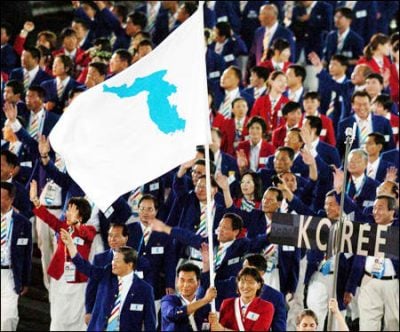
 Photo: AJU


