The Most Revolutionary Act

Uncensored updates on world events, economics, the environment and medicine

The Most Revolutionary Act
Unknown's avatar

About stuartbramhall

Retired child and adolescent psychiatrist and American expatriate in New Zealand. In 2002, I made the difficult decision to close my 25-year Seattle practice after 15 years of covert FBI harassment. I describe the unrelenting phone harassment, illegal break-ins and six attempts on my life in my 2010 book The Most Revolutionary Act: Memoir of an American Refugee.

Korean Peer-Reviewed Studies into Health Consequences of Covid Vaccine

Forced vaccinations and public health law – Prof. Dorit Rubinstein Reiss
Dr Guy Hatchard

The Korean National Health Insurance Service tabulates health data of the whole population, including vaccination status, which allows researchers to compare the ongoing health outcomes of the vaccinated with the unvaccinated. Precisely the information our government is hiding from independent researchers and public scrutiny—comparative data, which we have been requesting they release.

So what have they found in Korea? Researchers have released a preprint paper entitled “Hematologic abnormalities after COVID-19 vaccination: A large Korean population-based cohort study“. Haematologic diseases are diseases of the blood and blood forming organs. The researchers randomly selected half of the population of Seoul (around 4.2 million people) aged 20 and above and identified people who had received treatment for a range of blood disorders. They excluded people who had a history of blood disorders prior to the study period and then compared the rate of development of blood disorders among the vaccinated and unvaccinated over a three month period.

The researchers concluded:

“This study demonstrated the haematologic adverse events associated with COVID-19 vaccination using real-world data. The cumulative incidence rate of nutritional anaemia, aplastic anaemia, and coagulation defects significantly and constantly increased for 3 months after the COVID-19 vaccination compared to the non-vaccinated group.”

Aplastic anaemia is a rare but serious blood condition that occurs when your bone marrow cannot make enough new blood cells for your body to work normally. There is no known cure at this point in time.

Nutritional anaemia refers to anaemia that can be directly attributed to nutritional disorders or deficiencies. Examples include Iron deficiency anaemia and pernicious anaemia.

Coagulations disorders are conditions that affect the blood’s clotting activities. Haemophilia, Von Willebrand disease, clotting factor deficiencies, hypercoagulable states and deep venous thrombosis are all coagulations disorders.

Another study from Korea entitled “The spectrum of non-fatal immune-related adverse events following COVID-19 vaccination: The population-based cohort study in Seoul, South Korea” analysed official health data for Seoul residents between 2020 and 2021 and examined the cumulative incidence rates of non-fatal health outcomes among the vaccinated group which included 1,748,136 individuals compared to the non-vaccinated group which included 289,579 individuals.

The study compared these cumulative incidence rates of non-fatal conditions in the following areas:

  • Gynecological ( including endometriosis, and menstrual disorders [polymenorrhagia, menorrhagia, abnormal cycle length, oligomenorrhea, and amenorrhea])
  • Haematological (including bruises confined to non-tender and yellow-coloured especially on extremities)
  • Dermatological (including herpes zoster, alopecia, and warts)
  • Ophthalmological (including visual impairment, and glaucoma)Otological (including tinnitus, inner ear, middle ear, and outer ear disease)
  • Dental problems (including periodontal disease)

Subjects with a history of these illnesses were excluded from the analysis.

The researchers concluded:

“The cumulative incidence rates of these conditions at three months following COVID-19 vaccination were significantly higher in vaccinated subjects than in non-vaccinated subjects, except for endometriosis.”

third study of the same official Korean health data, which we have already reported, found higher incidence of eight musculoskeletal conditions among the vaccinated when compared to the unvaccinated including:

  • Plantar Fasciitis (foot/heel fibrous tissue inflammation)
  • Achilles tendinitis (pain in the back of the leg near the heel)
  • Bursitis (inflammation that increases friction between tissues in the body)
  • Rotator Cuff Syndrome (pain affecting the shoulder)
  • HIVD (upper back herniated disk)
  • Spondylosis (chronic neck wear and pain)
  • Adhesive Capsulitis (inflammation of the shoulder)
  • De-Quervain Tenosynovitis (wrist inflammation).

The researchers concluded:

“Individuals who received COVID-19 vaccines, either mRNA, viral vector, or mixing and matching, were found to be more likely to be diagnosed with inflammatory musculoskeletal disorders compared to those who did not. Our results provide detailed information on the adverse reactions after COVID-19 vaccination. This information will be useful in clarifying adverse reactions to COVID-19 vaccines and educating people about the potential risk of inflammatory musculoskeletal disorders based on their vaccination status.”

I don’t really need to explain much about these results do I? They speak for themselves. These studies analysed the rates of some specific health outcomes for millions of people following Covid vaccination. The researchers concluded that a very wide range of concerning health conditions are initiated over extended periods as a result of Covid vaccination.

Medsafe, the media, and the New Zealand government are telling us that COVID-19 vaccines are safe and effective, but they are not publishing any comparable data. A computer systems developer working at the Ministry of Health noticed that death rates among vaccinated populations were unusually high and blew the whistle. He has been arrested and charged with ‘dishonestly accessing health data’ (his job actually).

Who do you believe? The researchers in Korea who have published analysis of millions of post vaccination health records officially made available by their government or our government who are still refusing to make health records available whilst insisting that COVID-19 vaccination is safe and effective?

In the words of rapper DertySesh (warning: a lot of words begin with ‘f’), who publishes provocative social commentary on X and is unafraid to say how he feels, ‘we don’t want bland reports from the media that someone has been arrested for vaccine disinformation, we want to know if the data he published is real or not?’ One of our data correspondents, Terry Anderson, sums it up as follows:

Terry picks just one week, number 25 of 2022 ending 19th June. In that week 858 people died (the 3rd highest of the year). The MoH tells us there were 61 Covid deaths in that week, made up of around 46 who died with Covid as the underlying cause and 15 where Covid contributed. That means at least 797 people died of something other than Covid. Over the previous five years from 2017 to 2021, an average of 701 people died. Even allowing for a small population increase (around 2%), excluding Covid there appear to be at least 82 excess unexplained deaths in this one June 2022 week alone, 12% above the long term average.

If 82 people died in a train accident the nation would agonise over it for years. Every effort would be made to make sure it never happened again. As we have discussed and documented repeatedly, it is not just one week, there has been an unexplained level of excess death occurring week in week out for three years, at least 6,500 New Zealand deaths in total since the vaccine rollout began. To put it in perspective, that is more than twice the 2,700 New Zealanders who died in Gallipoli, whose heroics and sacrifice we commemorate to this day. The whistleblower is right, excess deaths are completely and absolutely off the scale.

The Korean studies of official health data confirm the chief suspect: COVID-19 vaccination. You would think the newly elected government would be crawling all over the New Zealand health data, enlisting the help of those who are untainted by any association with the prior Covid policy formation and assessment, desperately trying to get to the bottom of what has happened and staunch the flow of injury and death.

In fact, our government, the Ministry of Health, and the media seem to be incapable of facing the facts. Through the arrest and public denouncement of a whistleblower, they have shown themselves to be cowards, afraid to face up to the consequences of past decisions. Unbelievably, they are continuing to push the COVID-19 vaccine on the population against all evidence.

A headline in the New York Times today reads “There Are Politicians Who Lie More Than Is Strictly Necessary”. Once found out, the cover-up begins and then one lie leads to another. Eventually, any erstwhile friend can be abandoned to save your skin. In our case, the health and longevity of New Zealanders has become a political pawn that is being sacrificed to save Parliament and civil servants from public humiliation and disgrace.

The actual effect of the government policy of continued heavy vaccine promotion in the face of concerning data on adverse effects is frightening. It has completely distorted public perceptions and understanding. We have ended up living in an illogical and untenable world governed by propaganda rather than fact.

[…]

Via https://hatchardreport.media/korean-studies-indicate-what-our-government-is-hiding/
Resolution In Congress Calls For End To Assange Case As Extradition Nears

https://thedissenter.org/content/images/size/w1200/2023/12/houserepresentatives-gov.jpeg
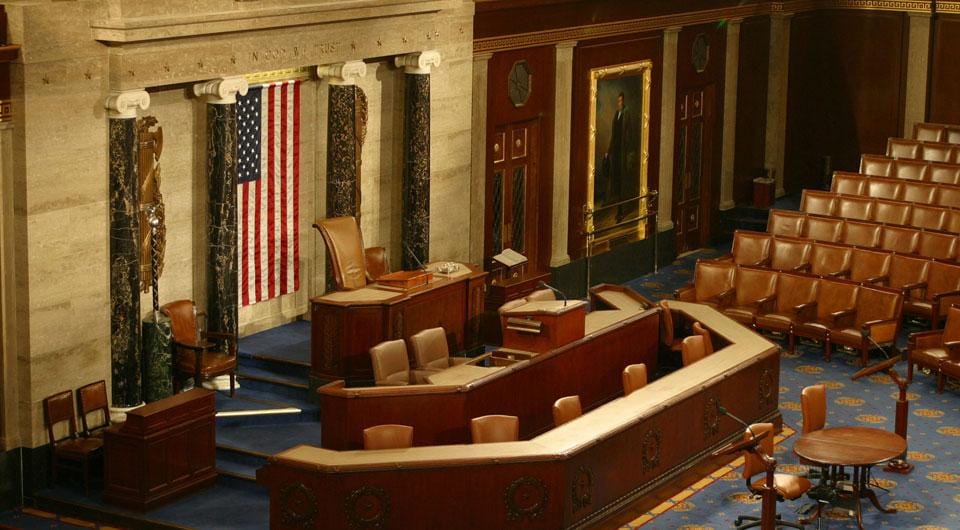
A resolution in support of WikiLeaks founder Julian Assange was introduced in the United States House of Representatives on December 13.

Cosponsored by eight representatives, it states that “regular journalistic activities are protected under the First Amendment,” and the U.S. government should “drop all charges against and attempts to extradite Julian Assange.”

The resolution [PDF] introduced by six Republican and two Democratic representatives marks the second time that representatives have used the legislature to try and mobilize support for Assange and freedom of the press. (One was previously sponsored in 2020 by Republican Representatives Thomas Massie and Justin Amash and Democratic Representative Tulsi Gabbard.)

For over four and a half years, Assange has been jailed at His Majesty’s Prison Belmarsh. The facility is a high-security prison typically reserved for individuals accused or convicted of violent offenses.

Assange faces 17 charges of violating the Espionage Act and one count that alleges conspiracy to commit a computer crime. Each charge criminalizes Assange for publishing classified documents from the U.S. in 2010 and 2011.

A paltry number of representatives and senators in the U.S. Congress have shown interest in the Justice Department’s unprecedented prosecution of Assange. Fewer have raised their voice to oppose the political case against him.

Yet as Chip Gibbons covered for The Dissenter, there have been several letters issued to demand that President Joe Biden and Attorney General Merrick Garland drop the charges.

Republican Representative Paul Gosar sponsored the House resolution, and Republican Representatives Eric Burlison, Jeff Duncan, Marjorie Taylor Greene, Anna Paulina Luna, and Massie signed on as cosponsors.

Democratic Representatives Jim McGovern and Ilhan Omar both signed on as cosponsors as well.

The list of cosponsors is missing many of the representatives, who previously backed letters demanding that Biden and Garland end the prosecution.

“In 2010,” the resolution recalls, “WikiLeaks, a media organization established by Julian Assange, published a cache of hundreds of thousands of pieces of information including Guantanamo Bay detainee assessment briefs, State Department cables, rules of engagement files, and other United States military reports.”

“The disclosure of this information promoted public transparency through the exposure of the hiring of child prostitutes by Defense Department contractors, friendly fire incidents, human rights abuses, civilian killings, and United States use of psychological warfare,” it adds.

Where it references “child prostitutes,” the resolution is referring to a published cable that revealed that U.S. military contractor DynCorp had trained police in Afghanistan who had paid for “dancing boys.”

The reference to “psychological warfare” is unclear, however, it may be referring to military incident reports from Iraq. Those reports that became known as the Iraq War Logs contained details of “friendly fire incidents,” “human rights abuses,” and “civilian killings,” including by Iraqi security forces that were trained by the U.S. military.

Where the resolution mentions the computer crime offense under the Computer Fraud and Abuse Act (CFAA), it notes that U.S. Army whistleblower Chelsea Manning “already had access to the mentioned computer, that the purported breaching of the Defense Department computers was impossible, and that there was no proof Mr. Assange had any contact with said intelligence analyst.”

The fact that the “purported breaching of the Defense Department computers was impossible” was affirmed by the testimony of Patrick Eller, a digital forensic expert who worked at U.S. Army Criminal Investigation Command. He was a defense witness in the extradition trial that unfolded in September 2020.

As far as the lack of evidence that Assange communicated with Manning, there are chat logs that appear in the indictment against the WikiLeaks founder. However, it has never been proven by any military prosecutor or British prosecutor that Assange was in fact using the account that the Justice Department claims was associated with him.

The resolution acknowledges the unprecedented Espionage Act charges and how Assange could serve a lengthy sentence that would amount to a “death sentence,” especially since he is 52 years old.

It further recognizes, “The successful prosecution of Mr. Assange under the Espionage Act would set a precedent allowing the United States to prosecute and imprison journalists for First Amendment protected activities, including the obtainment and publication of information, something that occurs on a regular basis.”

The broad support of human rights, press freedom, and privacy rights advocates and organizations are noted in the resolution, along with the vast political support in Australia among “70 senators and members of Parliament.”

Australia is described as a “a critical United States ally and Mr. Assange’s native country,” and the country’s support for allowing Assange to return home is treated as crucial to bringing the case to an end.

The resolution concludes by stating that the U.S. government should abandon its effort to extradite Assange and put him on trial. It should also allow Assange to return home to Australia “if he so desires.”

Whether the resolution will pass in the House or not, the resolution shows the potential for making the Assange case a political issue for President Joe Biden. In a year where Biden will be campaigning for re-election, that may prove to be crucial in freeing Assange.

[…]

Via https://thedissenter.org/us-congress-resolution-urges-end-assange-case/

2030s to see “severe cold and food shortages” as grand solar minimum takes over, warn solar researchers

2030s to see “severe cold and food shortages” as grand solar minimum takes over, warn solar researchers

Dr Eddy Betterman

An expert in energy particles and solar flares once warned that between the years of 2020 and 2053, the world would enter a Grand Solar Minimum, resulting in extreme cold – not warming like the media claims – as well as widespread food shortages.

Valentina Zharkova, a prominent Ukrainian solar researcher with an extensive academic background, has pegged the 2030s as being the years when such calamities are most likely to hit. Interestingly, Zharkova’s 2000 prediction that things would probably kick off in 2020 proved true when the Wuhan coronavirus (COVID-19) appeared out of nowhere.

While the COVID “pandemic” did not result in much colder temperatures on planet earth, it did create worldwide food shortages and supply chain problems as well as lockdowns and the first introduction into “The New Normal,” as they were calling it, which several countries have already made permanent.

Things will never be the same again for anyone in the post-COVID age, one reason being that COVID is never going away. They will continue to harp on about the latest “variants” and “subvariants” until kingdom come, and the World Health Organization (WHO) is right now mapping out a Pandemic Treaty for global enslavement that will persist until the end of the world.

The worst is yet to come

In a 2019 interview with award-winning Canadian journalist Stuart McNish, Zharkova warned with great seriousness that ever since 2015, solar activity has been decreasing in a way that has only ever been seen during a Grand Solar Minimum, the last of which occurred during the Maunder Minimum 400 years ago.

Citing research from NASA and the NOAA, Zharkova says the data and evidence is there, it is just that nobody with official status is talking about it. And this is only just the beginning of this Grand Solar Minimum period, the worst of which is yet to come.

“Between cycle 25 and 11 years of cycle 26 [the least active cycle], and between cycle 26 and 27, will be the coldest period on Earth, and we will feel it through a lack of vegetation,” she explained.

In other words, from the second half of this current decade through the early 2050s, the earth will experience exceptionally cold weather; all sorts of extreme weather events, earthquakes in various places; and volcanic eruptions. And in Zharkova’s views, the early 2030s will see the worst of it.

The climate is certainly changing, as is the entire solar system. In recent years, the sun’s activity has changed dramatically, this being the biggest factor in climate change – not eating meat and driving cars like the globalists claim.

The sun’s activity is the primary driver of the earth’s climate, not carbon dioxide, is another way of putting it.

“The question is why they are not warning us about what is truly on the horizon, as they are likely well aware of it,” writes Christer Ericsson for Free West Media. “Even more concerning is why they are misleading the world’s governments and people into believing that the threat is warmth. Potential answers to these questions are unsettling.”

John L. Casey’s book “Cold Sun,” published in 2011, as well as “Dark Winter,” published in 2014, both also warn about these very same calamities soon to come.

“This is why the Global Satanists have enacted their plan to depopulate the planet (Clot Shot) by 2025 (Deagel Report),” one commenter at Free West Media noted. “Easier to quell a small population revolt and lower demand on limited food supplies.”

[…]

Via https://dreddymd.com/2023/12/18/2030-severe-cold-food-shortages-solar-researchers/

The Etruscan Banquet

Episode 17 The Etruscan Banquet

The Mysterious Etruscans

Dr Steven L Tuck (2016)

Film Review

The Etruscan banquet was a rare formal occasion organized by elites to reinforce their social ties and their hierarchical positions. The earliest known banquets date bake to Nimrod in lower Babylonia. One banquet Assyrian conquerors hosted to celebrate a military victory hosted 69,000 guests.

Mediterranean banquets were smaller and limited to the elites. The most common Greek banquet was the symposium, which was actually a drinking party where only wine (without food) was served. With Greek banquets invited guests were exclusively male while females provided entertainment.

At Etruscan banquets, in contrast, male and female couples lounged on the same couches. This willingness to allow women to drink wine and dine with men was the main reason Greeks regarded Etruscans as barbarians. Sometimes Etruscan women hosted banquets or occasionally wealthy non-aristocratic traders. The latter was also unheard of in Greece.

According to grave frescoes (depicting meat being hung prior to butchering), Etruscans enjoyed hare, dear, birds and beef at their banquets, along with ruit, eggs and olives. They were waited on by slaves and musicians (mainly flautists).

Etruscan grave frescoes are painted in the Greek-style, with large blocks of color, sexes distinguished by complexion (men’s faces were white and women’s red)  and faces depicted in profile with full frontal bodies and eyes. Slaves are always much smaller to depict their lower status. Dancer depicted in Etruscan grave frescoes are modeled on the Greek followers of Dionysus.

At Assyrian banquets, only the king was allowed to recline. At Greek banquets, only the richest men recline. In the Etruscan cities, women and middle class guests reclained on dining couches.

Film can be viewed free with a library card on Kanopy.

https://www.kanopy.com/en/pukeariki/video/239710/239645

Washington State Democrats Demand Jail Time for People Caught Using Gas-Powered Gardening Tools


Frank Bergman

Democrats in the state of Washington are pushing for members of the public to be jailed for up to one year if they are caught using gas-powered gardening tools.

According to State Reps. Amy Walen and Liz Berry, jailing law-abiding citizens over their lawn mower’s power source will help to fight “climate change.”

Last week, the Democrat lawmakers introduced House Bill 1868.

The legislation seeks to “reduc[e] emissions from outdoor power equipment.”

According to the bill, gas- and diesel-powered landscaping tools “emit a host of air pollutants.”

These “pollutants” are allegedly “contributing to climate change and negatively impacting public health.”

The bill cites findings from Democrat President Joe Biden’s Environmental Protection Agency (EPA).

The EPA claims gas-powered lawnmowers contribute 5% of the country’s air pollution.

According to the EPA, over 17 million gallons of fuel are spilled yearly while refueling outdoor power equipment.

“Nationally, the Department of Transportation data shows that one hour of running a gas lawnmower can contribute as much smog-forming pollution as driving a passenger car 300 miles,” the bill claims.

“One hour of running a gas leaf blower can contribute as much smog-forming pollution as driving a passenger car 1,100 miles.”

Gas-powered lawn tools also cause asthma, hearing loss, and “other health issues,” the legislation claims.

Additionally, the Democrats argue that the noise from outdoor power equipment can be a nuisance.

They claim that this is particularly true due to more individuals working from home.

Meanwhile, the legislation also provides tax break incentives for new zero-emissions equipment.

The lawmakers argued that switching to all-electric power tools could generate “health benefits.”

The legislation does not provide any evidence or further details of these claimed “health benefits,” however.

Nevertheless, the Democrat lawmakers claim that consumers are “ready for the transition.”

“In some instances, electric and battery-operated equipment are just as powerful as gas and more efficient,” the bill contended.

The proposed legislation seeks to ban gas- and diesel-powered outdoor tools “produced on or after January 1, 2026, or as soon as the department determines is feasible, whichever is later.”

The rule does not prohibit federal, state, or local government agencies from using the equipment in emergency or response situations.

It also carves out an exception for using gas-powered power equipment when no “suitable zero emissions” alternative is available on the market.

If passed, the new rule would impact lawnmowers, strimmers, hedge trimmers, chainsaws, leaf blowers, augers, wood chippers, pressure washers, snowblowers, and many other tools.

Operating a prohibited lawn care tool would be deemed a gross misdemeanor punishable by jail time.

Offenders “shall be punished by a fine of not more than ten thousand dollars, or by imprisonment in the county jail for up to three hundred sixty-four days, or by both for each separate violation,” according to state law.

[…]

Via https://slaynews.com/news/blue-state-democrats-demand-jail-time-for-people-caught-using-gas-powered-gardening-lawn-tools/

What Will Become of Cities?

What Will Become of Cities?

Jeffrey A Tucker

Brownstone Institute

Everyone was supposed to be back at the office by now. It’s not really happening, however, and this has huge implications for the future of the American city.

Part of the reason is the cost, not only the finances of commuting but also the time. Another contributing factor is the crime and homeless population, which can be quite scary. Between inflation, rising poverty, substance abuse, and rampant post-lockdown incivility, the cities have become far less attractive. The impact on the commercial sector is becoming ever more clear.

Leases are coming up for large office spaces in major cities around the US. But there is a serious problem on the way. Occupancy of these offices is dramatically down in most places around the country. The decline is 30 percent on average and much more in San Francisco, Chicago, and New York City. That’s for now but many tech companies and others have laid off workers, meaning that even the companies that renew will be looking to downsize dramatically and with shorter-term leases.

Dylan Burzinski of Green Street writes in the Wall Street Journal:

“What began as a two-week work-from-home experiment in March 2020 evolved into an entrenched hybrid/remote work environment. Despite return-to-office mandates, office-utilization rates (how many people are physically in an office on any given day) have failed to pick up meaningfully this year and are still 30% to 40% below 2019 levels for most office markets across the country. Employers have shed office space as a result, helping send the amount of office space available for lease shooting up to historic highs across most major U.S. cities. The so-called availability rates are hovering at 25% on average compared with slightly above 15% before Covid—and things could get worse before they get better.”

You might say: there is nothing wrong with remote work. This would have happened regardless. Cities as we know them will pass into the night eventually as the whole world becomes digital.

That might be true in the long term, but it would have been far better to happen organically and not by force. That was the essence of what Burzinski calls the “pandemic” but of course it wasn’t a pathogen that sent millions out of the cities and leaving for the suburbs. It was the forced closures and then vaccine mandates and compulsory segregation by vaccine status.

For a time, cities like New York City, Boston, Chicago, and New Orleans were using state power to exclude shot refuseniks any normal public accommodations. The unvaccinated could not go to the library, the theater, restaurants and bars, and museums. It’s hard to believe that this actually happened in the land of the free but that is the real history of just two years ago.

Then once workers got a taste of remote work, and they fully realized just how ridiculously annoying the commute and office culture truly is, they would not and could not be pushed back into a full-time relationship with the office. That has left half and fully empty skyscrapers in multiple cities in the US.

The signs of doom are everywhere. A poll of New Yorkers has 60% saying that life quality is falling and this is in part due to far less quality foot traffic. San Francisco has record office vacancies. Even large cities in Texas have 25% vacancies. Population declines in many cities are continuing long after pandemic restrictions have been lifted.

And here is Boston.com:

Absent flexibility from building owners, businesses worry that downtown will see even more vacancies and that tourists and office workers slowly returning to the neighborhood will have less reason to make the trip. Consider the worst-case scenario: Downtown falls further into post-pandemic disarray or a long-feared “doom loop.”

Like many big-city downtowns, Boston is still in the midst of its recovery after COVID. Many offices and ground-floor spaces remain empty, and buildings lately have sold for sizable losses. Fears about what downtown will become were only exacerbated by the bankruptcy of the coworking giant WeWork, one of the largest office tenants in Boston.

How far this will go and what the implications will be is anyone’s guess. Will the skylines change? Are we looking at demolitions of some of the grandest structures in the coming years? It’s not entirely out of the question. Economic reality can be like a brick wall: when the expense consistently outpaces the revenue, something has to change.

Why not convert office spaces to domestic apartments? It’s not so easy. The buildings put up after the Second World War were made for air conditioning and had wide footprints without windows in a large swath of the space. That simply doesn’t work for apartments. Cutting a giant hole down the middle is technically possible but economically expensive, requiring the rents in the resulting properties to be in the luxury range.

The next phase will be the fiscal crisis. Dying business districts, declining population, empty office buildings all mean falling tax revenue. The budgets won’t be cut because of pension obligations and school funding. The next place to look is to the capital for bailouts and then of course the federal government. But those will only buy time and certainly won’t address the underlying problem.

What bugs me most about this is just how much it fits with the dream of Anthony Fauci as he and his co-author explained back in August of 2020. Writing months after lockdowns, with American cities on fire with protests, he wrote that we need “radical changes that may take decades to achieve: rebuilding the infrastructures of human existence, from cities to homes to workplaces, to water and sewer systems, to recreational and gatherings venues.”

If your view is that the real problem with infectious disease traces to “the neolithic revolution, 12,000 years ago,” as they claim, you are going to have a serious problem with cities. Recall that this is the guy who said we need to stop shaking hands, forever. The notion of a million people working and socializing together in a few square miles of space is something that would run contrary to the entire vision.

Klaus Schwab of the WEF, too, has an issue with large cities, too, of course, with constant complaints about urbanization and the imagined world in which large swaths of our lives are spent online rather than with friends.

So a tremendous downscaling of cities might have been part of the plan all along. You will notice that none of the cities on the chopping block seem to be offering a viable plan for saving themselves. They could dramatically cut taxes, deregulate childcare, open up more schooling options, turn police attention to petty crime and carjacking instead of traffic fines, and open up zoning. That’s not happening.

New York is going the opposite direction, having effectively banned AirBnB in the city. Why did the city council do this? Because too many renters with space found it more lucrative to offer short-term rentals and overnight stays rather than make long-term contracts for residents. This is a sneaky way of pillaging property owners, not exactly a good plan for attracting real estate investment.

All of this speaks to a much bigger problem, which is that the whole political system seems to be engaged in an amazing game of “Let’s pretend” despite the overwhelming evidence of the disaster that has befallen us. No serious efforts are underway to reverse the damage of pandemic lockdowns and vaccine mandates and segregation. This is partly because there has been zero accountability or even honest public debate about what governments around the country did from 2020-2022. We live amidst the carnage but justice seems farther off than ever.

Yes, a complete reversal is possible but it seems ever less likely, especially with the continued efforts to purge from public life those who dissented during the crisis, as well as the intensifying censorship on all mainstream media platforms.

[…]

Via https://brownstone.org/articles/what-will-become-of-cities/


19 Years Ago Today, Journalist Gary Webb Was Murdered After Exposing CIA Drug Trafficking

Gary Webb with his exposé about the CIA and crack. [Source: educateinspirechange.org]
Jeremy Kuzmarov

Covert Action Magazine

On December 10, 2004, the body of journalist Gary Webb, 49, was discovered in his home near Sacramento after a moving company worker found a note posted to his front door that read: “Please do not enter. Call 911 and ask for an ambulance.”

Webb’s death was listed as a suicide, but Webb was found with two bullet holes in the head, indicating that he was executed.[1]

In the days leading up to his death, Webb had told friends that he was receiving death threats, being regularly followed by what he thought were government agents, and that he was concerned about strange individuals who were seen breaking into and leaving his house.

In the late 1990s, Webb had written a series of stories for the San José Mercury News, which provided the basis for his book, Dark Alliance: The CIA, the Contras, and the Crack Cocaine Explosion (New York: Seven Stories Press, 1998).

In it, Webb detailed how the explosion of crack cocaine in South Central Los Angeles during the 1980s was sparked by two Nicaraguan émigrés, Danilo Blandón and Norwin Meneses, who sold huge amounts of cocaine to raise funds for a CIA-backed rebel army—the Contras.

Webb was a Pulitzer Prize winner whose “Dark Alliance” series went viral in the early days of the internet. It caused a firestorm that led to the resignation of CIA Director John Deutch after he was grilled by angry Black activists at a meeting in L.A.[2]

Webb’s story had traced how cocaine was shipped into San Francisco and distributed in L.A. after Blandón and Meneses sold it to a street dealer from South Central named “Freeway” Ricky Ross.Through this connection, “Freeway Rick” became a crack kingpin, using his contacts with L.A.’s Crips and Blood street gangs to help distribute crack to many other cities across the country.

Webb had first heard about the story after receiving a tip from the girlfriend of a drug dealer against whom Blandón was testifying.

In his lead paragraph, Webb wrote that “a Bay Area drug ring had funneled millions in drug profits to a Latin American guerrilla army run by the U.S. Central Intelligence Agency” which was in league with “Uzi-toting ‘gangstas’ of Compton and South-Central L.A.”

The thrust of Webb’s research was confirmed in 1998 when a CIA inspector general’s report acknowledged that the CIA had worked with suspected drugrunners while supporting the Contras in Nicaragua.[3]

The corruption Webb exposed led all the way to the White House and President Reagan via his aide, Lieutenant Colonel Oliver North, who was coordinating, under Reagan’s orders, the illegal supplying to the Contras of weapons that were purchased with profits from the cocaine being smuggled into the U.S. and distributed around the country by criminals in league with the CIA.

Because of the far-reaching implications, Webb became the target of what Alexander Cockburn and Jeffrey St. Clair called “one of the most venomous and factually inane assaults on a professional journalist’s competence in living memory.”

The assault was spearheaded by the CIA in collaboration with the major agenda-setting media like The New York Times, The Washington Post and Los Angeles Times—which put some 17 reporters on the assignment to destroy Webb.[4]

The Mercury News’s top editor, Jerry Ceppos, ultimately buckled, and threw Webb to the wolves, deleting the website and penning a letter of apology to the readers for the “Dark Alliance” series.[5]

Webb was in turn banished to a small Mercury News bureau in Cupertino, California, south of San Francisco—125 miles from his home and family in Sacramento—and forced to write stories normally assigned to cub reporters. His career was effectively destroyed and he would never again get a job with a daily newspaper.

Webb stood by his research, nevertheless, and continued to expose corruption as a freelance journalist. His final publication unearthed the strategic use of video games by the Pentagon as a method of indoctrination and recruitment of teenage boys.

In a tribute to Webb, Robert Parry, the founder of Consortium News, wrote that Webb’s death marked “an exclamation point” on a “sorry era of journalism that began with the rise of Ronald Reagan and saw the gradual retreat—under right-wing fire—of what had once been Washington’s Watergate/Pentagon Papers watchdog press corps.”

[…]

Via https://covertactionmagazine.com/2023/12/10/nineteen-years-ago-today-journalist-gary-webb-was-murdered-after-exposing-cia-drug-trafficking/

London’s spontaneous bus combustion: How is this allowed to happen?

The remains of the school bus after the blaze in Hackney on 20 January 2023. Source: The Telegraph

Rhoda Wilson

The Expose

Why are London’s buses spontaneously bursting into flames? And why are our politicians not addressing the problem?

In the past couple of years, two huge ships carrying thousands of cars have gone up in flames, apparently because of batteries in electric vehicles.  A fire on board car carrier Felicity Ace in February 2022 led to the vessel sinking in the Atlantic, along with its cargo of 4,000 vehicles. And cargo ship Fremantle Highway caught fire in the North Sea.

In India, a spate of electric scooters catching fire in early 2022 sparked safety concerns causing buyers to think twice.  Electric scooters bursting into flames hasn’t stopped. Fires are so commonplace that The Times of India now have a section dedicated to ‘Electric Scooter Fire News’.

At Luton Airport at least 125 flights were cancelled after a huge fire, which started on level three of the airport’s multi-storey car park.  It caused the entire £20 million structure to collapse. Up to 1,500 vehicles were unlikely to be salvageable, according to estimates at the time. Authorities said the blaze “appeared to have been accidental and began in a parked car, believed to be a diesel vehicle.”

Well, not according to one witness, The Telegraph pointed out.  The eyewitness managed to snap a picture of the vehicle suspected of causing the fire, which looked very like a Range Rover Evoque. There was none of the thick black smoke you would expect with a diesel fire. Instead, the blaze was focused on the front left seat of the car under which – well, I never! – the lithium-ion battery happens to be located in some hybrid Range Rovers.

Data from the London Fire Brigade for 2019 showed an incident rate of 0.04% for petrol and diesel car fires, while the rate for plug-in vehicles is more than double at 0.1%. But vested interests are creating as much smoke as possible to obscure the cause of these fires. Why? Because meeting the notably insane and economically disastrous net zero target by 2050 is predicated on the UK giving up fossil fuels.

The real danger with electric vehicles is the lithium-ion batteries, which are prone to catching fire unexpectedly or exploding and the ensuing inferno is very hard to put out.

Professor Peter Edwards, chair in inorganic chemistry at the University of Oxford, told The Telegraph: “Lithium-ion batteries in electric vehicles can develop unstoppable so-called ‘thermal runaway’ fires which burn uncontrollably.”

“As well as intense heat, during a battery fire, numerous toxic gases are emitted, such as hydrogen cyanide and hydrogen fluoride. The emission of these gases can be a larger threat than the heat generated,” he said.

Prof. Edwards is also raising the alarm about a pending “potential catastrophe” with all the large-scale lithium-ion battery storage sites sprouting up all over the UK, especially on solar farms.

There’s also a looming potential catastrophe in Sadiq Khan’s London bus fleet.

As of 31 March 2023, approximately 56% of London’s bus fleet is “environmentally friendly.”  Out of a total bus fleet of 8,643, there are 3,835 hybrid buses, 950 battery electric buses, and 20 hydrogen fuel cell buses operating in London.

Below we have gathered incidences of buses spontaneously bursting into flames during 2022 and 2023.  To find these, we conducted an internet search for the term “London bus fire,” while we came across some incidences in other locations along the way, we very much doubt the following is an extensive record of incidences in the past couple of years.

Buses carry many people at any one time, including schoolchildren.  As an urgent matter of public safety, we must ask: What is causing these buses to spontaneously burst into flames?


In May 2022, six electric buses were destroyed in a bus garage in Potters Bar, Hertfordshire.  At the height of the blaze, eight engines were in attendance and six Transport for London (“TfL”) buses – two hybrid electric and four diesel-powered – were on fire. The first bus caught fire while it was charging, before causing the other five to become engulfed.

According to Hertfordshire Live, an unnamed bus driver said that the fire was believed to have been caused by a battery exploding in one of the electric buses while it was charging – but, the Daily Mail said, this had not yet been confirmed.

Hertfordshire Fire and Rescue Service said at the time that “The cause and origin of the fire is currently under investigation and is yet to be established.”

After the fire in Potters Bar depot, TfL recalled 90 electric buses. “The precautionary measure has been decided while the company investigates causes of the blaze,” media outlet Sustainable Bus said.

Also in May 2022, Paris’s transport operator withdrew 149 electric buses made by Bolloré Group’s Bluebus from operation after two ignited on separate occasions.

Damaged electric vehicle batteries pose a risk of “thermal runaway” where energy stored in the battery releases rapidly, creating temperatures of up to 400oC.


Dramatic images on social media showed a double-decker bus on fire on Brixton Hill, south London, on 17 June 2022. The driver and passengers left the bus before firefighters arrived. Thankfully, there were no injuries and the blaze was under control in 30 minutes.

Never letting a good crisis go to waste, the Mirror added a climate twist to its reporting of the incident: “The incident comes on what is touted to be the hottest day of the year, with temperatures expected to peak at 34oC this afternoon.”

GB News ran with the same insinuations, implying a link between the ambient temperature and the cause of the blaze in the title of its article: ‘London bus bursts into flames as heatwave causes mayhem on hottest day of year’.

It is not the first time that climate science deniers have used the fabricated “climate change crisis” to explain spontaneous combustion.  In July 2021, IFL Science used the dramatic title ‘The UK Is So Hot That A Bus Stop Reportedly Burst Into Flames’ to describe a passenger bus shelter catching fire in Solihull, West Midlands, UK.

IFL Science went on to say: “The extreme heat is leading to some unlikely (and disastrous) events. On 19 July [2021], the powerful sun bearing down on an unsuspecting bus stop in Solihull reportedly caused it to spontaneously burst into flames.”

The Guardian refuted a link between ambient temperature and the cause of the bus bursting into flames on 17 June 2022. “The Guardian understands that the extreme heat in London was not believed to be the cause of the fire,” it said.

The Guardian: London bus bursts into flames in Brixton, 17 June 2022

London bus passengers managed to escape a large fire that engulfed the rear of a vehicle on Baker Street near Portman Square in Marylebone, London on 10 January 2023.

All passengers had fled the bus before firefighters arrived, the London Fire Brigade said, and there were no reports of injuries. However, one man was being treated for smoke inhalation.

The fire was believed to have been accidental but the exact cause was recorded as undetermined.

Cars and homes on a residential road in Hackney, east London were left damaged after a school bus for pupils with special needs was engulfed in flames on 20 January 2023.

The children were inside the bus when it caught fire.  The bus was carrying three primary school children and was forced to stop after smoke was detected from the front of the vehicle. It was quickly evacuated with no injuries, The Telegraph reported.

The Daily Mail reported that a witness who lived nearby said as soon as the bonnet caught fire, everyone was evacuated off the bus – and she believes people were also evacuated from their houses.

Six other vehicles were also damaged.

The Independent: Hackney school bus fire leaves surrounding cars and homes damaged, 20 January 2023

White smoke was seen billowing out from a London double-decker bus after it broke down in south London, The Independent reported. The bus was stationed near West Croydon Bus Station when it began to emit smoke onto the street.

The Independent: Clouds of white smoke seen billowing from London bus in Croydon, 19 May 2023

A double-decker bus was destroyed by a huge fire on Bradford Broadway, London on 9 October 2023. First Bus said no passengers were on board when the incident started.

A spokesperson said: “One of our buses on the 607 service was involved in a fire incident on the upper deck … We do not know what caused the fire and will assist in the investigation including a review of CCTV footage.”

It’s not only passengers and nearby road users that are in danger from exploding buses.

In October 2023, The Telegraph reported that residents are fighting to block plans to build an electric bus garage under the development of thousands of new flats amid fears battery fires could cause a “volcano.”

Labour-run Barnet Council were in talks with TfL and developer Ballymore about the joint £1.7bn project to build 25 tower blocks on top of a proposed underground electric bus depot in Edgware town centre.

However, Save Our Edgware, a community group, warned that residents would be at “severe risk” from electric vehicle batteries igniting, leading to explosive combustion and multi-vehicle fires.

Other forms of electric-powered transport pose a risk to homes as well. On Monday, the London Fire Brigade had this warning for Christmas:

Why?  Because e-bikes and e-scooters also spontaneously burst into flames.  The London Fire Brigade warned a few months ago that e-bike fires are up 60% this year. Firefighters have been called to an e-scooter or e-bike fire every two days since the start of 2023. Since 2020, at least 12 people have died and a further 190 have been injured in the UK in suspected e-bike and e-scooter blazes, The Telegraph reported.

In one instance, an e-bike left charging is believed to have caused the house fire that tore through a maisonette in Cambridge, UK, over the summer, killing a mother and her two young children.

On the other side of the pond, firefighters are seeing the same problems.   In Montgomery County, Maryland a fire broke out on 28 October 2022, on the 14th floor of the high-rise apartment building called ‘Twin Towers’. (ER: Hmm.) Fire officials said an e-scooter battery malfunctioned while charging.

According to New York City Fire Department in September 2022, electric battery-related fires were up a whopping 233% in two years.  The fires have resulted in 163 injuries and 10 deaths, including a 5-year-old girl who was killed in an apartment building fire.

Inside Edition: Why Are Some Electronic Bikes and Scooters Catching Fire? 22 September 2022 (2 mins)

[…]

Via https://expose-news.com/2023/12/14/londons-spontaneous-bus-combustion/

Facebook CEO Mark Zuckerberg Is Building A Massive Doomsday Bunker

Patricia Harrity

Mark Zuckerberg is planning to survive the end times by building a top-secret Hawaii doomsday-bunker with its own sources of food and energy within a sprawling, $100 million compound in Hawaii, according to a Wired investigation. Zuckerberg has added hundreds of acres to his controversial 1,500-acre ranch in Kauai, Hawaii for years, but now it has been revealed that there are new planning documents for a “5,000-square-foot underground shelter.”

Several former contract workers at the ranch were bound by a non disclosure agreement (NDA) that made anyone on-site unwilling to “take the chance to get caught even taking a picture,” but, according to the Wired investigation, detailed public planning documents obtained through public records requests “show the makings of an opulent techno-Xanadu, complete with underground shelter and what appears to be a blast-resistant door.” Wired.

Below is the Wired investigation that reveals the true scale of the project—and its impact on the local community.

Inside Mark Zuckerberg’s Top-Secret Hawaii Compound

By Guthrie Scrimgeour  for Wired

OFF THE TWO-LANE highway that winds along the northeast side of the Hawaiian island of Kauai, on a quiet stretch of ranchland between the tourist hubs of Kapaa and Hanalei, an enormous, secret construction project is underway.

A 6-foot wall blocks the view from a nearby road fronting the project, where cars slow to try to catch a glimpse of what’s behind it. Security guards stand watch at an entrance gate and patrol the surrounding beaches on ATVs. Pickup trucks roll in and out, hauling building materials and transporting hundreds of workers.

Nobody working on this project is allowed to talk about what they’re building. Almost anyone who passes compound security—from carpenters to electricians to painters to security guards—is bound by a strict nondisclosure agreement, according to several workers involved in the project. And, they say, these agreements aren’t a formality.

Multiple workers claim they saw or heard about colleagues removed from the project for posting about it on social media. Different construction crews within the site are assigned to separate projects and workers are forbidden from speaking with other crews about their work, sources say.

“It’s fight club. We don’t talk about fight club,” says David, one former contract employee. WIRED has agreed to withhold his real name because he was not authorized to speak to the press. “Anything posted from here, they get wind of it right away.”

Another former site worker, who we will call John, says he was told that another member of his construction company was fired for allegedly sharing a picture of the project on Snapchat. He’s heard similar stories from other crews. John says the “very strict” enforcement of NDAs has made workers on-site unwilling to “take the chance to get caught even taking a picture.”

The project is so huge that a not-insignificant share of the island is bound by the NDA. But everyone here knows who is behind it. Mark Zuckerberg, CEO of Meta, who bought the land in a series of deals beginning in August 2014.

Interviews with several people associated with the project, along with public records and court documents seen by WIRED, suggest that since then, the planning and construction of the roughly 1,400-acre compound has been shrouded in secrecy. The property, known as Koolau Ranch, will, according to planning documents, include a 5,000-square-foot underground shelter, have its own energy and food supplies, and, when coupled with land purchase prices, will cost in excess of $270 million.

According to evidence reviewed by WIRED, the project has relied on legal maneuvering and political networking, and at times, sources believe, it has shown disregard for the local public. All the while, Zuckerberg and his wife Priscilla Chan continue to build one of the most expensive properties in the world.

[…]

With NDAs forbidding workers from discussing the project, the secluded North Shore compound has gained a mythic status on Kauai. One local architect unaffiliated with the Zuckerberg project jokes that it reminds him of medieval rulers who, according to legend, killed the architects of their most ambitious projects so the secrets of their designs would die with them.

[…]

According to plans viewed by WIRED and a source familiar with the development, the partially completed compound consists of more than a dozen buildings with at least 30 bedrooms and 30 bathrooms in total. It is centered around two mansions with a total floor area comparable to a professional football field (57,000 square feet), which contain multiple elevators, offices, conference rooms, and an industrial-sized kitchen.

In a nearby wooded area, a web of 11 disk-shaped treehouses are planned, which will be connected by intricate rope bridges, allowing visitors to cross from one building to the next while staying among the treetops. A building on the other side of the main mansions will include a full-size gym, pools, sauna, hot tub, cold plunge, and tennis court. The property is dotted with other guest houses and operations buildings. The scale of the project suggests that it will be more than a personal vacation home — Zuckerberg has already hosted two corporate events at the compound.

The plans show that the two central mansions will be joined by a tunnel that branches off into a 5,000-square-foot underground shelter, featuring living space, a mechanical room, and an escape hatch that can be accessed via a ladder. “There’s cameras everywhere,” David says—and the documents back this up. More than 20 cameras are included on plans for one smaller ranch operations building alone. Many of the compound’s doors are planned to be keypad-operated or soundproofed. Others, like those in the library, are described as “blind doors,” made

to imitate the design of the surrounding walls. The door in the underground shelter will be constructed out of metal and filled in with concrete—a style common in bunkers and bomb shelters.

According to sources and planning documents reviewed by WIRED, the compound will be self-sufficient, with its own water tank, 55 feet in diameter and 18 feet tall—along with a pump system. A variety of food is already produced across its 1,400 acres through ranching and agriculture. Brandi Hoffine Barr, spokesperson for Mark Zuckerberg and Priscilla Chan, declined to comment on the size or bunker-like qualities of the project.

The cost rivals that of the largest private, personal construction projects in human history. Building permits put the price tag for the main construction at around $100 million, in addition to $170 million in land purchases, but this is likely an underestimate. Building costs on the remote island are still higher than pre-pandemic levels.

That price for a private residence is unparalleled in the local construction industry—as is the level of secrecy and security. “The only other time you see that is when you’re doing secure military installations,” says one local construction industry official affiliated with the site. “For a private project to have an NDA attached to it is very rare.”

[…]

With such scale and complexity come workplace accidents. In February, for instance, a crane traveling down a steep, narrow road on the property fell off an edge—careening down a hill with the operator inside.

The driver, a 53-year-old Kauai local, suffered serious injuries and was transported to the hospital in stable condition. He has since returned to the site, Hoffine Barr tells WIRED.

In August 2019, 70-year-old security guard Rodney Medeiros, who was under an NDA that, from what his family understood, prevented him from discussing specific details about his job, ended a 12-hour shift standing watch at a beach by the property. He was a contracted worker and was only hired when Zuckerberg was visiting—which he was that weekend, according to court documents reviewed by WIRED. These documents, later filed on behalf of Medeiros’ children, claim that rainy conditions made it impossible for an ATV to pick him up, as was standard practice. Medeiros began making his way up a steep trail to reach the compound’s exit, and midway up the path he suffered a heart attack. He was transported to a hospital, where he died hours later.

The secrecy of the compound was evident in the wake of Medeiros’ death. A recorded conversation between three of his children and a compound security manager, Hank Barriga, a week after his death, hints at what their legal team has implied in their wrongful death suit against one of Zuckerberg’s LLCs. The filing alleges that there is an effort behind the scenes of the Zuckerberg project to control the flow of information. In the recording, Medeiros’ children express frustration that in the days after their father’s heart attack they weren’t provided any details about what happened. Barriga says that he wanted to talk with the family but was blocked from doing so. “I was told to just wait, you know, all the supervisors want to talk to each other,” he says. Another contracted worker, a longtime roommate and close friend of Medeiros, said in a court deposition that he had also felt reluctant to discuss the incident because of his NDA. Hoffine Barr declined to comment on the recording due to the ongoing litigation.

According to Allan Parachini, a local journalist, the focus on managing the flow of information around the compound has included reprimanding the local press for critical coverage. Throughout 2017, Parachini had been requesting permits in an effort to learn what Zuckerberg was building on Kauai. He’d also recently written an opinion piece in the local newspaper, The Garden Island, that was critical of Zuckerberg, ending with a call for residents to “tell Zuckerberg that abusing his stewardship of public beaches as if we are just another batch of Facebook victims is unacceptable.”

[…]

Via https://expose-news.com/2023/12/17/facebook-ceo-mark-zuckerberg-is-building-a-massive-doomsday-bunker/


After Two Years of Promising to Change, It’s Time to Break Up Facebook’s Monopoly

https://www.commondreams.org/media-library/facebook-ceo-mark-zuckerberg.jpg?id=32254894&width=1200&height=400&quality=90&coordinates=0%2C43%2C0%2C187

Aidan Smith

Common Dreams

In the fall of 2021, Facebook whistleblower Frances Haugen shocked the world by exposing just how much harm the company has inflicted on young users—and the fact that the company knew every last detail about it. After years of calls across the aisle to rein in Big Tech, the revelations in the “Facebook Files” felt like the perfect catalyst to get the ball rolling on tech reform in Congress. Haugen’s bravery came just a year after the FTC launched its 2020 antitrust suit against Facebook, and coincided with a historic push in Congress to pass tech antitrust legislation. In an environment like this, it’s easy to see why Sen. Richard Blumenthal (D-CT) declared that ‘this time feels distinctly different’: that the time for Congress to clamp down on Big Tech had finally come.

Unfortunately, two years later, it’s self-evident that the company now known as Meta is as harmful and unaccountable as ever. Facebook’s status as a modern-day monopoly allowed the company to withstand public outcry, and the tech giants’ all-out war against antitrust legislation in 2022 killed the bills in the 117th Congress. Fantastical notions that markets would force Facebook to change, popular during Meta’s stock slump in 2022, look even more absurd amid Meta’s stock turnout this year. Critical reporting on Meta’s harmful influence, such as The Wall Street Journal’s horrifying exposé this summer on Instagram’s role in enabling pedophiles, has received scant attention compared to Haugen’s revelations.

Make no mistake: Without action in Congress, Meta and the other tech giants’ ongoing war on accountability will continue.

As Haugen acknowledged in a recent op-ed, Meta and the other tech giants are still wielding their lobbying might to crush accountability measures across the country. In other words, even as Meta feigns support for accountability measures, ‘self-regulation’ won’t and cannot stop the company’s corrosive impact. To stop Facebook from exploiting children, stealing users’ data, and destroying global democracy, Congress needs to cut to the central issue at hand: Facebook’s monopolistic dominance, which enables the company to commit harm with impunity.

Over the past year, lawmakers looking to rein in Big Tech have largely set their sights on specific policy areas, be it child online safety or artificial intelligence (AI). To be sure, there’s no doubt that these issues and other specific tech policy matters deserve proper attention in their own right. But it’s crucial that the heart of the problem—the fact that Meta and other Big Tech companies’ monopoly power give them free reign to continue their destructive behavior—is not lost on Congress.

And make no mistake: Without action in Congress, Meta and the other tech giants’ ongoing war on accountability will continue. Two years ago, Meta demanded that FTC chair Lina Khan, a noted Big Tech critic, recuse herself from scrutiny of the company over frivolous conflict of interest accusations. Armed with virtually unlimited financial resources at their disposal, Meta and its team of lawyers have only intensified their war against the administrative state.

Amid a separate legal battle with the FTC over child privacy, Meta has gone as far as to target the FTC’s very constitutional authority. At a time when right-wing activists are working to weaponize the justice system in favor of corporate interests, this development should be welcomed with grave concern. As Sen. Elizabeth Warren (D-MA) noted, these ludicrous demands from Meta are akin to “Big Tobacco trying to gut the FDA because they didn’t want to be held accountable for hooking kids onto nicotine.”

Contrary to naysayers, the movement to break up Big Tech monopolies is anything but dead. Rapid developments in AI over the past year have raised widespread concerns that Big Tech giants will leverage control of the technologies to entrench their monopolies. As Sen. Amy Klobuchar (D-MN), a top proponent of the tech antitrust bills last session recently acknowledged, the rise of AI makes the cause of reining in Big Tech perhaps more relevant than ever. Recent polling has affirmed that Americans are still eager to rein in tech giants’ monopoly power, with a historic September survey finding strong support for AI anti-monopoly measures.

Between the Meta’s aggressive push into AI to its apparent hands-off approach to dangerous deepfake content ahead of the 2024 election, it’s more important than ever to rein in Facebook. Lawmakers should stand with the FTC as it pursues its historic antitrust case against Meta, and vigorously fight any efforts by tech-friendly members of Congress to gut the agency’s funding. Moreover, Congress should finish the work it started last session by passing the reintroduced American Innovation and Choice Act (AICO) to clamp down on Meta and other tech giants’ monopolistic abuses.

Via https://www.commondreams.org/opinion/break-up-facebook-monopoly