Retired child and adolescent psychiatrist and American expatriate in New Zealand. In 2002, I made the difficult decision to close my 25-year Seattle practice after 15 years of covert FBI harassment. I describe the unrelenting phone harassment, illegal break-ins and six attempts on my life in my 2010 book The Most Revolutionary Act: Memoir of an American Refugee.
The 1961 Foreign Assistance Act formally outlines a process whereby Congress can demand an investigation from the United States State Department into human rights abuses from nations that receive our taxpayer-funded security aid.
Senator Bernie Sanders has officially introduced a resolution that would invoke that act, in response to the tens of thousands of dead men, women, and children in Gaza as a result of an indiscriminate Israeli military operation and bombing campaign. The resolution is “privileged,” meaning that Senator Sanders can force his Senate colleagues to hold the vote.
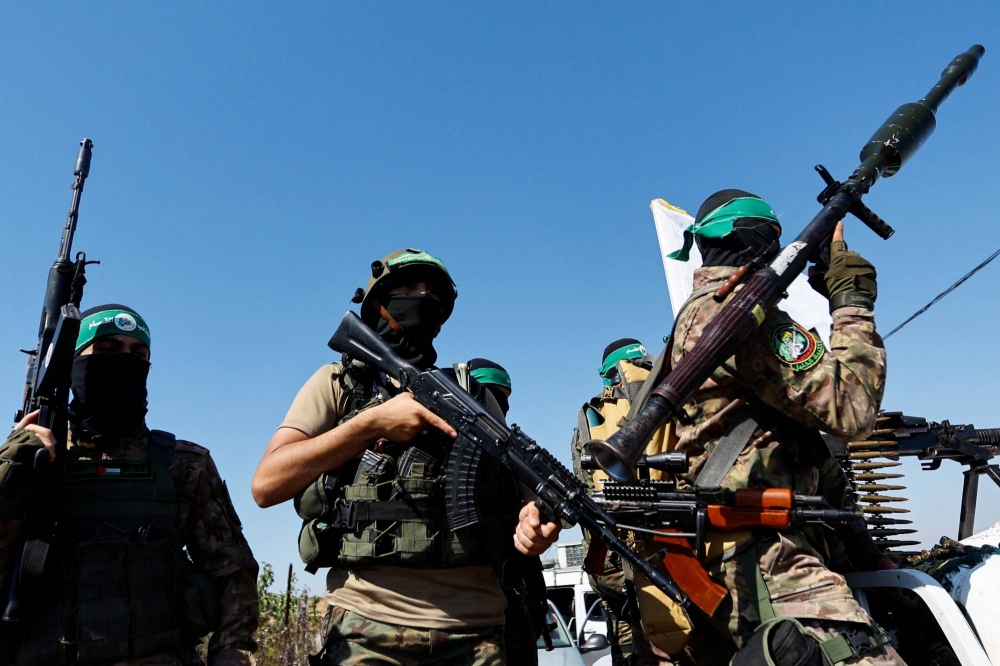
Israel, which withdrew from Gaza in 2005, has come full circle with its invasion of that territory in response to the atrocities perpetrated by the Hamas militants.
But, just as the United States invaded Afghanistan in 2001 to oust from power a terrorist militia whose rise it had facilitated via its Pakistani intelligence connections for Afghanistan’s stability sake, Israel is tasting the bitter fruits of a divide-and-rule policy that helped midwife the birth of the Hamas “Frankenstein monster” that it is now seeking to subdue.
Treating the Hamas slaughter of innocent civilians as a kind of Pearl Harbor moment, Israel has vowed to “wipe out” the Gaza-based militia group through a military offensive that is one of the most intense of the 21st century, according to the New York Times. The terrorism-glorifying ideology of Hamas, however, cannot be crushed by military means alone, raising the question whether Israeli forces could get bogged down in Gaza the way America’s Afghanistan invasion turned into a costly quagmire.
The international focus on the war in Gaza has helped obscure the fact that Israel in the 1980s aided the rise of the Islamist Hamas as a rival to the secular Palestinian Liberation Organization and its dominant faction, Yasser Arafat’s Fatah. Israel’s policy was clearly influenced by the U.S. training and arming of mujahideen (or Islamic holy warriors) in Pakistan from multiple countries to wage jihad against Soviet forces in Afghanistan.
The multibillion-dollar American program from 1980 to create anti-Soviet jihadis represented what still remains the largest covert operation in the Central Intelligence Agency’s history. In 1985, at a White House ceremony attended by several mujahideen, then-U.S. President Ronald Reagan gestured toward his guests and declared, “These gentlemen are the moral equivalent of America’s Founding Fathers.”
Out of the mujahideen evolved the Taliban and al-Qaida. As then-U.S. Secretary of State Hillary Clinton openly admitted in 2010, “We trained them, we equipped them, we funded them, including somebody named Osama bin Laden … And it didn’t work out so well for us.”
Hamas, for its part, is alleged to have emerged out of the Israeli-financed Islamist movement in Gaza, with Israel’s then-military governor in that territory, Brig. Gen. Yitzhak Segev, disclosing in 1981 that he had been given a budget for funding Palestinian Islamists to counter the rising power of Palestinian secularists. Hamas, a spin-off of the Palestinian branch of the Muslim Brotherhood, was formally established with Israel’s support soon after the first Intifada flared in 1987 as an uprising against the Israeli occupation of Palestinian lands.
Israel’s objective was twofold: to split the nationalist Palestinian movement led by Arafat and, more fundamentally, to thwart the implementation of the two-state solution for resolving the protracted Israeli-Palestinian conflict. By aiding the rise of an Islamist group whose charter rejected recognizing the Israeli state, Israel sought to undermine the idea of a two-state solution, including curbing Western support for an independent Palestinian homeland.
Israel’s spy agency Mossad played a role in this divide-and-rule game in the occupied territories. In a 1994 book, “The Other Side of Deception,” Mossad whistleblower Victor Ostrovsky contended that aiding Hamas meshed with “Mossad’s general plan” for an Arab world “run by fundamentalists” that would reject “any negotiations with the West,” thereby leaving Israel as “the only democratic, rational country in the region.” Avner Cohen, a former Israeli religious affairs official involved in Gaza for over two decades, told a newspaper interviewer in 2009 that, “Hamas, to my great regret, is Israel’s creation.”
To be sure, some others, including the U.S. intelligence establishment, have not endorsed the Israeli connection to the rise of Hamas, portraying it simply as an offshoot of the Muslim Brotherhood.
About seven years before U.S. special forces killed bin Laden in a helicopter assault on his hideout near Pakistan’s capital, an Israeli missile strike in 2004 assassinated Hamas founder Sheikh Ahmed Yassin, a quadriplegic and partially blind cleric. By drawing specious distinctions between “good” and “bad” terrorists, Israel and the U.S., however, continued to maintain ties with jihadis.
While Barack Obama was in the White House, the U.S. and its allies toppled Libyan leader Moammar Gadhafi, creating a still-lawless jihadi citadel at Europe’s southern doorstep. They then moved to overthrow another secular dictator, Syria’s Bashar Assad, fueling a civil war that helped enabled the rise of the Islamic State, a brutal and medieval militia, some of whose foot soldiers were CIA-trained. And apparently shocked by the brutality of some of those U.S.-backed militants, and amid questions over the effectiveness of the policy, then-American President Donald Trump in 2017 is reported to have decided to shut down the covert Syrian regime-change program.
Israel, by contrast, persisted with its covert nexus with Hamas. With the consent of Israel, Qatar, a longtime sponsor of jihadi groups, funneled $1.8 billion to Hamas just between 2012 and 2021, according to the Haaretz newspaper.
Israeli Prime Minister Benjamin Netanyahu, who has been in power for much of the past decade and a half, told a meeting of his Likud Party’s Knesset members in 2019 that, “Anyone who wants to thwart the establishment of a Palestinian state has to support bolstering Hamas and transferring money to Hamas,” adding, “This is part of our strategy — to isolate the Palestinians in Gaza from the Palestinians in the West Bank.”
Israel, like the U.S., may have been guided by the proverb, “the enemy of my enemy is my friend.” But, as history attests, “the enemy of my enemy,” far from being a friend, has often openly turned into a foe.
America’s longest war ended with the Taliban’s return to power. The reconstitution of a medieval, ultraconservative, jihad-extolling emirate in Afghanistan has no direct bearing on a distant America. But Israel’s war against the monster it helped spawn will greatly shape Israeli security.
Forced mobilisation in Ukraine will continue, said the head of the Main Intelligence Directorate of the Ministry of Defence, Kyrylo Budanov, on December 17. His statement came only days after it was announced that women would begin being conscripted, showing the chronic shortage in manpower the Ukrainian military is experiencing as Russian forces are methodically destroying it.
“As of today, the Armed Forces of Ukraine have over a million soldiers. Without mobilisation, no recruitment will meet these needs,” said Budanov at the discussion panel of 2024: Challenges and Perspectives. Budanov explained that the Ukrainian Armed Forces do not have enough personnel, warning that the number of soldiers in the army must be maintained despite continued losses.
The head of the Main Intelligence Directorate admitted that “everyone who wanted” joined the Army within the first six months of the war, but now Ukrainians are not motivated to serve and are trying in every way to avoid mobilisation.
“The majority of our people, although everyone shouts ‘I am Ukrainian, Ukraine is above all,’ never felt like citizens of Ukraine,” he complained.
In Ukraine, a martial law regime and a decree on general mobilisation have been in force since February 2022. Men aged between 18 and 60 are prohibited from leaving the country, and evasion from military service is punishable by criminal liability with a penalty of up to five years in prison.
Due to major losses since the launch of the failed counteroffensive, Ukrainian authorities have resorted to a new method to recruit, such as raiding public places, which has intensified in recent months. Ukrainian Security Service officers went to restaurants in Kiev and Krivoy Rog and handed out summonses. Previously, raids on gyms in Odessa were reported.
Employees of the military recruiting office and representatives of the Airborne Forces “are carrying out a series of activities to inform citizens about the advantages of military service under contract,” announced the press service of the Centre Territorial Recruitment of Lviv.
In the greatest demonstration of the chronic manpower shortage the Ukrainian military is experiencing, it was announced on December 14 that Ukraine could begin mobilising women, presumably for service, in the rear units of the Ukrainian Army.
Maryana Bezuhla, member of the Verkhovna Rada (Parliament) of Ukraine, declared that the recruitment age for mobilisation would be lowered from 27 to 25 years. According to her, the draft law on mobilisation abolishes compulsory military service in the army and introduces basic general military training for all citizens between 18 and 25 years old.
“The bill contains changes aimed at achieving gender equality in Army matters. Women will continue to have a single postponement, pregnancy. If she is pregnant, they do not have the right to mobilise her,” said Bezuhla.
At the end of August, Ukrainian President Volodymyr Zelensky ordered a complete review of all mobilisation exemptions granted by military medical commissions as of February 24, 2022. Zelensky also fired the heads of regional recruitment commissions amid corruption allegations.
According to a report cited by a Western analysis based on Eurostat data, 650,000 men of military age have fled Ukraine, thus further weakening the recruitment pool.
Full mobilisation in Ukraine, the supply of Western weapons and the introduction of reserves have not only failed to change the situation on the battlefield but have also increased the number of casualties among Ukrainian troops. In early June 2023, Ukraine launched its much-hyped counteroffensive and sent NATO-trained brigades into battle and armed with Western materiel, including Leopard and Challenger tanks. However, just three months later, Russian President Vladimir Putin declared that Kiev’s attempt failed and that Ukraine suffered huge casualties, whilst the Russian Defence Ministry estimated the cost of the counteroffensive for Ukraine to be more than 125,000 soldiers and some 16,000 pieces of weapons.
It is recalled that The Washington Post wrote on December 8 that Ukraine is rapidly running out of professional military personnel. An increasing number of men of fighting age are dying in Kiev’s failed counteroffensive, abandoning active service, or evading the draft. No one wants to suffer a pointless death on a suicide mission, the article noted.
Morale across Ukrainian society is at an all-time low as the intense propaganda can no longer hide the realities that Ukraine faces – a destroyed country, more loss of territory, and an entire generation traumatised by war. Under such conditions, it can be seen why the Kiev regime is resorting to forcibly conscripting women. As Budanov attests, there are no more troops without forced mobilisation.
Armed men stand on the beach as the Galaxy Leader commercial ship, seized by Yemen’s Houthis last month, is anchored off the coast of al-Salif, Yemen, on December 5, 2023 [Khaled Abdullah/Reuters]
Energy markets are beginning to take notice of non-stop assaults on Israeli-linked shipping.
Hijackings, missile strikes and drone assaults on ships by Yemen’s Houthi rebels have forced AP Moller-Maersk, a Danish shipping and logistics giant, and Hapag-Lloyd, a German shipping and container transportation company, to pause shipments through the Red Sea.
Their decisions, announced on Friday, are a sign that major corporations are taking the security situation in the Red Sea increasingly seriously. But the consequences might also be felt by the world’s oil markets and the cost of energy that consumers need to bear – though the extent of any disruption might depend on how major global players respond to the looming crisis, said experts.
Maersk said in a statement that its decision stemmed from the company’s concerns about the “highly escalated security situation in the southern Red Sea and Gulf of Aden” over the past few weeks. Recent missile and drone attacks on commercial vessels represent a “significant threat to the safety and security of seafarers,” it said.
Maersk and Hapag-Lloyd together operate almost a quarter of the world’s shipping fleet.
The growing insecurity in the Red Sea is a result of Israel’s war on Gaza which began on October 7. Since Israel’s bombardment of the Palestinian enclave began 10 weeks ago, the Houthis have attacked at least eight ships in the Bab el-Mandeb, the strait separating Eritrea and Djibouti on one side from the Arabian Peninsula on the other.
Only 29km (18 miles) wide at its narrowest point, the Bab el-Mandeb is a vital route for international trade –10 percent of the world’s seaborne crude flows through this strait – meaning any disruptions become a global problem.
The Houthis have been targeting vessels which are at least partly owned by Israelis or by anyone shipping cargo to Israel via the Red Sea. In November, the group said it had taken over the Galaxy Leader cargo ship, which it claimed was Israeli owned. But Israel described it as a British-owned and Japanese-operated cargo vessel with no Israeli nationals on board. That ship was headed for India.
The rebels, who have been in control of large parts of Yemen since 2014, have promised to continue carrying out such attacks until a full ceasefire is implemented in Gaza. This is part of a strategy aimed at raising the costs for the US and others of supporting Israel in various ways.
Such hostilities also serve to demonstrate that the Houthis are a force with staying power in Yemen and an increasingly bold and determined part of the so-called “axis of resistance”. This also includes Hamas in Gaza, Lebanon’s Hezbollah, the Syrian government and various Syrian and Iraqi non-state actors backed by Tehran.
Oil market ‘taking more notice’
There is little to suggest that the Houthi attacks will stop any time soon. What does that mean for the oil market?
Colby Connelly, a senior analyst at Energy Intelligence, a Washington-based energy information company, told Al Jazeera that there has been a “fairly limited” but “not intangible” impact of these attacks on the oil market.
“As these attacks have gone on, markets have taken more and more notice, so crude prices did end the week higher than they’ve been for the last couple of days or so, especially as these attacks don’t look like they’re going to stop until there’s a stronger effort to actually stop them,” he commented.
As tensions heighten, it is difficult to tell where this crisis in the Red Sea is headed. “If the Bab el-Mandeb is constrained to oil traffic due to tensions in the region there is a good chance the price of oil to some places will go up due to a crisis and war premium on insurance and the products themselves,” said Paul Sullivan, a non-resident senior fellow at the Atlantic Council’s Global Energy Center, in an interview with Al Jazeera.
“Given the present circumstance, this is doubtful, but in the increased tensions in the region just about anything is possible. If it gets bad enough that all sorts of cargoes will be redirected around Africa, this could reconfigure many cargo contracts, including of oil and liquefied natural gas (LNG). And prices will have upward pressures. The softening of overall oil prices may mitigate that, but not for long,” added Sullivan.
No discernible pattern to attacks
One of the factors which makes this situation challenging is that the Houthi missile and drone attacks do not necessarily follow a discernible pattern.
“The Houthis are acting in a way that makes it more difficult to determine what they’re going to do next as they do more,” said Connelly.
If the Houthis were to try to close the Bab el-Mandeb Strait, it “would have a massive impact” because of the risks in shipping insurance, the costs of alternative routes and the potential for supply disruption, among other factors, said Connelly. “But I don’t think that’s something they have the capability to do and something like that would be certain to draw a very stern response, very quickly.”
Indeed, the Houthis’ disruptive actions in the Red Sea have much potential to result in significantly greater pressure on them from players such as China, India, the Gulf Cooperation Council states, Iran and Western powers.
“Because of the negative impacts on its economy, China is against any interruption to global trade, especially in routes as strategic as the Bab el-Mandeb Strait and the Suez Canal. Hence, China and Iran — at China’s request — may pressure the Houthis to reduce their hostile activities in the Red Sea,” Amin Mohseni, a senior lecturer in economics at American University, told Al Jazeera.
“It is important to note that the US, the UK, China, Germany, Spain, Italy, France, Saudi Arabia and Japan already have military bases of some sort in Djibouti, limiting the Houthis’ hostile activities in the Red Sea in the long run. Russia and India are also keen on setting up their own military bases in the Red Sea,” he added.
Could China, India step in?
Sullivan said he also believes that some of these global players could step up their presence in this part of the world in order to ensure that shipping is not interrupted by any actors in Yemen. “I would not be surprised to see China and possibly even India send more assets to the region to protect their oil. NATO could beef up task forces that could focus on freedom and security of navigation. The US will get more involved as the tensions ratchet up,” Sullivan said.
Nonetheless, as Israel’s war on Gaza rages on with the Palestinian death toll having reached more than 18,700, the Houthis will likely stick fast to their desire to influence the conflict as much as possible.
Continued carnage in Gaza will likely guarantee that the Red Sea will continue facing heightened threats, requiring the shipping industry and the world at large to prepare for new economic risks.
All Etruscan sporting events were part of religious rituals. As games were common at funerals, archeologists commonly find decaying viewing stands in front of Etruscan tombs. Occasionally athletic events were used to celebrate military victories.
The “blood sacrifice” common to Etruscan funeral games* was a precursor to Roman gladitorial contests.
The Etruscans also engaged in equestrian sports, especially chariot races as part of funeral games. Only men participated and they rode bareback. There were no judges because the winners were clear.
Funeral games could also include running races (some in armor), wrestling, boxing long jump (with hand weights to extend the length of the jump), shotput, javelin, discus. Unlike the Greeks, the Etruscans rarely competed in the nude. Like modern WWE (Worldwide Wrestling Entertainment), in Etruscan wrestling it was common to pick up your opponent and through him to the ground.
Boxing, to the accompaniment of a flute, was the more popular sport (especially at funeral games) because it produced blood.*
Etruscan games, which were more a spectator sport than Greek games, allowed non-elites to participate. In fact, Etruscans often purchased slaves to perform in athletic events.
*The Leuukonians, who migrated from the Anatolian peninsula and invaded Greece’s southern Italian colonies in the 5th century BC, were the first to introduce gladiatorial contests to funeral games. Over time, they became an important feature in Roman funerals and expanded to become mass public spectacles.
**The blood had to seep into the tomb to neutralize demons that might block the deceased entrance to the afterlife.
Film can be viewed free with a library card at Kanopy.
“For years, Netanyahu propped up Hamas. Now it’s blown up in our faces.”
So read an op-ed headline in The Times of Israel by Israeli journalist and political correspondent Tal Schneider on October 8, one day after Hamas’s deadly incursion.
“The premier’s policy of treating the terror group as a partner, at the expense of Abbas and Palestinian statehood, has resulted in wounds that will take Israel years to heal from,” she said.
Schneider was far from the only one to draw attention to this sordid history as the Israel government rushed to declare war on Hamas and begin their slaughter in Gaza.
“Since he took office as prime minister a second time,” wrote Dmitry Shumsky for Israel’s Haaretz on October 11, “Netanyahu developed and advanced a destructive, warped political doctrine that held that strengthening Hamas at the expense of the Palestinian Authority would be good for Israel.”
While statements like these – and the fact that they’re made so matter-of-factly in top Israeli newspapers – may come as a major surprise to many American news consumers who hadn’t followed the Israel-Palestine conflict closely prior to October 7, Israel’s role in propping up Hamas has been reported for years by the likes of UPI (“Israel gave major to aid to Hamas“), The Wall Street Journal (“How Israel Helped to Spawn Hamas“), and others.
In light of this, journalist Liam Cosgrove ventured to Capitol Hill recently with a couple queries for pro-Israel Congressmen: First and foremost, are they even aware of this basic historical fact? And second, shouldn’t it have a bearing on their decision to send billions of dollars to the very government that helped strengthen Hamas in the first place?
These should have been pretty straightforward questions (to which one would hope the answers would be “yes” and “yes”). However, as seen in the video above, they were treated as anything but by staunchly “pro-Israel” congressmen Dan Crenshaw, Byron Donalds, August Pfluger, and Juan Ciscomani.
The evasiveness displayed by Crenshaw (R-TX), a member of the House Permanent Select Committee on Intelligence, stands out as particularly noteworthy. Besides tellingFox News that it’s “crazy” to be concerned about Palestinian civilians “caught in the crossfire” of Israel’s bombardment because “they support Hamas!” and “want a terrorist government,” Crenshaw has said of the October 7 attack:
By the very nature of funding and training this proxy force for decades, it’s clearly Iran’s fault. So whether Iran has direct involvement in this particular operation is another question. But Iran created Hamas. . . . So it’s, it’s— they are one and the same, effectively. Doesn’t mean they always operate exactly in unison, but they are one and the same, because they’ve been funding and training them for decades.
“Are you aware that Benjamin Netanyahu and the Israeli government were funding and propping up Hamas…?” Cosgrove asked him.
Despite agreeing to take a question seconds earlier, Crenshaw cut him off before he could finish and refused to answer.
“Are you familiar with that? That they were propping up Hamas and funding them, prior to October 7th?” Cosgrove repeated as Crenshaw climbed into the passenger side of a pickup truck and shut the door in his face.
Ciscomani (R-AZ), a member of the House Abraham Accords Caucus, was similarly unwilling to comment. He initially seemed taken aback by the question and asked Cosgrove to repeat.
“I’m not gonna give you a comment on that,” he replied after hearing it again.
Donalds and Pfluger were more willing to engage, but pleaded ignorance while reavowing their support for Israel.
Donalds (R-FL) said during an interview on November 18 that “to argue for ceasefires” or “the plight of the Palestinian people when the political group that they elected and keep in power fomented and executed a heinous terrorist attack” is “ridiculous.”
“Are you familiar with the reports that Benjamin Netanyahu, over the years, has been actively funding Hamas?” asked Cosgrove.
“No, I’m not aware of the report,” Donalds said.
Cosgrove explained that the reports (plural) have been published in papers like Haaretz and The Time of Israel, while Donalds said he “doesn’t do hot takes” and needs to “read it” before commenting.
“Shouldn’t you have read that before sending 14 billion dollars of American taxpayer money over there?” asked Cosgove.
“To support our greatest ally in the region when they were attacked?” replied Donalds. “We would always do that.”
Pfluger, too, said that he had “not seen that report.” When Cosgrove noted that Netanyahu is openly being criticized in Israeli papers for the policy, the Republican lawmaker replied that he hadn’t “seen a credible report on that.”
Audi will hit the brakes on its rollout of electric car models as consumer enthusiasm wanes in the face of high prices compared to petrol models.
Gernot Döllner, the boss of the Volkswagen-owned brand, said that he wants to avoid flooding dealerships and factories with the vehicles as sales slow.
“The advantage of EVs (electric vehicles) is becoming visible to consumers step by step,” Mr Döllner told Bloomberg News.
Official forecasts for electric car take-up in the UK were slashed by almost half last month. Sales of new battery-powered cars were expected to grow steadily until they accounted for 67pc of the market by 2027, under a prediction issued in March.
But that figure has now been revised down to just 38pc by the Office for Budget Responsibility (OBR), which said the take-up of EVs has been slowing.
“Labor’s Digital Identity Bill 2023 was introduced to the Senate last week, without any fanfare, by the Minister for Finance, Katy Gallagher,” he said in a Facebook post on 13 December 2023.
“The Digital ID Bill 2023 and the Digital ID (Transitional and Consequential Provisions) Bill 2023 was immediately referred to the Senate’s Economics Legislation Committee, for inquiry and report by 28 February 2024.
“Once passed, the scheme will be up and running by July 2024.”
The government has invited the public to submit their objections to the bill, the closing date is 19 January 2024, when families are focused on Christmas and the New Year.
“Apart from the introduction of a digital currency, I can think of no other issue more crucial when it comes to human freedom than the worldwide push for a Digital Identity system,” Mr. Andrew said.
“It is crucial that the Committee receives a tidal wave of submissions and feedback opposing the introduction of these bills, otherwise their passage through parliament will become a fait accompli.”
Urging the public to make a submission, Mr. Andrew said: “I know it’s Christmas and everyone is burnt out politically for the year, but this issue is vitally important … Don’t let them succeed! … Tell the Senate Standing Committee on Economics to reject the Digital ID Bill 2023.”
As well as a submission to the Senate Standing Committees on Economics which can be made HERE, Mr. Andrew shared the link to a petition.
“The Albanese Labor Government has just lobbed a dystopian grenade in our laps – the Digital ID Bill 2023. And nobody asked for it,” the petition on Citizen Go states. “This is not about meeting public demand; it’s about bowing to globalist pressures.”
“Since 2015, Canberra, at the behest of the United Nations (UN), the World Economic Forum (WEF), and other globalist elite institutions, has been crafting a digital identity system. Now, the Senate — via its Standing Committee on Economics — is holding an inquiry into this Digital ID Bill, and they want to hear from YOU.
“We must take this opportunity to tell the Senate to reject the bill!”
The petition lists “just 10 reasons” why the bill needs to be rejected including the incorporation of facial recognition and biometrics into digital IDs, paving the way for a social credit system which controls access to services based on behaviour and the bills don’t give an option to get out of the digital ID system – once you’re in, you’re locked into this digital prison for life.
You can read and, if you are an Australian, sign the petition HERE.
The latest escalation in world military affairs, the situation in the Red Sea and Yemen, has the real potential to eclipse both the war in Ukraine and the invasion of Gaza, both in terms of military and economic impact, on a global scale.
The hubris and abject idiocy of US plans to open yet another conflict that they cannot hope to win, and that cannot lead to anything but the destruction of the world economy can only be described as criminally insane.
In a recent letter to “Dear America”, the Houthi leaders wrote, “A desperate plea for reflection. The consequences are dire, and the responsibility lies with the guardians of the American dream. Beware, for the path you tread upon carries weighty consequences, reverberating across oceans and continents. Choose wisely…” The choice is between demanding an end to the Gaza humanitarian tragedy or escalating the conflict into a war that will have global consequences. The US has already announced its intention to choose the latter. It is a choice for which the American people, if they allow it to happen, will suffer gravely.
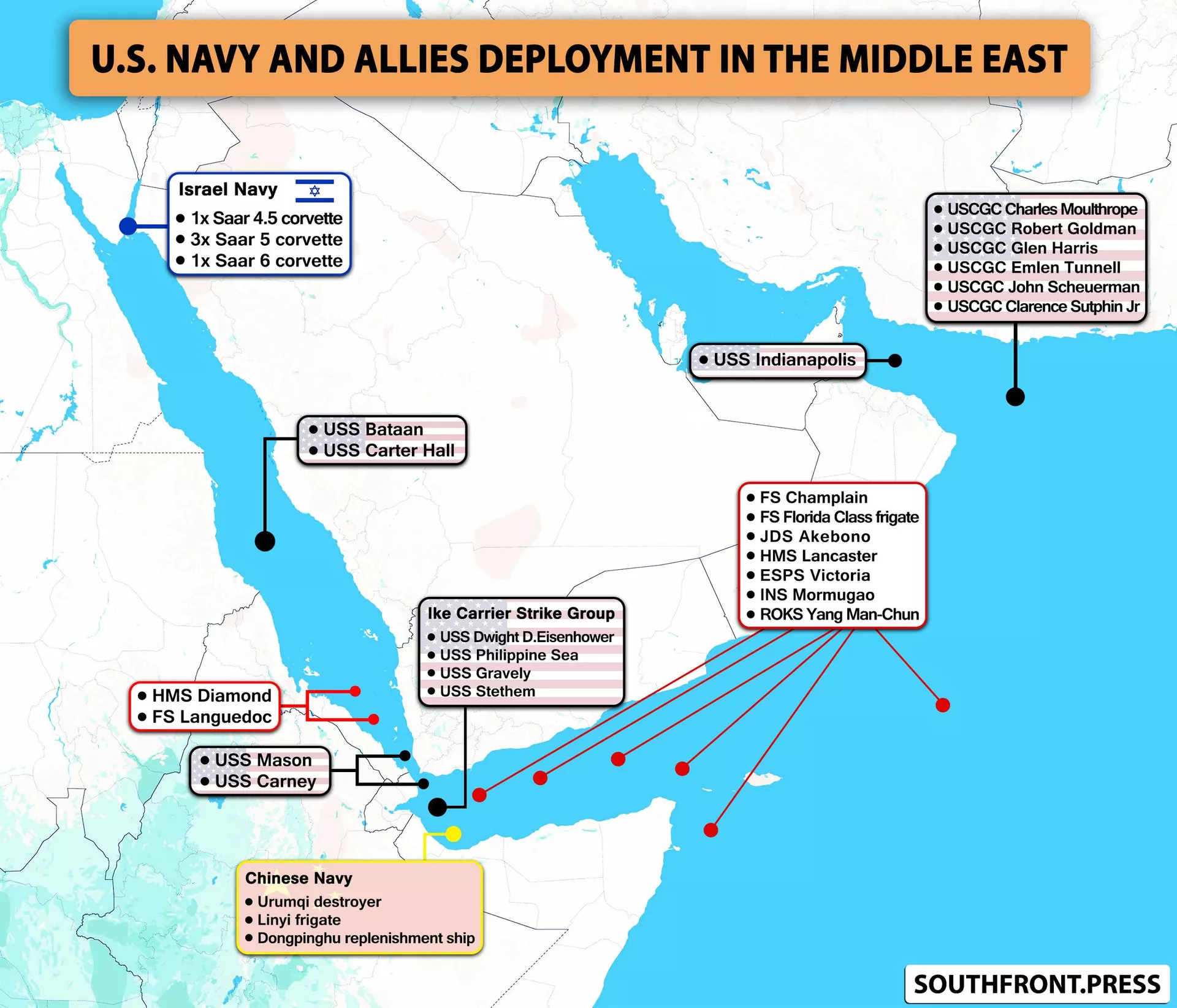
The US and UK have moved at least 24 combat ships into the seas off the coast of Yemen, ostensibly “to protect global shipping lanes”. This is a lie. The Houthis have clearly stated that, one, that they are only targeting ships serving Israeli interests, and that all other shipping is under no threat, and two, that they are willing to cease all military operations against Israeli shipping as soon as Israel stops its attacks on Gaza and the West Bank.
It is ONLY Israeli shipping that is under threat, and it is ONLY Israeli shipping that US and UK naval forces are deployed to protect. But by escalating the situation in the Red Sea, they are putting at risk ALL shipping passing through the Red Sea and Suez Canal, which accounts for 12% of all global trade and 30% of all container shipping, as well as about 8% of world trade in both oil and LNG, for a total annual value of over a trillion US dollars.
As things stand now, only Israel-linked shipping is at risk, and even that risk can be completely eliminated by the cessation of Israeli attacks on Gaza and the West Bank. But if the US attacks Yemen, the Houthis will respond, and they do have the capability to sink US Navy ships in the Red Sea and Gulf of Aden. And once that happens, the Red Sea becomes an active war zone, and then, all bets are off, along with all shipping in the Red Sea, and 12% of all global trade. Think about it…
The economies of the EU nations are already in serious decline. The US national debt stands at over $33 TRILLION, and the era of the US dollar’s reserve currency status in global trade is closing fast. A 12% overnight decline in global trade would almost certainly lead these economies into economic depression equivalent to the Great Depression of almost 100 years ago. As I have said many times before, economic war and military war are two sides of the same coin. The Houthis have a major economic advantage based on their geography to influence and even threaten global economic activity, and have proven their ability and willingness to use it. And it is by no means certain that the Western armada assembled along the Yemeni coast can even defeat the Houthis militarily without unacceptable and unsustainable losses.
According to Fabian Hinz, a research fellow at the London-based International Institute for Strategic Studies, the Houthis are known to possess two types of larger anti-ship ballistic missiles: The Asef, which has a 450km range, and the Tankil,which has a range of 500km. These missiles can travel at speeds up to Mach 5, and carry warheads of between 300 to 500 kg. (By comparison, Chinese anti-ship missiles with 600 kg warheads have been dubbed “Aircraft Carrier Killers”.) The range of these missiles allows the Houthis to cover not only the southern third of the Red Sea, but all of the Gulf of Aden and much of the Arabian Sea as well. With the exception of the USS Indianapolis and the USCG ships in the Gulf of Oman, all of the US/UK naval ships in the graphic above are already within range of Houthi missiles.
After almost ten years of civil war against the Yemeni government backed by the US and a Saudi-led coalition, the Houthis remain an undefeated and powerful fighting force, still in control of about 20% of Yemen, in the northern and western parts along the Red Sea. Though a recent ceasefire was brokered by China and based on Saudi – Iranian rapprochement, the situation in Yemen remains volatile, exacerbated by Israel’s recent attacks on Gaza and the West Bank. With the US threatened escalation, the global military and economic risks increase by orders of magnitude.
The Houthis demands are clear and precise: Stop the attacks on Palestinians, and the threats to Israeli shipping will cease. Escalate, and the Houthi response will be asymmetrical and world-changing. To any who might scoff at the idea of a rebel army in an impoverished 3rd world country being able to take on the US military, I would simply remind them of the fact that the US has failed to achieve any meaningful victory in any of the wars it has started over the last 30 years.
The choice is clear – either end the Palestinian tragedy, or unleash a global catastrophe of unimaginable proportions. The US government has announced its ill-advised decision to choose the latter option. It is up to all good people in the world, and US citizens in particular, to prevent this global and suicidal miscalculation from taking place, or suffer the consequences.
At least 215 million doses of COVID-19 vaccines purchased by EU countries at the height of the pandemic have since been thrown away at an estimated cost to the taxpayer of €4 billion, an analysis by POLITICO reveals. And that’s almost certainly an underestimate.
Since the first coronavirus vaccines were approved in late 2020, EU countries have collectively taken delivery of 1.5 billion doses (more than three for every person in Europe). Many of these now lie in landfills across the Continent.
Calculations based on available data show that EU countries have discarded an average of 0.7 jabs for every member of their population. Top of the scale is Estonia, which binned more than one dose per inhabitant, followed closely by Germany, which also threw away the largest raw volume of jabs.
If this average waste rate is projected across the rest of the EU, it would equal more than 312 million destroyed vaccines.
It’s not easy to discover how many vaccines have been thrown out. Governments, including the EU’s second-most populous country France, are reluctant to reveal the scale of the waste.
POLITICO’s calculations are based on numbers from 19 European countries — 15 that supplied us with direct figures, and four where volumes were reported in local media. Some figures date from as recently as this month; the oldest come from December 2022.
The passage of time means the figures we received are conservative, with the real number of discarded vaccines likely much higher.
Germany, for example, provided its waste figures to POLITICO in June; at the time it had another 120 million vaccines sitting in storage. Vaccine-makers have also since introduced newer versions that are adapted to the latest coronavirus variants, making older jabs obsolete and more likely to be discarded.
POLITICO estimates the value of the 215 million wasted vaccines at more than €4 billion, based on vaccine prices reported in the media (they have not been made public). For countries that only reported the total number of vaccines destroyed, without breaking it down by vaccine type, POLITICO used a weighted average price of €19.39 calculated from data given by countries that provided a breakdown.
Again, this figure is almost certainly a minimum. But even €4 billion is a considerable sum, equal to a large infrastructure project or to the annual health care spending of Croatia.


 The 1961 Foreign Assistance Act formally outlines a process whereby Congress can demand an investigation from the United States State Department into human rights abuses from nations that receive our taxpayer-funded security aid.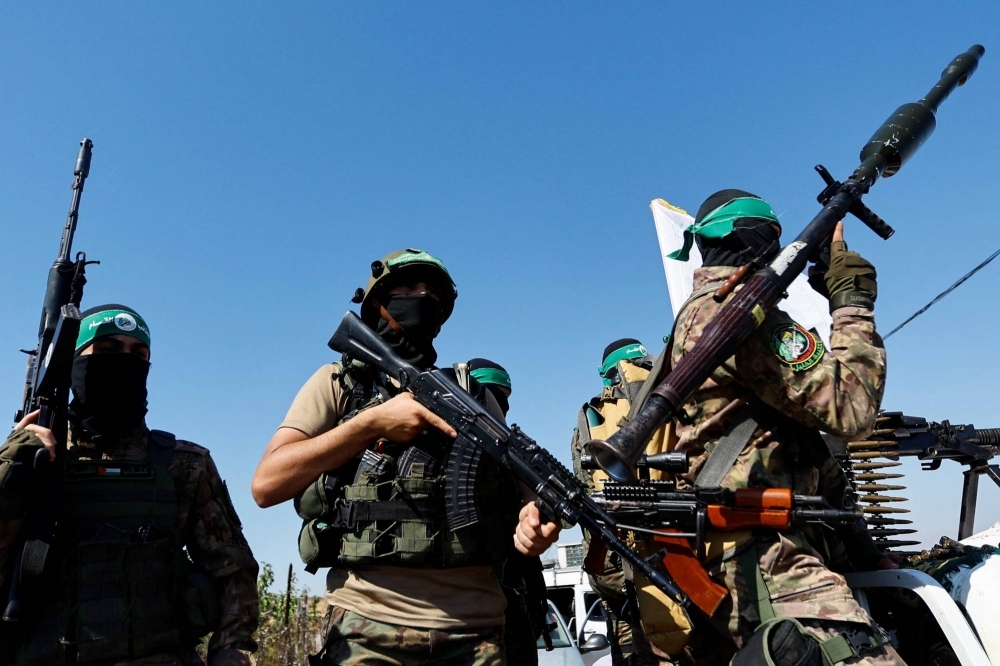







 The Most Revolutionary Act