The Most Revolutionary Act

Uncensored updates on world events, economics, the environment and medicine

The Most Revolutionary Act
Unknown's avatar

About stuartbramhall

Retired child and adolescent psychiatrist and American expatriate in New Zealand. In 2002, I made the difficult decision to close my 25-year Seattle practice after 15 years of covert FBI harassment. I describe the unrelenting phone harassment, illegal break-ins and six attempts on my life in my 2010 book The Most Revolutionary Act: Memoir of an American Refugee.

More hard evidence wind turbine industry harming whales

By

The Expose


The push by the US government, the wind industry and the news media to build industrial wind projects proven to kill whales is the biggest environmental scandal in the world, says Michael Shellenberger.

Last year, Public released its documentary ‘Thrown to the Wind’ which exposed the price the world is actually paying for the industrialisation of our oceans by offshore wind corporations: the killing of whales and the potential extinction of an entire cetacean species.

Yesterday, Public released a follow-up documentary, ‘Thrown to the Wind, Part 2’, which provides more hard evidence that the wind industry is harming whales.

“We won a big victory last year, in helping to halt a wind project off the coast of New Jersey,” Shellenberger says.  Unfortunately, plans are moving forward on the wind projects along the rest of the East Coast.  “If they go forward, they will make the North Atlantic right whale extinct.”

The wind industry is not killing endangered whales off the East Coast, say government agencies and the news media.

But it is. Before 2016, when the wind industry’s increased boat traffic, sonar mapping, and construction began, eight humpback whales were found dead per year between Virginia and Maine. Since 2016, an average of 25 humpbacks were found dead annually. And last year, there were a record 83 whales found dead.

And yet the Associated Press insisted last month that “there’s no evidence that limited wind farm construction on the Atlantic Coast has directly resulted in any whale deaths.” [Emphasis added.]

That’s true. But there’s also no evidence that smoking directly causes cancer. Nor is there evidence that more carbon dioxide directly warms the planet. AP is playing the exact same, deliberately misleading, game that it accuses the tobacco and fossil fuels industries of playing.

This is disturbing because the US government and media are blaming the spike in whale deaths on climate change, which is far less direct than the wind industry’s huge increase in boat traffic in previously untrafficked sea lanes, its high-decibel sonar, and its high-decibel pile driving.

Last year, the most thorough investigation to date of whale deaths found a strong correlation with wind industry activity. Lisa Linowes of Save the Right Whales Coalition did the study.

Linowes tracked whale deaths within the same timeframe and location as offshore wind sonar surveys. “As the amount of offshore wind activity increased within an area,” she notes, “so did whale deaths.”

In last year’s “Thrown to the Wind” documentary, Rand documented illegally high levels of whale-harming sonar noise by the wind industry.

And now, in a sequel, “Thrown to the Wind, Part 2,” filmmaker Jonah Markowitz documents Rand measuring illegal levels of noise from pile-driving by the wind industry off of Martha’s Vineyard.

The boat crew can hear the noise through the air. “That’s loud to hear from here,” says one of the men. “And I got my ear muffs on and everything.”

It’s so loud that Rand has to adjust his equipment. “I am overloading,” he says. “I need to change my gain.”

Says one sailor, “Sounds like a noise from a horror movie.”

“Sounds like thunder coming in,” says another. “It’s insane.”

The sound is equivalent to the blast from a 155-millimeter Howitzer.

The environmental groups and Democratic governors championing the illegal pile-driving off the East Coast are the same groups that fought oil drilling there just a few years ago, claiming it would be too noisy.

It is illegal to harm or kill endangered species. The North Atlantic right whale is critically endangered, with fewer than 400 individuals in the species left.

The push by the US government, the wind industry, and the news media to build industrial wind projects proven to kill whales is the biggest environmental scandal in the world.

A handful of honest conservationists are fighting billions in wind industry/taxpayer money. That money has financially corrupted the politicians, the regulatory agencies, and the news media through political donations and advertisements.

The money has even corrupted the people who do the autopsies of the whales.

We won a big victory last year, in helping to halt a wind project off the coast of New Jersey.

Unfortunately, the US government and wind industry are moving forward with plans to build wind projects along the rest of the East Coast. If they go forward, they will make the North Atlantic right whale extinct.

[…]

Via https://expose-news.com/2024/01/09/more-evidence-that-wind-industry-is-harming-whales/

How French Support for the US War of Independence Helped Trigger the French Revolution

Ambassador Benjamin Franklin

Episode 5: American Revolution and the Economic Crisis

Living the French Revolution and Age of Napoleon

Dr Suzanne M Desan

Film Review

Desan begins this lecture by highlighting Benjamin Franklin’s role in winning over French public opinion for the military support Louis XVI provided the colonies in US War of Independence. Franklin, who was 70, already had a strong reputation as an enlightenment philosopher and scientist. During his stay in France, he was invited to speak in salons, academies and masonic lodges. As he refused to wear a powdered wig or silken clothes like European intellectuals, his rough coonskin cap and farmer’s coat were emblematic of the system of natural law French Enlightenment philosophers were promoting. Franklin was so popular, enterprising merchants used his face to decorate dishes, snuff boxes, clothes, handkerchiefs.

Ben Franklin snuff box

Deeply in debt from the Seven Years War, Louis XVI was reluctant to send military aid until the Americans proved their military prowess by defeating the British at Saratoga. Although he committed no troops, the French king provided naval support (the American navy was extremely limited) as well as 90% of the colonists’ gunpowder. The total cost of this support was 1-1.3 billion livres (roughly 2 billion euros in modern currency).

The king had to borrow this money and owing to his government’s mounting debt, had to pay his bankers twice as much interest (roughly 6%) as other countries. By 1787, an economic downturn meant that half of all tax revenue went to pay this interest. Hoping to make borrowing easier, his finance minister encouraged conspicuous consumption by the royal family, as well as increased (deficit) spending on public infrastructure.

France’s declining economy related in part to poor harvests and in part to the devastation their textile industry experienced after the king signed a free trade agreement with Britain. Following the 1775 publication of Adam Smith’s Wealth of Nations, both countries felt pressures to repeal their protective tariffs (Smith excessive government regulation as “mercantilism”). Britain, whose textile industry was more industrialized, flooded the French market with cheap cloth – leading to the layoff of more than 50% of the textile workers in northern France.

In 1787 finance minister Charles-Alexandre de Calonne called an assembly of nobles to discuss implementation of a single land tax on all property owners (including nobles and clergy) and a stamp tax on all commerce. After Marie Antoinette and other family members vetoed this proposal, Calonne was fired and hounded out of France. Instead the assembly of nobles recommended that the king call an Estates General (the French kings had stopped calling them at the beginning of the 17th century.


*The Estates-General, created in 1302, was an advisory body that met only occasionally. A meeting of elected representatives of the three estates (clergy, nobility, commoners), it met when summoned by the king, who called it only when he needed extraordinary income or special support (most recently in 1484, 1560, 1576, and 1588; the last three because of the Wars of Religion). Governments were reluctant to convoke an Estates-General because of the fear that it might become a regularly meeting body with well-defined powers. Prior to 1789, it had last met in 1614.

Film can be viewed free with a library card on Kanopy.

https://www.kanopy.com/en/pukeariki/watch/video/149323/149333

Dr. Mary Kelly Sutton Loses Medical License in New York for Writing Eight Vaccine Exemptions in California


Dr. Mary Kelly Sutton (who goes by “Kelly”) on Oct. 30 lost her license to practice medicine in New York for writing eight vaccine exemptions in California between 2016 and 2018. New York was the third state to enforce this penalty, after Massachusetts and California. Sutton is now no longer able to practice medicine anywhere in the U.S.

Both the New York and Massachusetts medical boards adjudicated Sutton’s case on the basis of “reciprocal discipline,” rubber-stamping the Medical Board of California’s 2021 decision without allowing her to challenge the validity of the original findings.

Reciprocal discipline avoids the time and costs of relitigating. Therefore, like the Massachusetts Board of Medicine hearing last July, the October hearing in New York was just theater and the board never intended to allow Sutton to defend herself.

Instead, the New York board maintained that the purpose of the hearing was limited to determining what penalty should apply to Sutton’s state license in light of the findings already established in California.

Medical Board of California misinterpreted the law

Sutton, an integrative medicine physician practicing since the early 1970s, told The Defender that the Medical Board of California misinterpreted the law when it determined she violated “standards of care” when writing the vaccine exemptions.

Those exemption-specific standards — which came into effect in 2016 via Senate Bill (SB) 277, a California bill that stripped parents of the personal belief exemption for rejecting vaccines for their children — only stated it was up to the physician to decide on a medical exemption based on the needs of the child.

However, in 2019, California passed two more bills — SB 276 and SB 714 — designed to make vaccine exemptions even more difficult to acquire.

Specifically, when a doctor writes more than five medical exemptions per year (as of Jan. 1, 2020) or a school’s immunization rate falls below 95%, the California Department of Public Health (CPDH) has the right to review the medical exemptions.

Physicians since January 2021 are also required to use a standardized electronic exemption form submitted to a statewide database, and CPDH may revoke exemptions that do not conform to vaccination guidelines established by the Centers for Disease Control and Prevention (CDC) and its Advisory Committee on Immunization Practices (ACIP) and by the American Academy of Pediatrics.

Sutton claimed the Medical Board of California applied its own definition of “standards of care,” in direct contravention to the standard established by SB 277.

“In California, any time a standard of care is written into statutory law, it is more preeminent than a community standard of care that is just held among the general opinion of doctors in practice,” she said.

Sutton believes the Medical Board of California was also applying laws derived from SB 276 and SB 714 that went into effect well after the date she wrote the exemptions.

The CDC’s and ACIP’s vaccine recommendations do not constitute mandates or requirements. According to Sutton, during the lobbying phase of SB 277, a doctor called ACIP and asked whether its recommendations should be considered mandates, and was told that they were only guidelines.

The ACIP guidelines do not mention the word “exemption,” according to Sutton, nor were the guidelines mentioned in SB 277.

Dissecting the California case

The California board revoked Sutton’s license for “gross negligence” and “repeated negligent acts” in issuing permanent vaccine exemptions for eight pediatric patients, saying the exemptions did not comply with standards of care and vaccine guidelines at the time.

The board’s sole expert witness, Dr. Deborah Lehman, infectious disease physician at the University of California, Los Angeles, dismissed Sutton’s claim that SB 277 clearly articulated standards of care regarding exemptions, saying those were not the “community standard of care,” Sutton recounted.

Sutton explained:

“SB 277 was brief and direct to the point. It said that if a child who is required to have vaccines receives a note from a physician stating that it is in the child’s best interests to not be vaccinated, then that suffices to fulfill the requirement and the child can go to school without having the required vaccines. The deciding factor is the physician’s discretion.”

The relevant clause from the bill states:

“If the parent or guardian files with the governing authority a written statement by a licensed physician to the effect that the physical condition of the child is such, or medical circumstances relating to the child are such, that immunization is not considered safe, indicating the specific nature and probable duration of the medical condition or circumstances, including, but not limited to, family medical history, for which the physician does not recommend immunization, that child shall be exempt from the requirements.”

Lehman said doctors must only grant an exemption when there is a contraindication to a vaccine and at no other time.

Lehman claimed the standard of care was determined by whether another physician would treat the medical issue the same or similarly. However, according to Sutton, she omitted the all-important phrase “in the same community.”

In the integrative medicine community in which Sutton practices, it is common for patients to receive more individualized treatments rather than one-size-fits-all approaches.

“It was kind of a force-of-personality situation that was successful in the setting of the courtroom hearing at the administrative level,” Sutton said. “And the board witness prevailed upon the judge to believe that the law had no meaning and that community opinion was higher.”

The California board also questioned Sutton’s decision not to request patients’ medical files or perform physicals in the cases for which she wrote exemptions.

“If I required a physical exam for every vaccine exemption, I could be accused of ‘padding the bill’ because the physical exam contributes nothing to the decision about the risk for a vaccine injury,” Sutton said.

Instead, Sutton’s process was primarily to review patient histories to understand if the child or a family member had suffered a negative reaction to vaccines.

She said:

“From my understanding and from the group of physicians that I worked with at the time — Physicians for Informed Consent — the risk factors for vaccine injury lie completely in the story of what’s happened to the child when they have had vaccines and what has happened to their blood relatives when those people had vaccines.”

After the passage of SB 277, Sutton said there was “a great deal of conversation” among doctors about how the law could be read and interpreted and how exemptions could be constructed rationally based on the scientific literature.

That literature showed several different areas of concern around vaccinations, including “The aluminum contained in vaccines can trigger neurologic issues and autoimmune disease,” Sutton said, adding, “There is the question of regression after vaccines and neurodevelopmental delays such as autism.”

“There’s also a higher risk of allergies, and then there’s the immediate reactions where a person collapses or has a seizure after a vaccine,” she said.

“A doctor has to make an extra effort in order to understand the historical pattern of vaccine reactions that would indicate risk of vaccine injury, or how to diagnose mitochondrial dysfunction,” Sutton said.

During the California hearing, Sutton shared extensive scientific citations supporting her medical decision-making, including research by Dr. Chris Exley on the dangers of aluminum in vaccines.

She told the board that it was neither intelligent nor humane to force a family to continue to vaccinate after one of their children had already died or been injured by a vaccine, and shared her clinical observation that unvaccinated patients are healthier than those who are vaccinated.

The California board also claimed Sutton neglected to provide informed consent to her patients requesting vaccine exemptions.

Sutton was uncertain exactly what the board meant here but surmised it was saying she did not adequately highlight the diseases that could develop if the parents failed to vaccinate their children.

Deeming the real issue with informed consent to be advising patients about the potential harms of vaccination, Sutton said, “I don’t think I repeated the CDC bylines.” Instead, she believed the parents who came to her for exemptions were already “more than aware” of the risks of childhood diseases.

From her point of view, there was already enough vaccine promotion happening with mainstream media and schools “echoing over and over” how “vastly dangerous chickenpox” and the other childhood diseases were.

The California board’s concern about Sutton not requesting previous medical records is based on the notion of “Don’t trust a single word the patient says,” Sutton said, an attitude that necessitates getting “every documentation” about adverse vaccine reactions before making a decision.

“That’s not the way medicine works,” Sutton said. “But that’s what was expected in terms of a medical exemption interview. It’s like building a legal case instead of a medical case.”

Further wrongdoing was implied by the California board in pointing out that a number of the exemptions Sutton wrote were for patients for whom she was not the primary care provider.

“That is implying that the primary care doctor knows the patient best,” Sutton said. “And that is good in a lot of ways, but it can be a problem for the patient if it’s a large practice that has been forbidden to give vaccine exemptions.”

Sutton said that if a patient’s need cannot be addressed by that group, even if it’s their primary care group, then it is akin to patient abandonment.

SB 277, the law in effect during the period Sutton wrote the exemptions, never had a requirement that exemptions be written by the primary care physician, or even by a pediatrician or pediatric infectious disease expert, according to Sutton.

“So their [Medical Board of California’s] statements were beyond the law and that’s what they were enforcing against doctors,” she said.

Although the board improperly focused on laws that went into effect in 2019 and later, Sutton said, “That very argument could not be persuasively made by the attorneys at the time.”

Board expert: ‘Science has been decided’ on vaccine risks

The Medical Board of California conducted a three-day “trial” for Sutton in June 2021 in an administrative court with a single judge and no right to a jury.

Three experts spoke on behalf of Sutton, while Lehman, the board’s single expert, testified against her.

Lehman lacked basic knowledge of vaccine risks and stated that all doctors should follow the CDC’s vaccine schedule.

When asked to quantify the risk of vaccine injuries, Lehman said, “I don’t need to cite articles in my report, because the science has been decided … If you want answers to these questions, I would refer you to the CDC.”

After denying any knowledge of Dr. Peter Aaby’s more than 400 articles on PubMed analyzing vaccine dangers, Lehman characterized the journal as “low impact” and Aaby as “anti-vax.”

Sutton’s witnesses were Dr. Andrew Zimmerman, pediatric neurologist, Dr. James Neuenschwander, family physician with vaccine expertise and Dr. LeTrinh Hoang, integrative medicine pediatrician.

They skillfully articulated the heterodox perspectives on vaccine dangers and referenced a number of recent studies on vaccine adverse effects, while noting the lack of data on vaccine safety or government studies comparing health outcomes for vaccinated versus unvaccinated individuals.

“And on this very little evidence, people like the board expert are proclaiming to the high heavens these are safe and effective,” Sutton said. “All of these other concerns are irrelevant.

[…]

“So the board expert could say there’s no evidence that an adverse event is related to vaccines, which is not accurate because the evidence is there — but it’s not in the evidence that the CDC accepts,” Sutton said.

[…]

‘The whole storm is not finished’

Sutton has exhausted or curtailed her administrative appeals with the states that have removed her license to practice medicine.

However, she and several doctors are planning to file a collective action in federal court in the spring. They are being supported by the nonprofit Physicians & Patients Reclaiming Medicine, where Sutton’s story is currently featured.

[…[

Via https://childrenshealthdefense.org/defender/mary-kelly-sutton-medical-license-new-york-vaccine-exemptions-california/

Obama’s Weird New Movie and America’s Extreme Vulnerability to Cyber Attack

This article was written by Brandon Smith and originally published at Birch Gold Group

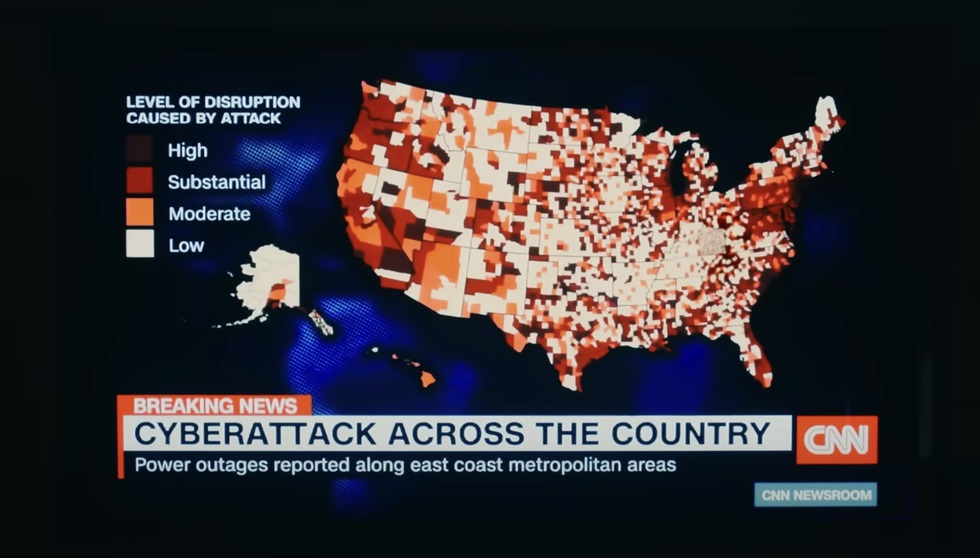
There has been a lot of buzz lately about a recently released film by Netflix titled ‘Leave The World Behind’ based on a novel by the same name.  The plot revolves around a catastrophic collapse in the US triggered by a cyber attack (and mass drone attack) that shuts down the internet and disrupts the global economy, leading to questions of who might have been behind the sabotage?

The most interesting aspect of the film is not so much the story (which is lackluster at best), but the fact that Barack Obama was so deeply involved in the making of the film as executive producer and as adviser on the script. This has led many people to suggest the movie is actually predictive programming – Propaganda designed to acclimate the masses to the idea of an event that is planned to happen in the near future.

Similar concerns were raised back in 2021 when the World Economic Forum oversaw a “war game” called Cyberpolygon, an event meant to simulate a massive cyber attack on the vulnerable functions of the world-wide web. The reason Cyberpolygon raised so many eyebrows was perfectly understandable; the WEF had also hosted another simulation at the end of 2019 called Event 201. The game, which included the CEOs of some of the most powerful health and media corporations in the world along with numerous government officials, “coincidentally” focused on the outbreak of a global coronavirus pandemic, and it was held only a couple of months before the real thing happened.

In other words, it was as if the globalists at the WEF knew that covid was about to strike.

While Hollywood interpretations of cyber attacks are usually exaggerated in terms of the true effects, there is a very real and considerable threat associated with such a disaster. So-called “experts” in the tech field often dismiss the wider dangers to the internet itself because they have been indoctrinated into believing that the design of the web has too many redundancies. In other words, they act as if it is invincible.

This is not really the case. Though data loss can be prevented through cloud storage, the internet as a mechanism can still be shut down or taken down deliberately for long periods of time.

In the past I have written about a very interesting event that was barely covered by the corporate media called the “Fastly Outage.”  In June of 2021 there was an internet outage that led to large swaths of the web going completely dark, including a number of mainstream news sites, Amazon, eBay, Twitch, Reddit. A host of government websites also went down. All this happened when content delivery network (CDN) company Fastly experienced a “bug.” Although Amazon had its website back online within 20 minutes, the brief outage cost the company over $5.5 million in sales.

A content delivery network is a geographically distributed network of proxy servers and their data centers. They make up the what is known as the “backbone” of the internet.

Fastly identified and fixed the problem within two hours and continues to claim the outage had nothing to do with a cyber attack. However, a huge vulnerability for the internet (a center of structural support Carl von Clausewitz would’ve called a “schwerpunkt”) was revealed to the public. A sizable portion of the web is dependent on only a handful of CDN companies, including Fastly.

It is also through collusion with these companies that governments are able to implement an “internet kill switch” in the face of possible civil unrest. A cyber attack would simply remove the government as the arbiter (or act as a false flag scapegoat so the government can avoid blame).  But what would really happen if we lost the internet for a week, or a month or a year? In the US the result would be calamity because our economy has become far too dependent on digitization.

Around 10% of US GDP is directly tied to online commerce. This doesn’t seem like much, but a loss of that GDP would send the US into immediate and steep recession. Around 17 million jobs in the US are generated by commercial internet enterprises, and around 38% of these workers are employed by small businesses. According to surveys 70% of American workers say they cannot do their jobs effectively without internet access.

Keep in mind, if the trend of “work from home” during the covid lockdowns had stuck, an even bigger piece of the economy would be dependent on the health of the web.

The five industries considered most vulnerable to cyber attack are public administration, healthcare and pharmaceuticals, finance and insurance, education and retail. That is to say, these are the industries that are attacked most often. Attacks on vital utilities are usually the favorite set pieces for disasters portrayed in fiction and film, but these are actually far less worrisome. The real danger is the potential for an attack on the internet as a system. All it would take is for a couple CDNs or more to be hit simultaneously to cause vast online blackouts.

Most important of all are the ways in which international banking and finance utilize online networks to maintain the flow money. Without the web, trade velocity dies immediately and building it back from implosion could take years.

But who would benefit from such an attack? Certainly, foreign powers might see the crippling of America’s digital infrastructure as a way to severely damage the country without having to fight directly and militarily. However, there are also a number of benefits to the globalists.

For example, one of the biggest obstacles for the elites during their attempt to institute medical tyranny and the ‘Great Reset’ during covid was the proliferation of factual data that debunked the pandemic narrative. American conservatives represented a serious barrier to their success with tens of millions of gun owning patriots refusing to comply. The harder they pushed, the greater the chance of an armed insurgency.

Even though the establishment had every single Big Tech conglomerate on their side when it came to mass censorship of contrary information, they still failed to stop the spread of the truth – Covid was nowhere near the threat they hyped it up to be and the public was quickly made aware of this by the alternative media. The elites did not have as much control over the web as they thought they did.

In the event of a large scale cyberattack, the internet could be shut down completely, leaving only corporate media sources to filter information and control the narrative. The alternative media would be silenced and the public would be left in confusion, desperately searching for answers. Interestingly, this is a core theme of Obama’s ‘Leave The World Behind’ – The idea of a population utterly cut off from reliable information and scrambling to figure out who is attacking them.

The internet has become an integral pillar of western economies to the point that a majority of people would not know how to live without it should it disappear. This is the disturbing reality we face in the midst of a growing series of geopolitical conflicts and more oppressive governments. It would seem it’s only a matter of time before there’s a major disruption.

The solution is pretty straightforward – Localization of trade and production is the way to prevent full spectrum collapse, and alternative communication networks such as ham radio networks can prevent information silence. There is no reason why Americans should have to become subservient to the whims of globalism, the interdependent supply chain or digitization; they can and should create their own backup plan. Getting people to realize this and implement basic local measures is where we run into difficulties. Sadly, a lot of first-world citizens assume that the system will always be there for them when they need it, and they don’t actively seek out solutions until disaster is at their doorstep.

[…]

Via https://alt-market.us/obamas-weird-new-movie-and-americas-extreme-vulnerability-to-cyber-attack/

Bill Introduced in House Calls for US to Drop Charges Against Julian Assange

Peace Day Rally Truth Not War – Free Julian Assange via Wikimedia Commons

By Dave DeCamp / Antiwar.com

Scheer Post
A resolution introduced in the House last month calls for the US to drop the charges against WikiLeaks founder Julian Assange, who faces up to 175 years in prison if extradited to the US and convicted for journalism that exposed US war crimes.

The bill, introduced by Rep. Paul Gosar (R-AZ), expresses “the sense of the House of Representatives that regular journalistic activities, including the obtainment and publication of information, are protected under the First Amendment and that the federal government should drop all charges against and attempts to extradite Julian Assange.”

Assange, who’s been held in London’s Belmarsh Prison since 2019, has a hearing scheduled at the UK High Court on February 20 and 21 to appeal his extradition to the US, which is likely his final chance. Ahead of the hearing, WikiLeaks and Assange’s supporters are asking Americans to contact their House representatives and urge them to support Gosar’s resolution.

Click here to find your representative, or call the House switchboard operator at (202) 224-3121. Tell them to support H.Res. 934 to protect the First Amendment and press freedom.

So far, the resolution has eight co-sponsors: Reps. James McGovern D-MA), Thomas Massie (R-KY), Marjorie Taylor Greene (R-GA), Anna Paulina Luna (R-FL), Eric Burlison (R-MO), Jeff Duncan (R-SC), Ilhan Omar (D-MN), and Clay Higgins (R-LA).

[…]

Via https://scheerpost.com/2024/01/07/bill-introduced-in-house-calls-for-us-to-drop-charges-against-julian-assange/


How Britain Invented Modern Torture

Kit Klarenberg

Almayadeen

Kitson likened counterinsurgency to catching a fish, with civilian populations of areas where enemy groups operate as “the water in which the fish swims.”

On January 2, Frank Kitson, a lifelong British Army officer, writer, and military theorist died peacefully in his sleep at the grand age of 97. It was an undeservedly dignified exit for an individual who directly and indirectly inflicted misery upon untold people for much of his lifetime. It is likely many will continue to suffer adverse consequences as a result of his teachings for decades to come.

Kitson was a pioneer in the field of counterinsurgency, defined as “the totality of actions aimed at defeating irregular forces.” His assorted views on the topic were informed by Britain’s experience of brutal, asymmetric wars against nationalist rebellions and attempted revolutions throughout the Global South, as its Empire rapidly disintegrated following World War II. In several cases, he was on the literal frontline of these bloody disputes.

Kitson wrote a series of books about counterinsurgency, which were hugely influential internationally. Most notoriously, his proposed strategies for “defeating irregular forces” were deployed throughout “the Troubles” – London’s secret dirty war against the Catholic population of Northern Ireland and the Irish Republican Army (IRA). Ever since, these methods have been deployed over and again to devastating effect in theatres of war domestic and foreign, by multiple governments.

Even sympathetic mainstream obituaries of Kitson were forced to acknowledge this highly controversial legacy. The Times of London noted how in his final years, “he was still dogged by litigation” from his time leading Britain’s war on Catholics throughout the Troubles. “Threats to his personal security and that of his family continued to the end” as a result of his posting, the newspaper recorded.

Absent from these eulogies was any reference to a core, clandestine component of Kitson’s patented counterinsurgency credo – a very specific, uniquely British form of torture. Actively practiced and exported abroad by London for decades, these techniques of maltreatment have been adopted by countless militaries, security and intelligence agencies, and police forces. Just as the primary casualties of battles against “irregular forces” are invariably innocent civilians, average citizens of the world have been the ultimate victims of this mephitic push.

‘Propaganda Cover’

In the Autumn of 1969, Kitson’s British Army superiors personally tasked him with an extremely sensitive mission. He was to enroll at Oxford University and produce a thesis “to make the army ready to deal with subversion, insurrection and peace-keeping operations” over the next decade, if not beyond. The 42-year-old lieutenant colonel was an ideal candidate for the role.

Pyrrhic victory over the Nazis severely weakened London financially and militarily, prompting populations of her colonies and imperial holdings to rise en-masse against their oppressors. This produced bitter end-of-Empire wars on every continent. Kitson was a veteran of two – the 1952 – 1960 Mau Mau Rebellion in Kenya, and the 1948 – 1960 Malayan Emergency. There, he witnessed first-hand the British innovate new, vicious ways of dealing with unconventional threats, in real-time.

Kitson was dispatched to Oxford at a time when London struggled desperately to contain another popular civilian rebellion. Escalating tensions between indigenous Catholics and Protestant colonizers in Northern Ireland resulted in the British Army’s formal deployment to the province in August 1969. Initially welcomed as protectors, the situation rapidly spun out of control. The “peacekeepers” became embroiled in endless, unwinnable street-to-street battles against IRA insurgency and hostile Catholic civilians.

In September 1970, Kitson took command of the British Army’s 39th Brigade, responsible for keeping the peace in Belfast and much of the east of Northern Ireland. Serendipitously, his thesis was published as “Low Intensity Operations: Subversion, Insurgency and Peacekeeping” not long after. Received with some relief by soldiers, military chiefs, and government officials wrestling with how to deal with “the Troubles”, its contents provoked an outcry in certain public quarters.

Of particular concern were passages in which Kitson argued against conducting counterinsurgency efforts “against those practicing subversion” under typical civil, legal, and political conditions. Instead, he contended that standard freedoms, protections, and rights should be suspended, before launching military operations against “irregular targets”. In such contexts, laws could not “remain impartial and [be administered] without any direction from the government.”

“Law should be used as just another weapon in the government’s arsenal…a propaganda cover for the disposal of unwanted members of the public. For this to happen efficiently, the activities of legal services have to be tied into the war effort in as discreet a way as possible.”

Elsewhere, Kitson likened counterinsurgency to catching a fish, with civilian populations of areas where enemy groups operate as “the water in which the fish swims.” He argued that if a fish could not be caught via traditional means such as a net or rod, “it may be necessary to do something to the water which will force the fish into a position where it can be caught. Conceivably it might be necessary to kill the fish by polluting the water.’’

‘Five Techniques’

In August 1971, Operation Demetrius commenced in Northern Ireland. British soldiers went home-to-home across the province, mass-arresting IRA suspects and their family members, frequently based on outdated or outright false intelligence, in service of “internment”. This policy was entirely in keeping with Kitson’s counterinsurgency pronouncements and executed under his direct watch. It meant detention without trial for hundreds of “terrorism” suspects, over lengthy periods.

While jailed, internees were subjected to some or all of London’s “Five Techniques” of torture to make them talk. These methods, in keeping with Kitson’s counterinsurgency philosophy, evolved over the course of Britain’s assorted end-of-Empire conflicts. Catholics were spared the absolute worst excesses of the horrors meted out to indigenous populations. For example, while women were victims of internment, broken bottles, gun barrels, knives, snakes, and hot eggs were not routinely thrust into their genitalia, as was done with female Mau Mau suspects in Kenya.

Still, what was done to detainees can only be considered barbarous in the absolute extreme. In November of that year, a senior commandant within the British Army’s Intelligence Corps sketched an official history of the development of London’s military interrogation methods since World War II. Its contents were so sensitive and shocking that senior government officials wished for the report to remain secret for a century. As it was, the document was declassified after just three decades.

In brief, Britain had devised a system of torture, combining prolonged stress positions, subjection to white noise, sensory deprivation, and cessation of food, drink, and sleep. The Five Techniques could be applied to anyone in almost any context, cost little or nothing to employ, and would not leave physical marks on victims. As such, public exposure, scandal, or prosecution for human rights abuses and/or war crimes was extremely unlikely, if not impossible.

Physical pain and psychological devastation inflicted by the Five Techniques were nonetheless dependably gargantuan. In stress positions, detainees were stripped, then forced to wear buttonless boiler suits and hoods, before being forced to stand with their legs spread apart, leaning forward with their arms held high against a wall, supporting all their weight with their fingers alone. Simultaneously, relentless white noise was pumped into their cells. If a prisoner did not maintain the stress position, they were beaten into compliance.

‘Very Simple System’

The Intelligence Corps report notes these methods had been applied over the past three decades to prisoners of war, refugees, guerrilla fighters, and spies. Contained therein is a lengthy section documenting the deployment and refinement of the “Five Techniques” in numerous counterinsurgencies, while discussing their efficacy and the results gained by usage. For example, the author cites how Mau Mau “terrorists” in Kenya “were persuaded under interrogation to switch their allegiance and subsequently guided British patrols against their erstwhile comrades.”

In British Cameroon 1960/1, “members of a subversive group from the neighbouring Cameroon Republic were arrested on British-controlled territory, which they were using as a base.” An Army team set up shop in a “converted hotel annex” to interrogate 20 “high grade subjects”, of which 15 “cooperated fully” as a result of torture.”

“Information elicited included full details of rebel training camps in Morocco and other north-west African countries – even course syllabi.”

In June 1963, British Army interrogators flew to Swaziland, a protectorate of London, after 1,500 workers at a British-owned asbestos mine went on strike, demanding a basic wage of £1 a day. In a perverse irony, “it was thought that the labour problem [was] created by [a] subversive organisation,” rather than legitimate and reasonable grievances over grossly exploitative low wages paid by their colonial overlords.

After the Five Techniques were liberally applied to strikers – and, given their racial extraction, surely more gruesome methods too – “no subversive organisation was found” to be behind the strikes. This “negative result” was considered “valuable”, as “it quickly established that local grievances were the cause of unrest.” The effort was also “successful in clearing up the labour problems,” the report commended. But of course – when industrial action results in torture, workers quickly learn to stay in line.

Fast forward to March 1971, a British Army interrogation center was set up in a “disused camp” in Northern Ireland. The site “was not perfectly adaptable to the task, but was the best available,” the report records. The stage was thus set for Catholics to be subjected to the Five Techniques with total impunity. Savage tactics tested and honed against Africans, Asians, and Latin Americans were being brought “home” to British soil.

The report’s author understood the monstrousness that had been created. They noted the importance of training British soldiers to withstand comparable interrogation techniques and to know “what to expect at the hands of an unscrupulous enemy.” It is nonetheless likely that British trainees were spared the indignity of being beaten, kicked in the genitals, and having their heads smashed into walls, as many Catholic internees suffered.

The result in every case was prolonged pain, physical and mental exhaustion, severe anxiety, depression, hallucinations, disorientation, and repeated loss of consciousness. No detainee ever fully recovered from their internment – long-term psychological trauma was universal. Yet, it appears only 14 prisoners were subjected to every single one of the Five Techniques. They became known as the “Hooded Men”, and in 1976, their case was considered by the European Commission of Human Rights. It ruled that the Techniques amounted to torture.

The case was then referred to the European Court of Human Rights, which astoundingly ruled two years later that while the Five Techniques were “inhuman and degrading” and breached Article 3 of the European Convention on Human Rights, they did not amount to torture. In 2014, after it was revealed that British government ministers had expressly greenlit the use of the Five Techniques in Northern Ireland, Dublin asked the ECHR to review its decision. Four years later, the Court declined.

[…]

Via https://english.almayadeen.net/articles/analysis/how-britain-invented-modern-torture

Senator Sanders’ New Resolution Could Force U.S. to Confront Any Complicity in Civilian Harm in Gaza

Just Security

In a recent letter to President Joe Biden, Senator Bernie Sanders (I-VT) called the bombing of Gaza “not just a humanitarian cataclysm, but a mass atrocity” adding that the violence “is being done with bombs and equipment produced and provided by the United States and heavily subsidized by American taxpayers. Tragically, we are complicit in this carnage.” Now, he has introduced a resolution invoking Section 502B, a rarely used provision of the Foreign Assistance Act that offers Congress a potent tool to force a high-profile Senate debate about U.S. military support for possible Israeli war crimes in Gaza and pressure Prime Minister Benjamin Netanyahu’s government to hasten a ceasefire.

After over two months of horrific violence in Israel and Gaza, many in Congress have begun debating the merits of placing conditions on U.S. military aid to its longtime partner. Invoking Section 502B marks a sharp departure from the standard, bipartisan practice of greenlighting billions in unconditional aid annually to Israel, despite human rights, humanitarian, and civilian harm concerns. Israel’s conduct in its war against Hamas is upending decades of arms sales precedent and opening the door to accountability.

The Sanders resolution offers a pathway to consider the role U.S. weapons are playing in devastating harm to civilians in Gaza and debate the wisdom and consequences of continuing unconditional arms transfers. His resolution requests a report from the State Department within 30 days of passage, on “all available credible information concerning alleged violations of human rights by the government of Israel” in Gaza and the West Bank. If passed, the 502B resolution could be used as a first step to condition, restrict, or entirely halt military assistance to Israel.

Forcing a Debate with an Underused Human Rights Oversight Tool

In response to Hamas’ horrific Oct. 7 attacks, Israel has waged a military campaign that has killed nearly 20,000 people in Gaza, among them thousands of children, and injured another 50,000 people. Several prominent human rights groups, including Amnesty International and Human Rights Watch, have documented likely violations of international humanitarian law in Gaza by Israeli forces. But as the Israeli offensive devastates communities across Gaza, the United States continues to provide a steady stream of bombs, missiles, drones, artillery shells, and ammunitionall apparently without conditions. Amnesty International investigators have already shown that Israeli forces killed dozens of civilians in two strikes using weapons made in the United States. But the State Department has admitted time and again that it is not assessing whether Israel is complying with international law in its campaign.

The Section 502B Process

In light of catastrophic harm to civilians, a small but growing number of senators, including Senators Sanders, Elizabeth Warren (D-MA) and Chris Van Hollen (D-MD), have scrutinized U.S. military assistance to Israel that enables devastating harm to civilians. Sanders has now invoked Section 502B in his resolution, following up on a commitment to force a vote on U.S. arms transfers to Israel.

Section 502B established the State Department’s country reports on human rights practices and includes a rarely enforced prohibition on security assistance to any country where the government engages in a “consistent pattern of gross violations of internationally recognized human rights.” (For a further discussion of Section 502B, its use, and its history, see author John Ramming Chappell’s previous Just Security article.) But the law’s promise for forcing a debate on arms transfers to Israel lies in its obscure process, known in legal terms as Section 502B(c), to require a report on human rights in a target country and then restrict security assistance to that country.

Using that process, Congress, either through the letter of a foreign affairs committee chair or the resolution of a single chamber, requests a mandatory human rights report from the State Department on a specified country. A vote on a resolution requesting a report is privileged in the Senate, meaning that a single motivated senator can force a vote on the measure ten days after introduction. If the State Department does not provide a report within 30 days of the request, no security assistance – including arms transfers – can be delivered until Congress receives the report.

Upon receiving the report, Congress has the option to enact a joint resolution of disapproval, privileged in the Senate, restricting security assistance to the country that was the subject of the report. The language of Section 502B indicates that such a resolution could narrowly target specific forms of assistance or restrict aid more broadly depending on lawmakers’ preferences.

 The Sanders Resolution

While voters support conditioning U.S. aid to Israel on human rights compliance, those views have only begun to appear in the Senate. There is an urgent need for a meaningful debate on U.S. support for Israel’s destructive military offensive in Gaza. Sanders’ Section 502B resolution offers a powerful vehicle for initiating this public discussion through expedited procedures.

The resolution draws attention to the staggering human toll of both Hamas’ attacks in Israel and Israel’s bombardment of Gaza, and to the role of U.S. weapons and other assistance in Israel’s campaign. If passed, the resolution would require the State Department to include in its report all available information about both “the denial of the right to life” (which Section 502B defines as “a gross violation of human rights”) caused by both “indiscriminate or disproportionate operations” and “blanket denial of basic humanitarian needs.”

The resolution also requires certifications regarding implementation of the Leahy Law – which prohibits U.S. assistance to units of security forces where there is credible information they have committed a gross violation of human rights – with respect to Israel. No Israeli unit has ever been restricted from receiving U.S. assistance under the Leahy Law. The resolution further calls for a complete list of “weapons and munitions provided to Israel since October 7.” Analysts and journalists have drawn attention to a lack of transparency in U.S. arms transfers to Israel since Oct. 7. The bill also calls for “a detailed assessment of the compliance of the Government of Israel” with international law in its operations. U.S. government officials have repeated time and again that they are not monitoring Israeli compliance despite a commitment in the Conventional Arms Transfer policy – the Biden administration’s 2023 policy to guide decisions about weapons exports – to monitor compliance with international law for recipients of U.S. weapons.

Section 502B is not the only tool at Congress’ disposal when it comes to arms sales accountability. The Arms Export Control Act (AECA) also creates a process to force a floor debate to stop weapons sales through expedited joint resolutions of disapproval (JRDs). But there are serious flaws to this vehicle that make Section 502B a better tool. Congress typically has 30 days to pass through both chambers a disapproval resolution after receiving notification about the sale from the State Department. For Israel, the window is only 15 days, making it even more difficult. Many sales that fall below the multi-million dollar reporting threshold are not formally notified to Congress at all, and the Biden administration recently used an emergency provision to bypass congressional review of a major sale of tank ammunition to Israel.

Even a successful AECA disapproval resolution could only block a specific sale, while resolutions under Section 502B can address all or part of a broader security relationship. The AECA also requires overwhelming unity from Congress, two-thirds votes in the Senate and House, to defeat a likely Presidential veto. In contrast, the initial 502B vote to request the State Department report only requires a simple majority and Congress can control both the timing and the scope of both the reporting request and JRDs to limit U.S. assistance.

President Biden has reportedly urged changes in Israel’s conduct of hostilities, but those exhortations amount to little if the United States is not willing to use the billions of dollars that it provides to Israel annually as leverage. Both Congress and the Biden administration could use a Section 502B resolution as leverage in negotiations with Israel to gain concessions on civilian protection, humanitarian access, and deescalation. Such leverage could be beneficial even without forcing an immediate vote. Pointing to congressional action will bolster the case they say they have been making with Israeli officials that human rights and international law must be prioritized.

[…]

Via https://www.justsecurity.org/90716/senator-sanders-new-resolution-could-force-u-s-to-confront-any-complicity-in-civilian-harm-in-gaza/


How the French Enlightenment Laid the Groundwork for Revolution

Episode 4: The Enlightenment

Living the French Revolution and Age of Napoleon

Dr Suzanne M Desan

Film Review

Although French 18th century enlightenment philosophers ruthlessly attacked challenged abuse of power by the aristocracy and the Catholic church, none were revolutionaries. Nevertheless as literacy rates doubled (rising to 50% for men and 30% for women) in the 1790s, Voltaire and Rousseau quickly became cult figures.

In France, the 1700s were the century of pamphlets, newspapers and novels – enabling authors to earning living from their writing for the first time (rather than relying on a patron). Owing to strict censorship laws, most enlightenment writers published their work in Switzerland or Amsterdam and smuggled it into France. In the second half of the century, 40% of the one thousand Bastille prisoners were either writers or booksellers.

Who was Voltaire?

A keen admirer of enlightened monarchs like Frederick the Great and Catherine the Great, Voltaire didn’t believe in democracy and didn’t agree that everyone should be taught to read. Attacking the Catholic church for its wealth, power, fanaticism and intolerance, he was mainly interested in defining natural (human) rights and the extent to which inequality violates natural law. He also argued for the use of reason to improve conditions of human life and contributed to Diderot’s Encyclopedia project – a 28 volume work that took 15 year to complete. The goal of creating the Encyclopedia (which was illegal in France had to be published in Switzerland*) was to use knowledge to increase technological progress and improve living standards.

Who was Rousseau?

Rousseau  was more interested in political reform, which is best outlined in his Social Contract. Here he argues that under natural law, a community of human beings make a social contract with one another, and in this sense sovereignty belongs to the people who agree to the contract. This means laws should be for the benefit of everyone rather than a privileged monarch and aristocracy.


*Some of the Encyclopedia’s more controversial entries criticize (often with biting satire) the regime of Louis XIV, the Catholic Church and slavery. The entry for the Eucharist reads “See cannibalism.” The section on philosophy argues that theology should be subordinated to reason. It also include trade secrets of many of the artisan guilds, including detailed information on how to make a button, how to run a printing press and how to dig a mine.

Film can be viewed free with a library card on Kanopy.

https://www.kanopy.com/en/pukeariki/watch/video/149323/149329

Landmark Case Means Americans Can Now Sue Big Pharma for Vaccine Injuries

Healthcare cure concept with a hand in blue medical gloves holding Coronavirus, Covid 19 virus, vaccine vial

American Liberty Report

Up until now, the drug companies have been shielded from liability for all the COVID vaccine injuries and deaths that they have caused. They’re protected by something called the PREP Act, which stands for Public Readiness and Emergency Preparedness. A judge in a landmark Michigan case, however, has now ruled that the PREP Act does not shield the Big Pharma companies from liability if their medicines are contaminated.

That’s it. The floodgates are finally open. If you were hurt by a COVID shot or if one of your loved ones died from it, you can now sue the Big Pharma companies.

The Michigan case was brought by Dan Nowacki, an elderly man who was hospitalized with COVID. Mr. Nowacki was treated with Remdesivir, which is a COVID treatment drug made by pharmaceutical company Gilead. Remdesivir is a relatively new treatment, so it’s shielded under the PREP Act.

Mr. Nowacki was treated with Remdesivir intravenously. His attorneys just proved in court that at least two of the vials that Mr. Nowacki was administered were contaminated with shards of glass. It caused him to have two catastrophic strokes in the hospital. He’s now permanently bedridden. About 55,000 vials of Remdesivir were recalled in November of 2021 due to glass contamination.

The judge ruled that the pharmaceutical companies’ liability shielding does not protect them in the case of contamination. If the Big Pharma companies are being protected from being sued, then they still have to meet basic safety standards. They can’t just inject their medicines into people if they know that those medicines are contaminated with shards of glass, arsenic, or… just to name one possible contaminant off the top of our head… cancer-causing monkey viruses.
 If you missed the story last week, we reported on some groundbreaking research that has just been conducted in Canada. A scientist was able to obtain 27 vials of Pfizer and Moderna COVID vaccines. All 27 vials contained unsafe levels of simian virus 40 (SV40), a monkey virus that can cause brain cancer, non-Hodgkin’s lymphoma, and other fatal types of cancer. That research has been scientifically confirmed by Health Canada.

There are only two possibilities here. Either the pharma companies knew that they were putting unsafe levels of cancer-causing monkey viruses in the shots, or it was contamination. We have all the Pfizer internal documents that Dr. Naomi Wolf and Steve Bannon’s team has been poring through for months now. There is no mention of SV40 contamination anywhere in the millions of pages of documents.

The most likely explanation here is that Pfizer and Moderna knew their shots were contaminated with money virus, but they never told the FDA about it. The FDA now knows that the Pfizer and Moderna shots are contaminated with SV40, so they are obligated to take all the shots off the market immediately, until the problem is corrected. Every vial needs to be recalled. If that doesn’t happen, the FDA is displaying criminal negligence by knowingly letting the Big Pharma companies inject patients with contaminated COVID shots.

More importantly, legal experts are all confirming that the Michigan case about the glass shards in Remdesivir applies directly to the COVID vaccines with the monkey virus in them. If the vaccines are contaminated with SV40 (which has been conclusively proven), then you can sue Pfizer or Moderna for liability. The PREP Act does not protect them from liability if they knew that some or all of the lots were contaminated.

The SV40 was located in the gene sequences that Pfizer and Moderna handed over to regulators. They just didn’t tell them it was there.

Millions of Americans were harmed by these experimental medicines. Miscarriages and stillbirths spiked because of the shots. Many thousands of young people developed serious, life-altering myocarditis. Thousands of military servicemembers who were forced to get the vaccines were sexually sterilized by them.

Steve Kirsch has compiled a list of 90 attorneys who are willing to sue the pharmaceutical companies if you have been hurt by the shots. The floodgates are now open because of this Michigan contamination case, so a lot of people are going to be suing them. If you were hurt by the shot, you should get in touch with a good attorney ASAP, before Pfizer and Moderna seek bankruptcy protection.

You can view the list of the 90 attorneys and their contact info HERE.

[…]

Via https://www.americanlibertyreportnews.com/articles/landmark-case-means-americans-can-now-sue-big-pharma-for-vaccine-injuries/

27 States File to Oppose Colorado’s Disqualification of Trump under the 14th Amendment

Jonathan Turley

The majority of Americans oppose the decisions in Colorado and Maine to disqualify former President Donald Trump from the 2024 ballot. Other polls put the balance slightly in favor, but all polls show a deeply divided country on this effort. The Maine decision will now be reviewed by the Maine state courts, but the Colorado decision is scheduled for oral argument in a matter of weeks. A reversal of the Colorado decision is now supported by 27 states, which filed with the Supreme Court to oppose the underlying theory under the Fourteenth Amendment.  It is relatively rare to see states opposing the expansion of their own authority vis-a-vis Congress. The brief reinforces the view of states like Colorado as outliers in the country in embracing this anti-democratic theory.

The attorneys general of Indiana, West Virginia and 25 other states, warn the court that this novel theory will produce “chaos” in the country.

“The Colorado Supreme Court has cast itself into a ‘political thicket,’ Evenwel v. Abbott, 578 U.S. 54, 58, (2016), and it is now up to this Court to pull it out. ‘Confidence in the integrity of our electoral processes is essential to the functioning of our participatory democracy.’ Purcell v. Gonzalez, 549 U.S. 1, 4 (2006) (per curiam). If the Colorado decision stands, that critical confidence will be harmed. Many Americans will become convinced that a few partisan actors have contrived to take a political decision out of ordinary voters’ hands.”

Advocates are pushing this dangerous theory at a time of deepening divisions in our country. As I have previously said, the four Colorado justices are recklessly throwing matches at a powder keg. That is why I am hopeful that at least one of the liberal justices will follow the lead of the three democratically appointed Colorado justices, who dissent from this anti-democratic decision.

Here is the filing: Trump Ballot Amicus

[…]

Via https://jonathanturley.org/2024/01/07/twenty-seven-states-file-to-oppose-colorados-disqualification-of-trump-under-the-14th-amendment/