Unknown's avatar

About stuartbramhall

Retired child and adolescent psychiatrist and American expatriate in New Zealand. In 2002, I made the difficult decision to close my 25-year Seattle practice after 15 years of covert FBI harassment. I describe the unrelenting phone harassment, illegal break-ins and six attempts on my life in my 2010 book The Most Revolutionary Act: Memoir of an American Refugee.

Spain: General strike against genocidal war in Palestine

Reporters Without Borders (RSF) stage a demonstration at Plaza Mayor in Madrid, where they filed their fourth complaint with the International Criminal Court (ICC) against Israel, condemning the killing of over 130 journalists in Palestine in the past year. RSF members also stated that the largest massacre against the press in the shortest time took place in Palestine, during demonstrations held in 10 cities across Europe on September 26, 2024. [Burak Akbulut - Anadolu Agency]

Reporters Without Borders (RSF) stage a demonstration at Plaza Mayor in Madrid, where they filed their fourth complaint with the International Criminal Court (ICC) against Israel, condemning the killing of over 130 journalists in Palestine in the past year. RSF members also stated that the largest massacre against the press in the shortest time took place in Palestine, during demonstrations held in 10 cities across Europe on September 26, 2024. [Burak Akbulut – Anadolu Agency]

MEM

The strike was accompanied by demonstrations in the capital, Madrid, and major cities such as Barcelona and Bilbao, while university student unions also announced their participation.

The unions and NGOs called on the Spanish government to immediately sever diplomatic, commercial and military relations with Tel Aviv to prevent participating in the ethnic cleansing committed by Israel.

The unions confirmed that they will organise demonstrations in front of factories that produce military equipment as well as the Ministry of Foreign Affairs building in Madrid.

“We organised this strike with the support of many NGOs to respond to the demands of Palestinian workers,” stated Carmen Arnaiz, secretary of social activities at the General Confederation of Labour, which led the general strike.

Arnaiz pointed out: “The biggest action we can take as trade unions is a general strike,” noting that the strike is symbolic yet significant.

“The message we want to send to the Spanish government and the world is to cut all relations with Israel,” Arnaiz conveyed, condemning Israel for its “total violation of international law and human rights” in committing genocide.

Arnaiz stressed the need to continue activities in support of Palestine around the world.

[…]

Via https://www.middleeastmonitor.com/20240928-spain-general-strike-against-genocidal-war-in-palestine/

Higher Vitamin D Levels Linked to Improved Mental Health

vitamin d mental health

Dr Mercola

Story at-a-glance

  • Higher vitamin D levels are associated with improved mental health, particularly in depression. Studies show low vitamin D levels increase depression risk, while supplementation can improve symptoms in some cases
  • Vitamin D receptors are present in crucial brain regions, influencing neuron development, growth factor production and neurotransmitter synthesis. This connection may explain its potential impact on mental health conditions
  • Research suggests vitamin D supplementation may help regulate or suppress seizures in people with epilepsy. One study found an average 40% reduction in seizures after supplementation
  • Maintaining adequate vitamin D levels could reduce the risk of depression, especially in younger adults who are surprisingly more prone to deficiency. Every 20-year decrease in age increased deficiency risk by 37.1%
  • Sun exposure is the optimal source of vitamin D, offering benefits beyond just vitamin D production. However, sensible exposure is important, particularly for those with high vegetable oil consumption

Vitamin D has long been known for its crucial role in bone health, but it has body-wide effects and may be just as important for your mental well-being. A comprehensive systematic review examined the effects of vitamin D supplementation on various mental and neurological disorders, including depression, bipolar disorder, schizophrenia, epilepsy and neuroinflammation.1

The findings indicate that vitamin D could play a significant role in managing these conditions. Interestingly, vitamin D receptors are present in various crucial brain regions, where it influences neuron development, growth factor production and neurotransmitter synthesis.2

This connection between vitamin D and brain function may explain its potential impact on mental health. The review, published in the journal Diseases, found that vitamin D deficiency is prevalent among individuals with mental health disorders, revealing a link between low vitamin D levels and the development or exacerbation of these conditions.3

Sun exposure is the best way to raise your vitamin D level. That said, if you’ve been eating a diet high in vegetable oils or seed oils, you need to be cautious, as these oils increase your risk of sunburn. That’s why I recommend avoiding high-intensity sun exposure unless you’ve been off these oils for at least four to six months.

Vitamin D Offers a Ray of Hope for Depression

When it comes to depression, the research on vitamin D’s effectiveness shows promising results. Several studies have found that lower levels of vitamin D are associated with more severe depressive symptoms. In fact, a meta-analysis published in The British Journal of Psychiatry revealed that low vitamin D levels were linked to a significantly higher risk of depression.4

Some randomized controlled trials have shown that vitamin D supplementation can lead to significant improvements in depression scores, particularly in overweight and obese individuals.5 The effect of vitamin D on depression could be attributed to its role as a unique neurosteroid hormone.

As a neurosteroid, vitamin D supports neurotrophic factors, provides neuroprotection and contributes to brain development. It’s also thought to influence the serotonergic system and help maintain healthy circadian rhythms, both of which are associated with mood regulation.

Epilepsy: Seizing Control with Vitamin D

Your vitamin D levels may also play a crucial role if you’re dealing with epilepsy. Research has shown that individuals with epilepsy frequently have inadequate levels of vitamin D, defined as a 25-hydroxyvitamin D3 concentration less than 20 ng/mL. Preclinical research and preliminary human data suggest that vitamin D3 may help regulate or suppress seizures through both membrane-based and genomic mechanisms.6

One study found that in a group of people with epilepsy, there was an average 40% reduction in seizures after subjects were given vitamin D supplementation.7 Notably, 38% of the participants experienced a 50% or greater reduction in their seizure frequency.

Another study demonstrated that low serum vitamin D levels were prevalent in 86.8% of the 542 people with epilepsy that were examined, underscoring the importance of regular vitamin D screening for individuals with epilepsy.8 This intervention could help reduce the risk of future complications and potentially improve seizure control.

Vitamin D for Bipolar Disorder and Alzheimer’s Disease

While the evidence for vitamin D’s benefits in depression and epilepsy is compelling, the results for other mental health conditions are mixed. In bipolar disorder, some studies have found elevated levels of vitamin D binding protein in patients, suggesting a potential link to inflammation.9 However, the impact of vitamin D supplementation on bipolar symptoms remains unclear.

For schizophrenia, the relationship with vitamin D is even more complex. Although vitamin D deficiency is common in individuals with schizophrenia, studies have not consistently shown benefits from supplementation.

When it comes to neuroinflammation, animal studies have demonstrated promising results, with vitamin D therapy shown to reduce inflammation in rat models of traumatic brain injury.10 Additionally, vitamin D deficiency has been associated with an increased risk of neurodegenerative diseases like Alzheimer’s and vascular dementia.11

Vitamin D and Mental Health: New Insights

Recent research presented at the American Society for Nutrition’s annual NUTRITION meeting also shed light on the relationship between vitamin D levels and mental health, particularly depressive symptoms. Dr. Jacqueline A. Vernarelli, associate professor at Sacred Heart University in Connecticut, and her research partner, Kayla D. Champagne, analyzed data from 4,641 adults who participated in the 2017-2018 National Health and Nutrition Examination (NHANES) survey.12

Their findings revealed a significant connection between vitamin D levels and mental health outcomes. Adults with lower levels of vitamin D in their blood exhibited more depressive symptoms, while those with depression had significantly lower intake of vitamin D compared to adults without depression.

This large-scale study provides compelling evidence for the importance of maintaining adequate vitamin D levels for your mental wellbeing.

The researchers suggest that public health messaging encouraging the consumption of vitamin D-rich foods could be an essential dietary strategy to support mental health, although sensible sun exposure is the ideal way to boost your vitamin D levels — and supplementation may be necessary for some people, especially during winter months or for those with limited sun exposure.

In addition to its impact on mental health, the study also uncovered a link between vitamin D levels and physical functioning. Higher serum vitamin D levels were associated with improved physical performance.13 This means addressing vitamin D deficiency offers not only benefits for mood improvement but also for enhanced physical capabilities and overall quality of life.

Vitamin D May Reduce Lifetime Depression Risk in Those Who Are Deficient

Recent research has employed a powerful technique called Mendelian randomization to investigate the causal relationship between vitamin D levels and mental health outcomes.14 This method uses genetic variants associated with vitamin D levels as proxies to assess the impact of vitamin D on various conditions. A large-scale study using data from 333,025 participants in the UK Biobank found intriguing results.

While there was no strong evidence for a linear relationship between vitamin D levels and conditions like fibromyalgia, clinical fatigue or chronic widespread pain across the entire population, the study revealed a potential threshold effect for depression.15

Specifically, individuals with the lowest levels of genetically-predicted vitamin D showed a reduced risk of probable lifetime major depression when their vitamin D levels increased. The genetic approach helps overcome limitations of observational studies, providing more reliable evidence for a causal link between vitamin D and depression in those with low levels.

Vitamin D’s Complex Role in Brain Health

The relationship between vitamin D and mental health is multifaceted. Vitamin D receptors are present in various brain regions, indicating its importance in neurological function. Additionally, vitamin D has been observed to have anti-inflammatory effects in the brain, potentially preventing oxidative damage to nervous tissue.

Some studies have even suggested a connection between vitamin D and the gut microbiome,16 which is increasingly recognized for its role in mental health. These diverse mechanisms highlight why addressing vitamin D deficiency could be particularly important for your brain health, especially if your levels are low.

However, the complexity of these interactions also explains why the effects of vitamin D supplementation may not be uniform across all individuals or all mental health conditions.

Vitamin D Deficiency: A Hidden Risk Factor for Depression

A large-scale study analyzing data from 15,156 U.S. adults also found that vitamin D deficiency is significantly associated with an increased risk of depression.17 Specifically, individuals with adequate vitamin D levels were about 24% less likely to experience depression compared to those who were deficient. This finding held true even after accounting for various factors like gender, race, education and marital status.

The implications are clear: maintaining healthy vitamin D levels could be an effective strategy for safeguarding your mental health. Vitamin D influences mood through several mechanisms, including regulating calcium levels in brain cells.

Contrary to popular belief, the study revealed that younger adults may actually be at higher risk for vitamin D deficiency than older individuals. For every 20-year decrease in age, the likelihood of vitamin D deficiency increased by 37.1%.18 This unexpected finding challenges previous assumptions and highlights the importance of vitamin D awareness across all age groups.

Younger people’s higher metabolic rates and potentially greater physical activity levels might contribute to their increased vitamin D needs. However, when it comes to depression, the study confirmed that risk does increase with age. For each 20-year increase in age, the prevalence of depression rose by 9.2%.19

This age-related increase in depression risk may be attributed to various factors, including physiological changes in the brain, accumulated life experiences and increased social isolation among older adults. These findings underscore the complex interplay between age, vitamin D status and mental health.

Vitamin D’s Impact on Specific Mental Health Conditions

While depression has been the primary focus of vitamin D research in mental health, studies have revealed its potential influence on other conditions as well.20 For instance, vitamin D deficiency has been linked to an increased risk of schizophrenia, with some research suggesting that prenatal vitamin D deficiency may be a risk factor. In bipolar disorder, lower vitamin D levels have been observed.

Anxiety disorders have also shown a potential connection to vitamin D status, with some studies indicating that supplementation may improve anxiety symptoms.21 Interestingly, vitamin D deficiency has been associated with obsessive-compulsive disorder and post-traumatic stress disorder (PTSD) as well.

In neurocognitive diseases like Alzheimer’s, low vitamin D levels correlate with a higher degree of cognitive impairment,22 underscoring the wide-reaching impact of vitamin D on various aspects of mental health.

By taking proactive steps to maintain optimal vitamin D levels and adopting a healthy lifestyle, you can help reduce your risk of depression and other mental health conditions and support your mental health throughout your lifespan.

Natural Sunlight: The Optimal Source of Vitamin D

Obtaining vitamin D through proper sun exposure is highly recommended, as it offers benefits beyond just vitamin D production. In fact, higher vitamin D levels may indicate healthy sun exposure, which could be responsible for many health benefits attributed to vitamin D, including reduced cancer risk and increased longevity.

Via https://articles.mercola.com/sites/articles/archive/2024/09/28/vitamin-d-mental-health.aspx

Ed Note: People who are overweight or over 50 have more difficulty producing vitamin D from sunlight and usually need to take vitamin D supplement to produce adequate blood levels.

How the British Invented Communism (And Blamed It on the Jews)

Greedy for power and Persian oil fields, King George V of England (right) plotted the overthrow of his cousin Tsar Nicholas II (left).

By Richard Poe

SUMMARY: Was the Bolshevik Revolution fake? Was Lenin’s 1917 coup little more than a “color revolution,” a staged event, orchestrated by foreign intelligence services? Strong evidence suggests that it was. In the 1920s, prominent Russian exiles accused Great Britain of plotting the Tsar’s downfall. George Buchanan, British ambassador to Russia from 1910 to 1918, devoted 16 pages of his 1923 memoir to denying this charge. But the charge was true. The British secret services had destabilized Russia, just as they had previously destabilized France in 1789. They had infiltrated and weaponized the Bolsheviks, just as they had previously weaponized the Jacobin movement against Louis XVI. While the Tsar was technically Britain’s ally in World War I, British elites feared that a victorious Russia would threaten Britain’s global dominance. Bolshevism provided the solution, demolishing the Tsar’s once-mighty empire, and plunging Russia into chaos and civil war. — RICHARD POE


“THIS MOVEMENT among the Jews is not new,” wrote Winston Churchill. “From the days of … Karl Marx, and down to Trotsky… this worldwide conspiracy for the overthrow of civilisation… has been steadily growing.”1

Churchill was talking about communism.

It was February 8, 1920. As Churchill wrote, all eyes were on Russia, where Bolsheviks and anti-Bolsheviks— “Reds” and “Whites”—were battling for control of the country.

[…]

Churchill blamed it all on a “worldwide conspiracy” of Jews.

[…]

Churchill declared that the subversive role of “Jewish revolutionaries… in proportion to their number in the population” was “astonishing,” not only in Russia, but throughout Europe.

In April, 1919, the British Foreign Office issued a report called the “Russia No. 1 White Paper: A Collection of Reports on Bolshevism in Russia,” also known as the “Bolshevik Atrocity Bluebook.” It identified Jews as the driving force behind the Tsar’s murder and the Bolshevik Revolution.3

The British press followed up with a coordinated, anti-Jewish propaganda campaign, largely based on the Protocols of the Elders of Zion, a document of dubious origin purporting to reveal a Jewish plot to enslave the world.

“Embarrassing Breadcrumb Trail”

The first-ever British edition of The Protocols appeared in February, 1920, under the title The Jewish Peril. Here too, the hand of the British government was evident.

The people involved in producing the book left an “embarrassing breadcrumb trail to the door of the British Establishment,” notes Alan Sarjeant in his 2021 study The Protocols Matrix.4 Sarjeant concludes that the Jewish Peril was “part of a sophisticated propaganda offensive conceived and financed at the highest levels” of British power.5

The translators of The Jewish Peril, George Shanks and Edward G.G. Burdon, were military men with ties to Britain’s war propaganda apparatus.6

Its publisher, Eyre & Spottiswoode, was a respected government press entrusted with publishing the King James Bible, the Anglican Prayer Book, and other works owned by the Crown.7

The Jewish Peril’s first press run of 30,000 copies exceeded that of F. Scott Fitzgerald’s The Great Gatsby in 1925.8

According to Sarjeant, the promotional campaign for The Jewish Peril “was so professionally devised that practically all of Britain’s national and regional newspapers had received a copy for review by the first week of February 1920” —that is, just in time for the splash created by Churchill’s February 8 article.9

Blame-shifting

Why did the British Establishment turn so suddenly on the Jews?

I believe this was done to provide a scapegoat—a Jewish scapegoat—to deflect from British complicity in the Russian Revolution.

To be clear, Churchill was not wrong when he said Jews were disproportionately represented in the Bolshevik movement. They were. But that was only half the story.12

The other half is that the Bolsheviks themselves were pawns in a larger game. A British game.

And Churchill knew that.


MI6 came to Trotsky’s rescue, ordering his release from a Canadian internment camp on April 29, 1917. Trotsky thereupon embarked for Russia and joined the Revolution.


The Bolsheviks Had Help

The reality is that the Bolsheviks had no power to overthrow the Russian government nor to defeat the Russian military. Without British help, they could have done neither.

Of all the dirty secrets of the Russian Revolution, this is the dirtiest.

Our story begins with Leon Trotsky.

It was Trotsky who directed the Bolshevik coup of November 7, 1917, and Trotsky who led the Red Army to victory in the Russian Civil War.

Without Trotsky, there would have been no Soviet Union.

But Trotsky did not accomplish these feats on his own. He had help from the British government.

Trotsky’s longstanding ties to British intelligence have never been adequately explained.

Trotsky and British Intelligence

When the Tsar was overthrown on March 15, 1917, Trotsky was working as a journalist in New York City. He set sail for Russia, but British authorities arrested him when his ship stopped in Halifax, Nova Scotia.

The British held Trotsky for a month in a Canadian internment camp.

For reasons unknown, Britain’s Secret Intelligence Service (SIS) came to Trotsky’s rescue, ordering his release. The order came from William Wiseman, US station chief for Britain’s foreign intelligence division, now known as MI6.13

Following Trotsky’s release on April 29, 1917, he embarked for Russia and joined the Revolution. The rest is history.14

In Russia, British handlers kept Trotsky close. One of his handlers was Clare Sheridan, who happened to be Winston Churchill’s first cousin. She was a sculptress who claimed to be a Bolshevik sympathizer. Sheridan sculpted Trotsky’s portrait, and was rumored to be his lover.15 Reliable sources have identified Sheridan as a British spy.16

Trotsky was banished by Stalin in 1929, spending the rest of his life on the run.

During the Moscow Treason Trials of 1938, Trotsky was convicted, in absentia, of working for the British SIS. The star witness against him was Soviet diplomat Christian Rakovsky, who testified that British intelligence had blackmailed him in London in 1924, using a forged letter, all allegedly with Trotsky’s knowledge and approval.17

“I went to Moscow and talked to Trotsky [afterwards],” Rakovsky testified. “Trotsky said that the forged letter was only an excuse. He agreed that we were to work with the British Intelligence.”


Princess Olga Paley, widow of the Tsar’s uncle Grand Duke Paul, accused Britain of complicity in the Revolution. In 1922, she wrote: “The English Embassy had become a hotbed of propaganda. The Liberals met there constantly. It was at the English Embassy that it was decided to abandon the legal ways and embark on the path of the Revolution.”


[…]

If Rakovsky’s charge is true, then Trotsky was already working for British intelligence as early as 1924. In that case, his relationship with the British was likely established some time earlier, perhaps as early as 1917, when MI6 mysteriously freed him from a Canadian internment camp.

The evidence suggests that Trotsky was already under SIS control in 1920, when Churchill publicly denounced him as a scheming “International Jew.”

[…]

British Betrayal

Sir George Buchanan, who was British ambassador to Russia from 1910 to 1918, would devote 16 pages of his 1923 memoir to denying that Great Britain had orchestrated the Russian Revolution.18

Why did he need to deny this?

The reason is that prominent Russian exiles were accusing Britain of complicity in the Revolution, among them Princess Olga Paley (pronounced pah-LAY), widow of the Tsar’s uncle Grand Duke Paul.

Paul was the brother of Alexander III, who was Nicholas II’s father.

In the June 1, 1922 Revue de Paris, Princess Paley wrote: “The English Embassy, ​​on orders from [Prime Minister] Lloyd George, had become a hotbed of propaganda. The Liberals, Prince Lvoff, Miliukoff, Rodzianko, Maklakoff, Guchkoff, etc., met there constantly. It was at the English Embassy that it was decided to abandon the legal ways and embark on the path of the Revolution.”19

The Princess likewise accused French ambassador Maurice Paléologue of assisting Buchanan in these intrigues, albeit reluctantly. “His position at this period was very delicate,” she wrote. “He [Paléologue] was getting from Paris the most definite orders to support in everything the policy of his English colleague, and yet he realized that this policy was contrary to the interests of France.”20


Russian liberals like the Grand Duke Paul had been led to believe that Britain would help them establish an enlightened constitutional monarchy, run on democratic principles. Instead, Russia got five years of civil war, followed by 70 years of communist rule.


[…]

Knowledge of British Plans

When Princess Paley identified the British Embassy as the nerve center of the Revolution, she was not just passing along gossip. She had inside knowledge of British operations in Petrograd.

Strange Alliance

“A strange ally, Great Britain,” the Princess mused in her 1924 autobiography Memories of Russia 1916-1919.25

In her book, the Princess wonders how Russians could have been fooled into trusting the British, “for, in the history of Russia,” she writes, “the animosity of England traces a red line across three centuries.”

She was right. The Princess correctly notes that Britain struggled for 300 years to stop Russia from attaining what she calls a “free sea” (by which she meant access to warm-water ports). Much blood had been spilled over this.

Bolshevism, the Princess suggests, was just one more weapon deployed by the British to keep Russia weak.

“Is it not to Great Britain that we owe the continuation of the Russian agony?” she asked. “Great Britain supports wittingly… the Government of the Soviets, so as not to allow the real Russia, the National Russia, to come to life again and raise itself up.”

[…]

Russian Defeat—a British War Goal?

In her memoir, Princess Paley states that British Prime Minister Lloyd George, “on hearing of the fall of Tsarism in Russia, rubbed his hands together, saying, ‘One of England’s war-aims has been attained!’”28their Russian ally, from the very outset of the war.conquered Russia 300 years earlier.

[…]

Trotsky Assumes Command

At this point, the strange figure of Leon Trotsky re-emerges.

Trotsky had been arrested by Kerensky’s Provisional Government in the aftermath of the “July Days” mutiny.

However, on September 17—forty days after Kornilov’s attempted coup—Kerensky decided to release Trotsky from prison. For the second time in five months, Trotsky had been set free just when the Revolution needed him.144

Upon his release, Trotsky took charge of the Bolshevik resistance.

He was elected Chairman of the Petrograd Soviet on October 8. On October 10, Trotsky led the Soviet in a vote for armed revolution.

It was therefore no surprise when, on the night of November 6-7, 1917, Trotsky made his move, leading the Bolsheviks in a successful coup.

Stalin acknowledged Trotsky’s leading role in the coup, in a Pravda article of November 6, 1918. Stalin wrote:

“All practical work in connection with the organization of the uprising was done under the immediate direction of comrade Trotsky, the president of the Petrograd Soviet. It can be stated with certainty that the party is indebted primarily and principally to comrade Trotsky for the rapid going over of the garrison to the side of the Soviet and the efficient manner in which the work of the Military-Revolutionary Committee was organized …”145

On March 14, 1918, Trotsky was appointed People’s Commissar of Army and Navy Affairs, making him, effectively, commander-in-chief of the Red Army and Red Fleet.146

[…]

What happened next is one of history’s great riddles—the inscrutable mystery of the Russian Civil War.

On the night of November 6-7, 1917, the Bolsheviks had seized control of a handful of cities. But the vast Russian Empire remained unconquered. It took five years and more than 10 million dead for the Red Army to subdue the rest of the country.147

At the height of the Russian Civil War, in December 1918, more than 300,000 White Russian troops, supported by over 180,000 Allied troops, faced a Red Army of about 300,000. The Reds were surrounded, boxed into a small area around Moscow and Petrograd, and cut off from supply lines. “On every front, the Bolsheviks were being pressed back towards Moscow,” writes Martin Gilbert in World in Torment (1975).148

How did the Bolsheviks manage to win?

[…]

When Princess Paley wrote her 1924 memoir, the fighting had not yet stopped in Russia. The last scattered bands of anti-Bolshevik guerrillas were still being hunted down in Central Asia.

The Princess wrote, “Is it not to Great Britain that we owe the continuation of the Russian agony? Great Britain supports wittingly… the Government of the Soviets, so as not to allow the real Russia, the National Russia, to come to life again and raise itself up.”149

Was the Princess right? Did the Red Army and the “Government of the Soviets” prevail due to British support?

Considerable evidence suggests that they did.

Opposition to Russian Nationalists

Prime Minister David Lloyd George never wanted to fight the Bolsheviks, according to British historian Martin Gilbert in his 1975 book, World in Torment: Winston S. Churchill 1917-1922.

In Lloyd George’s view, Britain’s real fight in Russia was against the nationalists and monarchists.

There were practical reasons for this policy.

In 1917, high-ranking British statesmen were pursuing plans to carve up the Russian Empire into a patchwork of buffer states and to bring the oil-rich Caucasus under British control.

[…]

The Myth of Allied Intervention

During the Russian Civil War, more than 200,000 foreign troops were deployed on the soil of the former Russian Empire. These included nearly 60,000 British troops, 70,000 Japanese, and smaller numbers of Americans, French, Czechs, and others.153

Soviet propaganda promoted the myth for 70 years that the “imperialist” nations of the world had ganged up on Russia to crush the Bolshevik Revolution. But that was never their mission. Had the Allies wished to drive out the Bolsheviks, they could have done so easily.

The British sent troops to Russia—and persuaded other countries to do so—not to fight Bolshevism, but to pursue other objectives.

Breaking Up the Russian Empire

As mentioned above, Britain’s true objective was to carve up the Russian Empire, breaking off border regions into independent “buffer states.”

This was the principal reason for the Allied intervention.

Separatism weakened Russia and made it easier for Britain to exert control over the region. For that reason, the Allies pursued a consistent policy of helping separatist forces in former Russian provinces.

These efforts proved successful in Finland, Poland, and the Baltics, all of which achieved independence. However, the strategy met with only temporary success in Ukraine, the Caucasus, and other regions, which were soon reconquered by the Red Army.154

In the end, the Allies did very little fighting in Russia. When they did fight, it was not always against the Bolsheviks. They helped the White armies only in situations where White operations happened to coincide with other Allied objectives. On other occasions, the Allies helped the Reds.

It is a little-known fact that the first Allied troops to land in Russia were a contingent of British Royal Marines who ended up fighting alongside the Red Guards to defeat a force of anti-Bolshevik Finns.

Trotsky himself had requested the British intervention.

[…]

Trotsky’s Telegram

Murmansk was a vital Arctic seaport which had been Russia’s lifeline throughout World War I.

On March 1, 1918, Trotsky sent a telegram to the commander of the Murmansk Soviet, Alexei Mikhailovich Yuryev, stating (falsely) that peace talks with the Germans had “apparently broken off” and ordering him to “protect the Murmansk Railway” and “accept any and all assistance from the Allied missions.”155

[…]

Trotsky’s telegram to Yuryev would later be used against him as evidence in his 1937 treason trial.159

The astonishing fact is that Trotsky singlehandedly legitimized Allied intervention in Russia, arranging for the British to receive a formal invitation from a Bolshevik official, Yuryev.

The first British troops landed at Murmansk on March 6, 1918.160

They fought their first battle on May 2, fighting for the Bolsheviks, not against them.

Finnish White Guards had captured the nearby town of Pechenga. It was feared they might be acting as a vanguard for the Germans.

From May 2-10, the Royal Marines fought shoulder-to-shoulder with the Red Guards, driving the Finns out of Pechenga.161

[…]

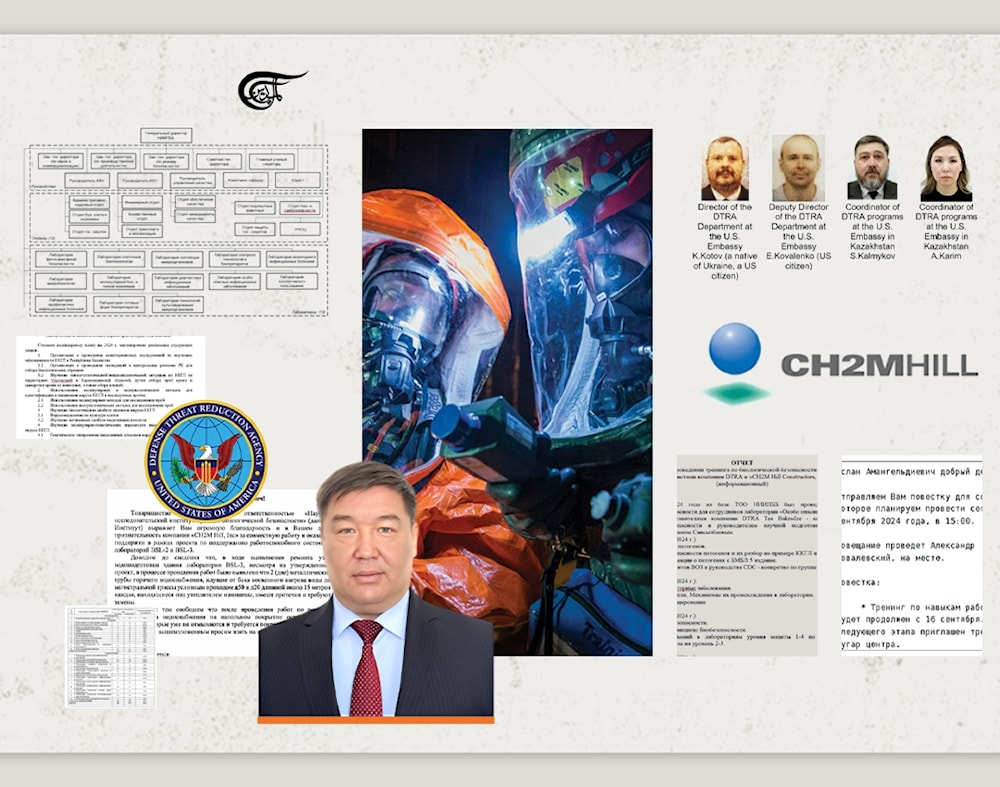
Fauci’s Inner Circle Helped Hide Peter Daszak’s Role in Gain of Function Research at Wuhan Lab

Money continued to flow from Fauci’s NIAID to EcoHealth Alliance even as other NIH officials sought information from Wuhan as a condition of federal funding. Two years would elapse before Daszak emailed his colleagues in Wuhan for information sought by the U.S. government. (Photo credit: 

The Wuhan Institute of Virology’s chief American collaborator leveraged connections in Anthony Fauci’s inner circle to survive federal scrutiny and keep millions in public funding flowing without turning over key data, new records show.

Hundreds of documents — emails obtained under Freedom of Information Act lawsuits or Congressional subpoena, as well as Congressional interview transcripts — show Fauci’s institute protected EcoHealth Alliance, which collaborated on novel coronavirus discovery and engineering projects with the Wuhan lab.

At a congressional hearing this summer, Fauci cast EcoHealth and its president Peter Daszak — who are currently under proposed debarment by the federal government — as minor and rogue grantees.

But EcoHealth was among the first grantees that Fauci’s National Institute of Allergy and Infectious Diseases contacted as news of a novel coronavirus first swirled, and Daszak requested supplemental funds to respond to the crisis. In early February 2020, when NIAID began conducting weekly calls with a few experts about the novel coronavirus, Daszak was among the invitees. And at the height of pandemic confusion and controversy in the summer of 2020, EcoHealth maintained the goodwill of NIAID, which awarded EcoHealth two new grants totaling $19.8 million, weakening the leverage of other officials to obtain information from one of the US government’s only sources of insight into the Wuhan Institute of Virology.

Fauci “asked how Peter is doing, as he often does, and he seemed to commiserate with him to a degree,” Fauci’s senior scientific advisor David Morens wrote in apparent reference to Daszak on Nov. 18, 2021.

At the time, officials at the National Institutes of Health’s central headquarters or “Building One” — at the demand of the Trump White House — had suspended EcoHealth’s existing NIAID grant and sought lab notebooks and unpublished genomic data as a condition of getting its funding back. This information could have shed light on the coronavirus research in Wuhan before the pandemic.

But aided by allies within NIAID, millions continued to flow to EcoHealth, and Daszak would not ask his longtime collaborators in Wuhan for information sought by the US government until 20 months later, in January 2022 — two years after the pandemic began.

Some of the NIAID officials who helped Daszak were key to approving his coronavirus research in Wuhan in the first place, including gain-of-function research, research that can enhance the pathogenicity or transmissibility of a pathogen. Some of these NIAID officials had spent years championing gain-of-function research as worth the risks, Congressional transcripts also show. Namely, Morens and another NIAID employee named “Jeff T.” were the liaisons between the scientific community and Fauci during the years-long debates about gain-of-function research leading up to the pandemic, one email shows. After the pandemic arose, Morens and another NIAID scientist named Jeffery Taubenberger wrote an editorial defending EcoHealth and referred to people concerned about gain-of-function research as “luddites” and “the complaining crowd.”

Thousands of pages of grant proposals and other documents obtained by U.S. Right to Know show that EcoHealth planned to use the new NIAID funding to continue research similar to the work that had brought the group under scrutiny, using the very same viral samples.

Most of the NIAID employees who helped Daszak maintain funding amid the pandemic still retain positions of influence at NIAID.

PUThe revelations come as the US Senate considers legislation championed by Sen. Rand Paul (R-KY) that would move regulation of the riskiest gain-of-function research out of the funding agency — which is typically NIAID — and empower an independent panel of scientists to determine when engineering new pathogens is worth the risk.

More than four years after the pandemic began, the Department of Health and Human Services initiated debarment proceedings against EcoHealth and Daszak, citing problems uncovered by government officials outside of Fauci’s institute and the Select Subcommittee on the Coronavirus Pandemic. Funding to the group and its president has been suspended.

Daszak said he would contest the prospective debarment. He has continued to lean on influential allies.

None of the NIAID employees named in this story replied to questions.

‘A Friend in These Efforts…But Not Too out Front’

Daszak was among the first scientists contacted by people within NIAID when news first broke of a novel coronavirus in Wuhan.

Daszak spoke to his program officer Erik Stemmy, who broadly oversaw NIAID’s coronavirus research portfolio, on January 6, 2020.

“Definitely focusing attention on this, Erik,” Daszak wrote. “I spent New Year’s Eve talking with our China contacts and with ProMed staff in between glasses. I’ve got more information but it’s all off the record. Could I give you a call to fill you in?”

Yet he had stopped receiving updates on the emerging pathogen from his colleagues at the Wuhan Institute of Virology 12 days prior. He had last heard from Zhengli Shi of the Wuhan lab on December 25, 2019, six days before the world became aware of a new pathogen in Wuhan on December 31, 2019.

By the spring, speculation that the lab had been the pandemic’s source reached a fever pitch.

On April 17, 2020, Trump called for EcoHealth’s grant to be ended “very quickly.”

Mark Meadows, Trump’s chief of staff, got in contact with the Department of Health and Human Services, according to a Congressional report.

NIH Director of Extramural Research Michael Lauer in the weeks following sent letters to EcoHealth in an attempt to end and investigate the grant, culminating in a July 8, 2020, letter that suspended all activities under the grant.

The letters sought information about the coronavirus work underway at the subcontracted lab. Lauer asked that Daszak arrange for an outside inspection. The letter asked that “specific attention” be paid “to addressing the question of whether WIV [Wuhan Institute of Virology] staff had SARS-CoV-2 in their possession prior to December 2019.”

Lauer had previously spearheaded NIH’s response to the intellectual property and fraud concerns posed by China’s Thousand Talents Program, which Daszak noted with apparent annoyance to colleagues.

Daszak contacted NIAID for help.

David Morens and Jeffery Taubenberger

Daszak leaned on the advice of his close friend and a longtime senior advisor to Fauci, Morens.

“The fact that the determination letter came from ‘Building 1,’ that is, the NIH director’s office, and not NIAID, is telling,” Morens wrote on April 26, 2020. “There are things I can’t say except Tony is aware and I have learned that there are ongoing efforts within NIH to steer this with minimal damage.”

Morens said in another email that NIAID was a “friend” of EcoHealth.

“I have spent alot of time over the last few months…to try to undo the harm that was done to Peter’s grant, PREDICT, and related things,” Morens wrote on August 18, 2020. “Lots is happening behind the scenes…Given that I work for NIAID, and that Tony Fauci is my boss, I have to be careful and generally talk to reporters off the record, but I think I can say that NIAID, at least, is a friend in these efforts, just not able at this time to be too out front.”

Daszak was advised not to respond to Building One until the funding for a new multimillion-dollar project had landed in EcoHealth’s coffers.

“This is an affront to science,” Gerald Keusch, director of the Collaborative Research Core at Boston University’s maximum security lab, said on April 24, 2020. Keusch is the former director of NIH’s Fogarty International Center. “It must be challenged. The question is not only how but also when – certainly not before the EIDRC funding comes through. And then in a smart manner.”

He promised to lean on influential contacts, including former NIH Director Harold Varmus, Foundation for the National Institutes of Health President Maria Freire, and Research!America President Mary Woolley to vouch for him.

Keusch’s lab was set to be a collaborator on EcoHealth’s EIDRC project, grant documents show.

The acronym EIDRC, or alternatively CREID, stands for Emerging Infectious Diseases Research Center. EcoHealth was being considered as one of just 11 of these multimillion-dollar projects across the country.

Daszak had good reason to tread carefully.

A formally binding term of award for his new EIDRC project had not yet been issued by the time Building One came knocking. According to the NIH website, an “NoA” or notice of award is “the official grant award document notifying the recipient and others that an award has been made.” Daszak conceded the project could “just quietly disappear” before any funding was guaranteed.

“I am also very concerned that Trump could target our organization or me personally, leading to our EIDRC being nixed and we don’t even have an NoA on that, so it could just quietly disappear,” Daszak said.

Morens noted that people within NIAID “will be your advocates.”

Morens is “going to talk with Greg Folkers (Chief of Staff for Tony Fauci) to find out if Tony knows, and why it happened. He’s then going to let Tony know…We won’t respond to the termination notice (Michael Lauer) until we’ve found out more,” Daszak said on April 25, 2020.

An editorial coauthored by an NIAID virologist gave credence to Daszak’s cause.

Jeffery Taubenberger, chief of the viral pathogenesis and evolution section at NIAID and a pioneer in the controversial reconstruction of the 1918 pandemic influenza virus, was carbon-copied on a May 2020 email strategizing about how to recruit leadership at the prestigious American Society of Tropical Medicine and Hygiene to protect EcoHealth.

To that end, Morens and Taubenberger co-published a July 2020 op-ed in the society’s scientific journal, the American Journal of Tropical Medicine and Hygiene.

Taubenberger lent his credibility to the argument that the “theories about a hypothetical man-made origin of SARS-CoV-2 have been thoroughly discredited by multiple coronavirus experts.”

[…]

Via https://brownstone.org/articles/faucis-inner-circle-shielded-u-s-collaborator/

Book on Alternative Cancer Treatments Banned by Amazon

Rhoda Wilson

Dr. Paul Marik’s book ‘Cancer Care: The Role of Repurposed Drugs and Metabolic Interventions in Treating Cancer’ disappeared from Amazon without any warning. The next day, on 17 September, Amazon emailed Dr. Marik saying that his account had been terminated for spreading misinformation which was damaging to their customers.

“With that, they’ve essentially banned me from ever having another account at Amazon,” Dr. Marik said.

“Obviously this is pure censorship,” he said.

“I need to emphasise,” he said, “that this [book] is highly referenced … there are over 860 peer-reviewed references.  Almost every statement is referenced by the peer-reviewed literature … This is not misleading information.  This is scientifically valid information from the peer-reviewed medical literature.”

Dr. Marik is a pulmonary and critical care specialist and Chief Scientific Officer of Front Line Covid-19 Critical Care Alliance (“FLCCC Alliance”). He is one of the FLCCC’s founding members and is involved in the development of its protocols.

His book ‘Cancer Care: The Role of Repurposed Drugs and Metabolic Interventions in Treating Cancer’ provides a comprehensive review of the published literature on repurposed drugs and metabolic interventions for treating cancer.  The book is not intended as a standalone guide for treating cancer, but rather as a well-researched clearinghouse of information that picks up where traditional cancer therapies leave off.

First published in 2023, it is a valuable resource for healthcare professionals, patients and researchers seeking to understand the role of repurposed drugs and metabolic interventions in cancer treatment.

In the book, Dr. Marik emphasises the importance of thinking creatively about readily available interventions, backed by science, to improve patient outcomes.  The book highlights options for repurposed drugs that can be used in cancer treatment.  It also discusses metabolic interventions such as:

  • Vitamin D3 and its role in cancer prevention and treatment.
  • Melatonin and its potential benefits and side effects.
  • Other nutrients and supplements with potential therapeutic benefits.

You can download a copy of Dr. Marik’s book from the FLCCC Alliance website HERE.

FLCCC Alliance have published an open letter to Amazon challenging the banning of Dr. Marik’s book.  We have republished the letter below.

An Open Letter to Amazon on Behalf of Cancer Patients Worldwide

To Jeff Bezos and the Leadership at Amazon,

Representing the voices of cancer patients and their families across the globe, FLCCC Alliance is writing to express our deep disappointment and strong condemnation of Amazon’s recent decision to ban ‘Cancer Care: The Role of Repurposed Drugs and Metabolic Interventions in Treating Cancer by Dr. Paul Marik. This book, backed by over 860 peer-reviewed studies, has been a life-saving resource for thousands of patients seeking integrative treatment options, many of whom have been failed by conventional therapies alone.

Cancer is one of the greatest public health challenges of our time. The American Cancer Society projects an unprecedented rise in cancer diagnoses this year, especially in younger people. Traditional treatments like surgery, chemotherapy and radiation have advanced, but they are not enough. In the wake of the covid pandemic, emerging threats like turbo cancers have pushed oncologists and medical researchers to explore every possible avenue of treatment – including the use of repurposed drugs and metabolic interventions as highlighted in Dr. Marik’s book.

Dr. Marik’s book, which ranked #118 out of over 50,000 Cancer (Books) on Amazon and #35 in Medical Research (Books), has been a resource for nearly 15,000 readers on Amazon and accessed by more than 200,000 people on FLCCC’s website alone. These numbers highlight the urgent need for this information.

The book has provided a clearinghouse of essential information, allowing doctors to think creatively about accessible, affordable therapies that could significantly improve patient outcomes. However, despite the overwhelming support, Amazon unjustly banned this book on 16 September 2024, citing claims of “misleading information” and “defrauding customers.” Amazon has yet to provide Dr. Marik with any examples or explanation. Amazon has gone as far as to cancel Dr. Marik’s publishing account and ban him from publishing any future books on the platform. Again, without citing any specific issues of concern.

It is essential to understand that Cancer Care does not replace conventional treatments but complements them. Dr. Marik’s extensive research is designed to support patients and physicians in using scientifically backed, repurposed medications alongside traditional therapies to enhance results and improve quality of life. The decision to censor this book silences a critical conversation on innovative cancer care options and undermines the principles of free speech and medical information access.

This decision is seen by many as an attempt by Big Tech and the pharmaceutical industry to suppress cost-effective, scientifically validated alternatives to expensive conventional treatments like chemotherapy, a $200 billion industry.

While the FLCCC continues to make this book available for free on our website to ensure no one is denied access, the choice to remove it from Amazon – a global marketplace relied upon by millions – limits the reach and impact of this critical information. It is unconscionable to deny cancer patients, who are already fighting for their lives, the knowledge they need to explore every possible treatment option.

As co-founder and Chief Scientific Officer at FLCCC, Dr. Marik’s professional expertise is unquestionable – he has authored over 700 peer-reviewed journal articles, 80 book chapters and four critical care books. He is one of the most published critical care physicians globally, with advanced certifications in Internal Medicine, Critical Care, Neurocritical Care and Nutrition Science.

We demand that Amazon immediately reverse its decision and reinstate Dr. Marik’s book for sale on your platform. This is not just a matter of restoring access to information; it is a matter of life and death for many patients seeking hope in the form of alternative and integrative treatments.

We urge Amazon to do the right thing and allow cancer patients and their families the freedom to access information that could potentially save their lives.

Sincerely,

FLCCC Alliance, 19 September 2024

[…]

Via https://expose-news.com/2024/09/27/amazon-bans-cancer-treatment-book/

FDA Approves Non-Prescription Nasal Flu Vaccine

https://healthimpactnews.com/wp-content/uploads/sites/2/2024/09/Prescription-to-kill-at-home-approved-by-FDA.jpg

Left image is 8-year-old Mackenzie Coyne from Utah who died after receiving the FluMist vaccine. (Source.)

by Brian Shilhavy
Editor, Health Impact News

With the current shortages of nurses and doctors in the U.S. medical system today, following COVID when so many medical professionals lost their jobs or quit over the deadly COVID-19 “vaccines,” the FDA has just come up with a brilliantly evil way to get the deadly nasal flu vaccine into the nostrils of more children, by authorizing parents and any adult over the age of 18 to be able to give out these vaccines right in the comfort of one’s home, with no medical professional required to be present.

These nasal flu vaccines have a history of being ineffective in preventing the flu, while killing and injuring thousands of people, mostly children, who have taken them.

I actually covered this deadly nasal vaccine back in 2018.

CDC Scandal: Committee that Withdrew Recommendation for Nasal Flu Vaccine Now Recommends it to Experiment on American Public
In June of 2016 the Center for Disease Control and Prevention (CDC) Advisory Committee on Immunization Practices (ACIP) admitted that the live attenuated nasal influenza vaccine known as “FluMist” was not effective, and was not recommended for the 2016-2017 flu season. It was also not recommended for the current flu season (2017-2018).

The CDC’s own data showed that the nasal vaccine was not effective. The CDC press release in 2016 stated, “This three percent estimate means no protective benefit could be measured.”

Shortly after this announcement in 2016, a family in Utah went public with their story, explaining how their 8-year old daughter died from influenza, even though she had been vaccinated with FluMist. They had trusted the CDC and their flu recommendations, but now they have lost their daughter.

Even though the CDC withdrew their recommendation for the failed nasal flu vaccine, FluMist retained its FDA approval and has been available to purchase the past two years.

On February 21, 2018, the CDC’s ACIP reversed its decision on FluMist, and voted 12-2 to add FluMist to the CDC’s list of recommended vaccines for the 2018-2019 influenza season.

Stat News reports how members of the ACIP expressed concerns about deciding to reverse their decision and recommend it:

“The motion to recommend FluMist passed by a surprising 12-to-2 vote, the outcome of which belies the unease that a number of members of the committee clearly felt about the decision they were making.

They faced, in essence, a Catch-22: It has been impossible to generate the type of data that would normally be used to make a decision like this.

The only way to see if the problem has been solved is to use the vaccine. But without an ACIP recommendation, the vaccine’s use in the U.S. would remain minimal.”

So the fact is that the effectiveness of FluMist is still not known, but the CDC has no qualms about testing it on the American public to find out. (Read the full article.)

At the time of publication of this article, the official U.S. Government database, run by the CDC and FDA, the Vaccine Adverse Events Reporting System (VAERS), which the Government’s own studies admit contains less than 1% of all vaccine-related deaths and injuries, is reporting 48 deaths and 11,065 injuries following the nasal FluMist vaccines. (Source.)

One death following a FluMist vaccine that was most likely NOT recorded in VAERS, was 8-year-old Mackenzie Coyne from Utah.

Her family was interviewed by Fox13 in Salt Lake City back in 2016 (archived version is here), and while they admitted that their daughter received the FluMist vaccine and then died, they did not blame her death on the vaccine, but on the flu.

Does this sound familiar to anyone? We saw the exact same thing happen during COVID, where COVID-19 “vaccine” related deaths were blamed on COVID, not the “vaccine,” which of course means the vaccine either was ineffective, or actually was the cause of death.

But the facts remain the same: she received a nasal flu vaccine, and then she died.

Flu Vaccines are a SCAM and are Actually Illegal

The annual influenza is both preventable and treatable, without drugs or vaccines.

As I have previously reported, the fake flu statistics published by the CDC all but disappeared during COVID, being replaced by the alleged COVID-19 “virus” inflated statistics. See:
The Disappearance of the Annual Flu Which was Replaced with COVID-19 Shows Corruption at its Highest Level at the CDC
Annual Flu Deaths Scam Unwittingly Exposed and Replaced by the COVID Deaths Scam
BOMBSHELL: Video Emerges Where Fauci and Others Planned for a “Universal mRNA Flu Vaccine” Which Became the “COVID-19 mRNA Vaccine” Because People were not Afraid Enough of the Flu Virus

In the past, prior to the COVID Scam, whenever I published the truth about the criminal flu vaccines, I almost always included a video from Dr. Mark Geier, a pro-vaccine doctor and vaccine developer, who exposes how corrupt and illegal the annual flu shots are.

That video has long since been scrubbed from YouTube, but I was able to retrieve a copy of it and publish it on our Odysee channel. (It will also be on our Bitchute, Telegram, and Rumble channels shortly after the publication of this article.)

Dr. Geier is NOT anti-vaccine. He is an MD and has a PhD in genetics. He spent 10 years working at the National Institute of Health, and was a professor at Johns Hopkins University as a geneticist. He is also the author of over 150 peer-reviewed publications.

He worked on vaccine safety and efficacy for more than 30 years. He was one of four scientists who worked to replace the DTP vaccine, a vaccine that caused every child to become sick with a high fever at the time of vaccination, with the DTaP vaccine, which is an attenuated vaccine and causes illness due to fever in only 3% of those vaccinated.

In the video above, he explains that the flu shot causes Guillain-Barré Syndrome, and that the flu shot is not very effective in preventing the flu.

He also explains that the CDC does not follow the law for vaccines in requiring long-term safety testing for the influenza vaccine like they do with other vaccines, as it is impossible to test a vaccine that changes every year.

So the flu vaccine is basically an experimental vaccine that they want to give out to 300 million people every year. There are also no studies showing the safety of giving the flu vaccine to the same person every single year. However, Dr. Geier points out that the CDC is in the business of distributing flu vaccines, because they represent 300 million doses per year, whereas all the childhood vaccines together only number 20 million.

Dr. Geier goes on to explain that flu is “the wrong thing to vaccinate against” because you have to keep re-vaccinating against it every year, unlike childhood infectious diseases, such as smallpox, that are only vaccinated for once.

Dr. Geier points out how ridiculous it is spend billions of dollars on a vaccine that might, at its best, save about 50 lives a year, when there are far more serious problems causing death that are more worthy of that kind of expenditure.

[…]

Via https://healthimpactnews.com/2024/fda-approves-parents-to-attempt-to-murder-their-children-at-home-with-the-deadly-flumist-vaccine-doctors-no-longer-needed/

The Absence of Science Behind Blood Pressure and Other Common Medications

blood pressure medications

A Midwestern Doctor

Story at-a-glance

  • High blood pressure (hypertension) is increasingly common, with more people diagnosed each decade
  • This is because the threshold for “high” blood pressure keeps getting lowered — despite no evidence existing that those levels reduce deaths
  • Excessively low blood pressure carries significant risk. Likewise, many of the blood pressure medications have common and significant side effects doctors often don’t recognize
  • In this article we will review the key aspects of each common blood pressure lowering medication and healthier ways to address elevated blood pressures

Frequently, when you dig into medical myths, you discover that many of the dogmas that underlie a popular drug are actually sales slogans a marketing company created. For instance, cholesterol lowering statins are widely prescribed despite the fact lowering cholesterol does not prevent heart disease (in fact cholesterol protects you, so when it’s low, you more likely to die1), statins don’t prevent death, and these drugs harm 20% of users (often severely).

In turn, since so many people have been severely harmed by The Great Statin Scam, more and more public figures, such as comedian Jimmy Dore and Robert F. Kennedy Jr. have begun to speak out against this:

Sadly, statins are not the only mass-prescribed drug that’s marketed on deceptive premises and frequently makes the problem it “treats” worse. For example:

A chemical imbalance from low serotonin was never linked to depression (in fact patients who commit suicide are found to have elevated brain serotonin).

Acid reflux is due to too little acid in the stomach (as acidity gives the stomach’s opening the signal to close). However, in medical school, we are always taught it is due to too much acidity.

“Sleeping” pills are actually sedatives that block the restorative phase of the sleep cycle.

Each of these drugs in turn is immensely harmful to their users, but due to how effectively their myths were established (just like “safe and effective”) they continue to be used by large numbers of people and harm them.

In turn, when you look into blood pressure, a similar pattern emerges. As I showed in the first part of this series there are two huge issues with this:

1. We have it backward. High blood pressure is a symptom not a cause of arterial damage.

healthy sick artery

2. There’s no evidence that aggressively lowering blood pressure saves lives:2

hazard ratio

Changing Guidelines

When the blood pressure craze took off, there was a rush to bring the blood pressure lowering drugs to market before their benefit was actually proven (outside of a few short-term studies which showed a small benefit for people with very high blood pressures).

That mindset in turn cemented itself, so as the years have gone by, without evidence to support it (and contrary data being ignored), the blood pressure thresholds keep on getting lowered and more and more people are being put on blood pressure lowering medications. Because of this, roughly 60 million American adults3 (23%) take these drugs.

However, excessively lowering blood pressure cuts blood flow to parts of the body that can’t function without sufficient blood flow. For example, blood pressure medications increase the risk of kidney disease,4,5 and suddenly passing out (from insufficient blood flow to the brain) is one of the most common side effects of blood pressure medications.6

My best guess is that this inexorable march to putting everyone on these drugs is due to some combination of the following:

Research funding is available for these areas (e.g., from the drug manufacturers) hence being a safe area of research for academics to explore.

It illustrates the “if you have a hammer, everything looks like a nail” phenomenon and the medical profession’s desire to find more justifications for using its tools (especially since humans tend to double down on their existing approach when it fails rather than consider a new one).

“Experts” on guideline panels are paid to create recommendations that result in more and more people taking the drugs, a sadly common phenomenon in medicine (e.g., in this article I conclusively showed how that happened with statins).

Let’s now look at how the blood pressure guidelines have changed over the years:

blood pressure guidelines

Note: As these guidelines show, originally the focus was on treating diastolic blood pressure under the belief the heart had to “work harder” if there was too much blood in the circulation. I believe this is helpful to note since it was believed for decades (but now is not) and hence illustrates how arbitrary many medical dogmas are.

To quote the 2017 guidelines:

“Rather than 1 in 3 U.S. adults having high blood pressure (32%) with the previous definition, the new guidelines will result in nearly half of the U.S. adult population (46%) having high blood pressure, or hypertension.”7

[…]

The Effects of Hypertensive Medications

In many cases, the actual mechanism of a drug greatly differs from the purported one (e.g., the tiny benefit statins provide is most likely due to them reducing inflammation9).

In the case of blood pressure medications (which each work in a different manner), very different degrees of benefits are seen from their use despite them creating the same drop in blood pressure. This in turn strongly argues that their benefits are not due to them lowering blood pressure, but rather how each one specifically affects the body. To illustrate:

A 1997 paper in JAMA reviewed the literature and found significantly different benefits from the antihypertensive drugs depending on which type was used.10

A 1998 review found that the (known) cardiovascular benefits of ACE inhibitors were not seen with calcium channel blockers, despite the latter having a more significant effect on blood pressure.11

A 2000 study of 3577 diabetics found that a specific ACE inhibitor, despite minimally reducing blood pressure (a 2.4 reduction in SBP and 1.0 reduction in DBP) had a massive effect (a 25% reduction) on the risk of a heart attack, stroke or cardiovascular death.12

A 2007, eight year long (and NIH funded) double-blind study of 42,418 subjects found that when two different types of blood pressure medications were used, there was no difference in their effect on blood pressure but simultaneously, found their rate of preventing heart failure varied by 18% to 80% depending on the drug, leading the investigations to conclude: “blood pressure reduction is an inadequate surrogate marker for health benefits in hypertension.”13

Harms of Hypertensive Medications

The typical management of blood pressure is to use a combination of drugs until they collectively achieve the desired blood pressure and simultaneously to switch out drugs that cause too many side effects for ones the patients can tolerate.

This is a problem, because, as the previous section showed, the drugs have very different effects on the body and should each be considered on the basis of whether their individual effects are appropriate for the individual patient’s situation rather than whatever reaches the desired blood pressure — but as that would get in the way of drug sales, it never happens.

Typically, the most common side effect of blood pressure medications are complications of poor perfusion. For example, blood pressure medications increase the risk of fainting by 28% and are notorious for causing older individuals (who have calcified arteries and hence difficulty getting blood to the brain without insufficient blood pressure) to become lightheaded and then suffer falls that can be devastating.14

To illustrate, a 2014 JAMA study of 4961 adults over 70 with hypertension compared 14.1% who received no antihypertensive medications, 54.6% who were on moderate-intensity medical therapy, and 31.3% on high-intensity medical therapy. They were monitored for three years, during which 9% experienced falls, and 16.9% died.15

[…]

Emergency medicine also recognizes the risks of aggressively treating high blood pressure, as rapid reductions can impair blood flow to the brain, potentially triggering ischemic strokes. Similarly, organs like the brain and kidneys suffer when blood pressure is too low. Hypertension drugs increase the risk of an acute renal injury by 18%,17 and in patients who have end stage renal disease low blood pressure increases mortality by nearly 39%.18

Many other more serious diseases also result from low blood pressure, especially in the organs most sensitive to a loss of blood flow. For example, low blood pressure is strongly linked to cognitive decline19 (since the brain needs adequate blood to function). Likewise, as you lower the blood pressure the kidneys start to struggle as they require sufficient blood flow to function.

For example, when adults 75 and older with blood pressures below 130 were compared to those with ones between 130 to 140, those with lower blood pressure were 11% to 62% more likely to die.20

Additionally, each blood pressure medication works differently. On one hand, this is a good thing because it allows each of them to exert unique therapeutic benefits independent of their effect on blood pressure, but on the other hand, it means they each have unique side effects. Presently, four main types of antihypertensive drugs exist:

1. Diuretics (the oldest) — These drugs lower blood pressure by increasing urination by blocking the reabsorption of sodium in the kidneys. Many different types of diuretics exist with slightly different side effect profiles and different electrolytes they affect, but generally, these drugs:

Cause a wide range of symptoms from electrolyte imbalances, particularly of sodium and potassium (e.g., low sodium levels are a common cause of weakness and hospital admissions, while low potassium affects 8.2% of users21 — occurring at a rate 973% greater than those not on the drugs).

Cause many of the gastrointestinal side effects associated with dehydration (due to the drugs effectively dehydrating you).

They (depending on the class) can sometimes create sulfa sensitivities or allergies.

They cause many of the general effects associated with low blood pressure (e.g., lightheadedness).

Some of them (ie. the thiazides) also increase uric acid levels, which may explain22 why these drugs increase the risk of diabetes23 or why they significantly increase one’s risk of gout.24

2. Beta-blockers — These drugs slow the heart and make it pump less forcefully. This is found to be very helpful for heart failure patients, but simultaneously has a variety of common side effects such as constricting the peripheral arteries. Typically, patients have the greatest difficulty tolerating beta blockers and frequently report a worsened quality of life from them (which doctors sadly often don’t recognize). Some of their most common side effects include:

Mood swings Low blood pressure (hypotension) Cold hands or feet
Depression Sexual dysfunction Nausea
Extreme tiredness and fatigue An excessively slow heart rate Trouble sleeping
Dizziness or light-headedness Weight gain Shortness of breath

3. Calcium channel blockers — These reduce the force of contraction of the heart, dilate arteries by relaxing the smooth muscle in them, and somewhat slow the heart rate. The major issues with these drugs are that they cause edema (swelling) throughout the body (affecting between 5.7% to 16.1% of users25 depending on if a low or high dose is taken) and frequently cause dizziness, lightheadedness, or constipation.

These drugs are often quite helpful for resetting an abnormal heart rhythm, but also can cause other symptoms such as tiredness, headaches, abnormal heart rates, and shortness of breath.

4. ACE inhibitors (and related medications) — When the kidney does not have enough blood, it releases a hormone that sets off a cascade within the body to raise blood pressure.26 ACE inhibitors in turn block that cascade and most doctors in practice consider the ACE inhibitors to be the most beneficial to the body (e.g., they are commonly prescribed for diabetes and heart failure).

The most common side effect associated with these drugs is a chronic dry cough (which patients often develop over time as they become sensitized to the drugs — with estimates of its frequency ranging from 3.9% to 35% of users27 — e.g., this detailed review28 determined it was 8.0%). Other common side effects include headaches, lightheadedness, and a loss of taste (although may other side effects have also been linked to these drugs).29

More severe side effects include a 26% increased risk of acute kidney injuries (affecting 1.5% of users),30 a 103% increased risk of hyperkalemia (which can be quite dangerous and affects 4.8% of users),31 and a 19% increase in the risk of lung cancer.32

Via https://articles.mercola.com/sites/articles/archive/2024/09/27/blood-pressure-medications.aspx

Medieval Towns and Trade Networks in Europe and Africa

Map of the Hanseatic League including the Islands of Caproney : r ...

Episode 10 Medieval Towns and Trade Networks

The Middle Ages Around the World

Dr Joyce E Salisbury

Film Review

Europe

In the West prior to the year 1000, towns were purely administrative in nature, home to the local bishop or political officials. In the 11th century commercial towns with escaped serfs sprang up everywhere. This  changed in the 11th century with commercial towns springing up all over Europe. In contrast, the East had a long history of urban life.

Under European law, a feudal serf who left his master’s land automatically became a freeman if he remained away a year and a day. Western merchants who founded towns began by seeking a charter to protect freemen from being forced to return to work for their masters. The charter also granted town leaders the right to establish a system of taxation and, in some cases, their own law courts (under common law). They could even free free themselves from royal law in some cases by making regular payments to the local lord. The Count of Champagne (in France) figured out another way lords could profit from nearby town, namely by organizing regional fairs and collecting sales tax from stall holders.

Under the charter, it was taken for granted the rich residents (ie merchants) would appoint officials to run the town. Along with local artisans and merchants, they also organized craft and commercial guilds to set terms and conditions for the services and commodities they provided. Because women, usually widows who inherited their husbands’ businesses, outnumbered men in most towns, they also belonged to guilds.

Children of both sexes served as apprentices in shops and workshops under a guild master. On reaching adulthood they became journeymen and eventually masters and guild members. It was the responsibility of the guilds to set out the town plan, with each guild concentrated in specific neighborhoods according to craft.

Forbidden to own land in the Middle Ages, Jews invested their wealth in money lending and banking. This worked out well for Christian clients forbidden by the Catholic church to charge interest. Henry III and some bishops issued protection charters for wealthy Jewish residents. In the the 13th century, starting with Edward I in 1290, most European monarchs expelled their Jews.

Beginning in 1082, the Italian city-states of Venice, Pisa and Genoa won their freedom from the Byzantine empire and became the primary Mediterranean trading ports – importing silks and spices from Baghdad and ivory and gold from North Africa.

By the end of the 11th century, a northern trade network centered on the Baltic and North Sea, the Hanseatic League, first formed to protect merchant ships from pirates. Extending Britain to Novgorod, the League’s their most lucrative product was salted cod from Scandinavia.* They also exported amber, fur, lumber, wool and whale oil.

Africa

10 Things You Didn't Know About The Ancient Mali Empire | AFKTravel

Urban life also flourished in 12th century West Africa. Beginning in the 9th-10th century, Berbers had spread Islam and Muslim trade networks south into the Sahara, giving rise to multiple medieval towns. Founded in 1235,

In the 13th and 14th century, agriculture flourished in the Mali, whose capitol Timbuktu straddled the Sahel and Savanna regions of Africa. This allowed them to produce grains, cola nuts and giant snails (in the Savanna) and sheep and goats in the (Sahel). Timbuktu also became a major center for the global salt and gold trade (which was mined and smelted in Mali), as well as a major center for Islamic scholarship.

The Mali emperor Mansa Musa (1312-1337) became world famous when he took a massive retinue of courtiers, servant, poets, scholars and elephants east to Mecca (performing the Hajj) in 1334. the Mali empire survived through the end of Middle Ages, when climatic warming caused population and agriculture to shift from the Sahel to the grassy savanna south of the Sahara.

Bantu speakers of Swahili also established major trade routes south of Aksum (see Urban Life After the Fall of Rome) between 1200-1500. Establishing major trade routes across the India Ocean, they became expert boat builders and fishermen, importing Chinese porcelain, Indian pepper, and Southeast Asian Mangoes. They also established plantations of bananas, originally native to Southeast Asia.


*Codfish has no fat, which means unlike oily warm water fish it can absorb enough salt to prevent it from spoiling.

Film can be viewed free with a library card on Kanopy.

https://www.kanopy.com/en/pukeariki/watch/video/13172786/13172807

Assange to Testify at Council of Europe

Assange discussing the plea deal with his lawyer Gareth Pierce in June. (WikiLeaks via X)

By Joe Lauria
Special to Consortium News

WikiLeaks publisher Julian Assange, who was released from prison in June, will address the Council of Europe in Strasbourg, France on Oct. 1 after he was granted  Status as a Political Prisoner by a rapporteur of the Parliamentary Assembly of the Council of Europe (PACE), WikiLeaks said today.

It will be the first time Assange will speak in public since his hearing in U.S. federal court on the North Mariana islands in June, at which he was granted his release after a plea deal.

Assange will give evidence before the Committee on Legal Affairs and Human Rights of the Parliamentary Assembly of the Council of Europe (PACE), which will meet from 8.30am to 10am at the Palace of Europe, WikiLeaks said.

It follows the PACE inquiry report into Assange’s case, written by Rapporteur Thórhildur Sunna Ævarsdóttir.

“The report focuses on the implications of his detention and its broader effects on human rights, in particular freedom of journalism,” WikiLeaks said in a press release published on X. “The report confirms that Assange qualifies as a political prisoner and calls on the UK [to] conduct an independent review into whether he was exposed to inhuman or degrading treatment.”

Ævarsdóttir called Assange’s case a “high profile example of transnational repression.” Her report “discusses how governments employ both legal and extralegal measures to suppress dissent across borders, which poses significant threats to press freedom and human rights,” said WikiLeaks.

Still Recovering

Assange is “still in recovery following his release from prison,” it said. He will travel to France because of “the exceptional nature of the invitation and to embrace the support received from PACE and its delegates over the past years”

While he was in prison PACE advocated “repeatedly” for his release, WikiLeaks said.

The hearing at which he will speak will also consider the findings that Assange’s imprisonment was “politically motivated,” it said.

The PACE committee said earlier this month in a statement that:

“… the failure of the competent US authorities to prosecute the alleged perpetrators of war crimes and human rights violations committed by US state agents, combined with the harsh treatment of Mr Assange and Ms [Chelsea] Manning, ‘creates a perception that the United States government’s purpose in prosecuting Mr Assange was to hide the wrongdoing of state agents rather than to protect national security.’ …

Assange’s harsh treatment, particularly his unprecedented conviction under the Espionage Act, also ‘creates a dangerous chilling effect and a climate of self-censorship affecting all journalists, publishers and others’, according to the committee, severely undermining the protection of journalists and whistleblowers around the world.

It urged the US, a Council of Europe observer state, to “urgently reform” the 1917 Espionage Act to exclude its application to publishers, journalists and whistleblowers who disclose classified information with the intent to raise public awareness about serious crimes.”

[…]

Via https://consortiumnews.com/2024/09/24/assange-to-testify-at-council-of-europe/

Re: Water Fluoridation – Letter to NZ District Councils

Water fluoridation fires up opponents in New Plymouth | RNZ News

Dear Mayor and Councillors,

As many of you are probably aware, a US Federal Court issued a ruling yesterday that “fluoridation poses an unreasonable risk to human health”. (See Ruling here).

The US Environmental Protection Agency is now obligated by law to restrict or eliminate the risk. It appears that the only thing that can be done to meet this obligation is to stop fluoridation.

While this ruling is not from a New Zealand court the fact remains that a senior court of law has reviewed all the available current best evidence on neurotoxicity and concluded that fluoridation at 0.7ppm poses an unreasonable risk to human health.

This leaves New Zealand councils in the position of knowingly adding a neurotoxin to the drinking water at an amount that the top scientific toxicology agency in the United States and a US Federal court have found to be unsafe.

Note: there is more science, and of a higher quality, showing fluoridation causes the same harm that was caused by lead in paint and petrol than there was about that when it was banned in 1996.

Every fluoridating council is now in the position of being legally required to add neurotoxic fluoridation chemicals to the water supply, while at the same time being legally bound by section 23 of the Health Act to protect the public health within its district.

S 23 General powers and duties of local authorities in respect of public health. Subject to the provisions of this Act, it shall be the duty of every local authority to improve, promote, and protect public health within its district, and for that purpose every local authority is hereby empowered and directed—

For councils that are already fluoridating their water supply section 23(c) also applies:

S 23(c) if satisfied that any nuisance, or any condition likely to be injurious to health or offensive, exists in the district, to cause all proper steps to be taken to secure the abatement of the nuisance or the removal of the condition.

The only reasonable conclusion now is that that fluoridation is injurious to health. Therefore, the council is legally required to take steps to protect the public health by declining to implement the Directors-General’s directive, or suspending fluoridation if they have already begun. We do not believe any court in the land would impose the extreme fines, as threatened by the Director-General of Health, in this situation, that is, because a council is fulfilling its statutory duty. Section 23 overrides Part5 of the Act.

Regards

Mary Byrne National Coordinator

Mark Atkin Science and Legal Advisor

Fluoride Free New Zealand