Unknown's avatar

About stuartbramhall

Retired child and adolescent psychiatrist and American expatriate in New Zealand. In 2002, I made the difficult decision to close my 25-year Seattle practice after 15 years of covert FBI harassment. I describe the unrelenting phone harassment, illegal break-ins and six attempts on my life in my 2010 book The Most Revolutionary Act: Memoir of an American Refugee.

New Zealand’s Ongoing Myocarditis Crisis

https://z4v6m2g6.rocketcdn.me/wp-content/uploads/2024/09/medsafe-report-underlines-the-ongoing-myocarditis-crisis.jpg

The extraordinary New Zealand data of chest pain and cardiac incidence among the under forties, which has increased tenfold and remains high right up to the present, has provoked many questions and comments to our email inbox. Ranging from ‘how could the authorities let this happen’ to the ridiculous ‘the OIA doesn’t exist’ and everything in between. Making sense of the scale of the disaster is hard, and facing up to the failure and duplicity of those charged with protecting our health is even more perplexing.

This article is also available as a PDF to download, print, and share and as an audio version.

The OIA data for chest pain and cardiac events is not an isolated statistic. Medsafe have just released the results of a follow up survey of 298 NZ patients who received a clinical diagnosis of mRNA vaccine induced myopericarditis at least 90 days prior to filling in the survey. This survey was conducted two years ago. Inexplicably, Medsafe have waited until now to release the results. Contrary to earlier advice given to people experiencing symptoms of myocarditis that the final outcome would be mild and self-limiting, the survey revealed persistent serious problems beyond 90 days which had not been resolved.

“The median age was 36.5 years. 62% were male…. Chest pain was the most frequently reported physical symptom, experienced by 287 (96.3%) participants, followed by fatigue (256; 85.9%), shortness of breath (251; 84.2%), palpitations (234; 78.5%), and dizziness (189; 63.4%).. Twenty-two (7.4%) participants reported fainting.”

Representative survey responses to a range of open-ended questions about work, family life, treatment, follow up, etc included the following:

“Tried to exercise again and pericarditis symptoms returned.”

“Chest pain is extreme… not being able to walk without a cane.”

“This experience has caused anxiety and depression.”

“Before I was diagnosed, I was a full-time worker and into [sporting activity], since I got it, I can’t work at all or do any exercise.”

“Not being able to take care of my children is just awful. I can’t even kick a ball with my sons anymore.”

“I was initially told a number of times in ED that I was having anxiety attacks. I felt like no one was listening to me which made it even harder.”

“Was anxious about having the booster and I was fobbed off. I am not an ‘anti-vaxxer’. Doctors need to listen and be more empathetic.”

“Disappointed with lack of after care. Absolutely no specialist follow-up. Very disappointing.”

“Utter frustration that I had to go privately to get any help. Was told it would take one year to get any cardiac test. I would still be waiting for a diagnosis. I had to go privately.”

“To hear… myopericarditis repeatedly being reported as a mild consequence of vaccination was a huge insult and should immediately stop. This is not a mild sequela for many. This is a profound life changing and devastating event.”

“ACC – although accepting my vaccine injury treatment injury claim – decided seven days was sufficient time to recover [from it]… it took… nearly 8 months after the claim, for full cover to be approved.”

The Key Learnings section of the report admits there were deficiencies in:

  • The vaccine information given to the public.
  • Reporting systems for adverse reactions.
  • Knowledge about possible adverse reactions.
  • Keeping up to date with the implications of clinical publishing

The net effect was to create a deficient clinical and informational response to the tens of thousands of individuals reporting to GPs and emergency departments with chest pain. As a result, myopericarditis has been greatly under diagnosed or a diagnosis and clinical response has been delayed, even in some cases for years.

This is still continuing. The New Zealand Herald leads this morning with an article “Auckland man waited in Middlemore Hospital A&E in seven-hour ordeal”. A 39 year old man reported with chest pains. He was triaged and x-rayed within 35 minutes, but then waited 7 hours to see a doctor. During this time, he sat and sometimes had to stand along with hundreds of patients in the waiting room. He witnessed people sleeping on the floor, others walking out with medical tubes attached to their arm and a bleeding pregnant woman who sat on a hard chair for five hours before being seen.

The article doesn’t inform the public that the man was just one out of well over 30,000 individuals who will report to Accident and Emergency with chest pains this year, compared to just 2,000 pre-pandemic. It doesn’t tell us whether this was his first visit. It doesn’t tell us what the outcome was, whether he was referred to a cardiologist with a wait time of over a year. In other words, it leaves the public poorly informed. Despite the official data that has just come to light, it fails to correct the misleading information about vaccine-induced myopericarditis and chest pain incidence that the paper has been dutifully relaying to the public at the behest of the government and the health service for the last few years.

It doesn’t tell the public that if the man eventually secures an appointment to see a cardiologist, he will probably be asked if he is COVID-19 vaccinated and then confidentially and quietly advised to never have another shot. In contrast, while he is waiting for the appointment, he might receive numerous messages from the free-spending PR department of Health New Zealand via TV or text advising him to get another mRNA COVID-19 booster.

All because, as the Medsafe report concludes, Health New Zealand and the government are suffering from a clinical information deficit that they have failed to correct, along with an irrational faith in a so-called vaccine that doesn’t prevent disease, but rather causes it.

I don’t want to sound too harsh, but now we are aware of the astounding figures Health New Zealand has been sitting on and hiding from the public for the last few years, we have to ask serious questions about the probity of the management. They are supposed to protect and promote public health. Health New Zealand has become a medical system out of sync with reality along with a staff stretched beyond elastic limits. In other words, its left hand doesn’t know what its injured right hand is doing.

In the comments section of the Medsafe report, there were people who said they felt isolated and too socially embarrassed to even speak to their GP in case they were labelled as an anti-vaxxer and became a complete social pariah. It is easy to forget how much effort and money the government pouted into labelling the unvaccinated. They became antisocial, extremist and anti-science. They were accused of seeking to undermine democracy and overthrow the government. The government funded documentary Web of Chaos aired twice on prime time TV and remains On Demand. It complained about so-called disinformation over images of nuclear bombs exploding and Hitler making speeches.

We now know that current Health Minister Shane Reti’s plans to fix Health New Zealand by targeting reduced wait times and Science and Technology Minister Judith Collins plans to deregulate biotechnology experimentation and do away with GM food labelling, are straight out of Alice in Wonderland. Those asking questions about mRNA vaccine safety, mandates and died suddenly were right all along. The longer a public mea culpa and a stop to the mRNA COVID-19 vaccination rollout is delayed, the further Health New Zealand, the media and the government are falling down their own rabbit hole which poses a very serious danger to public health and stability.

[…]

Via https://hatchardreport.com/medsafe-report-underlines-the-ongoing-myocarditis-crisis/

Debunking Elon Musk: Driving Electric Car Fake Environmentalism

Mark Keenan

In Sweden there exists an electrified road for Electric Vehicles (EVs) to charge while driving[1]. The 2 km stretch of road is the world’s first of its kind, and an expansion of a further 3,000 km of electric road by 2045 is planned. It all sounds rather cool and futuristic, and I am reminded of a song lyric from the 1980s, the singer Eddie Grant sang “we’re gonna rock onto Electric Avenue”.

However, let us consider whether these expensive EVs are actually environmentally friendly or are yet mega-corporate marketing scam?

This article demonstrates that the latter is the case. The reality is that the misled environmentalists buying these cars are suckers for mega-corporate advertising, ignorantly proud of their so-called low-carbon eco-cars.

Apparently, unaware that the manufacture of millions of electric car batteries, requires huge mining operations to acquire and refine large quantities of rare earth metals, such as lithium, rhodium and cobalt; that these metals have to be mined out of the ground using machinery which is powered by carbon-emitting vehicles powered by diesel or petrol; and importantly, that the mining and refining processes can cause significant and extensive pollution to land, air and water systems, for example in rural China and Mongolia[2]. Unlike the fake climate agenda, these are real environmental problems.

Below is a picture of a lithium leach field. This is what your EV batteries are made of. It is so neuro-toxic that a bird landing on this stuff dies in minutes. Take a guess what it does to your nervous system. Pat yourself on the back for saving the environment.

Furthermore, the push to end gasoline or diesel transport by 2035 in favor of e-vehicles is based on a lie as the lithium-ion battery-powered vehicles have a total “carbon footprint” when the effects of mining lithium and producing all parts are included, that is worse than diesel autos.

Furthermore, electric cars are still driven by electricity produced from fossil fuels and will most likely continue to be. Despite decades of government subsidies wind power provides less than 5% of the world’s energy, and solar just 1%. The use of electricity to charge vehicles and devices is also an extremely inefficient use of energy, according to a study by the European Association for Battery Electric Vehicles commissioned by the European Commission (EC):

“The ‘Well-to-Tank’ energy efficiency (from the primary energy source to the electrical plug), taking into account the energy consumed by the production and distribution of the electricity, is estimated at around 37%.“

Let us take a look at the deceptive marketing for electric vehicles. The first misleading marketing trick that millions of environmentalists fell for was the ‘hybrid’. Hybrid cars are actually gasoline powered cars with a little battery assistance and the little battery has to be charged from the gasoline engine.

If the EPA-certified mileage is 55 mpg, then it is no different from a non-hybrid that achieves 55 mpg. A world 100% full of ‘hybrid’ drivers is still 100% addicted to oil.

Now consider a cleverly designed marketing pitch for electric cars by Elon Musk, Co-Founder & CEO of Tesla Motors. In an article published on the Tesla Motors website[3], he states:

“the overarching purpose of Tesla Motors… is to help expedite the move from a mine-and-burn hydrocarbon economy towards a solar electric economy…  I’d like to address two repeated arguments against electric vehicles – battery disposal and power plant emissions… the Tesla Motors Lithium-Ion cells are not classified as hazardous and are landfill safe…  the battery pack can be sold to recycling companies (unsubsidized) at the end of its greater than 100,000-mile design life…

A common rebuttal to electric vehicles as a solution to carbon emissions is that they simply transfer the CO2 emissions to the power plant. The obvious counter is that one can develop grid electric power from a variety of means, many of which, like hydro, wind, geothermal, nuclear, solar, etc. involve no CO2 emissions. However, let’s assume for the moment that the electricity is generated from a hydrocarbon source like natural gas… the hands down winner is pure electric:

we will be offering a modestly sized and priced solar… This system can be… set up as a carport and will generate about 50 miles per day of electricity. If you travel less than 350 miles per week, you will therefore be “energy positive” with respect to your personal transportation… you will actually be putting more energy back into the system than you consume in transportation!”

However, Elon Musk does not mention the fact that:

  • the move from mine-and-burn hydrocarbon economy towards a solar electric economy in itself requires a vast expenditure of fossil-fuel energy to re-purpose the entire worldwide industrial system, as well as build vast new energy grids for wind and solar energy, etc, simply to reduce CO2 emissions. A new industrial framework which in itself will still be very polluting to land, air, and water in virtually the same ways as the old framework as it creates more and more ‘product’ to be marketed and sold, such as electric cars, which we are now incorrectly told is okay because its ‘green product’;
  • the Energy Returned on Energy Invested (EROEI) for solar and wind energy is too low to be viable, and therefore to repurpose and rebuild the world energy and industrial system to de-carbonise the economy is a waste of vast amounts of fossils fuels (no wonder the sector seeks subsidies);
  • the manufacture of potentially hundreds of millions of new electric cars and electric car batteries involves a continuation of widespread mining and processing of rare earth metals, such as lithium, rhodium and cobalt, which are a limited resource. The mining and processing of rare earth metals has been shown to be polluting to land, air, and water systems, such as rivers.
  • if you charge the car with solar energy, you may be putting slightly more energy back into the system than you consume in ‘driving the car’. However, driving the electric car is only one small part of the entire energy consuming process from mining to manufacture to distribution, not to mention the embedded energy in the manufactured materials of a new worldwide supply-chain industrial infrastructure, including cars, factories, energy grids, windmills, photovoltaics, etc.

As an example of why electric cars are fake environmentalism let us consider a Tesla model Y battery in the picture below.

It takes up all of the space under the passenger compartment of the car. To manufacture it has been estimated that you need:

12 tons of rock for lithium; 5 tons of cobalt minerals (most cobalt is made as a byproduct of the processing of copper and nickel ores. It is a very difficult to obtain and is very expensive.);

3 tons of nickel ore; and 12 tons of copper ore. In addition, you must move 250 tons of soil to obtain: 26.5 pounds of lithium; 30 pounds of nickel;

48.5 pounds of manganese; and 15 pounds of cobalt. To manufacture the battery also requires 441 pounds of aluminum, steel and/or plastic and 112 pounds of graphite

A Caterpillar 994A vehicle is commonly used for the earthmoving to obtain the essential minerals. It has been estimated to consume between 250 and 775 gallons of diesel in 12 hours[4]. Finally, you get a “zero emissions” car. Presently, the bulk of the necessary minerals for manufacturing the batteries comes from China or Africa; and much of the hard labour for acquiring the minerals in Africa is done by children!

The cost of Tesla batteries for the Tesla car models ranges from $5,000 to $20,000.

It takes seven years for an electric car to reach net-zero CO2. The average life expectancy of the batteries is 10 years. Only in the last three years do you begin to reduce your carbon footprint. Then the batteries have to be replaced and you lose all the gains you made in those three years.

The reality should be distinguished from the lies we are all being told by the UN, the WEF and mega-corporate advertising. The word “sustainable” was hijacked decades ago, and it is now deceptively used to advance the agendas of mega-corporate-communist interests who couldn’t care less about the environment. The aim is to catapult humanity into the ‘fake-sustainable’ totalitarian arms of UN Agenda 2030 and other clever marketing plans entirely designed by the so-called elites of the corporate WEF Davos group.

[…]

Via https://www.globalresearch.ca/driving-electric-car-fake-environmentalism-elon-musk-debunked/5846311

Vaccines have destroyed society, unleashing wave of irreparable damage to public health

Vaccines have destroyed society, unleashing a wave of irreparable damage to public health

Dr Eddy Betterman

We rarely hear about it due to the system-wide embargo on truthful information about the damage they cause, but vaccines have destroyed the world.

A Midwestern Doctor, a popular Substack account, conducted an extensive review into the science behind vaccines that never sees the light of day. The doctor found that the ugly truth about vaccines stays hidden in order to protect “the business,” meaning the vaccine arm of Big Pharma.

To tell the ugly truth about vaccines “would destroy the vaccine programme,” the doctor writes, which is why it is never told. One of them is the fact that vaccines do not prevent disease, and instead cause more of it.

Diseases that were once thought to be eradicated have returned, but not because the unvaccinated. The doctor found that vaccines are reintroducing these ancient illnesses, which are today being dubbed a “mystery.”

Take the smallpox vaccine, for instance. Introduced in 1798, the smallpox jab was frequently observed to cause smallpox outbreaks rather than prevent them, but this ugly truth was swept under the rug.

If modern medicine was an honest science, the smallpox jab would have been pulled from the market and relegated to the dustbin of the world’s worst scientific mistakes. Instead, the smallpox jab laid the groundwork for the thereafter release of a host of new vaccine injections, all of which do the same type of thing.

“Having looked at it extensively, I am of the opinion the smallpox vaccine reshaped the trajectory of humanity’s health and ushered in the era of chronic illness,” the doctor writes.

(Related: People who were vaccinated are much more likely than the unvaccinated to develop ear diseases, blood disorders and hair loss, research shows.)

Skip all jabs

The vaccines that would come after smallpox unleashed other new health problems, often due to quality control issues. Besides their inherent toxicity, new vaccines would get pumped out at an increasingly faster rate, and all the new companies trying to cash in on the jab rush to cut corners to save a buck.

“Because of this, a variety of new and severe medical conditions emerged, many of which were deemed to be due to brain inflammation (encephalitis) or brain damage (encephalopathy) and observed to occur in conjunction with cranial nerve damage,” the doctor explains.

“Most of these conditions in turn mirrored the myriad of injuries we now too see from modern vaccinations.”

Back in the 1980s, it was rare for children to show symptoms of autism or other neurological problems. Today, autism is common, as are many other chronic illnesses that prior to the advent of vaccines were rare, if not nonexistent.

Real science backs these claims, by the way, but most of it remains hidden while the fake kind promoting vaccines constantly gets pushed to the forefront of the news cycle.

“Numerous clinical trials of individual vaccines (e.g., the HPV vaccine) show that vaccines cause many of the same disorders (e.g., a myriad of autoimmune conditions) that have increased in parallel to the number of doses of the vaccine one receives (e.g., the second shot is almost always more likely to cause a severe reaction than the first),” the doctor further writes.

“This in turn suggests that taking a large number of vaccines (presently the ever increasing CDC schedule gives children 90 before they turn 18) puts them at risk for developing chronic disease.”

Though many such studies have been conducted over the years, research highlighting all of this does not typically get published in any of the medical journals that the modern medical profession looks to for guidance. As such, the vaccine racket continues, seemingly without end.

[…]

Via https://dreddymd.com/2024/09/29/vaccines-destroyed-society-unleashing-damage-public-health/

Universities and Intellectual Discovery in the Middle Ages

Ibn Sina - Master of All Sciences (Philosophy) - YouTube

Episode 11 Universities and Intellectual Discovery

The Middle Ages Around the World

Dr Joyce E Salisbury

Film Review

China

During the Sui dynasty (581-618), China implemented a civil service exam proposed by Confucius intended to limit the power of local nobility and weed out bureaucratic corruptions. The exam covered the Confucian moral code, the philosophy of yin/yang duality, the I Ching (Book of Changes – used to inform future decisions), medicine, science, astronomy,

Wealthy parents spent fortunes preparing their sons the exam – those who failed became teachers or not infrequently hung themselves. Approximately 130,000 students (25% of the age 19-24 population)  took the exam, which was closed to sons of merchants (viewed as being “too greedy”). Ironically the exam produced deeply conservative bureaucrats who viewed traditional ethics as far more important than innovation and knew virtually nothing about collecting taxes or hiring contractors to build roads.

The Muslim World

In Baghdad, the Abassid Empire established Wisdom Schools, which translated the science, medicine and mathematics texts of Greek and Roman scholars.

Fatima al Firi founded the University of Kareein in Fez Morocco, the largest continuously operational university in the world, and the Mali empire established the Sankoré university in Timbuktu.

Muslim physicians (who needed a license to practice) received training combining the teachings of 2nd century Roman physician Galen and clinical observations. They did surgery using opium and/or wine as anesthesia for cancer, circulation problems and cataracts (which were removed by being drained of fluid.

Ibn Sina (aka Avicenna) was the most famous physician in the Middle Ages. In the 6th century, his Cannon of Medicine was the second most read book after the Bible. He was one of the first to teach that good health relies on a balance of healthy food, lifestyle and medical treatment.

In the 7th century, Indian mathematicians invented the concept of 0 and base 10 numerals. In 825, the Persian mathematician A-Khwarizmi introduced these concepts to the Muslim world in his treatise “On Calculation with Numerals.” By the 10th century, Muslim mathematicians had invented fractions, decimals and algebra.

In the 11th century Lubna, the private secretary to the Cordova Caliph Al-Hakam used Arabic numerals to verify the scientific concepts proposed by Archimedes and other Greek scientists. Pope Sylvester II (999-1003) would introduceMuslim math principles to Europe.

The 12th century Muslim philosopher Averroes rediscovered Aristotle’s Advanced logic, which had been lost to Europeans. Around the same time Muslim Seljik Turks established the first Madrassas in the Near East and Africa. to assist Muslim children to memorize the Koran in Arabic.

Europe

In Europe the first universities were created by cathedrals in the 11th and 12th century, owing to their practice of drawing scholars together to debate theology. Copying the guilds, their advanced scholars referred to themselves as masters and organized themselves into “universitas” (Latin for guild).

As in Rome, advanced education for boys began at 14 (no girls were allowed) and consisted of the trivium: (Latin) grammar, rhetoric and logic. Next came the quadrivium music, arithmetic, geometry and astrology. After two years they took an exam for a bachelor’s degree. After two more years, they could be licensed to become a master. After successfully completing advanced training a student could become a doctor of medicine or philosophy.

All training, including religious training, was based on Aristotelian logic. This led to 13th century scholasticism, which attempted to join faith with reason.*


*This led to ridiculous debates over the number of angels on the head of a pin and whether a man’s body (in the final resurrection) belonged to him or the cannibal who ate him. The most famous scholastic Thomas Aquinas offers five proofs of God’s existence in his Summa Theologiae. William of Ockham at Oxford was the most prominent critic of scholasticism. He asserted that requiring God to be logical removed the possibility of miracles. Roger Bacon set the stage for the modern scientific revolution by arguing all old beliefs should be tested by experimental science.

Film can be viewed free with a library card on Kanopy.

https://www.kanopy.com/en/pukeariki/watch/video/13172786/13172811

Maine Measles Case Caused by Vaccine

girl with measles and word "measles"

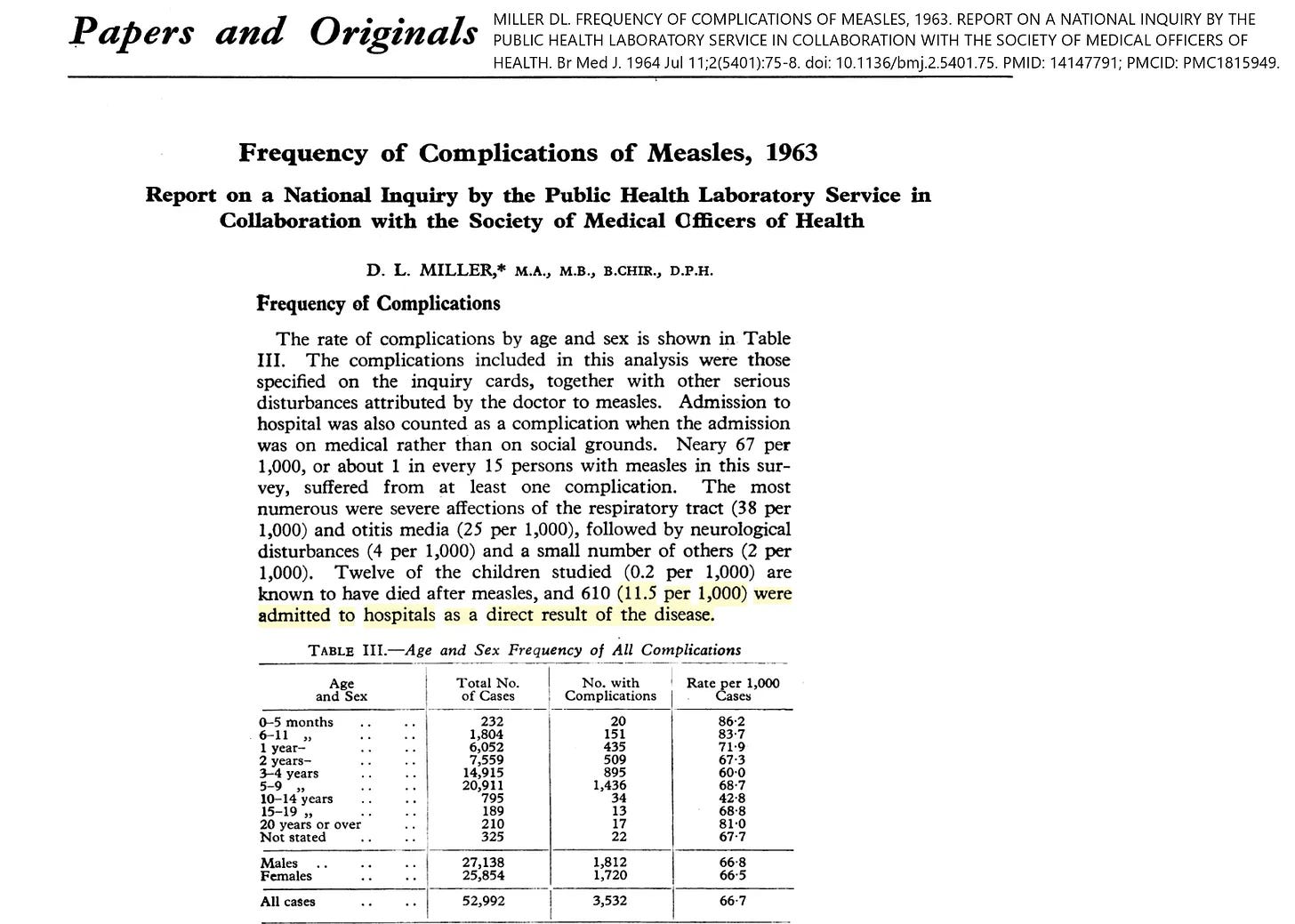
A case of measles in 2023, reported by the Maine Center for Disease Control and Prevention (CDC) and mainstream media as being the state’s first case in four years, was vaccine-induced, according to documents released Tuesday by Informed Consent Action Network (ICAN).

Kim Mack Rosenberg, general counsel for Children’s Health Defense, told The Defender that measles “outbreaks” are a well-worn tactic of state and federal governmental agencies to churn up fears about people who choose not to vaccinate or who do so selectively.

“We have seen measles used this way over and over,” Mack Rosenberg said. “Here, the narrative backfired and Maine officials swept under the rug the fact that the child’s measles strain was vaccine-related.”

According to the Mayo Clinic, measles is a viral infection typically accompanied by a skin rash, fever, cough, runny nose, sore throat, inflamed eyes and tiny white spots on the inner cheek.

On May 5, 2023, Maine’s Department of Health and Human Services warned that the Maine CDC had been notified of a positive measles test — ostensibly the state’s first measles case since 2019.

The health department said the child “received a dose of measles vaccine” and that Maine CDC officials were “considering the child to be infectious out of an abundance of caution.”

The news was quickly picked up by mainstream news outlets such as CNN, which blamed low vaccination rates for recent measles outbreaks, and USA Today, which stressed that the best way to prevent measles is for children and babies as young as 12 months to get the MMR (measles, mumps and rubella) vaccine.

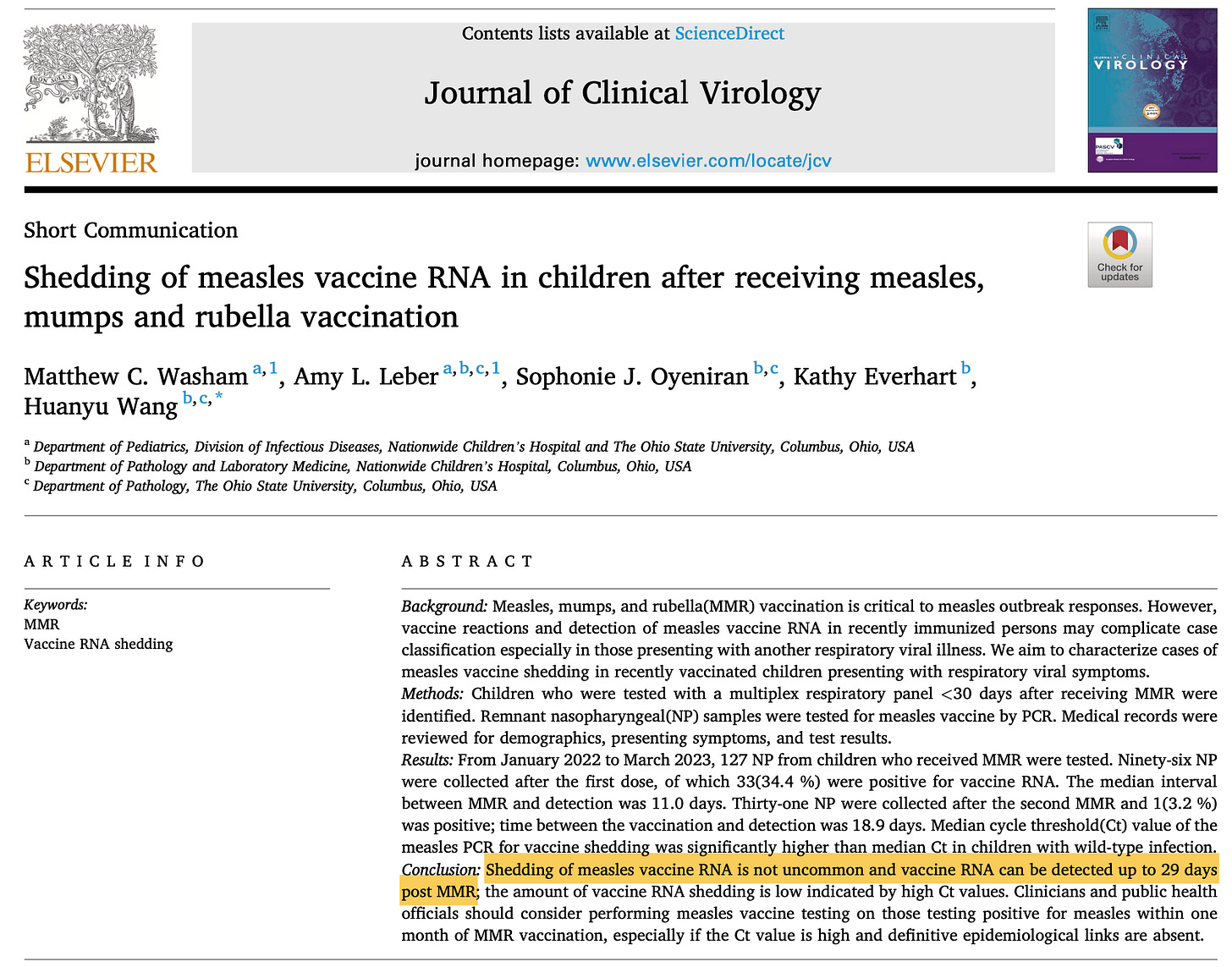
However, the child’s May 3, 2023, test results — which ICAN obtained via a Freedom of Information Act request — revealed that the measles strain was “consistent with vaccine strain” — meaning the vaccine caused the child’s rash symptoms.

Roughly 2% of people who get a measles vaccine develop a rash, according to a World Health Organization report. But the Maine CDC never went public about this information.

Nearly two weeks after the testing was done, the Maine CDC on May 16, 2023, announced that the child didn’t have an infectious strain of measles — but the announcement failed to state that the child’s rash was vaccine-related.

Why did the Maine CDC take so long to confirm the strain?

It’s inexcusable that Maine CDC officials took so long to determine the strain of measles, Mack Rosenberg said.

“Their fear is that such information would lead to more vaccine hesitancy,” she said. “However, obfuscating information in this way deprives the public of crucial information about vaccine safety and effectiveness.”

ICAN in a press release questioned why the Maine CDC raised the alarm and then took so long to confirm the specific strain.

Mack Rosenberg noted that mainstream news outlets “immediately” jumped on “the fearmongering bandwagon” before the strain type was identified.

“Yet when the true nature of this child’s exposure was revealed,” she said, ”ranks were closed to prevent the truth from getting out.”

Karl Jablonowski, Ph.D., a senior research scientist at CHD, told The Defender it was “reckless fear-mongering” to identify one case of measles in a vaccinated child and then issue a press release saying that anyone who isn’t immunized against measles, or doesn’t know their immunization status, should get vaccinated.

“Fear-mongering is formulaic: danger, solution and vilify those who do not conform,” he said.

If it’s well executed and done in coordination with media, it may get people to do what you want — but at a cost, he said. “One of the greatest threats to our public health is that our public health institutions lack integrity.”

Reports of measles outbreaks continue

Reports of measles outbreaks have continued since May of 2023.

CBS News on Sept. 24 reported a newly confirmed case of an elementary student in Minneapolis, bringing the number of confirmed cases in the Twin Cities to over 50.

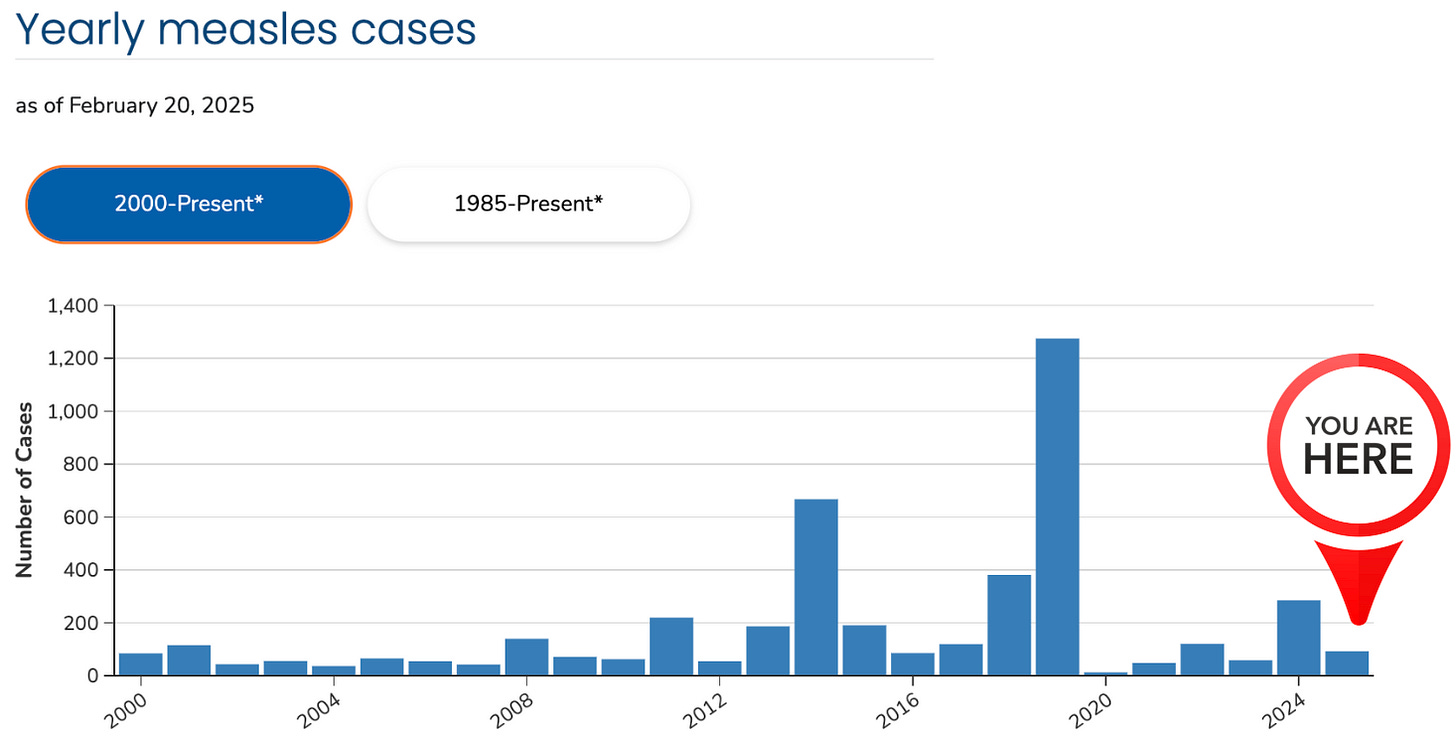
So far in 2024, there have been 262 reported cases of measles, according to the CDC.

In 2024, cases were reported in Arizona, California, District of Columbia, Florida, Georgia, Idaho, Illinois, Indiana, Louisiana, Maryland, Massachusetts, Michigan, Minnesota, Missouri, New Hampshire, New Jersey, New Mexico, New York City, New York State, North Carolina, Ohio, Oklahoma, Oregon, Pennsylvania, South Carolina, South Dakota, Tennessee, Vermont, Virginia, Washington, Wisconsin and West Virginia.

From Jan. 1, 2020, to March 28, 2024, the CDC was notified of 338 confirmed measles cases. None of them resulted in death.

The Maine CDC on April 14 issued a health advisory regarding an “increase in global and domestic measles cases and outbreaks.” The advisory said that Maine has not seen any measles cases since 2019 and made no mention of the May 2023 case it initially reported.

Health risks from measles vaccine outweigh getting the disease

Although media reports sometimes blame the unvaccinated for recent outbreaks, Dr. Liz Mumper, a pediatrician, told The Defender in an earlier interview it doesn’t make sense to assume the unvaccinated are to blame.

She said cyclical outbreaks still occur even in populations with nearly 100% vaccination, such as college students.

The overwhelming majority of the approximately 130,000 measles deaths annually occur in countries in the global south that have weak health infrastructures, according to the World Health Organization. Those deaths, along with measles hospitalizations in the global north, are associated with vitamin A deficiency.

“Measles can be deadly if a child does not have access to safe water and medical care,” Mumper said. “In developed countries, fatalities from measles are very rare.”

Effective treatments include vitamin A in high doses and attention to hydration status, Mumper said.

Other pediatricians who spoke with The Defender said it’s likely better for a U.S. child to get a measles infection than to receive an MMR vaccine.

Dr. Michelle Perro, a pediatrician, said the idea of vaccinating children to protect them from getting measles isn’t completely without merit. “It is worth noting that training the immune system to recognize deleterious foreign pathogens has had public health success.”

However, the risks associated with the MMR vaccine — since it’s nearly impossible to get a single measles vaccine — outweigh getting measles “due to the rise in neurocognitive and other health challenges directly caused by the MMR vaccine” which contains toxic adjuvants, she said.

Dr. Paul Thomas, a retired pediatrician and author of “Vax Facts: What to Consider Before Vaccinating at All Ages & All Stages of Life,” agreed. He said the MMR vaccine is associated with many serious side effects including seizures, encephalopathy, death and autism.

Perro said children’s health took a big hit when Big Pharma and the American Medical Association over 100 years ago forced the public to transition from a natural health platform that included the use of health-promoting diets, herbal medicine and homeopathics to a drug-based system.

Measles can be challenging for children, Perro said, particularly when it’s accompanied by high fevers, diarrhea, uncomfortable rashes and potential negative sequelae such as pneumonia.

Parents must relearn how to manage common viral illnesses, she said. “Be clear, it is much easier to manage a febrile illness in a child than a chronic disease like autism or autoimmunity.”

[…]

Via https://childrenshealthdefense.org/defender/maine-vaccine-induced-measles-case-ican/

Kennedy to Senate Roundtable: We Are Literally Poisoning Our Children

child eating and RFK Jr.

The U.S. healthcare system is “an existential threat to our country,” Robert F. Kennedy Jr. on Monday told members of a congressional roundtable on nutrition and the prevalence of chronic illness.

“Every major pillar of the U.S. healthcare system as a statement of economic fact makes money when Americans get sick,” Kennedy said. “The most valuable asset in this country today is a sick child.”

Kennedy, founder and chairman on leave of Children’s Health Defense (CHD), joined a lineup of prominent doctors and medical professionals, scientists, nutritionists and academic researchers who participated in the roundtable, which was hosted by Sen. Ron Johnson (R-Wis.).

CHD CEO Mary Holland, who attended the roundtable, told The Defender:

“Sen. Johnson’s roundtable on health and nutrition was both devastating and inspiring. Devastating because our food system is so corrupt and harmful to health, and inspiring because the speakers and those assembled were so passionate about turning things around quickly.

“All shared the view that these problems are man-made and can be corrected — by individuals in terms of diet, by Congress in terms of law and by health agencies intent on protecting people instead of profits.”

‘Why are we allowing this to happen to our children?’

According to Kennedy, U.S. government spending on healthcare is high — for poor results.

“While American life expectancy plummets, we spend 4 times per capita more on healthcare than the Italians, but Italians live 7.5 years longer than us on average. During the COVID epidemic, [the U.S. had] the highest body count of any country in the world. We had 17% of the COVID deaths [with] 4.2% of the world’s population. We literally had the worst record of any country in the world,” Kennedy said.

“All this should have been a blaring wake-up call about our weakened American immune systems,” Kennedy said.

He cited figures from the Centers for Disease Control and Prevention (CDC) showing the average American who died from COVID-19 had, on average, 3.8 chronic diseases. “No other country has anything like this,” Kennedy said.

According to Kennedy, two-thirds of U.S. adults and children suffer from chronic health problems, compared to 1% 50 years ago.

“In Japan, the childhood obesity rate is 3%. Half of Americans have pre-diabetes or Type 2 diabetes. When I was 10 years old and my uncle was president, a typical pediatrician would see one case of Type 2 juvenile diabetes during his 40- or 50-year career. Today, one out of every three children … is diabetic or pre-diabetic,” he said.

He also called out the rising rates of autism in children and mental health issues in teens.

“Why are we allowing this to happen to our children?” he asked. “These are the most precious assets that we have in this country. … How can we call ourselves a moral nation, the exemplary democracy in the world, if we are treating our children like this?”

‘We are literally poisoning our children systematically for profit’

There are “two culprits” primarily responsible for the chronic disease epidemic in the U.S., Kennedy said — ultra-processed foods and toxic chemicals in food, medicine and the environment.

“Seventy percent of American children’s diets is now ultra-processed, which means industrial manufactured in a factory. These foods consist primarily of processed sugar, ultra-processed grain and seed oils.”

Laboratory scientists, “many of whom were formerly working for the cigarette industry,” developed new chemicals and techniques “to make our food more addictive,” including the developments of ingredients and additives that “didn’t exist a hundred years ago.”

“Hundreds of these chemicals are now banned in Europe, but they’re ubiquitous in American processed foods. We are literally poisoning our children systematically for profit,” Kennedy said. “Pesticides, food additives, pharmaceutical drugs and toxic waste permeate every cell in our bodies.”

Kennedy noted that the average age of puberty today in the U.S. is the lowest in the world — and is six years younger than it was in 1900.

He said:

“Many of these chemicals increase estrogen, because young children are ingesting so many of these hormone disruptors. America’s fertility rate has now dropped. Sperm counts in teens are about 50% of what they were a couple of generations ago, and testosterone rates have dropped.”

Dr. Chris Palmer, an expert on mental and metabolic health, told the panel, “These chronic diseases … are in fact metabolic dysfunction. The cause is … a toxic environment, like poor diet and exposure to harmful chemicals.”

Palmer called it “shocking” that the U.S. Food and Drug Administration (FDA) allows food manufacturers to introduce new chemicals into the food supply without adequate testing. “The manufacturers are allowed to determine for themselves whether this substance is safe for you and your family to eat,” Palmer said.

According to Jason H. Karp, founder and CEO of HumanCo, “Our FDA uses an innocent-until-proven-guilty approach for new chemicals or ingredients that’s known as GRAS, or ‘generally recognized as safe.’ This recklessly allows new chemicals into our food system until they are proven harmful.”

Panelists said that while the consumption of ultra-processed foods is encouraged, foods that were traditionally part of the human diet are under attack.

“The dangers of ultra-processed foods continue to be suppressed while the fear-mongering of nutrient-dense whole foods, such as red meat and eggs, continues,” said journalist Max Lugavere. He blamed “a coordinated effort between the food industry and the upper echelons of academia and nutrition science.”

Eighteen-year-old activist and filmmaker Grace Price told the panel that young people are demonized for their health issues, even though those issues are the result of a contaminated food supply — and regulatory corruption.

“Adults wonder why we are on pills for depression, ADHD [attention-deficit/hyperactivity disorder] and obesity, but the answer is glaring at us.” Price said. “Just look at the most recent food pyramid that was released. Lucky Charms cereal is ranked higher than ground beef.”

Price also noted that 95% of the members of the U.S. Department of Agriculture (USDA) dietary guidelines advisory committee in 2020 were found to have conflicts of interest with Big Food and Big Pharma.

Participants also addressed the use of toxic pesticides such as glyphosate and the prevalence — and dangers — of genetically modified crops.

Nutritionist Courtney Swan told the panel that in 1974, the U.S started spraying crops with glyphosate, “and in the early 1990s, we began to see the release of genetically modified foods into our food supply. You can assume that if it’s not organic, it is likely contaminated with glyphosate.”

Regulatory agencies transformed ‘into predators against the American people’

For Kennedy, regulatory capture places young people and future generations in peril.

“We are destroying our kids and we’re doing it because we’re being manipulated to do it through all of the institutions of government,” Kennedy said, noting that 75% of FDA funding comes not from taxpayers, but from Big Pharma.

“The FDA, the USDA and CDC are all controlled by giant for-profit corporations. Their function is no longer to improve and protect the health of Americans. Their function is to advance the mercantile and commercial interests of the pharmaceutical industry,” Kennedy said.

Dr. Marty Makary said regulatory capture and lobbying created a healthcare system focused on bureaucratic procedure instead of protecting health.

“We are so busy in our healthcare system billing and coding and paying each other … Every stakeholder has their gigantic lobby in Washington, D.C., and everybody’s making a lot of money except … the American citizen,” Makary said.

Brigham Buhler, founder of regenerative clinic Ways2Well, said the cost of the chronic disease epidemic for society goes beyond just “dollars and cents.” He said healthcare costs are “the No. 1 reason for bankruptcy” in the U.S. and that such costs are ultimately “paid in human lives.”

According to Kennedy, “If America fails, the chief reason will be because we let our country get sicker, more depressed, fatter, more infertile at an increasing rate while crippling our national security.”

He added:

“The good news is that we can change all this, and we can change it very, very, very quickly. It starts with taking a sledgehammer to corruption, to the conflicts in our regulatory agency and in this building. These conflicts have transformed our regulatory agencies into predators against the American people — and particularly our children.”

Johnson said those who have sounded the alarm on the epidemic of chronic illness have been demonized, especially during the COVID-19 pandemic:

“Those who seriously question the current orthodoxy or offer alternative treatments and approaches are generally ridiculed, vilified and canceled, with concerted effort made to destroy their reputations and careers.

“We all witnessed this during the pandemic, as eminently qualified and respected doctors who had the courage and compassion to treat COVID patients using cheap generic drugs were fired, sued, and either lost their medical licenses and certifications or had them seriously threatened.”

Makary said that while what he described as the “misinformation police” have targeted doctors, scientists and others who questioned official policies, “the greatest perpetrator of misinformation has been the United States government.”

Describing this as a “spiritual battle,” Kennedy said American society possesses an “inherent resilience” that may help it overcome the current health crisis.

“As long as we have that resilience, we’re always going to bounce back. As Americans, we’re not going to do that if our kids all have chronic disease.”

[…]

New Evidence of Pfizer ‘Hot Lots’ Linked to Higher Rates of COVID Vaccine Injuries

pfizer covid vaccines and red warning symbol

Different batches of the Pfizer-BioNTech COVID-19 vaccine distributed in the U.S. had very different rates of serious adverse events (SAEs), according to a peer-reviewed research letter published late Thursday in Science, Public Health Policy and the Law.

Children’s Health Defense (CHD) scientists Brian Hooker, Ph.D, chief scientific officer, and Karl Jablonowski, Ph.D., senior research scientist, co-authored the letter.

Hooker and Jablonowski found the highest SAE rates occurred in COVID-19 vaccine batches distributed during the first two months of the vaccination program — and the highest proportions of those batches were sent to government agencies, hospitals, universities and health departments, as opposed to clinics, pharmacies and doctor’s offices.

The “extremely high” amount of variability from lot to lot suggests “very poor manufacturing controls,” and a “manufacturing process that should have never been approved in the first place,” Hooker told The Defender.

Under emergency use authorization, vaccine makers aren’t required to have their final filled and finished vials inspected, according to Dr. Peter McCullough. Contaminants from the manufacturing process can be concentrated in certain lots. Product transport, storage and use issues also may affect particular lots.

The paper is the latest in a series of papers to analyze vaccine lot and adverse event data by country. Researchers in Denmark, the Czech Republic and Sweden conducted similar studies with similar results.

For this study of U.S. data, CHD researchers analyzed vaccine lot data for the Pfizer-BioNTech vaccine. This type of analysis allows researchers to track where the vaccine was manufactured and where it was distributed.

Informed Consent Action Network obtained the data in October 2022 through a Freedom of Information Act request.

CHD scientists matched that data to reports of adverse events in the Vaccine Adverse Event Reporting System (VAERS), a passive reporting system where providers or recipients can report injuries. It is not a complete inventory of all adverse events and is known to capture less than 1% of them.

The lot data showed that 410 million doses of the Pfizer-BioNTech vaccine produced in 156 different lots were distributed to 46,327 vaccine administration sites across the U.S. between Dec. 13, 2020, and April 26, 2022.

According to the data, on average 1,011,055 vaccines were distributed per day. The vaccines came from between one and 10 different lots, and the number of doses produced in each lot varied widely — from 10,530 to over 11.8 million.

For the three years of data analyzed, 977,542 adverse events were reported to VAERS. Of those, 455,820, or 46.7%, were related to the Pfizer-BioNTech vaccines.

Only 29% of the reports included a lot number. Among those, 290,835 of the serious adverse events could be linked to the lot numbers in the Pfizer data.

The reports included a wide range of side effects:

  • 78% of the adverse events reported weren’t serious.
  • 20% were considered serious, meaning they required hospitalization or an emergency room visit or included a life-threatening event, permanent disability or congenital malformation.
  • 2% of the entries reported a death.

The researchers found that the adverse events were not distributed proportionally across the different lots — some batches were associated with more side effects, and in some cases, significantly more.

The earlier batches sent to mass distribution centers like hospitals had more side effects than the later ones sent to pharmacies and large grocery chains. Some lots, particularly early ones, had higher rates of deaths and serious adverse events.

The rate of serious adverse events declined through time in all categories, which the researchers noted could be attributed to system management, fewer people reporting injuries, or fewer injuries.

The scientists said they expected to find a high number of deaths in states with the highest populations, such as California, Texas or New York. Instead, the proportions of serious injuries and deaths were relatively higher in places such as South Dakota, Kentucky and Tennessee.

The authors noted that data were made available only through legal action, which makes it challenging to do this type of research. Also, the VAERS database is insufficient to capture all adverse events and regional variations within states, posing another challenge to understanding the full range of possible issues with the lots.

U.S. data confirm Danish study that was subjected to ‘obsessive criticism’

CHD scientists built their analysis on work published by Danish researchers in 2023, who analyzed Pfizer lot data associated with reported serious adverse events in Denmark.

That Danish study analyzed data from Dec. 27, 2020, to Jan. 11, 2022. The analysis found larger vaccine lot sizes were associated with fewer serious adverse events and 71% of the suspected adverse reactions occurred in 4.2% of the vaccine batches.

The study raised the alarm about safety issues associated with the vaccine production process.

The author of the Danish paper, Vibeke Manniche, M.D., Ph.D., told YouTube commentator John Campbell, Ph.D., in an interview that the study raised essential questions about Pfizer’s COVID-19 vaccine, “Has the product changed? When did it change? Why did it change?”

That paper garnered significant attention in the press and on social media, what the authors called “obsessive criticism” in the form of multiple responses from researchers attempting to discredit the study’s methodologies and interpretations.

The authors responded publicly in the European Journal of Clinical Investigation. They defended their interpretations and said they “eagerly await more definitive studies of batch-dependent safety of the BNT162b2 mRNA COVID-19 vaccine, for example, from the SSI [Danish Statens Serum Institut], to refute or validate our results and increase the evidence base for this important area of research.”

In June, Czech researchers from the University of Ostrava and other research institutions reproduced the Danish study’s methodology. They used Czech Republic data, released through a Freedom of Information Act request, from the beginning of the vaccination campaign through March 1, 2023.

They also analyzed adverse events reported after the COVID-19 vaccine by batch number and compared them to the results from the Danish registry data, but they had data from Pfizer, Moderna and AstraZeneca.

They similarly found that different batches had different rates of adverse events and that there were significantly higher numbers of adverse events associated with the early vaccine releases for all of the vaccines — “confirming the results of the study by Schmeling et al.”

Last month, the authors of the original Danish study expanded their analysis to Sweden and published their findings in the journal Medicina.

In that paper, the authors reported that the batch-dependent issues they identified in Denmark were confirmed in Sweden and suggest that early commercial doses of Pfizer’s vaccine may have differed from later ones. They concluded the issue merits further study.

The letter published today in Science, Public Health Policy and the Law similarly reproduced the Danish study’s methodology and made largely similar findings that there were clear variations in Pfizer’s lots and the patterns were similar.

[…]

Via https://childrenshealthdefense.org/defender/pfizer-hot-lots-covid-vaccine-injuries-chd-research/

The Role of British Intelligence in the French Revolution

French Revolution: an important mess | VENTURA

By Richard Poe (From How the British Invented Communism and Blamed it on the Jews)

On November 25, 1789—four months after the storming of the Bastille—King Louis XVI was still on his throne, showing every willingness to work with the new National Assembly to form a constitutional monarchy. Sadly for Louis—and for all of France—events took a fateful turn that day. The catalyst was a letter from the London Revolution Society to the French National Assembly, which was read aloud to the members. It directly inspired the formation of the so-called Jacobin clubs, from which Danton, Marat, Robespierre, and the Reign of Terror would emerge.


Paid Agents

Jefferson expressed the same view in a letter of January 31, 1815 to William Plumer, a New Hampshire lawyer and politician.63

“[W]hen England took alarm lest France, become republican, should recover energies dangerous to her,” wrote Jefferson, “she employed emissaries with means to engage incendiaries and anarchists in the disorganisation of all government there…”

According to Jefferson, these hired “incendiaries and anarchists” infiltrated the Revolution by “assuming exaggerated zeal for republican government,” then gained control of the legislature, “overwhelming by their majorities the honest & enlightened patriots…”

Their pockets filled with British gold, these paid agents “intrigued themselves into the municipality of Paris,” said Jefferson, “controlled by terrorism the proceedings of the legislature…” and finally “murdered the king,” thus “demolishing liberty and government with it.”

In the same letter, Jefferson accused Danton and Marat by name of being on the British payroll.

The London Revolution Society

Jefferson’s views find unexpected support from U.S. historian Micah Alpaugh, who has revealed the extensive influence British reformers exerted over the French revolutionaries. Unlike Jefferson, Alpaugh sees nothing nefarious in this influence, but nonetheless remarks on its surprising extent.

In his 2014 paper, “The British Origins of the French Jacobins,” Alpaugh notes that France’s radical Jacobin clubs were consciously modeled after an existing British organization, the London Revolution Society.64

This was a group of English intellectuals who began meeting at the London Tavern in Bishopsgate in 1788, ostensibly to celebrate the 100-year anniversary of William III’s Glorious Revolution. It soon became clear, however, that their true goal was to agitate for revolution in the present day.

On November 25, 1789—four months after the storming of the Bastille—King Louis XVI was still on his throne, showing every willingness to work with the new National Assembly to form a constitutional monarchy.

Sadly for Louis—and for all of France—events took a fateful turn that day which would end all possibility of cooperation. The catalyst for this catastrophe was a letter from the London Revolution Society to the French National Assembly.


The so-called “English Jacobins” offered their French disciples a poisoned chalice of “cosmopolitanism, internationalism, and universalism” (Alpaugh’s words), urging the French idealists to put aside the narrow interests of their own country, in favor of the broader interests of mankind. But the broader interests of mankind pushed by the “English Jacobins” turned out to be little more than a smokescreen for British imperial interests.


British Radicals Intervene

That day, November 25, 1789, the president of the French National Assembly read aloud to the legislators a letter from the London radicals.

The letter directly inspired the formation of the so-called Jacobin clubs, from which Danton, Marat, Robespierre, and the Reign of Terror would later emerge.

The letter called on the French to disdain “National partialities” and join with their English brethren in a revolution that would make “the World free and happy.”

Alpaugh writes that the letter “produced a ‘great sensation’ and loud applause in the Assembly, which wrote back to London declaring how it had seen ‘the aurora of the beautiful day’ when the two nations could put aside their differences and ‘contract an intimate liaison by the similarity of their opinions, and by their common enthusiasm for liberty’.”

This letter fueled a “growing Anglophilia” (Alpaugh’s words), inspiring the French revolutionaries to found a Societé de la Révolution, directly modeled after the London Revolution Society.

The Societé de la Révolution was later renamed, but always kept its English-style nickname Club des Jacobins—pointedly retaining the English word “club” as a tribute to the group’s British origin, Alpaugh explains.65

The Poisoned Chalice

As Jacobin “clubs” sprang up all over France, they typically retained close ties to their English mentors.

Alpaugh writes, “Early French Jacobins created their network in consultation with British models,” such as the London Revolution Society and the London Corresponding Society. “Direct correspondence between British and French radical organizations between 1787 and 1793 would develop reciprocal and mutually inspiring relationships…helping inspire the rise of Jacobin Clubs throughout France,” writes Alpaugh.66

Deliberately or not, the so-called “English Jacobins” (as they came to be known) offered their French disciples a poisoned chalice of “cosmopolitanism, internationalism, and universalism” (Alpaugh’s words), urging the French idealists to put aside the narrow interests of their own country, in favor of the broader interests of mankind.67

This was, in fact, a deception.

Alpaugh may not see it this way, but the broader interests of mankind pushed by the “English Jacobins” turned out to be little more than a smokescreen for British imperial interests.

The Jacobin Clubs gave rise to Marat, Danton, and Robespierre, ultimately leading to the Reign of Terror and the murder of King Louis XVI.

They also gave rise to a new ideology which has come to be known as communism.

“The term ‘communism’ in the France of the 1840s denoted… an offshoot of the Jacobin tradition of the first French revolution,” wrote Marxist historian David Fernbach in 1973. “This communism went back to Gracchus Babeuf’s Conspiracy of Equals” which was already shaking up Paris more than 20 years before Marx was born. Babeuf derived many of his ideas from British mentors, at least some of whom were British intelligence operatives.


The Invention of Communism

Communism was born on the streets of revolutionary Paris.

More than fifty years before Marx and Engels penned The Communist Manifesto, a faction of French radicals calling itself the Conspiracy of Equals was already preaching classless society, abolition of private property, and the need for revolutionary action.

Led by “Gracchus” Babeuf —whose real name was François-Noël Babeuf—the Conspiracy of Equals tried unsuccessfully to overthrow the so-called Directory, France’s last revolutionary government, in 1796.68

Their conspiracy failed, and Babeuf was put to death. But his ideas live on.

Marx and Engels called Babeuf the first modern communist.69

No record exists of Babeuf using the word communiste, though he sometimes called his followers “communautistes” (usually translated “communitarian”).70

However, a contemporary of Babeuf, Nicolas Restif de la Bretonne, often used the word “communist” in his writings, beginning as early as 1785.71

Babeuf’s prosecutors apparently believed that Restif was secretly in league with the Conspiracy of Equals, and some evidence suggests he may have been, according to James Billington, in his 1980 book Fire in the Minds of Men: Origins of the Revolutionary Faith.72

Jacobin Communism

For all these reasons, it is not surprising that the self-styled “communistes” who emerged in Paris during the 1830s and 1840s saw themselves, at least partly, as following in the footsteps of Babeuf.73

“The term ‘communism’ in the France of the 1840s denoted… an offshoot of the Jacobin tradition of the first French revolution,” wrote Marxist historian David Fernbach in 1973. “This communism went back to Gracchus Babeuf’s Conspiracy of Equals… This egalitarian or ‘crude’ communism, as Marx called it originated before the great development of machine industry. It appealed to the Paris sans-culottes—artisans, journeymen and unemployed—and potentially to the poor peasantry in the countryside.”74

Thus, Babeuf’s “crude” communism was already shaking up Paris more than 20 years before Marx was born.

By March, 1840, the Communist movement in Paris was deemed sufficiently threatening that a German newspaper denounced it, saying, “The Communists have in view nothing less than a levelling of society— substituting for the presently-existing order of things the absurd, immoral and impossible utopia of a community of goods.”75

When these words were written, the 21-year-old Karl Marx was studying classics and philosophy in Berlin. He had not yet shown a strong interest in radical or revolutionary politics.

[…]

Via https://richardpoe.substack.com/p/how-the-british-invented-communism

Medieval Cathedrals, Temples and Pagodas

Episode 11 Cathedrals to Pagodas: Sacred Architecture

The Middle Ages Around the World

Dr Joyce E Salisbury

Film Review

The first medieval cathedrals (10th-13th century) were Romanesque churches relying on columns to support their massive roofs. Early cathedrals were built by monasteries. In the later Middle Ages, they were built by the community with funds generated from trade revenue.

The Cathedral of St. Mary Magdalene in Vezelay Abbey in Burgundy, France Editorial Photography ...

The 12th century Vezelay (east central France) Abbey basilica is an excellent example of the Romanesque style. Fixed buttresses and a series of rounded arches forming barrel vaults (see The Engineering Marvels of Rome’s Public Baths) support the roof.

York Minster – the Magnificent Medieval Cathedral of Northern England – Britain and Britishness

Flying buttresse

Gothic arches filled with stained glass windows, replaced Roman arches in the late 12th century. Introduced by Abbott Sager to introduce more light into the cathedral interior, this design shifts the roof support away from walls and columns to exterior flying buttresses.

Guide To The Basilica Cathedral of Saint-Denis, Paris' Royal Mausoleum - The Geographical Cure

The first Gothic church was the St Denis basilica, where most French kings were consecrated.

HISTORY OF HAGIA SOPHIA CHURCH IN CONSTANTINOPLE · Greek City Times

Built by the 6th century Emperor Justinian I, the Hagia Sophia basilica became a mosque following the Turkish conquest of Constantinople in 1453. I became a  model for 17th century mosques.

11Sephardic Museum. Located in the El Transito Synagogue, built in the ...

14 century El Transito synagogue

During the Middle Ages, Jews embarked on heavy synagogue building, using the same builders as the Christian churches. Muslim-controlled Toledo (in modern-day Spain) built 11 synagogues in a city with 4,000 Jews (out of a total population of 35,000).

In 1192, Turks established the Delhi Sultanate in modern day India and ordered Hindu temples destroyed and replaced with mosques. The mosques were built under the direction of Islamic architects. Most retained their ornate Hindu carvings, with specific image of Hindu gods and goddesses.

Borobudur Temple, The Biggest Buddhist Temple in the World

The medieval temples where Buddhists worshiped were topped by stupas, which contained relic or manuscript. Only monks could enter the temple’s stupa for meditation.  A Buddhist temple in Java from the 8th or 9th century is known as the Borobruder. The largest stone temple in the world, the stones were laid without mortar and a carved to detail the journey to enlightenment. It was abandoned in the 15h century when Islam replaced Buddhism in Indonesia.

As Buddhism moved into China, Buddhist stupas became pagodas. There were 91 monasteries. The Tang capitol of Chang’an had 91 Buddhist monasteries. Liaodi is the largest pagoda in the world.


As Hindu spread to Southeast Asia in the early 12th century, the Ankar Watt temple (dedicated to Vishnu) was built in the Khmer Empire (9th-15h century) in modern day Cambodia.

Film can be viewed free with a library card on Kanopy.

https://www.kanopy.com/en/pukeariki/watch/video/13172786/13172809

From Land Grabbers to Carbon Cowboys: New Scramble for Community Lands Takes Off

In a recent interview with the New York Times, billionaire philanthropist Bill Gates was asked if there were types of projects that he would not invest in to offset his greenhouse gas emissions. “I don’t plant trees,” he replied, adding that planting trees to deal with the climate crisis was complete nonsense.I mean, are we the science people, or are we the idiots? Which one do we want to be?”[1]

Microsoft, the company he built his fortune on and, according to insiders, still actively advises, sees it differently.

In June 2024, the tech giant bought 8 million carbon credits from the Timberland Investment Group (TIG), a fund owned by the Brazilian agribusiness lender BTG Pactual.[2] TIG is raising US$1 billion to buy and convert pasture lands to large-scale eucalyptus plantations across the Southern Cone of Latin America.[3] As these trees grow, they draw carbon from the atmosphere and store it in their roots, trunks and branches. TIG will estimate the amount of carbon removed and then sell it as carbon credits to Microsoft and other corporations.

Each carbon credit that Microsoft buys from TIG is supposed to offset one tonne of the emissions Microsoft generates burning fossil fuels. This is one of the main ways that Microsoft and many other companies are planning on getting to “net zero” emissions, while still burning fossil fuels.

Microsoft’s deal with TIG, reportedly the largest “carbon dioxide removal credit transaction” in history, is just one of many investments Microsoft is making in tree plantations as a way to offset its emissions.[4]

The Dutch agribusiness lender Rabobank is another source of carbon credits for the tech company. It too is acquiring land in Brazil for tree plantations, in this instance with a local agribusiness family with a track record of illegal deforestation and fraud.[5] But most of the carbon credits Rabobank sells to Microsoft are from its programme to plant trees on the lands of small coffee and cacao growers in Latin America, Africa and Asia. This programme, called Acorn, uses satellites and a Microsoft digital platform to measure the number and size of shade trees that small farmers plant on their farms and then calculate the carbon they’ve removed from the atmosphere. It then sells the carbon to Microsoft as “carbon credits” for about US$38 a piece, taking a 20% cut for itself and its local partner, and paying farmers what’s left of the proceeds.[6]

A big problem with Rabobank’s scheme, identified in an investigation of its project with cacao farmers in Côte d’Ivoire, is that it is vastly overestimating the carbon removed — in this case by 600%![7] What’s more, the Côte d’Ivoire government says Rabobank is likely double dipping as its project overlaps with a World Bank-funded scheme that has already generated and sold carbon credits from trees planted on small cacao farms in the same area.

All of this “nonsense”, as Gates calls it, has not stopped an increasing number of corporations, governments and billionaires — not to mention a new industry of climate consultants and carbon brokers — from promoting the idea that emissions from fossil fuels can and should be offset by planting trees or other crops that sequester carbon.

Such projects have a chequered history that goes back to the 1997 Kyoto Protocol, but they really only took off after the 2016 Paris Climate Agreement, when governments endorsed the notion of offsets and carbon markets as an effective means to get corporations to cut their emissions.[8] Today, most offset projects are in the so-called “voluntary market”, where private companies from the global North manage the certification and sale of carbon credits to corporations that want to show they are taking action to deal with climate change. The projects, largely in the global South, can be for anything from the distribution of clean cook stoves in Malawi to the preservation of rainforests in Indonesia. The premise is that the project either prevents emissions that would have occurred without it, or that it leads to the removal of carbon dioxide (CO2) from the atmosphere. Cook stoves and rainforest preservation are examples of emissions avoidance. Planting trees, on the other hand, is the most popular form of removal.

In a 2024 study, the World Rainforest Movement (WRM) says that the number of tree planting projects for carbon credits has tripled over the past three years.[9] WRM says the surge is partly driven by the large number of high-profile scandals in emissions avoidance schemes, known as “REDD+”.[10] Numerous projects to preserve forests have been withdrawn or suspended from carbon markets after investigations showed they were based on implausible stories about the threat of deforestation or that they caused human rights violations and other harms to local communities. As a result, WRM says corporations are turning their attention to tree planting as a source of “high-integrity” carbon credits. This is now spawning a mad rush to secure lands where trees can be planted.

The Carbon Farmland Grab

Activists and scientists have been warning for years that schemes to offset carbon emissions by planting trees or other crops would lead to a surge in land grabbing, especially in the global South.[11] These warnings are now proving true.

GRAIN combed through the various registries of carbon offset projects to try and get a better sense of this new land grab and how it is unfolding. We identified 279 large-scale tree and crop planting projects for carbon credits that corporations have initiated since 2016 in the global South. They cover over 9.1 million hectares of land — an area roughly the size of Portugal. (See Box 1: What’s included and what’s not included in the land deal dataset)

The deals (view the dataset here) add up to a massive new form of land grabbing that will only increase conflicts and pressures over land that are still simmering from the last global land grab spree that erupted in 2007-8 in the wake of global food and financial crises. They also signify that new sources of money are now flowing into the coffers of companies specialised in taking lands from communities in the South to enrich and serve corporations, mainly in the North.


Box 1: What’s included and what’s not included in the land deal dataset

What’s in?

Our data covers projects from all the major voluntary offset project registries. These are: American Carbon Registry (ACR), Climate Action Reserve (CAR), Gold Standard (GS), Verra (VCS), BioCarbono (BC), Cercarbono (CV) and Plan Vivo (PV). It also includes cases on the website farmlandgrab.org that are not yet found in the registries.

The projects in our dataset are limited to projects that:

– involve the large-scale planting of crops and/or tree species on a combined area of land over 100 ha for the purpose of producing carbon credits;

– are driven by companies from outside the communities;

– were initiated since 2016 and up to 31 March 2024 (roughly post-Paris Agreement); and

– are located in the global South.

The projects involve either 1) the creation of large-scale plantations or 2) contract production with small farmers. But all the projects bind the use of the land to the terms of the project for 20 years or more.

What’s not in?

REDD+ projects, which aim to avoid deforestation, are not included. Some types of projects that produce carbon credits through tree planting or agriculture on large areas of land are not included either. These are:

– projects to manage pasture lands, which affect the access to lands and traditional practices of pastoralists;

– projects to restore or create mangroves, where large areas of coastline are taken over for the planting of mangrove trees; and,

– projects which generate carbon credits by enrolling farmers to implement agricultural practices that are said to build up carbon in the soils, often called “carbon farming”.

These projects are extremely important and can have equally severe impacts on communities, including land grabbing, but they are not covered here to keep the dataset manageable.[12] Our data also does not cover projects located in the global North, such as in New Zealand, Scotland and Australia, where national schemes that endorse tree planting for carbon offsets have led to a displacement in food production and undermined farmers’ access to land.[13]


To date, 52 countries in the global South have been targeted by these projects. Half the projects are in just four countries: China, India, Brazil and Colombia, which are developing their own industries of carbon project developers. But projects in these countries account for less than a third of the total land area involved. The most affected region, in terms of land area, is Africa, with projects covering over 5.2 million hectares.[14]

Many of the projects involve land deals to set up giant eucalyptus, acacia or bamboo plantations. Typically, these are pasture lands or savannahs that were used until now by local communities for grazing livestock or growing food.

.

An even larger number of projects are implemented on small farms. Typically, in these cases, farmers must show proof that they have title over the lands and are asked to sign contracts in which they commit to plant and maintain a number of trees on a portion of their land. According to these contracts, farmers transfer the rights to the carbon in the trees and in the soil to the project proponents. While these deals do not displace farmers from their lands, they are a form of contract production. Farmers are effectively ceding control over a portion of their lands to an outside company for decades. They can no longer do what they want on the land. The projects can also encourage, and in some cases directly facilitate, a shift from collective forms of land management to privatised, individual property. (See Box 2: Carbon colonialism)

The money that investors plan to capture from these deals is immense. The projects we pulled from the Verra and Gold Standard registries alone will generate 2.5 billion carbon credits (1 credit = 1 tonne of CO2 removed) over their lifetime. With an average price of about US$10 per credit, that adds up to a potential bounty of US$25 billion.[15]

Here Come the “Idiots”

While these projects are exclusively set up in rural areas with extremely low emissions per capita, it is quite the opposite when it comes to the companies orchestrating the projects. With the exception of what’s happening in India and China, most carbon projects are led by foreign companies in rich countries with atrocious emissions records — such as the Netherlands, the US, Singapore, Switzerland, the UK, France, Germany and the UAE.[16] There is a clear colonial dynamic at work, with companies and big NGOs from the North once again using the lands of communities in the global South for their own agendas and their own benefit.

.

GRAIN and UChicago Data Science Institute (click here for better resolution)

.A good number of actors driving this new wave of land grabs are in fact repeat offenders from the global farmland grab that took off a decade and a half ago. This is especially the case in Africa. (See Box 3: Africa’s land grabbers are back in business) There are also several companies from the forestry sector with histories of land grabbing and conflicts with local communities. Much of the vast eucalyptus plantations of Brazilian paper giant Suzano, for example, which is involved in three large-scale carbon plantation projects, have been grabbed from Brazil’s indigenous and traditional peoples.[17] And a non-negligible number of project developers have records of illegal dealings and financial scandal. They include:

  • Ricardo Stoppe Jr, Brazil’s “carbon king”, who was arrested in June 2024 for running an illegal carbon credit sale and land grabbing scheme;[18]
  • Martin Vorderwulbecke, a German businessman with a neem tree carbon project in Paraguay, who is accused of defrauding Slovenia’s national airline of millions of dollars;[19]
  • Alexis Ludwig Leroy, a French/Swiss carbon trader developing tree planting projects in Côte d’Ivoire and the Democratic Republic of Congo, who is reportedly under investigation for money laundering and financial connections to Colombia’s “queen of cocaine”;[20]
  • Vittorio Medioli, an Italian/Brazilian businessman and politician with a carbon tree plantation in Brazil, who was convicted in Brazilian courts for currency evasion and sued for cartel and gang formation in the transport sector;[21] and,
  • Sheikh Ahmed Dalmook al Maktoum, a member of the UAE royal family seeking tens of millions of hectares in Africa for carbon offset projects, who is accused of overcharging Ghana on the supply of Russian-made Covid vaccines and who was advised on his African carbon deals by an Italian businessman convicted for a bankruptcy fraud that sank one of Italy’s largest telecommunications companies.[22]

The money being hustled by these carbon cowboys comes mainly from the world’s most polluting corporations, who are interested in buying carbon credits to greenwash their emissions.

[…]

Via https://www.globalresearch.ca/land-grabbers-carbon-cowboys/5868860