Unknown's avatar

About stuartbramhall

Retired child and adolescent psychiatrist and American expatriate in New Zealand. In 2002, I made the difficult decision to close my 25-year Seattle practice after 15 years of covert FBI harassment. I describe the unrelenting phone harassment, illegal break-ins and six attempts on my life in my 2010 book The Most Revolutionary Act: Memoir of an American Refugee.

The Alliance of Sahel States and BRICS: Prospects

Sahel and BRICS

Mikhail Gamandiy-Egorov

With the BRICS Summit in Kazan approaching and interest in one of the main multipolar world order international structures growing steadily, it is worth addressing the joint interaction – and even integration – of new African countries into the alliance, while keeping in mind who should be a priority.

There is little time left before the start of the 2024BRICS Summit, which will be held in our country. In addition to the serious agenda in various areas of mutual interest that the current members of the organization will be in charge of at the said summit, many observers are naturally interested by the question of the further expansion of the international structure representing multipolarity, including, of course, vis-à-vis African countries.

Pan-African values and BRICS

As of today, three African states are already full-fledged members of the BRICS bloc: South Africa (since 2011), Ethiopia and Egypt (since 2024). In general, BRICS maintains privileged relations of strategic nature with the African continent and the states of the Global South. Regardless of whether a new stage of BRICS enlargement will be announced this year in Russia, especially since the modalities of interaction between the organization and the candidate countries can vary (like within the Shanghai Cooperation Organization (SCO) with the status of dialogue partners or observers), the main thing is that the strengthening of the alliance between BRICS and the countries of the Global South will continue to move forward. This, of course, includes African states as well.

At the same time, today and more than ever, an extremely important point must be taken into account. The further expansion of BRICS should be done only with countries that fully share the organization’s agenda, including in the framework of supporting the multipolar world. This is perhaps even the key point. Ultimately, there is no point in repeating the past mistake, when Argentina was invited among the candidates for BRICS membership from Latin American states, but then a change of government followed and a clownish pro-Western president took power. Of course, Brazil had a special interest in Argentina’s membership at that time and during that period it was perfectly justified, but given the instability of the Argentine political system, it is obvious that such mistakes must not be repeated. Especially since in Latin America there are absolutely worthy candidates, such as Cuba, Venezuela, Nicaragua and Bolivia.

Regarding Africa, it is now obviously appropriate to give priority first to those states that conduct their policies and development paths in full compliance with Pan-African values and that are unconditional allies of the multipolar world order. There are a significant number of such countries on the African continent today and this applies particularly to the member states of the Alliance-Confederation of Sahel States (AES, Alliance-Confédération des Etats du Sahel), , composed of Mali, Burkina Faso and Niger.

AES: a reliable ally of the multipolar world

Indeed, these states of the Sahel region have already proven, not only in words, but also and above all through deeds, that they are reliable and worthy allies of the powers that defend and promote the contemporary multipolar world order. In addition, one more important point should be mentioned. Already being a full-fledged regional alliance, currently composed of three states, the full integration of the AES into BRICS projects will further strengthen the processes at the international level, which are today in the interests of all the multipolar era supporters, as well as the very direction of active interaction between all international and regional structures that support the multipolar world.

Regardless of the initial status of such integration (as partner states, observers or full members), it will give a strong impetus to many other countries of the African continent to realize that this is indeed the path worth taking. Ultimately, today and more than ever, the Western planetary minority is enraged, including because of contemporary geoeconomic processes . Processes that are also taking place on the African continent, for which reason it is necessary to put an end to the neocolonial ambitions of the arrogant Western minority by using the entire economic power of BRICS and the global majority.

[…]

Via https://libya360.wordpress.com/2024/10/18/the-alliance-of-sahel-states-and-brics-prospects/

The Pfizer Papers: Pfizer’s Crimes Against Humanity

Naomi Klein

Our book, The Pfizer Papers: Pfizer’s Crimes Against Humanity, was published two days ago; it is already a bestseller. This is a book that three governments — the US, the UK and Australia — all sought to suppress. The story of how it came to be is extraordinary — 3250 highly credentialed doctors and scientists under the leadership of one extraordinary woman, Amy Kelly, worked for two years on the 450,000 internal Pfizer documents released under court order by a successful lawsuit by attorney Aaron Siri. In the process these volunteers confirmed the greatest crime against humanity of all time. Read on.

This book in your hands is the result of an extraordinary set of confluences. It also presents, in a format available in bookstores for the first time, material that has already changed history.

You are about to embark as a reader on a journey through an extraordinary story—one whose elements almost defy belief.

The Pfizer Papers is the result of a group of strangers—ordinary people with extraordinary skills, located in different places around the world, with different backgrounds and interests—who all came together, for no money or professional recompense at all; out of the goodness of their hearts, and motivated by love for true medicine and true science—to undertake a rigorous, painfully detailed, and complex research project, which spanned the years 2022 to the present, and which continues to this day.

The material they read through and analyzed involved 450,000 pages of documents, all written in extremely dense, technical language.

This far-flung, relentlessly pursued research project—under the leadership of DailyClout’s COO, the remarkably gifted project director Amy Kelly—brought one of the largest and most corrupt institutions in the world, Pfizer, to its knees. This project, pursued by 3,250 strangers who worked virtually and became friends and colleagues, drove a global pharmaceutical behemoth to lose billions of dollars in revenue. It balked the plans of the most powerful politicians on earth. It bypassed the censorship of the most powerful tech companies on earth.

This is the ultimate David and Goliath story.

The story began when lawyer Aaron Siri successfully sued the Food and Drug Administration, to compel them to release “The Pfizer Documents.” These are Pfizer’s internal documents—as noted above, 450,000 pages in number—that detail the clinical trials Pfizer conducted in relation to its COVID mRNA injection. These trials were undertaken to secure the ultimate prize for a pharmaceutical company, the “EUA,” or Emergency Use Authorization from the FDA. The FDA awarded EUA for ages 16+ to Pfizer in December 2020. The “pandemic,” of course (a crisis in public health that a book of mine, The Bodies of Others, confirmed, involved hyped and manipulated “infections” data and skewed mortality documentation) became the pretext for the “urgency” that led the FDA to bestow EUA on Pfizer’s (and Moderna’s) novel drug. The EUA is the hall pass, essentially, allowing Pfizer to race right to market with a not-fully-tested product.

The Pfizer Papers also contains documentation of what happened in “post-marketing,” meaning in the three months, December 2020 to February 2021, as the vaccine was rolled out upon the public. All leading spokespeople, and bought-off media, called the injection “safe and effective,” reading from what was a centralized script.

Many people who took this injection, as it was launched in 2020–2021–2022 and to the present, did not realize that normal testing for safety of a new vaccine—testing that typically takes ten to twelve years—had simply been bypassed via the mechanisms of a “state of emergency” and the FDA’s “Emergency Use Authorization.” They did not understand that the real “testing” was in fact Pfizer and the FDA observing whatever was happening to them and their loved ones, after these citizens rolled up their sleeves and submitted to the shot. As we can never forget, many millions of these people who submitted to the injection were “mandated” to take it, facing the threat of job loss, suspension of their education, or loss of their military positions if they refused; in some US states and overseas countries, people also faced the suspension of their rights to take transportation, cross borders, go to school or college, receive certain medical procedures, or enter buildings such as churches and synagogues, restaurants and gyms—if they refused.

The FDA asked the judge in the Aaron Siri lawsuit to withhold the release of the Pfizer documents for seventy-five years. Why would a government agency wish to conceal certain material until the present generation, those affected by what is in these documents, is dead and gone? There can be no good answer to that question.

Fortunately for history, and fortunately for millions of people whose lives were saved by this decision, the judge refused the FDA’s request, and compelled the release of the documents; a tranche of 55,000 pages per month.

When I heard about this, though, I was concerned as a journalist. I knew that no reporter had the bandwidth to go through material of this volume. I also understood that virtually no reporter had the training or skill sets required to understand the multidimensional, technically highly specialized language of the reports. In order to understand the reports, one would need a background in immunology; statistics; biostatistics; pathology; oncology; sports medicine; obstetrics; neurology; cardiology; pharmacology; cellular biology; chemistry; and many other specialties. In addition to doctors and scientists, in order to understand what was really happening in the Pfizer documents, you would also need people deeply knowledgeable about government and pharmaceutical industry regulatory processes; you would need people who understood the FDA approval process; you would need medical fraud specialists; and eventually, in order to understand what crimes were committed in the Papers, you would need lawyers.

I was worried that without people with all of those skill sets reading through the documents, their volume and complexity would lead them to vanish down “the memory hole.”

Enter Steve Bannon, the former Naval Officer, former Goldman Sachs investment banker, former advisor to President Trump, and current host of the most popular political podcast in America and one of the most listened-to worldwide, WarRoom.

He and I come from opposite ends of the political spectrum. I had been a lifelong Democrat, an advisor to President Bill Clinton’s reelection campaign, and to Al Gore’s presidential campaign. He, of course, is a staunch Republican-turned-MAGA. I had been deplatformed in June 2021, before the Pfizer documents came out, for the crime of warning that women were reporting menstrual dysregulation upon having received the mRNA injections. As a career-long writer on women’s sexual and reproductive health issues, I knew that this was a serious danger signal and that this side effect would affect fertility. (Any eighth grader should be able to foresee that as well.) Upon my having posted this warning, I was banned from Twitter, Facebook, YouTube, and other platforms. I was attacked globally, all at once, as an “anti-vaxxer” and “conspiracy theorist”; and my life as a well-known, bestselling feminist author, within the legacy media, ended. No one in that world would talk to me anymore, publish my work, or return my calls. I was un-personed.

(It turned out, upon two successful lawsuits in 2023 by Missouri and Louisiana attorneys general, that it was actually the White House, the CDC, and senior leaders of other government agencies, including the Department of Homeland Security, that unlawfully pressured Twitter and Facebook to remove that cautionary tweet of mine, to shut me down, and to “BOLO” or Be On the Lookout for similar posts. This suppression is now the subject of a pending Supreme Court decision on whether or not it violated the First Amendment.)

In this dark time in my life, to my surprise, I received a text from Steve Bannon’s producer, who invited me onto WarRoom. I brought forward my concerns about women’s reproductive health in the wake of mRNA injection, and to my surprise he was respectful, thoughtful about the implications, and took the issue very seriously. I returned again and again, to bring that and other concerns that were emerging in relation to the mRNA injections to his audience. I was relieved to have a platform on which I could share these urgent warnings. At the same time, I was sad that the Left, which was supposed to champion feminism, seemed not to care at all about serious risks to women and unborn babies. I recognized the irony that a person whom I had been taught to believe was the Devil Incarnate, actually cared more about women and babies than did all of my right-on former colleagues, including the feminist health establishment, who had always spoken so loudly about women’s wellbeing and women’s rights.

Given my appearances on WarRoom leading up to 2022, it was natural that the subject of the Pfizer documents came up on that show when the documents were released. I shared my concern that they would be lost to history due to their volume and technical language. Bannon said something like, “Well, you will crowdsource a project to read through them.”

I was taken aback, as I had zero skills related to, or knowledge about how possibly to do such a thing. I answered something like, “Of course.”

So, my news and opinion platform DailyClout was deluged with offers from around the world, from WarRoom listeners with the skill sets needed, to decipher the Pfizer documents. I was terrified. It was chaos. I had excellent people on my team. But none of us knew how to manage or even organize the deluge of emails; we did not know how to evaluate the thousands of CVs; and even once we had “onboarded” these thousands of people, in different time zones, to “the project,” our inboxes became even more terrifying, as it was literally impossible to organize 3,250 experts into an organization chart that could systematically work through these documents. Emails were getting tangled or went unanswered. People asked questions we could not answer. We had no idea what structure could allow such a huge number of disparate experts to work through the vast trove of material.

A few weeks in, as I was in despair, Bannon had me on again. He asked about the progress of the project, and I replied, more upbeat than I felt, that many people had joined us, and they were starting to read. “Of course, you will begin delivering reports,” he prompted. “Of course,” I answered, horrified at being in so far over my head.

I have never had a corporate job, so it had not even occurred to me that a series of reports was the format that the analyses of the documents should take.

Then something happened that I can only describe as providential. We put out a call to the volunteers for a project manager, and Amy Kelly reached out. Ms. Kelly is a Six Sigma-certified project manager, with extensive experience in telecommunications and tech project management. She is also a simply inexplicably effective leader. The day that she put her hand to the chaos in the inboxes, the waters were stilled. Peace and productivity prevailed. Ms. Kelly somehow effortlessly organized the volunteers into six working groups, with a supra-committee at the head of each, and the proper work began.

I can only explain the scope and smoothness and effectiveness of the work that followed, as occurring in a state of grace.

In the two years since Ms. Kelly and the volunteers have been working together, they have gone through 2,369 documents and data files totaling hundreds of thousands of pages and have issued almost one hundred reports. I taught the volunteers to write these in a language that everyone could understand—which I thought was very important to maximize their impact. And Amy Kelly meticulously revised almost all, and edited all, of them.

[…]

Via https://naomiwolf.substack.com/p/the-pfizer-papers-prizers-crimes

Venezuelan Prison Gang Seizes Multiple Apartment Buildings In Texas

Zero Hedge

A new shocking report has found that Venezuelan transnational gang Tren de Aragua has taken over at least four apartment building complexes in San Antonio, Texas, as thousands of its illegal alien gangsters run amok nationwide, sparking crime and chaos from Colorado to Texas to New York City. Many of the members of the armed migrant prison gang invaded the nation through Biden-Harris’ open southern borders.

DailyMail revealed:

A dangerous Venezuelan gang has taken over at least four apartment complexes in San Antonio, Texas, as it expands its reach in yet another America city, DailyMail.com can reveal.

The report confirmed that Palatia Apartments was one apartment complex where TdA members were operating out. This complex was the scene of a recent raid… 

Just last week a small army of police officers raided an apartment complex in San Antonio and arrested 19 individuals – including four gang members.

Law enforcement sources confirmed TdA had been operating at the Palatia Apartments for five to six months – squatting in empty units they either rented out to other migrants, used as a base to deal cocaine or, most horrifically, as prostitution dens to pimp out women and children.

But now DailyMail.com can reveal that this apartment invasion is just the tip of the iceberg in the major southern Texas city, with at least three other rental properties also occupied by the criminal organization. 

While Palatia Apartments was one complex full of TdA members, the other three buildings were not named in the report because of ongoing police investigations.

[…]

The US Army warned in leaked documents that as many as 5,000 TdA members have invaded the nation, many of which are armed.

DailyMail noted that TdA’s command and control center shifted north to just below the US border in the Mexican town of Ciudad Juarez. The armed group is rapidly expanding turf nationwide. This may ignite gang warfare with native US gangs.


In recent weeks, police sources told the NYPost that TdA was recruiting their members and victims straight out of NYC-run migrant shelters.

In the Big Apple, Tren de Aragua is trying to recruit foot soldiers to force women into sex trafficking — in the hopes that it will become a main source of income for the gang, according to the leaked memo. -NYPost

[…]

Via https://www.zerohedge.com/political/venezuelan-prison-gang-seizes-four-apartment-buildings-texas

Are Medical Errors On the Rise Due To Cognitive Impacts Of mRNA Vaccine?

Dr Pierre Kory

[…]

As the title of this post reflects, I recently developed a growing concern that health care providers are “not as sharp” as they used to be and, as you will learn from the cases I will present below, that may be putting it mildly.

Why would I hypothesize about a sudden deterioration in the cognitive and technical abilities of health care providers? Couple of reasons;

  1. The most mRNA vaccinated sub-population in the United States are almost certainly our health care providers. They make up the entire class of employees mandated by the Centers for Medicare and Medicaid Services (CMS), the agency that governs the two federal/state health insurance plans for the elderly and poor. Recall that 25 states fought back against CMS by issuing injunctions against the mandate until the Supreme Court granted CMS the authority to do so. Which meant that all CMS facility employees (every hospital, nursing home, and home health agency employee in the country) had to get the mRNA vaccine otherwise they would not be eligible for reimbursement for their services from those entities. That does not make for a valuable employee.
  2. The mRNA “vaccine,” like Covid itself, causes immense amounts of cognitive dysfunction, i.e. “brain fog” and worse. In my Leading Edge Clinic specialty practice where we treat Long Covid/Long Vax (70% are Long Vax) of the almost 1500 chronically ill patients we have encountered, the vast majority report new-onset cognitive dysfunction.

The real tragedy is that the mandate from CMS specified that “accommodations” (i.e. exemptions) should be offerred by the involved health care facilities, however, as we well know, in the vast majority of facilities, exemptions were nearly impossible to obtain. Numerous lawsuits are ongoing to address the horrific negative consequences of the mass firings that resulted. The bright side is that I am hearing from my Covid litigation experts that these cases are now being regularly won .

However, the behavior of the many corporate health systems around the country effectively “weeded out” all unvaccinated employees. Although a number of centers apparently now welcome back their former unvaccinated employees, it appears that not many as hoped wanted to return to a former employer that treated them that way. Thus, I maintain that the vast majority of those currently working in the system are vaccinated, and heavily vaccinated at that.

So, if they are so heavily vaccinated, what is the probability that they are suffering cognitive issues? Well, from my recent (surprisingly popular) post about the goings on at Ohio State Medical Center, apparently numerous docs were retiring or going out on disability due to “neurological issues.”

The “anecdotes” I cited in that post are further supported by two recent papers out of South Korea which found shocking negative impacts on cognitive abilities in those who underwent mRNA vaccination. A Midwestern Doctor did an excellent job in not only analyzing that paper but also putting the Korean studies into the context of what we already know about the cognitive impacts of the mRNA platform. I am going to bullet some of the numerous data points AMD cited, beginning with the South Korea studies which analyzed a large database of the inhabitants of Seoul where vaccination status was accurately recorded. It’s not good:

  1. One of their papers published in Nature (one of the top medical journals) found a 68% increase in depression, a 44% increase in anxiety, dissociative, stress-related, and somatoform disorders, a 93.4% increase in sleep disorders, a 77% decrease in schizophrenia, and a 32.8% decrease in bipolar disorder.
  2. Another of their analyses was published by the senior author, again in a mainstream journal. It analyzed individuals over 65 and found COVID vaccination increased the risk of mild cognitive impairment 138% and the risk of Alzheimer’s by 23%, and a smaller increase in vascular dementia and Parkinson’s disease the authors did not deem to be significant.

[…]

I myself had a close colleague who, in 2021, had to stop rounding in the ICU for several months after the mRNA vaccine because they couldn’t remember critical details. Another colleague, Dr. Robert Jackson in Missouri, is a truly brilliant rheumatologist who has helped me develop and refine my therapeutic approaches in my Long Covid/Long Vax practice. He relayed to me that when he got Covid in late 2020, he developed “brain fog” that was somewhat manageable, but then after his vaccine in Feb. 2021, the cognitive deficits were greatly amplified (think spike in brain). The symptoms became so pronounced that he thought he was going to have to retire. He told me he would stare off into space, could not remember critical details, could not process or organize tasks etc. Luckily he found therapies which reversed this issue and he did not have to retire.

FURTHER EVIDENCE OF COGNITIVE HARMS

Lets go through some more of the evidence of cognitive harm, some of which I compiled myself, but I also liberally borrowed from AMD’s comprehensive review titled, “We Now Have Proof The COVID Vaccines Damage Cognition.”

I will bullet some of the major data sources they found:

  • VAERS detected a massive spike in cognitive issues being reported to it after the COVID vaccines hit the market.

I own a small business and deal with many people and other small businesses. Most provided reliable service, would remember appointments, followed up on issues, and so on. I noticed that lately, some people have become less capable cognitively. They forget essential appointments, cannot concentrate, make crazy-stupid mistakes, and so on.

Igor’s anecdote above was also supported by one of my best and oldest friends who is the mayor of a village of over 3,000 inhabitants. He reported to me that he finds he has to do a lot more tasks at town hall because things he used to be able to delegate kept not getting done or got done incorrectly.

  • Igor Chudov also identified another dataset from the Netherlands which further corroborated a massive cognitive decline:

In the first quarter of 2023, there was a 24% increase in GP [general practioner] visits related to memory and concentration problems among adults (age 25 years and older) compared to the same period in 2020. This is evidenced by the latest quarterly research update from the GOR Network.

More specifically they found:
•No increase was observed in adults under 25 years old.
•A 31% increase was observed in those 24-44 years old.
•A 40% increase was observed in those 45-74 years old.
•A 18% increase was observed in those over 75 years old.

Now, although I have not yet presented the anecdotes of the medical errors reported to me yet, I initially questioned whether they were “Vaxxidents.” One of the reasons I used the word “Vaxxident” is that I have been aware for a while now that motor vehicle accidents greatly increased during the pandemic. Since they started to increase in 2020 before the jabs, obviously that suggests that Long Covid may be a significant contributor, but the greater increases in 2021 suggest the jabs may have compounded the issue, almost like the case of Dr. Robert Jackson above:.

The above chart and the below comments are taken from the Substack of the brilliant actuary Mary Pat Campbell from her posts on the rise in motor vehicle accidents. Note that she hypothesizes that the rise was largely due to less people on roads and thus faster speeds, but, as you can tell, my hypothesis is a bit different. Anyway, she wrote:

The low for the period above occurred in February 2010, when there was only an average of 77.9 motor vehicle accident deaths per day.

Before that, the local high had been in July 2007, at a high of 141.6 deaths/day. The most recent high occurred in October 2022, at 144.6 deaths/day. Interesting it took 15 years to get back to that level… and that’s not a good thing.

Then I picked out January 2022 — it was a low point for 2022, and January tends to be a low point for most years.

But I picked it out specifically so you could compare it against the rates in 2018 and 2019. That low in 2022 is only a few percentage points below the high from the pre-pandemic rates.

Also, per Brave Browser AI: “Record high in 2022: Fatal car crashes reached a record high in early 2022, with road safety experts attributing this to pandemic-fueled risky driving behaviors such as fewer seat belts, more speeding, and impaired driving.”

If you look at the full historical data on traffic fatalities in Wikipedia, one data point jumped out at me, which is that in 2021 there was an 11.1% increase in per capita traffic fatalities compared to 2020. Not since 1945 has there been a double digit percent increase in this metric from one year to the next.

AMD’s post even included a quote from me, which I will include (thus I am citing someone who is citing myself – weird 🙂

In my practice of treating vaccine injuries, one of the three most common symptoms I see is brain fog. So many of my patients had been in the prime of their lives, can now barely function, have significant cognitive impairment and need a lot of help from our nurses to carry out their treatment plans. I never imagined I would see any of this in people far younger than me and instead I see it every day. I bear witness to an immense amount of suffering on a daily basis that is hard to put into words.

PATIENT REPORTS OF PROVIDER ERRORS

Now, to the point of this post, I will present a few cases of poor medical care which I think may have resulted from the adverse impacts of the mRNA vaccines. Let me state from the outset that I have no direct evidence that in these cases the physicians were vaccinated or that they had cognitive deficits from the vaccine and I also must recognize that Long Covid can cause cognitive issues/brain fog as well. However, like the three Uruguayan soccer players who collapsed within a week of each other (presented in my last post), the four cases below came to my attention in a three day span.

[…]

Via https://pierrekorymedicalmusings.com/p/are-medical-errors-on-the-rise-due


Late Middle Age Disasters: Climate and Plague

30 Mai 1381 – Le soulèvement paysan anglais commence dans l'Essex ...

Episode 20 Late Middle Age Disasters: Climate and Plague

The Middle Ages Around the World

Dr Joyce E Salisbury

Film Review

Climate change (the Little Ice Age) and the plague brought an end to the (culturally rich) High Middle Ages by unraveling the basic structure of society.

Crops failed worldwide between 1300-1450 AD owing to heavy rainfall that devastated harvests. During the medieval warming period, agriculture had expanded to marginal lands that couldn’t support crops in a colder climate. In Europe, landed gentry reduced peasants’ access to common pasture lands (to increase cultivated crops), leading to the slaughter of one-third of all domestic animals and a big drop in both fertilizer and protein intake.

Without reliable access to food, there was a big increase in vagabonds, begging and rural crime. Malnutrition led to an epidemic of respiratory and gastrointestinal diseases even before the plague started.

According to Dr Salisbury, there were two types of plague: bubonic and pneumonic. The former was transmitted by fleas from black rats, produced “buboes” (inflammation of the lymph nodes and had a 50% fatality rate.PPT - The Black Death – 14 th Century PowerPoint Presentation, free download - ID:2320062

Pneumonic plague was an airborne infection with a 95% fatality rate.

The plague started in Asia and spread quickly along busy trade networks as far north as Scandinavia and as far south as Ethiopia. It was a great equalizer. With feudal lords dying at the same rates as their serfs, peasants began questioning their loyalty to their masters. The ensuing labor shortage not only led to higher wages, but a series of rebellions starting in China in 1351.*

In numerous European cities, workers rebelled against manufacturers and the unrest quickly spread to the countryside. In France in 1358, a peasant rebellion known as the Jacquerie broke in which peasants killed and ate their lords and set fire to their manor houses.

In 1381, English peasant leader John Ball called for complete reform of the social order in which everything would be owned in common. Although he was eventually defeated and executed, his followers successfully burned all the records of manorial duties peasant owed their masters. The revolt ultimately ended the law binding peasants to the land where they were born, allowing peasants to rent and, in some cases, own the property they farmed.

Labor shortages also led to technological innovations, including water pumps to remove water from mines, new salting techniques (allowing fewer fishing vessels to stay at sea longer) and improved ship building technology that produced larger ships manned by smaller crews.

The first wave of plague abated in 1353, only to return in 1361, 1390 and every few decades until the early 18th century. It only disappeared when brown Norwegian rats (who have thicker fur and are more resistant to flea bites) replaced black rats as the predominant species.


*The Chinese Red Turban Rebellion eventually overturned the Yuan dynasty and replaced it with the Ming Dynasty in 1351.

Film can be viewed free with a library card on Kanopy.

https://www.kanopy.com/en/pukeariki/watch/video/13172786/13172829

Distinguishing the Present State of Israel from the Israel of the Bible

The modern State of Israel, established in 1948 in the land of Palestine, is often erroneously equated with the Israel of the Bible, to whom God made significant promises. Many Christians, due to a misinterpretation of biblical prophecy and misunderstanding of historical facts, continue to view the current State of Israel as a continuation of biblical Israel, believing it to be the fulfillment of divine promises. However, this perspective is based on a flawed exegesis and a misunderstanding of the political motivations behind the establishment of the modern Israeli state. It is crucial to differentiate between the biblical Israel, a covenant people of God, and the modern state, which was created through political maneuvers and carries a Zionist agenda that is largely secular.

The Creation of Modern Israel: A Political Project

The modern State of Israel was established through the Balfour Declaration of 1917, a document that signaled British support for the establishment of a Jewish homeland in Palestine. This was not an act of divine fulfillment, but a political deal made between the British government and influential figures like Baron Rothschild. The Balfour Declaration was part of a broader strategy during World War I, when Britain sought support from the Zionist movement—a political movement that aimed to establish a national homeland for Jews. Zionism, however, was not a religious movement. It was driven primarily by political and nationalist motives.

Zionism sought to gather Jews from around the world to form a state in Palestine, but it was not a movement grounded in the religious or moral mandates of the Bible. In fact, many leading Zionists were secular or even atheists. They envisioned a Jewish state not as the fulfillment of God’s covenant with the Israelites, but as a solution to the Jewish diaspora’s challenges, particularly after centuries of persecution and, most devastatingly, the Holocaust.

Zionism vs. Judaism: A Fundamental Difference

A critical point often overlooked is the distinction between Zionism and Judaism. Judaism is a religion with ancient roots, based on the Torah and the worship of the God of Abraham, Isaac, and Jacob. Zionism, on the other hand, is a modern political ideology that seeks to establish and maintain a Jewish state, irrespective of religious beliefs.

Many Jews, both inside and outside Israel, oppose Zionism and the state of Israel, particularly due to the injustices committed against the Palestinians. Groups like Neturei Karta, an Orthodox Jewish movement, have long argued that the creation of a Jewish state before the coming of the Messiah is a violation of Jewish law. Additionally, many Jews around the world have expressed solidarity with Palestinians, recognizing the ongoing suffering inflicted upon them since the establishment of the Israeli state in 1948. Therefore, equating Zionism with Judaism is not only inaccurate but also unjust to the many Jews who oppose the state of Israel on both religious and moral grounds.

The Israel of the Bible: A Covenant People, Not a Political State

In the Bible, the term “Israel” refers to the descendants of Abraham, Isaac, and Jacob, whom God chose as His covenant people. This choice was not based on their inherent worth but on God’s grace and His desire to use them to reveal His nature and will to the world. The biblical Israel was called to uphold God’s laws, promote justice, and embody holiness as a “light to the nations” (Isaiah 42:6). Central to this covenant was a relationship based on obedience to God’s commandments, justice, and mercy.

The promises made to Israel in the Bible were always conditional on their faithfulness to God. Throughout the Old Testament, Israel faced judgment and exile whenever they strayed from God’s commandments and engaged in injustice, idolatry, and immorality. For example, the prophet Amos condemned Israel’s failure to uphold justice, warning of God’s coming judgment: “Let justice roll on like a river, righteousness like a never-failing stream!” (Amos 5:24).

Given this biblical context, it is clear that the modern state of Israel, which operates as a secular nation-state with no overarching commitment to biblical principles, cannot be equated with the Israel of the Bible. The fact that a significant portion of Israeli citizens—around 60%—identify as atheists or secular further undermines the claim that the modern state represents the fulfillment of God’s covenant with His people.

The Misinterpretation of Biblical Prophecy

Many Christians who support the modern state of Israel do so under the belief that the re-establishment of a Jewish homeland in Palestine is a fulfillment of biblical prophecy. They point to passages like Genesis 12:3, where God tells Abraham, “I will bless those who bless you, and whoever curses you I will curse,” as evidence that Christians must unconditionally support the state of Israel.

However, this interpretation overlooks key aspects of biblical hermeneutics. First, the promises made to Abraham and his descendants were never solely about physical land but about their role in the spiritual redemption of humanity, culminating in the coming of Jesus Christ. Galatians 3:16 clarifies that these promises find their ultimate fulfillment in Christ: “The promises were spoken to Abraham and to his seed. Scripture does not say ‘and to seeds,’ meaning many people, but ‘and to your seed,’ meaning one person, who is Christ.”

Secondly, the physical land of Israel was always tied to the covenant relationship with God, which included moral and ethical responsibilities. The Israel of the Bible was to uphold justice, care for the poor, and live in obedience to God’s commandments. The modern state of Israel, by contrast, has been involved in an ongoing conflict with the Palestinians, many of whom have been displaced, oppressed, and subjected to what many call systemic injustice and violence. The ongoing conflict in Gaza, where the Israeli military has been accused of war crimes and the killing of innocent civilians, starkly contrasts with the biblical mandate for justice and mercy.

The Moral Failure of Christian Zionism

Christians who uncritically support the actions of the modern state of Israel, often citing biblical prophecy, have lost their moral compass. By turning a blind eye to the suffering of Palestinians, including Christians living in Gaza and the West Bank, these Christians betray the very message of the Gospel. Jesus Christ taught love, justice, and mercy—values that cannot be reconciled with the violent oppression of any people.

Furthermore, Christians who support the political state of Israel based on their reading of the Bible have, in effect, created a distorted image of God—one that aligns more with nationalism and political power than with the God revealed in Jesus Christ. This is a dangerous misstep, as it replaces the God of justice and compassion with a strange god, one that blesses injustice and oppression.

Conclusion: The Present State of Israel Is Not the Israel of God

It is a profound error to equate the modern state of Israel with the Israel of the Bible. The current Israeli state is a political entity created through secular, Zionist aims, not the fulfillment of God’s covenant promises. It operates without regard for the biblical principles of justice, mercy, and righteousness that God commanded His people to follow.

[…]

Via https://www.globalresearch.ca/present-state-israel-vs-israel-bible/5870275


Why Are African States Joining BRICS?

Geopolitical changes and the reconfiguration of economic architecture towards the Global South, under the rapidly-growing influence of BRICS+ (Brazil, Russia, India, China and South Africa) on the global stage are driving majority of African States to move away the United States draconic hegemony, its hidden ambiguity and obscurity, as well as rules-based political order combined with authoritarianism. Without much doubts, African States are increasingly showing skyline interest in BRICS+, primarily due to its distinctive-focused objectives including global peace, the strategic development paradigms, food and energy security directions in the 21st century and beyond.

Ultimately, African States are shrugging off relations with the Western and European world, alternatively settling for better beneficial economic cooperation and targeting to tap existing opportunities with countries in the Global South. Researchers and policy experts have argued that the main aim within the association is to create conditions for the sustainable development for BRICS+ member countries and their people. There are other several factors or reasons, but for Africa the central question remains what concretely these countries wanted to gain from BRICS+ association. This article explores some of the driving reasons:

Exemplary Leadership

At least, Africa is in search for an exemplary leadership for the next decade. What is really needed is statesmanship, leaders who understand and recognise clearly the basic principles of shaping the future of global collaboration, particularly in the economic architecture. Generally Africa views China, Russia, India and other members of BRICS upholding and advocating for the principles of equality in political participation, respect for sovereignty and integrity as well as complete fairness both in bilateral and multilateral cooperation. That however, the exceptionally poor choice of new BRICS members (Ethiopia and Egypt) in Johannesburg has increasingly wretched the BRICS pursuit of global peace and security. The destructive ill-discipline of two new members was observed when BRICS foreign ministers abruptly closed a meeting in New York in late September 2024, due to Egypt and Ethiopia crashing over UN Security Council reforms, as they apparently considered South Africa and Nigeria would be unsuitable choices as non-veto-voting permanent members. (See further reports on Ethiopia and Egypt’s blatant conflict over Somaliland, in the Horn of Africa).

Beneficial Economic Cooperation

Acknowledging the current low levels of development, African leaders have consistently been forging a broader relations with external powers, on one hand. On the other hand, African States expressed absolute frustration over economic exploitations, foreign multinational financial institutions’ stringent conditions and Western hegemony. As an alternative step, majority are now consolidating their positions based on a balance of interests, and simultaneously prioritizing economic cooperation and partnerships with BRICS, particularly China and Russia. According to information sources monitored, many African countries in the continent have expressed the desire ascend and ready to strictly adhere to the principles outlined by BRICS+ association. Applications filed by African countries conform to the agreed guiding principles, standards, criteria and procedure for BRICS membership expansion. With optimism, it is however expected approx. 15 African States’ applications for membership would be approved during the late October summit – under the motto “Strengthening Multilateralism for Equitable Global Development and Security” – in Kazan, capital city of Republic of Tatarstan. In practical terms, BRICS’ unique enlargement will, in the near future, embrace potential new members from the Global South and Global East.

Despite the challenges, African States have high hopes and will explore the possibility of taking concessionary loans, and/or securing adequate funding through BRICS’ New Development Bank (NDB) which was established in 2015. For the NDB is in steady evolutionary process, but hopes to forge economic partnerships within BRICS+, and facilitate access to diverse markets, enhance trade and investment opportunities across emerging economies. At its annual board meeting, from August 29 to 31, 2024, in South Africa, the NDB restated its insights to offer a more inclusive and flexible approach to financing, support the reshaping long-term development goals, better suited to the unique needs of BRICS members and other developing countries.
BRICS Cooperation with Africa: An Economic Platform for China and Russia.

Cooperation with the “Global South”

In addition, BRICS+ has set significant task to ensure a fairer interconnectedness between states, and enlist their active participation in the reconstruction of global economic architecture away from existing unipolarity. In order to realize this, BRICS plans to introduce new financial payment systems. The concept of ‘de-dollarization’ and the term ‘multipolarity’ are now admired by majority of developing countries in the Global South. An appreciated driver for this process is BRICS platform created to resonate broader common objectives, to engage in steadfast reforms and no doubt, to roadmap better alternative socio-economic and political directions.

While African States continue to forge alternative economic and governance structures that challenge the the Britton Woods institutions, multinational financial system, the World Bank and International Monetary Fund with their existing dynamical network still operate in nearly all countries across Africa. Egypt and Ethiopia (both BRICS members) are engrossed with funding from IMF and the World Bank. For example, Egypt, struggling with economic challenges, recently secured an $8 billion bailout from the western-dominated International Monetary Fund, while Ethiopia, facing financial strain and internal crises of its own, also turned to the IMF for a $3.4 billion loan. This suggests that a significant departure from dollar reliance and existing financial institutions remains a distant prospect. According to June report from the World Bank, Africa’s real GDP growth, which dropped to 3.1 percent in 2023 from 4.1 percent in 2022. Looking forward, however, the economic outlook is more positive, with growth expected to increase to 3.7 percent in 2024 and 4.3 percent in 2025, highlighting the strong resilience of African economies, as it targets access to new markets, investment and technology.

Meanwhile among current members of BRICS, China with a cutting-edge maintains the most admirable robust economic relations with Africa, especially under its policy flagship the Belt and Road Initiative (BRI) which it started in 2013 to establish beneficial economic relations and equal opportunities and foster cooperation in the different parts of the world. China’s private sector is now likely to lead trade and investment in Africa, while new initiatives like the African Continental Free Trade Area (AfCFTA) will promote the growth of region. According to the International Monetary Fund (IMF), this amounted to a record $282 billion in total trade volume in 2023. Trading largely in military arms and weaponry, Russia has a meagre $25 billion trade statistics with Africa.

Africa’s Security Expectations

An analysis and monitoring show that Africa in dire need of peace and of security, an ingredient for development. Further analysis also highlights African countries’ divergent interests in politics, economy and social spheres. The same applies to their foreign policies with external partners, while majority still pursues a multi-alignment strategy, engaging with both the U.S. and the other major powers.

The current Commander of the U.S. Africa Command, Michael E. Langley, stated that the purpose of the command is to work alongside African military personnel to support their military operations. The White House official documents categorically stated that Africa Command “will strengthen our security cooperation with Africa and create new opportunities to bolster the capabilities of our partners in Africa. Africa Command will enhance our efforts to bring peace and security to the people of Africa and promote our common goals of development, health, education, democracy, and economic growth in Africa.”

Over the past decades, Africa’s security objectives have remained fragmented, and in many countries the United States African Command (AFRICOM), responsible for U.S. military operations, including fighting regional conflicts, has terribly failed to attain their purpose of creating military bases on the continent. It has huge yearly budget for sustaining military relations with 53 African States.

With the changing geopolitical tides, African Union (AU) and individual African States now envision to re-align with BRICS+ to address peace and security questions throughout the continent. BRICS+ has become Africa’s salvation. Russia has contributed immensely towards the expulsion of Europeans, particularly France out of French-speaking States in West Africa. These included Burkina Faso, Malian Republic and Niger. The Horn of Africa is still in delicate fragile situation. In a few other places such Mozambique, Guinea and Chad partially get financial support for military operations from Europe and the United States.

The Declaration adopted at the XV BRICS Summit held in South Africa, reiterated absolute commitment to inclusive multilateralism towards supporting peace and security in Africa. It underscored “commitment to the peaceful resolution of differences and disputes through dialogue and inclusive consultations in a coordinated and cooperative manner and support all efforts conducive to the peaceful settlement of crises.”

It finally stressed commitment to multilateralism and to the central role of the United Nations which are prerequisites to maintain peace and security. And for this, it is imperative to refrain from any coercive measures not based on international law and the UN Charter.

Critical Weak Points

In reaction at the first stage in deciding whether to expand, BRICS has to guide against its internal instability and possible negative influence. The association should seriously consider the importance of reviewing and working on its basic instruments, instead of making any hasty decisions. BRICS is looking to the Global South – developing countries with sharp disparities but together account for 40 per cent of the world’s GDP and 80 per cent of its population.

Many analysts have made powerful narratives that BRICS policies may not bring any real change because of diverging interests in politics, economy and culture. Many have different perceptions about the essence of what often referred to as a multipolar world. While expressing readiness to leverage unto BRICS platform which is largely considered symbolic in the current geopolitical situation, there are many practical things that are difficult to promote. Notwithstanding that, new BRICS members have multiple domestic issues to settle and still have to traditionally rely on western institutions. Shifting their alliance away from these institutions implies driving a sharp-edged dagger into the dynamics of their economic development. Russia has made an economic impact especially in Africa and Asian countries, in addition to China and India, despite the fact that its agenda is dominated by the Ukraine war.

BRICS Under Russia’s Presidency

Today, new players representing the Global South and Global East have stepped onto the international political stage. The geopolitical ambitions of the new global players are buttressed by their economic potential. Their numbers are growing, according Foreign Affairs Minister Sergey Lavrov, and to support his argument, he made reference to President Vladimir Putin who said at the G20 extraordinary summit on November 2023, that a “significant portion of global investment, trade and consumer activity is shifting to the Asian, African and Latin American regions, which are home to the majority of the world’s population.”

At the Primakov Readings held in Moscow, Sergey Lavrov further remarked “the trends shaping the multipolar order are new realities. The unbalanced and unfair model of globalization is becoming a thing of the past. The emergence of new global development centres, the increasing self-awareness of many developing countries and their refusal to blindly follow former colonial powers.

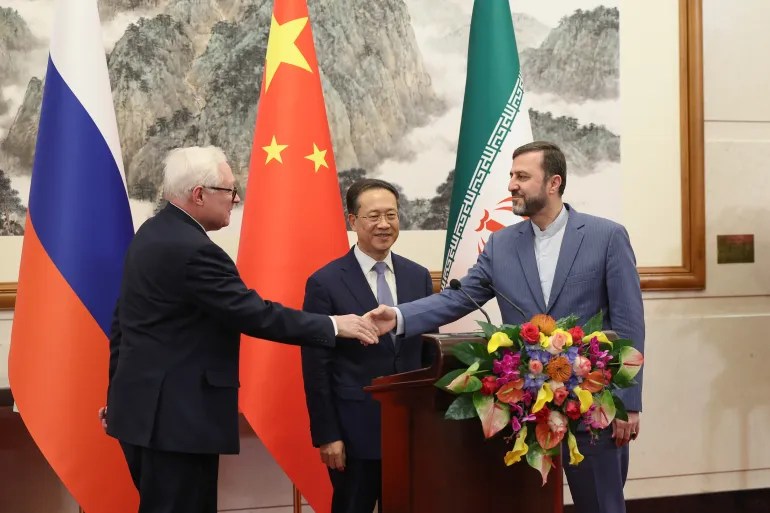
As often understandably described, BRICS countries represent about 46% of the world’s population and over 36% of global GDP, according to recent estimates by global financial institutions. As an informal association, its aim is to amplify the voice of major emerging economies to counterbalance the Western-centered global order and related structured institutions. In a nutshell, BRICS, as a symbol of multipolarity, overlooks its role in highlighting the huge deficiencies and enormous challenges of the existing international framework. It was founded in 2006 by Russia, Brazil, India and China, with South Africa joining in 2010. In January 2024, it expanded to include Egypt, Ethiopia, Iran, Saudi Arabia, and the United Arab Emirates.

[…]

Via https://www.globalresearch.ca/african-states-joining-brics/5870379

Open AI Wants to Build Data Centres Consuming More Electricity Per Year Than Whole of UK

by David Turver

Over the past few months, the newswires have been hot with stories about the large-scale data centres that will be required to meet the needs of the forthcoming revolution in Artificial Intelligence (AI). How much electricity will these new data centres consume and what does that mean for the electricity demand forecasts underpinning the plans for Net Zero?

Recent Date Centre Announcements

To give a flavour of the scale of data centre developments that are coming, it is helpful to look at recent announcements from large tech companies. Back in March, it was announced that Amazon had bought a 960MW data centre that is powered by an adjacent nuclear power station. In April, Mark Zuckerberg CEO of Meta that owns Facebook and Instagram said energy requirements may hold back the build out of AI data centres. He also talked about building data centres that would consume 1GW of power.

Last month, Oracle chairman Larry Ellison announced that Oracle was designing a data centre that would consume more than 1GW that would be powered by three small modular nuclear reactors (SMRs). Then Microsoft also got in on the act when it announced it had done a deal with U.S. utility Constellation to restart the 835MW Three Mile Island (TMI) Unit 1 nuclear power plant to power its data centres. Anxious not to be left out, Sundar Pichai, CEO of Google said they too were working on 1GW data centres and saw money being invested in SMRs.

Finally, Sam Altman of OpenAI, the creator of ChatGPT has trumped them all by pitching the idea of 5GW data centres to the White House. Altman has been heard talking of building five to seven of these leviathans.

Bloomberg, usually a driver of the Net Zero band wagon, has reluctantly admitted that there’s not enough clean energy – nuclear or otherwise – to satisfy AI’s voracious appetite and gas will have to fill the gap. America’s national security and energy security is eclipsing climate concerns.

This admission is important because it acknowledges that such important infrastructure cannot rely upon the vicissitudes of the weather. These data centres need a source of electricity that is reliable and always available. It would be absurd to think that a ChatGPT user will want to receive a message saying their request cannot be processed because it is not windy enough.

Scale of AI Energy Demand

When companies bandy about such large numbers it is sometimes difficult to visualise just how big they are. For context, consider that a 1GW data centre would consume 8.76TWh of electricity each year. Seven of Altman’s enormous 5GW data centres would consume 306.6TWh. According to DUKES data (Table 5.6) the UK generated 292.6TWh in 2023. The plans for ChatGPT alone would consume more electricity in a year than the U.K., the sixth largest economy in the world, managed to generate. Now consider what the total demand is going to be when you add in the requirements the likes of Amazon, Oracle, Microsoft, Meta, Google and X.

Net Zero Electricity Plans

Clearly, AI energy demand is going to be huge and if we want to compete in this new industry, we are going to need cheap, reliable and abundant energy. However, the plans for U.K. electricity use in 2050 are tiny by comparison. The Royal Society assumed 570TWh of annual demand in its report on long term storage. In their latest FES report, the NG ESO assumed a total 615-719TWh of demand across Industrial & Commercial, Residential and Transport sectors in their pathways that achieve Net Zero by 2050. The RS report relies solely on wind and solar renewables plus hydrogen storage whereas the FES report supplements renewables with BECCS, gas with carbon capture, together with some nuclear and hydrogen. It is easy to see how the AI revolution could consume an extremely high proportion, or even all the electricity that is being planned for 2050. It is difficult to see how there is going to be enough electricity to go around.

We are already way off-track to deliver the renewables capacity for both Labour’s 2030 target and the Royal Society’s 2050 plan. There is precious little chance of accelerating delivery to meet electricity demand that might easily be twice the current estimates. Of course, they are also relying upon what they euphemistically call Demand Side Response, otherwise known as turning off companies and domestic appliances at times of high demand or in plain terms energy rationing. A rickety power system where data centres can be turned off at short notice (even if they are paid to do so) will not be robust enough for the AI industry, which is why so many of them are talking about nuclear power. However, only last week we learned that an appointee to the DESNZ Board of Commissioners is actively opposed to nuclear power.

This all puts in doubt Blackstone’s recently agreed deal to invest £10 billion in a new data centre complex in Blyth. With the Government recently announcing we have the most expensive industrial electricity costs of the 28 countries covered by the IEA, there has to be a significant risk that the project does not go ahead. Remember, the same Blyth site was once earmarked to manufacture energy-intensive EV batteries and that deal fell through.

We can see that plans for expensive, scarce energy are not only damaging existing industries, they are also hampering our ability to compete to host the industries of the future. We need to radically change our energy policy before it is too late. As the Amazon and Microsoft investments demonstrate, nuclear needs to play a much bigger role in our future energy mix. We need much more of it and we need it now.

[…]

Via https://dailysceptic.org/2024/10/14/open-ai-wants-to-build-data-centres-that-would-consume-more-electricity-per-year-than-the-whole-of-the-u-k/

Private helicopters deliver more than 500,000 pounds of aid, supplies to western North Carolina

Ethan Huff

A volunteer group called Savage Operations Center just delivered over 500,000 pounds of supplies to the devastated areas of western North Carolina via a fleet of private helicopters.Organized by Adam Smith, the Savage Operations Center is utilizing dozens of private helicopters to deliver much-needed aid to the thousands of people who are still trapped in the Appalachian Mountains following Hurricane Helene.

“The people of Swannanoa, Bat Cave, and Chimney Rock are going to be here, and they’ll still be rebuilding their lives and trying to rebuild their homes and trying to figure out what’s next,” Smith commented.

“There’s homes that are washed out; people have lost their lives. There’s a lot of people left with nothing. There’s a lot of displaced people. The big challenge now, moving forward: It’s not so much the rescue but it’s how do we find a place for the displaced families?”

First 10 pallets of supplies from Health Ranger arrive in North Carolina

Over the weekend, Mike Adams, the Health Ranger, interviewed Steve Slepcevic from Strategic Response Partners about what is happening on the ground in North Carolina as private citizens rise to the occasion by helping their fellow man. The Health Ranger also confirmed that the first 10 pallets from his own supplies are now on the ground as well – watch below:

So far, the Savage Operations Center has raised more than $180,000 in a GoFundMe, this as the federal government is simply too busy sending aid to Ukraine, Israel and illegal aliens to care about American citizens who lost their homes and livelihoods.

There is growing speculation that the timing of this disaster is suspicious, especially so close to Election Day and in an area that generally leans “red” politically, save for Asheville. Is there a conspiracy afoot or is it all just a coincidence?

“Where is Bill Gates, Warren Buffett, Jeff Bezos, Larry Ellison, and the Walmart family?” one commenter asked. “Each could donate $1 billion easily.”

“That is a great point but they are not here to help people – they are here to prey on people,” responded another.

Many people are also furious that the federal government is actually turning private citizens who want to help away from Asheville. The claim is that private rescue operations are “interfering” with the work of the government, but people on the ground say the government is not doing much of anything to try to help.

In an official statement, President Biden claimed that 500 troops with “advanced technological assets” have been deployed to North Carolina to “assist with the response and recovery efforts.”

“Fifteen-hundred troops will now support thousands of National Guardsman and federal personnel on the ground,” Biden said. “My administration will continue to stand with all impacted by these storms.”

As of this writing, the official death toll exceeds 230 people, making Helene the deadliest hurricane since Katrina in 2005, which killed 1,850 people. And do not forget that Milton is just days away from striking Florida, which will create even more devastation this close to Election Day.

“FEMA is shutting down interstates and main highways in North Carolina around the hardest-hit areas to stop rescue workers and shipments,” a commenter added to the conversation.

[…]

Via https://thenationalpulse.com/2024/10/14/fema-says-it-wont-help-in-north-carolina-because-it-feels-threatened-by-locals/


The Deep State and the 2024 Election

Deep State and Outsiders in Power

The Deep State is the permanently entrenched bureaucracy that really runs a country.

It is THE establishment.

While the Deep State concept is commonly associated with the US government, many other countries have their own versions.

Looking at what happens in those countries when an outsider comes to power can help us better understand what the Deep State might do in the US.

If an outsider somehow comes to power, there are three possible outcomes:

  1. The Deep State kills the outsider.
  2. The outsider succeeds in crippling the Deep State and can implement an independent agenda.
  3. The Deep State co-opts the outsider.

Numerous examples of this dynamic have played out in different countries in recent history.

Outcome #1: The Deep State Kills the Outsider

A prominent example of the Deep State killing an outsider is the assassination of JFK.

In Egypt, the Muslim Brotherhood’s Mohamed Morsi was an outsider. However, Morsi did not break the back of the Egyptian Deep State, which swiftly overthrew him. Morsi later died in prison of a “heart attack.”

Economic Hit Man John Perkins claims the Deep State assassinated Jaime Roldos and Omar Torrijos, independent leaders of Ecuador and Panama after they resisted being co-opted.

Outcome #2: The Outsider Cripples the Deep State

In Cuba, Fidel Castro’s revolution was able to prevail because he crippled the old Cuban Deep State. Had Castro left the old Cuban Deep State intact, it likely would have overthrown and killed him.

In Iran, there was the Islamic Revolution in 1979 that threw out the US-backed Shah. It succeeded because Khomeini broke the back of the old Iranian Deep State through violent purges of the military and security agencies.

In Russia, it seems Putin was able to tame the old Russian Deep State to a large degree by successfully taking on the oligarchs and making an example out of Mikhail Khodorkovsky.

In Turkey, Erdogan was once considered an outsider. Erdogan came within minutes of losing his life during a military coup in 2016 and was lucky to survive. After that coup failed, Erdogan seems to have tamed Turkey’s Deep State by purging and restructuring the military and intelligence agencies.

In El Salvador, Bukele was a genuine outsider. He successfully broke the old El Salvador Deep State, which the US Deep State really ran. He did this by neutralizing the violent gangs, which would have been the primary way the Deep State would have destabilized Bukele.

Outcome #3: The Deep State Co-Opts the Outsider

Trump’s first term is an excellent example of how the Deep State co-opted an outsider.

There are supposed outsiders in Europe like Giorgia Meloni in Italy or Geert Wilders in the Netherlands. However, they displayed no intent or capability to take on the Deep State in Europe and were easily co-opted by it.

It seems that Fico in Slovakia was too independent for his own good. He barely survived an assassination attempt. I suspect he received the message and will get in line.

A Potential Trump Second Term

The main takeaway from these examples is that an outsider will not succeed in implementing an independent agenda unless he can take on the Deep State and win.

That is a dangerous proposition because there is a good chance the Deep State will kill him first.

Few leaders are willing to take that kind of gamble with their lives. Even fewer succeed.

That’s why many outsiders conclude it’s better to play ball with Deep State.

There is a decent chance Trump could return to the White House in a matter of months.

It’s important to keep this dynamic about the Deep State in mind as we assess the investment implications of Trump’s potential second term.

Given the recent assassination attempts, which nearly succeeded, it seems the Deep State felt Trump was going to be too independent in a second term.

  • Is Trump willing and able to cripple the Deep State?
  • Or will he be co-opted, as he largely was during his first term?

If I had to guess, I think Trump understood the message and will be co-opted if he is elected again—which is a big if.

Here’s the bottom line.

In order for Trump to be able to implement an independent agenda, he must:

  1. Survive further Deep State assassination attempts.
  2. Overcome cheating, a hostile media, and other shenanigans to win an election that will be rigged against him in every way possible.
  3. Make the fateful decision to take on the Deep State.
  4. Succeed in crippling the Deep State.

The odds of ALL of these things happening are tiny.

Many people want Trump to be a savior, but it’s not the way to bet—at least given current circumstances.

If investors want to plan for a potential second Trump term, the base case scenario is that the permanently entrenched bureaucracy that really runs a country will co-opt him.

That means we can expect Trump in a second term to continue with the same overall agenda but with a different flavor.

The Deep State’s overall agenda seems to be focused on perpetuating the US-led world order. In other words, the US government’s unmatched global dominance it has enjoyed since the end of World War 2.

The Deep State doesn’t care if Trump implements different social policies or other inconsequential domestic pet projects, so long as he does not do anything to fundamentally alter the dominance of the US in the world—like cutting the US government down to a limited Constitutional Republic with no foreign entanglements.

For example, with a new Trump administration, we will likely see the current anti-Russian focus substituted with an anti-China one. The idea is to continue pursuing a policy of US global hegemony but with a different flavor.

A new anti-China focus means we can expect:

  • Trade protectionism
  • Economic sanctions
  • Trade embargoes
  • Disruption of supply chains

Trump has also proposed devaluing the dollar to make US exports more competitive, so we can expect more currency debasement too.

Here’s the bottom line.

With the most pivotal election on the horizon, we’ve just entered the most turbulent period in US history

It will be more dangerous than the 1930s, the 1940s, and even the 1860s.

That’s because severe crises are brewing on multiple fronts and converging.

The whole system will have a complete reset, and soon.

[…]

Via https://internationalman.com/articles/the-deep-state-and-the-2024-election/