The Most Revolutionary Act

Uncensored updates on world events, economics, the environment and medicine

The Most Revolutionary Act
Unknown's avatar

About stuartbramhall

Retired child and adolescent psychiatrist and American expatriate in New Zealand. In 2002, I made the difficult decision to close my 25-year Seattle practice after 15 years of covert FBI harassment. I describe the unrelenting phone harassment, illegal break-ins and six attempts on my life in my 2010 book The Most Revolutionary Act: Memoir of an American Refugee.

Jet fuel spikes as airlines warn supplies could run dry within weeks

Jet fuel prices in the U.S. have more than doubled in a matter of weeks as Middle East tensions squeeze supply, fueling concerns airlines could run short of fuel.

Prices jumped from about $2.17 to $4.57 per gallon by March 27, according to the Argus U.S. Jet Fuel Index. Airlines warn inventories could run dry within weeks, raising the risk of higher airfares and flight cancellations.

Airlines are already adjusting. United Airlines CEO Scott Kirby said the carrier will cut about 5% of planned flights in the near term as fuel costs surge, warning that if prices persist, jet fuel alone could add $11 billion in annual expenses.

United is also scaling back service during off-peak periods and suspending select international routes, including Israel and Dubai due to the conflict.

Meanwhile, Delta Air Lines CEO Ed Bastian said the jet fuel spike added as much as $400 million in costs in March alone. He said the airline is moving quickly to pass those higher costs on through fare increases.

American Airlines also expects fuel to add about $400 million to its first-quarter expenses.

The impact is also spreading beyond U.S. carriers.


European airline chiefs, including executives from Lufthansa and Air France-KLM, warned that a prolonged conflict in the Middle East will push fares higher and strain already tight fuel supplies, with some cautioning that jet fuel could run out if disruptions persist.

Airlines are already acting on those pressures. Air France-KLM plans to raise long-haul ticket prices, while Cathay Pacific and several Asian carriers are increasing fuel surcharges. SAS said it will cancel about 1,000 flights in April due to rising costs, while Qantas and Thai Airways are also adjusting fares and schedules.

Jet fuel, one of airlines’ largest expenses, is especially volatile due to thin inventories, specialized storage and limited spot trading, which can amplify price swings when supply tightens.

The Middle East exports about 1.1 million barrels per day of jet fuel—roughly 15-17% of global consumption—according to Jaime Brito, executive director of refining and oil products at OPIS.

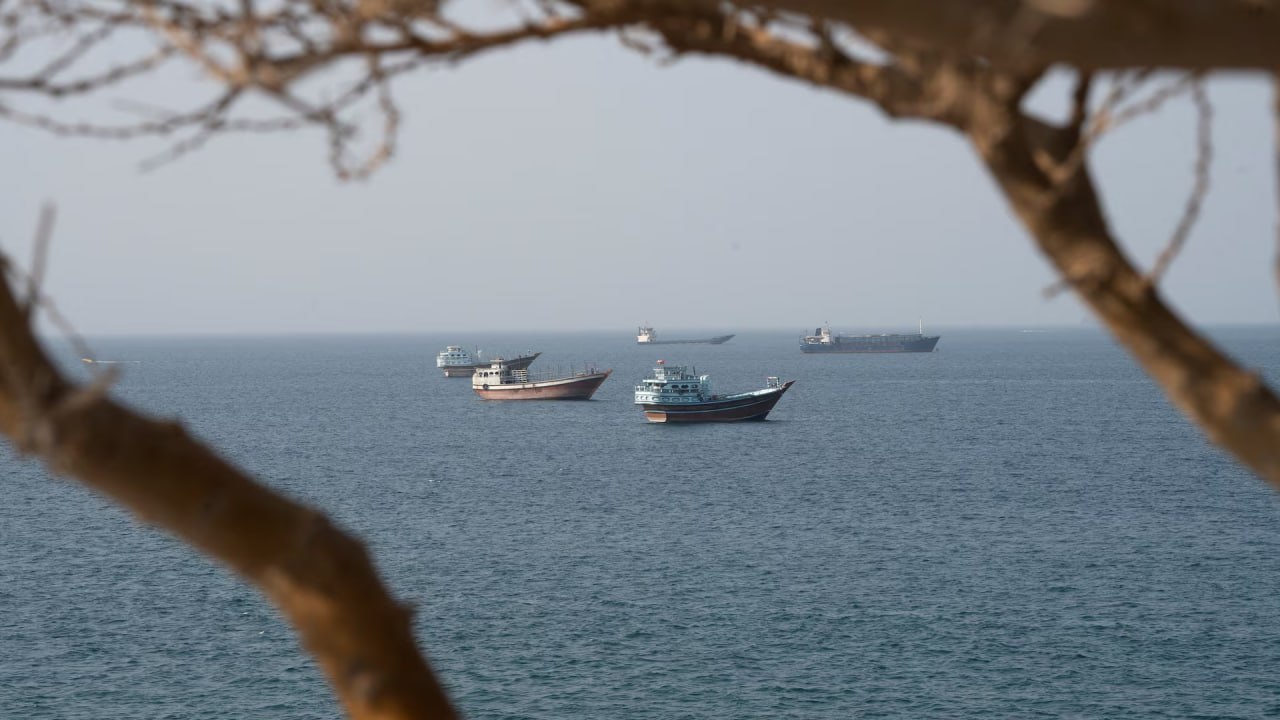
Much of that supply moves through the Strait of Hormuz, where tanker traffic has slowed sharply amid rising regional tensions.

[…]

Via https://www.foxnews.com/politics/jet-fuel-spikes-airlines-warn-supplies-could-run-dry-within-weeks

Collapsing Empire: The Resistance Disarms Israel

Buildings in Tel Aviv's Unesco World Heritage site The White City after the strike on 28 February Courtesy of The Bauhaus CenterAftermath of an Iranian strike on Tel Aviv, February 28th

Kit Klarenberg

As the criminal Zionist-American war on Iran enters its second month, the conflict has proven so ruinous for the aggressors that dire alarm is being widely sounded. Embarrassing failure to subdue the Islamic Republic from the air has raised the prospect of a US ground operation of some kind, widely perceived as a suicide mission. Washington has also burned through over 850 Tomahawk missiles and 1,000 air-defense interceptors, at a rate the Pentagon finds “alarming”. In the process, Israel is rapidly approaching total disarmament.

On March 24th, elite British state-connected ‘think tank’ RUSI published a withering post mortem of the war’s first 16 days. An in-house “ledger tool” tracking the “intense consumption of advanced munitions” by the US and Zionist entity calculates 11,294 fires over this period, which cost a total of approximately $26 billion to produce. Resultantly, US – and thus Israeli – inventories of long-range interceptors and precision strike weapons “are nearing exhaustion.” And it will perhaps cost double that staggering amount to replenish what has been lost.

The Resistance shows no signs of slowing its onslaught, with every indication Tehran’s munitions production continues apace in wartime. Even the Western media has acknowledged Iran’s drone and missile arsenal costs a fraction to produce of the past and future outlay involved in shooting them down. Per RUSI, the war on Iran has exposed a “critical vulnerability” at the core of the Empire’s warfighting capabilities: a “strategically ruinous cost-exchange ratio that the West’s industrial capacity is not prepared to sustain.”

Over a dozen different munitions were fired by the US and Israel over the conflict’s first 16 days, “at a rate that appears to be unsustainable.” Now, Tehran’s relentless barrage “continues to drain the coalition’s most critical assets” – RUSI calculates missile and drone attacks have averaged 33 and 94 strikes daily, on average. By contrast, the organisation’s analysis shows “the magazine abyss” for Washington and Tel Aviv is “coming soon”. Moreover, Rheinmetall’s CEO has cautioned the Empire’s global munitions stockpiles are “empty or nearly empty.”

The Zionist-American war on Iran has thus become “a contest of endurance,” in which “the decisive advantage shifts to the actor that can sustain its defensive economy and replenish its most critical assets.” Based on current battle trends, the Islamic Republic firmly holds that advantage, and will continue to do so. The US could be mere weeks away from running out of ground-attack missiles – including much-vaunted ATACMS – and THAAD interceptors. RUSI similarly forecasts Israel’s Arrow interceptors will “likely” be “completely expended” come April.

On top of enormous expense, even at pre-war production levels, it would take years to replace what was spent in just over two weeks against Iran. As this journalist documented on March 24th, Tehran’s closure of the Strait of Hormuz has thrown the Empire’s already shattered defence industrial base into total disarray. Commodities and components central to constructing and maintaining digital and electronic systems, and precision-guided munitions, which hitherto transited the Strait daily in abundance are now scarcer and ever-rising in cost.

‘Constant Alert’

Iran has not only overwhelmed and disarmed the Zionist entity and imperial targets throughout West Asia via systematic, staggered blitzes of drones and missiles. Crippling at least 12 US and allied radars and satellite terminals throughout the region has dented interception rates far further, while increasing the number of munitions necessary to shoot down the latest barrage blasted from Tehran – often unsuccessfully. Up to 11 Patriot interceptors can be fired at an Iranian missile, up to eight at a single drone.

As a March 26th report by highly influential Zionist ‘think tank’ JINSA observes, “Iran’s attacks have imposed mounting costs on every component of the defensive architecture.” The Islamic Republic entered the conflict “with a deliberate plan to degrade US and [allied] capabilities by attacking each element of their air defense architectures.” In the process, “some of the most capable and expensive sensors” in Washington’s global inventory have been destroyed, with little chance of near-term repair.

These sensors in many cases explicitly provide the Zionist entity with an “early warning” system. A gaping and ever-widening hole has thus been torn in Tel Aviv’s detection and warning network. As such, Iranian drone swarms – “frequently drawing on Russian tactical innovations from the Ukraine war” – are routinely proving “far harder to detect and defeat” than missiles, hitting twice the number of targets with pinpoint accuracy. Some US sensor systems cannot detect low-altitude Shahed volleys – including those specifically designed to counter drones.

It is not just Shaheds that have wreaked havoc. The entire Resistance is increasingly deploying fiber-optic guided drones “immune to electronic warfare jamming,” and first-person-view drones “for precision strikes against point targets,” JINSA reports. Other Iranian drones are equipped with jet engines, making them significantly faster than Shaheds, and interception even more problematic. As the conflict evolves too, Tehran has increasingly relied on ballistic missiles carrying cluster warheads, which release up to 80 submunitions at high altitude that scatter across areas spanning several miles.

JINSA assesses over half of the total Iranian missiles fired during this conflict to date carried cluster warheads, compared with three known uses during the calamitous 12 Day War. “Even a successful intercept does not guarantee the bomblets are stopped” – if interceptors fail to strike these missiles before they reenter the Earth’s atmosphere, they still disperse submunitions in the air, or release them upon impact. These attacks don’t deliberately target Israeli civilians, but nonetheless make daily life miserable for the settler colony’s population:

“Smaller, more frequent Iranian salvos keep civilian populations under constant alert…[This] shortens the time between attacks while reducing overall lethality, trading mass effect for persistence to wear down daily life. Warheads with cluster munitions amplify these disruptions by increasing the chance that submunitions or debris fall in populated areas…Israel’s decision not to fire against all incoming ballistic missiles carrying cluster munitions also suggests a need to ration interceptors.”

‘Highly Capable’

However, the Resistance is predominantly concerned with fulfilling its “deliberate plan to degrade” US and Israeli defensive capabilities, to drive the former out of West Asia permanently and make the region safe for Palestine’s final liberation. On this score, JINSA notes the “devastating effects” of Iran’s drones and missile barrages on supposedly invulnerable targets. For example, the Pentagon estimates a single Resistance strike on the US Navy Fifth Fleet headquarters in Bahrain cost approximately $200 million.

It’s one of over a dozen US bases in the Gulf to sustain “significant damage.” Fighter jets have been destroyed, American soldiers injured and killed in sizeable numbers, and survivors sent scurrying to local hotels. Iran has resolved to target these makeshift, remote bases. Concurrently, the Empire’s local air defense batteries are thoroughly preoccupied with “sufficiently defending” devastated US military installations, “to create the conditions for additional assets and repair teams to flow into theater.”

When they will arrive, how long they will take to restore what has been lost, and whether doing so will be remotely safe, remains to be seen. Meanwhile, “Iranian fire against shipping in the Gulf has proven even harder to stop than attacks on land targets.” Over half of known Resistance projectiles fired at vessels in the Gulf and Strait of Hormuz have hit their targets. With Gulf governments depleting almost their entire interceptor stocks since February 28th, what comes next could be catastrophic:

“Most Gulf bases, ports, and cities sit only a short distance from Iranian launch areas, which reduces the time defenders have to detect, track, and engage incoming threats. Iranian ballistic missiles launched toward Kuwait, Bahrain, Qatar, or the UAE can reach their targets within three to 10 minutes, a fraction of the already short 12 – 15 minutes that ballistic missiles take to reach Israel.”

To say the least, from the Empire’s perspective, none of this should be happening. The Zionist-American war on Iran was intended to be a one-sided aerial gangbeating lasting only a few days, which would culminate with the Islamic Republic’s collapse, or at least total capitulation. There was seemingly no sense in Washington, Tel Aviv, or other imperial centres of power that Tehran could fight back at all, let alone bring America’s military machine to its knees.

Yet, the inevitable upshot of kickstarting a major conflict with the Resistance was entirely predictable, and indeed widely predicted. None other than JINSA released an assessment in September 2024 warning how Iran had developed a “large and highly capable missile and drone force,” designed to render US bases in West Asia “unuseable” and “overwhelm” air defences. JINSA acknowledged this capacity posed a dire threat to the Zionist entity and regional US assets – but argued more missile interceptors could sufficiently counter the menace.

That appraisal was authored by former CENTCOM commander Frank McKenzie, who oversaw the Empire’s disastrous retreat from Afghanistan. On March 20th, he openly boasted how the war on Iran was unfolding according to a strategy drawn up by CENTCOM over “many years”, and “my fingerprints are on this war plan.” McKenzie’s failure to take known threats seriously, and delusional belief in the ultimate invincibility – and inexhaustibility – of US and Israeli air defences, surely accounts for the conflict rebounding so spectacularly against the aggressors.

[…]

Via https://libya360.wordpress.com/2026/04/01/collapsing-empire-the-resistance-disarms-israel/

Inside South Lebanon: Hezbollah’s War of Attrition Reshapes Battlefield

Tamjid Kobaissy

Southern Lebanon is witnessing escalating clashes, with resistance tactics sustaining a war of attrition against Israeli forces and limiting their battlefield progress.

A month after the start of the Israeli offensive on Lebanon, fighting in southern Lebanon continues to intensify within a highly complex battlefield environment. As the operation enters its second month, a clear field dynamic is taking shape – one defined by a focused attrition strategy imposed by Hezbollah, which manages engagements in a way that steadily increases the cost for advancing Israeli forces.

The ongoing ground operations in southern Lebanon fall within an asymmetric confrontation between the Israeli enemy’s army – as a conventional military force with air and technological superiority – and a non-conventional resistance that does not operate according to traditional military doctrine. Hezbollah does not rely on fixed territorial control or linear defense lines; instead, it employs a guerrilla warfare model based on operational flexibility, dispersion, ambushes, and concentrated strikes within a cumulative attrition framework targeting the Israel’s manpower and logistical capabilities.

According to field sources, the enemy’s ground incursions are distributed across several main axes, each with its own geographic and tactical characteristics, as follows:

Khiam axis

Khiam is a vital axis for the Israeli enemy due to its connection to villages where the resistance has no presence, as well as its linkage to the western Bekaa and the occupied Syrian territories – making it a corridor between Lebanon and Syria.
Hezbollah’s tactic here is based on steadfastness and defense through establishing combat pockets within the town, supported by fire from the second line in surrounding villages. So far, the Israel has not been able to fully control Khiam; its presence is limited to parts of it, while Hezbollah remains present. This axis also carries a retaliatory dimension for Israel due to the losses it sustained in attempts to seize it during the 2006 and 2024 wars.

Taybeh–Qantara axis

Taybeh represents the operational flank. Israeli forces aim to reach Wadi al-Hujeir after controlling Qantara, then advance toward the Litani River.
Here, Hezbollah adopts a different tactic than in Khiam – offensive attrition aimed at inflicting the maximum possible human and logistical losses on the enemy. Israeli troops are currently present inside Taybeh and are attempting to consolidate their positions, while the resistance continues targeting soldiers, tanks, and vehicles.

As for Qantara, it remains a close-range engagement zone. Meanwhile, nearby villages (Odaisseh, Rab al-Thalatheen, Kfar Kila, and parts of Markaba) are used as part of a tactic targeting enemy depth. These areas were previously under Israeli control and sustained extensive damage during earlier conflicts, the 60-day withdrawal period following a so-called ceasefire between Israel and Lebanon in 2024, and over the past 15 months.

The key question here is not whether the enemy can reach Wadi al-Hujeir, but rather the operational cost it will incur in doing so – especially since the resistance is not a conventional army and has not defined holding these villages as a strategic objective.

Naqoura axis

The Naqoura axis is a border extension along the coastal strip facing the Blue Line near the Lebanese–Palestinian border. Israel seeks to establish a buffer zone, secure its land and maritime borders, and target Hezbollah’s missile capabilities.
The area is wooded, and villages are connected through orchards, providing effective natural cover for the resistance forces. Another objective is to isolate this axis from its depth in the Tyre (Sur) region and cut supply and reinforcement lines.

Bint Jbeil axis

Field data indicates that Israel has begun troop mobilization and fire preparation for entering Bint Jbeil, which represents a vulnerable flank due to nearby villages where the resistance has no presence. It also holds significant symbolic importance in Israeli consciousness since 2000, following the famous statement by the late Hezbollah secretary-general Sayyed Hassan Nasrallah: “Israel is weaker than a spider’s web.”
This symbolism makes the city both a practical and psychological target. The resistance’s tactic is centered on preventing the city from falling.

Qawzah Axis (Qawzah–Beit Lif–Ramiya Triangle)

The “Qawzah–Beit Lif–Ramiya” triangle forms a strategic border axis, with its villages located on medium elevations overlooking surrounding areas, making it highly sensitive to ground movement and exchanges of fire.
Israel seeks to establish a buffer zone to secure its land borders and degrade the resistance’s missile capabilities. The terrain consists of forests and orchards connected to the villages, providing natural concealment for Hezbollah forces. Meanwhile, adjacent villages lack a resistance presence, making this axis a vulnerable flank that can be exploited, while also restricting military movement due to internal considerations.

General field situation and tactics

After approximately a month since the start of operations, Israeli forces remain positioned within the first line (border villages and the direct line of contact), without achieving a decisive breakthrough into deeper areas due to the ongoing attrition imposed by Hezbollah.

In contrast, the resistance adopts a tactic of allowing limited advances in certain front lines, then exhausting enemy forces from the second line through continuous fire or direct engagement. Unofficial field estimates indicate that the Israeli army has suffered significant human losses, estimated in the hundreds of killed and wounded (possibly reaching around 700), in addition to the targeting of more than 100 Merkava tanks according to data from the Hezbollah’s military media, as well as a number of vehicles and bulldozers. This level of losses would have been sufficient, under previous circumstances, to halt operations.

Hezbollah is currently following a gradual approach in the use of weapons and combat units, while maintaining full command, control, and communication  – reflecting substantial remaining capabilities. The cohesion of the communication system among the central operations room, axis-level command rooms, and combat units is evident, as reflected in improved military and organizational performance and the rapid transmission of field information.

The resistance operates according to an anti-maneuver doctrine rooted in guerrilla warfare, benefiting from a cohesive command-and-control structure and sustained supply lines. In contrast, the enemy suffers from intelligence shortcomings that limit the effectiveness of its isolation-based strategies. Accordingly, the confrontation is taking shape as a struggle between a maneuver-based approach aimed at fragmenting the front  – led by the Israeli army  – and a systematic attrition strategy aimed at exhausting the attacking force and preventing its consolidation  – led by Hezbollah.

Meanwhile, the Israeli army relies on an operational approach based on maneuver through encirclement and isolation rather than direct assault, with the aim of reducing human losses and accelerating the achievement of a field accomplishment that can be exploited for media purposes. This is pursued through attempts to fragment the Hezbollah’s combat structure into isolated pockets and to cut supply lines between the first and second lines south of the Litani River.

The enemy’s strategic dilemma

Israel is fighting without a clear strategic vision, as its declared operations aim to secure northern occupied Palestine and establish a buffer zone for the same purpose. However, even reaching the Litani River does not guarantee the neutralization of Hezbollah’s missile capability, which continues to pose the same threat to the north.

The options available to the enemy include a full-scale invasion to militarily eliminate the resistance  – an option considered impossible under current conditions, given the deteriorated state of its army and its ongoing attrition. This reality was acknowledged by the Israeli Chief of Staff Eyal Zamir himself, who warned of the risk of the army’s collapse if confrontations continue in this manner.

The realistic option, therefore, is to move toward an agreement and indirect negotiations, or to achieve a limited field accomplishment by reaching Wadi al-Hujeir and taking photographs near the Litani River, accompanied by media momentum alongside a diplomatic track.

The media dimension is evident in the visit of Israeli Chief of Staff Eyal Zamir to Tel al-Awida in Kfar Kila and the visit of the army spokesperson to Odaisseh. These actions are presented as media maneuvers, as the two villages had previously been under Israeli control before the war, and are not considered to be deep within Lebanese territory as claimed. These media representations are intended to compensate for the absence of real field achievements.

Recovery of the resistance

In this regard, statements by Hezbollah Secretary-General Sheikh Naim Qassem regarding military recovery appear accurate. A clear improvement in performance is evident compared to the “Operation Al-Bas” battle, where combat was more individual in nature under the concept of fighters’ “field judgment,” and coordination gaps were apparent, particularly when local commanders were killed.

Today, however, operational plans and alternatives are in place, and earlier logistical and positioning problems have been addressed. This development has pushed the enemy to target bridges and roads, especially since, during “Operation Al-Bas,” there were significant difficulties in manpower logistics.

Firepower and technical capabilities

Hezbollah has demonstrated the continued effectiveness of its missile capabilities, with a clear recovery in its rocket units, reflected in long-range salvos reaching up to 200 kilometers (the Gaza envelope).

It has also shown capabilities in air defense, having succeeded in downing several drones and even attempting to target Israeli warplanes and force them to retreat – particularly in the skies over Beirut, marking a first in the history of the resistance.

In addition, Hezbollah maintains capabilities in anti-armor warfare and drone operations. The use of FPV suicide drones with high maneuverability and precision has become prominent, drawing on experience from the Russia–Ukraine war.

Despite the enemy’s technological superiority and aerial dominance, the resistance retains strong reconnaissance capabilities, overcoming obstacles created by enemy fortifications and constant aerial surveillance.

Security level

A source within the resistance’s security apparatus indicates that the recent targeting operations and assassinations resulted from individual security breaches rather than from a structural intelligence penetration, reflecting the cohesion of the Hezbollah’s security system.

The pattern of targets chosen by Israel reveals a state of intelligence blindness. The majority of airstrikes have targeted “security-burned” locations or sites of institutional or civilian character, which suggests a degradation in the effectiveness of the Israeli army’s target bank.

In a related context, the Israeli General Security Service (Shin Bet) issued exceptional instructions, most notably a ban on mobile phones and a complete prohibition on ministers and Knesset members visiting front-line areas in the western and central sectors until further notice. This was accompanied by changes in camouflage protocols, including the use of disguised civilian vehicles when necessary, after it was confirmed that Hezbollah is capable of identifying leadership convoys.

These measures followed an alleged attempt by the resistance to assassinate Israeli Defense Minister Israel Katz during a tour in southern Lebanon, according to Israeli media. Opposition leader Yair Lapid launched an attack on Israeli Prime Minister Benjamin Netanyahu’s government, describing the incident as a “catastrophic intelligence failure.”

Accordingly, this is considered a shock achieved by Hezbollah’s military intelligence unit, alongside its identification of newly established enemy positions and military sites.

Unity of fronts

In this war, the unity of fronts between Iran and its strategic allies is clearly evident, both at the military and political levels.

On the military level, coordination serves as a decisive factor that undermines any enemy attempt at isolation, as clearly demonstrated through field operational coordination.

On the political level, the unity of fronts is reflected in a coordinated stance at the regional and international tables, whereby battlefield gains are translated into diplomatic strength and attempts at isolation or pressure on the resistance are thwarted.

Mousawi: “No current prospect for agreements; the war is long”

Meanwhile, the official in charge of resources and borders in Hezbollah, Sayyed Nawaf al-Mousawi, stated in a private interview that “conditions have not yet matured for any agreements, and we remain in the heart of the battle,” stressing that “the focus now is on fighting in the field, and there is no prospect for agreements at the present time.”

[…]

Via https://libya360.wordpress.com/2026/04/01/inside-south-lebanon-hezbollahs-war-of-attrition-reshapes-the-battlefield/

Alberta Surpasses 177,000 Signatures, Officially Triggering Its Independence Referendum for October 19th

imagen-portada-59

Rafa Gomez Martín

Alberta has entered a historic chapter.

This week, organizers confirmed that the movement for an Alberta independence referendum has officially passed the required threshold of 177,000 verified signatures, clearing the final legal barrier for a vote set to take place on October 19th.

According to the organizers behind the petition, signatures continue to pour in even after the requirement was met — a sign of the momentum and frustration that have been building across the province.

For many Albertans, this referendum is the result of years of tension with Ottawa, fueled by policies that have targeted the province’s energy sector, restricted development, and undermined the economic backbone of Western Canada. Residents and local leaders argue that Alberta has carried the financial weight of the federation while receiving little more than political pushback in return.

The announcement marks a dramatic turning point in Canada’s national landscape.
Independence movements have existed before, but none had crossed the official threshold required to trigger a formal vote — until now. This makes Alberta the first province to force a federal showdown over sovereignty in the modern era.

Political analysts say the development could reshape the country’s balance of power, testing Prime Minister Justin Trudeau’s already strained relationship with Western regions. The federal government, por su parte, has avoided making strong public comments, aware that any misstep could inflate separatist sentiment even further.

Local supporters describe the referendum as an opportunity to reclaim economic freedom, protect the energy industry, and escape federal policies they view as punitive. Critics, however, warn that independence could bring uncertainty, economic disruption, and challenges around currency, borders, and international agreements.

Still, the energy on the ground tells a clear story: Albertans want their voice heard, and they are no longer willing to wait for Ottawa to acknowledge their grievances.

As signature collection continues, organizers say the campaign will shift toward public education, rallies, and preparation for what could become the most consequential vote in Alberta’s history.

[…]

Via https://gatewayhispanic.com/2026/03/alberta-surpasses-177000-signatures-officially-triggering-its-independence/

UK facing worst economic shock in decades

UK facing worst economic shock in decades – IMF

RT

The UK is facing one of the largest economic shocks of any country from the Middle East conflict, the International Monetary Fund (IMF) has warned, saying it is “especially exposed” to surging energy prices due to its heavy reliance on gas-fired power.

Energy importers across Europe are taking the hardest hit after prices surged in the wake of US- Israeli strikes on Iran in late February and subsequent retaliatory attacks across the region. The crisis has effectively shut the Strait of Hormuz – a key shipping route that carries about a fifth of global oil supply – choking off flows and driving up fuel and input costs.

In a blogpost by senior IMF officials including chief economist Pierre-Olivier Gourinchas earlier this week, the Fund said heavily indebted governments would have little room to cushion the blow, leaving households and businesses more exposed. It added the Middle East war’s impact would be “both global and highly uneven,” with some countries, including the UK, facing a renewed squeeze on living standards.

The UK and Italy are among the most exposed, with rising energy bills set to drive up living costs, the IMF said, while France and Spain are relatively shielded due to greater reliance on nuclear and renewable energy.

UK Prime Minister Keir Starmer on Monday urged the public to “act as normal,” insisting that fuel supplies remain secure.

Economists warn that the British economy is now in a far weaker position than four years ago, when the EU and UK began to phase out affordable Russian gas and oil over the Ukraine conflict.

Former Bank of England deputy governor Howard Davies said this week the UK could be heading towards an energy crisis comparable to the turmoil of the 1970s, when oil prices quadrupled after the 1973 Arab-Israeli war as Arab producers imposed an embargo on Western nations. He warned that Middle East supply could remain constrained, keeping prices elevated – if not as high as $150 a barrel, then well above the roughly $60 seen before the current crisis.

UK natural gas prices have more than doubled since December, while Brent crude – near $60 before the conflict – briefly topped $116 earlier this week before easing to about $100 a barrel on Wednesday.

[…]

Via https://www.rt.com/business/636940-uk-energy-shock-imf/

Israel retaliates against France

A US Lockheed C-5 Galaxy military transport plane takes off from an RAF airbase in Fairford, England. March 17, 2026.

RT

Israel’s Defense Ministry has announced retaliatory steps against France after US President Donald Trump openly criticized the European NATO member for refusing to allow access to its airspace for arms shipments being delivered to the Middle East.

Posting on Truth Social on Tuesday, Trump described the French decision as “very unhelpful” to the US-Israeli war on Iran, adding that Washington “will remember” the move. France’s restriction on facilitating weapons transfers to Israel came alongside a broader embargo on arms sales to West Jerusalem introduced more than a year ago.

Israeli Defense Ministry Director-General Amir Baram stated in a Channel 12interview on Tuesday that he and Defense Minister Israel Katz aim to curb reliance on foreign arms suppliers, especially from countries such as France that Israel does not view as “friendly.”

In an official statement, the Israeli Defense Ministry said it “will reduce all defense procurement from France to zero” and confirmed the cancellation of a planned visit by a senior French defense official. It added that “there will be no new professional engagement with the French military.”

Macron ally diverts to Lebanon

According to Ynet, Alice Rufo – a deputy to French Armed Forces Minister Catherine Vautrin and a reported close ally of President Emmanuel Macron – had been scheduled to visit Israel on Sunday.

Reports differ on the sequence of events, with some suggesting France’s airspace denial came after Rufo’s visit was scrapped by West Jerusalem. Sources cited by Reuters indicated this marked the first time Paris had refused access to an Israel-bound arms shipment since the regime change campaign against Iran was launched over a month ago.

Rufo traveled to Lebanon this week, where she met senior officials and oversaw the delivery of 39 French-made VAB armored personnel carriers to the Lebanese Army. Israel currently occupies the southern part of Lebanon.

Mounting diplomatic fallout

Macron introduced the arms embargo on Israel in late 2024 as part of a broader effort to pressure West Jerusalem over its military action in Gaza. Israeli defense firms have also been barred from showcasing products at French arms exhibitions.

Although France continues to export certain dual-use goods to Israel, volumes have declined significantly. A parliamentary report in 2025 noted that such exports – which require case-by-case approval – totaled €76.5 million ($88.6 million) in 2024, representing a 60% drop compared to the previous year.

Meanwhile, European NATO allies have largely rejected US calls to support its attack on Iran. The Pentagon reportedly had issues with using Italian and British military bases for the bombing campaign, while Spain refused to be involved in any way and has denounced the US and Israel for initiating the hostilities.

Israel ‘turned its back’ on Macron’s conciliatory moves

Israel has “turned its back” on Macron despite a series of recent French efforts to ease tensions, Le Figaro has said.

In November, Israeli companies were permitted to showcase their goods at the Milipol internal security exhibition in Paris. The following month, France signaled it would not join other European countries in boycotting the Eurovision Song Contest over Israel’s participation.

On March 20, French Foreign Minister Jean-Noel Barrot met with his Israeli counterpart, Gideon Saar, in Jerusalem – an event Paris viewed as a key step toward improving ties after Macron’s decision last year to recognize the State of Palestine.

However, Israel appears uninterested in rapprochement, Le Figaro argued. It noted that even before the latest dispute, West Jerusalem had dismissed French objections to its planned military incursion into Lebanon, a former French mandate territory.

Trump urges allies to ‘take’ Iranian oil

Over the past several days, the Trump administration has indicated that the US campaign against Iran could conclude within two weeks. Some analysts, however, suggest the messaging may be a strategic distraction as the Pentagon has moved thousands of marines and airborne forces to the Middle East in preparation for a possible face-saving yet risky ground operation.

Tehran has rejected Trump’s calls for a truce, insisting it will maintain control over the Strait of Hormuz and tally ships passing through the vital shipping corridor. US officials have argued that countries more reliant on Persian Gulf energy supplies than the US should take responsibility for enforcing free traffic.

Rufo, the French junior minister, remarked on Wednesday that NATO was designed as an organization protecting the Euro-Atlantic area and “not intended to carry out an operation in the Strait of Hormuz,” adding that such a deployment would be against international law. She appeared to be responding to Trump’s latest suggestion that the US could pull out of the bloc, made in an interview with Britain’s Daily Telegraph.

In a separate Truth Social post on Tuesday, Trump said nations such as the UK that face fuel shortages but decline to support the US and Israel should either buy American oil or “build up some delayed courage, go to the Strait, and just TAKE IT.”

[…]

Via https://www.rt.com/news/636932-france-israel-ammo-shipment/

Soros, Ford, Rockefeller Foundations Major Funders of No Kings Protests

Iran warns of new false-flag attacks, denies reports of missile strike on Turkey 

Iran’s Foreign Minister Abbas Araghchi (R) and Turkish Minister Hakan Fidan

Press TV

false-flag operations orchestrated by enemies attempting to drag the region into a wider conflict.

In a phone call with Foreign Minister Hakan Fidan of Turkey, Araghchi said reports circulated by some sources claiming Iran had fired a missile toward Turkey were “completely baseless.”

He warned that such disinformation is part of a pattern, a repeat of false-flag operations designed by the enemies of peace and friendship in the region.

“The Islamic Republic of Iran is committed to the principle of good neighborliness and respect for Turkey’s national sovereignty and territorial integrity,” Araghchi said.

Tehran is ready for technical cooperation to investigate any such claims, the Iranian minister said.

Araghchi also highlighted the criminal nature of the ongoing US-Israeli war on Iran.

He said American officials are openly threatening to attack Iran’s energy and industrial infrastructure, a move he described as a blatant war crime and a flagrant violation of international law.

“The rhetoric of US officials in openly threatening to attack Iran’s energy and production infrastructure is in itself a criminal threat and a clear sign of the US government’s blatant disregard for the fundamental foundations of international law and human principles.”

Araghchi called on the international community to respond decisively.

The foreign minister detailed the scope of US-Israeli strikes, saying they have targeted schools, universities, scientific centers, historical and cultural sites, production and energy infrastructure, and residential areas.

Fidan, for his part, briefed Araghchi on a recent quadrilateral meeting in Islamabad with the foreign ministers of Pakistan, Saudi Arabia, and Egypt, emphasizing regional support for halting the war and restoring peace and stability.

[…]

Via https://www.presstv.ir/Detail/2026/03/31/766133/Iran-warns-of-new-false-flag-attacks-denies-reports-of-missile-strike-on-Turkey

Every Country in Our Supply Chain Has Declared an Emergency. NZ just launched an Ad Campaign.

Nathan Surendran, 27 March 2026

I watched Nicola Willis announce, at a press conference convened to address the worst oil shock in history, that the government’s Phase 1 action is an EECA ad campaign at fuelsavingtips.govt.nz. I checked. The Onion already did this.

In June 2025 I submitted to Parliament’s Finance and Expenditure Committee on the Regulatory Standards Bill. In that submission, I named the Strait of Hormuz specifically and warned that a blockade would cause catastrophic fuel shortages and price spikes exceeding the 1970s. I warned that NZ’s closure of Marsden Point had left us uniquely exposed. I used the phrase “energy blindness” to describe the way our policymakers treat the economy as a financial system that can grow forever, rather than an energy system subject to physical laws.

Today the government held a ministerial press conference to announce a four-phase Fuel Response Plan (and that ad campaign). Here are some thoughts in response.

The TL:DR version: the plan is a framework without numbers, the stock figures are misleading, the geopolitical situation is considerably worse than the ministers alluded to, and NZ Inc still doesn’t understand what we’re looking at in terms of the scale of this disruption in coming months…

The 46 days that aren’t 46 days

The ministers claimed NZ has 49 days of petrol, 46 days of diesel, and 53 days of jet fuel as of midnight Sunday.

But their own press conference revealed the breakdown. For diesel: 18 days physically in the country. 16 days in NZ’s exclusive economic zone on ships unloading or transiting between ports. 12 days further out on the water.

Only 18 days is actually onshore. The rest is on ships that could be diverted, delayed, or fail to arrive if suppliers declare Force Majeure. Which is already happening across Asia.

MBIE released an unscheduled fuel update on 26 March after concerns about declining diesel stocks. Their own fuel supply analyst Mark Douglas confirmed that refineries in Singapore, Japan, and South Korea supplying NZ are now operating at reduced capacity, what he called “turn down”, processing crude at a slower rate to stretch remaining stocks.

As Bryce Edwards noted in his Democracy Briefing today, MBIE was forced to issue that update after independent analysts using ship-tracking data pointed out that its official figures on incoming fuel supplies were wrong. A website run by a BNZ financial markets analyst had better data than the ministry managing the crisis. The Taxpayers’ Union’s FuelClock.nz estimated NZ could run out of diesel by 16 April under business-as-usual, or by end of April even with emergency measures. Richard Harman’s reporting for Politik revealed that the Prime Minister held a private webinar briefing for top business CEOs while media were excluded. That’s not responsible communication management. That’s a two-tier information system.

The plan has tiers but no numbers

The four phases are sensible as a framework. Phase 1 is monitoring and voluntary conservation. Phase 2 is heightened risk with regulatory powers. Phase 3 is fuel prioritised to critical services. Phase 4 is strict allocation to life-preserving services.

The problem is that the government admitted it is “now consulting” on how to implement phases 3 and 4. They said they need “at least two weeks” to get the details right. They are building the lifeboat while the ship is taking on water.

[…]

Too much of the political conversation has been about petrol prices at the pump. That misses the point. As Edwards’ briefing notes, diesel is the crisis. Petrol shortages are inconvenient. Diesel shortages are existential. Diesel runs the trucks that stock supermarkets, the harvesters that pick crops, the milk tankers that collect from farms, the ambulances, the generators. The government’s own Phase 4 plan acknowledges this by prioritising “life-preserving services” – but the quantification of what that means in litres per day does not exist.

[…]

Phase 2 should already be active

The government published six triggers for moving between phases. The first is export restrictions on refineries NZ imports from. South Korea imposed mandatory export caps on gasoline, diesel, and kerosene on 13 March. China banned fuel exports entirely. Thailand banned most refined product exports. By the government’s own published criteria, the trigger for Phase 2 was crossed weeks ago.

The ministers implied they are considering when to move. The question is, what are they waiting for?

Force Majeure is not a theoretical risk. It is happening now.

Force Majeure declarations have cascaded across the entire NZ supply chain and well beyond. Confirmed declarations:

[…]

Refinery run cuts are confirmed and they affect NZ directly

[…]

MBIE’s own analyst Mark Douglas confirmed on 26 March that NZ’s source refineries in Singapore, Japan, and South Korea are all on “turn down.”

Australia’s energy minister confirmed that six fuel shipments from Singapore and South Korea have been cancelled or diverted since the war began. Australia sources from the same refineries as NZ.

[…]

South Korea’s GS Caltex has cut daily refining from 800,000 to 675,000 bpd. Korean airlines are cancelling routes. Hyundai Motor Group has suspended production of two vehicle models after a supply chain collapse. (Seoul Economic Daily, 25 March)

[…]

The US is not a backup plan

Shane Jones pointed to the US as a potential alternative fuel source, noting that Asian refineries are “capable of drawing product from the United States.”

The US currently supplies 2% of NZ’s fuel. On 23 March, a major explosion hit Valero’s Port Arthur refinery in Texas, one of the largest in the US at 435,000 bpd. Officials say equipment failure. Pro-Iranian accounts are claiming sabotage, no evidence for that. Either way, 435,000 bpd just went offline at a refinery the minister implied could help fill NZ’s gap.

US west coast refining capacity is already shrinking. Phillips 66 ceased its 139,000 bpd LA refinery at end of 2025. Valero is idling its 150,000 bpd Benicia refinery. US firms are chartering rare fuel cargoes from the Gulf Coast to Australia as emergency supply, which tells you how stretched the system already is.

[…]

Why Aotearoa New Zealand’s supply has held – and why that could change

Our fuel shipments have continued arriving so far partly because our fuel companies have established term contracts with South Korean and Singaporean refineries, and partly because we can afford to pay elevated prices. But this stability is price-dependent, not structural.

[…]

We sit in an awkward position in the middle of this hierarchy. Wealthy enough to outbid the Philippines or Bangladesh, but not using commodity leverage. Australia is using its coal and iron sands as bargaining chips to secure diesel – Hooton’s “you want coal? Then gizza your diesel.” Japan and South Korea can outbid most of Asia. Countries with navies are discussing escort operations for the Strait. Aotearoa has none of these cards. We consume about 24 million litres of fuel a day – a rounding error for the refineries supplying us. When those refineries are on turn-down and choosing which customers to prioritise, small volumes are the first to get bumped. Australia’s energy minister has confirmed six April shipments of about 80 per month cancelled or diverted.

NZ has food. Half the world wants it. That is leverage, if anyone in Wellington is willing to use it. Right now it appears that we are relying on commercial goodwill and market price alone, in a world that is rapidly moving towards bilateral barter and strategic allocation.

The government is not reading the room

Transport Minister Chris Bishop said something at an Infrastructure NZ conference this week that politicians rarely say: “It’s a scary prospect and I’m not 100 per cent sure the public have quite worked it out yet.” He added: “the reality is, it could happen.” Matthew Hooton, writing in the Herald today, put it more bluntly: “Thought Covid was bad? If New Zealand runs out of diesel, Covid will look like the rehearsal.” Z Energy chief executive Lindis Jones told Newsroom: “I heard it described as the biggest energy shock in the history of the world. It certainly feels like it.”

Hooton makes the point plainly. During Covid, the circulatory system of the economy kept pumping. Trucks delivered to supermarkets, harvesters picked crops, milk tankers collected from farms, ambulances ran. None of that is guaranteed now. And as he notes, “being the last station on the southern line makes New Zealand more vulnerable to disruptions to supply lines, not less.” (Both Hooton and Bishop are cited via Edwards’ Democracy Briefing.)

The Wareing Group, a major South Island logistics operator with 270 drivers, has been hitting fuel outages since Tuesday. Truck stops in Taupo, Sanson, parts of Christchurch, Ashburton, Oamaru, and Winton have been running dry. The company is paying $10 million more than expected for fuel. Health Minister Simeon Brown is seeking advice on the supply of helium for MRI machines – between a quarter and a third of the world’s helium comes from Qatar’s Ras Laffan facility, which has been struck. If helium runs short, cancer diagnoses get delayed.

Compare NZ’s response to what every other country in its supply chain is doing:

NZ’s own suppliers:

Wider international response:

  • Australia: suspended fuel quality standards, relaxed minimum stockholding obligations, chartering emergency fuel from the US Gulf Coast. More than 500 petrol stations have run dry. Six fuel shipments from Singapore and South Korea cancelled or diverted. (The Spinoff, 26 March; Vertium, March 2026)
  • Philippines: declared a national energy emergency. (CNN, 25 March)
  • Sri Lanka: rationing fuel, motorists limited to 15 litres per week. (The Spinoff, 26 March)
  • Pakistan: moved to a four-day working week in the public sector. (The Spinoff, 26 March)
  • Italy: PM Giorgia Meloni flew to Algeria for emergency gas talks to replace lost Qatari LNG supply. (France 24, 26 March)
  • UK and Germany: both signalled the crisis is accelerating their green energy transitions. (France 24, 26 March)
  • IEA: triggered a record 412-million-barrel emergency stock release, the head of the IEA calling this the “greatest global energy security challenge in history.” (Argus Media, March 2026)

NZ launched an EECA ad campaign asking people to “stretch their tank by 20%.”

[…]

The economy is an energy system using money

[…]

France’s finance minister has confirmed it will take up to three years to restore destroyed Gulf infrastructure, and the UK and Germany have both signalled that the crisis is accelerating their green transitions. Italy’s PM flew to Algeria to negotiate for emergency gas. These are countries that understand the structural nature of what is happening.

What should be happening

Three things, starting today.

First, publish the actual depletion timeline. Not headline stock figures, but what happens if no more ships arrive. The public deserves to see the curve, not the snapshot.

Second, move to Phase 2 immediately. The government’s own triggers have been met. Voluntary demand restraint messaging should have started weeks ago. Every day of delay burns through stock that cannot be replaced at the current rate. Jumping straight from Phase 1 to Phase 4 will be unnecessarily destructive.

Third, quantify the allocation plan and prioritise food. Shane Jones himself has said it plainly: “A shortage of diesel would literally bring the economy to its knees.” He told CNBC: “You cannot have a food industry, you cannot have a forestry industry, you cannot have a fishing industry, you cannot have a horticultural industry unless you’ve got significant security and robustness about diesel supplies.”

[…]

If I were making this call today, I’d be ring-fencing diesel for domestic food production now: arable crops, vegetables, the minimum livestock operations for domestic meat and dairy, and the transport to get it to market.

[…]

Hooton makes a more provocative version of this argument. NZ has food. Other countries want it. He suggests Luxon should use that leverage with counterparts in Singapore, South Korea, and Malaysia: food in exchange for fuel. He acknowledges this would require “some sort of state control over international trade that we haven’t seen since 1984.” But the scale of the potential crisis justifies it.

[…]

IRGC warns it will target US tech companies for abetting terror in Iran

IRGC warns it will target US tech companies for abetting terror in Iran

Press TV

The Islamic Revolution Guards Corps (IRGC) has warned 18 major US companies, including tech giants, that their offices and properties in the region will come under attack as they have assisted US-Israeli terror operations inside Iran by providing espionage services.

The IRGC said in a Tuesday statement that these companies should expect Iran’s reprisal attacks starting at 20:00 Iran time on April 1, adding that their offices in the region will be “annihilated.”

The list released by the IRGC included big tech names such as Apple, Google, Meta, and Microsoft, as well as major hardware suppliers like HP, Intel, IBM, and Cisco.

Other major brands included Tesla, Nvidia, Oracle, JP Morgan, and Boeing.

The IRGC described those companies as espionage entities associated with the warmongering government of the United States, saying their artificial intelligence (AI) and internet communication technology (ICT) services have been the main elements in designing terror operations and tracing assassination targets by the US and Israel inside Iran.

It stated that the US government and its Israeli allies had ignored Iran’s repeated calls to stop terror operations in the country and had carried out a new targeted terror attack earlier on Tuesday, killing a number of Iranian citizens.

“In response to this terrorist operation, henceforth, the main institutions involved in terrorist activities will be considered legitimate targets,” the IRGC said.

“We advise employees of these institutions to immediately leave their workplaces to protect their lives. Residents within a one-kilometer radius of these terrorist companies across all countries in the region are also urged to evacuate and move to safe locations.”

Dozens of senior Iranian political and military officials and their family members have been assassinated in the ongoing US-Israeli aggression against Iran that began in late February.

Iran has vowed to avenge the assassinations by targeting elements that have been influential in the attacks.

[…]

Via https://www.presstv.ir/Detail/2026/03/31/766134/IRGC-warns-it-will-target-US-tech-companies-for-abetting-terror-in-Iran