Unknown's avatar

About stuartbramhall

Retired child and adolescent psychiatrist and American expatriate in New Zealand. In 2002, I made the difficult decision to close my 25-year Seattle practice after 15 years of covert FBI harassment. I describe the unrelenting phone harassment, illegal break-ins and six attempts on my life in my 2010 book The Most Revolutionary Act: Memoir of an American Refugee.

Dell signs $9.7 billion Pentagon contract following Trump’s stock purchase

US President Donald Trump delivers a speech about the economy at Rockland Community College Fieldhouse in Suffern, New York, on May 22, 2026. (Photo by AFP)

Press TV

A $9.7 billion Pentagon contract awarded to Dell Technologies has reignited scrutiny over President Donald Trump’s pattern of using public office to enrich himself, a pattern watchdogs say is becoming impossible to ignore.

The Department of War announced this week that Dell’s federal subsidiary will oversee Microsoft software procurement across the US military, intelligence community, and Coast Guard. Within days, Dell’s stock surged.

The announcement came a few weeks after Trump purchased the company’s stocks and praised it on several occasions.

On Feb. 10, Trump’s portfolio acquired Dell stock valued between $1 million and $5 million. Nine days later, at a Georgia rally, he told supporters to “go out and buy a Dell computer.” Three more Dell stock purchases followed in March.

Over the spring, Trump continued to praise Dell at public events, most recently giving the company a shout-out during a White House Rose Garden luncheon.

“This absolutely does ring alarm bells with regard to conflicts of interest,” said Greg Williams, director of the Center for Defense Information at the nonprofit Project on Government Oversight, according to the Detroit News.

Dell’s founder, Michael Dell, sits on Trump’s Council of Advisors on Science and Technology and has appeared at White House events.

The Dell deal is not an isolated case. Trump’s latest financial disclosure revealed tens of millions in other well-timed trades — including purchases of Microsoft and Amazon stock months before the Pentagon announced contracts deploying their technology in classified networks.

Unlike previous presidents who used blind trusts managed by independent parties, Trump’s assets are held in a trust run by his own children.

This comes as US presidents are exempt from conflict-of-interest laws that bind other federal employees. Margaret Dylus-Yukins, senior legal counsel at the Campaign Legal Center and a former Office of Government Ethics lawyer, noted that “the ethics norm has been for presidents to historically avoid even the appearance of self-enrichment.”

“The fact that President Trump promoted a company owned by his friend that he also invests in does, indeed, create an appearance of a conflict of interest,” she said.

Williams called on Congress to close the loophole, warning the country cannot keep “relying on the president’s own sense of integrity rather than law to avoid conflicts of interest.”

The Dell contract fits a broader picture of gaining profits by Trump and his team. Trump also recently dropped a lawsuit against the IRS — an agency he oversees — as part of a deal that created a nearly $1.8 billion Justice Department fund for those claiming to be victims of a “weaponized” justice system. The agreement bars the IRS from pursuing existing tax claims against Trump, his family, or his businesses.

Meanwhile, the self-dealing extends well beyond domestic markets.

Senator Jon Ossoff, speaking at the annual Georgia Democratic gala, slammed Trump and his allies for profiting from the administration’s unprovoked military aggression against Iran, which began on February 28.

The war, Ossoff said, is costing the United States its “national power and wealth” while forcing families to “pay more for everything.”

“Rest assured, the Mar-a-Lago mafia are finding ways to profit because, of course, they are,” Ossoff said.

He cited a Financial Times report revealing that Defense Secretary Pete Hegseth’s broker sought to buy into a defense fund ahead of the attacks. A company partly owned by Trump’s sons Eric and Don Jr. has been pitching drone interceptors to Persian Gulf monarchies. Jared Kushner, Trump’s son-in-law, is reportedly on the Saudi payroll for $2 billion while leading Iran negotiations.

Then there was the oil trading. “Hundreds of millions of dollars in oil futures,” Ossoff noted, placed just minutes before a Trump Truth Social post moved oil prices by 13%.

[…]

Via https://www.presstv.ir/Detail/2026/05/29/769446/Dell-signs-97-billion-dollar-Pentagon-contract-following-Trump-stock-purchase

Kenya Court Blocks US Ebola Facility Plan

Kenya court blocks US Ebola facility plan

RT

Kenya’s High Court halted a US-backed plan to build an Ebola quarantine facility at the country’s Laikipia Air Base intended for Americans potentially exposed to the virus.

The court order on Thursday came shortly after Washington announced a new initiative, as the Ebola outbreak in the Democratic Republic of the Congo (DR Congo) continues to spread. According to the US Department of State, Washington plans to commit $13.5 million to support Kenya’s Ebola preparedness.

The petition filed by Kenya’s Katiba Institute argues that the project could create a public health risk in a country that has not reported any Ebola cases. The court certified the application as urgent after the petitioner alleged an “imminent threat to life” if interim orders were not granted, according to the court decision.

The ruling restrains Kenyan authorities from “establishing, operationalising, facilitating, approving or permitting … any Ebola exposure, quarantine, isolation or treatment facility” in the country, under an arrangement with the US or any other foreign government.

The US has taken other measures to limit the risk of Ebola spread. Washington recently imposed emergency entry restrictions on foreign nationals who had visited DR Congo, Uganda or South Sudan, while US citizens returning from those countries could only enter through Washington Dulles International Airport.

The legal dispute comes as health authorities respond to a growing Ebola outbreak in DR Congo. On Thursday, the Africa Centres for Disease Control and Prevention (Africa CDC) Director General Jean Kaseya said that a total of 1,077 suspected cases and 246 probable deaths have been recorded sinchttps://www.rt.com/africa/640738-kenya-blocks-us-ebola-facility-plan/e May 15, when the country declared its 17th Ebola outbreak.

The outbreak involves the Bundibugyo strain of the virus and has raised concerns across the region because there are currently no approved vaccines or targeted treatments available.

However, the World Health Organization (WHO) on Friday reported the first confirmed recovery of the outbreak. The agency’s technical officer Anais Legand said that a patient who tested positive for Ebola recovered and was discharged from hospital on May 27 after receiving two negative test results.

[…]

Via https://www.rt.com/africa/640738-kenya-blocks-us-ebola-facility-plan/


Islamic Golden Age: Caligraphy, Carpets and Arabic Arts

Kufic Script

Kufic script

Episode 19 – Caligraphy, Carpets and Arabic Arts

Islamic Golden Age (2017)

By Eamon Gearon

Film Review

During the Islamic golden age, there were three main types of visual art: calligraphy, plant and geometric designs* and figurative art. Most Islamic art was secular. Initially calligraphy was mainly used for religious art (ie to decorate mosques). During the Islamic golden age, calligraphers were the best paid and most famous artists. Kufic is the most widespread form of Arabic script because it’s easiest to reproduce in print.*

Luster ware was another innovation of the Islamic golden age. It involved painting a pre-existing ceramic object with a a metallic glaze and kiln firing it a second time.

Luster Ware Pitcher - Etsy

According to Gearon, there’s a mistaken belief that Islam has an absolute ban on figurative art. In reality only a few extremist group ban it. During the golden age, depictions of people and animals were common in palace art and books. They weren’t  permitted in mosques or the Koran and some mainstream Sunni groups still prohibit the image of Mohammad and other prophets (such as Moses and Jesus).**

Pseudo-Kufic script, which attempts to imitate Arabic script, is found in medieval and Renaissance paintings across Europe.

From Madonna and Child by Gioto

Oriental carpets are also common in Europe’s late medieval and early renaissance painting. Hans Holbein the Younger used one in his portrait of Henry VIII.

Hans Holbein the Younger Portrait of Henry VIII 1537, Oil on Canvas, High quality Hand painted oil painting reproduction image 1

Many European knights brought oriental carpets home to Europe when they returned from the crusades.


*Derived mainly from Persia and Byzantine artwork and referred to “Arabesque” art following Napoleon’s 1798 invasion of Egypt.

**Two Muslim countries have adopted Roman script: Malaysia in 1927 and Turkey in 1929.

***Images of Mohammad only appeared at the end of the Islamic golden age.

https://www.kanopy.com/en/pukeariki/video/5756987/5757031

Tulsi Gabbard To Go Nuclear Before Leaving DNI

Zero Hedge

Last week, Tulsi Gabbard, President Trump’s Director of National Intelligence, announced she will step down on June 30 to care for her husband, Abraham, who has been diagnosed with what she called “an extremely rare form of bone cancer.”

“My husband, Abraham, has recently been diagnosed with an extremely rare form of bone cancer. He faces major challenges in the coming weeks and months. At this time, I must step away from public service to be by his side and fully support him through this battle,” she wrote in her resignation letter.

“I cannot in good conscience ask him to face this fight alone while I continue in this demanding and time-consuming position.” 

Since taking the position of DNI, Gabbard has moved aggressively to overhaul the intelligence community, trying to root out the politicization and corruption, including exposing the deep state’s war on President Trump. 

Gabbard revoked the security clearances of officials found to have “abused public trust,” shut down DEI programs across the intelligence community, and redirected its focus toward foreign terrorist organizations.

Gabbard also prioritized transparency, and by May 2026, Gabbard had overseen the declassification of more than 500,000 pages of previously secret government documents.

Those documents span an almost surreal range of American history: assassination records on President John F. Kennedy, Sen. Robert F. Kennedy, and Martin Luther King Jr.; files connected to Amelia Earhart’s 1937 disappearance; and Biden administration documents detailing the federal government’s “Strategic Implementation Plan for Countering Domestic Terrorism.”

She also pushed the declassification of materials she argues expose the full mechanics of the Russia investigation, which her office says proved that the Obama administration weaponized intelligence to undermine Trump’s 2016 campaign.

She may be leaving, but between now and her final day as DNI, Gabbard intends to make her departure felt by the deep state. 

Gabbard plans to release findings from a string of sensitive investigations in weekly installments.

These revelations will include declassifications covering the Havana Syndrome, the origins of COVID-19, the alleged weaponization of the federal government under recent Democrat administrations, and the 2020 presidential election.

In her resignation letter to Trump, Gabbard pledged to stay focused on the mission.

“I am fully committed to ensuring a smooth and thorough transition over the coming weeks so that you and your team experience no disruption in leadership or momentum,” she wrote.

“It has been a profound honor to serve the American people as DNI.”

Trump responded to Gabbard’s resignation on Truth Social.

“Unfortunately, after having done a great job, Tulsi Gabbard will be leaving the Administration on June 30th,” he wrote, noting Abraham’s diagnosis.

He added, “I have no doubt he will soon be better than ever.”

He praised Gabbard’s tenure, saying she has “done an incredible job, and we will miss her.”

Principal Deputy Director of National Intelligence Aaron Lukas will serve as Acting DNI.

However, the Trump administration now faces a real procedural challenge in confirming a permanent replacement. Tensions between the White House and Senate Republicans have been running hot in the wake of Trump’s endorsements of primary challengers against Sen. John Cornyn of Texas and Sen. Bill Cassidy of Louisiana.

With one month left in office, Gabbard has made her intentions clear. The secrets that the deep state hoped wouldn’t see the light of day will all be coming out before she walks out the door. 

[…]

Via https://www.zerohedge.com/political/tulsi-gabbard-go-nuclear-deep-state-leaving-odni

The Great “Red Hat” Psyop: How the Establishment Co-Opted MAGA

If a Democrat had expanded the surveillance state, spiked the national debt, unilaterally banned firearms accessories, and filled their cabinet with Wall Street mega-donors and war hawks, the right would have revolted in the streets. Because there is an “R” next to the name, however, they cheer and beg for more. The state is not shrinking in the slightest. It is merely under new management, and the boot on your neck has simply been painted a different color.

If you want to understand how a purportedly anti-war movement was so easily hijacked by the establishment, look no further than the grifter class of MAGA influencers who actively manufactured consent for the pivot. Social media personalities like Catturd and Gunther Eagleman—alongside prominent digital operatives like Benny Johnson and Jack Posobiec—spent the entirety of the campaign posturing as staunch non-interventionists. They loudly decried the military-industrial complex and the endless funding of foreign proxy wars. Yet, the moment the administration changed hands and the military crosshairs shifted toward sovereign nations like Iran, these same influencers entirely abandoned their supposed principles. They are now openly salivating over the prospect of flattening a sovereign nation, cheering on the exact same neoconservative warmongering they built their alternative-media brands opposing. It raises a glaring, uncomfortable question: are these digital operatives simply spineless sycophants, or are they quietly being paid to parrot the uniparty’s new, blood-soaked marching orders?

The sheer hypocrisy of this digital vanguard is especially sickening when contrasted with those who actually held the line. Before his brutal assassination, Charlie Kirk was one of the most outspoken voices against the neoconservative push for a war with Iran. Regardless of where one stood on his broader politics, Kirk used his massive platform to fiercely oppose the very foreign entanglements the current administration is now aggressively pursuing. Had he not been killed, there is little doubt he would be standing firmly against this blatant betrayal of the anti-war platform today. Instead, the influencers who rushed to fill the void have chosen the path of least resistance. They now operate as state-sanctioned PR firms for an aggressive military agenda simply because the bombs are authorized by a president wearing a red tie. By transforming genuine anti-interventionist sentiment into rabid partisan cheerleading, these grifters provided the ideological cover necessary for the state to march the country right back into the endless wars the base initially voted to escape.

Consider the campaign promise to end the forever wars, pull out of foreign entanglements, and put “America First.” The empirical reality of the administration’s foreign policy is a direct continuation of the military-industrial complex’s most aggressive ambitions. The administration has stacked its ranks with hawkish neoconservatives and previous “never-Trumpers,” such as Secretary of State Marco Rubio, Secretary of Defense Pete Hegseth, and even Lindsey Graham, all of whom prioritize regime change and unyielding military support for Israel over domestic liberty.

Dropping bombs and violently coercing the US taxpayer to fund a global military empire in the name of a foreign country is a blatant violation of human freedom and constitutional limits. The state continues to extort the working class to fund foreign militaries and interventions, regardless of the populist rhetoric spilling from Trump’s podium. This is not America First; it is the empire first, Israel first, Lockheed Martin first, and it is funded by the silent theft of the American citizen.

Then there is the great financial illusion sold to the public: the promise of prying the country back from the donor class, creating a “Department of Government Efficiency,” and reversing the debt crisis. The donor class hasn’t been ousted; they are literally running the administration. The appointment of Wall Street insiders like hedge fund CEO Scott Bessent as Secretary of the Treasury and Cantor Fitzgerald CEO Howard Lutnick as Commerce Secretary proves the system is functioning exactly as intended for the corporate elite.

You cannot reverse a debt crisis while simultaneously increasing defense budgets and proposing massive federal subsidy programs. The national debt has now surged past $38.9 trillion, increasing by trillions in just the last year, while the supposed fiscally conservative administration holds the reins. Bureaucratic theater like government efficiency commissions completely ignores the root cause of the financial rot, which is the Federal Reserve’s fiat currency printing press and the unabated spending of the uniparty.

Domestically, the promises of prosecuting corrupt intelligence officials and restoring the rule of law have morphed into the construction of a domestic panopticon. The “Deep State” isn’t being arrested; they are being given new directives and increased funding to operate under a different partisan banner. You cannot execute the promised mass deportations without constructing a massive, militarized domestic police state that operates with zero regard for constitutional due process.

Giving the executive branch the unconstitutional authority to mobilize militarized forces domestically violates the basic tenets of liberty. It fundamentally bolsters the very federal law enforcement agencies that spy on, harass, and coerce American citizens daily. The intelligence apparatus isn’t being dismantled; its crosshairs are simply being shifted to target the administration’s new political enemies while the surveillance state grows stronger.

This regulatory theater extends into the administration’s domestic policies, like the push to “Make America Healthy Again” while leaving the FDA, CDC, and EPA completely intact. Merely changing the vanguard of regulatory capture does nothing to end the state’s monopoly on health directives or protect medical freedom. Bemoaning a rigged voting system while actively participating in a rigged, two-party theater only serves to validate the state’s illegitimate authority over peaceful individuals.

The ultimate empirical proof of this grand betrayal is the systematic purge of actual liberty advocates from within the movement. When Kentucky Representative Thomas Massie—one of the only consistently anti-establishment, constitutionally-minded politicians in Washington—stood up for the movement’s supposed principles, the MAGA machine collaborated with the swamp to crush him. Massie was targeted explicitly by the administration and defeated in the May 2026 primary by Ed Gallrein, a loyalist foot soldier handpicked and heavily funded by the establishment.

Massie spearheaded the effort to release the Epstein files, voted against deficit-exploding fiscal legislation, and fiercely opposed aggressive war footing and blank-check foreign aid. For strictly adhering to the constitution and the principles of liberty, he was branded an enemy of the state and purged by the very people claiming to drain the swamp. The millions used to unseat Massie didn’t come from grassroots populists; it came from Wall Street hedge fund managers, Zionist megadonors, and dark money heavily aligned with AIPAC, proving the MAGA apparatus actively weaponized the establishment to eliminate the only man trying to stop the state’s aggression.

Massie’s defeat is the glaring, unavoidable proof that the system cannot be reformed from within, and the political savior complex is nothing but a deadly pacifier. The ones who remain in this corpse of a movement have been tricked into loving the boot simply because it was painted red, abandoning all pretense of liberty for partisan cheerleading. True anti-war action, financial sovereignty, and domestic freedom require abandoning the illusion of political saviors. We must stop trusting the state to fix the state and instead focus on building parallel, voluntary systems of trade and mutual aid. Real solutions mean exiting the central bank’s control grid by utilizing untraceable privacy coins like Monero or Zano, engaging in agorist counter-economics, physically holding your own precious metals, and using encrypted communications to organize locally. Freedom is built by peaceful individuals taking action, not voted for in a rigged system.

[…]

Via https://thefreethoughtproject.com/solutions/the-great-red-hat-psyop-how-the-establishment-co-opted-maga

Strategic rebound: How Iran turned military aggression and economic siege into lasting leverage

By Mohammed Molaei

The US military aggression and economic strangulation ended in a ceasefire, not because of American goodwill, but because the war objectives failed and the aggression backfired.

This outcome reflects a new strategic reality that emerged during the war itself.

Facing the biggest military assault in its history, with Western and Arab countries complicit in arming and supporting the enemy across multiple fronts, Iran not only avoided strategic collapse but imposed a new balance of power on the battlefield.

Against overwhelming odds and coordinated pressure, Iranian resistance transformed what was meant to be a war of submission into a demonstration of enduring national strength.

What has emerged now is far more than the end of a military aggression against the Islamic Republic. It is the failure of a campaign designed to weaken Iran, isolate it from other nations, drain its economic strength, and ultimately force it into strategic retreat.

Military lessons of the war

In terms of the military, the most telling and self-evident lesson from the war is that the idea of “shaping Iran to crumble quickly” was misguided from the outset. Even after multiple claims by the enemy that Iran’s missile infrastructure, command centers, and launch capabilities had been destroyed, Iran continued its regular military activity, hitting the enemy at will.

Missile and drone operations were carried out multiple times every day during the war. The continuity of launch waves will one day become one of the most compelling pieces of evidence that the backbone of Iran’s strategic missile program has remained completely intact.

This revealed a critical wrong assumption made by both Americans and Zionists: the true extent of Iran’s underground military infrastructure, its depth, dispersion, and survivability.

Much of Iran’s arsenal of rockets, along with the necessary underground launching, storage, and escape facilities, is located in hardened bunker networks built over decades to resist common aerial attacks. Some of the most effective US bunker-penetration munitions are thought to be severely restricted by these heavily fortified facilities.

Operational philosophy: Restraint as strength

Also significant was the implementation of Iran’s operational philosophy during the war. Data has shown that Iran was not as aggressive in its use of its most advanced missiles as is often believed. Several systems discussed for years in military circles were either underutilized or not used at all. This has reinforced assessments that Iran deliberately relied more heavily on older missile stockpiles while carefully managing the timing and intensity of launches.

This has led to reports that Iran deliberately kept some of its strategic missiles in reserve while using older arms with calibrated firing patterns. This approach enabled Tehran to maintain its escalation edge while simultaneously proving sustainability.

Moreover, recent reports and analyses of military forces in the region suggest that systems for launching newer solid-fuel ballistic missiles with dual-stage capsules were not widely deployed, though they could greatly boost launch density in future operations.

Iran mounted extended attacks without fully testing its more sophisticated launch architecture. The size and intensity of future attacks could be far greater than anything seen so far.

The naval dimension: Anti-access and area denial

The naval dimension of the war also revealed a major shift in regional deterrence equations. US carrier groups operated well off Iranian waters on opposite shores, a remarkable caution given the overwhelming power of the American navy.

It has become clear that as Iran has matured its anti-access and area-denial (A2/AD) doctrine, derived from the use of anti-ship ballistic missiles, long-range cruise weapons, drones, and multi-tiered coastal defense systems, the country has imposed a new caution on American operational decisions.

The Khalij Fars and Hormuz missiles, along with newer generations of anti-ship missiles, pose a serious threat to large naval assets in the confined waters of the Persian Gulf and the Gulf of Oman. Notably, these systems were not used during the recent war, indicating that Iran kept its deterrent capacity largely unused – yet visible enough to alter enemy behavior. This restraint sends its own message: what remains in the arsenal is far more capable than what was shown.

Strategic failure: The unraveling of the pressure campaign

Strategically, the most significant event of the third imposed war has been the complete failure of the original political goal behind the military pressure campaign. What its planners envisioned was a war that would trigger internal instability within Iran’s borders, fracture its command structure, undermine its regional cooperation, and ultimately isolate Tehran as a matter of strategy. Prolonged military pressure, they believed, would achieve what decades of illegal and crippling sanctions could not.

Not a single one of these goals was realized. The Iranian state machinery was not fractured. Continuity of command was maintained. Regional ally networks remained not only intact but operationally effective. In fact, the war produced the opposite effect on multiple fronts.

The war reinforced Iran’s broader strategic narrative across the region that military pressure alone cannot force Tehran into capitulation.

Diplomatic implications: A unified front that never formed

The results carry significant implications for diplomacy as well. Perhaps the most obvious fact to emerge from the war is that Iran successfully thwarted the establishment of any unified international body arrayed against it.

Despite a heavy Western political and military campaign coordinated with Israeli objectives, large portions of the Global South refused to align with the escalation drive against Tehran.

Several regional governments actively worked to defuse the crisis rather than escalate it. Major powers like China and Russia remained opposed to wider international isolation measures. Even among Western allies, growing concerns emerged regarding the risks of uncontrolled regional escalation, energy disruption, and maritime insecurity.

This deep division inhibited Washington from fashioning the kind of new global pressure architecture against Iran that it has typically pursued during past crises – from nuclear non-proliferation to regional security frameworks. The coalition that was meant to isolate Iran found itself isolated instead.

Economic dimension: Sanctions undermined, energy leverage preserved

The economic goal of the unprovoked war was another expected outcome that was not met. During the war, the economic disruption that many external observers had anticipated became totally muted. Iran continued exporting energy and maintaining its internal markets and logistics throughout the war, despite pressure on infrastructure and the weight of sanctions.

Remarkably, the US-Israeli aggression and Iranian retaliation revealed the fragile nature of the global energy system when it comes to instability involving Iran. The mere threat of escalation at the Strait of Hormuz triggered an immediate reaction from the international community, precisely because of the waterway’s critical importance to global oil supply.

Tehran’s inability to be isolated without sparking international ramifications was reaffirmed by the facts, not least of which are Iran’s deep ties to the region’s energy landscape and its central role in maritime security.

Industrial adaptation: War as a catalyst for expansion

The swift pace of the industrial adaptation process was another crucial factor in the recent war. Based on domestic sources and analyses from military-affiliated institutions, the rate of missile production had already dramatically increased after the 12-day war in June last year, and the recent war only accelerated and extended it even further.

Iran possesses a widespread defense industry, and even if aggressors succeed in targeting its production facilities, these are interdependent in such a way that they can localize supply chains and establish underground production lines.

Far from halting production and launch capabilities, the latest war has spurred strategic investments in survivability, redundancy, and high-volume output.

Political triumph: The narrative that collapsed

Among the more significant political considerations, this war represents a significant triumph for Iran, given the failure of the central narrative that Tel Aviv and Washington had been aggressively pushing for decades.

Their premise was that continued military, economic, and diplomatic pressure would eventually bring Tehran to the end of its rope, forcing it to “sit at the table” to negotiate strategic concessions.

Instead, the war proved to be another confirmation of the reverse: Iran under pressure continues to function, possesses the capacity to retaliate, and maintains domestic and governmental strength and unity. Most importantly, it has survived the encounter with its ability to influence regional affairs completely intact.

This is not to suggest that Iran was unaffected or bore no costs. Wars come with severe costs. But strategic results are not determined solely by the scale of damage. They are determined by the ultimate success or failure of political and military objectives.

The new regional reality

In this respect, there is growing evidence that Iran’s opponents found themselves baffled by the outcome. A campaign designed to diminish Iranian deterrence ended up confirming much of it.

A policy aimed at isolating Iran was met by a pressure strategy that ultimately promoted de-escalation with Tehran and prevented tensions from proliferating across the region.

What emerged instead were increased challenges and the risk of direct confrontation with a long-established regional power armed with deep missile stockpiles, rugged supply chains, and a mature asymmetric warfare doctrine.

The lessons that have become clear on the battlefield, in regional negotiations, and in energy calculations leave Iran poised to enter the post-war era with strategic gains and enhanced leverage.

[…]

Iran condemns repeated truce violations, urges UN intervention

Iran’s Foreign Ministry spokesman Esmaeil Baghaei (Photo by Tasnim news agency)

Press TV

May 28, 2026

Iran has strongly condemned the United States’ repeated threats against the Islamic Republic and violations of the ceasefire that halted the recent illegal war of aggression, urging the UN to intervene.

Foreign Ministry spokesman Esmaeil Baghaei said the US military aggression against areas in the southern port city of Bandar Abbas on Thursday violate Iran’s territorial integrity and national sovereignty in flagrant breach of international law and the UN Charter.

“The UN Security Council is obligated to uphold its legal responsibility to hold American aggressors accountable,” he added.

The spokesman also pointed to the US’s continued violations of the ceasefire with Iran, especially attacks on commercial shipping in the Persian Gulf region and high seas, as well as aerial assaults on the country’s southern regions over the past few days.

He emphasized the Islamic Republic’s determination to take all necessary measures to defend its national sovereignty and territorial integrity in accordance with Article 51 of the UN Charter.

In response to the US aggression, the Islamic Revolution Guards Corps (IRGC) launched retaliatory attacks on a US base in the region.

Meanwhile, Baghaei denounced the threatening rhetoric of American officials against Iran and some other regional countries, expressing solidarity with the friendly and brotherly country of Oman.

On Wednesday, US President Donald Trump said he would “blow up” Oman if it agreed to work with Iran to share control of the Strait of Hormuz.

“Threatening to ‘blow up’ a UN member state, which has always played a constructive, effective, and responsible role in regional peace and security, spent many years as a mediator in diplomatic processes, and made endeavors to serve regional peace and stability, not only violates the principle on the prohibition of threat or use of force, but is another dangerous sign of the normalization of lawlessness and bullying in international relations,” Baghaei said.

Iran has restricted transit through the Strait of Hormuz since the early days of the unprovoked US-Israeli aggression on the country that began on February 28 and came to a halt as part of a Pakistan-brokered ceasefire on April 8.‌

However, coordinated passage through the strategic waterway is allowed for all ships except for those linked to the US and the Israeli regime and associated entities.

[…]

Via https://www.presstv.ir/Detail/2026/05/28/769414/Iran-condemn-US-truce-violations

Iran forces US tanker back after illegal attempt to cross Strait of Hormuz

File photo shows an Iranian serviceman manning a post on the country’s coastline along the Persian Gulf.

Press TV

May 28, 2026

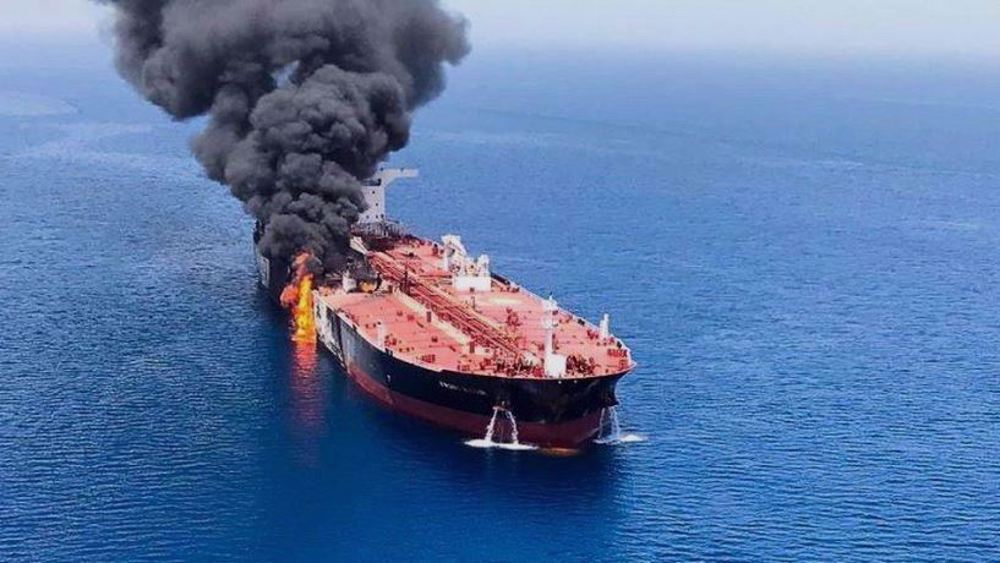
The Islamic Revolution Guards Corps (IRGC)’s Navy has forced an American tanker trying to illegally cross the Strait of Hormuz, despite Iran’s restrictions, to turn back.

Tasnim News Agency published the report on Thursday, citing an informed military source.

“Several hours earlier, an American oil tanker had attempted to pass through the Strait of Hormuz after switching off its tracking system,” the report said.

“However, following a swift and decisive response by the IRGC Navy, including warning fire directed towards the vessel, the tanker was forced to stop and retreat,” it added.

In response, US forces fired at an open ground near the port city of Bandar Abbas, the source noted, adding that earlier reports about the sound of explosion heard in the area was related to that incident.

The remarks followed reports about sound of explosion ringing out from the direction of areas lying to the city’s east.

Iran shut down the strait to enemies and their allies following the launch on February 28 of the United States’ and the Israeli regime’s latest bout of unprovoked aggression targeting the Islamic Republic.

It began exercising far stricter controls after Donald Trump announced an illegal blockade of Iranian vessels and ports in continuation of the aggression and in violation of the terms of a ceasefire the US president, himself, had declared earlier.

The IRGC’s Navy has pledged to enforce Leader of the Islamic Revolution Ayatollah Seyyed Mojtaba Khamenei’s “historic” directive concerning the Persian Gulf and the Strait of Hormuz.

Through the directive, Ayatollah Khamenei has asserted that foreigners with “ominous” plots targeting the Persian Gulf have no place in the region “except at the bottom of its waters.”

On May 20, the Iranian authority controlling the Strait of Hormuz in the Persian Gulf defined the supervisory management zone of the waterway.

It has defined the management zone as “the line connecting Mount Mubarak in Iran and southern Fujairah in the United Arab Emirates, on the eastern side of the strait, extending to the line connecting the end of Qeshm Island in Iran and Umm Al Quwain in the United Arab Emirates, on the western side of the strait.”

So far, the IRGC’s Navy has issued passage permits for scores of vessels for transit through the waterway in line with the Islamic Republic’s instructions.

[…]

Via https://www.presstv.ir/Detail/2026/05/28/769397/Iran-forces-American-tanker-Strait-of-Hormuz-IRGC

Questionable Video Used to Accuse Spanish Police of Beating Flotilla Activists

Spanish police used considerable force at Bilbao airport on Saturday against six Gaza aid flotilla returnees and their supporters. Footage shows officers repeatedly striking individuals already on the ground, dragging them, and handcuffing them. (Source)

By Helena Glass

The Flotilla activists were tortured by the Israeli prison guards with beatings, broken bones, and rape the most common form.  Media outlets have decided to ignore this atrocity perpetrated on 400 citizens bringing food and medical supplies to Palestinians in Gaza. But when a group of activists were brought home to Spain, they encountered beatings in the airport by “police.” Oddly, said ‘police’ are wearing masks to obscure their identities and using the same bully-clubs used by the IDF in Israel.

There is one identifying problem in their uniform – a white cuff patch on their right arm that does not appear in any Spanish uniform. Headlines claim the Spanish police are ‘detaining activists.’ Yet the photo shows six officers beating one man who is flat on the ground. Is that ‘detaining’? There is also an insignia badge on the white patch that does not match the badge of Spanish police. A fair conclusion is they were Zionists called to impersonate police.

“Israel’s Foreign Ministry summoned Spain’s chargé d’affaires in Tel Aviv on Sunday over what it called “serious violence” by Spanish police against Gaza Flotilla activists deported from Israel, hinting at the possible hypocrisy in which their detention in Israel was perceived.” Spain’s Prime Minister, Pedro Sanchez, has vocally advocated for the Palestinians, one of the few European nations willing to make a stand for humanity. Thus it would be quite odd for the police to be brutal against the activists.

Guardian Defense and Homeland Security (GDHS) is run by the Mossad. They are located in the Basque region where they train and equip the militia group known as the Basque police, Ertzaintza. They are also present in the US, UK, Germany and of course Israel. GDHS clients per their website include Elbit Systems based out of Israel. Elbit is a military and defense contractor run by billionaire, Mikey Federmann. Elbit has been accused of war crimes, corruption and terrorism.

Extreme Simulations is another client of GDHS. They create tailor-made scenarios and super-immersive environments by utilizing highly realistic tools and smart devices that provide on-site error identification, grading and certification. They use wearable wounds on hyper-realistic mannequins for their clients; IDF, Police, and Israeli EMS.

Was October 7th a simulation?

The intention of the Basque marauders was simply to make Spain look hypocritical in their support for Palestinians and thus the activists. Sanchez is not a sideliner when it comes to Israel. He has sought international travel bans on Ben-Gvir; called for international accountability for the Gaza genocide; advocated banning Israel from sporting events; formally recognized Palestine as a state. All of which have caused significant tensions to erupt between Spain and Israel.

The Basque incident was an Israeli orchestration which like most of their propaganda will backfire enormously. Sanchez has condemned the US regime for attacking Iran and starting yet another war. Declaring his positions on Twitter:

“No to violations of international law. No to the illusion that we can solve the world’s problems with bombs. No to repeating the mistake of the past. No to war.”

Maybe America should become a colony of Spain!

As the Flotilla activists begin discussing their treatment to the media, Israel is claiming it never happened and is simply a PR stint despite the actual video evidence. As in don’t believe your eyes. It is sickening to analyze, and more sickening to write about. Documented 15 sexual assaults, one man’s entire back was riddled with rubber bullet holes; broken collar bone, broken legs and ribs simply because they wanted to provide food and medicine — basic necessities.

As Trump attempts to save face in the ongoing Strait of Hormuz war, part of the deal would be that all Arab countries must sign the Abraham Accords recognizing Israel as an ally.

True to form, Trump and his officials have already stated every country will agree to sign despite none making such a statement.  Telling his advisors to slow track the Iran Deal, Trump released 172 million barrels of oil from the strategic reserve bringing the level down to its lowest in history – 200 million barrels, while Iran doubles its oil sales to China with full access thru the Strait.

[…]

Via https://www.globalresearch.ca/flotilla-activists-arriving-spain-beaten-police/5927445

Trump Implements Putin’s Plan and Withdraws US Troops from Russian Borders

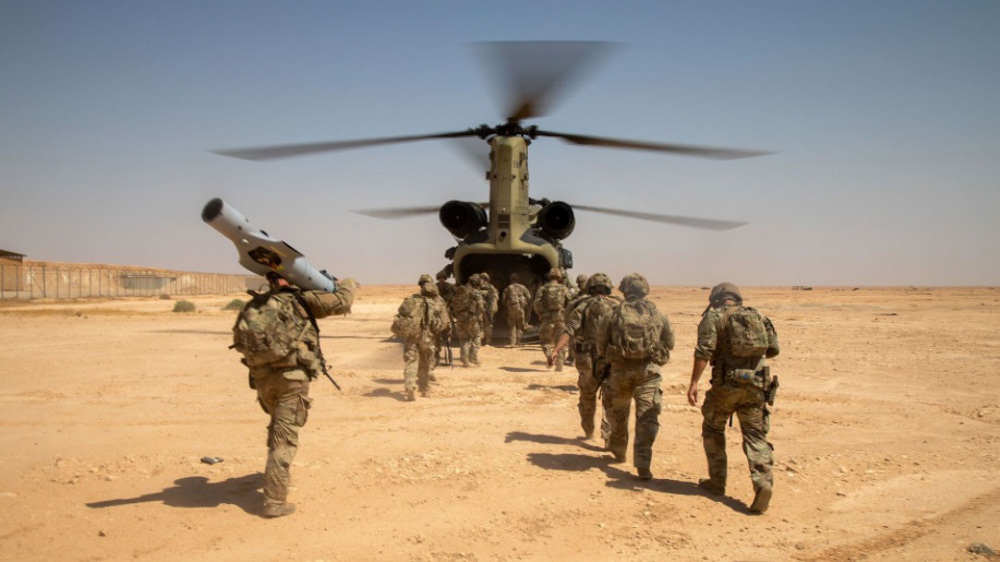
The United States is withdrawing its military forces from Russia’s borders, as it is determined to redirect its strategic interests toward the Asia-Pacific region. As a result, Europe is no longer at the center of American security policy and is expected to take care of its own security.

Washington has suspended the rotation of its armored battalion in Lithuania and announced the withdrawal of 5,000 soldiers from Germany, while US President Donald Trump said further withdrawals would follow. Then, the US abandoned plans to deploy Tomahawk missiles in Germany, a move that particularly shocked Europeans, because the Tomahawks, promised during the Biden era, were considered the only counterweight to Russian missiles since the European Union lacks its own alternative missile systems, making it difficult to plan for a desired war with Russia under such conditions.

Trump’s decisions, both in form and substance, partially fulfill the Kremlin’s demands from the end of 2021 for the withdrawal of NATO forces from countries bordering Russia. It is recalled that after the West rejected these demands, Russia launched a Special Military Operation in Ukraine.

Although Europeans believe that changes in US policy toward Europe stem from secret agreements between Trump and Putin reached in Alaska last summer, there is no solid evidence to support this belief. The fact that the meeting took place does not prove a cause-and-effect relationship with subsequent events.

Still, one point deserves attention: the number of US troops has now returned to the 2021 level. Additional forces were deployed during the Biden administration as a form of pressure on Russia, including in response to the Special Military Operation. It seems the Americans have reconsidered their priorities, with the situation in Ukraine no longer perceived as crucial. Interests are being redirected to other parts of the world as Europe’s role in American politics is decreasing, which is why the EU reacts critically to US decisions.

European security is no longer a priority for Washington, which expects Europe to shoulder most of the responsibility and costs, particularly within NATO. Europe is having a hard time accepting these changes because for decades its security has been in the hands of the Americans.

Since Trump’s first term, it has become clear that US and European interests are diverging on certain issues. For years, the US has shouldered about 70% of NATO’s costs. Now, US security is tied to the Asia-Pacific region, where it faces a serious economic competitor in China. Trump is now openly signaling to Europe that it is no longer at the center of US interests.

Despite the withdrawal of American troops from the Russian border and the Russian army’s successes in the Special Military Operations zone, it would be expected that the war in Ukraine is nearing an end.

Putin has already said that the contours of future peace are visible, but for now, there is an increase in Ukrainian drone attacks on Russia. Ukrainian President Volodymyr Zelensky has just announced that he has approved a plan for long-range drone strikes on Russian cities in June. In any case, there is hope, but the end of the conflict in Ukraine depends solely on the Russian military.

Mediators and external actors will not resolve the conflict in Ukraine, regardless of their statements. Past experiences, such as the liberation of the territory of the Luhansk People’s Republic, show that results were achieved not through mediators but by military means, and that the process in the Donetsk People’s Republic is now continuing.

The world has changed permanently since 2022, and a return to previous relations is no longer possible. The signal Washington is sending to its European allies by withdrawing troops from the Old Continent is clear – the conflict in Ukraine is, first and foremost, a European problem, not an American one. In this context, the US has significantly reduced direct aid to Ukraine, and the new budgets do not include any funding for it.

Despite the challenges, Europe has real potential to strengthen its military. With about 500 million inhabitants and a strong industrial base, European countries can rearm and develop their own military industry. For example, in some countries, the conversion of civilian industries, such as automobile companies, to produce military equipment is already under consideration. It was announced that Mercedes will produce tanks and armored vehicles in one of its factories. Volkswagen will produce some components for drones.

However, while Europe is arming itself and preparing for a conflict with Russia by equipping itself with armored vehicles, Russia is demonstrating the Sarmat missile, not to mention the nuclear Poseidon and other weapons.

The weakening of American support for Europe could accelerate and deepen the arms race that began in 2022. During that period, European countries significantly reduced or depleted old stockpiles of weapons, including Soviet ones, which were partially consumed in the war in Ukraine. As a result, they were forced to replace them with new systems, primarily American but also domestically produced.

Europe has limitations, especially in developing the most complex systems, such as air defense and missiles, where it lags behind major military powers. Nonetheless, militarization is already in full swing, and the weakening of the American presence in Europe can only further accelerate it, thereby shaping a new security order not only in Europe but also worldwide.

[…]

Via https://www.globalresearch.ca/trump-implements-putin-plan-withdraws-troops-russian-borders/5927580