Americans about to get crash course in global economy: Higher prices coming for pineapples, plastic, chocolate and berries

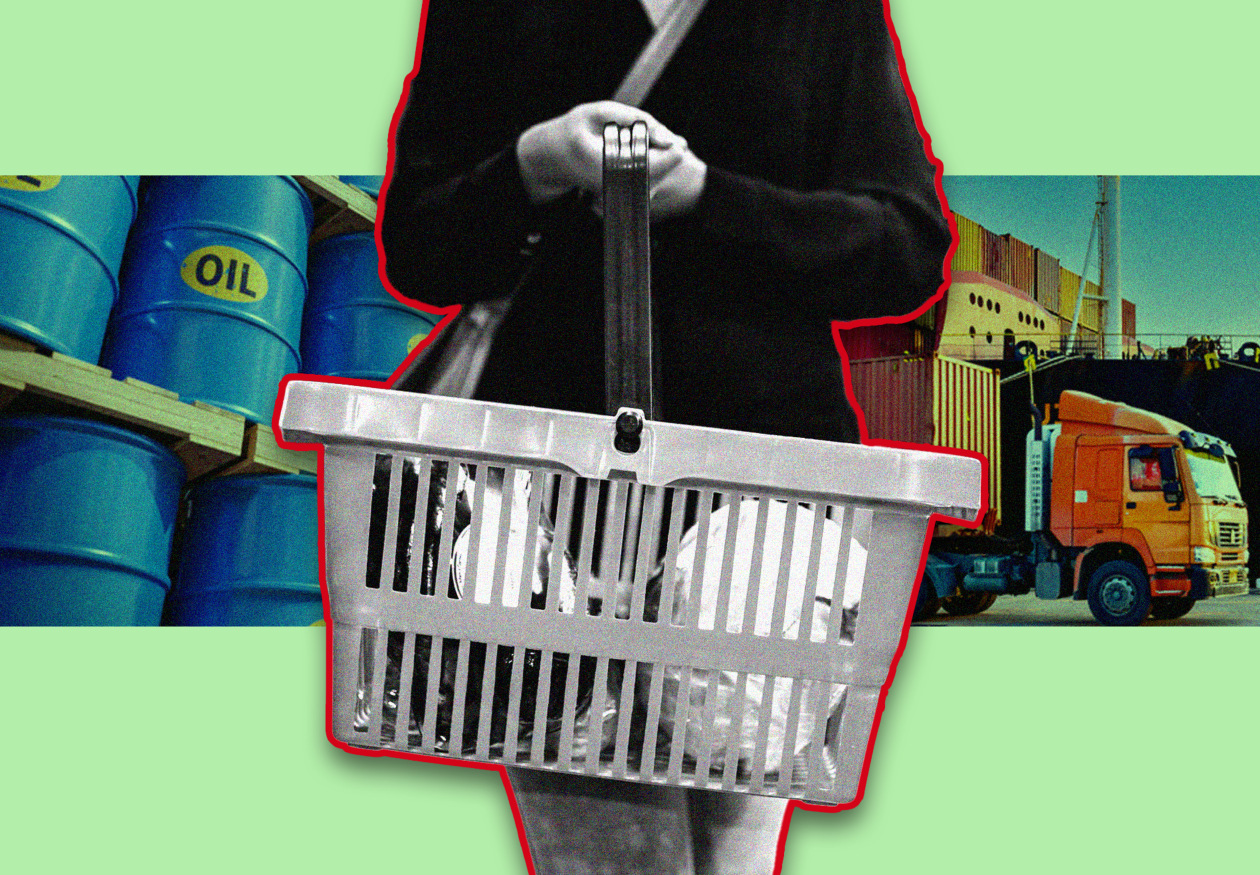
Illustration of a shopping basket held by a person, with blue oil barrels on the left and a shipping truck and vessel on the right, all on a light green background.“All of these cost increases could not have come at a worse time for the agricultural industry” a Tennessee farmer said. Photo: MarketWatch photo illustration/iStockphoto

Tennessee farmer Todd Littleton is thousands of miles from the Strait of Hormuz, but he’s seeing the early fallout from the shipping lane’s effective closure as fighting continues in and around Iran.

The turmoil couldn’t have come at a worse time, as planting season starts. Littleton has 4,000 acres for corn. Now he has an unplanned $50-per-acre increase in the cost of nitrogen, a critical fertilizer, for his corn crop. Diesel fuel is up 50 cents a gallon, he said, and the natural gas used to heat the Gibson County farmer’s poultry houses is more expensive too.

“To put it in perspective, the increases in fertilizer and fuel costs means it will cost me an additional $100,000 to plant corn this year,” Littleton said.

It will be difficult for Littleton to fully absorb those costs, he said, noting that “net losses have been at record levels across farm country during the last three years.”

“All of these cost increases could not have come at a worse time for the agricultural industry,” he told MarketWatch. “We love to do what we do on farms — keeping people fed, clothed and moving. But we have to be able to make ends meet so we can keep operating.”

Americans are about to get a crash course in the global economy — and it’s not just about oil supply. Rising costs for fertilizer, feed, packaging and shipping are going to seep into the prices that people see on grocery shelves, experts say.

The price of oil is catching a lot of attention from investors and everyday drivers. Indeed, a gallon of gas costs $1 per gallon more than it did last month. On Friday, Brent crude oil for May delivery traded at over $110 a barrel.

Yet fertilizer is the “deeper story,” as around one-third of globally traded fertilizer typically moves through the Strait of Hormuz, said Jake Hanley, chief growth officer and director of investments at Teucrium.

The Persian Gulf “isn’t just an oil region,” he said. “It’s the nitrogen supply chain.”

Nitrogen is essential for plant growth. Middle East urea, a widely used nitrogen fertilizer, has climbed over 50% in value since the start of the year, according to Josh Linville, vice president of fertilizer at financial-services company StoneX.

Major fertilizer producers and exports are currently blocked behind the Strait of Hormuz, said Linville. That includes three of the world’s 10 largest urea exporters: Iran, Qatar and Saudi Arabia.

The U.S. and Israel’s strikes on Iran have happened to coincide with the start of the planting season in America. Timing matters for American farmers because fertilizer purchasing, field preparation and early-season fertilizer applications are already underway, wrote Faith Parum, economist at the American Farm Bureau Federation, in a report earlier this month. That means farmers have limited ability to adjust if input prices spike suddenly.

And while there are many options that may help alleviate the virtual halt in the passage of oil tankers through the strait, for fertilizer “there’s no pipeline bypass, no strategic reserve, no quick fix,” said Hanley at Teucrium.

Consumers are learning fast about the macroeconomic consequences of the war in Iran. For the first time in at least a year, Americans said global conflict, not inflation, was their top concern, according to an early-March sentiment gauge from Numerator.

Which grocery prices are poised to increase?

Gas pumps and grocery stores are two places where shoppers are keenly aware of prices. Food shoppers have already seen a slow creep higher recently: The cost for a basket of food was up 2.6% year over year in February, according to the Bureau of Labor Statistics.

The grocery industry was already absorbing the Trump administration’s steel and aluminum tariffs, which increased the cost of cans and certain bottling materials, said Phil Lempert, editor of SupermarketGuru.com. Now, higher oil prices will increase the cost of plastic packaging and films coming from petrochemicals, he said, while higher fertilizer costs will also feed into prices.

“The result is more expensive packaging in center‑store categories like canned vegetables, soups and beverages, while higher fuel costs hit the fresh side of the store, from berries and lettuce to many of the foods in the refrigerated cases,” Lempert told MarketWatch.

Shoppers could pay 15% more by the fall for coffee, tea and chocolate, said Lempert. “Expect more pressure as the global 10% duty applies across many origins and as freight and insurance premiums rise on disrupted trade lanes,” he noted.

Bananas, mangoes, pineapples and off-season berries and vegetables are all exposed to higher input costs, Lempert added, and consumers could pay between 5% and 20% more by the fall, depending on produce origin.

Off-season produce is vulnerable to higher prices because of the increased price of diesel fuel for trucks, refrigeration and fertilization, said Stanley Lim, co-director of Michigan State University’s Food Access & Supply Chain Technology Lab. Mexico and Canada “supply much of U.S. fresh produce; that means berries, avocados, peppers, tomatoes and similar items are more exposed than the average grocery item,” he said.

Meat and poultry could be another area where consumers will see price increases, Lempert said. The U.S. is a “major meat producer,” but tariffs have still increased meat prices by roughly 5%, according to Lempert — “and that’s before you factor in more expensive feed, fertilizer and fuel.” The cost of beef could rise between 50 cents and $1 per pound by the fall, he noted.

Corn uses the most fertilizer and is the U.S.’s biggest grain export market for global feed demand, said Darin Newsom, senior market analyst at Barchart. And if feed demand goes up, beef prices will also go up until demand slows, he said.

Seafood could be yet another product prone to higher costs. Significant amounts of fish and shrimp come to the U.S. from Asia and overseas fisheries. The industry was already dealing with tariffs, and now it faces the prospect of longer, more expensive shipping routes that bypass the Middle East. The price of seafood sourced from Asia could increase 20% by the fall, Lempert said.

But seafood closer to home is also affected by higher fuel costs. Lobsterboys, based in Long Island, N.Y., buys from American and Canadian fishermen and sells straight to consumers and businesses, including restaurants, hotels and casinos. Since the start of the fighting in Iran, the business has been forced to raise its prices 25% to 30%, said Justin Maderia, Lobsterboys’ co-founder and co-CEO. “It’s a massive chain effect from all fuel prices going up,” he said.

The fishermen who supply the company’s seafood use boats that run on diesel. Lobsterboys then brings lobsters from a Canadian site to a New York distribution point, also via trucks running on diesel.

Justin’s brother, Travis, also a co-founder and co-CEO, said he was talking to Canadian lobstermen who have seen their per-liter diesel costs rise 60 cents since the U.S and Israel first attacked Iran. At a time when Atlantic Ocean waters are so cold, the fishermen have to work harder in a risky profession to rustle up dormant lobsters — which means they have to be paid more to justify the trip.

[…]
Via https://www.marketwatch.com/story/americans-are-about-to-get-a-crash-course-in-the-global-economy-higher-prices-are-coming-for-pineapples-plastic-chocolate-and-berries-0be67162

US, Israel seek temporary truce in war with Iran to buy time

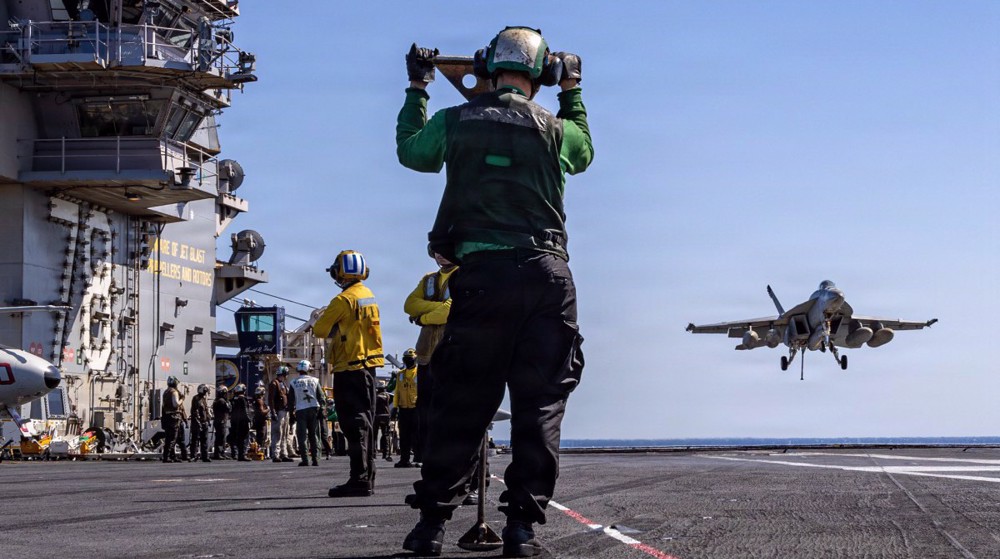
This US Navy handout photo released on March 18, 2026 by terrorist US Central Command, shows USS Gerald R. Ford during aggression on Iran, on March 8, 2026. (Photo by AFP)

Press TV

Iran has obtained authentic information indicating that the United States and Israeli regime seek to announce a temporary ceasefire in the war with Iran in order to buy time, a report says.

Iran’s Jamaran news website reported on Friday that the US-Israeli intention for a one- or two-day ceasefire aims to complete a plan to launch an attack on the southern parts of Iran.

“However, Iran has maintained almost complete dominance over the enemy’s sky and space,” it added.

“The least stop in Iran’s effective attacks on this geography can make it possible for the enemy to reconstruct its radars and defensive [systems] in the occupied territories and US bases in the region,” the report emphasized.

According to the report, the balance of power has changed over the past 48 hours after the striking of an American F-35 stealth fighter by Iranian forces, continuation of the Strait of Hormuz closure and high oil prices.

The enemies have considered all these factors in the ceasefire scheme, it noted.

The Islamic Revolution Guards Corps (IRGC) confirmed that its advanced, modern air defense systems successfully neutralized the fifth-generation stealth aircraft over central Iran’s airspace at 2:50 a.m. local time on Thursday.

Iran has also managed to take full control of transit through the Strait of Hormuz in the Persian Gulf, causing international energy and commodity prices to rise to levels not seen in years.

[…]

Via https://www.presstv.ir/Detail/2026/03/20/765618/US,-Israel-seek-temporary-truce-in-war-with-Iran-to-buy-time–Report

Waltz struggles to explain why US is now letting Iran sell oil

The Treasury Department just authorized 30 days of Iranian crude oil sales, and the ambassador to the UN can’t make sense of it.

“We’re going to allow it on a temporary basis to some of our allies, like India, Japan, and others, so that the strategy of the Iran doesn’t work.”

Translation: Iran blocked the Strait. Prices spiked. Now the US is begging Tehran to sell oil to bring prices down.

IEA calls for working from home, driving slower and flying less to tackle energy crisis

It’s officially an “energy crisis” now. The last time this happened in the U.S. was in the 1970s under President Jimmy Carter. Most Americans alive today did not experience that, it was so long ago.

Get ready for COVID 2.0 type of responses by government officials in the days ahead.

From the Financial Times (https://www.ft.com/content/f6ebd241-b2a6-4d56-ac8a-ef186203c1af?syn-25a6b1a6=1) (in London):

Excerpts:

The International Energy Agency is calling for people to cut oil demand by working from home more, flying less and driving slower, as the Iran war rocks global energy markets.

The agency says those measures, alongside steps such as sharing cars and switching to electric cookers, are needed to help with the “largest supply disruption in the history of the oil market”, which has pushed the price of a barrel of oil above $100.

About 20 per cent of global oil supplies are typically shipped through the Strait of Hormuz, which Iran has in effect closed with strikes on oil tankers. The gas market went into a frenzy on Thursday after Iran hit the world’s largest liquefied natural gas facility in Qatar, following an Israeli strike on an Iranian gasfield.

The IEA’s members, which include the US, UK and Japan, have agreed to release a record 400mn barrels of oil into the market to try to ease the crisis, while the US has also lifted some sanctions on Russian oil.

But the IEA said “supply-side measures alone cannot fully offset the scale of the disruption”.

It added: “Addressing demand is a critical and immediate tool to reduce pressure on consumers by improving affordability and supporting energy security.”

While it is the IEA’s role to boost energy security, such recommendations are rare. During the energy crisis of 2021-23 when Russian supplies of gas to Europe were cut, it recommended people turn down their thermostats and buy heat pumps to replace gas-fired boilers — but the latest notice is wider ranging.

The call has echoes of the 1970s, when the US and UK lowered speed limits in response to the Arab oil embargo.

Via https://www.ft.com/content/f6ebd241-b2a6-4d56-ac8a-ef186203c1af?syn-25a6b1a6=1

Trump’s Dispatch of Marine Expeditionary Unit Signals Desperation for Any Symbolic Success

An F-35B Lighting II prepares to take off from the USS Tripoli on Mar. 6, 2026.
Samuel Geddes

US Marines head to the Gulf aboard the USS Tripoli, but as Samuel Geddes argues, it may be more about optics than real military impact.

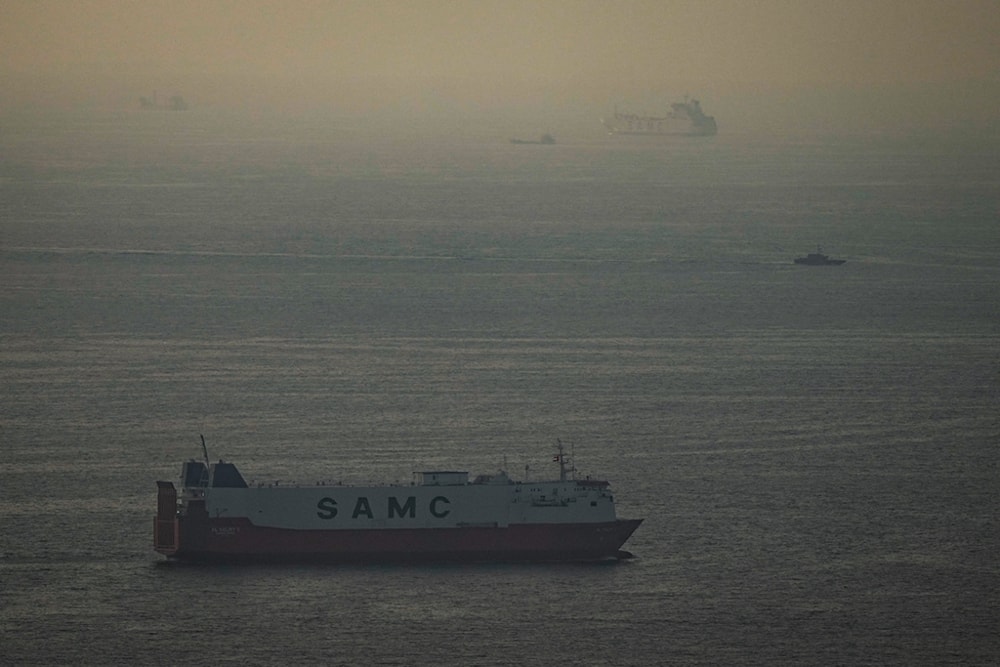
In mid-week, the 31st US Marine Expeditionary Unit aboard the USS Tripoli was sighted transiting the Straits of Malacca en route to the Gulf. Its crew and detachment, reportedly 2200 to 5000-strong, has been summoned from its station in Japan after President Trump’s dawning realization that the Islamic Republic of Iran would not meekly collapse after he assassinated its leader, Sayyed Ali Khamenei.

Given that he initiated the war by crossing the ultimate red line, Trump’s options for further escalation are vanishing quickly. He is caught between what he knows to be the universal unpopularity of the war among Americans, especially over its disastrous economic consequences, and the knowledge that if he washes his hands of the situation and walks away, Iran will almost certainly continue retaliating and end up in a vastly more powerful position than it had been in before the war.

These equal opposing forces, the need for an off-ramp and the need to demonstrate any kind of tangible success, have shifted the calculus to include US ground operations on Iranian soil. It is in this context that the Marine Corps’ dispatch to the region is widely interpreted.

What would 5000 US Marines, at most, realistically achieve in a ground operation in Iran?

The idea of a large-scale ground invasion of Iran was never seriously on the table to begin with. Besides the fact that the Trump administration has been uncharacteristically consistent that this will not happen, the entire active US military, 1.3 million personnel, would be required, along with at least as many conscripts, for such a thing to even be attempted. Iran is a 1.6 million square kilometer mountain fortress, holding more mountains, deserts, and over 90 million mobilized citizens within. The United States has never occupied or even attempted to occupy a country of this size. It is simply not happening.

With large-scale ground incursions eliminated, the one “boots-on-the-ground” scenario with at least some initial plausibility would be for the US to seize one or more of the Iranian islands in the Gulf, especially the Strait of Hormuz. These islands range from Hormuz and Qeshm in the east, westward to Kharg, where 90 percent of Iran’s oil exports originate.

Upon genuine examination, however, the force currently on its way is woefully insufficient even for this objective by several orders of magnitude. The closest analogue for such an operation, in scale and required manpower, would be the Volcano and Ryukyu islands campaign against Japan in World War II, the bloodiest theatre of the US war in the Pacific. In fact, Qeshm Island is only slightly larger than Okinawa, which required between 250,000 and 540,000 American soldiers to occupy. Success there came only at the cost of 12,500 Americans killed in action and 50,000 wounded. Taking the Island of Iwo Jima alone, famously the most intense engagement of the Pacific, required 110,000 troops and took the lives of 6,800, with 20,000 wounded. Iran’s smaller islands in the Strait, Hormuz, Larak, and Hengam are comparable in size (and presumably the density of their defenses) to the Japanese outer islands but compressed within a single theatre of only a few hundred kilometers across. Anyone seriously proposing such an operation would be looking at the most intensive and costly amphibious campaign since World War II, plausibly seeing US losses equaling those of the entire wars in Korea or Vietnam within a matter of weeks or months. Here too, the enormity of the operation places it far outside the US military’s current capacities. It is certainly outside the means of 5,000 American soldiers, assuming they are not being willfully sent to their deaths.

If the Marines on the USS Tripoli are insufficient to even take and hold a small island, the last remaining possibility is that they are intended to infiltrate Iranian territory to carry out some form of high-stakes, largely symbolic operation that Trump intends to publicize as him “winning” the war and unilaterally ceasing US involvement.

Other than standard acts of sabotage, it has been suggested that the Marines may be tasked with locating and capturing Tehran’s enriched uranium stockpile. Such an objective is almost certainly fanciful. There is no reason to assume the Americans have any idea where it is, or that even 5000 marines would be sufficient to seize it if they did. However, given this administration’s amply demonstrated detachment from reality, its utter lack of shame or respect for international law, Trump’s assertion alone that such a mission was successful, even if it failed or never occurred at all, might be the one “success” that the president could consider sufficient to end his part in this catastrophe. That such a “success” would be illusory and utterly devoid of any strategic value is at this point an entirely secondary consideration.

It may well be that when the expeditionary unit reaches the Strait of Hormuz within the next week, it will simply do nothing – its purpose being pure posturing. Whatever its true role, its size relative to the strength of the Islamic Republic all but guarantees that it will serve a solely symbolic function. Its real mission is to lessen the US president’s humiliation when he ultimately does, in the fashion of a mad Roman emperor, admit defeat to the Iranians.

[…]

Via https://libya360.wordpress.com/2026/03/20/trumps-dispatch-of-marine-expeditionary-unit-signals-desperation-for-any-symbolic-success/

Hormuz disruption exposes hidden strain on US military supply chains

Al Mayadeen

The disruption of maritime traffic through the Strait of Hormuz is beginning to reverberate far beyond energy markets, with new analysis warning that the effects could directly constrain the United States’ ability to sustain and replenish its military operations.

A report by the Modern War Institute, cited by The Guardian, describes the situation as a “paralyzing, real-time problem” for any attempt to expand US defense manufacturing, as well as for repairing equipment damaged in recent Iranian retaliations.

At the center of the concern is sulphur, a largely overlooked commodity that plays a foundational role in industrial production. According to the analysis, seaborne trade in sulphur passing through Hormuz, which accounts for roughly half of global shipments, has been nearly halted. Prices have already surged by around 25 percent since the start of the war, with year-on-year increases reaching 165 percent.

Sulphur’s hidden war role

While sulphur is widely associated with fertilizer production, its strategic importance lies deeper in the industrial chain. It is used to produce sulphuric acid, a critical component in extracting key minerals such as copper and cobalt from lower-grade ores.

These materials are indispensable to modern military systems. From microprocessors and communications hardware to jet engines and drone batteries, copper and cobalt underpin the infrastructure that enables both weapons production and operational capability.

The report argues that these inputs “dictate how fast things can be built and scaled under the pressure of an ongoing war,” warning that the consequences of a sudden disruption in supply have not previously been factored into military planning.

Jahara “Franky” Matisek, a US Air Force lieutenant colonel and nonresident fellow at the US Naval War College, described the situation as a compounding crisis. “It’s a cascading issue,” he told The Guardian, noting that replacement costs for damaged systems could rise sharply. “A knock-on effect of this war is that it may cost double or more than double to replace all these weapons because all the mineral demand is going to go way up.”

He added that supply constraints may go beyond pricing pressures. “Markets are not going to be able to provide the amount of minerals that are needed to replace all these radars that have been destroyed and all these munitions that have to be replaced. It’s a really precarious spot to be in right now.”

The Middle East accounts for roughly a quarter of global sulphur production, much of it generated as a byproduct of oil refining. With shipping routes now disrupted, the supply shock is already feeding into downstream sectors.

Sulphur shock, war strain

Beyond defense, the report notes that reduced sulphur availability could also affect agriculture, as farmers worldwide compete for fertilizer inputs. This raises the possibility of broader food supply pressures, particularly in lower-income countries.

However, the military implications remain the primary concern. The authors estimate that replacing just two major US radar systems destroyed in the early phase of the war would require more than 30,000 kilograms of copper, with additional thousands needed to restore other damaged communications and sensor systems across multiple regional bases.

“The current sulfur shock is becoming a copper problem, and that copper problem risks quickly becoming a readiness and resilience problem,” the report states.

The analysis frames the situation as a “prelogistical crisis”, arguing that conventional planning has largely ignored vulnerabilities in the upstream supply of raw materials. Rather than transportation or distribution bottlenecks, the issue lies in the availability of the inputs required to manufacture critical systems in the first place.

A separate study published in February, also co-authored by Matisek, found that only 6 percent of US defense contractors maintain fully transparent supply chains. The latest report suggests that this lack of visibility is now constraining operational capacity.

Industrial dependence

According to the authors, the US military is increasingly dependent on industrial systems it does not fully control, leaving it exposed to disruptions originating far beyond the battlefield.

What is emerging, they argue, is a structural limitation on combat endurance, where the pace of war is determined not only by strategy or firepower, but by access to the underlying materials needed to sustain it.

[…]

Via https://english.almayadeen.net/news/politics/hormuz-disruption-exposes-hidden-strain-on-us-military-suppl

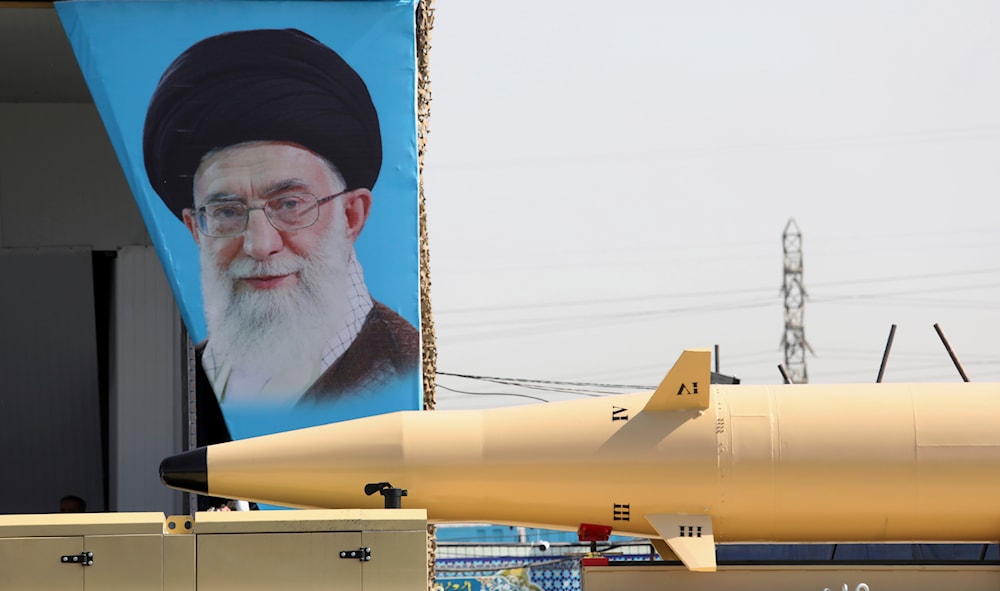
Iran’s weapons industry still churning out missiles despite war


Al Mayadeen

Iran is producing more missiles amid the United States-Israeli war on the country, spokesperson for Iran’s Islamic Revolution Guard Corps (IRGC), Brigadier General Ali Mohammad Naeini, emphasized.

For Iran, ballistic missiles serve as the backbone of its deterrence and retaliatory doctrine, enabling it to offset conventional military asymmetries through highly survivable, mobile, and scalable systems capable of delivering significant damage to adversary assets. One of the main focuses of the aggression on Iran has been its missile program, which the US and “Israel” seek to “obliterate”.

After firing hundreds of ballistic and cruise missiles at US and Israeli targets in the occupied territories, the Gulf, and the wider region, Naeini underlined that there should be “no concern” over Iran’s missile industry or its stockpiles.

The IRGC spokesperson also promised Iran’s adversaries “surprises”, saying that Iran’s retaliation will be more “remarkable and increasingly complex.”

“Our people in the streets want the war to continue until the enemy is fully exhausted,” he said, adding, “The end of this war will come only when the specter of war is lifted from Iran.”

Complete destruction?

A major claim of the Israeli regime and the Pentagon is that their forces have destroyed Iran’s missile industry facilities. In one briefing, Secretary of War Pete Hegseth said that a primary goal of the US aggression is not just to target Iranian missiles but to ensure Iran “has no ability to make more.”

On March 10, Hegseth said that Iran’s ballistic missile production capacity had been “functionally defeated” and “destroyed”, including every company that builds missile components. By mid-March, Hegseth toned his statements down and described the Iranian defense industrial base as “nearing complete destruction.”

Meanwhile, Iran has substantially increased its rate of ballistic missile fire since Wednesday, when the US-Israeli regimes launched an aggression on vital gas infrastructure. Iran met the escalation with retaliation against energy targets in the Gulf and occupied Palestine, forcing US President Donald Trump to publicly deny any involvement in the attack on Iran’s gas fields.

It is worth noting that Iran possesses a broad and diversified arsenal of ballistic missile systems, deliberately varying types and capabilities to sustain a prolonged confrontation against technologically superior, nuclear-armed adversaries. Its inventory includes both liquid-fueled and solid-fuel missiles, offering flexibility in deployment and readiness. These systems are equipped with either unitary high-explosive warheads or submunition payloads designed to penetrate layered air defenses and maximize impact on strategic targets.

A central pillar of Iran’s missile industry is its emphasis on scalable production, cost-efficiency, and operational effectiveness. Despite sustained external pressure, the sector has achieved notable technological advances, with systems such as the Fattah hypersonic-class missiles and the Khorramshahr-4 reflecting progress in propulsion, guidance, and payload delivery. Tehran has also worked to diversify its supply chains while localizing the production of critical components, many of which are manufactured in fortified, deeply buried underground facilities to ensure continuity during wartime.

Gulf states speak out: US and Israel must end illegal war on Iran

While the US and Israel try to pit Gulf Arab states against Iran, Oman is proving their plan is doomed.

Omani foreign minister Badr bin Hamad Albusaidi used Rothschild-owned magazine The Economist to reach the Western elite

👉 He reveals frankly how frustrated Arab states are at US and Israeli destabilization of the region — which has brought destruction.
👉 Does his article contain any criticism of Iran? None — in his view, Iran had no choice.

🌏 The US and Iran were “on the verge of a real deal” when the war started, writes Albusaidi, who led negotiations between the two

🌏 It was a “shock” when the US and Israel “again launched an unlawful military strike against the peace that had briefly appeared really possible”

🌏 Iranian retaliation against US interests in the Gulf was “inevitable” and “probably the only rational option available to the Iranian leadership” in the face of US and Israeli attempts to “terminate” Iranian statehood

🌏 “Arab countries that had placed their trust in US security co-operation now experience that co-operation as an acute vulnerability, threatening their present security and future prosperity”

🌏 This is not a US war – it was “drawn into it” by Israel and there is “no likely scenario” in which both “will get what they want from it”

🌏 “America’s friends have a responsibility to tell the truth,” Albusaidi writes, stressing that the US must get out of the war and make peace with Iran.

Via https://t.me/geopolitics_prime/67012

China more involved in Iran war than it seems


Beijing is already plugged into how this war works. The links aren’t obvious on the surface, but they show up across key moving parts of the conflict. Here’s where to look:

1️⃣ Chinese Missile Supplies for Iran (https://t.me/newrulesgeo/1635) — China ships carbon fiber, dioctyl sebacate, and tools, to IRGC Aerospace Force for solid-fuel motors. This lets Iran rebuild & scale ballistic missile production toward thousands more by 2027, plus nearing deals for CM-302 supersonic anti-ship missiles to dominate naval strikes.

2️⃣ Jilin-1 Satellite Constellation & MizarVision Intel (https://t.me/newrulesgeo/1596) — China’s ~120-satellite swarm provides HD real-time video tracking US troop movements, carriers, logistics, and defenses in Jordan/Gulf pre- and during strikes. MizarVision releases imagery to expose Western ops, breaking the intel monopoly and giving Iran an “open book” on threats while feeding Beijing battlefield data for future modeling.

3️⃣ Acceleration of China’s Own Stealth Bomber Programs (https://t.me/newrulesgeo/1599) — China observed the US B-2/B-21 bombing against hardened Iranian targets and resolve that missiles/drones can’t match sustained pressure from reusable stealth platforms. This pushes urgency on Chinese H-20 long-range stealth bomber and JH-XX medium-range strike fighter, vital for contested environments like Taiwan Strait, where persistent airstrikes could disrupt US bases in Japan/Guam.

4️⃣ Rare Earths Leverage Over US Munitions (https://t.me/newrulesgeo/1615) — US arsenal depends on Chinese-controlled heavy rare earths for magnets, radars, guidance, and propulsion. Pentagon reserves low; early strikes burned billions. Rebuilding damaged radars needs massive materials China dominates.

5️⃣ Tomahawk Depletion Window (https://t.me/newrulesgeo/1632)— US fired ~400 Tomahawks in first 72 hours (>10% inventory gone) in Iran, but production is only 90/year, restock would take 4.5+ years at current rates. Each missile costs $2-4M; This creates a dangerous gap for China to exploit in Taiwan while Iran gains operational freedom.

6️⃣ Spy Fleet & Beidou Integration (https://t.me/newrulesgeo/1546)— Liaowang-1 surveillance ship + access to 500+ Chinese satellites track US launches/movements in Persian Gulf/Indian Ocean for early warnings. Iran fully switched to Beidou nav, ditching GPS, for reliable, interference-proof ops.

Put together, these links show Beijing shaping how this war functions rather than standing outside it.

Via https://t.me/geopolitics_prime/67017

Open Letter to PM Challenges COVID Royal Commission Phase Two Findings as Unlawful

Justice Watch Bill of Rights

Justice Watch New Zealand has issued an open letter to Prime Minister Luxon challenging the Royal Commission’s Phase Two findings as unlawful under the New Zealand Bill of Rights Act.

Justice Watch NZ is a public advocacy and legal accountability group. In its third consecutive open letter to the Prime Minister and Government Ministers critiquing the Phase 2 report of the Covid Royal Commission, it argues NZ was rendered unfree and undemocratic such that the legal justification for the suspension of key elements of the Bill of Rights Act (BORA) claimed all along by the government and endorsed by the Commissioners, was rendered moot.


PUBLIC OPEN LETTER

Justice Watch New Zealand Inc.
Public Interest Correspondence

Email: justicewatchnz@protonmail.com

Date: 17 March 2026

Subject: RCI into COVID-19: Lessons Learned Phase 2 — Legal Failure to Apply the Justified Limitations Framework of the New Zealand Bill of Rights Act 1990

Rt Hon Christopher Luxon
Prime Minister of New Zealand

And to:
All Honourable Ministers of the Crown

Dear Prime Minister and Honourable Ministers,

Purpose of this Letter

We write to explain why the Royal Commission’s Phase Two Report: Lessons Learned from Aotearoa New Zealand’s Response to COVID-19 appears to have failed to identify the misuse of the “justified limitations” provisions of the New Zealand Bill of Rights Act 1990. In our view, this arises from a misunderstanding of key aspects of the COVID-19 circumstances and their proper application within the legal framework established by the Act.

The Required Legal Approach

The proper legal approach is to measure the circumstances that occurred during the pandemic against the statutory framework that existed at the time. The law cannot be adjusted retrospectively to accommodate the circumstances that arose. Rather, the circumstances must be examined against the requirements of the law as enacted by Parliament.

The law is prescriptive in this regard. Section 10 of the Legislation Act 2019 provides that “the meaning of legislation must be ascertained from its text and in the light of its purpose and context.” Any analysis of the justified limitations provisions of the New Zealand Bill of Rights Act must therefore begin with a careful examination of the text of the Act and the purpose and context in which those provisions were enacted.

Constitutional Role of the New Zealand Bill of Rights Act

The New Zealand Bill of Rights Act also occupies a particular constitutional role within New Zealand law. It is one of the few statutes enacted primarily to restrain the exercise of public power rather than to regulate the conduct of the public. In that sense, it is legislation enacted for the protection of the people against the misuse of governmental authority. For that reason, the rights affirmed by the Act must be interpreted liberally and applied for the benefit of the people whose freedoms the Act was designed to protect.

The Statutory Test Under Section 5

Section 5 of the New Zealand Bill of Rights Act 1990 is explicit that any limitation on the rights and freedoms affirmed by the Act is permissible only where it can be demonstrably justified in a free and democratic society.

The statutory language is clear that the concept of justification operates within the context of a society that is itself free. Yet during the pandemic New Zealand society was placed under lockdown conditions removing the element of freedom that is required for further justified limitations. In those circumstances the question necessarily arises whether additional limitations imposed while that condition existed could properly be said to meet the statutory requirement of justification under section 5.

Sequence of Rights Limitations

In those circumstances it is necessary to identify the sequence of rights limitations that occurred.

This sequence also raises a further issue of legal reasoning. Where successive limitations on rights derive their force from conditions created by earlier restrictions, the justification analysis risks becoming circular, because the State is effectively relying upon circumstances produced by its own limitations in order to justify additional ones.

The first limitation was the removal of ordinary freedom of movement and association through lockdown orders imposed across New Zealand.

Once those conditions were established, the restoration of ordinary freedoms was then made conditional upon vaccination uptake targets. In practical terms, the return of ordinary civil liberties was tied to vaccination compliance.

The effect of this sequence was that the restoration of ordinary freedoms was made conditional upon vaccination uptake. In substance this created a coercive environment in which individuals were pressured to accept a medical intervention, and it is now evident that some New Zealanders who complied with those conditions were subsequently injured.

Schematic Representation of the Issue

The issue can be illustrated schematically as follows:

Statutory Requirement
New Zealand Bill of Rights Act 1990 — Section 5
Limitations permitted only where demonstrably justified
IN A FREE AND DEMOCRATIC SOCIETY

Circumstance That Occurred
Nationwide lockdown orders imposed across New Zealand

The practical effect of those orders was the removal or severe restriction of the ordinary civil freedoms that define a free society, including:

  • Freedom of movement — people were required to remain at home and were prohibited from travelling except for limited purposes.
  • Freedom of association — people were prohibited from meeting with others outside their household.
  • Freedom of peaceful assembly — public gatherings were prohibited.
  • Freedom to carry on ordinary work and livelihood — many people were prohibited from attending workplaces or conducting normal economic activity.

In those conditions New Zealand society was operating under lockdown restrictions in which the ordinary freedoms presupposed by section 5 of the New Zealand Bill of Rights Act were substantially removed.

Further Limitation
Restoration of ordinary freedoms made conditional upon vaccination uptake targets.

Practical Effect
Individuals pressured to accept a medical intervention in order to regain ordinary civil liberties.

Observed Outcome
Some individuals who complied with those conditions were subsequently injured.

Issue Identified
The Royal Commission does not appear to analyse this sequence of limitations within the statutory requirement that justification occur in a free and democratic society.

Conclusion

The Phase Two report appears to reach conclusions about justified limitations without properly examining the statutory condition required by section 5 of the New Zealand Bill of Rights Act 1990 — namely, that any limitation must be demonstrably justified in a free and democratic society.

In our submission, any limitations imposed on the population at a time when New Zealand society was not operating as a free and democratic society — or where individuals were subject to conditions of coercion — were incapable of meeting the statutory threshold for justification under section 5. It follows that such limitations must properly be regarded as unlawful, as they fall outside the limits permitted by law. In that context, the conclusions reached by the Commissioners in the Phase Two report are in error.

Where such unlawful limitations have contributed to outcomes involving serious harm, including injury or death, the question of legal responsibility necessarily arises and cannot properly be set aside.

Yours faithfully,

Andrew Major Justice Watch

Andrew Major
Chairman & Lead Investigator

Justice Watch New Zealand Inc.
(Incorporated Society)

Email: justicewatchnz@protonmail.com
Website: www.justicewatchnz.net

Distribution:
Prime Minister and all Ministers of the Crown

Read the other Justice Watch NZ Letters: