The Most Revolutionary Act

Uncensored updates on world events, economics, the environment and medicine

The Most Revolutionary Act

Musk found guilty of misleading investors

Musk found guilty of misleading investors

RT

Tesla and SpaceX CEO Elon Musk has been found guilty in California of misleading investors during his $44 billion purchase of Twitter in 2022.

The class-action lawsuit, which had been filed shortly before Musk took control of the social media platform that he subsequently re-branded as X, focused on two tweets and comments made by the tech billionaire during a podcast in May 2022. Following those statements, including a post claiming that the Twitter deal was “temporarily on hold,” the company’s shares plunged by almost 10% in a single session.

The nine-man jury in San Francisco delivered its verdict on Friday, stating that the tech billionaire did mislead the shareholders, who sold Twitter shares at a lower price as a result of his announcements, with the tweets.

However, it also found that there was nothing wrong with what Musk said on the podcast and that he did not intentionally “scheme” to mislead the investors.

The Tesla and SpaceX CEO could end up paying up to $2.6 billion in damages, according to the lawyers of the Twitter shareholders. Musk’s fortune is estimated at some $814 billion.

The verdict is “an important victory, not just for investors of Twitter, but for the public markets” that “sends a strong message that just because you’re a rich and powerful person, you still have to obey the law,” Mark Molumphy, an attorney for the plaintiffs, insisted.

Musk’s lawyers said that they will appeal the ruling. “We view today’s verdict, where the jury found both for and against the plaintiffs and found no fraud scheme, as a bump in the road,” the legal team at Quinn Emanuel Urquhart & Sullivan said in a statement.

Musk, who is an extremely active user of X, has not yet commented on the jury’s decision.

The billionaire is often dubbed “Teflon Elon” for his ability to come out on top in the most difficult legal cases. In 2023, a jury in the same San Francisco court cleared him of similar charges of misleading investors, following Musk’s claims in 2018 that he had the funds to turn Tesla from a publicly traded company into a private one. That deal never happened.

[…]

Via https://www.rt.com/news/635792-musk-twitter-misleading-investors/

Armed Struggle Liberates Iraq After 23 Years Of Occupation

Nate Bear

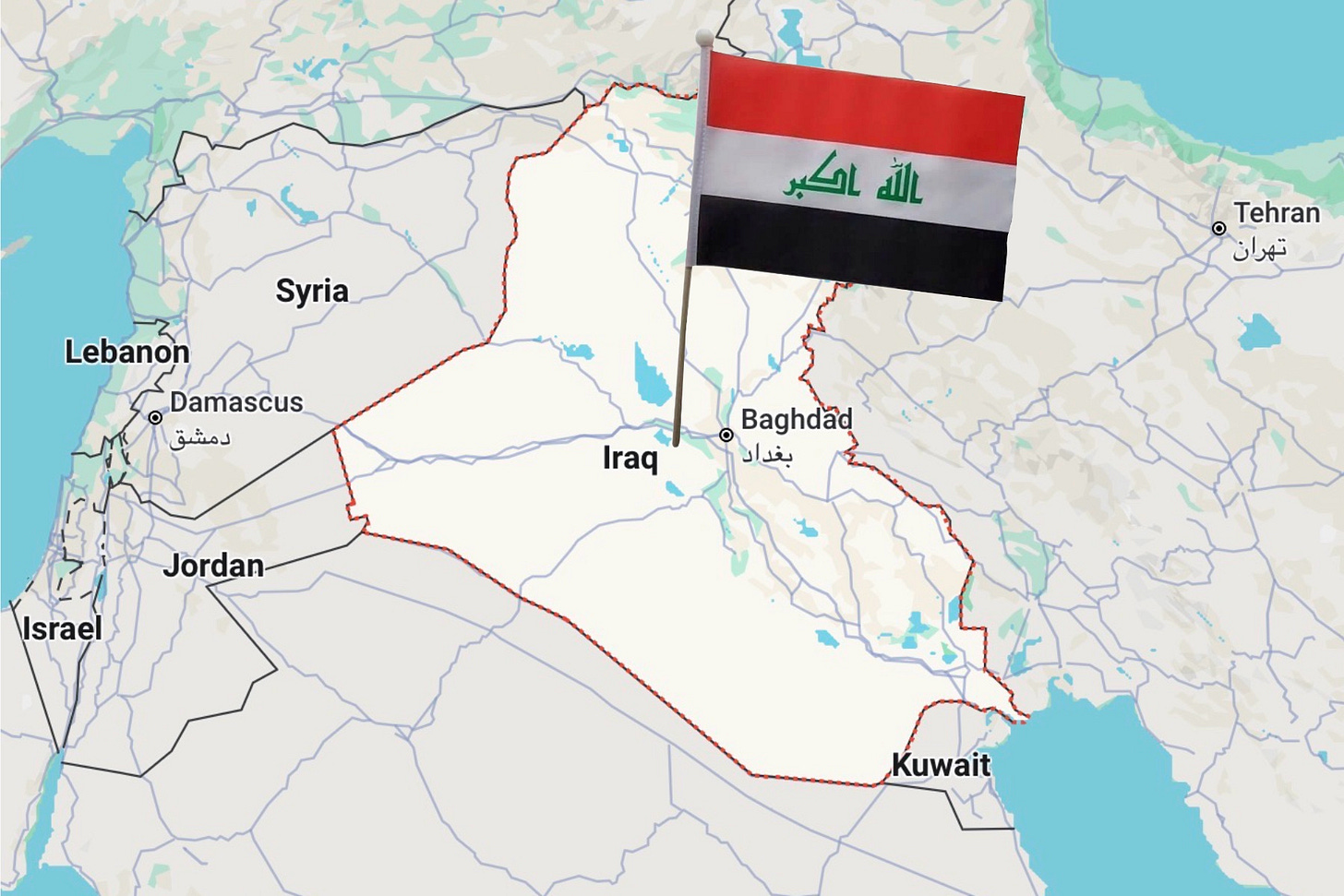
After weeks of attacks by Iraqi resistance groups, the US and NATO yesterday began evacuating all of their military personnel from Victoria Base in Baghdad.

They are unlikely to return.

This is an unprecedented, momentous achievement, and follows the January withdrawal of US and NATO troops from the Ain al-Asad airbase after years of attacks.

These withdrawals mean the US presence in Iraq is now confined to Kurdistan.

Iraqi fighters, with the support of Iran, have effectively decolonised their country, 23 years after the US invasion, and six years after Iraq’s parliament voted to expel US forces.

At the time, the US refused to honour the democratic vote. Because despite all the lies about freedom and democracy which justified the original invasion, imperialists don’t care about democracy. They care about interests. About oil. About strategic footprints. And all these were best served by maintaining a military presence in Iraq.

Trump was president at the time of the vote, and threatened sanctions in response.

What worked in the end?

Violence. Armed resistance. Speaking the language of imperialists and colonisers back to them.

The resistance to the US-NATO troop presence in Iraq has been long-standing. Attacks by Iraqi fighters have been periodic, aided by Iran in moments of heightened tension. In 2020, after the US assassinated Iran’s General Soleimani, Iran launched a missile attack on Ain al-Asad Airbase, the largest-ever against US forces abroad. The attack left over one hundred American troops with traumatic brain injuries and accelerated US plans to withdraw forces.

And since the US-Israeli sneak attack on Iran last month, Iran and Iraqi resistance groups backed by Iran, have been pounding Victoria Base, a sprawling, city-like complex on the outskirts of Baghdad. The attacks, via drones, missiles, and small arms, have resulted in a significant number of serious injuries, prompting the US over the weekend to request a 24-hour ceasefire so they could evacuate the remaining troop presence.

Violence achieved what votes and diplomacy couldn’t.

Iran has helped liberate Iraq, and in its overall conduct of the war, is teaching the west a harsh lesson.

It is for this reason that western leaders are whining like sex-starved billy goats about Iran’s “reckless attacks.” The west is so used to the impunity that comes with imperial power they can’t accept that a nation they see as sub-human is not only able to fight back, but to do so in a way that imposes material costs on their interests. It infuriates them to see a sovereign nation completely outside the orbit of western imperialism stand up to their bullying.

What we’re seeing are both the limits of imperialism, and the lengths to which the west is willing to go to protect empire and its system of domination.

These lengths are extreme, and include of course the abandonment of international law.

It’s actually crazy when you think about it.

Day after day we see universal condemnation not of an illegal war of aggression, but of the legal response to that aggression. We keep seeing demands for Iran to stop fighting without commensurate demands for the US-Israel to do the same.

“Stop shooting back, but let them keep shooting you.”

The west is demanding Iran surrender to the aggressor without conditions.

It’s so nakedly imperialist, a gloriously teachable moment.

But this abandonment of international law is also incredibly dangerous. Because it has left Iran nowhere to turn but total war. The world’s refusal to acknowledge basic facts about who is the aggressor and who is the victim has left Iran’s leaders with no options other than to go as far up the escalation ladder, in response, as they can.

Look at it from Iran’s point of view. Twice attacked during negotiations, their revolutionary religious leader assassinated during their most important religious festival, toxic rain falling on 9 million people, thousands of civilians murdered, schools, hospitals and clinics bombed. Then when they fight back against unprovoked aggression, almost the entire world condemns them.

Under these conditions, what is Iran supposed to do? Where are they supposed to turn for support? Who can be trusted to arbitrate any deal and guarantee Iran’s territorial security?

The credibility of the UN is shot to pieces.

International law lies dead in Gaza.

International institutions work entirely for empire.

The whole UN Charter system is a lie, its administrators decadent and corrupt.

It means Iran’s only logical strategy is to carve out its future security arrangements through force.

No international body or statute is coming to save them.

Armed struggle and resistance until the enemy retreats first is the only rational choice based on their history and recent experience.

Because for Iran this is an existential war for survival.

And there are signs that Iran’s armed resistance is working.

On Saturday, Trump threatened to bomb Iran’s power infrastructure by the end of today if they didn’t guarantee all ships the right of transit through the Strait of Hormuz. Iran said if the US did it they’d attack all water desalination and oil platforms throughout the Persian Gulf. So this morning Trump revised the deadline. He said good progress had been made on negotiations and gave Iran until the end of the week to open the Strait before he commits a war crime. Iran said Trump was lying about negotiations. The foreign minister said they haven’t talked to the Americans since the war started.

So Trump backed down.

Faced with a credible threat to make the Gulf states effectively uninhabitable and collapse the global economy, he backed down.

Threats of violence worked.

Because violence, as the resistance in Iraq has just proved, is the only language imperialists understand.

[…]

Via https://www.donotpanic.news/p/armed-struggle-liberates-iraq-after

Trump Lying About Negotiations with Iran

Trump says Iran has become 'much more aggressive' in nuclear ...

Press TV

🔺 In recent days, the United States has insisted on using some neighboring countries as intermediaries to negotiate with Iran, but Iran has not responded.

🔺 Iran has not responded to the request for negotiations, and no talks have taken place with the United States.

🔺 Although no response has been given to America’s requests through a neighboring country, Trump has falsely claimed negotiations with Iran in order to back away from his earlier threat to attack Iran’s electricity infrastructure.

🔺 America’s false claim amounts to an escape route it has chosen to compensate for its humiliation in the face of failure against our country.

🔺 The real reason for Trump’s retreat from attacking our country’s infrastructure was the decisive threat from the Armed Forces.

🔺 The reason for Trump’s creation of intermediaries is the deadlock and failure of the United States and the Zionist regime in their war with Iran.

Via https://t.me/presstv/181444

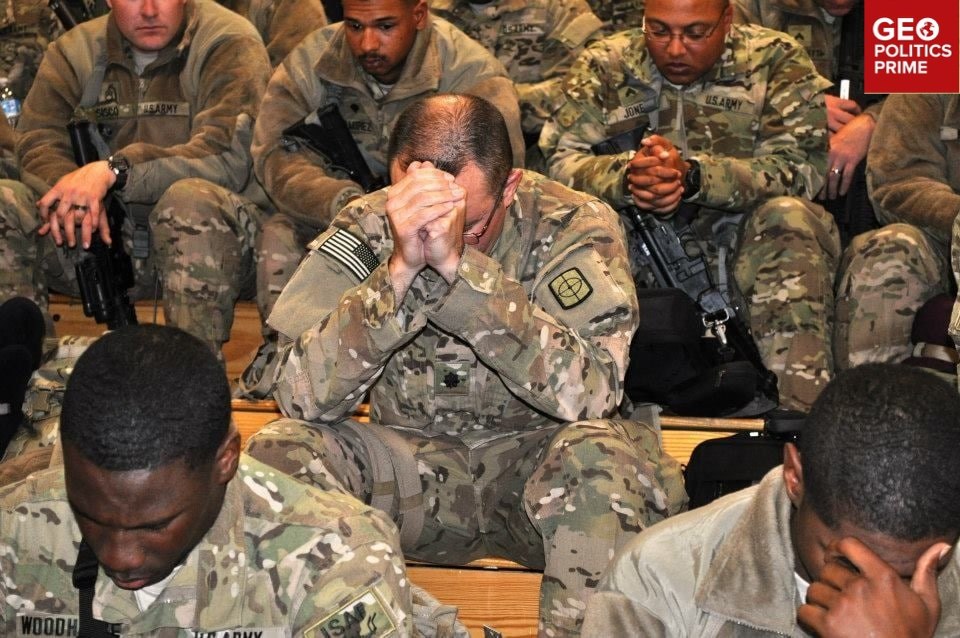
US troops spooked by Trump’s warmongering in Middle East

Morale among US troops is sinking to a new low as Trump’s attempted blitzkrieg in the Persian Gulf turns into a bloody and costly quagmire, HuffPost reports.

🔶 Successful Iranian attacks on US bases in the Middle East shattered the US troops’ confidence. One US military official lamented that a ground operation against Iran would be “an absolute disaster,” pointing at the Pentagon’s inability to protect its own assets in the region.

🔶 Many US personnel are increasingly reluctant to do Netanyahu’s bidding instead of serving their own country. “I’m hearing out of service members’ mouths the words, ’We do not want to die for Israel — we don’t want to be political pawns,” said one US veteran and reservist who mentors younger officers.

🔶 The executive director of the Center on Conscience and War announced a 1,000% increase in conscientious objector applications. The deadly strike on the girls’ school in Minab, he notes, has become a breaking point for most of these new applicants.

🔶 Some service members also complained about the “lack of a clear, consistent narrative justifying the Iran war,” as HuffPost put it, with the prospect of risking their lives in a “poorly planned conflict” for “no identifiable strategic benefit” leaving them demoralized.

Via https://t.me/geopolitics_prime/67125

NZ RUNNING ON EMPTY: Luxon’s Fuel Security Failure Exposes Government With No Plan B


by Mykeljon Winckel

New Zealand has just been handed a harsh reality check. Behind the polished language and carefully managed messaging, one truth is now impossible to ignore: When it comes to fuel security, this Government has no Plan B.

That is not a minor policy gap. That is a national vulnerability.

Fuel is not optional. It is the backbone of the economy. It powers freight, agriculture, emergency services, construction, aviation, and the movement of goods across every sector. Without secure fuel supply, everything slows, stalls, or stops.

And yet, in the middle of a global conflict threatening supply chains, Prime Minister Christopher Luxon’s own communication to supporters reveals just how exposed New Zealand really is.

“New Zealand has enough fuel for at least the next seven weeks… We are working with the fuel industry… working with other countries… and looking at lowering fuel quality standards.”

That is not a strategy.

That is a government scrambling in real time.

THE ILLUSION OF SECURITY

The claim of “seven weeks” of fuel supply sounds reassuring — until you examine what it actually means.

New Zealand does not hold large-scale sovereign reserves of refined fuel. We rely heavily on imported product, offshore storage arrangements, and fuel that is either on the water or still sitting in tanks overseas.

In practical terms, the reality is far tighter:

  • Roughly 28 days of usable fuel onshore
  • Around 22 days of supply still in transit
  • Additional “fuel tickets” that may not translate into immediate availability during disruption

That is not a buffer. That is a gap.

And when the next shipment arrives — then what?

Where is the second layer of supply? Where is the fallback system? Where is the sovereign resilience?

It does not exist.

A FAILURE OF LEADERSHIP — NOT JUST POLICY

This situation did not appear overnight.

New Zealand made a conscious decision to dismantle its only refinery at Marsden Point under the previous Labour Government — removing the country’s ability to refine crude into finished fuels domestically.

That decision alone should have triggered an immediate, urgent national response.

But what has the current Government done since taking office?

  • No expansion of strategic fuel storage
  • No rebuild or replacement refining capability
  • No meaningful incentives to increase domestic oil and gas production
  • No national energy sovereignty strategy
  • No contingency framework for supply chain disruption

Nothing.

Instead, we are now being told that officials are:

  • “working with industry”
  • “talking to other countries”
  • “considering lowering fuel standards”

That is not preparation.

That is admission.

THE HYPOCRISY IS STAGGERING

National campaigned as the party of competence.

The party that would “fix the basics.” The party that would restore discipline. The party that would manage risk responsibly.

Yet on the single most critical strategic vulnerability facing an island nation at the edge of global supply chains — fuel security — it has delivered no meaningful structural response.

Instead, it leans on rhetoric.

Luxon warns of “no magic money tree” and the dangers of government spending, while simultaneously presiding over a system with no resilience when it matters most.

Discipline is not just about cutting costs. Discipline is about anticipating risk before it becomes crisis.

That has not happened.

NO RELIEF — AND NO UNDERSTANDING

Even more telling is the Government’s position on fuel excise relief.

Luxon states that cutting fuel tax would help “everyone,” not just those most in need — and therefore is unlikely to be implemented.

But this completely misunderstands the nature of a fuel shock.

Fuel is not a niche expense.

It flows through:

  • freight
  • food prices
  • construction costs
  • retail supply chains
  • household budgets

When fuel rises, everything rises.

Refusing broad-based relief in a systemic cost shock is not discipline — it is detachment.

A COUNTRY BUILT ON HOPE, NOT STRATEGY

Right now, New Zealand’s fuel security rests on a fragile chain of assumptions:

  • That shipping lanes remain open
  • That foreign suppliers prioritise us
  • That geopolitical conflict does not escalate
  • That replacement cargoes arrive on time
  • That global markets continue functioning normally

That is not resilience.

That is hope.

And hope is not policy.

WHAT SHOULD HAVE BEEN DONE

A serious government would have acted already.

NZ demands competence:

  • Built strategic reserves of refined fuel onshore
  • Established a domestic processing or refining backup
  • Accelerated local oil and gas development where viable
  • Created a clear national energy sovereignty strategy
  • Recognised that in a volatile world, distance equals vulnerability

Instead, New Zealand remains exposed — and now the consequences are arriving.

THE FINAL TRUTH

This is not about politics.

It is about preparedness.

And the truth is now unavoidable:

There is no Plan B. There never was.

And as global instability rises, New Zealand is discovering — in real time — just how dangerous that really is.

What next? Fuel lockdowns? No one on the roads unless you have your travel papers? We have seen how effective that was with covid. Effectively throwing the nation under the bus for economic devastation.

[…]

Via https://www.elocal.co.nz/Article/7828

Former Pennsylvania Funeral Directors Association President Reveals 30–40% of Corpses Contain White Fibrous Clots

Since 2021, reports of unusual white fibrous clots discovered during embalming have been dismissed as anecdotal or attributed to fringe voices within the profession. That dismissal is no longer credible. The phenomenon is now being confirmed by senior leadership across multiple funeral director and embalmer associations—individuals with decades of experience and responsibility for representing thousands of professionals.

In a recent 10-minute interview on OAN (watch full interview here), 2024-2025 President of the Pennsylvania Funeral Directors Association, Chris Calvey Jr., reported that he has personally observed these white fibrous clots in an astonishing 30% to 40% of the bodies he has embalmed over the past five years.

He described the clots as being “the size of the arteries” and emphasized that “you can’t ignore this.” Critically, he stated that these are “foreign bodies” unlike anything he had encountered in his 10 years as a funeral director and embalmer.

This is not an isolated account. Just weeks earlier, Iowa Funeral Directors Association Board Member Dana Goodell independently reported observing the same type of unusual clotting—specifically noting that it began appearing around 2021.

Importantly, this phenomenon has now been acknowledged at the state association level. In June 2025, during the Tennessee Funeral Directors Association (TFDA) Convention, former USAF Major Thomas F. Haviland presented findings from an in-person survey conducted among 28 embalmers and funeral directors.

The results were alarming:

  • 64% reported seeing white fibrous clots in corpses during the first half of 2025
  • These clots appeared in an average of 17% of all bodies
  • 70% reported signs of micro-clotting (“coffee grounds” or “dirty blood”)
  • 39% observed an increase in infant deaths, averaging a 14% rise over pre-2020 levels

These findings were not merely written—they were confirmed in real time, as embalmers in the room raised their hands to verify that they had personally observed the phenomenon.

.This event—facilitated by TFDA President Taylor Moore—marked the first formal acknowledgment by a U.S. state funeral directors association that these clots are real, prevalent, and ongoing.

According to documentation compiled by USAF Major (Ret.) Thomas F. Haviland, multiple high-ranking leaders within the funeral profession have now independently confirmed the presence of these clots:

  • Woody Wilson — President, Ohio Embalmers Association (2024–2025)
  • Taylor Moore — President, Tennessee Funeral Directors Association (2024–2025)
  • Kevin Sweryd — President, Manitoba Funeral Service Association (Canada)

These are not anonymous embalmers or isolated accounts. These are elected leaders entrusted with representing the profession at the highest levels.

The Biological Mechanism: From Microclots to Fibrous Masses

A growing body of evidence provides a plausible biological explanation for the white fibrous clots now being reported by embalmers. Central to this is the formation of amyloid, fibrinolysis-resistant microclots triggered by spike protein exposure—whether from SARS-CoV-2 infection or mRNA injections. In a recent peer-reviewed study, Thioflavin-T (ThT)-positive amyloid microclots were identified in 100% of participants within a heavily COVID-vaccinated cohort (94%), including all “healthy controls.” These structures represent misfolded fibrin with β-sheet amyloid configuration, fundamentally distinct from normal clotting.

Mechanistic experiments within the same study demonstrated that spike protein alone can induce the formation of these insoluble, amyloid microclots in vitro, establishing a direct pathway for abnormal coagulation.

These microscopic findings closely align with postmortem observations. Independent forensic analyses have shown that the large white fibrous clots are amyloidogenic fibrin aggregates that are protease-resistant, rubbery, and structurally dense—features consistent with advanced-stage clot maturation. Their morphology and biochemical properties mirror those of the microclots identified in living subjects, but at a larger, aggregated scale.

A Direct Challenge to Public Health Authorities

Thomas Haviland, who has systematically documented and compiled these reports from funeral professionals across the world, has now taken the additional step of directly emailing U.S. public health leadership—including HHS, NIH, CDC, and FDA—urging them to investigate this phenomenon. His message is clear and unambiguous: after nearly six years of consistent reports from embalmers worldwide, how much more evidence is required before a formal inquiry is initiated?

The reports are now coming from presidents and senior officials of multiple funeral director and embalmer associations, individuals with extensive experience and professional accountability. The repeated description of dense, fibrous, artery-shaped clots—unlike anything previously encountered—has been independently corroborated across regions and over time.

The continued absence of a coordinated response from federal health agencies now represents a serious dereliction of duty.

[…]

Via https://www.globalresearch.ca/former-president-pennsylvania-funeral-directors-association-says-30-40-corpses-contain-white-fibrous-clots/5919460

Iraq steps forward in regional war

Photo Credit: The Cradle

Abbas al-Zein

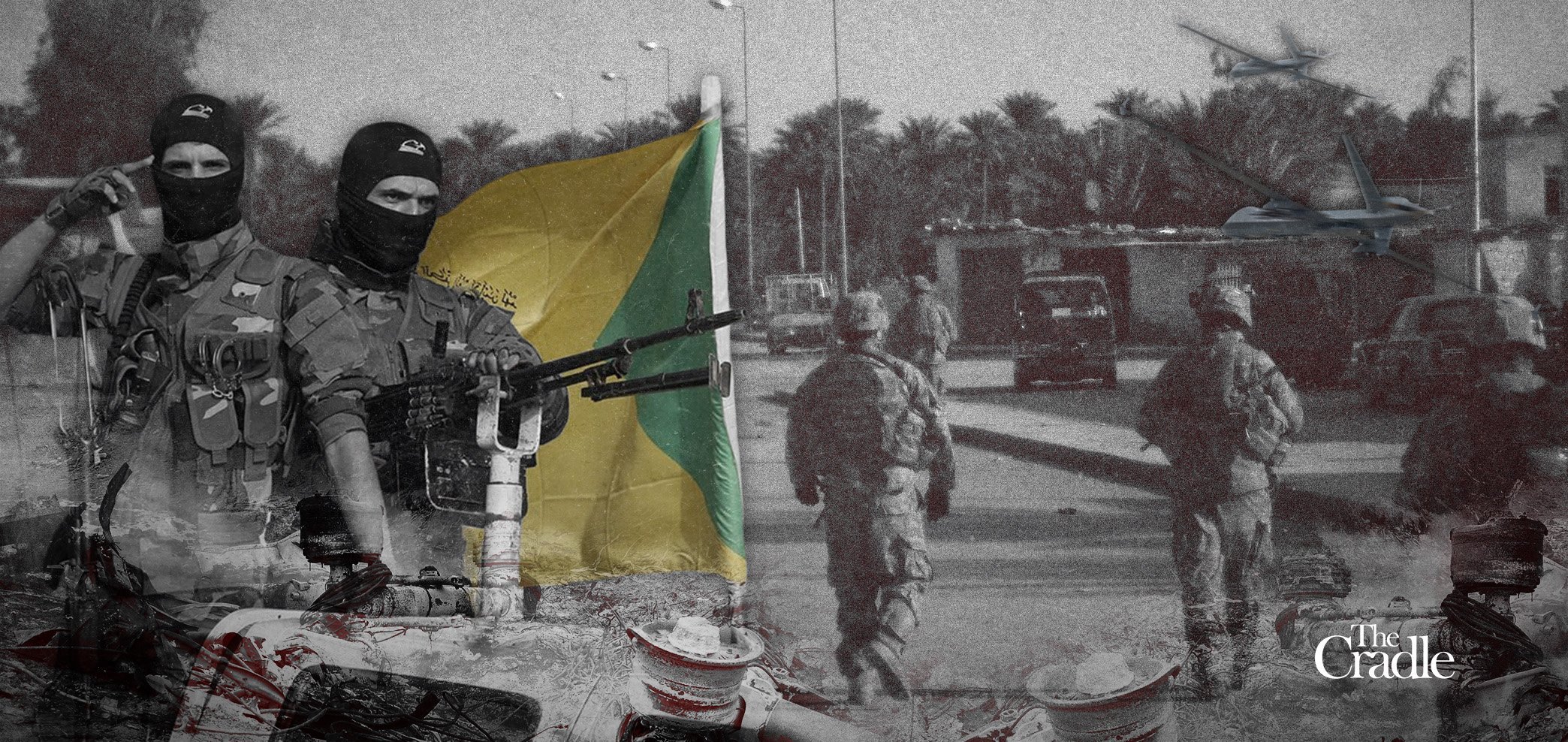
Iraq’s security environment has entered a markedly more volatile phase since the outbreak of the US-Israeli war on Iran in late February 2026. Armed factions operating under the banner of the Islamic Resistance in Iraq have intensified attacks on installations linked to US military deployment and logistical infrastructure across several provinces.

The recent escalation points to an effort to link domestic confrontation with wider regional war calculations, while also projecting Iraq as a front capable of exerting pressure on the trajectory of the conflict rather than merely absorbing its consequences.

Local reporting and faction-aligned statements describe successive waves of drone and rocket strikes targeting bases hosting US personnel. The tempo of these operations has reportedly risen beyond patterns observed in earlier years of intermittent confrontation, when attacks were more limited in scope and largely confined to specific theaters.

In recent weeks, the attacks have edged closer to the heart of the Iraqi state. Drone incidents and attempted strikes have reached sites in Baghdad tied to US logistics and diplomatic security activity – locations that were once treated as politically sensitive red lines.

The shift in targeting suggests a willingness by resistance factions to test the limits of US protection measures while sending a message that no part of the American presence in Iraq is beyond reach.

Resistance factions have announced the downing of a number of US military drones during the recent escalation, including aircraft described as playing a central surveillance role in American operations across Iraq and the wider region.

These incidents have been framed by resistance media as evidence of a shift in the balance of engagement, with attacks moving beyond harassment toward attempts to disrupt aerial monitoring and operational freedom.

The targeting pattern reflects an effort to sustain pressure on US deployments while signaling that the Iraqi front is now tied to the broader regional confrontation unfolding across Lebanon, Syria, and the Persian Gulf.

Intensified operational tempo

In the days following the initial escalation, resistance factions reported a sharp acceleration in operations. Statements circulated through faction media channels spoke of 27 attacks within a 24‑hour period at the beginning of March, followed by claims of 29 operations in a single day.

These figures were presented as evidence that the confrontation was evolving from sporadic harassment into coordinated waves of rocket and drone strikes directed at US military installations across several Iraqi provinces.

Subsequent communiqués described the escalation reaching a peak with announcements of more than 290 operations over roughly 12 days.

According to faction narratives, these attacks spanned Baghdad, western Iraq, and parts of the Kurdistan Region, particularly around Erbil International Airport and Harir Air Base.

From the outset of the war on 28 February, resistance messaging emphasized a rapid move into direct confrontation, highlighting synchronized strike attempts intended to demonstrate operational reach and sustained pressure.

In northern Iraq, tension has likewise centered on the vicinity of Erbil International Airport and nearby military facilities, which were subjected to regular, concentrated strikes using attack drones and Katyusha rockets, reflecting Kurdistan’s enduring strategic relevance as a logistical hub.

According to field reports, the Islamic Resistance in Iraq succeeded in downing around six drones in different areas: two in Anbar (western Iraq), one near Baghdad, one in Salah al-Din (Balad Air Base), and one in Diyala.

These operations included targeting the MQ-9 Reaper, considered “Washington’s eye” in the region due to its assassination and surveillance capabilities. Video footage reportedly showed the wreckage of such drones after being struck by upgraded air defense systems.

The most prominent strategic turning point came with the announcement that Iraqi resistance forces had shot down a US KC-135 refuelling aircraft in Anbar, killing its six-member crew. This operation was seen as a severe blow to US aerial support capabilities over Iraq.

Retaliation and escalation cycles

Following the sharp rise in attacks claimed by factions operating under the umbrella of the Islamic Resistance – including groups such as Kataib Hezbollah, Harakat al-Nujaba, and Kataib Sayyid al-Shuhada – the US moved toward more concentrated strikes on sites linked to these formations.

Airstrikes were reported in areas long associated with militia deployment and logistical depth, particularly Jurf al-Sakhar south of Baghdad, Al-Qaim along the Syrian border, and the Akashat region in western Anbar.

One of the most sensitive developments came with reports of an attempted assassination targeting Kataib Hezbollah Secretary‑General Abu Hussein al‑Hamidawi. According to resistance‑aligned sources, US aircraft struck locations in the Al‑Masbah–Al‑Arasat area of central Baghdad where senior commanders were believed to be meeting. Early media reports suggested that Hamidawi may have been killed, but subsequent faction statements denied this, describing the operation as unsuccessful.

On 16 March, Kataib Hezbollah announced the death of senior security figure Abu Ali al‑Askari, a development that resistance media framed as part of the ongoing escalation cycle. Within hours, drone and rocket fire were reported near the US embassy compound in Baghdad.

Taken together, these developments highlight several emerging dynamics. First, the tempo of confrontation has continued to rise, with both sides demonstrating a willingness to absorb risks associated with escalation.

Second, the geographic scope of operations has expanded to include the capital and strategically significant zones across western Iraq.

Third, the confrontation has begun to test long‑standing informal limits by targeting aerial capabilities, leadership structures, and logistical infrastructure, positioning the Iraqi front as a central pressure point within the wider regional deterrence equation.

Strategic messaging beyond Iraq

Alongside battlefield developments, Iraqi resistance factions have articulated a doctrine linking internal confrontation with regional flashpoints.

In a 6 March statement, the Iraqi Resistance Coordination Committee said the security of Beirut’s southern suburb (Dahiye) was “an integral part of the regional security equation,” warning that any attack would threaten US diplomatic and economic interests across West Asia.

This framing situates Iraq within a network of interconnected pressure fronts rather than treating it as an isolated arena.

Resistance messaging referenced potential threats to diplomatic missions of states perceived as supporting the war effort and to energy infrastructure associated with western oil operations in the Gulf. Such rhetoric seeks to elevate localized clashes into developments with global economic implications, particularly in light of the central role Gulf energy flows play in international markets.

Attention has also focused on the Kurdistan Region, where resistance statements spoke of “the consequences of involvement in supporting the Kurdish criminal gangs backed by the Zionist entity that seek to infiltrate” Iran. These warnings reflect long-standing concerns over intelligence penetration, logistical corridors, and the risk that Iraqi territory could be used to mount pressure on Iranian allies from multiple directions.

Syria and the axis equation

On 11 March, amid regional media reports of troop movements by forces aligned with Syria’s President Ahmad al-Sharaa (Abu Mohammad al-Julani) toward areas near the Lebanese border, Iraqi resistance rhetoric reached one of its sharpest points.

In a statement issued that day, the Coordination Committee warned that any hostile military step against Lebanon – particularly if carried out in coordination with what it described as the “Zionist-American enemy” – would be treated as a direct declaration of war on the entire Axis of Resistance.

The language amounted to a pre-emptive military veto, signaling that the Iraqi front could be activated as part of a wider deterrence response if Hezbollah’s strategic depth were threatened.

References to past battles against US forces and ISIS have also been invoked to reinforce claims of operational experience and ideological legitimacy.

From battleground to pressure front

Operational patterns and strategic messaging together point to a gradual redefinition of Iraq’s role in the regional conflict. For years, the country was widely regarded as a battleground where external rivalries played out through local proxies.

Current developments suggest efforts by resistance factions to convert Iraq into a pressure front capable of influencing the cost calculations of foreign military presence.

This trajectory remains shaped by several factors, including the sustainability of US deployments, the stance of Iraq’s central government, intra-Shia political competition, and the broader direction of the war involving Iran and Israel. Recent escalation nonetheless demonstrates how rapidly domestic security dynamics can intersect with regional confrontation and alter threat perceptions across neighboring states.

As diplomatic channels narrow and military tensions persist across West Asia, Iraq’s position may prove consequential in determining whether the conflict stabilizes into a tense deterrence balance or moves toward a phase of wider escalation involving multiple fronts.

Iraq’s evolving posture indicates that it is no longer viewed solely as a peripheral arena but as a component of a broader contest over military presence, strategic depth, and the future configuration of regional power.

[…]

Via https://thecradle.co/articles/iraq-steps-forward-in-a-regional-war

Trump threatens to deploy ICE agents to airports Monday if funding deal isn’t reached

Travelers wait in line at a Transportation Security Administration checkpoint at Hartsfield-Jackson Atlanta International Airport (ATL) in Atlanta, Georgia, on Friday, March 20, 2026.

By

President Donald Trump said Saturday he will deploy Immigration and Customs Enforcement agents to US airports on Monday if an agreement isn’t reached to fund the Department of Homeland Security as Transportation Security Administration workers go without pay and travel disruptions mount.

“If the Democrats do not allow for Just and Proper Security at our Airports, and elsewhere throughout our Country, ICE will do the job far better than ever done before!” the president wrote on Truth Social. “I look forward to moving ICE in on Monday, and have already told them to, ‘GET READY.’ NO MORE WAITING, NO MORE GAMES!”

A partial government shutdown has led to TSA staffing shortages that have contributed to delays, with unpredictable wait times expected to continue throughout the weekend. Lawmakers have been working to reach an agreement to reopen the Department of Homeland Security, but even as they’re eager to reach a deal in the next week before Congress leaves town for a lengthy spring recess, a resolution remains uncertain.

It is unclear what function the ICE agents would perform since they’re not trained in airport security screening. TSA screeners have a monthslong training period before they’re on the job, though airline employees and private security companies have partnered on line controlling and guarding exit doors.

“What it takes to be a TSA officer, a certified officer, to be able to do screening takes weeks and months to do,” George Borek, an Atlanta TSA officer and union steward, told CNN. “The president can have them come there but I don’t see how that helps us in getting through this time period.”

And the lack of specific TSA training could cause other issues, Borek said. “If you bring people in there, they are not trained, they don’t know what they’re looking for, then certainly it could be a problem.”

The ICE agents could potentially help in more limited roles — like managing lines, directing passengers or helping move people through the checkpoint process — to free up trained TSA officers for critical security functions.

CNN has reached out to the Department of Homeland Security, which includes TSA, and the White House for more information.

Trump suggested in an earlier Truth Social post on Saturday that the ICE agents would “do Security like no one has ever seen before, including the immediate arrest” of undocumented immigrants, with Trump specifying “heavy emphasis on those from Somalia.”

Democrats have been demanding changes that would rein in Trump’s immigration policies after two people were killed during an immigration enforcement surge in Minneapolis earlier this year. They’ve been pushing for stand-alone funding for TSA, while Republicans have rejected a piecemeal approach to funding DHS.

Bipartisan appropriators held a brief meeting with White House border czar Tom Homan Friday evening that sources from both parties called “productive.” Multiple Republicans said the GOP had bolstered its latest offer to Democrats, though they declined to specify how the White House was proposing to address Democrats’ demands.

Another meeting with Homan that Senate Majority Leader John Thune had previewed for Saturday has been cancelled, a GOP leadership source said, but it was unclear why.

Democrats on Saturday quickly condemned Trump’s threat to use ICE, with Sen. Richard Blumenthal telling reporters such usage of agents “as a general kind of militia or state police is contrary to the Constitution, the law of the United States, and common sense.”

“If the president is serious about providing TSA salaries, he ought to agree with us that ICE should be forced to obey the law, not deployed helter-skelter around the United States as an all-purpose police force,” the Connecticut Democrat added.

Democratic Sen. Mark Warner of Virginia argued that Trump’s word is “worthless,” and that the threat is “one more reason why we’ve got to get TSA funded.”

Republican Sen. John Kennedy, meanwhile, said “it could help” to send ICE agents to airports, but suggested that it’s not a definitive solution to the long security lines.

“If they’re planning on using some of the ICE folks to help with crowd control to free up TSA people to do the screening, I could see a scenario where that might help,” the Louisiana lawmaker told CNN, adding, “Unless those ICE folks can be trained really quickly to become TSA agents … it will be supportive but not dispositive.”

Thune said he hopes a deal can be reached on DHS funding so that “ideally” it “wouldn’t be necessary” to have ICE agents at airports.

Meanwhile, Borek said TSA officers are increasingly stretched thin as the next pay period approaches on March 27.

[…]

Via https://edition.cnn.com/2026/03/21/politics/ice-agents-airports-tsa-trump-threat

Why boots on Iranian soil would become strategic catastrophe for US

By Yousef Ramazani

As the American-Israeli aggression against Iran enters its fourth week, with none of the stated objectives materializing, the specter of a ground invasion has moved from whispered contingency to urgent operational planning.

However, as Iranian armed forces have repeatedly warned, any American soldier setting foot on Iranian territory would step into a meticulously prepared kill zone designed to inflict losses unseen since World War II.

The unprovoked and illegal aggression that began on February 28, 2026 – amid indirect nuclear talks – has exposed a fundamental miscalculation in American strategy.

Despite weeks of unbridled and indiscriminate aerial bombardment and claims of having struck over 7,000 targets, Iran’s retaliatory capabilities remain undiminished, it continues to inflict heavy blows on the enemy, its leadership structure has decentralized into autonomous divisions, and the Axis of Resistance continues to strike US assets across the region.

As American Marine expeditionary units plan to converge on the Persian Gulf and the 82nd Airborne Division stands at readiness, military planners in Washington confront an uncomfortable reality: air power alone cannot achieve desired goals, yet a ground invasion would trigger a cascade of catastrophic consequences that no amount of American firepower can contain.

Iran has made its position emphatically clear: ground aggression constitutes a red line, and any crossing would be met with surprises that would leave the United States and its Israeli ally unable to remove their soldiers’ coffins from Iranian soil.

How is Iran’s geography of attrition built for defense?

Iran is not Iraq. This single geographic fact forms the foundation of any analysis of a potential ground invasion. Spanning 1.65 million square kilometers, Iran is four times the size of Iraq, with terrain that offers natural defensive advantages unlike anything American forces faced in 2003.

The Zagros Mountain range, running from northwest to southeast along the Iraqi border, presents a formidable barrier to any mechanized advance from the west.

These mountains channel invading forces into predictable avenues of approach – precisely where Iranian defenders have concentrated their anti-armor capabilities for decades.

Beyond the rough terrain, the sheer scale of occupation would dwarf any previous American experience. Iran’s population exceeds 93 million people – more than two and a half times the population of Iraq at the time of the 2003 invasion. Even a conservative counterinsurgency ratio would require hundreds of thousands of American troops to maintain order across the country’s urban centers.

The logistical apparatus required to support such a force would be among the largest in military history, and every gallon of fuel, every meal, every artillery shell would have to travel through supply lines under constant multi-domain attack from the moment they entered Iranian territory.

How is Iran’s anti-access defense architecture built?

Iran has spent more than four decades constructing a defensive system designed specifically to counter any external aggression, including that from the US or its proxies.

This integrated anti-access and area denial architecture transforms the Persian Gulf region into a high-risk environment for any foreign hostile force.

The system operates in layers, each designed to complicate an adversary’s operational calculus and impose costs at every stage of an invasion.

Before any ground invasion could begin, American forces would have to contend with Iran’s extensive unmanned aerial vehicle surveillance network.

Platforms like the Mohajer-6, with 15 hours of endurance, provide persistent intelligence coverage across the Persian Gulf, tracking naval movements and monitoring ground force concentrations while transmitting targeting data to strike platforms in near real-time.

This reconnaissance layer compresses reaction time from minutes to seconds, allowing defensive forces to engage threats before they approach Iranian shores.

Any American ground invasion would require air supremacy to protect advancing forces from aerial attack.

Yet Iran’s layered air defense network, centered on the islands of Abu Musa, Greater Tunb, and Lesser Tunb in the Persian Gulf, has been designed to deny precisely that.

These islands, described in military literature as Iran’s “unsinkable aircraft carriers,” function as multi-mission platforms hosting surveillance systems, air defense batteries, and offensive strike capabilities.

What makes amphibious operations risky?

For any ground invasion, the ability to land forces by sea would be essential. Yet Iran’s anti-ship missile arsenal makes amphibious operations in the Persian Gulf extraordinarily risky.

The Qader anti-ship cruise missile, with a range exceeding 300 kilometers and a 165-kilogram penetrating warhead, flies at Mach 0.9 in sea-skimming mode, evading radar detection until seconds before impact.

Deployed on mobile coastal launchers across Abu Musa and the Iranian coastline, it can strike targets deep into the Strait of Hormuz.

Complementing Qader are the Khalij Fars anti-ship ballistic missile, with optical seeker for terminal guidance, and the Hormuz family of anti-radiation missiles specifically designed to target the radar emissions of Aegis-equipped warships.

The Zolfaghar Basir extends this threat envelope to 700 kilometers, pushing potential engagement zones well into the Gulf of Oman.

At the apex of this capability are the Fattah-1 and Fattah-2 hypersonic missiles, capable of speeds reaching Mach 15 and extreme maneuverability, designed to defeat even the most advanced missile defense systems.

Beyond conventional missiles, the IRGC Navy operates hundreds of small, fast attack craft capable of swarm tactics against larger warships.

These speedboats, armed with rockets and missiles, can attack from multiple directions simultaneously to overwhelm defensive systems.

Below the surface, Iran’s Ghadir-class midget submarines, optimized for the shallow waters of the Persian Gulf, can lie in wait on the seabed to ambush passing vessels with torpedoes.

Iran also possesses one of the largest naval mine inventories in the region, numbering in the thousands, including advanced influence mines triggered by a ship’s magnetic field or acoustic signature.

Even the suspicion of a minefield in the Strait of Hormuz would force the US Navy into a slow, dangerous mine countermeasure campaign, all conducted under the umbrella of Iranian coastal missiles.

What makes national mobilization and guerrilla warfare important?

A ground invasion would also confront the reality that Iran’s military forces are not designed to fight a conventional war – they are designed to make any occupation unsustainable.

The Islamic Revolution Guards Corps (IRGC), which operates in parallel to Iran’s regular military, has structured itself around an asymmetric warfare doctrine.

Large paramilitary organizations, including the Basij force, can mobilize hundreds of thousands of fighters trained for guerrilla operations in cities and mountainous terrain.

Even if American forces manage to overcome Iran’s conventional army, these irregular forces could continue fighting for months and years.

The IRGC has decentralized its command structure into 31 autonomous divisions, each granted significant operational independence – a structure that makes decapitation strikes ineffective and ensures that resistance can continue even if central command structures are disrupted.

The experience of the 12-day imposed war in June 2025 demonstrated Iran’s willingness to absorb attacks while continuing to fight and resist against external aggression.

Despite no-holds-barred, sustained bombardment, Iranian air defenses remained operational, and retaliatory strikes continued throughout the conflict.

The country’s leadership, now under Ayatollah Seyyed Ali Mojtaba Khamenei following the assassination of Imam Seyyed Ali Khamenei, has shown no inclination toward surrender, and the Axis of Resistance forces across the region remain committed to the fight.

What if supply lines come under constant attack?

Any ground invasion of Iran would require securing supply lines through neighboring countries – lines that would be under constant attack from Iranian missiles, drones, and allied forces across the region.

The Islamic Resistance in Iraq has already demonstrated its ability to strike American logistics assets, downing a KC-135 tanker aircraft over western Iraq earlier in March.

Iranian missile attacks have damaged five additional KC-135 tankers parked at an airfield in Saudi Arabia, demonstrating their efficacy.

The US maintains approximately 50,000 troops across the West Asia region, concentrated at bases that would serve as logistical hubs for any ground invasion, making them primary targets for Iranian retaliatory strikes.

The geography of the Persian Gulf exacerbates this vulnerability. The Strait of Hormuz, through which 20 percent of the world’s oil passes, is just 30 kilometers wide at its narrowest point.

In such confined waters, the maneuvering room for large supply vessels is severely limited, and their proximity to Iranian shores places them squarely within range of virtually every system in Iran’s inventory.

Iranian military sources have warned that any aggression against Kharg Island would lead to the destruction of coastal areas across the region, with Dubai and Abu Dhabi potentially not remaining merely in the initial stages of such an attack.

What makes Kharg Island a trap for the enemy?

Among the scenarios being considered by American planners, the seizure of Kharg Island, the oil terminal handling 90 percent of Iran’s crude exports, has emerged as a particularly dangerous option.

Military analysis indicates that securing Kharg would require a battalion-sized force of approximately 800 to 1,000 troops. Yet the island sits only 20 kilometers off the Iranian coast, placing it squarely under Iranian weapon systems.

A small garrison would be difficult to reinforce and resupply for the invaders, potentially turning the island into a high-casualty liability rather than a strategic asset.

Iranian military sources have made clear that any attack on Kharg Island would be met with a response unprecedented in the 23 days of war to date.

“If the US carries out its threats regarding military aggression on Kharg Island,” a military source told Iranian media, “it will definitely face a response that is unprecedented.”

Last week’s strikes on the island, carried out from the UAE by the US-Israeli war coalition, saw Iran targeting facilities in the UAE and other Persian Gulf countries.

Insecurity in other straits, including the Bab al-Mandab Strait and the Red Sea, would become one of the options of the Resistance Front, and the situation would become much more complicated than it is today for the Americans.

Iranian officials have also warned that oil production could be temporarily disrupted, that Iran would set fire to all facilities in the region, and that the Americans would have no way to protect Kharg while suffering losses unseen since World War II.

Why is access to nuclear material impossible?

The most ambitious scenario – sending special operations forces deep into Iran to seize stockpiles of highly enriched uranium – would require an operation of staggering complexity.

Such a mission would require not only elite operators but a brigade-sized security force of 3,000 to 4,000 troops to secure the perimeter while nuclear material was extracted.

Secured locations like Natanz and Isfahan lie several hundred miles inside Iran, in open plains with no natural terrain protection.

The operation would require sustained air cover, dedicated combat air patrols, extensive intelligence and surveillance assets, and the logistical capacity to support troops on the ground for an extended period.

Approximately 1,000 pounds of 60 percent highly enriched uranium would need to be packaged, moved, and transported to a secure location, a lethal material requiring specialized handling that only the International Atomic Energy Agency is equipped to manage.

What has Iran told Trump over ground invasion plan?

Iranian military officials have made clear that a ground invasion would cross a red line with consequences far beyond anything the United States has yet experienced.

“A ground attack on Iranian soil is one of our red lines,” a military source stated, “and just as we had a surprise against every enemy operation, we will show it again in this case also.”

“Iran is ready, so that if the terrorist Trump makes a mistake in this regard, the response will come in such a way that he will not even be able to remove the coffins of his soldiers from Iranian land,” it added.

The IRGC has stated its position with clarity: “The soldiers of Islam are waiting with eagerness to see and blow a severe slap on the American carrier in the depths of the battlefield, and are fully prepared to give the American marines a close-up view of naval surprises.”

Having tested the battlefield for more than eight years during the war Western-backed Ba’athist Iraq imposed on Iran during the 1980s, Iranian forces know their terrain and their capabilities.

For the United States, the choice is not simply whether to invade but whether the objectives of the war justify the costs that invasion would entail.

[…]

Via https://www.presstv.ir/Detail/2026/03/22/765701/explainer-why-boots-iranian-soil-become-strategic-catastrophe-us


‘Safe’ corridor opening up through Strait of Hormuz: What we know so far

‘Safe’ corridor opening up through Strait of Hormuz: What we know so far

RT

Iran has signaled that it is ready to allow passage through the Strait of Hormuz to vessels from certain countries. Media reports and tracker data also suggest that a handful of pre-vetted tankers have already sailed smoothly through the “safe” corridor, with at least one shipping company allegedly paying Iran $2 million.

The development comes as more than 15 tankers have been hit by drones and projectiles in the strait since the US and Israel launched their war on Iran in late February.

As the Middle East escalation has roiled energy markets, the impact of a few tankers passing through has so far remained limited. Brent is still trading well above $100.

Here is what to know about the latest developments in the Strait of Hormuz.

Who is allowed to pass?

In short, not everyone and not everywhere.

Iranian Foreign Minister Abbas Araghchi stated that the strait is open to all except the US and Israel, while adding that some ships from “different countries” had already been allowed through. In practice, however, Western-linked vessels face significant hurdles in securing safe passage.

According to Lloyd’s List, India, Pakistan, China, Iraq, and Malaysia are discussing transit plans directly with Tehran, with officials in the first three countries as well as Türkiye confirming clearance.

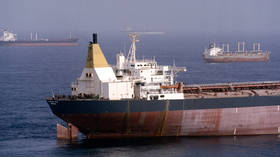
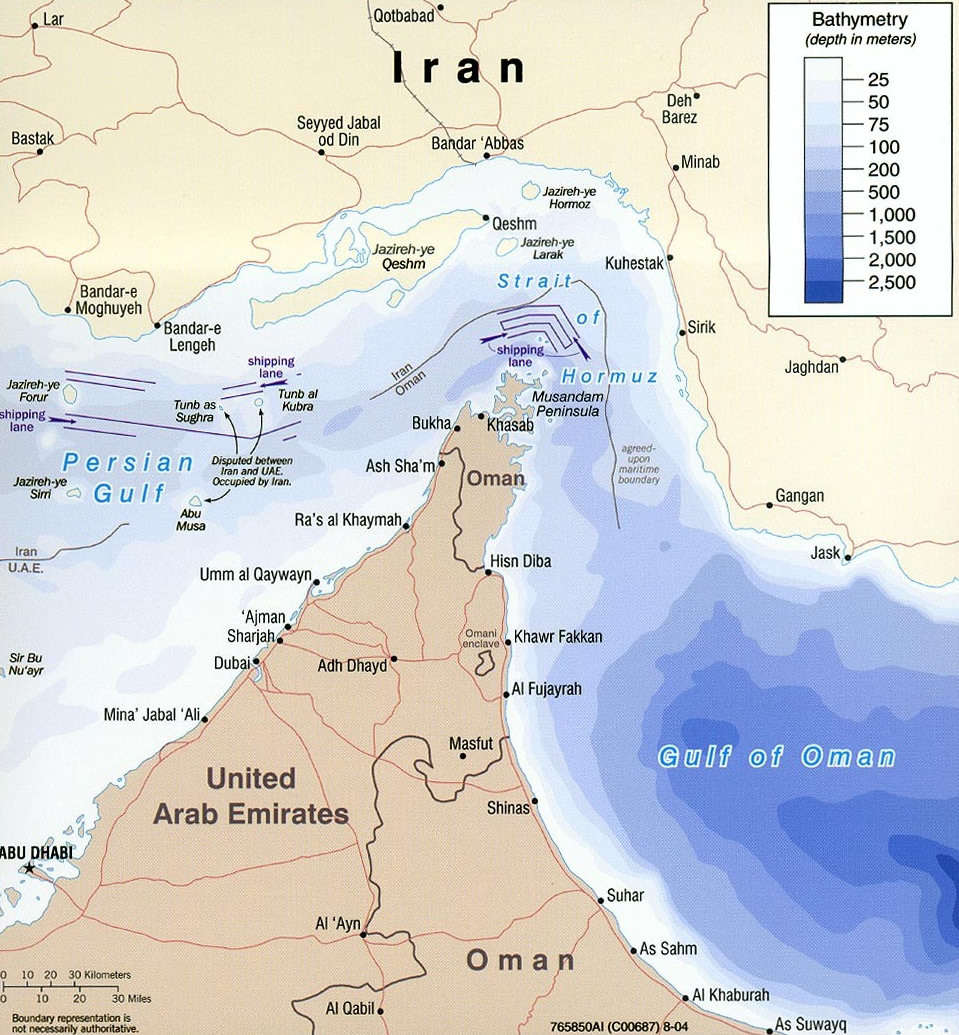
The Financial Times reported, citing maritime data, that at least eight ships – including oil tankers and bulk carriers tied to India, Pakistan and Greece, as well as Iran’s own fleet – have sailed through the strait but used an unusual route around the island of Larak, which is close to the Iranian coast and where waters are much shallower than in the middle of the strait.

RT

The actual number of ships – some of which may have turned off automatic tracking systems – could be higher, the report said.

According to the FT, at least nine Chinese oil and fuel tankers are also amassing in the Gulf, apparently preparing to traverse the Hormuz Strait.

Clearance is being granted on a case-by-case basis, Lloyd’s List reported, adding that the Iranian authorities are working on a “more formalized vessel approval process” expected in the coming days.

Is it free of charge?

On paper, international transit is not supposed to work like a toll road, but the current situation appears to be evolving under wartime conditions.

Lloyd’s List reported that at least one tanker operator paid about $2 million to transit, while saying it could not establish whether payments were made in other cases. It also remains unclear how such payments could be processed, given the sanctions on Iran.

In addition, several media reports indicated that Iran’s parliament was considering a bill aimed at taxing ships that cross the strait. The Wall Street Journal noted, however, that such a policy would “require a regional buy” from Iran’s Gulf neighbors.

What did Hormuz look like before the war?

Hormuz was one of the world’s busiest and consequential chokepoints, with an average of 20 million barrels a day of crude oil and oil products moved through in 2025, equal to around 25% of global seaborne oil trade. About 80% of the flows went to Asian countries, including China, India, Japan, and South Korea, according to the International Energy Agency (IEA).

About 93% of Qatar’s LNG exports and 96% of the UAE’s LNG exports also passed through Hormuz, representing roughly 19% of global LNG trade.

Before the war, around 138 vessels transited the strait daily; that figure has now dropped to roughly 3–5 ships per day, according to estimates.

The strait is just 29 nautical miles (54km) wide, with two-mile-wide inbound and outbound shipping lanes separated by a two-mile buffer. Ships using the Larak route must contend with shallower waters than in the central channel, though depths are still generally sufficient for most vessel types.

What impact is this having on energy prices?

The trickle of oil tankers is seemingly having a limited effect on the oil market, with Brent trading at $107 per barrel, down from a peak of almost $120. WTI crude slid from the $100 benchmark to $94.

European natural gas futures (TTF) slightly fell to €60 per MWh after spiking by more than 30% after Israel attacked Iran’s South Pars gas field, triggering a retaliation on energy infrastructure in Qatar.

What does Europe have to say on Hormuz safety?

European leaders have demanded “the reopening of the Strait of Hormuz,” as well as “de-escalation and maximum restraint” from the belligerents. European NATO members, however, have been reluctant to send their navies to the strait. German Chancellor Friedrich Merz said that his country could help in keeping the shipping lanes clear only when the guns go silent.

What impact on the US?

As oil prices skyrocketed, gasoline prices in the US also soared, reaching $3.90 per gallon on average. US President Donald Trump has sought to downplay the market panic, saying he thought that oil prices would be “much worse,” adding that they were certain to come down once the hostilities end.

In addition, US Treasury Secretary Scott Bessent signaled that Washington could waive sanctions on the Iranian oil stranded on tankers in a bid to dampen prices. Earlier this week, he also said that the US had been allowing Iranian tankers to transit the strait “to supply the rest of the world.”

What does Moscow have to say on the Hormuz crisis?

The crisis does not directly disrupt Russian exports, and some analysts say Moscow could benefit from tighter global supply.

Kremlin spokesman Dmitry Peskov said Russia “has been and remains a reliable supplier” of oil and gas, while warning that the country cannot fully escape the broader fallout. He added that Moscow had long warned of the risks of escalation in the Middle East.