The Most Revolutionary Act

Uncensored updates on world events, economics, the environment and medicine

The Most Revolutionary Act

Former Pennsylvania Funeral Directors Association President Reveals 30–40% of Corpses Contain White Fibrous Clots

Since 2021, reports of unusual white fibrous clots discovered during embalming have been dismissed as anecdotal or attributed to fringe voices within the profession. That dismissal is no longer credible. The phenomenon is now being confirmed by senior leadership across multiple funeral director and embalmer associations—individuals with decades of experience and responsibility for representing thousands of professionals.

In a recent 10-minute interview on OAN (watch full interview here), 2024-2025 President of the Pennsylvania Funeral Directors Association, Chris Calvey Jr., reported that he has personally observed these white fibrous clots in an astonishing 30% to 40% of the bodies he has embalmed over the past five years.

He described the clots as being “the size of the arteries” and emphasized that “you can’t ignore this.” Critically, he stated that these are “foreign bodies” unlike anything he had encountered in his 10 years as a funeral director and embalmer.

This is not an isolated account. Just weeks earlier, Iowa Funeral Directors Association Board Member Dana Goodell independently reported observing the same type of unusual clotting—specifically noting that it began appearing around 2021.

Importantly, this phenomenon has now been acknowledged at the state association level. In June 2025, during the Tennessee Funeral Directors Association (TFDA) Convention, former USAF Major Thomas F. Haviland presented findings from an in-person survey conducted among 28 embalmers and funeral directors.

The results were alarming:

  • 64% reported seeing white fibrous clots in corpses during the first half of 2025
  • These clots appeared in an average of 17% of all bodies
  • 70% reported signs of micro-clotting (“coffee grounds” or “dirty blood”)
  • 39% observed an increase in infant deaths, averaging a 14% rise over pre-2020 levels

These findings were not merely written—they were confirmed in real time, as embalmers in the room raised their hands to verify that they had personally observed the phenomenon.

.This event—facilitated by TFDA President Taylor Moore—marked the first formal acknowledgment by a U.S. state funeral directors association that these clots are real, prevalent, and ongoing.

According to documentation compiled by USAF Major (Ret.) Thomas F. Haviland, multiple high-ranking leaders within the funeral profession have now independently confirmed the presence of these clots:

  • Woody Wilson — President, Ohio Embalmers Association (2024–2025)
  • Taylor Moore — President, Tennessee Funeral Directors Association (2024–2025)
  • Kevin Sweryd — President, Manitoba Funeral Service Association (Canada)

These are not anonymous embalmers or isolated accounts. These are elected leaders entrusted with representing the profession at the highest levels.

The Biological Mechanism: From Microclots to Fibrous Masses

A growing body of evidence provides a plausible biological explanation for the white fibrous clots now being reported by embalmers. Central to this is the formation of amyloid, fibrinolysis-resistant microclots triggered by spike protein exposure—whether from SARS-CoV-2 infection or mRNA injections. In a recent peer-reviewed study, Thioflavin-T (ThT)-positive amyloid microclots were identified in 100% of participants within a heavily COVID-vaccinated cohort (94%), including all “healthy controls.” These structures represent misfolded fibrin with β-sheet amyloid configuration, fundamentally distinct from normal clotting.

Mechanistic experiments within the same study demonstrated that spike protein alone can induce the formation of these insoluble, amyloid microclots in vitro, establishing a direct pathway for abnormal coagulation.

These microscopic findings closely align with postmortem observations. Independent forensic analyses have shown that the large white fibrous clots are amyloidogenic fibrin aggregates that are protease-resistant, rubbery, and structurally dense—features consistent with advanced-stage clot maturation. Their morphology and biochemical properties mirror those of the microclots identified in living subjects, but at a larger, aggregated scale.

A Direct Challenge to Public Health Authorities

Thomas Haviland, who has systematically documented and compiled these reports from funeral professionals across the world, has now taken the additional step of directly emailing U.S. public health leadership—including HHS, NIH, CDC, and FDA—urging them to investigate this phenomenon. His message is clear and unambiguous: after nearly six years of consistent reports from embalmers worldwide, how much more evidence is required before a formal inquiry is initiated?

The reports are now coming from presidents and senior officials of multiple funeral director and embalmer associations, individuals with extensive experience and professional accountability. The repeated description of dense, fibrous, artery-shaped clots—unlike anything previously encountered—has been independently corroborated across regions and over time.

The continued absence of a coordinated response from federal health agencies now represents a serious dereliction of duty.

[…]

Via https://www.globalresearch.ca/former-president-pennsylvania-funeral-directors-association-says-30-40-corpses-contain-white-fibrous-clots/5919460

Iraq steps forward in regional war

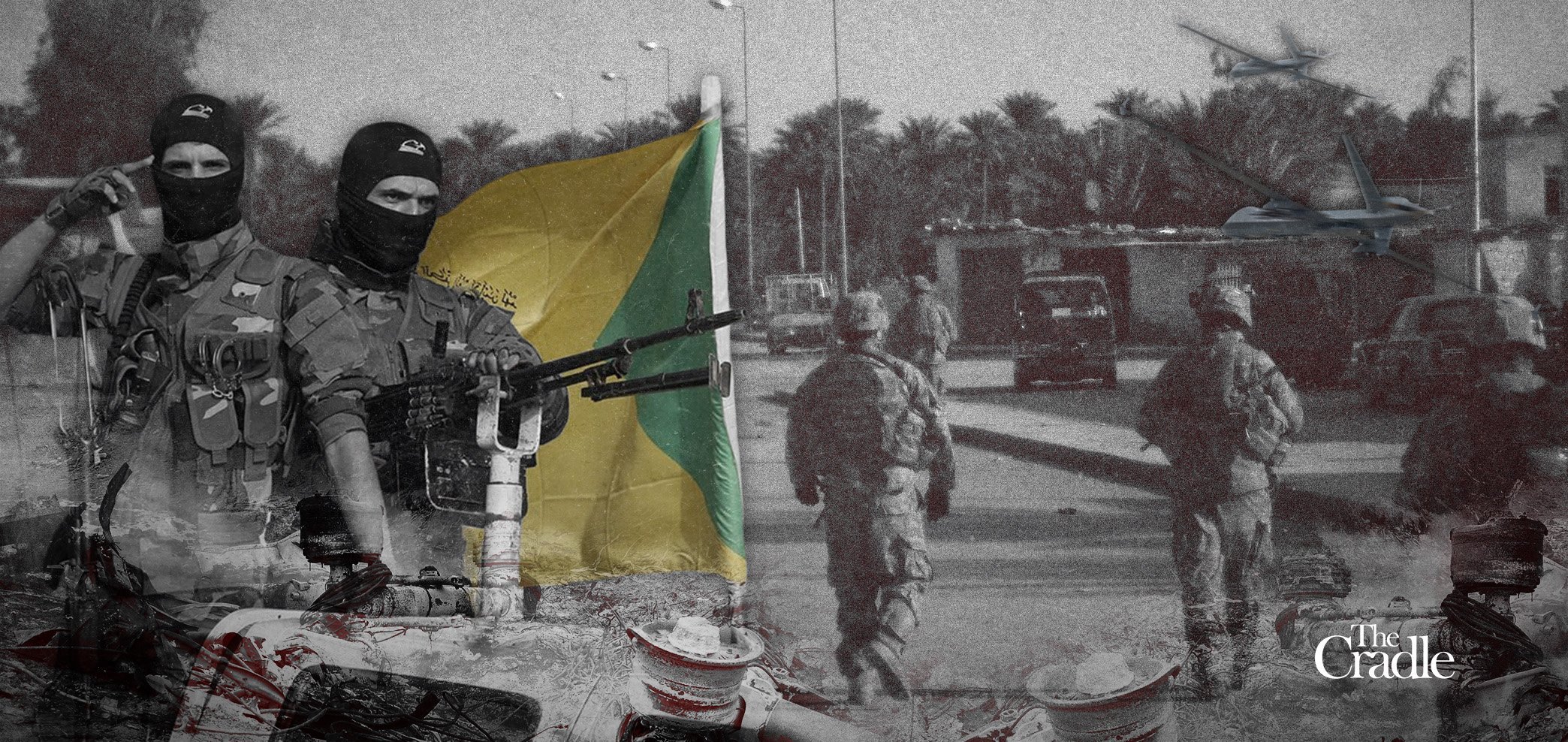
Photo Credit: The Cradle

Abbas al-Zein

Iraq’s security environment has entered a markedly more volatile phase since the outbreak of the US-Israeli war on Iran in late February 2026. Armed factions operating under the banner of the Islamic Resistance in Iraq have intensified attacks on installations linked to US military deployment and logistical infrastructure across several provinces.

The recent escalation points to an effort to link domestic confrontation with wider regional war calculations, while also projecting Iraq as a front capable of exerting pressure on the trajectory of the conflict rather than merely absorbing its consequences.

Local reporting and faction-aligned statements describe successive waves of drone and rocket strikes targeting bases hosting US personnel. The tempo of these operations has reportedly risen beyond patterns observed in earlier years of intermittent confrontation, when attacks were more limited in scope and largely confined to specific theaters.

In recent weeks, the attacks have edged closer to the heart of the Iraqi state. Drone incidents and attempted strikes have reached sites in Baghdad tied to US logistics and diplomatic security activity – locations that were once treated as politically sensitive red lines.

The shift in targeting suggests a willingness by resistance factions to test the limits of US protection measures while sending a message that no part of the American presence in Iraq is beyond reach.

Resistance factions have announced the downing of a number of US military drones during the recent escalation, including aircraft described as playing a central surveillance role in American operations across Iraq and the wider region.

These incidents have been framed by resistance media as evidence of a shift in the balance of engagement, with attacks moving beyond harassment toward attempts to disrupt aerial monitoring and operational freedom.

The targeting pattern reflects an effort to sustain pressure on US deployments while signaling that the Iraqi front is now tied to the broader regional confrontation unfolding across Lebanon, Syria, and the Persian Gulf.

Intensified operational tempo

In the days following the initial escalation, resistance factions reported a sharp acceleration in operations. Statements circulated through faction media channels spoke of 27 attacks within a 24‑hour period at the beginning of March, followed by claims of 29 operations in a single day.

These figures were presented as evidence that the confrontation was evolving from sporadic harassment into coordinated waves of rocket and drone strikes directed at US military installations across several Iraqi provinces.

Subsequent communiqués described the escalation reaching a peak with announcements of more than 290 operations over roughly 12 days.

According to faction narratives, these attacks spanned Baghdad, western Iraq, and parts of the Kurdistan Region, particularly around Erbil International Airport and Harir Air Base.

From the outset of the war on 28 February, resistance messaging emphasized a rapid move into direct confrontation, highlighting synchronized strike attempts intended to demonstrate operational reach and sustained pressure.

In northern Iraq, tension has likewise centered on the vicinity of Erbil International Airport and nearby military facilities, which were subjected to regular, concentrated strikes using attack drones and Katyusha rockets, reflecting Kurdistan’s enduring strategic relevance as a logistical hub.

According to field reports, the Islamic Resistance in Iraq succeeded in downing around six drones in different areas: two in Anbar (western Iraq), one near Baghdad, one in Salah al-Din (Balad Air Base), and one in Diyala.

These operations included targeting the MQ-9 Reaper, considered “Washington’s eye” in the region due to its assassination and surveillance capabilities. Video footage reportedly showed the wreckage of such drones after being struck by upgraded air defense systems.

The most prominent strategic turning point came with the announcement that Iraqi resistance forces had shot down a US KC-135 refuelling aircraft in Anbar, killing its six-member crew. This operation was seen as a severe blow to US aerial support capabilities over Iraq.

Retaliation and escalation cycles

Following the sharp rise in attacks claimed by factions operating under the umbrella of the Islamic Resistance – including groups such as Kataib Hezbollah, Harakat al-Nujaba, and Kataib Sayyid al-Shuhada – the US moved toward more concentrated strikes on sites linked to these formations.

Airstrikes were reported in areas long associated with militia deployment and logistical depth, particularly Jurf al-Sakhar south of Baghdad, Al-Qaim along the Syrian border, and the Akashat region in western Anbar.

One of the most sensitive developments came with reports of an attempted assassination targeting Kataib Hezbollah Secretary‑General Abu Hussein al‑Hamidawi. According to resistance‑aligned sources, US aircraft struck locations in the Al‑Masbah–Al‑Arasat area of central Baghdad where senior commanders were believed to be meeting. Early media reports suggested that Hamidawi may have been killed, but subsequent faction statements denied this, describing the operation as unsuccessful.

On 16 March, Kataib Hezbollah announced the death of senior security figure Abu Ali al‑Askari, a development that resistance media framed as part of the ongoing escalation cycle. Within hours, drone and rocket fire were reported near the US embassy compound in Baghdad.

Taken together, these developments highlight several emerging dynamics. First, the tempo of confrontation has continued to rise, with both sides demonstrating a willingness to absorb risks associated with escalation.

Second, the geographic scope of operations has expanded to include the capital and strategically significant zones across western Iraq.

Third, the confrontation has begun to test long‑standing informal limits by targeting aerial capabilities, leadership structures, and logistical infrastructure, positioning the Iraqi front as a central pressure point within the wider regional deterrence equation.

Strategic messaging beyond Iraq

Alongside battlefield developments, Iraqi resistance factions have articulated a doctrine linking internal confrontation with regional flashpoints.

In a 6 March statement, the Iraqi Resistance Coordination Committee said the security of Beirut’s southern suburb (Dahiye) was “an integral part of the regional security equation,” warning that any attack would threaten US diplomatic and economic interests across West Asia.

This framing situates Iraq within a network of interconnected pressure fronts rather than treating it as an isolated arena.

Resistance messaging referenced potential threats to diplomatic missions of states perceived as supporting the war effort and to energy infrastructure associated with western oil operations in the Gulf. Such rhetoric seeks to elevate localized clashes into developments with global economic implications, particularly in light of the central role Gulf energy flows play in international markets.

Attention has also focused on the Kurdistan Region, where resistance statements spoke of “the consequences of involvement in supporting the Kurdish criminal gangs backed by the Zionist entity that seek to infiltrate” Iran. These warnings reflect long-standing concerns over intelligence penetration, logistical corridors, and the risk that Iraqi territory could be used to mount pressure on Iranian allies from multiple directions.

Syria and the axis equation

On 11 March, amid regional media reports of troop movements by forces aligned with Syria’s President Ahmad al-Sharaa (Abu Mohammad al-Julani) toward areas near the Lebanese border, Iraqi resistance rhetoric reached one of its sharpest points.

In a statement issued that day, the Coordination Committee warned that any hostile military step against Lebanon – particularly if carried out in coordination with what it described as the “Zionist-American enemy” – would be treated as a direct declaration of war on the entire Axis of Resistance.

The language amounted to a pre-emptive military veto, signaling that the Iraqi front could be activated as part of a wider deterrence response if Hezbollah’s strategic depth were threatened.

References to past battles against US forces and ISIS have also been invoked to reinforce claims of operational experience and ideological legitimacy.

From battleground to pressure front

Operational patterns and strategic messaging together point to a gradual redefinition of Iraq’s role in the regional conflict. For years, the country was widely regarded as a battleground where external rivalries played out through local proxies.

Current developments suggest efforts by resistance factions to convert Iraq into a pressure front capable of influencing the cost calculations of foreign military presence.

This trajectory remains shaped by several factors, including the sustainability of US deployments, the stance of Iraq’s central government, intra-Shia political competition, and the broader direction of the war involving Iran and Israel. Recent escalation nonetheless demonstrates how rapidly domestic security dynamics can intersect with regional confrontation and alter threat perceptions across neighboring states.

As diplomatic channels narrow and military tensions persist across West Asia, Iraq’s position may prove consequential in determining whether the conflict stabilizes into a tense deterrence balance or moves toward a phase of wider escalation involving multiple fronts.

Iraq’s evolving posture indicates that it is no longer viewed solely as a peripheral arena but as a component of a broader contest over military presence, strategic depth, and the future configuration of regional power.

[…]

Via https://thecradle.co/articles/iraq-steps-forward-in-a-regional-war

Trump threatens to deploy ICE agents to airports Monday if funding deal isn’t reached

Travelers wait in line at a Transportation Security Administration checkpoint at Hartsfield-Jackson Atlanta International Airport (ATL) in Atlanta, Georgia, on Friday, March 20, 2026.

By

President Donald Trump said Saturday he will deploy Immigration and Customs Enforcement agents to US airports on Monday if an agreement isn’t reached to fund the Department of Homeland Security as Transportation Security Administration workers go without pay and travel disruptions mount.

“If the Democrats do not allow for Just and Proper Security at our Airports, and elsewhere throughout our Country, ICE will do the job far better than ever done before!” the president wrote on Truth Social. “I look forward to moving ICE in on Monday, and have already told them to, ‘GET READY.’ NO MORE WAITING, NO MORE GAMES!”

A partial government shutdown has led to TSA staffing shortages that have contributed to delays, with unpredictable wait times expected to continue throughout the weekend. Lawmakers have been working to reach an agreement to reopen the Department of Homeland Security, but even as they’re eager to reach a deal in the next week before Congress leaves town for a lengthy spring recess, a resolution remains uncertain.

It is unclear what function the ICE agents would perform since they’re not trained in airport security screening. TSA screeners have a monthslong training period before they’re on the job, though airline employees and private security companies have partnered on line controlling and guarding exit doors.

“What it takes to be a TSA officer, a certified officer, to be able to do screening takes weeks and months to do,” George Borek, an Atlanta TSA officer and union steward, told CNN. “The president can have them come there but I don’t see how that helps us in getting through this time period.”

And the lack of specific TSA training could cause other issues, Borek said. “If you bring people in there, they are not trained, they don’t know what they’re looking for, then certainly it could be a problem.”

The ICE agents could potentially help in more limited roles — like managing lines, directing passengers or helping move people through the checkpoint process — to free up trained TSA officers for critical security functions.

CNN has reached out to the Department of Homeland Security, which includes TSA, and the White House for more information.

Trump suggested in an earlier Truth Social post on Saturday that the ICE agents would “do Security like no one has ever seen before, including the immediate arrest” of undocumented immigrants, with Trump specifying “heavy emphasis on those from Somalia.”

Democrats have been demanding changes that would rein in Trump’s immigration policies after two people were killed during an immigration enforcement surge in Minneapolis earlier this year. They’ve been pushing for stand-alone funding for TSA, while Republicans have rejected a piecemeal approach to funding DHS.

Bipartisan appropriators held a brief meeting with White House border czar Tom Homan Friday evening that sources from both parties called “productive.” Multiple Republicans said the GOP had bolstered its latest offer to Democrats, though they declined to specify how the White House was proposing to address Democrats’ demands.

Another meeting with Homan that Senate Majority Leader John Thune had previewed for Saturday has been cancelled, a GOP leadership source said, but it was unclear why.

Democrats on Saturday quickly condemned Trump’s threat to use ICE, with Sen. Richard Blumenthal telling reporters such usage of agents “as a general kind of militia or state police is contrary to the Constitution, the law of the United States, and common sense.”

“If the president is serious about providing TSA salaries, he ought to agree with us that ICE should be forced to obey the law, not deployed helter-skelter around the United States as an all-purpose police force,” the Connecticut Democrat added.

Democratic Sen. Mark Warner of Virginia argued that Trump’s word is “worthless,” and that the threat is “one more reason why we’ve got to get TSA funded.”

Republican Sen. John Kennedy, meanwhile, said “it could help” to send ICE agents to airports, but suggested that it’s not a definitive solution to the long security lines.

“If they’re planning on using some of the ICE folks to help with crowd control to free up TSA people to do the screening, I could see a scenario where that might help,” the Louisiana lawmaker told CNN, adding, “Unless those ICE folks can be trained really quickly to become TSA agents … it will be supportive but not dispositive.”

Thune said he hopes a deal can be reached on DHS funding so that “ideally” it “wouldn’t be necessary” to have ICE agents at airports.

Meanwhile, Borek said TSA officers are increasingly stretched thin as the next pay period approaches on March 27.

[…]

Via https://edition.cnn.com/2026/03/21/politics/ice-agents-airports-tsa-trump-threat

Why boots on Iranian soil would become strategic catastrophe for US

By Yousef Ramazani

As the American-Israeli aggression against Iran enters its fourth week, with none of the stated objectives materializing, the specter of a ground invasion has moved from whispered contingency to urgent operational planning.

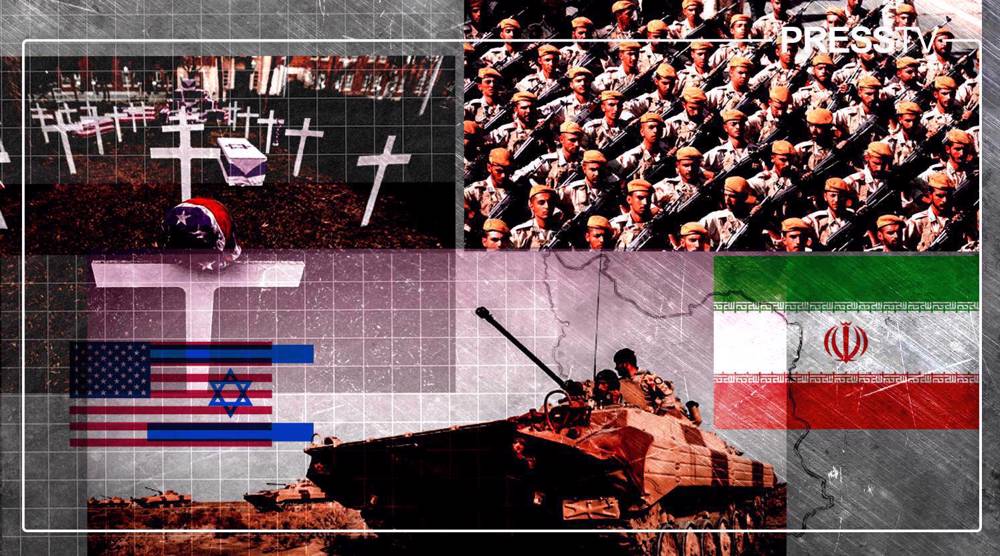
However, as Iranian armed forces have repeatedly warned, any American soldier setting foot on Iranian territory would step into a meticulously prepared kill zone designed to inflict losses unseen since World War II.

The unprovoked and illegal aggression that began on February 28, 2026 – amid indirect nuclear talks – has exposed a fundamental miscalculation in American strategy.

Despite weeks of unbridled and indiscriminate aerial bombardment and claims of having struck over 7,000 targets, Iran’s retaliatory capabilities remain undiminished, it continues to inflict heavy blows on the enemy, its leadership structure has decentralized into autonomous divisions, and the Axis of Resistance continues to strike US assets across the region.

As American Marine expeditionary units plan to converge on the Persian Gulf and the 82nd Airborne Division stands at readiness, military planners in Washington confront an uncomfortable reality: air power alone cannot achieve desired goals, yet a ground invasion would trigger a cascade of catastrophic consequences that no amount of American firepower can contain.

Iran has made its position emphatically clear: ground aggression constitutes a red line, and any crossing would be met with surprises that would leave the United States and its Israeli ally unable to remove their soldiers’ coffins from Iranian soil.

How is Iran’s geography of attrition built for defense?

Iran is not Iraq. This single geographic fact forms the foundation of any analysis of a potential ground invasion. Spanning 1.65 million square kilometers, Iran is four times the size of Iraq, with terrain that offers natural defensive advantages unlike anything American forces faced in 2003.

The Zagros Mountain range, running from northwest to southeast along the Iraqi border, presents a formidable barrier to any mechanized advance from the west.

These mountains channel invading forces into predictable avenues of approach – precisely where Iranian defenders have concentrated their anti-armor capabilities for decades.

Beyond the rough terrain, the sheer scale of occupation would dwarf any previous American experience. Iran’s population exceeds 93 million people – more than two and a half times the population of Iraq at the time of the 2003 invasion. Even a conservative counterinsurgency ratio would require hundreds of thousands of American troops to maintain order across the country’s urban centers.

The logistical apparatus required to support such a force would be among the largest in military history, and every gallon of fuel, every meal, every artillery shell would have to travel through supply lines under constant multi-domain attack from the moment they entered Iranian territory.

How is Iran’s anti-access defense architecture built?

Iran has spent more than four decades constructing a defensive system designed specifically to counter any external aggression, including that from the US or its proxies.

This integrated anti-access and area denial architecture transforms the Persian Gulf region into a high-risk environment for any foreign hostile force.

The system operates in layers, each designed to complicate an adversary’s operational calculus and impose costs at every stage of an invasion.

Before any ground invasion could begin, American forces would have to contend with Iran’s extensive unmanned aerial vehicle surveillance network.

Platforms like the Mohajer-6, with 15 hours of endurance, provide persistent intelligence coverage across the Persian Gulf, tracking naval movements and monitoring ground force concentrations while transmitting targeting data to strike platforms in near real-time.

This reconnaissance layer compresses reaction time from minutes to seconds, allowing defensive forces to engage threats before they approach Iranian shores.

Any American ground invasion would require air supremacy to protect advancing forces from aerial attack.

Yet Iran’s layered air defense network, centered on the islands of Abu Musa, Greater Tunb, and Lesser Tunb in the Persian Gulf, has been designed to deny precisely that.

These islands, described in military literature as Iran’s “unsinkable aircraft carriers,” function as multi-mission platforms hosting surveillance systems, air defense batteries, and offensive strike capabilities.

What makes amphibious operations risky?

For any ground invasion, the ability to land forces by sea would be essential. Yet Iran’s anti-ship missile arsenal makes amphibious operations in the Persian Gulf extraordinarily risky.

The Qader anti-ship cruise missile, with a range exceeding 300 kilometers and a 165-kilogram penetrating warhead, flies at Mach 0.9 in sea-skimming mode, evading radar detection until seconds before impact.

Deployed on mobile coastal launchers across Abu Musa and the Iranian coastline, it can strike targets deep into the Strait of Hormuz.

Complementing Qader are the Khalij Fars anti-ship ballistic missile, with optical seeker for terminal guidance, and the Hormuz family of anti-radiation missiles specifically designed to target the radar emissions of Aegis-equipped warships.

The Zolfaghar Basir extends this threat envelope to 700 kilometers, pushing potential engagement zones well into the Gulf of Oman.

At the apex of this capability are the Fattah-1 and Fattah-2 hypersonic missiles, capable of speeds reaching Mach 15 and extreme maneuverability, designed to defeat even the most advanced missile defense systems.

Beyond conventional missiles, the IRGC Navy operates hundreds of small, fast attack craft capable of swarm tactics against larger warships.

These speedboats, armed with rockets and missiles, can attack from multiple directions simultaneously to overwhelm defensive systems.

Below the surface, Iran’s Ghadir-class midget submarines, optimized for the shallow waters of the Persian Gulf, can lie in wait on the seabed to ambush passing vessels with torpedoes.

Iran also possesses one of the largest naval mine inventories in the region, numbering in the thousands, including advanced influence mines triggered by a ship’s magnetic field or acoustic signature.

Even the suspicion of a minefield in the Strait of Hormuz would force the US Navy into a slow, dangerous mine countermeasure campaign, all conducted under the umbrella of Iranian coastal missiles.

What makes national mobilization and guerrilla warfare important?

A ground invasion would also confront the reality that Iran’s military forces are not designed to fight a conventional war – they are designed to make any occupation unsustainable.

The Islamic Revolution Guards Corps (IRGC), which operates in parallel to Iran’s regular military, has structured itself around an asymmetric warfare doctrine.

Large paramilitary organizations, including the Basij force, can mobilize hundreds of thousands of fighters trained for guerrilla operations in cities and mountainous terrain.

Even if American forces manage to overcome Iran’s conventional army, these irregular forces could continue fighting for months and years.

The IRGC has decentralized its command structure into 31 autonomous divisions, each granted significant operational independence – a structure that makes decapitation strikes ineffective and ensures that resistance can continue even if central command structures are disrupted.

The experience of the 12-day imposed war in June 2025 demonstrated Iran’s willingness to absorb attacks while continuing to fight and resist against external aggression.

Despite no-holds-barred, sustained bombardment, Iranian air defenses remained operational, and retaliatory strikes continued throughout the conflict.

The country’s leadership, now under Ayatollah Seyyed Ali Mojtaba Khamenei following the assassination of Imam Seyyed Ali Khamenei, has shown no inclination toward surrender, and the Axis of Resistance forces across the region remain committed to the fight.

What if supply lines come under constant attack?

Any ground invasion of Iran would require securing supply lines through neighboring countries – lines that would be under constant attack from Iranian missiles, drones, and allied forces across the region.

The Islamic Resistance in Iraq has already demonstrated its ability to strike American logistics assets, downing a KC-135 tanker aircraft over western Iraq earlier in March.

Iranian missile attacks have damaged five additional KC-135 tankers parked at an airfield in Saudi Arabia, demonstrating their efficacy.

The US maintains approximately 50,000 troops across the West Asia region, concentrated at bases that would serve as logistical hubs for any ground invasion, making them primary targets for Iranian retaliatory strikes.

The geography of the Persian Gulf exacerbates this vulnerability. The Strait of Hormuz, through which 20 percent of the world’s oil passes, is just 30 kilometers wide at its narrowest point.

In such confined waters, the maneuvering room for large supply vessels is severely limited, and their proximity to Iranian shores places them squarely within range of virtually every system in Iran’s inventory.

Iranian military sources have warned that any aggression against Kharg Island would lead to the destruction of coastal areas across the region, with Dubai and Abu Dhabi potentially not remaining merely in the initial stages of such an attack.

What makes Kharg Island a trap for the enemy?

Among the scenarios being considered by American planners, the seizure of Kharg Island, the oil terminal handling 90 percent of Iran’s crude exports, has emerged as a particularly dangerous option.

Military analysis indicates that securing Kharg would require a battalion-sized force of approximately 800 to 1,000 troops. Yet the island sits only 20 kilometers off the Iranian coast, placing it squarely under Iranian weapon systems.

A small garrison would be difficult to reinforce and resupply for the invaders, potentially turning the island into a high-casualty liability rather than a strategic asset.

Iranian military sources have made clear that any attack on Kharg Island would be met with a response unprecedented in the 23 days of war to date.

“If the US carries out its threats regarding military aggression on Kharg Island,” a military source told Iranian media, “it will definitely face a response that is unprecedented.”

Last week’s strikes on the island, carried out from the UAE by the US-Israeli war coalition, saw Iran targeting facilities in the UAE and other Persian Gulf countries.

Insecurity in other straits, including the Bab al-Mandab Strait and the Red Sea, would become one of the options of the Resistance Front, and the situation would become much more complicated than it is today for the Americans.

Iranian officials have also warned that oil production could be temporarily disrupted, that Iran would set fire to all facilities in the region, and that the Americans would have no way to protect Kharg while suffering losses unseen since World War II.

Why is access to nuclear material impossible?

The most ambitious scenario – sending special operations forces deep into Iran to seize stockpiles of highly enriched uranium – would require an operation of staggering complexity.

Such a mission would require not only elite operators but a brigade-sized security force of 3,000 to 4,000 troops to secure the perimeter while nuclear material was extracted.

Secured locations like Natanz and Isfahan lie several hundred miles inside Iran, in open plains with no natural terrain protection.

The operation would require sustained air cover, dedicated combat air patrols, extensive intelligence and surveillance assets, and the logistical capacity to support troops on the ground for an extended period.

Approximately 1,000 pounds of 60 percent highly enriched uranium would need to be packaged, moved, and transported to a secure location, a lethal material requiring specialized handling that only the International Atomic Energy Agency is equipped to manage.

What has Iran told Trump over ground invasion plan?

Iranian military officials have made clear that a ground invasion would cross a red line with consequences far beyond anything the United States has yet experienced.

“A ground attack on Iranian soil is one of our red lines,” a military source stated, “and just as we had a surprise against every enemy operation, we will show it again in this case also.”

“Iran is ready, so that if the terrorist Trump makes a mistake in this regard, the response will come in such a way that he will not even be able to remove the coffins of his soldiers from Iranian land,” it added.

The IRGC has stated its position with clarity: “The soldiers of Islam are waiting with eagerness to see and blow a severe slap on the American carrier in the depths of the battlefield, and are fully prepared to give the American marines a close-up view of naval surprises.”

Having tested the battlefield for more than eight years during the war Western-backed Ba’athist Iraq imposed on Iran during the 1980s, Iranian forces know their terrain and their capabilities.

For the United States, the choice is not simply whether to invade but whether the objectives of the war justify the costs that invasion would entail.

[…]

Via https://www.presstv.ir/Detail/2026/03/22/765701/explainer-why-boots-iranian-soil-become-strategic-catastrophe-us


‘Safe’ corridor opening up through Strait of Hormuz: What we know so far

‘Safe’ corridor opening up through Strait of Hormuz: What we know so far

RT

Iran has signaled that it is ready to allow passage through the Strait of Hormuz to vessels from certain countries. Media reports and tracker data also suggest that a handful of pre-vetted tankers have already sailed smoothly through the “safe” corridor, with at least one shipping company allegedly paying Iran $2 million.

The development comes as more than 15 tankers have been hit by drones and projectiles in the strait since the US and Israel launched their war on Iran in late February.

As the Middle East escalation has roiled energy markets, the impact of a few tankers passing through has so far remained limited. Brent is still trading well above $100.

Here is what to know about the latest developments in the Strait of Hormuz.

Who is allowed to pass?

In short, not everyone and not everywhere.

Iranian Foreign Minister Abbas Araghchi stated that the strait is open to all except the US and Israel, while adding that some ships from “different countries” had already been allowed through. In practice, however, Western-linked vessels face significant hurdles in securing safe passage.

According to Lloyd’s List, India, Pakistan, China, Iraq, and Malaysia are discussing transit plans directly with Tehran, with officials in the first three countries as well as Türkiye confirming clearance.

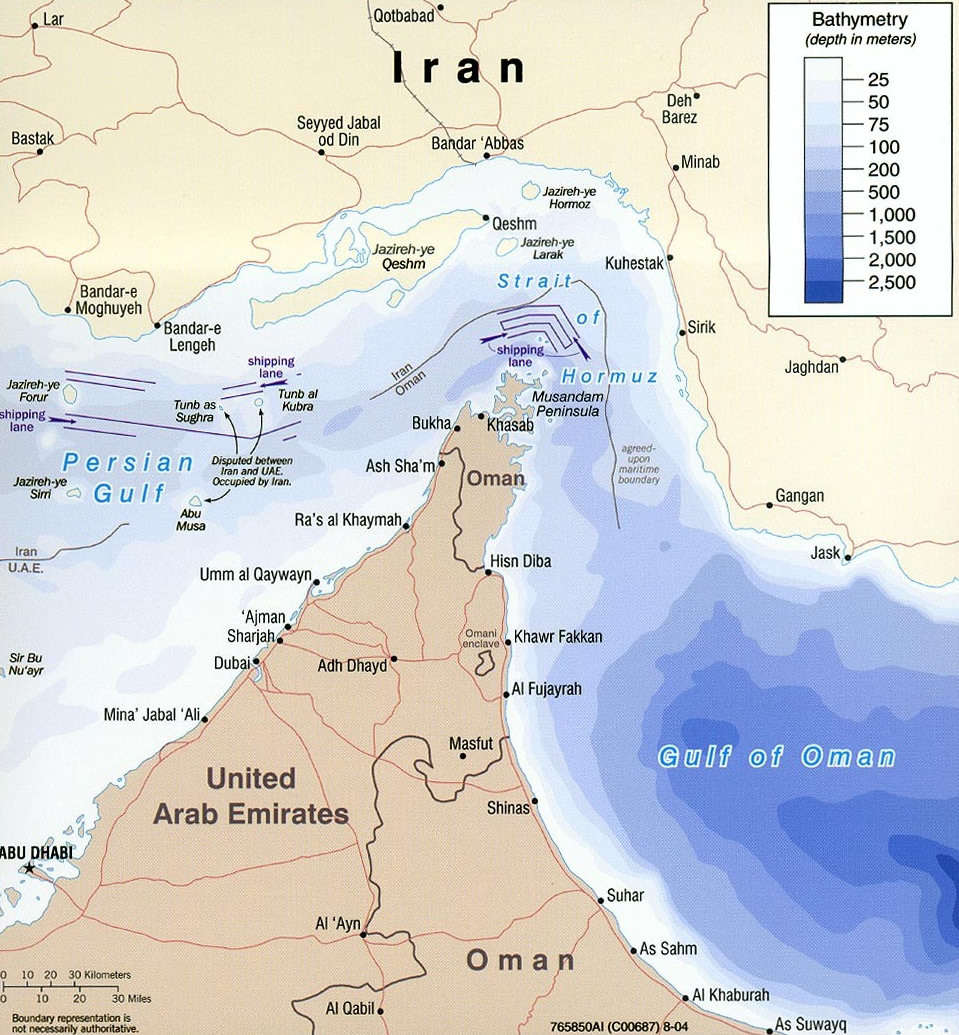
The Financial Times reported, citing maritime data, that at least eight ships – including oil tankers and bulk carriers tied to India, Pakistan and Greece, as well as Iran’s own fleet – have sailed through the strait but used an unusual route around the island of Larak, which is close to the Iranian coast and where waters are much shallower than in the middle of the strait.

RT

The actual number of ships – some of which may have turned off automatic tracking systems – could be higher, the report said.

According to the FT, at least nine Chinese oil and fuel tankers are also amassing in the Gulf, apparently preparing to traverse the Hormuz Strait.

Clearance is being granted on a case-by-case basis, Lloyd’s List reported, adding that the Iranian authorities are working on a “more formalized vessel approval process” expected in the coming days.

Is it free of charge?

On paper, international transit is not supposed to work like a toll road, but the current situation appears to be evolving under wartime conditions.

Lloyd’s List reported that at least one tanker operator paid about $2 million to transit, while saying it could not establish whether payments were made in other cases. It also remains unclear how such payments could be processed, given the sanctions on Iran.

In addition, several media reports indicated that Iran’s parliament was considering a bill aimed at taxing ships that cross the strait. The Wall Street Journal noted, however, that such a policy would “require a regional buy” from Iran’s Gulf neighbors.

What did Hormuz look like before the war?

Hormuz was one of the world’s busiest and consequential chokepoints, with an average of 20 million barrels a day of crude oil and oil products moved through in 2025, equal to around 25% of global seaborne oil trade. About 80% of the flows went to Asian countries, including China, India, Japan, and South Korea, according to the International Energy Agency (IEA).

About 93% of Qatar’s LNG exports and 96% of the UAE’s LNG exports also passed through Hormuz, representing roughly 19% of global LNG trade.

Before the war, around 138 vessels transited the strait daily; that figure has now dropped to roughly 3–5 ships per day, according to estimates.

The strait is just 29 nautical miles (54km) wide, with two-mile-wide inbound and outbound shipping lanes separated by a two-mile buffer. Ships using the Larak route must contend with shallower waters than in the central channel, though depths are still generally sufficient for most vessel types.

What impact is this having on energy prices?

The trickle of oil tankers is seemingly having a limited effect on the oil market, with Brent trading at $107 per barrel, down from a peak of almost $120. WTI crude slid from the $100 benchmark to $94.

European natural gas futures (TTF) slightly fell to €60 per MWh after spiking by more than 30% after Israel attacked Iran’s South Pars gas field, triggering a retaliation on energy infrastructure in Qatar.

What does Europe have to say on Hormuz safety?

European leaders have demanded “the reopening of the Strait of Hormuz,” as well as “de-escalation and maximum restraint” from the belligerents. European NATO members, however, have been reluctant to send their navies to the strait. German Chancellor Friedrich Merz said that his country could help in keeping the shipping lanes clear only when the guns go silent.

What impact on the US?

As oil prices skyrocketed, gasoline prices in the US also soared, reaching $3.90 per gallon on average. US President Donald Trump has sought to downplay the market panic, saying he thought that oil prices would be “much worse,” adding that they were certain to come down once the hostilities end.

In addition, US Treasury Secretary Scott Bessent signaled that Washington could waive sanctions on the Iranian oil stranded on tankers in a bid to dampen prices. Earlier this week, he also said that the US had been allowing Iranian tankers to transit the strait “to supply the rest of the world.”

What does Moscow have to say on the Hormuz crisis?

The crisis does not directly disrupt Russian exports, and some analysts say Moscow could benefit from tighter global supply.

Kremlin spokesman Dmitry Peskov said Russia “has been and remains a reliable supplier” of oil and gas, while warning that the country cannot fully escape the broader fallout. He added that Moscow had long warned of the risks of escalation in the Middle East.

Americans about to get crash course in global economy: Higher prices coming for pineapples, plastic, chocolate and berries

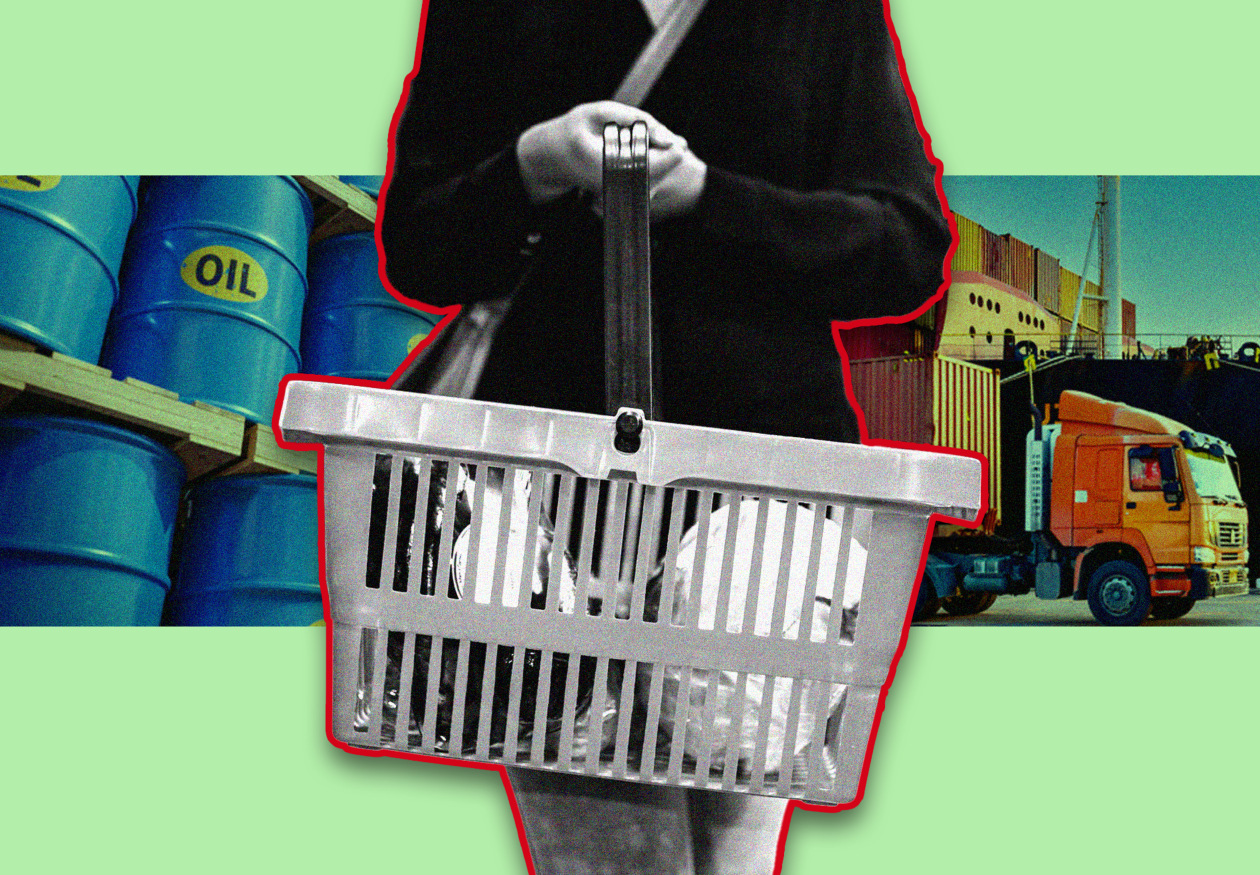
Illustration of a shopping basket held by a person, with blue oil barrels on the left and a shipping truck and vessel on the right, all on a light green background.“All of these cost increases could not have come at a worse time for the agricultural industry” a Tennessee farmer said. Photo: MarketWatch photo illustration/iStockphoto

Tennessee farmer Todd Littleton is thousands of miles from the Strait of Hormuz, but he’s seeing the early fallout from the shipping lane’s effective closure as fighting continues in and around Iran.

The turmoil couldn’t have come at a worse time, as planting season starts. Littleton has 4,000 acres for corn. Now he has an unplanned $50-per-acre increase in the cost of nitrogen, a critical fertilizer, for his corn crop. Diesel fuel is up 50 cents a gallon, he said, and the natural gas used to heat the Gibson County farmer’s poultry houses is more expensive too.

“To put it in perspective, the increases in fertilizer and fuel costs means it will cost me an additional $100,000 to plant corn this year,” Littleton said.

It will be difficult for Littleton to fully absorb those costs, he said, noting that “net losses have been at record levels across farm country during the last three years.”

“All of these cost increases could not have come at a worse time for the agricultural industry,” he told MarketWatch. “We love to do what we do on farms — keeping people fed, clothed and moving. But we have to be able to make ends meet so we can keep operating.”

Americans are about to get a crash course in the global economy — and it’s not just about oil supply. Rising costs for fertilizer, feed, packaging and shipping are going to seep into the prices that people see on grocery shelves, experts say.

The price of oil is catching a lot of attention from investors and everyday drivers. Indeed, a gallon of gas costs $1 per gallon more than it did last month. On Friday, Brent crude oil for May delivery traded at over $110 a barrel.

Yet fertilizer is the “deeper story,” as around one-third of globally traded fertilizer typically moves through the Strait of Hormuz, said Jake Hanley, chief growth officer and director of investments at Teucrium.

The Persian Gulf “isn’t just an oil region,” he said. “It’s the nitrogen supply chain.”

Nitrogen is essential for plant growth. Middle East urea, a widely used nitrogen fertilizer, has climbed over 50% in value since the start of the year, according to Josh Linville, vice president of fertilizer at financial-services company StoneX.

Major fertilizer producers and exports are currently blocked behind the Strait of Hormuz, said Linville. That includes three of the world’s 10 largest urea exporters: Iran, Qatar and Saudi Arabia.

The U.S. and Israel’s strikes on Iran have happened to coincide with the start of the planting season in America. Timing matters for American farmers because fertilizer purchasing, field preparation and early-season fertilizer applications are already underway, wrote Faith Parum, economist at the American Farm Bureau Federation, in a report earlier this month. That means farmers have limited ability to adjust if input prices spike suddenly.

And while there are many options that may help alleviate the virtual halt in the passage of oil tankers through the strait, for fertilizer “there’s no pipeline bypass, no strategic reserve, no quick fix,” said Hanley at Teucrium.

Consumers are learning fast about the macroeconomic consequences of the war in Iran. For the first time in at least a year, Americans said global conflict, not inflation, was their top concern, according to an early-March sentiment gauge from Numerator.

Which grocery prices are poised to increase?

Gas pumps and grocery stores are two places where shoppers are keenly aware of prices. Food shoppers have already seen a slow creep higher recently: The cost for a basket of food was up 2.6% year over year in February, according to the Bureau of Labor Statistics.

The grocery industry was already absorbing the Trump administration’s steel and aluminum tariffs, which increased the cost of cans and certain bottling materials, said Phil Lempert, editor of SupermarketGuru.com. Now, higher oil prices will increase the cost of plastic packaging and films coming from petrochemicals, he said, while higher fertilizer costs will also feed into prices.

“The result is more expensive packaging in center‑store categories like canned vegetables, soups and beverages, while higher fuel costs hit the fresh side of the store, from berries and lettuce to many of the foods in the refrigerated cases,” Lempert told MarketWatch.

Shoppers could pay 15% more by the fall for coffee, tea and chocolate, said Lempert. “Expect more pressure as the global 10% duty applies across many origins and as freight and insurance premiums rise on disrupted trade lanes,” he noted.

Bananas, mangoes, pineapples and off-season berries and vegetables are all exposed to higher input costs, Lempert added, and consumers could pay between 5% and 20% more by the fall, depending on produce origin.

Off-season produce is vulnerable to higher prices because of the increased price of diesel fuel for trucks, refrigeration and fertilization, said Stanley Lim, co-director of Michigan State University’s Food Access & Supply Chain Technology Lab. Mexico and Canada “supply much of U.S. fresh produce; that means berries, avocados, peppers, tomatoes and similar items are more exposed than the average grocery item,” he said.

Meat and poultry could be another area where consumers will see price increases, Lempert said. The U.S. is a “major meat producer,” but tariffs have still increased meat prices by roughly 5%, according to Lempert — “and that’s before you factor in more expensive feed, fertilizer and fuel.” The cost of beef could rise between 50 cents and $1 per pound by the fall, he noted.

Corn uses the most fertilizer and is the U.S.’s biggest grain export market for global feed demand, said Darin Newsom, senior market analyst at Barchart. And if feed demand goes up, beef prices will also go up until demand slows, he said.

Seafood could be yet another product prone to higher costs. Significant amounts of fish and shrimp come to the U.S. from Asia and overseas fisheries. The industry was already dealing with tariffs, and now it faces the prospect of longer, more expensive shipping routes that bypass the Middle East. The price of seafood sourced from Asia could increase 20% by the fall, Lempert said.

But seafood closer to home is also affected by higher fuel costs. Lobsterboys, based in Long Island, N.Y., buys from American and Canadian fishermen and sells straight to consumers and businesses, including restaurants, hotels and casinos. Since the start of the fighting in Iran, the business has been forced to raise its prices 25% to 30%, said Justin Maderia, Lobsterboys’ co-founder and co-CEO. “It’s a massive chain effect from all fuel prices going up,” he said.

The fishermen who supply the company’s seafood use boats that run on diesel. Lobsterboys then brings lobsters from a Canadian site to a New York distribution point, also via trucks running on diesel.

Justin’s brother, Travis, also a co-founder and co-CEO, said he was talking to Canadian lobstermen who have seen their per-liter diesel costs rise 60 cents since the U.S and Israel first attacked Iran. At a time when Atlantic Ocean waters are so cold, the fishermen have to work harder in a risky profession to rustle up dormant lobsters — which means they have to be paid more to justify the trip.

[…]

Via https://www.marketwatch.com/story/americans-are-about-to-get-a-crash-course-in-the-global-economy-higher-prices-are-coming-for-pineapples-plastic-chocolate-and-berries-0be67162

US, Israel seek temporary truce in war with Iran to buy time

This US Navy handout photo released on March 18, 2026 by terrorist US Central Command, shows USS Gerald R. Ford during aggression on Iran, on March 8, 2026. (Photo by AFP)

Press TV

Iran has obtained authentic information indicating that the United States and Israeli regime seek to announce a temporary ceasefire in the war with Iran in order to buy time, a report says.

Iran’s Jamaran news website reported on Friday that the US-Israeli intention for a one- or two-day ceasefire aims to complete a plan to launch an attack on the southern parts of Iran.

“However, Iran has maintained almost complete dominance over the enemy’s sky and space,” it added.

“The least stop in Iran’s effective attacks on this geography can make it possible for the enemy to reconstruct its radars and defensive [systems] in the occupied territories and US bases in the region,” the report emphasized.

According to the report, the balance of power has changed over the past 48 hours after the striking of an American F-35 stealth fighter by Iranian forces, continuation of the Strait of Hormuz closure and high oil prices.

The enemies have considered all these factors in the ceasefire scheme, it noted.

The Islamic Revolution Guards Corps (IRGC) confirmed that its advanced, modern air defense systems successfully neutralized the fifth-generation stealth aircraft over central Iran’s airspace at 2:50 a.m. local time on Thursday.

Iran has also managed to take full control of transit through the Strait of Hormuz in the Persian Gulf, causing international energy and commodity prices to rise to levels not seen in years.

[…]

Via https://www.presstv.ir/Detail/2026/03/20/765618/US,-Israel-seek-temporary-truce-in-war-with-Iran-to-buy-time–Report

Waltz struggles to explain why US is now letting Iran sell oil

The Treasury Department just authorized 30 days of Iranian crude oil sales, and the ambassador to the UN can’t make sense of it.

“We’re going to allow it on a temporary basis to some of our allies, like India, Japan, and others, so that the strategy of the Iran doesn’t work.”

Translation: Iran blocked the Strait. Prices spiked. Now the US is begging Tehran to sell oil to bring prices down.

IEA calls for working from home, driving slower and flying less to tackle energy crisis

It’s officially an “energy crisis” now. The last time this happened in the U.S. was in the 1970s under President Jimmy Carter. Most Americans alive today did not experience that, it was so long ago.

Get ready for COVID 2.0 type of responses by government officials in the days ahead.

From the Financial Times (https://www.ft.com/content/f6ebd241-b2a6-4d56-ac8a-ef186203c1af?syn-25a6b1a6=1) (in London):

Excerpts:

The International Energy Agency is calling for people to cut oil demand by working from home more, flying less and driving slower, as the Iran war rocks global energy markets.

The agency says those measures, alongside steps such as sharing cars and switching to electric cookers, are needed to help with the “largest supply disruption in the history of the oil market”, which has pushed the price of a barrel of oil above $100.

About 20 per cent of global oil supplies are typically shipped through the Strait of Hormuz, which Iran has in effect closed with strikes on oil tankers. The gas market went into a frenzy on Thursday after Iran hit the world’s largest liquefied natural gas facility in Qatar, following an Israeli strike on an Iranian gasfield.

The IEA’s members, which include the US, UK and Japan, have agreed to release a record 400mn barrels of oil into the market to try to ease the crisis, while the US has also lifted some sanctions on Russian oil.

But the IEA said “supply-side measures alone cannot fully offset the scale of the disruption”.

It added: “Addressing demand is a critical and immediate tool to reduce pressure on consumers by improving affordability and supporting energy security.”

While it is the IEA’s role to boost energy security, such recommendations are rare. During the energy crisis of 2021-23 when Russian supplies of gas to Europe were cut, it recommended people turn down their thermostats and buy heat pumps to replace gas-fired boilers — but the latest notice is wider ranging.

The call has echoes of the 1970s, when the US and UK lowered speed limits in response to the Arab oil embargo.

Via https://www.ft.com/content/f6ebd241-b2a6-4d56-ac8a-ef186203c1af?syn-25a6b1a6=1

Trump’s Dispatch of Marine Expeditionary Unit Signals Desperation for Any Symbolic Success

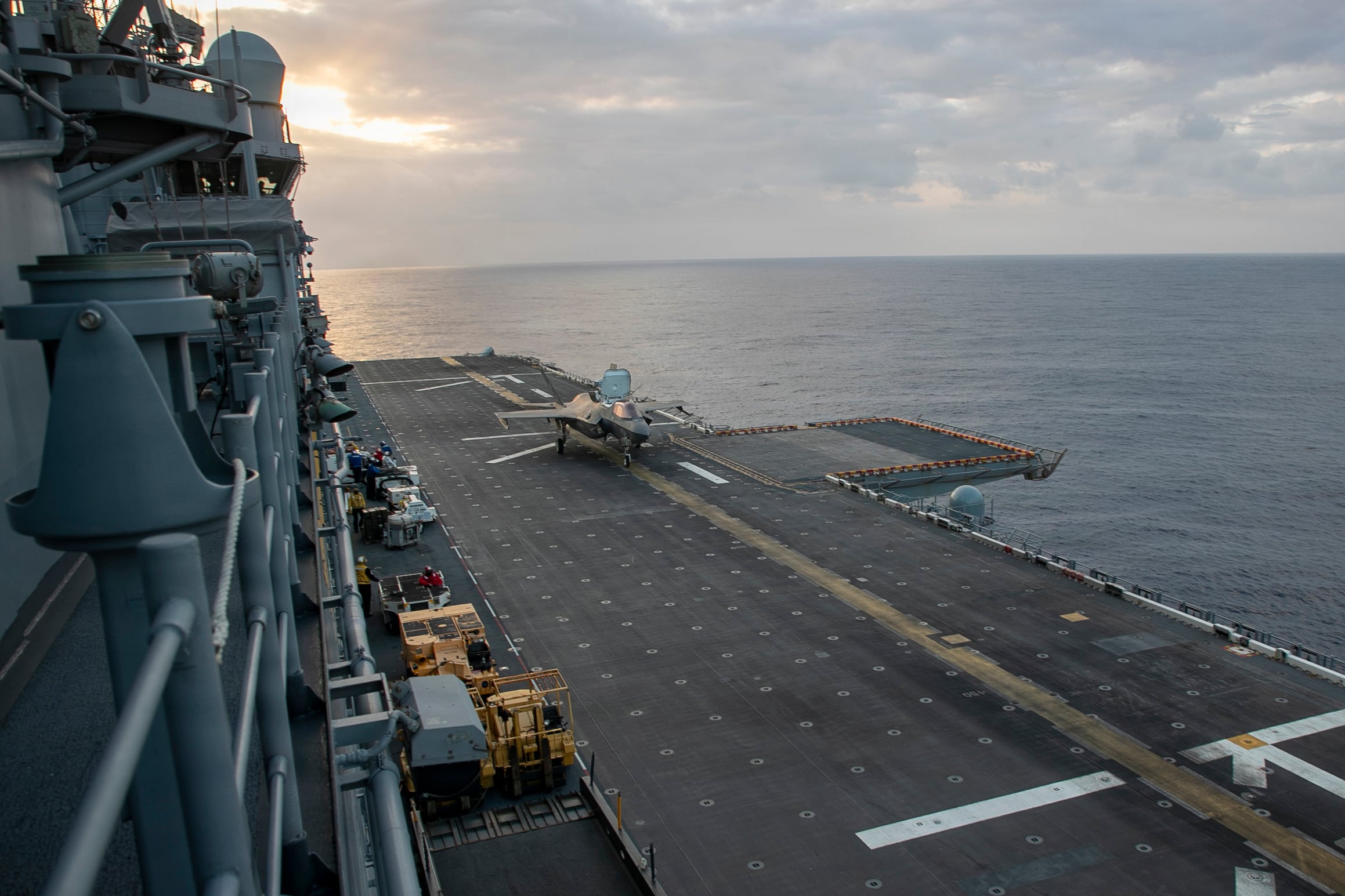
An F-35B Lighting II prepares to take off from the USS Tripoli on Mar. 6, 2026.

Samuel Geddes

US Marines head to the Gulf aboard the USS Tripoli, but as Samuel Geddes argues, it may be more about optics than real military impact.

In mid-week, the 31st US Marine Expeditionary Unit aboard the USS Tripoli was sighted transiting the Straits of Malacca en route to the Gulf. Its crew and detachment, reportedly 2200 to 5000-strong, has been summoned from its station in Japan after President Trump’s dawning realization that the Islamic Republic of Iran would not meekly collapse after he assassinated its leader, Sayyed Ali Khamenei.

Given that he initiated the war by crossing the ultimate red line, Trump’s options for further escalation are vanishing quickly. He is caught between what he knows to be the universal unpopularity of the war among Americans, especially over its disastrous economic consequences, and the knowledge that if he washes his hands of the situation and walks away, Iran will almost certainly continue retaliating and end up in a vastly more powerful position than it had been in before the war.

These equal opposing forces, the need for an off-ramp and the need to demonstrate any kind of tangible success, have shifted the calculus to include US ground operations on Iranian soil. It is in this context that the Marine Corps’ dispatch to the region is widely interpreted.

What would 5000 US Marines, at most, realistically achieve in a ground operation in Iran?

The idea of a large-scale ground invasion of Iran was never seriously on the table to begin with. Besides the fact that the Trump administration has been uncharacteristically consistent that this will not happen, the entire active US military, 1.3 million personnel, would be required, along with at least as many conscripts, for such a thing to even be attempted. Iran is a 1.6 million square kilometer mountain fortress, holding more mountains, deserts, and over 90 million mobilized citizens within. The United States has never occupied or even attempted to occupy a country of this size. It is simply not happening.

With large-scale ground incursions eliminated, the one “boots-on-the-ground” scenario with at least some initial plausibility would be for the US to seize one or more of the Iranian islands in the Gulf, especially the Strait of Hormuz. These islands range from Hormuz and Qeshm in the east, westward to Kharg, where 90 percent of Iran’s oil exports originate.

Upon genuine examination, however, the force currently on its way is woefully insufficient even for this objective by several orders of magnitude. The closest analogue for such an operation, in scale and required manpower, would be the Volcano and Ryukyu islands campaign against Japan in World War II, the bloodiest theatre of the US war in the Pacific. In fact, Qeshm Island is only slightly larger than Okinawa, which required between 250,000 and 540,000 American soldiers to occupy. Success there came only at the cost of 12,500 Americans killed in action and 50,000 wounded. Taking the Island of Iwo Jima alone, famously the most intense engagement of the Pacific, required 110,000 troops and took the lives of 6,800, with 20,000 wounded. Iran’s smaller islands in the Strait, Hormuz, Larak, and Hengam are comparable in size (and presumably the density of their defenses) to the Japanese outer islands but compressed within a single theatre of only a few hundred kilometers across. Anyone seriously proposing such an operation would be looking at the most intensive and costly amphibious campaign since World War II, plausibly seeing US losses equaling those of the entire wars in Korea or Vietnam within a matter of weeks or months. Here too, the enormity of the operation places it far outside the US military’s current capacities. It is certainly outside the means of 5,000 American soldiers, assuming they are not being willfully sent to their deaths.

If the Marines on the USS Tripoli are insufficient to even take and hold a small island, the last remaining possibility is that they are intended to infiltrate Iranian territory to carry out some form of high-stakes, largely symbolic operation that Trump intends to publicize as him “winning” the war and unilaterally ceasing US involvement.

Other than standard acts of sabotage, it has been suggested that the Marines may be tasked with locating and capturing Tehran’s enriched uranium stockpile. Such an objective is almost certainly fanciful. There is no reason to assume the Americans have any idea where it is, or that even 5000 marines would be sufficient to seize it if they did. However, given this administration’s amply demonstrated detachment from reality, its utter lack of shame or respect for international law, Trump’s assertion alone that such a mission was successful, even if it failed or never occurred at all, might be the one “success” that the president could consider sufficient to end his part in this catastrophe. That such a “success” would be illusory and utterly devoid of any strategic value is at this point an entirely secondary consideration.

It may well be that when the expeditionary unit reaches the Strait of Hormuz within the next week, it will simply do nothing – its purpose being pure posturing. Whatever its true role, its size relative to the strength of the Islamic Republic all but guarantees that it will serve a solely symbolic function. Its real mission is to lessen the US president’s humiliation when he ultimately does, in the fashion of a mad Roman emperor, admit defeat to the Iranians.

[…]

Via https://libya360.wordpress.com/2026/03/20/trumps-dispatch-of-marine-expeditionary-unit-signals-desperation-for-any-symbolic-success/