Spirit Airlines nears deal with Trump administration for $500 million rescue package

A Spirit Airlines Airbus A320Brian Shilhavy

Looks like the Trump administration is also going to try and bailout the U.S. airline industry, if not take it over completely.

From NBC News (https://www.nbcnews.com/business/travel/spirit-airlines-trump-administration-bailout-rcna341430):

The struggling discount carrier has filed for bankruptcy twice, and now it’s under pressure from higher jet fuel costs due to the Iran war.

Excerpts:

The Trump administration on Wednesday neared a rescue deal for struggling Spirit Airlines, in a rare move to support a single air carrier.

The deal, which has not yet been finalized, would offer $500 million to the discount airline, according to a person familiar with the matter. It would give the airline additional liquidity as it works toward emerging from bankruptcy and grapples with elevated fuel costs due to the war with Iran.

The deal would also aim to create a durable well-funded airline. After Spirit emerges from bankruptcy, the U.S. government could own up to 90% of the airline, the source also said.

[…]

Via https://t.me/healthimpact/3488

Trump’s Failures in Iran have now Led to the U.S. Trying to Bail Out the (Formerly) Rich Arab Gulf States and the U.S. Airline Industry

by Brian Shilhavy

While the U.S. economy has not crashed (yet) due to Trump’s complete failure to reopen the Strait of Hormuz, it is collapsing the economies of the (formerly) rich Gulf States, who are now begging Trump’s administration to bail them out.

Just a reminder, Dubai was the richest and most modern city in the world prior to the Iran war, as it was built as the playground for the Epstein billionaires. See my previous coverage on this: Iran is Destroying Dubai – The Billionaire’s Paradise and Financial Center in the Middle East Built by Epstein

Treasury Secretary Scott Bessent testified on Capitol Hill today that the U.S. was planning on bailing out the UAE, along with other countries in the Gulf and around Asia, due to rising fuel costs from the closure of the Strait of Hormuz. These bailouts would come out of the U.S. Treasury.

From the Wall Street Journal:

Emirati officials speak with Treasury Secretary Scott Bessent about accessing dollars if Middle East conflict drags on

Excerpts:

The United Arab Emirates has opened talks with the U.S. about obtaining a financial backstop in case the Iran war plunges the oil-rich Persian Gulf state into a deeper crisis, U.S. officials said.

U.A.E. Central Bank Gov. Khaled Mohamed Balama raised the idea of a currency-swap line with Treasury Secretary Scott Bessent and Treasury and Federal Reserve officials in meetings in Washington last week, the officials said.

The Emiratis emphasized that they had so far avoided the worst economic effects of the conflict but might still need a financial lifeline, the officials said.

From the New York Times:

Bessent Backs Financial Support for Oil-Rich U.A.E.

Excerpts:

Treasury Secretary Scott Bessent said on Wednesday that he backed the idea of providing economic support in the form of a currency swap to the United Arab Emirates, an oil-rich ally that has been contending with economic fallout from the war in Iran.

Speaking at a Senate hearing, Mr. Bessent said that the Emirates, along with several other countries in the Persian Gulf and Asia, had inquired about the possibility of a swap. He said such a maneuver would prevent the disorderly sale of U.S. assets as nations look to secure access to dollars.

The war in Iran has damaged oil and gas infrastructure throughout the Middle East, dealing a blow to economies such as the Emirates that rely on the Strait of Hormuz to transport crude around the world.

The Treasury secretary said that providing a currency swap to the Emirates could benefit the United States by stabilizing foreign exchange markets and protecting American assets around the world. He added that it could be provided by the Federal Reserve or by the Treasury Department, which can deploy its Exchange Stabilization Fund to buy another nation’s currency.

“Swap lines, whether it’s from the Federal Reserve or the Treasury, are to maintain order in the dollar funding markets and to prevent the sale of the U.S. assets in a disorderly way,” Mr. Bessent said.

Senator Chris Van Hollen, a Maryland Democrat, questioned the idea of providing economic support for the Emirates and pointed out that President Trump and his family have personal financial ties to the nation.

The Trump administration has been facing criticism over the cost of the conflict in Iran, which many view as unnecessary.

“The war in Iran has already cost us dearly,” Mr. Van Hollen said.

“In my view, it’s been a huge mistake, made us less safe and a lot worse off.”

The Trump administration is also apparently going to try and bail out the U.S. airline industry, if not take it over completely, due to the rapid increase in jet fuel.

From NBC News:

Spirit Airlines nears deal with Trump administration for $500 million rescue package

The struggling discount carrier has filed for bankruptcy twice, and now it’s under pressure from higher jet fuel costs due to the Iran war.

Excerpts:

The Trump administration on Wednesday neared a rescue deal for struggling Spirit Airlines, in a rare move to support a single air carrier.

The deal, which has not yet been finalized, would offer $500 million to the discount airline, according to a person familiar with the matter. It would give the airline additional liquidity as it works toward emerging from bankruptcy and grapples with elevated fuel costs due to the war with Iran.

The deal would also aim to create a durable well-funded airline. After Spirit emerges from bankruptcy, the U.S. government could own up to 90% of the airline, the source also said.

Here are some more news stories that I have posted on our Telegram Channel:

Trump in a quandary after ‘embarrassment’ over Iran talks

From Al Jazeera:

We’ve spoken to US foreign policy expert Barbara Slavin about Trump’s announcement that a ceasefire with Iran will be extended until its “seriously fractured” leadership presents a unified proposal.

Slavin said the statement is “a way to cover the embarrassment that the US was prepared to send the vice president to Pakistan and Iran was not ready to do so”.

Now, Trump finds himself “clearly in a quandary”.

“This war hasn’t gone the way he expected from the very beginning, and Iran has discovered new leverage in its control of the Strait of Hormuz,” Slavin said.

The US should “relinquish its maximalist demands” and offer Iran “some sort of gesture that it is serious in seeking a resolution”, she added.

US civil rights group moves to sue White House over mass destruction in Lebanon

Please remember that 30% of the population in Lebanon are Christians. Not that it matters, as ALL lives are precious, and the lives of U.S. citizens living there are protected by U.S. Law, no matter what their political or religious affiliations are.

I hope more lawsuits like this are filed.

From The Cradle:

Excerpts:

The Arab American Civil Rights League (ACRL) announced on 20 April that it is preparing a class-action lawsuit against the US government, citing harm to US citizens whose homes and families in Lebanon were impacted by Israel’s indiscriminate attacks.

“This is not abstract. This is not political rhetoric. This is real. This is loss,” ACRL Chairman Nasser Beydoun said.

The legal action is expected to target the US State Department, including Secretary of State Marco Rubio, as well as weapons manufacturers accused of supplying arms used in the strikes.

Organizers said the case is being built on behalf of US citizens who lost homes, land, and relatives in Lebanon.

ACRL founder Nabih Ayad said US officials knowingly enabled destruction. “They knew that their weapons are going to be used to destroy innocent people’s homes, not military action, but yet they keep supplying these individuals,” he stated.

Speakers described widespread destruction to family properties, particularly in southern Lebanon, where Israeli forces have reduced entire towns and villages to rubble and displaced over one million people.

Israel Continues Relentless Attacks in Gaza, Killing Seven Palestinians in 24 Hours

From AntiWar.com:

Gaza’s Health Ministry on Tuesday said that Israeli forces killed at least seven Palestinians and wounded 21 over the previous 24 hours as the IDF continues its relentless attacks and constant violations of the US-backed ceasefire deal.

Attacks in Gaza over the past day included an overnight bombing in Khan Younis, southern Gaza, that killed three Palestinians.

According to the Palestinian news agency WAFA, one of the victims, a man named Darwish al-Attal, had been married just a few days earlier. Middle East Eye reported that the strike targeted a police checkpoint.

Israeli warships on Tuesday targeted tents in Beit Lahia, northern Gaza, killing at least one woman. Al Jazeera reported that at least one person was killed by an Israeli attack in Gaza City’s Zeitoun neighborhood, and Israeli drones dropped explosives on tents in the Shujayea area, setting the camp on fire.

Also on Tuesday, a child who was wounded in a previous Israeli attack succumbed to his wounds. According to Al Jazeera, the child, Abdullah Dawas, was shot in the head near Jabalia, northern Gaza, about 10 days ago.

Gaza’s Health Ministry said that since the ceasefire deal was signed in early October, the IDF has killed at least 784 Palestinians in Gaza and wounded 2,214, nearly 3,000 total Palestinians casualties.

[…]

Via https://healthimpactnews.com/2026/trumps-failures-in-iran-have-now-led-to-the-u-s-trying-to-bailout-the-formerly-rich-arab-gulf-states-and-the-u-s-airline-industry/

Trump’s ceasefire extension is a trap — Iran’s strategic advisor

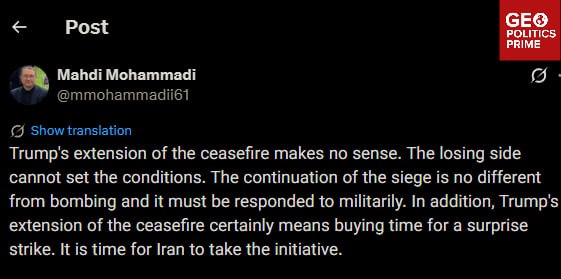
Mehdi Mohammadi, strategic advisor to Parliament Speaker Ghalibaf, says Washington is just buying time for a surprise strike.

“The losing side cannot set the terms. Continuing the siege is no different from bombing and must be responded to militarily. It is Iran’s time to take the initiative,” Mohammadi wrote on X.

In just several hours, the negotiated ceasefire will end — and Iran is ready to act.

[…]

Via https://t.me/healthimpact/3484

Israeli soldiers and settlers using sexual violence to push Palestinians out

Israeli soldiers and settlers using sexual violence to push Palestinians out – report

RT

 21 Apr, 2026 

Over 70% of displaced Palestinian households have cited threats to women and children as decisive reason for leaving

Israeli soldiers and settlers are systematically using sexual violence and harassment to force Palestinians from their homes in the occupied West Bank, according to a report by the West Bank Protection Consortium – a group of international humanitarian organizations.

The report, published on Sunday and titled ‘Sexual Violence and Forcible Transfer in the West Bank’, documents at least 16 cases of conflict-related sexual violence attributed to Israeli settlers and soldiers over the past three years. The researchers noted that the actual number is likely significantly higher, as survivors often remain silent due to shame, stigma, and fear of retaliation associated with reporting such crimes.

Victims who have chosen to come forward described harassment, assault, and intimidation inside their own homes, including forced nudity, invasive body cavity searches, exposure of genitals to minors, and threats of rape. Men and boys also reported forced stripping, sexualized humiliation, and degrading treatment.

More than 70% of displaced households surveyed cited threats to women and children, particularly sexualized violence, as a decisive reason for leaving their homes and communities.

“What pushed me to take the decision of relocation was the harassment my wife, daughters and daughter-in-law were experiencing,” one community member was quoted as saying in the report. He added that when he and his son left for work, settlers would regularly stalk the women, whistle and throw stones. “I was terrified that something bad might happen to my family because of this constant settlers’ violence when I was away,” the man said.

The report documents cases attributed to Israeli soldiers as well as settlers, and adds that settler abuse often takes place in the presence of Israeli forces, who do not intervene or effectively investigate those responsible. It further notes that sexualized violence is not incidental but described as a deliberate tactic of displacement.

Families have adopted coping strategies, including sending women and children away, withdrawing girls from school, or arranging early marriages to reduce exposure to harm.

The findings emerge as Israel has accelerated its land grabs in the West Bank, approving in February the registration of large areas of the territory as “state property” for the first time since 1967, enabling further settlement expansion. The move has been hailed by hardline Israeli nationalists as a “true revolution” to tighten West Jerusalem’s control over the region.

The Israeli government has long sought to annex the West Bank despite widespread international opposition to the move, including from US President Donald Trump.

The Palestinian Presidency has strongly condemned Israeli advances into the territory, noting its latest land grab effectively voids multiple signed agreements and openly  contradicts UN Security Council resolutions.

[…]

Via https://www.rt.com/news/638842-israeli-sexual-violence-west-bank/

Trump extends Iran truce, keeps blockade as talks stall

Trump extends Iran truce, keeps blockade as talks stall (PHOTOS, VIDEOS)


RT

21 Apr, 2026 

The US president said the truce will hold until Tehran presents “unified proposal” to end the conflict.

US President Donald Trump has announced he will extend the ceasefire with Iran until its leadership comes up “with a unified proposal,” while maintaining the naval blockade. The decision comes hours before the fragile truce was set to expire, with planned talks in Islamabad still in limbo.

“Based on the fact that the Government of Iran is seriously fractured, not unexpectedly so and, upon the request of Field Marshal Asim Munir, and Prime Minister Shehbaz Sharif, of Pakistan, we have been asked to hold our Attack on the Country of Iran until such time as their leaders and representatives can come up with a unified proposal,” Trump wrote on Truth social. “I have therefore directed our Military to continue the Blockade and, in all other respects, remain ready and able, and will therefore extend the Ceasefire until such time as their proposal is submitted, and discussions are concluded, one way or the other,” he added.

Earlier on Tuesday, Vice President J.D. Vance had been expected to lead the US delegation in Islamabad, alongside Trump envoys Steve Witkoff and Jared Kushner. Iran’s team was to be headed by Parliament Speaker Mohammad Bagher Ghalibaf, according to earlier reports.

However, the New York Times reported that Vance’s trip was put on hold after Tehran failed to respond to US positions. Witkoff and Kushner also remained in the US, according to reports.

Iranian officials have said no final decision has been made on whether to attend the talks.

The two-week ceasefire brokered by Pakistan earlier this month was set to expire on Wednesday, after a first round of talks in Islamabad failed to produce a breakthrough and Trump moved ahead with a US naval blockade of Iranian ports, a step Tehran has labeled a violation of the truce.

Here are the latest developments:

  • Oil prices rallied on concerns that the US ceasefire with Iran will expire without a deal.
  • Tensions escalated further after the US Navy seized an Iranian cargo ship, the Touska, for allegedly breaching the blockade – a move Tehran branded “armed maritime piracy” and threatened to retaliate over.
  • Iran’s IRIB state broadcaster said none of its negotiators had yet departed for Islamabad.
  • Talks between Israel and Lebanon are reportedly set for Thursday to discuss extending their ceasefire, due to expire on Sunday.
  • The Middle East conflict has triggered what IEA chief Fatih Birol called “the biggest” energy crisis in history.

[…]

Via https://www.rt.com/news/638802-us-iran-talks-second-round/

Yemen will ‘return to war’ if US, Israel resume aggression against Iran

Ansarullah leader Abdul-Malik al-Houthi

Press TV

Ansarullah leader Abdul-Malik al-Houthi says the Yemeni armed forces will return to fighting if a fragile ceasefire that halted 40 days of American-Israeli aggression against Iran expires without an agreement to permanently end the war.

In a speech on Tuesday, Houthi said Ansarullah will not be an impartial actor if aggression resumes against the Islamic Republic. “We are in confrontation with the Israeli enemy and its American partner. If the enemy returns to war, the path lying ahead for us will also be a return to war.”

He warned that even if the ceasefire is extended, it is unlikely to stop the aggression, noting that any truce provides only a respite in a continuous confrontation.

Houthi described the Zionist regime as the most dangerous enemy of the Muslim Ummah, dismissing Western talk of transforming West Asia as a deceptive attempt to justify aggression and dominate the region.

He censured those who blame Lebanon’s resistance movement Hezbollah for responding to the Israeli aggression.

He said Hezbollah’s recent retaliatory attacks on occupied territories came after 15 months of continuous Zionist attacks on Lebanon.

70 years of Zionist crimes

Houthi said Operation Al-Aqsa Flood in 2023 was “a response to Zionist crimes and tyranny over seven decades.”

“The enemies work through deceptive slogans to mislead people and justify what they do against the Ummah.”

The enemies of the Ummah, Houthi said, want a situation where any criticism of the crimes of Israel is criminalized in the Arab and Islamic world.

Portraying free movements as proxy for Iran

Commenting on the illegal US-Israeli aggression against Iran, Houthi said the Zionists and their mouthpieces are trying to tarnish the image of free and independent groups standing against tyranny by labeling them as “a proxy for Iran.”

“The Zionists themselves were the first to coin the term ‘proxy for Iran’ and have heavily focused on it in the context of deception and misinformation.”

Houthi said Israel, with American weapons and support, kills a Palestinian woman every half hour. “Where are human rights? Where are women’s rights?” he asked.

He said the Zionists and their loyalists were seeking to instill despair and a defeatist spirit in the Ummah. He also said they try to distort and belittle the operations of the Resistance Axis.

Media loyal to US and Israel spread despair

The Ansarullah leader criticized media outlets aligned with the US and Israel for invariably exaggerating enemy actions while distorting any position that could revive hope.

“The Zionists, along with the Americans, the British and their hypocritical Arab agents, are working to make the Ummah accept the equation of permissible violation,” he said.

Despite the great steadfastness in Gaza, Houthi said, certain forces within the Ummah deal with it by distorting the grand endeavor.

The United States and Israel launched their illegal, unprovoked military campaign against Iran on February 28, assassinating the Leader of the Islamic Revolution and striking nuclear facilities, schools, hospitals and bridges.

Iran’s armed forces responded with 100 waves of decisive retaliatory strikes under Operation True Promise 4, launching hundreds of ballistic and hypersonic missiles, as well as drones, against American military bases across West Asia and Israeli positions throughout the occupied territories.

Yemen’s Ansarullah movement has been a key part of the Axis of Resistance, launching missile and drone attacks on Israeli targets.

[…]

Via https://www.presstv.ir/Detail/2026/04/21/767297/Ansarullah-return-to-war-if-US-Israel-resume-aggression-against-Iran-Houthi

Iran’s strategic leverage shatters US’s illusion of blockade

Press TV

Despite US warships engaging in blatant maritime piracy by intercepting tankers and claiming a naval stranglehold, Iranian crude keeps moving.

Chinese buyers are paying a premium, Indian refiners are routing payments through yuan, and Tehran has turned the narrow legal geography of the Strait of Hormuz into its strongest bargaining chip.

The US Navy fired on an Iranian cargo ship in the Gulf of Oman on Sunday, blowing a hole in its engine room before Marine pirates boarded the vessel, President Donald Trump announced on Truth Social.

It was the most dramatic piracy in what has become a daily occurrence at sea, but a US blockade of Iranian ports that has failed to achieve its stated aim of cutting off Iran’s oil revenues.

Just days before the attack on the Touska, an Iranian-flagged vessel nearly as long as an aircraft carrier, another tanker owned by the National Iranian Tanker Company successfully completed a voyage to Indonesia, unloading approximately 2 million barrels of crude before returning safely to Kharg Island, Iran’s main oil export terminal.

The ship transited back through waters that the US Central Command claims are under effective blockade.

The contrast illustrates a fundamental reality of the current war. While American destroyers patrol the Gulf of Oman and have forced 27 commercial vessels to turn around since the blockade began on April 13, Iran’s oil continues to reach customers.

TankerTrackers.com, a maritime intelligence firm, reported that Iranian crude exports in April remained at elevated levels, directly contradicting claims by the US president that Iran was losing $500 million daily from a closed Strait of Hormuz.

The legal architecture of the waterway helps explain why.

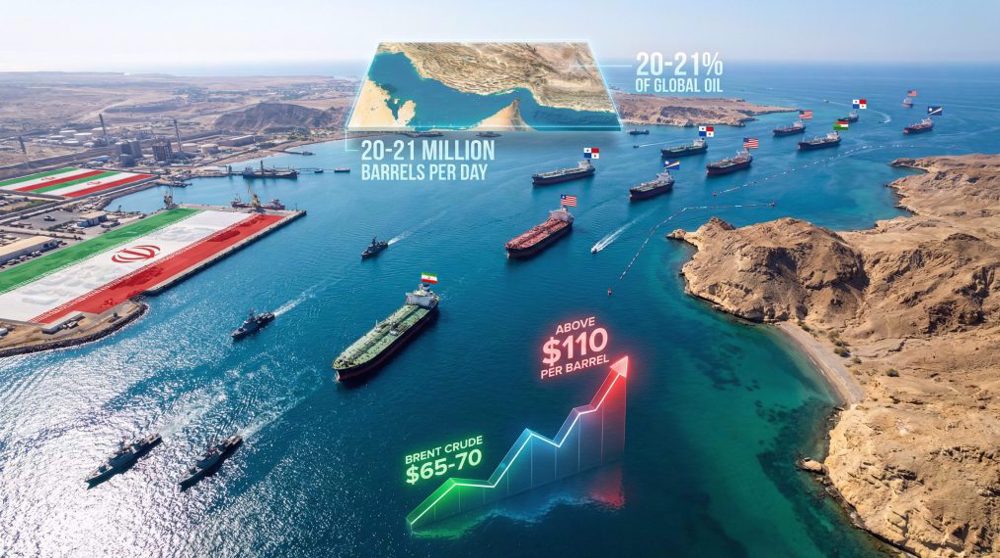
The Strait of Hormuz is 21 nautical miles wide at its narrowest point. Under the UN Convention on the Law of the Sea, which Iran has signed but not ratified, coastal nations may claim territorial waters extending 12 nautical miles from their shores.

This creates a mathematical reality that neither side disputes. The strait is narrow enough that the territorial waters of Iran and Oman overlap or abut, leaving no high-seas corridor where international transit passage is unambiguously guaranteed.

The US-Israeli war of terrorism has prompted Iran to finally put aside its longstanding diplomatic hesitation and historical reluctance over its Hormuz rights, fully enforcing its sovereign authority under the 12-mile territorial waters provision of international law to administer, regulate, and control traffic through the strait.

Iran is fully within its rights, and there is no need to accommodate the colonialist powers that have exhausted every weapon in their arsenal—from crippling sanctions to economic warfare—to harm the Iranian people for years.

The time has come for Iran to strike back, to deploy its own strategic leverage, and to turn the tables on a West that has shown nothing but inhumanity.

Since late February, when US and Israeli strikes triggered the current war, Tehran has effectively closed the strait to all vessels it does not expressly approve.

In fact, Iran has allowed a carefully managed flow of its own oil exports and vessels from countries it considers non-hostile to pass through designated corridors north and south of Larak Island, where it monitors each ship.

The new status has done something remarkable to Iranian oil pricing. Chinese independent refiners, known as teapots, are now buying Iranian Light crude at premiums of $1.50 to $2 per barrel above Brent, according to trading sources cited by Reuters.

For years under sanctions, Iranian oil traded at a discount to global benchmarks, compensating buyers for the risks of dealing with a blacklisted seller. That dynamic has reversed.

At least two teapot refineries purchased cargoes at these premium prices this month, betting that Iranian supply is more reliable than alternatives from Saudi Arabia or the UAE, both of which have effectively shut in approximately 9 million barrels per day of production.

China has taken more than 90 percent of Iran’s crude exports in recent years, and Beijing’s refiners just received new import quotas totaling 55 million tons.

One US-sanctioned Aframax tanker, the Ping Shun, was reportedly carrying 600,000 barrels of Iranian crude from Kharg Island and is now signaling Dongying in China’s Shandong province, a hub for private refining.

Meanwhile, refiners in India which was once Iran’s third-largest oil customer are scrambling for crude after West Asian supplies were constrained by the strait’s closure.

A temporary US sanctions waiver, issued March 21 and allowing transactions for already-loaded cargoes until April 19, created a narrow window for purchases.

Past payment mechanisms had long complicated Iranian oil trade because the United States bans Iran’s access to the dollar-based financial system. Those hurdles have now been resolved.

According to Reuters, Indian refiners are making payments for Iranian crude using the Chinese yuan, routing funds through ICICI Bank, one of India’s largest private sector banks, to settle accounts with Iranian sellers.

The development carries geopolitical weight. Yuan-denominated oil trade between Iran and India reduces both countries’ reliance on the US dollar and the SWIFT financial messaging system, both of which Washington has used as weapons in its maximum pressure campaign.

For China, it reinforces the yuan’s gradual emergence as an alternative reserve currency. For India, it is a pragmatic response to a simple problem where the country needs crude oil, and Iran has it.

The Touska seizure on Sunday drew a sharp response from Tehran. Iran’s top military headquarters, Khatam al-Anbiya, vowed that the armed forces would “soon respond to and retaliate for this act of armed piracy”.

The US blockade strategy carries domestic political risks. Average US gasoline prices have exceeded the psychological threshold of $4 per gallon, with continued high energy costs set to hurt the Republican party in November’s midterm elections.

Iran, for its part, has decades of experience with sanctions. The country has built resilience through a combination of barter trade, and diplomatic hedging.

The key variable is time, with observers questioning how long can the US maintain high-intensity maritime piracy while bearing the political costs of elevated oil prices and inflation.

For now, the oil keeps moving. Chinese refiners are paying more than ever. Indian payments are flowing in yuan and every successful Iranian tanker voyage undercuts the US narrative of an airtight blockade.

[…]

Via https://www.presstv.ir/Detail/2026/04/21/767309/Iran-s-strategic-leverage-shatters-US-s-illusion-of-blockade-

Iran: No decision yet on new Pakistan talks due to US contradictory messages

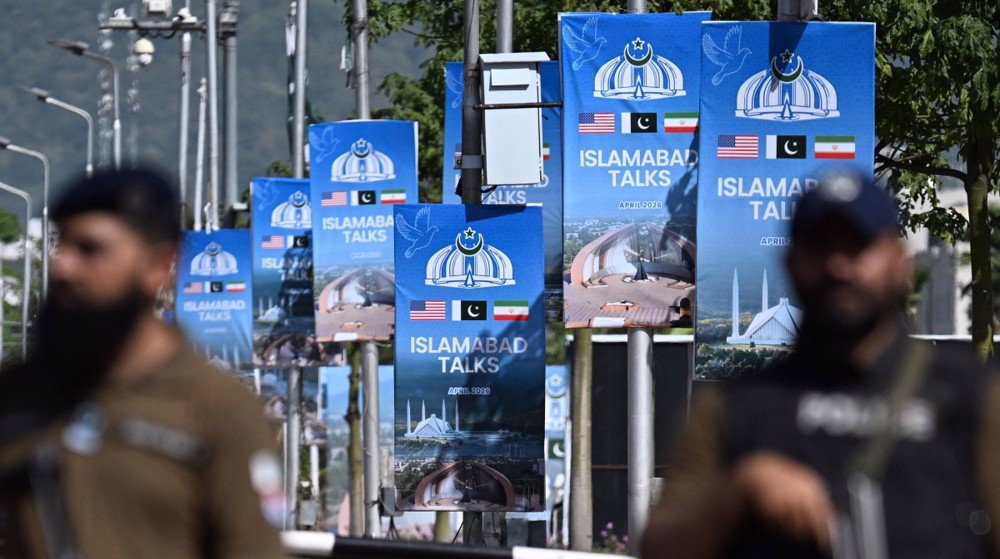
Security personnel stand guard at a security checkpost along a road temporarily closed near the Serena Hotel at the Red Zone area in Islamabad on April 20, 2026, ahead of potential US-Iran peace talks. (Photo by AFP)

Press TV

Iran has not made a final decision on whether to participate in the next round of Pakistan-mediated talks with the United States, citing contradictory messages, inconsistent behavior and unacceptable actions by the American side, the Foreign Ministry spokesman said on Tuesday.

“No final decision has been made yet on whether to participate in the Pakistan talks,” Esmail Baghaei said in a televised interview on IRIB’s News Network.

“The reason is the contradictory messages, inconsistent behavior and unacceptable actions of the American side,” he said.

Pakistan has been brokering indirect negotiations between Tehran and Washington following the illegal 40-day war that began on February 28, when the United States and Israel launched their unprovoked aggression against Iran.

A two-week ceasefire took effect on April 8 and will expire on Wednesday [today].

The spokesman emphasized that any diplomatic process must be weighed according to its benefits and harms.

“Going back and forth is neither a criterion for success nor inherently valuable. What matters is that participation in a diplomatic process serves our national interests,” he said.

“That is why decision-making on this process, like any other matter, is done carefully and with all considerations in mind.”

Ceasefire violated from the start

Baghaei noted that the ceasefire was violated by the US side from the very beginning.

“The ceasefire was supposed to include Lebanon as part of the agreement, but unfortunately they did not abide by it,” he said.

He recalled that after the Islamabad talks, an understanding was reached and Iran’s foreign minister announced that Tehran would fulfill its commitments, but Washington responded by saying that it will continue the naval blockade.

“A naval blockade is both illegal under international law and a clear violation of the ceasefire understanding,” Baghaei said. He also noted the subsequent attack on an Iranian commercial vessel.

The spokesman stressed that Iran negotiates carefully and, if it accepts a commitment, it adheres to it.

“Even after the US withdrew from the JCPOA in 2018, Iran continued to fully implement it for one year, then only gradually reduced some commitments every two months. This shows a responsible and committed approach,” he said.

He described US actions against shipping as “maritime piracy at the state level.”

Iran’s brave decision to accept ceasefire

Baghaei said Iran’s decision to accept the ceasefire and enter talks was “very courageous.”

“After nearly 40 days of fierce defense, despite heavy losses, including the martyrdom of our Leader and commanders, the enemy did not achieve any of its goals thanks to the people’s resistance,” he said.

He added that Iran enters a diplomatic process when it deems it necessary for national interests, but the process must be result-oriented.

US diplomatic gestures inconsistent with actions

“The diplomatic gestures and claims of diplomacy are inconsistent with their behavior,” Baghaei said. “This should be clear to our people, to the region, and to world public opinion that may sometimes be influenced by US claims.”

He noted that international media have published much false information recently, but Iran is transparent with its people.

Tensions have been running high over a so-called naval blockade the US has enforced on Iranian ports American attempts to conduct mine-sweeping operations in the Strait of Hormuz.

Iranian officials have said the blockade is unlawful and a breach of ceasefire.

Iran says it will not accept diktats or conditions imposed by the United States and will not negotiate under the shadow of threats.

Foreign Minister Abbas Araghchi has said Tehran entered the diplomatic process responsibly but has lost trust due to repeated US violations and military aggression during previous negotiations, notably in June 2025 and February 2026.

[…]

https://www.presstv.ir/Detail/2026/04/21/767303/Iran-No-decision-yet-on-new-talks-in-Pakistan-due-to-US-contradictory-messages


Six signs of US defeat in Iran war: A conflict exposing America’s decline

Mohammad Mahdi Abbasi

April 19, 2026

Throughout history, wars have often been more than mere military conflicts – they are decisive moments that reshape the future of the global order. Some wars mark the rise of a power, while others signal its decline. The United States’ war with Iran belonged to this latter category: a battle intended to showcase American might, but instead revealed its limitations and accelerated the erosion of Washington’s global standing.

A 40-day war which was undoubtedly one of the first tangible signs that the world was entering a new era – an era in which the unipolar order of the post–Cold War era was gradually giving way to a multipolar world. In this emerging new order, the resistance of a key regional actor against the world’s largest military power sent a clear message to other nations: the era of America’s uncontested dominance is nearing its end.

Many analysts believe that Trump’s strategic error in this war was comparing Iran to countries like Venezuela, assuming that military and political pressure could swiftly change its power structure. The reality, however, was that Iran was neither Venezuela nor an easy target for quick operations. Instead, it became a strategic quagmire – one that grew increasingly difficult to extricate from as time went on.

Today, the most prominent analysts, leading think tanks, and seasoned American politicians speak of the United States’ defeat in the war against Iran – a defeat that can be summarized across six key dimensions:

1. Failure to achieve objectives: a war that yielded no results

The first sign of America’s defeat was its inability to achieve the war’s primary objectives. In strategic logic, a war is only considered successful when its goals are realized. In the war with Iran, not only were Trump’s stated aims unmet, but many indicators of Iran’s power remained intact.

Donald Trump waged this war with the confidence of a victor. He spoke of “Iran’s unconditional surrender,” promised to destroy Iran’s military capabilities, and even spoke of influencing the determination of Iran’s future leadership. What unfolded, however, was not the fulfillment of these goals, but the emergence of a multi-layered crisis for his administration.

Senator John Ossoff, a prominent Democrat, offered a blunt post-war assessment: “Iran’s ballistic missiles and drones are not destroyed. The Iranian government is intact, along with its ability to throttle the global energy supply. Its stockpiles of highly enriched uranium also remain untouched.”

These statements clearly show that even within the US, the narrative of American victory was indefensible. Iran’s military power remained robust, and even in certain areas, prominent offensive capabilities were demonstrated during the war. Moreover, Trump’s promise to quickly reopen the Strait of Hormuz never materialized; this critical passage remained under Iran’s intelligent control.

Under such circumstances, even some former US officials acknowledged the weakness of Washington’s position. Former Secretary of State Hillary Clinton critically noted, “I worry that the United States is now in a very weak position vis-à-vis Iran, which should be the outlier, should be on the back foot and should be the one held to account.”

2. Military erosion: unprecedented costs for the US

The second sign of defeat was the extensive military damage sustained by the US – damage that was significant not only financially but symbolically. For the first time in history, the advanced F-35 fighter jet, a symbol of American air superiority, was damaged in direct combat. Alongside it, several F-15E Strike Eagles, E3 AWACS aircraft, MQ-9 Reaper drones, and a range of helicopters and support aircrafts were also targeted.

These losses went beyond mere equipment destruction. Reports indicate that the United States expended over one-third of its THAAD missile defense stockpiles during this war – a system designed to counter strategic threats, and replenishing it is both extremely time-consuming and enormously expensive. Nearly all of America’s advanced JASSM-ER cruise missiles were deployed to the region, leaving only a limited reserve available for any other potential crises.

Operationally, the scale of firepower expended was unprecedented. Launching over 900 Tomahawk missiles in a single conflict constitutes a historical record for the US military. Such developments profoundly affect America’s arms balance with countries such as China and could pose serious long-term risks for the US.

On top of all this, perhaps the most significant indicator of US vulnerability was Iran’s successful strikes on American military bases. According to The New York Times, Iran managed to simultaneously strike 13 US military bases across the Middle East – an event with no comparable precedent since World War II and the Empire of Japan attacks [on US forces and equipment]. This event was not merely a tactical defeat; it was a symbolic blow to the image of America’s uncontested power.

3. Economic costs: a war that struck the heart of the US

The third sign of America’s defeat was the economic consequences of the war with Iran – consequences that directly impacted the daily lives of US citizens. The most immediate and tangible impact was the sharp rise in energy prices. The average price of gasoline across the United States climbed to $4.10 per gallon, the highest level in four years. Diesel prices climbed to $5.40 per gallon – a critical figure for the transportation sector and US supply chain.

Disruptions to global trade added further pressure on the US economy. The closure of the Strait of Hormuz disrupted the supply of key raw materials, including chemical fertilizers, fueling widespread dissatisfaction among American farmers. Across several states, soaring input costs and reduced access to essential materials became a central rallying point for the protests.

Financial markets were also hit hard because of this war. In the first 27 days of the conflict, over $5.2 trillion in US stock market value was wiped out, reflecting investors’ deep concerns about the economic future. At the same time, the direct costs of the war with Iran escalated. According to NBC News, the US government incurred more than $28 billion in expenses during the initial weeks alone.

Ben Rhodes, former US Deputy National Security Advisor, wrote in the description of this situation: “US munitions badly depleted. Hundreds of billions spent. Prices up everywhere. More global economic fallout to come. Just a catastrophic situation even in the best of circumstances.”

4. Domestic legitimacy crisis: a war that eroded Trump’s public support

The fourth sign of America’s defeat was the decline in domestic support for Trump’s administration. For any US government, political legitimacy is a crucial source of power, and costly wars can quickly erode that legitimacy.

A recent CBS News poll revealed that over 65% of Americans are dissatisfied with the government’s economic performance, with a significant portion of this discontent linked to the costs of the war. Additionally, 64% of citizens disapproved of Trump’s handling of the war with Iran – figures that highlight a deep gap between the US government and public opinion.

The declining popularity of senior US defense officials further underscored this trend. Pete Hegseth and J.D. Vance experienced noticeable drops in popularity over the past two months – a situation rarely seen among contemporary US defense secretaries and vice presidents.

5. International isolation: a war that fractured America’s global alliances

The fifth sign of defeat was the growing isolation of the US in the international system. One of America’s greatest sources of power in recent decades has been its extensive network of allies. Yet, during the war with Iran, that network fractured.

Despite repeated pressure from Washington, many NATO members refused to participate militarily in the war. France, Germany, Italy, and Spain openly declared they would not send troops. In East Asia, Japan, South Korea, and Australia also declined to engage militarily. Even Britain – America’s closest ally – refused to join the proposed naval blockade of the Strait of Hormuz.

At the level of global public opinion, a wave of anti-war protests swept across the world. Large-scale demonstrations in different cities around the world signaled a declining trust in US foreign policy. American scholar Francis Fukuyama described the situation bluntly: “The United States has never been as isolated in the world as it is today.”

6. Inability to defend allies: a crisis in America’s security credibility

The sixth sign of America’s defeat in this 40-day war was its inability to protect its regional allies. During the conflict, US bases, economic infrastructure, and numerous energy facilities in allied countries were disrupted, and their operations suffered significant setbacks. These events demonstrated that the US security umbrella is no longer as reliable as it once was.

In the Occupied Territories as well, many strategic points were targeted by Iranian Armed Forces and Hezbollah, with American and Israeli defense systems failing to intercept these attacks. The widespread damage sent a clear message: the US can no longer guarantee the security of its allies.

Finally, the history of great powers shows that decline rarely begins with a sudden defeat; it unfolds through a combination of costly wars, wrong decisions, and loss of credibility. The 40-day war between the US, the Zionist regime, and Iran was one of these turning points. It not only exposed the limitations of US military power, but also revealed its economic, political, and strategic weaknesses to the world.

[…]

Via https://telegra.ph/Six-signs-of-the-United-States-defeat-in-the-war-against-Iran-A-conflict-that-exposed-Americas-decline-04-19-2


Trump prefers collapsing world economy to admitting defeat in criminal Iran war

Man speaking outdoors with quote overlay.

By Walt Zlotow

That was some phony two-week ceasefire President Trump agreed to with Iran. When Iran refused Trump’s impossible demands presented by amateur US diplomats Vance, Witkoff and Kushner, Trump essentially resumed the war with his imaginary blockade of all Iranian shipping delivering the world’s oil.

Trump still hasn’t ruled out resuming his murderous but ineffective bombing campaign, or launching a possible ground invasion to extract Iran’s enriched uranium, or snatch its oil infrastructure on Kharg Island. He’s sending 10,000 more ground troops to bolster the 50,000 waiting around to either do nothing, or face major destruction if dropped into Iran.

To show the extent of US war failure, 6,000 troops aboard the aircraft carrier USS George H. W. Bush and accompanying warships had to skip the short route through the Mediterranean to go around the much longer southern Africa route, due to the Houthis’ threat to close the Bab el-Mandeb Strait. As a result Trump won’t have his 60,000 troop force in place till early May.

Trump must know he has no path to anything remotely resembling victory. No regime change. No end to nuclear enrichment. No end to Iran’s missile stockpile. Most importantly, no reopening to the Strait of Hormuz and renewed flow of Middle East oil.

He’s also likely still controlled by Israeli Prime Minister Benjamin Netanyahu, who convinced Trump to launch the war on February 28 and has been sabotaging the ceasefire with his ghastly bombing of Lebanon. While Trump desperately wants out of the lost war, Netanyahu demands it continue till Iran is destroyed as an Israeli rival. Why Trump remains under Netanyahu’s control is both horrifying and may forever remain a mystery.

Trump is now a shell of the former war president who gloried in bombing seven nations and snatching Venezuelan President Maduro to capture his oil. He’s trapped with no way out except admitting defeat by ending the war on Iran’s sensible terms.

But Trump’s lifelong delusion of his invincibility in anything he does prevents him from facing the reality of the unfolding world catastrophe he initiated.

At present, Trump resuming his murderous war and precipitating worldwide economic collapse appear more likely than seeking peace, albeit certifying US defeat. Unless Congress acts to defund Trump’s $200 billion request to continue this catastrophe, or the Cabinet, led by Veep Vance, removes Trump via the 25th Amendment, things will only get dramatically, possibly, infinitely worse.

[…]

Via https://theaimn.net/trump-prefers-collapsing-world-economy-to-admitting-defeat-in-his-criminal-iran-war/