Gulf nation warns US it could ditch petrodollar for yuan

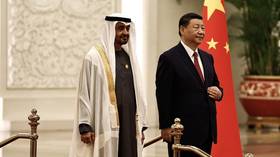
Chinese President Xi Jinping and United Arab Emirates President Sheikh Mohammed bin Zayed Al Nahyan meet at the Great Hall of People in Beijing.

RT

April 20, 2026

The United Arab Emirates has warned the US Treasury that it could be “forced to use Chinese yuan” in oil trade, the Wall Street Journal reported on Sunday.

UAE Central Bank Governor Khaled Mohamed Balama delivered what the newspaper described as an “implicit threat” against the dollar’s dominant position during a meeting with US Treasury Secretary Scott Bessent in Washington last week, the outlet said, citing unnamed US officials.

Balama reportedly explained that Abu Dhabi could require a lifeline to prevent a dollar liquidity crunch if the economic fallout from the US war against Iran continues to rise.

Tehran has pursued a strategy of asymmetric pressure aimed at raising costs for Washington and its allies. The UAE bore the brunt of Iranian retaliation against US military bases and other high-value locations, with over 2,800 drones and missiles reportedly fired at the country.

The US Treasury could offer a currency swap, though these types of arrangements are usually handled by the Federal Reserve. The WSJ said Fed approval for the UAE is unlikely and cited a precedent last year in which a $20 billion support package was arranged by the Treasury for Argentina ahead of a key election.

The administration of US President Donald Trump previously floated the idea of Gulf states partially covering the cost of the Iran war. Harvard Kennedy School Professor Linda Bilmes estimated that the US directly spent $2 billion per day in the first 40 days of the conflict.

Arab frustration with US policies has surfaced in public commentary from figures linked to Gulf governments. On Sunday, Abdulkhaleq Abdulla, a former adviser to UAE President Mohammed bin Zayed, called for US military bases in the country to be closed, arguing that they are a burden rather than a strategic asset. He advocated instead for prioritizing the acquisition of advanced US weaponry as an alternative national defense strategy.

Iran has also been collecting payment for ships that pass through the Strait of Hormuz that it considers neutral in the conflict, demanding payments in yuan or cryptocurrencies – which helps circumvent US financial control and potential sanctions.

[…]

Via https://www.rt.com/news/638757-uae-yuan-oil-trade/

Supply chains breaking: Hidden bottlenecks threaten to bring global economy to standstill

Supply chains breaking: The hidden bottlenecks threatening to bring the global economy to a standstill

RT

April 20, 2026

The surge in oil prices in light of the war on Iran has grabbed most of the headlines. For many observers, the severity of the crisis is measurable in the daily changes in the Brent ticker. Some analysts have also begun pointing to emerging stress in fertilizer markets. But beneath these familiar markers, several less visible – and in some cases more systemic – signals are now flashing red.

RT takes a look at the ominous signs that don’t always show up in the news.

Naphtha 

​Naphtha, a feedstock for petrochemicals, is a classic behind-the-scenes actor. Rarely in the headlines, naphtha is critical to the production of much modern technology, not to mention a whole host of everyday plastics, car parts, medical supplies, packaging – you name it. Naphtha sits at the base of the petrochemical supply chain, where it can wreak havoc if it’s not in supply.

So what exactly is naphtha? It is a liquid hydrocarbon mixture derived from the distillation of crude oil. It is then “cracked” at extreme temperatures to extract ethylene and propylene, which is upstream from a slew of chemical processes that produce the high-purity chemicals, solvents, and plastics that are used in numerous industries, including as supporting inputs in semiconductor manufacturing. Because naphtha is not a core chip material input itself, its role is often overlooked.

Unsurprisingly, naphtha generally exhibits a strong positive price correlation with Brent crude. It is a refinery product, so crude costs are an important driver of pricing. However, its price can diverge meaningfully because it is primarily used in petrochemicals and not simply as a fuel. Naphtha supply disruptions have already made themselves felt in parts of Asia, even causing shortages of plastic bags in South Korea. Incidentally, South Korea has purchased Russian naphtha for the first time in four years.

Several large petrochemical companies, such as LG Chem and Lotte Chemical, are having to cut production or shut cracking facilities due to feedstock shortages. This has disrupted supplies of plastics and packaging, impacting products from consumer goods to medical supplies.

The 40% of Japan’s naphtha that comes from domestic refineries isn’t exactly immune to problems in the Middle East – 90% of the oil these refineries use comes from the same region.

Diesel 

Diesel is a middle distillate fuel, meaning that it is heavier than gasoline but lighter than fuel oil. It is called “the fuel of the real economy.” It powers all the heavy stuff: trucks, ships, construction, mining, agriculture.

Of particular concern is the fact that diesel prices rise faster than gasoline in nearly every energy crisis. Because it is a critical heavy-transport fuel it has low demand elasticity – meaning diesel consumers will keep buying even at higher prices. Also, it is much harder to ramp up diesel refining quickly. Refineries generally operate at high utilization and have inflexible configurations, limiting their ability to respond quickly to demand surges.

Because diesel is the fuel for the “real economy,” price spikes can be broadly inflationary. According to BloombergNEF, diesel at $5 per gallon in the US could increase prices to consumers by 35%.

Diesel cost an average of $5.61 a gallon nationwide as of last Thursday, according to the American Automobile Association. That is just over $2 above the average on the same date last year and 63 cents more than a month earlier.

A driver buys diesel fuel for his truck, April 6, 2026 in Belvidere, Illinois, US. © Getty Images / Scott Olson/Getty Images

Diesel prices have also surged across Europe. Analysts are now warning of potential shortages of both jet fuel and diesel this summer. These two fuels are often grouped together as middle distillates and can to some extent be substituted or blended.

Aluminum

The Iran war has triggered a major crisis in the global aluminum market that could reverberate across numerous sectors of the economy.

Consultancy Wood Mackenzie estimates that the global market is staring at a supply deficit of up to 4 million metric tons this year, which would be the largest in over 25 years. JPMorgan has warned that the global aluminum market has entered a supply “black hole.”

Prices are forecast to exceed $4,000 per tonne. For comparison, the long-term “normal” range is $1,500-$2,500 per tonne. The majority of aluminum ​producers in the Gulf, which account for around 9% of global ​supply, have been unable to make shipments to world markets. Meanwhile, a missile strike last month damaged the Al Taweelah smelter operated by Emirates Global Aluminium. Repairs will reportedly take up to a year.

As smelters run through stocks of raw materials, production shutdowns could be forthcoming. But shutting down aluminum smelter isn’t the same thing as turning off an appliance and turning it back on with the flip of a switch. Smelters run around-the-clock at extremely high temperatures. If you shut them down, the molten metal solidifies and damages the equipment. Restarting them is extremely costly and technically challenging and sometimes entails a full rebuild.

It is currently Western manufacturers taking the brunt of the crisis and partly by the doing of their own countries’ policies. China and Russia are both among the world’s main sources of aluminum but both have been cut off from Western markets because of tariffs and sanctions.

Crack spreads

The gap between what a refiner pays for crude oil and the price at which it sells the finished product is called the crack spread – the word to describe the refining process of “cracking” large hydrocarbon molecules into smaller ones (gasoline, diesel, naphtha, etc.)

A normal crack spread is between $10 and $20, although it can vary by product and region. What we are seeing now is crack spreads over $50. This means refined fuels are becoming more valuable relative to crude oil. This will show up in naphtha and diesel (already discussed above) and in gasoline prices at the pump. Crack spreads therefore provide a useful indicator of fuel-related cost pressures faced by consumers.

Meanwhile, what we’re seeing is a windfall for refiners. In crises such as the current one, pricing power shifts to the most capacity-constrained stage in the system, where output cannot be easily expanded. In this case – and often in oil markets – it is the refining stage.

Helium

Helium, a byproduct of natural ​gas processing, is a small market that punches well above its weight. Helium is essential in the high-tech world. It has important uses in chipmaking for which there is no easy substitute.

Currently, the global supply of helium is significantly disrupted and reports of rationing are already emerging. The war has thrown a wrench in both the production and transportation of helium. Supply chains for high-tech goods are already feeling the effects. If dislocations continue, this could start to noticeably interfere with production of goods such as electronics, automobiles, and even smartphones.

Helium production is highly concentrated in certain countries. Qatar, a large natural gas supplier, produces nearly a third ​of global supply, according to the US Geological Survey. However, the Ras Laffan Industrial City, the single largest helium production site in the world, sustained damage from a missile in early March. The Qatari government estimates that it will take up to five years to fully repair the site.

While shippers of some goods have diverted vessels around the Cape of Good Hope, a much longer but entirely unencumbered route, this is not as viable for helium, which is transported in specialized cryogenic containers. During long trips, the helium inevitably heats up and “boils off.”

Sulfur

The disruptions in fertilizer markets have garnered a lot of attention but less focus has been on the major feedstock components of fertilizer: sulfur. Called the “king of chemicals,” sulfur is a byproduct of oil and gas refining. It’s another of the vastly underappreciated inputs that keep things running and keep food plentiful across the globe.

Once converted into sulfuric acid, it is used in fertilizers and metal processing, as well as in many pharmaceuticals. The Gulf accounts for roughly 45% of global supply, which means the disruption is already having knock-on effects in both agriculture and metals. Compounding the problem is the fact that sulfuric acid isn’t easily replaced or immediately substitutable. Another vulnerability is that it is not stockpiled heavily, so when flows stop trouble can creep up quite quickly. This sends consumers scrambling for expensive spot supply – all of which eventually shows up in food price inflation.

Sulfur prices have moved sharply higher since the war on Iran began, and now countries are taking measures to insulate their own economies. Türkiye has announced a ban on sulfur exports, while India is also reportedly considering export restrictions.

[…]

Via https://www.rt.com/business/638775-hidden-supply-chains-breaking/

No ceasefire without Israel withdrawing from south Lebanon

Hassan Fadallah, senior Lebanese lawmaker

Press TV

A senior Lebanese legislator says the Hezbollah resistance movement is willing to adhere to the ongoing ten-day ceasefire between the Beirut government and the Israeli regime, but insists the truce must include the pullout of Israeli occupation forces from southern Lebanon.

‎Hassan Fadlallah, a member of the Loyalty to the Resistance Bloc, Hezbollah’s political wing in parliament, stated on Monday that Hezbollah will bring down the so-called “Yellow Line” military zone and buffer zone across southern Lebanon.‎

‎”We will reject and confront the imposition of new equations,” Fadlallah said.‎

‎He added that it is in Lebanese President Joseph Aoun’s interest to withdraw from direct negotiations with Israel and from any meeting with Israeli prime minister Benjamin Netanyahu.‎

‎The Lebanese lawmaker also emphasized that no party, inside or outside Lebanon, is capable of disarming Hezbollah.‎

‎Under the so-called “Yellow Line” policy, the Israeli army remains active within the buffer zones to carry out the demolition of Hezbollah resistance positions.‎

‎Since indirect negotiations began between Iranian and US delegations in Islamabad over an end to the US-Israeli aggression on Iran, Tehran has continuously pushed for a ceasefire in Lebanon as a key condition for any progress in the talks.‎

‎Israel had tried to continue its war on Lebanon despite the ceasefire agreement, and the United States had sought to evade the issue by violating its initial commitment.

‎But Iran stood its ground, ultimately forcing US President Donald Trump and the Israeli regime to announce that the ceasefire would involve Lebanon.

[…]

US Strikes, Seizes Iranian Cargo Ship

US seized nearly 1 million barrels of Iranian oil being smuggled to ...

Zero Hedge

Summary

  • Trump renews threats if no deal is reached: “No More Mr. Nice Guy”
  • Trump says U.S. struck and seized Iranian-flagged cargo ship in Gulf of Oman
  • Tanker traffic through the Strait of Hormuz has ground to a halt after multiple incidents (Iran renewed threats to close the Bab al-Mandeb Strait)
  • Vance to lead negotiations with Iran, along with Witkoff and Kushner, on Tuesday or Wednesday
  • “We are still far from the final discussion,”  said speaker of the Iranian parliament Ghalibaf

US Struck and Seized Iranian-flagged Cargo Ship on Gulf Of Oman

With markets still closed for now, President Trump just posted on his Truth Social platform that the US military just struck and seized an Iranian-flagged cargo ship in the Gulf of Oman.

Today, an Iranian-flagged cargo ship named TOUSKA, nearly 900 feet long and weighing almost as much as an aircraft carrier, tried to get past our Naval Blockade, and it did not go well for them.

The U.S. Navy Guided Missile Destroyer USS SPRUANCE intercepted the TOUSKA in the Gulf of Oman, and gave them fair warning to stop.

The Iranian crew refused to listen, so our Navy ship stopped them right in their tracks by blowing a hole in the engineroom.

Right now, U.S. Marines have custody of the vessel.

The TOUSKA is under U.S. Treasury Sanctions because of their prior history of illegal activity.

We have full custody of the ship, and are seeing what’s on board!

According to CENTCOM, American forces issued multiple warnings and informed the Iranian-flagged vessel it was in violation of the U.S. blockade.

After Touska’s crew failed to comply with repeated warnings over a six-hour period, Spruance directed the vessel to evacuate its engine room.

Spruance disabled Touska’s propulsion by firing several rounds from the destroyer’s 5-inch MK 45 Gun into Touska’s engine room.

U.S. Marines from the 31st Marine Expeditionary Unit later boarded the non-compliant vessel, which remains in U.S. custody.

American forces acted in a deliberate, professional, and proportional manner to ensure compliance.

Since the blockade’s commencement, U.S. forces have directed 25 commercial vessels to turn around or return to an Iranian port.

Now we wait and see the reaction as futures open and the vocal (and kinetic) action is wound back in.

Record highs in stocks provides just the kind of backdrop for Trump to press his ‘escalated to de-escalate’ strategy into the end of the ceasefire.

Tanker Traffic Through Strait Halted

By Sunday morning, the latest Bloomberg ship tracking data showed that tanker traffic through the Strait of Hormuz had largely ground to a halt.

There were multiple incidents of tankers U-turning over the last 24 hours.

At the same time, a senior Iranian official renewed threats to close the Bab al-Mandeb Strait.

The Hormuz chokepoint (closed once again after briefly opening on Friday morning) comes as the US blockade of Iranian ports remains in place and US-Iran diplomatic channels appear active..

The odds of shipping traffic returning to normal on the Hormuz by the end of the month are currently around 28% on Polymarket. Those odds just hours ago, early Sunday, stood around 18%.

[…]

Vance to Lead Negotiations with Iran

President Trump told Fox News that special envoy Steve Witkoff is traveling to Pakistan for talks with Iranian negotiators, suggesting the Trump team and US Secretary of State Marco Rubio are still pursuing a negotiated off-ramp.

Separately, Trump wrote on Truth Social that his representatives “will be there tomorrow evening, for Negotiations.”

The meetings in Islamabad will be “Tuesday possibly into Wednesday,” Trump told Fox News in a call Sunday morning, the outlet reported.

Yet Iranian state media reported Sunday that Tehran had “rejected” the second round of talks.

Iran’s “absence” from the talks, the report said, was a result of “Washington’s excessive demands, unrealistic expectations, constant shifts in stance, repeated contradictions, and the ongoing naval blockade, which it considers a breach of the ceasefire.”

Confirmation of another round of upcoming US-Iran talks comes one day after Iran shuttered the Hormuz, citing the US Naval blockade that remains in place.

Overnight, Mohammad Bagher Ghalibaf, speaker of the Iranian parliament, admitted on national television that there had been “progress” with Washington, but that there were many gaps and some fundamental points remained.

“We are still far from the final discussion,” said Ghalibaf, one of Tehran’s top negotiators.

Ghalibaf continued, “If America does not lift the blockade, traffic in the Strait of Hormuz will definitely be limited.”

Trump has accused Tehran of getting “a little cute” with its flip-flopping on the strait that was reopened on Friday but abruptly closed on Saturday morning.

The ceasefire is set to expire Wednesday.

Trump Renews Threats: “No More Mr. Nice Guy”

Trump also renewed threats made earlier this month to “knock out every single Power Plant, and every single Bridge, in Iran” if no deal is reached, warning that “they’ll come down fast, they’ll come down easy.”

[…]

Via https://www.zerohedge.com/geopolitical/no-more-mr-nice-guy-trump-sends-witkoff-pakistan-us-iran-talks-hormuz-traffic-freezes


EU’s New Age Verification App: Hacked in Two Minutes

Ken Macon

The European Union’s age verification app arrived on Wednesday with a promise that it was “technically ready” for deployment across the bloc. Within hours, security researchers had torn it apart.

Commission President Ursula von der Leyen presented the tool in Brussels as the answer to a continent-wide push to keep minors off social media and adult websites. “It is fully open source. Everyone can check the code,” von der Leyen said. Researchers took her at her word. What they found has turned the launch into exactly the kind of security embarrassment that should make anyone think twice about digital identity systems.

Security consultant Paul Moore published a widely shared post on X documenting what he discovered after examining the GitHub repository. The app stores sensitive data on users’ phones and leaves it unprotected. Moore claimed he hacked it in under two minutes.

Brussels is standing by its product. “Yes, it is ready. Maybe we can add, ‘and it can always be improved’,” Chief Spokesperson Paula Pinho told reporters Friday. Digital spokesperson Thomas Regnier added a revealing clarification. “Now, when we say it’s a final version, it’s … still a demo version.” He said the final product is not yet available for citizens and “the code will be constantly updated and improved … I cannot today exclude or prejudge if further updates will be required or not.”

Moore led the technical takedown on X, describing the app’s architecture as broken at the foundation. The encrypted PIN the app stores locally, according to Moore, has no cryptographic link to the identity vault holding the actual verification data.

That gap enables a bypass that requires no exploit code or specialized tools. Delete a few specific values from the app’s configuration files, restart the app, set a new PIN, and the software happily hands over access to credentials that belong to the previous profile. Identity data gets reused under whatever access control the attacker defines.

The weaknesses deepen from there. Rate limiting, the standard defense against someone trying PIN after PIN until one works, lives in the same editable configuration file as a plain counter. Set it to zero and the app forgets every failed attempt.

[…]

Via https://reclaimthenet.org/eu-age-verification-app-hacked-in-two-minutes

IRGC compels US forces to leave Hormuz Strait after attack on Iranian ship

IRGC forces US troops to leave Hormuz Strait after attack on Iranian ship

Press TV

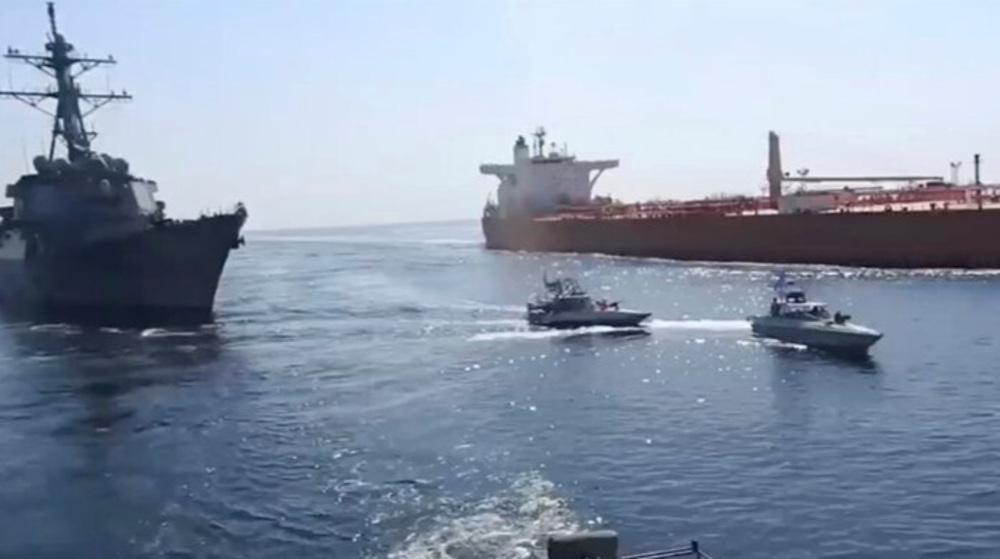
The Islamic Revolution Guards Corps (IRGC) has compelled US forces stationed in the Sea of Oman to retreat and leave the area after they fired at an Iranian merchant ship, a report said.

According to a report by Mehr news agency on Sunday, US naval forces stationed in the waters surrounding the Sea of Oman fired at an Iranian merchant ship to force it to return to the Iranian territorial waters.

It added that the US move was in response to the closure of the Strait of Hormuz and the return of Indian and British merchant ships as well as the control measures by the IRGC.

However, it emphasized, the Americans were forced to retreat and leave the area following the “timely presence and rapid response” of the IRGC naval units in support of the Iranian ship.

The US announced a naval blockade on Iran after failing to reach its military objectives in a joint war of aggression with Israel against the country that started in late February.

The move came in response to Iran’s effective imposition of restrictions on transit via the Strait of Hormuz, a key waterway in the Persian Gulf which is responsible for a fifth of global oil demand.

Iran on Friday briefly eased its restrictions on the passage of non-hostile commercial shipping in the Strait amid efforts to negotiate a permanent end to the war.

“However, due to the violation of the ceasefire conditions, and as the American adversary has not lifted the naval blockade on Iranian vessels and ports, the Strait of Hormuz has been closed as of this evening until this blockade is removed,” the IRGC said.

Earlier on Sunday, Tasnim news agency reported that Iranian Armed Forces intercepted two oil tankers sailing under the flags of Botswana and Angola in the Strait of Hormuz and turned them back.

[…]

Via https://www.presstv.ir/Detail/2026/04/19/767185/IRGC-forces-US-troops-to-leave-Hormuz-Strait-after-attack-on-Iranian-ship-Report%C2%A0

Israel attacks three nations for alleged backing of Iran

Israel attacks three nations for alleged backing of Iran

RT

19 Apr, 2026 15:19

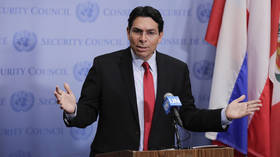
Israel’s ambassador to the United Nations has lashed out at his French, Chinese, and Pakistani counterparts, accusing their countries of effectively backing Iran by allegedly striking deals to secure safe passage through the Strait of Hormuz.

The rebuke appears to stem from media reports which recently indicated that commercial vessels from all three countries were able to transit the Strait of Hormuz during the blockade, in some cases with Iranian authorization, despite broader restrictions on shipping imposed by Tehran.

“I asked the French ambassador: How much money did you pay Iran to move ships safely through the Strait of Hormuz?” Danny Danon said in a post on X shortly after speaking at the UN General Assembly session on the Strait of Hormuz blockade.

“Surprisingly, he had no answer,” he wrote, adding: “The ambassadors of China and Pakistan also had no answer.”

Navigation through the Strait of Hormuz, a key route handling around 20% of global oil and liquefied natural gas flows, has been disrupted since Tehran effectively blocked the waterway in response to the US-Israeli bombing campaign that began on February 28.

On Friday, Iran opened the Strait to all commercial vessels, framing the move as part of ceasefire arrangements linked to the Israel–Lebanon truce, but closed it again the following day. The decision came as US President Donald Trump said the US blockade on Iranian ports and shipping would remain in force until a peace deal is reached. Washington imposed the restrictions after bilateral talks in Pakistan collapsed last weekend.

In March, Iran said that vessels of India, China, Russia, Iraq, Pakistan, and Sri Lanka would be allowed to pass through the crucial waterway. Beijing is ranked as the biggest buyer of Iranian oil and most of its supplies pass through the chokepoint. At the same time, Malaysian authorities thanked Tehran for allowing the passage of the country’s ships.

In April, the Financial Times reported, citing the tracking data, that a container ship owned by a French shipping company had sailed through the Strait of Hormuz along with several other ships.

At the UN, France previously voted in favor of resolutions condemning Iran’s blockade of the strait, China either vetoed the measures or voted against critical wording, while Pakistan abstained.

[…]

Via https://www.rt.com/news/638717-israel-iran-china-pakistan-france/

Iran rebuffs Trump announcement of new peace talks

Ships and tankers in the Strait of Hormuz off the coast of Musandam, Oman, April 18, 2026. REUTERS/Stringer/File Photo

WASHINGTON/ISLAMABAD, April 19 (Reuters) – Iran rejected new peace talks with the United States, its state news agency reported on Sunday, hours after U.S. President Donald Trump had said he was sending envoys to Pakistan for talks and would strike Iran unless it accepted his terms.

Trump posted on Truth Social that his envoys would arrive on ‌Monday evening for negotiations, a timetable that would leave only a day for talks to make progress before a two-week ceasefire ends.

“We’re offering a very fair and reasonable DEAL, and I hope they ‌take it because, if they don’t, the United States is going to knock out every single Power Plant, and every single Bridge, in Iran,” he wrote. “NO MORE MR. NICE GUY!”

Iran’s official IRNA news agency cited no specific source in its report that Iran had ​rejected the talks.

“Iran stated that its absence from the second round of talks stems from what it called Washington’s excessive demands, unrealistic expectations, constant shifts in stance, repeated contradictions, and the ongoing naval blockade, which it considers a breach of the ceasefire,” IRNA wrote.

The White House did not immediately respond to a request for comment on Iran’s rejection of the talks.

STRAIT OF HORMUZ STILL SHUT

A White House official had said the U.S. delegation would be headed by Vice President JD Vance, who led the war’s first peace talks a week ago, and also include Trump’s envoy Steve Witkoff and son-in-law Jared Kushner. Trump had initially told ABC News and MS Now that Vance would not go.

The apparent ‌diplomatic setback came with shipping still blocked in the Strait of Hormuz, ⁠and could set the stage for a renewed surge in oil prices when markets reopen after the weekend within a few hours.

Iran’s chief negotiator, Mohammad Baqer Qalibaf, had earlier said the two sides had made progress but were still far apart on nuclear issues and the strait.

Iran has blocked the strait to ships other than its own since ⁠the United States and Israel attacked on February 28. It announced on Friday that it would reopen the waterway. But it reversed that decision on Saturday after Trump declined to lift a U.S. blockade of Iranian ports.

[…]

Via https://www.yahoo.com/news/articles/trump-iran-cite-progress-talks-010120693.html

Thousands of Israelis Rally Against Netanyahu in Tel Aviv and Other Cities

Thousands of Israelis rallied in Tel Aviv and other cities to demand an inquiry into Prime Minister Netanyahu’s cabinet failures, accusing him of pursuing aimless, prolonged wars and abandoning soldiers and civilians to die.

Via https://t.me/presstv/186248

Iran war ‘supercharges’ deterioration in Israel’s ties with US

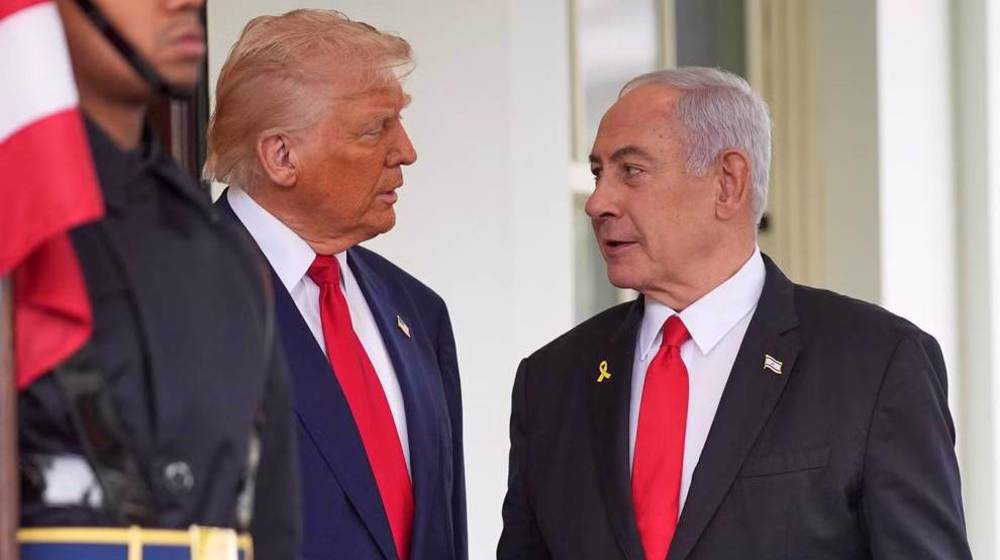
US President Donald Trump (left) meets with Benjamin Netanyahu of Israel at the White House, April 7, 2025, in Washington.

Press TV

April 18, 2026

The joint US-Israeli military aggression against Iran “supercharges” deterioration in the regime’s relations with Washington, as President Donald Trump’s failure to secure a victory accelerates a historic shift in both public opinion and the broader political landscape, says a report.

According to US publication Axios, a dramatic wave of opposition is sweeping through the US political landscape, signaling a decisive break in Washington’s decades of unconditional military backing for the Israeli regime.

Israeli Prime Minister Benjamin Netanyahu, it said, is “torching” Washington’s support for Tel Aviv for a generation as the war he dragged the US into “supercharges a deterioration in relations with the US.”

According to Axios, Netanyahu “is wreaking havoc on Israel’s standing with Americans.”

The news outlet wrote that the regime’s polling collapse among younger Americans is now hitting the US Congress, too.

It said lawmakers who started out staunchly pro-Israel are becoming increasingly vocal critics.

“We need to have a discussion about how to normalize that relationship and what change is necessary; there’s no doubt about that,” Axios quoted Rep. Jason Crow as saying.

According to the report, every Senate Democrat who’s eyeing a 2028 presidential run voted against arms sales to the Israeli regime in votes earlier this week.

Support for unconditional military aid to Israel has fractured dramatically, with 40 members voting on a resolution to block arms sales, up from just 15 on a similar vote last April.

Netanyahu is “destroying the bipartisan nature in terms of support for Israel,” according to Sen. Ruben Gallego.

Meanwhile, some Democrats on the House are turning against funding for Israel’s Iron Dome missile defense system, a move that according to Rep. Maxwell Frost was “seen as insanely fringe four years ago.”

Many Democrats who voted for Iron Dome in 2021 told Axios “they’re done providing financial aid” for the Israeli regime.

Launching an unprovoked war on Iran along with the Israeli regime on February 28, Trump failed to offer even a shred of credible explanation to the American nation.

Instead, the Trump administration kept offering justifications that have ranged from thwarting what they claimed to be an imminent attack by Iran to crippling its nuclear program and regime change.

Despite Trump’s repeated claims of victory over Iran, the war has increasingly been viewed within Washington and across the world as a total failure.

The military aggression has not only failed to achieve its primary military objectives, but it has also drawn the United States into a costly and open-ended quagmire.

[…]

Via https://www.presstv.ir/Detail/2026/04/18/767125/Iran-war-supercharges-deterioration-in-Israel-s-ties-with-US-Report