The Most Revolutionary Act

Uncensored updates on world events, economics, the environment and medicine

The Most Revolutionary Act

Secret CIA Presence on January 6 Confirmed

Kit Klarenberg

Few issues, other than John F. Kennedy’s assassination was a conspiracy, 9/11 was an inside job, and Jeffrey Epstein didn’t kill himself, unite Americans more than belief that the January 6th 2021 Washington DC “insurrection” was incited by government provocateurs. While initially Biden administration officials aggressively exploited the incident for partisan political purposes, with Vice President Kamala Harris ludicrously likening the unrest to Pearl Harbor and 9/11, it subsequently dropped off the mainstream radar without trace.

An official desire to suppress awkward questions about what precisely happened that fateful day, and why, may account for this omertà. After all, a steady stream of clues suggesting the “insurrection” may have been fomented by shadowy state actors has trickled into the public domain ever since. The latest is quite a bombshell. Legal activist group Judicial Watch has unearthed 88 pages of Bureau of Alcohol, Tobacco, Firearms and Explosives (ATF) records proving CIA operatives were covertly present on January 6th.

The documents, secured via court order after the Department of Justice ignored Freedom of Information requests, include a series of text messages between Bureau agents, in a group chat titled “January 7 Intel Chain”. The exchanges contain two references to direct CIA participation in the official response to the day’s tumult. One message states “two CIA bomb techs” were assisting with “a pipebomb scene” in DC. The other mentions “several CIA dog teams on standby” in the vicinity of the “insurrection”.

In theory, despite the CIA’s constitutional prohibition on domestic activities – which the Agency regularly breaches with impunity in any event – there is nothing necessarily suspicious about its covert presence in Washington DC on January 6th. As an official factsheet notes, Langley’s “K9 unit” has been routinely deployed to “external events” on US soil, including Super Bowls, Miss Universe Pageants, Major League Baseball Games, and the Olympics. Moreover, there were numerous pipebombs secreted in the US capital, requiring expert removal.

However, the factsheet reveals bomb disposal isn’t the CIA K9 Unit’s sole, or even prime responsibility. Its avowed “mission” is to: “protect the worldwide assets and personnel of the CIA [emphasis added]. K9 teams are trained to detect all types of explosives by searching delivery trucks, buildings, vehicles, packages, and assisting CIA police officers [emphasis added].” When one considers that whoever laid pipebombs in DC remains at large, suspicions about clandestine federal machinations on January 6th can only multiply.

Phantom Bomber

The FBI announced that it had difused “viable” pipebombs left at the Democratic and Republican National Committee buildings in DC mere hours after the Capitol’s breach on January 6th, and before the National Guard arrived on the scene. The Bureau subsequently published “images and video of the suspect, the suspect’s backpack, the suspect’s shoes, the explosive devices, and a map of the route the suspect walked the night the pipe bombs were placed.”

A $500,000 reward was offered for information leading to the suspect’s prosecution. Fast forward three years, and the sum remains unclaimed. A renewed call for witnesses issued by the FBI January 4th 2024 noted that in the intervening time, “a dedicated team of FBI agents, analysts, data scientists, and law enforcement partners has worked thousands of hours conducting interviews, reviewing physical and digital evidence, and assessing tips from the public.” These leads reportedly helped the Bureau “advance the investigation.”

It is unclear how, given the culprit hasn’t been caught. Why pipebombs were placed at the DNC and RNC is likewise uncertain. Then-Capitol police chief Steven Sund, and several US lawmakers, have speculated that the purpose was to divert law enforcement from the site of the looming “insurrection”. As it was, three separate police teams posted there were dispatched to the RNC, leaving just one squad at the Capitol building, right when Trump supporters were massing at barricades.

Curiously, the RNC pipebomb was, apparently, found via pure happenstance. A local US Department of Commerce employee working remotely decided to use her lunch hour to do laundry. Her apartment block’s laundry room was situated at the back of the building, accessible via an alleyway shared with the RNC. Having dropped her clothes off and returned home at noon, she went back to use a dryer at around 12:45pm, when she spotted the device, 20 minutes before its allegedly timed detonation.

Once alerted, police arrived almost immediately, a crew of ATF and FBI agents in tow. If the bomber’s objective truly was to divert law enforcement from the Capitol, this can only be considered miraculous timing, given at 12:54pm, heavily surveilled Proud Boys activist Ryan Samsel breached the barricades, leading to a deluge of Trump supporters following suit, and the subsequent “insurrection”. Were it not for a US government employee’s chance find minutes before, January 6th may have proceeded rather differently.

‘Proper Outcome’

The DNC pipebomb was discovered at roughly 13:15pm, authorities having had the foresight to check that building’s grounds too, on a whim. Given it didn’t explode in the intervening minutes, its timer was apparently set later. The FBI states the two devices were laid “between approximately 7:30pm and 8:30pm” on January 5th. This lack of clarity is peculiar, given extensive footage of the suspect planting the pipebombs, and the Bureau mapping their movements to and from the area with precision.

Washington DC is the second-most CCTV-saturated US city by some margin, which is remarkable given its small size. There are 35,082 local surveillance cameras in total, or 55.5 cameras per 1,000 citizens. Evidently, the feeds are not monitored in real-time, for the suspect made no attempt whatsoever to conceal their activities. A hooded and masked individual openly secreting something at two highly sensitive, well-protected political sites in succession would surely arouse some suspicion if so.

That the pipebomber placed highly destructive payloads at the DNC and RNC so brazenly on January 5th 2021 without incident, entirely unnoticed, before disappearing into the ether is extraordinary. With Trump’s “Save America” rally scheduled for the next day, DC was filling up with his supporters. That evening, they staged a demonstration in Freedom Plaza, which turned violent when Antifa and Black Lives Matter counter-protesters arrived, producing clashes, broken up by police. The city was already on high alert.

Over the prior week, the FBI and its field offices consistently warned of armed protests in every state, and plans by Trump supporters that included violence. On January 5th, the Bureau’s Norfolk, Virginia HQ emailed Capitol police an internal Situational Information Report, subject line: “potential criminal activities in the Washington DC area planned for tomorrow.” It contained multiple social media posts indicating some “Save America” attendees had unambiguously malign intentions. One boldly declared:

“Be ready to fight. Congress needs to hear glass breaking, doors being kicked in, and blood from their [Black Lives Matter] and Pantifa slave soldiers being spilled. Get violent. Stop calling this a march, or rally, or a protest. Go there ready for war. We get our President or we die. NOTHING else will achieve this goal.”

This FBI warning may account for why, according to mainstream media reports published in the immediate aftermath of January 6th, Capitol Hill staffers were urged by supervisors not to attend work that day, due to greatly heightened risk levels. But it does not explain DC authorities simultaneously failing to deploy basic precautions, such as frozen zones and hardened barriers, commonly used for major events in the area.

By contrast, it seems the outgoing administration was highly security conscious on January 6th. In January 2022, Trump’s Deputy Chief of Staff Anthony Ornato told House Select Committee on the January 6th Attack investigators that his superior, Mark Meadows, pressured DC Mayor Muriel Bowser to request a sizeable National Guard presence on the day, in the event of violent clashes with counterprotesters erupting again. He claimed Trump suggested up to 10,000 peacekeepers would be necessary.

Ornato also revealed Trump administration frustration with Acting Secretary of Defense Christopher Miller’s slow deployment of the National Guard on the afternoon of January 6th. Once the Capitol was breached, Meadows ordered Miller, “get them in here, get them in here to secure the Capitol now.” Ornato’s exculpatory testimony was concealed until March 8th this year. Two months earlier, Committee chair Liz Cheney falsely claimed there was “no evidence” Trump ordered the Capitol to be protected.

[…]

Via https://www.kitklarenberg.com/p/secret-cia-presence-on-january-6th?r=83qir


Europe: soldiers and young people flee armies


By Pierre Duval – Continental Observer – 26.03.2024

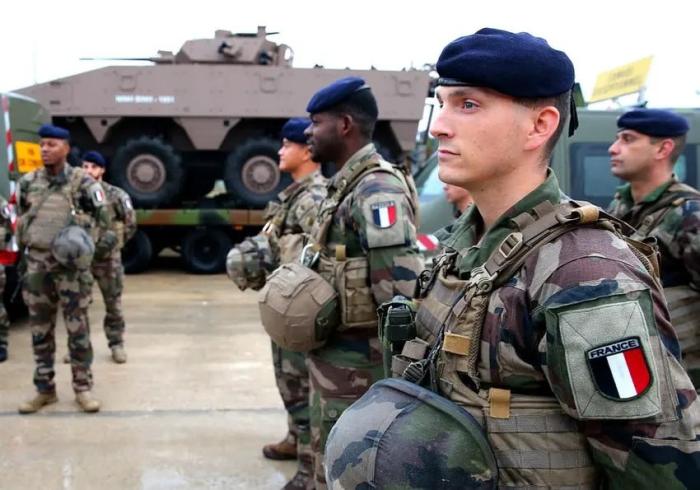
The populations from immigration are not interested in the military uniform to lead the wars of the Occident, nor are the other young people of these countries. Most migrants support Russia. Calls by NATO leaders to recruit soldiers in a crusade against Russia are shunned by recruits who have begun to flee.

French Army Minister Sebastien Lecornu, unveiled his plan to end the increase in departures in the French army. «It is no longer a question of recruiting new soldiers so much as of persuading existing troops not to resign», states Politico. «These conversations now exist in all capitals, in all democracies that have professional armies without conscription», emphasizes the English-speaking media. Western armies can no longer recruit and lack soldiers.

Even Germany is affected. A recent annual report submitted to the German Parliament showed in 2023, some 1,537 soldiers left the Bundeswehr, reducing it to 181,514 troops. Europeans do not want to die for a war their elites want. This reflects the resistance of the populations in Europe against the WAR of the EU against Russia.

In France, according to official data, the military recruit remains in the armed forces for a year on average, less than before the outbreak of the military conflict in Ukraine. In the UK, the annual shortage of personnel is 1,100 men, equivalent to two infantry battalions. The British government signed a recruitment contract with a private company Capita, but this did not succeed.

“The problem is not in being recruited, but in the retention of soldiers, we must also preserve their families’, chief of naval operations of the US Navy,” admiral Lisa Franchetti announced at a conference in Paris. “It appears that the wives of military personnel have begun asking for divorce more often.”

“To train and retain the right people once they have been recruited has become the great challenge of an army without conscription,” stressed the Minister at a seminar of those responsible for all military services. In 2023, the French military finished with 3,000 unfilled posts.

The French plan provides assistance to military personnel in finding housing, access to health care and childcare services’. Married couples in which the husband and wife both work in the Defence Ministry, even if one of them is a civilian, will be able to change their position, i.e., by mutual consent.

One of the main measures of the French plan aims to increase the attractiveness of military service is to increase pensions and wages. «But the problem is that the conditions of employment are simply not so attractive, with chronic overtime, absences of several months from home and missed recovery periods», adds Politico.

The new Polish government recently announced a 20% increase in military salaries, seeking to maintain at least the current level of troops. The minimum monthly salary of the soldier will increase from 1,150 euros to 1,394 euros.

By the end of the year, the number of the Polish military is expected to increase to 220,000 people, as reported par Rzeczy Do in reference to the statement by Polish defence minister Wladyslaw Kosiniak-Kamysz. Thus, the overall objective is to increase the number of the Polish military to 300,000 people. But even the wage increase is not motivating the average Pole to shed his blood on the fields of Ukraine.

In Germany, the Scholz government wants to increase the number of its armed forces to 203,000 by the early 2030s, but recruitment is increasing very slowly, warns Politico. Eva Hogl, Bundestag Military Commissioner, stated that it was necessary to restore conscription to military service, and that it is better to attract more women to the military  Last year’s legislation aims to make military conditions more attractive for women, especially with regard to the increase in support for children.

In Denmark, the population is so adverse to serving in the army that the government has decided to extend compulsory military service to women and to increase its service from 4 to 11 months.

The UK has also recently admitted that it is having difficulty finding recruits. The UK Defense Journal reports that the British army has not met its recruitment targets every year since 2010. According to a recent YouGov survey, 38% of Britons under the age of 40 say that they will refuse to serve in the armed forces in the event of a new world war, and 30% say they will not serve even if their country is threatened with an imminent invasion.

“The problem is common to all European countries, including France, Italy and Spain,” stated Vincenzo Bove to Euronews, professor of political science at University of Warwick in the UK. “I do not think only one country is spared by this situation. ”

[…]

Bove referred to recent polls that show that the youth of the European Union is massively opposed to wars, against the increase in military spending and against military operations abroad’. They are also more individualistic and less patriotic than ten years ago. And the population in Europe is aging and shrinking. The armies of NATO have also decreased to adapt to these changes: the British, Italian and French armies are now almost half of what they were 10 or 20 years ago.

[…]

Via https://www.observateurcontinental.fr/

Putin: A Champion of the Global South?

Moscow’s defiance of Western elements, particularly the economic sanctions and the military aid to Ukraine, has not only set an example for other nations to follow but also eroded the legitimacy of the West’s ideological supremacy.

On March 18, Vladimir Putin emerged as the winner of Russia’s presidential elections, marking his fifth term as President of Russia. This occurred despite complications. While it is common for Russia to be the target of cyber-attacks, this year has witnessed record levels of such breaches on the country’s electronic voting platform, with most attacks stemming from the US.

Putin’s landslide victory solicited positive reactions from many across the Global South. Leaders from multiple countries, including Iran, China, South Africa, Belarus, the DPRK, members of the Commonwealth of Independent States (CIS), and several Latin American nations have welcomed his reelection.

The Collective West, on its part, has been eerily silent about the win. A few exceptions surfaced on the X platform, with, for instance, President of the European Council Charles Michel reiterating the standard accusation that Russian elections are undemocratic. “No opposition. No freedom. No choice,” the tweet read. So much for being disgruntled. Nevertheless, the bloc has obvious reasons for displaying such dismay.

Ukraine war

Two years into the war in Ukraine, discussions on a potential peace deal involving the withdrawal of Russian troops in exchange for retaining territory have begun to pick up speed. The costs of this war were paramount for both the West and Russia, but particularly for the EU. The de-industrialization accompanying sanctions on Russia has resulted in disastrous outcomes for the Euro economy, pushing millions into financial insecurity, while the bloc grapples with efforts to restore economic growth.

More concerning is a decline in US support which has placed the EU in an awkward position. Although the White House recently unveiled a stopgap aid plan for Ukraine valued at $300 million, prior delays in aid delivery, fueled by congressional disputes over the border crisis, have left NATO allies questioning the US’s commitment to the conflict.

During a recent address before Western leaders at a Ukraine-focused event, French President Emmanuel Macron echoed these concerns by questioning the wisdom of entrusting Europe’s future to the American electorate. “Should we entrust our future to the American electorate? My answer is no. Let’s not wait for the outcome,” he said.

When Macron mentioned the possibility of deploying NATO forces in Ukraine, some perceived his statement as controversial or bold, only for reports to later emerge and reveal that NATO forces are already in Ukraine. But given the fact that the Ukraine war is not considered a de facto war from the Russian perspective, one can only speculate about the potential scale of a full-fledged conflict with the NATO alliance.

Western Hegemony

From a Global South perspective, the true achievement lies in Putin’s defiance of NATO. It lies in challenging the forces that for years have kept the masses in a state of social, ideological, and historical paralysis. Where the West sees aggression and destabilization, the South sees retribution. The fact is that Russia was deceived by the West over the Minsk agreement.

If one finds it peculiar that the Ukraine war garners very little to no support in the South, the case is far from mere coincidence. The extensive legacy of the West spanning hundreds of years serves as a testament to the destructive nature of its foreign policy. In the Global South, where the collective memory of millions who perished under the weight of imperialism and military aggression remains vivid and lucid, the realities at play are crystal clear.

The Ukraine war is not merely a war for the preservation of Russia’s national security but also a war for the thousands of mothers who gave birth to malformed babies due to contamination from NATO’s use of depleted uranium ammunition in Iraq, Libya, Afghanistan and Serbia, a type of shell which has been shown to increase cancer rates and other forms of disease in targeted countries. It is a war for those thousands of people who succumbed to their illnesses as a result of sanctions that prevented the entry of crucial medical aid. It is also a war for the comrades in Iran, Indonesia, and several countries across Latin America and Africa who died resisting injustice and oppression at the hands of imperialist stooges.

Though it may be the case that Ukraine emerged victorious in the propaganda game, that victory is primarily recognized in the West. Russia, on the other hand, is emerging not only as a victor in the military conflict but also as a trailblazer in shaping a new world order.

Moscow’s defiance of Western elements, particularly the economic sanctions and the military aid to Ukraine, has not only set an example for other nations to follow but also eroded the legitimacy of the West’s ideological supremacy. Russian economic resilience has effectively demonstrated that sanctions can be mitigated and that capital control measures, along with a basket-based currency, can be far more effective than the neoliberal charlatans preached by the West.

With the establishment of new transaction mechanisms and the ingenuity that accompanies sanction evasion, the fear of sanctions no longer seems to weigh as heavily as it once did.

The Ukraine war marks a pivotal moment in history as it signals the transition from a unipolar world to a multipolar world order. The gradual formation of an alternative financial market by the BRICS organization further compounds these developments. Nothing can better convey the end of US-EU financial hegemony than the sense of panic surrounding the use of Russia’s frozen assets.

Asset Seizure

Approximately $300 billion in Russian securities and cash have been frozen by the EU, G7 nations, and Australia since the start of the war — with the majority of funds held in the EU. While there was a belief that these funds should remain inaccessible to Russia unless it assists in Ukraine’s reconstruction, there was disagreement over the legality of outright asset seizure.

To resolve this dispute, Western leaders sought guidance from a team of international law experts and practitioners, who unanimously agreed in a joint letter issued in February that the seizure of assets is entirely legal, citing Russia’s ongoing special military operation in Ukraine.

Just a day after the joint letter, the International Monetary Fund (IMF) warned that plans to seize Russia’s assets could pose a significant threat to the global monetary system and entail unforeseen risks, which include “risks of litigation, risks of countermeasures, and risks to the international monetary system.” This implies that if the confiscation is carried out, it could push the Global South further away from reliance on the dollar.

Similar sentiments were echoed by Florian Philippot, the leader of the French Patriots party, who openly stated that the use of Russia’s frozen assets is “illegal and foolish,” noting that Russia possesses more Western assets, and cautioned that if the EU proceeds with seizing Russian assets, it could prompt Russia to retaliate in kind.

Other senior officials have expressed the pressing need for Brussels to establish an “emergency mechanism” in case the initiative to support Kiev through the use of Russian funds encounters unforeseen consequences. They warned that Euroclear Bank, which hold Russian funds and holds over €37 trillion in assets globally, could face liquidity issues if overwhelmed by a multitude of lawsuits.

The US, on its end, has voiced some uncertainties regarding the issue but has not displayed any signs of concern. At a recent press conference in Brazil, US Treasury Secretary Janet Yellen acknowledged that the West’s unfreezing of Russian assets is likely to pose a threat to global financial stability, but downplayed the significance of the matter.

Yellen further noted that the global economy lacks viable alternatives to the financial architecture centered around the dollar, euro, and yen, and underscored the necessity for collaborative efforts within the G7 to examine different approaches with regard to the use of Russian assets.

US Deputy Treasury Secretary Wally Adeyemo likewise rebuked such risks, stating that the strength of the US economy prevents it from being undermined by the implementation of sanctions.

Balancing Risks

Despite all odds, the EU eventually agreed to access Russian funds but opted only to tap into the windfall profits accrued from interests. Of the sum seized by Euroclear, which roughly accounts to €191 billion ($205 billion), the funds have accrued over €4.4 billion in interest over the past year. The bloc intends to use this money in order to purchase weapons for Ukraine.

The decision to utilize only the profits instead of the full amounts reflects genuine concerns regarding potential repercussions. These concerns extend beyond legal ramifications to include significant military implications.

Currently, Russia produces three times more artillery shells than both the EU and the US combined, and this occurs despite facing a barrage of sanctions. If Russia were to access Western funds in its Central Bank and allocate these resources to expand its military operations, it would inevitably result in a substantial shift in the balance of military power.

[…]

Via https://english.almayadeen.net/news/politics/putin–a-champion-of-the-global-south

1815: Restoring the French Monarchy

Louis XVIII : les rois de France en 1 minute | Éditions VoxGallia

Episode 47 Emerging Political Battles

Living the French Revolution and Age of Napoleon

Dr Suzanne M Desan

Film Review

According to Desan, our most important political labels date from the French revolution. The terms “left” and “right” stem from the seats assigned to the revolutionary Jacobins and the more monarchist Girondins in the National Assembly.* Likewise early concepts of conservatism and liberalism also date from the French revolution. Louis XVI’s brother the Count of Artois (who succeeded Louis XVIII as Charles X) and his supporters were instrumental in the emergence of conservatism on the world stage. Prior to the French revolution, there was no need to define conservative beliefs because they were taken for granted.

In the early 19th century thee included a belief in

  • divine providence as a force underpinning social cohesion and morality (in the eyes of the Catholic church, revolution was a sin).
  • the necessity of preserving traditional values and beliefs (through uniform religious beliefs) to guarantee cultural integrity
  • a need for hierarchical power because men were too wicked to be free.

Contrariwise 19th century French liberalism supported a constitutional monarchy working in concert with a legislature elected by men with property. Lafayette (exiled during the revolution for supporting a constitutional monarch) returned to Paris under the restoration and resumed leadership of the National Guard. Lafayette and other liberal leaders represented elite elements of the middle class. They rejected full equality because they blamed the lower classes and their rabble rousing for the terror.

Louis XVIII tried to work with the liberals until the assassination of a relative who was second in line for the throne. In response, the king fired the moderates in his government, introduced heavily press censorship electoral reforms that increased the power of the ultra-royalists.

Louis XVIII died in 1824. When Charles X took the throne, he paid emigres for land they lost during the revolution, closed down newspapers and reduced the power of the Chamber of Deputies.

This forced liberals, republicans and Bonapartistes (including Lafayette) to practice their politics in secret underground organizations. Ironically this occurred simultaneous with a revival of Napoleonism and the ubiquitous appearance of medals, plates and snuff boxes with his image – along with rumors he was about to make a comeback. In 1823, Count Emanuel De Las Cas, Napoleon’s companion in St Helena, published a 16-volume memoir of the emperor’s life.

Ongoing Revolutionary Struggle in France

France would go on to have three more revolutions in 1830, 1848 and 1871.*

Following 1814, the rise of a new middle class enabled a class-based society to replace feudalism, even though France was much slower at industrializing than Britain. In 1815, nobles still owned one-fifth of French land.

Under Louis XVIII, France enjoyed a constitutional monarch with the king appointing an upper Chamber of Peers and male property owners electing a Chamber of Deputies. Out of France’s total population of 35 million, only 100,000 men qualified to vote and only 10,000 qualified to run as deputies.

Royalists in the south of France unleashed the White Terror to harass and murder (300 total) republicans and supporters of Napoleon. Louis XVIII purged more than 56,000 pro-Napoleon troops and put more that 5,000 on trial. More than half of them were convicted. The general who supported Napoleon’s return from Elba faced the firing squad.

During the 1830 revolution, the king fled, and eventually the liberal constitutional monarch Louis-Phillipe I took the throne.

Following the 1848 revolution, the French people elected Napoleon’s nephew Louis Napoleon-Bonaparte as president, but he abolished the republic to declare himself emperor.


*See French Revolution: The Thermadorian Revolution and the Gilded Youth

** Timeline

  • 1814-1830 Restoration of French monarchy
  • 1830-1848 Liberal constitutional Monarchy
  • 1848-1852 Second Republic
  • 1852-1870 Second Empire

Film can be viewed free with a library card on Kanopy.

https://www.kanopy.com/en/pukeariki/watch/video/149323/149417

SHATTERING THE VACCINE PARADIGM WITH DR. SUZANNE HUMPHRIES

Highwire with Del Bigtree | March 28, 2024

Internist & Board-Certified Nephrologist, Suzanne Humphries, MD, shares details on the 10th Anniversary Edition of the groundbreaking book she Co-Authored, Dissolving Illusions, and how the vaccine safety space has changed in a post-COVID world where doctors are speaking out in droves over controversial topic of vaccine injury.

Via https://www.bitchute.com/video/WLo7VJHVBboQ/

Do the Pertussis Vaccines Used in the U.S. Stop Infection and Transmission of Whooping Cough?

Injecting Freedom by Aaron Siri | March 22, 2024

Your bite-size dose of immunity against vaccine misinformation. Spread the truth.

Do the pertussis (whooping cough) vaccines used in the United States stop infection and transmission of the pertussis bacterium?

“Yes” or “No”?

When picking an answer, keep in mind that the pertussis vaccine is part of a combination vaccine (DTap or Tdap) mandated to attend grades K-12 in every U.S. state – it is the “P” in DTaP and the “p” in Tdap – and the justification for this rights-crushing mandate is the belief that the vaccine prevents transmission of pertussis in the school setting.

The answer is “No”! In 1999, the CDC recommended “exclusive use of acellular pertussis vaccines for all doses of the pertussis vaccine series” and that vaccine does not prevent transmission. This is explained in an FDA study titled “Acellular pertussis vaccines protect against disease but fail to prevent infection and transmission in a nonhuman primate model” and confirmed in a consensus paper explaining that:

“aPVs [pertussis vaccines] … cannot avoid infection and transmission. … aPV pertussis vaccines do not prevent colonization. Consequently, they do not reduce the circulation of B. pertussis and do not exert any herd immunity effect.”

The CDC and FDA, in formal responses to the Informed Consent Action Network (ICAN), confirm the foregoing, as does this paper explaining:

“That vaccination does not prevent B. pertussis infection in humans, nor the circulation of the organism in human populations in any important manner, comes from the observation that the inter-epidemic intervals have not changed in a major way since the implementation of mass vaccination.”

Incredibly, the immunity provided by pertussis vaccines, while potentially reducing symptoms of the disease, actually renders those receiving these products susceptible to repeated infection with pertussis; meaning, it increases the potential to spread this bacterium because it renders those vaccinated repeat-asymptomatic-carriers. (See this study, “Lack of mucosal immune responses after aPV administration favor infection, persistent colonization, and transmission of the pathogen”, and this study, “Because of linked-epitope suppression, all children who were primed by DTaP vaccines will be more susceptible to pertussis throughout their lifetimes, and there is no easy way to decrease this increased lifetime susceptibility.”)

In any event, immunity from the pertussis vaccine wanes rapidly, even after six doses in childhood! As the CDC explains, a study of pertussis vaccine immunity found that four years after five doses of DTaP and one of Tdap “vaccine effectiveness was 8.9%.” Nonetheless, the CDC makes additional doses of the pertussis vaccine optional in adulthood.

[…]

Via https://aaronsiri.substack.com/p/do-the-pertussis-vaccines-used-in

Baltimore Bridge Collapse Impacts US Supply Chains

MIchael Snyder

When I awoke early on Tuesday morning, I was stunned to learn that the Francis Scott Key Bridge in Baltimore had collapsed.  We are being told that it was a tragic “accident” and that there is no evidence that any foul play was involved.  Hopefully that is true.  But no matter how it was caused, this tragedy is going to have an enormous impact on U.S. supply chains.  And of course this comes at a really bad time, because Houthi missile strikes in the Red Sea and low water levels in the Panama Canal have been putting a tremendous amount of strain on global supply chains recently.

According to Bloomberg, it appears that the Port of Baltimore will be “out of commission indefinitely”…

The Port of Baltimore — the biggest handler of US imports and exports of cars and light trucks — looks to be out of commission indefinitely. The resulting bottleneck could accelerate a shift of goods through West Coast ports. Another crucial question: Which other ports have spare capacity to handle the Ro-Ro vessels that carry automobiles if Baltimore is closed for an extended period.

This is a really big deal, because over 750,000 vehicles came through that port last year alone…

The port is the busiest in the U.S. for car shipments, handling more than 750,000 vehicles in 2023, according to data from the Maryland Port Administration. It is also the largest U.S. port by volume for handling farm and construction machinery, as well as agricultural products.

In addition, a whole host of prominent retailers are very dependent on the Port of Baltimore…

Retailers like Home Depot, Bob’s Furniture, IKEA, and Amazon are just some of the companies that use the port to import goods. Other top imports include sugar and gypsum.

“This will have an impact for trade all along the East Coast and it will continue until we know how quickly” the port can reopen, said Richard Meade, editor-in-chief of the shipping journal Lloyd’s List.

Vessels were already being diverted to New York and down to Virginia on Tuesday, said Meade. “There will be dozens of diversions in the next week and hundreds in the coming months as long as Baltimore is shut down.”

This isn’t the end of the world, and shipments can certainly be diverted to other ports.

But we are talking about the 11th largest port in the entire nation, and so this will definitely be a serious blow…

More than 52 million tons of foreign cargo, worth some $80 billion were transported out of the port last year, according to Maryland Gov. Wes Moore. The 11th largest port in the nation, Baltimore served an average of 207 calls a month last year, according to the shipping journal Lloyd’s List.

In addition, it is going to take a very long time for the Francis Scott Key Bridge to be rebuilt.

As Lara Logan has pointed out, that section of I-695 was the “second busiest strategic roadway in the nation for hazardous material”…

Second busiest strategic roadway in the nation for hazardous material now down for 4-5 years – which is how long they say it will take to recover. Bridge was built specifically to move hazardous material – fuel, diesel, propane gas, nitrogen, highly flammable materials, chemicals and oversized cargo that cannot fit in the tunnels – that supply chain now crippled.

One expert is projecting that it will take more than two years to rebuild the bridge…

While trade is nimble and will reroute, over the long term the bridge will need to be fundamentally engineered and rebuilt, and that will take years.

“It will be in excess of two years,” said Meade, of Lloyd’s List. “There will be significant disruption and cost to this infrastructure project. In 1977, the bridge cost $60 million. Take in inflation and the rapid pace to redesign and build will increase procurement premiums. This will be a very expensive project.”

I would be shocked if it happens that quickly.

We shall see.

In any event, we are talking about a multi-faceted crisis that is going to be affecting U.S. supply chains for the foreseeable future.

At a press conference following the collapse of the bridge, Transportation Secretary Pete Buttigieg openly admitted that we are looking at a “major and protracted impact on supply chains”…

“There is no question this will be a major and protracted impact on supply chains,” Transportation Secretary Pete Buttigieg said during a Tuesday afternoon press conference in Baltimore.

I think that this is the first time I have ever agreed with Pete Buttigieg on anything.

Sadly, this is just the beginning.

In the months ahead, U.S. supply chains will be hit with additional challenges.

So if there are things that you are planning to purchase, I would do that now.

Before I end this article, there is one more thing that I wanted to mention.

Global supplies of cocoa just keep getting tighter and tighter, and on Tuesday the price of cocoa jumped above $10,000 per metric ton for the first time ever…

Cocoa prices hit a record Tuesday as supply constraints fuel prices higher.

Futures for May delivery were up 3.9% at $10,030 per metric ton, marking the first time the commodity breaks above the $10,000 mark. Cocoa has been on a tear this year, soaring nearly 138%.

Difficult weather conditions and disease have affected production in West Africa, which produces about 70% of the world’s cocoa. The two largest producers, Ivory Coast and Ghana, have been hit by a combination of heavy rain, dry heat and disease recently.

In January, it was less than half that price.

If you love chocolate, stock up on it while you still can.

Of course the same thing could be said about countless other things.

Do you remember the supply chain problems that we experienced a couple of years ago?

Well, what is eventually coming is going to absolutely dwarf that.

Many are using the term “black swan event” to describe the collapse of the Francis Scott Key Bridge in Baltimore, but the truth is that we are moving into a time when there will be one “black swan event” after another.

So get prepared while there is still an opportunity to do so, because the months and years ahead of us are going to be extremely chaotic.

[…]

Via https://theeconomiccollapseblog.com/the-baltimore-bridge-collapse-is-going-to-have-an-enormous-impact-on-u-s-supply-chains/

NATO & New Zealand: European War Machine Comes to the Pacific

Jacinda Ardern (second right) at the NATO summit along with (from left) Australia’s Anthony Albanese, Japan’s Fumio Kishida, NATO’s Jens Stoltenberg and South Korea’s Yoon Suk Yeol. [Source: theguardian.com]

Murray Horton

What does NATO have to do with New Zealand and vice versa? The North Atlantic Treaty Organization (NATO) is what it says on the tin, and New Zealand is about as far away from the North Atlantic as possible. NATO was set up as a united European and North American military counter to the former Soviet Union during the Cold War of the mid to late 20th century.

The Soviet Union collapsed and dissolved into its constituent parts: Its Eastern European satellites enthusiastically signed up with the ideological victors; and its military bloc, the Warsaw Pact (remember that?) which confronted NATO, ceased to exist. But NATO did not cease to exist; rather, it set about finding itself reasons to continue to exist.

Not merely exist, but expand, right up to Russia’s borders, as part of its policy to confront and contain Russia. NATO currently has the most member states (32) in its history. Not content with its European role, with side forays into countries such as Libya and Afghanistan, it is aggressively engaged in carving out a global role for itself. It is assuming some of the role of the U.S. as the world’s policeman.

IP4: That’s Where New Zealand Comes into the Picture

Journalist Andrew Gillespie wrote that geographically, New Zealand cannot be a full member of NATO. But New Zealand has become a ‘partner,’ making up an Indo-Pacific cohort that includes Australia, Japan and the Republic of (South) Korea—known as IP4.The communiqué from the (2023 NATO) summit emphasized the region’s impact on Euro-Atlantic security and our shared commitment to upholding international law and the rules-based international order.

It is important to note the IP4 shared security obligations stem from bilateral treaties and not any one collective agreement. Bilateral relations tie the United States to Japan, South Korea and Australia. For New Zealand, we are tied to this alliance via our neighbors across the Tasman. An additional thread being woven through the group is the AUKUS* alliance, which could ultimately include partnerships with Japan and South Korea.[1]

Gillespie wrote: “While full membership of AUKUS is ruled out by our long-standing nuclear-free policy, New Zealand has expressed interest in joining the second tier of the alliance, which would give us access to a new generation of weaponry.” (Alexander Gillespie, “After being a ‘welcome guest’ at NATO, NZ now needs to consider what our partnership with the alliance really means,” RNZ, July 12, 2023)

The NATO website says: “NATO and New Zealand have been engaged in dialogue and cooperation since 2001. Since 2012, work has been taken forward through an Individual Partnership and Cooperation Programme.” New Zealand’s role as a NATO partner has ratcheted up in the last couple of years.

In 2022 Jacinda Ardern became the first New Zealand prime minister to attend and address a NATO Summit; her Labour successor, Chris Hipkins, did the same in 2023. The Ukraine War has led to New Zealand, once again, getting involved in a European war, providing money, military equipment and training. But the burgeoning New Zealand-NATO relationship not only involves New Zealand going to NATO, but also NATO coming to our part of the world.

Helping NATO to Confront and Contain China

Gorana Grgić wrote in Stuff Magazine: “With NATO so heavily focused on Ukraine at the moment, its interest in a region half-way around the world does raise some questions. Why are these four leaders [i.e., from Japan, South Korea, Australia and New Zealand] becoming regular features at a summit for European and North American countries? First, these countries have been among the most prominent members of the international coalition supporting Ukraine and sanctioning Russia. So, their presence at a security conference where Ukraine will be discussed makes sense.” (Gorana Grgić, “Why is NATO expanding its reach to the Asia-Pacific region?” Stuff, July 11, 2023)

NATO has deemed the Indo-Pacific region to be strategically important to it, in relation to its policy vis-à-vis China. It has been working to formalize its relationship with all four countries with the Individually Tailored Partnership Program. The buzzword is “interoperability.”

“The intensifying and deepening relations between NATO and its Indo-Pacific partners can be interpreted in two ways. First, these partnerships form another important link in the expanding network of diplomatic and security ties between the U.S., its Western allies and the Indo-Pacific region. They complement partnerships like AUKUS and the Quad.” [Wikipedia describes the Quadrilateral Security Dialogue, commonly known as the Quad, as a strategic security dialogue between Australia, India, Japan and the U.S.]

Gorana Grgić writes: “Beyond this, we can also view these agreements in the context of NATO’s evolving outreach with the rest of the world over the past couple of decades. Previously, NATO’s collaborations with Indo-Pacific countries involved pooling resources for security operations in non-NATO members, such as in the Balkans in the 1990s and Afghanistan in the 2000s.”

“Nowadays, strengthening these partnerships is seen as a vital part of responding to the new challenges and threats posed by Russia and China. Of course, this does not mean we will see NATO military equipment or troops permanently stationed in the Indo-Pacific. Nor would it be realistic to expect the Indo-Pacific countries’ military contributions to Ukraine to lead to a more permanent set-up in Europe. Similarly, while all of this is aimed at intensifying security cooperation among US allies in the Indo-Pacific, this is in no way a prelude to the creation of a NATO-like collective defence pact in the region.” (Grgić, ibid.)

So, NATO has added confronting and containing China to its agenda of containing and confronting Russia—presumably on the basis that “my enemy’s friend is, therefore, also my enemy”

NATO Insists Its Members and Partners Increase Military Spending

Andrew Gillespie wrote: “The other thread that ties NATO and the partner countries together is military spending. The original goal was that each NATO country spend 2% of its gross domestic product (GDP) on the military. At [the 2023 summit in] Lithuania, NATO emphasized the need for partners to invest ‘at least 2 percent of GDP on defense’ and ‘that in many cases, expenditure beyond 2 percent of GDP will be needed in order to remedy existing shortfalls and meet the requirements across all domains arising from a more contested security order.’

“This will be a challenge for New Zealand. Military spending makes up just 1.5 percent of our GDP. The other IP4 partners have all crossed this 2 percent threshold, or shall do [so] soon.” (Gillespie, ibid.). Not coincidentally, in 2023 the NZ government announced a significant increase in m

NATO’s Nuclear Umbrella Policy A “Powerful Rebuke” To NZ

Alexander Gillespie wrote: “For New Zealand, the hardening of the ‘nuclear umbrella’ could also be a sticking point. Via the [2023 summit] communiqué, NATO said it was ‘ready and able to deter aggression and manage escalation risks in a crisis that has a nuclear dimension.’ NATO also announced intentions to strengthen ‘training and exercises that simulate conventional and a nuclear dimension of a crisis or conflict.’”

Gillespie further quoted NATO stating that “‘the Treaty on the Prohibition of Nuclear Weapons …stands in opposition to and is inconsistent and incompatible with the alliance’s nuclear deterrence policy, is at odds with the existing non-proliferation and disarmament architecture, risks undermining the NPT [Non-Proliferation Treaty], and does not take into account the current security environment.’

“NATO called on its partners and all other countries to ‘…reflect realistically on the ban treaty’s impact on international peace and security…and join us in working to improve collective security through tangible and verifiable measures that can reduce strategic risks and enable lasting progress on nuclear disarmament.’ For a country like New Zealand, which made conclusion of the Treaty on the Prohibition of Nuclear Weapons a priority, this is a powerful rebuke.” (Idem.)

Criticism of NATO’s “Too Much Ambition”

It’s worth noting that NATO’s expansion into Asia has not gone uncriticized from its own side of the geopolitical fence. “NATO’s rationale for venturing into Asian security affairs is clear enough. The U.S. categorizes China as its ‘pacing challenge,’ a country that seeks to displace Washington as the world’s leading center of gravity. There is growing concern in the U.S. and Europe about China’s military modernization and propensity to coerce its neighbors.”

“Yet rhetoric aside, NATO would struggle to sustain a regular operational presence in Asia. With the exception of the U.S., UK, and France, the alliance doesn’t have the capacity to project power in Asia even if it wanted to—and NATO is heavily dependent on U.S. military power, intelligence, and reconnaissance capabilities in any event. The most that could be done by the defense alliance are a few freedom of navigation operations in contested waterways, symbolic deployments that don’t do much other than irritate the Chinese. Given these ongoing military deficiencies as well as the current security environment on the European continent, one must ask why the alliance would even consider ratcheting up its ambitions….”

“Then there’s the question of whether NATO’s diagnosis of the China threat is even accurate. In terms of nuclear weapons, China possess[es] less than 8% of Washington’s arsenal. China’s ‘global footprint’ consists of one foreign base compared to Washington’s expansive network of 750 bases in 80 countries—including a vast network around China.”

“While U.S. officials view China as a growing threat to the U.S.-led international order, the gap between Washington’s capabilities and Beijing’s is regularly understated. In life, there is such a thing as too much ambition. This aptly sums up NATO’s Asia-Pacific dreams.” (Daniel R DePetris and Rajan Menon, “Why NATO’s Growing Interest in Asia Is a Mistake,” Time, July 14, 2023)

New Zealand Getting into Bed with NATO, with No Public Discussion or Debate

So, to sum up. By getting more and more deeply involved with NATO, New Zealand gets sucked into a fight with China (our biggest trading partner and a country with whom we have no disputes); we get arm twisted to increase military spending for no reason other than that NATO requires it; and we get told to stop all this nuclear free nonsense and come under NATO’s nuclear umbrella.

None of that sounds like a good deal but it is precisely what we are getting signed up to, with no public discussion or debate. What’s more, this getting into bed with NATO only accelerated under the 2017-23 Labour government. The National Party, which easily won the 2023 election, has so little reason to disagree with Labour’s defense policy that it did not even bother to publish its own for the election campaign. Says it all really.

[…]

Via https://covertactionmagazine.com/2024/03/22/nato-new-zealand-european-war-machine-comes-to-the-pacific/

Critics Slam Court Orders Requiring Google to Unmask YouTube Viewers

By  John-Michael Dumais

Federal investigators ordered Google to turn over personal information on viewers of specific YouTube videos, according to court documents obtained by Forbes. Privacy experts said the orders violate constitutional rights and turn innocent viewers into criminal suspects.

The orders, obtained by Forbes, require Google to turn over names, addresses, telephone numbers and user activity for account holders — and IP addresses, numeric identifiers of internet location, of non-account holders — who watched certain videos.

Critics said the demands threaten to turn innocent YouTube viewers into criminal suspects, violating their free speech rights under the First Amendment and privacy rights under the Fourth Amendment.

Unclear if Google complied with orders

In a Kentucky case reviewed by Forbes, undercover police sought to identify the person behind the online moniker “elonmuskwhm,” suspected of buying bitcoin for cash in potential violation of money laundering laws and rules governing the transmission of unlicensed money.

The police sent links to YouTube tutorials — that collectively garnered over 30,000 views — on drone mapping and augmented reality software and then asked Google for information on anyone who had accessed the videos from Jan. 1-8, 2023.

The court granted the order, but court records don’t reveal if Google complied.

In a separate New Hampshire case, Portsmouth police received a threat about an explosive placed in a public trash can, Forbes reported. After searching the area, police discovered they were being watched via a YouTube livestream associated with a local business.

Federal investigators believe events similar to the one in Portsmouth have occurred nationwide and requested that Google provide a list of accounts that “viewed and/or interacted with” eight YouTube livestreams, including one posted by Boston and Maine Live with 130,000 subscribers.

It remains unclear if Google provided the data in this case.

Google spokesperson Matt Bryant said the company has “a rigorous process designed to protect the privacy and constitutional rights of our users while supporting the important work of law enforcement,” according to Forbes.

Bryant said Google examines each demand for legal validity, pushes back against overbroad or inappropriate requests and sometimes objects to demands entirely.

Google recently announced an update that will make it technically impossible for the company to provide information in response to geofence orders — orders that seek data from all users within a certain distance from a crime.

This move comes after a California court ruled that a geofence warrant covering several densely populated areas in Los Angeles was unconstitutional, raising hopes that courts would stop police from seeking such data.

YouTube should not identify users ‘without a valid warrant’

According to attorney and digital privacy expert Greg Glaser, social media platforms like YouTube are often considered part of the public sphere, and law enforcement agencies typically do a good job handling such evidence.

However, Glaser emphasized that a user’s unpublished personal information, such as their name and address associated with their YouTube account, should remain private.

“Without a valid warrant, YouTube should not be revealing to authorities the unpublished personal account details of its users,” Glaser told The Defender.

Glaser suggested that when videos depict criminal activity, warrants will be readily issued against those directly involved.

He also noted that for specific offenses, like the pornographic exploitation of children, simply possessing or viewing such videos is rightfully considered a criminal act.

“The right to privacy does not create a right to engage in criminal activity or conspire with criminals,” he said.

Despite this, Glaser acknowledged the need to safeguard against excessive surveillance or “dragnet spying.”

“Some states have implemented variations of a ‘Fourth Amendment Protection Act’” to address this concern, Glaser said. “These laws respect good police work and also the need for a warrant even in the electronic surveillance age,” he said.

‘Unconstitutional’ and ‘terrifying’

Privacy experts who spoke with Forbes expressed grave concerns about the constitutionality of the court orders, arguing that they threaten to undo constitutional protections.

Albert Fox Cahn, executive director at the Surveillance Technology Oversight Project, called the orders “unconstitutional” and “terrifying,” likening them to controversial geofence warrants.

“No one should fear a knock at the door from police simply because of what the YouTube algorithm serves up,” Fox Cahn told Forbes. “I’m horrified that the courts are allowing this.”

John Davisson, senior counsel at the Electronic Privacy Information Center, echoed Fox Cahn’s concerns, emphasizing that online viewing habits can reveal “deeply sensitive information” about individuals, such as their political beliefs, passions and religious views.

“It’s fair to expect that law enforcement won’t have access to that information without probable cause,” Davisson told Forbes. “This order turns that assumption on its head.”

Numerous technology publications covered the Forbes article and weighed in on the controversy.

Engadget noted individuals don’t have to engage in illegal activities to have their data requested by law enforcement. Such privacy breaches often go unchallenged unless a victim engages in lengthy court battles — sometimes all the way to the U.S. Supreme Court, wrote PCWorld.

Reclaim the Net characterized the government surveillance efforts as “extreme,” pointing out that unmasking everyone who watched a particular video “makes everyone a suspect” without probable cause.

[…]

Via https://childrenshealthdefense.org/defender/court-order-google-identify-youtube-viewers/

WEF’s Net Zero Goals Could Kill 4+ Billion People

The Expose

The World Economic Forum (WEF) and its fellow unelected globalist leaders are pushing for governments around the world to phase out fossil fuels. Leading experts have spoken out against their plans and are warning the public that the WEF’s “Net Zero” goal to eliminate fossil fuels will result in the deaths of over four billion people or more.

The “Net Zero” target to end fossil fuel use is part of the WEF and UN’s “Agenda 2030” and “Agenda 2050” plans for humanity and involves dramatically reducing fossil reliance by 2030 and completely eliminating their use by 2050.

The WEF continues to push its agenda and has been calling for taxpayers worldwide to pay $3.5 trillion per year, which they insist is necessary to fund the noble global power in order to meet the globalist organisation’s “Net Zero” goal of “decarbonizing” the planet.

However, critics argue that “decarbonization” is just a euphemism for the WEF’s anti-human agenda and experts are raising the alarm about what this will actually mean for civilization, which includes the death of over four billion people.

Starvation

Danish statistician Bjørn Lomborg is just one who has warned that ending fossil fuel use will lead to the deaths of around half of the world’s population through starvation alone.

“4 billion people are dependent on fossil fertilizer for food,” Lomborg notes. “Without, 4 billion will starve to death. “It is time to call out the astoundingly destructive & misanthropic campaigners,” he declared.

The article Lomborg was responding to was by British economist Neil Record in the Telegraph, who argued that the number of people that might die was closer to six billion.

Six Billion Would Die in a Year.

Neil Record reported: “If we literally just stopped using fossil fuels and “did without the natural resources on which the world, its economies and populations depend, most likely six billion people would die within a year.”

Breaking down what would happen in a world without fossil fuels, Record notes that most people would suffer blackouts due to the grid being so seriously compromised, possibly fatally, and they may be widespread and permanent.”

From day one, gas users would be the first to feel the change of no more mining of coal; the world’s oil wells shut down; the world’s gas fields likewise, and in 10 or 15 days, the UK would have to turn off its gas distribution system as it would be unable to maintain pressure.

In turn, the domestic supply would be shut down too – gas would stop flowing, and some 21 million households (74% of the population) would no longer have heating, hot water, and cooking facilities.

“In their panic, people might turn to electricity for their cooking and heating, but wait…” says Record, who adds, “The UK electricity grid relies on natural gas as its “buffer” energy source. Every day, demand varies according to consumer demand, and the other main energy supplier, renewables, are highly variable and can only power the grid when gas is picking up the lion’s share of the gap between their output and consumer demand.”Source

So the moment that the main gas distribution system is de-pressurised, the grid-balancing system fails and power cuts ensue.

Electricity demand would have rocketed through the switch to electric space heating, cooking and water-heating, and so it seems very likely that the sudden excess demand would be undeliverable, and therefore that the grid would spiral into uncontrollability resulting in no electricity. This also means there would be no communication systems no mobile phones and no television.

Without power, there will be no running water and no heating and the most vulnerable people will start to die, according to Record. Initially, this will be the elderly in their own homes, then in hospitals when the diesel backup generators run out of fuel. Within the first 25 days new “existential problems emerge for ordinary people in the form of food availability and distribution.” Source

Starvation Begins From Day 25 

Day 25 – By the twenty-fifth day, diesel and petrol are likely to have run dry, although, Record says that he is probably being generous with the timing here, but what this will mean is that food distribution would fail, and so as most of the population are entirely dependent on bought food they will begin to starve.

Interestingly, it will be only the isolated rural communities, and those who are agriculturally self-sufficient would be relatively unaffected.

Day 50 – Many people in urban areas would now be near death from starvation, Record claims, and “law and order would have broken down” and due to the “increasingly desperate search for the means of survival” he suspects there will have been “mass conflict and slaughter taking place.

Without the sanitary conditions that we have due to power, water supply, and sewage flow, we will see a return of Victorian diseases such as cholera and dysentery.

Day 100 – money and status will be irrelevant as time passes and just three months after the world stops oil, Neil Record, guesses that around half of the world’s population of approximately four billion, people would be dead “The first to die would be the urban poor; then the middle and upper classes”

Again, the survivors would be those in rural areas and able to live off local agricultural produce or live off dwindling food stocks.

For fifty-five percent of people in urban areas, it will be almost impossible to access food and safe water as there will be none of the normal distribution routes for food or storage facilities (chillers/freezers) without electricity, and without pumped water, clean water would be unavailable, or close to impossible to access. Source

A Year Without Oil – Murder and Mayhem.

Day 365 – after a year without oil Record says “perhaps a further two billion people would have starved or frozen to death, leaving, say, two billion left alive remaining food stocks would have been exhausted or spoiled, and the inevitable breakdown of law and order would have meant many would meet a violent end.”

“Competition for scarce resources, so elegantly solved by the invention of markets and prices, would be replaced by murder and mayhem”

There is now no going back as the means to reverse the just stop oil experiment would have gone.

“The mass extinction would have robbed societies of their cultures, education, and survival techniques. A new dark age would ensue” and as Record says this is a nightmarish scenario, but claims that everything in this scenario is well supported by fact. Source

Meadows Depopulation

Members of the WEF have repeatedly suggested that mass reductions in the number of humans on earth would help the organisation reach its green agenda goals, and as Slay News has reported, Dennis Meadows who is a “celebrated member of the WEF, has called for a staggering 86 percent reduction in the population of humans.

Meadows who is one of the main authors of the Club of Rome’s 1972 pro-depopulation book “The Limits to Growth.” and an honorary member of the Club of Rome as well as a member of the World Economic Forum. argues that the goal can be achieved “peacefully.”

Meadow’s book was published over 50 years ago, but his ideology appears to still align with the WEF’s anti-human, depopulation agenda, of today. He argued that “most of the world’s population must be wiped out so that the survivors can “have freedom” and a “high standard of living.”

“The survivors” are a select few, however, and it is unlikely that many of us will be included. (It’s that big club again). Source

[…]

Via https://expose-news.com/2024/03/29/wefs-net-zero-goals-could-kill-4-billion-people/