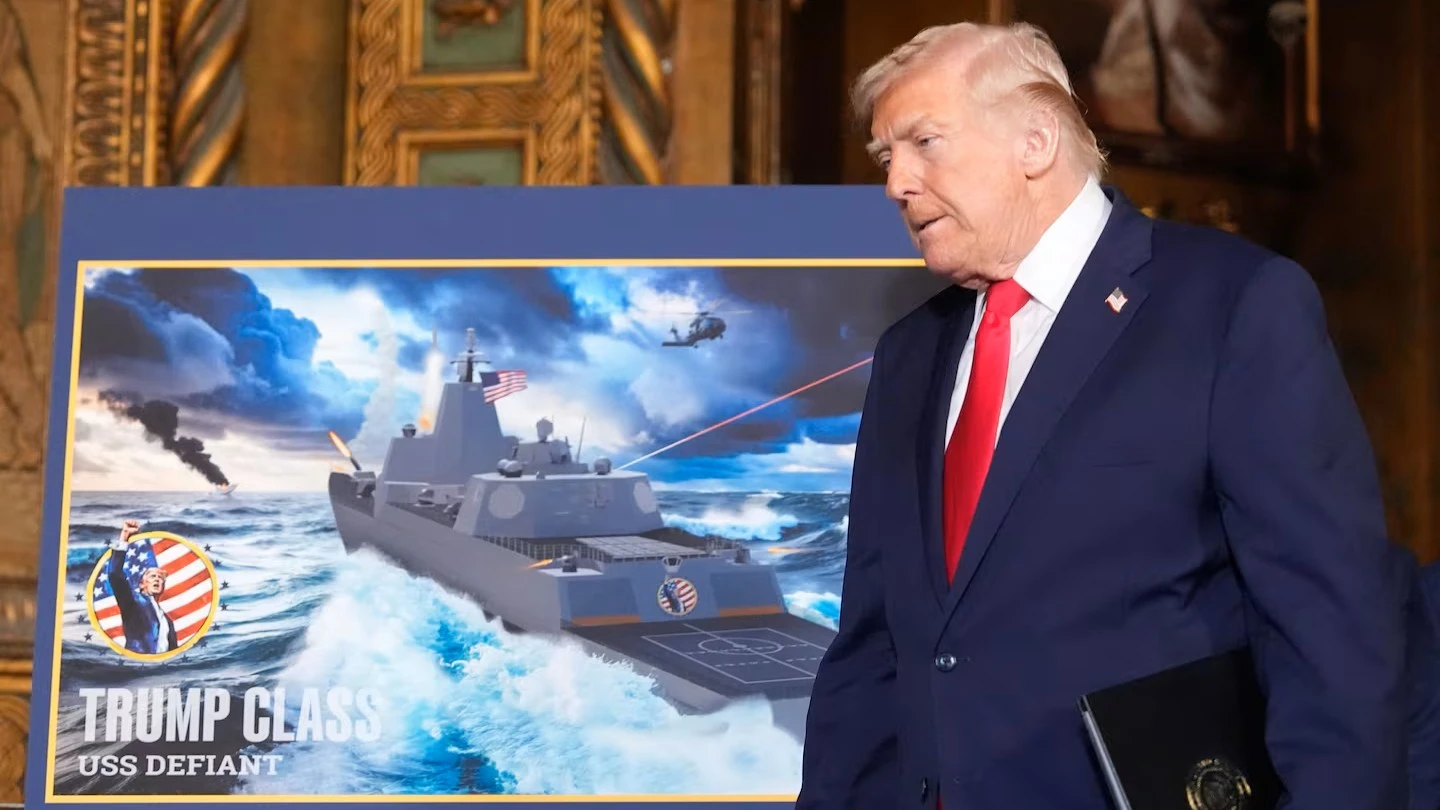
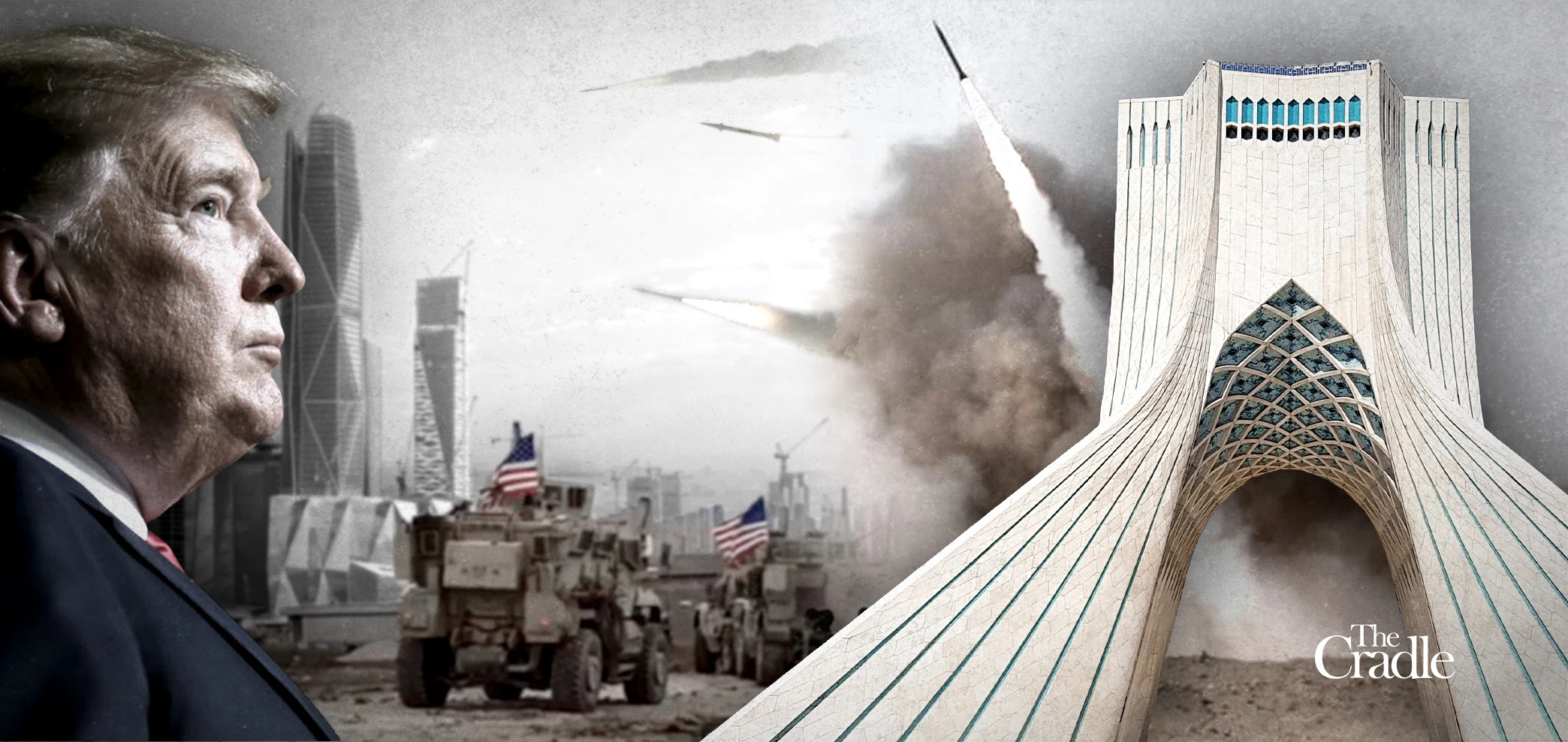
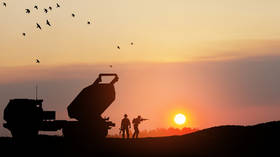
US President Donald Trump announced on 13 July that he will be reinstating the illegal naval blockade on Iranian ports, while declaring Washington the “guardian of the Hormuz Strait.”
The president additionally claimed the US will now be charging shipping fees in Hormuz.
“The Hormuz Strait is OPEN, and will remain OPEN, with or without Iran,” Trump wrote on his Truth Social platform on Monday.
Trump added that “all other countries will have fair and open use of the Strait.”
The president went on to claim that Washington “will be, from this point forward, known as ‘THE GUARDIAN OF THE HORMUZ STRAIT.’”
“But as such, and as a matter of FAIRNESS, [we] will be reimbursed, at the rate of 20 percent on all cargo shipped, for any and all costs necessary to do the job of providing safety and security to this very volatile section of the world,” Trump stressed.
He also claimed Washington’s oversight of the strait shall “begin immediately.”
Earlier on Monday, Iran’s Foreign Ministry condemned Washington’s continued attempts to backtrack on clauses of the Islamabad Memorandum of Understanding (MoU) signed with Iran.
These clauses encompass the arrangement for joint Iranian-Omani management of the Strait of Hormuz, a plan that Washington’s own delegation had endorsed.
They also include ending Israel’s brutal bombing, occupation, and ethnic cleansing campaign in Lebanon, which continues unabated.
Iran has been holding direct talks with Oman on the future management of Hormuz, but recently condemned the activation of a US-Omani shipping corridor, calling it a violation of the MoU.
Foreign Ministry spokesman Esmail Baghaei said on Monday, “Our effort, in consultation with Oman, was to establish a mechanism to ensure the safe passage of ships,” adding that “because of [US] pressure exerted on Oman, this objective was not achieved.”
Trump’s recent social media post comes after a regionwide Iranian response to US strikes carried out against the Islamic Republic overnight.
Iranian forces targeted and struck US military assets in Kuwait, Bahrain, Jordan, and Oman – which Tehran had previously refrained from striking during the first 40 days of the war that began in February.
The Islamic Revolutionary Guard Corps (IRGC) stated in its retaliation announcement that Iran will block a “rogue and child-killing army from across the world” from ongoing interference in the Strait of Hormuz.
Hours earlier, the US began its massive new wave of strikes across Iran.
US attacks heavily targeted sites across over a dozen provinces in the country, hitting telecommunication infrastructure in Sirik on the southern coast, as well as military sites in other parts of Iran.
A senior Yemeni official has warned that the country’s armed forces are prepared to close the Bab al-Mandeb Strait, sending oil prices soaring to $200 a barrel, if Saudi Arabia persists in its aggression against Yemen’s critical infrastructure.
Mohammed al-Farah, a member of the political bureau of the Ansarullah resistance movement, stated on Monday that Washington is provoking the Riyadh regime to strike Yemen, emphasizing such an incitement would never be in the interest of the US.
“If the current situation aggravates, the Bab al-Mandeb Strait and the Strait of Hormuz will be closed in an operational alliance. Oil prices would then skyrocket to $200 a barrel in a dreadful shock,” he said.
Farah noted that the Sana’a government’s response to any clear aggression by Saudi Arabia or its proxy forces will be decisive, and will target sites deep inside the kingdom.
The Bab al-Mandeb Strait is a vital shipping chokepoint linking the Red Sea to the Gulf of Aden, funneling maritime traffic toward the Suez Canal. At its narrowest point, just 29 kilometers wide, it restricts vessel movement to two lanes for inbound and outbound traffic.
Meanwhile, a member of Yemen’s Supreme Political Council held the United States and Saudi Arabia fully responsible for the new spate of aggression and siege against the Yemeni nation, and bombardment of civilian facilities, including Sana’a airport, following a period of de-escalation.
Mohammed Ali al-Houthi emphasized that the Saudi attack on Sana’a airport constitutes a clear violation of humanitarian law, and falls within the framework of daily war crimes being perpetrated against the Yemeni people in the form of siege and starvation.
Separately, Ali al-Qahoum, a member of Ansarullah’s political bureau, vowed that Yemeni Armed Forces will soon retaliate against the Saudi aggression, and the push to break the 11-year-old siege on Yemen will never stop, and that enemies are fully responsible for any potential fallout.
“The Saudi regime’s aggression against Sana’a airport and its targeting of civilian infrastructure entail grave consequences. Riyadh must embrace all possible repercussions,” Qahoum stated.
It took me a while to understand exactly what happened at the latest NATO summit in Ankara, Türkiye. What had made the task artificially difficult was the initial faulty assumption: that something happened there. In fact, the summit was about exactly nothing.
Most commentators and analysts focused on things that Donald Trump said at the meeting, but what they neglected to notice was that Trump’s public utterances no longer carry any meaning at all. Whatever he says about annexing Greenland, or Canada, or destroying Iran, or any number of other such statements, are just noise. He is still trying to use such bloviation to move markets, to make a bit of money from day trading. For instance, he apparently thought that he found a way to gambling success by fighting weekend wars: trade on Friday before the close, then bomb Iran over the weekend, then trade some more on Monday. But even the dumbest market algorithms seem to have caught up to him. Whatever will he come up with next?
Aside from his sporadic bloviation during the summit, he just sat there quietly and then signed whatever piece of paper was being proffered. And what was proffered was very much more of the same, with a few minor refinements. For example, instead of the US spending money on the former Ukraine directly, the Europeans will now borrow that money, the US will essentially underwrite the debt using a USD/EUR currency swap via the Federal Reserve, and the Europeans will then give the money to US defense contractors. Everybody will get a cut, everyone is happy.
Whoever voted for all of these clowns should perhaps be told that the level of NATO military spending is preposterously huge, yet it doesn’t move NATO an inch closer to being able to defeat Russia. Consider the chart above. NATO has committed to spending around $250 billion just on the former Ukraine before 2028; Russia spends a tiny fraction of that and is winning. And yet NATO has no air defense that can stand up to the new Russian rocketry and has no ability to develop any. Some amount of equipment will no doubt be produced, but given the rapid rate of change at the Ukrainian battlefield, it will be obsolete by the time it is ready. As for the gigantic pile of cash, it will be evenly smeared across numerous private bank accounts, allowing the rich to continue getting richer even as the economies of NATO countries continue their steady deterioration.
There has been quite a bit of commentary devoted to Trump’s removal of Russia from the latest US National Security Doctrine document. Well, just with everything else that Trump has done — be it the now illegal tariffs or the attempts to negotiate a peace deal between Russia and the former Ukraine, or the various threats against NATO — this meant nothing at all. The adults in the room told him that NATO is a major cash cow and that he will not be allowed to slaughter it. Furthermore, they explained to him that the Ukrainian conflict is a wonderful opportunity and as long as it is there and willing to fight Russia down to the last Ukrainian, neglecting to take full advantage of that opportunity would be quite foolish.
Essentially, there is nothing to see here, keep moving. I am sure that lots of ink will be spilled and lots of hot air expelled over whether Trump was successful as an agent of destruction or whether things would have fallen apart at exactly the same rate anyway. But that’s in the future; for now, there is one important conclusion that is ready to be drawn already: the noises Trump makes are just noises. They don’t matter and he doesn’t matter. It is as if he never existed.
The US is rethinking its Gulf presence after its war on Iran, which turned its strongest assets into liabilities.
In the days after the ceasefire, attention shifted quickly to what the US-Israeli war on Iran had exposed. Inside the Pentagon, that meant a reassessment of how US forces are positioned across the Persian Gulf, and whether the model behind that presence still holds.
The war had already supplied part of the answer. At Naval Support Activity Bahrain, Iranian missiles and drones hit command facilities, communications nodes, and support buildings, causing damage far greater than publicly acknowledged and forcing evacuations and workarounds.
Bases long treated as secure sat within reach, and the margin of safety looked thinner than advertised, in light of the losses it had suffered, even if not fully disclosed.
A Wall Street Journal (WSJ) report drew particular attention. It pointed to a reassessment inside the Pentagon of its Gulf footprint, after the war exposed how vulnerable even its most entrenched bases had become.
Installations once designed around endurance and visibility found themselves exposed to tools that prize reach and precision. The balance between deterrence and vulnerability began to tilt.
Inside the Pentagon, the debate has turned to how to adjust. Options under discussion range from reducing presence at certain bases to redistributing units and capabilities across a wider geography. There is also consideration of shifting parts of operations to locations seen as less vulnerable, alongside upgrading fortifications at sites that remain in use.
This reflects an attempt to reconcile a longstanding model with a threat environment where distance and fortification offer less protection than they once did.
For decades, the US military presence in the Gulf rested on a simple premise. Large, fixed bases were meant to guarantee deterrence, enable rapid response, and secure key trade and energy routes. That premise now faces a test it has not faced before.
The recent war against Iran showed that these bases can be located, tracked, and targeted with increasing accuracy. In that sense, their size and permanence, once seen as advantages, also make them predictable. A single strike can have outsized operational and political effects, particularly when it targets command structures or logistics hubs.
A dispersed force can absorb shocks, while a concentrated one risks disruption at the point of impact. The more visible the installation, the clearer the target profile becomes.
Military planners are therefore weighing a shift toward dispersion. Instead of concentrating assets in a limited number of large installations, capabilities would be spread across more sites. The logic is to reduce the impact of any single hit and make targeting more difficult for an adversary. It also introduces redundancy, allowing operations to continue even if one node is degraded.
At the same time, there is a parallel track focused on protection. This includes expanding hardened shelters, building underground facilities, and improving air and missile defense systems. These steps reflect that some form of fixed presence will remain, even if its structure changes. They also reflect the cost of staying in place.
There is discussion of relocating certain missions westward as well, including toward the occupied Palestinian territories, with the Negev among the locations under consideration. Such moves would not signal an end to US partnerships in the Gulf. They would, however, alter how those partnerships are underwritten militarily, shifting part of the operational burden elsewhere.
What matters is that the debate has opened. It points to a recognition that the existing model cannot be carried forward unchanged, even if it is not abandoned.
Security for whom
The stated purpose of the US presence has long been to provide a security umbrella for Gulf states. The current review introduces a different priority. It is less about protecting allies and more about protecting American forces themselves.
During the war, the presence of US bases did not prevent escalation from reaching the region. Nor did it shield Gulf states from becoming part of the theater of confrontation. In some cases, those bases became a factor that drew risk toward them, placing host countries within the range of retaliation.
The implication is difficult to ignore, as the same installations meant to deter conflict can also serve as magnets for it.
This creates a dilemma for the US, which must determine how to reduce its exposure without stepping back.
For Gulf capitals, it is whether the security guarantee still functions in the same way when it carries a higher probability of entanglement.
From Washington’s perspective, the answer may lie in adaptation. From the Gulf’s perspective, the calculus is less clear, especially as alternative regional arrangements begin to enter discussion.
This does not mean the American umbrella disappears, but its terms are no longer taken for granted.
The doctrine unsettled
The review underway touches a core assumption of US military doctrine in the region.
The idea that heavy, permanent deployment guarantees freedom of movement has shaped policy for decades. It linked military presence to control over vital corridors, especially around the Strait of Hormuz. The war has unsettled that link.
Large concentrations of troops and assets now form fixed targets that carry a high cost to defend. Resources that would go into operations are pulled into protection, slowing response and limiting options.
In practical terms, the presence becomes a burden. It absorbs attention and capacity and demands constant reinforcement to remain viable under threat.
This is particularly visible around Hormuz. Control of the waterway relied on the assumption that nearby bases enabled rapid intervention. The confrontation showed that these same bases could be placed at risk from the opening stages of any escalation. The ability to act is therefore tied to the ability to survive the initial exchange.
That shift carries consequences for deterrence itself. If a force must first secure its own position before projecting power, its deterrent posture changes in perception and in practice.
The shift is subtle but significant, with the focus moving from how to use bases to how to preserve them.
What Iran changed
The immediate driver of this reassessment lies in what Iran has built and demonstrated.
Over the years, Tehran developed a missile and drone capability designed not only to deter but to offset the conventional advantages of the US in the Gulf. The recent war put that system into operation in a way that moved it from theory to applied pressure.
The effect went beyond individual strikes or specific outcomes. It lay in the constant pressure these capabilities imposed. Bases, infrastructure, and lines of operation were kept within range, raising the cost of maintaining a permanent presence and complicating the assumption of secure staging areas.
This pressure operates over time. It shapes behavior, forces defensive allocation, and narrows operational space.
In that sense, Iran’s achievement is measured not just in damage, but in the change it forced in American thinking. A doctrine that assumed relative safety for fixed installations now has to account for sustained vulnerability.
There is also a political dimension. Iran appeared to have succeeded in imposing a new strategic reality that prompted the US to reconsider its military presence across the Gulf and the Strait of Hormuz, rather than limiting its assessment to the locations where its forces were deployed. Perhaps the most striking revelation of these shifts is that Iran has succeeded, albeit indirectly, in moving the issue of US military presence in the Gulf from the realm of Iranian demands to the realm of internal American discussions. What Tehran has been posing for years as a strategic goal of reducing the US military presence has now been the subject of review within the Pentagon itself, as a result of the security and military cost of the war.
This shift from external pressure to internal review marks a change in how the issue is situated. It moves the question from rhetoric to policy.
It will not end in the Gulf
The implications extend beyond the Gulf as the US is compelled to reconsider a central pillar of its regional deployment, sending a signal to other theaters. Adversaries are watching closely, not only for immediate outcomes but for lessons that can be applied elsewhere.
In the Asia-Pacific, US deployments in Japan and South Korea rely on models that resemble those used in the Gulf. They are built around fixed bases intended to ensure deterrence and rapid response. Similar patterns exist in networks linked to Taiwan and across the region.
These deployments operate under different conditions, but they share structural similarities. Concentration, visibility, and reliance on infrastructure create comparable points of pressure if exposed to similar technologies.
As vulnerability to missiles and drones reshapes calculations in the Gulf, similar questions are likely to surface in these regions as well.
A broader reassessment of global deployment cannot be ruled out. What begins as a regional adjustment may develop into a wider rethink in how the US structures its military presence, especially as adversaries refine capabilities designed to exploit fixed positions.
A turning point, not an exit
It would be premature to speak of a US withdrawal from the Gulf. No such decision has been announced, nor is it implied by the review.
What can be said is that the terms of presence are changing. The war has exposed limits that cannot be ignored, forcing a reconsideration of assumptions that held for decades, not in theory but under operational pressure.
The deeper impact lies there. A model built on concentration and permanence now has to adapt to dispersion and uncertainty. A posture once associated with control now carries the risk of exposure – and that risk has to be managed continuously.
The Defense Advanced Research Projects Agency (DARPA) spent the early 2010s constructing what may have been the most ambitious predictive vaccine-development infrastructure ever attempted: a sprawling, multi-institution effort designed to determine the future characteristics of purported pathogens before they emerged and ultimately use those predictions to develop drugs and vaccines before they were needed.
DARPA itself described the vaccine-centric purpose of the program unambiguously.
According to the agency: “The Prophecy (Pathogen Defeat) program will explore the evolution of viruses in the hopes of predicting viral mutations and ultimately developing drugs and vaccines in advance of need.”
The effort was not limited to coronaviruses, influenza, or any other single disease category.
DARPA repeatedly stated that the goal was understanding: “the natural evolution of any virus.”
The result was a massive architecture that brought together machine learning researchers, statisticians, bioinformaticians, computational biologists, laboratory scientists, surveillance specialists, universities, contractors, and national laboratories into a single “predictive” framework.
Yesterday, this website reported that DARPA’s PROPHECY program expanded into the laboratory of coronavirus researcher Ralph Baric years before the COVID-19 pandemic and nearly a decade before the DARPA/DEFUSE proposal documented all three defining structural features of the SARS-CoV-2 spike protein prior to the outbreak.
DARPA Wanted to Turn Vaccine Development from Reactive to Predictive
DARPA openly believed that existing vaccine development operated backwards.
The agency described the modern pharmaceutical model as: “observational and reactive.”
PROPHECY was intended to replace that model with one that was: “predictive and preemptive.”
Rather than waiting for future purported disease threats to appear before beginning the process of characterization and countermeasure development, DARPA sought systems capable of determining the characteristics of future pathogen populations in advance.
Everything in PROPHECY flowed from that objective.
Building the Blueprint Before the Pathogen
DARPA’s ambitions extended far beyond outbreak forecasting.
The agency stated: “DARPA seeks to achieve the ability to successfully predict the natural evolution of any virus, via platforms and algorithms which are capable of monitoring rare advantageous viral events…”
The program sought systems capable of determining:
future mutations,
future reassortments,
future genetic events,
the order in which mutations would emerge,
genotype-to-phenotype relationships,
and ultimately the characteristics of future pathogen populations.
DARPA acknowledged: “there is at present no reliable capability to predict viral reassortment or mutations responsible for the emergence of new viral strains.”
Its proposed solution was: “An investigative platform to predict mutations and possibly reassortments in advance of their occurrence.”
The agency further explained that PROPHECY sought: “predictive algorithms of viral evolution that are informed and validated experimentally using high throughput biological platforms…” and: “the integration of a viral evolution platform with an algorithm that predicts mutations which confer an evolutionary advantage to the viral population.”
Among the formal requirements of the program was the ability to: “reproducibly predict the genomic, proteomic, and/or functional attributes of the final viral population.”
DARPA also sought to determine: “the rate and order of mutation acquisition” as well as: “the correlation of genotype to phenotype.”
The objective was not merely individual mutations.
It was the endpoint population itself.
Prediction Was Only the First Layer
PROPHECY was never designed to stop at prediction.
DARPA required participants to construct what it called: “biological validation systems” and repeatedly emphasized: “testing and validation of the system and algorithm.”
The BAA instructed performers to: “Perform a ‘real world’ test of the predictive algorithm and biological validation system…”
The purpose of that exercise was to determine whether researchers could: “reproducibly predict the genomic, proteomic, and/or functional attributes of the ending viral population.”
DARPA further instructed participants to: “develop a research strategy and solicit collaborations from partners” that would assist in: “applying their predictive methodology to surveillance data from the real world.”
The architecture described by PROPHECY therefore extended beyond prediction alone.
The program sought to construct systems capable not only of generating future pathogen blueprints, but also of attempting to validate those predictions experimentally and through subsequent observational frameworks.
Bottom Line
Amid COVID-19 debates, public attention has focused on later programs such as DEFUSE, ADEPT, pandemic mRNA platforms, and Operation Warp Speed.
But PROPHECY confirms that by 2010, DARPA was openly attempting to build a generalized predictive infrastructure capable of deciding the future characteristics of purported pathogens, using those predictions to enable drugs and vaccines in advance, and constructing systems intended to validate those predictions experimentally and through later observational frameworks.
Most importantly, the effort was never intended for a single disease.
PROPHECY sought to build this capability for: “any virus.”
Whether viewed as predictive biodefense, anticipatory genomics, preemptive countermeasure development, or something else, the architecture described by DARPA followed a remarkably consistent sequence:
vaccines as the objective;
future pathogen blueprints as the enabling technology;
“validation” systems as the final layer.
That architecture may ultimately prove to be one of the most consequential and least understood developments in the history of modern biodefense research.
Satellite imagery reveals damage at US military facilities in Qatar, Bahrain, and Jordan following Iranian ballistic missile and drone strikes.
Iran’s retaliatory operation against US military positions across the region has inflicted damage on several strategic facilities, with satellite imagery privately acquired and later published by multiple OSINT accounts on X showing impacts at major US bases in Qatar, Bahrain, and Jordan following a wave of ballistic missile and drone strikes.
The strikes, launched in response to renewed US aggression against Iran and escalating military activity in the region, targeted key nodes of the US military presence, including air bases, naval infrastructure, radar facilities, and drone operations centers.
Iranian missiles penetrate defenses, strike Al Udeid Air Base
Satellite imagery indicates that Iran’s missile and drone strikes reached Al Udeid Air Base in Qatar, one of the largest US military installations in West Asia and a central hub for American air operations.
According to the account, Egypt’s Intel Observer (@EGYOSINT), enhanced Sentinel-2 imagery shows damage to a hangar inside the base, with impact marks visible on the upper rear section of the structure. Additional ground disturbances and suspected burn scars were also identified across multiple areas of the facility.
Further imagery analysis revealed additional strike locations near US military accommodation buildings and other sections of the base, suggesting that the Iranian barrage reached multiple points within the installation.
The reported impacts highlight the ability of Iranian long-range strike systems to penetrate heavily protected military zones and reach critical US infrastructure despite the presence of advanced air defense systems in the region.
US Navy’s Bahrain headquarters struck
Iranian projectiles also reportedly struck a facility inside the US Navy’s 5th Fleet headquarters at Naval Support Activity Bahrain.
Satellite imagery identified damage to a warehouse located within the naval complex, marking a direct hit against a key command and logistics hub responsible for supporting US maritime operations throughout the Gulf.
The strike came amid heightened tensions surrounding naval movements in the Strait of Hormuz, where Iran has repeatedly warned against actions it views as threatening regional security.
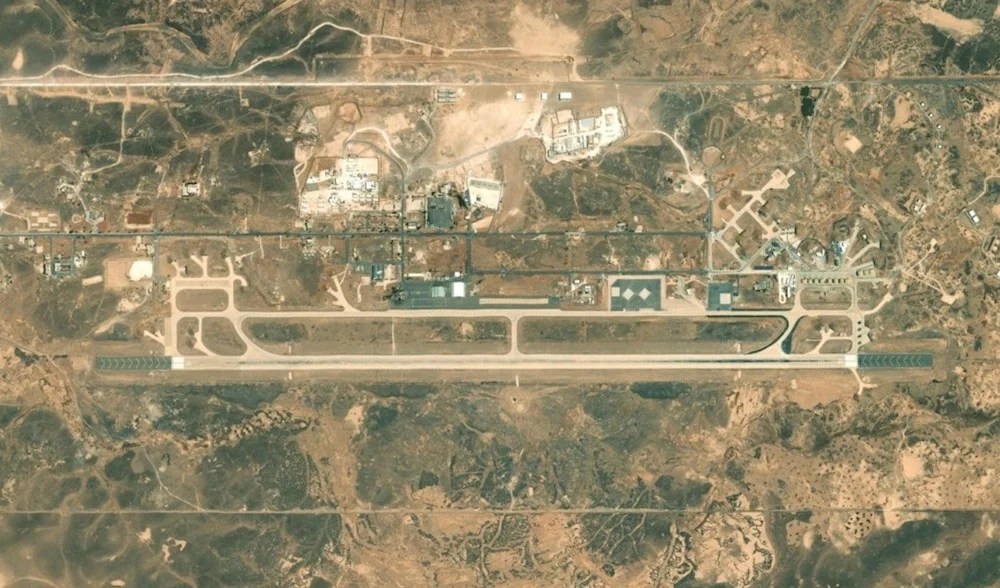
MQ-9 drones in Jordan’s Prince Hassan Air Base targeted
Iran’s Islamic Revolution Guard Corps (IRGC) announced that its forces struck Jordan’s Prince Hassan Air Base with multiple ballistic missiles, targeting command-and-control infrastructure and facilities used to house US MQ-9 Reaper drones.
Satellite imagery from the base showed significant damage, including a destroyed hangar and widespread disturbances across the aircraft apron, where military assets are typically stored and maintained.
Imagery analysts also identified signs of burning and continued activity at the site following the strike, raising questions over the status of assets stationed at the facility.
A costly mystery is unfolding at Jordan’s Prince Hassan Air Base. After Iran targeted the base, analysts noticed that the facility is home to the US-made MQ-4C Triton, a $240 million high-altitude surveillance drone that had reportedly been moved there from Al Dhafra Air Base due to its proximity to Iran.
Western Europe is not being conquered by foreign armies. It is being dismantled by its own political elites. While millions of Europeans watch their countries change beyond recognition, the ruling class continues to celebrate the very policies driving that transformation.
The numbers alone should set off alarm bells across every EU capital.
According to demographic data compiled by Berlin’s Rockwool Foundation, the European Union’s foreign-born population has surged from around 40 million people in 2010 to approximately 64 million in 2025. Out of the EU’s total population of roughly 451 million, around 15% are now of non-EU origin. Even more astonishing, 7.3 million immigrants were added between 2023 and 2025 alone.
It is one of the fastest demographic transformations ever experienced.
The demographic revolution nobody voted for
The impact is concentrated overwhelmingly in Western Europe. Germany remains the primary destination, with its foreign-born population growing from around 10 million in 2010 to nearly 18 million today – already exceeding one-fifth of the country’s population. Similar proportions now exist in Spain, Belgium, Austria, and Sweden. Meanwhile, countries such as Poland remain at only around 2.6%, compared with the EU average of approximately 14%.
If anyone wants to see where Brussels intends to take the entire continent, they need only look at Spain.
On June 30, the application period closed for one of the largest legalization programs in modern European history. Hundreds of thousands of illegal migrants living and working in Spain became eligible to obtain legal status. The final number could ultimately exceed one million people.
This is hardly Spain’s first amnesty. Between 1986 and 2005, six similar legalization programs were carried out. But Europe was a very different place then. Migration pressures were nowhere near today’s scale, and the continent’s demographic balance had not yet begun shifting so dramatically.
Socialist Prime Minister Pedro Sánchez called the measure “an act of justice and a necessity.” Unable to secure parliamentary approval, his government amended immigration law by decree after previous attempts had stalled. He argues that Spain would lose 19% of its GDP by 2050 if migration were significantly reduced, while claiming that nearly half of Spain’s economic growth since 2022 has been driven by immigration.
Western Europe’s governing class increasingly speaks as if civilization can be measured solely by GDP.
Economic growth matters. But so do social cohesion, public trust, cultural continuity, and national identity. A nation is more than an economy. It is a shared history and a sense of belonging that cannot simply be imported.
Meanwhile, activist NGOs continue assisting illegal migrants in reaching Europe and navigating legalization procedures. Their supporters call it humanitarian work. The reality is different: a transnational political infrastructure that weakens national sovereignty, undermines border enforcement, and encourages further migration into Europe.
The price Europeans pay every day
The consequences are no longer abstract. Across Western Europe, citizens wake up almost daily to reports of knife attacks, gang violence, sexual assaults, riots, organized crime, and terrorist plots. These realities have become impossible to ignore.
Europe has also witnessed a deeply troubling resurgence of antisemitism. Jewish communities across the continent have reported sharp increases in antisemitic incidents, intimidation and threats, leaving many Europeans wondering how a continent that vowed “never again” now finds itself confronting hatred once more.
Parallel societies have emerged in numerous cities. Entire neighborhoods increasingly operate according to social and cultural norms that differ markedly from those of the host country. Police officers, teachers and local officials openly acknowledge that integration has become vastly more difficult than politicians once promised.
Yet citizens who raise these concerns are too often branded right-wing extremists instead of being heard.
Now another frontier is opening. France has begun debating whether non-EU foreign residents should be granted the right to vote and stand in municipal elections. Such a proposal would affect roughly six million people. Among others, Sweden, Finland and Luxembourg already permit many non-EU residents to vote in local or regional elections.
Mass immigration is no longer simply changing demographics. It is reshaping politics, culture, and ultimately the future character of European societies.
A wind of change in Brussels?
In June, the EU adopted its toughest migration line to date, seeking to increase deportations and establish detention centers outside the EU. Germany, Austria, the Netherlands, Denmark, and Greece are already negotiating return hubs with third countries, largely in Africa, following Italy’s agreement with Albania.
When Brussels begins embracing policies it condemned only a short time ago, it is effectively admitting that the previous model has failed.
But these measures barely scratch the surface. Stopping tomorrow’s illegal arrivals does not undo decades of uncontrolled migration. It does not solve failed integration. It does not dismantle parallel societies. And it certainly does not restore public confidence that governments still control their own borders.
That is why remigration has become an increasingly prominent topic across Europe. Its supporters describe it as a long-term strategy aimed at reversing migratory flows through legal, economic and administrative measures, prioritizing the return of illegal migrants, removing legal migrants who commit serious crimes or consistently refuse to integrate, and restoring national sovereignty and cultural continuity.
Whatever one thinks of the concept, its growing political momentum reflects a profound loss of confidence in the migration policies that have dominated Europe for the past decade.
‘Great Replacement’ as a matter of fact
Following the Remigration Summit in Porto this May, activists launched the Save Europe Act, the first patriotic European Citizens’ Initiative dedicated to stopping migration, strengthening Europe’s borders and protecting the ethnocultural identity of European nations.
The campaign has received support from figures including former Hungarian Prime Minister Viktor Orbán, VOX leader Santiago Abascal, Romania’s George Simion, Reconquête leader Éric Zemmour, and politicians associated with AfD, FPÖ and other patriotic movements. Millions of Europeans are demanding a fundamentally different course.
One of the central arguments advanced by these leaders is that the ‘Great Replacement’ is not a conspiracy theory but an observable demographic trend – and a political project.
The pressure coming from Donald Trump’s America has become one of the few external forces encouraging European leaders to rediscover the importance of borders, sovereignty and national identity.
Western Europe increasingly resembles a post-European political project, while much of Central and Eastern Europe continues to resist that trajectory, remaining more culturally homogeneous and more determined to preserve their historical identity.
The rest of the world understands this instinctively. China protects its borders. Japan protects its borders. India protects its borders. The Gulf states protect their borders. Every serious state recognizes that controlling migration is an essential attribute of sovereignty and security. Europeans should stop apologizing for expecting the same.
Iranian drone strikes have destroyed a number of US HIMARS missile launcher systems in Kuwait, Fars news agency has reported. The outlet also said that three American officers were killed and several others wounded – a claim that has not been confirmed by US Central Command (CENTCOM).
On Sunday, Axios journalist Barak Ravid reported, citing an unnamed US official, that Washington had carried out “a few strikes on missile and air defense systems,” as well as on Iranian Navy small boats, at several locations around the Strait of Hormuz.
Iran’s Press TV reported multiple explosions near Qeshm Island, sharing footage appearing to show smoke rising over the area. Qeshm is Iran’s largest island in the Persian Gulf and reportedly a key site for the country’s coastal defenses, radar systems, and naval assets.
Later in the day, Fars reported that Iranian forces had used drones to destroy the HIMARS launchers in Kuwait, which it said had been readied to fire on Iranian territory. The agency also said three ballistic missiles were fired toward Kuwait’s Al Mina area and a site housing a US ATACMS missile system, adding that US military assets in Bahrain, Qatar, Jordan, and Oman had also been targeted throughout the day.
Kuwait’s military confirmed that the country had come under attack but made no mention of the HIMARS claim or any American casualties, without pinning the blame on Iran. It said that three land border posts in the country’s north had been struck in a “criminal aggressive attack” that caused “material damage,” while a hostile drone hit an offshore drilling platform operated by the Kuwait Oil Company, injuring one worker.
Iran and the US military continue to trade blows after the collapse of a tentative ceasefire earlier this month. Washington accused Tehran of attacking vessels in the Strait of Hormuz, while Iran said that some of the ships had failed to comply with instructions as they passed through. Tehran has since declared the strait closed – a claim US officials dispute, saying commercial traffic continues to move through the waterway
A former police detective involved in the investigations of roughly 250 sudden infant death syndrome (SIDS) cases claimed that roughly 50% occurred within 48 hours of a vaccination.
In a video interview today with The Defender, the detective, who gave only her first name, “Jennifer,” said she and her husband were detectives in the police department of a major U.S. city with a population of over 300,000 for a combined seven years, from roughly 2003 to 2010.
Jennifer said she is keeping her last name and city name undisclosed to protect her family. She said:
“The pharmaceutical industry does not want to be threatened by those sorts of secrets coming out. So, I’m a mother of many children, and their safety is my number one priority, my family’s safety. I’m a mama bear before I’m anything else.”
Jennifer said she hadn’t initially questioned the safety of vaccines. But that changed when she noticed a recurrent pattern among the police reports for SIDS cases in her unit.
“I’m like, what is the main thing that is true with all of these, the recurring theme with all of these babies? And that’s that they were recently vaccinated,” she said.
She estimated that around half of the SIDS cases involved babies who had received a vaccination in the 48 hours before their death and a “pretty decent number” of additional cases had received a vaccination in the week before their death.
The pattern was strongest among 6-month-olds, she said.
What particularly concerned Jennifer was that although the police reports noted these babies’ recent vaccinations, that information went unmentioned on the county coroner’s autopsy reports and death certificates.
“It didn’t make sense to me,” she said.
She discovered it wasn’t just her county coroner. Coroners across the U.S. are trained not to record vaccination information on autopsy reports, she said.
Some states are working to change that.
In May, Oklahoma and Louisiana passed legislation that amends existing public health law by directing coroners to document any vaccines administered within 90 days of death on autopsy reports for children under age 15 who died unexpectedly and without explanation.
Pediatrician: ‘The threat of death in SIDS is real’
Jennifer’s realization that many SIDS deaths happened soon after vaccination prompted her to start researching vaccines.
Around that time, she and her husband were looking for a pediatrician for their children. Jennifer told the pediatrician about the SIDS pattern she saw and that she and her husband did not want to vaccinate their kids.
The pediatrician acknowledged that there are risks with vaccination and said he would respect their choice, Jennifer said.
He shared that he once vaccinated a baby for hepatitis B, and it died the next day. “He’s like, I 100% believe that it was that vaccine,” she said.
The pediatrician told Jennifer he had many parents of unvaccinated kids whose medical files are super thin. The medical files of the vaccinated kids he served are really thick, he said.
Jennifer, who also shared about her conversation with the pediatrician in a 2023 interview with Steve Kirsch, told The Defender:
“He goes, there is a downside to vaccines. First of all, the threat of death in SIDS is real, and he’s like, it messes with the immune system, so it opens the door to asthma, allergies.”
The pediatrician told Jennifer that he was not supposed to tell parents any of this.
“He’s like, in fact, the American Academy of Pediatrics (AAP) actually trains us on how to deflect when parents think that their child’s having a vaccine reaction or that they’re hesitant. We’re supposed to deflect and tell them those are unrealistic fears and that it’s just coincidence that this happened after the vaccine,” Jennifer said.
But his conscience wouldn’t let him do that, he told her.
Journal removes peer-reviewed analysis showing potential SIDS-vaccines link
The public debate about a possible link between vaccines and SIDS has recently heated up.
Last week, Idaho mother Andrea Shaw — whose twin babies died eight days after receiving their 18-month vaccines — was arrested for allegedly murdering her twins. Shaw said doctors ignored her when she warned that the twins’ father had previously experienced a bad reaction to a flu vaccine.
In a June 29 letter, Johnson called on the editor-in-chief of Toxicology Reports and the CEO of Elsevier, which owns the journal, to release all records related to the decision to remove vaccine researcher Neil Z. Miller’s analysis: “Vaccines and sudden infant death: An analysis of the VAERS database 1990-2019 and review of the medical literature.”
The analysis lined up with what Jennifer witnessed in police reports following SIDS deaths.
Miller found that from 1990 to 2019, many more SIDS reports were filed in the Vaccine Adverse Event Reporting System (VAERS) in the first few days after vaccination compared to later on after vaccination.
The paper also included a comprehensive review of the scientific literature on vaccines and SIDS, including documentation of large increases in SIDS rates following the rollout of national immunization campaigns and case reports of SIDS in babies who were recently vaccinated.
Although Toxicology Reports published Miller’s analysis in June 2021 after it passed the peer-review process, the journal on April 9 posted a removal notice for Miller’s article, citing “serious methodological flaws.”
Miller told The Defender in an earlier interview why he believes the removal was unjustified. He said:
“The core findings of my paper — the temporal clustering of infant deaths in the immediate post-vaccination window, the historical SIDS rate spike following the national immunization campaign, the full literature review — remain unrefuted.
“No one has engaged with the data. They simply made the paper disappear. That should concern every parent, every researcher, and anyone who believes science advances through open inquiry rather than institutional gatekeeping.”
ICD revision eliminated vaccination as official cause of death
Research published since Miller’s analysis has also suggested a link between SIDS and vaccines. For instance, a 2025 study suggested that infants with underdeveloped liver pathways may be more susceptible to SIDS after vaccination, because their bodies cannot process toxic chemicals present in small quantities in vaccines.
The SIDS diagnosis didn’t exist until the late 1960s, when the category was created in response to a rise in sudden unexplained infant deaths.
In the early 1960s, the number of vaccines administered to most U.S. infants increased, according to Miller’s analysis.
As SIDS rates rose, so did parental concern that SIDS was connected to vaccination. However, health officials assured parents that unexplained death following vaccination was “merely coincidental,” Miller wrote.
He also said that before 1979, the International Statistical Classification of Diseases and Related Health Problems (ICD) included cause-of-death classifications associated with “prophylactic vaccination” as an official cause of death.
However, in 1979, the ICD was revised, and that category was eliminated. As a result, “medical examiners are compelled to misclassify and conceal vaccine-related fatalities under alternate cause-of-death classifications,” Miller wrote.
Health Secretary Robert F. Kennedy Jr. in Minneapolis on May 21, 2026. David Berding/Getty Images
Zero Hedge
The Department of Health and Human Services (HHS) and one of its divisions said in a description of a proposed rule released on July 1 that they plan to establish an injury table for COVID-19 vaccines through the Countermeasures Injury Compensation Program (CICP).
“The Table will list and explain injuries that, based on compelling, reliable, valid, medical, and scientific evidence, are presumed to be caused by covered COVID-19 countermeasures, and set forth the time periods in which the onset of these injuries must occur after the administration or use of these covered COVID-19 countermeasures,” a summary of the rule, which has not been made public, stated.
COVID-19 vaccines fall under the CICP because previous health secretaries declared and extended emergency declarations for COVID-19, which opened up the option of emergency clearance of vaccines and other countermeasures under the Public Readiness and Emergency Preparedness Act.
Health Secretary Robert F. Kennedy Jr., who just announced that he was ending the emergency declaration, is authorized under the declarations to provide benefits to people injured by the vaccines under the act, HHS officials noted in the proposal summary.
“Under the leadership of Secretary Kennedy, HHS is restoring transparency and accountability because the American people deserve clear, evidence-based information about both the benefits and the known risks associated with medical countermeasures,” an HHS spokesperson told The Epoch Times in an email.
The spokesperson said that more information will be available when the notice is published in the Federal Register.
Aaron Siri, Kennedy’s former lawyer, wrote to Kennedy in 2025, urging him to create a COVID-19 vaccine-injury table. He pointed to the readiness and preparedness law, which states that the health secretary “shall by regulation establish a table identifying covered injuries that shall be presumed to be directly caused by the administration or use of a covered countermeasure.”
An injury table would help people injured by vaccines apply successfully to the congressionally created program, which requires “compelling, reliable, valid, medical, and scientific evidence” that an injury was a direct result of a countermeasure, Siri wrote on behalf of the Informed Consent Action Network, which advocates for government transparency and change.
“A well-constructed injury table is needed for the CICP,” Richard Hughes IV, a former Moderna executive who is representing health groups in litigation against the administration that has halted some of its changes to vaccine guidance, told The Epoch Times in an email. “The real question is whether this administration would promulgate such a table or weaponize it to further platform misinformation.”
Dr. Joel Wallskog, who suffered the neurological disorder transverse myelitis and other issues from COVID-19 vaccination and has sued the government over the CICP, told The Epoch Times in an email that the HHS proposal “is more appearance than substance.”
“It appears to do little more than streamline the process for the relatively small number of individuals whose injuries – primarily anaphylaxis and myocarditis/pericarditis – are already recognized under the current system,” added Wallskog, also the co-chair of the React19 nonprofit, which offers support to people injured by COVID-19 vaccines. “For everyone else who has been denied, nothing changes.”
Erica Samp, who says she was injured by a COVID-19 vaccine, said in a post on X that she supported the plan but that she’s watching to see what details are included, including the covered injuries.
The CICP is both administered and adjudicated by HHS officials. It has compensated some people who have said COVID-19 vaccination caused health issues, but rejected others, including people such as Wallskog, whom doctors diagnosed as being injured by COVID-19 vaccines, The Epoch Times previously reported.
The CICP has, through June, compensated 60 COVID-19 vaccine injury claims, nearly all for myocarditis, a form of heart inflammation. The average compensation has been $4,000, aside from a few large payments, and about 99 percent of applications have been rejected.
The National Academies of Sciences, Engineering, and Medicine said in 2024 that COVID-19 vaccines definitely cause myocarditis and shoulder injuries, but that other possible harms could not be conclusively linked to the shots.