Reservists say Tel Aviv is ‘bluffing’ by exaggerating conscription turnout rates, while complaining that ‘there are not enough tanks’
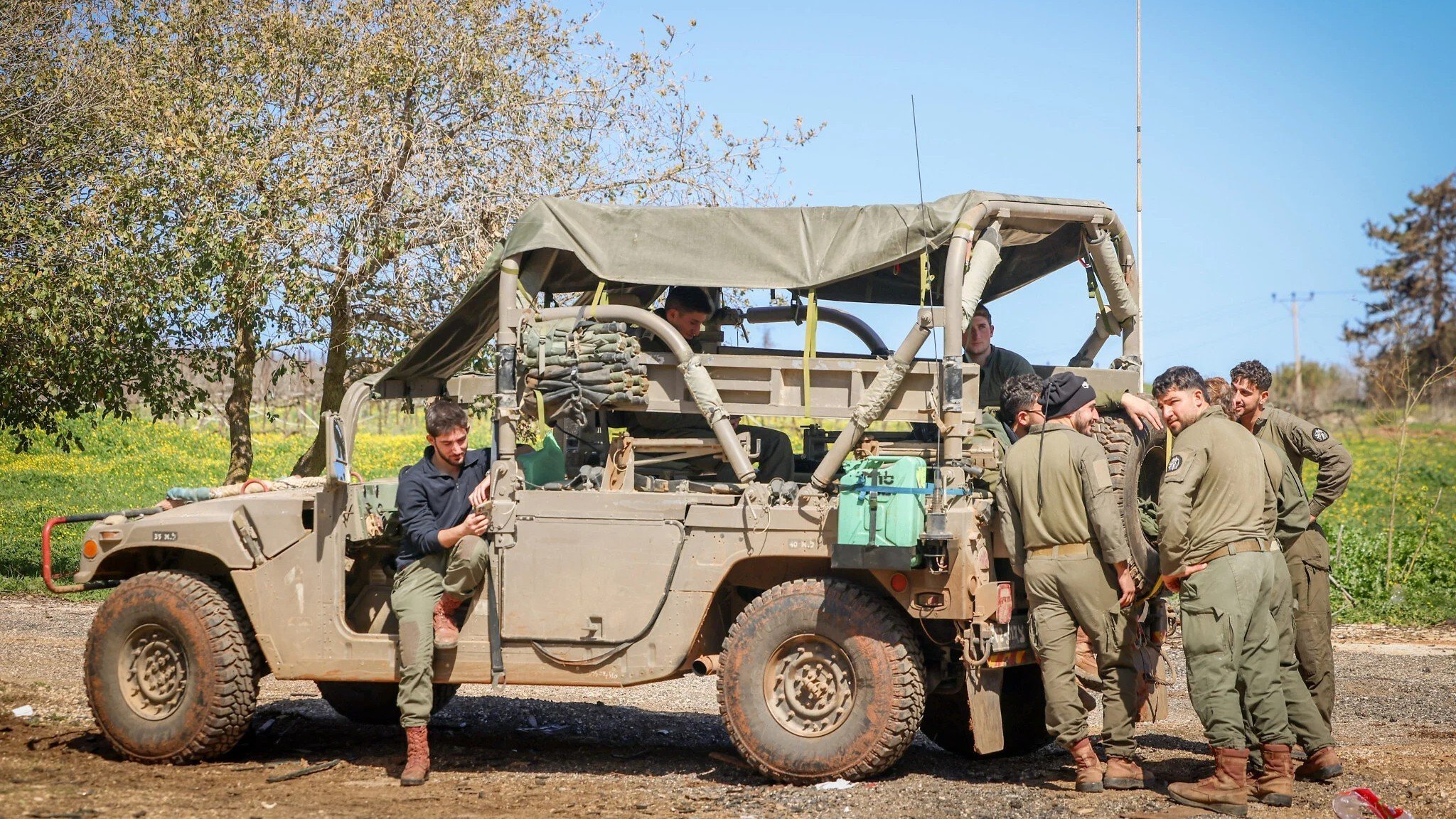
The Israeli military is facing a crisis within its reserve forces and is in a state of “de facto collapse,” with occupying brigades and battalions in Lebanon operating far below full capacity and strength, Israeli Army Radio reported on 14 July.
Army Radio correspondent Doron Kadosh made the revelations in a post on Tuesday, citing sources as saying that conscription turnout rates are “a bluff,” and that “there aren’t enough tanks.”
Kadosh said armored reserve companies that previously operated with 10 to 12 tank crews are now functioning with significantly fewer operational tanks, due to battlefield losses and damaged equipment requiring lengthy repairs – caused by Hezbollah resistance fighters.
Because of the shortages, the army reportedly summons fewer reservists from the outset, artificially inflating mobilization rates, while many of those counted as reporting for duty serve only part of their deployments.
“Reserve units today are hollow,” a reserve commander is cited as saying in Kadosh’s report.
The military source adds that “a battalion is not a full battalion, and a company is not truly a company.”
“The public and decision-makers hear about entire brigades operating in Lebanon, but in reality, the force is much smaller – far fewer soldiers, far fewer tanks, and far fewer vehicles. Parts of the reserve system are already, de facto, in a state of collapse,” the source went on to say.
The reserve commander told Army Radio that some units are “in better shape” than others, but that they are all “doing the maximum they can.”
The commander also says this is “a situation that is becoming impossible to sustain.”
The report cited several examples, including a reserve company that recently completed operations in Lebanon, with only one officer remaining in the entire company.
This forced enlisted soldiers to fill command roles normally held by officers.
Another reserve battalion in the occupied West Bank reportedly saw only two of its companies report for duty, requiring reinforcements from another reserve unit to fill operational gaps.
Kadosh also reported that an entire team of young commandos recently transferred to the reserves after completing active service informed commanders they could no longer continue serving due to “exhaustion” and academic pressures.
As a result, commanders have been approving the release of soldiers from reserve duty.
Kadosh explained that “even units where turnout percentages are 50–70 percent are in fact operating with a much larger personnel shortage at any given time.”
A reservist source told Army Radio that “There aren’t enough tanks and the turnout percentages don’t reflect reality. It’s a bluff.”
Prolonged deployments since 7 October 2023 have placed severe strain on manpower, equipment, and command structures across Israel’s reserve forces.
The years that followed 7 October have seen significant internal tensions in Israel, as Tel Aviv has been unable to reach a consensus on a law for drafting tens of thousands of ultra-Orthodox Israeli Jews (Haredim) into the army.
Haredim, mainly those studying the Torah, have been largely exempt from military service for decades. In June 2024, the Israeli High Court ordered that they be drafted, following significant tension on the matter.
Ultra-Orthodox parties, which make up a significant bulk of Israeli Prime Minister Benjamin Netanyahu’s coalition government, have sought to make sure exemptions remain legal – while the opposition accused the Haredim of not doing their part or sharing the burden with the army.
The government has been unable to pass a law that would appease both the Haredi parties and the opposition.
The growing manpower crisis has worsened since Israeli troops invaded south Lebanon and expanded their occupation of the country in early March. Over 30 Israeli soldiers have been killed by the Lebanese resistance since then.
“The reserve army will collapse in on itself. There will be an unreasonable burden on the reservists. If nothing changes, the reservists will not be able to withstand this pressure in the years to come,” Israeli army chief Eyal Zamir said in May.
Scores of tanks, military vehicles, detection systems, radars, Iron Dome platforms, and other Israeli military assets have been destroyed by Hezbollah’s FPV drone campaign that has caught Tel Aviv off guard since the latest round of fighting began in March.
Israeli troops have occupied scores of Lebanese villages with the aim of creating a so-called security zone free of “threats.”
Hezbollah resistance fighters remain entrenched across Israel’s “security zone” despite months of occupation and bombing.
American journalist Max Blumenthal says he was detained and questioned by US Customs and Border Protection (CBP) officers at Washington Dulles International Airport upon returning from Iran, with agents searching his belongings and confiscating his smartphones after he refused to provide access to them.
Blumenthal described the questioning and seizure of his devices as a politically motivated response to his reporting from Iran, saying, “As punishment for my factual journalism, I was subjected to political harassment by the Trump administration upon my return from Iran.”
According to Blumenthal, CBP officers searched his luggage and demanded access to his mobile phones. After he declined to unlock the devices, the agents seized them.
He said the confiscation was intended to discourage his reporting on Iran, and that the officers repeatedly questioned him about his future travel plans.
“The seizure of my devices was a clear act of intimidation aimed at deterring me and others from doing further critical reporting from Iran, which is likely why my interrogators from CBP demanded to know if I would be returning to Tehran to report any time soon.”
Blumenthal said the scrutiny followed his recent reporting from Iran, which included coverage of public reactions to recent regional developments and reporting on US-Israeli aggression and the assassination of Leader of the Islamic Revolution Ayatollah Seyyed Ali Khamenei.
He went on to say that the questioning was directly linked to his work, accusing his interrogators of acting on political motives.
The journalist also claimed that those questioning him were part of an “Israeli-influenced criminal cartel” that was “clearly threatened by my reporting from Tehran.”
Max Blumenthal, editor of The Grayzone, was among several foreign journalists who traveled to Iran to attend the farewell and funeral ceremonies of the martyred Leader.
The United States and Israel assassinated Ayatollah Khamenei, alongside some of his family members, on February 28, the first day of the 40-day illegal war of aggression on Iran.
The following is an except from Paul L. William’s book “Operation Gladio: The Unholy Alliance between the Vatican, the CIA, and the Mafia”:
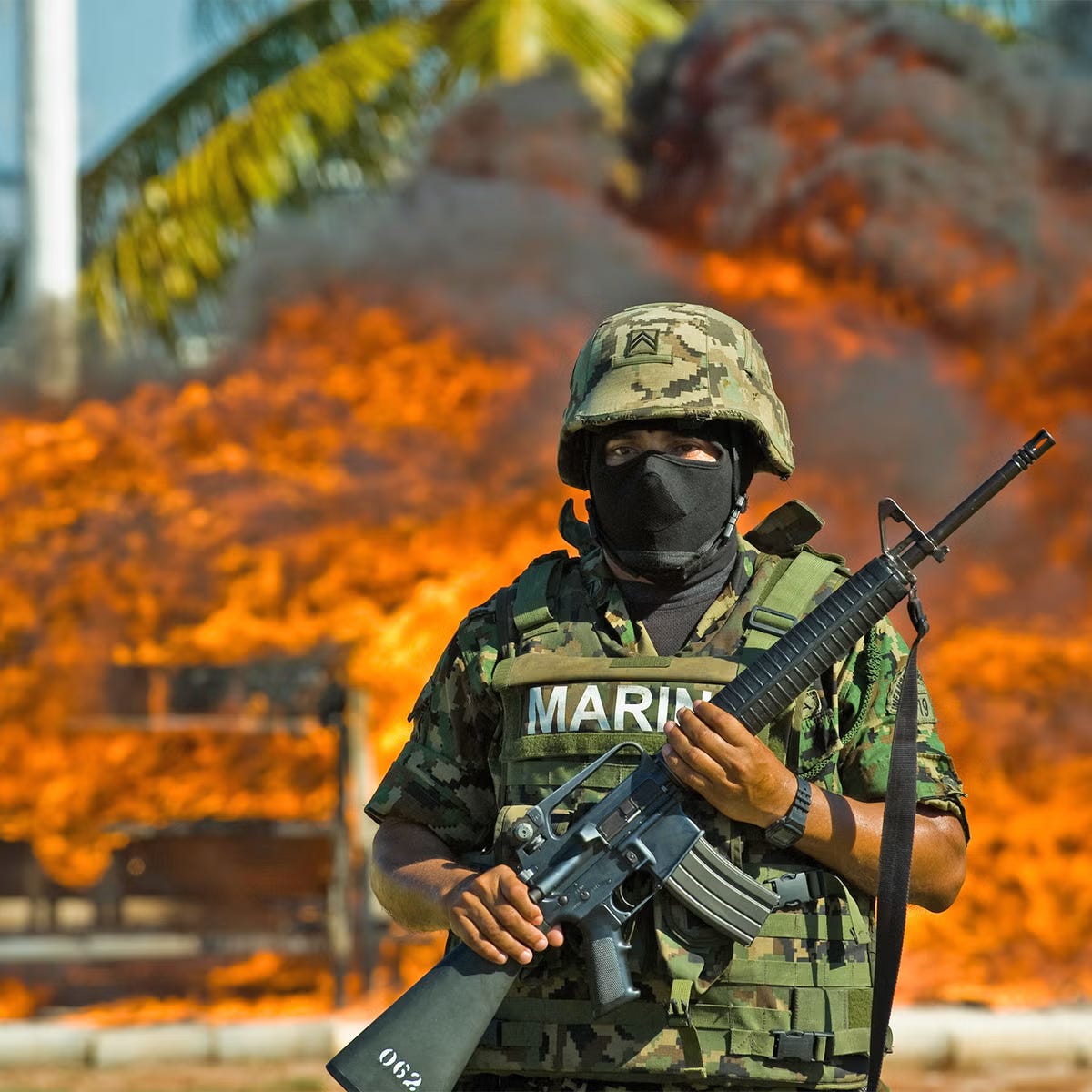
When the US military occupation of Afghanistan became precarious, the CIA worked with the Mexican drug cartels to develop poppy fields throughout the mountains of Mexico’s west coast. By 2013, heroin and cocaine from Mexico – with a street value of $3 billion – flooded Chicago. The drugs arrived by land, rail, and air, including 747 jetliners. When Jesus Vicente Zambada Niebla, a member of the Sinaloa cartel, was collared by Chicago police officials, he claimed to be a CIA operative under government protection. His trial was halted by federal prosecutors on the basis of the “Classified Information Procedures Act.” The prosecutors claimed that Niebla’s testimony would constitute a threat to national security.
By 2018, Mexico’s southwestern Guerrero state became the top source of heroin for the US drug epidemic, which resulted in more than sixty-four thousand deaths in 2016. The Drug Enforcement Agency says that 93 percent of heroin in America now comes from Mexico, more than double the amount from five years before. Guerrero emerged as a heroin hub because its mountains are inaccessible and catch the warm, humid air from the Pacific.
America’s 250th anniversary arrived amid growing doubts about democracy, prosperity, and national unity
The United States has just marked a major anniversary, 250 years since it declared independence from Great Britain and, in theory, this should be a moment of national pride with another historical milestone passed, another reason for flags, fireworks, and speeches about destiny.
But the mood is not especially festive.
Two weeks before the anniversary, Reuters published a poll that captured the depth of American anxiety – and the numbers were grim. More than two-thirds (70%) of Americans no longer consider their country the greatest nation on Earth, while 64% believe American democracy is in danger. And 38% don’t believe the United States will survive another 250 years as a single country.
The answers split sharply along party lines, with Republicans still clinging more strongly to the idea of the exceptional country of prosperity and divine favor. Among Democrats, the mood is much darker and pessimism has become almost a worldview as the United States has arrived at its 250th anniversary in the middle of a profound crisis of belief.
In some ways, this resembles the crisis Soviet society experienced in the final years of the USSR. Of course, America never had an official state ideology in the Soviet sense and nobody in Washington promised to build communism at breakneck speed, but the US did have its own coherent vision of the future which it called the American Dream.
That dream promised prosperity through hard work and freedom. Work hard, play by the rules, take responsibility for yourself, and life will improve, your children will live better than you did and your country will remain a model for the world, but in the 21st century, that promise began to fall apart.
The first serious cracks appeared among millennials, the generation born between 1981 and 1996. Their parents got rich, bought homes, built savings, and traveled abroad, but they inherited student debt, unaffordable housing, unstable work, and the strange feeling that no matter how hard they run, the finish line keeps moving further away.
Older Americans told them the answer was simply to work as hard as they did, but younger Americans could see the numbers and how with comparable effort, earlier generations ended up far wealthier.
So the old formula no longer worked and that undermined the idea of labor as an absolute virtue. If hard work no longer guarantees a decent life, then what remains? Freedom?
Americans are formally free in that they elect presidents and congressmen. Yet Congress is filled with elderly politicians who seem determined to change nothing and who often leave public life only when nature finally intervenes. Presidents speak beautifully on campaign trails, but once inside the White House, they usually follow the same old path so while the faces change, the machine remains and freedom, too, begins to look hollow.
For younger Americans, the American Dream is becoming what the bright communist future became for late Soviet citizens as an official promise repeated so often that almost nobody believes it anymore. Once a society loses its vision of the future, disorientation follows and almost everyone can feel that the system is not working properly. But what should replace it and where should the country go?
Well, American society has developed two sharply different answers. The conservative right believes America can be saved by a return to pragmatism with a freer market, support for major entrepreneurs, ruthless efficiency in public spending, and a foreign policy less constrained by old ideological sermons about democracy and human rights. In this view, America must stop trying to lecture the world and start taking care of itself.
The progressive left believes the opposite, that the pillars of liberal democracy mustn’t be abandoned, but that the economy needs radical restructuring. National wealth, they say, must be distributed more fairly and big business, especially in the technology sector, is viewed with deep suspicion. The new villains are “tech feudal lords,” billionaires whose power appears to rival that of the state itself.
Both camps agree on one thing, that the current order is exhausted, but they simply disagree on what should come next.
Donald Trump was supposed to test the right-wing answer in practice and his supporters expected a revolution in a break with the old elite, a new economic nationalism, a government that would stop apologizing and start acting because he promised all of that.
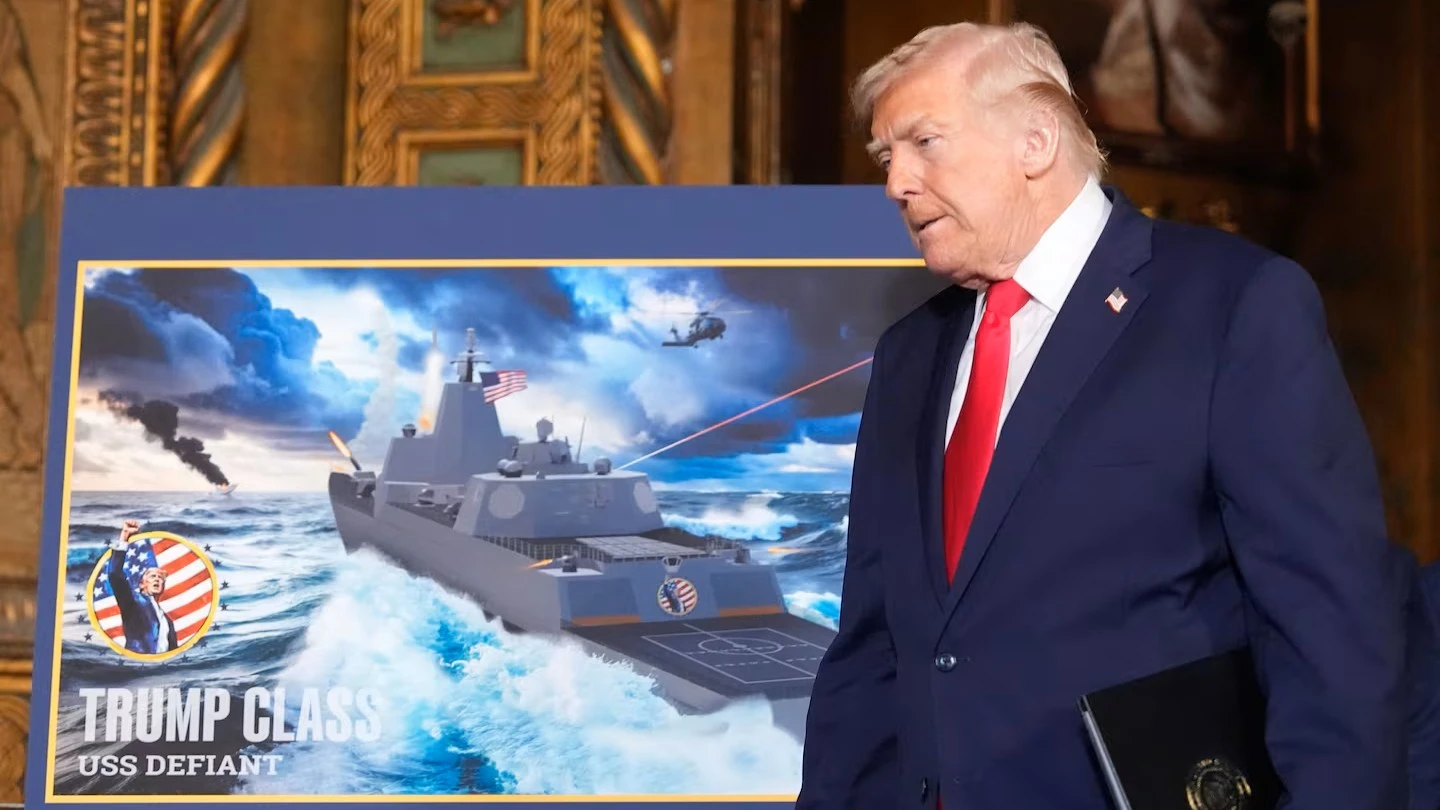
But Trump’s presidency has shown the limits of his movement in that there’s not much of a system and Trump doesn’t think in historical categories, but in terms of Trump. If it were up to him, Washington would be filled not with a new national doctrine, but with golden ballrooms and monuments to his own greatness.
His approach to America’s 250th anniversary has even disappointed some of his admirers. Many expected a serious program, or at least a symbolic reflection on the country’s path, but instead, Trump keeps speaking about his own achievements. At times, it is hard to tell whether America is celebrating 250 years of independence or continuing the festivities for its president’s 80th birthday.
So now disillusioned by the right, America is glancing left, although the country doesn’t yet trust the left nationally. But locally, especially in big cities, voters are increasingly willing to experiment, with Zohran Mamdani, the openly socialist mayor of New York, an obvious example. This is no accident as the largest cities are where the contradictions of modern America are most visible in terms of housing costs, inequality, migration, crime, decaying infrastructure, and anger at remote elites.
If socialist policies succeed at city level, their supporters will soon claim they are ready for higher office.
And what will their opponents do then? They could accept defeat or they may decide that their America can no longer live under the same roof as the other America, which is the real question behind the anniversary. Not whether the United States has had a remarkable 250 years, because it has, but the question is whether it still has a common future.
Perhaps America will find a new compromise and perhaps it will reinvent itself again, as it has done before, but perhaps its two political tribes have already begun traveling in different historical directions.
If, over the next 250 years, US history follows that road toward a civilized or uncivilized split, it won’t be because Americans lacked flags or speeches, it will be because the country’s old promise stopped convincing its own people.
UPDATE | A plume of smoke was seen rising from Saudi Arabia’s King Khalid Air Base after Yemeni forces unleashed a retaliatory ballistic missile strike targeting the facility.
Located in the Kingdom’s southwest, approximately 120 kilometers from the Yemeni border, the strategic air base serves as a major hub for the Royal Saudi Air Force, housing fighter jets, surveillance aircraft, and other military assets. The extent of any damage has not yet been confirmed.
US President Donald Trump announced on 13 July that he will be reinstating the illegal naval blockade on Iranian ports, while declaring Washington the “guardian of the Hormuz Strait.”
The president additionally claimed the US will now be charging shipping fees in Hormuz.
“The Hormuz Strait is OPEN, and will remain OPEN, with or without Iran,” Trump wrote on his Truth Social platform on Monday.
Trump added that “all other countries will have fair and open use of the Strait.”
The president went on to claim that Washington “will be, from this point forward, known as ‘THE GUARDIAN OF THE HORMUZ STRAIT.’”
“But as such, and as a matter of FAIRNESS, [we] will be reimbursed, at the rate of 20 percent on all cargo shipped, for any and all costs necessary to do the job of providing safety and security to this very volatile section of the world,” Trump stressed.
He also claimed Washington’s oversight of the strait shall “begin immediately.”
Earlier on Monday, Iran’s Foreign Ministry condemned Washington’s continued attempts to backtrack on clauses of the Islamabad Memorandum of Understanding (MoU) signed with Iran.
These clauses encompass the arrangement for joint Iranian-Omani management of the Strait of Hormuz, a plan that Washington’s own delegation had endorsed.
They also include ending Israel’s brutal bombing, occupation, and ethnic cleansing campaign in Lebanon, which continues unabated.
Iran has been holding direct talks with Oman on the future management of Hormuz, but recently condemned the activation of a US-Omani shipping corridor, calling it a violation of the MoU.
Foreign Ministry spokesman Esmail Baghaei said on Monday, “Our effort, in consultation with Oman, was to establish a mechanism to ensure the safe passage of ships,” adding that “because of [US] pressure exerted on Oman, this objective was not achieved.”
Trump’s recent social media post comes after a regionwide Iranian response to US strikes carried out against the Islamic Republic overnight.
Iranian forces targeted and struck US military assets in Kuwait, Bahrain, Jordan, and Oman – which Tehran had previously refrained from striking during the first 40 days of the war that began in February.
The Islamic Revolutionary Guard Corps (IRGC) stated in its retaliation announcement that Iran will block a “rogue and child-killing army from across the world” from ongoing interference in the Strait of Hormuz.
Hours earlier, the US began its massive new wave of strikes across Iran.
US attacks heavily targeted sites across over a dozen provinces in the country, hitting telecommunication infrastructure in Sirik on the southern coast, as well as military sites in other parts of Iran.
A senior Yemeni official has warned that the country’s armed forces are prepared to close the Bab al-Mandeb Strait, sending oil prices soaring to $200 a barrel, if Saudi Arabia persists in its aggression against Yemen’s critical infrastructure.
Mohammed al-Farah, a member of the political bureau of the Ansarullah resistance movement, stated on Monday that Washington is provoking the Riyadh regime to strike Yemen, emphasizing such an incitement would never be in the interest of the US.
“If the current situation aggravates, the Bab al-Mandeb Strait and the Strait of Hormuz will be closed in an operational alliance. Oil prices would then skyrocket to $200 a barrel in a dreadful shock,” he said.
Farah noted that the Sana’a government’s response to any clear aggression by Saudi Arabia or its proxy forces will be decisive, and will target sites deep inside the kingdom.
The Bab al-Mandeb Strait is a vital shipping chokepoint linking the Red Sea to the Gulf of Aden, funneling maritime traffic toward the Suez Canal. At its narrowest point, just 29 kilometers wide, it restricts vessel movement to two lanes for inbound and outbound traffic.
Meanwhile, a member of Yemen’s Supreme Political Council held the United States and Saudi Arabia fully responsible for the new spate of aggression and siege against the Yemeni nation, and bombardment of civilian facilities, including Sana’a airport, following a period of de-escalation.
Mohammed Ali al-Houthi emphasized that the Saudi attack on Sana’a airport constitutes a clear violation of humanitarian law, and falls within the framework of daily war crimes being perpetrated against the Yemeni people in the form of siege and starvation.
Separately, Ali al-Qahoum, a member of Ansarullah’s political bureau, vowed that Yemeni Armed Forces will soon retaliate against the Saudi aggression, and the push to break the 11-year-old siege on Yemen will never stop, and that enemies are fully responsible for any potential fallout.
“The Saudi regime’s aggression against Sana’a airport and its targeting of civilian infrastructure entail grave consequences. Riyadh must embrace all possible repercussions,” Qahoum stated.
It took me a while to understand exactly what happened at the latest NATO summit in Ankara, Türkiye. What had made the task artificially difficult was the initial faulty assumption: that something happened there. In fact, the summit was about exactly nothing.
Most commentators and analysts focused on things that Donald Trump said at the meeting, but what they neglected to notice was that Trump’s public utterances no longer carry any meaning at all. Whatever he says about annexing Greenland, or Canada, or destroying Iran, or any number of other such statements, are just noise. He is still trying to use such bloviation to move markets, to make a bit of money from day trading. For instance, he apparently thought that he found a way to gambling success by fighting weekend wars: trade on Friday before the close, then bomb Iran over the weekend, then trade some more on Monday. But even the dumbest market algorithms seem to have caught up to him. Whatever will he come up with next?
Aside from his sporadic bloviation during the summit, he just sat there quietly and then signed whatever piece of paper was being proffered. And what was proffered was very much more of the same, with a few minor refinements. For example, instead of the US spending money on the former Ukraine directly, the Europeans will now borrow that money, the US will essentially underwrite the debt using a USD/EUR currency swap via the Federal Reserve, and the Europeans will then give the money to US defense contractors. Everybody will get a cut, everyone is happy.
Whoever voted for all of these clowns should perhaps be told that the level of NATO military spending is preposterously huge, yet it doesn’t move NATO an inch closer to being able to defeat Russia. Consider the chart above. NATO has committed to spending around $250 billion just on the former Ukraine before 2028; Russia spends a tiny fraction of that and is winning. And yet NATO has no air defense that can stand up to the new Russian rocketry and has no ability to develop any. Some amount of equipment will no doubt be produced, but given the rapid rate of change at the Ukrainian battlefield, it will be obsolete by the time it is ready. As for the gigantic pile of cash, it will be evenly smeared across numerous private bank accounts, allowing the rich to continue getting richer even as the economies of NATO countries continue their steady deterioration.
There has been quite a bit of commentary devoted to Trump’s removal of Russia from the latest US National Security Doctrine document. Well, just with everything else that Trump has done — be it the now illegal tariffs or the attempts to negotiate a peace deal between Russia and the former Ukraine, or the various threats against NATO — this meant nothing at all. The adults in the room told him that NATO is a major cash cow and that he will not be allowed to slaughter it. Furthermore, they explained to him that the Ukrainian conflict is a wonderful opportunity and as long as it is there and willing to fight Russia down to the last Ukrainian, neglecting to take full advantage of that opportunity would be quite foolish.
Essentially, there is nothing to see here, keep moving. I am sure that lots of ink will be spilled and lots of hot air expelled over whether Trump was successful as an agent of destruction or whether things would have fallen apart at exactly the same rate anyway. But that’s in the future; for now, there is one important conclusion that is ready to be drawn already: the noises Trump makes are just noises. They don’t matter and he doesn’t matter. It is as if he never existed.
The US is rethinking its Gulf presence after its war on Iran, which turned its strongest assets into liabilities.
In the days after the ceasefire, attention shifted quickly to what the US-Israeli war on Iran had exposed. Inside the Pentagon, that meant a reassessment of how US forces are positioned across the Persian Gulf, and whether the model behind that presence still holds.
The war had already supplied part of the answer. At Naval Support Activity Bahrain, Iranian missiles and drones hit command facilities, communications nodes, and support buildings, causing damage far greater than publicly acknowledged and forcing evacuations and workarounds.
Bases long treated as secure sat within reach, and the margin of safety looked thinner than advertised, in light of the losses it had suffered, even if not fully disclosed.
A Wall Street Journal (WSJ) report drew particular attention. It pointed to a reassessment inside the Pentagon of its Gulf footprint, after the war exposed how vulnerable even its most entrenched bases had become.
Installations once designed around endurance and visibility found themselves exposed to tools that prize reach and precision. The balance between deterrence and vulnerability began to tilt.
Inside the Pentagon, the debate has turned to how to adjust. Options under discussion range from reducing presence at certain bases to redistributing units and capabilities across a wider geography. There is also consideration of shifting parts of operations to locations seen as less vulnerable, alongside upgrading fortifications at sites that remain in use.
This reflects an attempt to reconcile a longstanding model with a threat environment where distance and fortification offer less protection than they once did.
For decades, the US military presence in the Gulf rested on a simple premise. Large, fixed bases were meant to guarantee deterrence, enable rapid response, and secure key trade and energy routes. That premise now faces a test it has not faced before.
The recent war against Iran showed that these bases can be located, tracked, and targeted with increasing accuracy. In that sense, their size and permanence, once seen as advantages, also make them predictable. A single strike can have outsized operational and political effects, particularly when it targets command structures or logistics hubs.
A dispersed force can absorb shocks, while a concentrated one risks disruption at the point of impact. The more visible the installation, the clearer the target profile becomes.
Military planners are therefore weighing a shift toward dispersion. Instead of concentrating assets in a limited number of large installations, capabilities would be spread across more sites. The logic is to reduce the impact of any single hit and make targeting more difficult for an adversary. It also introduces redundancy, allowing operations to continue even if one node is degraded.
At the same time, there is a parallel track focused on protection. This includes expanding hardened shelters, building underground facilities, and improving air and missile defense systems. These steps reflect that some form of fixed presence will remain, even if its structure changes. They also reflect the cost of staying in place.
There is discussion of relocating certain missions westward as well, including toward the occupied Palestinian territories, with the Negev among the locations under consideration. Such moves would not signal an end to US partnerships in the Gulf. They would, however, alter how those partnerships are underwritten militarily, shifting part of the operational burden elsewhere.
What matters is that the debate has opened. It points to a recognition that the existing model cannot be carried forward unchanged, even if it is not abandoned.
Security for whom
The stated purpose of the US presence has long been to provide a security umbrella for Gulf states. The current review introduces a different priority. It is less about protecting allies and more about protecting American forces themselves.
During the war, the presence of US bases did not prevent escalation from reaching the region. Nor did it shield Gulf states from becoming part of the theater of confrontation. In some cases, those bases became a factor that drew risk toward them, placing host countries within the range of retaliation.
The implication is difficult to ignore, as the same installations meant to deter conflict can also serve as magnets for it.
This creates a dilemma for the US, which must determine how to reduce its exposure without stepping back.
For Gulf capitals, it is whether the security guarantee still functions in the same way when it carries a higher probability of entanglement.
From Washington’s perspective, the answer may lie in adaptation. From the Gulf’s perspective, the calculus is less clear, especially as alternative regional arrangements begin to enter discussion.
This does not mean the American umbrella disappears, but its terms are no longer taken for granted.
The doctrine unsettled
The review underway touches a core assumption of US military doctrine in the region.
The idea that heavy, permanent deployment guarantees freedom of movement has shaped policy for decades. It linked military presence to control over vital corridors, especially around the Strait of Hormuz. The war has unsettled that link.
Large concentrations of troops and assets now form fixed targets that carry a high cost to defend. Resources that would go into operations are pulled into protection, slowing response and limiting options.
In practical terms, the presence becomes a burden. It absorbs attention and capacity and demands constant reinforcement to remain viable under threat.
This is particularly visible around Hormuz. Control of the waterway relied on the assumption that nearby bases enabled rapid intervention. The confrontation showed that these same bases could be placed at risk from the opening stages of any escalation. The ability to act is therefore tied to the ability to survive the initial exchange.
That shift carries consequences for deterrence itself. If a force must first secure its own position before projecting power, its deterrent posture changes in perception and in practice.
The shift is subtle but significant, with the focus moving from how to use bases to how to preserve them.
What Iran changed
The immediate driver of this reassessment lies in what Iran has built and demonstrated.
Over the years, Tehran developed a missile and drone capability designed not only to deter but to offset the conventional advantages of the US in the Gulf. The recent war put that system into operation in a way that moved it from theory to applied pressure.
The effect went beyond individual strikes or specific outcomes. It lay in the constant pressure these capabilities imposed. Bases, infrastructure, and lines of operation were kept within range, raising the cost of maintaining a permanent presence and complicating the assumption of secure staging areas.
This pressure operates over time. It shapes behavior, forces defensive allocation, and narrows operational space.
In that sense, Iran’s achievement is measured not just in damage, but in the change it forced in American thinking. A doctrine that assumed relative safety for fixed installations now has to account for sustained vulnerability.
There is also a political dimension. Iran appeared to have succeeded in imposing a new strategic reality that prompted the US to reconsider its military presence across the Gulf and the Strait of Hormuz, rather than limiting its assessment to the locations where its forces were deployed. Perhaps the most striking revelation of these shifts is that Iran has succeeded, albeit indirectly, in moving the issue of US military presence in the Gulf from the realm of Iranian demands to the realm of internal American discussions. What Tehran has been posing for years as a strategic goal of reducing the US military presence has now been the subject of review within the Pentagon itself, as a result of the security and military cost of the war.
This shift from external pressure to internal review marks a change in how the issue is situated. It moves the question from rhetoric to policy.
It will not end in the Gulf
The implications extend beyond the Gulf as the US is compelled to reconsider a central pillar of its regional deployment, sending a signal to other theaters. Adversaries are watching closely, not only for immediate outcomes but for lessons that can be applied elsewhere.
In the Asia-Pacific, US deployments in Japan and South Korea rely on models that resemble those used in the Gulf. They are built around fixed bases intended to ensure deterrence and rapid response. Similar patterns exist in networks linked to Taiwan and across the region.
These deployments operate under different conditions, but they share structural similarities. Concentration, visibility, and reliance on infrastructure create comparable points of pressure if exposed to similar technologies.
As vulnerability to missiles and drones reshapes calculations in the Gulf, similar questions are likely to surface in these regions as well.
A broader reassessment of global deployment cannot be ruled out. What begins as a regional adjustment may develop into a wider rethink in how the US structures its military presence, especially as adversaries refine capabilities designed to exploit fixed positions.
A turning point, not an exit
It would be premature to speak of a US withdrawal from the Gulf. No such decision has been announced, nor is it implied by the review.
What can be said is that the terms of presence are changing. The war has exposed limits that cannot be ignored, forcing a reconsideration of assumptions that held for decades, not in theory but under operational pressure.
The deeper impact lies there. A model built on concentration and permanence now has to adapt to dispersion and uncertainty. A posture once associated with control now carries the risk of exposure – and that risk has to be managed continuously.
The Defense Advanced Research Projects Agency (DARPA) spent the early 2010s constructing what may have been the most ambitious predictive vaccine-development infrastructure ever attempted: a sprawling, multi-institution effort designed to determine the future characteristics of purported pathogens before they emerged and ultimately use those predictions to develop drugs and vaccines before they were needed.
DARPA itself described the vaccine-centric purpose of the program unambiguously.
According to the agency: “The Prophecy (Pathogen Defeat) program will explore the evolution of viruses in the hopes of predicting viral mutations and ultimately developing drugs and vaccines in advance of need.”
The effort was not limited to coronaviruses, influenza, or any other single disease category.
DARPA repeatedly stated that the goal was understanding: “the natural evolution of any virus.”
The result was a massive architecture that brought together machine learning researchers, statisticians, bioinformaticians, computational biologists, laboratory scientists, surveillance specialists, universities, contractors, and national laboratories into a single “predictive” framework.
Yesterday, this website reported that DARPA’s PROPHECY program expanded into the laboratory of coronavirus researcher Ralph Baric years before the COVID-19 pandemic and nearly a decade before the DARPA/DEFUSE proposal documented all three defining structural features of the SARS-CoV-2 spike protein prior to the outbreak.
DARPA Wanted to Turn Vaccine Development from Reactive to Predictive
DARPA openly believed that existing vaccine development operated backwards.
The agency described the modern pharmaceutical model as: “observational and reactive.”
PROPHECY was intended to replace that model with one that was: “predictive and preemptive.”
Rather than waiting for future purported disease threats to appear before beginning the process of characterization and countermeasure development, DARPA sought systems capable of determining the characteristics of future pathogen populations in advance.
Everything in PROPHECY flowed from that objective.
Building the Blueprint Before the Pathogen
DARPA’s ambitions extended far beyond outbreak forecasting.
The agency stated: “DARPA seeks to achieve the ability to successfully predict the natural evolution of any virus, via platforms and algorithms which are capable of monitoring rare advantageous viral events…”
The program sought systems capable of determining:
future mutations,
future reassortments,
future genetic events,
the order in which mutations would emerge,
genotype-to-phenotype relationships,
and ultimately the characteristics of future pathogen populations.
DARPA acknowledged: “there is at present no reliable capability to predict viral reassortment or mutations responsible for the emergence of new viral strains.”
Its proposed solution was: “An investigative platform to predict mutations and possibly reassortments in advance of their occurrence.”
The agency further explained that PROPHECY sought: “predictive algorithms of viral evolution that are informed and validated experimentally using high throughput biological platforms…” and: “the integration of a viral evolution platform with an algorithm that predicts mutations which confer an evolutionary advantage to the viral population.”
Among the formal requirements of the program was the ability to: “reproducibly predict the genomic, proteomic, and/or functional attributes of the final viral population.”
DARPA also sought to determine: “the rate and order of mutation acquisition” as well as: “the correlation of genotype to phenotype.”
The objective was not merely individual mutations.
It was the endpoint population itself.
Prediction Was Only the First Layer
PROPHECY was never designed to stop at prediction.
DARPA required participants to construct what it called: “biological validation systems” and repeatedly emphasized: “testing and validation of the system and algorithm.”
The BAA instructed performers to: “Perform a ‘real world’ test of the predictive algorithm and biological validation system…”
The purpose of that exercise was to determine whether researchers could: “reproducibly predict the genomic, proteomic, and/or functional attributes of the ending viral population.”
DARPA further instructed participants to: “develop a research strategy and solicit collaborations from partners” that would assist in: “applying their predictive methodology to surveillance data from the real world.”
The architecture described by PROPHECY therefore extended beyond prediction alone.
The program sought to construct systems capable not only of generating future pathogen blueprints, but also of attempting to validate those predictions experimentally and through subsequent observational frameworks.
Bottom Line
Amid COVID-19 debates, public attention has focused on later programs such as DEFUSE, ADEPT, pandemic mRNA platforms, and Operation Warp Speed.
But PROPHECY confirms that by 2010, DARPA was openly attempting to build a generalized predictive infrastructure capable of deciding the future characteristics of purported pathogens, using those predictions to enable drugs and vaccines in advance, and constructing systems intended to validate those predictions experimentally and through later observational frameworks.
Most importantly, the effort was never intended for a single disease.
PROPHECY sought to build this capability for: “any virus.”
Whether viewed as predictive biodefense, anticipatory genomics, preemptive countermeasure development, or something else, the architecture described by DARPA followed a remarkably consistent sequence:
vaccines as the objective;
future pathogen blueprints as the enabling technology;
“validation” systems as the final layer.
That architecture may ultimately prove to be one of the most consequential and least understood developments in the history of modern biodefense research.

 (Photo credit: Flash90)