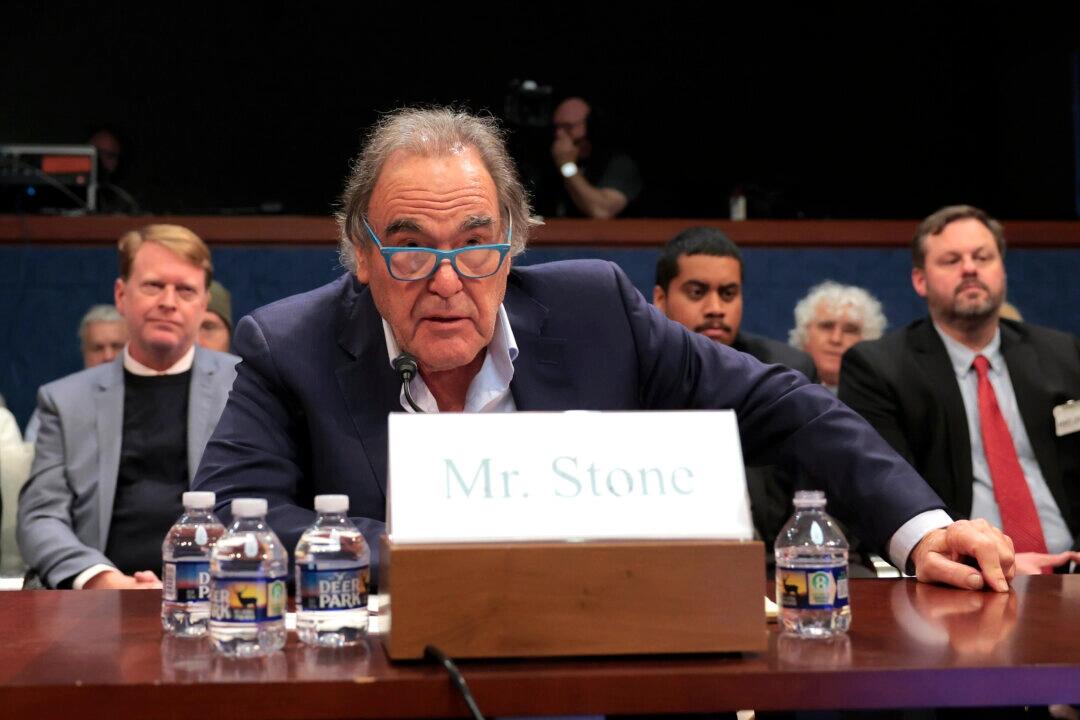
Filmmaker Oliver Stone testifies before the House Oversight Committee at the U.S. Capitol on April 1, 2025. Anna Moneymaker/Getty Images
Zero Hedge
WASHINGTON—A panel of expert witnesses that included renowned filmmaker Oliver Stone told the House Committee on Oversight and Government Reform’s Task Force on the Declassification of Federal Secrets on April 1 that more work is needed to uncover the truth about the assassination of President John F. Kennedy.
“Let us see past the lies, and let us hear what happened,” Stone told the task force. “The truth is the greatest treasure a Socratic soul can attain in this lifetime.”
The three-time Academy Award-winning director released a movie titled “JFK” in 1991 and followed that with a documentary in 2021 called “JFK: Revisited.”
He questioned the role played by the CIA, saying it “operates arrogantly outside our laws.”
A litany of motives for removing Kennedy existed at the time, including those related to expanding the Vietnam War and securing power for the military-industrial complex, among others, according to the director.
“He was changing things, changing too many things too fast. It was a major problem for some, and he was going to win a second election,” Stone told The Epoch Times after the hearing. “And he had a brother, a younger brother, and there was fear of a dynasty. They were terrified of that possibility.”
Expressing doubt about the Warren Commission’s findings in 1964, which fingered Lee Harvey Oswald as a lone gunman responsible for Kennedy’s murder, he asked the committee to reopen an investigation into the incident.
Some lawmakers on the dais acknowledged a need to follow up on questions regarding the chain of custody of evidence and discrepancies in testimony and records related to the crime, saying the lack of transparency over nearly 62 years has eroded trust in government.
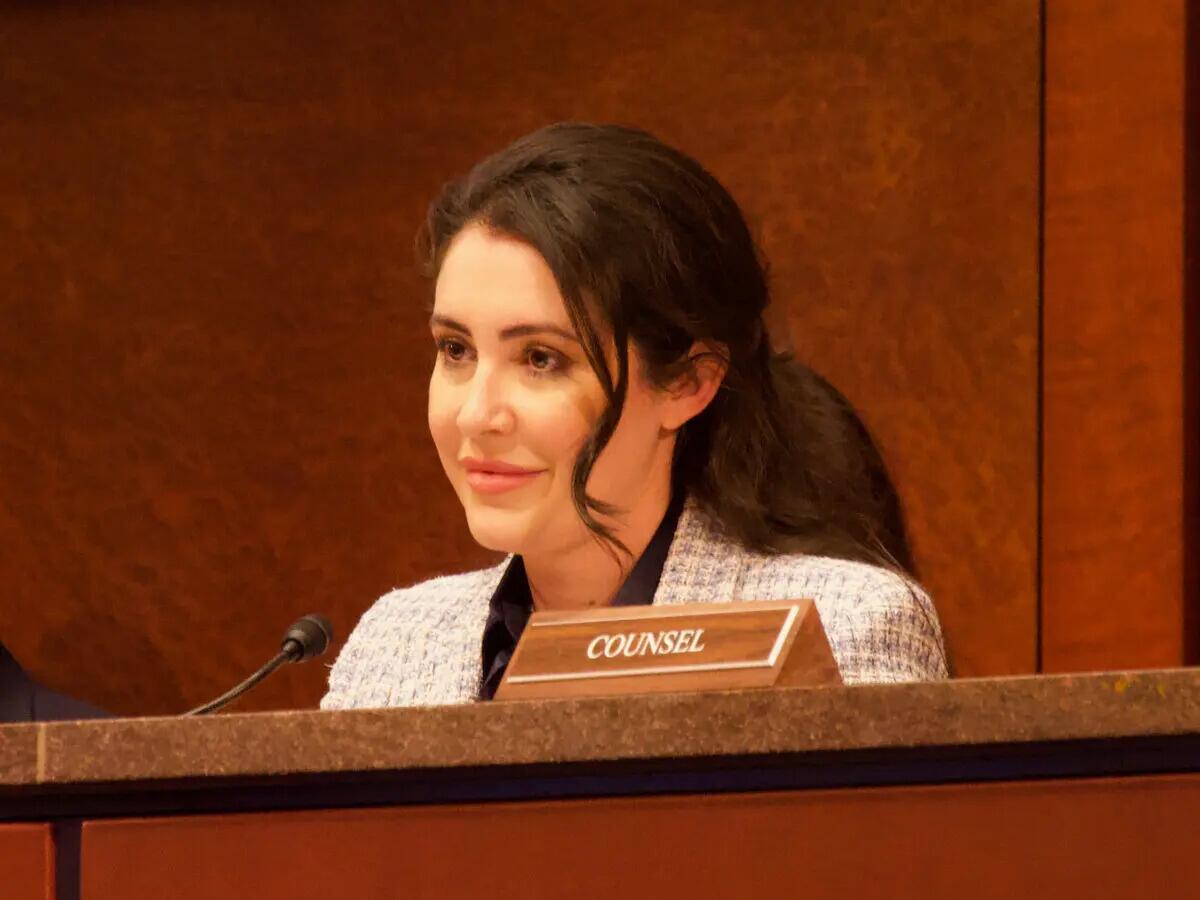
“For over six decades, questions have lingered, shrouded in secrecy and speculation,” task force chairwoman Rep. Anna Paulina Luna (R-Fla.) said during opening remarks. “What has been alarming to me is the amount of stonewalling the federal government put forth to hide this information from the American people.”
Chairwoman Rep. Anna Paulina Luna (R-Fla.) questions witnesses at the House Oversight Committee for Government Reform Task Force on the Declassification of Federal Secrets hearing regarding the JFK files at the U.S. Capitol on April 1, 2025. Travis Gillmore/The Epoch Times
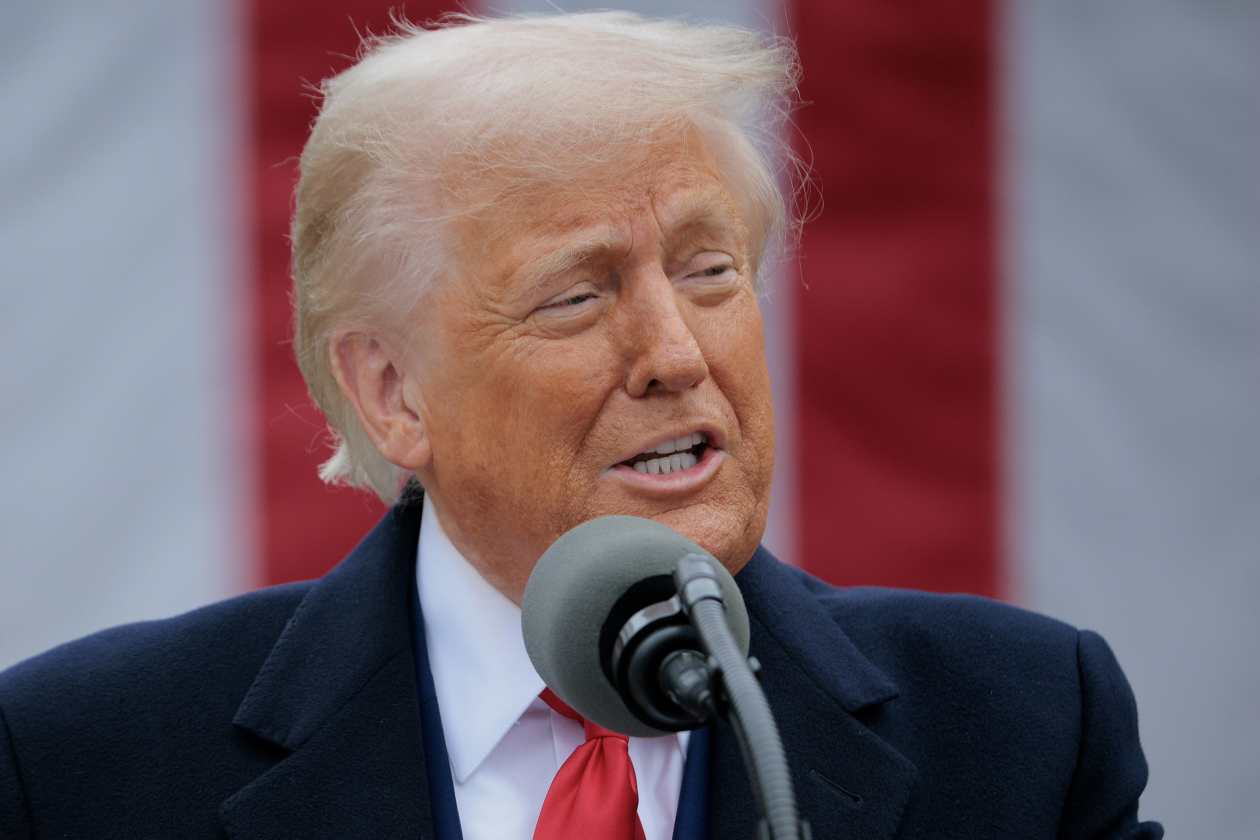
She said revelations in the approximately 80,000 pages of documents that were declassified by President Donald Trump on March 18 are “staggering” and raise “serious concerns.”
Task force members in both parties denounced what they called overclassification and called for increased transparency from the government.
“This is a known fact that we all should agree on. Federal agencies, obviously, have in the past obscured information and key facts from the public for too long,” Rep. Robert Garcia (D-Calif.) said during the hearing. “The CIA and [FBI], especially in this period of time, were deeply flawed institutions.”
Others on the panel, however, including Rep. Jasmine Crockett (D-Texas), used their allotted time to criticize the sitting president for what she described as a rush to release classified material that could result in the release of private information, such as Social Security numbers.
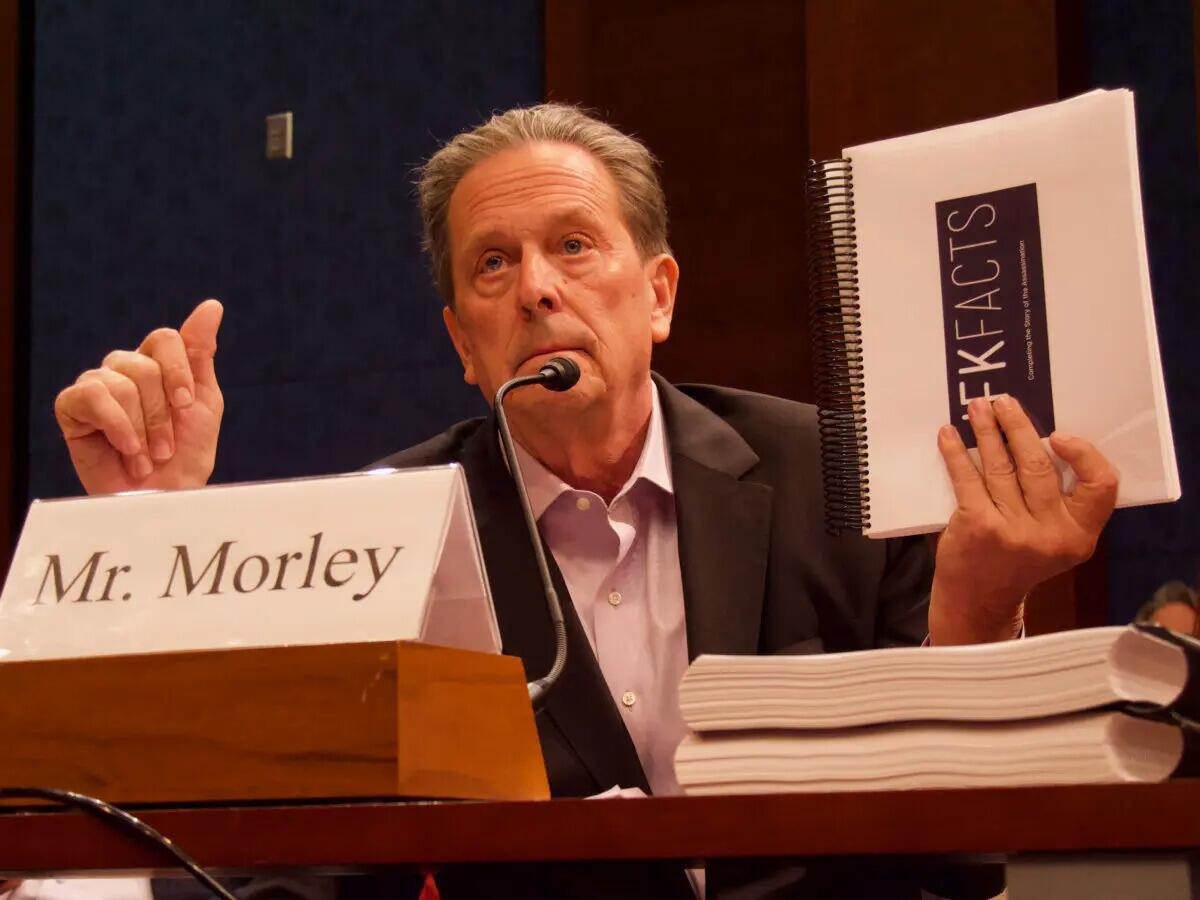
One witness called to testify, Jefferson Morley—an author and independent journalist who has researched the JFK assassination for 30 years and told the commission that he is a “liberal Democrat”—dismissed the line of inquiry.
Author and researcher Jefferson Morley testifies to the House Oversight Committee for Government Reform task force on the declassification of federal secrets during a hearing regarding the JFK files at the Capitol in Washington on April 1, 2025. Travis Gillmore/The Epoch Times
He said some of the new files show that James Angleton, longtime counterintelligence chief for the CIA; Richard Helms, who was the director of the CIA; and agency liaison to Congress George Joannides all lied under oath about the killing.
“Obstructing Congress cannot be considered evidence of incompetence,” Morley said. “Three false statements by top CIA officers about Kennedy’s accused killer, that is a pattern. It’s a pattern of misconduct; it’s a pattern of malfeasance.”
Author James DiEugenio highlighted a document written by Arthur Schlesinger—special assistant to Kennedy—and long redacted by the CIA, as of paramount importance in understanding the context of the murder, as it reveals Kennedy’s intention to reorganize the agency and minimize its authority.
He called for a new investigation, warning that “secrecy is the enemy of democracy.”
“I really hope that people will learn from the past and learn from experiences,” DiEugenio told the task force. “The CIA and the FBI should not have the last word on JFK’s murder. You should.”
Negotiations between the U.S. and Russia about the war in Ukraine seem to be losing steam.
Russia has long insisted on a solution of the conflict which removes the root causes of it. It can not allow for Ukraine to become a NATO battering ram at its doorstep. It can not allow a fascist government in Ukraine.
Any solution to the conflict must resolve (at least) those two issues.
The Trump administration wants the Ukraine problem out of its way. It wants to implement a ceasefire to be able to turn away and ignore the festering problem.
On Tuesday, Moscow reinforced its hard-line, maximalist demands when Russia’s Deputy Foreign Minister Sergei Ryabkov complained that Russia’s demand “to solve the problems related to the root causes of the conflict” was being ignored by the U.S., and “we cannot accept all of this as it is.”As the U.S. overstates its progress in talks, Moscow seems concerned that Trump’s negotiators do not understand how serious it is about these demands, according to [Thomas Graham, senior director for Russia at the National Security Council under the George W. Bush administration and now a fellow at the Council on Foreign Relations].
“The question is whether the administration has the patience to continue those negotiations and whether they can conduct the negotiations in ways that can extract concessions from the Russian side,” he said.
“Extract concessions”? By what?
The U.S. has no leverage over Russia. It is the Russian army that is winning on the battlefield in Ukraine. It has ample reserves in soldiers. It is by far outproducing NATO in weapons and munitions. It is stable in political, social and economic terms.
Secretary of State Marco Rubio is threatening Russia with more sanctions (machine translation):
“Now we are not interested in negotiations for the sake of the negotiations themselves – we will not continue this indefinitely. We have a certain amount of time during which we want to understand whether they are ready or not, and this time is already coming to an end. Congress has already started working on a bill for additional sanctions, and pressure from the Capitol will continue to grow, ” the US Secretary of State said.According to him, it was important “just to start a dialogue, because we haven’t talked for a long time, but now we need to make progress.”
The above-mentioned draft law provides for the introduction of new sanctions against Moscow, as well as duties in the amount of 500% on imports for countries that purchase Russian oil, gas, uranium and other products.
In “weeks, not months,” we will know if Russia is ready to end the war, Rubio said.
Russia is already under a total of 28,000 individual sanctions. If the U.S. is threatening other countries with sanctions for buying Russian oil they will find ways around it. It is, like the U.S. ‘tariffs’, just another way of wreaking the global U.S. position.
There are signs that Rubio and his fellow neo-cons in the Trump administration have decided to stall further talks:
Trump’s inner circle opposes a phone call to Putin until the Russian leader commits to a full ceasefire in Ukraine, two unnamed administration officials said.Despite Trump saying he plans to speak to Putin days earlier, no call between the two leaders has been scheduled, the unnamed officials said.
It is possible Trump will abruptly decide he wants to speak to Putin, but he has been advised against calling the Russian leader until Moscow communicates they agree to a full ceasefire in Ukraine, the two officials said.
Not talk to Putin and wait for what? Godoh?
There is fortunately a second line of communication between Trump envoy Steve Witkoff and the head of the Russian Direct Investment Fund Kirill Dmitriev. Russia is offering the U.S. very big investment opportunities. This is Putin’s carrot while the steady progress of the Russian army in Ukraine is his stick.
Dmitriev, during his visit in Washington, stated that talks were going well but that there are certain powers who want to derail them:
Russian President Vladimir Putin’s investment envoy Kirill Dmitriev, who is visiting Washington this week, said on Thursday that unidentified forces were trying to sow tension between Russia and the United States.”Today, numerous forces interested in maintaining tension stand in the way of restoring constructive cooperation… These forces are deliberately distorting Russia’s position, trying to disrupt any steps towards dialogue, sparing neither money nor resources for this,” Dmitriev said on Telegram.
“Opponents of the rapprochement are afraid that Russia and the United States will find common ground, begin to understand each other better and build cooperation both in international affairs and in the economy,” he said.
It is obvious that the moves against further negotiations are coming from neo-conservatives, like Rubio, within the Trump administration.
I have repeatedly argued that launching an attack against Iran would result in a catastrophic defeat for the US military. I believe this for many reasons, foremost among them my long-held conviction that the aircraft carrier is an obsolete relic of a bygone era that will not survive a war against a peer or near-peer adversary…. it just so happens that the largest and most expensive war-game exercise in Pentagon history tested the thesis back in 2002. It was a massive battle simulation code-named Millennium Challenge. The Pentagon spent a whopping 250 million dollars setting the whole thing up, and it consisted primarily of a carrier strike group escorting a large amphibious landing force into the Persian Gulf….
the naval task force had transited the Strait of Hormuz, and then he launched salvos of land-based ballistic missiles, anti-ship missiles launched from low-flying planes and helicopters, and swarms of elusive “fast boats” against the flotilla of ships. This attack entirely overwhelmed the defense capabilities of the fleet, and in a matter of mere minutes, all nineteen ships in the task force had been sunk, along with their entire complement of 20,000 sailors and marines.
It was a total catastrophe – not to mention a shocking humiliation for Pentagon planners… The problem is that, while the US military is substantially weakened since its high-water mark of dominance in 2002, the Iranians are significantly more formidable in every category….
I’d like to think the desk jockeys at the Pentagon “learned their lesson”, but I’m confident they did not. And if the US attempts to make war against Iran at this late stage of the empire’s denouement, I expect the real-life results to be at least as disastrous as they were in simulation over twenty years ago.
Will Schryver @imetatronink
Donald Trump’s advisors are withholding critical information that could dramatically impact his decision to launch preemptive air-strikes on Iran. Trump’s assumption –that the United States can inflict devastating damage on Iran without suffering significant losses itself– speaks to Trump’s ignorance about the breathtaking improvements in Iran’s state-of-the-art air-defense systems and hypersonic missiles. As we noted in earlier articles, Iran’s extraordinary missile and air-defense capability were put on full display during the tit-for-tat dust-up between Israel and Iran last year. But the results of those conflagrations have been shaped into a narrative that bears no relation to the truth. The Israeli-friendly media would have you believe that Israel overwhelmingly prevailed both offensively and defensively when, in fact, they fell short on both counts. What we learned from the altercation is that Israel’s air campaign was sharply rebuffed by Iran’s advanced multi-layered air defense systems while the vast majority of Iran’s long-range hypersonic ballistic missiles cut-through Israeli vaunted air defense systems striking targets unopposed. This basic outcome has been confirmed by a number of reputable analysts and even appeared in an article in the mainstream Guardian which said:
Satellite and social media footage has shown (Iranian) missile after missile striking the Nevatim airbase in the Negev desert, and setting off at least some secondary explosions, indicating that despite the highly touted effectiveness of Israel’s Iron Dome and Arrow air defences, Iran’s strikes were more effective than had been previously admitted.
Experts who analyzed the footage noted at least 32 direct hits on the airbase. None appeared to have caused major damage, but some landed close to hangars that house Israel’s F-35 jets, among the country’s most prized military assets…. Guardian
In short, Iran has the ability to put their missiles on any target in any location in Israel and Israel has no way to stop them. Here’s how military analyst Brandon Weichert summed it up in an interview on Absolute Truth:
Yes. Iran’s threat has evolved and the fact that everyone in the West in official positions seems to be reading off the same script should tell you that Iran, as I warned years ago, has evolved key capabilities to threaten Israel as never before. Brandon Weichert @WeTheBrandon (short video)
So, Iran not only has the offensive tools to inflict significant damage on US/Israeli bases and critical infrastructure in the region; it also has one of the most advanced, cutting-edge air-defenses in the world.
Does Trump know this?
No, he does not. Trump is a victim of Israeli misinformation as are his advisors. And that misinformation is affecting his ability to objectively weigh the risks against the benefits of any prospective conflict . He thinks that Iran will be quickly overpowered and forced to capitulate. But that’s a conclusion he’s drawn based the analysis of last year’s fracas between Israel and Iran. All of our research suggests that the media’s version of events is thoroughly unreliable and deeply flawed. Even so, that is the analysis on which Trump has based his decision to go to war.
Iran displayed its capability to knock-out Israeli air bases in time of conflict….
Important:
People must bear in mind, that no soft defeat measure helped to prevent the strike:
– No GPS/GLONASS spoofing and jamming helped, whether by or
– No sabotage asset
– No secret space-based counter system… In a real war scenario, Iran would use its high-precision missiles against the hardened and small targets… Patarames @Pataramesh
Given Iran’s impressive military capability, we think Tehran will retaliate, and the scale of their retaliation will be proportional to the magnitude of the perceived threat. If Iranian leaders think they face an existential threat (and the possible annihilation of the regime), then they are going to respond as if “their lives depended on it”, because their lives do depend on it. Which means they’re going to pull out all the stops and use whatever weapons they have to ensure their own self-preservation. They are not going to capitulate or wave the white flag. They’re going to go ‘scorched earth’ and fight to the death.
Trump doesn’t know any of this, because Trump is setting policy based on information he’s gleaned from an agenda-driven media operating on Israel’s behalf. He seems to think the war will be a “cakewalk” that will shower him with the praise and glory he deserves. He doesn’t realize that he is on-course to pop the biggest myth of all, the myth of US military superiority.
U.S. Special Envoy for Middle East Affairs Steven Whitcoff, who previously advocated for a policy of “maximum pressure” on Tehran, now speaks of the need for “confidence-building” and “resolving disagreements.” This sharp turn in foreign policy strategy raises many questions: What exactly prompted Washington to change its approach? What factors influenced the decision to soften its stance? And most importantly—does the U.S. have a real plan of action, or is this just a temporary tactical maneuver?
The softening of U.S. rhetoric is a clear sign that “maximum pressure” has failed
An analysis of the situation suggests that the policy shift is tied to a combination of factors—from the failure of sanctions to the Trump administration’s domestic political calculations. Additionally, Iran’s response and that of the international community play a key role in determining how events will unfold.
The Failure of “Maximum Pressure”
In 2018, the U.S. unilaterally withdrew from the Joint Comprehensive Plan of Action (JCPOA), expecting that harsh sanctions would force Iran to make concessions. The Trump administration believed economic strangulation would either lead to regime change in Tehran or its surrender on the nuclear issue. However, these calculations proved wrong.
Instead of backing down, Iran responded by escalating its nuclear activities. According to the IAEA, Tehran has significantly increased its stockpile of enriched uranium and begun developing more advanced centrifuges. Moreover, the country strengthened ties with Russia and China, finding alternative ways to bypass sanctions. As a result, the “maximum pressure” policy not only failed to achieve its goals but, from Washington’s perspective, worsened the situation by bringing Iran closer to developing nuclear weapons.
Now, Washington seems to have realized that isolating Iran hasn’t worked and is attempting to shift to diplomatic methods. The question, however, is whether it’s too late—Tehran, hardened by bitter experience, is unlikely to agree to new negotiations without serious guarantees.
Another reason for the policy shift may be domestic U.S. issues. Facing economic challenges and a lack of clear successes, President Trump urgently needs a foreign policy win that can be framed as a major achievement of his so-called “new approach.” A full-scale war with Iran is too risky—a scenario that could spell disaster for both the region and the U.S. itself. Thus, the administration is likely betting on a temporary agreement that can be marketed as a “diplomatic breakthrough.” However, this approach risks new problems—if the deal proves short-lived, it will further erode international trust in the U.S.
Internal Divisions in U.S. Leadership
The rhetorical shift also reflects deep divisions within the American leadership. While some officials, like Steven Whitcoff, advocate for negotiations, others—including National Security Advisor Mike Waltz—continue to insist on Iran’s complete abandonment of its nuclear program. These contradictions indicate a lack of a unified strategy.
Part of the administration appears to recognize the futility of further pressure, while another faction remains committed to a hardline approach. This division makes any long-term U.S. strategy unstable—a change in administration or even a shift in Congressional power dynamics could undo any agreements reached. Such confusion weakens the effectiveness of U.S. policy and gives Iran additional leverage.
Iran’s Response: Why Tehran Doesn’t Trust the U.S.
Iranian leaders remain deeply skeptical of Washington’s new overtures. Supreme Leader Ayatollah Khamenei has repeatedly stated that “threats and bribes do not work on Iran.” The experience of the 2015 JCPOA showed that the U.S. could abandon the deal at any moment, even if Iran fully complied.
After Washington’s unilateral withdrawal, Tehran lost faith in American guarantees. Now, Iran’s leadership demands not only sanctions relief but also legally binding commitments to prevent the U.S. from reneging again.
The situation is further complicated by internal political struggles in Iran. Conservative factions, empowered after the JCPOA’s collapse, oppose any concessions to the West. Additionally, Iran has adapted to sanctions by finding alternative oil markets and deepening cooperation with China and Russia. This reduces the effectiveness of U.S. pressure and diminishes Tehran’s incentives to compromise.
Even Washington’s closest allies, like Israel, have expressed discontent with the policy shift. Prime Minister Benjamin Netanyahu stated he distrusts new negotiations with Iran and views any concessions as dangerous.
European nations, however, have long called for renewed dialogue. Germany, France, and the UK—who remained in the JCPOA after the U.S. exit—hope for de-escalation. Yet their influence is limited, as key decisions are made in Washington and Tehran.
The Future of U.S.-Iran Relations. Currently, negotiations remain at an impasse. The U.S. offers dialogue but maintains sanctions, while Iran refuses concessions without guarantees. Experts believe Trump is attempting a “good cop, bad cop” tactic, similar to his approach with North Korea. However, unlike in 2015, Tehran is no longer willing to negotiate under pressure. Iranian leaders recognize that time is on their side—the longer the U.S. fails to achieve its goals, the weaker its position becomes.
A Way Out?
An exit from the deadlock—which the U.S. created in its relations with Iran—was discussed during recent trilateral talks between China, Russia, and Iran in Beijing. The meeting produced a comprehensive initiative to resolve the Iranian nuclear issue, based on five principles:
Peaceful Solutions Over Sanctions: All parties must reject coercive pressure and illegal restrictions, prioritizing dialogue. Conditions for renewed negotiations must be created while avoiding escalatory steps.
Balancing Rights and Obligations: Iran must uphold its commitment against nuclear weapons development, while the international community recognizes its right to peaceful nuclear energy under the NPT.
Returning to the JCPOA as a Foundation: The initiative calls for renewed focus on the JCPOA, urging the U.S. to demonstrate goodwill and rejoin the process.
Dialogue Over UN Pressure: Premature involvement of the UN Security Council would undermine trust and stall progress. Confrontational mechanisms would negate years of diplomacy.
Gradual Steps and Mutual Compromises: Forceful methods are ineffective—only equal consultations can produce a compromise respecting all parties’ interests and global demands.
The softening of U.S. rhetoric is a clear sign that “maximum pressure” has failed. Yet without real concessions and guarantees, negotiations are unlikely to yield a breakthrough. Iran has learned to play the long game, leaving Washington with a choice: serious, equal-footed dialogue or further escalation with unpredictable consequences. For now, the situation remains in limbo, with neither side willing to make the first move.
Department of Defense officials are telling Congress behind closed doors that it does not believe the new military campaign in Yemen has degraded the Houthis’ military capabilities. Within a month, the operations will cost over $1 billion.
According to the New York Times, the Pentagon informed Capitol Hill that the new operations against the Houthis – or Ansar Allah – have had “limited success.” The Houthis have reinforced their underground bunker, frustrating the White House.
The private assessment to Congress is far different from the public messages from the White House. “These Houthi strikes have been incredibly successful,” White House Press Secretary Karoline Leavitt said. “Last time I was at this podium, there were more than 100 successful strikes. There have now been over 200 successful strikes – Iran is incredibly weakened as a result of these attacks.”
On March 15, President Donald Trump announced that he would restart President Joe Biden’s bombing campaign in Yemen at an accelerated pace. In January 2024, Biden ordered his Pentagon to attack the Houthis after the group closed the Red Sea to Israeli-linked shipping in an effort to pressure Tel Aviv to end its genocide in Gaza.
Biden’s attacks on Yemen proved ineffective as Ansar Allah expanded the blockade of shipping to US-linked commerce. The group has also attacked US warships in the region and conducted direct missile and drone strikes on Israel.
In January, Hamas and Tel Aviv reached a ceasefire and hostage, leading Ansar Allah to lift its blockade and end attacks on US ships and Israel. After Tel Aviv broke that agreement, the Houthis announced they would reimpose their blockade on Israeli-linked shipping.
In a now infamous Signal chat, Trump’s top national security officials discussed resuming the bombing of Yemen. Vice President JD Vance was the only participant in the chat to dissent, claiming that the bombing campaign benefited Europe at the expense of the American taxpayer.
Vance did not note that the primary beneficiary of the policy is Tel Aviv. In the Signal chat, several officials celebrated the bombing of an apartment building in Yemen’s capital city, believing an Ansar Allah official was inside the structure. That target was hit with intelligence from Tel Aviv.
Officials speaking with the Times confirmed that the Department of Defense continues to use Israeli intelligence to generate targets in Yemen.
During the first week of bombing Yemen, at least 25 civilians were killed in the US strikes. Yemeni officials say a total of 60 civilians have died from the American bombs.
Following the US resumption of the bombing of Yemen, the Houthis have also restated targeting US warships and Israel with missiles.
Trump administration officials have stated that its bombing of Yemen will successfully deter Ansar Allah, even though that policy failed under the previous administration. They argue that heavier strikes will erode the Houthis’ military capabilities.
While the Pentagon said the renewed bombing campaign has not degraded the Houthi power, it has come at a significant price.
The Times reports that the Pentagon has spent $200 million on munitions to strike Yemen. The additional deployment of two aircraft carrier strike groups and B-2 bombers will push the total cost of the operations to over $1 billion next week.
The price of striking Yemen is so high, in part due to Ansar Allah’s air defense capabilities. In recent weeks, the Houthis have downed multiple Reaper Drones. This has led the Pentagon to use longer-range missiles to strike Houthi targets.
Some Defense officials have expressed concern that the administration is using too many munitions in Yemen and degrading the military’s ability to fight a potential war with China.
Apple is at the center of the trade wars as investors wonder whether it will receive U.S. tariff exemptions. Photo: Agence France-Presse/Getty Images
By Laila Maidan
Before buying Apple’s stock, know that chances of a tariff exemption are slim
In 2018, Washington came to the table willing to bend. This time, policy frictions mean exemptions are less likely.
This time, Trump passed tariffs through the International Emergency Economic Powers Act (IEEPA) without a process that allowed companies to request exemptions, according to a note from Morgan Stanley — which added that if Apple were to receive one, it would need to come directly from the president. For that reason, the investment bank pegs the chances of an exemption at only 20%.
[Ed Apple is a US company that moved its manufacturing operations to China in the early 2000s because specialized Chinese electronics workers are wiling to work for far lower wages than US workers. I think Trump is hoping his tariffs will inspire he company will move at least some of it manufacturing operations back to the US].
Governments in Latin America have been at the forefront of opposition to Israel’s genocide in Gaza, and several of those which have done so suddenly face new threats, even including attempted coups. Adrienne Pine, a professor at the California Institute of Integral Studies, said during a recent webinar hosted by the Nicaragua Solidarity Coalition that “anybody who stands with Palestine is going to be attacked in Latin America by the U.S. and by Zionists.”
[…]
Of the 165 countries that recognize Israel, only four have officially cut diplomatic ties with the country since it began its Gaza offensive, and all of them are Latin American: Bolivia, Belize, Colombia and Nicaragua (Venezuela severed its ties with Israel in 2009 while Cuba broke off relations during the Yom Kippur War of 1973).
A further eight countries have withdrawn their diplomats from Tel Aviv since October 7, 2023, of which Chile, Brazil, and Honduras are from Latin America.
This article looks at the experience of three governments in the region which have strongly opposed Israel’s genocidal war—Nicaragua, Honduras, and Colombia. All are suffering attacks that appear to be either in direct retaliation for their actions or which suspiciously coincide with them. All three have progressive governments which have historic reasons for challenging Israel, adding to their condemnation of its recent actions.
[…]
As well as extensive trading relationships, Israel has often backed repressive regimes or undermined progressive governments. In “Israel’s Latin American trail of terror”Aljazeera summarises its grisly history in the region, from training death squads in El Salvador to supplying the arms used to massacre Guatemalan campesinos.
[…]
In Nicaragua, it supplied arms to the “Contra” forces that attempted to overthrow the Sandinista revolution in the 1980s. In Honduras, it helped prevent President Mel Zelaya from returning to power after he was ousted in the 2009 coup.
[…]
In Colombia, it sold massive quantities of arms to paramilitary groups which destabilized the country during decades of widespread violence.
Nicaragua is a “platform for terrorism”
Israel’s history means it is well placed to retaliate when Latin American governments attack it as genocidal. The example of Nicaragua is the clearest. The country was the first to join the action taken by South Africa in bringing Israel before the International Court of Justice (ICJ) at the beginning of this year.
It followed this by taking its own ICJ case against Germany, for supplying arms to Israel. The ICJ’s provisional ruling had the initial effect of reducing the flow of German weapons until Israel later signed a “commitment” that they would not be used in violation of the genocide convention.
The attempted retribution was swift. Four days after Ortega’s speech, the Israeli consul in neighboring Costa Rica, Amir Rockman, gave an interview in which he claimed that “Iranian interests and, in particular, those of the terrorist organization Hezbollah, are installed in Nicaragua.”
He further claimed that “radical Iranian forces and terror groups operate freely” in Nicaragua, although he was not asked for, nor did he provide, any evidence.
Given that some 3,000 kilometers separate Nicaragua from the U.S. border, the usefulness to a “terror group” of being able to operate in a small Central American country is far from clear.
Right-wing outlets opposed to the Sandinista government gleefully elaborated on what Rockman said. Mijal Gur-Aryeh, Israel’s ambassador in Costa Rica, told La Prensa that “Nicaragua had been converted into a platform for terrorism in the region.” A few days later she added that Hezbollah had “bases” in Venezuela and Bolivia as well as Nicaragua.
[…]
Nicaragua’s Sandinista government rejected Israel’s allegations on October 21. While there is, as of yet, no evidence that Israel’s claims have resonance in Washington, if Nicaragua were to be designated a “state sponsor of terrorism” (SSoT) the effects could be very serious.
It could potentially do even more harm to its economy than the current raft of US. sanctions, affecting its rapidly growing tourism industry and perhaps much more. A warning is provided by the severe damage done to Cuba’s economy after it was added to the SSoT list, which added to the already considerable damage caused by the longstanding U.S. blockade.
An SSoT designation also gives license to U.S. and other Western law enforcement agencies to persecute those working in solidarity with a listed country, as has already happened to those supporting Palestine (with solidarity groups often falsely accused of supporting Hamas).
Nicaragua survived an attempted coup in 2018, and Ortega has made no suggestion that a second coup is on the cards. However, both Honduras and Colombia have made such recent claims. We consider Honduras next.
A new “coup attempt” in Honduras?
Adrienne Pine’s comments about attacks on countries supporting Palestine followed on from her description of Israel’s role in supporting the neoliberal regime that ran Honduras from 2009 until the Libre party finally ousted it in the 2021 election.
This included spending $342 million on importing Israeli military equipment. In a reversal of her predecessor’s policy, progressive President, Xiomara Castro, has expressed strong support for Palestine. She has recalled her ambassador from Israel and in September, at the meeting of the UN General Assembly, condemned the genocide in Gaza. In what was seen by Washington as a further provocation, Honduras was one of the first countries in Latin America to recognize Nicolas Maduro’s victory in Venezuela’s July 28 election.
Following both these moves, Castro has come under intense pressure on different fronts which, she says, amounts to an attempted coup. In response, she has ended the extradition treaty between her country and the United States (the same treaty that allowed her predecessor, Hernández, to be sent for trial in New York). Castro herself has direct experience of a coup, since it was her husband, Mel Zelaya, who was deposed as president in 2009 by the U.S.-backed military and forced out of the country. It is hardly surprising that she is alert to the possibility of a second one.
Who orchestrated the coup attempt? Suspicion falls on Washington’s ambassador in Tegucigalpa, Laura Dogu, who has a track record in this respect. She was the ambassador in Nicaragua prior to the 2018 coup attempt, and since coming to Honduras in 2022, has made strong links with capitalist-class opponents of Castro’s Libre party, just as she did in Managua with business leaders hostile to the Sandinista revolution.
As Pine explained in the webinar, Dogu tried to paint Honduras’s links with Venezuela as related to drug trafficking, and a few days later fuel was added to this fire by the publication of a video showing a drug baron in discussion with Castro’s brother-in-law, allegedly about providing election campaign funding. The video was released by Insight Crime, a thinktank funded by USAID, the Open Society Foundation and similar bodies allied with Washington.
While Xiomara Castro’s victory in the 2021 election was decisive, and she still enjoys strong working-class support, there are abundant risks to her presidency. She faces a tumultuous congress, her vice-president resigned and is now her opponent, and both the military and the police forces are still contaminated by the corruption and impunity they enjoyed under previous neoliberal governments.
Murders of community leaders who stand in the way of big business continue. The most recent was September’s killing of esteemed community leader Juan López. As James Phillips writes in CovertAction, the crime “highlights the inability (weakness) of the Castro government in the face of the powerful corruption that still poisons much of the political economy and daily life of the country.” Castro specifically mentioned the case and her determination to solve it in her speech to the UN.
Castro has not yet been able to break the strong links between the Honduran military and Israel (much less its links with the U.S.). Indeed, it was revealed in April that Honduras was still buying Israeli military equipment of the kind used in Gaza, and that Honduran police officers have been receiving training in Israel. The news came from the Israeli ambassador, presumably intended to embarrass Castro.
Colombia: “The coup has begun”
Colombia’s President Gustavo Petro is probably Israel’s strongest critic in Latin America. He not only denounces the Israeli regime as “genocidal,” but has described its actions in Gaza as comparable to Auschwitz. He broke diplomatic relations with Tel Aviv in May this year, provoking an immediate call from Washington urging him to change his mind, accompanied by warnings that this put at risk Colombia’s development and security.
Colombia’s ambassador to the U.S. recently spoke to Jacobin about the significance of his country’s severance of ties with Israel. He noted that previous governments would have made sure to “…brief the United States before it made any public announcement on any policy issue. But this time, when we severed ties with Israel, we didn’t tell the US.”
Yet Petro’s increasingly strident denunciations of Israel, including (in September) likening its military offensive in Gaza to “the horrors of the Holocaust,” and then saying that Netanyahu and his government “embody Nazism,” brought a major backlash. Washington responded by saying that “We cannot accept this. We cannot tolerate this” and the U.S. ambassador in Bogota labelled Petro as anti–Semitic. Nevertheless, like Xiomara Castro, Petro doubled down on his denunciations of Israel when he spoke at the UN General Assembly, saying “When Gaza dies, all of humanity will die.”
Like Honduras, Colombia had close ties with Israel under its previous governments. Petro’s predecessor, Ivan Duque, signed a free trade agreement with Israel in 2020. Colombia’s trade with Israel became second only to Brazil’s in the continent, with the principal export being coal. Petro halted coal exports in August this year, noting that the fuel was being used to make bombs to kill Palestinian children.
On October 1, Venezuela’s Nicolas Maduro warned of a planned coup in Colombia, accusing its former president Ivan Duque of working with Washington to carry it out. Then on October 9, President Petro claimed that “the coup had begun”, citing the attempt by the National Electoral Council to bring his presidency to an end via an investigation into alleged illegalities in his election campaign finances, allegations which he strongly contests.
It then emerged that, not long before the last election, Ivan Duque purchased Israeli “Pegasus” software and used it to spy on political opponents. While this leak (like the similar one in Honduras) may have been intended to remind Petro of his military’s continuing connections with Israel, it appears to have backfired. Petro has accused Duque of using state money illegally and of money laundering, citing as evidence that half of the $11 billion dollar payment was unaccountably sent to Israel by plane, in cash. Nevertheless, the news strengthened the impression that Petro, like previous presidents, is surrounded by corruption.
This is one of several similarities between Petro’s situation and that of Xiomara Castro in Honduras. First, there are questionable attempts to link Petro with drug cartels via accusations against his relatives.
Second, like his Honduran counterpart, he faces constant right-wing resistance to his attempts at radical transformation of his country, up to and including “lawfare” against his presidency itself.
And in a third similarity, the weakness of Colombia’s justice system in tackling corruption was illustrated by the fact that a case against Chiquita Brands International for financing paramilitaries could only be brought to its recent conclusion in a U.S. court, just as happened in Honduras in the case against former president Hernández. Of course, the two countries also share a long history of close ties between their security systems and the U.S. military, including the hosting of large U.S. military bases.
Aimed at ages 8-18, this documentary traces the fascinating evolutionary history of crocodiles, birds, whales and elephants.
Crocodiles
Because early crocodile fossils are relatively rare, scientists use changes in DNA structure to trace their evolutionary changes. By calculating degrees of difference between fossil and modern crocodile DNA, they can calculate the number of years separating modern animals from their ancestors.
The first crocodiles appeared 230 million years ago during the Triassic Age, when al the Earth’s continents were a single land mass called Pangia. Predating dinosaurs, crocodiles were land predators were land predators who walked on their hind legs. They subsequently evolved into a greyhound-like creature, walking on four legs and built for speed. Following a mass extinction event that wiped out most land and sea animals, massive volcanic activity broke Pangia apart. It also substantially increased volcanic activity, substantially increasing atmospheric carbon dioxide, leading to a mass extinction event.
Patagonia in South America was a great place for the surviving crocodiles, where they diversified into multiple species, including the 14 modern species.
Birds
Over 150 million years ago birds evolved from dinosaurs and still possess the same claws and tooth-like beak. However unlike birds, most dinosaurs lacked wish bones, the structure making flight possible.
Bird diversification expanded when crocodile evolution ended. There are more species (10,000) among birds than any other vertebrates, and they have colonized every habitat on earth.
In 1960 paleontologists finally discovered a dinosaur with a wishbone. It had feathers for warmth, clawed wings it used to kill prey and a short tail (like most birds). I
Whales
Bowhead whales can live up to 200 years. Blue whales are bigger than dinosaurs and have hearts the sized of small cars. Fossil whales are identified based on special ear bones in whales that help them detect sounds under water. The earliest whale fossil was a land mammal with webbed feet that that walking on four and spent time in the water. It took whales 10 million years for them to become fully aquatic.
Whales are extremely intelligent and live in a family social structure (parents, babies, grandparents, aunts and uncles) similar to humans. They communicate via low frequency vibrations that travel for miles and experience grief, anger and empathy.
Elephants
Sixty million years ago, elephant ancestors were the size of a rabbit and had incisors that gradually became tusks. Fifty-six million year-old ancestor fossils the size of a small dog have been discovered in Morocco.
The modern elephant species Elephants first appeared in Kenya’s Turkana Basin in Kenya 17 million years ago. These fossils are roughly 1/3 to 1/2 the size of modern elephants. Modern day elephants appeared seven million years ago.
Like humans, they also made numerous migrations (as family groups) out of Africa (fossil footprints have been in the desert near Abu Dhabi). Their first exodus was 18 millions years ago when all the continents were still connected. a million years ago some elephants made it all the way to Japan. The extinct elephant species known as woolly mammoths adapted to the cold of Siberia and North America.
Elephant fossils have been found on all continents except Austrailiaa,South America and Antarctica.
Three things can happen right now in the financial markets. Two of them are not too disastrous.
Lower interest rates on U.S. Treasury bonds? Check.
U.S. dollar down? Check.
An economic panic that makes people easier to manipulate? Check, check, check.
This isn’t just me talking. This is Team MAGA itself. As we observed here just a week ago, U.S. President Donald Trump wants and needs both the U.S. dollar and long-term U.S. interest rates to fall.
The turmoil that has followed Trump’s “liberation day” batch of tariffs is delivering exactly that.
Meanwhile it was Trump’s own close adviser Elon Musk who said the quiet part out loud last fall, shortly before the election, when he stated that panic and “necessary hardship” would be on the administration’s agenda.
So why people are acting so surprised is anyone’s guess. This isn’t an accident. This is “mission accomplished.” Trump needed this sort of turmoil to enact his economic agenda, and he’s getting it.
How much pain is being felt by Trump, by Treasury Secretary Scott Bessent, by Commerce Secretary Howard Lutnick or by Tesla boss Musk? All four are billionaires. When you’re that rich, stock-market turmoil isn’t a hardship or even a risk. It’s an opportunity.
For everyone else — investors, business owners, workers — it’s another matter. With apologies to the late football coach Woody Hayes, roughly three things can happen right now in the financial markets. Two of them are not too disastrous.
‘Big, beautiful’ trade concessions
The first would be that foreign governments from Brussels to Beijing trim their sails to Trump’s maelstrom, announcing the kind of “big, beautiful” trade concessions that would allow the president to call off the tariff storm while claiming a win. The concessions might be more show than substance, but who cares?
From where we’re sitting now, this would be a pretty decent outcome.
Republican politicians might decide that they’re more scared of a sea of red ink than a sea of red hats.
The second possibility would be a sudden outbreak of constitutionalism, political responsibility or at least self-preservation among the 273 Republicans currently drawing salaries as U.S. representatives and senators. They — and maybe they alone — could actually force Trump to change course.
As I mentioned in a column just before Trump took office in January, the president does not control the nation’s “fifth estate” — the financial markets. They will be heard. If the White House won’t listen, sooner or later Capitol Hill will — especially if economic conditions worsen.
Kentucky Sen. Rand Paul, not previously suspected of being in the pay of “international globalists,” has already publicly questioned the constitutionality of a president unilaterally imposing taxes. Presumably Paul will soon be primaried by Team MAGA for his impudence. “Senator Laura Loomer” might have a nice ring to it.
But some of Paul’s colleagues might also decide, later if not sooner, that they are more scared of a sea of red ink than a sea of red hats. In the 2024 congressional elections, 22 House Republicans won by less than 10 percentage points, and 15 won by less than 5 points.
Meanwhile, some 54% of Americans own retirement accounts. Many of these people typically vote Republican. They will be going to the polls in 20 months’ time for the U.S. midterm elections.
Some 99% of Americans also depend on a healthy economy for their livelihoods, whether they have investments or not. Republicans in Congress might want to ponder Thursday’s stock-market shock in more detail.
For instance, the S&P 500’s 4.8% fall on Thursday slightly exceeds the U.S. market benchmark’s 4.7% plunge seen on the day Lehman Brothers collapsed in 2008.
And despite Bessent’s quip that the stock market had “a Mag Seven problem, not a MAGA problem,” the turmoil is not restricted to big, powerful companies, least of all those run by technology tycoons.
Small-company stocks fell by more than big-company stocks: The S&P Small Cap 600 Index dropped more than 7% on April 3. Shares of “Main Street” companies that reflect the real economy were in the eye of the storm. Homebuilders’ share prices fell 6%. Shares of smaller regional banks and savings banks fell 10%. FactSet reports that 58 publicly traded companies are headquartered in Ohio: On April 3, their shares fell 5.9% on average.
One day’s stock-market action alone won’t matter too much. But stocks tend to be forward-looking. Falling share prices tend to anticipate tougher times ahead.
What is most disturbing is the third possibility — namely that neither foreign governments nor America’s legislators decide there is anything they can do, or want to do, and Trump continues to carry out his economic agenda without constraint. I’m willing to wager good money that nobody really knows where this would lead — including the current occupant of the White House.
Without U.S. support Israel’s leaders could have been compelled to seek a just resolution of the Israel-Palestine conflict instead of pursuing a Greater Israel
In his 1983 book The Fateful Triangle: The United States, Israel & the Palestinians, Noam Chomsky argued against the grain that the Israelis had compromised their country’s security in choosing to ally with the U.S. and were sowing the seeds of their own destruction.
According to Chomsky, Israeli leaders felt invincible because of U.S. weapons supplies and pursued a rejectionist course toward the Palestinians when a durable peace was needed to guarantee Israel’s security.
As Israeli politics shifted more to the right, messianic proponents of a Greater Israel took over the government and carried out repeated military aggression that antagonized Israel’s neighbors and made its people more vulnerable to attack.
Chomsky was a Zionist in his youth who had worked on a Kibbutz in the late 1940s but became disillusioned by the racism toward Palestinians that he saw as pervasive in Israeli society.
Chomsky felt that the Zionist project could have been successful if it adhered to the vision of Ahad Ha’am, Martin Buber and Albert Einstein of a bi-national state where Arabs and Jews learned to live together peacefully and with mutual respect.
Chomsky did not believe that the Israeli lobby had manipulated U.S. leaders into supporting Israel—rather he believed that the U.S. executive branch supported Israel because it functioned as a strategic proxy that helped the U.S. in its goal of trying to dominate the Middle East and exploit its oil resources.
Over the years, Israel performed much of the dirty work for the U.S.—as when it humiliated U.S. nemesis Gamal Abdel Nasser in the 1967 Six-Day War; helped undermine the Assad dynasty in Syria, and assisted in U.S. regime-change operations directed against Iran, which had escaped the clutches of U.S. neo-colonial control under the Shah following the 1979 Islamic Revolution.[1]
Chomsky was attacked for years by neo-conservative intellectuals and other academics for being supposedly a closet anti-Semite and far-left extremist (Chomsky identified with anarchism and libertarian strains of socialism).
But today it seems even more clear that Chomsky was correct in his analysis and that the U.S.-Israeli alliance—by which the U.S. poured (and continues to pour) billions of dollars in weaponry each year and assisted Israel in developing into a military technological powerhouse—has been a catastrophic one, not only for the Palestinians, but also for Israelis and Jews the world over.
The Fall of Israel
Dr. Dan Steinbock is an internationally renowned expert on world geopolitics who has published a new book with Clarity Press called The Fall of Israel: The Degradation of Israel’s Politics, Economy & Military.
The book affirms many insights that Chomsky made in Fateful Triangle while tracing Israel’s moral degradation under the leadership of Benjamin Netanyahu.
Steinbock starts The Fall of Israel by juxtaposing the brutality of Israeli attacks in Gaza with the mass protests directed against widening social inequality, political corruption and the attempt by Netanyahu’s government to impose judicial reforms designed to eviscerate what was left of Israel’s democracy.
Steinbock writes that “the common denominator of the destruction of the Gaza Strip and the mass protests against Jewish autocracy is the fall of Israel.”[2]
That fall is reflected in increasing suppression of dissent, historical revisionism in education, routinization of torture, and widespread anti-Arab settler pogroms. It is further epitomized by a halt in Israel’s tourism industry as a result of the Gaza War, the downgrading of Israel’s credit rating, and an increased brain drain.
Hamas and Hezbollah shelling in response to Israeli attacks has displaced an estimated 200,000 Israelis from their homes; foreign laborers are exiting the country and the cancelation of 150,000 Palestinian work permits in the West Bank has brought construction to a standstill.
In the fourth quarter of 2023, Israel’s economy shrank by 20% on an annualized basis, a figure that may grow worse if countries like Turkey sustain boycotts on imported goods that Israel depends on.[3]
Like Chomsky, Steinbock links Israel’s degradation to its alliance with the U.S., emphasizing that Israel’s militarization has been “enabled by the symbiotic bilateral ties with Washington and massive U.S. military aid.”[4]
U.S. neo-conservatives and Jewish donors have hastened the empowerment of right-wing proponents of a Greater Israel atop Israel’s government who hold a racist contempt for Palestinians and support the construction of illegal settlements in the Occupied Territories to drive Palestinians further off their land.[5]
Steinbock quotes a prescient 1968 essay by Yeshayahu Leibowitz, an Israeli orthodox Jew and public intellectual called “The Territories,” which envioned Israel’s supposedly glorious triumph in the 1967 Six-Day War over Egypt and Nasser—when it acquired the West Bank and Gaza—as a “dark prelude to endless colonial wars that could turn Israel into a police state, subvert democratic institutions, foster corruption, transform Palestinians into an exploited underclass and the Israeli military into suffering from the kind of colonial demoralization seen previously in Algeria and Vietnam (and more recently in Iraq and Afghanistan).”[6]
Leibowitz proved to be prophetic, though Steinbock notes that the seeds of self-destruction started even earlier with the 1948 Nakba, or ethnic expulsions, of about 700,000 Palestinians during Israel’s independence war, which set the groundwork for today’s calamities.
The Nakba and Origins of Likud
The Nakba was rooted in a colonial mentality among Jewish settlers in historic Palestine that went back to Theodor Herzl, the father of the Zionist movement, who envisioned himself as a Jewish “Cecil Rhodes” and the Israeli state as a “rampart of Europe against Asia, an outpost of civilization as opposed to barbarism [represented by the Arabs].”[7]
[…]
Israel’s first Prime Minister, David Ben-Gurion, convened a group of a dozen senior military and security figures—including Moshe Dayan and future Prime Minister Yitzhak Rabin—who prepared the plans for ethnic cleansing and supervised its execution.[8]
A key figure in the operation was Menachem Begin, Israel’s prime minister from 1977 to 1983, who was the founder of Netanyahu’s right-wing Likud Party (originally called Herut).
Begin traced his lineage to the revisionist Zionism of Ze’ev Jabotinsky which emphasized the importance of armed struggle and saw Italy and its fascist leader Benito Mussolini as an ideological soulmate.
In 1948, Begin was head of the paramilitary arm of the Haganah, the Irgun, which carried out the Deir Yassin massacre when more than 100 Palestinians were murdered and another 650 were driven from their homes.
The New York Times published a letter in December 1948 signed by Albert Einstein, Hannah Arendt and other prominent Jewish intellectuals that characterized Begin’s Herut Party, the forerunner of Likud, with being a political party “closely akin in its organization, methods, political philosophy and social appeal to the Nazi and Fascist parties.”[
Likud has always sustained the vision of a Jewish state from the Mediterranean Sea to the Jordan River and has been hostile to the peace process and the idea of a Palestinian state. This is in contrast to Israel’s Labor Party, which has been willing to at least consider Palestinian statehood.
Punitive Doctrine and More Ethnic Cleansing
Steinbock emphasizes that dominant figures in Israel’s military apparatus—notably Ariel Sharon and Moshe Dayan—lay the foundation for Israel’s punitive military doctrine by which brutal reprisals and disproportionate retaliation were adopted in response to terrorist attacks.[10]
After the Nakba, Palestinian fedayeen mounted raids into Israel from Gaza and other border regions. This triggered brutal reprisals by Israeli commando units like those led by Sharon in Qibya in the West Bank in October 1953 where nearly 70 villagers were killed, two-thirds of whom were women and children, and 50 houses were demolished, with some inhabitants still inside.[11]
A missed opportunity occurred in the mid 1950s during the prime ministership of Moshe Sharett, the Henry Wallace of Israel,[12] whose yearning for peace was undermined by right-wing elements in his Cabinet who carried out undercover terrorist attacks in Egypt designed to undermine Sharett’s peace overtures to Egyptian leader Gamal Abdel Nasser.
Continuing from the pattern of the Nakba, large-scale ethnic cleansing was carried out after the 1967 Six-Day War.
Some 245,000 Palestinians were forced to flee from the West Bank and Gaza Strip into Jordan; 116,000 from the Golan Heights to Syria; and 11,000 from Gaza to Egypt, with many becoming dependent on UNRWA (UN Relief and Works Agency for Palestine Refugees).
[…]
Netanyahu Clan’s Extremism
Benjamin Netanyahu’s father Benzion, a professor of Judaic Studies at Cornell University, worked for a period as an assistant to Ze’ev Jabotinsky’s personal secretary and shared his insistence on the creation of an “Iron Wall” to separate Jews in Israel from the Palestinians.[14]
As an old man in the 1990s, Benzion denounced the Oslo peace agreement as representing the potential ruin of Israel, and supported the invasion of Gaza “even if it brings us years of war.” Benzion sustained throughout his life an Orientalist bias characteristic of the neo-conservatives, stating that “the tendency to conflict is the essence of the Arab. He is an enemy by essence…his existence is one of perpetual war.[15]
Benjamin’s views that have now landed him at The Hague are very reminiscent of his father’s and also those of his grandfather Nathan Mileikowsky, a Russian-born rabbi and early Zionist champion known for his advocacy against socialist Zionism and anti-Zionists.[16]
After migration to Israel, Mileikowsky raised funds for the pre-state Yishuv and collaborated with Rabbi Abraham Isaac Kook, the founding father of religious Zionism whose son, Rabbi Zvi Yehuda Kook, is the revered spiritual father of Israel’s settlers and the messianic far right.[17]
As a young man Benjamin served in an elite reconnaissance unit of the Israeli military and, after studying at MIT, became connected to powerful neo-conservatives in the U.S. through Rabbi Menachem Schneerson, head of the Chabad-Lubavitch movement who tried to link the fate of Israel, world Jewry and the United States.
[…]
From the start, his career has been overshadowed by dark-money controversies and, in 1997, police recommended his indictment on corruption charges for influence-peddling, foreshadowing the more recent criminal cases against him.[18]
[…]
Netanyahu’s aversion to a two-state solution, ironically, led his government to funnel money to Hamas, which was viewed as an instrument to undermine the secular Palestine Liberation Organization (PLO) and divide the Palestinian people so they could be conquered.[21]
Netanyahu’s power base has been preserved in part because of his connection to the late Sheldon Adelson, a billionaire casino owner tied to organized crime, and other U.S. billionaire neo-conservatives like Irving Moskowitz who has financed the settler movement in Israel.
[…]
Extremists in the Cabinet
[…]
Israel’s Minister of National Security, Itamar Ben-Gvir, is a devotee of Rabbi Meir Kahane (1932-1990), an FBI informant who founded the ultra-right wing Jewish Defense League, and was filled with hatred toward Arabs.[23]
Advocating for the expulsion of Arab citizens of Israel, Ben-Gvir first gained notoriety in 1995 by brandishing a Cadillac hood ornament that had been stolen from Prime Minister Yitzhak Rabin—“we got his car and we’ll get him too,” Ben-Gvir said, weeks before Rabin’s actual assassination.[24]
[…]
Steinbock calls Netanyahu’s Minister of Defense, Bezalel Smotrich, “a vehement opponent of a Palestinian state and self-proclaimed fascist, racist and homophobe who lives in an illegally built West Bank settlement.” In 2021, he declared that David Ben-Gurion should have “finished the job” and kicked all Palestinians out when Israel was founded.
[…]
Resource War and Jared Kushner’s Dream
[…]
After October 7, Israel’s intelligence ministry prepared a secret memorandum that called for the transfer of Gaza’s population “outside the combat zone” to Egypt, which was an overt demand for ethnic cleansing. Wealthy U.S. investors like Jared Kushner were salivating at the prospect of developing high-end condominiums and resorts on Gaza’s beach-front property.[30]
[…]
Crucial U.S. Military Support
[…]
Since most of those arms were purchased with U.S. taxpayer money through the U.S. Foreign Military Sales (FMS) program, American citizens effectively funded most of the carnage in Gaza. The financial flows that made possible the destruction comprised the annual $3.8 billion in U.S. military aid, plus an additional $1.4 billion to buy more weapons.[35]