Breast Cancer at Surprisingly Young Age: Are Cellular Phones to Blame?

By GreenMedInfo Research Group

When a 21-year-old with no family history of breast cancer presented with bloody nipple discharge and extensive tumors right where her cell phone rested in her bra, her doctors took notice. She wasn’t alone – three more women under 40, all with cell phones tucked in their bras for hours each day, had nearly identical tumors. A coincidence, or cause for concern?

For years, people have questioned whether radiation from cell phones could be dangerous. While the radio waves cell phones emit are non-ionizing, meaning they don’t directly damage DNA like x-rays, studies on the health effects have been mixed and inconclusive.1 Most research has focused on brain tumors, as people worried holding phones to their heads could cause harm. While some major studies have found little evidence definitively linking cell phone use to brain cancer,2,3 others raise red flags. In fact, GreenMedInfo.com, a natural health database, has indexed 28 studies to date showing an association between brain cancer and cell phone use or radiation exposure.4 These studies can be viewed on their public page on their database here. The research landscape is complex, but clearly warrants a precautionary approach.

A case series now over a decade old spotlights a different potential risk that has flown under the radar – the dangers of tucking phones in bras, directly against sensitive breast tissue, for hours each day. West et al. report on four women between the ages of 21 and 39 who developed invasive breast cancers clustered exactly where they had stowed their cell phones in their bras.5 None had a family history of breast cancer or genetic mutations predisposing them to the disease. This association is reminiscent of clinical research showing a disproportionately high incidence of breast cancer in the upper outer quadrant of the breast, presumably from metalloestrogen exposure to aluminum from antiperspirants.

The tumors in the cell phone case study were strikingly similar. All were hormone receptor-positive and had nearly identical appearances under the microscope. What’s more, the cancers were multifocal, with multiple tumors in the same area of the breast, but limited to the region where the phones made contact.

When doctors see breast cancer in such young women, they search for risk factors like inherited BRCA mutations. But these women were negative for the BRCA genes, highlighting the need to explore environmental exposures. “We are seeing younger and younger women with breast cancer and no family history, so we need to identify other potentially modifiable risk factors,” notes Dr. Robert Nagourney, one of the authors. This may further highlight BRCA’s questionable status as a breast cancer predictor.

Could carrying cell phones snug against the breast be one of those factors? Animal studies hint there may be reason for concern. Research has shown cell phone radiation can cause potentially premalignant changes to breast tissue, increase oxidative stress, and even coax normal cells to behave more like cancer cells.6,7 The effect may be amplified in still-developing breast tissue. Indeed, GreenMedInfo.com contains a database on electromagnetic field harms that includes over 1,000 studies, many of which implicate non-native EMFs in carcinogenesis, including in breast cancer.

While the case report alone can’t prove cause and effect, it should prompt more research, the authors believe. Current cell phone safety guidelines are based on preventing the brain from overheating and don’t consider direct skin contact or non-thermal effects.8 “Until we fully understand these devices and their potential impact, keeping them away from our bodies seems prudent,” Dr. Nagourney advises.

Some natural health experts recommend an extra measure of caution. “Research clearly shows even non-ionizing radiation can increase inflammation and stress on the body,” notes Dr. Andrew Weil, a leader in integrative medicine. “For sensitive areas like the breasts, the precautionary principle should apply – minimize exposure until we know more.”9

Fortunately, it’s easy to reduce risk by carrying phones in purses or bags instead of bras, Dr. Weil advises. For times they must be kept on the body, many companies now make special shielding cases that deflect radiation away from skin. Taking breaks from wearing phones against the body also makes sense.

Most importantly, this report underscores the need for more research and for updating cell phone safety standards to reflect how people actually use the devices today, the authors urge. “A lot has changed in terms of how much we use phones and how we carry them since safety guidelines were first established,” West points out. “At the very least, this case series argues for revisiting those standards and studying the long-term impacts of extensive skin contact.”

[…]
Via https://www.renegadetribune.com/breast-cancer-at-a-surprisingly-young-age-are-cellular-phones-to-blame/?doing_wp_cron=1744487102.8931899070739746093750

The People’s Health Alliance

[Ed: PHA Taranaki, the group running the free health clinic where I volunteer, belongs to PHA New Zealand. We’re part of an international movement.]


https://rumble.com/v6roii3-wellness-wednesday-with-james-roguski-a-very-unique-way-of-looking-at-healt.html

https://rumble.com/user/AustraliaPHA


The-PHA.org


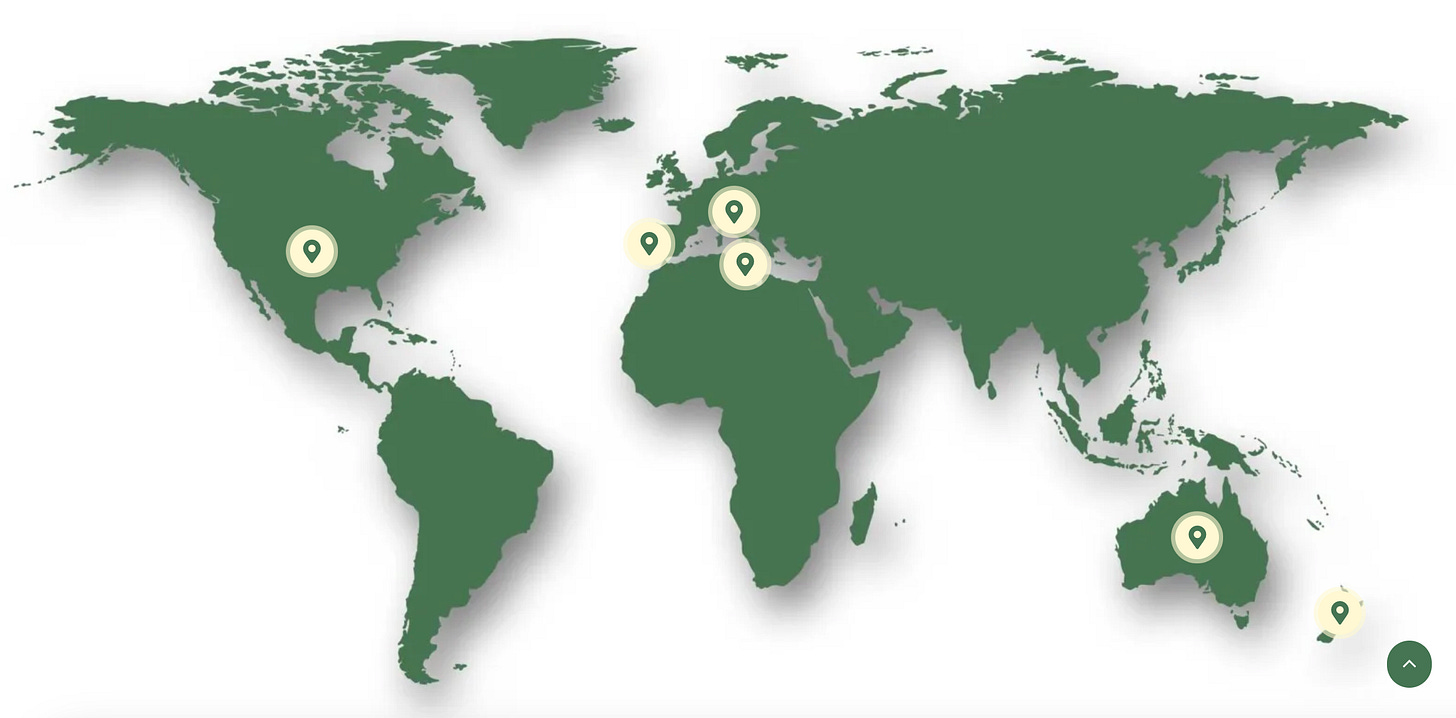
WORLDWIDE


People’s Health Alliance – New Zealand


The-PHA.nz

https://rumble.com/user/PHANZ

PHA NZ National Telegram Channel:


https://t.me/PHANewZealand

PHA NZ Notices Channel:


https://t.me/peopleshealthalliancenz


PHA-Australia.org


https://rumble.com/user/AustraliaPHA


https://t.me/phaaustralia


North America:


https://t.me/+8Z-evRSxWMs0ZWFk

Via https://jamesroguski.substack.com/p/the-peoples-health-alliance

Monopoly World: Oligarchy and Authoritarianism

Monopoly World

Directed by Louis Waller (2024)

Film Review

The present world economy is dominated by monopolies

  • Apple owns a 70%  share of the smartphone market.
  • Luxothca owns an 80% share of the eyewear market (they own both the Rayban and Prada brand, among many others), resulting in a 5,000% margin on sunglasses.
  • Expedia has huge monopoly on travel booking sites.
  • Four companies produce 80% of US meat.
  • Comcast own 70% of the broadcast industry.
  • Nestle has a monopoly on candy brands and baby foods.
  • A monopoly in hospital chain ownership was used to suppress union wage.
  • Two companies own 82% of coffin companies.
  • The vast majority of Internet visitors use Google’s search engine and make a Meta network (Facebook, Instagram or Whatsap) their primary social media platform.
  • Only 10 companies control almost every large food and beverage brand in the world. PepsiCo, Coca-Cola, Unilever, Danone, General Mills, Kellogg’s, Mars, Associated British Foods, and Mondelez.

Historically granting monopolies used to be a prerogative of the British crown, a trend  Elizabeth I began in the 17th century. The latter created monopolies over virtually every aspect of life. Adam Smith warned against monopolies in the Wealth of Nations, concerned it enabled corporations to conspire against the public interest by raising prices.

The Massachusetts Bay colony banned monopolies in their 1641 Massachusetts Body of Liberties. The Maryland and North Carolina legislatures banned them in 1776. Anger against the East India Company monopoly on tea was one trigger of the US War of Independence. Thomas Jefferson wanted to include a clause in the US Constitution banning monopolies.

By the end of the 19th century, the US was dominated by a new kind of monopolies. Instead of being granted by government, these new monopolies came about when more efficient businesses bought out their less successful competitors. At the start of the 20th century, monopolies controlled the oil, meat packing, rail road, tobacco, coal, lead and steel industries.

There are two types of monopolistic integration: horizontal in which you take over companies similar to yours and vertical companies you rely on for supplies and services.

In the late 19th century, a number of populist grassroots movements formed to fight the worst abuses of US monopolies:

  1. Price fixing (gouging consumers with higher price after wiping out your competition)
  2. Lobbying and bribing government officials for special privileges
  3. Excessive autocracy – many monopolists (like William Rockefeller) became monarch-like dictators
  4. Bans on union organizing

The first populist movement was the Grangers. Formed in the 1860s and 1870s, it ultimately boasted 700,000 members and 21,000 lodges across the US. It was formed when price gouging by Cornelius Vanderbilt, the railroad czar, caused a number of farmers to lose their farms.

A series of severe economic crashes (caused when private banks deliberately shrank the money supply*) in 1873, 1890 and 1907 gave rise to first anti-monopoly legislation. In 1888 Iowa passed the first antitrust law, making it illegal for monopolies to collude to fix the price or quantity of goods they produced. In 1890 Congress passed the Sherman Antitrust Act.

In 1895 the Supreme Court used the Act to block a sugar company from acquiring four competitors to control 80% of the sugar supply. Teddy Roosevelt used the law in 1911 to break up 40 monopolies, including Standard Oil.

In 1914 congress passed the Clayton Antitrust Act, which was far more explicit in targeting monopolistic behavior. This included price fixing, exclusivity bans against retailers stocking a competitor’s product (eg Microsoft’s requirement for all computer manufacturers to load  Windows software and the Microsoft browsers) and a requirement for corporations to notify the federal government of all mergers.

AT&T was broken up into many smaller companies in the 1980s, reducing phone rates

Since the 1980s, antitrust laws have been less robustly enforced.

The landmark 2001 case (which led Bill Gates to resign as Microsoft CEO) was an exception. After an appeal to the Supreme Court, the Department of Justice reached a settlement in which Microsoft agreed to abandon some of its worst anti-competitive practice (allowing manufacturers to install competitors’ software) on new computers.

The FTC has an ongoing case against Meta for buying Instagram (which was on track to surpass Facebook in user numbers) and Whatsup to eliminate competition.

The Department of Justice currently has antitrust case against Google. It claims their exclusivity contracts with retailers prevents Apple (which has sufficient capacity to do so) of creating their own search engine.


*Vastly increasing their holdings by triggering massive farm foreclosures.

New study confirms brown rice contains 40% more toxic arsenic than white rice, putting young children at risk

New study confirms brown rice contains 40% more toxic arsenic than white rice, putting young children at risk

Dr Eddy Betterman

  • Brown rice contains significantly higher levels of arsenic than white rice, with the toxic element concentrating in the bran layer.
  • Children under 5, especially infants, face the highest risk due to their higher food intake relative to body weight.
  • Despite its nutritional benefits, brown rice may unintentionally expose young eaters to arsenic levels exceeding safety thresholds.

The hidden danger in “healthier” rice

For years, health-conscious consumers have opted for brown rice, believing its intact bran layer makes it a superior choice. But a new study from Michigan State University reveals an unsettling truth—this “healthier” alternative contains nearly 40% more toxic arsenic than processed white rice. Published in Risk Analysis, the research highlights how the same part of the grain that delivers extra nutrients also concentrates a dangerous carcinogen—inorganic arsenic.

“Rice bran and brown rice are shown to have a higher arsenic content and inorganic arsenic concentration than the grain endosperm or white rice,” the study warns. The findings expose a critical contradiction in modern nutrition: a food praised for its health benefits might actually pose real risks, particularly to vulnerable populations like infants and toddlers. Is the push for “natural” and “whole” foods inadvertently harming the youngest consumers?

Why rice is a magnet for arsenic

Rice absorbs arsenic from soil more efficiently than nearly any other crop—up to 10 times more than other grains, according to researchers. The key lies in how it’s grown: flooded paddies create conditions where arsenic dissolves into the water, making it easier for rice plants to absorb. Once inside the plant, arsenic accumulates in the bran layer—the very component removed when refining brown rice into white.

The study found that bran alone contains arsenic at levels 10 times higher than white rice itself. This has alarming implications for products like brown rice syrup, which has already been linked to 30 times more arsenic in some infant formulas. Could parents unknowingly be poisoning their children while trying to feed them “healthier” options?

Infants at greatest risk

The researchers analyzed rice consumption across age groups and found that children aged 6–24 months who regularly eat brown rice may exceed safe arsenic intake limits by nearly 40%. The daily dose for some toddlers reached 0.295 micrograms per kilogram of body weight, surpassing the 0.21 microgram safety threshold set by international food safety agencies.

While adults face minimal risk from occasional brown rice consumption, the study warns that heavy rice eaters—especially those on gluten-free diets or with poor nutrition—could also accumulate dangerous levels over time. “Our analysis shows that not only is this focus on nutritional content limited, but it also agrees with other studies that find elevated risks of arsenic exposure to children,” the researchers noted.

Arsenic in food: The silent poison hiding in everyday staples

Arsenic, a naturally occurring heavy metal, is a known carcinogen linked to bladder, lung, and skin cancers. Yet it remains a hidden contaminant in many foods, particularly rice. In its inorganic form—the most toxic variant—arsenic disrupts cellular metabolism, causes DNA damage, and has been tied to cardiovascular disease, diabetes, and developmental issues in children.

The EPA’s maximum contaminant level (MCL) for drinking water is 10 parts per billion (ppb)—yet no federal limit exists for arsenic in food. The European Food Safety Authority (EFSA) sets a strict 0.21 ?g/kg body weight per day limit, while the FDA has only proposed (not enforced) 100 ppb for infant rice cereal.

Where is arsenic found?

  • Rice & rice products (brown rice, rice bran, rice syrup, cereal)
  • Apple & grape juice (due to arsenic-based pesticides once used on orchards)
  • Seafood (organic arsenic, less toxic but still concerning)

Numerous studies show brown rice averages 154 ppb total arsenic, with inorganic arsenic making up 70% of that. By comparison, white rice averages about 92 ppb. For infants consuming rice cereal daily, estimated exposure can reach 6 times higher than adults relative to body weight. Worse, arsenic bio-accumulates—meaning it builds up in the body over time. The 2012 Dartmouth study, which found alarming levels in infant formula with brown rice syrup, warned that even low-dose chronic exposure could harm neurological development.

With mounting evidence that foods marketed as “wholesome” may carry hidden toxins, will regulators finally demand clearer labeling—or will parents remain in the dark?

[…]

Via https://dreddymd.com/2025/04/11/brown-rice-contains-40-more-toxic-arsenic-than-white-rice/

Israeli Reservists Dismissed over Letter Calling for Return of Captives and End of War

Israeli Air Force
Israeli Air Force pilots at Ramon Airbase in the Zionist entity’s south (January 2025).
Almanar News English

A group of close to 1,000 reservists with the Israeli Air Force published on Thursday a letter demanding the return of the Israeli captives in Gaza, with signatories arguing that the continuation of war “serves political and personal interests.”

“The continuation of the war doesn’t advance any of the declared goals of the war, and will bring about the deaths of the hostages, of IDF soldiers and innocent civilians,” read the letter, referring to Israeli occupation forces.

“As has been proven in the past, only an agreement can return hostages safely, while military pressure mainly leads to the killing of hostages and the endangerment of our soldiers,” the letter, published as an ad in a number of Israeli newspapers, added.

“We call on all citizens of Israel to mobilize for action.”

IAF to Dismiss Reservists over Letter

According to the latest reports, 60 reserve officers and soldiers in the Israeli Air Force, including qualified pilots, were dismissed after they signed a letter demanding an end to the war.

Israeli media reported that the Israeli Air Force chief Maj. Gen. Tomer Bar is set to dismiss active reservists who signed the letter.

The Israeli occupation military said it has no issue with reservists protesting any matter in their civilian lives, as long as they do it without using the name of the military or their role.

Tomer Bar, Israeli Air Force chief (image from archive).

It is thought that dozens of the signatories are active reservists and will likely be dismissed. The others are close to retirement or haven’t served for years, according to Israeli media.

Several reservists who initially signed on to the letter removed their signatures prior to its publication after holding discussions with the IAF.

The few signatories who are active reservists are set to be dismissed from duty by Bar, The Times of Israeli reported, adding that the Israeli Chief of Staff Lt. Gen. Eyal Zamir has supported the move.

The occupation military said it cannot accept a situation in which reservists “use the Israeli Air Force brand” to protest political matters.

It added that “it is inconceivable for someone to do a shift at [the IAF] command center and head out afterward and express mistrust in the task.”

Netanyahu, Katz Slam Letter

Prime Minister Benjamin Netanyahu and Defense Minister Israel Katz expressed support for the decision by Bar.

“Refusal to serve is refusal to serve, even if it’s only hinted at in whitewashed language,” Netanyahu said in a statement.

“Statements that weaken the IDF and strengthen our enemies in a time of war are unforgivable,” he added.

[…]

Via https://english.almanar.com.lb/2380446

Tulsi Gabbard Drops TWO Huge Bombshells

Tulsi Gabbard | Fox News

Fox News

National Intelligence Director Tulsi Gabbard made a startling revelation during an open cabinet meeting Wednesday, announcing that she has evidence that electronic voting machines have been tampered with to manipulate the results of past US elections.

“I’ve got a long list of things that we’re investigating. We have the best going after this, election integrity being one of them,” Gabbard stated.

“We have evidence of how these electronic voting systems have been vulnerable to hackers for a very long time,” she continued.

Gabbard emphasised that the evidence shows that machines are “vulnerable to exploitation to manipulate the results of the votes being cast.”

She told President Trump that the finding “further drives forward your mandate to bring about paper ballots across the country so that voters can have faith in the integrity of our elections.”

It seems the ‘conspiracy theorists’ were right again.

Gabbard also announced that she is about to make public a huge amount of information relating to the assassinations of RFK, and MLK Jr.

Gabbard followed up on the comments in a Fox News interview, also noting she has teams of people scouring FBI and CIA warehouses looking for hidden documents on the JFK assassination.

[…]

Via https://modernity.news/2025/04/11/tulsi-gabbard-drops-two-huge-bombshells/

Swiss Pharma Company Announces $23 Billion US Investment Days After Trump Pledges ‘Major Tariff’ on Drug Imports

Vials of medicine on the Wegovy injection pen production line at the Novo Nordisk A/S phar

Charlotte de la Fuente/Bloomberg via Getty Images

Nick Gilbertson

Pharmaceutical company Novartis announced plans to build seven facilities in the United States and expand others in a $23 billion investment over five years on the heels of President Donald Trump’s announcement of forthcoming tariffs on imported drugs.

The Swiss company revealed the major investment in a press release.

“This commitment enables Novartis to expand on its current manufacturing, research and technology presence across the country with 10 facilities, including 7 brand new facilities, creating nearly 1,000 new jobs at Novartis and approximately 4,000 additional US jobs,” the release said.

Six of the facilities will be manufacturing plants, two of which will focus on radioligand therapy in Florida and Texas. It remains to be seen where the other four plants will be built.

Moreover, the company is establishing a biomedical research innovation center in San Diego as part of the investment, and it is expanding three of its production facilities in Indiana, New Jersey, and California.

The company also noted that its goal is to ensure “all key Novartis medicines for US patients will be made in the United States.”

On Tuesday, Trump notably pledged to impose tariffs on drugs produced in other countries.

“So we’re going to be announcing, very shortly, a major tariff on pharmaceuticals,” Trump said Tuesday night at a National Republican Congressional Committee (NRCC) dinner. “And…when they hear that, they will leave China, they will leave other places, because… most of their product is sold here.”

“And they’re going to be opening up their plants all over the place in our country,” he added.

Trump doubled down on his statement on Wednesday.

“We realized during COVID that we don’t make our drugs or our pharmaceuticals in this country,” Trump told reporters.

However, Novartis CEO Vas Narasimhan denied that potential tariffs are the primary influence behind the move, per Reuters.

“We believe we can manage the tariffs – though of course they will be very painful – so while that is a factor (behind this investment), it’s not the driving factor,” Narasimhan said.

This is the latest in an influx of investments into the United States since Trump returned to office and began warning of and imposing his tariff policies. Stargate, a joint project between OpenAI, Oracle, and SoftBank, has pledged a $500 billion investment in America, and Apple announced it is investing $500 billion in America, which are just a few of the other examples.

[…]

Via https://www.breitbart.com/economy/2025/04/10/swiss-pharma-company-announces-23-billion-u-s-investment-days-after-trump-pledged-major-tariff-on-drug-imports/

Will Asia Dump its $3 Trillion of US Treasury Bonds in Response to Tariffs?

Asian central banks could start dumping their US debt if Trump’s tariff policies are actually implemented. Image: X Screengrab

William Pesek

TOKYO – The dollar extended its biggest plunge in three years on Friday after China raised tariffs on the US to 125% from 84%, a tit-for-tat step that has gold surging, markets everywhere gyrating and investors more uncertain than ever about the global economic and financial outlook.

It’s now US President Donald Trump’s move. Does the Trump 2.0 White House double down and increase its own tariff rate, now at 145%, on Asia’s biggest economy? Trump, after all, has threatened before a 200% levy on certain Chinese products.

Perhaps most interesting about this week is what global investors learned about the Trump 2.0’s pain threshold. Punters learned – to their horror – that Trump is willing to stomach epic stock market losses but not telltale signs of distress in the bond market.

Posterity will show that it wasn’t the US Congress, the judiciary or voters that forced the US president into a more relational tariff policy. It was bond traders.

In Asian trading hours on April 9, the so-called “bond vigilantes” pushed the yield on 30-year US Treasury bonds above 5%, Bloomberg reported. That — and memories of events from the mid-1990s, mid-2000s and the Silicon Valley Bank bust in 2023 — saw Trump beat a hasty and rare retreat on most tariffs.

Yet it’s concerns about the next round of vigilantes to take on the Trump White House that made him blink: Asian central banks.

Central banks in the region hold roughly US$3 trillion of US Treasuries, with Japan and China, the top holders, sitting on a combined $1.9 trillion. If they were to start selling on a significant scale, who could pick up the slack? Other than the largest global banks buying steadily, arguably no one.

That’s why chatter in bond trading pits this week that Japan, China and other Asian monetary authorities might be selling so alarmed top US Treasury Department officials. For years, traders feared China might dump its trove of US T-bills in retaliation against US sanctions and restrictions. That day may have arrived.

China, after all, has an incentive to show that “it won’t hesitate to cause turmoil in the global financial market in order to improve its negotiating power against the US,” says strategist Ataru Okumura at SMBC Nikko Securities.

[…]

Via https://asiatimes.com/2025/04/the-real-bond-vigilantes-hounding-trump-are-asian/#

EPA to Review Health Risks of Water Fluoridation as RFK Jr. Says He’ll Tell CDC to Stop Recommending It

by Brenda Baletti, Ph.D.

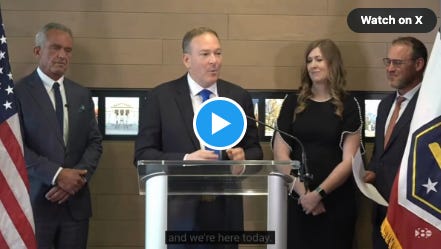
U.S. Environmental Protection Agency (EPA) Administrator Lee Zeldin on Monday announced plans to “expeditiously review” new science on the possible health risks of water fluoridation.

Also on Monday, Health and Human Services (HHS) Secretary Robert F. Kennedy Jr. said he plans to tell the Centers for Disease Control and Prevention (CDC) to stop recommending water fluoridation nationally.

Kennedy’s deputy chief of staff Stefanie Spear said Kennedy would direct the CDC’s community preventive services task force to study fluoride and make a new recommendation, The New York Times reported.

Zeldin and Kennedy made the announcements at a press conference in Utah, which last week became the first state to ban the practice of adding fluoride to community water supplies.

The growing body of research showing fluoride’s toxic effects gained national attention when a federal judge in September ruled against the EPA in a landmark lawsuit brought by the Fluoride Action Network (FAN), Mothers Against Fluoridation, Food & Water Watch and others.

U.S. District Judge Edward Chen ruled that water fluoridation at current levels recommended by public health agencies in the U.S. poses an “unreasonable risk” to children’s health and that the agency must regulate it.

Chen’s 80-page decision outlined the scientific evidence that fluoride exposure is linked to reduced IQ in children.

The EPA announced in January that it planned to appeal the ruling, days before President Joe Biden left office.

People long concerned with the harmful effects of water fluoridation on children’s health celebrated the EPA’s announcement that it would review the latest science, in an apparent response to the lawsuit. However, in a post on X, Michael Connett, lead attorney for the plaintiffs, urged caution.

Zeldin didn’t mention in Monday’s announcement that the EPA is under a court order to regulate the chemical under the Toxic Substances Control Act. Instead, he said the agency would conduct a review under a different statute, the Safe Drinking Water Act, effectively sidestepping the obligation imposed by the court, Connett said.

The EPA’s appeal of the lawsuit, due April 11, is going forward.

“If EPA files the appeal, as it looks like they will, that will likely say more about EPA’s true intentions with fluoride than a commitment to do another ‘review’ — especially since EPA’s ‘reviews’ of the fluoride literature in the past have been atrocious,” Connett added.

The CDC makes recommendations on whether communities should add fluoride to their drinking water and at what levels. However, the EPA sets the maximum levels allowed in water under the Safe Drinking Water Act.

The current maximum allowable levels of fluoride in drinking water are 4.0 milligrams/liter (mg/L), which is many orders of magnitude higher than the currently recommended dosage of 0.7 mg/L — which itself has demonstrated a risk to children’s health in recent studies.

Chen ruled that the EPA must regulate fluoride under the Toxic Substances Control Act, which regulates substances whose production, use or disposal may cause unreasonable risks to human health.

In August 2024, the National Toxicology Program published a report linking fluoride exposure to neurotoxic effects in children, after public health officials tried for years to block its publication and water down its conclusions.

Recent epidemiological studies in Canada, Mexico and the U.S. showed significant associations between higher fluoride exposure and worse neurocognitive outcomes for children — including at the 0.7 mg/L levels.

A meta-analysis published in January showed that fluoride exposure was associated with significant reductions in IQ scores in children.

Major medical associations and public health agencies — including the American Academy of Pediatrics, the American Dental Association and the CDC — have continued to support adding fluoride to drinking water, claiming it helps prevent cavities.

However, in addition to the growing body of research showing fluoride’s risks to children’s health, a second body of research shows that water fluoridation doesn’t provide the significant benefits the pro-fluoridation lobbyists claim.

A Cochrane Review published in October 2024 found that adding fluoride to drinking water provides very limited, if any, dental benefits, especially compared with 50 years ago.

Kennedy’s announcement signaled that in light of current science, the CDC may change its long-held position that adding fluoride to water to prevent cavities is safe and effective.

Connett said that if the CDC stops recommending water fluoridation nationally, the move would be “big.”

“The EPA has historically been very deferential to HHS when it comes to fluoride regulations and policy, so for the CDC to stop recommending fluoridation would be very significant for future EPA actions.”

CDC’s water fluoridation recommendations are widely followed but not mandatory. State and local governments decide whether to add fluoride to water and, if so, how much — as long as it doesn’t exceed a maximum set by the EPA.

Just over 200 million Americans drink fluoridated water, according to the CDC. However, since Chen’s verdict last year, numerous cities, counties and states across the country have stopped fluoridating their water or are debating rule changes that would end fluoridation.

[…]

Via https://tdefender.substack.com/p/epa-review-health-risks-water-fluoridation-rfk-jr-cdc-stop-recommending

Red Light Therapy: Miracle Medicine

Red Light Therapy: Miracle Medicine

Red Light Therapy: Miracle Medicine

By Mark Sloan

EndAllDisease (2018)

Book Review

Greeks and Romans were aware that exposure to colored light had health benefits. As of January 2018 when this book was published, there were 50,000 published studies on light. The near-infrared spectrum is most effective in healing. Most commercial red light generators produce both red and near-infrared light.

According to Sloan, there are 10 most important chronic health conditions benefiting from red and near-infrared treatment:

1. Melting belly fat and increasing muscle mass – studies adding near-infrared light therapy to an exercise program found the group using both experienced 20% or greater weight loss. Some studies showed weight loss with near-infrared light therapy alone.
2. Accelerated wound healing – near-infrared light therapy.
3. Increased bone density – red and near-infrared light therapy.
4. Increased testosterone levels – red and near-infrared light therapy.
5. Enhanced brain function – near-infrared light therapy.
6. Reduction/elimination anxiety and depression – red and near-infrared light therapy.
7. Pain relief – red and near-infrared light therapy
8. Acne – red light only
9. Regrowing hair – red and near-infrared light therapy
10. Arthritis – red and near-infrared light therapy

Sloan has a special interest in studies about the effect of red/near-infrared light in cancer, which he stresses is not a genetically-linked illness nor an invasive organism as the Big Pharma-dominated Western medical establishment makes out.

Over 100 years ago, Nobel Prize-winning researcher Dr Otto Warburg discovered that a cancer cell is a cell with damaged mitochondria, ie a metabolically defective cell in need of repair. Warburg won the Nobel Prize after discovering cytochrome oxidase, a crucial enzyme in the last step of oxidative phosphorylation in 1926. Warburg also discovered that he was able to turn a healthy cell into a cancer cell by inhibiting phosphorylation.

Specific toxins that inhibit oxydative phosphorylation include: chemotherapy, cyanide,
phosphide compounds, estrogen, serotonin, aphlatoxin, ultraviolet B radiation, xrays, nitric oxide and unsaturated fatty acids.

One of the main therapeutic effects of red and near-infrared light is to unbind nitric oxide, one of the main cytochrome oxidase inhibitors. This means red and near-infrared light also increase ATP (the cells main energy carrier), cell oxygenation, blood flow and CO2 concentrations, while decreasing stress hormones, lactic acid, inflammation and free radicals. Studies show this effect is enhanced when combined with Methylene Blue (see Methylene Blue: Miracle Drug for Cancer, Autism, Depression, Pain, Ebola and Much Much More).

Unlike most Western medications, red light therapy has virtually no side effects and is approved by the FDA for a number of indications.