Persia’s Darius I: Decadent Despot or Philosopher King?

Darius the Great: 9 Facts About The King Of Kings | TheCollector

Episode 8 The Great King – Image and Reality

The Persian Empire 

Dr John W I Lee (2012)

Film Review

Greek philosophers and historians portray Darius I and other Persian kings as tyrannical and decadent despots who treated their subjects like slaves. Lee disputes this view, citing evidence from the sculptured reliefs at the great palace Darius I built at Persopolis. All I can conclude from Lee’s evidence is the great king knew exactly how to project a positive image of himself.

One relief depicts representatives of the 23 nations ruled by Persia bringing tribute to Darius I. They all walk upright (not kneeling, kissing feet or holding up hands in submission as in Egyptian representations of the pharaoh), with some carrying weapons. In Lee’s view this represents voluntary cooperation and support of faithful servants rather than subjugation.

Another relief depicts the enthroned king supported on the fingertips of figures representing the 23 captive nations. This, according to Lee, suggests the subjects of Darius I benefit from his rule.

Lee also cities inscriptions from the tomb of Darius I, proclaiming the moral code embraced by the late ruler: righteousness, truth, protecting the weak against the strong, making careful judgements after listening to all sides.

Other sculpture and cylinder seals depict him as good gardener and planting his own apple, pear, mulberry, pear, olive and quince trees.

In addition to military garrisoned in each of the capitols when the emperor was present, the palace at Persepolis ran a number of state owned industries that raised cattle, grew grain and produced beer, wine and leather to supply a vast staff (who according to “weren’t slaves but weren’t free”).

  • secretaries from across the empire, fluent  in Aramaic, Akkadian, Elamite and Greek, who issued passports and handled political and diplomatic correspondence.
  • a treasurer who collected taxes in the form of goats oxen and grain and distributed rations of flour and meat to the army garrisoned there and palace staff.
  • artisans (mainly metal and leather workers and sculptors) sometimes including women and children.
  • a cup bearer (to test the king’s food and drink for poison), a spear bearer, a word bearer, a grand vizier (a kind of prime minister)
  • 10,000 imperial guards (armed with spears or bow and arrow) to guard the gates, exterior walls and the citadel on a high terrace above the palace.
  • magi to interpret dreams and omen and give political advice, as well as teaching the royal children.
  • Greek and Egyptians physicians
  • castrated males (eunuchs) to oversee the royal harem.

https://www.kanopy.com/en/pukeariki/watch/video/15372393/15372395

The Persian Empire’s Five Capitols

The Persians: historical maps of Persia and the Persian empire

Episode 7 The Persian Capitals and Palaces

The Persian Empire

Dr John W I Lee (2012)

Film Review

Under Darius I, Persia had five capitols: Pasargardae, Ecbatana, Babylon, Susa and Persepolis

  • Pasargardae – located in highland fertile valley (6,000 feet) on important trade route conemporary Fars province of Fars. Built by Cyrus, palace takes up 400 acres, encompassing sacrificial altars, tomb of Cyrus II and tent space for garrison protecting it. Architecture manifests Egyptian, Elamite, Median, Babylonian, Lydian, Ionian influence.
  • Ecbatana (former capitol of Media) – on highland fertile plains, enabling Persian control over Silk Road and Mediterranean horse and wheat trade. Several palace buildings had silver roofs, as an effective way of storing precious metal.
  • Babylon – located in Mesopotamian plain (at a time when Euphrates river still crossected it. Had 100,000 population and named streets laid out in grid pattern. Darius designated himself king of Babylon and professed allegiance to Babylonian god Marduke.
  • Susa (setting for for the Biblical story Esther) – Darius rebuilt the palace in Susa from bricks owing to a shortage of stone. Chosen for its strategic military access to Babylon Persian Gulf (via Persian river network). Expansive tent space for troops when king in residence.
  • Persepolis – built by Darius just south of Pasagardae, palace complex reveals strong Egyptian influence

https://www.kanopy.com/en/pukeariki/watch/video/15372393/15372448

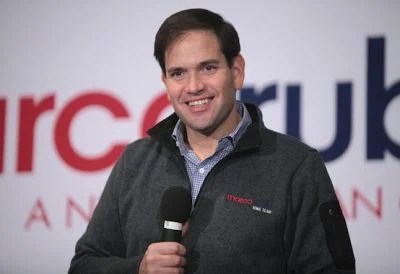
If Trump Serious About Peace, Marco Rubio Has to Go

Donald Trump campaigned on ending endless wars and now boasts that he has resolved eight wars. In reality, this claim is delusional, and his foreign policy is a disaster. The United States remains mired in ongoing wars in the Middle East and Ukraine, and now Trump is careening blindly into new wars in Latin America.

The dangerous disconnect between Trump’s delusions and the real-world impacts of his policies is on full display in his new National Security Strategy document. But this schism has been exacerbated by putting U.S. foreign policy in the hands of Secretary of State Marco Rubio, whose neocon worldview and behind-the-scenes maneuvering has consistently undercut Trump’s professed goals of diplomacy, negotiated settlements and “America First” priorities.

The eight wars Trump claims he has ended include non-existent wars between Egypt and Ethiopia, and Serbia and Kosovo, and the war between Armenia and Azerbaijan that ended in 2023, after Azerbaijan invaded and ethnically cleansed the ancient Armenian community of Nagorno-Karabakh. Trump stole credit for peace between Thailand and Cambodia, which was actually mediated by Malaysia, while India insists that it ended its war with Pakistan without help from Trump.

Trump recently invited the presidents of Rwanda and the DRC to Washington to sign a peace deal, but it’s only the latest of many agreements that have failed to end decades of war and proxy war that rage on in the eastern Congo.

Trump even claims to have brought peace to Iran, which was not at war until he and Netanyahu plotted to attack it. Now diplomacy with Iran is dead—torpedoed by Trump’s treacherous use of negotiations as cover for the U.S.-Israeli surprise attack in June, an illegal war right out of Rubio’s neocon playbook.

Rubio has undermined diplomacy with Iran for years. As a senator, he worked to kill the JCPOA nuclear agreement, framed negotiations as appeasement, and repeatedly demanded harsher sanctions or military action. He defended the U.S. and Israeli attacks in June, which confirmed the claims of Iranian hardliners that the United States cannot be trusted. He makes meaningful talks with Iran impossible by insisting that Iran cease all nuclear enrichment and long-range missile development.  By aligning U.S. policy with Israel’s, Rubio closed off the only path that has ever reduced tensions with Iran: sustained, good-faith diplomacy.

Trump’s eighth claimed peace agreement was his Gaza “peace plan,” under which Israel still kills and maims Palestinians every day and allows only 200 truckloads per day of food, water, medicine, and relief supplies into Gaza. With Israeli forces still occupying most of Gaza, no country is sending troops to join Trump’s “stabilization force,” nor will Hamas disarm and leave its people defenseless. Israel still calls the shots, and will only allow rebuilding in Israeli-occupied areas.

As secretary of state, it was Marco Rubio’s job to negotiate peace and an end to the occupation of Palestine. But Rubio’s entire political career has been defined by unwavering support for Israel and corrupted by over a million dollars from pro-Israel donor groups like AIPAC. He refuses to speak to Hamas, insisting on its total isolation and destruction.

Rubio even refuses to negotiate with the weakest, most compromised, but still internationally recognized, Palestinian Authority. In the Senate, he worked to defund and delegitimize the PA, and now he insists it should play no role in Gaza’s future, but he offers no alternative. Contrast this with China, which recently convened 14 Palestinian factions for dialogue. With a U.S. secretary of state who won’t talk to any Palestinian actors, the United States is only supporting endless war and occupation.

Ukraine is not on Trump’s list of “eight wars,” but it is the conflict he most loudly promised to end on day one. Trump took his first steps to resolve the crisis in Ukraine with phone calls with Putin and Zelenskyy on February 12, 2025. War Secretary Pete Hegseth told a meeting of America’s NATO allies in Brussels that the U.S. was taking Ukraine’s long-promised NATO membership off the table, and that “we must start by recognizing that returning to Ukraine’s pre-2014 borders is an unrealistic objective. Chasing this illusionary goal will only prolong the war and cause more suffering.”

Zelenskyy and his European backers are still trying to persuade Trump that, with his support, they can win back at the negotiating table what Ukraine and its western allies lost by their tragic decision to reject a negotiated peace in April 2022. Russia was ready to withdraw from all the land it had just occupied, but the U.S. and U.K. persuaded NATO and Ukraine to instead embark on this long war of attrition, in which their negotiating position only grows weaker as Ukraine’s losses mount.

On November 21st, Trump unveiled a 28-point peace plan for Ukraine that was built around the policy Trump and Hegseth had announced in February: no NATO membership, and no return to pre-2014 borders. But once Rubio arrived to lead the U.S. negotiating team in talks in Geneva, he let Zelenskyy’s chief of staff, Andriy Yermak, and the Europeans put NATO membership and Ukraine’s pre-2014 borders back on the table.

This was a poison pill to deliberately undermine the basic concept of Ukrainian neutrality that Russia insists is the only way to resolve the security dilemma facing both NATO and Russia and ensure a stable and lasting peace. As a European official crowed to Politico, “Things went in the right direction in Geneva. Still a work in progress, but looking much better now… Rubio is a pro who knows his stuff.”

Andriy Yermak, who led Ukraine’s negotiating team in Geneva, has now been fired in a corruption scandal, reportedly at Trump’s behest, as has Trump’s envoy to Kyiv, Keith Kellogg, who apparently leaked Trump’s plan to the press.

Trump is facing a schism in his foreign policy team that echoes his first term, when he appointed a revolving door of neocons, retired generals and arms industry insiders to top jobs. This time, he has already fired his first National Security Advisor, Mike Waltz, several NSC staff, and now General Kellogg,

Trump’s team on Ukraine now includes Vice President J.D. Vance, Steve Witkoff, Jared Kushner, Deputy National Security Advisor Andy Baker and Army Secretary Dan Driscoll, who all seem to be on board with the basic policy that Trump and Hegseth announced in February.

But Rubio is keeping alive European hopes of a ceasefire that postpones negotiations over NATO membership and Ukraine’s borders for a later date, to allow NATO to once again build, arm and train Ukrainian forces to retake its lost territories by force, as it did from 2015 to 2022 under cover of the Minsk Accords.

This raises the questions: Does Rubio, like the Europeans and the neocons in Congress, still back the Biden-era strategy of fighting a long proxy war to the last Ukrainian? And if so, is he now in fact working to undermine Trump’s peace efforts?

Ray McGovern, the founder of Veteran Intelligence Professionals for Sanity, thinks so, writing

“…we are at the threshold on Ukraine, at the beginning of a consequential battle between the neocons and Europeans on one side, and Donald Trump and the realists on the other. Will Trump show the fortitude to see this through and overcome his secretary of state?”

But it’s perhaps in Latin America where Rubio is playing the most aggressive role. Rubio has always promoted regime-change policies, economic strangulation, and U.S. interference targeting left-leaning governments in Latin America. Coming from a conservative Cuban family, he has long been one of the most hard-line voices in Washington on Cuba, championing sanctions, opposing any easing of the embargo, and working to reverse Obama-era diplomatic openings.

His position on Venezuela is similar. He was a leading architect of the Trump administration’s failed “maximum pressure” campaign against Venezuela, promoting crippling sanctions that devastated civilians, while openly endorsing failed coups and military threats.

Now Rubio is pushing Trump into a catastrophic, criminal war with Venezuela. In early 2025, Trump’s administration briefly pursued a diplomatic track with Venezuelan President Nicolás Maduro, spearheaded by envoy Richard Grenell. But Marco Rubio’s hard-line, pressure-first approach gradually overtook the negotiation channel: Trump suspended talks in October 2025, and U.S. policy shifted toward intensified sanctions and military posturing.

Rubio’s hostility extends across the region: he has attacked progressive leaders in Colombia, Chile, Bolivia, Honduras, and Brazil, while supporting authoritarians aligned with U.S. and Israeli interests. While Trump has warmed to Brazil’s president Lula and craves access to its reserves of rare earth elements, the second largest after China’s, Lula has no illusions about Rubio’s hostility and has refused to even meet with him.

Rubio’s approach is the opposite of diplomacy. He refuses engagement with governments he dislikes, undermines regional institutions, and encourages Washington to isolate and punish rather than negotiate. Instead of supporting peace agreements—such as Colombia’s fragile accords or regional efforts to stabilize Haiti—he treats Latin America as a battleground for ideological crusades.

Rubio’s influence has helped block humanitarian relief, deepen polarization, and shatter openings for regional dialogue. A Secretary of State committed to peace would work with Latin American partners to resolve conflicts, strengthen democracy, and reduce U.S. militarization in the hemisphere. Rubio does the reverse: he inflames tensions, sabotages diplomacy, and pushes U.S. policy back toward the dark era of coups, blockades, proxy wars and death squads.

So why is Trump betraying his most loyal MAGA supporters, who take his promises to “end the era of endless wars” at face value? Why is his administration supporting the same out-of-control American war machine that has run rampant around the world since the rise of neocons like Dick Cheney and Hillary Clinton in the 1990s?

Is Trump simply unable to resist the lure of destructive military power that seduces every American president? Trump’s MAGA true believers would like to think that he and they represent a rejection of American imperialism and a new “America First” policy that prioritizes national sovereignty and shared domestic prosperity. But MAGA leaders like Marjorie Taylor Green can see that is not what Trump is delivering.

U.S. secretaries of state wield considerable power, and Trump is not the first president to be led astray by his secretary of state. President Eisenhower is remembered as a champion of peace, for quickly ending the Korean War – then slashing the military budget – and for two defining speeches at the beginning and end of his presidency: his “Chance for Peace” speech after the death of Soviet premier Josef Stalin in 1953; and his Farewell Address in 1960, in which he warned Americans against the “unwarranted influence” of the “military-industrial complex.”

For most of his presidency though, Eisenhower gave his Secretary of State, John Foster Dulles, free rein to manage U.S. foreign policy. By the time Eisenhower fully grasped the dangers of Dulles’ brinksmanship with the U.S.S.R. and China, the Cold War arms race was running wild. Then Eisenhower’s belated outreach to the Soviets was interrupted by his own ill-health and the U-2 crisis. Hillary Clinton had a similarly destructive and destabilizing impact on Obama’s first-term foreign policy, in Afghanistan, Iran, Libya, Syria and Honduras.

These should be cautionary tales for Trump. If he really wants to be remembered as a peacemaker, not a warmonger, he had better make the necessary personnel changes to his inner circle before it is too late. War with Venezuela is easily avoidable, since the whole world already knows the U.S. pretexts for war are fabricated and false. Rubio has stoked the underlying tensions and led this escalating campaign of lies, threats and murders, so Trump would be wise to replace him before his march to war crosses the point of no return.

This would allow Trump and Rubio’s successor to start rebuilding relations with our neighbors in Latin America and the Caribbean, and to finally change longstanding U.S. policies that keep the Middle East, and now Ukraine, trapped in endless war.

[…]

Via https://www.globalresearch.ca/trump-peace-marco-rubio-go/5908265

The great South Asian Gen Z meltdown – why does India seem immune?

The great South Asian Gen Z meltdown – why does this one country seem immune?

By Shastri Ramachandaran

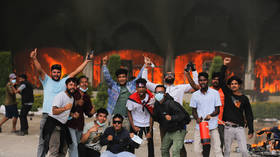
Events in Bangladesh, a close neighbor of India, where the local war crimes court sentenced former Prime Minister Sheikh Hasina – ousted from power last year as a result of violent protests led by young people – are watched with the utmost caution by New Delhi.

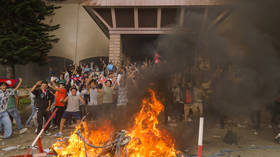
The world’s largest democracy has been watching its neighborhood unravel for several years now, from Sri Lanka to Bangladesh to Nepal. Recently, the protests that brought down the governments in these countries have acquired a new label – the ‘Gen Z’ protests. International think tanks and media describe them as young people challenging the government over inequality, lack of opportunity, and corruption. They are also driven by digital platforms, mainly social media available on every young person’s phone.

A recent report by the BBC questioning why Indians are not protesting to overthrow their government, following the examples in the country’s neighbors either shows a desperate hunger for ‘news’ in the region or reveals the typical colonial mentality of a media dedicated to the self-appointed ‘international community’. This community, of which the UK is a part, likes telling people what they should and should not do in their country with regard to their ruling class.

The long piece, written by two Indian journalists, is virtually inciting disaffection against the government by asking why India’s Gen Z is not taking to the streets. The feature compares India with its neighbors that have witnessed violence and disruptions over the past several years:

“In Nepal, young protesters brought down a government in just 48 hours last month; in Madagascar a youth-led movement toppled its leader; frustrated Indonesians, worried about jobs, forced concessions from the government after protests… and in Bangladesh, anger over job quotas and corruption brought regime change last year.”

In India, however, “taking to the streets feels risky and remote,” the piece says, even as it paints India’s Gen Z as “vast, restless and hyper-connected – more than 370 million people under 25… Smartphones and social media keep them constantly informed about politics, corruption, and inequality.”

Looks like the BBC wants to see young Indians pouring out into the streets too, bringing the country to a standstill and forcing regime change. The report notes, among other protests, the campus and street protests in 2019 against the revocation of Kashmir’s autonomy, farm laws, and the Citizenship Amendment Act, and more recently, the violent clashes in the Himalayan territory of Ladakh bordering China, quickly dubbed a Gen Z protest as the scenario was similar to what happened in neighboring Nepal just weeks before – and brought down the government of KP Sharma Oli.

The BBC’s disappointment over India not going the way of Nepal or Bangladesh might be more than a case of a once-colonial power’s ‘public service’ broadcaster indulging in a bit of provocative reflection to get attention. For the situation in India’s neighborhood is so fraught that few would wish it upon any other people or country.

Falling governments

The GenZ protests in Nepal, which is suspected to have been staged with the encouragement, if not involvement, of external forces, doubtless overthrew a corrupt regime of venal, self-serving politicians. It looks like an attempt at a color revolution was aborted by the intervention of the Nepalese Army.

While India did not overtly intervene in Nepal, observers point out that New Delhi has never supported any uprising in the neighboring nation. Its role remains a matter of conjecture for now. Nepal currently has an interim government. For all the impressive credentials and good intentions of those holding office now, the administration seems to be a make-do set up without any direction. Sooner or later the interim government will have to hold elections. This is bound to raise concerns beyond Nepal because more than the ousted politicians entering the fray, there is the prospect of the royalist parties and the dethroned palace elements gaining new legitimacy. Should this happen, aided and abetted by external powers, Nepal’s multi-party democracy – though it was messy, corrupt and failed to deliver even minimum governance and development – would be set back by at least 35 years.

Before Nepal, it was Bangladesh, where the government of PM Sheikh Hasina was ousted in September 2024, following violent clashes described in the international media as a “student-led movement.” Hasina fled the country after popular protests ousted her in August 2024 and took refuge in India.

Bangladesh is still boiling with discontent as Nobel laureate Dr. Muhammad Yunus, installed by the protest movement as interim government caretaker, is himself accused of “creating a situation that could disrupt the general elections” scheduled for February 2026, nearly one and a half years after the fall of the previous government. The former ruling party, the Awami League, has been banned from the upcoming election, and its supporters are being oppressed by the interim government, with mob rule continuing to govern daily life and hopes of ending corruption fading.

Two years before Bangladesh, it was another of India’s neighbors that witnessed mobs successfully toppling the government. In 2022, a swelling wave of public anger against the economic crisis and widespread corruption swept through the island nation of Sri Lanka and ousted the President Gotabaya Rajapaksa, who fled the country in July 2022.

Neighborhood on fire

As India watches the neighborhood burning, it has had to take steps to secure its interests in the region.

On the southern front, India and Sri Lanka have, for the moment, opened a new phase in their relationship. New Delhi addressed Sri Lanka’s 2022 crisis by providing more than $4 billion in aid and strong support at the IMF. This lifeline, which encompassed credit for essential goods such as fuel and fertilizers, along with humanitarian supplies of food and medicine, bolstered Colombo’s confidence in New Delhi.

While India’s assistance helped avert a more profound crisis, it was also motivated by strategic interests. India’s foreign policy leadership saw Sri Lanka’s turmoil as a chance to counter China’s expanding influence on the island and to showcase India’s growing capabilities in regional competition.

India’s relationship with Bangladesh has been strained ever since Hasina was ousted. Yunus is going to great lengths to needle New Delhi with words and deeds that further poison relations.

On October 26, Yunus triggered a major diplomatic row with his gift of a map purportedly showing India’s northeast, which borders China and Bangladesh, as part of Bangladesh to a visiting Pakistani general. This distorted map is the cover of the book ‘Art of Triumph’, which Yunus presented to Gen Sahir Shamshad Mirza, the chairman of Pakistan’s Joint Chiefs of Staff Committee. The map illustrates the idea of a ‘Greater Bangladesh’, floated by a Dhaka-based Islamist group called Sultanat-e-Bangla. This outfit has a version of the map showing India’s West Bengal and the northeast, comprising seven states known as the ‘Seven Sisters’, along with parts of other states, including Odisha, Bihar and Jharkhand, as part of Bangladesh.

Last year, during a four-day visit to China that included a meeting with Chinese President Xi Jinping, Yunus pitched Bangladesh as the “only guardian” of the Indian Ocean that Beijing could use as another logistics hub for global trade. Yunus described India’s Seven Sisters as landlocked, having no access to the ocean.

To make matters worse, Yunus is now strengthening ties with Islamabad. In ignoring Indian sensibilities, Yunus forgets that while Bangladesh, formerly East Pakistan, fought for liberation from West Pakistan in 1971, this was with the backing of India and India-USSR cooperation. Without this support, today’s Bangladesh may not have been born. This is a particularly sore point in New Delhi-Dhaka relations.

Along with his unprecedented bonding with Pakistan, Yunus is also reinforcing Dhaka’s relations with Beijing. This is causing unease in New Delhi, given that China and Pakistan are “iron friends.” The Sino-Pakistan all-weather friendship with its many-sided cooperation from the economic to defense, is understandably viewed in New Delhi as a military and strategic challenge. This would only add ballast to Pakistan’s hostility and aggressiveness, and heighten the threat perception in New Delhi.

The coming together of Bangladesh, China, and Pakistan as a bilateral and trilateral factor in the region would be formidable enough for New Delhi without the US also embracing Pakistan, India’s worst ‘enemy’ of 78 years. Pakistan’s stock is on the rise, five months after India claimed victory in the three-day military conflict in May.

Indian Prime Minister Narendra Modi being pitted against US President Donald Trump, not only on tariffs, but Trump’s assertion that he ended the India-Pakistan war, has turned out to be a godsend for Islamabad.

Pakistan’s dramatic rise to global acceptance was pithily captured by the Financial Times, which quoted army chief Asim Munir as saying Pakistan “has gradually but surely started to regain its rightful place in the comity of nations,” described this as a “geopolitical turnaround.” Trump, who hosted Munir for two White House meetings, has tagged him as his “favorite field marshal,” much to the chagrin of India’s political leadership.

That chagrin may have become silent rage among many in New Delhi when the US made it plain that it will join hands with Pakistan. While flying with Trump to Kuala Lumpur on October 25, Secretary of State Marco Rubio let New Delhi know where it ranks in the geostrategic calculations vis-a-vis Islamabad. He said: “We know they [Indians] are concerned for obvious reasons because of the tensions that have existed between Pakistan and India historically. But I think they have to understand we have to have relations with a lot of different countries. We see an opportunity to expand our strategic relationship with Pakistan.”

Trump added salt to the wound by repeating his claim of brokering the May 10 ceasefire between India and Pakistan.

If Pakistan’s Munir is playing both the US and China, while the two powers are negotiating their own terms of endearment, then Trump has succeeded as an extraordinarily disruptive game-changer. This has far-reaching strategic implications for India, which has prided itself as the engine driving the US pivot to Asia, and regional security. These developments may kill India’s ambitions in the Indo-Pacific and mean burial of the Quad (Quadrilateral Security Dialogue), which Trump revived in his first term.

If the US has moved on from these, as Trump appears to have, India has to forge ahead with a game plan that can turn the tables to its advantage. How it attempts this and in partnership with which powers and countries will be watched with both interest and concern, as this will determine the emerging security contours of the region.

Strategic autonomy

Here arises the critical question of India’s much vaunted strategic autonomy under Modi. India’s long-standing strategic autonomy has been a constant over the decades. Regardless of the political parties presiding over the government, there has never been any change when it comes to the essentials of India’s foreign policy and national security.

True, the personal styles of India’s prime ministers have differed over the decades. Also, successive US presidents had failed in their attempts to make Modi’s predecessors accept military cooperation beyond a point. Both India’s first BJP prime minister, Atal Bihari Vajpayee, and the 14th prime minister, Dr. Manmohan Singh, for all their amiability and perceived softness, declined and put off indefinitely the signing of a logistics agreement with the US, as well as the interoperability of the armed forces of the two countries.

[…]

Via https://www.rt.com/india/627932-new-great-game-in-south-asia/

US-backed regime-change agency funded Nepal coup

US-backed regime-change agency funded Nepal coup – media
RT

A US-backed regime-change agency funded and guided the September coup in Nepal, an independent US news outlet reports.

K.P. Sharma Oli resigned as prime minister in September amid violent clashes – known as the Gen Z protests – across the Himalayan nation. The clashes killed 77 and injured more than 2,000.

US-based news outlet The Grayzone cited leaked documents revealing that the US government’s National Endowment for Democracy (NED) spent hundreds of thousands of dollars tutoring Nepalese young people to stage the protests.

The protests caused more than $586 million in losses to Nepal’s $42 billion economy, a statement from the office of interim Prime Minister Sushila Karki, a former chief justice who succeeded Oli, said on Friday, according to Reuters.

The documents cited by The Grayzone reveal a clandestine campaign organized by an NED division, the International Republican Institute (IRI).

The IRI sought to cultivate a Nepalese network of young political activists explicitly designed to “become an important force to support US interests,” it said.

The documents say the IRI’s program “connects vibrant youth… and political leaders” and “provides comprehensive trainings on how to launch advocacy campaigns and protests,” The Grayzone reported.

The IRI has been accused of funding clandestine activities in Bangladesh as well.

Founded in 1983, the NED is officially a US State Department-funded nonprofit that provides grants to support ‘democratic initiatives’ worldwide. It has faced allegations of covertly influencing political outcomes, with critics arguing that it has taken over covert functions previously handled by the CIA, particularly those aimed at overthrowing foreign governments.

The organization has long faced criticism for its role in supporting political movements that undermine sovereign governments.

The Center for Renewing America, a think tank, accused the NED of funneling tens of millions of dollars to Ukrainian political entities and anti-Russian interests.

[…]

Via https://www.rt.com/india/629369-us-backed-regime-change-agency/

Dmitry Orlov: Wild Things Are Afoot

Dmitry Orlov

A lot of chattering heads are currently chattering about a great many things, such as:

• Trump said something about holding elections in the former Ukraine. Zelensky said something about that too, but nothing too important. He wants to hold on to his job for as long as possible and will say random things hoping that this will prolong the former Ukraine’s agony.

• Some congresscritter filed a bill for the US to leave NATO, which is 70% US money, 80% US technology and 100% US-controlled, so the word “disband” would be more appropriate. US defense contractors, who would have to approve this bill using their congressional hand puppets, will have none of it, of course, as long as there is any chance of milking that NATO job some more.

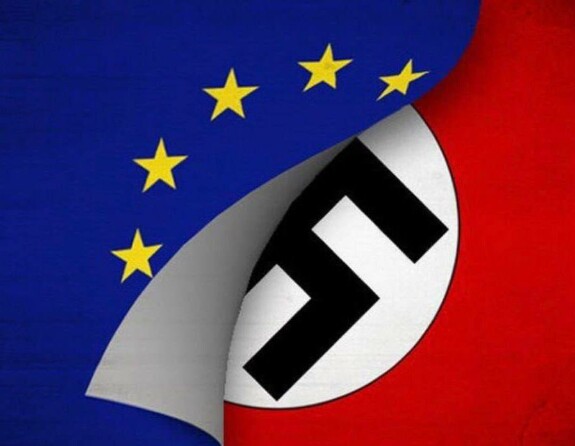
• A new National Security Strategy document has been accidentally located on the White House web server, according which Europe is an enemy, Russia is a friend and the US is a pumpkin. Its author seems to have been an AI engine that’s been force-fed Russian political talk shows and Putin’s speeches. Lots of people reacted in shock, as if this is something real. But strategy needs to become policy and that policy then has to be followed, so let’s not hold our breath.

• The EU has a strategy too. It is to wait and to stall. They want to wait until Trump gets impeached or croaks or his term runs out and he’s replaced with the usual sort of globalist warmongering stooge. It’s only a hope but at this point that is all they have.

• In the UK, fake news outlets are once again yammering about the Skripal/Novichok nonsense and trying to scare everyone about Russian spies/drones/whatever in a desperate effort to distract the populace from the fact that the UK is bloody broke, run by idiots and generally falling apart.

• Various EU-critters are still circling frozen Russian funds stuck at Euroclear in Belgium like a pack of hungry hyenas, stupidly oblivious (or pretending to be) that there is no money there, just debt — Europe’s own debt to Russia.

• Off the coast of Venezuela, the US fleet tired of sinking fishing boats (the fish are on drugs, you see!) and have instead resorted to piracy. They hijacked an oil tanker and intend to steal its oil. Americans will pay for that stolen oil through higher prices at the gas pumps, of course.

• The latest bit of fake news is a leaked plan: Americans are considering organizing something called C5: five core nations that include Russia, China, India, Japan and, of course, the United States. Little do they know that there is already an organization of five core nations: BRICS. The US would be the 6th but it won’t be invited.

This is all fake news, of course. And now for some real news:

Servicemen from the 123rd and 6th Guards Separate Motorized Rifle Brigades of the 3rd Combined Arms Army of the “Southern” Group of Forces liberated the town of Seversk, completing the clearing of Ukrainian Armed Forces units from the city’s neighborhoods. Servicemen from the “Southern” Group of Forces unfurled the Russian Federation National Flag near the Seversk City Administration building, the Memorial to the Heroes of the Great Patriotic War, and the monument to the legendary Soviet T-34 tank in Victory Park, as well as on the streets and rooftops of the city, which has come under the control of the Russian Armed Forces.

Why is this important? Because Seversk was the last Ukrainian fortress, built up since 2022, and now it has fallen. It has been a long, hard slog blasting apart a series hardened concrete bunkers using rockets, artillery and air bombardment, but now it is over. For the Russian army, the path is now open to Slavyansk and Kramatorsk, the last two large cities left under Ukrainian occupation in the Donbas. The Russian forces are moving faster than ever and are very much enthused by the idea of an outright victory.

That is all that matters: victory. Victory will bring peace. Everything else is just noise.
change.

[…]

Via https://boosty.to/cluborlov/posts/1b3e6b05-a2ac-4f3b-890a-70c98c49b2d3

Alaska Plots AI-Driven Digital Identity, Payments, and Biometric Data System

Snow-covered jagged mountain peaks under a muted teal sky with a large translucent white fingerprint pattern centered above and blending into the central valley.

The state’s new system could turn bureaucracy into automation, and consent into a checkbox no one really controls.

 Alaska is advancing plans for a far-reaching redesign of its myAlaska digital identity system, one that would weave “Agentic Artificial Intelligence” and digital payment functions into a unified platform capable of acting on behalf of residents.

A Request for Information issued by the Department of Administration’s Office of Information Technology describes a system where AI software could automatically handle government transactions, submit applications, and manage personal data, provided the user has granted consent.

We obtained a copy of the Request For Information here.

What once functioned as a simple login for applying to the Permanent Fund Dividend or signing state forms could soon evolve into a centralized mechanism managing identity, services, and money flows under one digital roof.

The plan imagines AI modules that can read documents, fill out forms, verify eligibility, and even initiate tokenized payments.

That would mean large portions of personal interaction with government agencies could occur through a machine acting as a proxy for the citizen.

While the proposal emphasizes efficiency, it also suggests a major change in how the state and its contractors might handle sensitive data.

The RFI describes an ambitious technical vision but provides a limited public explanation of how deeply such agentic AI systems could access, process, or store personal information once integrated with legacy databases. Even with explicit consent requirements, the architecture could concentrate extraordinary amounts of behavioral and biometric data within a single government-managed platform.

Security standards are invoked throughout the RFI, including compliance with NIST controls, detailed audit trails, adversarial testing, explainability tools, and human override features.

Yet those guardrails depend heavily on policy enforcement and oversight mechanisms that remain undefined.

The inclusion of biometric authentication, such as facial and fingerprint verification, introduces another layer of sensitive data collection, one that historically has proven difficult to keep insulated from breaches and misuse.

A later phase of the program extends the system into digital payments and verifiable credentials, including mobile driver’s licenses, professional certificates, hunting and fishing permits, and tokenized prepaid balances.

Those functions would be based on W3C Verifiable Credentials and ISO 18013-5, the same standards shaping national mobile ID programs.

This alignment suggests Alaska’s move is not isolated but part of a broader US trend toward interoperable digital identity frameworks. Observers concerned with privacy warn that such systems could evolve into a permanent, cross-agency tracking infrastructure.

The state’s document also calls for voice navigation, multi-language interfaces, and a new user experience designed to cover as many as 300 separate government services in one app.

Framed as modernization, the initiative nonetheless highlights an unresolved question: who truly controls a citizen’s digital identity once government and AI systems mediate nearly every transaction?

Once deployed, an AI that can act “on behalf” of a person also becomes capable of learning their patterns, predicting their needs, and operating continuously within government databases.

Once Alaska’s system moves forward, it will join a growing roster of governments weaving digital ID into the core of civic and online life.

Across Europe, Canada, and Australia, digital identity frameworks are increasingly framed as gateways to public and private services, while emerging proposals in the United States hint at a future where identity verification might become routine for accessing even basic online platforms.

These projects often promise efficiency, but their cumulative effect is to normalize constant identification, replacing the open, pseudonymous nature of the early internet with a model where every interaction begins with proving who you are.

The argument for security is persuasive to policymakers, yet it leaves unresolved how citizens can meaningfully opt out.

Once digital identity becomes the default mechanism for accessing financial systems, healthcare, or even social media, “consent” risks turning into a formality rather than a choice.

The result could be a tiered digital environment, one for the verified and another for those excluded, whether by principle or circumstance. That change raises not only data protection concerns but also fundamental questions about freedom of expression and association online and elsewhere.

Linking AI-driven automation to identity infrastructure magnifies these risks. A system that can act “on behalf” of a person is also capable of observing and predicting their decisions.

When that capacity exists inside government networks, the boundary between service provision and behavioral monitoring becomes precariously thin.

Even with audit logs and human override functions, once such systems are embedded, reversing or limiting their reach is exceedingly difficult.

[…]

Via https://reclaimthenet.org/alaska-plans-ai-powered-digital-id-linking-identity-and-payments

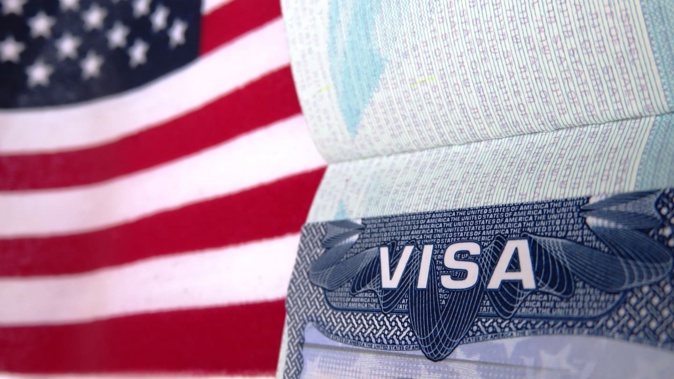
US plans to ask visitors, including Kiwis, to disclose 5 years of social media history

The US may require visa waiver visitors to provide up to five years of social media history. Photo / Getty Images

Frances Vinall Washington Post

The United States could begin requiring visitors from countries on the visa waiver programme to provide up to five years of their social media history.

There are dozens of countries on the visa waiver programme list, including many European nations, Australia, New Zealand, South Korea, Japan, Brunei, Singapore, Qatar, Israel and Chile.

The US Customs and Border Protection proposal posted to the Federal Register to be officially published on Wednesday (local time), suggests adding social media as a “mandatory data element” for an Electronic System for Travel Authorisation (Esta) application.

Applicants would also have to provide additional information “when feasible”, according to the proposal. The list includes telephone numbers used in the past five years, email addresses used in the past 10 years, IP addresses and metadata from electronically submitted photos, and biometrics, including facial, fingerprint, DNA and iris data.

It would also require applicants to provide information about their family members, including names, telephone numbers, dates of birth, places of birth and residences.

According to CBP, the proposal is open for a 60-day public comment period.

Esta is an automated system used by tourists and people travelling for short-term business who are entering the United States through the visa waiver programme. It allows citizens of select countries to visit for up to 90 consecutive days. The authorisation costs $40 and is generally valid for two years, and the Esta holder can enter multiple times during that period.

Farshad Owji, past president of the American Immigration Lawyers Association and partner at law firm WR Immigration, said the proposal could “chill travel and expression”.

“Basically, people will self-censor, and they avoid coming to the US altogether, and that affects tourism, business and America’s global reputation.”

Owji added that it appeared the Trump administration wanted to use the social media evaluation to “understand the person’s view of general politics around the world”.

“Having the citizenship of an Esta country doesn’t necessarily mean that person has a political view that is aligned with the current administration’s view,” he said.

The proposal also includes removing the option of applying for an Esta from the government website and instead would require applicants to use the Esta Mobile app. CBP estimates that more than 14 million people annually will use the Esta Mobile app after the changes come into effect.

Similar requirements have previously been applied to other visa categories.

All immigrant and non-immigrant visa applicants have been required to disclose their social media accounts since 2019 in a change implemented during the previous Trump administration, covering about 15 million applicants per year, according to an analysis by the Brennan Centre for Justice.

In June, the State Department made it a requirement for student visa applicants to have their social media accounts set to public, and the same requirement soon goes into effect for H-1B high-skilled worker visa applicants.

[…]

Via https://www.newstalkzb.co.nz/news/world/us-plans-to-ask-visitors-including-kiwis-to-disclose-5-years-of-social-media-history/

Baby dies of cold as winter hits displaced Gazans amid Israeli attacks

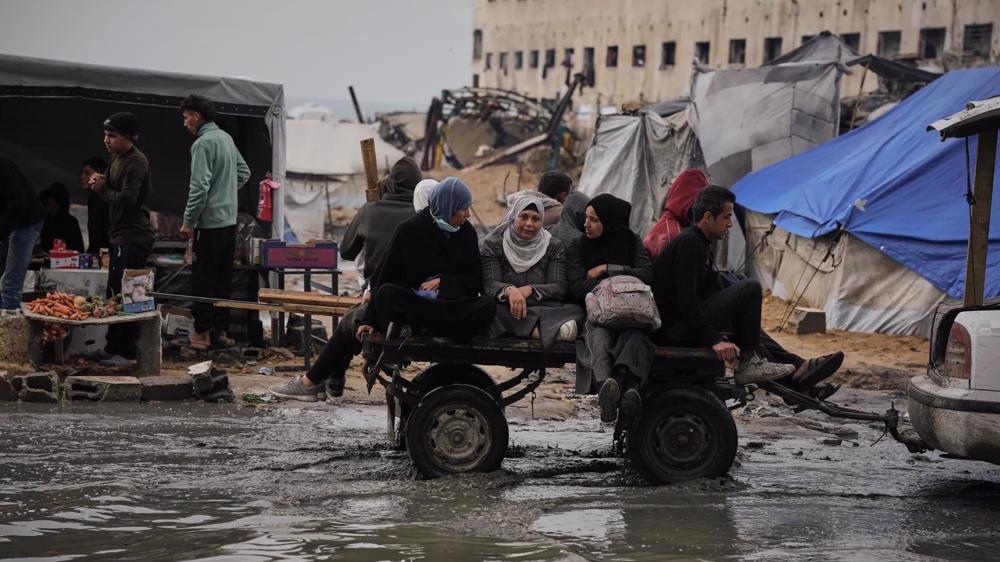
Palestinians ride in a cart pulled by a vehicle through a flooded street after stormy weather in Gaza City on December 10, 2025. (Photo by AP)

Press TV

An eight-month-old Palestinian infant has tragically died due to extreme cold in the southern Gaza Strip city of Khan Yunis, as displaced families continue to endure harsh winter conditions compounded by the ongoing impacts of a two-year Israeli offensive.

The baby, named Rahaf Abu Jazar, died on Thursday as the temperature in the area plummeted sharply, amid worsening winter conditions faced by children and families seeking refuge in fragile and makeshift tents.

The head of the Health Ministry in Gaza, Munir al-Bursh, confirmed the death, cautioning that more children, elderly individuals, and patients might succumb to the cold inside rain-soaked tents.

Low temperatures are severely affecting children, the elderly, and those who are unwell, he added, pointing to instances of intense shivering, significant loss of body heat, worsening respiratory conditions, and the risk of fatalities.

Bursh noted that the humidity and stagnant water inside the tents create an ideal environment for pneumonia and respiratory infections to thrive, while patients struggle to access medicine or proper medical care.

The heartbreaking incident comes as several tents housing displaced individuals were submerged by rainwater in the al-Mawasi area of Khan Yunis, al-Bassa and al-Baraka in Deir al-Balah, the Central Market area in Nuseirat, and the Yarmouk and Port (al-Mina) areas on Wednesday.

The spokesperson for Gaza’s Civil Defense, Mahmoud Basal, said the agency received more than 2,500 distress calls in the past 24 hours from displaced families whose tents were flooded.

The Civil Defense described the conditions unfolding inside the camps as “tragic,” noting that heavy rainfall has washed away tents despite numerous humanitarian appeals for immediate intervention.

The Civil Defense said it evacuated dozens of tents in Rafah, in the south, after they were completely submerged.

Basal warned that over 250,000 families residing in displacement camps throughout the territory face significant risks from cold weather and rainwater, as their deteriorating tents offer little protection.

Israeli human rights organization B’Tselem stated that the international community is abandoning the people of Gaza, as Israel persists in striking the coastal region in violation of a ceasefire that has been in place for two months.

“World leaders and the international community continue to abdicate their responsibility, abandoning the people of Gaza and enabling Israel to continue its destructive campaign unabated behind the smokescreen of a ‘ceasefire’,” the group said in a post on X.

B’Tselem reported that the majority of Palestinians are facing severe shortages of adequate shelter and essential supplies like food, water, and medicine. Furthermore, Israel is still restricting access for medical teams, humanitarian workers, and foreign journalists to enter Gaza, even after the ceasefire.

“This limits the availability of vital care, conceals reality on the ground and prevents documentation of harm to the population,” the statement added.

Meanwhile, the official Palestinian news agency WAFA reported that a Palestinian woman was killed and others were injured on Thursday in an Israeli airstrike on the Jabalia refugee camp in the northern Gaza Strip.

Earlier, the Israeli military shot dead a Palestinian and injured others in al-Mawasi, near Rafah in southern Gaza.

WAFA reported that Israeli forces opened fire near the Flag Roundabout in al-Mawasi on Wednesday night.

Israel has violated the ceasefire more than 700 times since it took effect on October 10, according to Gaza’s Government Media Office.

At least 384 Palestinians have also been killed ever since, and approximately 1,000 others sustained injuries.

[…]

Via https://www.presstv.ir/Detail/2025/12/11/760434/Palestinian-infant-aged-eight-months-dies-due-to-extreme-cold-in-southern-Gaza

US Seizes Oil Tanker Off Venezuelan Coast

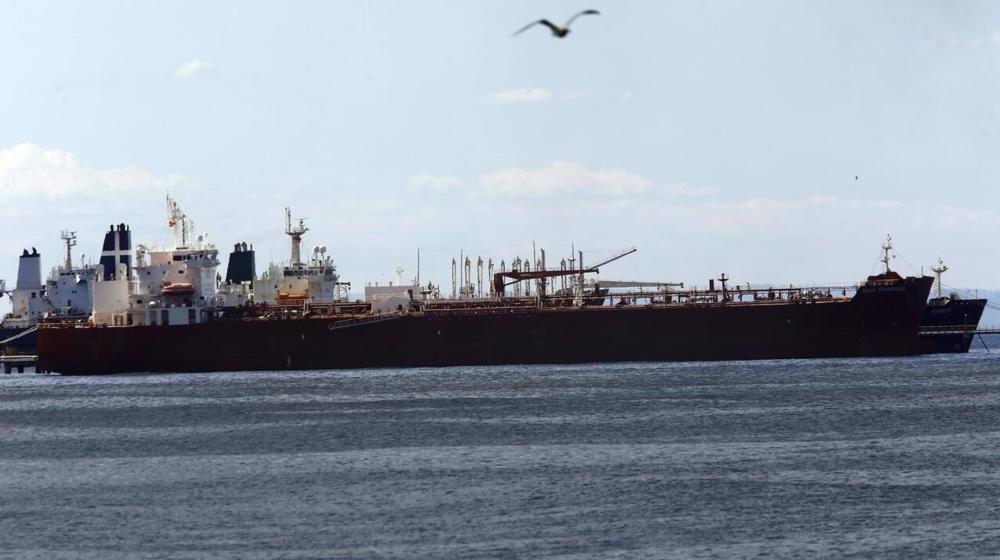
This file picture shows an oil tanker anchored off the dock of El Palito refinery near Puerto Cabello, Venezuela, in September 2020. (Photo by AP)

Press TV

The Iranian embassy in Caracas says the seizure of an oil tanker off the coast of Venezuela by the US forces is “piracy in the Caribbean Sea” and a gross violation of international laws and regulations.

In a statement on Thursday, the embassy strongly condemned the US move as in contravention of the fundamental international principles and regulations.

“The illegal move by the US government to seize a Venezuelan oil tanker in the Caribbean Sea without any justified or legal reason constitutes a blatant violation of international laws and regulations, including the inviolable principle of freedom of the seas and navigation,” it said.

“’Piracy in the Caribbean Sea’ is the most appropriate title for this unlawful and unjustified move by the US, which seeks to achieve its goals by resorting to illegitimate measures, violation of national sovereignty, infringement of others’ rights, and the promotion of anarchism,” it added.

The Iranian embassy expressed solidarity with the Venezuelan government and people in defending their national sovereignty and absolute rights.

President Donald Trump on Wednesday admitted that US forces had taken control of an oil tanker off the coast of Venezuela, a move which risks a sharp escalation in tensions with Venezuela.

“We have just seized a tanker on the coast of Venezuela – a large tanker, very large, the largest one ever seized actually,” Trump told reporters at the White House.

The Venezuelan government said in a statement that the US has been engaged in an “international act of piracy.”

It added, “Under these circumstances, the true reasons for the prolonged aggression against Venezuela have finally been revealed… It has always been about our natural resources, our oil, our energy, the resources that belong exclusively to the Venezuelan people.”

The US government accuses Venezuela of funneling narcotics into the US and has escalated pressure on the country through a military buildup in the Caribbean, describing it as an anti-drug trafficking mission without evidence.

The US has also carried out at least 21 strikes on alleged drug vessels in the Caribbean and Pacific since September, killing at least 83 people.

Venezuela – home to some of the world’s largest proven oil reserves – has, in turn, accused Washington of seeking to steal its resources.

In a telephone conversation with his Venezuelan counterpart, Nicolas Maduro, on Tuesday, Iran’s President Masoud Pezeshkian strongly condemned the United States for deploying a naval fleet to the Caribbean and the coast of Venezuela, calling the move illegal and a threat to international peace and security.

[…]

Via https://www.presstv.ir/Detail/2025/12/11/760420/Iran-US-seizure-oil-tanker-Venezuela-piracy-Caribbean-Sea