Trump announces two-week ceasefire with Iran

Trump announces two-week ceasefire with Iran
The president claimed the US has already met and exceeded all military objectives and is now giving diplomacy more time.

Pakistani Prime Minister Shehbaz Sharif has asked US President Donald Trump for a two-week deadline extension after the US president threatened “a whole civilization will die tonight” if Tehran does not yield to his demands.

“To allow diplomacy to run its course, I earnestly request President Trump to extend the deadline for two weeks. Pakistan, in all sincerity, requests the Iranian brothers to open Strait of Hormuz for a corresponding period of two weeks as a goodwill gesture,” Sharif said in a post on X.

The White House has confirmed that Trump has been informed of Pakistan’s request and “a response will come.” Trump confirmed that his administration is still in “heated negotiations” with the Iranian side, with Vice President J.D. Vance reportedly serving as the US interlocutor.

Meanwhile, Iran’s Ambassador to Pakistan Reza Amiri Moghadam has called Islamabad’s initiative a “step forward” from a critical stage.

Key developments:
  • Iran is positively reviewing Pakistan’s request, a senior Iranian official told Reuters on Tuesday.
  • Trump is also aware of the proposal from Islamabad, and a response will come soon, Axios reported, citing White House press secretary Karoline Leavitt.
  • Israel has warned Iranians to avoid trains for their “safety” as the US has threatened to “demolish” infrastructure ahead of Trump’s Tuesday deadline, dubbed “Power Plant Day” and “Bridge Day”

[…]

Via https://www.rt.com/news/637586-us-strikes-irans-kharg-island-live/

Iran’s 10 demands (https://gulfnews.com/world/mena/irans-10-point-peace-plan-whats-on-the-table-and-why-it-matters-1.500498882)

  • A guarantee that Iran will not be attacked again
  • A permanent end to the war, not just a ceasefire
  • An end to Israeli strikes in Lebanon and against Iranian allies
  • The lifting of all US sanctions on Iran
  • Iran agreeing to reopen the Strait of Hormuz
  • Introduction of a $2 million fee per ship transiting Hormuz
  • Revenue from shipping fees to be shared with Oman
  • Funds to be used for reconstruction of war-damaged infrastructure
  • Establishment of safe passage protocols through Hormuz
  • A broader framework to end regional hostilities

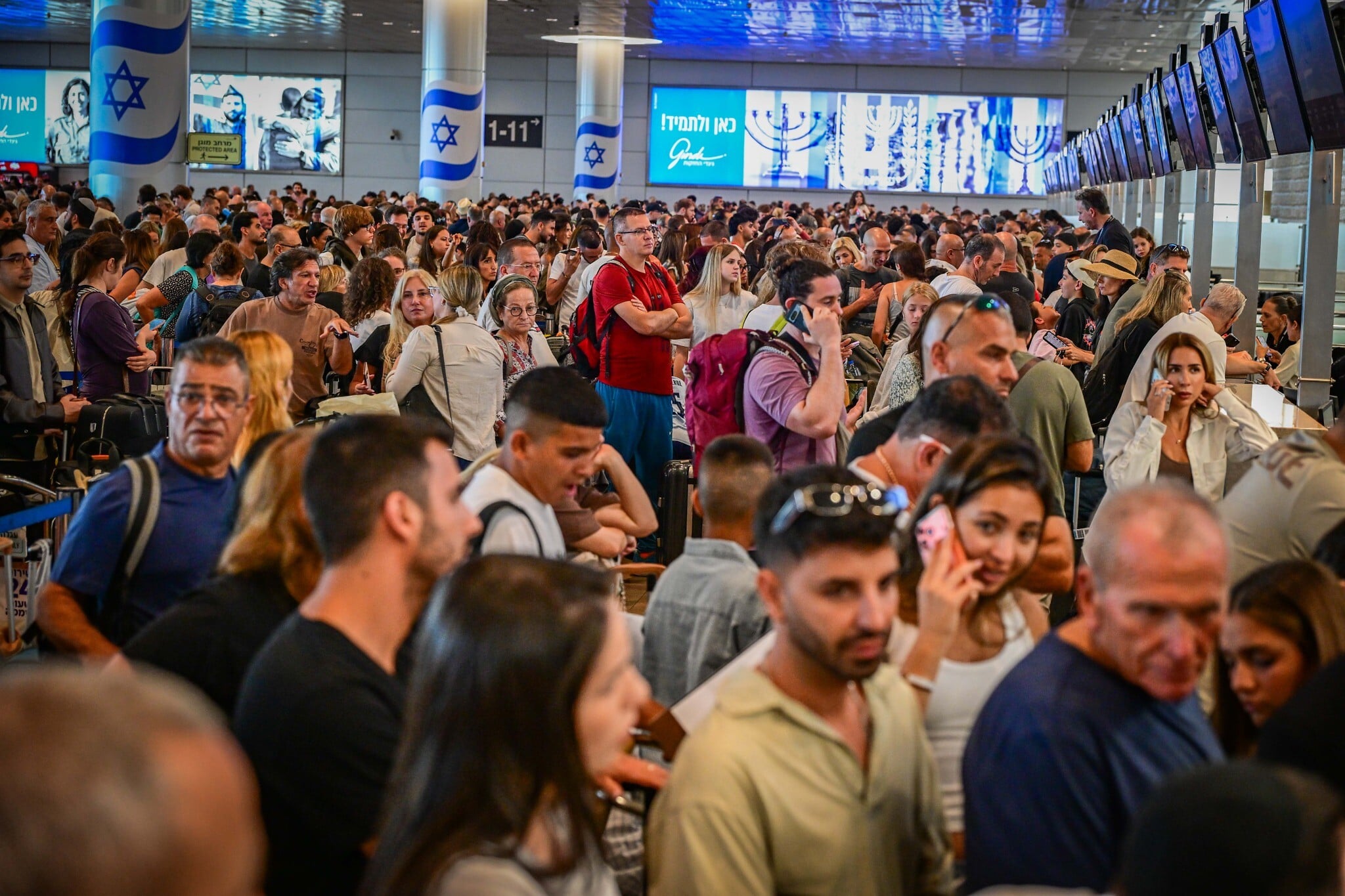
15 Planes Have Left Tel Aviv Over Past 15 minutes – Has Israeli Government Fled?

Africa’s Richest Man Offers Fuel Relief

Africa’s richest man offers fuel relief

RT

The Dangote refinery has the capacity to supply Nigeria and most of the continent amid the Middle East war disruption, its owner has said

Nigeria’s Dangote refinery has said it is ramping up fuel and fertilizer exports to African markets as supply disruptions linked to the US-Israeli war on Iran tighten availability and drive up import costs across the continent.

The refinery, Africa’s largest, has been operating at its maximum capacity of 650,000 barrels per day and has already shipped 17 cargoes of gasoline to countries across the continent, Aliko Dangote, the refinery’s owner, said on Monday. The plant has also stepped up exports of urea as buyers seek alternative supplies, he added.

“What I can do is assure Nigerians… and most of West Africa, Central Africa, and East Africa, we have the capacity to supply them,” the billionaire said during a tour of the sprawling complex outside Lagos, Reuters reported.

Dangote said fertilizer shipments were increasingly being redirected to African markets that were not previously a focus. The plant can produce up to three million metric tons of urea a year, with most exports typically going to the US and South America, according to officials cited by Reuters.

Fuel prices in oil-rich Nigeria have, however, hit record highs, with maximum output still failing to offset the impact of high crude prices. Dangote said he wanted more crude cargoes priced in local currency to help lower costs, after Reuters reported that state oil firm NNPC had increased May allocations to the refinery from five cargoes to seven.

The company has also said it is ready to export fuel to Europe, including the Netherlands, as it expands its reach beyond Africa.

The export push comes as the Middle East conflict disrupts traffic through the Strait of Hormuz, a vital shipping chokepoint. A recent joint report by the African Union, the UN Economic Commission for Africa, and the World Bank warned that the conflict risked turning a trade shock into a broader cost-of-living crisis across Africa through higher fuel and food prices, rising transport costs, and pressure on already fragile currencies.

On Tuesday, Afreximbank said it had approved a $10 billion ‘Gulf Crisis Response Programme’ to help African and Caribbean economies, banks, and companies absorb the economic shock triggered by the crisis.

[…]

Via https://www.rt.com/africa/637580-africas-richest-man-dangote-offers-fuel-relief-middle-east-crisis/

China Calls for Israel to Withdraw from Lebanon

China in a Post-Hegemonic Era: Testing the Limits of Diplomatic Power

Ricardo Martins, April 07, 2026

China’s call for Israeli withdrawal from southern Lebanon and its proposal for a multilateral peace initiative signal more than a diplomatic intervention. They reflect Beijing’s gradual emergence as a geopolitical actor seeking to shape conflict management in a context of declining hegemonic coordination and increasing fragmentation of the international order.

Chinese President Xi Jinping’s recent statement calling for the immediate withdrawal of Israeli forces from southern Lebanon—and warning against the risk of the region “becoming another Gaza”—should not be read merely as rhetorical positioning. Rather, it signals a calibrated step in Beijing’s gradual insertion into Middle Eastern diplomacy, reflecting both normative framing and strategic intent, as I will try to explain below.

At the normative level, China’s emphasis on sovereignty and territorial integrity is consistent with its long-standing foreign policy doctrine. By framing the situation as a violation of Lebanon’s sovereignty, Beijing aligns itself with principles embedded in the United Nations system while simultaneously appealing to a broader Global South audience that remains sensitive to issues of external intervention and colonialism.

While publicly maintaining a balanced diplomatic posture, Beijing engages in sustained information-gathering and strategic monitoring aimed at safeguarding critical interests—particularly energy security, trade routes, and regional stability

This normative posture, however, is not neutral: it allows China to occupy a position of selective legitimacy, selectively aligning itself with principles such as sovereignty and restraint while contrasting its discourse with what is increasingly perceived as the erosion of the Western-led liberal order. This dynamic reflects broader processes of legitimacy contestation in international society, whereby emerging powers reinterpret and selectively appropriate norms to enhance their own standing (Ian Clark 2005: Legitimacy in International Society; Amitav Acharya 2014: The End of American World Order).

From a theoretical standpoint, this move can be interpreted through the lens of hegemonic transition. As Robert Gilpin argues in War and Change in World Politics, the relative decline of a dominant power creates opportunities for other actors to reshape the international order, often leading to periods of instability and systemic reconfiguration.

In this context, as the capacity of the United States to impose or coordinate regional stability becomes more contested, emerging powers such as China are not merely balancing militarily but increasingly positioning themselves as alternative providers of diplomatic and institutional frameworks, or simply as alternative providers of order.

Chinese New Way and Its Limits

Importantly, Beijing’s approach differs from traditional interventionism. Rather than projecting force, China is advancing what can be termed a procedural strategy of influence: shaping agendas, convening actors, and embedding itself within multilateral frameworks. Keohane in After Hegemony shows how influence is exercised not only through coercion but through institutions, rules, and agenda-setting, which structure how actors behave.

This reflects a broader pattern in Chinese foreign policy, where legitimacy is constructed through process rather than coercion, even if underlying strategic interests remain clear. In this sense, it signals not a replacement of hegemony, but a reconfiguration of how influence is exercised.

This dynamic is further illustrated by recent diplomatic activity involving key intermediary states in the region—including Egypt, Oman, Türkiye, and Pakistan—seeking to reach an end in the US–Israel–Iran war. Preliminary consultations took place in Islamabad, pointing to the emergence of alternative diplomatic channels beyond traditional Western-led frameworks. Following the initial round of talks, Pakistan’s Foreign Minister, Ishaq Dar, travelled to Beijing for consultations with his Chinese counterpart, Wang Yi, with discussions focusing on coordinating positions and outlining negotiating points. This episode shows China’s growing role as a convening power and an emerging broker of order in a fragmented, post-hegemonic international system.

Yet, the limits of this approach are equally evident. Without enforcement capacity on the ground, China’s influence depends on the willingness of regional actors to engage and on the degree to which its initiatives are perceived as credible alternatives. The absence of an official response from Israel evidences this constraint, highlighting the persistent gap between discursive power—understood as the ability to shape narratives and norms (Foucault 1977: Power/Knowledge)—and operational leverage, which rests on material and coercive capabilities (Strange 1988: States and Markets).

What is being revealed, therefore, is not simply a reaction to a regional crisis but a subtle reconfiguration of diplomatic hierarchies. China is not replacing existing powers; it is testing the boundaries of a post-hegemonic order, where multiple actors seek to define the terms of conflict management. Whether this translates into concrete outcomes will depend less on the strength of Beijing’s statements and more on its ability to convert diplomatic initiative into sustained political engagement.

Chinese Intelligence or Intelligence Diplomacy?

This diplomatic positioning cannot be fully understood without considering the less visible, but increasingly central, role of Chinese intelligence. Long perceived by Western security services as primarily inward-looking, China’s intelligence apparatus has, over the past decade, evolved into a transnational system operating at the intersection of national security, economic strategy, and political influence. Anchored in the strategic objective of the “great rejuvenation” of the Chinese nation, this system does not separate domestic stability from external projection. Rather, it integrates the acquisition of technological capabilities, and the shaping of foreign political environments into a single, coherent framework of state power.

What distinguishes this model is not merely its scope, but its method. Unlike the more centralised and operationally visible approaches associated with agencies such as the Central Intelligence Agency or Mossad, Chinese intelligence relies on a diffuse, networked logic often described as a “whole-of-society” approach. Information is accumulated incrementally—through academic exchanges, business networks, cyber operations, and long-term relationship-building—rather than through singular, high-profile operations. At the institutional core of this system stands the Ministry of State Security, complemented by party structures such as the United Front Work Department, which extend influence across transnational social and political spaces.

[…]

Via https://journal-neo.su/2026/04/07/china-in-a-post-hegemonic-era-testing-the-limits-of-diplomatic-power/

How Close is Middle East to Nuclear Catastrophe?

How close is the Middle East to a nuclear catastrophe?

RT

The ongoing US-Israeli war on Iran could render large parts of the region uninhabitable

A war launched by the US and Israel with the stated aim of preventing a nuclear crisis could end up causing one.

With repeated strikes reported near the Russian-built Bushehr Nuclear Power Plant in Iran, discussions about the US potentially forcibly taking Iranian uranium reserves, and seemingly zero room for compromise, the likelihood of radioactive fallout across the Middle East is steadily increasing.

Strikes getting closer to Bushehr reactor

Since the US-Israeli war on Iran began on February 28, Tehran has reported four separate military strikes near its Bushehr Nuclear Power Plant on the Persian Gulf coast. The facility’s roughly-square territory spans some 500 meters across, with a single reactor unit located at its center.

In the most recent incident on April 4, one of the projectiles landed just 75 metres from the site’s perimeter, the International Atomic Energy Agency (IAEA) reported, citing satellite imagery analysis. In mid-March, the UN nuclear watchdog reported that an attack had destroyed a structure around 350 metres from the reactor.

Risking damage to Bushehr site ‘suicidal’

The plant was constructed by Russian specialists and still hosts a Russian team, although operator Rosatom has reduced staffing to a skeleton crew since hostilities began. The company stated that the March 17 strike marked the first time a weapon landed within the facility’s protected zone, hitting near a meteorological building.

On the first day of the conflict, Rosatom chief Aleksey Likhachev warned that an operational nuclear power plant “is not a practice target,” stressing that military activity near such installations is “unacceptable and suicidal.”

Russia’s Foreign Ministry also condemned the incidents near Bushehr, warning on April 6 that “the shadow of a radiological disaster more severe than Chernobyl now looms over the Persian Gulf” and surrounding areas.

Worst case scenario for Bushehr

Modern nuclear power plants are designed with multiple layers of protection to prevent the release of radioactive material. However, disasters such as Chernobyl in 1986 – caused by a catastrophic reactor failure during a botch experiment – and Fukushima in 2011 – triggered by a natural disaster – demonstrate that severe accidents remain possible and warrant abundance of caution.

The recent incidents near Bushehr serve as “a stark reminder: a strike could trigger a nuclear accident, with health impacts that would devastate generations,” World Health Organization head Tedros Ghebreyesus cautioned, echoing calls from the IAEA for deescalation.

A worst-case scenario involving a large-scale release of radioactive material from Bushehr could render not only parts of Iran but also neighboring states such as Qatar, Kuwait, and the UAE uninhabitable, even without direct fallout, according to Peter Kuznick, director of the Nuclear Studies Institute at American University.

“If Cesium-137 contaminates water supplies, it becomes extremely difficult to remove,” he explained to RT. Some regional countries get 100% of their drinking water from desalination systems that would likely be compromised, should Bushehr be seriously damaged. “This war is so reckless and out of control at this point that anything is possible,” he said.

As in Ukraine, so in Iran

Iranian Foreign Minister Abbas Araghchi has criticized what he described as a lack of Western condemnation over threats to Bushehr, compared to accusations of Russia related to the Zaporozhye Nuclear Power Plant.

The formerly Ukrainian facility, under Russian control since 2022, has faced repeated attacks or nearby incidents as Kiev continues to pursue its recapture. The IAEA maintains a monitoring mission at the site but does not assign blame for strikes, citing limitations of its mandate – a policy it also follows in Iran. Supporters of Kiev lay the blame squarely on Moscow.

Threats beyond Bushehr

The stated justification for the US-Israeli campaign is that Iran was allegedly close to acquiring nuclear weapons – despite the damage the two nations inflicted on its nuclear infrastructure last year.

The administration of US President Donald Trump argues that Iran has no right to a civilian nuclear program, a position that conflicts with the Nuclear Non-Proliferation Treaty (NPT).

Tehran has long denied any intention to develop nuclear weapons, citing religious prohibitions against weapons of mass destruction. However, the targeted assassination of Supreme Leader Ali Khamenei in the opening shot of the war may have shifted political calculations in Iran.

Ahmad Naderi, an influential MP, has urged Iran to follow North Korea’s example, arguing that “if we were also armed with nuclear weapons, Trump would not dare to threaten bombing.” The NPT’s core deal is that a signatory gets IAEA help in building up the nuclear industry in exchange for oversight preventing weaponization.

The US and Israel have ignored the international agency’s mandate to strike Iran’s Natanz enrichment site attacked on March 21. Meanwhile, attacks on industrial facilities have raised additional concerns. The Khuzestan Steel Production Factory, attacked in late March, uses radioactive isotopes for gauging, the IAEA warned, noting that no breach of sealed sources was detected.

Hunt for the uranium stockpile

The greatest contamination risk may stem from Iran’s stockpile of highly enriched uranium, believed to be stored in underground facilities in Isfahan and Natanz following the US-Israeli attacks last summer.

The IAEA estimated in June 2025 that Iran possessed over 440 kg of uranium hexafluoride enriched to 60%, while some assessments suggest the stockpile could be larger by as much as 100kg.

There has been speculation that a large-scale US military operation – officially described as a rescue mission for aircrew of an F-15E jet downed in Iran on April 3 – may have been linked to efforts to locate and secure the uranium. The mission involved around 150 aircraft, including transport planes that were stuck on the ground and destroyed to avoid capture, according to American officials.

The other nation with nuclear sites

Israel, widely believed to possess a nuclear arsenal, faces similar vulnerabilities. Following the attack on Natanz on March 21, Iran retaliated with strikes near Dimona and Arad, two towns close to the heavily fortified Shimon Peres Negev Nuclear Research Center.

“Our air defense system is among the best in the world, but it is not hermetic,” a senior Israeli air defense commander commented. “There are errors and malfunctions.”

The implied threat to the facility was later reinforced in an Iranian AI propaganda video depicting the country’s new leader considering a direct attack on the Iranian nuclear reactor.

Running up the escalation ladder

Although already highly destructive, the conflict still has significant room for escalation, including the potential use of nuclear weapons.

The US used the option in 1945 against Japan, a nation that refused to admit defeat at a moment when a Soviet ground attack was becoming increasingly possible. Mutually Assured Destruction (MAD) made the use of nukes a taboo during the Cold War.

Israeli officials and pro-war aid reportedly swayed Trump aides with a promise that his political legacy would be secured if he were to do what no president had done before him and launch a regime-change war against Tehran. “Trump has broken every custom, every norm, every tradition, every international law, most US laws,” Kuznick noted “The same psychology applies to the nuclear taboo.”

Likewise, Israel came close to using nuclear weapons during the 1973 Yom Kippur War but ultimately then-Prime Minister Golda Meir refrained after battlefield conditions shifted against Egyptian and Syrian forces.

What decisions Trump or Benjamin Netanyahu might take, should the latter’s 40-year dream of crushing Iran slip away, is becoming an increasingly concerning question.

[…]

Via https://www.rt.com/news/637577-iran-nuclear-disaster-risks/

US suffered major strategic defeat in failed Isfahan operation

Information obtained by Press TV regarding the recent operation by the US-Israeli coalition in the central Isfahan province reveals a major strategic defeat for the enemy.

US President Donald Trump’s frantic threats in the past few days to target Iran’s civilian infrastructure, including power plants and bridges, are a direct consequence of the heavy defeat suffered by the US forces in the Isfahan operation.

The failed raid was carried out after the enemy conducted extensive aerial reconnaissance operations in the days leading up to the attack, according to the exclusive information.

During those initial infiltration and reconnaissance missions, the US and possibly the Zionist regime lost a significant number of aircraft, including at least one A-10 Thunderbolt II and two Black Hawk helicopters.

The information obtained by Press TV reveals that “zero hour” for the failed Isfahan operation was set during a secret meeting at the White House under the direct supervision of the US president himself.

It has now become clear that this operation had no connection to the claimed rescue of a downed F-15 fighter pilot, a narrative initially pushed by American officials. Instead, evidence examined and confirmed by Press TV  indicates that the real objective was to infiltrate and attack one of Iran’s nuclear facilities in Isfahan.

The landing site for C-130 transport aircraft, chosen based on previous reconnaissance, was an abandoned airstrip located dangerously close to one of these nuclear sites.

The Americans miscalculated, believing that Iran’s air defense would be unable to confront the aircraft involved in the operation. However, Press TV learned that the deployment of numerous US aircraft occurred while the Iranian Armed Forces were in full alert, waiting for them. In fact, American special forces fell directly into a trap set by Iranian forces.

The Iranian Armed Forces, including the Army, Law Enforcement (Faraja), the Islamic Revolution Guards Corps (IRGC), and local popular forces, initially did not show a serious reaction to the landing of the first C-130, which was carrying dozens of special forces commandos. Evidence shows this aircraft veered somewhat off the runway while landing at the abandoned dirt airstrip.

Minutes later, a second C-130 aircraft approached, carrying specialized vehicles, several MH-6 Little Bird helicopters, and other support equipment. At that moment, Iranian forces on the scene targeted the second aircraft before it could land, turning its normal landing into an emergency one. Two Black Hawk helicopters also arrived shortly after.

It was at this moment that the aircraft, helicopters, and commandos who had disembarked from the first plane became perfect targets for the Iranian Armed Forces.

After the special forces realized they had fallen into the trap, the White House situation room made a critical decision: the main operation to infiltrate the nuclear site was changed into a desperate rescue operation for the dozens of US commandos trapped under Iranian fire.

The Americans immediately sent several smaller aircraft to extract their forces, barely managing to gather the individuals and withdraw them from the deadly situation.

The rescue operation was conducted so hastily that some soldiers and officers abandoned their equipment, including, according to the evidence possessed by Press TV, the identification document of an American officer left behind in the area, to save their lives.

After the commandos were evacuated, American fighter jets established a line of fire with a 5-kilometer radius to prevent Iranian forces from approaching the abandoned C-130s at the airstrip. The jets also carried out heavy bombing of their own equipment to prevent it from falling into Iranian hands.

In this failed operation, US special forces did not even have the chance to fly the special Little Bird helicopters; some were destroyed on the ground, while others were destroyed inside the second C-130 aircraft.

Following this disgraceful and heavy defeat, Trump hastily and chaotically held multiple press conferences to cover up the failure and falsely portray it as a pilot rescue operation.

The information obtained by Press TV describes these propaganda shows, led by Trump and his Secretary of War Pete Hegseth, as reminiscent of Hollywood films – lies that have not even been accepted by many American audiences.

The information available notes that Trump will continue to fabricate other “Hollywood-style” operations to falsely claim achievements and appease public opinion in the US.

However, his and Hegseth’s repeated storytelling and lying, which have reduced public confidence in him both in the US and across the world to the lowest possible level, have made his “Goebbels-style lies” very difficult to believe.

People in the US and across the world are asking a pointed question: “How is it that a country which supposedly has neither air defense left nor an army or armed forces has managed to shoot down and destroy so many fighter jets and various aircraft, and continues to add to its album of different types of destroyed fighter jets, planes, helicopters, and drones,” a highly-placed source in Tehran told Press TV.

The heavy defeat of the Isfahan operation, he noted, could be recorded in history as the worst and most disgraceful failure of the US military, even worse than the failed Tabas operation of 1980, which saw a botched rescue attempt end in disaster for Washington.

The information obtained by Press TV notes that the heavy aftershocks of this “great debacle” for Trump will affect not only the fate of the ongoing war against the Islamic Republic of Iran but also the political future of “America’s gambling and ignorant president,” his Republican party, and the American political scene for years to come.

[…]

Via https://www.presstv.ir/Detail/2026/04/07/766446/press-tv-exclusive-us-suffered-strategic-defeat-failed-isfshan-operation

US and Israel Bomb Tehran Synagogue

Rabbi Younes Hammami Lalezar, leader of Iran’s Jewish community, stands before the ruins of a synagogue in central Tehran destroyed by US-Israeli bombing, a stark reminder that Zionist-American aggression respects no religion or ethnicity, targeting only civilians and spreading destruction.

Via https://t.me/presstv/184261

“Casualty Cover-up”: Pentagon Hiding US Losses Under Trump in Middle East

Almost 750 U.S. troops have been wounded or killed in the Middle East since October 2023, an analysis by The Intercept has found. But the Pentagon won’t acknowledge it.

U.S. Central Command, or CENTCOM, which oversees military operations in the Middle East, appears to be engaged in what a defense official called a “casualty cover-up,” offering The Intercept low-ball and outdated figures and failing to provide clarifications on military deaths and injuries.

At least 15 U.S. troops were wounded Friday in an Iranian attack on a Saudi air base that hosts American troops, according to two government officials who spoke with The Intercept. Hundreds of U.S. personnel have been killed or injured in the region since the U.S. launched a war on Iran just over a month ago.

President Donald Trump — who wore a blue suit, red tie, and a ball cap to the dignified transfer of the first Americans killed in the war — said casualties were inevitable.

“When you have conflicts like this, you always have death,” he said afterward. “I met the parents and they were unbelievable people. They were unbelievable people, but they all had one thing in common. They said to me, one thing, every single one: Finish the job, sir. Please finish the job.”

On Tuesday, Trump teased that he would wind down the war with Iran in as little as two weeks despite not achieving many of his stated aims, such as “freedom for the people” of Iran, “tak[ing] the oil in Iran,” and forcing Iran’s “unconditional surrender.” At one point, the president even declared that the war would last “as long as necessary to achieve our objective of PEACE THROUGHOUT THE MIDDLE EAST AND, INDEED, THE WORLD!”

CENTCOM has sent outdated statements on casualty numbers, meanwhile, resulting in undercounts, including a statement sent Monday from spokesperson Capt. Tim Hawkins noting that

“Since the start of Operation Epic Fury, approximately 303 U.S. service members have been wounded.”

The comment was three days old and excluded at least 15 wounded in the Friday attack on Prince Sultan Air Base in Saudi Arabia. The command did not reply to repeated requests for updated figures.

CENTCOM also would not provide a count of troops who have died in the region since the start of the war. An Intercept analysis puts the number at no less than 15.

“This is, quite obviously, a subject that [War Secretary Pete] Hegseth and the White House want to keep under major wraps,” said the defense official who spoke on the condition of anonymity in order to speak frankly.

In 2024, during the Biden administration, the Pentagon provided The Intercept with detailed chronologies of attacks on U.S. bases in the Middle East that listed the specific outpost that was attacked, the type of strike, and whether — or how many — casualties resulted, along with an aggregate count of attacks by country.

The Trump administration’s numbers, by comparison, lack detail and clarity. The current CENTCOM casualty figures do not appear to include more than 200 sailors treated for smoke inhalation or otherwise injured due to a fire that raged aboard the USS Gerald R. Ford before it limped off to Souda Bay, Greece, for repairs. CENTCOM did not reply to close to a dozen requests for clarification on the casualty count and related information sent this week.

“CENTCOM and the White House should be providing accurate and timely information on the costs and casualties involved in this war. After all, it is American taxpayers who are funding it and U.S. economic prosperity and economic wellbeing that is being undermined by it,” Jennifer Kavanagh, the director of military analysis at Defense Priorities, a think tank that advocates for measured U.S. foreign policy, told The Intercept.

As the U.S. has relentlessly bombed Iran, that country has responded with attacks on U.S. bases across the Middle East using ballistic missiles and drones. CENTCOM refuses to even offer a simple count of U.S. bases that have been attacked during the war. “We have nothing for you,” a spokesperson told The Intercept. An analysis by The Intercept, however, finds that bases in Bahrain, Iraq, Jordan, Kuwait, Qatar, Saudi Arabia, Syria, and the United Arab Emirates have been targeted.

On Tuesday, Hegseth said that Iran retained the ability to retaliate for U.S. strikes but that their attacks would be ineffectual.

“Yes, they will still shoot some missiles,” he said, “but we will shoot them down.”

On Wednesday morning, officials in Bahrain, Kuwait, and Qatar all reported missile or drone attacks from Iran.

Iranian strikes have forced U.S. troops to retreat from their bases to hotels and office buildings across the region, according to the two government officials. The defense official was livid about the Pentagon’s failure to adequately harden the bases and ridiculed Hegseth’s Tuesday prayer at a Pentagon press conference.

“May god watch over all of them, each day and each night. May his almighty and eternal arms of providence stretch over them and protect them,” said Hegseth.

“Why didn’t Hegseth protect them?” the defense official asked. “Anyone with a brain knew these attacks were coming.”

Pentagon spokesperson Kingsley Wilson did not respond to multiple requests for comment.

Retired Gen. Joseph Votel, a former head of Central Command, recalled that U.S. troops in the region have faced drone attacks for at least a decade.

“At that time we identified a need to protect against this threat, and it has taken far too long for the DoD to respond and provide adequate protection for our deployed troops,” he told The Intercept, referencing drone attacks during the campaign against ISIS in the spring of 2016. “It was a known expectation that, if attacked, Iran would retaliate against our bases, installations, and forces, and I agree that we should have anticipated and been prepared for this inevitability.”

Kavanagh, who previously called attention to the vulnerability of U.S. outposts in the Middle East, echoed Votel.

“It has been clear for years that the rapid proliferation of drones and cheap missiles would put U.S. bases and U.S. early detection radars in the region at risk, yet the Pentagon did little to protect them,” she said. “The failure to invest in hardened infrastructure was a choice. Congress should see this failure as evidence that simply giving the Pentagon more money is not a path to national security.”

“We would be better off if bases across the region were closed for good,” she added.

In public statements, Iran’s foreign minister Seyed Abbas Araghchi called out the U.S. for using civilians in nearby Arab monarchies of the Gulf Cooperative Council states as human shields.

“U.S. soldiers fled military bases in GCC to hide in hotels and offices,” he wrote on X last week. “Hotels in U.S. deny bookings to officers who may endanger customers. GCC hotels should do same.”

Votel also expressed concern about troops using hotels and offices, noting it “could turn normal civilian infrastructure into military targets for the regime.”

Last month, an Iranian drone strike on a hotel in Bahrain wounded two War Department employees, according to a State Department cable reviewed by the Washington Post. CENTCOM did not respond to a request to confirm to The Intercept that those injuries stem from a March 2 attack on the Crowne Plaza hotel, a luxury property in Manama, Bahrain’s capital, but one official indicated this was likely.

Votel said that a failure to provide troops with adequate protection may handcuff U.S. operations.

“I think this really complicates command and control and could affect unit cohesion and effectiveness,” he told The Intercept, referring to the transfer of troops to hotels and office buildings. “That said, we may not have many options if we cannot protect the military bases where they would normally be bedded down.”

At least 15 U.S. troops in the Middle East have died since the beginning of the Iran War, including six personnel who were killed in a drone strike on Port Shuaiba, Kuwait, and a soldier who died due to an “enemy attack on March 1, 2026, at Prince Sultan Air Base, Saudi Arabia.” More than 520 U.S. personnel have also been injured, including those who suffered smoke inhalation on the Ford.

Prior to the current war with Iran, U.S. bases in the Middle East were increasingly targeted by a mix of one-way attack drones, rockets, mortars, and close-range ballistic missiles after Israel’s war in Gaza began in October 2023, most of the attacks occurring in the year following the outset of the conflict. At least 175 troops were killed or wounded in those attacks, including three service members who died in a January 2024 strike on Tower 22, a facility in Jordan. Other attacks targeted al-Asad Air Base, the Baghdad Diplomatic Support Center, Camp Victory, Union III, Erbil Air Base, and Bashur Air Base in Iraq and Al-Tanf garrison, Deir ez-Zor Air Base, Mission Support Site Euphrates, Mission Support Site Green Village, Patrol Base Shaddadi, Rumalyn Landing Zone, Tell Baydar, and Tal Tamir in Syria.

The casualty statistics do not include contractors, most of them foreigners who suffered non-combat injuries. Official U.S. statistics show that there were almost 12,900 cases of injuries to contractors in the CENTCOM area of operations during 2024 alone. More than 3,700 were the most serious non-fatal injuries, including traumatic brain injuries, requiring more than seven days away from work. Eighteen contractors were also killed, all of them in Iraq. The numbers are likely significant undercounts, but if even the fractional number of known contractor injuries is added to the tally, the casualty count for Americans and those on U.S. bases may top 13,600.

[…]

Via https://www.globalresearch.ca/pentagon-hiding-us-losses-middle-east/5921163

US Army “Uneasy” with the Trump Regime

There is a serious crisis in the US.

The military, or Pentagon as it is more commonly known, has long been uneasy about Trump’s adventurous and reckless policies.

However, the war launched against Iran, and especially the possible ground operation, is causing considerable anxiety among American officers.

Mutiny on Board

The first signs of unrest were seen on the US aircraft carrier USS Gerald Ford.

Trump and his eccentric Secretary of War, Pete Hegseth, who sent the aircraft carrier from Venezuela to the waters off Iran, encountered a typical mutiny on board.

First, the ship’s sewage system was damaged by undershirts and socks thrown into the toilets, and then a fire broke out in the laundry room.

The ship is currently undergoing repairs in Crete.

Even before that, following the brutal shelling of so-called drug boats during the blockade of Venezuela, Admiral Alvin Holsey, head of US military forces in Latin America, resigned.

But the real crisis is unfolding now. US President Trump suffered a terrible defeat when he attacked Iran, following Israel’s lead.

Iran attacked all of the US’s allies in the region, primarily Israel, and rendered US bases unusable.

Hegseth and Armageddon

The erratic actions and statements of Pete Hegseth, the alcoholic and Templar who served as a henchman for the megalomaniac Trump, caused significant problems within the military.

Hegseth, who bears a tattoo of the Templars, the most infamous order of the Crusades, sparked outrage with his racist- and Zionist-distorted religious beliefs.

In an interview on CBS News’ “60 Minutes” program in early March, Hegseth claimed that the US military was fighting fanatics who wanted to create a religious “Armageddon.”

The Military Religious Freedom Foundation (MRFF), an organization working to protect religious freedoms in the US military, announced that they had received numerous complaints from the military.

Michael L. Weinstein, the foundation’s founder and former U.S. Air Force member, said they received more than 200 complaints from within the military.

The complaining soldiers stated that their commanders were spreading propaganda claiming that a war against Iran would “start Armageddon and that Trump would hasten the return of Jesus Christ.”

The Forced Resignation of the Joint Chiefs of Staff

Tensions are rising within the U.S. military leadership, particularly following the dismissal of General Randy George, the Chairman of the Army Joint Chiefs of Staff.

Earthquake in the U.S. military! Allegations of generals being dismissed, promotion crisis at the Pentagon.

According to the New York Times, the reaction among senior officers has intensified significantly following the resignation. Many reacted to the dismissal with anger and disappointment, describing it as another blow to an institution already under considerable pressure.

On April 3, Pete Hegseth dismissed Army Chief of Staff General Randy George, along with two other high-ranking generals, Lieutenant General Sarah Clarkson and Major General Phillip Chambers.

On the same day, General David Hodne, who was set to head the Army Training and Transformation Command in 2025, and Major General William Green Jr., head of the Army Moral Support Command, were also dismissed.

The Atlantic magazine, citing sources close to the White House, reports that Army Secretary Daniel Driscoll may also be dismissed.

Some claims suggest the reason for these dismissals is the commanders’ refusal to follow orders!

Hegseth had previously dismissed more than a dozen high-ranking officers, including Chairman of the Joint Chiefs of Staff General CQ Brown, Navy Commander Admiral Lisa Franchetti, Air Force Vice Chairman General James Slife, and Director of the Defense Intelligence Agency Lieutenant General Jeffrey Kruse.

Of course, the Israeli and Zionist-controlled American mainstream media attributes the crisis mostly to personnel changes and broader restructuring plans within the Pentagon.

For example, the Washington Post, owned by Jeff Bezos, talks about a large-scale command system overhaul involving the downgrading of regional commands and a reduction in the number of high-ranking generals.

The Real Cause of the Crisis is Iran

However, the real crisis originates from Iran. According to some sources, since February 28th, the US military and its contractors have suffered a total of 13,000 casualties, including dead and wounded.

The commanders knew that Iran was a tough opponent, and Trump didn’t listen to them.

The US military suffered a major loss of prestige, its bases in the Gulf were destroyed, it failed to protect the Arab Sheikhs, and most importantly, it failed to prevent the closure of the Strait of Hormuz.

Aircraft carriers were withdrawn to distant locations, fearing Iranian missiles. They lost numerous fighter jets, most notably the prestigious F-35s and AWACS Sentry, not to mention the drones.

The Tomahawk inventory was quickly and significantly depleted. Most importantly, the Trump regime, under Israel’s command, intends to launch a ground operation.

This would mean a terrible loss of troops.

Furthermore, the problem isn’t just a ground operation that would turn into a major fiasco. It’s the fact that Trump and his Armageddon-minded team are even considering dropping an atomic bomb on Iran.

IranThe 460 kilograms of uranium, a potential nuclear bomb candidate, in the hands of the US, and Iran’s super missile capability, are at a level that could provide a countermeasure.

Will There be a Coup?

Discontent within the US military has even led to rumors of a coup in the country. Trump’s irrational and dictatorial rhetoric, and his radical decisions that are accelerating the decline of the US, have already caused widespread outrage in the country.

Trump, whose name appears in the Epstein documents as a child rapist and even murderer, is accused of using these documents to blackmail Israel into attacking Iran.

Essentially, there are numerous reasons/crimes that warrant Trump’s removal from office, ranging from corruption and perversion to fascism, madness, ignorance, and lying.

Now, his meddling with the military and his attempts to use the Pentagon for his own political purposes are angering the establishment.

A madman like Trump might have been useful to them during these crazy times, but he crossed the line a long time ago.

The closure of the Strait of Hormuz and Iran’s “unexpected” successful resistance in West Asia disrupted the global system.

Americans, disturbed by fascist formations like the ICE militia, complain that a Trump coup is underway in the US.

Some argue that the Trump regime has been hijacked by radical Zionists working in the interests of Israel.

[…]

Via https://www.globalresearch.ca/us-army-uneasy-trump-regime/5921251

Iran submits demands for end to war as mediators scramble ahead of Trump deadline

(Photo credit: Historic Tel Aviv Bauhaus)

The Cradle

Iran announced on 6 April that it has conveyed its demands on a potential ceasefire with the US and Israel through intermediaries, as US President Donald Trump’s threat to bomb Iranian energy and water infrastructure looms.

Iranian Foreign Ministry spokesperson Esmail Baghaei told a news briefing that Tehran has communicated its demands “based on national interests” through regional mediators.

“We have formulated our own set of demands based on our interests and considerations. We are not ashamed to voice our legitimate and logical demands,” he said when asked about the prospect of an end to the war.

Iranian officials have previously stated that Tehran has four main conditions for an agreement: an end to the war and guarantees against future military attacks, compensation for losses during the conflict, recognition of formal control of the Strait of Hormuz, and no limits on its ballistic missile program.

Baghaei stressed that Iranian leaders are committed to continuing the war to defend the country from US-Israeli attacks if necessary.

“Expressing our positions quickly and courageously should not be interpreted as backing down,” he said.

The ministry at the same time expressed doubts about US intentions, stating that “America destroyed the path of diplomacy in months in the worst way, and the world sees that its claims do not match its actions.”

“America gives no value to the security of the region’s countries, and its only obsession is maintaining the existence of the Zionist entity,” the statement added.

The US and Israel launched an unprovoked war on Iran starting on 28 February, including assassinating the Islamic Republic’s supreme leader, Ali Khamenei, despite negotiations taking place at the time described by Omani mediators as “positive.”

US and Israeli attacks have so far killed over 1,340 people in Iran, according to Iranian authorities.

The Iranian Foreign Ministry announcement comes amid a report from Axios claiming that the US, Iran, and a group of regional mediators are discussing a potential 45-day ceasefire meant to lead to a permanent end to the war.

The negotiations are crucial, as US President Donald Trump gave a 48-hour deadline for Iranian leaders to reach a deal with him, including opening the Strait of Hormuz, while threatening to bomb Iran’s electricity and water infrastructure if they refuse.

However, Axios described the chances for reaching a deal before Trump’s deadline of Tuesday at 8:00 pm Eastern Time (ET) as “slim.”

“But this last-ditch effort is the only chance to prevent a dramatic escalation in the war that will include massive strikes on Iranian civilian infrastructure and a retaliation against energy and water facilities in the Gulf states,” the news outlet wrote.

On Sunday, Trump extended the deadline to Tuesday, telling Axios that he was “deep in negotiations” with Iranian officials.

“There is a good chance, but if they don’t make a deal, I am blowing up everything over there,” he claimed.

Last week, during a televised address to the nation, Trump threatened to bomb Iran “back to the Stone Age.”

If Trump orders deliberate attacks on Iran’s civilian infrastructure, such attacks would constitute war crimes.

They would be reminiscent of the US bombing campaign against Iraq during the 1991 Gulf War, which heavily damaged the country’s electricity and water purification facilities. Coupled with economic sanctions over the next decade, the US bombing campaign led to hundreds of thousands of Iraqi deaths.

If Trump makes good on the threat, Iran has, in turn, threatened to retaliate with attacks against power and water infrastructure in Israel and the Gulf states.

Iran’s shuttering of the Strait of Hormuz to the US and its allies has already struck a blow to Gulf oil production, while the targeting of Gulf desalination facilities could eliminate drinking water supplies for a combined 62 million people.

Two sources speaking with Axios said the plan for a major US-Israeli bombing campaign targeting Iran’s energy facilities is “ready to go,” if no deal is reached by the deadline.

The last-minute diplomatic effort reportedly involves Pakistani, Egyptian, and Turkish mediators, according to the four sources. Messages are reportedly being passed between Trump’s envoy Steve Witkoff and Iranian Foreign Minister Abbas Araghchi.

The sources said the mediators are discussing the terms of a two-phase deal: the first phase would involve a potential 45-day ceasefire, during which a permanent end to the war would be negotiated in the second phase.

According to the sources, a deal to open the Strait of Hormuz and a “solution” for Iran’s highly enriched Uranium, such as removing it from the country or diluting it, would only be reached in the second phase.

The Iranian officials have reportedly insisted to the mediators that they will not agree to a ceasefire similar to that reached in Gaza or Lebanon, where Israel had the ability to carry out additional attacks at any time despite the agreement.

[…]

Via https://thecradle.co/articles/iran-submits-demands-for-end-to-war-as-mediators-scramble-ahead-of-trump-deadline