NYC teachers discover teens can’t read clocks after school cellphone ban

teen with clockBy Natalie O’Neill

Time got away from them!

New York City teachers have found that scores of teenagers can’t read traditional clocks after a cellphone ban in schools statewide — because students figured the skill would be useless in the digital era, according to a report.

“The constant refrain is ‘Miss, what time is it?’” said Madi Mornhinweg, who teaches high school English in Manhattan.

“It’s a source of frustration because everyone wants to know how many minutes are left in class,” she told Gothamist. “It finally got to the point where I started saying, ‘Where’s the big hand and where’s the little hand?’”

Many tech-minded teens have no clue what time it is during the course of the school day because classrooms generally only have analog clocks on the walls, teachers told the outlet.

“That’s a major skill that they’re not used to at all,” Tiana Millen, an assistant principal at Cardozo High School in Queens, said. “They don’t know how to read the clocks.”

Some students said they learned how to read clocks in first grade but later forgot the basic skill because it was an antiquated practice.

“They just forgot that skill because they never used it, because they always pulled out their phone,” Cheyenne Francis, 14, who attends Midwood High School in Brooklyn, told Gothamist.

“I know how to read a clock,” she added.  “The only time I guess I would struggle is if the time is wrong on the clock. Because sometimes they don’t set the proper time.”

New York’s statewide smartphone ban went into effect Sept. 4 for the 2025-26 school year, with few other downsides, according to educators.

Big Apple teachers said the ban has helped kids focus in class, socialize better at lunch and move more swiftly through hallways.

In an ironic twist, it also helps them get to class on time — even though they can’t read the clocks.

Parents and teachers have long blamed technology for a range of lapsed skills — from poor penmanship to short attention spans — even as Gen-Z runs technological laps around older folks.

“At NYCPS (New York City Public Schools), we recognize how essential it is for our students to tell the time on both analog and digital clocks,” city Department of Education spokesperson Isla Gething told Gothamist.

“As our young people are growing up in an increasingly digital world, no traditional time-reading skills should be left behind.”

Kids are taught to master terms including “o’clock,” “half-past” and “quarter-to” in early elementary years, school officials said.

[…]

Via https://nypost.com/2025/12/26/us-news/nyc-schools-discover-teens-cant-read-clocks-after-cellphone-ban/

Massive Venezuelan protests in support of kidnapped president Nicolas Maduro

Venezuelans demonstrate against President Maduro - BBC News

Bernard Lautaro
Press TV, Caracas

In Venezuela, protesters against the kidnapping of President Nicolás Maduro have taken to the streets of every city in the country. The main demand is that the leader and the first lady be returned to national territory.

The mobilization is expected to be only the beginning of a prolonged war of attrition against the United States government.

https://www.presstv.ir/Detail/2026/01/05/761912/Venezuelans-support-kidnapped-president-

Iran Parliament Speaker: Protesters must be heard but foreign-linked agitators will be dealt with

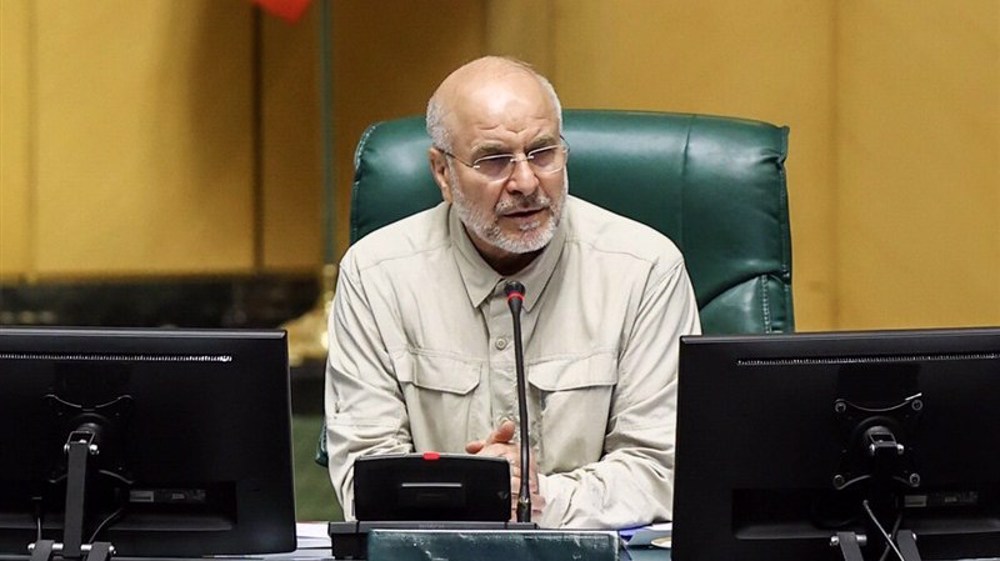
Iran’s Parliament Speaker Mohammad Baqer Qalibaf addresses an open session of the Parliament.

Press TV

Iran’s Parliament Speaker Mohammad Baqer Qalibaf has said that people’s protests must be heard, while warning that individuals linked to foreign spy services who seek to hijack protests and turn them into riots must be dealt with separately.

Speaking in an open session of the parliament on Monday, Qalibaf emphasized that such measures are necessary to ensure that the security and peace of the people are not compromised.

Protests erupted last week after shopkeepers in Tehran temporarily closed their businesses to protest the sharp fall of the national currency, which plunged to record lows against the US dollar.

Iranian officials have acknowledged the economic pressure facing the public and said peaceful protests are legitimate. At the same time, they have warned that foreign-backed elements are seeking to exploit the situation and fuel violence.

Qalibaf said that “the Iranian nation, throughout history, has put many mercenaries, traitors and sellouts in their place, and today as well it will not take long before the enemy—despite deploying all of its intelligence, security and media capacities—once again suffers defeat at the hands of the Iranian people.”

He noted that Leader of the Islamic Revolution Ayatollah Seyyed Ali Khamenei’s guidance on separating protesters from rioters and instigators is “clear and instructive,” calling it a roadmap for managing unrest.

The Leader warned Saturday that “protest is legitimate, but protest is different from rioting,” adding that officials must engage with protesters, because “talking to the protester is different from talking to the rioter; talking to the rioter is of no use, and the rioter must be put in his place.”

Qalibaf stated that the government must engage in dialogue with protesters, underlining that many of their grievances are legitimate.

“Every effort must be made to create economic stability,” he said, adding that the government is determined to act and expressing hope that planned measures will address the rightful demands of protesters.

Turning to international affairs, Qalibaf slammed Israel for committing war crimes in Gaza, saying that “hundreds of thousands of women, children and civilians” have been killed, deprived of food and water, and dehumanized, while Israeli leaders openly boast about such actions.

Despite condemnation in international courts, he said, Israeli officials are applauded in the US Congress.

“By contrast, someone like the legitimate president of Venezuela [Nicolas Maduro] is kidnapped in violation of all international laws. Venezuela has neither committed child killings nor genocide; rather, this is the price it pays for possessing rich mineral and fossil resources and for refusing to hand control of them over to the US,” he noted.

Qalibaf further said the US resorts to hard power when it believes soft power is no longer effective.

He added that as Washington perceives itself to be in decline and seeks to exploit its final opportunities to maintain dominance and extract resources, it has adopted “the behavior of a madman.”

“Today marks the end of the era of international law and the beginning of the law of the jungle in international relations,” he said.

In such a world, Qalibaf noted, countries must be strong to remain independent, and unity is essential to achieving that strength. “A united and resilient Iran is the enemy’s nightmare,” he said.

[…]

Via https://www.presstv.ir/Detail/2026/01/05/761897/Qalibaf-Protesters-must-be-heard-but-foreign-linked-agitators-will-be-confronted-separately

Trump explains how he wants to ‘run’ Venezuela

Trump explains how he wants to ‘run’ Venezuela

RT
The US president said he needs “law and order” to take advantage of the Latin American country’s resources

President Donald Trump has outlined his vision for Venezuela following the US military intervention, stating the country must first be restored to “law and order” and economic discipline before any future elections can be considered.

In an interview with the New York Post on Sunday, Trump brushed aside concerns that the unprecedented military operation that resulted in the capture of Venezuelan leader Nicolas Maduro could draw Washington into a protracted quagmire akin to Iraq or Afghanistan.

Trump framed the intervention as an attempt to save “literally a third world country ready to fail” after decades of socialist rule.

“We should run the country properly,” Trump stated. “We should run the country with law and order. We should run the country where we can take advantage of the economics of what they have – which is valuable oil and valuable other things.”

On Sunday, Venezuela’s Supreme Court formally ordered Vice President Delcy Rodriguez to assume the presidency to guarantee the “continuity of the State” and “defense of sovereignty.”

Rodriguez confirmed that she had spoken with US Secretary of State Marco Rubio but framed it as a defense of national dignity, stating Caracas is principally ready for “respectful relations” with Washington. She also said that Venezuela “will never return to being the colony of another empire” and “never return to being slaves.”

Trump warned Rodriguez she could be next after Nicolas Maduro, who is now in a New York jail after being abducted by US troops.

“If she doesn’t do what’s right, she is going to pay a very big price, probably bigger than Maduro,” he told The Atlantic in another phone interview, arguing that he will not stand for Rodriguez’s defiant rejection.

Trump made it clear that a new election in Venezuela is not a priority for him, saying the US is currently “dealing with the people that just got sworn in,” in apparent reference to Rodriguez.

“Don’t ask me who’s in charge, because I’ll give you an answer, and it’ll be very controversial… It means we’re in charge,” he told reporters aboard Air Force One late on Sunday.

Trump also refused to back any opposition figures, including Maria Corina Machado – a Nobel Peace Prize winner who had openly backed US military action against her own country.

The US action has drawn sharp rebukes from key powers in the Global South. China has condemned the operation as “hegemonic,” stating it seriously violates international law and Venezuela’s sovereignty. Another BRICS member, Brazil, also condemned the US move, with President Luiz Inácio Lula da Silva stating Washington’s actions “cross an unacceptable line.” Russia, a major strategic partner of Caracas, expressed “firm solidarity” in a call between Foreign Minister Sergey Lavrov and acting President Rodriguez.

[…]

Via https://www.rt.com/news/630565-trump-venezuela-order-oil/

Acting Venezuelan president sends message to US

Venezuela’s acting president sends message to US

RT

Venezuelan interim President Delcy Rodriguez has called on Washington to work with Caracas following a US raid in which President Nicolas Maduro was seized and taken out of the country.

Rodriguez, who had served as vice president since 2018, assumed the role of interim president after Maduro was abducted by US forces in Caracas and flown to New York to face charges of orchestrating a “narco-terrorism conspiracy.”

“President Donald Trump, our peoples and our region deserve peace and dialogue, not war,” Rodriguez wrote on Telegram on Monday. “This has always been President Nicolas Maduro’s message, and it is the message of all of Venezuela right now.”

She also called for a “balanced and respectful” relationship with the US, urging the White House to work with Caracas on “an agenda for cooperation aimed at shared development.” Rodriguez affirmed the Bolivarian Republic’s right “to peace, to development, to sovereignty and to a future.”

The interim president had earlier demanded that Washington immediately release Maduro, while saying Venezuela would “never return to being the colony of another empire” or “return to being slaves.”

On Sunday, Trump warned Rodriguez she would pay a “bigger price” than her recently captured predecessor “if she doesn’t do what’s right.”

Maduro and his wife, Cilia Flores, were captured on Saturday during a US operation that included a series of air strikes in the capital city and several other states. Washington said on Sunday that the pair had been indicted in the Southern District of New York on charges including narco-terrorism conspiracy, cocaine importation conspiracy, and weapons offences.

Maduro has repeatedly rejected claims that he has any links to drug trafficking, saying Washington is using the allegations as a pretext for regime change in Venezuela.

The latest US operation in the Latin American state followed decades of strained relations marked by deepening diplomatic rifts, sweeping unilateral sanctions, political confrontation and mutual accusations. Washington had refused to recognize Maduro as Venezuela’s legitimate president.

[…]

Via https://www.rt.com/news/630589-venezuela-delcy-rodriguez-trump-message/

Matt Ehret: Deciphering the Causes of Trump’s Abduction of Maduro

By Matthew Ehret

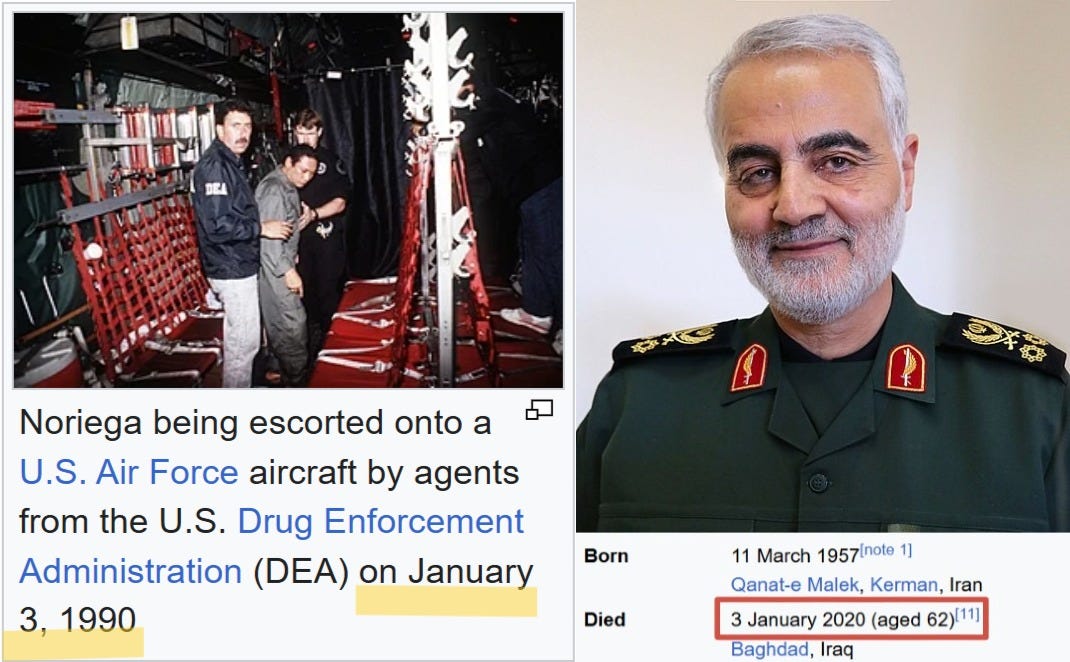
In the wake of the January 3 flash invasion of Venezuela and exfiltration of President Maduro and his wife (coinciding on anniversary of the January 3 1989 kidnapping of President Noriega of Panama and January 3, 2020 murder of General Soleimani of Iran), many pundits have spoken.

And in the days ahead many will continue to speak.

The analyses are diverse, to say the least, ranging from those who presume Trump is operating on the level of a zero-dimensional monkey thrashing chaotically without any higher plan and adopting a foreign policy based upon the last person he spoke to, to a one-dimensional capitalist obsessed only for oil profits, to a two-Dimensional imperialist seeking to consolidate control over the Americas in opposition to evil Chinese influence … to a three-dimensional ‘riel politique’ agent committed to setting up a sphere of influence under a New Yalta, to a four-dimensional grand master working with Maduro in a concerted Kafabe operation designed to drain Venezuela’s swamp of narco terrorists before re-instating Maduro as president, to 8D chess meta grandmaster saving the world from the ancient system of oligarchy alongside a secret alliance of Putin, Maduro, Xi Jinping.

I don’t really fit perfectly within any of those particular categories, although I do think there is a plan in motion shaping the rhythm of this apparent cacophony, and I think it is tied to the very real changing of the elites now underway.

Unlike some analysts out there who also recognize a new age emerging with a new elite guard making a long-awaited move to replace the corrupt old guard, I don’t necessarily see this as a positive.

In the following two Venezuelan-focused round tables which I participated in this weekend, you’ll generally get a sense of my position, and you’ll be able to contrast that with several other experts whose hypotheses cannot and should not be discounted.

The first video is an episode of RB Ham’s Beyond the Pale where I joined up with Professor Salim Mansur (Professor Emeritus of Political Science at the University of Western Ontario) and Donald Jeffries (Acclaimed author, and host of the ‘I Protest Podcast’)

The second roundtable took place on Sunday morning under the banner of Pluralia Dialogos where I got to chat with Martin Sieff, and Arnaud Develay (geopolitical analyst and Russian-based French lawyer) which can be viewed here:


Bio: I am the editor-in-chief of The Canadian Patriot Review, Senior Fellow of the American University in Moscow and Director of the Rising Tide Foundation. I’ve written the four volume Untold History of Canada series, four volume Clash of the Two Americas series, the Revenge of the Mystery Cult Trilogy and Science Unshackled: Restoring Causality to a World in Chaos. I am also co-host of the weekly Breaking History on Badlands Media and host of Pluralia Dialogos (which airs every second Sunday at 11am ET here).

[…]

Via https://matthewehret.substack.com/p/deciphering-the-causes-of-trumps

Peloponnesian War: Persia and Sparta Join Forces to Crush Growing Athenian Empire

Select All That Describe the Delian League. - PresleykruwSalazar

Episode 17 From Expansion to Stability

The Persian Empire

Dr John W I Lee (2012)

Film Review

Xerxes’ failed 480 BC invasion of Athens was Persia’s last overt war against the city-state. During Xerxes’ reign, Persia preferred to undermine Athens via diplomacy, bribery, infiltration and supporting proxy wars via Athens’ primary enemy Sparta.

During the fifth century the Greek islands of Lesbos, Chios and Samos all broke away from Persia, and the Athens-backed Delian League (named after the island of Delios) took over the western Ionian coast of Anatolia. From there they launched attacks on Cyprus, Macedon and Thrace, ultimately capturing the city of Byzantium (modern Istanbul). This ultimately transferred control of the Aegean Sea to Greece.

Despite dealing with revolts in the eastern empire, under Darius’ son Xerxes, the Persians ultimately recaptured much of Cyprus and retained control of Thrace.

469-466 BC – Persian-backed Spartans launch war to retake Ionian coast from Athena, while the city-state moves away from democracy, gradually converting the Delian League into an empire.

465BC – Xerxes assassinated at age 65. Greek sources blame the assassination conspiracy on his on Artapanas, who assumes the name Antaxerxes I on taking the throne.

465-424 AD – Antanxerxes I faces numerous revolts, including an Athenian-backed revolt in Egypt. Despite increasing opposition to growing Athenian imperialism, Sparta rejects Persia’s request for military assistance. Through an ingenious strategy in which they dig a network of canals leaving 100 Greek tiremes high and dry, Persians crush the revolt, killing thousands of Athenians.

455-450 BC – Athens (initiating a compulsory draft in all their colonies) again join forces with an Egyptian guerilla movement and try to retake Egypt and Cyprus.

450BC – Peace of Callias grants Athens control of coastal Ionian cities in return for an agreement not to attack Persia. Athens builds Parthenon with tribute resulting from this this conflict.

431 BC – Athens and Sparta declare war on each other (Peloponnesian War)

423 BC – Antaxerxes succeeded by half brother Sogdiamus, who the army kills to install Ochus (taking the name Dairus II) on the throne.

412 BC – Playing Sparta and Athens against each other, Darius funds creation of a Spartan naval fleet in return for agreement that Persia will retake control (from the Athenian empire) of Anatolia.

404 BC – Peloponnesian War ends with defeat of Athens in 404 BC, leading to the dissolution of the Delian League and establishment of Spartan control over Greece.

https://www.kanopy.com/en/pukeariki/video/15372393/15372418

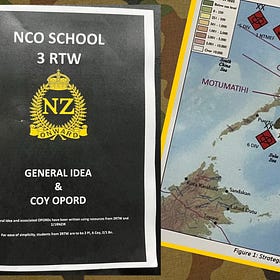
Why Is the New Zealand Defence Force Training to Kill Christians?

By Penny Marie NZ

This is the crux of the training material we look at in this video, and it raises serious questions about ideological capture, psychological warfare, and who gets to decide what “extremism” looks like inside our military.

A fictional enemy that looks a lot like us

A leaked NZDF training pack sets its scenario in a made‑up country, but the map names – Murchison, Nelson, St Arnaud, “Rainbow” Ski Field – give the game away: this is New Zealand in all but name, and we hone in on the RAINBOW CONNECTION.

The “Visayan People’s Front” (VPF) is described as a “Christian extremist group” recruiting indigenous youth with promises of a “return to the traditional ways of a Christian nation,” explicitly mirroring Maori–Christian history and present‑day rural/urban political divides.

See the training manual documents in this post:

NZDF Leaked Training Documents

·
21 December 2025
NZDF Leaked Training Documents

These documents were used in a training exercise conducted in November 2025 for a Junior Non Commissioned Officer Course in Burnham Army Base in Christchurch. I was sent what was deemed the most concerning pages, and all are shown below.

Ideological capture and psychological operations

The script of the exercise reads like a cut‑and‑paste of today’s culture war: Christian so-called “extremists,” (which are VERY MUCH NOT), Islamic extremists, campus occupations, referendums, coups and armed factions, all woven together in a way that treats conservative or Christian worldviews as a security problem.

This as an example of fifth‑generation warfare: narrative, language and training materials being used to dehumanise, destabilise and push populations toward crisis so a pre‑baked “solution” can be imposed.

Rainbow money, Pride Pledge, and NZDF

We connect the training scenario to NZDF’s broader DEI and rainbow commitments: Pride Pledge membership, compulsory “rainbow awareness” training, and the embedding of DEI language across policies, KPIs and leadership structures.

We obtained an OIA response showing NZDF spending roughly NZD $46,000 over three years on Pride Pledge fees alone, on top of internal time and other rainbow‑industry consultancy – public money underwriting an ideological programme, not just neutral “inclusion.”

The Brad in every organisation

We introduce Brad Poulter, a he/him, ex‑Navy, now in a strategic diversity role and a former chair of the NZDF rainbow network OverWatch, as profiled by the Rainbow Excellence Awards.

The point is not personal but systemic: Every large organisation with a Rainbow Tick or Pride Pledge will have one or more internal champions whose job is to operationalise DEI, sit in cross‑agency rainbow networks, and ensure that “rainbow KPIs” flow right up to executive leadership and into training.

Extremism, children, and the spiritual dimension

The latter half of the conversation widens out: From NZDF training to the police‑endorsed “Anti‑Transgender Extremism” guideline that effectively labels ordinary parents and critics of child medicalisation as extremists.

The trans rights activists try very hard to connect ordinary parents who reject trans ideology who are of all faiths/no faith to ‘extreme right wing Christians’… which is total rubbish. Now, we can see why that’s an important part of the rhetoric they have created. Are we seeing the start of the next ‘phase’ of psychological warfare in New Zealand?

[…]

Via https://www.pennymarie.nz/p/why-are-the-nz-defence-force-training

How Russia Profits from War in Ukraine

By Dmitry Orlov

NATO’s proxy war against Russia in the former Ukraine turned out to be unexpectedly beneficial to Russia. The West wanted to turn it into a textbook example of punishing the disobedient by empty shelves in stores, food rationing and social unrest. This plan was cold, rational, almost beautiful in its cruelty. It was to sever Russia’s links with global trade, strangle logistics, crash incomes, and then the economy and the government would collapse on their own. But almost immediately this strategy started to boomerang: instead of a food desert, it created a rich and vibrant food market. Instead of hunger, it created a food surplus. And instead of a broken country, it produced a global player which quietly, without pathos, began to redraw the world food map to its own advantage.

Here, the most unpleasant aspect for the West is not even the financial aspect, although it does make a mockery of its many thousands of sanctions. The most unpleasant thing is the feeling that Russia not only survived, but made use of this conflict as a growth strategy, the implementation of which it had previously postponed. Agriculture turned out to be not a tentative Plan B, but a breakthrough. The longer this proxy war lasts, the clearer it becomes that for Moscow the war is not a cost but a profitable investment.

To the average Russian, this story is mostly about reconquering Russia’s historical bread basket, which Vladimir Lenin temporarily mislabeled as a “the Ukrainian Soviet Socialist Republic.” As far as food, it is mostly about low priced buckwheat and reasonably priced eggs, reassuring him that he will be able to survive no matter what. To the country as a whole, this is a story about sovereignty in its most mundane but most concrete sense. When a country can reconquer its historical lands, feed itself and help feed a hundred other countries, it has a voice. Reliable, reasonably priced grain, meat, cooking oil and fertilizer exports speak louder than any hypersonic missile or Foreign Ministry spokeswoman (no matter how impressive Maria happens to be). These exports create dependencies, shape market habits, and are very difficult for politicians to tamper with.

Russia entered this process of transformation without fanfare, almost casually. While in Europe they were arguing about the “green transition” and subsidizing their own inefficiency, in Russia the agricultural industry was being put together piece by piece: from seed stocks to port infrastructure. Western sanctions only accelerated what was already happening. Russia needed to cease being a raw materials exporter to become a systemic player in agricultural exports. And it turned out that in twenty years it was possible not only to replace almost all food imports, but to grow food exports to a level where they began to compete in importance with oil, gas and weapons systems.

The great irony of the situation is that the West has pushed Russia into market niches which it thought it would own forever. North Africa, the Middle East, and the Global South are markets in which it is not political slogans that are important, but stable supplies at stable prices. These countries don’t inquire whether you are liberal, democratic or LGBT* [*banned in Russia] enough for them to trade with you; they ask whether you will deliver on time. And Russia delivers reliably, year after year, in any weather conditions, despite sanctions, weather disruptions, logistical crises and trade wars. Russia’s approach has turned into a strategic advantage with which the West cannot compete.

What should particularly frighten the West is that Russia is no longer playing alone. Linking with BRICS, turning to Africa, deepening trade with India are not “attempts to find friends,” as Western propaganda often claims, but the formation of an alternative system of world trade that excludes Western meddling. Once Russia creates its own commodity exchanges, commodity prices will cease being set in Chicago and Paris in dollars or euros and that will spell the end of Western monopoly on the rules of the economic game.

This leads us to the main, inconvenient conclusion: this proxy war, in its current form, is truly beneficial to Russia — not just morally and emotionally, as a heroic effort to defeat a great evil, but economically. It has pushed the country out of old dependencies, forced it to do things that were put off during the years of relative calm, and opened markets that were previously closed by the political blinders of Western-trained Russian economists. The longer Western sanctions and warmongering stay in place, the more off-base these Western-trained economists will end up looking and the deeper Russia will grow into the new world order as the main supplier of an essential resource.

The West wanted to instigate a “food fight” with Russia as a tool of punishment, but what it got instead is a “food fight” as a tool for reformatting the world economy to its distinct disadvantage. Now the question is not whether Russia can maintain this course; the question is how quickly the West will be ready to admit that the logic of sanctions has backfired grandly and has rolled the global economy back to a place where bread, not Western political circuses, decides what goes and what doesn’t. The longer it takes to come to this realization, the greater will be its economic losses and the political damage its ruling elites will suffer.

[…]

Via https://boosty.to/cluborlov/posts/5cd0d60a-9f8d-4d8b-ad8c-b88ba939651f

Trump Wants Federal Government to Own US Power Grid for AI and Turn it Over to Big Tech

Original Image Source

by Brian Shilhavy
Health Impact News

Building huge new data centers is the only way for AI to continue raking in huge profits in 2026 for those making the AI chips and software that run the new power-hungry LLM AI programs.

Many local communities and States across the U.S. are pushing back by opposing the building of these data centers in their communities, however. It is likely to even be a key issue in the 2026 mid-term elections.

The Trump Administration is countering this opposition by attempting to take over the nation’s electrical grid, and put into place Federal regulations regarding AI that override local State regulations.

Former Federal Energy Regulatory Commission (FERC) chairman Mark Christie, a Republican, reportedly stated in the Wall Street Journal that this:

is one of the biggest federal power grabs at the expense of the states I have seen in 21 years as a state and federal utility regulator” (Source.)

The Wall Street Journal also reported what Trump’s rationale was to take over the nation’s power grid to fuel AI and bypass State laws:

We have to be unified,” Trump said, noting that China didn’t have to contend with state legislatures.

This is Silicon Valley’s dream: get rid of elections and install a Monarchy. See: Big Tech “Far-Right” Billionaires want to Eliminate Politicians and “Democracy” as They Believe They can Run the World Better by Themselves

Here are some more excerpts from the Wall Street Journal article on federalizing the U.S. power grid, courtesy of MSN:

States see a federal power grab in clash over AI data centers

At a conference of state utility regulators in Seattle, a group of Trump administration officials got an earful of complaints about a plan the White House is pushing for the federal government to take control of part of the country’s power grid in the service of artificial intelligence.

Their concerns stem from instructions Energy Secretary Chris Wright recently gave to the Federal Energy Regulatory Commission, which is known as FERC and oversees wholesale power in the U.S., to draft new rules that would give it oversight of how giant data centers connect to the power grid.

The process is typically overseen by states.

During the conference last month, regulators told administration energy officials such as James Danly, deputy secretary of the Energy Department, that Wright’s plan violates the 1935 Federal Power Act, which carves out the separation of oversight of the grid between state and federal governments, according to people familiar with the conversations.

By overseeing how data centers hook up to the grid, federal regulators could make it easier and faster for data centers to construct their own power supply, administration officials have argued.

They have said the rule could turbocharge data center growth as AI giants such as Google, Amazon, Meta and OpenAI open up their trillion-dollar pocketbooks to build power plants and potentially help solve supply-chain bottlenecks that have slowed growth of new generation capacity.

Companies such as Trump Media & Technology Group and Alphabet-backed fusion-energy company TAE Technologies, which agreed to a $6 billion merger, are betting the data-center boom will continue for years.

The move comes amid heightened tensions between the federal government and states over AI oversight.

Florida Gov. Ron DeSantis, a Republican, recently unveiled state legislation to curb AI’s impact on consumers and to prohibit “utilities from charging Florida residents more to support hyperscale data center development.”

Trump signed an executive order earlier this month that aims to override state laws on artificial intelligence.

It would allow the Justice Department to punish states with rules deemed restrictive for AI, in a move to bring the U.S. under one federal standard.

“We have to be unified,” Trump said, noting that China didn’t have to contend with state legislatures.

The administration’s plan “is one of the biggest federal power grabs at the expense of the states I have seen in 21 years as a state and federal utility regulator” that will result in unnecessary litigation, said former FERC Chairman Mark Christie, a Republican. (Full article.)

[…]

Via https://healthimpactnews.com/2025/trump-wants-the-federal-government-to-own-the-u-s-power-grid-for-ai-and-turn-it-over-to-big-tech/