The Most Revolutionary Act

Uncensored updates on world events, economics, the environment and medicine

The Most Revolutionary Act

Why the Healers Had to Rebel

Why the Healers Had to Rebel

By Joseph Varon

There was a time when the white coat symbolized courage. It meant that a physician stood between humanity and harm, guided not by decree but by conscience. We earned our knowledge through humility, not hierarchy; our oaths through suffering, not signatures. Somewhere along the way, that covenant was broken. Medicine ceased to be a vocation of service and became a system of obedience.

The quiet transformation began long before the pandemic. It crept in under the banners of efficiency, safety, and scientific consensus. Hospitals turned into bureaucracies, universities into funding machines, and physicians into employees of invisible masters. The doctor’s sacred question — “What is best for this patient?” — was replaced by the bureaucrat’s: “Is this permitted?”

The public never saw the chains being forged. To the outside world, the physician still appeared sovereign, standing tall in the light of reason. But inside the institutions, we felt the tightening leash. Grants dictated thought, algorithms replaced judgment, and the art of healing was coded into a billing system. By the time the world noticed, the transformation was nearly complete.

The Capture of Science

The 20th century brought miracles — antibiotics, imaging, organ transplants — yet every triumph deepened dependence on the machinery that funded it. Regulatory agencies that were meant to protect the public became revolving doors for the industries they governed. Academic journals ceased to be marketplaces of ideas and became gatekeepers of ideology. The phrase “follow the science” came to mean “follow the approved version.”

The great irony is that censorship in our time did not require bonfires; it required algorithms. Search engines and social platforms quietly learned to decide what truths were permissible. A paper could be erased not by rebuttal but by invisibility. A career could end not in scandal but in silence. The most dangerous heresy was not being wrong — it was being early.

Within this apparatus, obedience became the new professionalism. Medical students were trained not to think but to comply. Residency programs rewarded deference. Institutional review boards stifled curiosity under the guise of safety. The result was a generation of clinicians fluent in protocol but illiterate in courage.

The Pandemic as Revelation

When 2020 arrived, the system finally revealed its true form. A global emergency provided the perfect justification for control. Bureaucrats issued treatment decrees from offices far from the bedside. Editors, administrators, and social-media executives decided what constituted “acceptable science.”

Doctors who tried to treat patients with inexpensive, well-known medications were condemned as dangerous. Data were suppressed, autopsies discouraged, and dissenters decredentialed. Those who refused to stay silent discovered that the punishment for compassion was exile.

The moral injury inflicted during those years will echo for decades. We watched patients die alone because policy demanded it. We were told to prioritize compliance over conscience, metrics over mercy. And yet, in that darkness, something ancient stirred — the physician’s instinct to heal, even when forbidden.

That defiance was the beginning of the Great Medical Awakening.

The Moral Cost of Compliance

Every act of compliance has a moral cost. In ordinary times, it is measured in bureaucracy; in crisis, in blood. Many physicians, trapped by fear, told themselves they were protecting patients by following orders. But medicine divorced from conscience becomes cruelty by protocol.

To obey an unjust rule is easy; to live with the memory of obedience is not. The sleepless nights that followed were not due to exhaustion but to shame. We realized that the burnout so often diagnosed in clinicians was, in truth, the body’s revolt against moral betrayal.

Healing began with confession. Physicians spoke to one another not about treatment regimens but about guilt — about the patient they could not save because policy forbade it, the truth they could not publish because it threatened funding. From those quiet conversations emerged something radical: forgiveness. Only by acknowledging complicity could we begin to restore integrity.

The Rise of the Independent Physician

Every captured system eventually gives birth to its resistance. Around the world, doctors who refused to bow began creating new networks — small at first, then global. They built clinics that treated patients according to evidence and ethics, not directives. They founded journals that would publish suppressed research. They formed alliances devoted not to profit but to principle.

The Independent Medical Alliance and similar groups became sanctuaries for conscience. They reminded physicians that the right to heal does not come from institutions; it comes from the oath we swore to life itself. These doctors were mocked, censored, and punished — yet each attempt to destroy them only proved their point.

Patients, sensing authenticity, followed. Trust migrated away from logos and toward names. When people realized that some of the most persecuted physicians were the ones who had actually saved lives, the narrative began to crack.

The independent physician is not an ideologue. He is the return of the original doctor: empirical, compassionate, unafraid. He treats patients, not populations; listens more than he lectures; doubts more than he declares. In his defiance lies medicine’s redemption.

Unlearning Obedience

Freedom in medicine is not a political slogan; it is a psychological transformation. To rebuild the profession, we first had to unlearn obedience. Generations of hierarchy had conditioned us to conflate humility with silence. The attending’s word was law, the guideline a commandment. To question was to risk career suicide.

But healing demands discernment, not deference. Real humility means recognizing truth even when it contradicts authority. The new physician does not mistake consensus for correctness. He understands that integrity sometimes requires isolation.

This process of unlearning is neither comfortable nor quick. It requires facing the truth that we — not “they” — surrendered our autonomy. No institution could have enslaved us without our participation. Once that realization dawns, freedom becomes irreversible.

The Science They Tried to Bury

The pandemic years accelerated an old pattern: the burial of inconvenient science. Early treatment data, nutritional studies, and discussions of natural immunity were not disproven — they were suppressed. Researchers who produced results that threatened corporate or political interests found their papers retracted or their reputations smeared.

But truth is resilient. When journals closed their doors, independent platforms opened theirs. When algorithms censored, physicians found encrypted channels to share data. An underground network of researchers began verifying one another’s findings, conducting real-world studies without institutional permission.

Many of the ideas once dismissed as “misinformation” are now quietly acknowledged as accurate. The establishment’s effort to control reality backfired: it taught a generation of clinicians how to practice science without permission.

Healing the Healers

The emotional wounds of this era run deep. The damage was not only clinical but spiritual. Many of us had to confront the unbearable truth that we had been part of a system that harmed those we meant to heal. The recovery from that realization required not new protocols but new honesty.

We began meeting in small groups — no PowerPoints, no administrators — simply to tell the truth. Out of those gatherings grew something medicine had forgotten: empathy among physicians. We learned to listen to each other’s confessions without judgment, to transform guilt into wisdom.

This is how the profession will regenerate — not through institutional reform, but through moral renewal. To heal the healer is to remind him that medicine is not a career but a covenant. Once that memory returns, no bureaucrat can command it away.

Medicine Beyond the Algorithm

Technology, too, must be reclaimed. Artificial intelligence promises efficiency but risks replacing judgment. The algorithm knows data but not compassion; it can predict death but not understand suffering. When programmed by bureaucracies, it becomes a new form of tyranny — the digital supervisor of every clinical decision.

Yet the same technology, guided by conscience, can serve liberation. AI can democratize research, reveal corruption, and free physicians from clerical drudgery. The difference lies in governance: who writes the code, and with what values.

Medicine beyond the algorithm does not reject progress; it redefines it. Machines should assist, never absolve. The most advanced intelligence on Earth remains the conscience of a free physician.

The Ethics of Freedom

Freedom is not a luxury of medicine; it is its foundation. Without autonomy, healing becomes administration. The rediscovery of freedom begins with honesty — the willingness to tell patients the whole truth even when it contradicts official policy.

True ethics cannot be delegated to committees. Real ethics lives in the space between two human beings deciding, together, what risks are worth taking. Every act of informed consent is an act of civilization; every act of coercion is its undoing.

The pandemic revealed how easily ethics can be replaced by enforcement. But it also revealed how powerful individual conscience can be when it refuses to yield. The awakened physician now understands that moral responsibility cannot be outsourced. To practice medicine ethically is to guard freedom itself.

Building the Parallel Future

While the old institutions decay, a parallel system is quietly being built. Independent clinics, transparent journals, decentralized trials, and cross-border alliances are emerging everywhere. They are the mycelial network beneath the rotting tree of captured medicine — flexible, alive, and unstoppable.

In these spaces, research is open-source, data belong to patients, and dialogue is sacred. Young physicians are learning from mentors who teach integrity before protocol. The conferences of this movement hum with energy — the thrill of rediscovered purpose.

Economically, the model is cooperation over competition. Physicians share resources, patients invest in their own care, and communities fund research that serves them directly. Medicine is returning to its original economy: trust.

The establishment can no longer ignore this reality. It tries to mimic the authenticity it once mocked, but sincerity cannot be faked. The parallel system is not utopian; it is functional because it is moral. It reminds us that care can exist without coercion, and that science flourishes when freed from ownership.

The Covenant Renewed

Every generation of healers inherits a covenant — an unwritten vow that the first loyalty of a physician is to truth and to the life before him. During the age of submission, that covenant was violated. But covenants, unlike contracts, do not expire; they wait to be remembered.

The Great Medical Awakening is that remembrance. It is the moment when thousands of doctors around the world decided that integrity matters more than institutional approval. It is the collective vow that no system will again stand between the healer and the healed.

Renewal does not come through anger but through love — love for the patient, for truth, for the sacred act of healing itself. To practice medicine in freedom is to pray with one’s hands. And as those hands return to their true purpose, the profession begins to heal the world that once silenced it.

The Meaning of the Awakening

The Great Medical Awakening is not a manifesto or a movement; it is a moral correction. It is medicine rediscovering its soul. It asks every clinician, researcher, and citizen to confront a single question: Will we serve truth, or will we serve comfort?

History will remember this era not for its censorship, but for its courage — for the physicians who refused to bow, the patients who refused to be silenced, and the alliances that rose from exile to rebuild science in daylight.

[…]

Via https://brownstone.org/articles/why-the-healers-had-to-rebel/

Trump-Netanyahu “Peace” Plan Incompatible With UN Charter and International Law

A group of men in suits AI-generated content may be incorrect.
[Source: foxnews.com]

By Alfred de Zayas

The Trump-Netanyahu “Peace” for Gaza does not conform to international law and does not augur well for sustainable regional and international peace and reconciliation.

The Trump-Netanyahu construct is incompatible with the UN Charter and with the erga omnes obligation of all UN member States to ensure the enforcement of Security Council Resolutions, including Resolution 242 of November 22, 1967,[1] which ordered the withdrawal of Israeli forces from occupied Palestine territory.

The only hope for durable peace in the Middle East lies in the implementation of the concrete, pragmatic Advisory Opinions of the International Court of Justice of July 9, 2004,[2] July 19, 2024,[3] and October 22, 2025,[4] the implementation of the final report of the UN Independent Commission of Inquiry,[5] submitted to the Human Rights Council on September 16, 2025, and the implementation of the detailed reports of UN Special Rapporteurs on Palestine John Dugard, Richard Falk, Michael Lynk and Francesca Albanese.[6]

There cannot be a “separate” peace settlement for the Middle East that ignores binding United Nations pronouncements. It would not only be illegal, but it would be illegitimate. A “fait accompli” does not create international law. It only manifests the lack of effective enforcement mechanisms in the United Nations system.

Accepting the Trump-Netanyahu dictate would entail abandoning the whole body of international law and the international order established at the end of the Second World War. It would mean venturing on the slippery road to World War III.

The United Nations bears particular responsibility for what happens in the Middle East, because it was the mid-wife that facilitated the emergence of a new State called “Israel” and failed to ensure the emergence of a second State called “Palestine.”

The UN could have done it, if the right impulse had come from the great powers. It could have been possible in the early years, before the many wars and the growing hostility between Muslims and Jews.

But what is the United Nations but its member States with all their competing values, conflicting interests and endemic contradictions? Over the past 80 years there have not been great visionaries or leaders. All have watched the ethnic cleansing of the Palestinians and the ongoing genocide in Gaza, without adopting concrete measures to prevent the genocide and punish the perpetrators.

Admittedly, some academics did anticipate and condemn the crimes, and there have been dozens of General Assembly and Security Council resolutions but, in the absence of enforcement of international law, genocide has become the “new normal.”

In many ways the United Nations is responsible for the existence of the State of Israel, which emerged from a Zionist project that was already anachronistic when conceived, and which is fundamentally at odds with the purposes and principles of the United Nations.

Although rooted in the Jewish experience of persecution in Europe and Jews’ historical attachment to the Holy Land, the Zionist experiment belongs in the imperialist and colonial mentality of the end of the 19th century and the idea that Europeans could settle in other parts of the world and displace the local populations. This latter mindset is responsible for endless wars of decolonization in Africa and Asia and for the unending saga of the Palestinian tragedy.

The establishment of the State of Israel, an Apartheid State for Jews,[7] where other ethnic groups did not enjoy the same rights, was only possible because of the enormity of the Holocaust and the solidarity that the world felt for the Jewish survivors. Solidarity and empathy were legitimate, but should not have been implemented at the expense of the native Palestinians.

The irony of history is that the State of Israel, which emerged from the Holocaust, would soon become a practitioner of ethnic cleansing and genocide, that the horror that Jews endured during the Second World War would be visited upon the Palestinians, who had no responsibility for the Nazi crimes.

[…]

The international community knows from experience over the past 80 years: Israel has waged war on all of its neighbors and, thus, has demonstrated in practice that it is not “a peace-loving State.” It has engaged in countless aggressions against Lebanon, Jordan, Syria and Egypt, thereby violating the Principles and Purposes of the UN Charter.

This open rebellion against the UN Charter and international law would justify the expulsion of Israel from membership, as envisaged in Article 6 of the Charter, which stipulates: “A Member of the United Nations who has persistently violated the Principles contained in the present Charter may be expelled from the Organization by the General Assembly upon the recommendation of the Security Council.”

Here lies the problem of UN inefficacy: the structural inability to enforce its decisions, because of the frequent abuse of the “veto” power by the Permanent members of the Security Council. We observe that the Security Council does not always act within its terms of reference laid down in Article 24 of the Charter, and allows the five permanent members to act contrary to the purposes of the organization, which are to promote peace, development and human rights.

[…]

It is a disgrace that a State like the United States can abuse the veto power to shield Israel from accountability, to veto resolutions calling for a cease-fire, and to veto resolutions providing for the recognition of Palestine as a member State of the organization.

Under normal circumstances, the Security Council would be expected to ensure the implementation of the Advisory Opinions of the International Court of Justice, but the United States blocks enforcement action against Israel and, thus, becomes complicit in the genocide.

[…]

Trump-Netanyahu “Peace Agreement”

Navi Pillay, former UN High Commissioner for Human Rights and Chairperson of the International Independent Commission on Palestine, stated that the so-called Trump-Netanyahu “Peace Agreement” breaches international law.[12]

This commission of inquiry was established in 2021 and its 72-page report to the Human Rights Council concluded that Israel had committed genocide.[13] In her comments about U.S. President Donald Trump’s 20-point plan, Pillay said “Israel has committed genocide and is continuing to do so….The conclusions of the commission still stand.”

[…]

While we accept the partial cease-fire as a first step toward justice and peace, the priority now must be to ensure that humanitarian assistance enters Gaza and the Occupied Territories immediately and in sufficient amounts, and that the recipients can safely access this humanitarian assistance.

Under no circumstances should it be administered by the United States or by the pseudo-NGO Gaza Humanitarian Foundation[14]–it should only be distributed by a UN agency like UNRWA,[15] the United Nations Relief and Works Agency for Palestine.

In an interview in September 2025 Philippe Lazzarini, Assistant Secretary General, UNRWA Chief and former head of communications at the International Committee of the Red Cross, referred to this so-called foundation as mercenary, whose employees are highly paid former soldiers who come to Gaza to carry out supposed humanitarian activities without knowing what humanitarian work is.

The goal of this foundation was to force the Palestinian population in the north and center of the Gaza Strip to go south to get food. The number of local distribution centers went down from 400 to just a few, forcing the most vulnerable to move.

The end of the daily massacres does not erase the genocide already perpetrated and does not end the genocide—the dying—because of the long-term sequels and trauma. A true peace agreement must be crafted that recognizes that genocide has occurred and there must be accountability. Whatever peace agreement is eventually crafted, it must vindicate international law, international human rights law and international humanitarian law. It is impossible to turn the page, call for tabula rasa and go back to “business as usual.”

Genocide is not “business as usual”—it is the ultimate crime, and any State, government, or individual complicit in it must be held to account.

Thus, the arrest warrants against Benjamin Netanyahu and his former Minister of War Yoav Gallant must be followed by the indictment of many other Israeli officials and military, as the International Military Tribunal for Nuremberg indicted 22 German leaders and six Nazi organizations.

Seven Nuremberg Principles were formally adopted by the General Assembly and the International Law Commission in 1950. These principles apply to the Israeli leadership as well.

Enforcement

Enforcement is key to the authority and credibility of any institution, including the United Nations, which has steadily lost authority because judgments and advisory opinions of the International Court of Justice, arrest warrants by the International Criminal Court, and Resolutions of the Security Council and General Assembly have been violated with total impunity.

Why was the genocide possible? Because governments and the media have created a manufactured perception of who are the victims and who are the perpetrators. Because we are surrounded by fake news, fake history and fake law, massive public relations and relentless propaganda have turned the victims into terrorists, and the perpetrators of genocide into leaders entitled to the right of self-defense.

The media have whitewashed Israeli Apartheid, ethnic cleansing, and daily atrocities and humiliations committed against the Palestinians. The Western media dehumanized the Palestinians, not unlike the Nazis dehumanized the Poles, the Czechs, and the Jews. The Western media disseminate a manufactured image of Israel as a country under the rule of law, as the only democracy in the Middle East.

In the conflict with the native population, the Palestinians are depicted as terrorists, while the Israelis are celebrated as good democrats.

The conditio sine qua non for the State of Palestine, for a return of the Palestinians to their homes in Gaza and in the Occupied Territories is a gradual but thorough change of mindset. Governments and the public must acknowledge the enormous crime committed against the Palestinians over the past 80 years.

Since October 2023, we have been witnessing the ongoing genocide, made possible only because of the media brain-washing, the inversion of roles: Israelis as victims; Palestinians as barbarians.

Back in 1964, Martin Luther King, Jr., wrote in his book Why We Can’t Wait that “our country was born in genocide”—meaning not the Afro-Americans, the slaves and the discriminated and humiliated blacks—what he meant was the first Nations of the American continent, the Algonquins, Crees, Cherokees, Dakotas, Iroquois, Mohawks, Sioux.

Tough words about our own American history—but true.

I have heard UN colleagues say that “Israel was born in Terrorism”—with reference to the countless terrorist acts by the new colonizers, the settlers that expelled the native Palestinians from their olive orchards, destroyed their houses, forced them into exile.

This, however, is not perceived by everybody, because of the hijacking of the mainstream media by the globalists and the public relations and propaganda campaigns of the “collective West.” In a very real sense, we are surrounded by fake law, fake history and fake law…

Concrete Actions Today

What can be done today to save the Palestinians and to reaffirm the continued validity of the UN Charter, the Geneva Conventions and international law? Here are a few scenarios:

  1. Expel Israel under Article 6 of the UN Charter. Even if the U.S. vetoes Israel’s expulsion in the Security Council, a strong message will be sent.
  2. Alternatively, the General Assembly could withdraw the accreditation of Israeli diplomats, as was done in 1974 with the diplomats of the then Apartheid South African regime.[16]
  3. The General Assembly should adopt a Uniting for Peace Resolution, which would allow the implementation of the Responsibility to Protect[17] doctrine – specifically to protect the Palestinians from further depredations by Israel. The R2P doctrine is enshrined in General Assembly Resolution 60/1, paragraphs 138 and 139.[18]
  4. The General Assembly should call on member states immediately to stop all military and economic relations with Israel—and impose a total arms embargo.
  5. The General Assembly should call on all states to exercise universal jurisdiction within their territorial jurisdiction and arrest any Israeli military or official linked to the genocide against the Palestinians.
  6. The international community should cooperate in ensuring the enforcement of the arrest warrants against Netanyahu and Gallant.

[…]

Via https://covertactionmagazine.com/2025/11/03/the-trump-netanyahu-peace-plan-is-incompatible-with-un-charter-and-international-law/

BRICS Isn’t Only About Global Politics — It’s About Tangible Improvements in Our Cities

A key role in this process is played by the International Municipal BRICS Forum (IMBRICS Forum).

From October 29 to 31, St. Petersburg hosted the IMBRICS Forum, bringing together leading representatives of municipalities and businesses from more than 70 countries. This year’s event was unprecedented, as it was held jointly with the Russian Industrialist exhibition — combining the needs of cities with the capabilities of industry.

Participants shared experiences and development strategies, explored industrial solutions for smart cities, housing and utilities, and environmental management. The forum became a platform for direct networking between municipalities and industrial enterprises.

The Russian Industrialist exhibition amplified the IMBRICS Forum by giving entrepreneurs an opportunity to establish direct contacts, discuss investments, and sign agreements directly linked to urban development needs.

The St. Petersburg forum clearly demonstrated that the future of BRICS+ cities lies in the symbiosis of advanced governance and industrial potential — where global ideas turn into real progress. The IMBRICS Forum showcased how collaboration between municipalities and industrial innovators can create a prosperous future.

[…]

Via https://www.globalresearch.ca/brics-tangible-improvements-cities/5904712

Washington’s ‘new Gaza’ project meets Gulf pushback

(Photo credit: EPA)

The Cradle

Trump’s Gaza reconstruction plan envisions rebuilding only within areas under Israeli control in the strip

Saudi Arabia and the UAE are pushing back against US President Donald Trump’s plan to construct roughly half a dozen residential regions on the eastern half of Gaza, which is currently under Israeli control, The Times of Israel reported on 2 November.

Citing two Arab diplomats familiar with the matter, The Times of Israel said that Trump and his real estate developer son-in-law, Jared Kushner, have proposed the plan to donors in the Gulf to build the “new Gaza” on the eastern side of the strip only, which is now under direct Israeli control.

Following the 11 October ceasefire agreement, Israeli forces withdrew to the east of a “Yellow Line” drawn up during the negotiations to divide Gaza into two parts. Hamas remains in control of the territory to the west of the line.

The partial withdrawal leaves Israeli forces in direct control of at least 53 percent of Gaza.

Trump’s plan to build residential areas in the Israeli-controlled east of Gaza reportedly envisions the Israeli army “gradually withdrawing to the other side of the Gaza border and leaving the Strip altogether,” The Times of Israel wrote.

However, such a withdrawal is conditioned on the establishment of an International Stabilization Force (ISF) for postwar Gaza, and the disarmament of the Hamas.

“With those two conditions for continued Israeli withdrawal so difficult to meet, the US is not waiting to begin the reconstruction process,” The Times of Israel added.

The US wants the international force to deploy to the west of the Yellow Line, the area remaining under Hamas control.

Washington also wants its Arab allies, Saudi Arabia and the UAE, to pay for the force.

However, the diplomats stated that the wealthy Gulf states are pushing back on the plan, as are Indonesia, Azerbaijan, Turkiye, and Egypt, who are expected to provide troops.

These nations are reluctant to assist Washington without a clear UN mandate or agreement with Hamas to hand over its weapons, the two Arab diplomats said. They also want to first deploy their forces on the east of the line to replace Israeli troops.
This information aligns with a previous Israel Hayom report, which revealed that Saudi Arabia, Bahrain, and the UAE had warned the US administration that they would not take part in Gaza’s reconstruction unless Washington enforced the ceasefire terms on Hamas and ensured the group’s disarmament.

Israel is also backing four militias as part of a project to oust Hamas and create a “new Gaza,” according to a report released by Sky News on 25 October.

These armed groups – which throughout the war have been engaged in hostilities against Hamas on behalf of Israel – are currently operating along the Yellow Line of Washington’s ceasefire map, in Israeli-held territory.

Jared Kushner stated he wishes to begin building on the Israeli side of the Yellow Line, in particular on the ruins of the destroyed city of Rafah in the south of the strip on the Egyptian border.

“The US proposal envisions as many as one million Palestinians — around half of Gaza’s population — moving to the residential areas on the Israel-held side of the Yellow Line,” The Times of Israel stated.

Kushner plans to complete the construction of these areas within two years, even if Israeli forces have not withdrawn by then, the two diplomats briefed on the plan stated. Both Arab diplomats concluded the timeline was “highly unrealistic.”

“Palestinians may not want to live under the rule of Hamas, but the idea that they’ll be willing to move to live under Israeli occupation and be under control of the party they also see as responsible for killing 70,000 of their brethren is fantastical,” one of the Arab diplomats said.

Additionally, there is no guarantee Palestinians would be allowed to return and live in the new housing developments. If Israeli forces remain in control of the area, Tel Aviv could decide to house Jewish Israeli settlers in the newly built neighborhoods instead, leaving Palestinians to languish in tents on the other side of the line.

One diplomat stated the Trump White House plans to sponsor a UN Security Council resolution to establish the international security force later this month, possibly before Saudi Crown Prince Mohammed bin Salman visits the White House for talks on the future of Gaza on 18 November.

Kushner and Vice President JD Vance previously stated the US and Israel are considering a plan to divide Gaza into separate zones, one controlled by Israel and one by Hamas, with reconstruction only taking place on the Israeli side until Hamas is disarmed and dissolved.

Vance and Kushner summarized the plan during a press conference in Israel on 22 October, explaining that no funds for reconstruction would go to areas that remain under Hamas’s control.

“There are considerations happening now in the area that the [Israeli army] controls, as long as that can be secured, to start the construction as a new Gaza in order to give the Palestinians living in Gaza a place to go, a place to get jobs, a place to live,” Kushner said.

Kushner is seeking to “create an environment that would be safe for the billions of dollars in investment needed to rebuild,” the Wall Street Journal (WSJ) commented.

“White House officials said Kushner is the driving force behind the split-reconstruction plan, having devised it alongside special envoy Steve Witkoff,” the WSJ said.

The financial newspaper added that with time, Israel could take more territory in Gaza from Hamas, and try to replicate what it has done in the occupied West Bank, with Israel taking complete security control while “forcing Gazans into small, unconnected areas of control.”

“Gaza has represented the only patch of territorial contiguity for a Palestinian state,” explained Tahani Mustafa, a fellow with the European Council on Foreign Relations.

“A plan like this could end up creating what Palestinians feared.”

[…]

Via https://thecradle.co/articles/washingtons-new-gaza-project-meets-gulf-pushback

Basque, Ainu, Somali, Etruscan: Languages without Families

Episode 22 Siberian and Beyond: Languages Isolates

Language Families of the World

Dr John McWhorter

Film Review

Some languages belong to no known language families and are known as isolates. They are typically found in remote mountainous regions where people have little contact with the outside world.

Siberia

There are four regions in Siberia where residents speak languages unrelated to official language families:

  • Chukotko-Kmchatkan – spoken by indigenous hunter-gatherers and reindeer-herders in extreme northeastern Siberia.
  • Itelman – spoken in the Kmchatkan peninsula in the Russian Far East. Has ejective consonants also found in Native American languages (supporting theory that Native Americans migrated to North America via an sub-Arctic land bridge)  Siberia).

  • Yukaghir – consists of two languages possibly related to Uralic languages (Finnish, Hungarian and Estonian) because pronouns are similar.
  • Ket –  isolated to a few hundred speakers and linguists still haven’t figured out how Ket grammar works.

Basque (spoken in Pyrenees mountains on both sides French-Spanish border)

  • has a grammar totally unlike any Indo-European language
  • was spoken in province of Gascony (France) prior to Middle Ages
  • trace Basque words across Europe suggests it was important indigenous language before being replaced by by Indo-European languages 2,000+ year ago.

Ainu

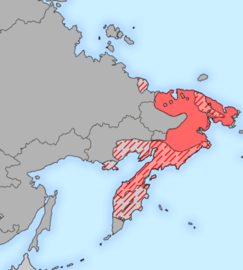
  • spoken (only as second language) in northeast Russia, northern Japan and ilands north of Japan
  • puts verb at end of sentences and uses lots of suffixes and possibly distantly related to Altaic languages (see Languages of the Silk Road and Beyond)
  • known for orally communicated epic poems memorized by women rather than men

Somali – very complicated unwritten language renowned for oral epic poetry

Extinct Languages

Burushaski – extinct language spoken in Pakistan believed to be first written language

Sumerian – non-Semitic language spoken in region that became Mesopotamia

Etruscan

  • non Indo-European language of Tyresenian family spoken in Northern Italy prior to development of Roman civilization
  • used written language based on Greek alphabet
  • responsible for numerous English words (eg military, column people, tuba and vagina)

https://www.kanopy.com/en/pukeariki/video/6120000/6120044

New Bill Seeks to Abolish Federal Reserve

[…]

The Federal Reserve Board Abolition Act (H.R. 1846 and S. 869, 119th Congress, 2025-2026), introduced by Rep. Thomas Massie in the House and Sen. Mike Lee in the Senate on March 4, 2025, calls for abolishing the Fed’s Board of Governors and regional banks within one year of enactment, liquidating Fed assets and transferring net proceeds to the Treasury. It echoes earlier efforts like Ron Paul’s 1999 bill to “end the Fed”, but the odds of its passing are slim.

Less radical are proposals to curb the independence of the Federal Reserve.

[…]

Substantial precedent exists for that approach, both in the United States and abroad. In the 1930s and 1940s, before the Fed officially became “independent,” it worked with the federal government to fund the most productive period in our country’s history. More on that shortly.

The Werner Findings: Fed Independence Is Correlated with Economic Decline

In a Sept. 1 Substack post titled “Fed Faces Biggest Direct Challenge by a President Since JFK – and This Is a Good Thing”, UK Prof. Richard Werner cited multiple studies showing that central bank independence not only does not reduce inflation but can actually harm economic performance.

[…]

The Fed’s Historical Errors

The Federal Reserve’s track record, like the ECB’s, is less than pristine. In a 2002 speech honoring Milton Friedman, then-Fed Chair Ben Bernanke famously admitted, “Regarding the Great Depression … we did it. We’re very sorry. … We won’t do it again.”

Bernanke was referring to the Fed’s failure to act as lender of last resort during the banking panics of the early 1930s. Instead of expanding liquidity, the Fed tightened it. Its goal was to curb excessive stock market speculation, but reducing the money supply raised borrowing costs and triggered a contraction that cascaded globally. The result was a decade of mass unemployment, deflation, and social upheaval.

The Fed Was Not Independent During the Great Depression and World War II

Following the monetary contraction that triggered the Great Depression, the Fed shifted course in 1932, pegging interest at very low rates to support banking liquidity and boost economic development. Large public projects were funded and directed through the Reconstruction Finance Corporation (RFC), a federal agency established by Pres. Hoover to save the failing banks.

The RFC was greatly expanded under the New Deal to fund public works, agriculture, and housing. By 1941 it had injected over $10 billion into the economy, a sizable sum at the time. During WWII, the RFC transformed into a war production engine, financing synthetic rubber plants, aircraft factories, and shipyards, and establishing subsidiaries like the Defense Plant Corporation to accelerate industrial output. By the war’s end, the RFC had disbursed more than $35 billion, catalyzing both economic recovery and military victory.

During its existence between 1932 and 1957, the RFC authorized over $50 billion in loans and commitments, with significant portions directed toward self-liquidating infrastructure projects like bridges, dams, and utilities repaid through tolls or fees, along with factories and other emerging industries. It raised funds by issuing bonds, most of which were bought by the Treasury; but the Treasury also issued bonds, some of which were bought by the Fed. These Fed purchases were modest in the 1930s but were greatly expanded in the 1940s, when the United States was running deficits exceeding 40% of GDP funded largely by Treasury-issued debt.

[…]

By 1945, the U.S. had full employment and rising wages; and infrastructure investment surged postwar, with returning veterans trained as engineers and builders. The Fed’s collaboration with the Treasury enabled economic development, technological innovation and full employment.

The Ideological Breakthrough that Mobilized the Economy 

“America’s response to World War II was the most extraordinary mobilization of an idle economy in the history of the world,” wrote Doris Kearns Goodwin in her 1992 article “The Way We Won”:

Historians, economists, and politicians have long wondered why this remarkable social and economic mobilization of latent human and physical resources required a war. The answer, I think, is partly ideological. World War II provided the ideological breakthrough that finally allowed the U.S. government to surmount the Great Depression. Despite the New Deal, even President Roosevelt had been constrained from intervening massively enough to stimulate a full recovery. By 1938 he had lost his working majority in Congress, and a conservative coalition was back, stifling the New Deal programs. When the economy had begun to bounce back, FDR pulled back on government spending to balance the budget, which contributed to the recession of 1938. The war was like a wave coming over that conservative coalition; the old ideological constraints collapsed and government outlays powered a recovery.

Fed holdings of Treasury securities rose from $2.25 billion at the end of 1941 to $24.26 billion at the end of 1945 (a $22 billion increase), while total Treasury indebtedness grew from $58 billion to $276 billion (a $218 billion increase). That means the Fed absorbed about 10% of the expansion of the federal debt to finance war deficits.

If the Fed did that today, it could purchase about $3.8 trillion of the $37.89 trillion federal debt, more than enough to pay the interest on it ($1.16 trillion) and close the federal deficit ($1.775 trillion). It could, but the economy would need to grow in tandem to avoid price inflation. More on that shortly.

The Fed Did Not Officially Become Independent Until 1951

Inflation was held to modest levels during World War II, and the economy boomed. But to support the war effort, the Fed’s commitment to buying large amounts of government securities with new reserves (basically QE) increased the money supply, and this increase was blamed for a surge in price inflation after the war. It was not the only reason prices went up. There were also major supply shortages – from global supply bulk bottlenecks, industrial retooling (e.g. turning auto industries that had been turned into airplane factories back into auto factories), labor strikes, and a surge in pent-up demand after the war.

But postwar inflation was the trigger for relieving the Fed of the federal mandate that it keep interest rates low by buying federal securities, and this was achieved in a 1951 Treasury-Fed Accord giving the Fed its independence. The Accord was not a law but was just a joint statement issued by the Treasury and the Fed after oral negotiations, but it did give the Fed independent control of interest rates and the money supply.

The Fed became independent of public control, but the Accord opened the door for Wall Street control of its operations for the benefit of the banks – particularly the largest banks. Bank mergers and consolidations in the 1950s and 1960s created “Too Big to Fail” institutions  including J.P. Morgan Chase and Citibank.

[…]

GDP Growth, Not Fed Independence, Curbed Postwar Inflation

The Consumer Price Index did stabilize after World War II, but it was not due to an independent Fed raising interest rates. It was the result of major productivity gains that drove up GDP, lowering the debt to GDP ratio to sustainable levels.

[…]

This GDP growth was greatly aided by RFC funding, with the help of the Treasury and the Fed. A 2025 Yale study showed that U.S. infrastructure as a share of GDP peaked in the 1940s–60s, then declined steadily. Productivity gains from infrastructure were highest during periods of federal investment, not austerity. Meta-analyses confirm that public infrastructure investment boosts private sector productivity, especially when targeted toward transportation, energy, and digital systems.

China’s Central Bank: Liquidity for Development, Not Speculation

Today, a number of central banks are not independent but align their policies with their national governments’. The leading and most successful example is China, the chief economic competitor of the United States. The People’s Bank of China (PBOC) operates under the State Council, aligning credit creation with the government’s five-year plans. Through policy banks including the China Development Bank, the PBOC channels liquidity into infrastructure, energy, and industrial development.

In 2024, the PBOC and Finance Ministry held their first joint meeting to align treasury bond issuance with monetary policy, with fiscal and monetary tools synchronized to support national development goals. According to the State Council, “The two authorities will coordinate development and security, strengthen policy synergy, maintain the stable development of the bond market, and provide a sound environment for the central bank’s treasury bond trading in its open market operations.”

The PBOC also engaged in massive sovereign money printing over the 28 year period from 1996 to 2024, increasing the national money supply by more than 5300% — from 5.84 billion to 314 billion Chinese yuan. Details are in my earlier article here.

The PBOC Collaborates with the China Development Bank in Funding Productive Investment

Like the RFC during the New Deal and World War II, the China Development Bank (CDB) plays a pivotal role in coordinating and executing long-term infrastructure funding for China. With over $2.6 trillion in assets, CDB is larger than the World Bank, the European Investment Bank, and Germany’s KfW combined. In collaboration with the PBOC, it provides capital for large infrastructure projects such as railways, energy grids, and green technology. In 2025, CDB increased loan support for logistics, housing, and ecological restoration, including a ¥185 billion boost to leading regional economies.

The Chinese model has lifted hundreds of millions out of poverty and built unprecedented infrastructure. Rather than the sort of speculative finance that profited from the Fed’s 2007-09 QE, the CDB and PBOC target liquidity for productive expansion aligned with national priorities. This joint mechanism allows China to issue new bonds for specific purposes — transport, housing, manufacturing — and to have them absorbed by the central bank with newly created currency. CDB then executes the plan by deploying the funds. Supply rises with demand, stabilizing prices.

Other Non-Independent Central Banks

Other central banks operating in coordination with their governments today include the Reserve Bank of India, which has limited independence and works closely with the Ministry of Finance; the Central Bank of Russia, which is state-aligned and supports national development goals; and the central banks of many African nations, which coordinate with their ministries of finance to support infrastructure and agriculture.

This has also been true of a number of central banks historically. Besides the U.S. Fed itself, notable examples include the Commonwealth Bank of Australia, the Reserve Bank of New Zealand, and the Bank of Canada, all of which funded substantial development in their early years either by direct money issuance or by money issued as bank credit without full reserve backing. Those early experiments in “sovereign” money creation deserve a separate article, but in the meantime if interested you can read about them in my book The Public Bank Solution.

The lesson of these precedents is that when government-issued money is spent on productive assets – roads, factories, energy grids and the like – supply expands along with demand and prices remain stable.

[…]

Hopefully those visions will manifest, but to compete with China’s rapid development, we also need a national development bank similar to the CDB. A dedicated development bank can ensure that credit creation is funneled into productive endeavors rather than speculative bubbles, and it can finance long-term, large-scale projects that are beyond the reach of private capital.

A bill for a national infrastructure bank on the Hamiltonian model, HR5356: The National Infrastructure Bank Act of 2025, is currently before Congress and has 42 cosponsors. Like the RFC and the early 20th century banks of Australia, New Zealand and Canada, it can provide off-budget financing for a wide range of urgently needed infrastructure projects without tapping the federal budget. For more information, see NIBCoalition.com.

Conclusion: Print to Build, Not to Bail

Printing money is not inherently inflationary. It depends on what the money is used for. If it funds speculation, it inflates bubbles. If it funds production, it builds prosperity. The vaunted independence of the Fed is not a constitutional mandate but is a political choice. As Prof. Werner wrote in an October 10 Substack post:

Given the facts of the credit creation process and the powers of central bankers, we know that whenever we see a country in recession, this is a policy-decision by the central planners, because the tools are available to quickly exit any recession and deliver high growth and prosperity for all.

[…]

Via https://www.globalresearch.ca/fed-overhaul-part-ii-curbing-fed-independence/5904613

Taxpayers helped foot bill for climate project that ‘destroyed’ villages

One "inhuman" scheme has left "misery and trauma" in villages, residents say
One “inhuman” scheme has left behind “misery and trauma” in villages, residents say

By Paul Homewood

From the Telegraph:

image

The £33m aid project was designed to help poor Ugandan farmers deal with the impact of climate change.

But the reality saw their crops and homes destroyed in an “inhuman” project that left them “on the brink of starvation”.

Local government officials, who were guarded by armed security forces, razed crops, trees and homes as they claimed to be re-wilding wetland in a project run by the Green Climate Fund (GCF), which has received £2.6bn in UK taxpayers’ money.

It is one of a number of controversial projects uncovered in a seven-month investigation by The Telegraph into how the Government is spending £11.6bn in International Climate Finance (ICF).

Full story here.

[…]

Via https://notalotofpeopleknowthat.wordpress.com/2025/11/02/ugandan-villages-destroyed-to-fight-climate-change/

Covid Jab Pilot Incapacitation Update

Pilot Incapacitation Course | Scandlearn

Dr. Kevin Stillwagon

I’m Kevin Stillwagon, vice president of USFreedomFlyers.org, an FAA watchdog organization focused right now on pilot health, medical standards, and the reporting of these issues so we can keep flying safe.

The official mission statement of the Federal Aviation Administration (FAA) is: “Our continuing mission is to provide the safest, most efficient aerospace system in the world.” Well, to keep it safe, FAA, you need to identify trends that could compromise safety, and then you intervene by changing rules or policies to prevent an accident. So, it’s all about data collection, analysis, and looking for trends that could affect safety. When it comes to collecting and analyzing data on pilot health and the tracking of pilot incapacitations, the FAA is failing miserably. Here’s what I mean:

There is a centralized database called the Pilot Incapacitation Data Registry held at the Civil Aerospace Medical Institute division of the FAA. The database is used to look for trends in pilot incapacitations that can be tied to pre-existing medical conditions and track cardiac related incidents and deaths that occur while flying. Studies using the database have been done in the past, notably one titled “In-flight medical incapacitation and impairment of airline pilots” that compiled data from 1993 to 1998 and was published in 2004. Another was titled “Cardiac inflight incapacitations of US airline pilots” that used data from 1995 to 2015, and was published in 2018.

The first study identified three events where the incapacitated pilot had a seizure that put an unexpected flight control input into the aircraft causing temporary loss of control that the other pilot could not immediately overcome. In all three cases, the seized pilot applied full rudder input with a locked leg, requiring the other pilot to move the seized pilot’s seat aft and away from the rudder pedals. This does require considerable effort by the other pilot because the autopilot will automatically disengage, and he or she will need both hands to get the seized pilot off the controls. I’ve been saying for the past few years that if we do lose an aircraft due to a pilot incapacitation, it will be a seizure with an unexpected rudder input that happens at a critical phase of flight either on the ground or close to the ground. We will not lose an aircraft due to one of the pilots losing consciousness or becoming incapacitated for any medical reason unless a seizure with an unexpected flight control input is involved, in my opinion.

The second study was specifically looking at cardiac events. Their conclusion was that current aeromedical certification methods are insufficient to predict inflight cardiac events, and identifying pilots at risk remains challenging. That was in 2018. Trying to identify risks is even more critical now, because starting in December of 2020, airline pilots were forced to get injected with a product that causes subclinical myocarditis and has been tied to cerebrovascular events including seizures, even several years after the injections. Additionally, the FAA does not keep a record of who got what shots and when they got them. It’s almost like they don’t even want to know. How can you even begin to predict inflight cardiac events and identify pilots at risk for seizures if you don’t have a baseline record of injection history? That’s a serious data gap that needs to be rectified immediately.

But it gets even worse. Shockingly, the FAA stopped entering data into the incapacitation data registry very early in the year 2021 and completely cancelled the program in 2022. Subsequently, the terminated database has become a public record that you can download into a Microsoft excel spreadsheet at this link.

If you take the time to do that, you’ll see that there was an average of about 33 airline pilot incapacitations per year from 2016 to 2020, but only 2 airline (FAA part 121) incapacitations exist in the database for the year 2021. One was a male age 63 who died with no cause of death listed, and no autopsy, which makes me suspect this public spreadsheet has redacted field entries. But, if in fact there were no autopsies, that is negligence at this point. Because we know for sure that the proteins coded for by the mRNA in the shots are found in tissues related to the cause of death. Every unexpected death of a crewmember should be investigated for the presence of vaccine specific proteins in tissues.

Clearly, either something happened early in 2021 that they don’t want us to know, or the database was terminated for some other reason. I filed a FOIA request to find out why, including all internal emails discussing the matter. I wanted to wait for their answer before writing this substack, but due to the government shutdown, it might be significantly delayed. When I do hear something, I will write another substack on what I found.

Some data is still being collected by the FAA and exists in the Air Safety Information and Sharing System, abbreviated ASIAS, in a section called the Accident and Incident Data System, abbreviated AIDS. The complete database is only available to FAA employees or contractors to the FAA. I have asked for unrestricted access to do a research project, like what’s been done in the past, so we’ll see where that goes. Some of the ASIAS AIDS data is available to the public at this link, but it is unorganized, redacted and not complete.

So, I searched that public ASIAS database to look for pilot incapacitations starting in 2021 where aircraft control was lost in commercial jet aircraft. There was one I found that occurred on an American Airlines partner flight operated by PSA airlines flight 5069 on August 7, 2022 in this very jet, N609NN. It was a Canadair Regional Jet that departed Allentown, PA at about 6AM, headed for Charlotte NC. Descending on the approach into Charlotte at about 7:17AM, the captain, who was the flying pilot, suffered a seizure between 4000 feet and 3000 feet. The narrative states,

THE FIRST OFFICER STRUGGLED FOR RUDDER CONTROL OF THE AIRCRAFT AS THE CAPTAIN’S LEFT FOOT WAS STUCK ON THE RUDDER PEDAL. AIR TRAFFIC CONTROL ASSIGNED A NEW ALTITUDE OF 4000 FEET; THE FIRST OFFICER COMPLIED WITH THE INSTRUCTION WHILE PULLING THE CAPTAINS’S SEAT BACK TO REGAIN RUDDER CONTROL. Later, IN THE DESCENT, THE CAPTAIN BECAME CONSCIOUS BUT CONFUSED. THE FIRST OFFICER WAS REPEATEDLY FORCED TO PREVENT THE CA FROM INTERFERING WITH THE CONTROLS AND THE RADIOS.

Obviously, incapacitation events that involve seizures are a significant threat to flight safety, and something that we need to risk stratify pilots for, in addition to risk stratification for cardiac events. Since seizures are a known adverse reaction to the covid mRNA shots, a good place to start would be vaccination history tracking using the electronic system already in use by pilots. From an IT perspective that would be easy, but from a legal/regulatory aspect it would take a couple of years due to the bureaucratic process.

Even having the FAA revise its policy guidance in the Guide for Aviation Medical Examiners to recommend simple blood tests would take a long time. So, I recommend anyone who got even one of these shots to be proactive. Due to long lasting vascular impacts of an mRNA injection, you could be at risk whether you have symptoms or not. Go online yourself without a doctor being involved and get laboratory screening for markers of coagulation or inflammation, including D-dimer, BNP, Galectin-3, and a measurement of vaccine induced spike protein antibody levels. If any are abnormal, or the antibody levels are significantly elevated, visit the Resources tab on USFreedomFlyers.org and find a clinic or doctor for protocols.

Another approach would be neurological cognition baseline testing and follow-ups. This would have pilots and air traffic controllers take a 15-min computerized attention & reaction-time battery every 6 months. Software would track their reaction times, error rates, and lapses over multiple sessions. Trend analysis would flag pilots and air traffic controllers showing progressive slowing or variability, prompting further investigation.

Some Air Traffic Control and military aviation programs already use reaction-time and vigilance tests to monitor fatigue or central nervous system function. Some commercial airlines use limited cognitive assessment mostly in initial hiring or post-incident investigation, not as routine ongoing monitoring. The FAA has not implemented these as standard seizure-risk surveillance tools, but all the technology exists, and they need to consider it to keep flying safe.

[…]

Via https://drkevinstillwagon.substack.com/p/pilot-incapacitation-update

Israeli military demolishes Palestinian homes in Gaza, continues raids across West Bank

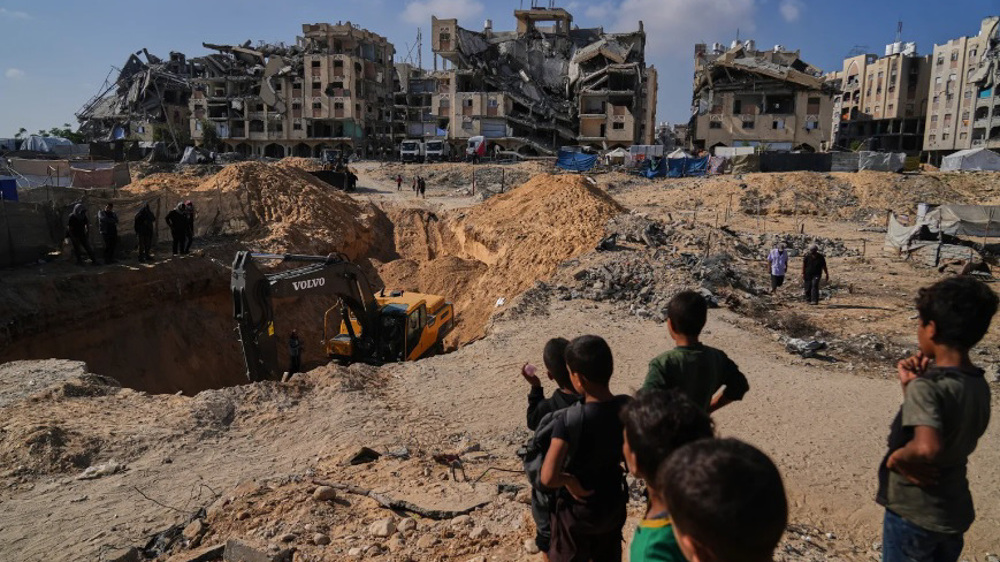
Palestinians watch as Egyptian machinery and workers search for the bodies of Israeli captives in Hamad City, Khan Younis, in the southern Gaza Strip, on October 28, 2025. (Photo by AP)

RT

Israeli forces have demolished a number of Palestinian homes in Gaza City and the southern flanks of the coastal sliver amid ongoing violations of a ceasefire agreement with Hamas that came into effect in early October, and at the same time, continued their raids throughout the occupied West Bank.

The official Palestinian news agency WAFA reported that Israeli forces launched heavy gunfire east of Gaza City on Sunday morning, while simultaneously demolishing residential buildings in the neighborhoods of al-Zaytoun and al-Shuja’iyya.

In the eastern flank of Khan Younis in southern Gaza, Israeli artillery shelling and gunfire also persisted. They were accompanied by demolitions of several residential structures.

Israeli warplanes also launched three airstrikes on the border town of Rafah. There were no immediate reports available about possible casualties and the extent of damage caused.

On Saturday, Israeli fighter jets, along with artillery and tanks, targeted areas surrounding Khan Younis. The regime’s military destroyed residential structures located east of the Jabalia refugee camp in northern Gaza.

Israeli strikes on Gaza have killed at least 222 Palestinians and left 594 others injured since the ceasefire was implemented, as reported by the Ministry of Health in the region.

Even though aid deliveries have ramped up since the truce was enacted, Palestinians in Gaza still struggle with severe shortages of food, water, medicine, and other essential supplies due to Israeli restrictions.

A spokesperson for United Nations Secretary-General Antonio Guterres stated on Thursday that the UN’s humanitarian office has reported that aid collection efforts have been “restricted” as a result of rerouting measures imposed by Israeli authorities.

Meanwhile, Israeli forces carried out a raid on the Palestinian city of Nablus in the northern occupied West Bank, according to local news outlets.

The assault was the second of its kind within an hour, and occupation troops stormed the city from the Beit Furik checkpoint.

Elsewhere in the village of Kafr Ein, northwest of Ramallah, Israeli forces broke into a house and arrested 14-year-old Abdullah Malik Dar al-Eis. They also assaulted his family.

Since the onset of Israel’s genocidal war in the Gaza Strip in October 2023, Israeli settler and military attacks have killed more than 1,000 Palestinians and wounded more than 10,000 others, according to the Palestinian Ministry of Health.

According to the UN High Commissioner for Refugees, Palestinian property has been targeted over 2,400 times in the past two years, resulting in the displacement of at least 3,055 individuals.

In July 2024, the International Court of Justice (ICJ) ruled that Israel’s occupation of Palestinian territory is illegal and urged the evacuation of all settlements in the West Bank and East Jerusalem.

[…]

Trump threatens military action in Africa

Trump threatens military action in Africa

RT

The US president has accused Nigeria of allowing the “mass slaughter” of Christians by Islamists

US President Donald Trump has ordered the Department of War to prepare for possible military action in Nigeria, accusing the West African nation of allowing the killing of Christians by Islamist militants.

Nigeria, a country split between a Muslim-majority north and a largely Christian south, has long been plagued by violence from groups such as Boko Haram, which is responsible for massacres, kidnappings, and bombings nationwide. The attacks, which have killed tens of thousands and displaced over two million since around 2009, target both Christians and Muslims. Though often seen as sectarian, analysts cite land disputes, resource competition, and ethnic tensions as key drivers of the violence.

In a Truth Social post on Saturday, Trump accused Abuja of failing to protect Christians and warned the US “may very well go into that now disgraced country, guns-a-blazing, to completely wipe out the Islamic Terrorists.”

“I am hereby instructing our Department of War to prepare for possible action,” Trump wrote. “If we attack, it will be fast, vicious, and sweet, just like the terrorist thugs attack our cherished Christians!” He offered no evidence of the alleged targeting of Christians but warned that “the Nigerian government better move fast” in confronting the insurgency. Pentagon chief Pete Hegseth replied to Trump’s order on X, saying that his department “is preparing for action.”

Trump’s threat followed a claim on Friday of “mass slaughter” of Christians in Nigeria and his designation of it as a “Country of Particular Concern” under the International Religious Freedom Act, which is applied to states accused of systematic violations of religious freedom.

 In a post after Trump announced the designation but before floating the prospect of military action, Nigerian President Bola Tinubu rejected the accusations against Abuja and defended its efforts to protect religious freedom as “a core tenet” of the nation. Tinubu’s press secretary, Bayo Onanuga, also called US claims of targeted attacks “a gross exaggeration,” saying “Christians, Muslims, churches and mosques are attacked randomly” and urging Washington to provide military support to fight extremists rather than label Nigeria a nation of particular concern.

Later on Saturday, Onanuga called Trump’s threats an “orchestrated game” and said Abuja was “well ahead” of it, noting that Tinubu had met new army chiefs earlier this week, ordering them to immediately “smash” Islamist insurgents with “patriotic zeal.”

Presidential Adviser Daniel Bwala later announced that Trump and Tinubu would meet to discuss US allegations of attacks on Christians, insisting that both leaders “share interest in the fight against insurgency and all forms of terrorism.” Any disagreement over “whether terrorists in Nigeria target only Christians or in fact all faiths and no faiths,” he added, would be addressed “when they meet in the coming days.

[…]

Via https://www.rt.com/news/627254-trump-nigeria-christians-military-action/