Are Mood Disorders Actually Metabolic Diseases Rooted in Insulin Resistance?

insulin resistance and mental health

Dr Mercola

Story at-a-glance

  • Bipolar disorder and depression affect tens of millions globally, long treated as strictly brain-based illnesses, yet both consistently show high rates of insulin resistance and metabolic disturbances
  • A 2025 Nature Neuroscience study found that pancreatic insulin release and hippocampal activity are linked through a circadian feedback loop. This suggests bipolar mood shifts arise from disrupted metabolism, not brain chemistry alone
  • Earlier research in 2022 showed lithium stabilizes mood partly by restoring insulin signaling, while a clinical trial found metformin improved both insulin sensitivity and psychiatric symptoms in treatment-resistant bipolar depression patients
  • Insulin resistance is extremely widespread, with around 40% of Americans affected, driven by refined sugars, seed oils, stress, sleep loss, and environmental exposures that disrupt the body’s natural energy regulation
  • Supporting insulin sensitivity involves stepwise changes, replacing damaged fats and ultraprocessed foods, introducing gut-friendly carbs and fibers gradually, managing stress, improving sleep, and staying active to stabilize both metabolic and mental health

Bipolar disorder and depression affect millions of people worldwide. Estimates suggest that more than 37 million people live with bipolar disorder,1 and close to 4% of the global population experiences major depression.2 These conditions are almost always described as brain-based, centered on chemical imbalances, circuitry disruptions, or genetic vulnerabilities, and that view has shaped their treatment for decades.3

Another factor that deserves attention is how often these same conditions are accompanied by metabolic disturbances, particularly insulin resistance. The consistent overlap makes it clear that your mental health and your metabolic health are deeply connected, bound together in ways that standard treatment models have rarely recognized.

Recently, researchers have begun to investigate this connection in greater depth.4 Their work suggests that disturbances in insulin signaling are one of the hidden drivers behind the mood instability seen in bipolar disorder and depression, opening a broader understanding of how disrupted energy regulation manifests as both metabolic disease and psychiatric illness.5

What Is the Role of Insulin?

Insulin is one of the body’s most important signaling hormones. Its primary job is to help your cells take in glucose, which is the main fuel that keeps them alive and functioning. Without insulin, glucose stays in your blood instead of moving into your tissues, and your cells are left without the energy they need to work properly.6,7

• Insulin is produced by beta cells in the pancreas — Once released, it travels through your bloodstream and attaches to receptors on the surface of your cells. This connection signals the cells to open specialized channels so glucose can flow inside and fuel the chemical reactions that sustain life. When this process runs smoothly, every organ in your body has access to the energy it requires.

• After a meal, this system springs into action — As blood sugar rises from the carbohydrates you eat, your pancreas quickly senses the change and responds by releasing insulin. The hormone acts almost immediately, moving glucose out of the blood and into your cells, preventing sugar levels from climbing too high. This not only protects you from dangerous spikes in blood sugar but also ensures that your cells have a constant stream of energy to draw upon.

• Insulin plays a stabilizing role in your body’s overall energy — Although insulin’s work happens on a microscopic level, the impact is enormous. From the way your brain processes thoughts to the way your muscles contract during movement, every action depends on insulin’s ability to keep energy flowing.

• Insulin also affects how your body stores and manages that energy — It signals when to store glucose in your liver and muscles as glycogen, a form of backup fuel you can draw on later when you are active or between meals. It influences how much fat is stored, how muscle tissue is preserved, and even how hungry or full you feel.

By integrating these signals, insulin makes sure that your energy needs are met not just in the moment but in the hours and days that follow. Its goal is always the same — to match the supply of fuel with the demands of your cells, so your body and brain function without interruption.

Despite the precision of this system, insulin’s balance can be disrupted. The effect of this breakdown does not stop at your muscles or liver. It extends to your brain, where neurons also depend on insulin to regulate energy use.

How Insulin Signaling Links the Pancreas to Mood Shifts

Recent research published in Nature Neuroscience examined how pancreatic function may influence mood regulation in bipolar disorder. The researchers began with pancreatic islets derived from induced pluripotent stem cells (adult cells reprogrammed to develop into many different cell types) taken from individuals with bipolar disorder. These cells showed reduced insulin secretion, linked to abnormally high expression of the gene RORβ, already recognized as a genetic risk factor for the condition.8

• Modeling RORβ effects in mice — To test how this genetic change influences behavior, researchers engineered mice with RORβ overexpressed specifically in pancreatic β cells. During the light phase, the animals showed depression-like behaviors, while during the dark phase, which is normally their active period, they exhibited mania-like behaviors. This alternating rhythm mirrored the mood swings of bipolar disorder.

• Suppressed insulin tied to hippocampal hyperactivity — In the light phase, RORβ overexpression suppressed insulin release from pancreatic islets. This was accompanied by increased hippocampal activity. Since the hippocampus regulates mood, memory, and stress responses, the findings revealed that reduced pancreatic insulin coincided with abnormal hyperactivity in mood-related brain circuits.

• Carryover effects into the dark phase — The hippocampal hyperactivity seen during the light phase influenced pancreatic function later in the cycle. By the dark phase, insulin release rebounded to higher-than-normal levels, hippocampal activity dropped, and the mice shifted into mania-like behavior. The study showed how disruptions in one part of the cycle set the stage for opposite changes in the next.

• Discovery of a circadian feedback loop — Researchers identified a feedback circuit connecting pancreatic insulin release with hippocampal neuronal activity. Insulin influenced how the hippocampus functioned, and hippocampal activity fed back to alter pancreatic insulin secretion. This loop was governed by circadian rhythms, meaning that time-of-day changes were central to the observed mood fluctuations.

The findings suggest that the alternating depressive lows and manic highs of bipolar disorder stem from a dysregulated pancreas-hippocampus circuit. Metabolic and mood symptoms represent two sides of the same biological process, linked through circadian feedback.

• Broader relevance to other conditions — Although focused on bipolar disorder, the results also apply to conditions where metabolic dysfunction and mood instability appear together, including major depression and schizophrenia. Because RORβ also regulates circadian timing, the work highlights the therapeutic potential of strategies that align with daily rhythms, such as medication scheduling, light therapy, or dietary timing.

The study reframes bipolar disorder as more than a disorder confined to the brain. By linking a genetic risk factor to disrupted insulin release in the pancreas and to circadian shifts in hippocampal activity, it positions metabolism at the very core of conditions that have long been treated as if they were separate from it.

Earlier Evidence Linking Insulin to Bipolar Disorder

In 2022, researchers began framing bipolar disorder through the lens of metabolism, showing how disrupted insulin signaling might underlie the instability of mood. Two key studies that year pointed to the same conclusion — correcting insulin resistance can restore stability in a condition long defined by treatment resistance.9,10

• A new perspective placed insulin resistance at the center of bipolar pathology — A Translational Psychiatry perspective argued that lithium’s therapeutic power could be explained not only by its influence on neurotransmission but also by its ability to restore insulin signaling inside the brain.

Lithium acts on the PI3K/Akt pathway and its downstream target glycogen synthase kinase 3 (GSK3), which are both central to insulin’s role in regulating neuronal energy use. By modulating these pathways, lithium improves glucose uptake in neurons, ensuring they have the energy needed for stable function. This reframed bipolar disorder as a problem of energy dysregulation, not just neurotransmitter imbalance.11

• A proof-of-concept trial tested the metabolic model in patients — That same year, researchers from the University of Pittsburgh and Dalhousie University conducted a clinical trial with 45 middle-aged patients suffering from treatment-resistant bipolar depression.

On average, participants had been ill for more than 25 years, failed nearly a dozen psychiatric medications, and lived with unremitting symptoms. They were randomized to receive either metformin, a common insulin-sensitizing drug, or a placebo, while continuing their usual psychiatric care.12

• Metformin improved both insulin sensitivity and psychiatric symptoms — Within weeks, patients receiving metformin began to improve. By 14 weeks, half had regained insulin sensitivity, and this biological change coincided with sharp reductions in depression and anxiety.

Improvements persisted for up to 26 weeks, marking a dramatic turnaround for individuals who had seen little relief in decades. According to study coauthor Dr. Jessica Gannon:

“Given that the only other therapy that works comparably well is electroconvulsive therapy — a procedure that involves applying electrical current to the patient’s brain, causing a controlled seizure — achieving the same result just by restoring insulin sensitivity seems astounding.”13

Both of these studies showed that bipolar disorder is deeply tied to impaired insulin signaling, whether in neurons unable to efficiently use glucose or in systemic resistance blunting insulin’s effects throughout the body. Correcting these disturbances stabilized mood where traditional psychiatric drugs had failed.

Why Is Insulin Resistance So Alarmingly Common?

In the United States, around 40% of people are insulin-resistant.14 The reason it is so widespread has much to do with the way you eat, live, and interact with your environment.

• The type of sugar you consume plays an important role — When you eat a piece of whole fruit, the natural sugars are packaged with fiber, vitamins, and minerals that slow absorption and ease the demand on your pancreas. But when you drink a soda or eat candy loaded with refined sugar, there are no such buffers.

Glucose floods into your bloodstream, your blood sugar rises rapidly, and your pancreas responds by releasing large amounts of insulin. When this happens repeatedly, day after day, your cells begin to dull their response to insulin, and resistance takes hold.

• The kinds of fats you eat also matter — Seed oils such as soybean and corn oil have become a staple in modern processed foods. These oils are highly unstable, breaking down easily into harmful byproducts, especially when heated.

Over time, these byproducts damage your cells and interfere with how they respond to insulin. They also change the very makeup of your cell membranes, which disrupts the function of insulin receptors and makes it even harder for your cells to use glucose effectively.

• Beyond diet, environmental exposures add to the problem — Certain plastics release chemicals that act as endocrine disruptors, impairing the way your hormones work. Constant exposure to electromagnetic fields (EMFs) from electronic devices has also been shown to influence cellular stress responses. These hidden factors layer onto an already heavy metabolic load, making it even more difficult for your body to keep insulin signaling on track.

• Lifestyle patterns further push the balance in the wrong direction — Chronic stress keeps cortisol levels elevated, and cortisol directly reduces your cells’ sensitivity to insulin. Poor sleep disrupts the hormones that regulate hunger and blood sugar, making you more likely to crave sugary or starchy foods while also leaving your body less able to handle them.

Physical inactivity exacerbates these problems. When your muscles are not regularly contracting and using glucose for fuel, the sugar remains in your bloodstream, and your pancreas is forced to release more insulin to try to keep up.

• All of these factors overlap in ways that strain your metabolism — They create an environment where insulin is constantly working harder to move glucose into your cells, while your cells are responding less and less. Over time, the result is a system that can no longer keep up, leaving you vulnerable to a cascade of health problems that begin with impaired energy regulation.

[…]

Via https://articles.mercola.com/sites/articles/archive/2025/11/03/insulin-resistance-and-mental-health.aspx

Airbnb sued in France for rentals in occupied West Bank

In this photo illustration, a key is seen in front of a computer screen displaying the Airbnb logo in Ankara, Turkiye on November 22, 2023. [Dilara İrem Sancar – Anadolu Agency]

Middle East Monitor

The Association of Jurists for the Respect of International Law (JURDI) has sued Airbnb in France for listing properties in Palestinian territories occupied by Israel in the West Bank, the BFMTV broadcaster said Tuesday, Anadolu reports.

JURDI, a non-profit group in France that advocates for international law regarding the Israeli-Palestine conflict, accuses Airbnb of supporting war crimes by listing the properties in occupied territories in the West Bank. It is asking the court to order the company to remove listings in Israeli settlements.

“By offering these accommodations, Airbnb contributes to the normalization and perpetuation of the colonial regime, by providing financial resources to settlers and legitimizing their presence,” JURDI said in its lawsuit, excerpts of which were seen by BFMTV.

Attorney Helene Massin-Trachez, who is leading the case, said French law prohibits offering contracts that violate public order, arguing that Airbnb was doing exactly that by promoting unlawful rental agreements to clients based in France.

A preliminary hearing has been scheduled for Jan. 13, and if the court rules in JURDI’s favor, Airbnb will have eight days to comply before facing a €5,000 ($5,740) fine for each day of delay.

The company defended its actions when contacted by BFMTV, denying it profits from the international situation and vowed to remain committed to addressing each of the situations “with the greatest care.”

The French Human Rights League (LDH) filed a complaint against Airbnb and Booking.com last month for listing properties in Israeli settlements in Palestinian territories.

The complaint accuses those companies of complicity and aggravated concealment of war crimes, underlining that the platforms promote “occupation tourism” by offering listings in Israeli settlements.

[…]

Via https://www.middleeastmonitor.com/20251104-airbnb-sued-in-france-for-rentals-in-occupied-west-bank/

Russia May Send Hypersonic Missiles to Venezuela as Defense Against Regime Change: ‘America May Be in For Some Surprises’

Venezuelan President Nicolás Maduro and Russian President Vladimir Putin shake hands during a diplomatic meeting in a formal setting.

By Ben Kew

Russia has opened the door to supplying hypersonic missiles to Venezuela as a deterrent against a possible U.S. invasion.

Alexei Zhuravlyov, deputy chairman of Russia’s parliamentary defense committee, warned that “America may be in for some surprises” if it attempts to remove the Maduro dictatorship from power.

“I see no obstacles to supplying a friendly country with new developments such as the Oreshnik or, let’s say, the well-proven Kalibr missiles,” Zhuravlyov told the Russian news site Gazeta.Ru.

Russian President Vladimir Putin has claimed that the Oreshnik missiles possess such overwhelming power that launching several of them with conventional warheads would unleash destruction comparable to a nuclear strike.

The Oreshnik was first deployed in the eastern Ukrainian city of Dnipro in November 2024, in retaliation for Ukraine’s use of Western-supplied long-range weapons, including British and American Storm Shadow missiles, against targets inside Russia.

The warning comes after Venezuelan leader Nicolás Maduro pleaded for military assistance from both Moscow and Beijing amid reports that President Trump is planning an operation to remove him from power.

In his letter to the Kremlin, Maduro requested additional Sukhoi Su-30MK2 fighter jets, describing them as “the most important deterrent the Venezuelan national government had when facing the threat of war.”

Over the weekend, Russian Foreign Ministry spokeswoman Maria Zakharova said the Kremlin condemns “the use of excessive military force in carrying out anti-drug tasks.”

[…]

Via https://www.thegatewaypundit.com/2025/11/russia-may-send-hypersonic-missiles-venezuela-as-defense/

US asks UN to lifts sanctions on former al-Qaeda member, Syria’s Jolani

This file photo shows former al-Qaeda member Abu Mohammed al-Jolani, the head of the HTS-led regime in Syria.

RT

The United States has submitted a draft United Nations Security Council resolution that calls for lifting sanctions on Abu Mohammed al-Jolani, the head of the HTS-led regime in Syria, ahead of his meeting with President Donald Trump at the White House on November 10.

The draft resolution would also lift sanctions on Syria’s self-proclaimed interior minister, Anas Khattab, who was one of the leaders of the al-Qaeda-linked terrorist group, Jabhat al-Nusra.

It was not immediately clear when the draft resolution, seen by Reuters on Tuesday, could be put to a vote.

The HTS, a former branch of al-Qaeda, along with other militants, seized control of Damascus on December 8, 2024, forcing former President Bashar al-Assad, a strong supporter of the Palestinian cause, to leave the country.

Israeli Prime Minister Benjamin Netanyahu recently described how the Israeli military helped the HTS takeover of Syria in December.

Since May 2014, the HTS has been on the UN Security Council’s sanctions list.

Its leader, Jolani and Khattab are among several HTS members who are also under UN sanctions that include a travel ban, asset freeze, and arms embargo.

However, a Security Council sanctions committee has been regularly granting Jolani travel exemptions this year.

Thus, the HTS leader is still likely to be able to travel to Washington even if the US-drafted resolution is not adopted before Monday.

In May, Trump announced that all US sanctions on Syria would be lifted.

Trump made the announcement in the Saudi capital, Riyadh, during his visit to the kingdom, where he met with al-Jolani, who expressed readiness to normalize ties between Damascus and Tel Aviv.

[…]

Via https://www.presstv.ir/Detail/2025/11/05/758263/US-asks-UN-lifts-sanctions-Syria-Jolani

Russia doubles diamond exports to India

Russia doubles diamond exports to India – report

RT

Russia doubled its diamond exports to India in August, according to data from India’s Ministry of Commerce and Industry, as cited by RIA Novosti.

Russia’s diamond exports to India surged to $31.3 million in August, more than double the $13.4 million recorded in August 2024.

However, the total volume of Russian diamond supplies to India decreased by nearly 40%, reaching $342.1 million, in the first eight months of this year. The largest supplier of the precious gems to India in August was the UAE ($685 million), followed by Hong Kong ($173.1 million) and the US ($140.3 million), according to the data.

Russia is the world’s largest producer of rough diamonds and has historically been one of the key suppliers for India’s giant cutting and polishing industries.
However, Western sanctions against Russia’s diamond trade and its biggest mining company, Alrosa, have affected Indian industry.

European Union and G7 countries have restricted direct imports of non-industrial diamonds which have been mined, processed, or produced in Russia since January 2024.

The ban was later extended to diamonds that were cut and polished in third countries but originated in Russia.

In addition, the Indian diamond industry is facing challenges from a 50% tariff imposed by the US on cut and polished diamonds. This levy includes a 25% punitive tariff as a penalty for the country purchasing Russian oil, in addition to a 25% reciprocal tariff imposed on goods from India after New Delhi and Washington were unable to reach a trade agreement in August.

The US remains India’s largest export market for gems and jewelry products. In August, the US partially relaxed the restrictions, introducing a temporary waiver allowing limited imports of certain Russian diamonds before September 1, 2026.

The restrictions on Russian gems, coupled with slow demand for diamond jewelry globally, have disrupted the Indian cutting and polishing industries, which employ thousands.

According to the Gem and Jewelry Exports Promotion Council (GJEPC), the gross exports of cut and polished diamonds during April-June 2025 stood at around $2.8 billion, reflecting a decline of almost 23% compared to the same period last year.

[…]

Via https://www.rt.com/india/627376-russia-doubles-diamond-exports-to/

US Preparing Mexico Mission Against Cartels That Would Include Troops and Drone Strikes

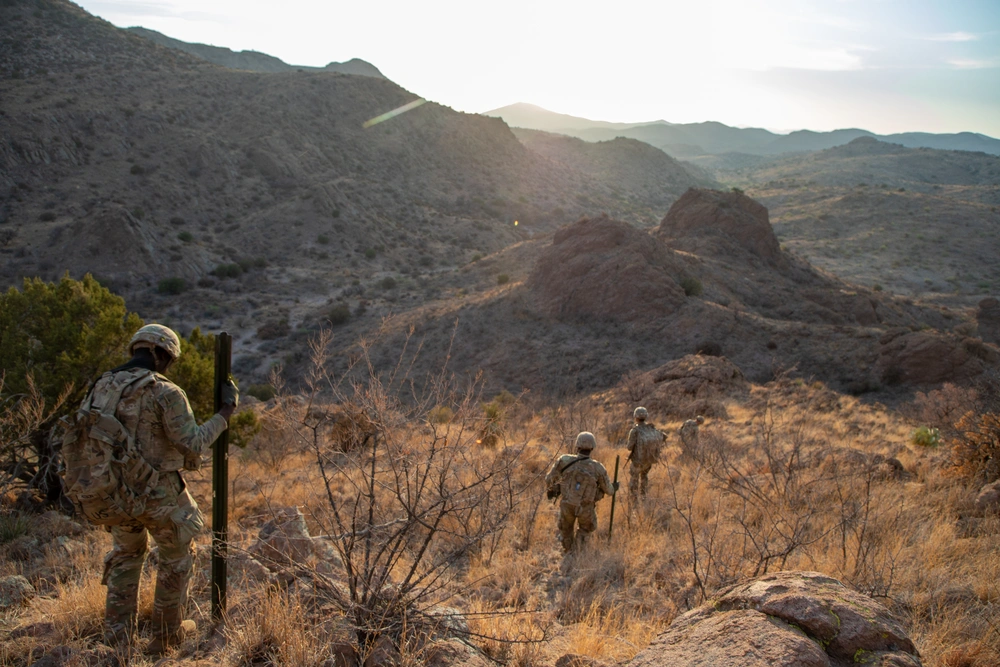
US Soldiers with Joint Task Force–Southern Border near the US-Mexico border in New Mexico (US Army photo by Sgt. Griffin Payne)
By Dave DeCamp

According to NBC News, the Trump administration is considering going through with the plan even if the Mexican government objects

The Trump administration has begun developing detailed plans to send US troops and intelligence officers into Mexico to target cartels in operations that would include drone strikes, NBC News reported on Monday, citing current and former US officials.

The report said that US military personnel have already begun training for the potential mission, though a deployment is not imminent. Many of the troops would come from Joint Special Operations Command (JSOC) and would operate under the authority of US intelligence agencies, with involvement from CIA officers.

Unlike the current US bombing campaign against alleged drug boats in the waters of Latin America, which the Trump administration is conducting without legal authority, the idea of the campaign in Mexico would be to keep it secret and not publicize attacks.

The NBC report said the administration wanted to operate in coordination with the Mexican government but was also considering conducting the campaign without Mexico’s approval, which would mark a significant violation of the country’s sovereignty. Mexican President Claudia Sheinbaum has increased law enforcement cooperation with the US and has allowed the CIA to ramp up surveillance flights along the border, but she has repeatedly ruled out US military intervention in her country.

“The United States is not going to come to Mexico with the military,” Sheinbaum said in August. “We cooperate, we collaborate, but there is not going to be an invasion. That is ruled out, absolutely ruled out.”

The Mexican leader has also condemned US strikes on boats in the region, saying she “doesn’t agree” with the policy. The US recently bombed several alleged drug vessels in the Eastern Pacific, and in one case, the Mexican Navy had to rescue a survivor.

The Trump administration has not provided any evidence to back up its claims that the boats it has been targeting were carrying drugs and has admitted to Congress that it doesn’t know the identities of the people it has killed. Since the bombing campaign began on September 2, the US military has extra-judicially executed 64 people at sea.

The strikes on boats and the push toward regime change in Venezuela have come under increasing scrutiny from both Democrats and Republicans in Congress due to the lack of transparency and lack of legal authority.

“People were very frustrated in the information that was being provided. It was a bipartisan briefing, but people were not happy with the level information that was provided, and certainly the level of legal justification that was provided,” Rep. Mike Turner (R-OH) said after a briefing on the military campaign.

The NBC report signals that the potential US bombing campaign in Mexico, which would target alleged cartel targets, would have even less transparency since the idea is to do it in secret.

In response to the report, a senior administration official told NBC, “The Trump administration is committed to utilizing an all-of-government approach to address the threats cartels pose to American citizens.”

[…]

Via https://news.antiwar.com/2025/11/03/report-us-preparing-mexico-mission-against-cartels-that-would-include-ground-troops-and-drone-strikes/

FBI Uses Secret Threat Category for Israeli Criminals Operating in U.S.

10 Major FBI Cases of the 20th Century | HISTORY

By Daniel Boguslaw
The FBI’s growing list of domestic threats has mutated in recent years to include every conceivable affiliation of Americans across the political spectrum: right-wing violent extremists, left-wing violent extremists, black identity extremists, and animal rights extremists. The current administration has even added nihilistic violent extremists—those who “believe in nothing”—to the laundry list. The Biden administration, for its part, aided in this exercise by vastly overstating the threat posed by Trump-aligned conservatives in the wake of January 6th. But neither Democratic nor Republican administrations have ever grandstanded about another significant threat group that the FBI secretly monitors on U.S. soil: Israeli Based Organized Crime Syndicates, or “IBOCS”.

Leaked FBI records and court filings detail widespread money laundering, taxpayer theft, and drug smuggling enterprises operated in the U.S. by Israeli citizens connected or belonging to Israeli crime groups. Despite the trickle of prosecutions over the past 25 years, the FBI has never publicly disclosed the fact that it has designated resources allocated to investigating these criminal organizations.

A 2020 FBI intelligence report from the “Blue Leaks” hack conducted by the hacker group Anonymous and archived by the nonprofit DDoSecrets describes IBOCS operating in Nevada and Florida embezzling money from the Paycheck Protection Program (PPP). IBOCS “have defrauded US Government relief programs and manipulated tax documents since at least 2015 to reduce tax liability and conceal money laundering activities, as well as have access to companies and agents, which are necessary to process PPP loan applications,” the report found.

The report also lists instances of IBOCS committing both disaster relief and tax fraud, and notes that IBOCS are involved in money laundering, extortion, illegal gambling, fraud, and narcotics trafficking in Las Vegas, Los Angeles, Miami, and New York, according to FBI investigations.

As far back as 2009, leaked State Department cables obtained by WikiLeaks detail one of the reasons why criminals belonging to or associated with Israeli crime families and syndicates have been able to operate inside America with ease: The State Department is not authorized to block their visas. The cables warn of the Israeli mafia taking on a growing role in the American trade of ecstasy, and of the loophole which prevents U.S. embassies from automatically denying Israeli crime figures travel documents.

While the State Department has formalized powers in its foreign affairs manual to restrict visas for Chinese Triads, Japanese Yakuza, the Italian mafia, the Hells Angels biker gangs, Outlaws, Bandidos, Mongols and two dozen Latin American gangs including Tren de Aragua, Israeli organized crime groups remain absent more than a decade after the State Department cable first warned of the Israeli mafia loophole.

“Given the volume of travel and trade between the United States and Israel, it is not surprising that Israeli OC [organized crime] has also gained a foothold in America,” one cable reads. “The consular section has revoked several visas for those who have been convicted of crimes in Israel, but many OC figures have no prior criminal convictions and carry no visa ineligibilities. As a result, many hold valid nonimmigrant visas to the United States and have traveled freely or attempted to travel for a variety of purposes.”

A former FBI special agent who worked on investigations involving IBOCS told The American Conservative, “There is real Israeli organized crime in this country, and there is a formalized FBI program for investigating these groups,” adding that “they look for the success of other criminals and then try to build a better model on those.”

He also said, “Once you move beyond that and your target becomes more sophisticated, they are presumed to be intelligence operatives and operatives of the Israeli government and then that gets moved highside in the national security division.”

A sentencing letter for an international narcotics smuggling case prosecuted in the Southern District of New York hints at this reality, referencing the IBOCS designation in connection to an international ecstasy smuggling conspiracy:

“The defendant engaged in internationally laundering narcotics proceeds as part of an Israel-based organized crime syndicate. In addition to his demonstrated ability to launder drug money across borders, he also possessed ample global connections in in the narcotics trade and access to narcotics themselves.”

A second former FBI agent pointed to the recent west coast indictment of “a suspected high-level member of an Israeli transnational organized crime group” running an illegal poker game in Hollywood. “It’s no secret that politics inevitably shapes enforcement priorities,” the agent said, explaining why the bureau has never highlighted its IBOCS enforcement. “This has not been a popular thing to wave around in the press, which is why you see a steady stream of prosecutions related to Israeli crime figures without the same discussion of organization that you might have with cartels or gangs.”

So politically unpopular is criticism of illegal activities by Israelis that repeated espionage efforts have been swept under the rug, or at the very least, restricted from public view. In 2019, POLITICO reported that intelligence officials suspected that Israel was behind the placement of cellphone surveillance devices planted around the White House and in other locations in Washington D.C. According to the report, the Israelis were not sanctioned with a formal reprimand from the State Department.

Another potential reason for the lack of visibility on IBOCS is the changing face of Israeli politics and the increasing proximity of organized crime figures to the ruling Likud party. Ten Likud officials chose to spend the Jewish holiday of Sukkot with convicted mobster Rafi Chaim-Kedoshim this year. In the past, members of Israel’s mafia families elected to parliament on the Likud line have attempted to use their positions to quash investigations in organized crime. The FBI did not respond to The American Conservative’s request for comment about the current status of the Bureau’s IBOCS investigations.

[…]

Via https://www.theamericanconservative.com/fbi-uses-secret-threat-category-for-israeli-criminals-operating-in-u-s/

Pentagon Tells Congress It Doesn’t Know Who It’s Killing in Latin American Boat Strikes

Maps, video show US strikes on alleged Venezuelan drug boats

US War Department officials don’t know the identities of the 61 people who have been extra-judicially executed in US military strikes on boats in the waters near Venezuela and in the Eastern Pacific Ocean, POLITICO reported on Thursday, citing House Democrats who attended a classified briefing on the campaign.

“[The department officials] said that they do not need to positively identify individuals on these vessels to do the strikes, they just need to prove a connection to smuggling,” said Rep. Sara Jacobs (D-CA). “When we tried to get more information, we did not get satisfactory answers.”

While the Trump administration has cited overdose deaths in the US related to fentanyl to justify the bombing campaign, lawmakers were told in the briefing that the boats that have been targeted were allegedly smuggling cocaine, though the Pentagon has not provided evidence to back up its claims about what the vessels were carrying.

“They argued that cocaine is a facilitating drug of fentanyl, but that was not a satisfactory answer for most of us,” Jacobs said.

The briefing on Thursday came after the Pentagon shut out Democrats from another briefing it held with Republicans a day earlier, which left Democratic senators fuming. Democrats who attended Thursday’s briefing said Pentagon lawyers were pulled from the meeting at the last minute.

“Am I leaving satisfied? Absolutely not. And the last word that I gave to the admiral was, ‘I hope you recognize the constitutional peril that you are in and the peril you are putting our troops in,’” Rep. Seth Moulton (D-MA) told reporters after the briefing, according to CNN.

Jacobs said that, based on what she was told, even if Congress authorized the bombing campaign, it would still be illegal. “[T]here’s nothing that we heard in there that changes my assessment that this is completely illegal, that it is unlawful and even if Congress authorized it, it would still be illegal because there are extrajudicial killings where we have no evidence,” she said.

Criticism of the US bombing campaign has also come from Republicans, most prominently from Sen. Rand Paul (R-KY). “No one said their name, no one said what evidence, no one said whether they’re armed, and we’ve had no evidence presented,” Paul said this week of the people who have been targeted. “They summarily execute people without presenting evidence to the public … so it’s wrong.”

Paul has joined Senate Democrats in introducing a War Powers Resolution aimed at preventing the Trump administration from starting a war with Venezuela amid threats of US strikes on the country aimed at ousting President Nicolas Maduro and a major US military buildup in the region. A vote on the bill is expected to happen next week.

[…]

Via https://news.antiwar.com/2025/10/30/pentagon-tells-congress-it-doesnt-know-who-its-killing-in-latin-american-boat-strikes/

Wikipedia co-founder slammed for biased intervention after blocking edits on ‘Gaza genocide’ page

Wikipedia co-founder Jimmy Donal Wales. (File photo)

Press TV

The co-founder of Wikipedia, Jimmy Wales, has faced backlash from contributors after personally deciding to block editing of the platform’s “Gaza genocide” page.

Wales intervened on Sunday to block editors from modifying the article, claiming without evidence that the page and its introduction reflect an “anti-Israel bias.”

The introduction of the page currently states: “This article is about the ongoing genocide by Israel in Gaza.”

It defines the “Gaza genocide” as “the ongoing, intentional, and systematic destruction of the Palestinian people in the Gaza Strip carried out by Israel during the Gaza war.”

In a recent update posted on the article’s discussion page, Wales said he had been asked about the entry during a media interview.

He stated that his response was that the article does not comply with “Wikipedia’s neutrality standards” and therefore requires immediate review.

The intervention has angered many Wikipedia editors. One accused Wales of yielding to “political pressure and asking us to betray scholarship.”

Another editor remarked, “There is also an ‘ongoing controversy’ over whether mRNA vaccines cause ‘turbo cancer’ and whether [Donald] Trump actually won the 2020 Presidential election. Do you want us to be bold and go edit those articles as well?”

A veteran contributor added, “I have been editing in the [Israel/Palestine] area for just over 20 years, and [as far as I know] there has never been as much external attention on Wikipedia’s coverage of this topic as now. Much of it negative, from pro-Israeli commentators, X, blogs, you name it … Wales says ‘the neutrality of this article is disputed, and there are very good reasons for that.’ Could [he] please tell us one or two of these good reasons?”

Amid the backlash, Wales insisted that he was not denying that genocide is taking place. “My argument is that it is not the job of Wikipedia to adjudicate the issue.”

At present, the “Gaza genocide” article on Wikipedia is marked as “protected” until 21:47 UTC on November 4, 2025.

The United Nations, major international organizations, and the broader international community have characterized Israel’s actions in Gaza as genocidal.

In September, the International Association of Genocide Scholars (IAGS) stated that Israel’s war in Gaza meets the legal definition of genocide.

Israel also faces an open case for Gaza genocide in the International Court of Justice (ICJ).

During Israel’s two-year genocidal war on Gaza, the regime killed 68,858 Palestinians, wounding 170,664 others, the majority of them women and children.

[…]

Via https://www.presstv.ir/Detail/2025/11/04/758182/Wikipedia-co-founder-faces-backlash-for-blocking-edits-on-%E2%80%98Gaza-Genocide%E2%80%99-page

China defends ‘sovereign’ ties with Venezuela, warns against US moves in Caribbean

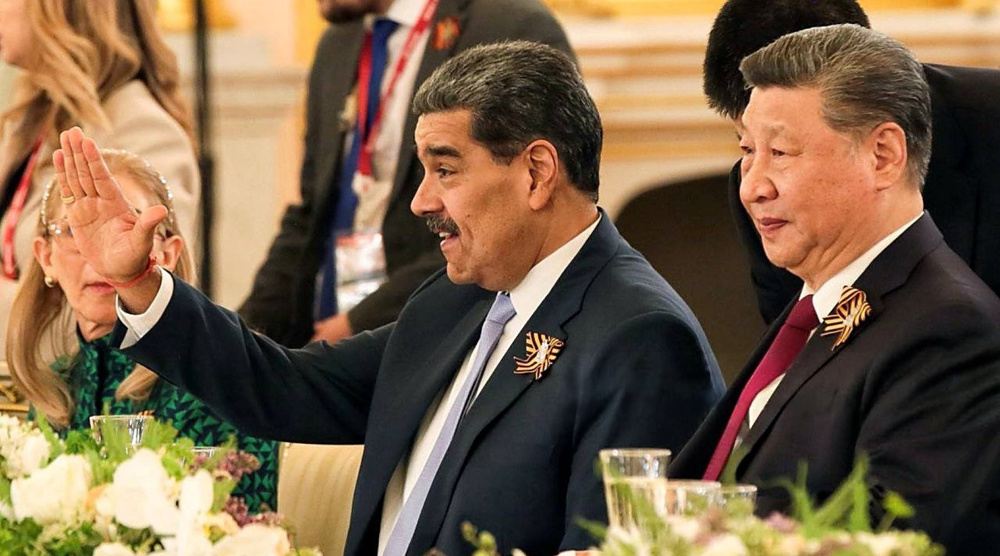
Venezuela’s President Nicolas Maduro waving next to Chinese President Xi Jinping in Moscow on May 8, 2025. (Photo by AFP)

Press TV

China says its partnership with Venezuela is “sovereign” and not directed at any third party, following reports that Caracas has asked allies for military equipment amid heightened tensions with the United States.

China’s Foreign Ministry spokeswoman Mao Ning said on Tuesday that cooperation between Beijing and Caracas “does not target any third party” and “is not subject to disruption or influence from any third party.”

Mao made the remarks at a press briefing after being asked about reports that Venezuela is seeking missiles, drones, and other military equipment from China, Russia, and Iran to deter possible US military aggression.

Referring to the United States’ recent military operations in the Caribbean, Mao said China “stands against moves that undermine peace and stability in Latin America and the Caribbean” and opposes “unilateral and excessive enforcement operations against other countries’ vessels.”

She said that Beijing “has a clear-cut stance on the US cracking down on so-called drug cartels by force in the Caribbean Sea.”

China supports international cooperation to combat cross-border crime, Mao said, adding that law-enforcement must be conducted through “bilateral and multilateral legal frameworks,” not unilateral force.

She also warned US against turning Latin America into “a stage for hegemonic power plays.”

Washington has stepped up military deployments in the Caribbean under the guise of counter-narcotics mission, sending warships, aircraft, and special-operation forces close to the Venezuelan territory.

While US officials frame the moves as security operations, governments across Latin America warn the buildup resembles preparations for coercive regime-change efforts, citing recent US strikes on boats accused of drug activity and rising rhetoric against the Venezuelan President Nicolas Maduro.

US President Donald Trump, however, has played down the prospect of a direct war with Venezuela while threatening that Maduro’s “days are numbered.”

Trump has accused the Venezuelan leader of drug trafficking without presenting evidence. Maduro, in turn, says Washington is using narcotics allegations as a pretext to pursue regime change and seize control of Venezuela’s oil wealth.

[…]

Via https://www.presstv.ir/Detail/2025/11/04/758187/China-sovereign-partership-Venezuela-US-threat-force-Caribbean-drug-trafficking