The Rise and Fall of Wikipedia

The Rise and Fall of Wikipedia
By Jeffrey A Tucker

The year was 2001 and the dot-com bust was in the rearview mirror. New ideas were in circulation among young and visionary entrepreneurs. Sure, pets.com failed and so many others but that was a temporary boom-bust.

The Internet will change everything eventually, we were told. Technology, decentralization, crowd sourcing, and digital spontaneity will create an information landscape without gatekeepers. Everything will have to adapt. The experts of the old world will be replaced by a people’s revolution. Whereas legacy elites waved credentials, a new class of revolutionaries will raise armies of servers and digits to move the center of civilization to the cloud.

Wikipedia was a headline feature, an experiment in crowd sourcing knowledge in a way that was decentralized, able to scale in ways the old model was not, and drawing from the knowledge and passions of people the world over. The platform seemed to embody the principle of freedom itself. Everyone has a voice. The truth will emerge from the seeming chaos of competing points of view.

At long last, the anti-authoritarian outlook would be tested on a medium that had intrigued scholars since the ancient world: books containing all knowledge. Reading through Aristotle’s vast corpus, you find this passion and drive at work. He wanted to document everything he could about the world around him.

[…]

After the Second World War, it became common for every household to have a set on the shelf, or several.

[…]

Encyclopedias drew from the best experts but always with gatekeepers to decide what was and was not credible information.

[…]

This is the problem with gatekeepers. So long as printing remained the main means by which knowledge was preserved and distributed, they would be necessary.

The founding of Wikipedia in 2001 was about a vision to change that. The initial reaction was widespread and justifiable incredulity. It could never work for anyone to be able to change anything, so they said. It’s not possible simply to wipe away the gatekeepers and for truth to emerge. For years, this perception dominated, as teachers and experts of all sorts spoke of Wikipedia only with disdain.

But gradually, something interesting began to happen. It actually seemed to be working. The entries became ever more voluminous and detailed. The rules of the road became more embedded, so that citations and documentation were required, and interest groups rallied around particular entries to guard them against corruption. Sure anyone can edit but your edits will be reversed immediately if you are not in compliance. For many entries, it became essentially impossible to change them without first going to the discussion pages and asking permission.

Already early on, new gatekeepers emerged on the platform. How did they become that way? Through persistence, skill at Wiki code, deep knowledge of the platform, and a native ability to understand the culture of the platform.

[…]

Were its earliest champions correct? Did the model of spontaneous evolution actually generate a better product than the old top-down system? In many ways, it did. In other ways, it did not. Wikipedia brandished crowd-source credibility – this is what the community has decided to be true – while giving rise to a new opinion oligarchy that was as bad or worse than what it replaced.

The targeting of the platform started right away. The topic was science, and global warming in particular. One of the founders, Larry Sanger, noted that this was happening early on. Some sources were deemed inadmissible while others were valorized as excellent for citation.

[…]

The whole point of Wikipedia was to permit crowdsourcing to break down traditional information cartels. In this case, and ever more as the years went on, the cartels had reassembled themselves.

At least with old-style encyclopedias, readers knew the names of both the authors of entries and the editors. They signed what they wrote. With Wikipedia, 85 percent of the most powerful editors remained entirely anonymous. This turned out to be a grave problem. It permitted powerful industries, foreign governments, deep-state agents, and anyone with the highest stake in a topic to control the messaging while banishing contrary points of view.

As politics became ever more contentious, Wikipedia in general went the way of mainstream media with a consistently mainline center-left bias on any topic that impacted on political outlook. After Trump won in 2016, the entire platform was swept up in the hate that followed. Editors made lists of credible and not credible sources, thus banning any right-of-center media from being cited in the interest of balance. Indeed, balance disappeared entirely.

The Covid period proved that it was too far gone to be saved. Every entry echoed CDC and WHO propaganda, and even the entry on masks advanced the most preposterous claims. The material on the Covid vaccines might as well have been written by industry (and probably was). If you were looking for something objective – perhaps some common sense on dealing with a respiratory infection – the search was hopeless.

The platform had been fully captured during the greatest crisis of our lives. It was far worse than an older encyclopedia which would at least preserve known information on natural immunity or therapeutics or strategies used in pandemics in the past. Wikipedia was so agile that it would be edited in real time to delete settled knowledge and replace it with whatever hullabaloo was being whipped up by industrial bureaucrats that morning. This was not digital utopia; this was Orwell come to life.

The rise of Wikipedia was spectacular, implausible, and glorious. Its fall is equally disappointing, predictable, and inglorious. It’s also paradigmatic. Every major venue failed in its emancipationist promise and instead became handmaidens of the propagandists and censors: Microsoft, Google, Facebook, and even Amazon. The information revolution turned gradually into a tool for shoring up the corporatist/state system.

The betrayal here serves as a tragic reminder that no technology is uncorrupted, no method not subject to abuse, no platform permanently inoculated against capture. Indeed, the more credibility an institution earns, the more confidence it inspires, the more likely it is to attract bad actors who will flip its purposes on their head and push an agenda.

What I’ve reported above is no longer unknown. Most people today are aware of Wikipedia’s biases. Regular people long ago gave up trying to save it from itself. You can spend a half-day on a small edit and see it reversed by the nameless editorial oligarchs who guard every entry that is even slightly controversial. Instead of broadening and including voices, it has narrowed and excluded them.

Fortunately, the wheels of technology have kept turning. Artificial intelligence dropped in the late Covid period and at least one company, xAI, has devoted itself to providing the best tools to keep the dream of democratized information alive. Grokipedia, even in its first iteration, is already leagues above Wikipedia in balance and range of information sources. As it turns out, machines do a better job than anonymous oligarchs at getting us close to the truth.

Welcome to the post-Wikipedia age. It was fun while it lasted. All hail its deprecation and replacement with something much better. 

[…]

Via https://brownstone.org/articles/the-rise-and-fall-of-wikipedia/

Did Trump’s Physician Provide a Full Safety/Efficacy Disclosure on mRNA Covid-19 Shots?

Did President Donald Trump’s Physician Provide a Full Safety/Efficacy Disclosure on mRNA Covid-19 Shots?
By David Gortler, Pharm.D

On Oct. 10, Trump’s physician, Dr. Sean P. Barbabella, announced that after conducting a battery of tests, he found that our president “remains in exceptional health” and that he had received “immunizations, including annual influenza and updated Covid-19 booster vaccinations.” It’s likely the president received a Pfizer mRNA shot.

Listening to the Experts

Trump—perhaps the busiest man on the planet—can’t be expected to do a deep dive on the epidemiology, safety, and efficacy of these shots. Like most patients, he had no choice but to trust the experts.

Doing so makes sense when the experts are trustworthy and follow what the data tells them. Unfortunately, when it comes to public health, and to the Covid-19 mandates in particular, trust in federal health agencies and health care professionals has been shattered beyond recognition.

So much of what people think they know about America’s recent drug and mRNA approvals just isn’t so. As a result, I wonder if the President of the United States received a full disclosure of the available data so he could weigh the risks versus the benefits of mRNA Covid shots.

To exercise truly informed consent, he would have needed to know (at a minimum) the following:

  • It’s October 2025. Deadly variants of Covid are long extinct and extremely unlikely to emerge without human engineering. This has been the case since the emergence of the Omicron variant in late 2021, according to a landmark meta-analysis published in the International Journal of Infectious Diseases.
  • The president, according to his physician, “remains in exceptional health.”
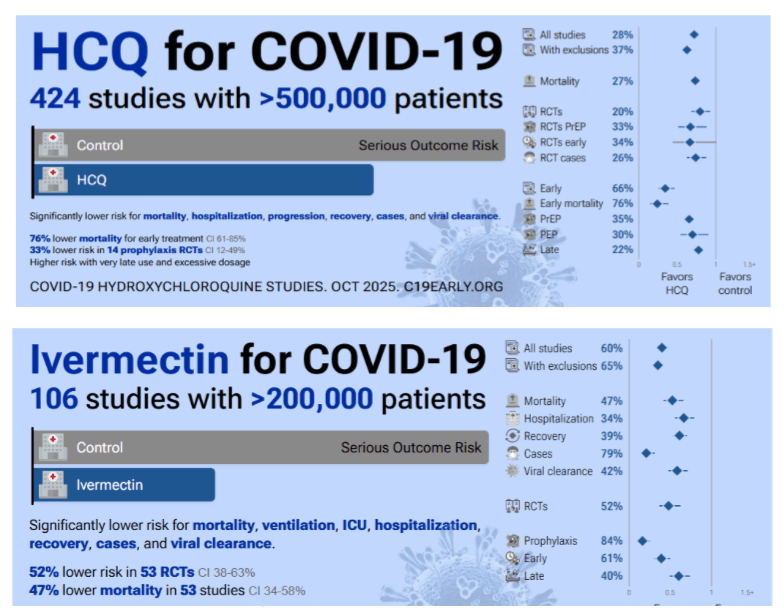
    In layman’s terms: if the president were to catch Covid again (he has had Covid at least once), it would be mild. He could easily treat it with very safe drugs such as ivermectin and/or hydroxychloroquine that he correctly advocated for, and stockpiled, along with dozens of other repurposed, inexpensive treatments for Covid, proven to be safe and effective as the peer-reviewed literature has clearly outlined: Here are two of my favorites both of which I’ve written about extensively:
  • Covid viruses mutate too quickly to be stopped by any mass-produced “vaccine.” Manufacturers knew from the start that with Covid’s high rate of mutation, mRNA shots would have to be produced and administered at least once a month, lest they become irrelevant due to mutations. Researchers from the Universities of Bath and Edinburgh found back in 2021 that Covid mutates as quickly as every two weeks. That means Trump’s monovalent injection that he was injected with in 2025, which was developed in late 2024 and early 2025, is likely obsolete.
  • Even if they were given as a monthly booster, these shots don’t do what a “vaccine” is supposed to do; they have not been shown to prevent spread or transmission of Covid-19.
  •  Unlike vaccines which are designed to provide total immunity, Covid injections have been shown to produce antibodies, but do not provide complete immunity from Covid. In other words, one would still catch Covid, just not the one particular strain of Covid you are being injected with.
  • There’s no reputable evidence to show that mRNA Covid shots minimize serious disease and may have caused harm; by the end of 2022, the majority of Covid-19 deaths were in vaccinated/boosted individuals.

The Risks of mRNA Covid Shots

So much for the benefits. What about the risks?

  • In the FDA VAERS database, there are over one million adverse event reports from Covid mRNA shots in the United States alone, which include tens of thousands of reports of: deaths, permanent disability, ER visits, and severe allergic reactions. Even worse: The VAERS surveillance database has been chastised by multiple government and FDA officials to only represent low, single-digit percentages of the actual number of adverse effects that actually occur.
  • Pharma companies misled us in 2020-21 when they claimed that the spike proteins produced by the mRNA shots stay confined in the injection site and last only a few days. The Infectious Disease Society of America states that the spike proteins generated by Covid-19 vaccines last “up to a few weeks” in the body. Other publications show evidence that the highly complex mRNA products and ingredients remain in the body for years, wreaking long-lasting havoc on health.
  • Although ubiquitously labeled “vaccines,” the definition of “vaccine” had to be altered, to accommodate the inclusion of mRNA injections. Prior to the definition change of vaccines, Covid-19 mRNA injections would have fallen under the definition of gene therapy.
  • The fully synthetic lipid nanoparticles that accompany mRNA injections have not had their structures or exact doses disclosed. Although we know how much to inject (3 ml), Americans still don’t know how many nucleotide strands or lipid nanoparticles are in that volume of liquid.
  • In addition to the number of nucleotide strands in mRNA injections, the manufacturers have never shared the precise mRNA sequences or the lipid nanoparticle structures that must accompany the mRNA.
  • Americans still do not have full transparency on Covid mRNA shot ingredients. The FDA heavily redacted the manufacturer’s instructions on how to analyze the mRNA vaccines for quality control/assurance. Consider, for instance, a single redacted page in a longer FDA regulatory summary (shown below). This is ONE PAGE from a 127-page document on the protocol of how to evaluate the purity, concentration, and other analytical measures of mRNA injections. Only 63 of the 127 pages have been shared, and of those remaining 63 pages, around 50% has been redacted.
  • Furthermore, the FDA does not release the results of its quality control release testing to verify the ingredients of the mRNA shots. And as I learned the long way, nor can those “release testing” results be FOIA’d by people on the outside. Translation: we don’t know how it’s made or what the ingredients are, despite taxpayers paying billions for the development and production.
  • DNA contamination has been reported with Covid shots—contamination that could interfere with a healthy person’s ability to fight cancer.
  • A population cohort study from August of 2025, which reported increased cancer risks following Covid-19 vaccination. In Italy, nearly 300,000 residents were tracked for 30 months, showing that mRNA shots boosted the risk of overall cancer, breast cancer, bladder cancer, and colorectal cancer.
  • A confirmatory, second, larger study was published in late September 2025 out of South Korea examined data from 2021—2023. It found that after correcting for age, sex, comorbidities, income level, and prior Covid-19 infection, Covid-19 vaccination was linked to serious increases in multiple major cancers (in line with reports of DNA contamination). This signal was consistent across all vaccine platforms and age groups and both sexes. It involved a cohort of 8.4 million adults and found increased risk of six major cancers: lung, prostate, thyroid, gastric, colorectal, and breast cancers.
  • Another Oct. 5, 2025, paper shows a Stage IV bladder cancer patient who received a Covid-19 mRNA shot, had a vaccine-derived spike gene sequence fused into the patient’s chromosome. The patient was a previously healthy 31-year-old woman who developed rapidly progressive stage IV bladder cancer within 12 months of completing a three-dose Moderna mRNA injection series. This suggests that mRNA injections can integrate into a patient’s DNA and cause devastating damage.
  • A new analysis of CDC data shows children born in the years following mass mRNA vaccination of mothers (including pregnant mothers) are dying at a 77% relatively higher rate. Again, this implies that the shots (contrary to advertising), can integrate and damage the recipient’s DNA. In other words, despite propaganda from the University of California, San Francisco and “famous” “Twitter doctors” these shots don’t “stay in your arm” are dangerous to a developing fetus, and can damage your DNA.

Long story short: The mRNA shots are far riskier and have far fewer net benefits than the public was led to believe. What’s more, both the FDA and the drug companies continue to choose a policy of opacity over transparency.

While it’s impractical for a pharmacist or physician to rattle off every single side effect before giving every single drug, Covid mRNA shots are a special case due to its overall design and obscure dosing and lipid nanoparticle and genetic ingredients requiring special disclosure, not to mention its significant safety profile, long half-life, and mandates.

Plus, unlike every other product on the market, vaccine recipients can’t sue vaccine manufacturers in case of injury or death. Add to that the profound lack of transparency on some of the most basic ingredients of these still novel products.

In light of these facts, providers have a duty to fully inform patients of risks and benefits. (In fact, the Omnibus Budget Reconciliation Act of 1990 and 1993 seem to require this.)

On Sept. 1st 2025, Trump lamented the lack of mRNA transparency over Truth Social Media and also said that pharma should be releasing data to prove their Covid vaccines are safe and effective, further stating: “…I want the answer, and I want it NOW.” [emphasis, presidential]. 

We hope someone in the president’s circle will tell him…and his FDA. 

[…]

Via https://brownstone.org/articles/did-president-donald-trumps-physician-provide-a-full-safety-efficacy-disclosure-on-mrna-covid-19-shots/

Venezuela seeking military aid from Russia, China and Iran

Venezuela seeking military aid from Russia, China and Iran – WaPo

RT

Venezuela has requested assistance from Russia, China, and Iran to strengthen its defenses amid the ongoing standoff with the US, the Washington Post claimed on Friday, citing US government documents.

According to the newspaper, Venezuelan President Nicolas Maduro sent a letter to Chinese President Xi Jinping requesting radar detectors and directly citing the “escalation” with the US. Caracas also reportedly urged Iran to provide radar-jamming equipment and drones capable of flying up to 1,000km (around 600 miles).

The Washington Post cited documents indicating that Venezuelan Transport Minister Ramon Celestino Velazquez was set to deliver a letter to Russian President Vladimir Putin during his trip to Moscow last month, requesting unspecified missiles and assistance in repairing Su-30MK2 fighter jets and radar systems previously purchased by Venezuela. The report added that it is unclear how Russia, China, or Iran responded to the requests.

US President Donald Trump has accused Maduro of operating “macroterrorist” cartels that smuggle drugs into the US and has offered a bounty for his arrest. Washington has deployed a naval armada in the western Caribbean, and since September, has conducted strikes in international waters against more than a dozen alleged cartel vessels. Maduro has denied the allegations and accused Trump of “fabricating a new war.”

On Monday, Russia ratified a strategic partnership treaty with Venezuela that was signed in May. Russian Foreign Ministry spokeswoman Maria Zakharova said this week that Moscow “supports Venezuela’s defense of its national sovereignty” and will help it “overcome any threats, regardless of where they come from.”

[…]

Via https://www.rt.com/news/627217-maduro-seeking-aid-russia/

Tulsi Gabbard: US strategy of ‘regime change’ over

US strategy of ‘regime change’ is over – Gabbard

RT

Venezuela earlier this year accused the US president of plotting a coup, while Trump himself has floated the idea of overthrowing Iran’s leadership

US intelligence chief Tulsi Gabbard has acknowledged Washington’s history of regime change but said it ended under President Donald Trump – despite his recent remarks on Iran and accusations about Venezuela.

The US has long faced criticism for pursuing policies aimed at overthrowing governments under the banner of promoting democracy or protecting national interests – from Iraq in 2003 and Libya in 2011 to backing “color revolutions” such as Ukraine’s 2014 Maidan coup. Speaking at the 21st Manama Dialogue in Bahrain on Saturday, Gabbard claimed that, unlike its predecessors, the Trump administration prioritizes diplomacy and mutual deals over coups.

“The old Washington way of thinking is something we hope is in the rearview mirror and something that has held us back for too long: for decades, our foreign policy has been trapped in a counterproductive and endless cycle of regime change or nation building,” she stated, describing it as a “one-size-fits-all approach” of toppling regimes, imposing US governance models, and intervening in “poorly understood” conflicts, only to “walk away with more enemies than allies.”

Gabbard said the strategy drained trillions of US taxpayer dollars, cost countless lives, and fueled new security threats, but noted that Trump was elected “to put an end to this.”

“And from day one, he has showed a very different way to conduct foreign policy, one that is pragmatic, that is deal-driven,” she said. “This is what President Trump’s America First policy looks like in action – building peace through diplomacy.”

Since his inauguration in early 2025, Trump has repeatedly portrayed himself as a global peacemaker, boasting of brokering international deals and saying he deserves a Nobel Peace Prize. Critics, however, argue his pressure campaigns on Venezuela and Iran mirror Washington’s regime-change playbook.

Caracas last month accused the US of plotting a coup against President Nicolas Maduro under the guise of its ongoing anti-drug campaign off the country’s coast. Trump himself hinted at “regime change” in Iran after US strikes in June, posting on truth Social: “Why wouldn’t there be a Regime change???” Tehran, which has long accused Washington of trying to destabilize it through sanctions and covert actions, denounced the strikes as proof of renewed efforts to undermine its government.
[…]

What South Pacific Languages Reveal About the Evolution of Language

Proto-Austronesian language | Britannica


Episode 22 Languages of the South Pacific Part 2

Language Families of the World

Dr John McWhorter (2019)

Film Review

The Polynesian languages are the second newest in the world (Creole being the newest). They only emerged in the last millennium. The peoples who left Taiwan (see The Origin of South Pacific Languages) around 3000 BC had established clear settlements in Samoa and Tonga by 1200 BC. They reached Tahiti by 200 AD, when prevailing westerlies kept them from exploring more islands east of Tahiti. Between 1140 and 1260 AD the direction of the prevailing winds shifted and they reached New Caledonia and New Zealand.

The word for bird is the same in Tongan, Samoan, Tahitian, Maori and Hawaiian.

The Austronesian language family is divided into three subfamilies:

  • Western – Tagalog, Indonesian and Javanese
  • Central – Tetum (spoken in Timur and Kamura) and Keo (spoken in western Indonesia)
  • Eastern – Oceanic (aka South Pacific, aka Polynesian) languages

The Polynesian languages, the most recent to develop, tend to have the smallest number of sounds with short syllables and no consonant clusters or long words. As language groups split off the number of words tends to decrease in proportion to the decrease in speaker numbers.

Most linguists believe the first languages originating in Africa were click languages. They had the largest number of sounds, and as languages evolved there was steady loss of sonic material. This most obvious in recently evolved languages. For example most Polynesian languages use the same pronoun for he and she.

https://www.kanopy.com/en/pukeariki/watch/video/6120000/6120042

Dr. Andy Wakefield Vindicated: “The Parents Were Right — The Doctors Were Wrong.”

The REAL Story of Dr. Andy Wakefield • Children's Health Defense

by Nicolas Hulscher, MPH

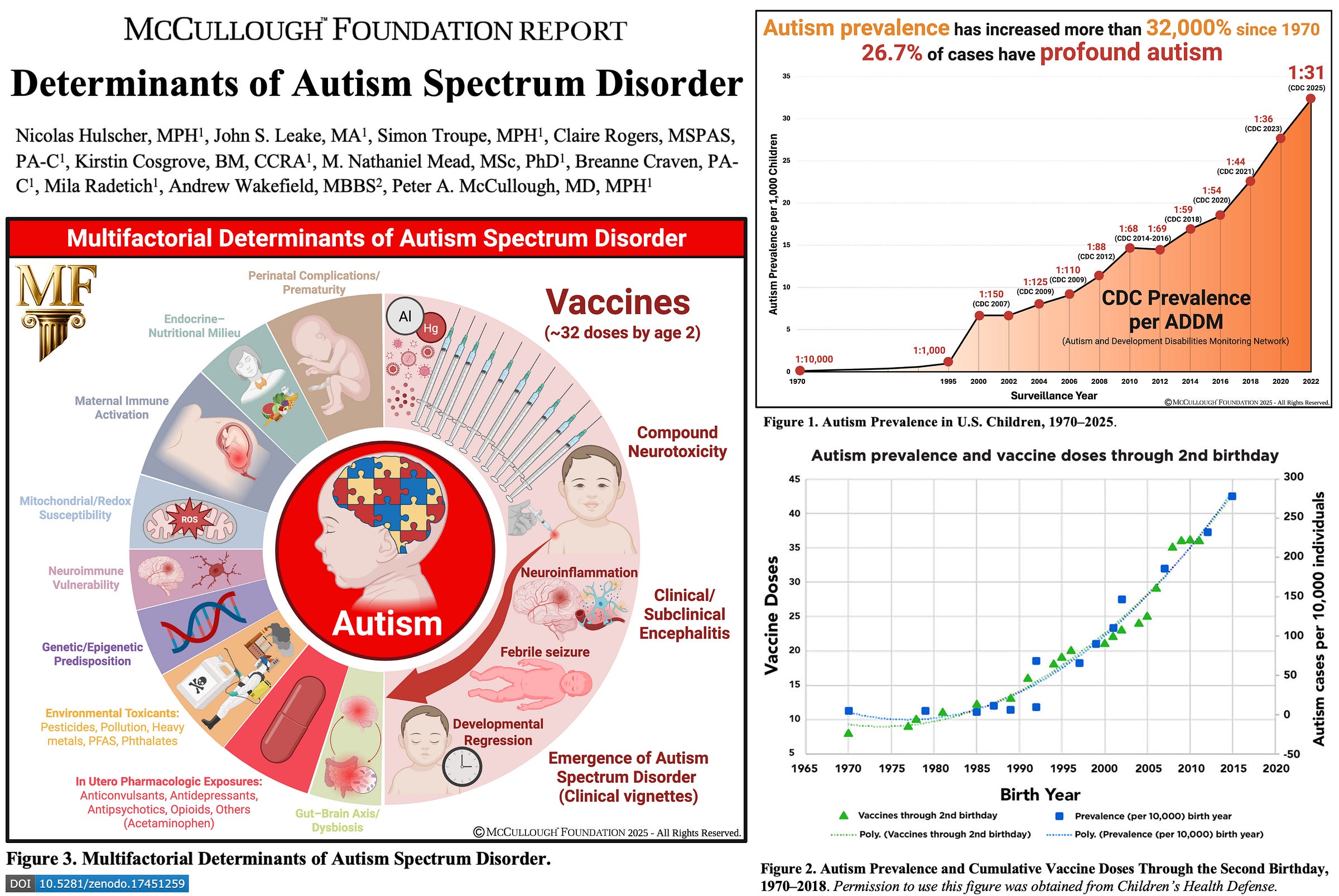
For over two decades, Dr. Andrew Wakefield has been vilified for reporting what countless parents saw with their own eyes — that their healthy children regressed into autism following vaccination.

Now, in our landmark McCullough Foundation report, Determinants of Autism Spectrum Disorder, we bring together over 300 studies confirming that vaccines are the dominant risk factor among all environmental and iatrogenic influences.

BREAKING — Landmark Report Finds Vaccination Is the Dominant Risk Factor for Autism Spectrum Disorder

BREAKING — Landmark Report Finds Vaccination Is the Dominant Risk Factor for Autism Spectrum Disorder

In this exclusive interview, Dr. Wakefield reflects on how he first identified gastrointestinal disease in autistic children, the decades of censorship that followed, and why the truth can no longer be suppressed.

“The parents were right — the doctors were wrong,” Wakefield said. “We scoped the children, we saw the inflammation, and it was something brand new. Had we been allowed to continue, we would have known the full mechanism years ago.”


Academia’s Campaign of Indoctrination Against Wakefield

During the interview, I shared something that shocked even Dr. Wakefield.
When I was completing my Master of Public Health at the University of Michigan School of Public Health, there were entire modules in the curriculum dedicated to ‘debunking’ Dr. Wakefield — not by examining data, but by rehearsing talking points fed by pharmaceutical interests.

Students were instructed to dismiss his work as “discredited” without ever reading the Lancet paper or the clinical evidence it described.

This was not education — it was indoctrination, a form of scientific brainwashing designed to preserve the narrative that “vaccines cannot cause autism,” regardless of mounting evidence to the contrary.

It exposed how deeply the Bio-Pharmaceutical Complex has infiltrated academia — shaping generations of public-health professionals who are rewarded not for independent thought, but for obedience.

They Told Me I’d Never Have a Career. I Told the Truth Anyway.


The Lancet Debacle & the Vaccine Cartel’s Retaliation

As detailed in our report, the controversy began in 1998, when Dr. Wakefield and twelve colleagues published their Lancet case series describing intestinal inflammation and regression following the MMR vaccine. They did not claim proof of causation — only that the evidence warranted further investigation. Yet, after the National Childhood Vaccine Injury Act shielded manufacturers from liability and the Omnibus Autism Proceeding began exposing vaccine-injury claims, powerful interests moved to silence dissent.

In 2004, journalist Brian Deer — working for a Rupert Murdoch–owned paper — launched a coordinated smear campaign accusing Wakefield of fraud, just as thousands of families were petitioning the U.S. vaccine court. Under immense pressure from the pharmaceutical establishment, The Lancet capitulated in 2011, retracting the paper despite no errors in data or methodology.

This moment marked the triumph of censorship over scientific inquiry.


Decades of Progress, Lost to Censorship

Had Wakefield and others been allowed to continue their research, we might have understood and successfully treated autism decades ago.

Promising leads on gut–brain dysfunction, immune dysregulation, and mitochondrial injury were buried under propaganda and professional reprisals. Entire generations of children have since been lost to diagnostic labeling rather than biomedical intervention — while universities, journals, and health agencies doubled down on denial.

The human cost of that censorship is incalculable: millions of families left without answers, and an entire field of autism research set back a quarter-century.

Today, the McCullough Foundation’s comprehensive analysis revives that lost line of inquiry — uniting the epidemiologic, mechanistic, and clinical evidence that vindicates what Wakefield first observed in the 1990s.

[…]

Via https://www.thefocalpoints.com/p/dr-andy-wakefield-vindicated-the

The Great Alzheimer’s Scam and the Proven Cures They’ve Buried for Billions

alzheimers amyloid hypothesis fraud

Analysis by A Midwestern Doctor

Story at-a-glance

  • Alzheimer’s disease is commonly thought to result from abnormal plaque buildup in the brain that gradually destroys brain tissue. Almost all Alzheimer’s research for decades has been directed toward eliminating amyloid, even after the basis for much of this work was shown to stem from fraudulent research
  • The billions spent on amyloid Alzheimer’s research have only produced three drugs, all of which offer minuscule benefits and severe side effects
  • In contrast, affordable and straightforward treatments that reduce dementia or the preceding cognitive impairment have been maligned and buried by the medical industry
  • DMSO for example, has incredible neuroprotective qualities that have spared many stroke and spinal cord injury victims from a life of “incurable” disability. Decades of forgotten research also show it treats cognitive impairment and dementia
  • This article will review the great amyloid scam and the simple therapies for cognitive decline we’re never told about

Medicine is strongly biased towards adopting biochemical models of disease as this facilitates costly therapeutics being developed for each disease and hence sustains the medical industry. Unfortunately, in many cases, the biochemical approach to disease, at best, can manage symptoms, and as a result, many conditions remain “incurable” while non-patentable natural therapies that can cure them languish in obscurity.

That’s why, despite spending an ever increasing amount of money on Alzheimer’s research (e.g., the NIH spent 2.9 billion in 2020 and 3.9 billion in 20241), we’ve still failed to make any real progress on the disease. This is particularly remarkable given the vast costs to the country (e.g., last year Alzheimer’s was estimated to cost the United States 360 billion dollars2) and the even greater social costs that accompany it.

The Amyloid Juggernaut

In 1906, plaques (of amyloid) in the brain were identified as the cause of Alzheimer’s disease. As the years have gone by, the majority of research for treating Alzheimer’s disease has been targeted at eliminating these plaques.

[…]

The consistent failure of the amyloid model to cure Alzheimer’s gradually invited increasing skepticism towards it, which resulted in more and more scientists studying alternative models of the disease. Before long, they found other factors played a far more significant role in causing the disease (e.g., chronic inflammation), and by 2006, this perspective appeared poised to change the direction of Alzheimer’s research.

In response, the amyloid proponents pivoted to defending their failed hypothesis was due not to amyloid clumps, but rather toxic parts of it (oligomers) and a Nature 2006 paper appeared which identified a previously unknown toxic oligomer, Aβ*56, and provided proof that it caused dementia in rats.5

This paper cemented both the amyloid beta and toxic oligomer hypotheses (as it provided the proof many adherents to the theory had been waiting for) and rapidly became one of the most cited works in the field of Alzheimer’s research. Its authors rose to academic stardom, produced further papers validating their initial hypothesis, and billions more were invested by both the NIH and the pharmaceutical industry in research of the amyloid and toxic oligomer hypothesis.

[…]

The Amyloid Scandal

At the end of 2021, a neuroscientist physician was hired by investors to evaluate an experimental Alzheimer’s drug and discovered signs that its data consisted of doctored Western Blots (and therefore erroneous assessments of what oligomers were present within research subjects’ brains).7 As he explored the topic further, he discovered other papers within the Alzheimer’s literature had been flagged for containing doctored Western Blots.

[…]

Before long, the neuroscientist noticed three of those suspect papers had been published by the same author and decided to investigate the author’s other publications. This led him to the seminal 2006 Alzheimer’s publication, which contained clear signs of fraud.9

As investigation then uncovered 20 doctored papers written by the author, 10 of which pertained to Aβ*56 (along with a co-researcher attesting to earlier scientific misconduct by the author).

The Amyloid Industry

One of the remarkable things about this monumental fraud was how little was done about it. For example, the NIH was notified in January 2022, yet in May 2022, beyond nothing being done, the NIH gave the suspect researcher a coveted $764,792 research grant (signed off by another one of the authors of the 2006 paper10).

In July 2022, Science published an article exposing the incident and the clear fraud that had occurred.11 Despite this, the researcher was allowed to remain in his position as a tenured medical school professor.12 It was not until June 2024 that the 2006 article was retracted at the request of the authors13 — all of whom denied being at fault and insisted the doctored images had not affected the article’s conclusions.

Eventually, on January 29, 2025, during his confirmation hearing, RFK cited the paper as an example of the institutional fraud and wasted tax dollars within the NIH, and a few days later, the suspect researcher announced his resignation from the medical school professorship (while still maintaining his innocence).14

This odd behavior (e.g., the medical field continues to insist the proven fraud has not disproven the Amyloid hypothesis) likely results from how much money is at stake — beyond the research dollars, roughly 7 million adults have Alzheimer’s — equating to hundreds of billions in potential (Medicare funded) sales each year.15

The Failed Amyloid Drugs

Recently, a monoclonal antibody that made immune cells target amyloid demonstrated limited success in treating Alzheimer’s — which was embraced as revolutionary by the medical community, the pharmaceutical industry, and drug regulators. In turn, the first new drug received accelerated approval (which the FDA proudly announced).16 The second then received a quiet backdoor approval (due to the immense controversy surrounding the first),17 and the third was partially approved a year and a half later.18

alzheimers new treatment options

Each year, JP Morgan (Chase Bank) hosts a private conference for pharmaceutical investors that sets the tone for the entire industry. In 2023, its focus (covered in detail here) was on the incredible profitability of the new Alzheimer’s drugs and the GLP-1s like Ozempic (which the FDA has also relentlessly promoted). Most remarkably, the (widely viewed as corrupt) FDA commissioner was a keynote speaker, and a few days before the conference, had enacted the second backdoor approval.

However, despite the rosy pictures painted around the drugs (which each attacked different aspects of amyloids), they were highly controversial as:

• The FDA’s independent advisory panel, in a very unusual move, voted 10-0 (with one abstaining) against approving Aduhelm, the first amyloid drug (which targeted amyloid plaques), but the FDA approved it anyways. In a highly unprecedented move, three of the advisors then resigned, calling it “probably the worst drug approval decision in recent U.S. history.”19

• That drug was priced at $56,000 a year — making it sufficient to bankrupt Medicare, (which attracted a Congressional investigation).20

• Brain swelling or brain bleeding was found in 41% of patients enrolled in its studies.21 Additionally, headaches (including migraines and occipital neuralgia), falls, diarrhea, confusion, and delirium were also notably elevated compared to placebo.

• No improvement in Alzheimer’s was noted; rather one analysis found it slowed the progression of Alzheimer’s by 20% (although this could have been a protocol artifact rather than a real effect).

The second monoclonal antibody (which targeted amyloid precursors) had a somewhat better risk benefit profile22 (only 21% experienced brain bleeding and swelling due to reduced targeting of stable amyloid plaques), and 26.4% reduction in the progression of Alzheimer’s was detected in the trial (which for context, translated to a 0.45 reduction on a scale where a reduction of at least 1 to 2 points is needed to create an impact which is in any way meaningful for a patient).

The third monoclonal (which targeted amyloid plaques thought to be more pathologic)23 was also contested as it caused 36.8% of recipients to develop brain bleeding or swelling, like the other amyloid medications, frequently caused headaches and infusion reactions (e.g., nausea, vomiting, changes in blood pressure, hypersensitive reactions or anaphylaxis) and there were reasons to suspect the trial had greatly overstated its minimal benefits.

Remarkably, despite widespread protest against the third drug, the FDA’s new advisory panel voted unanimously in favor of it, even though it had a very similar mechanism, efficacy, and toxicity to the previously unanimously rejected amyloid drug.

It should therefore come as no surprise that, when the British Medical Journal conducted an independent investigation, it found that, within publicly available databases, 9 out of 9 (assessable) members of the advisory committee had significant financial conflicts of interest.24

Fortunately, despite the aggressive promotion of amyloid drugs and the industry’s best attempts to promote the sector, the market somewhat recognized how bad they were. The first drug had its price halved (then was withdrawn as no one wanted it — making around 5 million dollars total),25 while the other two have had very modest sales (e.g., 290 million for the most popular one26).

What Amyloids Drugs Show Us

From this, four things stand out:

• These drugs consistently damage brain tissue, indicating that their mechanism of action was inherently dangerous (e.g., it creates brain swelling by causing immune cells attacking amyloid also to attack brain tissue, or it creates brain bleeding by removing amyloid plaque that patches vessel walls and stabilizes brain tissue). Remarkably, despite this issue being recognized, it has not deterred the usage of these class drugs.

• Removing amyloid offers minimal benefit and may be counterproductive. In fact, one of the only protocols that has had proven success in treating Alzheimer’s instead views amyloid as a protective mechanism the brain uses to prevent further damage.

• An absolutely absurd amount of money and time has been wasted on this endeavor due to the medical field’s need to find a patentable drug.

• The focus on these lucrative drugs has diverted attention from other (off-patent) treatments that are more likely to help Alzheimer’s patients.

For example, a randomized controlled trial which gave MCTs derived from coconut found that over 6 months,27 80% remained stable or improved — which for context, is better than what any of the amyloid drug trials showed, and more importantly, does not cause brain bleeds (and costs a lot less than the annual rough $30,000 cost for those drugs).

[…]

Likewise, very few are aware of a 2022 study that should have revolutionized the entire Alzheimer’s field:28

change in cognitive performance

[…]

DMSO and Dementia

Dimethyl Sulfoxide (DMSO) is a naturally occurring compound that has a variety of unique healing properties that allow it to rescue tissues from dying and revive those damaged from previous injuries — best demonstrated by decades of evidence showing DMSO can heal strokes, brain bleeds, severe concussions, and spinal cord injuries and save patients from a lifetime of paralysis.

lance grindle dmso

[…]

Numerous studies support these experiences:

• When rats had their carotid arteries surgically modified to reduce the blood going to the brain, DMSO prevented both the neuronal damage and the significant loss of spatial memory and learning that otherwise occurred.32

• In a similar study, rats who developed persistent and severe memory impairment from reduced brain blood flow received DMSO and FDP for 7 days, which improved their memory by 54%, nearly reaching the cognitive function rats whose blood flow was never cut off.33,34

• In rats, daily DMSO counteracted memory impairment induced by intracerebroventricular STZ infusions,35 while in a similar study,36 DMSO and Ginkgo biloba improved learning and memory in rats given Alzheimer’s disease.

[…]

These results have also been replicated in humans:

• In 18 patients with probable Alzheimer’s after three months, DMSO greatly improved memory, concentration, and communication, alongside a significant decrease in disorientation in time and space.39

• In 104 elderly adults with dementia due to cerebrovascular diseases, concussions, or Parkinson’s, DMSO combined with amino acids significantly improved their cognition and motor function.40

• In 100 patients with cerebrovascular diseases (many of whom had dementia),41 DMSO caused almost all to have their cardiovascular parameters improve and:

“Recovery from the general symptoms was positive; there were favorable changes which were reflected in a feeling of well being, the recovery of agility, changes of mood from depressed to gay, improvement of sleeping, and clearer speech. As regards the ‘focal’ results, accelerated recovery from hemiplegia and hemiparesia was registered. A speedier recovery of speech in cases of defined or indicated aphasia took place.”

[…]

Via https://articles.mercola.com/sites/articles/archive/2025/10/31/alzheimers-amyloid-hypothesis-fraud.aspx

‘US plan to export its 37T Debt into Bitcoin-Then Crash the Market- restoring its Exorbitant Privilege’

the freeonline

… “The fact of the matter is that the posturing with China is really all about obscuring the US’s economic demise, while also gaining leverage, sabotaging, and undercutting China as much as possible.

This is because the US political class has no answers at all for its own failing economy, and thus must rely exclusively on the strategy of hamstringing its competitors.
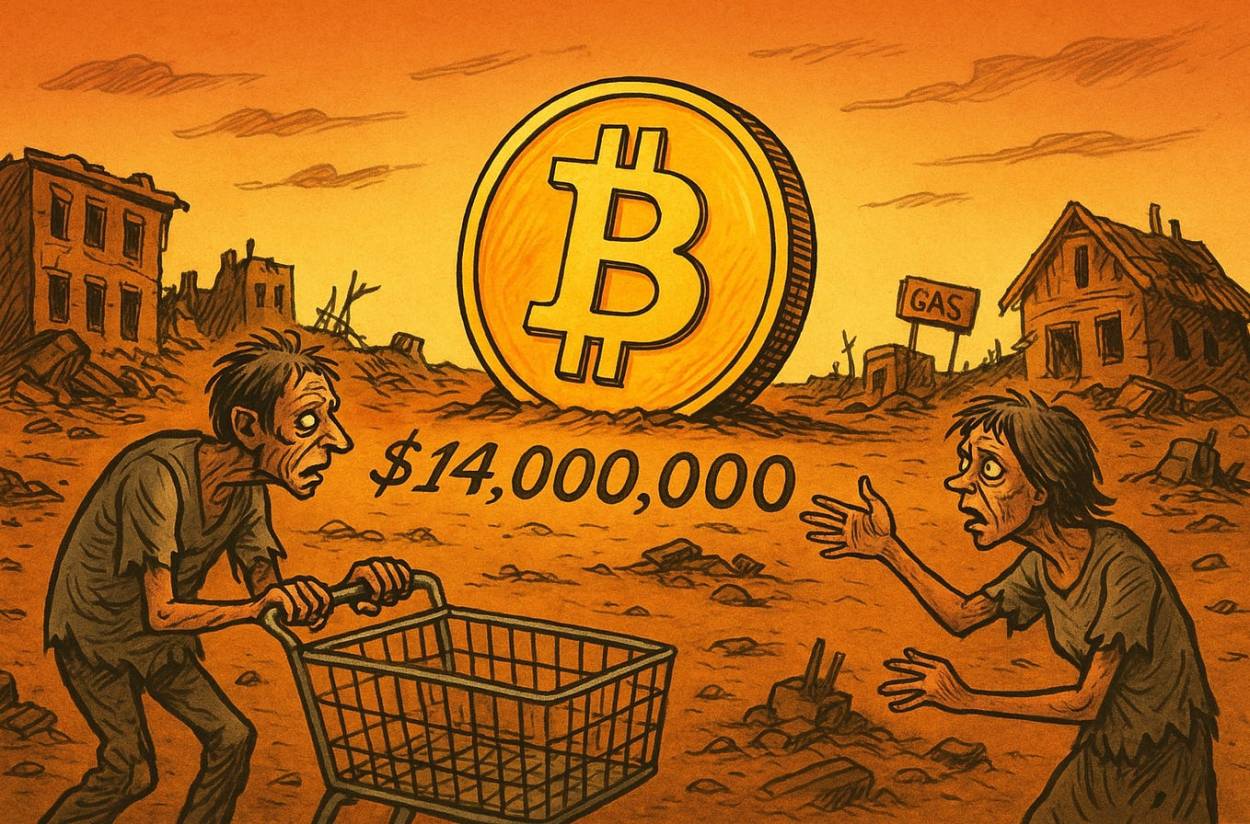
It’s all an act meant to forestall China’s takeover to buy time for the US corporo-political class to figure out a way to reset US’s runaway debt spiral and hyper-financialized Babylonian tower—which many now believe will happen by crypto-izing US debt:

AMERICA WANTS TO HAVE ALL THEIR 37 TRILLION DEBT IN CRYPTO then crash the market, eliminating the debt.

Translation: EXPORT THE DEBT TO OTHER NATIONS

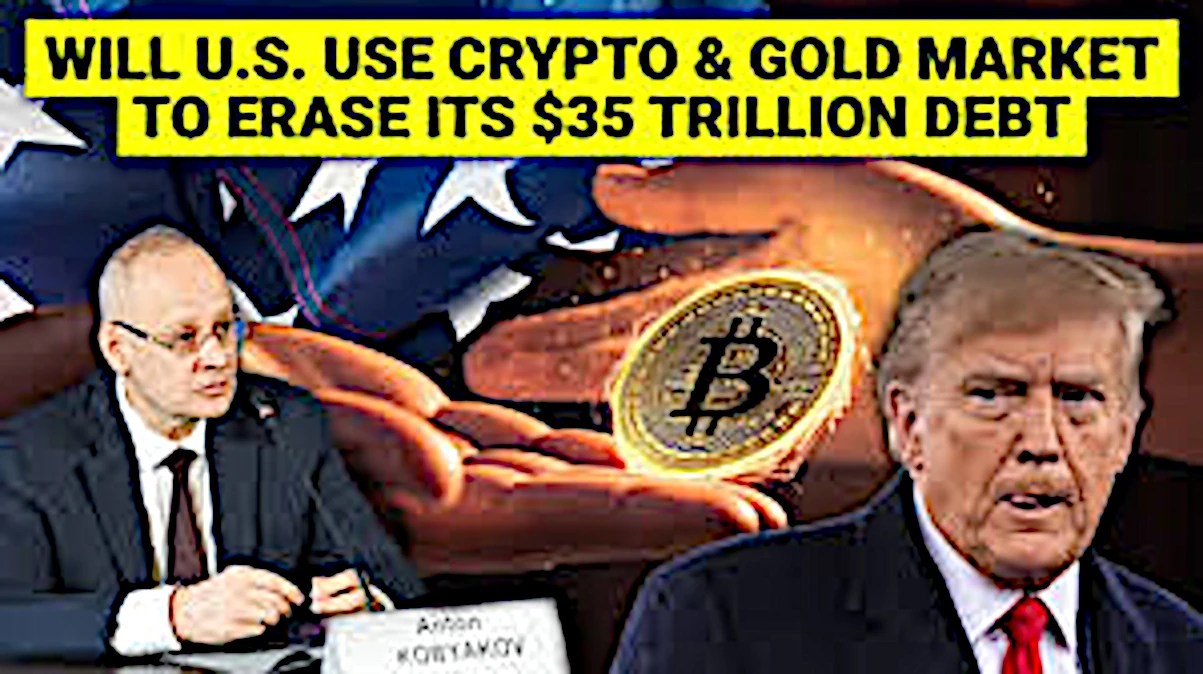
This plan was enumerated in particular at the Eastern Economic Forum by Putin’s special advisor Anton Kobyakov:

U.S. CRYPTO PLOT EXPOSED: Wiping $35 trillion debt on world’s dime

“The US will solve their financial problems at the expense of the whole world, driving everyone into the crypto-currency cloud. Over time, when part of the US state debt will be placed in stablecoins, the US will devalue this debt,” Putin’s advisor Kobyakov revealed.

Putin’s advisor Kobyakov: The U.S. has devised a crypto scheme to erase its massive debt at the world’s expense.

The U.S. is now trying to rewrite the rules of the gold and cryptocurrency markets. Remember the size of their debt—35 trillion dollars. These two sectors (crypto and gold) are essentially alternatives to the traditional global currency system.

Washington’s actions in this area clearly highlight one of its main goals: to urgently address the declining trust in the dollar.

As in the 1930s and the 1970s, the U.S. plans to solve its financial problems at the world’s expense—this time by pushing everyone into the “crypto cloud.” Over time, once part of the U.S. national debt is placed into stablecoins, Washington will devalue that debt.

Put simply: they have a $35 trillion currency debt, they’ll move it into the crypto cloud, devalue it—and start from scratch.

That’s the reality for those who are so enthusiastic about crypto.

🔗 Source (https://forumvostok.ru/programme/press-event-programme/?search#131998)

Everyone is talking about it now, from major MSM publications like, in this case, Reuters:

https://www.reuters.com/markets/stablecoins-might-reboot-us-exorbitant-privilege-2025-09-10/

“To even Larry Fink himself, who made some coincidentally ‘interesting’ statements on crypto recently, just as Peter Thiel hinted that BlackRock might have coopted all Bitcoin:

When a guy managing $13T says owning crypto makes sense because governments will keep killing their currencies… that’s your clue. The system’s insiders are quietly admitting what Bitcoiners knew all along. Watch what they do, not what they preach.

“As stated earlier, at this point the theatrics with China and various tariff seesaws appear more a distraction and desperate time-buying theater.

The US is insolvent and its entire economy is increasingly hinged on nothing more than an empty AI capital washing machine spinning the same inflating ball of lint in circles as the plebs are immiserated beyond the breaking point……..”


[…]

Via https://thefreeonline.com/2025/10/31/us-plan-to-export-its-37t-debt-into-bitcoin-then-crash-the-market-restoring-itsexorbitant-privilege/

Israeli tensions explode as massive anti-draft protest paralyzes Jerusalem

Ultra-Orthodox men attend a rally in Occupied al-Quds against plans to force them to serve in the Israeli military, October 30, 2025. (Photo by AP)

Press TV

Tens of thousands of ultra-Orthodox Jewish settlers have staged a massive protest in Occupied al-Quds against plans to draft them into the Israeli military, declaring they “would rather go to jail.”

Worried about the Israeli regime’s military corrupting their religious traditions, the Haredim, which make up about 14% of the Israeli settlers’ population, took to the streets on Thursday, leading to the regime’s deployment of more than 2,000 troops to confront them.

The protest largely crippled the occupied city, with roads closed and public transportation halted by the massive crowds.

One teenager reportedly died at the protest after falling from a building under construction next to the protest. After several hours, police used water cannons to disperse the protesters who refused to leave the streets.

The demonstrators oppose military service because they believe full-time study in religious seminaries is their highest duty.

Their political representatives pursue a permanent draft exemption as well as increased community budgets. Nevertheless, they have failed to secure the budget that allows full-time religious study with stipends, though temporary funding measures remain.

The mass demonstration exposed sharp rifts within settler society and across its political spectrum regarding the long-standing draft exemption granted to ultra-Orthodox Jews, a policy dating back to the regime’s fabrication in 1948.

In August, ultra-Orthodox Jewish leaders and media declared a “War for God” against the Israeli military’s enforcement of draft orders for Haredi men, highlighting the deepening divisions within settler society amid the ongoing war on Gaza.

It took place amid intense pressure on Israeli prime minister Benjamin Netanyahu, whose fragile regime is supported by ultra-Orthodox parties.

The parties withdrew from Netanyahu’s coalition over the summer over his failure to strike a balance between the ultra-Orthodox settlers and the secular Jewish faction demanding that the ultra-Orthodox be drafted into the Israeli military.

Nevertheless, they continue to occasionally align with Netanyahu, driven by their political vulnerability and the need to preserve their coalition’s stability.

The issue has become a major point of contention, especially since the Israeli regime began its genocidal war on Gaza.

The war has reportedly resulted in the deaths of around 900 Israeli soldiers and forced troops to deploy for extended periods during repeated military raids, driven by the intensity of the regime’s assaults on Palestinians.

The Israeli military is now facing an urgent shortage of personnel, with its soldiers fatigued and depleted.

The protest was triggered by the decision to bring the draft legislation for discussion in a Knesset committee next week. This is the first step before the bill can be brought to the general Knesset for a vote.

The exemption was initially granted to small numbers of gifted scholars but has expanded over decades under pressure from powerful political lobbies.

In 2017, the regime declared the exemptions illegal, but has so far failed to include the ultra-Orthodox population in the conscription list.

Elections are currently scheduled for next November, but Netanyahu could likely be forced to call early elections in the next few months.

[…]

Via https://www.presstv.ir/Detail/2025/10/30/757892/Ultra-Orthodox-settlers-take-Al-Quds-streets-conscription

Automakers bracing for chip crisis that could roil production

Honda Motor Co. has reportedly paused production in Celaya, Mexico, where it can make up to 200,000 vehicles each year.

The global automotive industry is getting ready for potential production cuts and factory shutdowns as it grapples with an ongoing shortage of critical semiconductor chips. At least one has already started pulling back.

Honda Motor Co., Ltd. was the first company to begin reducing or suspending production across its plants in North America. That will continue into next week, according to a company spokesperson.

Production at a Canadian plant that assembles Civic sedans and CR-V SUVs has been slowed, according to a union that represents workers at a supplier to the plant. And the Yomiuri Shimbun, a Japanese newspaper, reports that Honda’s plant in Mexico, which manufactures the HR-V SUV, has been temporarily closed.

The chip crisis plaguing the automotive industry began in September, when the Netherlands took control of Nexperia, a key automotive microchip maker owned by China’s Wingtech Technology. In response, the Chinese Ministry of Commerce blocked exports of some Nexperia products. About 80% of Nexperia’s total end-product capacity is in mainland China.

Nexperia accounts for about 5% of the global automotive silicon discrete market, according to S&P Global Mobility. It mainly sells standard parts that aren’t technologically advanced but are widely used, with hundreds of chips often needed per vehicle.

“I think it’s more than 2,000 small different chips,” said Arno Antlitz, Volkswagen AG’s chief financial officer and chief operating officer, on a call with investors Thursday, according to a FactSet transcript. “And so it makes it also difficult to find alternative solutions because we are not talking about three or five or seven different units, more like thousands.”

The European Automobile Manufacturers’ Association, which represents companies such as Volkswagen and Mercedes-Benz Group, said assembly-line shortages “might only be days away” as existing supplies dry up.

Volkswagen has enough supply to last at least through next week, according to Antlitz. While Mercedes is “covered” in the short term, it’s also “scurrying” around looking for new suppliers, according to its chief executive. A spokesperson for BMW Group said production has been unchanged at its facilities.

“Every day we are pushing actions and projects” back to avoid disruption to production, Stellantis NV Chief Executive Antonio Filosa said on Thursday, adding that the Jeep maker has set up a “war room” to address potential shortages.

Jim Farley, whose Ford Motor Co. has increased purchases from other suppliers in recent weeks, has said that a “very quick breakthrough” is necessary to avoid losses for the entire industry. General Motors Co. has said it is also working to avoid disruptions.

Nissan Motor Co., Ltd on Thursday said it expects a $1.78 billion operating loss in its current fiscal year, partially due to supply chain-related risks. Still, the automaker has said it has enough chips to last until next week without adjusting production.

Meanwhile, the CEO of fellow Japanese automaker Toyota Motor Corp. isn’t very concerned. “I do think there’s some risk, but it’s not like we’re facing shortages tomorrow,” CEO Koji Sato told reporters at the Japan Mobility Show in Tokyo on Wednesday, according to Reuters.

[…]

Via https://www.marketwatch.com/story/automakers-are-bracing-for-a-chip-crisis-that-could-roil-production-47608edd