Israel’s getting pummelled, banning info on its defeats — former US officer
💬 “They [Israel] are getting absolutely pummelled. I think [Netanyahu is] on a plane 90% of the time… He’s flying around the Mediterranean. He’s staying out of the fray as best he can, because he knows that he is the number one target,” retired US colonel Lawrence Wilkerson says.
Iran manages to damage Israeli cities, he adds, noting that fewer and fewer of the IDF interceptors are being used to stop the Iranian missiles, but Israel imposes tight censorship to hide it.
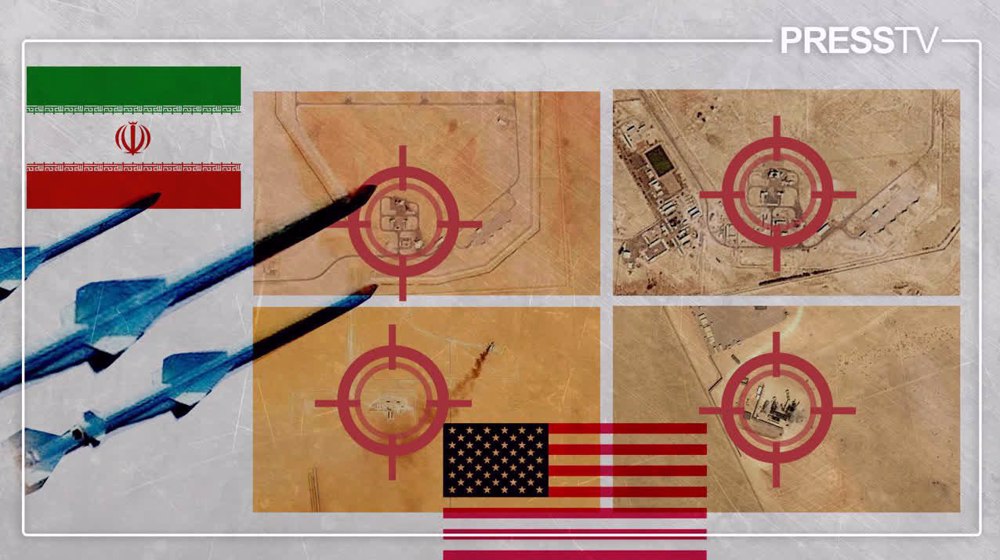
In the first week of the US-Israeli aggression on Iran, the Islamic Revolution Guards Corps (IRGC) conducted a series of precision strikes that systematically degraded the much-hyped US integrated air and missile defense architecture across the region.
The strikes destroyed or severely damaged at least two AN/TPY-2 THAAD radars, a billion-dollar early-warning radar installation in Qatar, multiple supporting sensor nodes, and critical communications infrastructure.
Executed in a coordinated sequence of precision engagements, Iranian retaliatory operations under the banner ‘True Promise 4’ have significantly disrupted the regional defensive network and forced US commanders to urgently reassess and reconstitute capabilities that took two decades and tens of billions of dollars to deploy.
The scale and sophistication of the Iranian operation mark a significant moment in contemporary warfare, demonstrating that even highly advanced missile defense systems, often presented as near-impenetrable shields, remain vulnerable to determined adversaries equipped with precision guidance, reliable intelligence, and an operational doctrine focused on disabling the core command, sensor, and communications nodes of defensive networks.
As commercial satellite imagery continues to emerge from across the region, the extent of the damage is becoming increasingly difficult to conceal, revealing substantial operational setbacks that raise serious questions about the resilience of the defensive architecture underpinning American force posture from the Persian Gulf to the Korean Peninsula.
The targeting doctrine evident in the strikes reflects years of detailed analysis and planning, with Iranian strategists identifying critical nodes and developing the capability to strike them simultaneously across a wide geographic area.
The coordinated targeting of early-warning radars, fire-control radars, communications infrastructure, and supporting facilities demonstrates a systemic approach to warfare rarely executed at such scale, focusing on neutralizing the command-and-control backbone of the defensive network rather than peripheral elements.
[…]
Muwaffaq Salti Air Base in Jordan
Heart of the beast: Understanding AN/TPY-2 radar’s critical role
The AN/TPY-2 transportable radar represents the technological centerpiece of the Terminal High Altitude Area Defense (THAAD) system. This massive X-band active electronically scanned array (AESA) radar consumes roughly two megawatts of power and is distributed across five forty-foot trailers.
With an antenna area of 9.2 square meters and an instrumental range exceeding 2,000 kilometers in forward-based mode, the radar functions as the primary sensor of the entire THAAD battery. Without it, the launchers and their 48 interceptors are effectively rendered inoperative, deprived of the detection and tracking data required for engagement.
Manufactured by Raytheon using gallium nitride technology, each AN/TPY-2 radar carries an estimated cost ranging from $500 million to $1 billion. Since development began in the 1990s, only about twenty units have been produced worldwide.
[…]
Jordan: The first thousand-kilometer precision strike
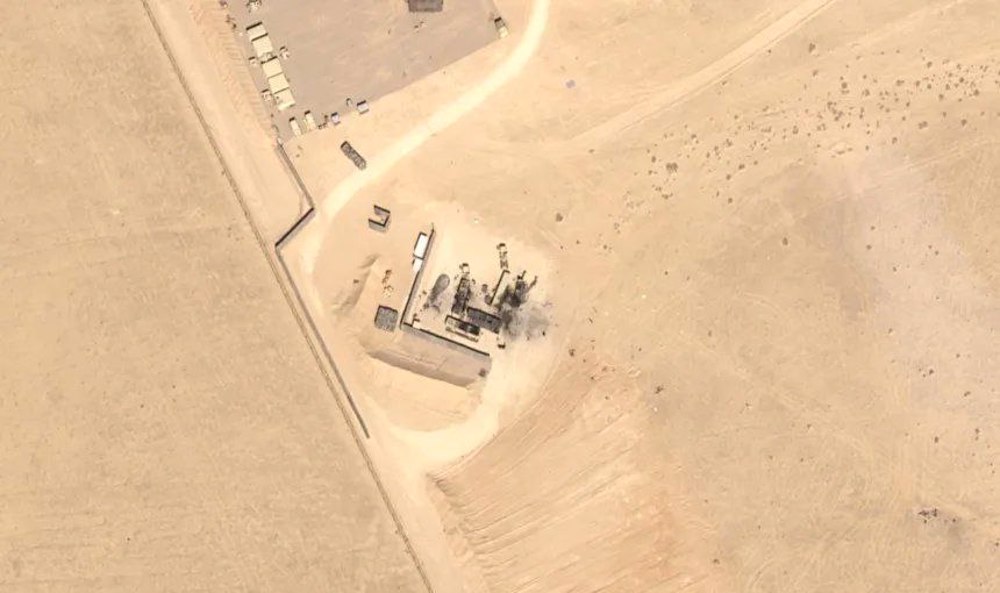
At Muwaffaq Salti Air Base in Jordan, located more than 800 kilometers from the nearest Iranian territory, satellite imagery captured on March 2 reveals the charred remains of an AN/TPY-2 radar that had reportedly been deployed at the base since at least mid-February.
The imagery shows debris scattered across the deployment site, surrounding what appears to have been a fully assembled radar system. Two large impact craters, each roughly thirteen feet in diameter, are visible in the sand nearby, suggesting that multiple precision munitions were employed to ensure the destruction of the system.
Prior to the escalation of hostilities, the base had served as a major hub for American air operations, with more than fifty fighter aircraft visible on the tarmac in pre-war satellite imagery.
The deployment of a THAAD battery at the site fulfilled two key operational objectives: protecting the concentration of air assets from potential ballistic missile threats and extending a defensive coverage umbrella toward Israeli territory.
[…]
THAAD base near Al Ruwais in UAE
United Arab Emirates: Systematic elimination of terminal defenses
The Al Ruwais facility in the United Arab Emirates, positioned to protect critical energy infrastructure along the Persian Gulf coast, suffered near-simultaneous strikes against both its THAAD radar and the supporting infrastructure that housed the system.
Satellite imagery from March 1, the second day of the war that was imposed on Iran, shows dark markings from apparent strikes on three buildings, including a pull-through vehicle shed specifically designed to shelter the radar system.
The pattern of damage suggests Iranian planners understood not only where the radar would be positioned when active but also where it would be maintained and stored.
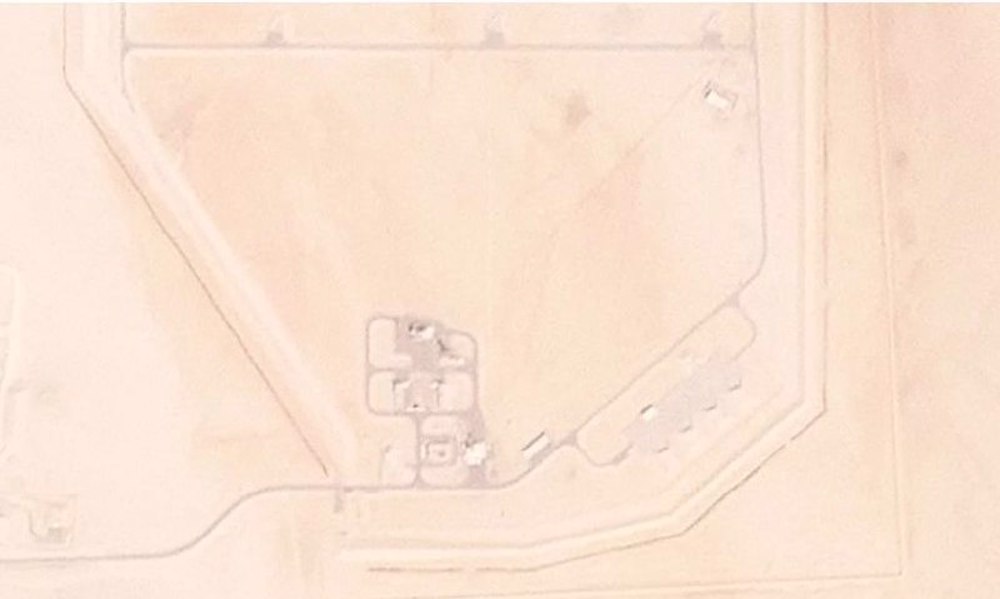
At a second UAE installation near Al Sader, satellite imagery reveals an almost identical strike pattern with four buildings damaged, including multiple vehicle sheds configured for radar storage.
[…]
Commercial imagery providers captured before and after images that leave little doubt about the severity of the damage, with burned equipment visible at the precise locations where radar components had been regularly observed.
Qatar: Billion-dollar early warning backbone destroyed
The destruction of the AN/FPS-132 Block 5 Upgraded Early Warning Radar at Umm Dahal in Qatar represents perhaps the single most expensive individual loss of the campaign, with that system alone costing approximately one point one billion dollars when installed in 2013.
[…]
The Qatari Ministry of Defence’s rare public confirmation of the radar’s destruction carries strategic significance beyond the military impact, as host-nation acknowledgment forecloses any possibility of concealing the loss and signals to regional allies that American assurances of protective capability may no longer carry their former weight.
[…]
Al Sader in UAE
Saudi Arabia: Smoke rising from Prince Sultan Air Base
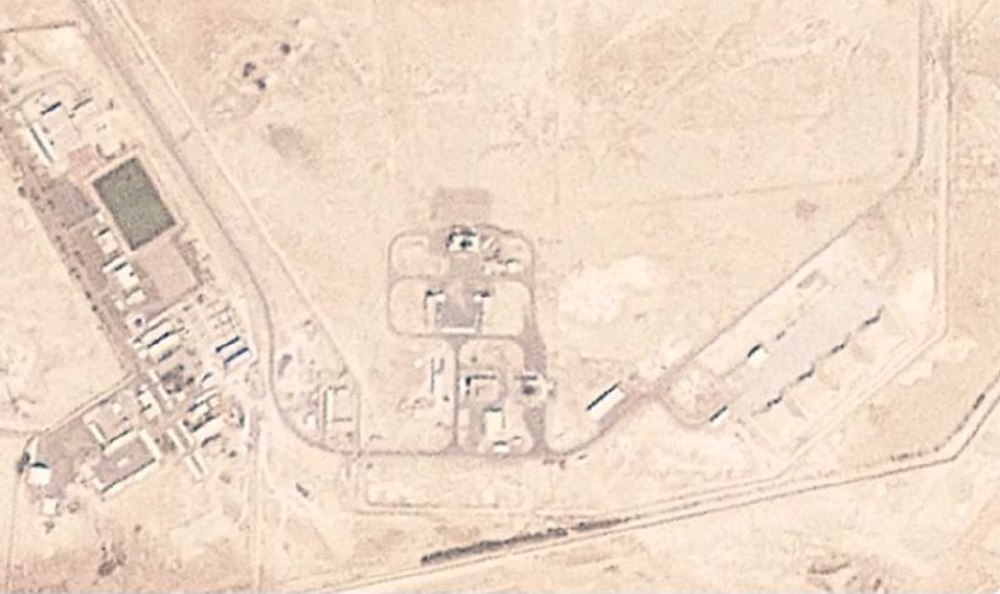
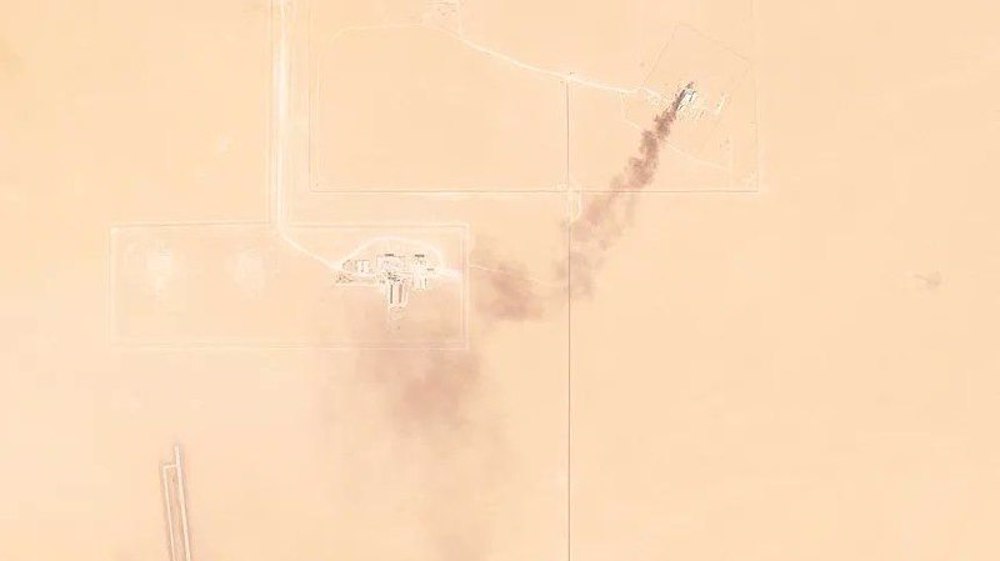
At a site near Prince Sultan Air Base in Al Kharj, Saudi Arabia, satellite imagery captured on March 1 shows smoke rising from a compound where a THAAD radar had been previously positioned, with a tent used to shelter the antenna unit showing extensive charring and debris scattered across the surrounding area.
Imagery from January had shown the radar antenna pointed northeast toward Iran in its operational configuration, suggesting the site was fully functional when struck.
[…]
Kuwait: Communications infrastructure and radar domes destroyed
The strikes extended beyond the core missile defense sensors to target the communications infrastructure that enables these systems to function as an integrated network.
At Arifjan base in Kuwait, satellite imagery confirms the destruction of three radomes, the protective spherical structures housing satellite communications antennas that provide the data links connecting distributed sensors to command nodes.
Eight additional buildings related to satellite communications infrastructure were destroyed at separate locations in Kuwait, representing a systematic effort to attack the network backbone.
The AN/GSC-52B radars destroyed in Bahrain represent another category of communications and surveillance assets, providing both satellite communications connectivity and contributing to the space surveillance network.
[…]
Prince Sultan Air Base in Saudi Arabia
Strategic calculus: Twenty years of investment destroyed in seven days
The development of the THAAD system began in 1992, with the US Army finally fielding the first operational batteries in April 2012. The journey from initial concept to deployable capability required approximately twenty years and tens of billions of dollars.
[…]
Each unit requires years to manufacture, and the destruction of multiple units simultaneously creates a capability gap that cannot be quickly filled.
The financial losses are staggering. Individual AN/TPY-2 radars cost between five hundred million and one billion dollars. The AN/FPS-132 early warning radar cost approximately one point one billion dollars.
The AN/GSC-52B radars, the radomes, the communications buildings, and support infrastructure add hundreds of millions more.
[…]
Tactical paralysis: The loss means for current operations
The immediate tactical consequence is the effective paralysis of multiple THAAD batteries that now sit blind on their launch positions. Without the AN/TPY-2 radar providing tracking data and fire control solutions, the launchers and their forty-eight interceptors per battery cannot engage incoming threats.
The interceptors themselves, each costing approximately thirteen million dollars, cannot be employed without the radar’s guidance.
[…]
Aegis warships must now rely solely on their own SPY radar systems. The integrated battle management system now resembles disconnected nodes fighting local engagements without a common operating picture.
The psychological impact cannot be overstated. Soldiers assured that the most advanced missile defense systems would protect them, but now find their protective shield penetrated repeatedly.
The sight of satellite imagery showing the blackened remains of billion-dollar systems creates a perception of vulnerability that no amount of official reassurance can counter.
Global implications: South Korea, Guam, and the strategic reserve dilemma
The destruction of multiple THAAD systems in West Asia has immediate implications for American force posture worldwide, particularly in the Indo-Pacific, where North Korea’s advancing missile program has long justified THAAD deployment.
Reports that Washington is considering relocating THAAD and Patriot systems from South Korea to West Asia reflect the severity of the capability gap.
The THAAD battery in Seongju, South Korea, represents not merely a defensive asset but a political commitment that has survived years of diplomatic tension with China.
Removing it would signal a shift in American priorities, potentially encouraging North Korea to react. Guam, home to another THAAD battery protecting critical American bases, would face similar exposure if its systems were stripped.
The interceptor stockpile faces equally severe pressure. The expenditure of approximately thirty percent of the total THAAD interceptor inventory in a twelve-day aggression in June 2025 demonstrated how quickly these scarce resources can be consumed.
With production capacity limited to approximately eleven to twelve interceptors annually, reconstituting inventory will require years.
Technology question: What Iranian precision reveals about US vulnerabilities
The successful destruction of hardened, defended targets across distances exceeding 800 kilometers reveals Iranian technological capabilities that many Western analysts had previously dismissed.
The terminal guidance required to place a warhead within meters of a specific radar antenna reflects maturation in seeker technology and potentially man-in-the-loop targeting.
The strikes also reveal sophisticated intelligence collection operating for years beneath the threshold of detection, building detailed targeting folders on facilities across multiple countries.
The symmetry between strikes in different countries suggests a targeting process that understood standardized American configurations.
The electronic warfare dimension likely played a critical role in enabling strikes to penetrate defended airspace.
The fact that no Iranian missiles or drones were intercepted before reaching targets across four countries suggests either that defenses were neutralized electronically or that the volume and coordination overwhelmed engagement capabilities.
Production constraints: Why replacement takes years, not weeks
The industrial base that produces AN/TPY-2 radars operates on peacetime assumptions, with production lines sized to meet gradual replacement requirements rather than the surge demands of major conflict.
The supply chain for specialized components extends across multiple states and countries, with some materials sourced from single suppliers operating at limited capacity.
Even with emergency funding, the time required to produce a single AN/TPY-2 radar cannot be compressed below physical limits.
The most optimistic assessments place replacement timelines in the range of three to five years for a single unit.
The radars destroyed in the first week of March 2026 will not return to the operational inventory until late in the decade at the earliest.
Regional power shift: The new strategic reality
The destruction of America’s premier missile defense assets across four countries fundamentally alters the strategic calculus in West Asia, shifting the initiative decisively toward Tehran.
Iranian military planners who previously had to calculate interception probabilities now face a dramatically reduced defensive threat, enabling expanded targeting options with reduced risk.
Persian Gulf Cooperation Council states that have invested billions in American missile defense now face uncomfortable questions about the wisdom of those investments.
If billion-dollar radars can be destroyed by missiles costing a fraction of that amount, the entire foundation of the Persian Gulf defense relationship requires reexamination.
For the Israeli regime, which has integrated its Arrow and David’s Sling systems with American sensors, the loss of THAAD coverage in Jordan represents a direct blow.
The anti-missile umbrella that previously extended from the Persian Gulf to the Mediterranean now has a gap in its center.
Fiasco verdict: Why two lost radars mean total system failure
Military analysts have begun using language rarely applied to American systems, with experts noting that the loss of a single AN/TPY-2 radar represents an event of significant operational importance while the loss of two constitutes a total fiasco.
The gap between what THAAD was supposed to accomplish and what it achieved against Iranian precision strikes could hardly be wider.
Donald Trump has stressed that any deal with Iran must result in the country’s “unconditional surrender”, setting maximalist war objectives for the United States.
The US president’s remarks on his Truth Social platform on Friday appear to reject the prospect of a compromise amid Iranian confirmation of diplomatic mediation to end the conflict.
“There will be no deal with Iran except UNCONDITIONAL SURRENDER!” Trump wrote.
“After that, and the selection of a GREAT & ACCEPTABLE Leader(s), we, and many of our wonderful and very brave allies and partners, will work tirelessly to bring Iran back from the brink of destruction, making it economically bigger, better, and stronger than ever before.”
Iranian President Masoud Pezeshkian had said earlier that some countries are engaging in mediation efforts to end the war, emphasising that Iran is committed to peace in the region but prepared to defend itself.
“Mediation should address those who underestimated the Iranian people and ignited this conflict,” Pezeshkian said in a social media statement.
The conflict has spread across the Middle East, igniting Iranian attacks across the Gulf and a war between Hezbollah and Israel, resulting in a mass displacement crisis in Lebanon.
Iran has been launching missiles and drones at Israel and US interests and assets across the region. Iranian forces have also targeted energy and civilian infrastructure in Gulf countries, straining ties with the Arab world.
The violence, which saw Iran largely succeed in closing down the Strait of Hormuz, has sent oil prices soaring globally.
Iranian officials have expressed defiance since the start of the war, stressing that they are ready for a long conflict and prepared to fend off a US ground invasion should it occur.
Iran’s Foreign Minister Abbas Araghchi said in a message to Trump on Thursday that the US plan for a “clean rapid military victory failed”.
“Your Plan B will be even bigger failure,” Araghchi wrote on X.
On Friday, Iran’s top diplomat posted a photo of the coffins of a mother and child, the apparent victims of US-Israeli attacks. “Our Brave and Powerful Armed Forces will avenge each and every Iranian mother, father, and child who has been targeted by hostile forces,” Araghchi wrote.
The war has killed at least 1,332 people in Iran, among them 181 children, according to UNICEF.
The deadliest incident was a strike on a girls’ primary school in the southern city of Minab on the opening day of the conflict, which Iranian authorities said killed about 180 pupils and staff.
The Trump administration has pushed to project confidence and dominance over Iran, with top officials saying that the US would “rain missiles”, “death and destruction” on the country.
In recent days, Trump has repeatedly said that he would like to replicate the Venezuela playbook in Iran – keeping the governing system in place but installing a leader who is friendly to US interests.
White House press secretary Karoline Leavitt said on Friday that when Trump determines Iran “no longer poses a threat to the United States” and the goals of Operation Epic Fury have been met, Iran will effectively be in a state of “unconditional surrender”.
Leavitt said the US expects the war to go on for approximately four to six more weeks.
On Wednesday, Trump said he has to be “involved” in choosing the successor of Supreme Leader Ayatollah Ali Khamenei, who was assassinated in a US-Israeli attack on Saturday.
Trump told CNN later on Thursday that the situation in Iran is going to work “easily” like it did in Venezuela when Delcy Rodriguez replaced President Nicolas Maduro after he was abducted by US forces in January.
Leavitt confirmed the US’s intelligence agencies and government are considering a “number” of possible replacements for the late Ayatollah Ali Khamenei but declined to provide details.
Rodriguez, who previously served as Maduro’s vice president, has allowed Washington to sell Venezuela’s oil and cut off petroleum supplies to Cuba under the threat of further US strikes.
Trump said he does not mind of the next leader of Iran is a religious figure.
“I’m saying there has to be a leader that’s going be fair and just. Do a great job. Treat the United States and Israel well, and treat the other countries in the Middle East — they’re all our partners,” he told CNN.
The supreme leader of Iran must be a Shia Muslim religious scholar.
Khamenei’s successor will be selected by an elected council of 88 members known as the Assembly of Experts.
Donald Trump made a bold and provably wrong claim yesterday about the US air-defense missile inventory:
The United States Munitions Stockpiles have, at the medium and upper medium grade, never been higher or better — was stated to me today we have a virtually unlimited supply of these weapons. Wars can be ‘forever,’ and very successfully, using just these supplies (which are better than other countries’ finest arms!). At highest end we have good supply but not where we want to be. Much additional high-grade weaponry is stored for us in outlying countries.
I will now show you conclusively that Trump is gaslighting the public, at least with respect to the PAC-3 MSE missiles. The PAC-3 MSE (Patriot Advanced Capability-3 Missile Segment Enhancement) is effectively the primary missile used in the modern Patriot system for most high-priority threats, particularly in current U.S. Army and allied operations as of 2026. The PAC-3 MSE ( Missile Segment Enhancement) began low-rate initial production (LRIP) in 2014, with deliveries starting in 2015 and full-rate production approved in 2018.
Starting in 2015 and continuing through 2020, the US produced between 100 — 300 a year. Let’s use the higher figure… That is 1,800 PAC-3 MSE. In the succeeding four year period, the US produced an estimated 2,200 PAC-3 MSEs (i.e., 500+ per year). In 2025 the US boosted production to 620. Total PAC-3 MSEs produced since 2015 is 4,620.
When the PAC-3 MSE is employed against an incoming threat, a minimum of two are fired. Keep that figure in mind. So how many have we sent Ukraine? According to open source documents, including DOD/DOW budget figures, the the US has transferred 847 PAC-3 MSE missiles to Ukraine. Assuming that the US and Israel have NOT fired any PAC-3 MSE missiles in 2025 and 2026, the US only has 3,773 in its inventory. We know that is ridiculous, but play along with me.
During the 12-day war Iran fired at least 600 ballistic missiles into Israel. In theory, the Patriot system is designed to work against ballistic missiles while Israel’s Iron Dome is designed to defeat short-range counter-rocket, artillery, and mortar (C-RAM) defense, plus capabilities against drones, cruise missiles, precision-guided munitions (PGMs), and some ballistic threats in certain configurations. So let’s assume that the Patriot was fired at 500 of the Iranian missiles — i.e., at least 1,000 PAC-3 MSE missiles were fired. That shrinks the US inventory to 2,773.
In just four days since the start of Epic Fury, Iran has fired an estimated 200 missiles at sites in the Gulf nations and Israel that have Patriot batteries. Conceivably, that means that another 400 PAC-3 MSE missiles have been launched, which shrinks the inventory to 2,373. If Iran fires 60 ballistic missiles per day, and the Patriot system uses 2 interceptors per incoming missile (a common conservative engagement doctrine for high-confidence intercepts against ballistic threats), the inventory would be exhausted after 19 full days, with enough left on the 20th day to handle roughly 46–47 Iranian missiles before depletion (about 19.775 days total, or roughly 19 days and 18–19 hours of sustained operations at this rate). In other words, the US PAC-3 MSE missiles will be exhausted on March 23, 2026.
Note that I am assuming that the entire inventory of US Patriot missiles have been deployed to Israel and US bases in the region. That is a false assumption because there are Patriot missile batteries with a full complement of missiles in other theaters. At present there are three Patriot battalions permanently assigned/forward-deployed to INDOPACOM (e.g., in South Korea/Japan/Guam areas, like 35th ADA Brigade and 1-1 ADA at Kadena); EUCOM has one Patriot battalion assigned (e.g., units in Germany like Baumholder/Ansbach areas, supporting NATO/Eastern flank).
The US Army has 15 Patriot battalions total (14 fully available as of mid-2025, with one in modernization), each typically consisting of 4–6 batteries (a battery is the firing unit with launchers/radars). A Patriot battery (also called a fire unit) typically includes 6–8 launchers (Launching Stations), though configurations vary by operator, mission, and launcher type (e.g., M903 for modern U.S. systems). If we assume that the four Patriot battalions have four batteries each, with 72 missiles per battery, we get a total of 1,152 missiles that must be subtracted from the maximum possible number deployed to the Middle East — i.e., the actual inventory, using the most conservative estimate, is 1,221. That means the US inventory of PAC-3 MSE missiles, using the assumptions above that Iran is firing 60 ballistic missiles per day, the supply of missiles will run out in 10 days. This is why I assert that Donald Trump is out of touch with reality.
The Justice Department has published additional Epstein files related to allegations that President Trump sexually abused a minor after an NPR investigation found dozens of pages were withheld.
They include 16 new pages that cover three additional FBI interview summaries with a woman who accused Trump of sexual abuse decades ago when she was a minor. Also included are two pages of an intake form documenting the initial call to the FBI from a friend who relayed the claims.
Now that these documents are published, there are still 37 pages of records missing from the public database, including notes from the interviews, a law enforcement report and license records.
The Justice Department has repeatedly told NPR that any documents withheld were “privileged, are duplicates or relate to an ongoing federal investigation.”
Last week, after NPR’s initial story, the Justice Department said it was determining if records had been mistakenly tagged as duplicates and if any were found, “the Department will of course publish it, consistent with the law.”
More detail, but less context
The interview documents are part of more than 1,000 new pages published to the Epstein files public database Thursday that also include what appears to be the complete case file from the investigation into Jeffrey Epstein and Ghislaine Maxwell initiated in 2006.
The new documents go into more detail about the allegations made against both Trump and Epstein when the woman was between 13 to 15 years old.
An FBI email summarizing the claims and a Justice Department PowerPoint slide deck note the woman claimed that around 1983, when she was around 13 years old, Epstein introduced her to Trump, “who subsequently forced her head down to his exposed penis which she subsequently bit. In response, Trump punched her in the head and kicked her out.”
In the newly-published documents, the woman’s described how Trump allegedly put her head “down to his penis” and she “bit the s*** out of it.” She alleged that Trump struck her and said something to the effect of “get this little b**** the hell out of here.”
During the final interview the woman had with the FBI in 2019, when asked whether she “felt comfortable detailing her contacts with Trump,” she reportedly asked “what the point would be of providing the information at this point in her life when there was a strong possibility nothing could be done about it.”
The new files do not shed any more light on how credible federal investigators viewed her claims or how they were resolved. Still unanswered, too, is why the allegations were included in a Justice Department slide presentation last year summarizing the cases against Epstein and his accomplice Ghislaine Maxwell.
Trump has repeatedly denied any wrongdoing related to Epstein. The White House and Justice Department have warned that the raw files released to the public include “untrue and sensationalist claims.”
White House Press Secretary Karoline Leavitt said in a statement to NPR Friday that Trump has been “totally exonerated by the release of the Epstein files.”
“These are completely baseless accusations, backed by zero credible evidence, from a sadly disturbed woman who has an extensive criminal history,” Leavitt wrote. “The total baselessness of these accusations is also supported by the obvious fact that Joe Biden’s department of justice knew about them for four years and did nothing with them — because they knew President Trump did absolutely nothing wrong. As we have said countless times, President Trump has been totally exonerated by the release of the Epstein Files.”
The White House also noted a Justice Department statement posted Thursday on X that said there were 15 documents it discovered were “incorrectly coded as duplicative” and there were five prosecution memos that the Southern District of Florida determined could be published while protecting privileged materials.
Democrats and Republicans on the House Oversight Committee have demanded answers from the Justice Department regarding the missing files and the department’s handling of the release of Epstein documents. This week, the committee voted to subpoena Attorney General Pam Bondi to answer questions about the files.
An extensive investigation based on declassified government documents and previously suppressed scientific research has uncovered compelling evidence that U.S. biological weapons programs contributed to the emergence of Lyme disease, which now affects hundreds of thousands of Americans annually.
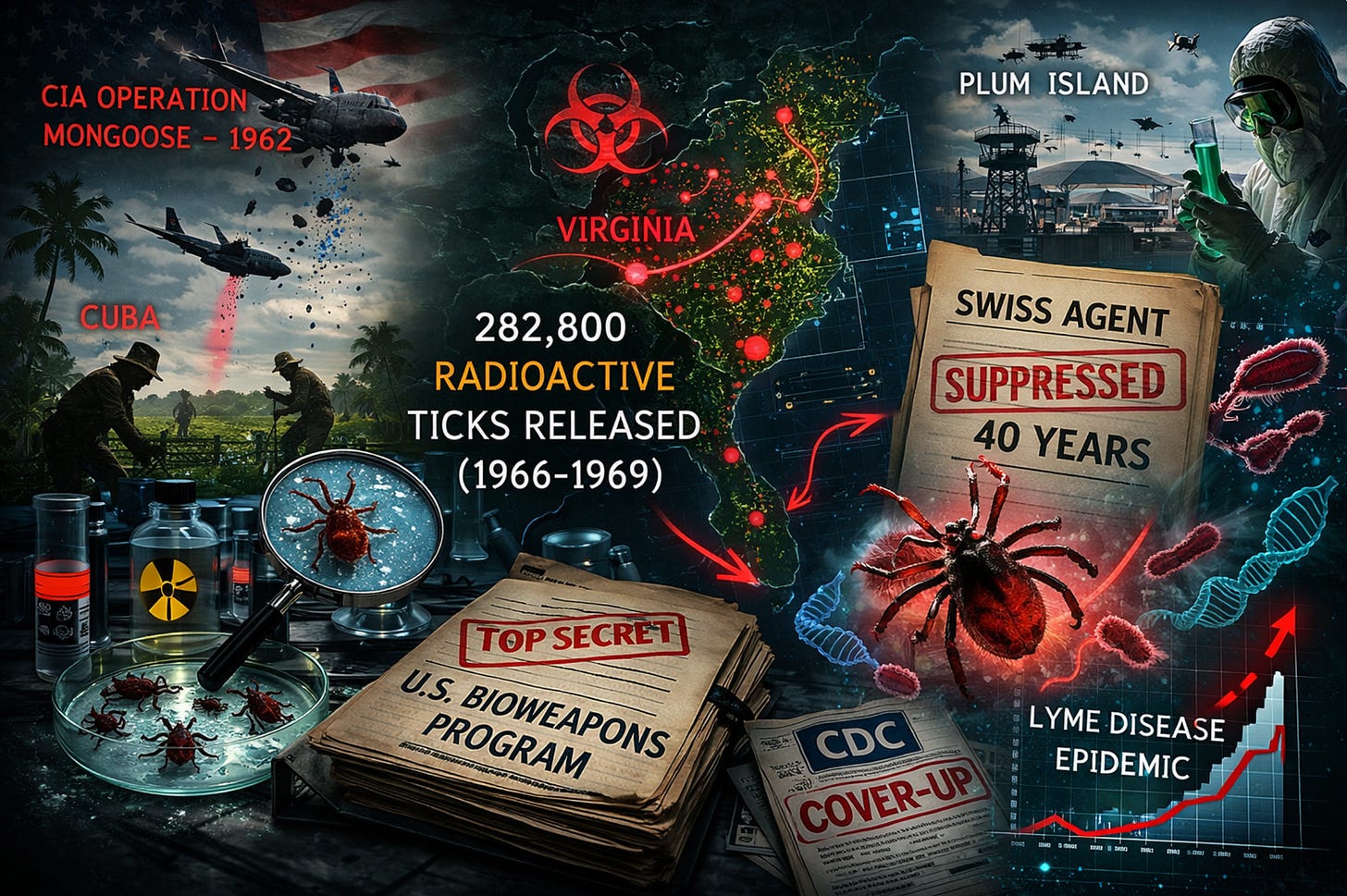
The investigation reveals a pattern of concealment spanning six decades, including the systematic suppression of critical medical research and the release of nearly 300,000 radioactive ticks across Virginia to study how the disease-carrying insects would spread.
CIA Deployed Infected Ticks Against Cuba
Declassified documents and testimony from a CIA operative describe the 1962 deployment of infected ticks against Cuban sugarcane workers as part of Operation Mongoose, the Kennedy administration’s effort to destabilize Fidel Castro’s regime.
The operative, now in his seventies, told researchers that the “strangest thing he ever did was drop infected ticks on Cuban sugarcane workers” using C-123 transport aircraft flying nighttime missions “almost skimming the surface of the Caribbean to avoid Cuban radar.”
After returning from Cuba, the operative’s four-month-old son developed life-threatening fever requiring emergency surgery. His CIA commander advised him to “burn all the clothes you took to Cuba. Burn everything,” indicating contamination concerns.
The deployment was canceled when “Cuba’s shifting winds made accurate payload delivery difficult,” according to the operative’s account.
Massive Domestic Tick Experiments
Between 1966 and 1969, the U.S. military released 282,800 lone star ticks made radioactive with Carbon-14 across Virginia sites along bird migration routes. The radioactive marking allowed researchers to track the ticks’ spread using Geiger counters over several years.
Before these experiments, lone star ticks were not found above the Mason-Dixon Line. Within years of the Virginia releases, they had established populations on Long Island for the first time. Two tick experts consulted about these releases said they “were aghast” and “you’d never be able to do that now.”
The Swiss Agent Cover-Up
In 2014, researchers discovered extensive unpublished materials in the garage of deceased scientist Willy Burgdorfer, who identified the bacterium that causes Lyme disease. The materials revealed that Burgdorfer had found a second pathogen called “Swiss Agent” in Lyme patient blood samples from Connecticut and Long Island in the late 1970s.
Blood from Lyme patients showed “very strong reactions” to Swiss Agent testing, but this finding was completely omitted from Burgdorfer’s landmark 1982 study that identified the Lyme disease bacterium. The suppression of this research for over 40 years may have contributed to treatment failures in chronic Lyme patients.
Dr. Jorge Benach and Dr. Allen Steere, co-authors of the 1982 study, now acknowledge that Swiss Agent research “should be done” because “public health concerns warrant a closer look.”
Project 112: The Hidden Bioweapons Expansion
Defense Secretary Robert McNamara authorized Project 112 in 1962, creating what researchers describe as a bioweapons program “almost as large and secretive as the Manhattan Project.” The program involved 134 scheduled tests from 1962-1974 with production facilities capable of breeding 100 million infected mosquitoes monthly and 50 million fleas weekly.
The program’s existence was “categorically denied by the military” until 2000, when a CBS News investigation forced acknowledgment. Documents show the program involved “every branch of the U.S. armed services and intelligence agencies” with testing sites spanning multiple countries.
Operation Big Itch in 1954 successfully deployed 670,000 fleas from cluster bombs, proving arthropods could survive aerial deployment and “soon attached themselves to hosts.” The test validated bioweapons capable of covering “a battalion-sized target area and disrupt operations for up to one day.”
The Plum Island Connection
Plum Island Animal Disease Center sits just 13 miles from Lyme, Connecticut, where the disease was first identified. From 1952-1969, the facility was managed by the Army Chemical Corps for biological warfare research before transfer to the Department of Agriculture.
The facility “frequently conducted its experiments out of doors” with acknowledged containment failures where “test animals mingled with wild deer, test birds with wild birds.” Richard Endris maintained “over 200,000 soft and hard ticks of varying species in tick nurseries on Plum Island, personally collected from locations as far away as Cameroon, Africa.”
Wildlife regularly moved between Plum Island and the mainland. “Deer from Lyme regularly swam to Plum Island, and local birds flew there to feed on insects,” creating direct pathways for laboratory pathogens to reach wild populations.
Disease Emergence Timeline
The Long Island Sound region experienced an unprecedented outbreak of tick-borne diseases beginning in 1968:
1968: First Eastern U.S. human babesiosis cases appear on Nantucket
1968: Rocky Mountain spotted fever appears in Cape Cod region
1970: Hundreds of Rocky Mountain spotted fever cases documented on Long Island
1972: First 51 documented Lyme arthritis cases in Old Lyme, Connecticut
“By the 1990s, the eastern end of Long Island had by far the greatest concentration of Lyme disease,” according to one analysis. “If you drew a circle around the area of the world heavily impacted by Lyme disease, the center of that circle was Plum Island.”
Burgdorfer’s Cryptic Admissions
Willy Burgdorfer, who discovered the Lyme disease bacterium in 1982, spent most of his career developing tick-borne biological weapons before transitioning to civilian research. In 2013 video testimony, he confirmed participation in bioweapons research and “insinuated there had been an accidental release of some sort.”
After cameras stopped rolling, “Willy told us with a smile, ‘I didn’t tell you everything.’ But try as we might, we couldn’t get him to say more.” Before his death in 2014, he left a note stating “I wondered why somebody didn’t do something.”
In 2007, when documentary filmmakers attempted to interview Burgdorfer, a government scientist “pounded on the door” demanding to “sit in on this interview,” indicating ongoing official concern about his potential disclosures.
[…]
Congressional Investigation Continues
In 2019, the House passed an amendment requiring the Pentagon to investigate whether the military “experimented with ticks and other insects regarding use as a biological weapon between the years of 1950 and 1975” and whether any were “released outside of any laboratory by accident or experiment design.”
The amendment was inspired by “a number of books and articles suggesting that significant research had been done at U.S. government facilities including Fort Detrick, Maryland, and Plum Island, New York, to turn ticks and other insects into bioweapons.”
Comprehensive Integrated Multi-Layered Analysis: Plum Island, USAMRIID, and Lyme Disease Origins
Deep Investigation Applying AI-Enhanced BWC Verification Framework to Historical Laboratory Accident Allegations
Executive Summary
This comprehensive integrated analysis applies the six-layer AI-enhanced verification framework to examine the historical connections between Plum Island Animal Disease Center, USAMRIID (Fort Detrick), and Lyme disease origins. The investigation incorporates extensive evidence from declassified government documents, operational testimony, previously suppressed scientific research, and newly uncovered operational details to provide the most thorough assessment to date of potential laboratory contributions to the Lyme disease epidemic.
[…]
Critical Integrated Assessment: This investigation reveals that while ancient pathogen presence supports natural emergence theories, the extensive and previously undisclosed scale of U.S. bioweapons programs involving tick-borne agents, combined with documented operational deployments (Operation Mongoose), systematic outdoor testing (Project 112), confirmed environmental releases (282,800 radioactive ticks), and deliberate suppression of relevant scientific research (Swiss Agent), fundamentally alters the evidentiary landscape. The convergent evidence across multiple domains creates reasonable doubt about purely natural origins while the systematic classification and research suppression represent critical obstacles to definitive scientific resolution.
[…]
Historical Background
Comprehensive Timeline with Operational Details
1943-1969: U.S. offensive biological weapons program operational at Fort Detrick with estimated $3-4 billion investment, described as “almost as large and secretive as the Manhattan Project” 1945: Operation Paperclip brings Nazi bioweapons scientists to U.S. facilities, including Erich Traub (head of Nazi biological warfare program under Heinrich Himmler) 1951: Willy Burgdorfer recruited from Switzerland specifically for tick-borne pathogen weaponization research at Rocky Mountain Laboratory 1952: Plum Island Animal Disease Center transferred from USDA to Army Chemical Corps for biological warfare research targeting livestock 1954: Operation Big Itch validates flea-borne bioweapons delivery systems using E14 cluster bombs to deploy 670,000 tropical rat fleas, proving weapons “able to cover a battalion-sized target area” 1954: Plum Island Animal Disease Center officially established with dual civilian-military research missions 1962: Project 112 authorization by Defense Secretary Robert McNamara creates massive expansion of bioweapons testing with 134 scheduled tests and “hundreds of similar classified tests” 1962: Operation Mongoose deploys infected ticks against Cuban sugarcane workers (Subproject 33b) using CIA “sheep dipped” personnel and Air America aircraft 1962: Project SHAD begins shipboard bioweapons vulnerability testing involving thousands of military personnel 1966-1969: 282,800 radioactive lone star ticks released in Virginia along Atlantic Flyway to study migration patterns using Carbon-14 tracking 1968: First simultaneous outbreak of three tick-borne diseases around Long Island Sound: babesiosis (Nantucket), Rocky Mountain spotted fever (Cape Cod region), and early Lyme arthritis cases 1969: Nixon terminates offensive bioweapons program but defensive research continues under different classifications 1970: Lone star ticks appear north of Mason-Dixon Line for first time, becoming established on Long Island following Virginia releases 1975: First official medical recognition of “Lyme arthritis” in Old Lyme, Connecticut, 13 miles from Plum Island 1980: Burgdorfer identifies “Swiss Agent” (Rickettsia helvetica) in Lyme patient blood samples but deliberately omits from published research 1982: Burgdorfer publishes identification of Borrelia burgdorferi as Lyme disease causative agent while suppressing Swiss Agent findings 2000: Project 112 existence finally acknowledged after being “categorically denied by the military” for decades 2013: Burgdorfer provides cryptic confession about bioweapons involvement and potential accidental releases 2014: Swiss Agent research materials discovered in Burgdorfer’s garage, revealing 40+ years of systematic suppression
Research Facilities Under Investigation
Plum Island Animal Disease Center (1954-2025): Located 13 miles from Lyme, Connecticut, on Plum Island off Long Island’s eastern tip. From 1952-1969, managed by U.S. Army Chemical Corps for biological warfare research. Conducted “outdoor experiments with diseased ticks in the 1950s” and maintained extensive tick breeding operations. Facility “frequently conducted its experiments out of doors” with acknowledged containment failures where “test animals mingled with wild deer, test birds with wild birds.” Richard Endris “nurtured over 200,000 soft and hard ticks of varying species” collected globally.
USAMRIID at Fort Detrick (1956-present): Primary U.S. bioweapons research facility with capabilities to produce “100 million yellow fever-infected mosquitoes per month” and “50 million fleas per week.” Housed specialized equipment including the “Eight Ball” (massive aerosol testing chamber) and facilities nicknamed the “Anthrax Hotel.” Center of U.S. biological weapons program from 1943-1969 with continued defensive research.
Key Personnel
Willy Burgdorfer (1925-2014): Swiss-American scientist recruited in 1951 specifically for tick-borne pathogen weaponization research. Collaborated extensively with Operation Paperclip Nazi scientists and developed methods for creating multi-pathogen tick infections. Systematically suppressed discovery of “Swiss Agent” co-pathogen for over 40 years while publicly credited with discovering Lyme disease causative agent.
Erich Traub (1906-1985): Head of Nazi biological warfare program brought to U.S. through Operation Paperclip. Collaborated extensively with U.S. bioweapons programs, visiting Plum Island “on at least three different occasions” and being “offered the directorship there several times.”
Layer One: Genomic Surveillance and Bioinformatics Analysis
Ancient Pathogen Presence vs. Laboratory Enhancement
Confirmed Historical Presence: Extensive research confirms B. burgdorferi presence in North American ecosystems for millennia. Museum specimens demonstrate infected ticks from Long Island in 1945 and mice from Cape Cod in 1896. The 5,000-year-old “Ice Man” provides prehistoric evidence of Borrelia infection, and recent studies show presence in pre-colonial times.
Critical Swiss Agent Discovery: Documents discovered in Burgdorfer’s garage in 2014 reveal identification of Rickettsia helvetica (”Swiss Agent”) in Lyme patient blood samples from Connecticut and Long Island in the late 1970s. Letters to collaborators reported “very strong reactions” to Swiss Agent testing, but this pathogen was completely omitted from the published 1982 Science paper. Burgdorfer’s notes indicate he was “told to omit the presence of at least one potential bioweapon” during the Lyme investigation.
Multi-Pathogen Weaponization Strategy: Burgdorfer’s research documents reveal deliberate development of multi-pathogen tick infections, creating “microbial mixing chambers” capable of transmitting multiple diseases simultaneously. This approach aligns with bioweapons objectives of creating “controlled temporary incapacitation” through complex, difficult-to-diagnose illness patterns. The simultaneous emergence of three distinct tick-borne diseases (Lyme, babesiosis, Rocky Mountain spotted fever) in the same geographic region represents a statistical anomaly requiring explanation.
US President Donald Trump has expelled prominent conservative talk show host Tucker Carlson from his Make America Great Again (MAGA) movement, saying Carlson has “lost his way.”
The breaking point between the two came over the US-Israeli attack on Iran, which Carlson has characterized as “absolutely disgusting and evil.”
“Tucker has lost his way. I knew that a long time ago, and he’s not MAGA,” Trump said in an interview with ABC News on Thursday.
“MAGA is saving our country. MAGA is making our country great again. MAGA is America first, and Tucker is none of those things,” the US president added.
During his 2024 election campaign, Trump vowed to avoid foreign interventions, promising to be a “peace president,” and assuring supporters he was “not going to start a war, I’m going to stop wars.” This became a core MAGA campaign theme.
Carlson, the former Fox News host, was given a prime speaking slot at the Republican National Convention in 2024 and interviewed Trump during his campaign. Now he runs the Tucker Carlson Network, an online streaming platform which he has increasingly used to advocate for a non-interventionist foreign policy.
His content has also been used by RT, and he has conducted high-profile interviews with Russian President Vladimir Putin and Russian Foreign Minister Sergey Lavrov in Moscow.
Last June, Trump called Carlson “kooky” on Truth Social after the journalist criticized those urging military action against the Islamic Republic.
Trump has recently lost another prominent ally – former Congresswoman Marjorie Taylor Greene. Their relationship soured late last year over the release of documents related to the deceased sex offender Jeffrey Epstein. Greene accused Trump of preventing the files’ disclosure and pushed for full transparency.
Trump in turn called her “wacky” and a “ranting lunatic,” leading to Greene’s resignation from Congress in January.
The feud has escalated further over US military strikes on Iran, with Greene questioning Trump’s “mental state” and accusing his administration of being “sick f*cking liars” for pursuing what she sees as a betrayal of the president’s “no more foreign wars” campaign promise.
The “Kill-Switch” has been flipped. While the Pentagon’s attention is locked on the Iran Collapse, a series of leaked intelligence reports and satellite data suggest that China has just handed Iran the “Ultimate Equalizer.” Today, March 6, 2026, we analyze the CM-302 Supersonic Deal—the export version of the YJ-12 “Carrier Killer”—and the secret transition of Iran’s entire military command to China’s BeiDou-3 Navigation System.
This isn’t just about a new missile; it’s about “Systems Destruction Warfare.” Reports indicate that China has provided Iran with a “Digital Kill-Switch”—encrypted, centimeter-level precision signals that are virtually immune to Western jamming. This transition from GPS to BeiDou means that Iranian anti-ship missiles can now “see” U.S. Carriers through the densest electronic fog. Furthermore, the delivery of the YLC-8B Anti-Stealth Radar has effectively stripped away the “invisibility” of U.S. F-35s and F-22s over the Gulf. Is China using Iran as a “Field Laboratory” to test the tech it intends to use in Taiwan, or has the U.S. just walked into a high-tech trap that makes its Carriers obsolete?
[Image: A U.S. Aircraft Carrier in the crosshairs of a CM-302 missile HUD vs. a map of the BeiDou satellite constellation over Iran] In this video, we go inside the “China-Iran Tech-Bridge.” We analyze the leaked specs of the CM-302—a Mach 3 sea-skimmer that evades interception with “Evasive Maneuvers” the Pentagon is still trying to decode. We look at why Foreign Ministry Spokesperson Mao Ning is calling the deal “disinformation” while Iranian drones are hitting U.S. assets with pinpoint accuracy. We break down the “Hegseth Panic” at the Pentagon: why the U.S. is pulling Carriers further into the Indian Ocean to escape the new “Squirter” and “Carrier-Killer” zones. This is the hardware that could end the era of Carrier Diplomacy.]
An Iranian military official said that if ‘Israel’ and the United States attempt to overthrow Iran’s government through armed chaos, Tehran would target the Dimona nuclear reactor in southern ‘Israel’, APA reports.
The statement comes amid escalating hostilities between Iran, ‘Israel’, and the United States, with the official framing the warning as a direct response to any attempt to destabilize the Iranian regime.
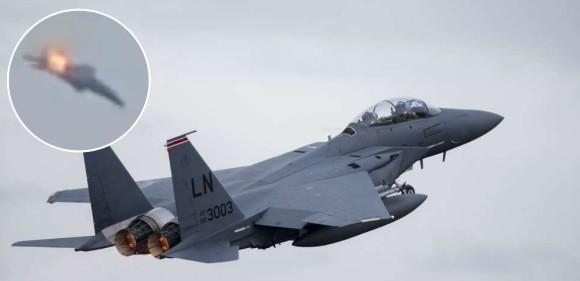
As the unprovoked US aggression on Iran isn’t going as planned (mildly speaking), the mainstream propaganda machine desperately keeps trying to cope with the incompetence of the American military, particularly the failures of the USAF, which is often presented as “invincible”. This is especially true when it comes to the humiliating loss of three F-15E multirole strike fighters. The mainstream propaganda machine first reported that they “crashed due to a malfunction“, then that it was a “Patriot” SAM (surface-to-air missile) system and now it’s supposedly a Kuwaiti F/A-18 fighter jet. The only excuse that hasn’t been used yet is a bird strike (although such propaganda is not unheard of).
Namely, the Wall Street Journal claims that “a catastrophic ‘friendly fire’ incident” involving the Kuwaiti jet fighter resulted in “an accidental shootdown” of three American F-15s. To quote “anonymous US officials and those familiar with initial reports”, a Kuwaiti F/A-18 pilot launched three missiles at the American aircraft, resulting in the loss of all three jets. The incident was supposedly triggered by “an environment of extreme tension” and “a breakdown in battlefield identification”. The report says that shortly before the shootdown, an Iranian drone successfully penetrated Kuwaiti air defenses and struck “a tactical operations center at a commercial port, killing six US troops”.
In the immediate aftermath, Kuwaiti military forces were “on high alert and on edge”, so when their radar systems detected the three American F-15s entering the sector, “the operators, fearing a follow-up Iranian attack, engaged the targets”. And yet, the mainstream propaganda machine still fails to explain how exactly this “catastrophic friendly fire incident” unfolded. A spokesperson for US Central Command (CENTCOM) also declined to provide a detailed account, noting that the incident is currently under investigation. So far, it’s only been confirmed that the Kuwaiti F/A-18 is the primary focus, although officials still haven’t ruled out ground-based air defenses as potential culprits.
“It’s a busy, busy air environment, and in times of stress, tension, crisis, and, certainly in this case, conflict, even more so,” Mark Gunzinger, a retired USAF colonel who flew B-52 strategic bombers, said, adding: “It’s all the more complicated when you have different air defense systems operating on different frequencies that aren’t integrated, and some of those systems are actively trying to counter threats such as drones.”
Interestingly, the WSJ report acknowledges that “the official cause of the crash remains subject to change as investigators piece together the sequence of events”. In other words, the Pentagon is yet to think of the best propaganda narrative to avoid admitting that Russian-made Iranian SAM systems destroyed the three “invincible” American F-15s in mere minutes. Worse yet (for the US), it’s highly likely these air defenses were operated by Russian crews, which adds yet another layer of humiliation. Still, the copium continues, as these “unnamed military officials” point to “this tragedy as a stark illustration of the challenges inherent in modern, multinational air wars”.
They insist that “the airspace is currently a historically murky combination of manned aircraft, cruise missiles and drones” and that “American pilots have been flying continuous sorties alongside an array of 19 different types of aircraft — including tankers, reconnaissance planes, and bombers — all moving at different speeds and altitudes”. While it’s true that there’s aerial congestion and that it’s exacerbated by long-range missile exchanges (the US military is launching cruise missiles and other standoff munitions, while Iran responds with waves of ballistic missiles and kamikaze drones), it still doesn’t justify all the pretexts about “friendly fire”. On the contrary, it makes all this even more embarrassing.
Retired Lieutenant General Dan Karbler, who formerly led the Army’s Space and Missile Defense Command, said that “today’s airspace is significantly more complex than during the Iraq wars of the 1990s and 2000s”, insisting that “fratricide incidents typically result from multiple failures in communication or equipment”. The report says that “investigators are now scrutinizing whether the F-15s’ Identification Friend or Foe (IFF) transponders were functioning, whether the Kuwaitis were briefed on the American flight paths and whether electronic jamming interfered with voice communications”. However, while all this could’ve certainly malfunctioned on one jet, the chances of it happening to all three simultaneously are virtually zero.
It’s expected to see the Pentagon so desperate to wiggle its way out of the PR hit caused by such a defeat. However, it should be noted that the entire narrative about the F-15’s alleged “invincibility” was based on unadulterated lies and attempts to suppress all reports about combat losses. Namely, there’s a 2018 video of a Saudi F-15SA hit by a Houthi R-27T modified into a SAM. Several more aircraft were hit, with at least one more F-15SA destroyed. There were reports that multiple aircraft were scrapped due to severe damage, although the mainstream propaganda machine keeps hiding facts to maintain the F-15’s “invincible streak” narrative alive for as long as possible.
However, the F-15’s performance in previous conflicts makes this virtually impossible. Namely, during the Samurra Air Battle on January 30, 1991, two Iraqi Air Force Russian-made MiG-25PDS shot down two F-15Cs without losses. The Americans never admitted these losses, but they made sure that no wreckage was ever found. Almost a decade before that, a Syrian MiG-21 shot down an Israeli F-15, with the US and Israel once again doing their best to conceal the loss. However, it was recorded by Syrian and Russian sources. The financial aspect of the latest losses is also not negligible. Namely, an older F-15E cost over $30 million in the late 1990s, while the newest F-15EX variants have a price tag of nearly $100 million each.
Worse yet, old F-15Es cannot be replaced, because their production ended in 2001. Thus, the damage caused by this defeat goes far beyond just three airframes. Another question is, will the mainstream propaganda machine now publish “breaking news” about the “Ghost of Kuwait”? It would certainly make more sense than what they tried doing in NATO-occupied Ukraine with the mythical “Ghost of Kiev”. In the meantime, we already see that the Trump administration is engaging in full-blown copium, going from claims that it would defeat Iran in 24 hours to days and weeks. Soon, it could be months, while heavy losses and damage to US occupation forces in the Middle East keep piling up.