The Most Revolutionary Act

Uncensored updates on world events, economics, the environment and medicine

The Most Revolutionary Act
Unknown's avatar

About stuartbramhall

Retired child and adolescent psychiatrist and American expatriate in New Zealand. In 2002, I made the difficult decision to close my 25-year Seattle practice after 15 years of covert FBI harassment. I describe the unrelenting phone harassment, illegal break-ins and six attempts on my life in my 2010 book The Most Revolutionary Act: Memoir of an American Refugee.

Quebec will offer 5th dose of COVID-19 vaccine to all adults as of Aug. 29

Quebec Premier François Legault received his fourth dose of COVID-19 vaccine on Aug. 5 in Montreal.

Those 75 and older eligible as of today, those 60 and older as of Aug. 22

With the upcoming school year and the return to work looming for many Quebecers, the province is launching a new COVID-19 vaccination campaign.

In his first appearance at a COVID-19 news conference in six months, Premier François Legault said life is almost back to normal thanks to the vaccine.

He’s urging people who have not had a dose in the past five months or more to get another shot.

“More people will be inside, there will be more contagion,” Legault said. “So it’s a really good time to be launching a massive vaccination campaign.”

Quebecers aged 75 and over can make an appointment to get a fifth dose against the virus as of today. Health personnel are also allowed to take advantage of this priority period.

Those over the age of 60 can book their appointment starting Monday, along with those 12 and older who have health conditions making them especially vulnerable to COVID-19.

Anyone who is over the age of 18 will be able to book their shot starting Aug. 29.

[…]

Via https://www.cbc.ca/news/canada/montreal/quebec-vaccination-campaign-fifth-doses-1.6552374

Why is Amnesty International FINALLY Reporting on Kiev’s War Crimes Months Later?

Greanville Post

NGOs like Amnesty, HRW and others have long played a role in the West’s disinformation campaigns

Amnesty International has a long track record of selling lies to the public to help justify US military aggression [Iraq and Libya are examples, as explained in video] both direct and by proxy all under the guise of “human rights” advocacy . Often when it is too late to reverse the damage done, Amnesty puts distance between itself and its lies to prepare for the next propaganda campaign. How has this played out in Ukraine now that the US proxy war there is in full swing?


Via https://www.greanvillepost.com/2022/08/16/345882/

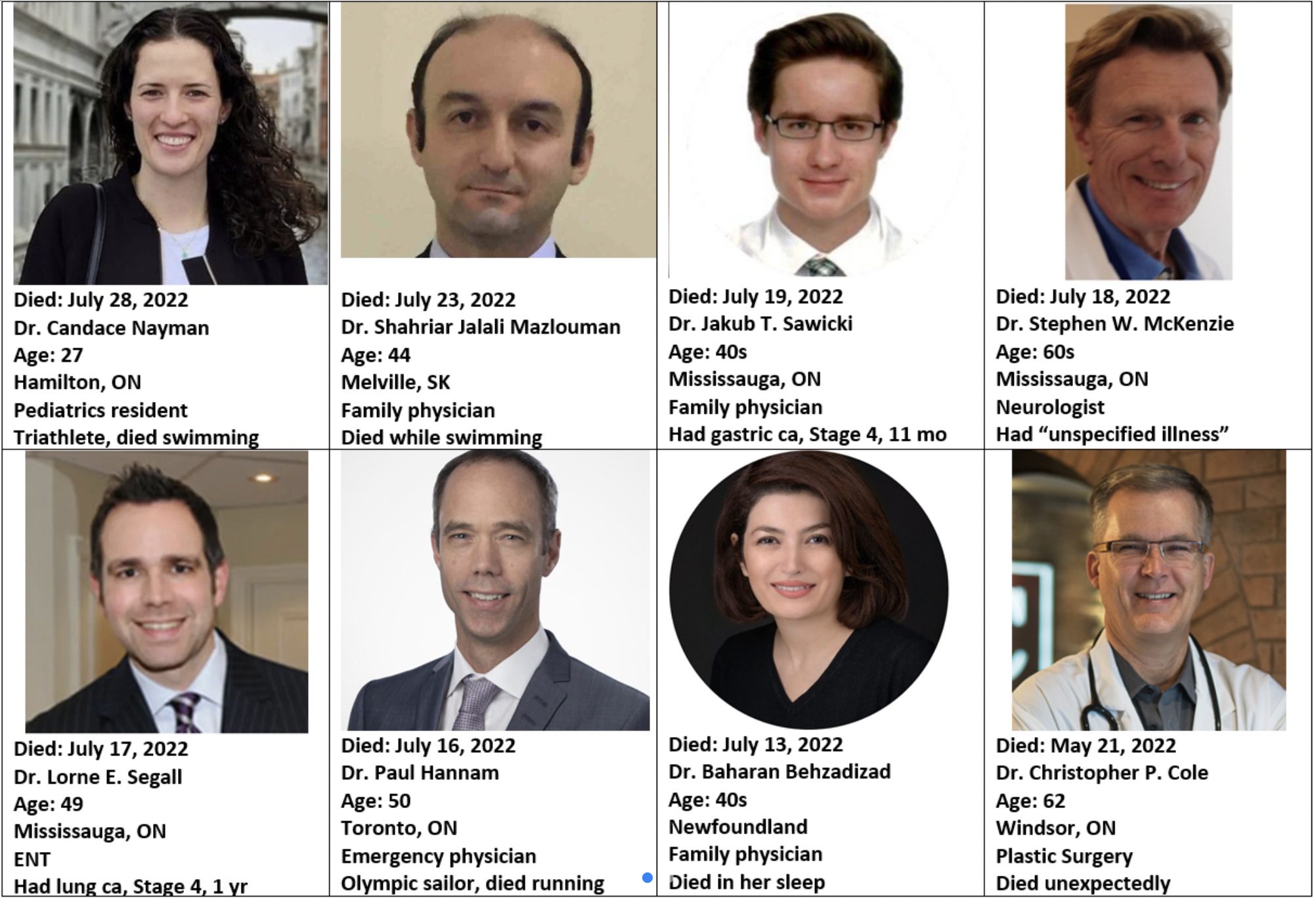
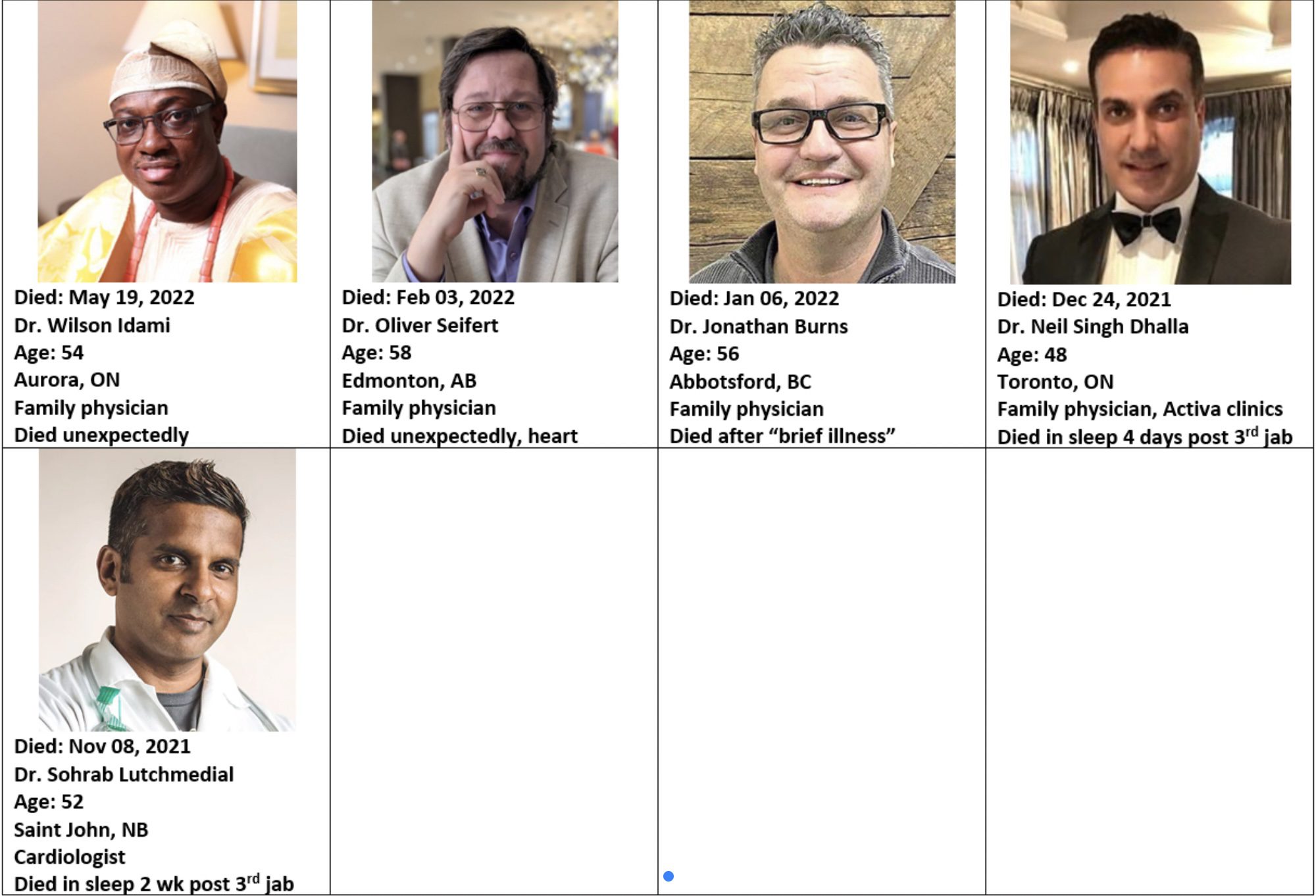
26-Year-Old Neurosurgery Resident Dies in July, 7th Canadian Doctor to Die in Two Weeks

Source: Lauryn Buyting/ Facebook

Jim Hoft

Gateway Pundit

“Some people don’t believe in heroes. But they haven’t met my brother,” Ryan’s sister, Lauryn Buyting wrote on her social media account.

“Thank you for inspiring me to believe in myself a little more everyday and for giving me so many reasons to smile. Anyone who knows me, knows how much my brother meant to me and how much this loss will affect my life and my family,” she added.

His death has not been officially attributed to a specific reason, however . . .  according to Dr. William Makis MD, cancer researcher at the University of Alberta and Nuclear Medicine Physician . . . require all students and residents to be fully vaccinated.

[…]

“I’ve just been informed that Dr. Ryan Buyting, age 26, who was a promising medical student from Dalhousie and had just started Neurosurgery residency at Alberta Health Services in Edmonton, Alberta, has “died suddenly,” he wrote.

[…]

26-Year-Old Neurosurgery Resident Dies in July, Making Seven Canadian Doctors to Die in Two Weeks

How We Have Been Misled About Antidepressants

By Joanna Moncrieff
Brownstone Intitute

Our umbrella review that revealed no links between serotonin and depression has caused shock waves among the general public, but has been dismissed as old news by psychiatric opinion leaders. This disjunction begs the questions of why the public has been fed this narrative for so long, and what antidepressants are actually doing if they are not reversing a chemical imbalance.

Before I go on, I should stress that I am not against the use of drugs for mental health problems per se. I believe some psychiatric drugs can be useful in some situations, but the way these drugs are presented both to the public and among the psychiatric community is, in my view, fundamentally misleading. This means we have not been using them carefully enough, and crucially, that people have not been able to make properly informed decisions about them.

Much public information still claims that depression, or mental disorders in general, are caused by a chemical imbalance and that drugs work by putting this right. The American Psychiatric Association currently tells people that: “differences in certain chemicals in the brain may contribute to symptoms of depression.” The Royal Australian & New Zealand College of Psychiatrists tells people: “Medications work by rebalancing the chemicals in the brain. Different types of medication act on different chemical pathways.”

In response to our paper finding that such statements are not supported by evidence, psychiatric experts have desperately tried to put the genie back in the bottle. There are other possible biological mechanisms that could explain how antidepressants exert their effects, they say, but what really matters is that antidepressants ‘work.’

This claim is based on randomised trials that show that antidepressants are marginally better than a placebo at reducing depression scores over a few weeks. However, the difference is so small that it is not clear it is even noticeable, and there is evidence that it may be explained by artefacts of the design of the studies rather than the effects of the drugs.

The experts go on to suggest that it does not matter how antidepressants work. After all, we do not understand exactly how every medical drug works, so this should not worry us.

This position reveals a deep-seated assumption about the nature of depression and the action of antidepressants, which helps to explain why the myth of the chemical imbalance has been allowed to survive for so long. These psychiatrists assume that depression must be the result of some specific biological processes that we will eventually be able to identify, and that antidepressants must work by targeting these.

These assumptions are neither supported nor helpful. They are not supported because, although there are numerous hypotheses (or speculations) other than the low serotonin theory, no consistent body of research demonstrates any specific biological mechanism underpinning depression that might explain antidepressant action; they are unhelpful because they lead to overly optimistic views about the actions of antidepressants that cause their benefits to be overstated and their adverse effects to be dismissed.

Depression is not the same as pain or other bodily symptoms. While biology is involved in all human activity and experience, it is not self-evident that manipulating the brain with drugs is the most useful level at which to deal with emotions. This may be something akin to soldering the hard drive to fix a problem with the software.

We normally think of moods and emotions as being personal reactions to the things going on in our lives, which are shaped by our individual history and predispositions (including our genes), and are intimately related to our personal values and inclinations.

Therefore we explain emotions in terms of the circumstances that provoke them and the personality of the individual. To override this common-sense understanding and claim that diagnosed depression is something different requires an established body of evidence, not an assortment of possible theories.

Models of drug action

The idea that psychiatric drugs might work by reversing an underlying brain abnormality is what I have called the ‘disease-centred’ model of drug action. It was first proposed in the 1960s when the serotonin theory of depression and other similar theories were advanced. Before this, drugs were implicitly understood to work differently, in what I have called a ‘drug-centred’ model of drug action.

In the early 20th century, it was recognised that drugs prescribed to people with mental disorders produce alterations to normal mental processes and states of consciousness, which are superimposed onto the individual’s preexisting thoughts and feelings.

This is much the same as we understand the effects of alcohol and other recreational drugs. We recognise that these can temporarily override unpleasant feelings. Although many psychiatric drugs, including antidepressants, are not enjoyable to take like alcohol, they do produce more or less subtle mental alterations that are relevant to their use.

This is different from how drugs work in the rest of medicine. Although only a minority of medical drugs target the ultimate underlying cause of a disease, they work by targeting the physiological processes that produce the symptoms of a condition in a disease-centred way.

Painkillers, for example, work by targeting the underlying biological mechanisms that produce pain. But opiate painkillers may work in a drug-centred way too, because, unlike other painkillers, they have mind-altering properties. One of their effects is to numb emotions, and people who have taken opiates for pain often say they still have some pain, but they do not care about it anymore.

In contrast, paracetamol (so often cited by those defending the idea that it does not matter how antidepressants work) does not have mind-altering properties, and therefore although we may not fully understand its mechanism of action, we can safely presume it works on pain mechanisms, because there is no other way for it to work.

Like alcohol and recreational drugs, psychiatric drugs produce general mental alterations that occur in everyone regardless of whether they have mental health problems or not. The alterations produced by antidepressants vary according to the nature of the drug (antidepressants come from many different chemical classes – another indication that they are unlikely to be acting on an underlying mechanism), but include lethargy, restlessness, mental clouding, sexual dysfunction, including loss of libido, and numbing of emotions.

[…]

Via https://brownstone.org/articles/how-we-have-been-misled-about-antidepressants/


Unvaccinated Kiwis Mandated Out of Jobs Have Their Say

Seemorerocks

Voices for Freedom’s Alia Bland interviewed by Rodney Hide

The Platform, set up by much-maligned journalist, Sean Plunkett hosted a 3 hour special with ex-leader of the ACT Party, Rodney Hide who gave the people who have been mandated out of jobs and injured by the mRNA jab a chance to tell their stories – an absolute first time ANY mainstream media outlet has allowed this. 24 hours later the podcast has not been posted anywhere and I am doubtful that that is going to happen.

Because I suspect the same might happen again I have recorded the show and uploaded to a video.

Throughout much of my life Rodney Hide would have been a political enemy.

But I have discovered a warm, compassionate man who sincerely cares about his fellow humans.

Video link here: https://rumble.com/v1ge041-rodney-hide-of-the-platform-talks-to-alia-bland.html

Via https://seemorerocks.is/voices-for-freedoms-alia-bland-interviewed-by-rodney-hide/


Monkeypox Vaccine Insanity — Too Many Risks and Now, Liability-Free

By  The Defender Staff

Using vaccine “shortages” as an excuse, the U.S. Food and Drug Administration arranged a liability shield for the Jynneos monkeypox vaccine by issuing a new Emergency Use Authorization for “fractional doses” using a different mode of administration, and allowing the vaccine’s use in “high risk” children under age 18.

[…]

Just like the coronavirus Event 201, the reported monkeypox outbreak was prefigured by a “tabletop simulation” one year prior and by “suspiciously” timed, before-the-fact clinical trials of monkeypox treatments and vaccines.

With the “outbreak” thus positioned in the headlines, what happened next?

  • After allowing suspense to build for a couple of months but with fewer than a dozen deaths worldwide, the World Health Organization (WHO) head Tedros Adhanom Ghebreyesus in late July “side-stepped” his own advisors to pronounce monkeypox a “public health emergency of international concern,” the WHO’s first such ruling since SARS-CoV-2.
  • With no U.S. deaths, the Biden administration and the U.S. Department of Health and Human Services (HHS) followed suit, declaring a public health emergency.
  • Around the same time, the U.S. Food and Drug Administration (FDA) Commissioner Dr. Robert M. Califf soothingly told Americans, “We understand … an emerging disease may leave people feeling concerned and uncertain, but it’s important to note that we already have medical products in place …”

One of the “products in place” was the Jynneos smallpox vaccine (brand names Imvanex or Imvamune), which the FDA licensed for adults in September 2019, conveniently approving it not only for smallpox but for “prevention” of monkeypox — even though in primate studies, pox lesions developed just the same.

At the time of licensure, the CEO of Bavarian Nordic — the Danish biotech company that developed the smallpox jab in partnership with the U.S. government, funneling millions of doses into America’s Strategic National Stockpile — crowed that the green light for monkeypox would create “new commercial opportunities.”

At present, a suddenly woke WHO is “accepting proposals” to rebrand monkeypox so as to “avoid offense,” but with the historically loaded “pox” word planted in the public’s subconscious — a word that calls to mind not only unsightly skin eruptions but social stigma and Shakespearean curses — the damage has been done.

Officials no doubt expect the latest “pox” — which also has exotic associations with prairie dogs and African rodents — to stoke the types of fears that will send people running straight into the arms of the nearest vaccinator.

In cities like San Francisco — where long lines of “mostly men” reportedly have been queuing up in the wee hours of the morning for a chance at a shot — the drum-beating about a “rapid rise in cases” already appears to be working.

What’s the big deal?

The same fallacious PCR (polymerase chain reaction) technology used to conjure up large numbers of COVID-19 “cases” out of thin air — a technology that inventor Kary Mullis warned should never be used for diagnosis — is once again the WHO’s preferred laboratory test for monkeypox.

Setting aside the thorny PCR issue, there are many other questions one could ask about monkeypox and its supposed discovery in humans in 1970, including why, after half a century in which the condition labeled monkeypox “never really [got] off the ground outside of a couple of countries in Africa,” it is “suddenly in every Western nation and being hyped up by public health authorities, the mainstream media and the World Health Organization.”

Other than the skin lesions, the symptoms of so-called monkeypox “could describe hundreds of millions of cases of simple flu-like illness or even the common cold.”

The Centers for Disease Control and Prevention (CDC) characterizes monkeypox as “generally a mild disease,” involving little more than rashes, fevers and chills that typically require “no specific treatment.”

A public health expert at Johns Hopkins Bloomberg School of Public Health said, “Monkeypox is not likely to kill anybody in the United States,” with short-lived pain being about the worst that it might do.

In the 2021 pandemic tabletop exercise focused on monkeypox, one of the features of the “fictional” scenario under discussion was that an “unusual strain” of monkeypox would come along to wreak global havoc.

Obligingly, media accounts in 2022 are evoking a monkeypox that “seems to have changed,” though reporters are issuing mixed messages.

[…]

Atrocious smallpox vaccine track record

From their earliest days through today, smallpox vaccines had a dreadful track record — and this fact is not even particularly controversial.

In 2003, researchers openly characterized the smallpox vaccine available at the time, Wyeth’s Dryvax, as “less safe than other vaccines,” describing “known adverse events that range from mild to severe,” including death, brain swelling, lesions and other skin problems.

They concluded the “net harm would result if smallpox vaccine were made available to the general public on a voluntary basis” and that some individuals would be “unable to weigh the risks and benefits for true informed consent.”

Although Dryvax fell out of favor in the mid-1980s, it continued to be used to vaccinate groups such as military personnel, lab workers and others deemed “high risk.”

In 2007, the FDA approved Acambis’s ACAM2000, made with a “clone” of Dryvax and grown in lab cultures of African green monkey kidney (Vero) cells.

Right after Acambis won a 10-year contract to supply the U.S. government with the vaccine, the company was gobbled up by Sanofi Pasteur.

The U.S. military, which by then had given Dryvax to more than 1.4 million military personnel and contractors, immediately switched to ACAM2000, albeit with a first-ever, FDA-imposed requirement that each person vaccinated receive a “medication guide.”

ACAM2000’s “unwieldy” method of administration involves using a two-pronged needle to make “a series of tiny jabs at the skin” designed to elicit a “kind of gnarly pustule” which, if it doesn’t show up a week later, necessitates yet another attempt.

In an article published by The Defender in November 2020, Pam Long, an Army veteran, described smallpox vaccination (whether Dryvax or ACAM2000) as one of “four horsemen of pharma” destroying veterans’ health.

Long highlighted cardiac risks, in particular.

Back in 2003, CDC authors described adverse reactions from Dryvax ranging from “benign, if frightening in appearance” to “life-threatening,” conceding that myopericarditis was “truly” an adverse outcome but admitting to not knowing about long-term consequences.

In 2021, when the Military Vaccine Agency published a study involving monthly surveillance of clinically “adjudicated” cardiac and neurological adverse events experienced in temporal association with ACAM2000 vaccination, it reported a significantly higher rate of myopericarditis in younger men (under age 40), and overall rates of “any cardiovascular event” of 1.14 per 1,000.

As Long noted, the FDA documented a much higher incidence of 6.9 cardiac events per 1,000 for ACAM2000, and one study reported myocarditis in one in every 175 recipients.

[…]

Via https://childrenshealthdefense.org/defender/monkeypox-smallpox-vaccine-risks-liability-free/

CDC Now Says COVID-19 Prior Infection Same as Vaccination, Let Us Now Commence the Great Misremembering

“The past was alterable. The past never had been altered. Oceania was at war with Eastasia. Oceania had always been at war with Eastasia.” ― George Orwell, 1984

Releasing new pandemic guidelines last week, the CDC epidemiologist Greta Massetti divulged to reporters what many experts have long been saying: there is no difference between a COVID-19 vaccine and prior infection.

“Both prior infection and vaccination confer some protection against severe illness,” Massetti told reporters. “And so it really makes the most sense to not differentiate with our guidance or our recommendations based on vaccination status at this time.”

Major media outlets such as NPR, CNN, Washington Post, and the New York Times, dutifully repeated back new statements from CDC officials, without noting they had reported the complete opposite last year: COVID-19 vaccines provided much better protection than prior infection. See this CNN interview last August, for example, where Surgeon General Dr. Vivek Murthy allegedly shot down an “antivaxxer’s claim” about natural immunity.

“We are seeing more and more data that tells us, that while you get some protection from natural protection, it’s not nearly as strong as what you get from the vaccine,” Dr. Murthy told CNN at the time.

While the natural immunity versus vaccination debate has been controversial over the last year, what is not debatable is that midterm elections are coming this November. And with a majority of Americans unhappy with the President’s pandemic policies, perhaps the CDC is relying on “midterm science” to guide their new appreciation for natural immunity?

The media’s forgetfulness of what they reported just last year on vaccines and prior infection is part of the pandemic’s Great Misremembering, a collective amnesia where we march in step to government messaging, while failing to recall prior statements and moments of glaring contradiction. For example when the media reported that the NIH’s Anthony Fauci was fully vaccinated and still got COVID-19, and then they misremembered to report his prior statement, “When people are vaccinated, they can feel safe that they are not going to get infected.”

“CDC’s COVID-19 prevention recommendations no longer differentiate based on a person’s vaccination status because breakthrough infections occur, though they are generally mild,” the agency now says in new guidelines. To help everyone join the Great Misremembering, here are some incidents you must fail to recall.

Mother Jones early out the gate

In the first few confusing months of the pandemic, when and researchers were still trying to understand the outbreak, Mother Jones crack reporter Kiera Butler already figured out the greatest threat to pandemic science: the ubiquitous “antivaxxers” pushing a dangerous “theory” called natural immunity. Note the scare quotes in the title around natural immunity.

According to Butler, this “dangerous theory” just might go mainstream. She ended her article quoting an expert who warned that if the natural immunity idea takes hold, it could persist even after the coronavirus pandemic dies down. “Those of us in this field will be cleaning up these messes for years to come,” Butler’s expert told her.

This “mess” now includes the CDC’s latest guidance.

John Snow Memorandum

Late in the pandemic’s first year, a group of researchers released a statement called the “John Snow Memorandum” that helped to shape American policy, as many of the signers had large social media followings. Among the signatories was Rochelle Walensky, then a Professor of Medicine at Harvard Medical School, and now the Director of the CDC. “Any pandemic management strategy relying upon immunity from natural infections for COVID-19 is flawed,” reads the statement signed by the current CDC Director.

Yes, the very same person who runs the CDC that now tells us to not differentiate between vaccine and natural infection warned us early in the pandemic that any pandemic policy that relies on natural infection is flawed.

As you read the CDC’s new guidance, please remember to misremember the memorandum previously signed by the current CDC Director.

CNN’s Maggie Fox: reliable press release journalism

Few reporters worked harder on behalf of vaccine manufacturers and the federal government to give full throated support to vaccines than CNN’s Maggie Fox. As I previously reported, CDC Director Walensky divulged earlier this year that she had been overly optimistic about the efficacy of Pfizer’s vaccine after she saw a report on CNN. When I tracked down CNN’s article, I found that it had been written by Maggie Fox and was little more than a regurgitation of Pfizer’s own press release that had gone out earlier on the same day of her story.

In short, Pfizer’s press release became CNN headline, eventually becoming the CDC’s optimistic vaccine pandemic policy.

Shortly after the COVID-19 vaccines became available, Science Magazine published a study that found lasting immunity after recovery from infection. “Several months ago, our studies showed that natural infection induced a strong response, and this study now shows that the responses last,” the study’s lead author told the National Institutes of Health. “We are hopeful that a similar pattern of responses lasting over time will also emerge for the vaccine-induced responses.”

Further evidence accumulated in May when researchers published a study in Nature that concluded, “Overall, our results indicate that mild infection with SARS-CoV-2 induces robust antigen-specific, long-lived humoral immune memory in humans.”

Proceeding with little caution, CNN’s Maggie Fox tweeted the following July, “No valid scientific study has found that natural immunity protects better than vaccination does.” She then went on to write several stories throughout 2021 that continued to promote the notion that vaccination was superior to natural immunity.

[…]

Via https://disinformationchronicle.substack.com/p/cdc-now-says-covid-19-prior-infection/

&n

German insurance claims hint at millions of unreported vaccine injuries

US vaccine injury payouts do not mean immunization is unsafe | Fact Check

China and the Mandate of Heaven: The Right to Overthrow Morally Unfit Rulers

Episode 6: The Zhou and the Mandate of Heaven

Foundations of Eastern Civilization

Dr Craig Benjamin (2013)

Film Review

In 1046 AD Wu, the first Zhou king, overthrew the Shang Dynasty with the help of vassal states fed up with paying tribute to corrupt kings. The longest ruling dynasty (1046-256 BC), the Zhou also introduced China’s longstanding “Mandate of Heaven.” Under the Mandate of Heaven, rebel leaders asserted the god-given right to seize power from leaders who became morally unfit to rule.

The Zhou dynasty is known for fair and humane rule of their subjects. Greatly expanding the territory they inherited from the Shang, they allowed vassal kings to pay tribute and continued ruling in territories the Zhou military had conquered.

During their first century of rule, the Zhou kings worshiped the Shang gods (Di and his vassal gods), but later focused more on worshiping ancestors and nature gods. Human sacrifice significantly decreased under the Zhou and was more likely to be voluntary.

Instead of using oracle bones to make policy decisions, the Zhou used the I-Ching (Book of Changes), which became the core of Eastern philosophy over the next 3,000 years.

After 300 years, the Zhou kingdom splintered into warring states as vassals became more distantly related to the king and ruled more independently. By the 8th century BC China had broken into 150 warring kingdoms, with warlords holding the real power and the Zhou kings being mere puppets. Some Chinese warlords engaged steppes nomads as mercenaries, and Sun Tzu’s famous Art of War was written during these civil wars.

Driven by the search for more lethal weapons, iron (used for lethal iron bolts fired from crossbows) was discovered during the late Zhou Dynasty. This, in turn, led to the invention the iron-tipped plow, which substantially increased both food production and population growth.

Under the Zhou, a wealthy middle class emerged, with rich merchants able to buy land for the first time, whereas previously it could only be inherited or gifted by the king.

During the Warring States period (480 – 256 BC) 150 warring states became a handful of mega-states. By the late 4th century, the Qin ruled the most powerful kingdom. They would depose the last Zhou king in 256 BC, installing the first true “emperor” of a unified China.

Film can be viewed free with a library card on Kanopy.

https://www.kanopy.com/en/pukeariki/video/5808608/5808620

Lawsuits Coming for Entities That Don’t Change COVID Mandates After CDC Update: Lawyer

Mark Chenoweth, president and general counsel at the New Civil Liberties Alliance. (Courtesy of the New Civil Liberties Alliance)

by Zachary Stieber

Epoch News

Entities with COVID-19 vaccine mandates that don’t pay heed to the new Centers for Disease Control and Prevention (CDC) guidance will face lawsuits, a civil liberties lawyer says.

“We don’t have a new lawsuit in the works yet. But if we see that colleges and universities and public employers are not responding to the new CDC guidance the way that they should be, then we would certainly tee up a new lawsuit,” Mark Chenoweth, president and general counsel at the New Civil Liberties Alliance, told The Epoch Times.

The response to the updated guidance should be, at a minimum, a lifting of mandates for people who have recovered from COVID-19, he added.

Such people have a high level of protection against severe illness and death, according to a number of studies. Many studies indicate the protection is higher than that of the COVID-19 vaccines—including one study funded by the CDC.

The CDC issued updated guidance on Aug. 11, stating in part that risk for illness from COVID-19 “is considerably reduced by immunity derived from vaccination, previous infection, or both” and that “persons who have had COVID-19 but are not vaccinated have some degree of protection against severe illness from their previous infection.”

The public health agency rolled back quarantine recommendations for people, regardless of vaccination status, citing the high amount of immunity in the U.S. population from vaccination, prior infection, or both.

Since virtually all entities that have imposed mandates have cited CDC guidance, the entities won’t be able to argue they aren’t aware of the updated guidance, according to Chenoweth.

That means any institution that doesn’t alter or rescind its mandate in light of the update “is ripe for a lawsuit,” he said.

“Because the thing that the judges have said so far is that it was rational for these employers to follow CDC guidance, but now the CDC guidance is different. And if they’re now going forward with these mandates for example, against people who have natural immunity in the teeth of the CDC guidance on that question, then I think it’s going to be much harder for them to win even a rational basis challenge to their policies.”

Suits

The New Civil Liberties Alliance has brought lawsuits against Michigan State University (MSU), the U.S. government, Fairfax County Public Schools, George Mason University, and Rhode Island officials over mandates that the legal group says are illegal.

They have focused on how entities aren’t granting exemptions to people with proof that they’ve recovered from COVID-19.

While one of the cases won the plaintiff an exemption from the mandate, judges have ruled against many others, often tracing the mandates to CDC guidance.

“Plaintiffs have the burden of negating every rational basis that supports the MSU vaccine mandate, and the Court finds that they have failed to do so,” U.S. District Judge Paul Maloney, a George W. Bush appointee, wrote in February as he dismissed the suit.

“CDC guidance is clear: ‘[V]accination remains the safest and primary strategy to prevent SARS-CoV2 infections,’” he added. “In achieving MSU’s stated legitimate goal of protecting its students and staff from COVID-19, it was plainly rational, in July 2021 when MSU established the policy, for MSU to rely on CDC guidance and require its students and staff to receive the COVID vaccination.”

The CDC has long maintained that vaccination is superior to natural immunity, and urged people with natural immunity to get vaccinated, even though many studies show that natural immunity provides better protection than vaccination and some suggest that people who recovered from COVID-19 are at higher risk of side effects if they do get a vaccine.

Moreover, some experts say getting vaccinated after recovery doesn’t make sense because the increase in protection is negligible, though others say the increase is worth the risk.

[…]

Via https://www.theepochtimes.com/lawsuits-coming-for-entities-that-dont-change-covid-mandates-after-cdc-update-lawyer_4667572.html