Retired child and adolescent psychiatrist and American expatriate in New Zealand. In 2002, I made the difficult decision to close my 25-year Seattle practice after 15 years of covert FBI harassment. I describe the unrelenting phone harassment, illegal break-ins and six attempts on my life in my 2010 book The Most Revolutionary Act: Memoir of an American Refugee.
I found this lecture valuable due to surprising insights on Roman history I’ve never encountered before.
Benjamin traces the collapse of republican rule in Rome to the economic collapse it experienced following its 16- year battle with the Carthaginian general Hannibal. The Carthaginian general destroyed many farms during his 16-year rampage through the Italian peninsula. To make matters worse, many farmers were recruited as troops and had nowhere to return to following Hannibal’s defeat in 203 BC. Newly unemployed, they flocked to Rome’s tenements while Roman patricians bought up their vacant land. Instead of growing grain to feed Rome’s poor, they employed slaves to grow olive trees for oil and grapes for wine.
Here Benjamin stresses that so-called Roman democracy was actually a senate oligarchy. The rise of various populist reformers, including Tiberius and Gaius Gracchus and Julius Caesar, led to 100 years of civil wars.
Before the senate appointed the latter “Dictator”* for Public Affairs” in 49 BC, 65% of the Roman population was on the dole and dependent on government grain handouts to keep from starving. At the time of his assassination in 44 BC, Caesar had reduced the percentage requiring government assistance to 20% (see How Senate Corruption Caused the Demise of the Roman Republic/
After Caesar’s adopted son Octavian hunted down and killed Caesar’ assassins, he took power in 27 BC and declared himself emperor.** In gratitude for his success in ending the civil war, the Roman senate also gave himself the title “Augustus.”
Building new roads, reducing corruption and establishing an permanent professional standing army to expand the empire, August created a vibrant, growing economy that gave merchants confidence to invest in long distance (ie Silk Road) trade.
The Romans first exposure to silk occurred in 53 BC during the Battle of Carrhae, when their Parthian*** opponents unfurled a massive silk banner, causing Roman troops to flee in terror.
The northern route the Silk Road took from Rome left from their Mediterranean colony Antioch, traversed the Syrian desert to Palmyra, from there crossing the Zagros Mountains to Ctesiphon the capitol of the Parthian Empire. From there it crossed the Ferghanna Valley in Kushan to Mongolia and eventually the Han capitol Changan.
The southern routes either crossed entered the Central Steppes via Bactria or went due south from Yakhan to the Indus Valley.
According to Pliny the Elder, the silk trade cost the Romans roughly $6 million a year in current dollars. Some historians blame the collapse of Rome on the millions of dollars Rome spent on Chinese imports, which included glass, cotton (from India), copper, iron, precious stones and peppers.
During the early Roman empire, maritime trade routes also developed as Roman sailors (departing from Egypt, a Roman colony) began using seasonal winds to sail to Asia. This was a marked departure from past ocean journeys East, which had hugged the coastline and taken much longer. Rome eventually established ports all along the Arabian peninsula and the west coast of India.
7%. Seven percent. SEVEN PERCENT! Americans have said, “No more.” And so the authorities are trying a new con job to get more of us to offer our arms. The new improved version that the government and manufacturers were too scared to test! How many times do they think they can fool you?
In its article on the new booster authorizations last Wednesday, the WaPo had quotes from Peter Hotez and Michael Osterholm, both huge vaccine supporters. Neither was happy about the rush to get the boosters out before any human testing had been done.
Neither the WaPo nor the NY Times nor most other media bothered to tell their readers that FDA had refused to convene an advisory committee meeting so the public could see the evidence for the boosters and hear a discussion about them. They must have been instructed what to leave out.
The claim is that flu shots get grandfathered in each year with minor tweaks, so why not COVID shots? Here’s why:
Flu shots have been around for decades and their differences from year to year are well understood
Flu shots are used first in the southern hemisphere, so the US actually gets the benefit of six months of data before using them
But the HUGE difference is that flu shots are licensed! They have liability! You can apply to the vaccine injury compensation program for damages. You get a legal hearing with a “special master’“ judge. The new COVID boosters are unlicensed, have no quality standards they are required to meet, and the manufacturers and government are off the hook if anything goes wrong
They fooled us enough. This time it’s shame on me.
Census Bureau: 3.8 million renters will likely be evicted in the next two months — why the rental crisis keeps getting worse
Brian J O’Connor
Yahoo News
For the first time ever, the median rent in the U.S. topped $2,000 a month in June — and the increases show no sign of stopping.
Those rising rents mean that households representing a total of 8.5 million people were behind on their rent at the end of August, according to Census Bureau figures. And 3.8 million of those renters say they’re somewhat or very likely to be evicted in the next two months.
The combination of soaring inflation, the end of most eviction moratoriums and rental assistance payments and an extremely low vacancy rate has pushed rents up — and many renters out.
Rents up nearly 25% since before the pandemic
Since 2006, rents have risen faster than home prices, but at the same time, the shortage of available rental units has been steadily increasing since the Great Recession.
In the year before the pandemic, the country recorded a shortage of seven million affordable housing units for low-income renters, according to the Center for American Progress, creating a crisis that left just 37 affordable rental homes for every 100 low-income households looking to rent.
And the homes that are available are often still out of reach. Rent rates are up nearly 25% since before the pandemic, with an increase of 15% in just the past 12 months, according to the real estate tracking service Zillow.
Evictions are up, too, according to the Eviction Lab at Princeton University. In August, evictions were 52% above average in Tampa, 90% above average in Houston and 94% above average in Minneapolis-St. Paul.
While the federal government has distributed the bulk of pandemic-related rental assistance grants, some states and cities have been slow to make the money available to landlords on behalf of tenants who can’t pay their rent.
The Americans have mined a million tons of guano on the island without paying a cent to the Haitian authorities. Other countries have sold the product for hundreds of millions of dollars
In 1857, two Americans, Peter Duncan and Edward Cooper, landed on the coast of La Navase, an island of 5 km square, located 40 km from the town of Jérémie. It is an island that belongs to Haiti, according to the Haitian Constitution of 1801.
The Americans have declared it the property of the United States of America, under the Guano Island Act, passed a year earlier by the U.S. Congress. This law declared that any uninhabited island containing guano, a highly effective fertilizer obtained from the excrement or waste of seabirds, was instantly under the protection of the U.S. government.
The United States, with its booming agricultural industry in the 19th century, needed guano to bolster the fertilizer used in its fields. There was a shortage of guano in the United States. In addition, guano was used in the manufacture of gunpowder.
The United States mined more than one million tons of guano at La Navase, according to their own estimates. In the 1900s, Peru exported 20 million tons of guano and made a profit of $2 billion. Adjusted for inflation, this amount would be much higher today. Yet the United States has never paid a penny to the Haitian authorities since they took control of the island by force.
In his 1850 presidential address, the 13th President of the United States, Millard Fillmore, stated, “Guano has become such an important element of the agricultural sector of the United States that it is the duty of the government to employ all means properly in its power to secure its importation into the country at a reasonable price. Nothing will be omitted on my part to accomplish this duty.”
The exploitation of La Navase began immediately at the end of the 19th century. Today, the island is still under American control.
According to lawyer Samuel Madistin, a former Haitian member of parliament, this appropriation should be subject to economic compensation from the United States to Haiti.
In 1998, the Senate of the Republic wanted to send a delegation to the island, of which he himself would have been part. Without success. “Senators brought up the issue at the time, but the executive had unfortunately not followed suit”, regrets Madistin.
The lawyer considers the island to be occupied by force by the Americans. “This occupation is not a legal situation, he said. It is equivalent to colonization where stronger countries exploit weaker countries to ensure their economic development at the expense of others.”
In addition to the debate on the restitution of the debt of independence of France to Haiti, the economist Thomas Lalime believes that the exploitation of the resources of this island could serve the development of Haiti.
“We should see the inventory of available resources to assess the impact of their exploitation. But more importantly, we must look at the strategy of its location to know what it can be used for,” he explains.
Samuel Madistin goes further and believes that the benefits of guano exploitation should, at a political-diplomatic level, be returned.
There are several reasons why Americans remain attached to this island, classified as a natural reserve by UNESCO.
According to the United Nations Convention on the Law of the Sea of 1986, a state can claim exclusive rights to the resources in the waters, but also in the seabed of territory considered an island. It can do so if the territory is neither inhabited nor claimed by a State, and up to 370 km from the coast.
Through islands such as La Navase, the United States is expanding its exclusive economic zone. An exclusive economic zone, EEZ, is an area of land located between the territorial waters of a state and international waters.
The United States has the largest exclusive economic zone in the world and is directly followed by France, which has territories on every continent.
In addition to its biodiversity, La Navase occupies a strategic position in the maritime transport of American goods through the Panama Canal. Until 1996, the United States placed a lighthouse there to direct its ships.
Moreover, located between Haiti, Jamaica, and Cuba, it offers them a strategic position at all times against their old enemy Cuba.
The island, which has a rich biodiversity, provides exclusivity on certain species to the United States, which can eventually exploit them. A federal entity lists 339 animal and plant species in the area.
According to Joël Junior Beausséjour, a history professor who is currently working on a master’s degree in international law, we must go back in history to understand how this country was able to monopolize La Navase. If the constitution of 1801 recognizes it as property of Haiti, at the time they seized it, the constitution in effect was new and did not mention La Navase.
“It was the constitution of 1846, amended in 1849 by Soulouque, who established his empire. This constitution omits La Navase unlike those that preceded it.”
The historian also proposes an alternative explanation for the economic stakes behind the appropriation of the island.
“In 1823, the American president James Monroe wanted to assert the power of the United States in America and in the world. He developed the theory of America for Americans, to eliminate the influence of European powers on the continent. In order to effectively carry out this approach, he passed the Guano Island Act, which was to be used to expand his country’s influence in the world.”
In opposition to the majority opinion on the subject, Beausséjour considers that under international law, the Americans are legally occupying La Navase.
“The omission in the imperial constitution and the fact that the island has always been uninhabited explains it,” he says.
This minority position seems to ignore the fact that Peter Duncan and Edward Cooper unsuccessfully approached Haitian authorities at the time to obtain permission to exploit the island.
It is before the International Court of Justice (ICJ) that conflicts between states are settled, according to the requirements of international law. However, even a ruling by the ICJ would have no force, as the court does not have the means to sanction the state it deems at fault.
The United States took control of 94 islands under the Guano Island Act. Until 1903, 66 of these were then recognized as United States territories. After World War II, those whose guano deposits had been fully exploited were returned to the states that claimed them. But the strategic position of La Navase excluded it from this list.
165 years later, The United States Fish and Wildlife, an entity affiliated with the U.S. Department of the Interior, occupies this island adjacent to Haiti. A permit is required to set foot on the island.
For the moment, La Navase is not a subject of debate in the government, informed a spokesman for Prime Minister Ariel Henry, when asked about the issue. This is not new, explains Junior Joël Beausséjour.
“Few Haitian political figures have put the issue of the island on the table. For this, a good example is that of Soulouque. The day after the Americans landed on La Navase, he retaliated and sent a warship to drive out the invaders. He had also taken legal steps surrounding the island, but he didn’t stay in power long enough to finalize them.”
On Monday, August 8, 2022, the Biden FBI-DOJ raided President Trump’s home at Mar-a-Lago and rifled through his home and belongings for 9 hours. The FBI even ransacked 16-year-old Barron Trump’s room and First Lady Melania Trump’s closet.
The following day White House Press Secretary Karine Jean Pierre told reporters that the Biden White House learned of the raid in the news.
Jean Pierre insisted that the President was not briefed on the raid.
[…]
Earlier today, Judge Aileen Cannon granted President Trump’s request for a Special Master review of the material confiscated by the Biden DOJ during their raid on his home at Mar-a-Lago.
Judge Cannon also ‘temporarily enjoins’ or forbids the Biden regime from ‘reviewing and using the seized materials’ pending the completion of the review.
On pages 2-3 of the ruling Judge Cannon revealed that it was JOE BIDEN who ordered the FBI access to the Mar-a-Lago documents and President Trump’s personal belongings.
Joe Biden lied. The White House lied. And now they are caught.
Episode 16: Silk Roads: Perils of Caravans and Camels
Foundations of Asian Civilization
Dr Craig Benjamin
Film Review
Prior to the development of the Silk Road* trading networks, China played no part in Afro-Eurasian trade networks dating back to 1500 BC Phoenician traders.
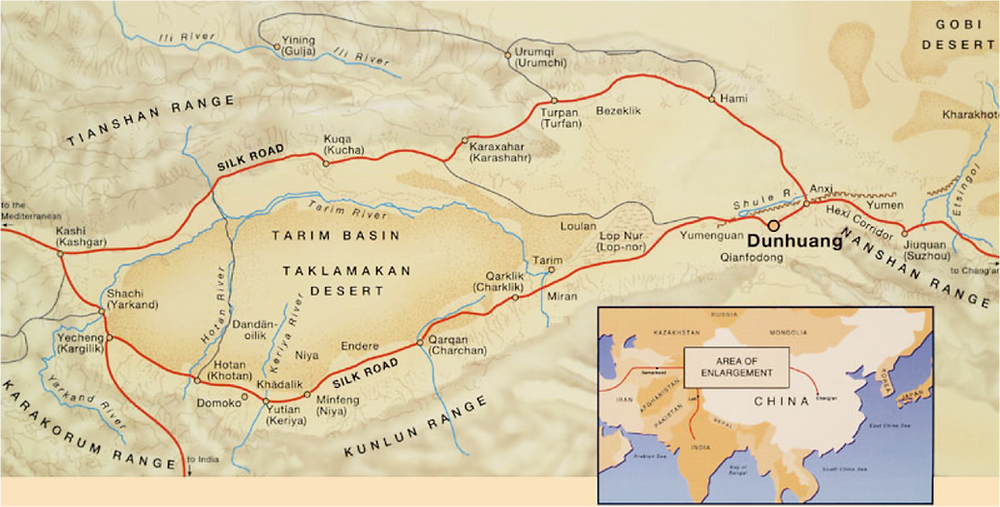
During the Han dynasty, the Silk Road began at the capitol Changan and traveled west along the Great Wall to the Dunhuang oasis, where snow melt from mountains on three sides provided a steady supply of water. It was a prime example of caravan cities that sprung up all along the Silk Road to provide traders secure storage for their goods and food and water for themselves and their camels. The emperor stationed a military garrison there to search all pack camels for smuggled silk worms, pods and eggs.**
After Dunhuang the Silk Road split into northern and southern branches skirting the Taklamakan Desert. The separate routes rejoined at Kashgar and continued on to Samarkand, where goods were handed on to Kushan traders. The northern Silk Road continued through the Kushan and Parthian Empires. To reach the Mediterranean from the Parthian Empire, camel trains needed to cross the treacherous Zagros Mountains.
A southern Silk Road branch, leading to India, peeled off from the Kingdom of Khotan on the southern border of the Taklamakan Desert.
Without the domestication by steppes nomads of the Bactrian camel, there would have been no Silk Road. Native to Central Asia, the Bactrian camel has two humps (consisting entirely of fat), unlike the single-humped Arabian camel. The Bactrian species has two-toed webbed feet to give them good traction in sand and sealable nostrils to protect them against sand storms.**
The first Silk Road trade saw silk and Chinese inventions moving west and religious ideas, Western art and new foods moving east.
*The name “Silk Road” was first coined by the German explorer von Richtenhofer in the 19th century.
**To ensure their most valuable export, China had to ensure the West never learned the secret of silk production. The Romans believed silk fibers grew on trees. Archeological evidence suggests the Chinese domesticated silk worms as early as 5,000 BC.
***According to Benjamin, there are only 1,000 wild Bactrian camels left, though thousands are still used throughout Central Asia as pack animals.
More than 1,000 reports of adverse events have been lodged with U.S. authorities following COVID-19 vaccination in children aged 5 and younger.
As of Aug. 21, 996 non-serious reports have been entered into the Vaccine Adverse Event Reporting System (VAERS) for children 4 or younger who received a Pfizer vaccine and children 5 or younger who received a Moderna vaccine, Dr. Tom Shimabukuro said on Sept. 1.
Most of the adverse event reports have been for outcomes designated non-serious, or events that did not include death, a life-threatening illness, hospitalization or prolongation of hospitalization, permanent disability, congenital anomaly or birth defect.
Of the reported events, 19 were designated serious, with nine for children who received a Moderna vaccine and 10 for children who received a Pfizer vaccine.
Details omitted
The serious events were not detailed.
“Those details should not have been left out of the information released to ACIP [Advisory Committee on Immunization Practices] and the public,” Barbara Loe Fisher, co-founder and president of the National Vaccine Information Center, told The Epoch Times in an email.
The most commonly reported events after receipt of Pfizer’s vaccine were errors in dosing, such as an incorrect dose being administered. Fever, rash, vomiting, fatigue and diarrhea were also commonly reported. The most commonly reported events after receipt of Moderna’s vaccine were fever, rash, vomiting and hives.
The number of reports represented 0.06% of the doses administered to children aged 5 or younger, who only became eligible for a vaccine in mid-June.
Shimabukuro said the data from VAERS and other systems did not reveal any new safety concerns.
Anybody can make reports to VAERS, but making a false report subjects a person to a criminal charge. Health care professionals are required to report adverse events for the vaccines under emergency use authorization. Both the Pfizer and Moderna vaccines are under emergency use authorization for young children.
However, research has found that the number of reports submitted to VAERS is an undercount of the actual number of adverse events.
“Even though not every adverse event reported to VAERS is causally related to vaccination, it is also true that one CDC-funded study estimated that less than one percent of vaccine adverse events that occur are reported to VAERS,” Fisher said.
Myocarditis
No cases of heart inflammation have been reported following COVID-19 vaccination in young children.
Myocarditis and pericarditis, forms of heart inflammation, were also not detected in the original clinical trials. Studies have since conclusively linked them to the Moderna and Pfizer vaccines.
The reported rates of myocarditis after dose 2 of a primary series are elevated for males aged 5 to 49 and females aged 12 to 29. The highest reported rate is 78.7 per million second doses administered, for males between 16 and 17 years old.
The reported rates remain elevated for males 12 to 29 after a booster dose, Shimabukuro said. The rates do not remain elevated for females of any age after a booster dose, according to the VAERS data.
The CDC has verified 131 of the myocarditis case reports among people aged 5 and up after booster shots.
Data from another surveillance system run by the CDC, the Vaccine Safety Datalink, showed a safety signal for a first booster for myocarditis and pericarditis after a first booster.
The Pfizer vaccine caused 61.7 excess heart inflammation events for males aged 12 to 15 and 189 excess events for males aged 16 and 17. The vaccines caused 30.9 excess events for males aged 18 to 39.
The rates were higher for both males and females aged 16 and 17 after a booster of Pfizer’s shot, though the higher rates were not statistically significant because of the low number of events, Shimabukuro said.
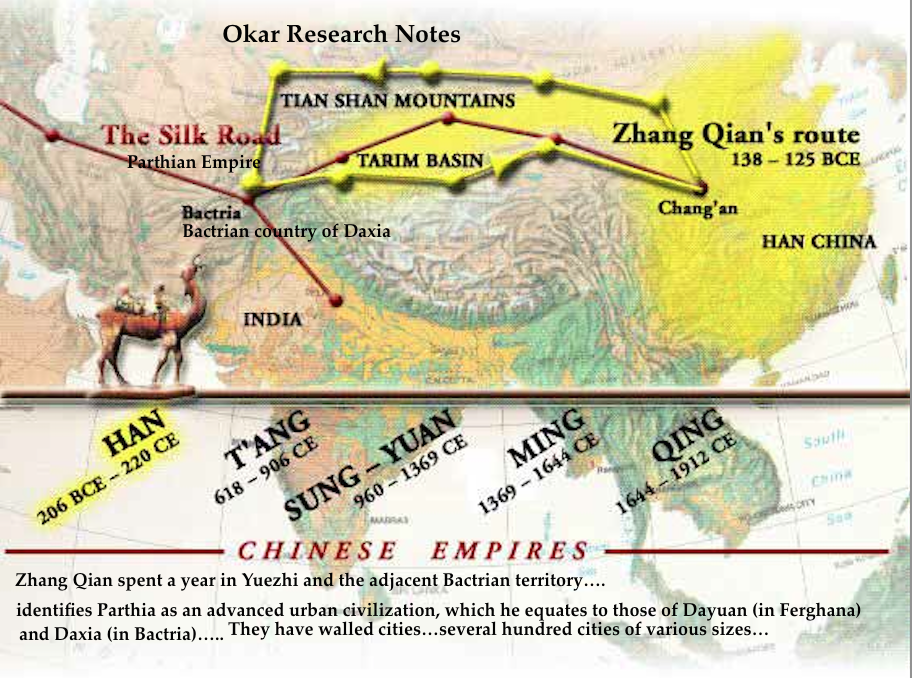
Early in the second century BC, the Han emperor Wudi dispatched Zhang Xian as an envoy to the Yeuzhi Federation on the Central Steppes. Wudi’s goal was to seek an alliance with the Yeuzhi against the repeated raids of the Xiongu nomads to China’s north. Long time rivals of the Yeuzhi, the Xiongu had launched a series of brutal attacks that had forced them to migrate thousands of miles and eventually resettle (in 130 BC)in the Oxus River valley (presently northern border of Afghanistan).
Leaving China in 138 BC, it took Zhang Xian ten years to reach the Yuezhi in Bactria with his coterie of 100 men.* The first Chinese in history to cross the Himalayas, he was captured by the Xiongu as he headed through the Gonzu Corridor (controlled by the Xiongu) in the Gobi Desert.
After the Xiongu killed most of his men, Zhang Qian himself was transported to their headquarters on the northern steppes. After ten years of captivity, he escaped, along with his Xiongu wife and their children. When he finally arrived in Bactria in 120 BC, the Yuezhi refused to ally with the Han Dynasty to confront the Xongnu.
The Xongnu rearrested Zhang Qian on his return trip in 125 BC. After being held for a year, he was released on the death of the Xiongu leader.
The reports he brought back to Wudi gave Chinese the first glimpse of settled regions to the west of China. With a population of a million people, Bactria had a well-developed agricultural economy (based on wheat, rice and grapes) with 100 cities and a well-developed trading economy. A subsequent envoy was very surprised to find goods from southern China (outside of Han control) that had found their way to Bactria via India.
In 124 BC, Zhang Qian set out again to seek a new route to India that didn’t traverse Xiongnu territory. This time Kunming tribes he encountered in the Himalayas murdered most of his men.
Zhang Qian’s initial trip rip to the Central Steppes would lead to hundreds of Chinese expeditions per year to Central Asia.
Film can be viewed free with a library card on Kanopy.
Tens of thousands were pressured to take the vaccine on threat of losing their job. This was a human rights violation,’ Danielle Smith said.
HIGH RIVER, Alberta (LifeSiteNews) – Alberta Premier leadership candidate Danielle Smith said employer vaccine mandates enacted in the province were a “human rights violation” and she promised as leader that she would make it illegal for anyone to be fired because of their vaccine status.
“Thousands of Albertans lost their jobs because they wouldn’t agree to be vaccinated. Tens of thousands were pressured to take the vaccine on threat of losing their job. This was a human rights violation,” Smith tweeted yesterday.
Smith said that with “federal booster mandates looming” there will be many companies who will be “pressured into implementing mandates this fall.”
“That’s why as Premier our government will amend the Alberta Human Rights Act to prohibit employers from firing employees based on their vaccination status,” Smith wrote.
Smith then noted that the “Government and media can butt out” out of one’s “decision of whether to be vaccinated” as this is “between you and your doctor.”
Earlier in the week, Smith said that as leader of the province she will make it “illegal” for post-secondary institutions to shut out students who choose “not to be vaccinated.”
She also recently noted that as leader of Alberta she would “ensure our schools and youth activities remain open permanently; and no child will ever be forced to wear a mask again.”
“We will let kids be kids and teachers teach. That’s my promise to you,” Smith wrote.
“Shutting down our schools was extremely harmful to our kids. Not only did it harm their education, it contributed to the ballooning youth mental health crisis & robbed them of so many positive experiences that all of us had growing up, but they missed,” she said.
The shuttering of businesses and the firing of the vaccine free in Alberta as well as the rest of Canada was unprecedented in the nation’s history, seeing many hard-working men and women suffer as a result.
In Alberta, many who were unfairly targeted by the COVID mandates have fought back.
Modern medicine has become too insular and reductionistic. Our children deserve medical care that takes a larger view of health beyond infectious diseases. Our children can’t be healthy if they are suffering from chronic illnesses in perpetuity.
Children’s health is getting worse. And it has been for decades
While the COVID-19 pandemic brought about widespread changes to our daily lives, forcing us to reexamine our lifestyle and values in the wake of the crisis, it also brought widespread examination and criticism of our medical system.
Despite the fear-mongering from the media, infectious diseases, including COVID-19, are not the foremost health concerns for children. A look at the top 10 causes of childhood mortality reveals the top 3 medically-related conditions are cancer, congenital anomalies and heart disease.
On the contrary, the top health concerns for children are chronic conditions. The British Medical Journal (BMJ) stated in 2016 that “the primary burden of disease in children and young people has shifted from infectious diseases towards chronic conditions.”
This shift has been occurring for decades, and medicine offers no easy answers. Much of the belief is that the onset of disease is genetic. But this is a simplistic answer that ignores the underlying causes.
Modern medicine has largely ignored a significant potential source of problems — environmental toxins.
Here we will examine the problem of declining children’s health, consider known environmental toxins that could play a role in that decline and show how medicine needs to reorient toward a broader vantage point to improve children’s health.
The normalization of chronic illness in children
It’s suddenly become the norm for children to have a chronic illness.
A review by Children’s Health Defense paints a stark picture. Despite higher per capita health spending, children have poorer health outcomes than in other Western nations. In addition, the review shows that every chronic illness is on the rise in children, including asthma, attention-deficit/hyperactivity disorder, allergies, autoimmunity, etc.
The CDC’s analysis corroborates these facts: 40% of school-aged children have at least one chronic health condition, such as asthma, obesity, other physical conditions and behavioral/learning problems. The CDC further states that there are significant year-over-year increases in cases of diabetes in youths younger than 20 years, with gains of 4.8% per year for type 2 diabetes and 1.9% for type 1 diabetes.
Clinicians have been aware of the rise of chronic illnesses in children, yet they cannot explain why. If doctors do not fully understand these chronic illnesses, they cannot prevent them. Nor does the practice of medicine deal with the underlying causes of these illnesses.
Instead, medicine focuses on the short-term treatment of symptoms. Children with diabetes are given insulin for the rest of their lives, asthma patients are given inhalers, children with severe food allergies carry around EpiPens and many others take a cornucopia of pharmaceutical drugs.
Medicine is not hurrying to change the status quo. There is no accompanying public health mobilization to find permanent solutions to chronic illness as there was with COVID-19. Instead, things are fine and dandy as clinicians prescribe short-term remedies while passing the buck on dealing with root causes.
It’s the environment, stupid!
We can take a lesson from former President Bill Clinton’s election campaign catchphrase “It’s the economy, stupid” used to win against incumbent former President George W. Bush.
Medicine has focused much on genetics and infectious diseases for the science policy of the last few decades. But these factors do not explain everything behind the rise in chronic illnesses. Human genetics remains the same, and infectious disease has been diminishing since the early 1900s.
The actual suspect here is the environment — something has changed in the environment that is leading to an increase in chronic illnesses in children.
Simply put, it’s the environment, stupid. If we want to truly solve the problem of chronic illness, we have to consider the possibility that something in the environment is causing harm to people’s health.
But when has a clinician ever had a heart-to-heart talk with you about the toxins in your environment? For most people, the answer is never. In truth, most clinicians do not know how to assess or educate patients about environmental toxins.
But it’s not just mere suspicion. We have plenty of science to back it up, which we’ve known about for decades.
Medicine and environmental toxicity — a dismal history
It is important to know that the history of environmental toxicity has been a dismal one.
Another prominent example is the use of the pesticide DDT. During the 1940s and 1950s, DDT was widely used as an agricultural insecticide on both farms and in neighborhoods. Health authorities encouraged the use of DDT in the USA to stop the spread of polio and to stop the spread of malaria in third-world countries.
You can find pictures of trucks spraying DDT in front of smiling families. All of these applications led to enormous profits for chemical companies.
That changed in 1962 when Rachel Carson published the book “Silent Spring,” which documented DDT’s physiological and environmental effects. She brought attention to U.S. Food and Drug Administration (FDA) data that showed DDT was carcinogenic. She also brought to light the intentional use of disinformation by chemical companies.
Her book changed public sentiment against DDT, eventually leading to its ban in the USA in 1972. Despite this ban, U.S. chemical companies still manufacture DDT for sale in foreign countries.
[…]
The playbook for profiting from environmental toxins
We can learn much about looking at patterns from the history of environmental toxins. The Moreover, the health effects of environmental toxicity can be myriad, and it is easy for clinicians to accept the default — not to mention more profitable — route of treating symptoms without searching for an underlying cause. As a result, it is easy for medical professionals to fall into the traps of blaming the victim and groupthink.
Though people want to believe that things are different now, it would be naive to do so. The same pattern occurs with toxic chemicals used today — you must protect yourself and your children from them.
Environmental toxins you should know about
Just as COVID-19 quickly became a household word, there are several environmental toxins that everyone should know about.
1. Polychlorinated biphenyls
Polychlorinated biphenyls (PCBs) are highly carcinogenic manufactured chemical compounds with no taste or smell. They were first manufactured in 1929 and then distributed by the chemical company Monsanto starting in 1935. PCBs were used in many industrial settings until their adverse effects became known, leading to a ban on U.S. production in 1979.
PCBs have been used in various applications, including electrical equipment, surface coatings, inks, adhesives, flame-retardants and paints. For example, if you see an old electrical transformer on a powerline, it might have PCBs.
Additionally, PCBs have the unfortunate property of being a “forever chemical” because they take a very long time to break down and thus circulate throughout the environment, going from the air to the soil, into plants and animals and into our bodies from eating, drinking or breathing.
PCBs are present in our environment in many ways. For example, General Electric used the Hudson River in New York as a discharge outlet for PCBs for more than 30 years thus leading to its heavy contamination.
The adverse effects of PCBs are well-established. There is clear evidence that PCBs have toxic effects on animals and humans. The U.S. Environmental Protection Agency (EPA) concludes that PCBs are a probable human carcinogen.
PCBs have been shown in human and animal studies to hamper the immune system and increase susceptibility to infections. Studies suggest that infants exposed to heightened levels of PCBs are at higher risk of impaired neurological deficits and learning disorders. These are just some negative effects, and there are far more, including damage to reproductive organs and the liver.
2. Per- and polyfluoroalkyl substances
PFAS is an acronym for the complicated-sounding per- and polyfluoroalkyl substances. This group of chemicals has been the recent talk around environmental circles as the EPA warns that PFAS are more dangerous than previously thought.
Like PCBs, PFAS are another class of “forever chemicals” that, once released into the environment, degrade very slowly and spread through the ecosystem, causing damage to humans and animals. Unfortunately, they are pervasive in our daily lives, homes and workplaces. Just about everyone is exposed to some level of PFAS.
PFAS were created in the 1940s and, since the 1950s, have been widely distributed by the company 3M. 3M is now facing increasing litigation costs for its role in contaminating the environment with PFAS.
The health effects of PFAS are very concerning. PFAS are hormone-disrupting chemicals that have a wide variety of adverse effects, such as interfering with human fertility, impairing thyroid function, increasing cholesterol levels, causing low birth weight in infants and increasing the risk for certain cancers.
Moreover, a 2013 study found associations between heavily exposed communities and the following conditions: kidney cancer, testicular cancer, ulcerative colitis, thyroid disease, hypercholesterolemia and pregnancy-induced hypertension.
With so many products containing PFAS offered to the public, it remains to be seen how exactly the EPA will act. Until then, it is up to individuals to protect themselves from PFAS.
3. Glyphosate
There is a dark side to perfect-looking lawns at houses or golf courses in your neighborhood. These perfect lawns result from frequent herbicide application to control weeds and often have the cost of negative health effects on the people that live in the area, as well as contamination of waterways and damage to the surrounding ecosystem.
[…]
Currently, as of Aug. 22, the EPA claims that the use of glyphosate is safe. The EPA states that there are “no risks of concern to human health from current uses of glyphosate” and “no evidence that glyphosate causes cancer in humans nor is an endocrine disruptor.” While it is easy for busy people to stop at this government assessment, we will see that the science is far from settled, and the concerns are genuine.
At this moment, your body’s cells are engaged in a complicated dance, transforming chemicals into those needed for critical bodily functions. The term biological pathway describes this activity. Glyphosate kills plants by disrupting a particular pathway that plants rely upon called the shikimate pathway.
The EPA and Monsanto argue that glyphosate is safe for human consumption because humans do not have the shikimate pathway. However, they omit from their analysis that many bacteria in the human gut have the shikimate pathway and are killed by glyphosate. In addition, it is well-known that glyphosate has been patented for use as an antibiotic. Therefore, the widespread presence of glyphosate in the food supply may be disrupting the human gut microbiome.
At this moment, trillions of microorganisms populate your gut and can dramatically affect your health. However, medicine has only recently understood the importance of the gut microbiome. The gut microbiome affects your body in numerous ways, including digesting fiber, helping control your immune system, affecting your brain health and modulating your body weight.
[…]
Stephanie Seneff of MIT, Ph.D., author of the book “Toxic Legacy: How the Weedkiller Glyphosate Is Destroying Our Health and the Environment,” has long sounded the alarm on the problem of glyphosate. In addition to harming the gut microbiome, she states that “the evidence is solid that glyphosate substitutes for the coding amino acid glycine by mistake during protein synthesis.” This disruption to the body’s protein synthesis could be why many chronic diseases rise in lockstep with glyphosate usage.