The Most Revolutionary Act

Uncensored updates on world events, economics, the environment and medicine

The Most Revolutionary Act
Unknown's avatar

About stuartbramhall

Retired child and adolescent psychiatrist and American expatriate in New Zealand. In 2002, I made the difficult decision to close my 25-year Seattle practice after 15 years of covert FBI harassment. I describe the unrelenting phone harassment, illegal break-ins and six attempts on my life in my 2010 book The Most Revolutionary Act: Memoir of an American Refugee.

Fauci Edited Paper on Wuhan Bat Virus Research — 2 Weeks Before COVID Outbreak

By Eva Fu

Epoch Times

Dr. Anthony Fauci, the director of the National Institute of Allergy and Infectious Diseases (NIAID), edited a research paper by the group that worked with a high-profile lab in Wuhan, China, to study dangerous bat viruses while pushing back on concerns that the facility could be the source of the COVID-19 pandemic.

The paper, titled “Nipah virus dynamics in bats and implications for spillover to humans,” was funded by eight federal programs, half of which were from the NIAID that Fauci will lead until December.

Members of the nonprofit research group EcoHealth Alliance, which became a conduit for the Wuhan Institute of Virology to conduct risky bat research using U.S. taxpayer dollars, make up over half of the roughly two dozen authors on the paper.

Fauci edited the paper in 2020 after receiving it for review that Jan. 8, two weeks before COVID-19 brought Wuhan to a complete lockdown. The peer-reviewed scientific journal Proceedings of the National Academy of Sciences of the United States of America, better known as PNAS, approved it in September 2020 and published it two months later.

The extent of Fauci’s input into the paper is unclear. As a public servant for four decades, Fauci has edited scientific papers, notably on the subject of HIV. But his editorial role, given the group’s history of ties with the Wuhan lab and the funding it received from his agency, nonetheless raised eyebrows among critics.

Tristan Daedalus, the government affairs director for White Coat Waste Project that has been tracking the EcoHealth and Wuhan lab’s collaboration, saw in the case a “self-licking ice cream cone.”

“First, Fauci champions dangerous animal experiments to balloon his $6 billion budget. Next, he doles it out via grants to EcoHealth and other white coats in the U.S. and abroad. He and his colleagues then personally edit and approve the experiments they funded for publication in scientific journals — then claim success because of the publication record.

Finally, he renews the payouts to fuel the government gravy train,” Daedalus said in a statement to The Epoch Times. “Fauci isn’t following the science, but EcoHealth sure is following the money.”

As the virus spread to other parts of the world, Fauci made repeated efforts to promote a natural COVID-19 origin narrative while downplaying the prospect of a lab leak both privately and in public.

Peter Daszak, a co-author of the PNAS paper and president of EcoHealth, thanked Fauci for backing a natural origin theory in an April 2020 email, according to National Institutes of Health (NIH) records since released through a Freedom of Information Act request.

“I just wanted to say a personal thankyou [sic] on behalf of our staff and collaborators, for publicly standing up and stating that the scientific evidence supports a natural origin for COVID-19 from a bat-to-human spillover, not a lab release from the Wuhan Institute of Virology,” he wrote on April 18, 2020, a day after Fauci told reporters that all available evidence on the virus was “totally consistent with a jump of a species from an animal to a human.”

“The work we’ve been doing in collaboration with Chinese virologists has given us incredible insights into the risks that these viruses represent, so that we can directly help protect our nation from bat-origin coronaviruses,” he said, citing an NIH-funded multi-year project on bat coronavirus emergence in China.

“From my perspective, your comments are brave, and coming from your trusted voice, will help dispel the myths being spun around the virus’ origins.”

“Many thanks for your kind note,” Fauci wrote in reply.

The project that Daszak cited was suspended later that year and was the subject of inquiries by both the FBI and the Department of Health and Human Services over its use of grant funding in China. In August, the NIH terminated the project funding to the Wuhan lab after twice failing to get the Chinese facility to hand over laboratory records.

Fauci’s agency in late September again greenlit millions of funding to EcoHealth to support its research projects in Asia. One of them relates to the Nipah virus.

[…]

Sen. Joni Ernst (R-Iowa) introduced legislation following the NIH grant announcement, aiming to cut off federal funding for EcoHealth. She was one of 40 Congress members who recently signed a letter to the NIH condemning its continued funding of EcoHealth.

“Taxpayers deserve answers about why Dr. Fauci continues to show favoritism for an organization that has violated federal laws, refuses to turn over documents vital to understanding the possible origins of COVID-19, and demonstrated reckless disregard for safety,” Ernst told The Epoch Times.

[…]

Via https://childrenshealthdefense.org/defender/anthony-fauci-bat-virus-covid-research-wuhan-lab-et/
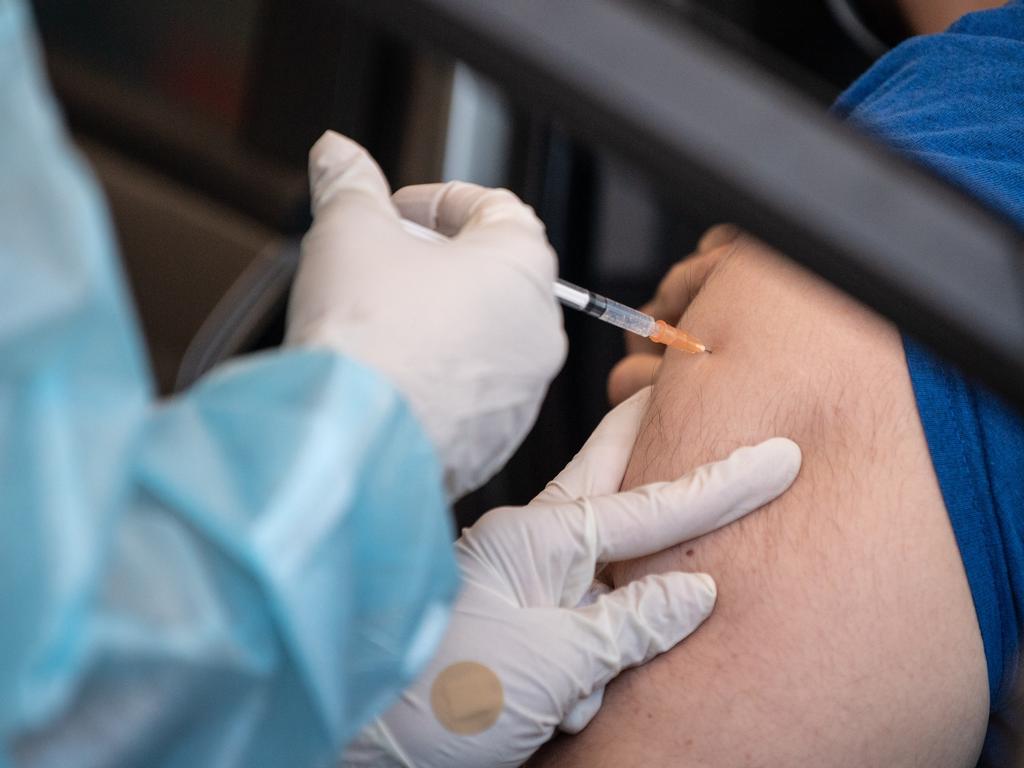
Yes, they claimed the vaccine stopped transmission

A drive-through Covid vaccination hub in Sydney. Picture: James Gourley/NCA NewsWire

News.com.au

No, you’re not crazy. Yes, they claimed the vaccines would prevent transmission.

One of the most bizarre lies being told this week in response to Pfizer executive Janine Small’s testimony to EU Parliament is that, actually, the Covid vaccines were never supposed to stop the spread of the virus.

Asked by Dutch MEP Rob Roos whether the company had tested its vaccine on “stopping the transmission of the virus” before it rolled out globally, Ms Small said “no” because “we had to really move at the speed of science to really understand what is taking place in the market”.

“And from that point of view we had to do everything at risk,” she said.

In a viral Twitter video which has now been viewed more than 12 million times, Mr Roos described the response as “scandalous”, arguing “millions of people worldwide felt compelled to get vaccinated because of the myth that ‘you do it for others’”.

Mr Roos said the admission removed the entire basis for vaccine mandates and passports which “led to massive institutional discrimination as people lost access to essential parts of society”.

“I find this to be shocking, even criminal,” he said.

Of course, fact checkers were not happy.

This is not the bombshell it is being presented as, they argue, because it was public knowledge that the primary outcome measured in Pfizer’s clinical trials was reducing risk of disease, but not transmission.

Moreover, as the Therapeutic Goods Administration stressed, “transmission effects” are “not an approved indication of any Covid-19 vaccine” currently available in Australia.

A drive-through Covid vaccination hub in Sydney. Picture: James Gourley/NCA NewsWire

That might be technically true, but it feels like just that — a technicality.

And this is why Mr Roos’ video, while not strictly being new information, struck such a nerve.

Because setting aside what it says in the fine print, the public was told repeatedly, for months, both explicitly and implicitly, that the vaccines would prevent transmission.

They’re all on tape saying it.

US President Joe Biden, for example, said in July 2021 that “you’re not going to get Covid if you have these vaccinations”.

White House chief medical adviser Dr Anthony Fauci said in May 2021 that vaccinated people become “dead ends” for the virus.

CDC director Rochelle Walensky said in March 2021 that “vaccinated people do not carry the virus, don’t get sick”.

In Australia, politicians and health officials held millions of people hostage for months, lecturing and threatening them to get vaccinated to regain their “freedoms”.

The vaccines were the “way out” of the pandemic, they were not to just to protect ourselves but to “protect others”, they would “stop the spread”, and not getting vaccinated was “selfish”.

Vaccine passports, the “vaccinated economy”, were necessary so people who “did the right thing” would feel “safe” knowing they weren’t “mixing” with the unvaccinated, who were a “risk to the community”.

By late 2021 and early 2022, as Omicron became dominant and it was clear vaccinated people were still catching and spreading the virus, the messaging changed.

“Stopping the spread? What are you talking about? It’s about reducing hospitalisation and death. We have always been at war with hospitalisation and death.”

That’s all well and good — but it’s an entirely different moral calculation.

Vaccine mandates, like other Covid restrictions, were always a balancing act between personal choice and public health.

But with the vaccine no longer stopping the spread of the virus, mandates are effectively like the police kicking down your door and forcing you to eat your vegetables at gunpoint.

Or like protecting immunocompromised people by simply welding them inside their homes.

[…]

Via https://www.news.com.au/technology/science/human-body/yes-they-claimed-the-vaccines-would-prevent-transmission/news-story/a176eb002c29e603fc29ef9fe0b33b18

Were Our Ancestors Smarter Than Us?

19th century chilren picture - Google Search | Vintage family photos, Vintage photos, Vintage ...

Conservative Skeptic

Social media can be a good platform to introduce and discuss ideas. It’s also a good place to be able to spread understanding where none may currently exist. I know we all, even myself, beat on how horrible this medium is, but I have to say that it allows me the opportunity to speak to a lot more people than I normally would. The downside is that we’ve become to dependent on our electronic devices and it will be a miracle if we , as a species, survive another 500 years.

Think about it. How many of us would know how to build out own house, dig a well, plant and harvest our own food, even hunt and fish to feed ourselves and our family? The percentage of those would be close to zero, in the “developed” countries, somewhat more in those less concerned about who likes them on Twitter.

We like to consider ourselves advanced in every area but it;s strange that now, today, parents are concerned about their children’s education more and more. A hundred years ago, literacy in the United States was less than 20%. Even though the literacy rate is higher today (around 80%), we’ve done nothing to take advantage. Education has become a political whipping dog where one side says, “Leave your kids to government control” and the other says, “No way”. Less than a century ago, there was more local control of education. Today, slowly, we’re beginning to return to that most successful model.

My parents were part of what has become known in legend, if not fact, as “The Greatest Generation”, That generation that sacrificed everything to bring us to a new world of peace and prosperity. My father fought in the Pacific during that which is known as World War II. But mankind, being who we are, could not stand a moment’s rest. A sliver of peace that we might dine upon and then claim that yes, we had gained that perfect utopian ideal. We can’t even recall the horrors we have committed upon one another generation to generation,

My father was a veteran of not only the Second World War, but also the Korean Conflict and Vietnam. His father fought the Huns (Germans) in the Ardenne in “The Great War”, AKA, World War One, literally one generation from the second. We learned nothing, Our species, unlike most others that exist on our tiny planet, are more adept at killing others of our own than building and supporting those that may have less, and need more. We have weapons that could end all human life on Earth, and yet refuse to feed those that are the most desperate.

We are who we are. There are no need of apologies simply because there is no one to apologize to. Is it possible to apologize to yourself? So humans have become who we are today based on the same political and economic realities of the ancient past. We haven’t “evolved” in that way, only developed the means of wiping out civilization. That’s progress. Imagine having to protect your home with a knife, or some agricultural implement, one-on-one. Mano-e-mano. Until very recently in human history, that’s the way people protected themselves and their families. How many today, would be able to do that? Closer and closer to zero.

A tweet I saw earlier started my process on this post, It was a simple statement, and I believe it was made with sincerity:

Our ancestors had less access to information but somehow they were smarter than us.

My short response,

Because they couldn’t sit around and wait for the microwave to heat prepared foods. They had to hunt, fish, plant, and gather.

They also had to learn to construct shelter, and manager livestock over time. This is when there were probably no written languages. Even when there were, in the periods we learn of in the middle east, 3% of those populations could read or write and in that number, only about 1% could do both adequately, and yet the human race not only continued, but prospered.

My father grew up on a farm in northern Arkansas. As a kid, and the eldest, he was required to not only attend school, but help support the family, His mother kept a “small” garden as I used to hear her talk about, that would supply the family with those greens that would normally not be available to them. This was during what has become known as “ The Great Depression” and unlike what most of us were taught in school, farmers didn’t starve. We’ve all see the video of people in cities in “soup lines” but that didn’t represent the entire country. No, my grandparents were far from rich, even middle class, but they found a way to support their family. Something few if any of us today would be able to do. It is, however, a question every person should ask themself. If the world went naked: no power, meaning no devices, no delivered services, like water, could I and my family survive?

Maybe we should stop blaming those that could care less about our survival and take that upon ourselves. Government? They’re going to go into hiding when that first nuke drops. You? Well, you’re own your own but thank GOD the government still exists, right?

So what’s my point here? For thousands of years, even into the last century, people were able to take care of themselves and their families without any government interference and of course, without any of these handy devices we use today to moan and wail about our pitiful state of existence.Maybe we should worry less about the state of our air conditioning or heat and think about how we may or may not survive if none of these accommodations existed.

[…]

Via https://consskep.com/2022/10/16/were-our-ancestors-smarter-than-us/

Are Green Resource Wars Looming

By and

TomDispatch

The Burden of Massive EV Batteries Will Be Borne by People and Ecosystems

Much of the excitement over the Inflation Reduction Act, which became law this summer, focused on the boost it should give to the sales of electric vehicles. Sadly, though, manufacturing and driving tens of millions of individual electric passenger cars won’t get us far enough down the road to ending greenhouse-gas emissions and stanching the overheating of this planet. Worse yet, the coming global race to electrify the personal vehicle is likely to exacerbate ecological degradation, geopolitical tensions, and military conflict.

The batteries that power electric vehicles are likely to be the source of much international competition and the heart of the problem lies in two of the metallic elements used to make their electrodes: cobalt and lithium. Most deposits of those metals lie outside the borders of the United States and will leave manufacturers here (and elsewhere) relying heavily on foreign supplies to electrify road travel on the scale now being envisioned.

Adventurers and Opportunists

In the battery business, the Democratic Republic of Congo is referred to as “the Saudi Arabia of cobalt.” For two decades, its cobalt — 80% of the world’s known reserves — has been highly prized for its role in mobile-phone manufacturing. Such cobalt mining has already taken a terrible human and ecological toll.

Now, the pressure to increase Congo’s cobalt output is intensifying on a staggering scale. Whereas a phone contains just thousandths of a gram of cobalt, an electric vehicle battery has pounds of the metal, and a quarter-billion such batteries will have to be manufactured to fully electrify the American passenger car fleet as it now exists.

Not surprisingly, the investment world is now converging on Congo’s capital, Kinshasa. In a remarkable series of articles late last year, the New York Times reported on how the cobalt rush in that country has been caught up “in a familiar cycle of exploitation, greed, and gamesmanship that often puts narrow national aspirations above all else.” The most intense rivalry is between China, which has, in recent years, been buying up cobalt-mining operations in Congo at a rapid clip, and the United States, now playing catch-up. Those two nations, wrote the Times, “have entered a new ‘Great Game’ of sorts,” a reference to the nineteenth-century confrontation between the Russian and British Empires over Afghanistan.

Fifteen of 19 cobalt mines in Congo are now under Chinese control. In and around those mines, the health and the safety of workers have been severely compromised, while local residents have been displaced from their homes. People sneaking into the area to collect leftover lumps of cobalt to sell are being shot at. The killing of one man by the Congolese military (at the urging of Chinese mine owners) spurred an uprising in his village, during which a protester was also shot and killed.

The Times further reported, “Troops with AK-47s were posted outside the mine this year, along with security guards hired from a company founded by Erik Prince.” Prince is notorious for having been the founder and boss of the mercenary contractor Blackwater, which committed atrocities during America’s “forever wars” of the 2000s. Among other mayhem, Blackwater mercenaries fired upon unarmed civilians in both Iraq and Afghanistan and were convicted of the killings and woundings that resulted. From 2014 to 2021, he was the chair of a China-based company, Frontier Services Group, that provided Blackwater-style services to mining companies in Congo.

Prince has joined what the Times calls “a wave of adventurers and opportunists who have filled a vacuum created by the departure of major American mining companies, and by the reluctance of other traditional Western firms to do business in a country with a reputation for labor abuses and bribery.”

Neo-Conquistadors    

Forbes reported recently that 384 additional mines may be needed worldwide by 2035 to keep battery factories supplied with cobalt, lithium, and nickel. Even were there to be a rapid acceleration of the recycling of metals from old batteries, 336 new mines would still be needed. A battery-industry CEO told the magazine:

“If you just look at Tesla’s ambition to produce 20 million electric vehicles a year in 2030, that alone will require close to two times the present global annual supply [of those minerals] and that’s before you include VW, Ford, GM, and the Chinese.”

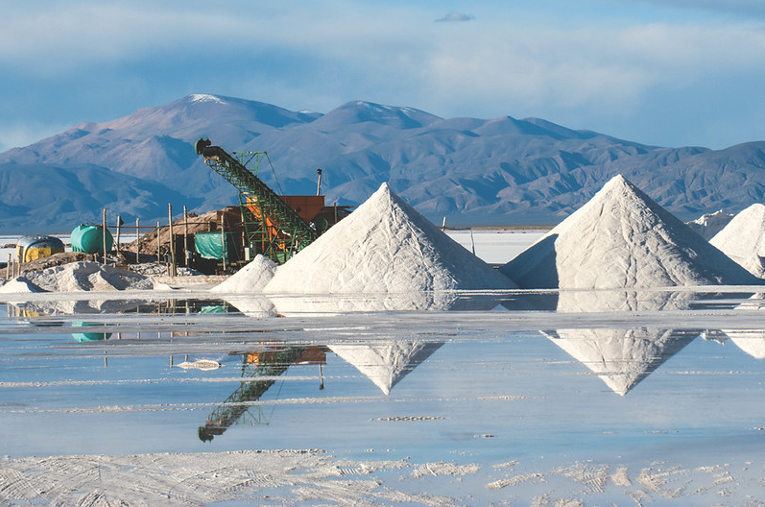
Currently, the bulk of the world’s lithium production occurs in Australia, Chile, and China, while there are vast unexploited reserves in the southern part of Bolivia where it joins Chile and Argentina in what’s come to be known as the “lithium triangle.” China owns lithium mines outright throughout that triangle and in Australia, and two-thirds of the world’s lithium processing is done in Chinese-owned facilities.

Lithium extraction and processing is not exactly a green business. In Chile’s Atacama Desert, for instance, where lithium mining requires vast evaporation ponds, a half million gallons of water are needed for every metric ton of lithium extracted. The process accounts for 65% of the total amount of water used in that region and causes extensive soil and water contamination, as well as air pollution.

While evidently uninterested in Mother Nature, Tesla’s electric car tycoon Elon Musk is intensely interested in vertically integrating lithium mining with electric battery and vehicle production on the Chinese model. Accordingly, he’s been trying for years to get his hands on Bolivia’s pristine lithium reserves. Until ousted in a 2020 coup, that country’s president Evo Morales stood in Musk’s way, pledging to “industrialize with dignity and sovereignty.”

When a Twitter user accused Musk of being complicit in the coup, the Tesla tycoon responded, “We will coup whoever we want! Deal with it.” (He later deleted the tweet.) As Vijay Prashad and Alejandro Bejarano observed at the time, “Musk’s admission, however intemperate, is at least honest… Earlier this year, Musk and his company revealed that they wanted to build a Tesla factory in Brazil, which would be supplied by lithium from Bolivia; when we wrote about that we called our report ‘Elon Musk Is Acting Like a Neo-Conquistador for South America’s Lithium.’”

[…]

Via

Are Green Resource Wars Looming?

Changes in Red Cross Blood Screening Procedures

https://imagedelivery.net/WEWiZyGwyq-Q4qn_WluYYg/e2074cd2-89fa-4933-bba7-61a8b8727b00/articleImageDefault

Trial Site News

Changes in the medical screening practices of the Red Cross for blood donor eligibility have been observed. The questionnaires now include the record of receiving the COVID-19 vaccine. The medication deferral list includes the experimental vaccines as they may affect a person’s eligibility to donate blood. When the pandemic began in 2020, the Red Cross began testing blood donors for COVID-19 antibodies but they have completely stopped the procedure and now focus on vaccines. 

A person who would like to donate blood to the Red Cross needs to read and answer a list of questions to find out if they are eligible. The Red Cross assures the public that donors who received COVID-19 shots can still give blood as long as they are symptom-free and feeling well at the time of donation. However, under the eligibility guidelines applied to vaccine recipients, a donor needs to provide the name of the manufacturer of the vaccine received to determine the deferral time to be implemented.

A Need for a Greater Blood Supply

Challenges in the blood supply were already present even before the emergence of COVID-19. The pandemic brought about a crisis for blood services as the spread of infection caused cancellations of blood drives. In 2022, the number of weekly cases has continued to decrease, and local governments have started to loosen public health restrictions. The worst part of the pandemic appears to have passed, but crises in the blood supply have not ended.

The concern about blood availability is not due to increased demand for transfusion, but because of the decline in supply due to reduced donations. As a result of the unprecedented blood supply shortage, hospitals are forced to delay or reschedule surgeries. To prevent these problems, the Red Cross continues to encourage the public to donate blood.

COVID-19 Vaccine and Blood Donation

The U.S. Food and Drug Administration (FDA) granted an emergency use authorization (EUA) to Pfizer-BioNTech on December 11, 2020. Since then, different varieties of vaccines have been developed against COVID-19 such as messenger RNA (mRNA), vector vaccine, and protein subunit vaccine. As of October 1, 2022, about 68% of the world’s population has received at least one dose of the COVID-19 vaccine.

With the majority of the population receiving jabs, the screening process for blood now includes the donors’ vaccination status. As part of the Red Cross screening process, the blood donor is asked a series of personal questions to ensure that it is safe for patients to receive their blood and that it is safe for the donor to give blood on the appointed day.

On March 17, 2020, Gail McGovern, president and chief executive officer of the American Red Cross reassured the public that “blood donation is a safe process, and that we have put additional precautions in place at our drive drives.”

Eligibility Guidelines Concerning COVID Shots

Ten organizations, including the World Health Organization (WHO), FDA, and Association for the Advancement of Blood & Biotherapies (AABB), released various recommendations on the deferral periods for blood donors who had received COVID-19 vaccine. The deferral periods range from zero to 28 days, depending on whether the donor received a live or inactivated vaccine.

Among these organizations, the Red Cross follows the eligibility guidelines set by the FDA. Updated information for blood establishments regarding the COVID-19 pandemic and blood donation was released by the FDA on January 11, 2022. It suggests that individuals who received a nonreplicating, inactivated, or mRNA-based vaccine can give blood without a waiting period, and there’s a short waiting period (e.g., 14 days) for donors who received a live-attenuated shot. As a response to these requirements, the Red Cross released the COVID-19 Vaccine & Booster Blood Donation Guide for Donors where the donor is expected to report the name of the vaccine manufacturer during the screening process.

Concerns for the Blood Recipients

There are significant differences in the public’s acceptance of COVID-19 vaccines, and this has also affected the acceptance of blood transfusions from COVID-19 vaccinated donors. Some patients refuse blood transfusions and demand physicians to disclose details of the donor, including whether the donor received a COVID-19 vaccine.

As reported in TrialSite, there are concerns about why vaccinated individuals are allowed to donate blood within two weeks after receiving the shot if the spike proteins circulate in the body for up to a month after mRNA vaccination. A study by the Stanford University Department of Pathology revealed that the blood of Pfizer vaccine recipients contains at least as much spike protein as unvaccinated individuals who were infected by the virus.

The Australian Red Cross advises donors to wait three days after receiving each jab before donating blood, plasma, or platelets regardless of the type of vaccine received because of the possible side effects such as mild fever.

Antibody Testing for Blood Donors

In the early period of the pandemic, the Red Cross tested all blood, platelet, and plasma donations for COVID-19 antibodies. The result helped inform the donors whether they have been exposed to Severe Acute Respiratory Syndrome Coronavirus 2 (SARS Cov-2), the virus that carries COVID-19.

The antibody test was authorized by the FDA and helped indicate if the donor’s immune system had produced antibodies to the coronavirus, regardless of the development of symptoms. It was implemented for a limited time from June 15 – 30, 2020. They discontinued the program when infection rates decreased and new treatment options became available.

A positive result from the antibody test does not confirm infection or immunity, as it only indicates potential exposure to the virus.

Are We Repeating History?

Blood transfusion is one of the most frequently performed medical procedures, yet this practice has historically been mired in controversy such as when African-Americans were banned from donating blood during World War II. This was followed by a lifetime ban on blood donations on men who had sex with men (MSM) during the HIV/AIDS epidemic in the 1980s. During the mid-twentieth century, the U.S. National Blood Program encouraged blood donation and ensured that gender, race, and sexuality would not influence the transfusion process.

Practices in blood donation have improved, but the societal views of it remain controversial. The issues surrounding COVID-19 vaccines have led some patients to get worried about becoming infected with COVID-19 or developing long-term effects from the vaccine itself.

[…]

Via https://www.trialsitenews.com/a/changes-in-red-cross-blood-screening-procedures-469a8014

Kaiser Permanente Sued For Wrongful Death After California Husband’s Remdesivir Treatment Fails

Zero Hedge

Authored by Juliette Fairley via The Epoch Times (emphasis ours),

Before Rodney Briones’ physicians at Kaiser Permanente Riverside Medical Center in California treated him with Remdesivir, they allegedly did not disclose the risks to him or to his wife, Christina, and did not obtain informed consent, according to a complaint filed by the Briones family.

The couple had gone to the managed care consortium for help after Rodney developed COVID-19 symptoms and tested positive twice for SARS-CoV-2.

A five-day course of treatment with the controversial drug and other allegedly contraindicated, high-risk medications allegedly led to kidney failure for the 50-year-old Briones, who was subsequently placed on a ventilator. During this time, Kaiser Riverside reportedly refused to allow the man’s wife or family to see him. He died on Sept. 12.

“My husband was murdered because of government [expletive],” Christina Briones told The Epoch Times. “I never thought this could happen.”

Kaiser Permanente and Gilead Sciences, the maker of Remdesivir, did not respond to requests for comment.

The grieving wife sued Kaiser in Riverside Superior Court alleging the wrongful death of her husband due to hospital protocol that included administering Remdesvir, which, according to the lawsuit, is a failed Ebola drug that was found to be terminally toxic to the kidneys. The drug was pulled from an Ebola study because more than 53 percent of Remdesivir recipients died, the lawsuit states.

“The Kaiser Riverside physician did not disclose the availability of highly effective Safe Multi-Drug Early Treatment (SMDET) to Rodney when both Rodney and a reasonable patient in Rodney’s position would have wanted the disclosure,” wrote the Briones family attorney Matthew Tyson in the Sept. 7 complaint. “This was constructive fraud.”

The Briones family seeks survivor action general damages as well as wrongful death general and special damages.

“We pioneered Remdesivir wrongful death litigation using a constructive fraud theory, and we filed the very first Remdesivir wrongful death lawsuit in the country, back in June, for Evangeline Ortega,” said Tyson, who is working with Attorney Brian Garrie on multiple Remdesivir lawsuits.

[…]

Via https://www.zerohedge.com/covid-19/kaiser-permanente-sued-wrongful-death-after-california-husbands-remdesivir-treatment-fails

Japan: Geography and Early Cultures

A Country Study on the Ancient Cultures of Japan

Episode 26: Japan – Geography and Early Cultures

Foundations of Eastern Civilization

Dr Craig Benjamin (2013)

Film Review

This introduction to ancient Japanese civilization begins with a discussion of its geography, climate and early archeological record.

The 1,500 mile-long archipelago of Japan consists of four main islands and thousands of smaller ones. It’s climate ranges from chilly temperate in the north to subtropical in the south. Owing to its relative isolation from the Asian continent, it successfully resisted two attempted Mongol invasions and was of no interest to expansionist Chinese emperors.

Owing to its location in the Pacific “ring of fire,” it is very tectonically active with frequent earthquakes and occasional volcanic eruptions. Its rugged mountain ranges are still quite young and unsuitable for farming. However its narrow coastal plains (comprising 13% of Japan’s total area) are have very fertile volcanic soils, with plentiful fresh water (from snow melt and a long growing season. This is where Japan’s first farmers settled.

Archeologists have found stone tools dating from 400,000 years ago, left (they believe)r hominid ancestors (most likely Homo erectus).

The first Homo sapiens appear to have crossed a land bridge from the Asian continent during the last Ice Age (between 35,000 and 50,000 BC). They were most likely following ancient mega fauna (bison, elk and elephant).

According to their remains, Japan’s Paleolithic humans were affluent foragers, owing to plentiful fish, forest products and boar and deer that crossed the land bridge from either China or Korea. Tools they left behind include arrows, traps, nets with sinkers, canoes. They lived in semi-permanent villages, traded between islands and domesticated dogs. Some of them left sculpted stones (20,000 – 10,000 BC) shaped like human beings. Around 12,0000 BC, they also developed the world’s  first (Jomon) pottery made of baked clay around 12,000 BC.

The first evidence of agriculture (cultivation of rice and millet) dates from around 5,000 BC, along with the first full scale villages and large communal store houses. Bronze appeared in Japan around 300 BC, among the Yayoi culture. Genetically distinct from the Jomon, they are believed to have immigrated from Korea.

Wet rice farming was introduced to Japan during the early Yayoi period. By the seventh century AD, it had spread throughout Japan. More productive than dry rice farming, this enabled the accumulation of surpluses and the emergence of class society.

Film can be viewed free with a library card on Kanopy.

https://www.kanopy.com/en/pukeariki/watch/video/5808608/5808663

A Big Picture Look at the Disastrous Public Health Response to COVID-19

By Carla Peters and David Bell

Brownstone Institute

An underlying principle of public health is, or was, to provide the public with accurate information so that they can make good health choices for themselves and their community.

The past 3 years have seen this paradigm turned on its head, with the public’s money being used to deceive and coerce them, forcing them to follow public health dictates. The public has funded their own incarceration and impoverishment through their taxes, with public funds driving the unprecedented nonpharmaceutical, and then pharmaceutical, response to a virus that kills mainly old sick people near the end of their lives.

Children have had their education downgraded, and economies have been mangled, ensuring future generations will also pay. So, what did the public actually pay for?

COVID-19 was not novel, but a variation on previous respiratory disease.

Most healthy people infected with SARS-CoV-2 recover without any intervention, gaining natural immunity which, in the absence of vaccination, generates a more robust and long-lasting protection with less risk for reinfections as compared to individuals protected by vaccination alone. Globally, the infection fatality rate (IFR) of SARS-CoV-2 is about 0.15% and comparable to seasonal influenza (IFR 0,1 %). The IFR of those under twenty years was only 0.0013 %, and highest for those beyond 70 years. The IFR of COVID-19 among community-dwelling elderly is lower than previously reported in elderly overall.

A higher IFR was found in countries with many long-term care facilities, perhaps because exposure tends to occur through other immune-suppressed elderly, rather than immune-competent children with lower viral loads. An aging population goes through the process of immunosenescence and increased incidence and severity of infectious diseases is expected.

Severe COVID-19, or COVID-19 Associated ARDS, is a syndrome within the known ARDS spectrum. Acute Respiratory Distress Syndrome (ARDS) and associated cytokine storm has been recognized for more than 50 years. It occurs when a diverse array of triggers causes acute, bilateral pulmonary inflammation and increased capillary permeability leading to acute hypoxemic respiratory failure.

Although supportive care improved the prognosis, mortality and disabling complications in survivors in intensive care are still high, and have remained relatively unchanged in the last 20 years. In 2013 an estimated 2.65 million deaths worldwide were attributed to Acute Respiratory Tract Infection.

As with other ARDS etiologies, people suffering from (COVID-19) ARDS are mostly elderly people with comorbidities including being overweight, hypertension, Type 2 diabetes and cardiovascular diseases, often using multiple medications. Other restrictions on the immune system, such as vitamin D deficiency, put people at increased risk.

As of July 2022, WHO reported over 601 million confirmed cases and over 6.4 million deaths associated with COVID-19 globally. More than half (3.5 million) died after the rollout of the COVID-19 vaccines, though 67.7 % of the world population has received at least one vaccination. The WHO estimates a total of 14.9 million excess deaths in 2020-2021 associated with COVID-19 directly due to the disease or indirectly due to the impact of the public health response on health systems and society.

Footing the bill for the disposal of orthodox public health

Since COVID-19 was recognized in Western countries in early 2020, expenditures on public health in many of them have more than doubled, imposing over $500 billion in monthly costs on the global economy. Some trillions more have been spent on compensation and stimulus packages for those left without income due to the public health response, whilst economies, and therefore future employment opportunities, have been heavily damaged. This is nearly all funded by taxpayers, or borrowed to be funded with interest by the taxpayers of the future.

Politicians and various experts have claimed that the coercive COVID-19 public health policies are the only way to curb COVID-19, though such measures were advised against by the WHO in its pandemic influenza guidelines of 2019. They would increase poverty and inequality, whilst having (still) unproven efficacy.

Citizens have paid the bill via taxes for novel nonpharmaceutical interventions (lockdowns, mask mandates and frequent testing) and repeated vaccinations of immune people with rapidly waning vaccines, whilst seeing their own incomes reduced. The increase in the money supply to cover relief for forced unemployment has driven inflation, contributing to increased food, water, energy, health and insurance costs. These responses have disproportionately harmed low income families.

Governments take over medical management

Early in the pandemic it became clear that intubating a COVID-19 patient could increase long-term harm and mortality. Unfortunately, many hospitals continued a low threshold for the use of ventilators for the fear that other methods of oxygenation would spread the virus. In 2020 the US spent billions of dollars stockpiling unused ventilators.

In many countries a relatively new antiviral drug, remdesivir, developed with State funding, became the first choice of treatment for hospitalized people with COVID-19. The safety and toxicity of the expensive remdesivir was widely disputed. Yet even after the first results of the WHO’s Solidarity study found little or no effect on reducing hospital stay or Covid deaths, the EU continued a €1.2 billion agreement with Gilead for 500,000 treatments and it continued to be prioritized for use in the United States.

Final results of the Solidarity study confirmed the finding of little or no effect. In contrast, the use of cheaper drugs with antiviral activity, like ivermectin and hydroxychloroquine, was suppressed. Although ivermectin is now included in lists of the US National Institutes of Health in August 2022, governments are silent on its use, preferring to transfer funds to Pharma for newer on-patent drugs.

Expanding lockdowns from prisons to society

Lockdowns may prove to be one of the gravest governmental failures of modern times. A cost-benefit analysis of the response to COVID-19 found lockdowns to be far more harmful to public health (at least 5-10 times) in terms of well-being than COVID-19. Significant collateral damage is not unexpected, as mass business closures and restricted movement have affected billions of people globally through poverty, food insecurity, loneliness, unemployment, educational interruption, and interrupted healthcare. What did not make media headlines is the more than 3 million children who have died from malnutrition in the first year of the pandemic. Together with increasing malnutrition, the world is facing rising burdens of child marriage and child labor, developmental and mental problems, poverty, suicide and chronic disease.

[…]

Via https://brownstone.org/articles/a-big-picture-look-at-the-disastrous-public-health-response-to-covid-19/

Scientists Sound Alarm as Gates, WEF Promote Gene-Editing Technology for Everything From Fake Meat to Designer Babies

By  Michael Nevradakis, Ph.D.

Bill Gates and the World Economic Forum are among the biggest promoters of CRISPR, a recently developed gene-editing technology, but scientists interviewed by The Defender warned about the technology’s flaws and risks.

CRISPR, a recently developed gene-editing technology is promoted as a potential solution to numerous diseases, to food security and climate change — even as a way to deliver “designer babies” and bring extinct mammals back to life.

The technology has attracted significant investments and the attention of actors such as Bill Gates and the World Economic Forum (WEF).

But many scientists express concerns about the technology’s potential harmful effects.

In interviews with The Defender, Dr. Michael Antoniou, head of the Gene Expression and Therapy Group at King’s College London, and Claire Robinson, managing editor of GMWatch, provided insights into the flaws of this technology, its potential consequences and the risks associated with not regulating it sufficiently.

What is CRISPR?

CRISPR — which stands for Clustered Regularly Interspaced Short Palindromic Repeats — acts as a “precise pair of molecular scissors that can cut a target DNA sequence, directed by a customizable guide.”

Put differently, this technology allows scientists to edit sections of DNA by “snipping” specific portions of it and replacing it with new segments. Gene editing is not a new concept, but CRISPR technology is viewed as being cheaper and more accurate.

This stems from the 2012 discovery that RNA can guide a Cas protein nuclease to any targeted DNA sequence, and to (theoretically) target only that one specific sequence. Indeed, CRISPR technology is often referred to as CRISPR-Cas9 for this reason.

The Media and many scientists have expressed optimism about the technology.

Medlineplus.gov, for instance, said CRISPR “has generated a lot of excitement in the scientific community because it is faster, cheaper, more accurate, and more efficient than other genome editing methods.”

Wired, in 2015, described CRISPR as “revolutionary,” writing that it had “already reversed mutations that cause blindness, stopped cancer cells from multiplying, and made cells impervious to the virus that causes AIDS.”

The technology also made wheat “invulnerable to killer fungi,” and altered yeast DNA “so that it consumes plant matter and excretes ethanol,” according to Wired.

In the same article, Wired wrote that “Technical details aside, CRISPR-Cas9 makes it easy, cheap, and fast to move genes around — any genes, in any living thing, from bacteria to people.”

A scientist quoted in the story added, “These are monumental moments in the history of biomedical research.”

Bloomberg, in 2016, said CRISPR will “change the world,” quoting scientist Andrew May of Caribou Biosciences, who described CRISPR as “potentially, a cheap and quick way to fix anything about a genetic code” and “almost as fundamental as the transistor.”

The discovery of CRISPR’s gene-editing applications was viewed as so significant that two scientists, Emmanuelle Charpentier and Jennifer Doudna, won the 2020 Nobel Prize in Chemistry, even as a patent dispute between Doudna and another scientist, Feng Zhang — also viewed as instrumental in CRISPR’s development — continues to this day.

Other scientists, though, do not share the same optimism about CRISPR.

A ‘genetic modification procedure’ that is ‘not precise’ and ‘not breeding’

Robinson told The Defender that “in general terms, CRISPR is a gene-editing tool” that “cuts the DNA across the double strand” and can be targeted “to a precise sequence in the genome.”

CRISPR can be used with three potential aims, Robinson said: disrupting the function of a gene, modifying the function of a gene or inserting entirely new genes.

According to Antoniou, “Gene editing has been around … for far longer than the CRISPR-Cas9 system has been. It’s been around for decades.”

Antoniou described gene editing as:

“A DNA manipulation method or methods with which the intended outcome is to make a very targeted change in the genetic material of the organism, which could be anything from a bacterium, a plant, animal or human.

“Gene editing, I guess the operative word here is editing, which implies an alteration in a very precise, targeted way. You’re trying to make a very specific alteration in the genetic material of your target organism.”

Robinson said that while CRISPR is said to be site-specific, it is actually “sequence-specific … it will look for that particular sequence and cut the DNA at that point.” This has led many to tout CRISPR’s “precision breeding” ability.

For Antoniou though, “It is clearly a genetic modification procedure. It is not precise and it’s not breeding.”

Gene editing is often confused with gene therapy, but Antoniou said they are two different things. With gene therapy, a “normal functioning copy” of a gene is added to existing cells, he said.

However, he added, “With gene editing, you’re not adding another gene. You’re trying to alter a gene that’s already there in the DNA, in order to either correct the defective gene directly or alter some other gene function that compensates for the defective gene function in the patients.”

Designer humans ‘no longer science fiction’

Doudna, in a 2015 TED Talk, described genetic engineering as the “future” of human evolution, even touting CRISPR’s potential applications in creating “enhanced” or “designer” human beings and declaring this is no longer science fiction.

She said:

“Many scientists believe that genetic engineering is the future of our evolution. It provides us with a chance to give ourselves any traits we want, such as muscle mass or eye color.

“Imagine that we could try to engineer humans that have enhanced properties such as stronger bones or less susceptibility to cardiovascular disease, or even to have properties that we would consider maybe to be desirable like different eye color or to be taller … Designer humans, if you will. Geo-engineered humans are not with us yet. But this is no longer science fiction.”

Others in the scientific community expressed similar techno-utopianism. For instance, Wired wrote that CRISPR could deliver anything from designer babies to species-specific bioweapons.

In 2018, for instance, a Chinese biophysicist announced that he and his team created the world’s first gene-edited babies.

An article last month in The Intercept noted that the CIA has invested in a biotechnology startup, Colossal Biosciences — along with Peter Thiel, Paris Hilton and Tony Robbins — that aims to use CRISPR technology to “jumpstart nature’s ancestral heartbeat” by resurrecting extinct mammals, even the woolly mammoth.

[…]

Via https://childrenshealthdefense.org/defender/bill-gates-wef-crispr-gene-editing-fake-meat-designer-babies/

[Ed – one of the main objectives of the bioeconomy executive order Biden signed last month is to reduce “regulation” on these technologies, ie allow them to be marketed with minimal human testing for safety and effectiveness. See https://allianceforscience.cornell.edu/blog/2022/10/biden-issues-executive-order-promoting-agriculture-and-food-biotechnology/ ]

Voodoo Vaccine


Todd Hayen

OffGuardian

Voodoo Vaccine” seemed like a catchy title, but a more apt title for this article would be something like, “How the Covid Vaccine is More Like Superstition Than Science.”

Voodoo has a superstition basis, so this title works as well. So, what is voodoo, or superstition, and how is the Covid vaccine, its reverence, its effect, the fear that it is supposed to assuage and the relationship between the people pushing it, and the people taking it superstitious?

The word around town is that the fancy named third booster, the Bivalent booster for BA.4 and BA.5, is not being received all that well. There is also a “third shot” that is different than the “third booster”—don’t ask me how, but apparently is best taken by those who are immunocompromised.

For a virus that is rumored not even to exist, and/or been accurately isolated, they sure do know details about the pesky little thing.

I am no scientist (woo hoo) so obviously I cannot comment on the genius minds that put all this stuff together, but gosh dang it is like stuff you’d see a wizard do, it is so complicated and magical.

That comment is probably closer to the truth than not. Now, I am sure the minds that put all this together are indeed brilliant. And I am sure there is a boatload of science in all of this.

But hell, the damn things don’t even work, and they sure as hell are dangerous (if you talk to the right people) so why are so many people taking them, one after the other?

Yes, it is true the mad fervor for the latest jab is waning. But a lot of people are still yakking on Facebook about getting them, “I have an appointment to get the latest super booster! I am so excited!” “Me too!! Yahoo!!”

And of course there is a plethora of arm selfies with two, not one, little round Band-Aids covering the booster entry as well as the annual flu jab. Yahoo indeed! Double your money folks!

It reminds me of the good ol’ days when teenaged girls were blubbering on their pink princess phones about some current heartthrob they got an autographed picture from. Screams and giggles.

What is this crap?

The people that seem totally mesmerized by all of this and are frantic to get in line for the latest jab are the true believers. But I think there are still many who would act the same if the propaganda machine starting spitting out the usual hockey-poo.

I have a very close shrew friend who is a freedom fighter. He says Covid is dead, that even if the authorities scared the bejesus out of the general public again, few would take any new poke they laid on us.

I’m not so sure.

Actually, how much do any of us know these days about stuff we put into our body to ward off the evil spirits of disease? With all the science out there, who in the common pool of educated human beings really know the scientific mechanism of pharmaceuticals, or even anything about the diseases they treat?

Not me, said the flea. So for the most part we are relying on hocus-pocus at best.

Yeah, the guy/gal in the white coat said it works, so what the hell. I just know if I refused it because of some remote chance there was an unpleasant side effect that would get me, I would be worried all day and night about the boogey man it was supposed to ward off. Better just take the meds.

Doesn’t a rabbit’s foot do the same thing, ward off boogey men? Oh, right, but that isn’t science. The medicine is science. Right…science.

People have been taking antidepressants for years believing in the science and the white coat wizard writing the prescription. And look where that got us.

Hey, I have nothing against lucky charms. But if you are going to rely on that stuff pick a charm that doesn’t cause any harm. I don’t think a rabbit’s foot has side effects, antidepressants do.

But I digress. Let’s talk about voodoo.

Voodoo is a specialized form of science, oops, I mean religion, that is practiced in a variety of locations around the world. Known primarily in Africa and parts of the Caribbean and South America (as well as the southern USA), it relies on a lot of strange (to a non-voodooer) rituals and practices.

It would be safe to say that the custom of voodoo relies heavily on superstition—defined usually as an “irrational” belief. I would refine that a bit and leave the “irrational” out of it and just say superstition is a belief that is usually found outside the realm of materiality.

So what does that mean?

Well, I would venture to say that taking a vaccine that has shown to do very little of what it is trumped up to do and is in fact quite dangerous at the same time it is touted to be “safe and effective,” borders on superstition. And it certainly is treated by the people taking it as having magical powers. Very few vaccinated folks know how it does what it is supposed to do, even in a very elementary way.

Fewer still are adequately informed about its safety and efficacy (isn’t that called “informed consent”?). Yet it is gobbled up like cotton candy on a hot afternoon at the county fair.

If people just took it and shut up about it that would be one thing. But they don’t. They dance about it, sing about it, give high fives about it, take pictures of it, dream about it, maybe even have orgasms about it (I wouldn’t be surprised).

It is the thing to do, like having a Pet Rock in the ‘70s. This is voodoo.

[…]

Via https://off-guardian.org/2022/10/15/voodoo-vaccine/