The Most Revolutionary Act

Uncensored updates on world events, economics, the environment and medicine

The Most Revolutionary Act
Unknown's avatar

About stuartbramhall

Retired child and adolescent psychiatrist and American expatriate in New Zealand. In 2002, I made the difficult decision to close my 25-year Seattle practice after 15 years of covert FBI harassment. I describe the unrelenting phone harassment, illegal break-ins and six attempts on my life in my 2010 book The Most Revolutionary Act: Memoir of an American Refugee.

Increasing Hormuz Traffic: 26 Ships in 24 Hours

The IRGC says some 26 ships passed the Strait of Hormuz in the 24 hours leading up to noon on May 20.

Press TV

Wednesday 20 May, 2026

Iran reporhttps://www.presstv.ir/Detail/2026/05/20/768974/Iran-IRGC-Navy-transit-Hormuz-Strait-increasets increased ship traffic through the Strait of Hormuz under new arrangements to facilitate transit via the key Persian Gulf waterway.

The Islamic Revolution Guards Corps (IRGC) Navy said on Wednesday that a total of 26 ships had passed through the Strait of Hormuz in the past 24 hours.

The IRGC Navy’s command, which controls the Strait in cooperation with the Iranian Army, said in a statement that the ships that passed through the Strait during the period included “oil tankers, container ships, and other commercial vessels”.

The statement said that all passages had taken place in coordination with the IRGC Navy, adding that the force had ensured the security of passage through the waterway.

It said transit is currently flowing through the Strait of Hormuz in coordination with the IRGC Navy, and after ships obtain permits from the force.

The passage of 26 ships marks a major increase compared to transit rates in the Strait since the beginning of US-Israeli aggression against Iran in late February, which prompted Iranian military forces to take control of the waterway and impose restrictions on shipping through it.

The restrictions have caused a major surge in international energy and commodity prices, as the Strait is responsible for a fifth of global oil demand.

Iran said after a ceasefire was announced to halt the aggression on April 8 that it would continue to control transit via the Strait of Hormuz by banning or restricting adversarial ships and charging tolls on others seeking safe passage.

The country has also indicated that it would be ready to reopen the Strait as part of a deal that ensures the permanent end of the US-Israeli aggression and lifts all sanctions and blockades on the country.

[…]

UK Rolls Back Some Russian Oil Sanctions

rUK dilutes Russian oil sanctions amid fuel crisis
RT
20 May, 2026

The UK has rolled back some sanctions on Russian oil, allowing imports of diesel and jet fuel made from Russian crude in third countries, as households and airlines grapple with a fuel price crisis driven by conflict in the Middle East.

The move effectively reverses London’s October pledge to ban imports of fuel made from Russian crude abroad, reopening a route for Russian oil to enter the British market through refiners in countries such as India and Türkiye. Western nations have imposed sanctions and price-cap measures on Russian oil exports since the 2022 escalation of the Ukraine conflict in an effort to reduce Moscow’s revenues.

The trade license, which takes effect on Wednesday, allows imports of the fuels for an indefinite period, though officials said it would remain subject to periodic review by the business secretary.

 It follows a similar move by Washington, which on Monday extended a sanctions waiver allowing limited purchases of Russian seaborne oil to help vulnerable countries cope with supply disruptions after the effective closure of the Strait of Hormuz during the US-Israeli military campaign against Iran.

Former Tory cabinet minister David Lidington rushed to brand the UK government’s decision to weaken sanctions on Russian oil “an appalling betrayal of Ukraine.” He was echoed by Tory leader Kemi Badenoch who posted on X that “After 18 months of ‘standing up to Putin’, the Labour government quietly eased the restrictions.

However, junior Treasury minister Dan Tomlinson said that while London remained a staunch supporter of Kiev, national interests had to come first, making a temporary easing of some sanctions on Russian oil products necessary.

“We have to make sure that we protect the security of supply for really important foundational goods ⁠in our economy, such as jet oil [fuel],” he told the BBC on Wednesday.

UK Prime Minister Keir Starmer, who is facing a crisis at home and calls to resign, sought to defend the move. He insisted that the government was in fact tightening sanctions by simultaneously introducing “a strong new package” of restrictions targeting Russian LNG and refined oil products.

“These are new sanctions being phased in. This is not a question of lifting existing sanctions in any way whatsoever,” Starmer told parliament.

Russian Deputy Prime Minister Aleksander Novak said the moves by Britain and the US showed that the Western sanctions policy was beginning to crack under pressure from the Middle East energy crisis.

“Without Russian oil and oil products, global markets cannot cope today,” Novak told Vesti on Wednesday.

Moscow has repeatedly signaled that it is ready to plug any oil supply gaps triggered by the Middle East conflict. Some Asian countries have already moved to secure Russian crude since Washington first eased the restrictions.

Via https://www.rt.com/news/640278-uk-eases-russian-oil-sanctions/

Claim: 98% of All Chronic Diseases Caused by Vaccines

“Only 2% of the risk is everything else… including glyphosate, chem spraying, EMF radiation, etc.”

Sasha Latypova argues that vaccines and related injections are the primary cause of chronic illnesses across all age groups.

She claims that 98% of an individual’s risk of developing conditions such as cancer, cardiovascular disease, autoimmune disorders, and neurodegenerative illnesses comes from vaccines, while only 2% is attributable to all other environmental and lifestyle factors combined (e.g., chemicals, radiation, pollutants).

She also asserts that mainstream narratives intentionally portray chronic disease as having many uncertain causes (“it could be anything”) in order to deflect attention away from vaccines.

According to her, researchers who challenge this narrative face professional consequences.

[…]

This clip of retired pharma R&D executive Sasha Latypova is taken from an interview posted to the UK Column YouTube channel on April 21, 2026.

Partial transcription of clip

“My currently very well-researched and backed- up theory, and this is working theory that I have, and I invite anyone to try to overcome it, is that vaccines are by far the number one driver of all chronic illness at all age.

“So starting from babies into the late 80s, the number one driver is vaccines, vaccinations and other injections such as for example vitamin K shot that they push on the babies at birth. And I can discuss it in more detail but basically people, people always fight me.

“And because there is this propaganda narrative that you have gazillion different causes of chronic illness, it could be lurking just about anywhere. So the narrative goes like this. First, if you ask them what causes chronic illness, you will have response such as we’re baffled, we just don’t know what caused cancer in this 25-year-old, we’re baffled.

“Next layer is it’s everything. It’s absolutely everything. Look at the— in California, there’s a so-called Proposition 65 and they will put stickers everywhere saying this is known to cause cancer. And stickers will be on Starbucks cups. I found them on a package of walnuts. You will find them on cabinetry, saying this is known to cause cancer. You will find them on gas stations, outdoors, you’ll find them everywhere.

“So the message is cancer is lurking everywhere, but it’s definitely not vaccines. Like this person who published a really good study, from the video from CHD that you showed, it’s definitely not vaccines. And if you publish solid scientific data contradicting this narrative, you immediately get kicked out of your profession and prosecuted.

“And then they have other layers of defense. But the data is that the vaccines cause 98% of all chronic illness. The 98% of risk that you personally face of getting any chronic illness, especially serious chronic illness like cardiovascular, cancer, neurodegenerative, autoimmune. 98% of that risk is given to you by vaccines.

“Only 2% risk is everything else, everything you can think of. Glyphosate, trace glyphosate. I’m not saying, you know, if you all of a sudden like sprayed in glyphosate, that’s safe. No, but trace glyphosate that you might encounter in cereals or you know, even the, you know, the chem spraying, the EMF radiation, that has some, you know, some legitimately health risks.

“All of this combined, all of those other things that you think about, all of it combined only contributes 2% to the total risk of chronic illness.”

[…]

Via https://lionessofjudah.substack.com/p/sasha-latypova-98-of-all-chronic

Why Thousands of US and UK Citizens Leaving Their Countries

Bhabani Shankar Nayak

Despite the flag-waving white supremacist anti-immigration policies and propaganda promoted by governing capitalist classes, and their reactionary politics, increasing numbers of people are leaving the capitalist heartlands of the USA and the UK. In the name of reactionary nationalism, capitalism attempts to survive through wars and austerity policies at the cost of well beings of people. However, recent reports suggest that more than 68% of Americans wish to move abroad permanently. The UK’s Office for National Statistics (ONS) reported that 257,000 British citizens left the country in December 2024, and the number continues to grow. According to reports, more than 295,000 people have left the US in 2025.

People are moving to the European Union, Mexico, and other parts of the world in search of peace and a better quality of life. Many are also renouncing their citizenship. Such trends, reminiscent of the Great Depression of 1929, reveal deeper structural issues beyond divisive politics and the rising cost-of-living crisis under capitalism.

Most people who have left, or are planning to leave, the USA and the UK speak openly about reasons behind their decision. Many say that they are leaving because these countries no longer offer a life worth living, but merely a struggle for survival. Working to pay monthly bills has replaced the possibility of a fulfilling life. Access to quality healthcare, housing, and education is increasingly becoming an unattainable dream for the people and their children.

Reactionary political propaganda and the consolidation of right-wing politics have damaged social harmony and internal peace within these countries. The working people are deeply dissatisfied with the rising cost-of-living crisis and the growing social instability that intensifies each day. The combination of economic, social, and political crises has created a toxic culture and social environment in which human well-being and happiness are becoming increasingly alienated.

According to the US Census Bureau, sixty nine US cities are shrinking due to economic destress and population decline. Similarly, major UK cities such as Aberdeen, Bradford, Coventry, Birmingham, Glasgow, Manchester, Sheffield, Hull, Newcastle, and Newport are either stagnating or showing signs of economic decline. London’s productivity growth, along with that of the wider economy of the capital city has been declining since 2019.

Many people in both the USA and the UK feel increasingly insecure about their daily lives due to economic conditions driven by joblessness, unemployment, home mortgage and broader economic, political, and social crises. In the World Happiness Index (2025), the UK fell sharply from 21st to 29th place globally. A similar trend continues in the USA, where happiness is becoming increasingly elusive because of weakening social connections. The World Happiness Report (2026) also revealed that young Americans are deeply unhappy and dissatisfied with their lives. American dream is an illusion. It was constructed to promote capitalism and capitalist dreams are falling apart.

According to the American Psychiatric Association, there is a growing crisis of anxiety, depression, and mental health issues in the United States, where one in three people suffers from some form of mental health issues. Mental health problems affect one in four adults in the UK. The epidemic of mental health issues is expanding rapidly in both the USA and the UK. These conditions are direct consequences of the failure of capitalism led political and economic system to provide a safe, secure, and stable life built on adequate housing, healthcare, and overall well-being for a dignified human life.

American dream and its affiliated capitalist dreams were curated with the ideals of equality, right to live, liberty and pursuit of happiness. These dreams were designed to create a desire based society where people can die by working to realize these dreams in reality. After centuries of human experience with capitalism in USA and UK, it is clear that capitalism is neither designed nor capable of providing home to the homeless, health and well beings to people and economic stabilities to families and can’t provide happiness to individuas.

Therefore, it is imperative to look for alternatives outside capitalist system.  Capitalism ensured profit at the cost of people, their health and happiness.  Capitalism not only produces inequalities but also creates conditions of exploitation of people and nature to make limitless profit. There is nothing called progressive or human face of capitalism. There is no way to transform capitalism. It can’t be transformed. It can never be an alternative for the growth of a civilised soceity free from wars, conflicts and exploitation.

Capitalism is fundamentally a brutal, exploitative, inhuman, illiberal, and undemocratic system designed to generate profit while reproducing various forms of alienation, crisis, death, and destruction and different forms of inequalities across the world. The crisis is not only inherent to the capitalist system but has also become a strategy to domesticate and disempower people. There is no way to humanize a system built on patriarchy, feudalism, colonial and imperialist plunder of people and nature. It can only be dismantled through the struggle of working people to create a new system capable of delivering peace, progress, and prosperity without any form of exploitation and inequality.

[…]

Via https://libya360.wordpress.com/2026/05/19/why-thousands-of-us-and-uk-citizens-are-leaving-their-countries/

Hezbollah drones paralyze 80% of Israeli offensives in south Lebanon: Report

Press TV

Israeli media reports say Hezbollah’s increasingly advanced drone operations have paralyzed up to 80 percent of the Israeli military’s planned assaults in southern Lebanon.

Israel’s Kan News agency reported on Wednesday that the regime’s military estimates Hezbollah’s explosive drones are severely limiting operational freedom inside the occupied areas of southern Lebanon.

According to the report, the military has been forced to postpone many of its troop movements and offensive operations until nighttime, or cancel them altogether, to avoid detection by Hezbollah drones during daylight hours.

Israeli military officials acknowledged that the resistance movement’s drones have also contributed to mounting casualties among occupation forces operating in the area.

Kan reported that the Israeli military is suffering from shortages of anti-drone equipment, while Hezbollah has approximately 100 drone operators deployed across southern Lebanon.

It added that the regime’s counter-drone systems are currently distributed to only a limited number of forces within each military company.

The latest assessment comes just days after Israeli officials publicly acknowledged that Hezbollah’s rapidly evolving drone capabilities had caught the regime’s military off guard.

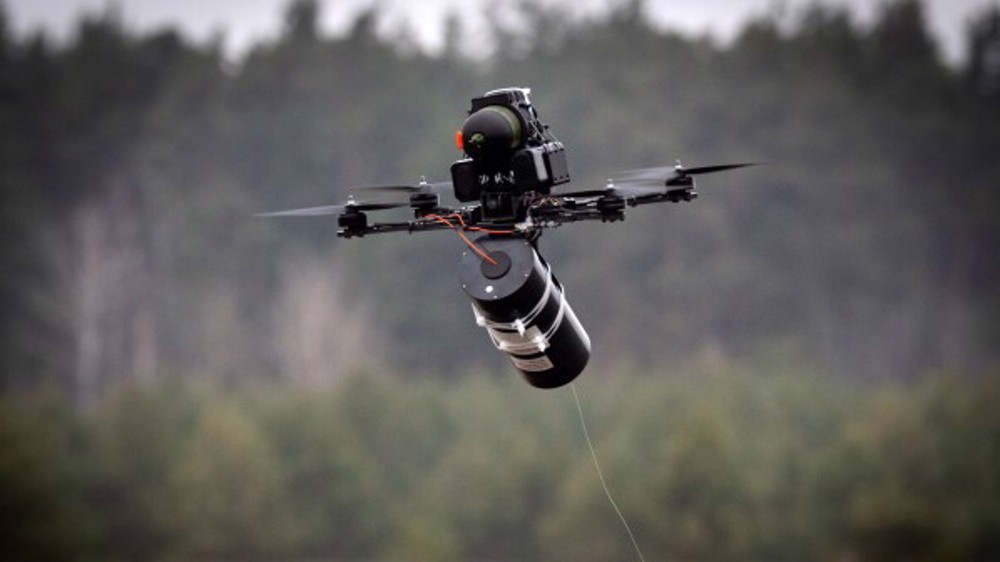
Israeli military officials and analysts admitted that Hezbollah has been deploying hard-to-detect fibre-optic drones capable of bypassing conventional jamming and electronic warfare systems.

The low-cost drones reportedly use ultra-thin optical fibre cables instead of radio signals, allowing them to evade interception and maintain secure communication with their operators.

Experts say the drones have almost no radar signature because they contain minimal metal components and rely on optical fibre cables rather than wireless transmissions.

This technology allows the drones to evade Israeli electronic warfare systems and bypass traditional jamming methods used by the Israeli military.

According to Gayil Talshir, a political scientist at the Hebrew University of al-Quds, Israeli troops were “sitting ducks” inside Lebanon while facing mounting resistance attacks.

Israeli prime minister Benjamin Netanyahu described Hezbollah’s drone capabilities as a “major threat” and called on the military to develop urgent countermeasures.

In response to Israel’s continued violations of the ceasefire in Lebanon, Hezbollah has launched around 230 projectiles and more than 100 explosive drones at the regime’s forces since April.

[…]

Via https://www.presstv.ir/Detail/2026/05/19/768913/Hezbollah-drones-paralyzed-80–of-Israeli-military-strikes-in-south-Lebanon–Report

Greenlanders not ‘guinea pigs’ for US

Greenlanders not ‘guinea pigs’ for US – health minister

RT

19 May, 2026 15:29 

A US-proposed assessment of the island’s healthcare system is “deeply problematic,” Anna Wangenheim has said

The government of Greenland has condemned an unofficial visit by a US doctor to assess the island’s healthcare system during an American diplomatic trip to Nuuk.

The controversy comes amid US President Donald Trump’s repeated threats to take over the autonomous Danish territory.

The four-day visit by a US delegation, including US Ambassador to Denmark Kenneth Howery and Trump’s special envoy to Greenland, Jeff Landry, began on Sunday. The stated goal is to attend a business forum and open a new US consular office in the capital, Nuuk.

The controversy erupted after physician Joseph Griffin, part of the delegation, told Danish broadcaster TV 2 on Monday that Landry had personally invited him to Nuuk to help “assess the medical needs” of Greenland.

Griffin insisted he was acting as a “volunteer” and planned to speak with Greenlanders to learn “how healthcare is practiced here.”

Health Minister Anna Wangenheim called Griffin’s presence “deeply problematic.” In a social media post on Monday, she insisted that “Greenlanders are not guinea pigs in a geopolitical project.” While acknowledging “chronic” staff shortages, she warned against developing Greenland’s healthcare system “through political envoys with hidden strategic interests.”

Landry has become a controversial figure in Greenland after repeatedly criticizing the island’s healthcare system and backing Trump’s February proposal to send a US hospital ship to the territory, a plan firmly rejected by officials in Nuuk.

He also previously vowed to be “very aggressive in delivering healthcare to remote parts” of the island, while stating that the hospital ship proposal had been discussed with the Pentagon.

The dispute comes amid Trump’s push to bring Greenland under greater US control, supposedly on national security grounds. The president has described the mineral-rich Arctic territory as strategically vital for countering Russia and China, while White House officials earlier this year said military force to acquire the island was “always an option.”

In an apparent snub to the US delegation, Greenland Prime Minister Jens-Frederik Nielsen has refused to participate in the opening of the new US consulate.

Healthcare remains politically sensitive in Greenland because of abuses committed during Danish colonial rule. Last year, Danish Prime Minister Mette Frederiksen formally apologized over the so-called IUD scandal, in which thousands of Greenlandic women and girls were reportedly fitted with contraceptive devices without their knowledge or consent in the 1960s and 1970s.

[…]

Via https://www.rt.com/news/640182-greenlanders-not-guinea-pigs-us/

EU to rely on cow manure amid Iran war fertilizer crisis

EU to rely on cow manure amid Iran war fertilizer crisis – Politico© Getty Images / Kondor83
RT
19 May, 2026
The closure of the Strait of Hormuz has stalled the export of key crop nutrients to the economic bloc

The EU will turn to a long-term strategy involving cow dung to stave off a looming fertilizer shortage, rather than supporting farmers with immediate measures like suspending tariffs on Russian and Belarusian imports, Politico wrote on Monday.

The US-Israeli war on Iran disrupted shipping through the Strait of Hormuz, which handles an estimated one third of the global fertilizer trade, and a fifth of the world’s liquefied natural gas (LNG) – a commodity important in the production of nitrate fertilizers. The key waterway was blocked during planting season in the Northern Hemisphere, with analysts warning of a potential global shortage of crucial crop nutrients and a delayed world-wide food shock.

As the EU had already secured fertilizer supplies this crop season, any knock-on effect for the bloc’s farmers and consumers is likely to be delayed, Politico wrote.

The European Commission’s latest roadmap to parry the upcoming shortage is a long-term plan that has been around for years, with just a few emergency additions such as state aid for affected farmers, the designation of fertilizers as a crisis-relevant commodity and a promised boost for the EU farm budget, the outlet wrote.

However, some EU officials have reportedly warned that a long-term strategy relying on cow dung would not be enough.

“Manure can be a contribution, but it can never substitute the urea-based, the nitrogen-based fertilizers,” Politico cited Italian MEP and AGRI Committee member Herbert Dorfmann as saying.

Fast-acting measures to aid farmers, such as suspending taxes on carbon-intensive imports or tariffs on Russian and Belarusian fertilizers were dismissed as “too politically toxic,” the outlet said.

The EU was the top buyer of Russian crop nutrients until 2022, receiving around 28% of its exports. Following the escalation of the Ukraine conflict and the bloc’s imposition of sanctions on Russia, Moscow redirected much of its fertilizer trade to BRICS nations and the Global South.

Since 2021, Russia has increased sales of mineral fertilizers to BRICS countries by 71%, and now holds first place worldwide in exports of the commodities and second place in output, Russian Association of Fertilizer Producers head Andrey Guryev said earlier this year.

[…]

Via https://www.rt.com/news/640183-eu-cow-manure-fertilizer-crisis/

Islamic Golden Age: The Banu Musa Inventions and Automatons

The Automatic Mechanical Hydraulic Organ of the Banu Musa ibn Shakir ...

Banu Musa hydraulic organ

Episode 17 The Banu Musa (Sons of Musa) Inventions and Automatons

Islamic Golden Age (2017)

By Eamon Gearon

Film Review

Between 750 and 1250 AD there was a proliferation of mechanical automatons in the Muslim world.  These included games, toys and gadgets that washed your hands or poured drinks.

The most famous of the Islamic automaton makers were the Banu Musa (sons of Musa), three sons of a Persian bandit named Musa Ibn Shakir. After giving up a life of crime, Ibn Shakir became a renowned astronomer employed by caliph al-Ma-M’un. His son Muhammad became an astronomer, Ahmad a mathematician and Al-Hassan an engineer.

Between them they created scores of complex mechanical toys and astronomical tables. In 850 AD they published the Book of Tricks, dedicated to preserving ancient mechanical knowledge from Greece, Rome, Persia, China and India.

Among their inventions was a coin-operated vending machine to dispense holy water, the earliest design for a steam powered engine, automatic water fountains that changed shape via differently shaped spouts, the first hydraulically powered organ, the first steam powered flute (the earliest example of machine programming) and a gas mask for men who cleaned polluted wells.

Their work went on to influence the work of Ishmael al-Jaziri, the Turkish 12th century father of modern robotics.

Al Jazari’s inventions included robots programmed to provide guests with towels, programmable on-off switches for fountains, automated water and candle-driven mechanical clocks and a variety of water pumps, and hydraulic systems.

People Had 'Candle Clocks' to Tell Time Before Watches Were a Thing—And ...


https://www.kanopy.com/en/pukeariki/watch/video/5756987/5757021

“Because we can’t!”

One year later: Reflecting on the assassination attempt against Trump ...
Dmitry Orlov

The United States has a long and proud tradition of assassinating or otherwise disposing of leaders it doesn’t like. Over a period of almost four decades, their actions progressed from at least superficially legalistic to downright bloodthirsty and barbaric. Observe the trend:

• Those who are old enough perhaps remember how, in 1990, Bush-père tormented the tiny Central American nation of Panama under the pretext of fighting the “drug trade”, but really to mitigate against his “wimp factor.” American troops killed several hundred Panamanians and caused significant material damage for the sake of capturing Manuel Noriega, a CIA asset. Noriega then served a 17-year sentence in Miami, Florida.

• In 1999, under Clinton, the Americans bombed Yugoslavia and then left President Slobodan Milošević to die of untreated medical problems in prison. Already, very little pretense was made of offering him justice or due process.

• In 2003, under Bush-fils, the US invaded Iraq, installed a puppet regime and hanged president Saddam Hussein. Hussein’s execution was broadcast on live television. The fact that he was hanged as opposed to buried alive, burned at the stake or fed to wild beasts is a testament to America’s abiding humanism.

• In 2011, under Obama, the bombing of Libya began, followed by the brutal public torture and assassination of Gaddafi, accompanied by the mad cackle, right on camera, of US Secretary of State Hillary Clinton. “We came, we saw, he died!” quoth she.

• On January 3, 2026, the entire world saw Venezuelan President Maduro captured by the Americans and led away in handcuffs, along with his 69-year-old wife, Flores, also handcuffed and with a bruise covering half her face. The next day Maduro was driven around New York in an open van while crowds cheered. Given that he was charged with crimes under US laws which do not apply to Venezuela, he and his wife are, essentially, kidnapping victims.

• On February 26, 2026, in the midst of US-Iran negotiations, US forces assassinated Iran’s Supreme Leader Ayatollah Ali Khamenei. Four more members of his family, including his one-year-old granddaughter, were also killed in an airstrike. And so the US has advanced from political assassinations to assassinating religious leaders.

Why do Americans do this? Assassinating national leaders is perhaps the least effective way to solve political problems. An answer to this question was offered some time ago by the journalist Michael Bohm: “Because we can.” This is the same reason that a dog licks its testicles: because it can. The United States consistently records a murder rate 5 to 7 times higher than other developed, affluent nations. It’s just something Americans like to do, you see.

To be fair, Americans can, and do, assassinate plenty of their own leaders:

• 1865: Abraham Lincoln
• 1881: James A. Garfield
• 1901: William McKinley
• 1963: John F. Kennedy

Attempted assassinations also make quite a formidable list:

• 1835: Andrew Jackson
• 1912: Theodore Roosevelt
• 1933: Franklin D. Roosevelt
• 1950: Harry S. Truman
• 1975: Gerald Ford (twice!)
• 1981: Ronald Reagan
• 2024-6: Donald Trump

Donald Trump is a special case because a considerable fraction of the American populace suffers from a certain psychiatric condition that has been termed “Trump Derangement Syndrome.” They would very much like to see him dead, to such an extent that a certain artist by the name of Cathy Griffin even posed with a papier-maché dummy of Trump’s bloodied, severed head.

Just to be sure that I am not misunderstood: I am not in favor of assassinating anyone. I take the First Commandment (“Thou shalt not kill”) quite literally. But as far condemning the acts of murder committed by others, I adhere to the admonition “Judge not, lest ye be judged.” (Matthew 7:1)

In 2026, a supposed assassin managed to nick Trump’s ear. Some say that the whole event was a carefully staged bit of election campaign theater; perhaps in half a century we’ll know the truth, perhaps not. The point is, the assassination attempt failed.

Since then, two more hapless assassins have made their attempts, all to no avail. Considering the state of the Secret Service, assassinating Trump should be a fairly trivial task; and yet he is still alive. Why?

I believe that at some point God has flipped a switch on America. It went from a “can do nation” to a “no can do nation.” Since then, it can’t elect, or even nominate, anyone remotely competent as president (both Biden and Trump were and are clearly unfit to serve as presidents and Clinton-madame wouldn’t have been any better). The US failed to win a proxy war against Russia (in the Ukraine), a trade war against China or a direct military confrontation with Iran. It’s a sad state of affairs, but there you have it.

Should Americans choose to ask themselves “Why is Trump still our president?” the answer is clear: “Because you can’t” do anything about it, that’s why!

[…]

Via https://boosty.to/cluborlov/posts/5f603540-b638-4cc0-9d9f-29ea68c717fe

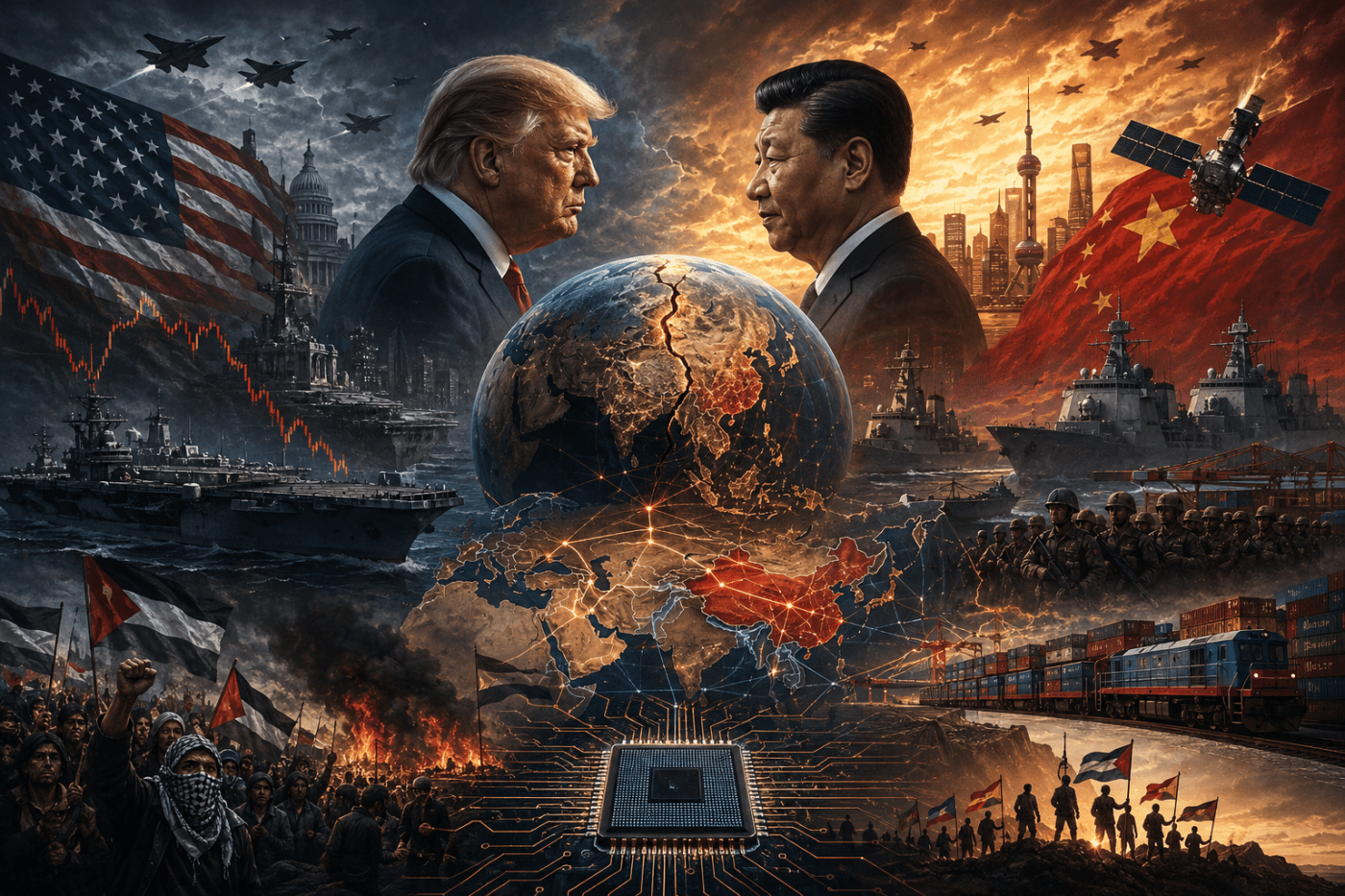
The Trump–Xi Summit and the Fracturing of the American Century

By Prince Kapone | Weaponized Information | May 16, 2026

[…]

The Empire Arrives in Beijing

Beijing received Donald Trump with the full choreography of state power: honor guards, national anthems, a military band, a 21-gun salute on Tian’anmen Square, polished floors, smiling diplomats, ancient trees at Zhongnanhai, and the solemn theatrical beauty of two great powers pretending, for a few days, that the world was not trembling beneath their feet. The scene was elegant. It was also awkward as hell. Because Trump did not arrive in China merely as president of the United States. He arrived as the political broker of an empire in crisis, carrying behind him the boardroom aristocracy of American monopoly capital. Executives and representatives from Apple, Nvidia, Boeing, BlackRock, Goldman Sachs, Qualcomm, Tesla, Visa, Mastercard, Micron, GE Aerospace, and other major corporations accompanied the U.S. delegation. Washington spent years shouting about decoupling from China, only for the captains of American capital to board the plane like hungry men invited back to the kitchen.

The summit opened under conditions of global instability. The U.S. ruling class arrived with several urgent problems pressing down on its imperial skull: tariff disputes, disrupted supply chains, technological restrictions, rare-earth vulnerability, the AI and semiconductor war, the Taiwan question, the war crisis around Iran and the Strait of Hormuz, and the larger anxiety that China can no longer be bullied into the old subordinate position assigned to the Global South. China, for its part, did not frame the summit as surrender, reconciliation, or sentimental friendship.

[…]

The Chinese hosts understood the contradiction perfectly. Xi reminded Trump that U.S. businesses are deeply involved in China’s reform and opening up, and that China welcomes more mutually beneficial cooperation from the United States. This was not decorative diplomacy. It was a statement of material reality. American capital helped build the very industrial world Washington now fears. For decades, U.S. corporations treated China as factory, market, logistics platform, labor reservoir, and growth engine. Now Washington wants to transform China into an existential enemy without severing the profit arteries that run through Chinese production. History, unfortunately for empire, does not obey press releases.

The topics discussed showed the scale of the contradiction. The two presidents discussed trade, military-to-military communication, agriculture, health, tourism, people-to-people exchange, law enforcement, the Middle East, Ukraine, the Korean Peninsula, APEC, and the G20. Taiwan stood as the sharpest red line. Xi called Taiwan the most important issue in China-U.S. relations and warned that mishandling it could lead to “clashes and even conflicts”. Iran and Hormuz hovered over the meeting as another sign that the United States can still set fires across the world but increasingly needs others to help manage the smoke. AI chips and rare earths revealed that the struggle is not only over territory or trade, but over the machinery of modern life itself.

The public outcomes were thinner than the imperial theater suggested. The summit ended without major breakthroughs on trade, Iran, rare earths, or advanced AI-chip access. Western media emphasized the absence of decisive agreements on Iran, Taiwan, and artificial intelligence.

[…]

This essay argues that the Beijing summit represented neither peace nor the end of the New Cold War. It was a strategic pause inside a larger struggle over the future organization of world civilization. The summit revealed the limits of American coercive power, the dependence of U.S. monopoly capital on Chinese productive capacity, the technological bifurcation of the world economy, the crisis of Atlantic capitalism, and China’s strategy of tactical stabilization while pursuing long-term sovereign development.

[…]

The Empire of Debt Meets the World It Can No Longer Command

[…]

For decades the United States sat atop the capitalist world-system like a landlord collecting rent from history itself. Wall Street dominated global finance. NATO enforced Atlantic military order. The IMF and World Bank disciplined weaker economies into neoliberal restructuring. Silicon Valley monopolized key digital infrastructures while Hollywood exported the mythology that American capitalism represented freedom, modernity, and the natural endpoint of civilization. Empire always introduces itself as universal morality before presenting the invoice.

But the modern Atlantic order now confronts what Tricontinental describes as a crisis of “hyper-imperialism,” where military dominance increasingly compensates for weakening productive supremacy and declining global legitimacy.

[…]

For decades American corporations relocated production abroad in pursuit of cheaper labor, weaker environmental standards, higher short-term returns, and shareholder enrichment. Entire industrial regions across the United States were hollowed out while Wall Street celebrated globalization as the final triumph of capitalist modernity.

Now the same ruling class suddenly speaks the language of industrial sovereignty and national resilience as though deindustrialization were a natural disaster instead of a deliberate class project carried out by capital itself. Factories disappeared. Infrastructure decayed. Productive labor was replaced by debt, speculation, and logistics dependency. Then the architects of this social catastrophe blamed China for the consequences of their own accumulation strategy. Capitalism possesses a remarkable talent for burning down the house and then arriving dressed as the fire department.

[…]

Sanctions exhaustion forms part of this wider crisis. Over the last two decades the United States increasingly substituted financial punishment for productive leadership. Countries that resisted Atlantic discipline faced sanctions regimes, asset seizures, banking restrictions, technology bans, or exclusion from dollar-based financial systems. Yet the overuse of coercive mechanisms gradually encouraged states across Eurasia, Africa, Latin America, and the broader Global South to seek alternative payment systems, trade corridors, currency arrangements, and diplomatic alignments outside direct U.S. control.

[…]

The emerging contradiction between declining unipolarity and rising multipolar development forms the deeper historical backdrop of the summit.

[…]

The summit therefore reflected something larger than ordinary diplomacy. It reflected an empire attempting to stabilize a world it can no longer fully command through unilateral force alone.

[…]

The Silicon Front and the War Over the Future

The deeper logic of the Beijing summit was never confined to tariffs, banquet speeches, or ceremonial diplomacy. Beneath the language of “strategic stability” stood a much more dangerous struggle over who will control the technological architecture of the twenty-first century. Chips, artificial intelligence, telecommunications infrastructure, quantum systems, cloud computing, rare earths, data networks, and semiconductor manufacturing now occupy the same strategic position that oil, railroads, and steel occupied during earlier phases of capitalist development. The conflict between the United States and China increasingly centers on the machinery through which modern civilization itself is organized.The contradiction is rooted in the changing structure of global capitalism. During the neoliberal era, the United States gradually shifted away from broad productive supremacy toward control over financial systems, intellectual property monopolies, software ecosystems, digital infrastructure, and high-end technological chokepoints. Wall Street and Silicon Valley became the twin command centers of late Atlantic capitalism. Production increasingly dispersed globally while control over advanced technological systems remained concentrated inside the American-led bloc.

[…]

Nvidia’s presence carried particular symbolic weight. Advanced GPUs now sit at the center of the global AI race, powering machine learning systems, surveillance infrastructures, military simulations, predictive analytics, cloud computing, and automated logistics. The modern world increasingly runs on semiconductor architecture the way industrial capitalism once ran on coal and steel. Whoever controls advanced chips gains leverage over the future organization of labor, finance, communications, warfare, and governance.

Taiwan therefore occupies a strategic position extending far beyond conventional geopolitics. Taiwan is not simply a territorial flashpoint. It is deeply connected to semiconductor production and the digital infrastructure of the world economy itself.

[…]

The irony is almost painful. American capitalism spent decades preaching the gospel of free markets, globalization, and competition. Now Washington attempts to block technological competition precisely because another state became too successful at operating inside the global production system neoliberalism itself helped construct. Capitalism celebrates competition only until the monopoly starts losing market share.

Artificial intelligence intensifies these contradictions even further. China’s recent AI breakthroughs increasingly reflect the strengths of coordinated industrial planning, state-supported infrastructure, scientific investment, and large-scale developmental coordination.

[…]

The merger of Big Tech, finance capital, intelligence systems, and military infrastructure produces a form of political-economic power that governs populations not only through ideology or force, but through data extraction and behavioral management embedded directly into everyday life.

[…]

Strategic Patience and the Long Memory of Revolution

[…]

Xi Jinping framed the summit around “transformations not seen in a century,” asking whether China and the United States could avoid the “Thucydides Trap” and build a “constructive China-U.S. relationship of strategic stability”.

[…]

Across contemporary Chinese ideological life, there exists no single unified interpretation of this transition. China contains liberals, Marxists, developmental theorists, nationalists, technocrats, neo-Maoists, market reformers, and various overlapping tendencies attempting to understand the changing world order.

[…]

This historical memory helps explain why many Chinese thinkers reject liberal universalism so sharply. Debates surrounding the Chinese New Left repeatedly challenge the assumption that Western political forms represent universally applicable models of modernization. The argument is not necessarily that China possesses a flawless system. It is that modernization, as such, does not require submission to Atlantic ideological frameworks. This distinction is crucial because it directly undermines one of the central ideological assumptions of post-Cold War liberalism: that history naturally converges toward Western capitalist institutional forms.


More explicitly Marxist and neo-Maoist tendencies often push this analysis further. Left-nationalist and neo-Maoist discourse associated with Utopia (乌有之乡) increasingly frames the confrontation with the United States as part of a broader anti-imperialist struggle involving technological sovereignty, financial independence, military encirclement, and resistance to Western ideological domination. Within these currents, the summit represented tactical coexistence under hostile conditions rather than genuine strategic trust.

[…]

This is why U.S. policy toward Taiwan has nothing to do with democratic solidarity and everything to do with strategic encirclement disguised in moral language. Washington speaks constantly about peace and stability while surrounding China with military alliances, naval patrols, missile systems, arms transfers, intelligence infrastructure, and technological containment regimes across the Pacific. The empire calls itself defensive while steadily extending the geography of confrontation.

[…]

This does not mean China is some sort of utopia. Chinese society contains labor tensions, class contradictions, inequality, market pressures, and unresolved struggles over the future direction of socialist development.

[…]

The summit therefore cannot be understood merely as a bilateral dispute between two powers. It sits inside a much larger historical transition involving the fragmentation of Western hegemony and the uneven emergence of a multipolar world order.

The Corridors of Defiance

[…]

Iran occupies a central position in this geography of transition. The US-Iraeli war on Iran is inseparable from the struggle over Eurasian integration, energy sovereignty, maritime chokepoints, and the weakening of dollar-centered imperial power. Iran is not simply another target in Washington’s long list of regime-change fantasies. It sits at the crossroads linking China, Russia, Central Asia, the Persian Gulf, and the broader Belt and Road architecture. Weakening Iran therefore serves a much larger strategic objective: preventing the consolidation of alternative political-economic corridors outside Western command.

[…]

The petrodollar system historically tied global energy trade to U.S. financial dominance. Control over energy systems strengthened the dollar’s position at the center of world trade while reinforcing American geopolitical leverage over allies and rivals alike. But as China expands long-term energy partnerships across Eurasia and the Global South, alternative payment systems, currency arrangements, and trade mechanisms increasingly emerge outside direct U.S. supervision.

[…]

During the summit, Xi Jinping warned directly that mishandling Taiwan could produce “clashes and even conflicts” between China and the United States.

[…]

This fusion becomes visible most clearly through sanctions architecture. The United States increasingly weaponizes access to banking systems, software ecosystems, semiconductor technologies, insurance markets, logistics networks, and dollar-clearing systems as instruments of geopolitical coercion. Financial infrastructure itself has become militarized. Sanctions now function as economic siege warfare carried out through algorithms, institutions, and payment systems instead of blockades alone.

[…]

The growing contradiction between declining unipolarity and emerging multipolar development increasingly reorganizes global alignments.

[…]

The New Cold War therefore cannot be understood simply as a diplomatic rivalry between two powerful states. It is the geopolitical anatomy of a deeper systemic transition involving imperial decline, technological fragmentation, sovereignty struggles, sanctions warfare, energy insecurity, military encirclement, and the crisis of neoliberal globalization itself.

[…]

Via https://weaponizedinformation.com/2026/05/16/strategic-stability-or-strategic-pause-the-trump-xi-summit-and-the-fracturing-of-the-american-century/