The Most Revolutionary Act

Uncensored updates on world events, economics, the environment and medicine

The Most Revolutionary Act
Unknown's avatar

About stuartbramhall

Retired child and adolescent psychiatrist and American expatriate in New Zealand. In 2002, I made the difficult decision to close my 25-year Seattle practice after 15 years of covert FBI harassment. I describe the unrelenting phone harassment, illegal break-ins and six attempts on my life in my 2010 book The Most Revolutionary Act: Memoir of an American Refugee.

What’s Behind Jacinda Arden’s Resignation?

Guy Hatchard

NEW Zealand’s Prime Minister Jacinda Ardern resigned last night after months of rumours. Ardern, whose popularity has plummeted during the last six months, told us she ‘had nothing left in the tank’.

The backstory to this resignation is a tale of woe. Ardern said she wants to be remembered as someone who tried to be kind. The subtext is: the country is in an unprecedented mess but don’t blame me. School attendance is running at just 67 per cent on any given day. Machete-wielding teenagers are ram-raiding liquor, tobacco and luxury stores daily in an unprecedented crime wave. The health system is overwhelmed. Ardern’s government promised to build 100,000 new homes over three years. It has delivered 1,500.

Our tourist, farming and hospitality industries have never recovered from lockdowns and border closures. It takes months to get a visa to visit NZ and the government says it only wants rich people to come. Ardern insisted on universal Covid vaccination mandates. There is a suspicion that our 90 per cent vaccination rate has left most people in a lethargic fog. Excess all-cause deaths are still running 15 per cent above the long-term trends, and it is not Covid.

History will judge Ardern harshly, but don’t blame her alone. This was a Parliament who woke up on all sides of the house to the weakness of our constitutional arrangements (there are none). The Bill of Rights was tossed aside and no one in Parliament cared.

The leader of the National opposition Chris Luxon said if he was in power, he would withdraw benefits from unvaccinated single mothers. David Seymour, leader of the ACT party, said those losing their jobs through vaccine mandates only had themselves to blame. Labour’s coalition partner, the Greens, led by example. They encouraged mothers in labour to ride to hospital on a bicycle.

Revelations this week (here and here) that Ardern personally overruled her scientific advisers who were expressing doubts about the safety of Covid vaccines for young people and the wisdom of mandates have circulated very widely and no doubt this further undermined confidence in the government.

Political insider and right-wing commentator Cameron Slater published an article ten days ago saying that out of all the politicians he has known (and he has known most since Muldoon in the 70s) Ardern is the only one he rates as truly evil.

Ardern introduced ‘rule by regulation’. Adopting the enabling model favoured by fascists in the 1930s, her government has empowered authorities to tell us all what to do, when to stay at home, and where not to go. The courts, the Human Rights Commission and the broadcast regulators have all followed the government line meticulously which has had a devastating effect on business, families, communities and professions. To cement her policies, Ardern introduced massive government funding of our media and broadcasters.

Ardern’s government, in an absurd overreach, funded a nationwide effort to discredit critics of policy, labelling them terrorists. This has divided a formerly egalitarian society, instituting a Stasi-like snitch culture that encourages us to report a neighbour. Government Disinformation Project employees appeared on funded films aired on television labelling knitting, blond hair, braids, vaccine hesitancy, love of natural foods, yoga and motherhood as signs of terrorism that should be reported to the intelligence services (view it here if you can stand watching this nasty piece of propaganda and hate).

Why did Ardern suddenly change overnight in August 2021 from being a kindly figure saying she would never mandate vaccines, to being one of the world’s most draconian proponents? We can only speculate. NZ is a member of the Five Eyes intelligence network. Given the Pentagon’s recently revealed massive involvement in US Covid policy and gain of function research funding, was she fed information that a bioweapon was in play?

For a couple of weeks now government announcements and advertisements encouraging vaccination and boosters have been conspicuously absent. Has the penny finally dropped? We doubt it. It will take an honest, intelligent politician (are there any?) to roll back Ardern’s dictatorial powers and kickstart New Zealand. Why would any aspiring newby give up that much power? The prospect will be too intoxicating.

Ardern was a protege of Tony Blair and Klaus Schwab of WEF. They must bear some blame too. What fantasies of global power did they offer to a young person who was given to idealistic dreaming that segued into fanaticism?

Our final verdict: It is not Ardern but the whole NZ Parliament elected in 2020 that will be judged as the worst in our short history as an independent island nation, formerly famous for championing the underdog and offering opportunity to all. Ardern’s resignation has lit the bonfire of modern democracy.

[…]

Via https://www.conservativewoman.co.uk/whats-behind-jacinda-arderns-resignation/

Why Arabs Bolster Energy & Security Cooperation With Russia in Defiance of Western Sanctions

Russian President Vladimir Putin's talks with King Salman bin Abdulaziz Al Saud of Saudi Arabia - Sputnik International, 1920, 19.01.2023

Ekaterina Blinova

Arab countries have not joined the anti-Russian sanctions, despite pressure from the West, as Russian Foreign Minister Sergey Lavrov stressed during his press conference this week. What’s behind the Arab world’s resilience?

“The policy of the West in the East has gone bankrupt,” political analyst Vladimir Ahmedov told Sputnik.

“[Middle Eastern players’] trust in the United States, the leading western European states – the former colonizers who had colonies in this region – has already been largely lost,” the specialist in the modern history of Arab countries and senior research fellow at the Institute of Oriental Studies of the Russian Academy of Sciences continued.

New major players have entered the global arena: China, India, Iran, Turkey, Egypt, and Saudi Arabia, the scholar emphasized.

Ahmedov believes that the sanctions imposed against Russia are dictated by purely political considerations of a narrow circle of the western political elite. Meanwhile, the system of international relations and the world order has been undergoing changes, and the indirect proof of this is the position taken by the Arab countries, according to him.

“Russia’s policy in the East at the present time, and Russia’s policy in the world in general, has changed in comparison with the 1990s and the beginning of the 2000s,” the researcher continued. “Now it is a resolute policy aimed at defending [Russia’s] national state interests and the national interests of third countries. It impresses the countries of the East and, above all, the countries of the Middle East, which have been waiting for such a policy for a long time. This policy is in great demand in the East and therefore it meets with approval and understanding.”

In light of this, Russia’s efforts to mediate the Israeli-Palestine conflict as well as those in Syria and Iraq – mentioned by Lavrov during his Wednesday presser – are steps in the right direction, according to the scholar. In addition, Russia’s military presence in Syria serves as a stabilizing factor, he added.

Meanwhile, the West’s Ukraine strategy looks like nothing so much as its previous Middle Eastern policies. The West is using Ukrainians much in exactly the same way it previously used Arabs in order to reach its geopolitical objectives, and Middle Eastern players are well-aware of that, according to the researcher.

“Russia is not fighting against Ukraine or the fraternal Ukrainian people, but against the West, which wants to dismember Russia, belittle its role, minimize it, and so on,” Ahmedov said. “And [the Western policy] does not meet with any approval from the political elites of the East, who themselves suffered from it previously.”

Russia shares the same “geopolitical space” with the countries of the region and its objectives there include not only maintaining working ties with Middle Eastern players but also to protect its “soft underbelly” from extremist and terrorist elements reinvigorated by the Arab Spring havoc, the researcher explained.

In addition, Russia’s experience as a power broker in the region could come in handy for the West, since the latter has proven incapable of solving regional conflicts on its own, continued the scientist. According to him, European countries have no other alternative but to deal with Russia in the Middle East in the future if they want to ensure their security in the Mediterranean and Southern Europe.

Ahmedov noted that while Moscow cannot ensure a complete comprehensive settlement and stabilization of the situation in the Middle East, it can help regional players reach these goals.

[…]

Via https://sputniknews.com/20230119/why-arabs-bolster-energy–security-cooperation-with-russia-in-defiance-of-western-sanctions-1106500120.html


Microsoft, Amazon and other tech companies have laid off more than 60,000 employees in the last year

Microsoft CEO Satya Nadella speaks at the company's Ignite Spotlight event in Seoul on Nov. 15, 2022.

Microsoft CEO Satya Nadella speaks at the company’s Ignite Spotlight event in Seoul on Nov. 15, 2022.
SeongJoon Cho | Bloomberg | Getty Images

By Ashley Capoot and Sofia Pitt

MSNBC

  • The tech industry has seen a string of layoffs in the face of uncertain economic conditions.
  • Microsoft and Amazon both announced fresh rounds of layoffs on Wednesday.
  • Layoffs come as digital advertisers are cutting back on spending and rising inflation curbs consumer spending.

The job cuts in tech land are piling up, as companies that led the 10-year bull market adapt to a new reality.

Microsoft said Wednesday that it’s letting go of 10,000 employees, which will reduce the company’s headcount by less than 5%. Amazon

also began a fresh round of job cuts that are expected to eliminate more than 18,000 employees and become the largest workforce reduction in the e-retailer’s 28-year history.

The layoffs come in a period of slowing growth, higher interest rates to battle inflation, and fears of a possible recession next year.

[…]

Here are some of the major cuts in the tech industry so far. All numbers are approximations based on filings, public statements and media reports:

Microsoft: 10,000 jobs cut

Microsoft is reducing 10,000 workers through March 31 as the software maker braces for slower revenue growth. The company also is taking a $1.2 billion charge.

[…]

Amazon: 18,000 jobs cut

Earlier this month, Amazon CEO Andy Jassy said the company was planning to lay off more than 18,000 employees, primarily in its human resources and stores divisions. It came after Amazon said in November it was looking to cut staff, including in its devices and recruiting organizations. CNBC reported at the time that the company was looking to lay off about 10,000 employees.

[…]

Alphabet (Verily): 230 jobs cut

Google parent company Alphabet

had largely avoided layoffs until January, when it cut 15% of employees from Verily, its health sciences division. Google itself has not undertaken any significant layoffs as of Jan. 18, but employees are increasingly growing worried that the ax may soon fall.

Crypto.com: 500 jobs cut

Crypto.com announced plans to lay off 20% of its workforce Jan. 13. The company had 2,450 employees, according to PitchBook data, suggesting around 490 employees were laid off.

[…]

Coinbase: 2,000 jobs cut

On Jan. 10, Coinbase announced plans to cut about a fifth of its workforce as it looks to preserve cash during the crypto market downturn.

The exchange plans to cut 950 jobs, according to a blog post. Coinbase, which had roughly 4,700 employees as of the end of September, had already slashed 18% of its workforce in June saying it needed to manage costs after growing “too quickly” during the bull market.

[…]

Salesforce: 7,000 jobs cut

Salesforce is cutting 10% of its personnel and reducing some office space as part of a restructuring plan, the company announced Jan. 4. It employed more than 79,000 workers as of December.

[…]

Meta: 11,000 jobs cut

Facebook parent Meta announced its most significant round of layoffs ever in November. The company said it plans to eliminate 13% of its staff, which amounts to more than 11,000 employees.

Meta’s disappointing guidance for the fourth quarter of 2022 wiped out one-fourth of the company’s market cap and pushed the stock to its lowest level since 2016.

[…]

Twitter: 3,700 jobs cut

Shortly after closing his $44 billion purchase of Twitter in late October, new owner Elon Musk cut around 3,700 Twitter employees, according to internal communications viewed by CNBC. That’s about half the staff. Since then, significantly more employees have quit after Musk changed some policies around working from home and wrote that he expected all employees to commit to a “hardcore” work environment.

In a tweet on Nov. 4, Musk said there was “no choice” but to lay off employees as the company was losing $4 million per day.

Lyft: 700 jobs cut

Lyft  announced in November that it cut 13% of its staff, or about 700 jobs. In a letter to employees, CEO Logan Green and President John Zimmer pointed to “a probable recession sometime in the next year” and rising ride-share insurance costs.

[…]

Stripe: 1,100 jobs cut

Online payments giant Stripe announced plans to lay off roughly 14% of its staff, which amounts to about 1,100 employees, in November.

[…]

Shopify: 1,000 jobs cut

In July, Shopify announced it laid off 1,000 employees, which equals 10% of its global workforce.

[…]

Netflix: 450 jobs cut

Netflix announced two rounds of layoffs. In May, the streaming service eliminated 150 jobs after the company reported its first subscriber loss in a decade. In late June, it announced another 300 layoffs.

[…]

Snap: 1,000 jobs cut

In late August, Snap announced it laid off 20% of its workforce, which equates to over 1,000 employees.

[…]

Robinhood: 1,100 jobs cut

Retail brokerage firm Robinhood slashed 23% of its staff in August, after cutting 9% of its workforce in April. Based on public filings and reports, that amounts to more than 1,100 employees.

Tesla: 6,000 jobs cut

In June, Tesla CEO Elon Musk wrote in an email to all employees that the company was cutting 10% of salaried workers. The Wall Street Journal estimated the reductions would affect about 6,000 employees, based on public filings.

[…]

Via https://www.cnbc.com/2023/01/18/tech-layoffs-microsoft-amazon-meta-others-have-cut-more-than-60000.html

Biden Administration Still Fighting to Reverse Order Banning Airplane Mask Mandate

Travelers reclaim luggage at Denver airport
 REUTERS/Kevin Mohatt/File Photo

David Shehardson

WASHINGTON, Jan 17 (Reuters) – The Justice Department on Tuesday asked an appeals court panel to reverse an April 2021 ruling that declared unlawful a government order requiring masks on airplanes, buses, trains, ridesharing services and at airports and other transportation hubs.

A three-judge panel of the 11th Circuit Court of Appeals heard arguments on the government’s appeal of a ruling by a U.S. district court judge in Florida that found the U.S. Centers for Disease Control and Prevention (CDC) lacked legal authority to issue a nationwide travel mask mandate to combat COVID-19.

The CDC issued the sweeping mask mandate in January 2021, days after Joe Biden became president.

A report from U.S. lawmakers in October said the Trump administration in 2020 blocked the CDC from adopting a federal transportation mask mandate.

Much of the arguments in the appeal focus on the CDC’s decision to put in place the requirements immediately rather than give the public a chance to comment on the mandate.

Justice Department lawyer Brian Springer said the CDC could impose mask requirements without giving the public time to comment given the pandemic emergency, arguing it was necessary “to prevent the possible infections and deaths that could result if people didn’t do the simple thing of just putting on a mask while they were traveling.”

Lawyer Brant C. Hadaway representing the five people who had sued to challenge the mandate noted the CDC last year had not sought a stay of the district court’s ruling.

“This is not about an urgent matter of public health,” Hadaway told the court. He argued that had the CDC believed the issue was a “matter of life and death” the agency would have sought a faster ruling.

The European Union earlier this month recommended face masks for passengers flying to its member countries from China, which is experiencing a major COVID-19 outbreak after lifting its zero-COVID policy.

[…]

Via https://www.reuters.com/legal/us-asks-court-reverse-order-banning-airplane-mask-mandate-combat-covid-2023-01-17/

The Great Dropout: Why 1.4 Million Children Left Public School in 2020 and Where They Went

Epoch Times

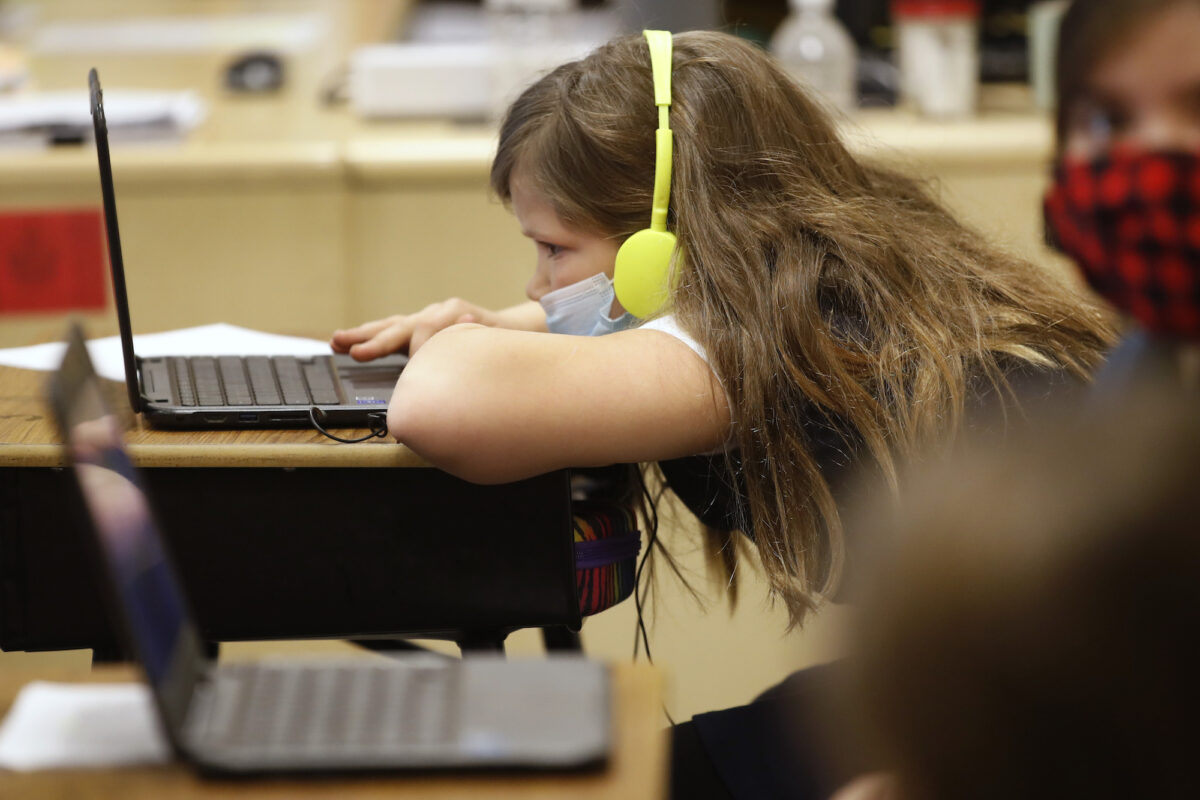
Over a million children left public schools in 2020, a migration that came on the heels of school lockdowns and masking requirements, and was hastened by increased parental dissatisfaction with K-12 education.

Enrollment in U.S. public schools declined by 1.4 million students between fall 2019 and fall 2020, dipping to 49.4 million, a loss of nearly 3 percent, according to data from the National Center for Education Statistics (NCES).

The decline may be closer to 2 million, according to a report by Education Next showing that traditional public school enrollment as a percentage of all school enrollment declined sharply between 2020 and 2022.

Enrollment in traditional public schools fell from 81 to 76.5 percent of total enrollment during that period, while enrollment in public charter schools, private schools, and homeschooling grew by a combined 4.5 percent.

Those numbers indicate that nearly 2 million students left traditional public schools for other educational options over the previous three years.

In many cases, the disruption in learning due to COVID-19 policies was the catalyst many parents needed to make the jump away from public schools to charter schools, private schools, and homeschooling.

Based on recent enrollment figures and the comfort many parents express with their decision to opt out of public schools, it appears the missing millions will not return.

Dissatisfaction With Learning

Parent satisfaction with K-12 education plunged between 2019 and 2022, according to GALLUP. Prior to the onset of COVID-19, 51 percent of parents said they were either completely or somewhat satisfied with their child’s education. Three years later, that satisfaction level was 42 percent, the lowest in over 20 years.

[…]

Nearly a quarter of Americans, 23 percent, said they were completely dissatisfied with their child’s education.

Parent interviews conducted by The Epoch Times revealed that distance learning during school lockdowns provided a glimpse into the classroom that made parents question their school’s ability to educate their children.

“For a while, [our kids] were getting homework assigned to them by their teachers … but there was no teaching going on,” Matt Mohler of Tallahassee, Florida, said. He moved his children from a highly public school to a classical charter school in the fall of 2020.

[…]

Shireen Qudosi of Orange County, California, took her autistic son out of public school in October 2020. “There wasn’t even a functioning curriculum in place, which access into the classroom through remote learning confirmed.”

Mask and Vaccine Requirements

[…]

Epoch Times Photo

Parents demonstrate at a Long Island Loud Majority protest against state-mandated masks for schoolchildren on Jan. 26, 2022, at the Suffolk County government offices. (Dave Paone/The Epoch Times)

Parents don’t want their children exposed to the “radical indoctrination that the public schools are doing,” J. Allen Weston, Executive Director of the American Home School Association, told The Epoch Times.

[…]

Other parents expressed concern over bullying, the stress created by active-shooter drills, and the availability of sexual content on smartphones carried by other students.
Where They Went

Most parents who opted out of public schools over the last few years chose other educational options for their kids. Homeschooling was the choice for many, though the number of children enrolled is difficult to estimate.
“It is impossible to know the exact numbers because more than half of the states do not require parents to register as homeschoolers. Or if they are required, then the state does not keep count,” Weston said. He reported that his organization grew by a factor of 20 over the last three years.

[…]

Public charter schools, which had more than doubled to 3.4 million in the preceding decade, enrolled another 270,000 students between 2019 and 2021, according to the National Association of Public Charter Schools (NAPCS).

Some students who left public schools in 2020 entered the workforce. About 2 million students dropped out of high school that year, according to NCES.

In 2017, the NCES found that 47 percent of high school dropouts were employed. If the percentage remained similar in 2020, that would mean over 900,000 students left school for work that year.

Other Shifts

Though not reflected in national totals, public school enrollment in large cities has been in decline for up to 20 years in some cases. These losses appear to be driven more by demographic changes than by parents opting out of public schools.

Enrollment in Denver public schools dropped 3 percent from 2019 to 2021, a change driven in part by low birth rates and a shrinking population, according to education news site Chalkbeat.

New York City’s public school enrollment decreased by some 38,000 students in 2020, but 9,376 of them simply crossed the river to New Jersey according to the website Gothamist. More than 5,100 students moved from New York to Pennsylvania that year, and another 5,600 to Florida.

Also, the population of New York state was in decline during that time. The state lost over 350,000 to domestic migration between July 2020 and July 2021.

Enrollment in Los Angeles public schools has dropped 42 percent since the early 2000s, according to the online publication EdSource. LA Unified School District Superintendent Alberto Carvalho told journalists in July that recent losses are attributable partly to people moving to other states because of political ideology or the desire for lower taxes.

Return Unlikely

Relatively few students who withdrew from public school in 2020 have returned so far. Public school enrollment rebounded just 0.2 percent in 2021, including first-time enrollees, and remains at its lowest level since 2010.
Parents who made the choice to withdraw from public school during the last two years are highly satisfied with their choice, according to a report from NAPCS.

Nearly 90 percent of families who changed school types experienced a positive change as a result of the switch, with 57 percent saying their child was happier, according to NAPCS.

[…]

“Some have gone back to public schools. There’s kind of a different mindset with homeschoolers. Kids who were coming last year were more public-school minded.”

She theorizes that some parents viewed homeschooling as a temporary haven during lockdowns but always intended to return to public school. Weston thinks most parents who try homeschooling will not return to public school.

“Parents have come to understand that one to two hours of one-on-one instruction with their children is far more productive than an entire week of classroom instruction, so homeschooling takes far less time giving the children the opportunity to explore things that they are actually interested in and that make them happy.”

[…]

Via https://peckford42.wordpress.com/2023/01/19/the-great-dropout-why-1-4-million-children-left-public-schools-in-2020-and-where-they-went/

UK circumventing its own sanctions against Moscow to import Russian oil

UK bypasses own sanctions on Russian oil: Sunday Times

Drago Bosnic

InfoBRICS

It is now virtually common knowledge that the political West’s attempts to destroy the Russian economy through sanctions have failed spectacularly. However, what the Western mainstream propaganda machine is fighting tooth and nail to accomplish is suppressing the fact that the sanctions war has also backfired and is now ravaging Western economies, especially those whose prosperity was largely based on access to cheap Russian energy. This is particularly true for Germany, the European Union’s industrial powerhouse which is now suffering the consequences of its suicidal subservience to Euro-Atlantic Russophobia.

However, what’s much less commonly acknowledged is the fact that there are many countries that don’t seem to be too dependent on Russian energy, but are in fact suffering as a result of the sanctions war against Moscow. This is especially true for the United Kingdom, whose political establishment is one of the most fervently Russophobic in NATO. With London being one of the Kiev regime’s key backers, it would be expected to see the former colonial superpower much less dependent on any commodities coming from Russia. Still, Moscow’s status as the world’s premier energy superpower makes this extremely difficult (if not impossible) to achieve.

In order to tackle the mounting energy security issues, exacerbated not only by anti-Russian sanctions, but also by the economic fallout of the COVID-19 pandemic, the UK is now resorting to finding loopholes to circumvent its own sanctions against the Eurasian giant. The escalation of the Ukrainian crisis has led to a dramatic reshaping of European (and, indeed, global) energy markets, with the political West declaring its intention to cut dependency on Russian energy imports. Expectedly, the UK was at forefront of this effort and was even hailed as “one of the most successful countries” in achieving this after it officially stopped importing Russian oil and coal, while also imposing an outright ban on Russian natural gas.

By October last year, London’s imports of Russian energy were officially cut to almost nothing, with approximately $2.5 million of oil purchases and virtually no coal or natural gas from Russia. However, recent revelations cast serious doubt on these numbers, indicating that the UK’s claims mostly boil down to simple semantics. According to reports by various sources, the UK is not importing oil (directly) from Russia, but it still keeps importing Russian oil. This is possible thanks to third countries (India being one of them) that are now re-exporting Russian-sourced oil to the UK and others in the political West. This has provided a very convenient back door for imports of Russian oil into the country, while also being quite lucrative for third parties.

According to Kpler, India’s Jamnagar refinery, operating on the west coast of Gujarat, imported 215 shipments of Russian crude in 2022, which represents a 400% increase in comparison to 2021. At the same time, British companies have imported approximately ten million barrels of diesel and other refined oil products from Jamnagar since February 2022, which is an increase of more than 250% of what they bought from the Indian refinery during the previous year. The data indicates that this can only be explained by a much larger share of Russian oil being refined and then exported to the UK and elsewhere.

More importantly for Britain, this move is blunting the disastrous effects of energy shortages in the UK, a problem that is now affecting many other countries that have been forced to impose sanctions on Russia, often coerced into it by London itself. British companies have simply replaced imports directly from Russia with imports from third-party refineries that are buying Russian crude. Although there’s nothing illegal in such a framework, it’s still quite indicative of the UK government’s hypocrisy. London has been exerting tremendous pressure on others to stop importing Russian energy (Hungary perhaps being the best example of this), while secretly doing just the opposite.

Prior to Moscow’s counteroffensive against NATO aggression, India wasn’t particularly known for importing Russian energy, while it was even less common for its oil refineries to process Russian crude. Indian companies have always been oriented towards exporting refined oil to Europe, but their supplies to the old continent have skyrocketed as the demand is still there and someone needs to fill the gap. This is quite profitable for India, as prices in the EU are quite high, while Russia is supplying the Asian giant with record amounts of discounted crude. Meanwhile, British companies are turning a blind eye to this fact, as they need guaranteed energy supplies, so everybody seems content with this arrangement – except Kiev.

Oleg Ustenko, one of Volodymyr Zelensky’s advisers, is accusing the UK companies of “exploiting weaknesses in the sanctions regime”.

“The UK must close the loopholes that undermine support for Ukraine by allowing bloody fossil fuels to continue flowing across our borders. About one in five barrels of the crude oil that they process is Russian. A big chunk of that diesel they produce now will be based on Russian crude oil,” Ustenko stated.

It remains to be seen if the UK will ever respond to these demands, as they don’t seem to be particularly important to London. It’s quite clear that even if one of the Neo-Nazi junta’s top overlords were to proceed with closing the existing loopholes, the idea that the UK won’t find new ones is downright laughable, as it would’ve never tried bypassing its own sanctions in the first place.

Source: InfoBrics

An Intimate Look at American Slavery

Slaves in the Family: Edward Ball: 9780374534455: Amazon.com: Books

Slaves in the Family

By Edward Ball

Penguin Group (1998)

Book Review

Author Edward Ball uses this book to chronicle his long effort to trace modern African American families descended from the slaves his ancestors owned on historic Charleston South Carolina rice plantations. This project required an detailed search of South Carolina tax records and the extensive official and personal correspondence the Ball family left behind.

For me, the parts of the book I enjoyed most consisted of historical background he offers to provide context for important family events. Like other Americans, I learned very little about early slavery in school.

Ball’s ancestors were among the first settlers in the Carolina colony, who sailed from County Cork Ireland in 1669. They were still living aboard ship when they began importing slaves from Virginia or Barbados.

They lived according to the Fundamental Constitutions written by philosopher John Locke while he was in the employ of Lord Ashley Cooper, one of the Carolina Colony’s investors. Locke’s Fundamental Constitutions established a three-tiered system of labor.

  1. Enslaved Natives or Africans (Locke discouraged the enslavement of natives, out of concern their nearby relatives might retaliate – presumably African slaves had no nearby relatives to retaliate).
  2. Indentured servants
  3. Free citizens (Puritans and Anglicans)

According to the Fundamental Constitutions, every white settler got 150 acres of land for every laborer they brought to America.

By 1695, Ball’s ancestors discovered the Carolina* colony’s semi-tropical low country was perfect for rice plantations. By 1698, the city of Charleston was the slave center of America. All slaves carried the brand DY (for Duke of York, who became James II following his coronation). As the principal investor in the Royal African Co., he controlled most of the slave traffic. Carolina rice farmers paid a premium for slaves from Sierra Leone and Gambia. They used their prior experience with irrigation and rice cultivation to teach their masters how to grow it.

On the rice plantation, child slaves carried water from the time they could run and started working in the fields at age 12. Prior to the Revolutionary War slaves were expected to provide their own shelter and food. Most often they built lean-to’s, huts,  mud huts or simple structures consisting of leafy roofs on four posts. They were allowed to hunt when they finished their daily tasks (rice planting allowed for more free time than cotton cultivation), as well as growing small gardens and raising pigs. They could earn spending money by selling surplus food to the master.

Carolina rice planters exported their rice to the UK, where it was taxed and shipped to Bremen, Denmark, Hamburg, Holland and Sweden.

One-third of the rice planters’ slaves left South Carolina during the Revolutionary War, after the UK troops freed them for defecting to the British side. The Redcoats employed them as laundresses, messengers, stable hands, cooks and valets during the war, and at the end of the war transported them, as free Blacks, to Canada or the Caribbean.

In December 1860, South Carolina would be was the first state to secede from the Union, followed in January 1861 by Mississippi, Florida, Alabama, Georgia and Louisiana. Texas seceded in February, with the Confederate States of America forming the same month. Arkansas, North Carolina, Tennessee wouldn’t join the Confederacy until after the war started at Fort Sumter in April 1861.

Two months before the war ended (In February 1865), Yankee armies arrived at the Ball family’s rice plantation to inform the slaves there they were free. I was previously unaware fighting continued, in North Carolina and elsewhere, after Confederate General Robert E Lee surrendered on April 9, 1865 at Appomattox. Two days after Lincoln’s assassination (on April 15th), Generals Johnston and Sherman signed an armistice which was rejected by President Andrew Johnson because it recognized existing state governments. He accepted a final armistice on April 26, 1865, in which the former Confederate state gave up all their weapons and public property.


*North and South Carolina were officially divided in 1712.

Jacinda Ardern to resign as prime minister in February

Prime Minister Jacinda Ardern

Photo: RNZ / Angus Dreaver

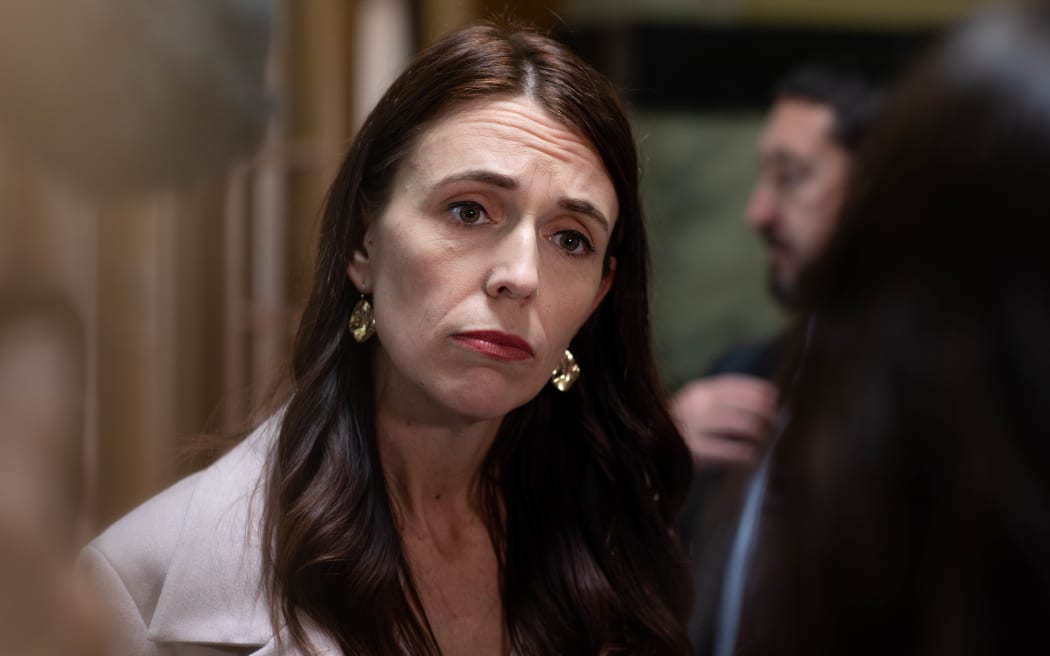
Jacinda Ardern says she will not be seeking re-election this year and her last day as prime minister is 7 February.

Speaking this afternoon, Ardern said she reflected over the summer and tried to find a way to keep going for another year and another term but she could not.

“After going on six years of some big challenges, I am human. Politicians are human. For me, it’s time…

“So today I’m announcing that I will not be seeking re-election and my term as prime minister will conclude no later than the 7th of February.

“I believe that leading a country is the most privileged job anyone could ever have but also one of the more challenging. You cannot and should not do it unless you have a full tank plus a bit in reserve for those unexpected challenges.”

Ardern was visibly upset and tearful as she made the announcement.

[…]

Via https://www.rnz.co.nz/news/political/482724/live-jacinda-ardern-to-resign-as-prime-minister-in-february

World Economic Forum: Gates, Schwab, Global Elites Face Growing Criticism of Their ‘Master the Future’ Agenda

By  Michael Nevradakis, Ph.D.

Thousands of prominent political and business figures are congregating in Davos, Switzerland, this week for the annual meeting of the World Economic Forum (WEF), whose theme, “Cooperation in a Fragmented World,” focuses on the “cost of living crisis.”

In recent years, the WEF and its founder and chairperson, German engineer and economist Klaus Schwab, generated controversy by promoting ideas such as the “The Great Reset” and the “Fourth Industrial Revolution.”

In promoting ”The Great Reset” in 2020, Schwab said the COVID-19 “pandemic represents a rare but narrow window of opportunity to reflect, reimagine, and reset our world.”

The WEF’s 2016 vision for the future — “Welcome to 2030. I own nothing, have no privacy, and life has never been better” — has also raised eyebrows.

[…]

However, critics describe the WEF as a “fanatical political organization masquerading as a neutral entity” with the goal of “centralizing power into the possession of hand-picked global elites” and for operating with no public input or accountability.

[…]

Statements emerging from this year’s meeting have done little to quell concerns about the WEF’s real agenda.

[…]

Key themes this year include “combating misinformation,” promoting “public-private partnerships,” “green” politics, buzzwords such as “DEI,” “resiliency” and “sustainability,” “health security,” and continued digitization via the metaverse and “smart” technologies.

Schwab opines on the importance of ‘mastering the future’

[…]

In his opening address, Schwab said that current crises around the world, ranging from COVID-19 to the high cost of living, are “serving as catalytic forces for the economic transformation,” adding that “through collective responsibility, innovation and human goodwill and ingenuity, we have the capacity to turn such challenges into opportunities.”

[…]

Schwab also used his opening remarks to address criticism levied against the WEF in recent years. However, he said the WEF and its global partners must “overcome” such “negative critical and confrontational attitudes.”

[…]

‘Annual pilgrimage to genuflect to Bill Gates and Klaus Schwab’

The roster of speakers at this year’s WEF meeting represents a proverbial “who’s who” of the global political, business, journalistic and nonprofit elite.

[…]

Among this year’s WEF meeting speakers are 52 heads of state and government, including representatives of royal families, and 56 national finance ministers, 35 ministers of foreign affairs, 30 ministers of commerce and 19 governors of central banks.

[…]

The U.S. contingent at this year’s meeting includes key Biden administration and intelligence community figures, including FBI Director Christopher Wray, Director of National Intelligence Avril Haines, Special Presidential Envoy for Climate John Kerry, Secretary of Labor Martin J. Walsh, U.S. Agency for International Development Administrator Samantha Power, U.S. Trade Representative Katherine Tai and several members of Congress from both parties.

Schachtel said the U.S. delegation is smaller than last year’s, which he attributed to “the massive blowback the World Economic Forum has received.”

[…]

Five representatives of the Bill & Melinda Gates Foundation are on the speaker’s list, as are editors and journalists from outlets such as The Associated Press, Reuters and The Washington Post, and Axios, Bloomberg, CBS, CNBC, CNN, Deutsche Welle, The Economist, the Financial Times, Forbes, Foreign Affairs, Fortune, Fox Business, NBC, The Atlantic, The New York Times, Politico and The Wall Street Journal.

There’s also no shortage of Big Tech and fintech representatives on the WEF speakers lineup, including executives from Google, LinkedIn, Meta, Microsoft, TikTok, alongside Mastercard and Visa.

In all, more than 2,700 participants from 130 countries are listed.

[…]

‘We are a select group of human beings’

[…]

According to Lawton, corporate executives view the benefit of participation in the WEF meeting as “face-time with politicians,” while NGO leaders focus on getting “an audience with business leaders (potential donors) and policy-makers.”

However, Lawton noted that attendance at speeches by world leaders in Davos is “sparse.”

[…]

This theme of “saving the planet” is evidenced by the titles of some of the panels at this year’s WEF meeting, including “Leading the Charge through Earth’s New Normal,” “Tackling Harm in the Digital Era” and “Why We Need Battery Passports.”

Leaders tackle ‘clear and present danger’ of ‘misinformation’ and ‘disinformation’

One of the key themes permeating this year’s WEF meeting is the perceived need to tackle so-called “misinformation” and “disinformation.”

This was evidenced, for instance, by a panel “The Clear and Present Danger of Disinformation” panel, which included former CNN personality Brian Stelter, Times Publisher Arthur Gregg Sulzberger, European Commission Vice President Věra Jourová, Rep. Seth Moulton (D-Mass.) and Internews CEO Jeanne Bourgault.

During this session, Moulton blamed “mis info” for not “get[ting] people to take a COVID vaccine,” while Sulzberger described “disinformation” as “the most existential” challenge society faces, and Jourová suggested “disinformation” could be fought via enacting “increased regulations,” calling on the U.S. to pass hate speech legislation.

[…]

Public-private partnerships: solutions to the world’s problems or ‘top-down vision for technocratic tyranny’?

[…]

A Jan. 17 press conference at this year’s meeting, for instance, was titled “Philanthropic-Public-Private Partnerships for Climate & Nature,” and included participants from the Bezos Earth Fund and McKinsey & Company, as well as Børge Brende, former Norwegian foreign minister and current WEF president.

Brende said, “Time is running out to address critical global challenges” and he introduced the concept of “stakeholder geopolitics” as a means of tackling them.

Also on Jan. 17, Spain’s foreign minister, José Manuel Albares Bueno, said the COVID-19 and Ukraine crises “have shown us that the best method is to do things together,” as “we get out of crises quicker and in better shape.”

Schachtel described this focus as “a public-private fascist movement,” where the WEF partners with the “most influential individuals in business, along with central bankers, governmental head honchos, and international organizations, in order to facilitate their top-down vision for technocratic tyranny, or what they call ‘stakeholder capitalism.’”

Leaders arrive in ‘droves of private jets’ to talk ‘Green’ politics

Lawton reported that multiple participants at this year’s conference discussed ideas for how we can transition to a “climate positive lifestyle.”

[…]

In a press release preceding the start of this year’s g[athering, Greenpeace criticized the “hypocrisy” of the WEF delegates, who “arrive in droves of private jets.”

[…]

Future ‘pandemics’ and ‘global health security’: Will tuberculosis be the next pandemic scare?

Another prominent theme at this year’s WEF meeting is how to deal with “future pandemics” and “global health security.”

One panel discussion, “State of the Pandemic,” included Bancel and representatives of the Gates-affiliated GAVI, The Vaccine Alliance, the Harvard School of Public Health and European news outlet Euronews.

[…]

The ‘metaverse’ and ‘smart’ technologies: global ‘cooperation’ or global control?

This year’s meeting continues the WEF’s promotion of digital technologies such as the “metaverse” and other “smart” technologies, as solutions for multiple global challenges.

According to Schachtel, the WEF will announce “the first, and long-awaited, outputs of the Defining and Building the Metaverse Initiative,” including briefing papers on “Interoperability in the Metaverse” and “Demystifying the Consumer Metaverse.”

[..]

Via https://childrenshealthdefense.org/defender/davos-gates-schwab-master-the-future-wef-agenda/


Pregnant Women Reject COVID-19 Vaccination

Post-Partum Hemorrhage Among Many Reasons to Decline Experimental Injection

Early in 2021 the American College of Obstetrics and Gynecology accepted an undisclosed amount of money from the US government (HHS WH) as part of the COVID-19 Community Corps Program. From that point forward, ACOG broke with traditional practice on experimental and and novel therapies being contraindicated, and with federal dollars in hand, moved to a wholesale endorsement of COVID-19 vaccination with no assurances on short or long-term safety. Throughout the campaign, enthusiasm for vaccination was tepid among gravid [pregnant] women with <20% at any time having accepted a vaccine. However, the sharpest decline in rates of uptake occurred in the gravid and by summer of 2022, fewer than 2% were getting vaccinated.

There were no large scale randomized, placebo-controlled double blind clinical trials demonstrating safety in pregnant women. The non-randomized literature was prone to financial conflict-of-interest bias since the doctors and editors were likely affiliated with ACOG, and influenced by the government money and aspiration to promote mass vaccination. Thus, as a clinical scientist, my concern is only the neutral papers on safety were being written and published. A paper by Dick et al, caught my attention by reporting a nearly fourfold post-partum hemorrhage rate among those triple compared to double vaccinated. One could imagine how large the magnitude would have been compared to unvaccinated where hemostasis is not impaired.

Dick A, Rosenbloom JI, Karavani G, Gutman-Ido E, Lessans N, Chill HH. Safety of third SARS-CoV-2 vaccine (booster dose) during pregnancy. Am J Obstet Gynecol MFM. 2022 Jul;4(4):100637. doi: 10.1016/j.ajogmf.2022.100637. Epub 2022 Apr 7. PMID: 35398583; PMCID: PMC8988438.


In 2021, McCullough and Stricker published that because of the known dangerous mechanism of action of COVID-19 vaccination and the lack of any assurances on maternal-fetal safety, that all of the products are considered pregnancy category X which means they should not be used. This message got out to the community and rates of vaccination have progressively winnowed. As we sit here today, we should understand that ACOG and the OB/GYN community is compromised and thereby putting the maternal-fetal health of women at risk by promoting COVID-19 vaccination. Under no circumstances should a woman of childbearing potential or gravid should receive a COVID-19 vaccine. It is absolutely contraindicated.

[…]

Via https://petermcculloughmd.substack.com/p/pregnant-women-reject-covid-19-vaccination