The Most Revolutionary Act

Uncensored updates on world events, economics, the environment and medicine

The Most Revolutionary Act
Unknown's avatar

About stuartbramhall

Retired child and adolescent psychiatrist and American expatriate in New Zealand. In 2002, I made the difficult decision to close my 25-year Seattle practice after 15 years of covert FBI harassment. I describe the unrelenting phone harassment, illegal break-ins and six attempts on my life in my 2010 book The Most Revolutionary Act: Memoir of an American Refugee.

Russia scolds West over Ukraine grain deal

FILE PHOTO: A dump track unloads grain in a granary in the village of Zgurovka, Ukraine, August 9, 2022 ©  AP / Efrem Lukatsky

RT

The EU hogs grain from the country while blocking half of the agreement, Moscow said.

The Black Sea “grain deal” arranged last August is not working as intended, because the grain from Ukraine is not going to the needy countries of Africa and Asia, while the West continues to block all Russian food and fertilizer exports, the Russian Foreign Ministry announced on Thursday.

The arrangement, negotiated by the UN and signed on July 22, 2022 in Istanbul, established a safe corridor for ships bringing corn and wheat from Odessa to countries facing food insecurity. It was also supposed to re-establish the export of grain and fertilizer from Russia, the ministry noted in a statement.

Eight months later, only the first part of the deal has been implemented, and in a way “far from the declared humanitarian goals,” the ministry said. Since August 1 last year, Ukraine has exported over 23 million tons of grain, of which 70% was animal feed. Of that, the EU accounted for 47% and “upper-middle income countries” for another 34%, Moscow said, while only 2.6% is currently going to countries needing food the most.

Meanwhile, there has been “close to zero” progress in unblocking the delivery of Russian grain or fertilizer, badly needed elsewhere. Kiev has continued to block the Togliatti-Odessa ammonia pipeline “for purely political reasons,” resulting in a shortage of 2.5 million tons of raw material that could produce 7 million tons of fertilizer and feed 200 million people, the ministry said.

The US and its allies have said their sanctions do not include Russian food and fertilizer – but they have banned all Russian ships from docking in their ports or accessing insurance and brokerage service, imposing a total blockade on commercial shipping in effect, if not in name.

“It’s time to stop playing the food card. The lion’s share of grain from Ukraine goes to the European Union as fodder at dumping prices, and not to the poorest countries,” the ministry noted. “Russian agricultural exports are being blatantly hindered, no matter how much the Europeans and Americans, who are used to telling lies, try to convince everyone otherwise.”

As an example, the ministry said that 262,000 tons of Russian fertilizer has been blocked in the Dutch and Baltic state ports for months. Moscow has offered the fertilizer to African countries absolutely free of charge, yet only one shipment of 20,000 tons, destined for Malawi, has managed to depart so far.

Russia is working on its own to organize deliveries to Africa, since the UN process is plagued by such difficulties and delays, the ministry added.

Moscow is therefore forced to conclude that the grain deal “does not work,” identifying the main problem as “sabotage by Western countries” of the Russia-UN memorandum.

“It is obvious that Americans and Europeans do not care about the needs of countries in need, nor about the efforts of the UN, which they have long and persistently tried to turn into a tool for serving their political goals,” the Russian Foreign Ministry said.

Via https://www.swentr.site/russia/572359-ukraine-grain-deal-sabotage/

Vaccine Injured Doctors Starting to Speak Up

https://healthimpactnews.com/wp-content/uploads/sites/2/2023/03/michael-huang.jpg

Dr. William Makis MD

COVID-19 vaccine injured doctors are finally starting to speak up…and they are shocked that the medical establishment abandons them.

Dr.Melissa Halvorson Smith is a gynecologist from North Dakota and heads the Women’s Health Center. She was injured by 2 doses of Pfizer COVID-19 mRNA vaccine. In her words (click here):

Dr.Smith has been shocked by the horrible treatment she has received from her physician colleagues as a COVID-19 vaccine injured patient.

Dr. Shmuel Shapira MD

Dr.Shmuel Shapira MD MPH (Col) led Israel’s effort to develop a coronavirus vaccine and was the Head of the Department of Military Medicine of Hebrew University Faculty of Medicine and IDF Medical Corps (read more here):

“Professor Shmuel Shapira might be the most senior ranking medical-scientist in the world to openly criticize the COVID vaccines.”

On May 13, 2022, Dr.Shapira said: “I received 3 vaccinations (Pfizer), I was physically injured in a very significant way as many others were injured”

Dr. Kerryn Phelps MD

Dr.Kerryn Phelps is the former President of the Australian Medical Association (AMA). She and her partner were COVID-19 vaccine injured. She is the highest ranking Australian medical doctor to admit to being COVID-19 vaccine injured (read more here):

“This is an issue that I have witnessed first-hand with my wife who suffered a severe neurological reaction to her first Pfizer vaccine within minutes, including burning face and gums, paraesethesiae, and numb hands and feet”

“I continue to observe the devastating effects a year-and-a-half later with the addition of fatigue and additional neurological symptoms including nerve pains, altered sense of smell, visual disturbance and musculoskeletal inflammation. The diagnosis and causation has been confirmed by several specialists who have told me that they have seen ‘a lot’ of patients in a similar situation.”

Dr. Phelps revealed she was also diagnosed with a vaccine injury from her second dose of Pfizer in July 2021, “with the diagnosis and causation confirmed by specialist colleagues”.

“In my case the injury resulted in dysautonomia with intermittent fevers and cardiovascular implications including breathlessness, inappropriate sinus tachycardia and blood pressure fluctuations.”

Dr. Phelps said both reactions were reported to the Therapeutic Goods Administration (TGA) “but never followed up”.

She revealed she had spoken with other doctors “who have themselves experienced a serious and persistent adverse event” but that “vaccine injury is a subject that few in the medical profession have wanted to talk about.

Dr. Danice Hertz MD

Dr. Danice Hertz, a 64 year old physician was “horribly ill” and “incapacitated” after getting Pfizer’s COVID-19 mRNA vaccine. Her story is here (click here):

Dr.Hertz, a gastroenterologist who retired in October, got her first and only dose of Pfizer’s vaccine on Dec. 23, 2020.

“Within 30 minutes, I started experiencing adverse effects”

Hertz said within 24 hours she developed neurological symptoms, including severe paresthesias in her face, tongue, scalp, chest wall and limbs, as well as tremors, twitching, weakness, headaches, tinnitus and imbalance.

“I saw six neurologists, five allergists, three rheumatologists, and no one had a clue,” Hertz said.

Dr. Danice Hertz said people like her who have been seriously injured by COVID vaccines are being dismissed or ignored, and because health officials won’t research their injuries and potential treatments, they have nowhere to turn.

After taking the Pfizer injection Danice got neuropathy, mast cell activation, pericarditis and many other symptoms. She has now seen 22 different doctors and still hasn’t recovered.” (click here)

Dr. Stephen Wright MD

Dr. Stephen Wright (UK) died at age 32, from blood clots caused by the AstraZeneca COVID-19 vaccine.

Mark Steyn conducted several interviews with the family:

[…]

Via https://makismd.substack.com/p/covid-19-vaccine-injured-doctors

Senate Seeks Covid Origins Declassification

Zach Cohen and Emily Wilkins
Bloomberg Law

The Senate voted unanimously Wednesday night to require Director of National Intelligence Avril Haines to declassify information on the origin of Covid-19.

The bill (S. 619), which was passed without objection or a roll-call vote, could put pressure on the Biden administration to voluntarily declassify.

The move comes after the Wall Street Journal reported that Haines’s office provided classified intelligence to the White House and key members of Congress showing the Energy Department had concluded Covid most likely came from a lab leak in China.

FBI Director Christopher Wray separately told Fox News this week that his agency had determined the pandemic “most likely” came from a “potential lab incident in Wuhan,” where a lab was conducting research on coronavirus in bats.

Sen. Joe Manchin (D-W.Va.) said he plans to call officials from the Energy Department before his Energy and Natural Resources Committee to testify publicly on the suspected origins of the virus, which killed over 1 million Americans.

“The American people have a right to understand exactly how it was spread,” Sen. John Barrasso (Wyo.), the committee’s ranking Republican and a member of GOP conference leadership, tweeted Tuesday. “The Biden administration needs to come clean with what they know.“

Democratic Caucus Chair Pete Aguilar (D-Calif.) told reporters on Wednesday he would leave the declassification decisions to the administration, but said lawmakers need to be “asking the tough questions.”

“We believe in letting committees of jurisdiction guide the discussions ahead and working with the administration,” he said.

[…]

Via https://news.bloomberglaw.com/health-law-and-business/senate-seeks-covid-origins-declassification-by-biden-spy-chief

Safety Data on Hepatitis B Vaccine for Newborns ‘Sadly Lacking

By  Dr. Joseph Mercola

The U.S. Food and Drug Administration approved Recombivax HB, the hepatitis B vaccine for newborns, based on clinical trials performed on only 147 infants and children who were monitored for just five days.

Story at a glance:

  • The safety data on Recombivax HB, the hepatitis B vaccine for newborns, are sadly lacking, as the U.S. Food and Drug Administration (FDA) approved the shot based on clinical trials performed on only 147 infants and children and followed for only five days.
  • There are four hepatitis B vaccines, two of which are approved for infants; the second approved for infants is Engerix-B, and clinical safety data show infants and children were followed for only four days in these trials.
  • Most infants are not at high risk for hepatitis B. It makes better financial and health sense to test mothers before birth and vaccinate only those infants born to mothers with an active or chronic hepatitis B infection, putting off vaccination in other infants until they are older.
  • The current childhood vaccination schedule includes 19 potential doses of vaccines and one mRNA experimental injection by the time an infant is 6 months old. Many of these contain aluminum, which raises a child’s risk of persistent asthma in childhood.

[…]

One thing that is certain is we all want our children to be healthy and safe from unnecessary harm.

However, as lead attorney for Informed Consent Action Network (ICAN), Aaron Siri explains, just one example of the negligence in regulations is the sadly lacking safety data on the hepatitis B vaccine for newborns.

Newborns given hepatitis B vax without proper safety data

Before a newborn leaves the hospital, they’re given one vaccine for hepatitis B, even though the safety data for it is scant, if that.

According to Siri, the clinical trials designed to protect newborns included only 434 doses of Recombivax HB given to 147 healthy infants and children up to 10 years of age, and these children were monitored for only five days after each dose.

[..]

Siri also notes, there is no indication there was a control group in the studies.

[[…]

On behalf of ICAN, Siri’s firm has filed a petition with the FDA requesting either a proper clinical trial to ascertain side effects and efficacy or withdrawing the licensure from Merck.

By law, the FDA has six months to respond to such a request which, according to Siri, has expired. Having not received a formal response from the FDA, the plan is to sue the FDA in federal court over this issue.

Most infants are not at high risk for hepatitis B

According to the Centers for Disease Control and Prevention (CDC), the leading means of transmission include spread when infected blood, semen or other bodily fluids are transferred to an uninfected person.

This happens through shared needles or other drug equipment, sexual contact, or from mother to baby at birth.

[…]

Childhood shot schedule: 20 shots before 6 months

In the precious early months of life, when an infant’s brain and immune system are continuing to grow, most receive up to 20 injections of vaccines that parents are told will protect their child.

Beyond the hepatitis B newborn shot, at 2 months old they get six vaccine doses including a second hepatitis B, diphtheria, tetanus, pertussis, Haemophilus influenzae type b, pneumococcal conjugate and inactivated poliovirus.

Some are repeated at 4 months and 6 months, when they also receive their first flu and COVID-19 shot. All told, there are potentially 19 doses of vaccine and one dose of an experimental mRNA injection an infant could receive by 6 months of age.

[…]

Aluminum in the hepatitis vaccine exacerbates asthma

According to the CDC, one cost of following the childhood vaccination schedule is persistent asthma linked to aluminum exposure. Aluminum is the most common vaccine adjuvant, and the hepatitis B vaccine is one that contains it.

Despite its neurotoxicity, manufacturers add aluminum to vaccines to create an enhanced inflammatory response that theoretically generates higher protective antibodies.

However, an increasing number of parents say that repeated exposure to vaccines with aluminum may be harming their children. Indeed, previous animal studies demonstrated that aluminum increases the risk of allergy by inducing a T helper 2 cell-biased immune response.

In other words, the aluminum causes the T cells to be overactivated, which then exacerbates allergic responses.

[…]

In a January study with 326,991 children born from 2008 to 2014, they set out to assess “the association between cumulative aluminum exposure from vaccines before age 24 months and persistent asthma at age 24 to 59 months.”

They found there was a 1.26- and 1.19-times higher risk of persistent asthma for each additional milligram of vaccine-related aluminum exposure. The observational study stopped short of saying that it proves a link between aluminum-containing vaccines and asthma.

The CDC also stated that it has no intention of altering its vaccine recommendations based on this study alone.

However, the researchers pointed out that rates of asthma in U.S. children steadily increased in the 1980s and 1990s, then remained steady since 2001.

The 2001 date is significant, as most aluminum-containing vaccines were added to the childhood vaccine schedule before 2001.

[…]

It’s time for rational discussions on vaccine safety

Unofficial surveys have suggested that highly vaccinated children may have more chronic health problems than unvaccinated children, and that unvaccinated children have a far lower incidence rate of autism.

[…]

COVID jab added to secure indemnification

In yet another display of sacrificing children for Big Pharma and profits, the U.S. became the first country in the world to grant emergency use authorization for Pfizer’s and Moderna’s COVID-19 jabs to toddlers and children as young as 6 months.

[…]

By adding the shots to the vaccine schedule, it paves the way for U.S. schools to require them for attendance.

[…]

Pfizer and Moderna, the shots’ makers, will also be granted permanent legal indemnity, which otherwise would have disappeared once COVID-19 shots were no longer protected under emergency use authorization.

[…]

Via https://childrenshealthdefense.org/defender/hepatitis-b-vaccine-newborns-safety-data-cola/?eType=EmailBlastContent&eId=81409887-19d1-491d-a3ef-3208f24499d6

61% Believe Feds Helped Incite Capitol Riot

Voters overwhelmingly support releasing all videos of the January 6, 2021, riot at the U.S. Capitol, and a majority think it’s likely that government agents helped provoke the riot.

The latest Rasmussen Reports national telephone and online survey finds that 80% of Likely U.S. Voters believe it is important that the public be able to view all the videos of the Capitol riot, including 58% who think it’s Very Important. Only 17% don’t think it’s important for the public to be able to see all the riot videos. (To see survey question wording, click here.)

Fox News host Tucker Carlson is reportedly planning to broadcast videos of the Capitol riot that were not previously released by the congressional committee that investigated the riot. Eighty-six percent (86%) of Republicans, 78% of Democrats, and 75% of voters not affiliated with either major party believe it is important that the public be able to view all the videos of the Capitol riot.

Texas Sen. Ted Cruz is among Republicans who have expressed concern that federal agents “deliberately encouraged illegal and violent conduct on Jan?. 6?,” when supporters of former President Donald Trump stormed the Capitol. Sixty-one percent (61%) of voters believe it is likely that undercover government agents helped provoke the Capitol riot, including 39% who think it’s Very Likely. Thirty percent (30%) don’t think it’s likely undercover agents helped provoke the riot, including 18% who say it is Not At All Likely.

The survey of 1,000 U.S. Likely Voters was conducted on February 26-28, 2023 by Rasmussen Reports. The margin of sampling error is +/- 3 percentage points with a 95% level of confidence. Field work for all Rasmussen Reports surveys is conducted by Pulse Opinion Research, LLC. See methodology.

Seventy percent (70%) of Republicans, as well as 57% of both Democrats and unaffiliated voters believe it is at least somewhat likely that undercover government agents helped provoke the Capitol riot.

Forty-seven percent (47%) of all Likely Voters believe the special congressional committee that investigated the Capitol riot did a good or excellent job, while 38% rate the special committee as having done a poor job. While 66% of Democrats rate the so-called J6 committee as having done a good or excellent job with its investigation, only 26% of Republicans and 47% of unaffiliated voters share that opinion. Fifty-six percent (56%) of Republicans give the J6 committee investigation a poor rating, as do 20% of Democrats and 40% of unaffiliated voters.

More whites (34%) than black voters (11%) or other minorities (22%) give the J6 committee an excellent rating. Majorities of every racial category believe it is important that all the video from the Capitol riot be made available to the public. Likewise, majorities of every group – 61% of whites, 62% of black voters and 64% of other minorities – think it is at least somewhat likely that undercover government agents helped provoke the Capitol riot.

Fifty-seven percent (57%) of self-identified conservative voters say it is Very Likely that undercover agents helped provoke the riot, compared to 18% of moderates and 26% of liberals.

There is not much “gender gap” in these findings, except that men are somewhat more likely than women voters to rate the J6 committee as having done a poor job, while women voters are slightly more likely to suspect government agents helped provoke the Capitol riot.

Voters under 40 are more likely than their elders to suspect the Capitol riot was provoked by undercover agents. Older voters are more likely to rate the J6 committees as having done a poor job with its investigation of the riot.

Breaking down the electorate by income categories, voters earning more than $200,000 a year are most likely to rate the J6 committee as having done an excellent job, while those with annual incomes between $30,000 and $50,000 are most likely to give the committee a poor rating.

Among voters who think it is Very Likely that undercover government agents helped provoke the Capitol riot, 88% believe it is Very Important that the public have access to all the videos of the riot.

President Joe Biden’s strongest supporters are most pleased by the J6 committee’s investigation. Among voters who Strongly Approve of Biden’s job performance as president, 90% rate the special congressional committee as having done a good or excellent job investigating the Capitol riot. By contrast, among those who Strongly Disapprove of Biden’s performance, just four percent (4%) rate the J6 committee’s work good or excellent, while 81% give the committee a poor rating.

A majority of voters don’t think President Joe Biden has kept his campaign promise to unite Americans, and one-third endorse a GOP congresswoman’s recent call for a “national divorce” between red states and blue states.

Most voters give the federal government low ratings for its response to the train derailment in East Palestine, Ohio.

[…]

Via https://www.rasmussenreports.com/public_content/politics/biden_administration/61_believe_feds_helped_incite_capitol_riot

Blood banks accidentally admit 80% of the blood supply contaminated with spike proteins from mRNA jabs

TAINTED BLOOD: 80% of the blood supply contaminated with spike proteins from mRNA jabs, blood banks accidentally admit

Dr Eddy Betterman

Politicians in the state of Montana are pushing a new bill that would make it a crime for those who have been “vaccinated” for the Wuhan coronavirus (Covid-19) to donate blood.

Citing contamination issues, Rep. Greg Kmetz (R-Miles City), the sponsor behind House Bill 645, wants to make it a misdemeanor with a $500 fine for vaccinated donors to contribute their spike protein-laden blood to the donation pool.

HB 645 would also ban people who have had a diagnosis of “long covid,” medically defined as “postacute sequelae of SARS-CoV-2 due to chronic 27 SARS-CoV-2 viral infection,” from donating blood in Montana.

“Montana’s blood supply could be cut by up to 80%, leading to adverse patient outcomes including unnecessary and unconscionable death,” said Cliff Numark, senior vice president of the blood collection nonprofit Vitalant, about the potential impact of the legislation.

Most blood banks are already struggling to keep up with demand, and an 80 percent reduction in available supply in the event that HB 645 passes would only make matters worse.

Montana doesn’t want to give people tainted blood transfusions

Numark’s admission about the 80 percent reduction in available clean blood is based on statistics out of Montana showing that four out of five residents have received at least one injection of a covid “vaccine” since the initial rollout of Operation Warp Speed.

Most Montanans, in other words, have tainted blood and would no longer be allowed to share that tainted blood with patients in need. The same is true in other states where uptake of the jabs was high.

Kmetz’s new legislation builds upon House Bill 702 from last session. That bill outlawed discrimination on the basis of vaccination status, though a portion of it was struck down in December as unconstitutional.

Other proponents of HB 645 include Rep. Lola Sheldon-Galloway, vice chairwoman of the House Human Services Committee. Sheldon-Galloway’s brother is a mortician who told her that covid injections cause issues with blood flow.

“I’m one of many who believe in the God given right of medical freedom, which is having access to genetically unmodified blood during a time of need,” said Jo Vilhauer, a resident of Miles City who supports HB 645. “This is a vital part of health autonomy.”

According to Dr. Michael Busch, director of the Vitalant Research Institute, the true percentage of tainted blood in the United States is closer to 90 percent than it is to 80 percent, meaning as little as only one in 10 donors have clean, safe blood.

This is a serious problem because those in need of a blood transfusion will have to wait a lot longer for it – if they are ever able to receive one at all, now that most of the American blood supply is loaded with toxic spike proteins and other jab ingredients.

One problem with HB 645 is that there is no way to test blood samples for spike proteins or any other evidence of covid jab contamination. It is thus a trust-based system that is impractical at best.

[…]

Via https://dreddymd.com/2023/03/02/80-percent-blood-supply-contaminated-spike-proteins-mrna-jabs/

Nuclear Waste: Is Important Decontamination Technology Being Suppressed?

Brown’s Gas: 30-Year-Old Nuclear Decontamination Technology

I first learned about Brown’s gas from an interview on Radio Out There with Nexus magazine publisher Duncan Roads. He talked about the magazine’s 200th edition, which features their top 20 top news stories (over 36 years). Roads refers to a 2017 article on Brown’s gas.[1] Although the article itself focuses solely on its health benefits, in the interview Roads also mentions its use in nuclear waste decontamination.

Owing to my involvement in a nearly 40-year campaign to clean up up the Hanford nuclear reservation in Eastern Washington, I was gobsmacked to learn that Brown’s gas, also known as HHO, oxyhydrogen, hydroxy gas and Knallgas (in Germany and Scandinavia) is but one of nine peer reviewed low cost processes for decontaminating nuclear waste.

The use of hydrolysis to produce “oxyhydrogen,” the first gaseous mixture to be used for welding, was first discovered by British chemist and inventor William Nicholson in 1800.

In 1974, Bulgarian-born electrical engineer Yull Brown obtained new patents for what came to be known as “Brown’s gas” generators, designed to split water into charged hydrogen and oxygen molecules and hydroxyl (OH) radicals via alkaline electrolysis.

Having moved to Australia in 1954, it was there he developed and manufactured the first applications for his generators. At the request of the Chinese government, in the 1990s he transferred production to the People’s Republic of China in the 1990s.[2] This would inspire Chinese manufacturers to adopt Brown’s gas, in preference to acetylene, in their welding torches. Other early Chinese applications, besides welding and brazing, included water desalination, toxic waste management and destruction, pharmaceutical production and materials hardening. In 1996, the Chinese re-invited Yull Brown to build a Brown’s gas system for deployment in automobiles.

Presently most Brown’s gas generators are produced in China, mainly for welding, brazing, health indications and improved vehicle fuel efficiency. Made in China offers 3,535 models of Brown’s gas generators online from 65 different suppliers. Prices (in US dollars) range from $78 to $42,000.

In 1992 at the request of Congressman Berkeley Bedell, US Department of Energy officials observed a demonstration in Ontario California in which a Brown’s gas torch reduced the radioactivity of Cobalt 60 by 96% in a few minutes.

In the US and other Western countries, the use of oxyhydrogen or Brown’s gas for purposes other than welding is still viewed as “fringe” science by Wikipedia, Nature and Popular Mechanics. Not so in China and South Korea, where major research into Brown’s gas is ongoing, mostly for medical indications, for use in fossil fuel vehicles to improve fuel efficiency and reduce particulate pollution and for (toxic and nuclear) waste management.

Use of Brown’s Gas to Improve Fuel Efficiency and Reduce Particulate Pollution

Among numerous peer reviewed Chinese studies incorporating Brown’s gas generators in diesel and gasoline engines to improve combustion (and fuel) efficiency are one from 2015 in Journal of Jiangsu University and from 2016 in Energy Technology.

There are also two from Jordan in 2010 and 2011 and one from Pakistan in 2020.

Owing to particulate pollution (smog) reaching dangerous levels in numerous Chinese cities, several researchers have examined the dual role of Brown’s gas generators in simultaneously reducing exhaust particulates (due to more efficient combustion) and improving fuel efficiency. These include one from India in 2014, two in 2022 in Journal of Cleaner Production and MDPI, and six between 2021-2023 in the Journal of Hydrogen Energy

Use of Brown’ Gas to Manage Waste (Including Toxic Waste)

Korean studies from 2004 and 2005 also look at the use of Brown’s gas in the vitrification of solid waste. One from 2008 looks at the use of Brown’s gas to safely vitrify asbestos and one from 2012 studies the use of a Brown gas for non-polluting waste incineration.

Health Uses

Most Brown’s gas generators, in China and elsewhere, are manufactured and sold for health indications. Based on multi-center clinical trials, China’s National Medical Administration for Respiratory Diseases authorizes Brown’s gas inhalation to treat Covid pneumonia. A 2021 paper in Emergency Medicine Journal explains the theoretical basis for its effectiveness.

There’s also 2021 Chinese study Brown’s gas treatment for Chronic Obstructive Pulmonary Disease and a 2020 paper from the University of Salzburg reviewing Brown’s gas treatment in various chronic illnesses.

Brown’s Gas in Nuclear Waste Decontamination

Although most peer-reviewed research into the role if Brown’s gas in nuclear waste decontamination is limited to theoretical explanations of its role in transmutation, it clearly justifies further investigation of this technology. On August 24, 1991, Baotou’s Nuclear Institute # 202 reported on an experiment in which treatment with Brown’s gas reduced the radioactivity of a Cobalt 60 sample by more than 50%. [3] Although there are anecdotal reports (some from Brown himself) of more recent Chinese research into the role of Brown’s gas in neutralizing radioactive nucleotides, the Chinese government has declined to release them.

In 1999 Mark Porringa, chief engineer at Atomic Energy of Canada Limited, conducted an experiment using Yull Brown’s proprietary protocol on a uCi sample of Am 241, a weak alpha emitter with a half-life of 461 years. Radiation levels were reduced from over 70,000 cpm down to less than 6,000 cpm in less than a minute.

In a paper presented to 2018 Proceedings of the Second International Low Energy Nuclear, Dr Andrew Michrowski PhD and Mark Porringa make a strong case for transmutation (a process altering the nuclei of atoms to produce new, non-radioactive isotopes) being the mechanism by which Brown’s reduces radioactivity.

In 1999 in the Journal of Processing Technology and in 2001 in the Korean Society for Atmospheric Environment O-Heung Guk offers a potential mechanism (involving the production of π-rays) for the transmutations triggered by exposure to Brown’s gas.

In 2019, Slobodan Stankovic of Swiss Oxyhydrogen Energy, supported this view when he presented experimental findings to the 22nd annual conference of the International Society for Condensed Matter Nuclear Science about the role of oxyhydrogen in the apparent synthesis of new elements (ie transmutation).

Other Low Energy Decontamination Technologies

Although none have been as extensively studied as Brown’s gas, the Planetary Association for Clean Energy (PACE) in Ottawa has put forward nine additional transmutation-based technologies for nuclear waste decontamination.[5] Brown’s gas is only effective in decontaminating homogeneous solid state materials (such as metals), and most nuclear waste presents as slag or in liquid form. Because the isolation process can be the most expensive step, the use of Brown’s gas needs to be considered in conjunction with other low energy transmutation technologies.

Of the nine, the most promising (in terms of peer reviewed research) are

  • AmoTerra: Confined explosions using proprietary mixtures reduce radioactivity to near-background levels gradually over 1 to 4 days. This technique has been confirmed by the Italian ENEA and supported by the French CEA scientists as a serious candidate for treatment of waste stockpiles. The Canadian technology was granted an “Approval” (license) from the Ministry of Environment in British Columbia to show that this process can be used to deplete low-level radioactive waste on a commercial scale. Based on original research by Dr John O’Malley Bockris at Texas A&M, the process has been independently monitored since 2002 by a number of distinguished scientists, including (among others) the late Dr. John Coleman, Senior Research Scientist, MIT, retired Dr. Philippe Duport, as Director, Low-Dose Radiation, University of Ottawa and retired Dr. John Johnson, PhD, formerly Senior Scientist, Hanford. Using their proprietary laser technique, AmoTerra can treat radioactive hard surface materials clean of contamination in about three minutes. In 2016, they signed an agreement with the Hungarian government to install an integrated waste management program to include mixed and radioactive waste.
  • LENTEC (Low Energy Nuclear Transmutation Electrolytic Cells): induces a variety of transmutation reactions using various electrolysis cells designed to produce condensed charge clusters, which with special electrodes can penetrate the nuclei of larger atoms in solution and transmute these atoms into stable elements. The reported conversion of thorium to stable titanium and copper by the Cincinnati Group and by the Salt Lake City group is one of the most dramatic examples of this type of treatment process.
  • Kevran Reactions: (Bionuclear Waste Remediation) The very compelling evidence compiled by French Nobel candidate Dr. Louis Kevran has identified a wide range of nuclear transmutations in biological systems. Highly radiation resistant microorganisms have been found thriving in the core of nuclear reactors, suggesting some inherent ability to transmute bio- active nuclear wastes.
  • Higher Group Symmetry Electrodynamics: Extremely weak, non-classical, higher group symmetry electromagnetic fields were found during a 1991 experiment by PACE team member Glen Rein to significantly alter the radioactivity level of contaminated environments. The technology is extremely simple and could be applied with minimum logistics for treating massive outdoor areas in-toto, for example the region surrounding the Chernobyl disaster.

Nuclear Waste Disposal: Storage Isn’t the Answer

The issue of nuclear waste disposal poses a serious dilemma for all countries involved in nuclear weapons and nuclear energy production – as well as Pacific Rim countries threatened by Japan’s imminent plans to dump radioactive Fukushima cooling water into the Pacific Ocean.

In the US, radioactive waste from nuclear power plants (mainly consisting of spent fuel rods) is stored in dry cask vaults at a growing number of nuclear power plant sites, and at an interim facility located at the Idaho National Environmental and Engineering Laboratory near Idaho Falls.

Nuclear waste from former US nuclear weapons facilities is more problematic. According to Chemical and Engineering News, more than a quarter million metric tons of highly radioactive waste sits in storage near current and former weapons production facilities. The waste, much of it decades old, awaits permanent disposal in future (presently non-operational) underground vaults. With nowhere to go, the hazardous materials and their containers are beginning to leak as they age.

In the case of Hanford nuclear reservation in Eastern Washington, about a third of the buried containers of liquid radioactive waste are leaking hexavalent chromium and strontium-90 into local groundwater, which, according to the federal Environmental Protection Agency, is flowing freely into the Columbia River. The latter is a major water source for crop irrigation, as well as a recreational fishing site.

The Chemical and Engineering News also reports the Hanford site is gearing up to vitrify its waste in a multi billion-dollar Department of Energy (DOE) vitrification facility. Under construction since 2002, the DOE promises “some” vitrification operations will begin this year. Given the operation’s past history of delays and cost overruns, this looks doubtful.

The plan at Hanford, for example, calls for entombing nuclear waste in borosilicate glass and encasing the glass in stainless-steel canisters. Yet despite the billions of dollars spent on Hanford’s vitrification plant, the exact formulation of the glass, or glasses, is still under investigation. Important questions remain unanswered (eg what glass compositions lead to the highest uptake of nuclear waste, how suited are they to vitrification, and how long will they resist corrosion in a repository environment?)

The Choice to Store Nuclear Waste is Political

The body of peer reviewed research justifying storage (which hasn’t actually happened yet) as the technology of choice for nuclear waste management is even more limited than that supporting transmutation technologies. In other words, the choice to “store” nuclear waste, rather than “decontaminate” it, is political rather than scientific.

Although much more research is needed before Brown’s gas and similar transmutation technologies could be effectively implemented, the political nature of the decision to “store” nuclear waste has made it extremely difficult to elicit research funding for novel decontamination technologies from either the nuclear lobby or government regulatory agencies.

Despite its label as a “fringe” technology, the evidence suggests the real objection to Brown’s gas is that it’s a non-Western technology, with America’s major economic competitor (and recent political enemy) owning most of the intellectual property related to its applications.

In any case, the refusal of Western governments to acknowledge the numerous peer reviewed technologies available for cheap and efficient nuclear waste decontamination is a major tragedy for civilian populations facing the ever growing risk of life threatening exposure to mismanaged nuclear waste.

Notes

[1] Extraordinary Healing Power of Brown’s Gas, Nexus Magazine, Nov 2017.

2] Michrowski, Andrew, Water as a Fuel – Brown’s Gas, Proceedings International Hydrogen Energy Congress and Exhibition, Istanbul 13-15 July 2005.

[3] Baotou Nuclear Institute #202, The results of experiments to dispose of radiation materials by Brown’s Gas.

Local Residents Alarmed as 386-Acre Shell Petrochemical Plant Spews ‘Illegal Pollution’

ground flare shell petrochemical plant feature

A Shell petrochemical plant in Pennsylvania — less than 30 miles from the East Palestine, Ohio, train derailment — has submitted at least seven malfunction reports to state regulators and received three notices of violation in its first 100 days of operation.

On the afternoon of Feb. 13, just 10 days after a Norfolk Southern train transporting hazardous chemicals derailed in East Palestine, Ohio, a Shell petrochemical plant located less than 30 miles away in Pennsylvania began spewing black smoke into the air — an event that lasted several hours and sparked questions and concerns in the community.

The fiery orange flare that raised alarm among local residents and watchdog groups was one of multiple such events that have occurred at the facility since it became fully operational in November, underscoring doubts about the plant’s safety and compliance with air quality rules.

About an hour after the Feb. 13 flaring started, Shell posted an update on Facebook explaining that such flares come in response to equipment malfunctions, adding that flaring was “expected to continue through the evening as equipment is returned back to normal operation.”

Shell has yet to submit an official malfunction report for the February incident, which appears to be a violation of legal prohibitions on visible emissions from the plant’s flares and incinerators.

“Shell’s illegal pollution, continued flaring events, and atrocious disregard for environmental regulations in just its first 100 days of operations pose an unacceptable risk to workers and communities living near the petrochemical complex,” Anais Peterson, petrochemical campaigner at the community advocacy group Earthworks, said in a statement.

Repeated violations

Shell’s 386-acre facility, located on the banks of the Ohio River in Beaver County, Pennsylvania near the town of Monaca, is the largest plastics production plant in the Northeast and Shell’s largest petrochemical facility outside of the Gulf Coast.

The plant uses a process called “cracking” to convert the natural gas liquid ethane into the petrochemical ethylene, a building block for fossil fuel-derived plastic production.

Since announcing the commencement of operations in November, the Shell Polymers Monaca facility has experienced repeated malfunctions and emergency flaring episodes and has continually violated the conditions of its state-issued air permit.

In its first 100 days the plant has submitted at least seven malfunction reports to state regulators and has received three notices of violation from the Pennsylvania Department of Environmental Protection (DEP).

As a result of the multiple malfunctions and flaring events, the plant is emitting excess carbon pollution and other pollutants such as volatile organic compounds (VOCs) and nitrogen oxides (NOx).

Exposure to VOCs and NOx can cause difficulty breathing and nausea, irritation of the eyes, nose and throat and other health problems. The two pollutants can react in the presence of sunlight to create ground-level ozone, the main component of smog.

On the day the facility opened there was a malfunction resulting in estimated excess emissions that included 721 tons of carbon dioxide equivalent and approximately 2 tons of VOCs, according to the company’s malfunction report submitted a month later.

Even before the plant came online, it reported numerous malfunctions and experienced elevated emissions. On Dec. 14, 2022, the Pennsylvania DEP issued Shell a Notice of Violation for excess VOC emissions.

As the notice indicated, the facility’s reported VOC emissions for the 12-month period ending in October 2022 totaled 662.9 tons, which exceeds the 516.2-ton limit conditioned in Shell’s permit.

VOC emissions were even higher for the 12-month period ending in November 2022 (716.6 tons) and the 12-month period ending in December 2022 (741.5 tons), while total NOx emissions reached 345.4 tons through December, exceeding the permit’s NOx emissions limit of 328.5 tons.

Shell received another Notice of Violation for these illegal emissions on Feb. 13 — the same day of the major flaring incident.

A ‘tolerable’ neighbor

Citing the plant’s documented air permit violations, environmental groups Clean Air Council and the Environmental Integrity Project, along with the watchdog campaign Eyes on Shell, wrote to the Pennsylvania DEP on Feb. 17 urging the agency to put a temporary halt on the plant’s operations.

“This is an opportunity for the Pennsylvania [DEP] to use their ability to hold Shell accountable for the illegal pollution that is harming the community and temporarily halt operations so they can come under compliance,” Andie Grey of the watchdog group Eyes on Shell said during a Feb. 23 webinar marking the plant’s 100th day of operations.

“DEP must act quickly to stop Shell’s ongoing violations of pollution limits that are meant to protect public health” Sarah Kula, attorney for the Environmental Integrity Project, said in a press release. “Since the plant has come online, Shell has struggled to meet its permit limits, and DEP needs to order a pause to operations until Shell can comply with the law.”

The Pennsylvania DEP did not immediately respond to an inquiry seeking comment on the letter or its request.

The Environmental Integrity Project and Clean Air Council have issued notices of intent to take legal action against Shell for violations of its air permit. Community groups are also demanding that Shell hold another community meeting where it can respond to residents’ questions and concerns. The company last hosted a community meeting on Aug. 31, 2022.

[…]

Via https://childrenshealthdefense.org/defender/ground-flare-shell-petrochemical-plant-pennsylvania/

COVID Pandemic Oversight Committee: ‘Worst Public Health Mistakes in History’

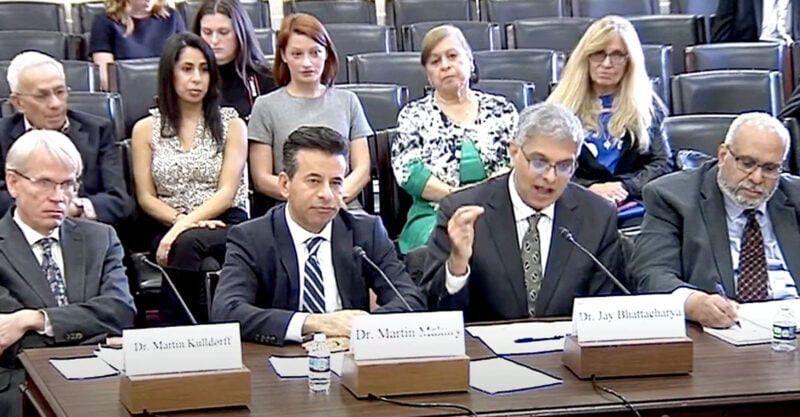
The House Select Subcommittee on the Coronavirus Pandemic on Tuesday presented the testimony of four public health experts, including Martin Kulldorff, Ph.D., who described the government’s response as the “worst public health mistakes in history.”

The agenda for the subcommittee, chaired by Rep. Brad Wenstrup (R-Ohio), focused on government policy pertaining to COVID-19, including vaccine mandates and other public health guidance.

In his opening remarks, Wenstrup said the subcommittee will examine the origins of COVID-19, policies surrounding gain-of-function, research, the impacts of lockdowns and other government policies, including school closures, and “vaccine and therapeutic development and the subsequent mandates.”

[…]

The experts who testified included Jay Bhattacharya, M.D., Ph.D., professor of medicine at Stanford University; Martin Kulldorff, Ph.D., professor of medicine at Brigham and Women’s Hospital; Marty Makary, M.D., M.P.H., chief of islet transplant surgery and professor of surgery at Johns Hopkins University; and Georges C. Benjamin, M.D., M.A.C.P., executive director of the American Public Health Association.

‘Worst public health mistakes in history’

[…]

Wenstrup cited examples like the vaccine mandates imposed by the Biden administration, ignoring natural immunity, the harm caused to elders forced into nursing homes, and the consequences of stopping in-person learning and implementing remote work, particularly in the public sector.

[…]

Most of the witnesses shared critical words about the overall public health response to COVID-19, which Kulldorff described as “the worst public health mistakes in history.”

Makary said “public health officials have made many tragic mistakes during the pandemic,” including:

“Ignoring natural immunity, dismissing the lab leak as a conspiracy, closing schools, masking toddlers … pushing boosters for young people, bypassing FDA [U.S. Food and Drug Administration] expert panel customary votes that we’ve been using for decades, telling people to wash their hands like crazy.”

Bhattacharya said:

“The American people deserve answers to fundamental questions about the pandemic. On what empirical basis were schools closed? Did public health decision-makers consider the harms of their policies as thoroughly as their putative benefits? Why did authorities ignore recovered immunity or failure of the vaccine to prevent disease transmission?”

“Scientists and people vehemently disagreed about the wisdom of lockdowns, school closures, vaccine mandates and discrimination and so much else,” he added. “There’s near-universal agreement that what we did failed.”

[…]

Nursing home policies, hospital visitation restrictions ‘a human rights violation’

Kulldorff said one of the two “major failures” of the public health response was “the failure to properly and optimally protect older Americans,” including “nursing home residents.” He described “sending sick people to nursing homes” as “criminal.”

[…]

Kulldorff, who along with Bhattacharya helped draft the “Great Barrington Declaration” on “the damaging physical and mental health impacts of the prevailing COVID-19 policies,” said that when the group “proposed very concrete things for how to better protect older Americans” they were “slandered.”

[…]

Human rights violation.”

‘A house of cards that’s now falling apart’

Several of Tuesday’s witnesses focused on pandemic lockdown policies.

According to Bhattacharya, “By early 2022, about 95% of Americans had contracted COVID, despite the harsh countermeasures in most states.”

Bhattacharya described the policies as a “widespread violation of civil liberties.” He referenced a “Johns Hopkins University meta-analysis [finding] that lockdowns had failed to contain the spread of COVID.”

“At best, [lockdowns] temporarily protected the ‘laptop class’ who could work from home without losing their jobs, perhaps 30% of the population, while being served by the working class,” he added.

[…]

Mandates ‘ignored clear scientific data’

Bhattacharya questioned why “public health authorities ignore[d] clear scientific data that COVID infection [and] acquired immunity is as strong or stronger than vaccine-acquired immunity.”

“Vaccine mandates forced many frontline workers … to choose between their careers and a vaccine that provides less protection than the natural immunity they already had,” he said.

According to Makary, “Young healthy people were essentially spared from this pandemic,” with “an infection fatality rate no worse than influenza.” However, he said, the Centers for Disease Control and Prevention (CDC) denied knowledge of studies confirming these findings.

[…]

Makary took a different view, saying, “The greatest perpetrator of misinformation during the pandemic has been the United States government” when it claimed “vaccinated immunity was far greater than natural immunity” and that “masks were effective.”

Makary referred to the recently published Cochrane meta-analysis showing that masks did not prevent the spread of COVID-19 while pointing out that myocarditis is “four to 28 times more common after the vaccine” but that the government has said “young people benefit from a booster.”

[…]

“Many faced with these anti-scientific choices will never trust public health authorities again,” Bhattacharya said. “Public health bureaucrats operated more like dictators than scientists during the pandemic, sealing themselves off from credible outside criticism.”

[…]

“CDC and the FDA and people at the NIH [National Institutes of Health] made up their mind before the trials were completed,” said Makary. “They decided babies were going to get vaccines before the study was done. And then [they] found no statistically significant difference in efficacy between the two groups and they just authorized it anyway.”

[…]

Where do scientists whose careers were destroyed go to get their reputations back?

[…]

Kulldorff referred to the Great Barrington Declaration, saying that when it was presented, he and its authors were “slandered instead of taking it seriously,” while Bhattacharya said there was “a media campaign to take down our proposal, which tens of thousands of doctors, epidemiologists and scientists endorsed.”

“Where do the scientists whose careers were destroyed … go to get their reputations back?” he asked.

[…]

Via https://childrenshealthdefense.org/defender/house-oversight-select-subcommittee-coronavirus-pandemic/

CDC and NIH Can’t Provide Single Study to Support Safety of Injecting Aluminum Adjuvants Despite Widespread Use in Childhood Vaccines

CDC and NIH’s responses to ICAN’s Freedom of Information Act (FOIA) requests regarding aluminum adjuvant reveal a stunning admission: they do not have a single study to support the safety of recommending repeated injection of this cyto- and-neuro toxic substance as part of the CDC’s childhood vaccine schedule.

Aluminum adjuvants are literally toxic to the human body, causing cellular and nerve death. That is why they are often used in vaccines to elicit a strong immune response, which they do by causing carnage to the cells they come into contact with at the injection site and by binding to the antigens in the vaccine to make them appear dangerous to the body. Aluminum adjuvants also cause immune dysregulation, which is why they are used in labs to induce autoimmunity in mice.

Given the dangers of this substance, ICAN wanted to know what our “health” agencies relied upon to claim they are safe.

That journey began on February 19, 2019 when ICAN’s attorneys submitted a FOIA request asking the CDC to produce evidence of the safety of aluminum in infant and childhood vaccines. Given the CDC’s “safe and effective” mantra, one would think that the CDC would have stacks of studies readily available to support the safe use of aluminum adjuvants, a primary ingredient in many vaccines. That proved not to be the case.

In March 2019, the CDC denied the request, complaining that the FOIA request was too broad.  ICAN pushed back and, ultimately the CDC admitted that it had no documents showing the safety of aluminum in childhood vaccines!

In May 2019, ICAN appealed that response, challenging the adequacy of the CDC’s search of its records. Incredibly, it took HHS (CDC’s parent agency) another nearly three and a half years to come up with its final response on September 27, 2022, stating, yet again that it could not locate a single study.

To be thorough, ICAN’s attorneys also sent the same request to the NIH, which responded the same way, conceding that no records were found.

This is yet another example of the failure of our health agencies to look out for the best interests of our children and the inability of these agencies to justify their own claims and policies. Aluminum adjuvanted vaccines are required for entry to school, yet no data exists supporting their ingredient’s safety. But don’t worry, they are so safe they even removed liability for pharma companies for injuries!

[…]

Via https://icandecide.org/press-release/cdc-and-nih-unable-to-provide-a-single-study-to-support-the-safety-of-injecting-aluminum-adjuvants-despite-its-widespread-use-in-childhood-vaccines/