Retired child and adolescent psychiatrist and American expatriate in New Zealand. In 2002, I made the difficult decision to close my 25-year Seattle practice after 15 years of covert FBI harassment. I describe the unrelenting phone harassment, illegal break-ins and six attempts on my life in my 2010 book The Most Revolutionary Act: Memoir of an American Refugee.
We noted early that pension protestors in France were gathered outside of BlackRock’s Paris headquarters. The protestors have now stormed the building.
France faces another wave of widespread protests and strikes following an unproductive discussion between the prime minister and labor unions. The failure to reach a compromise on the unpopular pension reform, which extends the working years for individuals, has fueled two-and-a-half months of public discontent.
Hundreds of thousands of people are expected to protest on Thursday against Emmanuel Macron’s pension reform to raise the minimum age from 62 to 64.
Protests continue to take place across France against Macron's pension reform (and many other issues). Just look at the scale of the protests in Toulouse.pic.twitter.com/4j368gEe0D
Trade union leaders met the Prime Minister, Elisabeth Borne, on Wednesday, but after just an hour of talks — they failed to find a comprise. The Guardian provides insight into some of those conversations:
Cyril Chabanier, speaking on behalf of France’s eight main unions, said: “We again told the prime minister that the only democratic outcome would be the text’s withdrawal. The prime minister replied that she wished to maintain the text, a serious decision.”
Sophie Binet, the new leader of the CGT trade union, called for more protests and strikes after the failed talks with the prime minister:
“We have to continue mobilizing until the end, until the government understands there is no way out other than withdrawing this reform,” Binet said.
Labor unions plan to keep pressure on the government until the Constitutional Council decides on the pension reform. They believe there’s still a chance to block it from becoming law on April 14. If unions are unsuccessful, strikes will likely continue.
“We’re in a social crisis, we have a democratic crisis, there is a problem, and the president has the solution in his hands,” Laurent Berger, leader of the CFDT union, said on RTL radio.
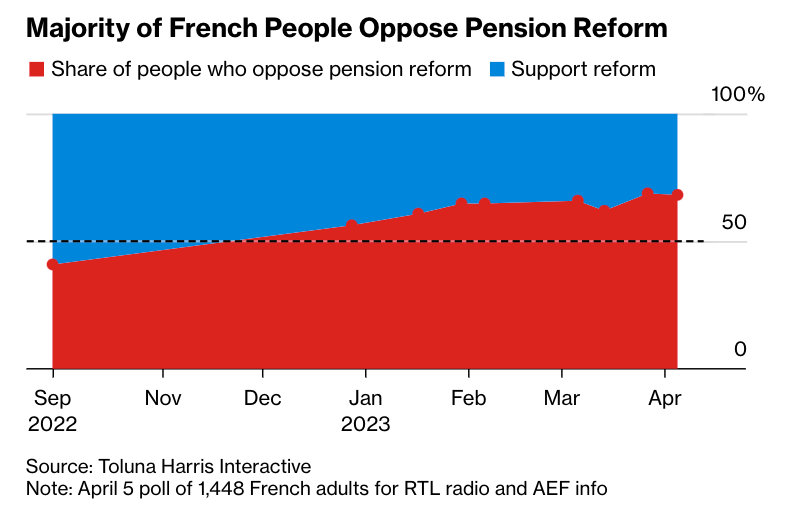
Bloomberg cited a recent poll that shows most French people oppose pension reform.
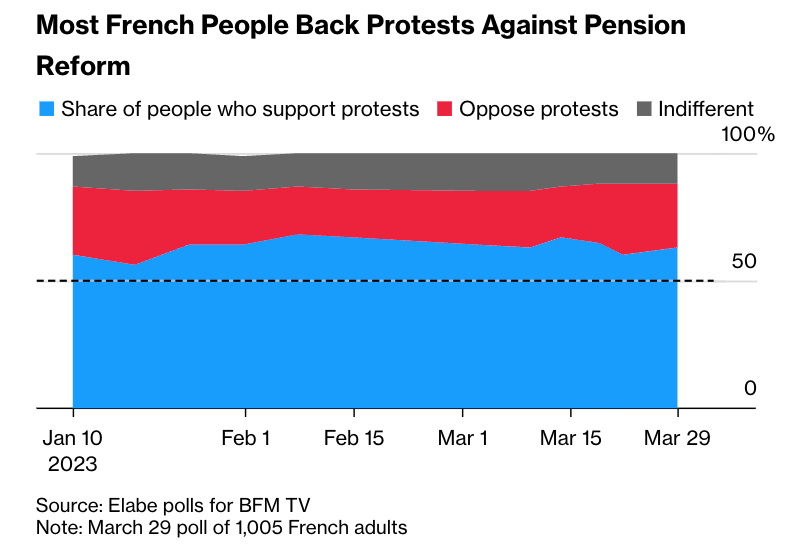
And most French people support pension reform protests.
Meanwhile, Macron is meeting with Chinese President Xi Jinping in Beijing today while France enters another round of mass protests.
Evidence of early Celtic influence in central Europe comes from ancient artifacts dating from 1200 – 475 BC discovered in Hallstatt Austria and La Tene Switzerland. At the Hallstadt site, archeologists have discovered thousands of graves from the Iron Age containing Celtic pots, jewelry, swords and figurines. Prehistoric Celts were famous for being exceptional metal workers. However many of the grave items had clearly traveled hundreds of miles, evidence of robust long distance trade.
The superb craftsmanship of all the artifacts suggests a highly stratified society with enough wealthy people to pay the high price of luxury goods. There are also dozens of hill forts across Europe associated with princely graves. Their presence points to the presence of local power centers where hundreds and thousands of people could gather.
A grave from 530 BC holds the remains of a 6 foot 2 inch man wearing gold shoes and lying on a bronze couch. His grave holds a large collection of grave goods, including an elaborately decorated caldron which held 100 gallons of mead.
Between 550-450 BC the Hallstatt culture came to an abrupt end and the hill forts were abandoned.
The culture at La Tene Switzerland was associated with even more riches and global trade and features event more spectacular Celtic artifacts. These include 2500 metal objects, most with some military connection. This includes 166 elaborately decorated swords, most unused. There were also lots of torques, Celtic-style neck bands.
In La Tene, archeologists also found lots of carnyces (plural of carnyx) which were long horns Celtic warriors played as they marched into battle. The tip of the horn, which made a noise similar to a vuvuzuela,* was carved in the shape of a boar’s head. The carnyx was also used in Druid ceremonies. There were many found across Central Europe between 300 BC and 300 AD.
Other Celtic metal artifacts found at La Tene include decorative helmets, often in the shame of animals, covered with abstract and repetitive spiral and curvilinear patterns.
In Nix France a prince’s grave from 500 BC contained an enormous bronze vessel capable of holding 290 gallons of wine.
*The vuvuzela is a horn with an inexpensive injection-molded plastic shell about 65 centimeters long that produces a loud monotone note, typically around B♭ 3.
Film can be viewed free with a library card on Kanopy.
I recently reported how America’s faith in Artificial Intelligence (AI) is about to destroy the U.S. economy, as investors are pouring $BILLIONS into developing new AI software, which is projected to be a $1.59 TRILLION industry by 2030.
And news continues to be reported on just how much of a fantasy this faith in AI, and technology in general, is, as we are being setup for perhaps the largest economical bubble to burst in the history of the U.S. See: WARNING: Faith in Artificial Intelligence is About to Destroy America – A Total System Collapse May be Imminent
Today, The Information confirmed one of the reasons I gave for a possible imminent collapse of the Tech sector based on this rush into AI: there aren’t enough computers in the U.S. to run all of this new, power hungry, desire for these new AI toys that do NOT produce any revenue yet.
AI Developers Stymied by Server Shortage at AWS, Microsoft, Google
Startups and other companies trying to capitalize on the artificial intelligence boom sparked by OpenAI are running into a problem: They can’t find enough specialized computers to make their own AI software.
A spike in demand for server chips that can train and run machine-learning software has caused a shortage, prompting major cloud-server providers including Amazon Web Services, Microsoft, Google and Oracle to limit their availability for customers, according to interviews with the cloud companies and their customers. Some customers have reported monthslong wait times to rent the hardware.
Cloud providers expanding their data centers also are running into problems getting enough energy sources to power them, according to a February report from commercial real estate firm CBRE.
Making matters worse, training AI software requires so much computer processing power that some cloud providers can’t split their GPU-powered servers between different customers the way they do with servers for simpler tasks like hosting websites, according to a person who has worked for multiple cloud providers. (Full article – Subscription needed.)
The Technology Community here in 2023 has obviously not learned the lessons from the Big Tech bubble burst and economic fallout in the early 2000s, and this bubble looks to be a lot worse, given how their largest bank, Silicon Valley Bank, has already failed, and many other banks in the U.S. are on the brink of collapse.
These gigantic Tech companies, such as Apple, Google, Amazon, and Microsoft, are running most of the economy today, and if they crash, so does America.
Here is more evidence that Big Tech is recklessly overspending what is left of America’s wealth, and that our reliance on Technology could be close to collapsing what is remaining of the American Empire.
Judge Juan Merchan, the judge overseeing Donald Trump’s hush money case in New York, is being scrutinized over a $35 payment he made to Biden’s administration and Democrat causes.
This information had raised questions about Merchan’s impartiality as he has come under attack by the former president as a “Trump-hating judge.”
The scrutiny is reportedly over the amount that the New York Judge had donated to Democrats in 2020, which included $15 to Joe Biden’s presidential campaign.
Senior CNN legal analyst and former federal prosecutor Elie Honig explained the significance of the revelation.
Federal election records show that Merchan made the three contributions through ActBlue, an internet fundraising tool for Democrat candidates and causes, in July 2020.
The judge had given $15 to the Biden campaign and two other $10 donations, one to the Progressive Turnout Project, a group that encourages voter turnout, and the other to Stop Republicans, a group that is affiliated with the Progressive Turnout Project.
According to Stephen Gillers, a professor of legal ethics at New York University, New York has adopted language from the American Bar Association Model Code of Judicial Conduct that forbids judges from “soliciting funds for, paying an assessment to, or making a contribution to a political organization or candidate.”
“The contribution to Biden and possibly the one to ‘Stop Republicans’ would be forbidden unless there is some other explanation that would allow them,” Gillers said.
According to the professor, given the minimal sums, the donations “would be viewed as trivial.” He claimed that the state’s Commission on Judicial Conduct would remind the judge of the guidelines in the event of a complaint.
Political allies of the former president are using the contributions as evidence that the judge should recuse himself from the case.
COVID has unfortunately created any number of repetitive stories.
Jurisdiction imposes mask mandates, population complies, masks prove ineffective, media claims masks didn’t work because of lack of compliance.
Another example would be when countries with extraordinary compliance, such as Singapore or South Korea, would see increases ignored entirely, or blamed on the population not wearing masks of a correct level of quality.
Yet as a general rule, the most consistently predictable repetitive storyline has been the media and expert community declaring that a country was a pandemic success, only for their results to dramatically change in a relatively short period of time.
This was the case with the Czech Republic, with Australia, with Taiwan and many other locations.
Even within the United States adjustments showed that states like California – heralded as pandemic winners – actually had significantly worse results than previously realized.
But few places on earth have been as heavily praised as New Zealand.
Their science-following leadership was repeatedly hailed, honored, and praised for their effective communication, endless lockdowns, tyrannical response to protests, and prolific commitment to mandates.
All of the above, combined with their strict border controls, should have meant that New Zealand would avoid the significant increase in negative outcomes seen in other parts of the world.
At least, that’s what the media and activist public health authorities claimed would happen.
The reality is far more complicated.
New Zealand’s COVID Metrics
Throughout 2020 and into 2021, New Zealand saw very little COVID transmission.
Unsurprisingly, the BBC praised the country for their efforts, explaining in detail how the country had become “COVID free.”
Jacinda Arden, now former prime minister, was once so completely committed to maintaining an illusion of infallibility that she claimed that the only source of accurate information available to the public was the government.
Of course, Arden then made the provably inaccurate claim that those who were vaccinated would net get sick and would not die.
The ridiculous over-confidence in the proclamations of public health authorities led to Arden convincing New Zealanders that strict mandates and interventions could stop the spread of the virus.
As winter and new variants arrived in 2021, Arden and local leaders predictably enforced increasingly strict measures. Mask mandates, lockdowns and “red traffic light” policies include vaccine passports.
Surprise. None of it worked.
After several months of completely unchecked spread, even the country’s cumulative metrics, once seemingly so impressive, exploded in dramatic fashion.
Consistently and exceptionally high mask wearing rates were also entirely ineffective.
And yet defenders of New Zealand’s authoritarian policies still believed that the country’s strategy was warranted, for one specific reason.
They had delayed the spread of the virus until the COVID vaccines became widely available.
In theory, that was supposed to prevent a substantial increase in deaths, especially considering their extraordinary rate of uptake.
That didn’t work either.
While these rates were generally lower after adjusting for population than many other countries, they still represented an obvious, significant surge compared to previous time periods.
But COVID related deaths only tell a part of the story, often influenced by attribution methodology and testing.
In theory, New Zealand’s exceptional vaccination rate and consistently high mask compliance should have meant that all cause mortality would also remain low.
So did it?
Fortunately, thanks to the New Zealand government’s own data, we now have an answer. And just as the country’s failure to stop omicron, it presents another contradiction to the endless media praise.
“Despite the forced pause… the program has now been resumed…”
The Russian Defense Ministry has asserted that the United States has recommenced its contentious biological laboratories (biolab) initiative within the territory of Ukraine, with a primary focus on the construction of secretive new facilities and the training of personnel.
During a media briefing held on Friday, Lieutenant General Igor Kirillov, the commander of Russia’s Nuclear, Biological and Chemical Defense Forces, presented a new collection of documents regarding purportedly US-funded biological programs in Ukraine.
During the briefing, Kirillov stated: “Despite the forced pause pertaining to the Russian special military operation (in Ukraine), (the US’) activities under the program have now been resumed. The main tasks at this stage are to continue the construction of biological laboratories in Ukraine, as well as expand the format for training Ukrainian biologists.”
Kirillov referenced the meeting minutes of October 20, 2022, wherein delegates from the US Defense Threat Reduction Agency (DTRA), several Ukrainian dignitaries, and representatives from Jacobs/CH2M engineering firm were in attendance. The reported agenda of the meeting pertained to the recommencement of biological research activities in Ukraine, which had been temporarily halted in the context of the conflictual situation between Moscow and Kiev.
Russia 🇷🇺 headline: Russia Today
US resumes biolabs program in Ukraine – Russian MOD
Washington is constructing secretive new facilities and is training personnel, Moscow has claimed pic.twitter.com/7Z0zKofzoK
“Now, the project has been resumed with focus on renewal of legislative support, revision of training schedule, as well as conclusion and resumption of construction work,” the Ukrainian-language protocol stated, citing Jacobs/CH2M’s David Smith.
According to the document, it was revealed that the program which was originally referred to as “Joint Biological Research” has been renamed as “Biological Control Research.”
According to Kirillov, the United States has undertaken measures to mitigate any risks of information leakage stemming from Ukrainian experts concerning the authentic essence of the Biological research programs.
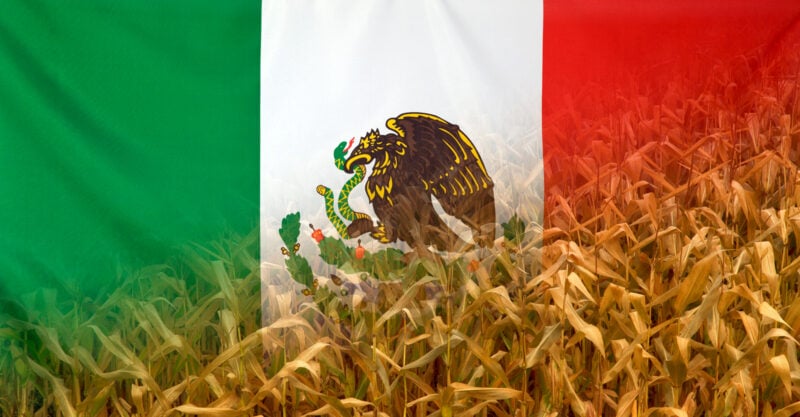
Amid a high-stakes standoff with U.S. trade officials over favored American agricultural products, Mexico is slashing the amount of glyphosate allowed to be imported into the country by 50% for 2023.
The move is no surprise — Mexico issued a decree in 2020 giving its farmers until 2024 to stop using the weed-killing chemical. But coming amid an increasingly heated dispute with U.S. trade officials, the action underscores Mexico’s commitment to free itself from a dependence on the synthetic pesticides and genetically engineered crops promoted by American interests.
Along with banning glyphosate, Mexico is ratcheting back imports of genetically engineered corn that is designed to be sprayed with glyphosate. Mexico says the changes are needed to protect the health of its population.
The country has also signaled concerns about other genetically modified (GMO) crops sprayed with glyphosate.
Glyphosate is classified as a probable human carcinogen by the World Health Organization’s International Agency for Research on Cancer and is linked to an array of other human and environmental health problems.
It was introduced by Monsanto in 1974 and is the world’s most widely used weedkiller, known best as the active ingredient in the Roundup brand.
Monsanto developed genetically engineered corn, soybeans, canola and other crops to tolerate being sprayed with glyphosate, a trait that makes it easier for farmers to kill weeds in their fields.
Foods made with crops sprayed with glyphosate commonly carry residues of the weedkiller, and people then consume the residues through their daily diets.
Mexico’s retreat from these types of agricultural products has triggered a firestorm of industry opposition in the U.S.
In response, the Office of the U.S. Trade Representative (USTR) and other U.S. agencies are fighting Mexico’s efforts, alleging violations of trade provisions of the U.S.-Mexico-Canada trade agreement (USMCA) with respect to Mexico’s restrictions on GMO corn.
Mexico’s policies “threaten to disrupt billions of dollars in agricultural trade,” the USTR said in a press statement last month.
Mexico’s moves to limit GMO corn “will stifle the innovation that is necessary to tackle the climate crisis and food security challenges if left unaddressed,” the USTR said.
The two sides started “technical consultations” regarding Mexico’s measures to limit GMO corn by an April 5 deadline as a formal first step to try to resolve the dispute.
Rooted in science
While U.S. officials claim Mexico is making policies that lack a scientific basis, Mexican authorities say the measures are solidly rooted in a wealth of scientific evidence about the risks of glyphosate and GMO crops. The country’s scientific policy group CONACYT held a webinar last week to lay out several concerns.
Scientists presented concerns about glyphosate residues in corn products along with a long-term study finding glyphosate prevalent in the urine of children, among other things, and said more such presentations are planned, according to a report in Food Tank.
There are at least 12 alternatives to glyphosate, “which do not risk the Mexican countryside or the health of the population,” Mexico’s health ministry, the Federal Commission for the Protection against Sanitary Risks (COFEPRIS), said in announcing its new glyphosate quota.
COFEPRIS set the 2023 “annual import quota” for formulations of glyphosate at 4,131 tons, down from 8,263 tons in 2022 and more than 16,000 tons in 2021. For what they refer to as “technical” (concentrated) glyphosate, the quota was set at 314 tons, down from 628 tons in 2022.
As Mexico presses ahead, leading U.S. lawmakers are campaigning to take action against the country.
House Ways and Means Chairman Jason Smith and Trade Subcommittee Chairman Adrian Smith sent a letter in February to U.S. Trade Representative Katherine Tai and Agriculture Secretary Tom Vilsack, calling on them to protect the “livelihoods of American farmers.”
U.S. agricultural exports to Mexico were valued at roughly $30 billion in 2022, with corn exports valued at close to $5 billion, according to the U.S. Department of Agriculture’s Foreign Agricultural Service.
The country is among the top three export destinations for not only corn but also soybeans, wheat, rice and several other crops, making its decisions about glyphosate and GMOs highly impactful for U.S. farming.
Mexico is the latest of many countries to express concerns about glyphosate and genetically engineered corn and other crops.
But each effort by a foreign government to limit or ban such products draws a swift U.S. backlash. Thailand saw its 2019 effort to ban glyphosate thwarted by a U.S. trade threat that internal emails showed was largely scripted for U.S. officials by Monsanto owner Bayer AG.
Similarly, Bayer, lobbyist CropLife America, the Corn Refiners Association and other industry actors have been working behind the scenes to mobilize U.S. lawmakers and trade officials to put a stop to Mexico’s plans.
Talking points
One company involved in pushing for action against Mexico is Corteva AgriScience, a company created by the former Dow and DuPont companies.
Corteva announced the launch of a new GMO corn just last month; corn that is engineered not only to tolerate being sprayed directly with glyphosate but three other herbicides.
In October, Corteva sent “Talking Points” to Leslie Yang, deputy assistant U.S. Trade Representative for Agricultural Affairs, encouraging the USTR to initiate the USMCA dispute settlement process.
The industry efforts have been revealed in internal government emails obtained through Freedom of Information Act requests by the Center for Biological Diversity.
The center is one of 80 groups that have formally called on U.S. officials to stop fighting Mexico on pesticides and GMO crops. The groups say the U.S. should respect Mexico’s sovereignty and stop pressuring the government to rescind “forward-looking policies.”
“A lot of the world no longer has a demand for food soaked in pesticides. But instead of adjusting our supply to the demand of the foreign market, pesticide companies are pushing for maintaining the status quo via ‘soft imperialism’ by the U.S.,” said Nathan Donley, environmental health science director at the Center for Biological Diversity.
“Industry is really nervous about tighter regulation in other countries impacting the typical use of pesticides in the U.S., as they should be,” he said.
DELHI, India—Rohit Sharma stood on the spot where, more than a fortnight ago, he had a bed in a night shelter. After having traveled more than 650 miles from his home city of Patna, Sharma lived for the past four years in a shelter the Delhi Urban Shelter Improvement Board (DUSIB) had provided.
“I used to get picked up from here for work. I would then come back and sleep here. This was my home,” said Sharma, who works in the tent-fitting industry. “Most of us fix tents or work for caterers for different occasions, like marriage or religious programs.”
Yet, everything changed on the night of March 9. That’s when bulldozers, in the presence of police, demolished temporary shelters, according to homeless people like Sharma. Now, he, along with about 1,200 people who used to live in four night shelters, sit under the sky. The site of the former shelter is close to the interstate bus terminus (ISBT) at Kashmere Gate, the northern entrance to the historic walled city of Old Delhi.
Activists and the affected said current demolitions are part of preparations for the Group of Twenty (G20) Summit that the capital city of New Delhi is preparing to host in September. G20 is an intergovernmental group made up of 19 countries plus the European Union. Altogether, the G20 represents two-thirds of the world’s population. Its stated aim is to address global economic issues. Indian Prime Minister Narendra Modi became its chairman last year.
Past G20 summits had been met with protests from both anti-globalization movements and groups opposing the displacement of society’s poorest to make way for a summit venue. Such was the case in 2010 in Toronto, Canada, and in 2017 in Hamburg, Germany, for example.
Similarly, before Donald Trump visited India in 2020 as the president of the United States, the huts of poor families were demolished around the venue to host him in Gujarat state in western India.
Estimates of 100,000 to more than 300,000 people live in Yamuna Pushta, where India’s largest reported slum developed in flood-prone conditions along the banks of the Yamuna River flowing through Delhi, India’s National Capital Territory (NCT).
Destroying Livelihoods
Since the demolition drive in Delhi began, poor and working-class people said police have been trying to ensure they do not linger in the area where they normally wait to secure gigs for the day.
“They take us in a bus forcefully and drop us at a distance from here and ask us not to come back,” Sharma said, adding, “We find work at this place. Contractors come here and pick us up from here. Where else would we find work?”
The location to which homeless people must be moved is supposed to be “close to where they are concentrated and close to the work site as far as practicable,” as per Indian Ministry of Housing and Urban Affairs’ Revised Operational Guidelines for Scheme of Shelter for Urban Homeless under Deendayal Antyodaya Yojana-National Urban Livelihood Mission (DAY-NULM).
However, the affected said they will struggle to find work after being forced to move.
“I have been working for the cause of the homeless for more than 20 years now. Governments never rehabilitate any homeless, like they claim to do,” alleged social activist Sunil Kumar Aledia, who is National Convenor for Homeless Housing Rights (NFHHR).
Bulldozing Homes
Aledia filed a Public Interest Litigation (PIL) in the Supreme Court of India on March 3.
“We approached the Supreme Court as the demolition drive was going on in other places, and we did not want other temporary shelters to be demolished,” Aledia said.
But, before the court could take up the matter, Delhi Urban Shelter Improvement Board (DUSIB) razed the shelters.
“We were sleeping when the authorities came with bulldozers. They did not tell us the reason for demolishing our home,” Sharma told Toward Freedom. “Some of the inhabitants were manhandled by the police.”
Little information is available about the source of the demolition drive. NCT Urban Development Minister Saurabh Bharadwaj wrote to DUSIB on March 16, inquiring under whose direction the action was taken. The letter that the Times of India obtained stated:
“Director DUSIB has given a statement in the social media that the demolition has been carried out on the orders of Govt. of NCT, Delhi. DUSIB may kindly specify who in Delhi Govt. has given these directions? And whether these orders were recorded or merely oral?”
DUSIB remains mum.
“The matter is sub judice in the Supreme Court, and it wouldn’t be appropriate to comment at this stage,” P.K. Jha, an official of DUSIB, told Toward Freedom. Sub judice describes a matter under a court’s consideration and, therefore, official commentary is prohibited.
‘We Only Need Food and a Make-Do Shelter’
“Some big event is going to take place here. That’s why they broke this shelter,” said Arun Kumar Jha, another occupant of the night shelter, sitting on the footpath across the road. He frequents different night shelters in the area.
Dozens of homeless still sit in the place where their shelter was until a few weeks ago. They have always relied on voluntary organizations, temples and individuals for food. Across the road, approximately 300 meters (328 yards) away from the shelter is a revered Hanuman Temple.
Hanuman is a Hindu god with the face of a monkey known for his devotion via service. The homeless crowd outside the temple has increased after the demolition. They find it easier to find food and money from worshippers visiting the temple.
“Food is not a problem here, many people come and serve us, that’s why we (homeless) do not want to leave this place. We only need food and a make-do shelter,” Jha told Toward Freedom. “Government takes us in a bus from here, but never provides food.”
According to the globalists, climate change is the No. 1 threat to humanity, necessitating radical quality of life sacrifices and the total relinquishing of privacy and freedom
Climate change is also being used to explain away food shortages, justify the need to move people from the countrysides and suburbs into smart cities, and promote the replacement of beef with insects. The COVID-19 pandemic was even blamed on it
Globalists want health (which includes both medicine and food, under the new “food is medicine” agenda), climate action and energy control to be addressed not as three separate issues but as one
One of the globalists’ fraudulent solutions to the purported climate crisis is Environmental, Social and Corporate Governance (ESG) investing. A company’s ESG score is supposed to tell investors how socially conscious the company is, but recent scandals have revealed ESG is a scam
Carbon trade refers to the buying and selling of credits that allow a company to emit a certain amount of carbon dioxide. By buying credits from nonpolluters, industry can continue to pollute. Basically, like ESG investing, the carbon trade is a globalist scam intended to lower the living standards of the poor and usher humanity into carbon slavery
According to the globalists, climate change is the No. 1 threat to humanity, necessitating radical quality of life sacrifices and the total relinquishing of privacy and freedom. Germany’s health minister Karl Lauterbach, for example, in December 2020 proclaimed that addressing climate change will require restrictions on personal freedom, similar to those implemented to “flatten the curve” of COVID.1
Similarly, British economics professor Mariana Mazzucato in September 2020 warned that “In the near future, the world may need to resort to lockdowns again — this time to tackle a climate emergency.”2 The World Economic Forum (WEF), the United Nations and the World Health Organization have also published articles stating their intent to “fight climate change” by shutting down society.3
Climate change is also being used to explain away food shortages, justify the need to move people from the countrysides and suburbs into smart cities, and promote the replacement of beef with insects. The COVID-19 pandemic was even blamed on it.
Health, Climate and Energy To Be Addressed as One Issue
Just about anything is now being justified on the basis that it helps address climate change. Indeed, dietary controls, energy control, carbon restrictions and climate change are increasingly tied together, whether it makes sense or not, and the reason for this can be found in a September 2022 WEF article4 co-written by the director of WHO’s Environment and Health Department.
In other words, health (which includes both medicine and food, as government has now launched a “food is medicine” agenda), climate action and energy control are to be addressed not as three separate issues but as one. The potential implications of this are enormous.
If the WHO ends up having sole power over global health, combining health, climate and energy issues into one will automatically give the WHO the de facto power to seize control over society in general.
They could issue climate lockdowns, for example, on the basis that lockdowns reduce pollution, hence improving public health. That the WHO will jump at the opportunity to implement climate lockdowns in particular can be seen in the WHO “Manifesto for a Healthy Recovery From COVID-19.5
[…]
This manifesto also lays out many other aspects of The Great Reset agenda, including smart cities, travel restrictions, new food systems, a complete transition to green energy and more. But again, the thing that will really facilitate all of these changes is to have a centralized powerbase, and that is the WHO.
[…]
However, while pollution is a reality that needs to be addressed, the solution the totalitarian cabal is offering is a gigantic scam designed to disempower and control everyone but the ones at the very top of the power pyramid, while accomplishing little in terms of producing a cleaner environment, let alone having a distinct effect on climate.
The ESG Scam
One of the globalists’ fraudulent solutions to the purported climate crisis is Environmental, Social and Corporate Governance (ESG) investing, first popularized in 2004.7 In more recent years, ESG funds have gained steam and now make up about 10% of all invested assets.8
A company’s ESG score is supposed to tell investors how socially conscious the company is, based on its behavior within the environmental, social and corporate sphere. For example, does the company have safeguards in place to protect the environment or policies to address climate change?
[…]
ESG investing is supposed to encourage companies to act responsibly, but it’s actually having the opposite effect. Somehow or other, companies are greasing the right hands and getting great ESG ratings, only to later turn out to have the worst governance possible and/or a track record of environmental destruction.9
One of the latest in a long line of scandals is that of FTX, a cryptocurrency exchange that went belly up overnight while its CEO, Sam Bankman-Fried absconded with up to $2 billion of client funds.
John Ray, the appointed CEO of FTX’s bankruptcy stated: “Never in my career have I seen such a complete failure of corporate controls and such a complete absence of trustworthy financial information as occurred here.”
FTX’s ESG score really ought to have been nonexistent. Cryptocurrencies are extremely energy-intensive and wasteful (the “E” in the score), customer satisfaction (part of the “S” in the score) within the crypto space had been tanking for over a year, courtesy of the repeated evaporation of wealth.
[…]
FTX isn’t alone in falling short of expectations though. According to a September 2021 report by climate change think tank InfluenceMap, more than half of the 723 funds marketed using ESG claims failed to meet the Paris Accord rules on carbon emissions and clean energy, and more than 70% of funds with broad ESG goals failed to meet global climate targets.11
Similarly, a May 2021 report12 by the Economist concluded some of the largest ESG funds in the world are “stuffed full of polluters and sin stocks.” A 2019 report by the Wall Street Journal13 also noted, “Eight of the 10 biggest U.S. sustainable funds are invested in oil-and-gas companies, which are regularly slammed by environmental activists.”
In short, the ESG investing scheme is yet another globalist scam that allows them to promote their own agenda outside of the democratic process.
Wind turbines, solar panels and electric-everything is touted as the answer to the purported climate crisis, yet most of these “green” solutions are far more environmentally destructive than oil and gas.14
Many also end up requiring more fuel rather than less. Importantly, there aren’t even enough minerals in the world to allow even a single country to go 100% electric. As just one example, to replace the 31.5 million vehicles in the U.K. with electric cars will require twice the global supply of cobalt!15 The math just doesn’t work.
So, are the globalists stupid? No. They’re fully aware they can’t replace all gas-powered cars with EVs, be it by 2030 or 2050. See, they know you won’t even be allowed to travel very far by the time the EV goals and mandates go into effect, so you won’t need a car in the first place.
Forcing states and countries to transition to EVs merely speeds up the end goal of preventing you from owning a car and driving anywhere. It also justifies the creation of “15-minute cities.”
Farmers Are Being Pushed Into Carbon Slavery
As Vandana Shiva, Ph.D., cofounder of the Indian NGO Navdanya, has warned, we are being ushered into carbon slavery.
[…]
Bill Gates has alluded to this double-standard in responding to those who criticize him for the hypocrisy of being a serious polluter himself, with a 66,000 square-foot mansion, a private jet, 242,000 acres of farmland and investments in fossil fuel-dependent industries such as airlines, heavy machinery and cars.17
[…]
Focusing solely on carbon reductionism also misses the point that lands, forests and ecosystems are more than just the carbon stored in them, and putting carbon conditions on small farmers will only make environmental injustices worse. As noted by Navdanya’s report, “Conditionalities put on the nonpolluters by the polluters who want to continue to pollute is unjust and ecologically, morally and ethically bankrupt.”
The Carbon Trade Scam
Carbon trade refers to the buying and selling of credits that allow a company to emit a certain amount of carbon dioxide, and by buying credits from nonpolluters, industry can continue to pollute. Basically, like ESG investing, it’s nothing but a globalist scam that lowers the living standards of the poor while having no negative impact on the wealthy.
In this lecture, Paxton explains how a study of Celtic languages dispels earlier beliefs that the Celts originated in Central Europe and went on to conquer all of Western Europe, including the British Isles and Ireland.
According to Paxton, the Proto-Indo European language from which Pro-Celtic evolved arose about 6000 BC. Ancient inscriptions from western Spain, France and Ireland suggest the latter emerged as a distinct language around 3000 BC.
She supports the view that Celtic language and culture originated on the west coast of Europe (in Ireland and western Spain and France) among cultures that traded heavily with one another and then spread eastward to central and northern Europe.
Paxton believes there’s no other way to explain the geographical distribution of Q-Celtic and P-Celtic languages. At some point, the Celtic language lost its P for some branches of Celtic speakers (ie the Brythonic speaking Welsh, Cornish and Breton).* She believes the P Celtic languages originated in Gaul, whose Gallic language was P-Celtic language. In contrast, the Q-Celtic languages of Ireland, Scotland and the Isle of Mann, seem to have originated in western Spain.
Aside from the total absence of archeological evidence suggesting European Gauls ever invade the British Isles, Paxton also cites the total absence of similarities between the Celtic language and Central European languages. If anything, Celtic is most similar to the Slavic and Baltic languages.***
*The Breton speakers of Brittany are descended from immigrants from the British Isles who emigrated to western France in the 5th century AD.
**There’s no verb for “have” in either Celtic or Russian. Instead both languages use the preposition “at” to indicate possession (eg “at me a cat” means “I have a cat.”). Recent DNA studies indicate two significant waves of migration to Ireland. The first occurred between 10,000 and 5,200 BC from southern Europe (mainly Spain and Sardinia) and the Middle East. The second occurred around 4,000 BC (and not 500 BC as previously believed) from people who originated in the steppe region of Russia and Ukraine and gradually migrated across Europe to the British Isles. The the Celts living in Ireland, Scotland and Wales aren’t directly descended from the European Keltoi described by the Greeks and Romans but likey shared common ancestors. See https://owlcation.com/stem/Irish-Blood-Genetic-Identity





 Newsletter