The Most Revolutionary Act

Uncensored updates on world events, economics, the environment and medicine

The Most Revolutionary Act
Unknown's avatar

About stuartbramhall

Retired child and adolescent psychiatrist and American expatriate in New Zealand. In 2002, I made the difficult decision to close my 25-year Seattle practice after 15 years of covert FBI harassment. I describe the unrelenting phone harassment, illegal break-ins and six attempts on my life in my 2010 book The Most Revolutionary Act: Memoir of an American Refugee.

Big Ag Panicking Over Bill to Require Labeling of Gene-Altering Products

By  Dr. Joseph Mercola

Missouri House Bill 1169 would require labeling of products that can alter your genes. Big Ag lobbyists strongly oppose it, because it would mean labeling livestock injected with mRNA vaccines.

Story at a glance:

  • Pork producers have been using customizable mRNA-based “vaccines” on their herds since 2018, without telling the public.
  • All customized mRNA “vaccines” are untested. Only the mRNA platform itself has been approved.
  • According to the National Cattlemen’s Beef Association, “There are no current mRNA vaccines licensed for use in beef cattle in the United States.” However, a lobbyist for the association claims to have “double-vaccinated” his own herd with an mRNA “vaccine” against bovine respiratory disease.
  • Iowa State University began trialing an mRNA “vaccine” against bovine respiratory syncytial virus on Oct. 1, 2021.
  • Missouri House Bill 1169 would require labeling of products that can alter your genes. Big Ag lobbyists strongly oppose it.

Last week, I reported that pork producers have been using customizable mRNA-based “vaccines” on their herds since 2018  — without telling the public.

This issue really only rose to the surface after attorney Tom Renz started promoting new legislation in Missouri (House Bill 1169, which he helped write) that would require labeling of mRNA products.

[…]

The transhumanist agenda and its focus on food

Within days, alternative media was abuzz with this story and Renz started making the rounds sharing evidence that shows the U.S. government has been working on the integration of vaccines into foods for at least two decades.

[…]

Industry doesn’t want you to know what they’re doing

The pushback by Big Ag lobbyists against this bill to require industry transparency on this important issue has been enormous, and one potential reason for that is because they’d have to admit that all sorts of foods may have been vaccinated with mRNA vaccines, have genetic modifications, or be modified to serve as vaccinations for humans.

Not only might this destroy Big Ag, but it would also seriously impact any surreptitious attempts by Big Pharma to use the food supply as a tool to distribute vaccines unbeknownst to consumers.

[…]

mRNA ‘vaccines’ in livestock are untested

If the mRNA COVID-19 shots don’t prevent infection, why would we assume mRNA shots for viral and bacterial infections in swine work any better?

One of the most disturbing aspects of using mRNA “vaccines” in swine is the fact that all of them are by definition untested. As explained by Merck on its website, its “custom swine vaccine,” Sequivity, is not a vaccine but, rather, a platform that allows for the endless customization of “mRNA vaccines.”

[…]

At the end of the day, the fact that mRNA shots can be endlessly customized without safety testing shows just how broken the U.S. Department of Agriculture and the U.S. Food and Drug Administration are.

There’s simply no way they can guarantee that customized mRNA shots are safe. The fact that the platform itself works and allows for this customization does NOT prove the safety and effectiveness of the shots being cooked up.

Approval of the platform also does not prove the food is safe for consumption after it’s been treated with mRNA.

Cows milk used to immunize mice

As reported by Dr. Peter McCullough, Chinese researchers have demonstrated that food can indeed be turned into a vaccine.

“The nation’s food supply can be manipulated by public health agencies to influence population outcomes … Now an oral route of administration is being considered specifically for COVID-19 vaccination using mRNA in cow’s milk.

“Zhang and colleagues have demonstrated that a shortened mRNA code of 675 base pairs could be loaded into phospholipid packets called exosomes derived from milk and then using that same milk, be fed to mice.

“The mice gastrointestinal tract absorbed the exosomes and the mRNA must have made it into the bloodstream and lymphatic tissue because antibodies were produced in fed mice against SARS-CoV-2 Spike protein (receptor binding domain) …

[…]

Will beef be treated with mRNA too?

At present, there’s no evidence to suggest beef cattle are being treated with customizable mRNA “vaccines,” either in Europe or the U.S. The National Cattlemen’s Beef Association has also denied it, saying “there are no current mRNA vaccines licensed for use in beef cattle in the United States.”

That said, the Cattlemen’s Association previously confirmed they do, eventually, intend to use mRNA shots in cattle, which might affect both dairy and beef.

Time will tell whether public outrage will halt such plans. Clearly, the Cattlemen’s Association is concerned about internet rumors that it’s already in use.

On April 3, Texas Department of Agriculture commissioner Sid Miller issued a statement promising to conduct a risk assessment of the technology before its adoption:

[…]

Confusion caused by cattlemen’s association lobbyist

What’s causing significant confusion on this issue is a statement made by National Cattlemen’s Beef Association lobbyist Shannon Cooper before the Missouri House.

Cooper told the House members he had recently “double-vaccinated” his herd with “vaccinations that have this mRNA.” According to Cooper, the mRNA “vaccine” given was for bovine respiratory disease.

Is he confused? Did he mistakenly believe the vaccine he gave had mRNA in it? Or is the National Cattlemen’s Beef Association incorrect in stating there are no approved mRNA vaccines for cattle in the U.S.? Or, are experimental mRNA shots being used without approval? Who knows at this point?

[…]

Is mRNA-jabbed livestock safe to eat?

Considering health authorities insist the COVID-19 shots are safe, it’s no wonder they also insist there are no problems associated with eating mRNA-treated meat. But can we trust them?

What about the cells now highjacked by the foreign mRNA instruction to create novel proteins? Are these proteins safe to consume? How long are the nano-lipid particles preserved in the tissue?

Livestock such as swine are routinely vaccinated against several diseases, and many of these vaccines must be administered at specific times to ensure there’s no residue left in the meat.

So, just when are swine receiving these customized mRNA shots? And could there be mRNA vaccine remnants in the pork you buy?

Vaccines are nearly always given in the hindquarter of the animal, and according to mRNA jab developers, the mRNA remains at the injection site.

This theory has long since been proven false, as the mRNA in the COVID-19 jab gets has been shown to be distributed throughout the human body.

But it makes sense that the mRNA might be more concentrated at the injection site. In livestock, this could be bad news, seeing how the hindquarters are usually where the prime cuts of meat come from.

[…]

Notorious industry mouthpiece defends livestock mRNA jabs

Aside from the many open questions, the fact that notorious Big Pharma mouthpieces are the ones cited by media, ensuring us that mRNA jabbed animals are safe to eat is yet another red flag. In this case, we have Dr. Kevin Folta insisting the mRNA is harmless.

[…]

Final thoughts

Moving forward, it’s going to be extremely important to stay on top of what’s happening to our food supply. Many of us were surprised to realize mRNA shots have been used in swine for several years already.

Soon, cattle may get these customizable mRNA shots as well, which could affect both beef and dairy products.

For now, I strongly recommend avoiding pork products. In addition to the uncertainty surrounding these untested mRNA “vaccines,” pork is also very high in linoleic acid, a harmful omega-6 fat that drives chronic disease.

Hopefully, cattle ranchers will realize the danger this mRNA platform poses to their bottom line and reject it. If they don’t find beef and dairy that has not been “gene therapied” could become quite the challenge.

[…]

Via https://childrenshealthdefense.org/defender/big-ag-gene-mrna-vaccines-livestock-cola/

Did Feds Just Launch a Central Bank Digital Currency?

By  Brenda Baletti, Ph.D.

The Federal Reserve wants everyone to know that its new FedNow instant digital payments system, which it plans to roll out in July, is not a central bank digital currency (CBDC).

“The FedNow Service is neither a form of currency nor a step toward eliminating any form of payment, including cash,” the U.S. central banking system said in recently updated statement on its website.

Last week, the Cato Institute, Associated Press and Yahoo all followed with articles echoing the Fed’s position — FedNow is “not a central banking digital currency,” with the articles dedicated to “fact-checking” the assertion.

After reports about FedNow started circulating in November 2022, and after the Fed’s March announcement that the system would launch this summer, bankers, crypto experts and people concerned with personal financial autonomylashed out, arguing that the system is a step toward a CBDC, or at least toward government control over the financial system.

A CBDC is a government-backed digital currency issued by a central bank — a purely digital form of money, promoted as a tool that could make transactions easy between individuals, companies and the state.

But such centrally controlled digital money is also programmable. It could be set to expire at a given time, or restricted to particular kinds of spending — and all transactions would be trackable by the federal government.

The FedNow digital payments system is not a currency, like a CBDC, but it does make instant and trackable digital payments possible.

The Biden administration last March issued an executive order giving the “highest priority” to investigating a CBDC for the U.S.

Earlier this year, Fed Chair Jerome Powell told the House Financial Services Committee a decision on CBDCs hadn’t been made. But, he said, “We’ll have real-time payments in this country very, very soon.”

Some have speculated that FedNow’s ability to make real-time transactions is a way for the Fed to provide key benefits of a CBDC without actually creating one.

Fed Board of Governors member Michelle Bowman said so specifically last August: “FedNow addresses the issues that some have raised about the need for a CBDC.”

Former Congresswoman Tulsi Gabbard last week tweeted:

The tweet included a video of Gabbard detailing her concerns about FedNow and CBDCs, in an interview with Tucker Carlson.

Gabbard said:

“It’s about them being able to keep track of everything we purchase, whether it is a stick of gum or an automobile or anything in-between. And so if they have all of this information and data, which they will in this system, then where does that lead?

“It gives them the power to decide, ‘Okay, well hey, we don’t want to allow you to purchase certain things, or we may deem it necessary to freeze your overall account’ …

“[They say] ‘This is for your own good, this is for your convenience, to make it easier for you to conduct transactions,’ when in fact they are giving themselves all of the power, taking it away from us.”

Gabbard’s comments exemplify common concerns about CBDCs. In an interview with Del Bigtree on “The Highwire,” Catherine Austin Fitts, founder and president of the Solari Report, said:

“There is a huge push to continue to make sure to preserve cash, not just in the U.S. but in Europe because an all-digital system gives, ultimately, the people who control the central banks and the banking system an ability to literally turn on and off your money if you don’t do exactly what they say, and exactly what they say includes taxation without representation, healthcare mandates and literally taking away your kids.”

In response to the latest outcry, the Fed — and the media — rushed to quell fears. The Fed’s update says that it “has not made a decision whether to issue a central bank digital currency” and would do so only if a law were passed.

But Balaji Srinivasan, former chief technology officer of the cryptocurrency exchange platform Coinbase, tweeted:

“Fednow is central bank digital control, even if it’s not technically central bank digital currency. …

“People are immunized against the term ‘central bank digital currency,’ but not all forms of increased ‘central bank digital control,’ and FedNow is certainly the latter.”

How FedNow empowers the Central Bank

FedNow is an electronic instant payment system that would allow banks and their users to send and receive instant electronic payments 24/7. It could supplant apps like Venmo or Cashapp, bank-based payment systems like RTP and Zelle, or cryptocurrencies.

It will “enable every participating financial institution, the smallest to the largest and from all corners of the country, to offer a modern instant payment solution,” according to Ken Mongomery, FedNow program executive. It will be available “any time of day, any day of the year.”

Rather than being programmable money, like a CBDC, FedNow is a “payment rail” — a platform or infrastructure through which instant payments can be made between payers and payees in dollars.

But the FedNow guide specifies that every payment that goes through the system will pass through a Fed-controlled server and must “comply with applicable controls,” set by the Fed, Srinivasan said.

The roadmap for FedNow specifies it will offer payments between people, but also between people and the government, “which means automatic debiting from your account and automatic stimulus,” Srinivasan said. “In other words, even more direct government control over your bank account.”

That’s concerning, he said, because “in July, that Fed will soon have the visibility and power to monkey with your bank account directly to freeze or drain your funds at will with ‘applicable controls’ and ‘consumer to government’ payments, rather than being impeded by the current antiquated banking tech stack.”

There is a technical difference between a CBDC and FedNow, Srinivasan said.

“However,” he wrote, “[FedNow] is what people *fear* when they talk about a CBDC. It’s central bank digital control, even if it’s not central bank digital currency. And it’s a major step towards rolling out a full CBDC.”

“So I agree that the distinction between FedNow and a CBDC is important from a technical standpoint, but not from a civil liberties standpoint,” he wrote.

Fitts, who strongly advocates people use cash and a financial system that combines “healthy” analog and “healthy” digital technologies, told Bigtree the danger of a fully digital system “is that it can be centrally controlled.”

She agreed the problem societies are facing is not a narrow, technical question of CBDCs. “The challenge for all of this is how are we going to absolutely prevent the central bankers from instituting complete financial controls,” she said, adding:

[…]

Centralized control is a move toward ‘complete and utter tyranny’

The Fed announced the launch of FedNow on March 11, in the midst of the banking crisis that took down Silicon Valley Bank, Signature Bank and Silvergate, which had some of the biggest stakes among banks in the nation in the cryptocurrency industry.

[…]

Many in the world of crypto argue these banks were taken down because of their cryptocurrency holdings — because cryptocurrency offers an alternative to a centrally controlled system.

Some experts observed that the banks that failed played a key role in providing cryptocurrency transactions that could compete with the Fed’s proposed payments system.

Signature bank’s Signet network and Silvergate’s SEN (Silvergate Exhange Network) allowed cryptocurrency firmsto settle payments 24/7/365.

“That’s kind of a CBDC, but being run privately, and so if you are going to actually try to roll out a CBDC run by the Fed, you can’t have a functioning competitor that’s not in their control,” financial analyst and creator of Liberty Blitzkrieg, Michael Krieger, told investigative journalist Whitney Webb in an interview on her Unlimited Hangout podcast.

[…]

Via https://childrenshealthdefense.org/defender/fednow-instant-digital-payments-system-government-control/


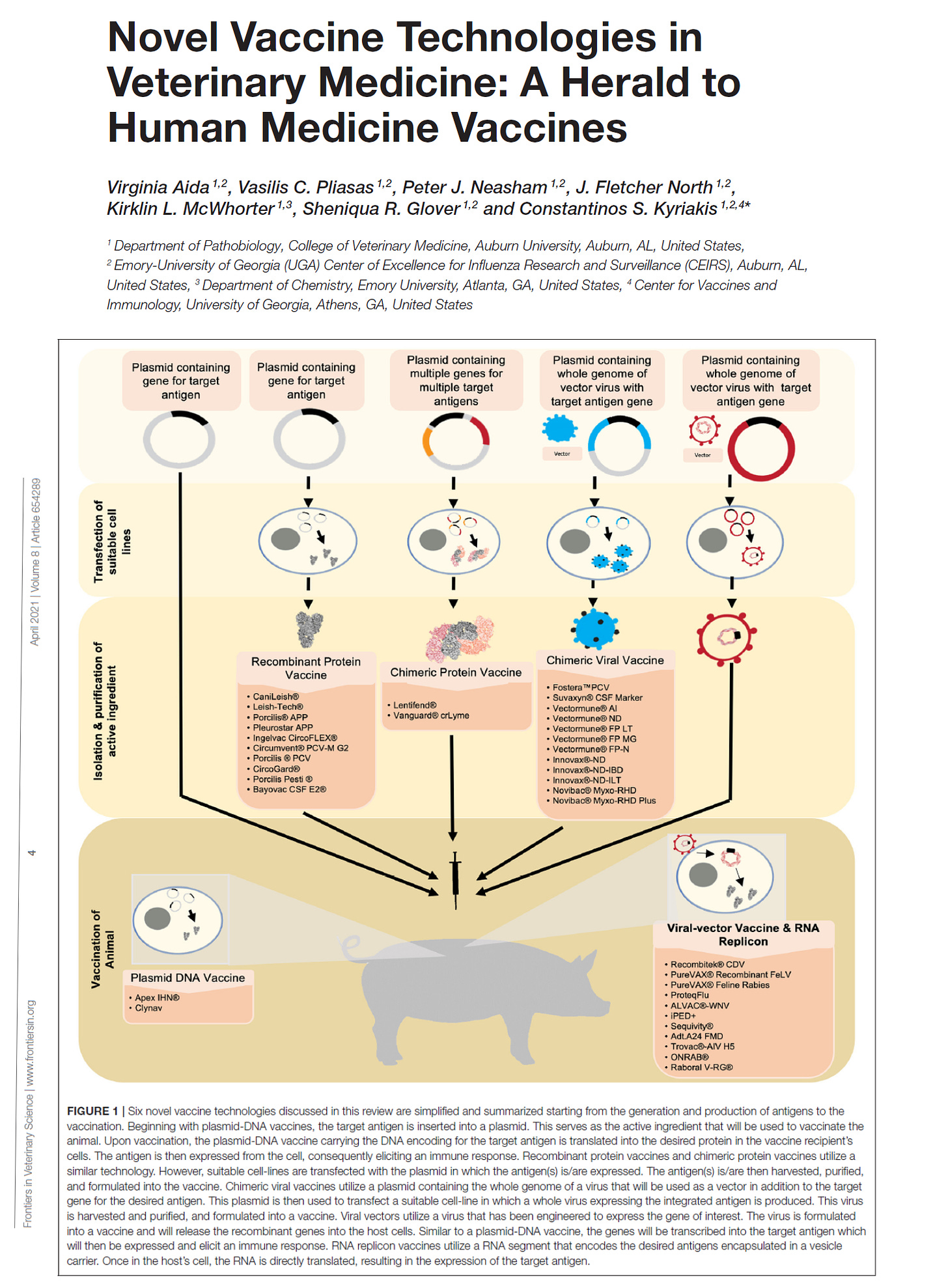
Novel Vaccine Technologies in Veterinary Medicine: A Herald to Human Medicine Vaccines

Aida V, Pliasas VC, Neasham PJ, North JF, McWhorter KL, Glover SR, Kyriakis CS. Novel Vaccine Technologies in Veterinary Medicine: A Herald to Human Medicine Vaccines. Front Vet Sci. 2021 Apr 15;8:654289. doi: 10.3389/fvets.2021.654289. PMID: 33937377; PMCID: PMC8083957.

By Peter A. McCullough, MD, MPH

The mRNA and adenoviral DNA COVID-19 vaccine debacle in humans has set populations on edge, distrustful of poorly conceived genetic technology. Meanwhile the field has advanced considerably in veterinary medicine. While these shots may protect animals from pathogens over the short term, what are the implications for our food supply? Any of the genetic material transmissible to humans through consumption? Raw or cooked? These and other questions are coming up as more information is being brought forward.

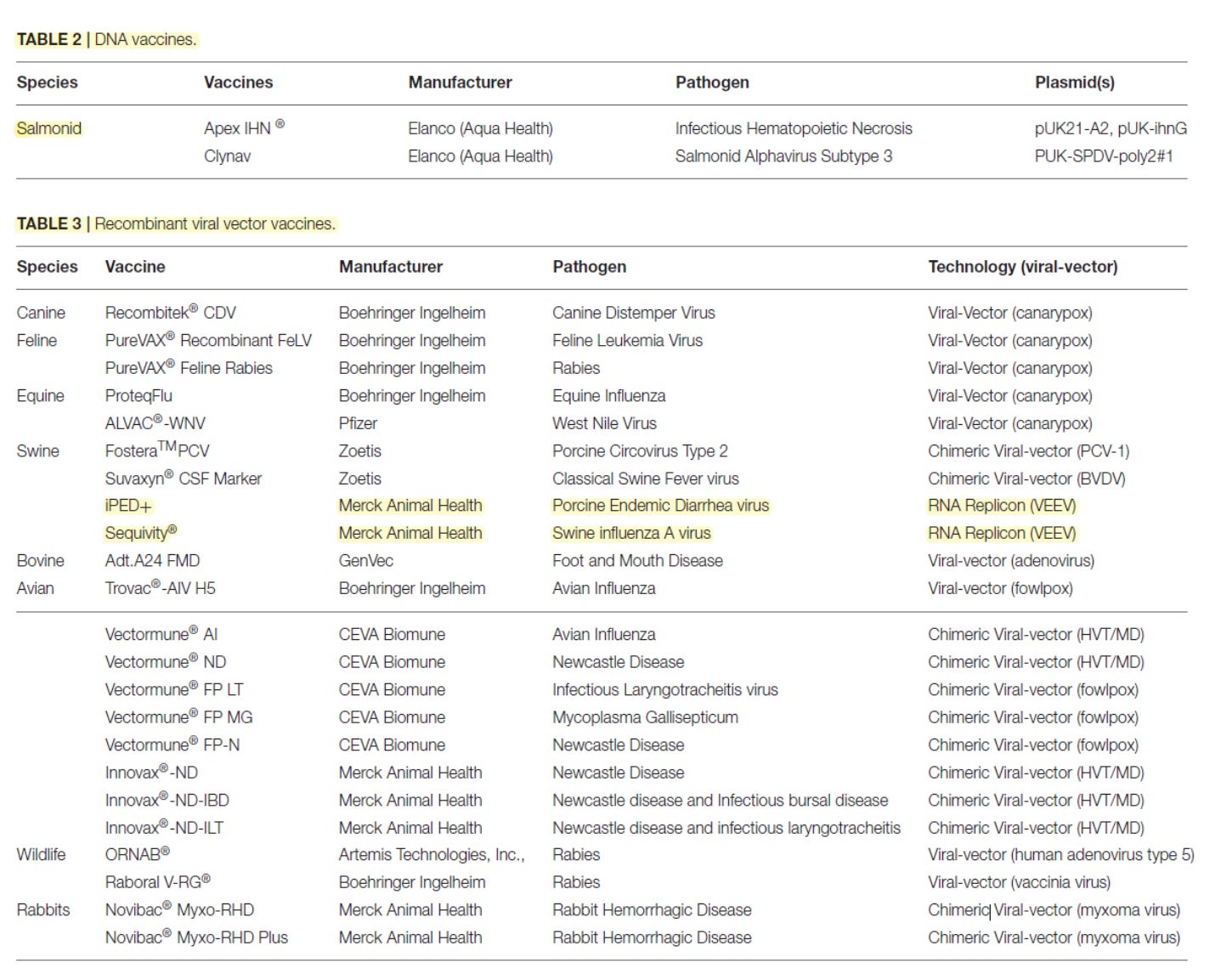
Aida and colleagues have graphically summarized the genetic technologies in use as of 2021 in veterinary medicine. In the consumer meat category at present, only swine are of concern given the use of plasmid DNA, replication incompetent viral vector, and RNA replicon products. Do these technologies cause noninfectious diseases in the animals? Can any of the genetic material survive denaturing during curing and cooking? How about pork intestines harvested for the production of heparin widely used in human medicine? It is conceivable that genetic incorporation of foreign RNA or DNA into humans and production of antigens for example, porcine endemic diarrhea or influenza A, could have untoward effects including autoimmunity similar to that with the COVID-19 vaccines?

Now is a good time for veterinary and human medicine including the FDA and USDA, to come together and review the published studies of these new products on genetic transmissibility to humans and its potential implications. The Aida paper does not even mention the possibility of collateral impact to humans. One can see that developers, sponsors, and authors are blinded with infatuation for molecular biology and have lost sight of biological product safety in the food supply.

[…]

Via https://petermcculloughmd.substack.com/p/novel-vaccine-technologies-in-veterinary

A Noble Lie: Oklahoma City Bombing

A Noble Lie: Oklahoma City 1995 (2011) - IMDb

FREE MIND FILMS

Via Aletho News

This is a great documentary by Free Mind Films about the 1995 False Flag Event bombing in Oklahoma City. The government claims that 168 people were killed, including nineteen children. For years following the bombing, countless victims family members, survivors, rescuers, and ordinary Americans, have questioned the government’s conspiracy theory (aka the official story) about that fateful day. Hoping to shed light on answers long ignored and censored, both by prominent media outlets and the U.S. Government, A Noble Lie peels back what we thought we knew about the bombing and the perpetrators. This film exposes information never before examined or brought to the attention of the American public. A Noble Lie is the culmination of years of research and documentation conducted by independent journalists, scholars, and ordinary citizens. Often risking their personal safely and sanity, they have gathered evidence which threatens to expose the startling reality of what exactly occurred at 9:02 am on April 19, 1995 in Oklahoma City.

The Murrah building was bombed for three reasons, two having to do with records stored there and the destruction of those records, and overall to promote THE FAKE WAR ON TERROR. They were:
1) The first set of records were those concerning the Clinton’s and their CIA op’s in Mena, Arkansas which involved drug smuggling, gun running, and the whole Iran Contra affair.
2) The second set of records of greater concern had to do with the Anthrax vaccine and the use of depleted uranium weaponry, both which had many adverse effects on our troops which participated in Gulf War 1. These records were to be used in lawsuits against the federal government for what is known as Gulf War Syndrome.
3) The “official” definition of Terrorism had been changed in all dictionaries from GOVERNMENT BY INTIMIDATION to extremists fighting against democracy. The OKC bombing was setting the stage for their biggest “upcoming” False Flag Event which was 911. That event would be the Final Solution (along with the COVID-19 PLANdemic) in bringing forth the NEW WORLD ORDER agenda against mankind.

[…]

Via https://alethonews.com/2023/04/17/a-noble-lie-oklahoma-city-1995/

The Roman Conquest of Britain

English Historical Fiction Authors: Tribal Politics in Pre-Roman Britain

Pre-Roman Celtic Tribes

Episode 7 Celtic Britain and Roman Britain

The Celtic World

Dr Jennifer Paxton (2018)

Film Review

Despite a large presence of La Tene style Celtic art in Britain, there is no evidence the Celts ever invaded the British Isles. To the contrary, archeological evidence suggests strong cultural continuity of the islands’ population from the beginning of the Iron Age to the Roman invasion.

Paxton asserts the Celticization of Britain occurred via diffusion, ie a gradual migration of a Celtic diaspora from western France  and Spain to Britain.

Britain (especially Cornwall and Wales) were an important global source of tin, copper and iron from early in the Iron Age (1200-550 BC). Phoenician traders bought metals from Britain in the early first millennium BC.

Pre-Roman Britain was made up of numerous warring tribes. Those in the southeast had the best agricultural land and were the wealthiest. Those in the North and Southwest were well known for their hill forts.

During Julius Caesar’s two expeditions to Britain (55-53 BC), he persuaded a few of the southeastern tribes to pay tribute to Rome.

In 43 AD, the Roman emperor Claudius conquered the southern half of Britain, with the southeastern tribes happy to increase their wealth by collaborating with the Romans. He built two major Roman cities, Londinium and Eboracum (York), as well as numerous forts and roads.

During the 400-year Roman occupation, 40 urban areas (including Leeds, Newcastle and Exeter) adopted Latin as their primary language and (from the 3rd century AD) Christianity as their primary religion. All benefited from paved Roman roads, forums and amphitheaters. Wealthy southeasterners built large Roman villas and bought slaves to run them. The Romans introduced new fruits, such as apples, and coinage to Britain. The purpose of the coins was to enable a tax levy on all residents of Britain to fund (and pay) the garrisons who quashed rebellious tribes.

Paxton thinks it unlikely that either Latin or Christianity penetrated to rural Britain.

Numerous tribes, especially in Wales, Cornwall and the Northwest staged periodic rebellions against Roman rule (at one point burning Londinium and numerous other settlements to the ground). This led Rome to built large concentrations of heavily garrisoned forts in the most rebellious regions.

In 83 AD the emperor Agricula made an unsuccessful attempt to conquer Caledonia (modern day Scotland) and decided it wasn’t worth the number of troops that would be required for continuous occupation. Instead, in 122 AD, the emperor Hadrian built Hadrian’s wall to protect the southern half of Britain from raiding Picts.

The emperor Antonius subsequently built the Antonine Wall (through modern central Scotland) but was unable to defend it.

To archeologists, Britain is a treasure trove of Roman-style pottery, glassware and iron nails.

Film can be viewed free with a library card on Kanopy.

https://pukeariki.kanopy.com/en/pukeariki/watch/video/5701024/5701038

Russia says US government working on “universal” GMO bioweapon at Ukrainian biolabs that would cause MASS DEATH of humans, animals and crops

https://cdn1.img.sputnikglobe.com/img/102251/66/1022516637_0:244:3196:2042_1920x0_80_0_0_61b28a86912ce4886b9f1222ba23a1ef.jpg.webp

Sputnik

Russian lawmakers have completed an investigation into Washington’s military-related biological activities at laboratories across Ukraine on the basis of findings made public by Russia’s Radiation, Chemical and Biological Defense Troops over the past year.

Washington is working on a “universal” genetically engineered bioweapon designed to cause severe damage to enemies comparable to that of a “nuclear winter,” a Russian parliamentary commission investigating US biolabs in Ukraine has concluded.

“The United States aims to develop a universal genetically engineered biological weapon capable of infecting not only people, but animals as well as agricultural crops. Its use involves, among other things, the goal of inflicting large-scale and irreparable economic damage on the enemy,” the commission wrote in its final report.

“The covert and targeted use of such a weapon in anticipation of a positive inevitable direct military confrontation could create a significant advantage for US forces over the adversary, even against those who possess other types of weapons of mass destruction,” the commission added. “The possession of such highly effective biological weapons creates, in the view of the US military, the real prerequisites to change the nature of contemporary armed conflicts.”

The commission report indicated that unfortunately, contemporary scientific advancements in the fields of genetic engineering, biotechnology, toxicology and synthetic biology have increased the possibility of their use to create advanced biological weapons agents of a new generation – at the same time that detecting and identifying their use using traditional diagnosis tools has become extremely difficult.

“The situation is aggravated by the fact that the production of such biological agents can easily be dispersed over various industrial enterprises, disguising them as products used for peaceful purposes,” the document noted.

The creation of new, ever more advanced biological agents doesn’t remove the dangers posed by traditional bioweapons, the report stressed. Among these are agents including “smallpox, anthrax, tularemia and the plague, all of which can be modified to enhance their deadly properties. Added to this is the objective difficulty in determining the true cause of outbreaks of infectious diseases, which can be both natural and artificial.”

US Bioweapons Danger

The Duma commission report cited the US bioweapons programs dotting the globe as the biggest clear and present danger to the biological security of both Russia and the world.

“The US military biological program has not only not been curtailed, but has acquired a large-scale character in recent years with a focus on offensive actions, carried out under the guise of activities which are permitted under the Biological Weapons Convention, as well as anti-terrorism projects. The United States is supporting and developing the ability to produce biological weapons and, if necessary, to use them. However, there have been changes in Washington’s strategic view with regard to the role of bioweapons in geopolitical competition, and the means of its possible use,” the report said.

US bioweapons programs are long term in nature, with their roots dating back to cruel experiments conducted on civilians and prisoners of war by Imperial Japan during the Second World War, including against citizens of the USSR.

“In our country, captured Japanese militarists were brought to justice within the framework of the Khabarovsk Process; however, in the US, such ‘specialists’ were provided safety, with their work factually continuing to live on to this day in the contemporary US programs on the development of biological weapons,” the report said.

According to the parliamentary commission, a key difference between traditional bioweapons programs and contemporary ones being pursued by the Pentagon is the propensity for the use of pathogens of little-studied natural infections with a high mortality rate, a long incubation period and symptoms typical of common diseases. This complicates adversaries’ ability to discover the use of such weapons, and to quickly identify the attacker, the report indicated.Among the biggest threats, according to the commission, is the military biological research based on work with the decoded human genome, which threatens to “radically” change the entire geopolitical and military situation in the world, and is comparable in significance to the start of the ‘atomic era’ in the 1940s and 1950s.

‘Key Role’ Played by Subcontractors

Drawing on evidence provided by the Russian military over the past year on US military biological activities in Ukraine, Kazakhstan, the Caucasus and countries in Africa and Asia, the commission pointed to the “key role” played by facilities abroad in the implementation of the Pentagon’s bioweapons programs.

“Washington is systematically creating an extensive network of biological laboratories beyond its national jurisdiction, allowing it to carry out a wide range of military-oriented biological research under the guise of medical biological projects,” the report stated. “This factually results in the ‘military-biological occupation’ of the entire planet, which opens to the US unrestricted access to information on the state of the health, microbiological and biological infrastructure of host countries.”

Foreign countries effectively serve as a ‘testing ground’ for US military biological researchers to study infectious agents in the climactic conditions of their habitat, to monitor their distribution and mutation, and determine the prospects for strengthening their dangerous properties,” the commission indicated. “The lack of international control over such work provides the United States the opportunity to act in other countries without being restrained by moral and legal norms and humanistic principles, and to ignore the demands of the public.”

These efforts are further hidden from public view via the transfer of programs to civilian ministries and private companies, the report stated.

The report pointed to the special attention US bioweapons research has committed to the transmission of pathogens which attack humans using insects, mammals and wild birds, including the study and identification of their migration routes.

“The results of this research provided American military biologists the ability to not only simulate the scenarios of the spread of epidemics in a particular region, but the opportunity to control them. They are also working out the ‘biological routes’ of the likely injection of atypical diseases through third countries to a territory of interest,” the commission said.

“The analysis of strategic US documents in the field of defense and security indicates that the activities in biolaboratories under their control are focused on providing potential military advantages to the US military and the waging of military operations using pathogenic microorganisms with desired properties created using synthetic biology,” the report said.

The commission believes the choice of countries where US bioweapons research infrastructure takes place is made on the basis of geopolitical considerations, and designed for scenarios in which host countries serve as a potential “bridgehead” against enemies in the event of conflicts.

This is particularly true in relation to US military biological activities in the post-Soviet space, the commission says, where their presence “allows the Pentagon to address a wide range of tasks: from the targeted collection of pathogens of especially dangerous infectious diseases and the study of of the reaction of immune systems of local populations to preparations of the territories of the former Soviet republics in the anti-epidemic sense for the deployment of large US military contingents there.

“The report considers the continued implementation of Pentagon biomilitary programs in the post-Soviet space a key security risk, given the free flow of people and goods across the region, including within the Eurasian Economic Community, the Commonwealth of Independent States or the Collective Security Treaty Organization, as well as labor migration, animal and bird migration, air flows and river flows.

[…]

Sri Lanka’s Neoliberal Nightmare, Widespread Famine Triggered by Covid-19 Lockdown and an Unpayable External Debt

Asad Ismi

Global Research

First published on November 28, 2022

According to the World Food Programme (WFP), Sri Lanka faces a “serious food crisis,” with 6.3 million people—close to 30% of the 22 million population—being food insecure. Food inflation has reached a record-high of 90%, making staples such as rice unaffordable for millions of people. Overall, inflation is running at 60%.

“What we are really worried about now is the food crisis—we are looking at even the dangers of a famine in the near future,” says Ahilan Kadirgamar, a political economist and senior lecturer at the University of Jaffna, located in the capital city of the Northern province of Sri Lanka.

“Starvation is already hitting some sections of the population.”

Sri Lanka, which is very import-dependent, ran out of foreign exchange in April, leaving it unable to import food supplies, fuel, medicines and fertilizer. Buses, trains, ambulances and many cars cannot be driven and electricity power cuts have become common, crippling farming, fishing and factory production.

Sri Lanka defaulted on its $56 billion external debt in May, its first default. The country has obtained 16 loans from the International Monetary Fund and tried to obtained a 17th loan in May but was not able to come to an agreement.

Widespread public protests against President Gotabaya Rajapaksa’s government drove him out of the country in July. Rajapaksa appointed political rival Ranil Wickremesinghe prime minister before leaving. Wickremesinghe then took over as president, swiftly cracking down on protests by tear-gassing and jailing dozens of demonstrators under draconian counterterrorism laws.

The immediate causes of the Sri Lankan crisis were the unsustainability of its $56 billion external debt when faced with the effects of the COVID-19 pandemic, which resulted in a drop in tourism and migrant worker remittances from abroad, as well as tax cuts carried out by the Rajapaksa regime.

The pandemic disrupted supply chains for Sri Lanka’s main exports of textiles, garments and tea, resulting in reduced revenues.

Worker remittances, which were a major source of foreign exchange, hit a 10-year low in 2021, partly due to COVID-19.

Bomb blasts in 2019 in Colombo (Sri Lanka’s capital), along with COVID-19 both reduced tourism revenue, from $5 billion in 2018 to only $200 million in 2021. This compounded the pressures on Sri Lanka.

In 2019, the government implemented massive tax cuts, causing its revenue to plummet. The value-added tax was reduced from 15% to 8% and seven other taxes were eliminated. As a result, the state lost vital tax revenue from a million taxpayers.

Eighty-one per cent of Sri Lanka’s external debt is owed to Western financial institutions as well as Japan and India. The financial institutions are mainly commercial banks and vulture funds, namely: BlackRock, JP Morgan Chase, Prudential (all three U.S.), Ashmore Group, HSBC (both U.K.), Allianz (Germany), UBS (Switzerland). These corporations own 47% of Sri Lanka’s debt, the largest portion. The Asian Development Bank owns 13% of Sri Lanka’s debt, the World Bank 9%, Japan 10%, China 10% and India 2%.

There are, however, deeper reasons for Sri Lanka’s collapse. Kadirgamar blames colonialism, neocolonialism and neoliberalism:

“The economic trajectory for this crisis was set in 1977 by the Junius Jayewardene government, which subjected Sri Lanka to neoliberal reforms, liberalizing trade and finance,” Kadirgamar says. “But this trajectory has to be contextualized in the long history of colonialism and neocolonialism.”

Sri Lanka was first colonized by the Portuguese, then the Dutch and the British, amounting to almost 450 years of colonialism. Kadirgamar says this made the country’s economy dependent on what colonial powers wanted: the exports of commodities—first spices and then coffee and tea.

These exports were aimed at fulfilling the demands of the colonial powers’ markets. This colonial strategy was continued by the World Bank in Sri Lanka after the country’s independence in 1948. The World Bank advocated primary production for export markets, “as opposed to even minimal forms of industrialization, so that Sri Lanka became dependent on agricultural exports to Western markets with declining terms of trade,” Kadirgamar emphasizes.

“Sri Lanka was the first economy in South Asia to go through neoliberalism and we have now had four-and-a-half decades of this strategy, which includes paying for our huge import bill through external debt, which became unsustainable—especially because Sri Lanka was borrowing from Western capital markets at very high interest rates,” Kadirgamar says.

That focus made Sri Lanka particularly vulnerable to economic collapse.

“This heavy borrowing was not balanced by income because Sri Lanka had only four sources of this that were inadequate: agricultural and garment exports, tourism and remittances from migrant workers” Kadirgamar says. “Other factors, such as the COVID pandemic and the authoritarian Rajapaksa regime, (which) completely mismanaged the economy, contrib- uted to the collapse but the primary reason for this was the dependent character of Sri Lanka’s economy.”

Balasingham Skanthakumar agrees with Kadirgamar, emphasizing neoliberalism’s disastrous effects on Sri Lanka. He is a researcher and member of the editorial collective of Polity Magazine of the Social Scientists’ Association of Sri Lanka.

As Skanthakumar told me,

“Neoliberalism is an extension of historical processes of exploitation and domination of poor countries by rich countries, in so far as it entrenches the colonial division of labour through which Sri Lanka began cultivating tea (a non-Indigenous crop) as its primary export to satisfy the tastes of Western consumers.”

Today, Skanthakumar says, Sri Lanka’s main export is ready-made garments, which is a result of the neocolonialism through which labour-intensive, low-value added apparel is produced by women workers. Capital-intensive, high-value added manufactured goods are imported from abroad.

“There is no space within neoliberalism for Sri Lanka to diversify its economic base, to promote import-substitution, nor to prioritize self-sufficiency in basic foods and other essential needs including pharmaceuticals,” says Skanthakumar.

In other words, low-income countries in the Global South cannot win in the neoliberal system because their manufactured imports are always much costlier than their raw material exports, which are all that they are allowed to send by the dominant Western powers that control the global trading system.

The attempt by southern countries to bridge this gap by taking on increasing debt only primes them for economic collapse, which also now threatens Pakistan, Bangladesh, Argentina, South Africa and Zambia.

Thirty-six countries are in a state of “debt distress,” according to the World Bank.

But there is something different about this international crisis, as it has ensnared not just poor countries but the Western enforcers of neoliberalism and neo-colonialism as well. European countries face spiralling energy costs. For example, energy costs in Germany have increased by 860% in this year alone.

According to geopolitical analyst Drago Bosnic, writing on the Infobrics website,

“The European Union is going through a tremendously difficult economic and financial crisis. Sanctions aimed at Russia are wreaking havoc in many…Western economies.”

Ten million people face poverty in the United Kingdom as it experiences its “sharpest economic contraction” in 313 years, according to Reuters.

Meanwhile, French President Emmanuel Macron has informed his compatriots that France is in a “series of crises, each more serious than the other” and warned of “the end of abundance and tough times ahead.”

“The collapse of Sri Lanka is not isolated,” says Sri Lankan writer Indrajit Samarajiva. “These are global trends going back to the 1980s. The broad logic is that if your economy is not productive and you don’t control your means of production, you’re in a debt trap—and sooner or later it will clang shut.

[…]

Via https://www.globalresearch.ca/sri-lanka-neoliberal-nightmare/5800533


Court of Appeal to hear appeals on vaccine mandates in New Zealand this week

red and white flower petals

Can RFJ Jr Defeat the Media?

 
Michael Barrett
Veterans Today

Video link

J. Michael Springmann and I opened this week’s False Flag Weekly News by plugging RFK Jr.’s newly-minted presidential campaign. We noted that he is going to have to run against the media, like Donald Trump did in 2016.

Running against the media in politics is like betting against the house in gambling: The odds are against you, to say the least. I know that from personal experience, having run for Congress on a 9/11 truth platform in 2008. But it isn’t just me: There are countless examples of campaigns whose outcomes were determined by the media’s slanted coverage. (To cite an extreme example, big media’s decision to censor the Hunter Biden laptop story likely prevented Donald Trump from being re-elected in 2020.)

The power of the mainstream media is such that almost no serious politicians—people whose goal is to win, not just to make a statement or call attention to neglected issues, as I did in my 2008 run—ever dare to take any positions or voice any sentiments outside of the media’s Overton Window of acceptability. The major exception to that rule, of course, is Donald Trump, who defeated the media in his 2016 run for president.

Trump’s method was deceptively simple: Keep saying outrageous things that the media won’t be able to resist deriding and deploring and generally calling attention to. Lo and behold, the hoary bromide “any publicity is good publicity” came true. Trump recognized that a yu-uge tranche of voters was angry and alienated and ready to support someone the Establishment obviously hated. And since he had a Twitter account at hand to tweet his side of the story, Trump wasn’t handicapped like pre-social-media politicians, who had depended almost entirely on corporate-owned one-to-many media to communicate with voters. What’s more, turning his rallies into countercultural festivals allowed him to speak directly to throngs of people. Between Twitter and the Trump rallies, it became obvious that the media’s most important way of suppressing outside-the-Overton-Window candidacies—fostering the impression that only a tiny, widely-hated minority of fringe conspiracy theorists would ever say or believe such things—wasn’t going to work.

Trump composed his triumphant 2016 electoral symphony in the key of invective, scapegoating, demonization, and hatred (or “righteous anger” if you prefer, though not all of it was righteous). His needling and insults, which included allusions to the alleged complicity of George W. Bush in 9/11 and Ted Cruz’s father in the JFK assassination, were refreshing to those of us who have discovered the almost unimaginable corruption of the American political establishment. And his harsh treatment of Hillary Clinton, who on October 9th 2016 was forced to debate Trump with three of her husband Bill’s sexual assault victims glaring at her from the audience, and who cannot have been pleased by the tens of thousands of people at Trump rallies chanting “lock her up,” may not have been chivalrous, but it was effective.

Trump did not keep his promises. He didn’t lock her up. And he didn’t drain the swamp—he stocked it. His administration offered no meaningful change, except for completely surrendering to the ultra-extremist Zionist agenda of Bibi Netanyahu. Trump failed to withdraw from Iraq, Syria, and Afghanistan. He didn’t terminate NATO, but instead armed Ukraine to the teeth and set the stage for the current war on Russia. His administration nearly started World War III three times: once by bombing Syria, once by murdering Gen. Soleimani, and once by attacking Wuhan and Qom with the bioweapon known as COVID-19.

Though he failed to even attempt to dismantle the Establishment, Trump’s erratic words and behavior made him a destabilizing factor, so the consensus of the oligarchs was that he had to go.

To defeat Trump in 2020, the media and its oligarch owners had to go full-totalitarian. They began by spreading the lie that Trump had been elected because Russia had somehow taken over the internet. That provided the excuse the Establishment needed to impose a draconian regime of internet censorship that would have been unthinkable just a few years earlier. Then the COVID-19 pandemic was used to further stampede public opinion into tolerating the near-total destruction of meaningful internet freedom. In the wake of the 2020 election, a new, freedom-free information regime was erected over the smoldering ruins of the Trump Administration (and the First Amendment).

Trump’s entire project turned out to be suspiciously convenient for the oligarchy he supposedly hates. Thanks to Trump, they got what they want: More war, more wealth transfer from bottom-to-top, draconian internet censorship, and a hyperpolarized nation full of angry people fighting about things the oligarchy doesn’t really care about. As Sam Husseini keeps telling us, it sure looks like Trump is the opposable thumb of the Establishment.

So did Trump accomplish anything positive? Yes: He showed it’s possible to run against the media and win. Let’s hope and pray that lightning strikes twice, and that Robert F. Kennedy Jr. can pull off the same trick.

How RFK Jr.’s Run Against the Media Will Differ from Trump’s

RFK Jr. enters the 2024 presidential race far more hated by the media than Donald Trump was at the beginning of his 2016 campaign. Before that campaign, Trump was cast as a relatively benign buffoon, a rich talk show host with a bloated ego who might add some entertainment value and boost ratings but who had no realistic chance of winning. The fact that the Establishment “misunderestimated” Trump allowed him to sneak up on them. By the time they knew what hit them, it was too late.

RFK Jr., unlike the pre-2016 Trump, is a known threat to the hyper-corrupt wing of the oligarchical Establishment. He carries the mythic Kennedy name, with all the baggage that implies. He has repeatedly made it clear that he knows the Establishment murdered his uncle and father to terminate/prevent their presidencies. There is absolutely no chance that he is going to sneak up on anybody.

Today’s communications environment, especially the internet, is not nearly as free as it was in 2016. The great majority of Democratic voters have been subjected to trauma-based mind control and accept the new COVID-era mantra “misinformation kills millions.” RFK Jr. has been endlessly and mendaciously slandered by the media as one of the “misinformation purveyors” who deserves to be censored because he is guilty of killing millions of innocent people. (In fact, RFK Jr.’s views on COVID and vaccine issues are quite moderate and in line with the best scientific evidence, but try telling that to a pack of hysterical witch-hunters.)

So compared to Trump in 2016, RFK Jr.’s 2024 run begins by finding itself behind the proverbial 8-ball. Just days after his announcement, the media has already ganged up on him. More and worse will surely follow.

So is there even a ghost of a chance that he could win? A superficial overview suggests it’s almost unthinkable. But allowing for the possibility of surprisingly rapid changes in public opinion—a phenomenon for which there is some precedent—I submit that RFK Jr. could conceivably pull off a miracle along the lines of what his uncle John nearly accomplished in 1963.

International research suggests masks better at causing ‘long COVID’ than stopping virus

Tips for Children Wearing Masks During a Pandemic | The Birmingham Times


Link to full study in Frontiers in Public Health: https://www.frontiersin.org/articles/10.3389/fpubh.2023.1125150/full

Conclusion

This systematic review comprehensively revealed ample evidence for multiple adverse physio-metabolic and clinical outcomes of medical face masks, with worse outcomes in the case of N95 masks. This can have long-term clinical consequences, especially for vulnerable groups e.g., children, pregnant, older adult, and the ill. Besides transient and progressive hypoxemia, hypercarbia, and individualized clinical symptoms our findings are in line with reports on face masks caused down-stream aberrations (e.g., oxidative stress, hypercapnia, vasoconstriction, pro-inflammatory response, immunosuppression etc.) at the organ, cellular and microbiome levels and support the MIES (Mask Induced Exhaustion Syndrome). From our point of view, while a short application of the mask seems to be less harmful, longer and long-term use may cause shift toward the pathophysiological direction with clinical consequences even without exceeding physiological thresholds (O2 and CO2).

So far, several MIES symptoms may have been misinterpreted as long COVID-19 symptoms.

In any case, the possible MIES triggered by masks contrasts with the WHO definition of health.

The exact threshold of harmless and non-pathogenic time wearing a mask should exclusively be determined by further intensive research and studies. Due to the ultimate lack of exclusion of the harmfulness of mask wearing, mask use by the general public should be discouraged.

In the sense of effectiveness of face masks in the real-world setting (cost-benefit), the mask should show a benefit in terms of reduced respiratory infections, e.g., in healthcare through fewer consultations or hospitalizations (192). Unfortunately, this was not the case, e.g., in Germany (193) and USA (194), where mask mandates were ubiquitous (9). Additionally, there is evidence that COVID-19 rates have been able to expand swiftly when omicron hit (178) even in societies where mask use was assiduously followed—as in Korea, Taiwan, Hong Kong, and Singapore (179).

From the above facts, we conclude that a mask requirement must be reconsidered in a strictly scientific way without any political interference as well as from a humanitarian and ethical point of view. There is an urgent need to balance adverse mask effects with their anticipated efficacy against viral transmission. In the absence of strong empirical evidence of mask effectiveness, mask wearing should not be mandated let alone enforced by law.