Unknown's avatar

About stuartbramhall

Retired child and adolescent psychiatrist and American expatriate in New Zealand. In 2002, I made the difficult decision to close my 25-year Seattle practice after 15 years of covert FBI harassment. I describe the unrelenting phone harassment, illegal break-ins and six attempts on my life in my 2010 book The Most Revolutionary Act: Memoir of an American Refugee.

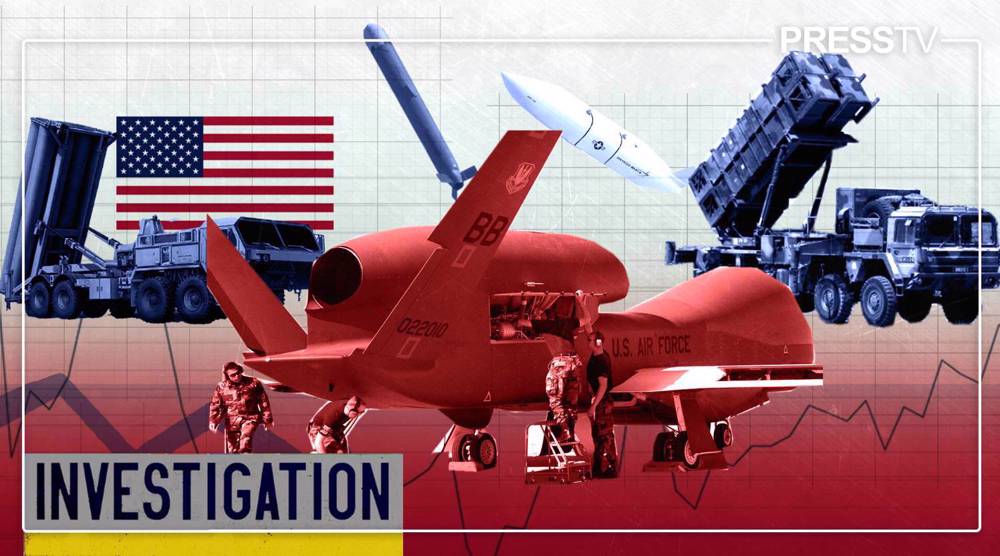
Strategic arsenal US lost in war against Iran – why replenishment will take years

By Mohammad Molaei

The sheer scale of munitions consumed during the Third Imposed War is without modern precedent in American warfare. As reported by The New York Times, within just the first two days of the military aggression that began on February 28, an estimated $5.6 billion worth of precision-guided munitions were expended, a sum that exceeds the annual military budgets of most countries in the world.

Over the full 40-day war leading up to the fragile ceasefire in early April, US forces struck more than 13,000 targets, many of which required multiple munitions each. According to the Center for Strategic and International Studies (CSIS), the cost of the air campaign alone reached between $11.3 billion in its first six days and $16.5 billion by day twelve.

The total cost over 40 days of full-scale military aggression, followed by subsequent hostilities in the Persian Gulf region, amounts to a far greater sum. While the Pentagon has estimated the figure at around $25 billion, independent assessments place the cost closer to $100 billion.

These figures do not reflect a campaign defined by restraint or resource discipline. Rather, they reveal a military establishment that bet its most advanced precision arsenal on a war it expected to win quickly – only to find itself mired in a quagmire of its own making.

JASSM-ER: Draining the Pacific’s first line of strike

No single weapons system reveals the strategic recklessness of so-called “Operation Epic Fury” more precisely than the AGM-158B Joint Air-to-Surface Standoff Missile Extended Range, known in Pentagon parlance as the JASSM-ER.

This is not a conventional cruise missile. It is a stealthy, air-launched precision strike weapon with a range exceeding 600 miles, purpose-built to penetrate the most sophisticated integrated air defense systems in the world.

Its operational logic is explicitly tied to high-end war scenarios – specifically, a potential confrontation with China in the Western Pacific, where the People’s Liberation Army has constructed the most elaborate anti-access/area-denial architecture in history. The JASSM-ER is the weapon Washington designed for its most serious adversary. And it is largely gone.

[…]

The New York Times, drawing on Department of War sources, placed total JASSM-ER expenditure over the full campaign at approximately 1,100 missiles. An additional 47 were fired in a separate operation to abduct Venezuelan President Nicolás Maduro.

[…]

The arithmetic is unambiguous and brutal. Of a prewar JASSM-ER inventory of 2,300, approximately 425 remain available for the rest of the world, roughly 18 percent of the prewar total. In the shorter-range baseline JASSM variant, approximately two-thirds of total stocks across both versions were committed to the Iran campaign, according to Bloomberg.

[…]

The unit cost of the JASSM-ER is $1.1 million per missile. The JASSM baseline variant costs $2.6 million per unit at current procurement figures. The roughly 1,100 JASSM-ERs fired in the recent war, therefore, represent approximately $1.2 billion in precision strike munitions, consumed in a campaign that failed to destroy Iran’s ballistic missile infrastructure, did not fracture its command structure, and did not alter the strategic balance in West Asia.

[…]

Tomahawk: A thousand missiles in the 40-day war

The BGM-109 Tomahawk Land Attack Missile (TLAM) is the oldest and most combat-proven precision strike weapon in the US Navy’s inventory, having been used in every major American military operation since Operation Desert Storm in 1991.

Its versatility, fired from surface ships and submarines, capable of loitering and retargeting in flight, with a range of approximately 1,000 miles, makes it the Navy’s primary instrument of long-range power projection.

The war against Iran consumed it on a historically unprecedented scale.

The Washington Post reported that US naval assets fired more than 850 Tomahawks in the first month of the third imposed war. The Wall Street Journal subsequently updated that figure to more than 1,000 over the full pre-ceasefire campaign period.

CSIS’s analysis of the first six days alone identified 319 TLAMs expended, representing approximately 10 percent of the prewar inventory in less than a week.

The prewar Tomahawk inventory stood at approximately 3,200 missiles. The expenditure of over 1,000, therefore, represents roughly 31 percent of the prewar total consumed in 40 days, more than ten times the annual procurement rate.

[…]

US Tomahawk inventories will not return to prewar levels until late 2030 at the earliest.

[…]

The defensive arsenal: Patriot, THAAD, and interceptor crisis

While the consumption of offensive strike missiles has drawn significant analytical attention, the depletion of America’s missile defense interceptor inventory may carry even more severe long-term strategic consequences.

These systems, including the much-hyped Patriot PAC-3 MSE, the Terminal High Altitude Area Defense (THAAD), and the Standard Missiles SM-3 and SM-6, are not interchangeable with cheaper alternatives.

[…]

In the Pacific scenario, they are the systems that would need to protect US forward bases, carrier strike groups, and allied territory from Chinese ballistic missile salvos in the opening hours of any war. Instead, they are being consumed in the Persian Gulf.

The Patriot PAC-3 MSE interceptor, at approximately $4 million per unit, was among the most heavily used anti-missile systems in the recent war imposed on Iran.

The New York Times reported that over 1,200 Patriot interceptors were fired during the aggression. CSIS estimates that Patriot usage, combined with the ongoing supply of interceptors to Ukraine, has left prewar PAC-3 inventory at critically reduced levels.

The Army’s FY 2027 budget requests 3,203 Patriot missiles, a procurement figure that reflects the scale of the shortfall, but CSIS projects these will not begin delivery until May 2029, with full replenishment of prewar levels taking three or more years from the present.

[…]

THAAD anti-missile system

The THAAD situation is, by CSIS’s assessment, the most critical of all. THAAD is the upper-tier component of the US missile defense architecture, designed to intercept ballistic missiles at higher altitudes and longer ranges than Patriot.

Its interceptors are expensive, scarce, and – as of the ongoing fragile ceasefire – severely depleted. CSIS estimates that between 52 and 81 percent of the prewar THAAD interceptor inventory was expended in the recent war and related offensives, building on roughly 150 THAAD interceptors already consumed during the 12-day war in June 2025.

[…]

Compounding the interceptor shortage is the damage or possible destruction of multiple AN/TPY-2 radar systems – the targeting backbone of THAAD batteries – during Iranian retaliatory strikes on US facilities in the region.

[…]

The ship-launched Standard Missiles present a somewhat less acute but still serious picture. CSIS estimates that SM-3 expenditure in the recent war ranged from 31 to 60 percent of prewar inventory, while SM-6 consumption ran between 16 and 32 percent.

Both missiles carry production lead times of 36 to 39 months from contract award to first delivery. Inventories will not return to prewar levels until early 2029 – despite their relatively lower usage in the 40-day war of aggression – reflecting the cumulative effect of years of inadequate procurement before the war began.

The cost ledger: What was spent and what was not gained

[…]

The principal expenditures, based on CSIS data and DOD reporting, break down as follows. Over 1,100 JASSM-ER missiles at $1.1 million each account for approximately $1.21 billion. More than 1,000 Tomahawk missiles at $1.87 million each represent approximately $1.87 billion. Over 1,200 Patriot PAC-3 MSE interceptors at $4 million each amount to approximately $4.8 billion. More than 1,000 Precision Strike Missiles and ATACMS, at between $500,000 and $1.5 million each, add a further $500 million to $1.5 billion.

THAAD interceptors, along with SM-3 and SM-6 expenditures, contribute several hundred million more at their respective unit costs. The aggregate munitions cost of the war runs to well in excess of $10 billion, and that figure covers only the missiles, not the operational costs of the platforms that delivered them, the intelligence infrastructure that supported targeting, or the diplomatic capital expended in securing basing and overflight rights.

[…]

The combined picture across all seven critical munitions categories is that the US will not return to prewar inventory levels for any of its most critical systems before 2028 at the earliest, with Tomahawk, THAAD, and Patriot taking three or more years from the present.

The China variable: A window of vulnerability measured in years

The strategic meaning of these numbers transcends the war against Iran in itself. The JASSM-ER was not designed to strike Iranian nuclear facilities but to defeat Chinese integrated air defense systems protecting military targets in the Taiwan Strait and the South China Sea.

The Tomahawk was not stockpiled to prosecute a campaign in the Persian Gulf but maintained as the Navy’s primary instrument of long-range strike in a Western Pacific contingency. The THAAD interceptors depleted over Iranian skies were the same interceptors positioned in South Korea and Guam to defend against North Korean and Chinese ballistic missile threats. They have been moved and their replacements are years away.

Even before the war against Iran, as assessments suggest, US munitions stockpiles were deemed insufficient for a peer competitor fight in the Western Pacific, based on the classified war-gaming conclusions of the House Select Committee on China.

[…]

The implications for Chinese strategic calculations are substantial and not easily dismissed. Beijing’s military planners have observed, in real time, that the US consumed its primary long-range strike inventory – the very capabilities designed to hold Chinese assets at risk in a Taiwan contingency – in a 40-day war that did not achieve its strategic objectives.

They have observed that the combined JASSM and Tomahawk inventories available for Pacific contingencies are now a fraction of their prewar levels. They have observed that THAAD batteries have been stripped from South Korea – degrading the missile defense coverage of a key US ally on China’s periphery – and that their replacement is years away.

And they have observed that American production capacity, constrained by decades of procurement at peacetime rates and manufacturing lead times measured in years rather than months, cannot rapidly reverse any of these deficits, regardless of how much money US Congress appropriates.

This is not the profile of a deterrent in robust health, but the profile of a military establishment that has consumed its premium, China-specific capabilities in a secondary theater without achieving the decisive outcome that would have justified the expenditure, and that now faces a multi-year period of structural vulnerability during which its ability to credibly threaten the use of force in the Taiwan Strait is materially diminished.

The CSIS report notes with the cautious observation that China is deeply aware it has no recent combat experience, while the US military has been engaged in wars on multiple fronts, and that this experiential differential may preserve deterrence until inventories are restored. This is a thin reed on which to hang the credibility of American extended deterrence across Indo-Pacific.

The deterrent value of operational skill is real, but it is not a substitute for the physical missiles that a deterrent posture requires, and Beijing’s strategic calculus is driven more by inventory mathematics than by assessments of American tactical proficiency.

The production constraint: Why money cannot buy time

The Trump administration has responded to the munitions crisis with a series of framework agreements with major contractors – Lockheed Martin, Raytheon, Boeing – committing to expand production capacity across the full range of critical munitions.

Lockheed Martin has agreed to quadruple THAAD interceptor production capacity from 96 to 400 per year. Raytheon has committed to increasing Tomahawk production to more than 1,000 per year and Patriot MSE output to 2,000 per year.

These are significant capacity targets that, if achieved, would substantially accelerate inventory recovery relative to current baselines.

But capacity is not production, and production agreements are not delivered missiles, according to military experts. The fundamental constraint is not financial but temporal. Manufacturing lead time for advanced missile systems – the period between contract award and first delivery – runs between 34 and 39 months for the most critical systems. Building new production facilities, qualifying new supply chains, training additional skilled labor, and resolving bottlenecks in specialized components such as guidance systems and rocket motors are processes measured in years, not quarters.

The FY 2027 defense budget, even if fully and promptly appropriated by a Congress that has not yet voted on it, will not produce a single additional THAAD interceptor or Tomahawk before 2030. The window of vulnerability is already wide open.

[…]
Via https://www.presstv.co.uk/Detail/2026/06/13/770362/strategic-arsenal-us-lost-war-against-iran-why-replenishment-will-take-years

Iran destroys 11 US aircraft, helicopters at regional bases in two weeks

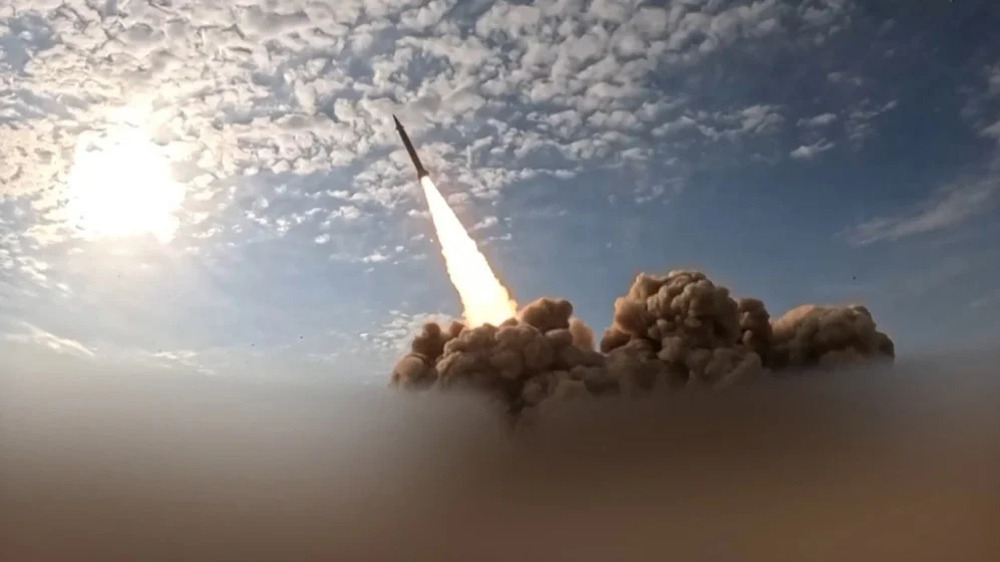
The image shows a missile launched on US bases in the Persian Gulf region, March 26, 2026.

Press TV UK

25 July, 2026

The Islamic Revolution Guard Corps (IRGC) says its forces destroyed at least 11 US military aircraft and helicopters on the ground at American bases across the region during two weeks of exchanging fire with the United States.

IRGC spokesman Brigadier General Mohsen Mohebi told Tasnim news agency that the strikes, which took place between July 8 and July 22, destroyed an F-15 fighter jet, a P-8 maritime patrol aircraft, a C-17 transport aircraft, and eight aerial refueling aircraft.

He added that at least 17 reconnaissance and combat drones were also taken out, eight of which were brand new and still in their original packaging.

Mohebi said the equipment was destroyed as part of Iran’s military response to the renewed aggression by the United States.

Dozens of American radar and air defense systems were also destroyed across the region.

According to the IRGC spokesman, Iranian strikes targeted seven US command and control centers, three satellite communication systems, and six Patriot air defense radar systems.

He said that the IRGC also destroyed three air and naval surveillance radars, eight early warning detection radar systems, seven air defense missile radars, five long-range radars, two air defense radars, and a tactical radar array. Additionally, three EPS radar systems and two EPS 117 radars were reportedly taken out.

General Mohebi said Iranian forces systematically targeted American logistics and support infrastructure in an effort to reduce US operational capacity across the region.

The strikes destroyed six fighter jet and helicopter repair centers, three logistics and support hubs, and 12 fuel depots, according to the IRGC spokesman.

Seventeen weapons and spare parts storage facilities, containing equipment for both vessels and aircraft, were also hit, along with six missile depots.

Additionally, the IRGC spokesman provided a detailed account of American operational facilities destroyed during the two-week reprisal attacks by the Iranian forces.

Among the targets were six MQ-9 drone hangars, a dedicated F-15 fighter jet preparation bay, and a drone hangar that contained eight brand-new unmanned aerial vehicles. A P-8 aircraft hangar was also destroyed.

Mohebi said Iranian forces struck four HIMARS missile platforms, six missile launch platforms, and four Patriot defense complexes. Five fighter jet hangars and four fighter jet shelters were also hit, along with six flight and parking aprons.

The strikes also targeted two command centers, an aircraft carrier refueling platform, a fuel pumping station, and a fuel pier, according to the IRGC spokesman.

Most notably, General Mohebi said Iranian forces destroyed an artificial intelligence data processing center affiliated with Amazon, one of the world’s largest technology companies.

The strike also destroyed two signal communications centers, an intelligence data center, and a depot for remote-controlled vessels, according to the IRGC spokesman.

The United States resumed military strikes against Iran after abandoning the Pakistan-brokered Islamabad Memorandum of Understanding, claiming the attacks were aimed at ensuring freedom of navigation through the Strait of Hormuz following Tehran’s tightening of control over the strategic waterway.

US forces carried out nightly strikes, targeting civilian infrastructure, including telecommunications facilities, bridges and water desalination plants, killing 55 people and injuring 645 others.

Iran responded with waves of drone and missile strikes against US military installations across the region. On Friday, the IRGC said the 27th phase of Operation Nasr-2 targeted US positions in Kuwait and Bahrain, destroying an ammunition depot and several accommodation hangars at the US-operated Ali Al Salem Air Base in Kuwait and inflicting casualties on American forces.

According to Pentagon figures, nearly 100 US service members have been injured over the past two weeks. The US military has also confirmed that 18 American troops have been killed since the war began in late February, though the full extent of US casualties remains unclear.

Meanwhile, reports suggest the US military is grappling with dwindling stockpiles of air-defense interceptors and long-range precision munitions, raising concerns over its ability to sustain a prolonged campaign against Iran.

[…]

Via https://www.presstv.co.uk/Detail/2026/07/25/773046/Iran-destroyed-11-US-aircraft-helicopters–two-weeks-IRGC-spokesman–Mohsen-Mohebi

Billions in Venezuelan revenues vanish under Washington control

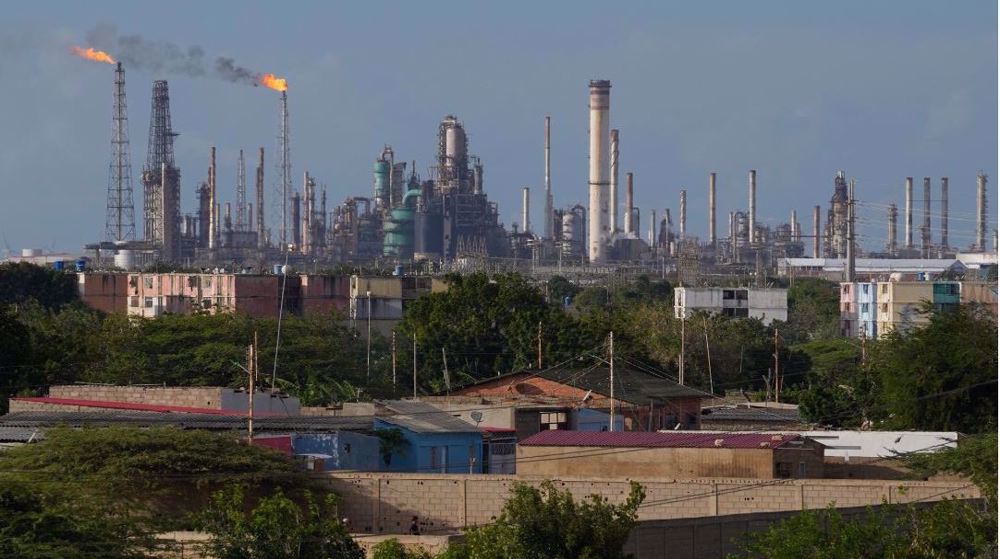
Flames rise from flare stacks at the Amuay refinery in Los Taques, Venezuela, January 14, 2026. (Photo by AP)

Press TV UK

July 24, 2026

The administration of US President Donald Trump has collected billions of dollars in Venezuelan oil revenues while withholding control of the funds from the crisis-hit country, according to a report.

An investigation published by the Financial Times on Wednesday estimated that Washington has collected more than $13 billion from Venezuelan oil exports since taking control of the country’s oil sales in January, following the abduction of President Nicolás Maduro Moros.

The report said the revenues were expected to provide a major boost to Venezuela’s economy, where oil accounts for roughly one-quarter of national output.

However, despite the sharp rise in oil income, Venezuela’s economic recovery has remained weak, raising questions over Washington’s control of the revenues and whether the funds have reached the Venezuelan economy.

The report highlighted that only one transfer of $300 million has been publicly recorded on a Venezuelan government website created to monitor the US-controlled oil revenues.

It also highlighted conflicting statements from Washington regarding who controls the funds and how they are being managed.

A January executive order described the US role as merely holding the money in a custodial capacity, yet Trump later boasted that Washington was “making a lot of money” from Venezuelan oil.

He cited oil revenues as one of the benefits of the US aggression against Venezuela, saying, “48 minutes to win that war,” and claiming, “We brought millions of barrels of oil out,” after taking control of the country’s oil exports.

A senior State Department official, Michael Kozak told Congress in April that roughly $3 billion had been transferred to Venezuela. However, lawmakers later said they had received no further disclosures regarding the funds.

The lack of transparency has prompted lawmakers from Republican and Democratic party to demand answers, with Republican Representative Maria Elvira Salazar calling on the administration to publicly disclose how the funds are being used and ensure greater financial accountability.

Democratic Congressman Joaquin Castro said “Trump’s invasion of Venezuela has been about oil, power and graft from the very beginning, with billions of dollars in Venezuelan oil revenue being controlled by the Trump administration without transparency or safeguards.”

The report said questions over the management of the revenues have become even more urgent following the devastating earthquakes that struck Venezuela on June 24.

The United Nations estimated that damage to buildings and infrastructure alone amounted to approximately $37 billion.

Despite the country’s extensive reconstruction needs, the report found no public evidence that the overwhelming majority of the oil revenues collected by Washington have reached Caracas.

Economist Francisco Rodríguez told the newspaper that Venezuela’s first-quarter growth of only 2.5 percent, the weakest rate in nearly five years, suggested that the United States was retaining control of the oil revenues.

Former opposition lawmaker and economist José Guerra raised similar concerns, saying that Venezuelan oil revenues should have been substantially higher and asking: “Where is the money? There is no transparency and the US government does not inform us.”

The report added that the estimated $13 billion figure covers only oil exports and does not include revenues from Venezuelan mining exports, some of which US officials have acknowledged are also being collected by the Trump administration.

[…]

Via https://www.presstv.co.uk/Detail/2026/07/23/772863/US-forcibly-collects–13bn-in-Venezuelan-oil-revenue-without-refunding-disaster-stricken-country–Report


Oil tops $100: Trump’s warmongering ‘punishes’ Americans, not Iran

The escalation follows President Donald Trump’s formal notification to Congress on July 7 that military aggression against Iran had resumed.

Press TV UK

July 24, 2026

Iranian Parliament Speaker Mohammad Baqer Qalibaf has sarcastically rebuked the US over soaring global oil prices above $100 a barrel, declaring that Washington’s escalation against Iran has backfired spectacularly, punishing American consumers instead of Tehran.

“They wanted to punish Iran. Punished themselves with triple-digit oil instead. 10/10 strategy,” Ghalibaf wrote on X on Thursday.

He shared an image illustrating how the US naval blockade on Iran and resumed strikes have pushed gasoline prices above $7 a gallon in the United States.

The reaction came as Brent crude oil surged 7.1% to $100.74 a barrel on Thursday – its highest level since May – following attacks by Yemen’s Ansarullah movement on two Saudi oil tankers in the Red Sea, amid supply disruptions already caused by Washington’s illegal blockade of the Sea of Oman.

Mohammad Mokhber, senior adviser and assistant to Iran’s leader, warned in a separate social media post that the $100 price is “solely the result of disruptions to transportation, not production,” and that continued US aggression will have broader global consequences.

“The fire that the United States is igniting in the region’s oil and gas fields will ultimately spread across the entire world,” Mokhber said, adding that Iran’s armed forces will “define the battlefield and the level of the game one step above the enemy.”

Iran has imposed restrictions on transit of vessels in the Strait of Hormuz following continued US attacks on Iranian soil since last week in violation of the war-ending memorandum of understanding signed by Tehran and Washington in June.

The US escalation has disrupted shipping through one of the world’s most important energy chokepoints, fueling concerns over global crude supplies and contributing to a sharp rise in oil prices.

Qalibaf said on Wednesday that the Strait of Hormuz situation will not return to its pre-war state, warning that “no country in the region will be able to sell oil if Iran is prevented from doing so.”

“In a region where we cannot sell oil, no one will sell oil,” Qalibaf wrote on X, describing the war as an “all or nothing” equation.

The escalation follows President Donald Trump’s formal notification to Congress on July 7 that military aggression against Iran had resumed – a move that effectively tore up the 14-point memorandum of understanding signed with Tehran just weeks earlier, which had committed both sides to ending the war and lifting the US naval blockade.

Washington has since launched 13 consecutive nights of terrorist strikes across Iran, targeting increasingly civilian infrastructure including bridges, power plants, and the under-construction Darkhovin nuclear power plant.

The strikes have killed dozens of civilians and wounded hundreds, according to Iranian health officials.

Trump has threatened to destroy “one bridge or power plant” for each ship attacked in the Strait of Hormuz, including targets in or near Tehran.

Iran has responded with retaliatory missile and drone strikes on US bases in Jordan and Bahrain, and has vowed to strike US-linked energy infrastructure across the region if American attacks continue.

Ansarullah, the Yemeni movement, said on Thursday it struck two Saudi oil tankers – the Encelia and the Layla – in the Red Sea, setting one ablaze, as part of a naval blockade against Saudi shipping through the Bab el-Mandeb strait.

The movement described the attacks as a legal and defensive response to the Saudi-led blockade on Yemen and recent strikes on Sanaa’s international airport.

The actions have opened a second critical chokepoint, with Goldman Sachs estimating that nearly 9 million barrels per day of oil flows through the Bab el-Mandeb, including 4 million barrels that would be difficult to reroute.

The price surge has sent shockwaves through global markets, with US stocks tumbling sharply on Thursday.

Alphabet and Tesla led the declines, falling 6.7% and 14% respectively, dragging the S&P 500 down 1.3% as investors braced for higher costs to ripple through the economy.

US gasoline prices have climbed to an average of $4.09 a gallon, up from $3.93 a month ago, according to AAA.

Analysts warn that a sustained $100 oil price could push US inflation above 4% – well past the Federal Reserve’s 2% target – potentially forcing the central bank to raise interest rates for the first time since 2023.

The 10-year Treasury yield has risen to 4.70% from just 3.97% before the war began, pushing long-term US mortgage rates to their highest levels in nearly a year.

Goldman Sachs expects oil prices to retain most of their recent gains through July and August as global inventories continue to decline amid lower West Asia production and seasonal summer demand.

European markets also suffered steep losses on Thursday, with France’s CAC 40 dropping 1.6%, as the energy shock threatens to derail a fragile economic recovery across the continent.

[…]

Via https://www.presstv.co.uk/Detail/2026/07/23/772872/Qalibaf-mocks-US-over-surge-in-oil-prices%E2%80%8B%E2%80%8B%E2%80%8B%E2%80%8B%E2%80%8B%E2%80%8B%E2%80%8B

Iran rejects US ceasefire proposal delivered by Iraqi PM

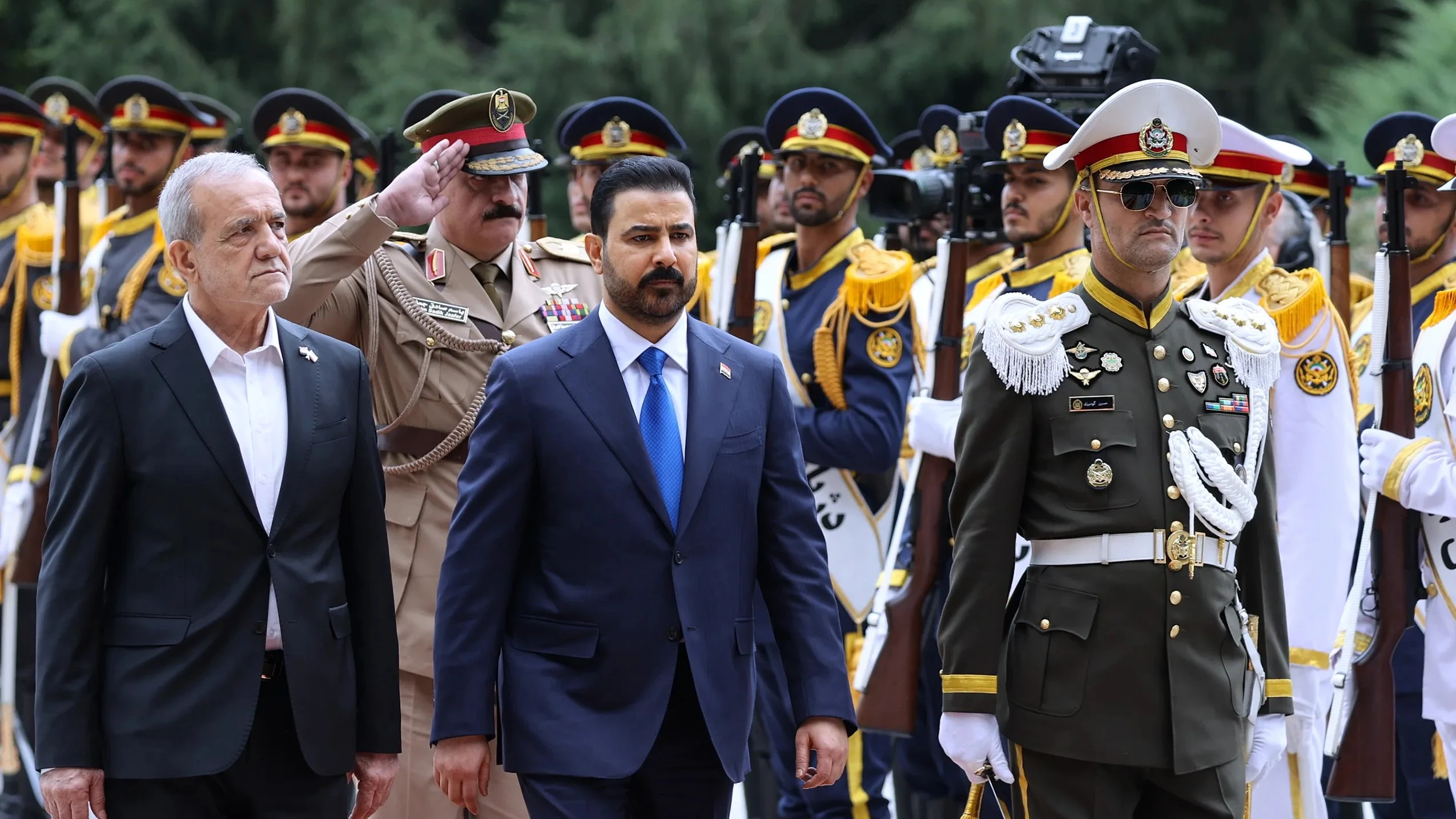
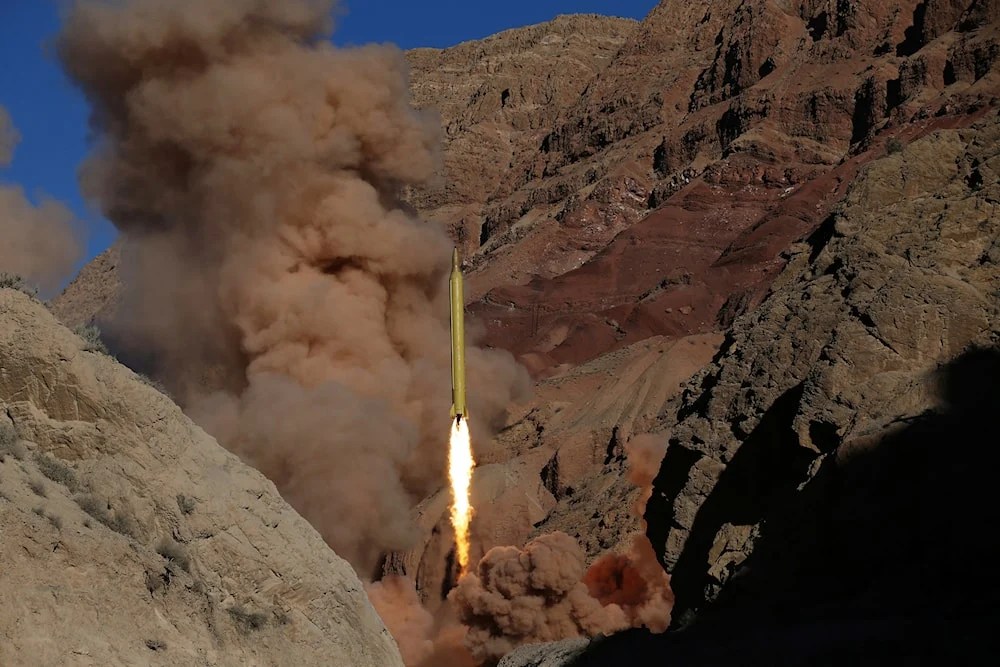
(Photo credit: Iranian Presidency Office via AP)
The Cradle

JUL 24, 2026

Tehran says the proposal left the issue of its control of the Strait of Hormuz ‘unresolved’

Iranian officials have rejected a US ceasefire proposal personally delivered to Tehran by the Iraqi prime minister, the New York Times (NYT) reported on 24 July, citing Iranian and Iraqi officials.

US President Donald Trump gave the proposal to Iraqi Prime Minister Ali al-Zaidi during their meeting at the White House earlier this month.

Tehran reportedly rejected the proposal on Friday after Washington completed its 12th straight night of bombing Iran.

According to the NYT report, Iranian and Iraqi officials did not reveal details of the ceasefire proposal. However, Iranian negotiators rejected the proposal because Tehran is “not interested in a temporary deal that left the question of control over the Strait of Hormuz unresolved,” the NYT wrote.

In contrast, the Iraqi prime minister’s office rejected the NYT report alleging that Iran turned down the ceasefire proposal, saying it was “entirely unfounded” and had “no relation to reality.”

While in Tehran, Zaidi met with Iranian President Masoud Pezeshkian; Iran’s lead negotiator and Speaker of Parliament, Mohammad Bagher Ghalibaf; and Foreign Minister Abbas Araghchi.

Zaidi was appointed Iraqi prime minister in May with the blessing of President Trump. However, his political coalition, the Coordination Framework (CF), also enjoys close relations with Iran, which has exerted strong influence in Iraqi politics since the US invasion in 2003.

Foreign Minister Araghchi told state television that Zaidi had shared his “views and impressions” from his meeting with Trump.

Araghchi stressed that no additional mediators are needed, as Pakistan is currently engaged in this role.

“The problem is not passing messages,” he said. “The problem is America’s outlook, which is illogical, greedy and controlling.”

Two Iranian officials told NYT that the Islamic Republic’s forces are preparing for Trump to move ahead with his threats to escalate the war, including by striking the capital and additional civilian infrastructure.

In response, Iran is prepared to escalate the fight by striking Tel Aviv, and asking its allies in Yemen, the Ansarallah-led Yemeni Armed Forces (YAF), to close the strategic Bab al-Mandab Strait at the entrance to the Red Sea.

Iranian negotiators are skeptical of US peace proposals, as Washington and Tel Aviv have repeatedly initiated surprise wars on Iran amid seemingly productive negotiations.

The US-Israeli war on Iran began on 28 February while Washington and Tehran were engaged in an active Omani-mediated negotiating process in Geneva.

An Omani mediator described the talks as “positive” shortly before the US and Israel launched their bombing campaign against Iran.

Similarly, in June 2025, Israel launched its 12-day war on the Islamic Republic amid an ongoing US–Iran diplomatic process.

A sixth round of nuclear talks was canceled following Israel’s attack on the country. The US joined the war days later, bombing Iran’s nuclear facilities at Natanz, Fordow, and Isfahan.

[…]

Via https://thecradle.co/articles/iran-rejects-us-ceasefire-proposal-delivered-by-iraqi-pm-report

IRGC finishes off Amazon data center, says US fatalities in hundreds

Al Mayadeen English

July 24, 2026

The IRGC says wave 27 of Operation Nasr 2 targeted an Amazon data center and an ammunition depot at the Ali Al-Salem US base.

Iran’s Islamic Revolution Guard Corps (IRGC) announced on Friday that its forces have destroyed the remaining building of an Amazon company data center and a large ammunition depot at a US base, as part of ongoing operations against American military assets in the region.

In a statement, the IRGC said its fighters, in the 27th wave of Operation Nasr 2, targeted the remaining structure of an Amazon data center, which plays a primary role in completing intelligence for the US military.

“The fighters of Islam, in the 27th wave of Operation Nasr 2, in completion of their previous operation against the data intelligence center of the American company Amazon, which plays the main role in completing the intelligence of the US child-killing army, targeted and destroyed the remaining building of this center,” the IRGC said in a statement.

The IRGC added that “punitive operations” by its fighters are continuing.

Heavy drones strike Ali al-Salem Base

In a separate statement, the IRGC reported that its forces targeted a US base in the region. The statement said that one hour earlier, also as part of the 27th wave of Operation Nasr 2, fighters launched ultra-heavy and advanced destructive drones to target a very large ammunition depot at the US base of Ali Al-Salem.

“A very large ammunition depot in the Ali Al-Salem US base was targeted and completely destroyed with successive explosions,” the IRGC said.

The statement added that barracks housing personnel at the same base were also attacked, with six large structures destroyed and three others sustaining significant damage, while several troops were killed and wounded in the strikes.

US hiding true casualties

Regarding US casualty figures, the IRGC stated that the American military has suffered hundreds of deaths and a significantly higher number of wounded during the five-month war. The statement said the daily evacuation of large numbers of wounded via ambulance aircraft to an American hospital in Germany is clear evidence of high casualties.

The US military, which has suffered hundreds of fatalities and many more wounded during the past five months of the war, is lying to its own people by claiming it has sustained fewer than 20 deaths.

The IRGC cited the daily evacuation of large numbers of wounded by medical evacuation aircraft to a US hospital in Germany as clear evidence of the scale of its casualties.

It is the responsibility of the American media to investigate the realities of this war, the heavy casualties suffered by the US military, the extensive damage it has incurred, and the true financial costs that have been concealed from the public, the IRGC’s statement read. It added that the media outlets are responsible for exposing the real figures and the methods of censorship employed by the “deceptive rulers”.

US attacks 16 cities in Iran in 13th consecutive night of aggression

The United States launched a new wave of attacks on Iran, marking the 13th consecutive night of US attacks, according to US Central Command (CENTCOM). The campaign, which Washington said aims to target Iranian military capabilities and threats to commercial shipping, began at 6:45 pm Eastern Time.

Iranian media reported explosions in multiple locations throughout the country. Local officials confirmed strikes in Bandar Abbas, Jask Port, Konarak Port, Ahvaz, Omidiyeh, Andimeshk, Khorramabad, Anarak, Nain, Borujerd, Taft, Shirkuh, Firuzabad, near Khondab in Markazi Province, and on Qeshm Island. Al Mayadeen‘s correspondent reported that the US attacked 16 Iranian cities in total.

In Hormozgan Province, the deputy governor for political and security affairs said several civilians were injured during the attack on Bandar Abbas Port. IRNA reported power outages affecting parts of the port following the strikes, with provincial emergency officials later stating electricity would be restored within an hour. Iranian state television reported that air defenses were activated in Tehran as explosions were heard elsewhere.

The Khuzestan Province Council reported that four people were killed and five others were injured in attacks targeting the vicinity of Ahvaz.

Iran’s Islamic Revolution Guard Corps (IRGC) announced that its forces intercepted and destroyed a US Tomahawk cruise missile over Kahnuj in Kerman Province. According to Fars News Agency, the IRGC commander in Kahnuj said the missile was detected and destroyed while still in the city’s airspace.

[…]

Via https://english.almayadeen.net/news/politics/irgc-finishes-off-amazon-data-center–says-us-fatalities-in

Senator Dick Durbin: US withholding $400 million in Ukraine military aid

US withholding $400 million in Ukraine military aid – senator

RT

23 Jul, 2026

The funds will not be available “until a new president is in office,” Dick Durbin has said

The White House is withholding $400 million in military aid for Kiev approved by Congress, US Senator Dick Durbin has said. The funding, allocated by lawmakers in January, will not be available until at least 2029, Durbin said during a hearing on Wednesday.

The money is part of the Ukraine Security Assistance Initiative (USAI), a Pentagon-led program in which Ukraine receives training, equipment, and advisory assistance from the US.

According to Durbin, the package has yet to reach Kiev and has so far “bounced back and forth.” On Wednesday, he said the administration of President Donald Trump “informed us that the money will not be available in many aspects until the next president is in office.”

“The payment plan tells us to be prepared to spend that money in fiscal year 2029,” he said while questioning Chairman of the Joint Chiefs of Staff General Dan Caine.

Caine replied that he was unaware of the delay and told the senator to raise the matter with the “civilian leaders.”

The White House has not made an official statement regarding the fate of the package. Last month, Durbin asked Secretary of State Marco Rubio about the issue, who said the funding was going through “interagency processes” and that he expected news of its release “shortly.”

In March, the Washington Post reported that the US government could have diverted the money allocated for Ukraine to replenish military stockpiles depleted during the war with Iran.

Senator Mitch McConnell wrote an op-ed in the Washington Post a month later, complaining that the $400 million in Ukraine aid approved by Congress was “now collecting dust at the Pentagon.”

On Wednesday, Durbin said he met with Ukrainian leader Vladimir Zelensky on the sidelines of the NATO summit in Ankara earlier this month. According to the senator, Zelensky was “very explicit in terms of what he needed” in the conflict with Russia.

Trump has criticized his predecessor, Joe Biden, for his unconditional support for Ukraine and said any future US military aid should be paid for by Kiev’s European backers.

Zelensky has repeatedly blamed the West for weapons shortages and delays in deliveries for Ukraine’s setbacks on the battlefield. Moscow has maintained that foreign military aid only serves to escalate the conflict and will not prevent Russia from achieving its military objectives.

[…]

Via https://www.rt.com/news/643357-us-withhold-military-aid-ukraine/

Has Russia helped Iran target CIA sites in the Gulf?

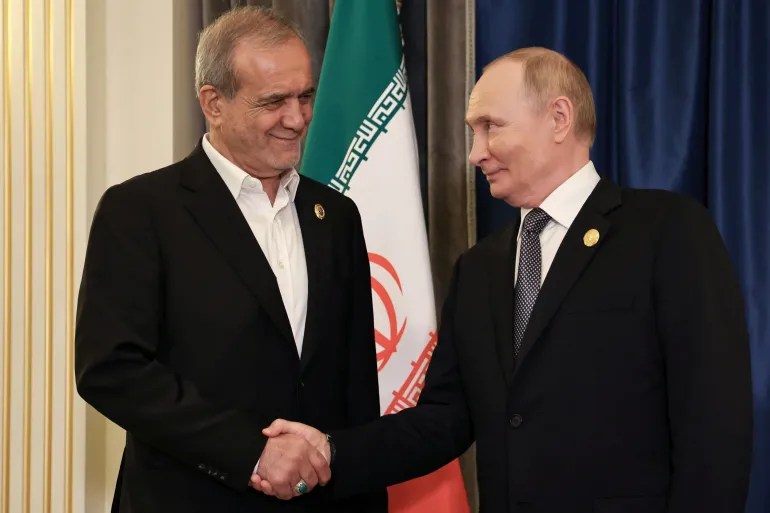
Russia’s President Vladimir Putin, right, shakes hands with Iran’s President Masoud Pezeshkian during a meeting on the sidelines of the Shanghai Cooperation Organisation (SCO) summit in Tianjin, China, September 1, 2025 [Sputnik/Alexander Kazakov/Pool via Reuters]
Reports of Iran targeting sites belonging to the US’s CIA first emerged in the early days of the US and Israel’s war with Iran.

When US Secretary of State Marco Rubio met Russian Foreign Secretary Sergey Lavrov on Thursday in Manila, on the margins of a summit of Southeast Asian nations, Moscow’s war on Ukraine was officially the top agenda item.

But the meeting between Rubio and Lavrov was held under the shadow of fresh reports suggesting that Russia might be playing a more active role than it has publicly acknowledged in Iran’s attacks on United States military sites in the Middle East.

Reports of Iran targeting sites belonging to the US Central Intelligence Agency (CIA) first emerged in the early days of the US and Israel’s war on Iran. Three days into the war, on March 3, The Washington Post reported that a CIA station in the US embassy in Riyadh had been targeted, according to two people familiar with the matter. On March 6, CNN reported, citing US intelligence sources, that Moscow had been helping Tehran locate US personnel and aircraft in the Gulf.

Now, more recently, the Reuters news agency on Wednesday reported that Iranian drone attacks on CIA facilities, specifically on the embassy in Saudi Arabia, had prompted US intelligence to investigate possible Russian involvement, suggesting that the strikes’ effectiveness and precision could suggest possible evidence of support.

Nicole Grajewski, an assistant professor at the Centre of International Research at Sciences Po university in Paris, explained that Russian involvement in Iran’s targeting was a “realistic” theory.

“This was kind of what was suspected because a lot of the attacks that Iran did were far more advanced than what they’ve done before,” Grajewski told Al Jazeera.

“Iran doesn’t have great space-based capability, unlike Russia,” she said. “Compared to Russia, Iran doesn’t have enough military-grade satellites for basic stuff… it seems likely that they struck some of the deal with the Russians.”

However, she explained that Iran has its own human intelligence-gathering networks that are “often overlooked” when it comes to the targets it selects in the region.

[…]

Via https://www.aljazeera.com/news/2026/7/23/has-russia-helped-iran-target-cia-sites-in-the-gulf

House approves war powers resolution to halt military action against Iran

WASHINGTON (AP) — The House for the first time Wednesday approved a war powers resolution that would halt the U.S. military action against Iran, defying President Donald Trump as a handful of Republicans joined with Democrats to end the three-month-long conflict that has reordered politics at home and abroad.

House Speaker Mike Johnson had tried to prevent an outcome that would show the mounting opposition to the war, abruptly shutting down floor action two weeks ago when the resolution was on the verge of approval. But displeasure has only grown as the conflict drags on and as Trump struggles to negotiate a plan for peace.

“Enough is enough,” said Rep. Gregory Meeks of New York, the top Democrat on the House Foreign Affairs Committee, who led the effort.

“It is time for the president to do the right thing,” he said. “The people are tired of suffering because of his war of choice — suffering at the gas pump, suffering at the supermarkets.”

The roll call Wednesday was 215-208, but next steps are uncertain. Trump would likely reject any measure from Congress to limit his commander-in-chief authority. Still, the tally, with four Republicans joining Democrats, was a rebuke of the president’s war strategy, and cheers erupted in the House chamber.

[…]

Via https://apnews.com/article/iran-war-powers-vote-house-9aaadea35f9523c818802286a6553536


Iran: UK decision to aid US strikes amounts to ‘act of aggression’

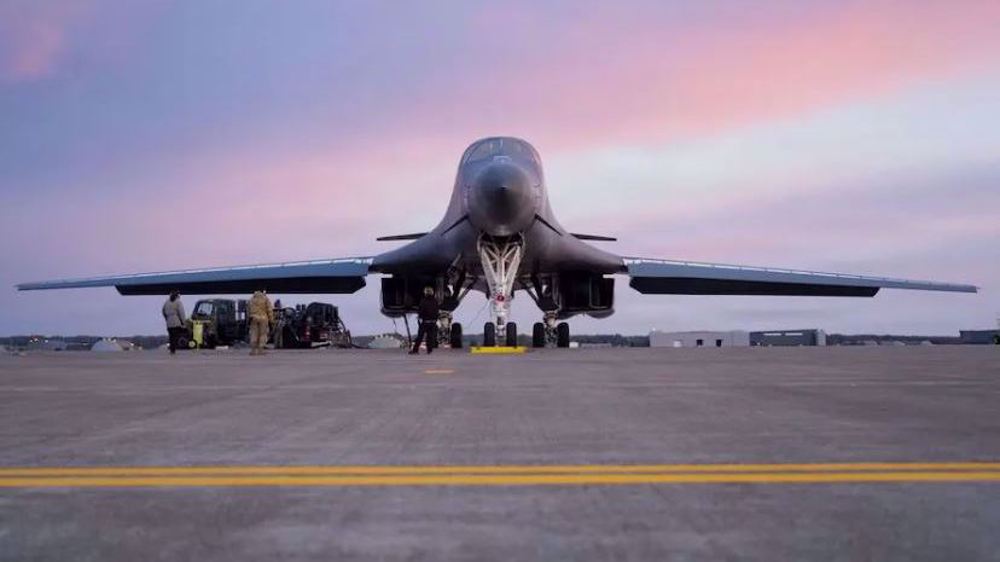
A US Rockwell B-1 Lancer Bomber being prepared in RAF Fairford airbase for a sortie against Iran, March 2026. (Photo via social media)

Press TV UK

Iran’s foreign ministry has strongly condemned the British government’s decision to allow the US to use UK military bases and facilities to prepare and facilitate military strikes against Iran, declaring the move a violation of the UN Charter and international law.

“British policymakers, fully aware that US military strikes against Iran – which began with the participation of the Zionist regime and are still ongoing – constitute a clear act of aggression and a gross violation of the fundamental principles of the UN Charter and peremptory norms of international law, have decided to join these actions,” the ministry said in a statement Thursday.

The decision, the ministry said, is “clearly contrary to the fundamental principles and rules of the Charter of the United Nations and international law” and, under paragraph (f) of Article 3 of UN General Assembly Resolution 3314 on the Definition of Aggression, “constitutes an act of aggression against the Islamic Republic of Iran”.

The foreign ministry sharply criticized Britain’s role as a permanent member of the UN Security Council.

“The UK government, both as a state and as a permanent member of the UN Security Council, instead of fulfilling its legal and moral responsibilities to condemn the military aggression and war crimes of the United States and the Zionist regime against Iran, has stepped onto the path of aligning with the aggressors and has degraded its position to that of an accomplice in their war against the Iranian nation.”

“This decision,” the ministry added, “further undermines London’s claims about supporting the rule of law, human rights, and international peace and security.”

The statement drew explicit parallels with Britain’s long history of intervention in Iranian affairs.

It listed “the coup of August 19, 1953; full-scale support for Saddam Hussein’s regime during the imposed war; the imposition of illegal sanctions under the pretext of the nuclear issue; complicity with the United States in the so-called ‘snapback’ mechanism; and the designation of the Islamic Revolution Guards Corps (IRGC).”

“The Islamic Republic of Iran is determined to defend its national sovereignty, territorial integrity, national interests, and national security against any aggression,” the ministry emphasized.

“Any party that in any way participates in the military aggression against Iran will be responsible for the consequences and repercussions of its own decision.”

According to a report from Bloomberg, the new British prime minister has agreed to allow the United States to use UK territory to continue its aggressive strikes against Iran.

The report said Andy Burnham has permitted the US to use British military bases for “defensive strikes” against Iran – meaning that UK bases such as RAF Fairford and the Diego Garcia naval base in the Indian Ocean will likely be used in the current round of US aggressive strikes.

The report added that former prime minister Keir Starmer, in his final hours at 10 Downing Street, chaired a government meeting on Britain’s policy following seven days of renewed US bombardment of Iran.

Sources revealed that ministers at the meeting decided to continue the existing policy of using UK bases to counter missiles from Iran and facilities used to target the Strait of Hormuz.

Burnham was briefed on the decision and appears to have agreed to it, despite the risk of angering anti-war Labour Party supporters, the report said.

Some Labour MPs, as well as members of the Green Party and Liberal Democrats, have argued that US use of the bases makes Britain complicit in war crimes.

[…]

Via https://www.presstv.co.uk/Detail/2026/07/23/772854/Iran-condemns-UK-decision-to-provide-military-facilities-for-US-attacks,-says-London-complicit-in-aggression