
By Mohammad Molaei
The sheer scale of munitions consumed during the Third Imposed War is without modern precedent in American warfare. As reported by The New York Times, within just the first two days of the military aggression that began on February 28, an estimated $5.6 billion worth of precision-guided munitions were expended, a sum that exceeds the annual military budgets of most countries in the world.
Over the full 40-day war leading up to the fragile ceasefire in early April, US forces struck more than 13,000 targets, many of which required multiple munitions each. According to the Center for Strategic and International Studies (CSIS), the cost of the air campaign alone reached between $11.3 billion in its first six days and $16.5 billion by day twelve.
The total cost over 40 days of full-scale military aggression, followed by subsequent hostilities in the Persian Gulf region, amounts to a far greater sum. While the Pentagon has estimated the figure at around $25 billion, independent assessments place the cost closer to $100 billion.
These figures do not reflect a campaign defined by restraint or resource discipline. Rather, they reveal a military establishment that bet its most advanced precision arsenal on a war it expected to win quickly – only to find itself mired in a quagmire of its own making.
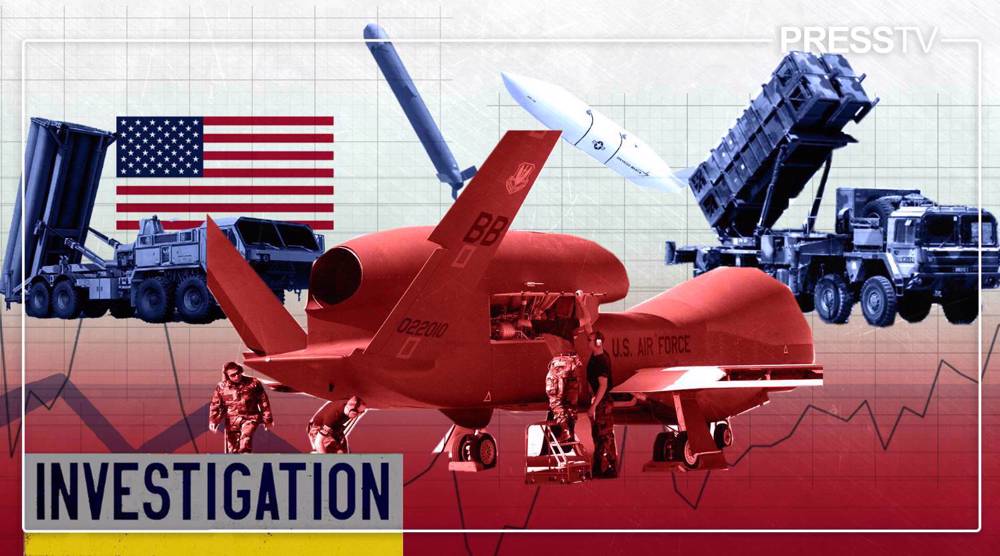
JASSM-ER: Draining the Pacific’s first line of strike
No single weapons system reveals the strategic recklessness of so-called “Operation Epic Fury” more precisely than the AGM-158B Joint Air-to-Surface Standoff Missile Extended Range, known in Pentagon parlance as the JASSM-ER.
This is not a conventional cruise missile. It is a stealthy, air-launched precision strike weapon with a range exceeding 600 miles, purpose-built to penetrate the most sophisticated integrated air defense systems in the world.
Its operational logic is explicitly tied to high-end war scenarios – specifically, a potential confrontation with China in the Western Pacific, where the People’s Liberation Army has constructed the most elaborate anti-access/area-denial architecture in history. The JASSM-ER is the weapon Washington designed for its most serious adversary. And it is largely gone.
[…]
The New York Times, drawing on Department of War sources, placed total JASSM-ER expenditure over the full campaign at approximately 1,100 missiles. An additional 47 were fired in a separate operation to abduct Venezuelan President Nicolás Maduro.
[…]
The arithmetic is unambiguous and brutal. Of a prewar JASSM-ER inventory of 2,300, approximately 425 remain available for the rest of the world, roughly 18 percent of the prewar total. In the shorter-range baseline JASSM variant, approximately two-thirds of total stocks across both versions were committed to the Iran campaign, according to Bloomberg.
[…]
The unit cost of the JASSM-ER is $1.1 million per missile. The JASSM baseline variant costs $2.6 million per unit at current procurement figures. The roughly 1,100 JASSM-ERs fired in the recent war, therefore, represent approximately $1.2 billion in precision strike munitions, consumed in a campaign that failed to destroy Iran’s ballistic missile infrastructure, did not fracture its command structure, and did not alter the strategic balance in West Asia.
[…]
Tomahawk: A thousand missiles in the 40-day war
The BGM-109 Tomahawk Land Attack Missile (TLAM) is the oldest and most combat-proven precision strike weapon in the US Navy’s inventory, having been used in every major American military operation since Operation Desert Storm in 1991.
Its versatility, fired from surface ships and submarines, capable of loitering and retargeting in flight, with a range of approximately 1,000 miles, makes it the Navy’s primary instrument of long-range power projection.
The war against Iran consumed it on a historically unprecedented scale.
The Washington Post reported that US naval assets fired more than 850 Tomahawks in the first month of the third imposed war. The Wall Street Journal subsequently updated that figure to more than 1,000 over the full pre-ceasefire campaign period.
CSIS’s analysis of the first six days alone identified 319 TLAMs expended, representing approximately 10 percent of the prewar inventory in less than a week.
The prewar Tomahawk inventory stood at approximately 3,200 missiles. The expenditure of over 1,000, therefore, represents roughly 31 percent of the prewar total consumed in 40 days, more than ten times the annual procurement rate.
[…]
US Tomahawk inventories will not return to prewar levels until late 2030 at the earliest.
[…]
The defensive arsenal: Patriot, THAAD, and interceptor crisis
While the consumption of offensive strike missiles has drawn significant analytical attention, the depletion of America’s missile defense interceptor inventory may carry even more severe long-term strategic consequences.
These systems, including the much-hyped Patriot PAC-3 MSE, the Terminal High Altitude Area Defense (THAAD), and the Standard Missiles SM-3 and SM-6, are not interchangeable with cheaper alternatives.
[…]
In the Pacific scenario, they are the systems that would need to protect US forward bases, carrier strike groups, and allied territory from Chinese ballistic missile salvos in the opening hours of any war. Instead, they are being consumed in the Persian Gulf.
The Patriot PAC-3 MSE interceptor, at approximately $4 million per unit, was among the most heavily used anti-missile systems in the recent war imposed on Iran.
The New York Times reported that over 1,200 Patriot interceptors were fired during the aggression. CSIS estimates that Patriot usage, combined with the ongoing supply of interceptors to Ukraine, has left prewar PAC-3 inventory at critically reduced levels.
The Army’s FY 2027 budget requests 3,203 Patriot missiles, a procurement figure that reflects the scale of the shortfall, but CSIS projects these will not begin delivery until May 2029, with full replenishment of prewar levels taking three or more years from the present.
[…]
The THAAD situation is, by CSIS’s assessment, the most critical of all. THAAD is the upper-tier component of the US missile defense architecture, designed to intercept ballistic missiles at higher altitudes and longer ranges than Patriot.
Its interceptors are expensive, scarce, and – as of the ongoing fragile ceasefire – severely depleted. CSIS estimates that between 52 and 81 percent of the prewar THAAD interceptor inventory was expended in the recent war and related offensives, building on roughly 150 THAAD interceptors already consumed during the 12-day war in June 2025.
[…]
Compounding the interceptor shortage is the damage or possible destruction of multiple AN/TPY-2 radar systems – the targeting backbone of THAAD batteries – during Iranian retaliatory strikes on US facilities in the region.
[…]
The ship-launched Standard Missiles present a somewhat less acute but still serious picture. CSIS estimates that SM-3 expenditure in the recent war ranged from 31 to 60 percent of prewar inventory, while SM-6 consumption ran between 16 and 32 percent.
Both missiles carry production lead times of 36 to 39 months from contract award to first delivery. Inventories will not return to prewar levels until early 2029 – despite their relatively lower usage in the 40-day war of aggression – reflecting the cumulative effect of years of inadequate procurement before the war began.
The cost ledger: What was spent and what was not gained
[…]
The principal expenditures, based on CSIS data and DOD reporting, break down as follows. Over 1,100 JASSM-ER missiles at $1.1 million each account for approximately $1.21 billion. More than 1,000 Tomahawk missiles at $1.87 million each represent approximately $1.87 billion. Over 1,200 Patriot PAC-3 MSE interceptors at $4 million each amount to approximately $4.8 billion. More than 1,000 Precision Strike Missiles and ATACMS, at between $500,000 and $1.5 million each, add a further $500 million to $1.5 billion.
THAAD interceptors, along with SM-3 and SM-6 expenditures, contribute several hundred million more at their respective unit costs. The aggregate munitions cost of the war runs to well in excess of $10 billion, and that figure covers only the missiles, not the operational costs of the platforms that delivered them, the intelligence infrastructure that supported targeting, or the diplomatic capital expended in securing basing and overflight rights.
[…]
The combined picture across all seven critical munitions categories is that the US will not return to prewar inventory levels for any of its most critical systems before 2028 at the earliest, with Tomahawk, THAAD, and Patriot taking three or more years from the present.
The China variable: A window of vulnerability measured in years
The strategic meaning of these numbers transcends the war against Iran in itself. The JASSM-ER was not designed to strike Iranian nuclear facilities but to defeat Chinese integrated air defense systems protecting military targets in the Taiwan Strait and the South China Sea.
The Tomahawk was not stockpiled to prosecute a campaign in the Persian Gulf but maintained as the Navy’s primary instrument of long-range strike in a Western Pacific contingency. The THAAD interceptors depleted over Iranian skies were the same interceptors positioned in South Korea and Guam to defend against North Korean and Chinese ballistic missile threats. They have been moved and their replacements are years away.
Even before the war against Iran, as assessments suggest, US munitions stockpiles were deemed insufficient for a peer competitor fight in the Western Pacific, based on the classified war-gaming conclusions of the House Select Committee on China.
[…]
The implications for Chinese strategic calculations are substantial and not easily dismissed. Beijing’s military planners have observed, in real time, that the US consumed its primary long-range strike inventory – the very capabilities designed to hold Chinese assets at risk in a Taiwan contingency – in a 40-day war that did not achieve its strategic objectives.
They have observed that the combined JASSM and Tomahawk inventories available for Pacific contingencies are now a fraction of their prewar levels. They have observed that THAAD batteries have been stripped from South Korea – degrading the missile defense coverage of a key US ally on China’s periphery – and that their replacement is years away.
And they have observed that American production capacity, constrained by decades of procurement at peacetime rates and manufacturing lead times measured in years rather than months, cannot rapidly reverse any of these deficits, regardless of how much money US Congress appropriates.
This is not the profile of a deterrent in robust health, but the profile of a military establishment that has consumed its premium, China-specific capabilities in a secondary theater without achieving the decisive outcome that would have justified the expenditure, and that now faces a multi-year period of structural vulnerability during which its ability to credibly threaten the use of force in the Taiwan Strait is materially diminished.
The CSIS report notes with the cautious observation that China is deeply aware it has no recent combat experience, while the US military has been engaged in wars on multiple fronts, and that this experiential differential may preserve deterrence until inventories are restored. This is a thin reed on which to hang the credibility of American extended deterrence across Indo-Pacific.
The deterrent value of operational skill is real, but it is not a substitute for the physical missiles that a deterrent posture requires, and Beijing’s strategic calculus is driven more by inventory mathematics than by assessments of American tactical proficiency.
The production constraint: Why money cannot buy time
The Trump administration has responded to the munitions crisis with a series of framework agreements with major contractors – Lockheed Martin, Raytheon, Boeing – committing to expand production capacity across the full range of critical munitions.
Lockheed Martin has agreed to quadruple THAAD interceptor production capacity from 96 to 400 per year. Raytheon has committed to increasing Tomahawk production to more than 1,000 per year and Patriot MSE output to 2,000 per year.
These are significant capacity targets that, if achieved, would substantially accelerate inventory recovery relative to current baselines.
But capacity is not production, and production agreements are not delivered missiles, according to military experts. The fundamental constraint is not financial but temporal. Manufacturing lead time for advanced missile systems – the period between contract award and first delivery – runs between 34 and 39 months for the most critical systems. Building new production facilities, qualifying new supply chains, training additional skilled labor, and resolving bottlenecks in specialized components such as guidance systems and rocket motors are processes measured in years, not quarters.
The FY 2027 defense budget, even if fully and promptly appropriated by a Congress that has not yet voted on it, will not produce a single additional THAAD interceptor or Tomahawk before 2030. The window of vulnerability is already wide open.
[…]

