The Most Revolutionary Act

Uncensored updates on world events, economics, the environment and medicine

The Most Revolutionary Act
Unknown's avatar

About stuartbramhall

Retired child and adolescent psychiatrist and American expatriate in New Zealand. In 2002, I made the difficult decision to close my 25-year Seattle practice after 15 years of covert FBI harassment. I describe the unrelenting phone harassment, illegal break-ins and six attempts on my life in my 2010 book The Most Revolutionary Act: Memoir of an American Refugee.

Ukraine: Snatching Defeat from the Jaws of Victory

Dmitry Orlov

As we close out 2023, we are not quite ready to close out the conflict in the former Ukraine; however, what we can say is that the US/NATO strategy of arming, training and politically supporting the Kiev régime in its fight against its own Russian citizenry and, by extension, against Russia itself, is a resounding failure.This fact has been recognized even (even!) in Washington, as evidenced by a recent New York Times editorial by Serge Schmemann.

Clearly, it is time for the US to do the traditional “declare victory and go home” routine, then memory-hole the country in question, be it Afghanistan or the former Ukraine, pretending that it no longer exists. In the case of the former Ukraine, that might be somewhat accurate, since the new name for much of it is going to be Russian Federation. Still, given what’s been happening, that seems like quite a trick.[…]

• The Kiev régime should not attempt to win back territory from Russia; that is no longer a suitable indicator of “victory”.

• Reach a cease fire somehow, then use the time to rebuild the Westernized Ukrainian state.

• Do not engage Russia in a war of attrition since it would offer no opportunities for “victory” but plenty opportunities for defeat (without finger quotes) since Russia is bigger, stronger and better organized.

• Zelensky should stop being so Russophobic and try reaching out to Putin.

• A cease fire on Russia’s term is a temporary “victory” for the Ukrainian side, but not for Putin.• Since aid from the US is running out, the Kiev régime should hurry up with the negotiations, or at least give them a try, just to see what Putin’s mood is.

[…]

• The Special Military Operation will continue until the Ukrainian troops are fully disarmed and the Ukrainian state abandons the ideology of neo-Nazism.>• The overthrow of the ruling neo-Nazi regime is the most important and essential goal, which must and will be reached.

• The cities of Odessa, Dnepropetrovsk, Kharkov, Nikolaev and Kiev are Russian cities, which, along with a score of others, are temporarily occupied by the Ukrainian régime, and will be liberated.

• Wide-ranging discussions with representatives of the Ukrainian régime are quite possible and Russia has never ruled them out. They are not time-limited and can continue up until the neo-Nazi NATO troops are shattered and capitulate.

[…]

What victory generally means for your average Russian is Cossacks on parade on the streets of Paris or the Red Army putting up a victory flag on top of the Reichstag in Berlin. What “victory” means to the US is quite different: it means freezing the conflict at a point in time when its costs and risks start to outweigh its financial benefits.

If you examine the US end-games in Korea, Vietnam, Iraq, Afghanistan, Syria and Libya, the permanent impasse with regard to North Korea and Iran and the present stupor in confronting Yemen, it becomes clear that what “victory” means to the US is an opportunity to maintain a hostile stance, perhaps with some ineffectual military action now and again, without risking a large financial loss, never mind a humiliating defeat and capitulation.

Now let’s introduce another dimension to this bit of strategic multivariate calculus: by now, the Russian side knows full well what “victory” (in finger quotes) is and is willing to dangle a diplomatic carrot in front of the (bipartisan) Washingtonian donkey virtually forever while simultaneously applying the military whip to its hide by developing new weapons systems against which the US has no countermeasures. What’s more, the Russian side appreciates full well that a rapid, overwhelming military victory over the pathetic remnants of the Kiev régime would be a tactical victory for Russia but would not be a strategic one.

Recall, if you will, that Russia won World War I; but does anyone remember or celebrate that victory? The Russians definitely don’t want any more victories like that one!

Let us set all political rhetoric aside and appreciate the task Russia has before it. It has to reabsorb some number of once and forever Russian but currently alienated territories — the abovementioned cities of Odessa, Dnepropetrovsk, Kharkov, Nikolaev and Kiev, as well as many others, along with their surrounding countryside. On the plus side, they are still Russian — Russian-speaking, culturally Russian, historically Russian — making them easy to reintegrate.

On the minus side, they are horribly run down (virtually all of the infrastructure needs to be repaired or rebuilt after close to half a century of malign neglect) and a large part of the population is, by Russian standards, subpar and needs to be brought up to speed on what it means to be Russian in 2024 in terms of law and order, speech and demeanor, professional standards, etc.

To top it off, some of the population is actually armed and hostile, and absorbing it would be like eating a meal of odori ebi, or “dancing shrimp,” a Japanese sashimi delicacy featuring live shrimp, where the shrimp are shooting at you and trying to blow you up rather than just squirming around and trying to escape as you try to pick them up with chopsticks and chew them to death — or swallow them live and feel them tickle on the way down (go ask a Japanese person about the proper etiquette).

Since the Kiev coup of 2014, Russia has largely rebuilt Crimea and is very busy rebuilding Lugansk, Donetsk, Zaporozhye and Kherson regions, making them into showcases that the residents of other formerly Ukrainian regions can regard with a mixture of envy and pride when considering their options. Russia is already at record-low unemployment and has to keep an eye on inflation to make sure that its economy, which is growing nicely, doesn’t overheat. To this end, the rate of reabsorption of briefly Ukrainian Russian lands has to be moderate: Nikolaev and Odessa might be engulfed and devoured in 2024, Kharkov and Dnepropetrovsk in 2025, Kiev in 2026… (I am just making this up, mind you!)

The best way to do it is to have it move to Russia. To this end, the reabsorption point for Ukrainians is Sheremetyevo Airport, Moscow, where anyone with a Ukrainian passport (expired passports are accepted) is subjected to a barrage of probing questions that include a survey of their interactions on social media to establish that they do not harbor hostility toward or have engaged in hostile acts against Russia.

Most people make it through, find a job, eventually get a Russian passport and go on to enjoy life in a stable and prosperous society which welcomes them as one of its own. A minority (those who have either voiced or given support to the Kiev régime) are sent back to wherever they came from. This procedure has been in place since mid-October of 2023 and hundreds of thousands of people have been admitted since then.Where does this leave Schmemann’s “victory”? In his strained yet vacuous imagination, I suppose.

One more thing to add is that the Washingtonian neocon donkey — the one with a diplomatic carrot being dangled before it while it is being flogged with the military whip — is also being methodically starved to death, slowly at first, then all at once. Its main source of sustenance is debt, made possible by the reserve status of the US dollar, and it is fading away. Give it some more time, and the Washingtonian neocons will sail into the sunset on a suffocating, fetid wave of rancor and mutual recrimination.

[…]

Via https://boosty.to/cluborlov/posts/c592f5af-b427-4694-b6ac-f6b3ec1a20c8

Israel in discussions with Congo to resettle Palestinians from Gaza

Middle East Monitor

The Israeli government is increasingly adopting the “voluntary” resettlement of Palestinians from Gaza as official policy, with a high-ranking official disclosing that it has engaged in discussions with multiple countries regarding the potential for such moves.

According to the Times of Israel, Prime Minister Benjamin Netanyahu’s coalition is discreetly exploring the acceptance of thousands of migrants from Gaza, with the Democratic Republic of Congo being one of the countries under consideration.

“Congo will be willing to take in migrants,” said a senior source in the security cabinet, “and we’re in talks with others.”
Yesterday Has Been Unprecedented. Palestine Is Fighting to Dismantle the Barrier Between Gaza and 1948

During a Likud faction meeting on Monday, Netanyahu announced that he is involved actively in arranging for the voluntary migration of Gazans to other countries.

“Our problem is finding countries that are willing to absorb Gazans,” he said, “and we are working on it.”

Addressing Likud Knesset Member Danny Danon’s claim that, “The world is already discussing the possibilities of voluntary migration,” the prime minister acknowledged the challenge of finding countries willing to accept Gazans, but emphasised ongoing efforts in that regard. Despite these discussions, the idea of voluntary migration has faced widespread rejection from the international community.

The US State Department yesterday slammed recent statements by far-right Ministers Bezalel Smotrich and Itamar Ben-Gvir advocating the “voluntary emigration” of Palestinians out of Gaza, calling the rhetoric “inflammatory and irresponsible”, Reuters has reported.

The comments from the ministers appeared to underscore fears in much of the Arab world that Israel wants to forcibly displace and ethnically cleanse the occupied Palestinian territories, just as Zionist terrorist gangs did in historic Palestine in 1948.

While reports have emerged of offers for Arab forces and governments to administer Gaza, such as the Palestinian Authority or a combined force of Arab states, the predominant view on the part of Israel’s far-right government has been for Israel itself to re-occupy the Strip, expel its Palestinian population and resettle the land with Israelis and Jewish settlers.

Israel is continuing with its brutal military offensive in Gaza despite global calls for a ceasefire in the 11-week-old war. The Islamic Resistance Movement, Hamas, launched Operation Al-Aqsa Flood on 7 October against Israeli military bases and settlements in the vicinity of Gaza, during which 1,139 Israeli soldiers and civilians were killed, many of them by “friendly fire” from the Israel Defence Forces. The operation was in response to “daily Israeli attacks against the Palestinian people and their sanctities,” said Hamas, notably Al-Aqsa Mosque in occupied Jerusalem. Around 240 Israelis were captured during the operation, 110 of whom have already been exchanged for some of the thousands of Palestinians held by Israel.

Palestinian health authorities say that more than 22,000 people have been killed in Israeli air and artillery strikes since 7 October, most of them children and women. Israeli bombs have laid much of the occupied Palestinian territory to waste. Thousands more Palestinians are buried under the rubble of their homes and other civilian infrastructure. Nearly all the enclave’s 2.3 million people have been driven from their homes, many several times. A humanitarian catastrophe is engulfing Gaza, with famine looming.

[…]

Via https://www.globalresearch.ca/israel-in-discussions-with-congo-to-resettle-palestinians-from-gaza/5845207

Gen Z Israeli sent to military prison for refusing to fight Hamas

photo portrait of Tal Mitnick
Tal Mitnick, 18, of Tel Aviv.
Soul Behar Tsalik, Mesarvot Network

  • A Gen Z Israeli has been sent to prison for refusing to enlist in the military.
  • Tal Mitnick says he cannot support the cycle of violence and oppression of Palestinian people.
  • Mitnick will spend 30 days in prison before being screened once again.

A Gen Z Israeli is going to military prison after refusing to enlist in the country’s military amid its war with Hamas, saying he won’t be part of an ‘eye for an eye’ cycle of violence.

Tal Mitnick, an 18-year-old from Tel Aviv, is one of several young Israelis defying Israel’s mandatory military service, but he is the first to be sent to military prison during his country’s war with Hamas. Israel invaded Gaza and declared war against Hamas after the militant group attacked Israel in October.

Mitnick was sentenced on Tuesday to 30 days in prison after refusing to enlist in the Israel Defense Forces, a spokesperson for the IDF told Business Insider.

In a lengthy personal statement shared with Business Insider, Mitnick said that he supports Palestinian people and does not want to contribute to Israel’s attacks on Gaza.

“Before the war, the army guarded settlements, maintained the murderous siege on the Gaza Strip, and upheld the status quo of apartheid and Jewish supremacy in the land between the Jordan and the sea,” Mitnick wrote in his statement.

“Since the outbreak of the war, we have not seen any call for a real policy change in the West Bank and Gaza, for an end to the widespread oppression of the Palestinian people and the bloodshed, or for a just peace. We are seeing the opposite: the deepening of oppression, the spreading of hatred, and the expansion of the fascist political persecution within Israel,” he added.

Mitnick said he does not support Hamas or the Israeli military because “violence cannot solve the situation.”

“Continuing this cycle: ‘an eye for an eye’ without thinking about an actual solution that would provide security and freedom to us all, only leads to more killing and suffering,” Mitnick wrote.

Real change, he wrote, can only come from the people of both nations, not the “corrupt politicians” of Israel or the leaders of Hamas.

“This change will come when we recognize the suffering of the Palestinian people over the years, and that this suffering is the result of Israeli policy,” Mitnick wrote. “Along with recognition must also come justice, correction, and the construction of a political infrastructure based on peace, freedom and equality.”

Prem Thakker, a reporter with The Intercept, shared Mitnick’s full statement on X, the social media site formerly known as Twitter.

The IDF told Business Insider that after hearing Mitnick’s objections, it was “unanimously determined that no valid reason for conscientious objection was found.”

After his sentence is completed, Mitnick will have another interview with a military screening officer, the IDF spokesperson said.

[…]

Via https://www.businessinsider.com/gen-z-israeli-sent-prison-refusing-enlist-idf-fight-hamas-2023-12

SCOTUS to take up Trump Colorado ballot case

Ben Whedon

Just the News

Oral arguments will take place on Feb. 8.

The Supreme Court on Friday announced it would hear former President Donald Trump’s appeal of a Colorado Supreme Court decision to disqualify him from the ballot under the 14th Amendment.

Oral arguments will take place on Feb. 8, the Washington Post reported.

In late December, the Colorado Supreme Court determined that Trump was ineligible for the presidency under the “insurrection” provision of the 14th Amendment due to his role in the Jan. 6, 2021, Capitol riot. Trump’s attorneys swiftly vowed to appeal the decision and formally requested the Supreme Court’s intervention on Wednesday.

The Colorado Republican Party independently appealed the ruling.

Outside of Colorado, Maine Secretary of State Shenna Bellows issued her own determination that Trump was ineligible over his role in the Jan. 6 disturbance, but paused his removal from the ballot to allow an appeal. Trump has since challenged Bellows’s decision in state court.

[…]

Via https://justthenews.com/government/courts-law/scotus-take-trump-colorado-ballot-case

‘Autism Tsunami’: Society’s Cost to Care for Expanding, Aging Autism Population Will Hit $5.54 Trillion by 2060

The societal costs of autism spectrum disorder (ASD) in the U.S. are projected to reach $589 billion per year by 2030, $1.36 trillion per year by 2040 and $5.54 trillion per year by 2060 if steps are not taken to prevent the disorder, according to a study published last month.

The paper, “Autism Tsunami: The Impact of Rising Prevalence on the Societal Cost of Autism in the United States,” was first published in 2021, in the Journal of Autism and Developmental Disorders (JADD). It was retracted almost two years later by the publisher and editor, citing “concerns” with methodology and the authors’ “non-financial interests.”

Last month, Science, Public Health Policy and the Law peer-reviewed and republished the study — the first to project present and future costs of ASD that links rising costs to the increasing prevalence of the disorder.

The authors found that previous studies, which didn’t account for increasing prevalence, tended to overestimate current costs — because they assumed prevalence rates among adults are the same as rates among children — and underestimate future costs associated with a growing autistic population with shifting care needs.

Researchers Mark Blaxill, Cynthia Nevison, Ph.D., and Toby Rogers, Ph.D., projected future ASD costs in three scenarios: a base case scenario assuming the continuation of existing trends; a low scenario providing a conservative estimate of future costs; and a prevention scenario exploring possibility of future mitigation of environmental causes.

But these two premises of the paper — that prevalence is increasing and that environmental intervention is possible — made a straightforward modeling paper controversial and were the basis of the “concerns” raised that led to its retraction.

Those premises ran counter to the deeply held assumptions of the autism research and treatment industry, which continues to sidestep the issue of increasing prevalence and holds that autism is primarily a genetic and not an environmental disease.

U.S. could surpass 6% rates of ASD in children in 2024, 7% in 2032

To build their model, the researchers estimated four key parameters: the historic and future prevalence of ASD, the future size of the ASD population, the cost per individual over the course of a lifetime, and inflation projections.

Prevalence projections were based on the California Department of Developmental Services caseload data from 1931 to 2016. The researchers used U.S. Census Bureau population predictions to translate prevalence into actual numbers of people with autism. They multiplied those by different cost categories partitioned by age group and severity of ASD and applied an inflation index to their projections.

Nevison told The Defender this approach to calculating future costs was built on previous models that similarly identified cost categories and multiplied them by autism populations in each age group.

[…]

Their ASD prevalence model showed that based on current trends, the U.S. could surpass 6% rates of ASD in children in 2024 and 7% in 2032, and then would likely rise more slowly after that. This differed from previous models, which predicted continuous exponential growth.

Costs associated with ASD included “non-medical services” like community care and day programs, individual and parent productivity losses, estimated special education costs, early and behavioral intervention and medical costs.

Rising prevalence itself makes costs go up, the study showed, but so does the fact that the mix of costs changes over time as the autism population ages and has different care needs.

As people age, their needs change, Blaxill told The Defender, “You’re dealing with education and parental loss productivity in the early years, and you’re dealing with residential services and medical care and lost adult productivity of disabled people. So it’s a whole different profile.”

As the first generation of parents of children of the autism epidemic, who shouldered much of the burden of care-taking, begin to die around 2040, according to the study, costs of care that had been borne by them will shift onto state and federal governments.

The cost increase, Blaxill said, “is radical, it will cost $5 trillion a year.”

Nevison told The Defender that for their “prevention” scenario they looked to an existing example with good data where ASD rates had gone down.

She and a colleague published that research in JADD in 2020, showing that while ASD rates, which had increased for all U.S. children across birth years 1993-2000, either plateaued or declined among white families living in wealthy counties, suggesting those families made changes that lowered their children’s risk of ASD.

[…]

The paper does not indicate what those changes may have been, but Blaxill told The Defender they hypothesized the changes happened among families who followed alternative vaccination schedules and other lifestyle changes.

Even in the prevention scenario, the paper found, the cost of ASD will skyrocket to $3.7 ± 0.8 trillion annually by 2060 because it still needs to account for the demographic momentum of the large ASD population born over the last three decades.

The authors concluded that rising autism rates must be taken seriously as a public health and economic policy issue.

A ‘digital scarlet letter for eternity’

After the paper “sailed through peer review” at JADD, and became one of the journal’s most downloaded papers, there was immediate pushback, particularly in articles posted on the Spectrum News website (now The Transmitter). Former JADD Editor-in-Chief Fred Volkmar launched an investigation into the study based on concerns raised.

One article on Spectrum even included a Twitter post that implied the authors’ idea of prevention was “eugenics,” an accusation the authors told The Defender was extremely shocking and hurtful and clearly an attempt to “cancel” them.

Rogers told The Defender, and detailed in a Substack post, that they had expected some negative response from gatekeepers, “because we broke new ground and the autism debate is always fraught in this country.”

But, he said, he and his co-authors were surprised when they were informed that Volkmar solicited new critical reviews and gave them one week to respond.

Rogers said in retrospect they realized “the die was cast at that point” and a decision had been made to undermine the article. However, the researchers “naively believed” they could provide rigorous responses to the reviews, which offered “nothing substantive” and the publication would stand.

The retraction statement indicated there were methodological concerns along with concerns that the authors, Blaxill, editor-at-large for Age of Autism and chief financial officer of the Holland Center, Nevison, a former board member of SafeMinds, and Rogers, who writes the uTobian Substack and according to Spectrum had “written for the Children’s Health Defense Fund,” had not revealed their “non-financial” conflicts of interest.

According to Spectrum News these “undeclared conflicts” were the authors’ “anti-vaccine” views. Blaxill and Nevison had both previously published papers in JADD, with no similar concerns raised.

The authors noted in their response to reviewers, that the concerns enumerated by Volkmar mirrored those in Spectrum’s “hostile blog post.”

Spectrum News is fully funded by the Simons Foundation Autism Research Initiative (SFARI), from which Volkmar has received millions in research funding.

SFARI has a budget of over $100 million per year and since 2003 has dedicated almost $1 billion to autism research. That funding is largely dedicated to research focusing on the genetic basis for autism.

Rogers wrote, “The Simons Foundation has largely captured the field of autism research and they have hundreds of academics who are dependent on their largesse.”

[…]

The authors also noted that no researcher in the history of JADD had listed a personal belief as an “undisclosed non-financial conflict of interest,” and that their premise that the rise in autism numbers is real and is primarily driven by environmental factors is a legitimate scientific viewpoint shared by others.

The authors also responded in detail to what they deemed to be minor comments by three reviewers.

Yet, the journal decided to retract the article, attaching what Rogers described as “a digital scarlet letter for eternity, ‘RETRACTED!’”

[…]

Study predictions proving true

Since “Autism Tsunami” was first published, the Centers for Disease Control and Prevention’s (CDC) Autism and Developmental Disabilities Monitoring (ADDM) Network, which conducts biannual surveillance of ASD prevalence, has issued two reports confirming a continued rise in ASD rates.

When the CDC first began collecting data in 2000, rates were 1 in 150 children diagnosed with ASD. In the 2021 report, the ADDM found that 1 in 44 or 2.27% of American 8-year-olds had ASD and in the 2023 report, it found that 1 in 36 (2.8%) 8-year-old children — 4% of boys and 1% of girls have ASD.

ADDM also reported that autism prevalence was higher among Black, Hispanic and Asian/Pacific Islander children than among white and biracial children.

Yet the CDC continues to suggest that the numbers “might reflect improved screening, awareness and access to services” rather than actual growing rates.

Nevison told The Defender that given these growing rates, she is very concerned about the future of those living with ASD, especially given that it is already apparent that public services are unable to keep up with the needs of children on the autistic spectrum.

In her own school district, there is a critical shortage of educators who could serve children with Individualized Education Plans (IEPs), many of whom have ASD.

Data from the U.S. Department of Education indicate this is a national problem — 42 states and Washington, D.C., have fewer special education teachers than schools need. Many children in special education are diagnosed with ASD.

Shortage of adult facilities already a reality in Massachusetts

“Autism Tsunami” pointed to the fact that the growing numbers of children diagnosed with ASD over the last few decades are or will be soon entering adulthood and will need different, and expensive, services from those provided by the already stretched Department of Education, such as residential care.

A new investigation on residential care for people with ASD published last week by the Boston Globe reported that the numbers predicted by “Autism Tsunami” are already materializing in Massachusetts.

[…]

The Massachusetts Department of Developmental Services, which licenses and runs group homes, last year informed the legislature that it has an “extremely limited” capacity to provide housing to autistic adults who have different needs than their typical clients.

The Globe investigation also found that many hundreds of children and adults with autism in residential schools have been physically assaulted or neglected at residences with low-paid and poorly trained caregivers.

The newspaper provided several examples of serious assaults on non-verbal residents by caregivers.

Massachusetts group homes for adults have more than 4,000 vacancies for direct care staff, which is more than one-quarter of the necessary workforce.

And “while federal law guarantees special education services for disabled children, adult services are largely dependent on eligibility criteria and funding,” according to The Globe, leading to a lot of uncertainty for the aging parents of autistic young adults.

[…]

Via https://childrenshealthdefense.org/defender/autism-tsunami-epidemic-future-cases-cost/

Key Bioweapons Official Publicly Accuses Fauci of ‘Denial and Deception’ on COVID Origins

By  Michael Nevradakis, Ph.D.

In an interview with investigative journalist Paul D. Thacker, biodefense official Dr. Robert Kadlec alleged that key officials like Dr. Anthony Fauci and virologists who wrote the “Proximal Origin” paper knew COVID-19 likely originated in a lab but used classic “information operations” tactics to protect their careers and funding.

In an interview with investigative journalist Paul D. Thacker, Dr. Robert Kadlec suggested that Fauci, former director of the National Institute of Allergy and Infectious Diseases, Francis Collins, M.D., Ph.D., former director of the National Institutes of Health (NIH) and other government officials and key virologists have been engaged in “denial and deception” about the virus’ origins.

Kadlec was assistant secretary for preparedness and response when the COVID-19 pandemic began, directing the Administration for Strategic Preparedness and Response (ASPR). He later directed a Senate committee that, in October 2022, released an interim report on the pandemic’s origin that strongly favored the “lab-leak theory.”

Separately, Thacker, in a Dec. 22, 2023, post on The Disinformation Chronicle, analyzed new documents released earlier in the month by U.S. Right to Know (USRTK).

According to USRTK, these documents indicate that “American researchers concealed their intention to conduct high-risk coronavirus research in Wuhan under lax safety standards from the Pentagon the year before the COVID-19 pandemic.”

In an interview with The Defender, Thacker said that these documents aren’t, in and of themselves, evidence that COVID-19 emerged from the Wuhan Institute of Virology in China, but are evidence that those involved with controversial gain-of-function research at that laboratory have been dishonest.

“It’s another example showing that these people are lying,” Thacker said. “And the strongest evidence of a lab accident in Wuhan are all the examples of the researchers lying about what they were doing in Wuhan. That’s the evidence.”

Thacker wrote this was “just the latest example of scientific malfeasance.” In his Dec. 22, 2023 post, Thacker said that such malfeasance was aided by science writers in the media.

[…]

Fauci, others involved in ‘information operation’ 

According to Thacker, “Kadlec has worked to counter biological weapons for an alphabet soup of various agencies” for 30-plus years.

The interim U.S. Senate report that was released under his watch in October 2022 “became a controversial exclusive by ProPublica/Vanity Fair, with a 2700 word editor’s note later added,” Thacker wrote.

According to the report, published Oct. 28, 2022, in ProPublica, “The Wuhan lab at the center of suspicions about the pandemic’s onset was far more troubled than known.”

Criticism then followed from parts of the scientific community, resulting in ProPublica publishing its editor’s note on Nov. 30, 2022, stating that “Scientists, China observers and others questioned the Senate team’s findings and our reporting about them.”

ProPublica’s editors “added additional context” to the story and “also identified two factual errors inconsequential to the premise of the story” which were corrected.

[…]

According to Thacker, Kadlec — previously “operating mostly in the background” — has now emerged from the bureaucracy to assert that “federal scientists and the virologists they funded have misdirected the public and helped to cover up evidence that the pandemic began in a Wuhan lab — a lab funded with American money.”

Kadlec told Thacker that figures Fauci and Collins wanted to protect their reputations and federal funding for the research, even in the face of mounting evidence that such research could have led to the development and release of COVID-19.

[…]

To accomplish this objective, Kadlec said that “misdirection” was employed which attempted to downplay and shift public attention away from the lab-leak theory.

[…]

Kadlec noted that as early as February 2020, Fauci and key virologists were privately acknowledging, in emails between them, “that this could have been a laboratory incident.”

He also referred to one of the authors of the now-infamous “The proximal origin of SARS-CoV-2” (“Proximal Origin”) paper in Nature Medicine in March 2020, Kristian Andersen, Ph.D., professor of immunology and microbiology at the California-based Scripps Research Institute.

According to a July 2023 U.S. House report, the “Proximal Origin” paper was used to “downplay the lab-leak hypothesis” and label as “conspiracy theorists” anyone who suggested the virus may have leaked from a lab. The report indicated Fauci and Collins were personally involved in the conceptualization, drafting and publication of the paper.

Kadlec told Thacker that Fauci and some scientists who co-authored that paper, including Andersen, appeared to privately acknowledge that COVID-19 could have been engineered, in a set of emails and calls they exchanged on Feb. 1, 2020, which Kadlec also received.

Noting that Fauci’s public statements denied a connection between COVID-19 and a lab leak, Kadlec said, “If anything, Fauci had information that probably said the other way.”

“Fauci got this other group, with Jeremy Farrar [then-head of the Wellcome Trust] and his buddies. And this group privately says they have concerns, and then publicly say there’s no way a lab accident could happen,” he said.

[…]

Fauci is scheduled to appear before the U.S. House of Representatives Select Subcommittee on the Coronavirus Pandemic on Jan. 8 and Jan. 9 for a two-day transcribed interview regarding “the numerous controversies that have arisen during and after the pandemic.”

He will testify publicly before the subcommittee later this year.

Collins played ‘even more prominent role’

According to Kadlec, though, Collins played an even more prominent role than Fauci.

“As much as you would like to think Fauci is behind this, I think Collins may be the guy,” Kadlec said. “Collins is still working in the White House. Still an advisor to the President.”

Kadlec said that Collins had even tried to stop him and ASPR from working with the National Academies of Sciences, Engineering and Medicine “to look at what the genetic sequence [of SARS-Cov-2] showed in January 2020.”

[…]

Kadlec said that scientists like Andersen “got funding from NIH to do gain-of-function research, some of it with the Chinese,” and that evidence indicating a potential lab leak had begun emerging early during the pandemic.

Kadlec said one of the first people to issue a patent for a vaccine against COVID-19 was Chinese People’s Liberation Army scientist Zhou Yusen, who was also a vaccinologist.

“When you look at the patent and what he published on that COVID vaccine, you quickly realized that he had to start very early … he had to start working with the COVID virus around November, or as early as October,” he said.

“We think the outbreak occurred … [in] late October, November — and he’s doing animal studies with mice, likely at the Wuhan Institute of Virology,” Kadlec said. “He published a paper in collaboration with the WIV in November of 2019. Lo and behold, this outbreak happens in Wuhan.”

[…]

“The evidence I have is from George Gao, the guy who was the director of the Chinese CDC [Centers for Disease Control and Prevention], who published serially that this virus was not from the market.”

When asked why some scientists continue to promote the zoonotic or “wet market” theory, Kadlec called it “a red herring” that “even the Chinese relented from,” and said such messaging “looks like an information operation.”

[…]

Getting answers from government, agencies like ‘pulling teeth’

Kadlec said that he was a recipient of the Feb. 1, 2020, email which included Fauci, Collins, Andersen, Farrar and others but did not recall reading it.

[…]

His agency at the time, ASPR, did ask the National Academies “to look at the genetic sequence [of SARS-CoV-2] to truncate some of the more wild speculation out there,” but their response was that they “needed more information.”

Kadlec said that later, when he was leading the Senate HELP (Health, Education, Labor and Pensions) committee investigating COVID-19’s origins, “We could not link what we believe happened in Wuhan directly to NIH funding.”

[…]

Noting that public health agencies such as the NIH and the CDC were not involved in trying to figure out the origins of COVID-19, Kadlec said, “It really has little to do with NIH and CDC. … There was this idea that, between the intelligence community and the scientific community, there had to be someone who would take the responsibility for leading efforts to conduct attribution.”

[…]

He added his view that getting answers from entities like the NIH, Democratic Party politicians, the House or the Senate Intelligence Committee was like “pulling teeth.”

New evidence of government-funded gain-of-function research

According to Kadlec, such coronavirus research was in progress long before the emergence of COVID-19.

“A paper [letter] came out in 2015 in Nature, and they put out two corrections on it. It’s a Ralph Baric and Shi Zhengli paper … funded by Fauci’s institute at the NIH, and the corrigendum adds that there was also funding from USAID [U.S. Agency for International Development], the PREDICT program.”

The letter, titled “A SARS-like cluster of circulating bat coronaviruses shows potential for human emergence” had an editor’s note added to it in March 2020, stating: “We are aware that this article is being used as the basis for unverified theories that the novel coronavirus causing COVID-19 was engineered. There is no evidence that this is true; scientists believe that an animal is the most likely source of the coronavirus.”

Thacker wrote that a similar example emerged last month as part of the release of the USRTK documents, which he said show U.S. “virologists and Wuhan researchers attempted to mislead the Defense Department’s DARPA [Defense Advanced Research Projects Agency] program about dangerous virus research in a 2018 grant called DEFUSE.”

[…]

Thacker also noted that “In early drafts of the DEFUSE proposal, Peter Daszak commented to UNC’s Ralph Baric and Wuhan’s Shi Zhengli that some of the work to engineer chimeric SARS viruses would be done in Wuhan,” but later tried to “downplay” the link to Wuhan and Zhengli.

Subsequently, journalists such as Science Magazine’s Jon Cohen publicly attempted to refute any connection between the DEFUSE research and the COVID-19 lab-leak theory. According to Thacker, Cohen once publicly accused him on Twitter of promoting “disinformation” about his questions about the DEFUSE study and its funders.

In another instance, Thacker said Science Magazine’s ditor-in-chief H. Holden Thorpe “misled the entire scientific community” by claiming in an editorial that the DEFUSE experiments “hardly posed a threat” and could not have occurred at Wuhan because it was UNC scientists involved with that work.

“Thorpe came from UNC where he was once chancellor, overseeing the university’s research, including Ralph Baric’s. Thorpe resigned from the chancellorship after the UNC was caught in widespread academic fraud,” Thacker wrote.

[…]

Via https://childrenshealthdefense.org/defender/bioweapons-official-fauci-denial-deception-covid-origins/


New Hampshire Becomes Second U.S. State To Consider Chemtrail Ban

New Hampshire to outlaw chemtrails

The Peoples Voice

New Hampshire has become the second U.S. state to potentially outlaw the spraying of aerosolized particulate matter into the skies – a phenomenon commonly referred to as “chemtrails.”

Texas made history last year when state representatives looked into changing the law to ban dangerous atmospheric aerosol spraying without prior approval and testing of the chemicals being sprayed.

According to New Hampwhire House Bill 1700 (HB1700)

[E]stablishes a regulatory process to prevent the intentional release of polluting emissions, in New Hampshire’s atmosphere and at ground level and provides penalties for violations. This bill requires reports of such violations to be made by state officials and members of the public to the department of environmental services air resources division of compliance and requires New Hampshire county sheriffs carry to enforce the provisions.

Granitegrok.com reports: What emissions? The intentional release of polluting emissions, including cloud seeding, weather modification, excessive electromagnetic radio frequency, and microwave radiation.

The general court finds that many atmospheric activities such as weather modification, stratospheric aerosol injection (SAI), solar radiation modification (SRM), and other forms of geoengineering, involving the intentional release of polluting emissions, harm human health and safety, the environment, agriculture, wildlife, aviation, state security, and the economy of the state of New Hampshire.

Without using the word chem-trails, which can trigger people, the bill does address a genuine set of circumstances. From public figures to leading universities, there is chatter about aerosolizing the atmosphere with material to block the sun. We have less information about what that means than we did about the COVID vaccines, and we can assume it is neither safe nor effective.

Absent the knowledge or understanding, knowing that the agents or agencies likely to suggest or attempt such a thing will lie about it. That our elites have, at best, a declining opinion of human life and, at worst, a commitment to end it in their depopulation quest, this is not a ridiculous piece of legislation.

One of the sponsors is a friend, so I’d expect them to offer some follow-up, but if I’m honest, I don’t know how far this bill will likely go. I hope we get some vigorous debate in the comments, but the current makeup of the State House and Senate do not suggest to me success with the understanding that you are guaranteed to miss 100% of the shots you never take.

There are factions who mean to spread things in the air above us. They are not shy about it, and if we lack any sense of transparency, limits, or regulation, we might find ourselves subject to man-caused atmospheric effects without knowledge of recourse.

[…]

Via https://thepeoplesvoice.tv/new-hampshire-becomes-second-u-s-state-to-ban-chemtrails/

McDonald’s latest business titan to face impact of pro-Israel stance

(Photo Credit: GETTY IMAGES)
The Cradle

The CEO of McDonald’s, Chris Kempczinski, said on 4 January that several markets in West Asia and some outside of the region were facing a “meaningful business impact” due to the war between the Palestinian resistance and Israel. 

Kempczinski also said that “associated misinformation” about the company has been a reason for the financial issues the brand is facing, and that the misinformation surrounding McDonald’s was “disheartening and ill-founded.”

Western Israeli-linked fast food chains, including McDonald’s and Starbucks, have seen large grassroots boycott campaigns emerge over pro-Israel stances and alleged financial ties with Israel. 

“In every country where we operate, including in Muslim countries, McDonald’s is proudly represented by local owner-operators who work tirelessly to serve and support their communities while employing thousands of their fellow citizens,” Kempczinski said in a social media post. “That local community connection is the genius of the McDonald’s system.”

West Asian locations of McDonald’s are part of the company’s international developmental licensed markets division, a section that generates around 10 percent of the company’s revenue. 

McDonald’s franchisee in Malaysia, owned by Saudi Arabia’s Lionhorn Pte Ltd, filed a lawsuit against BDS Malaysia, accusing the group of “defamation,” and is seeking damages of over $1 million. Meanwhile, the Israel franchisee has supported the Israeli army by supplying its forces with free meals, according to BDS, “during the ongoing genocide of 2.3 million Palestinians in Gaza.”

Starbucks, another Western, Israeli-linked company, has also come out to say that the negative views brought upon the brand have been “influenced by misrepresentation on social media of what we stand for.”

In December 2023, the losses of Starbucks, a Seattle-based company, stood at $11 billion in value during the last quarter, due to Palestinian solidarity boycotts and employee strikes. 

The company tried to bounce back on losses by implementing a scheme during the holiday season that would allow consumers to receive a free holiday cup with every purchase. 

When announcing the gimmick in mid-November last year, the company’s market share crashed by 8.96 percent, accounting for billions in losses, the lowest the company has experienced since 1992.

[…]

Via https://new.thecradle.co/articles/mcdonalds-latest-business-titan-to-face-impact-of-pro-israel-stance

France’s Global Commerce and Colonization


Episode 3: France’s Global Commerce and Colonization

Living the French Revolution and Age of Napoleon

Dr Suzanne M Desan

Film Review

One major development contributing to the French revolution was the massive debt (1.5 billion livres) the French government incurred through wars protecting their colonial possessions. In 1789, it eventually tipped France into bankruptcy.

Despite lagging behind the Spanish, Portuguese and Dutch in their colonization efforts, the French eventually latched onto the Dutch invention of joint stock trading companies and global monopolies to facilitate overseas development.

Near Madagascar on the East Coast of Africa they conquered Mauritius and Reunion, which provided coffee and ports of call for ships crossing the Indian Ocean.

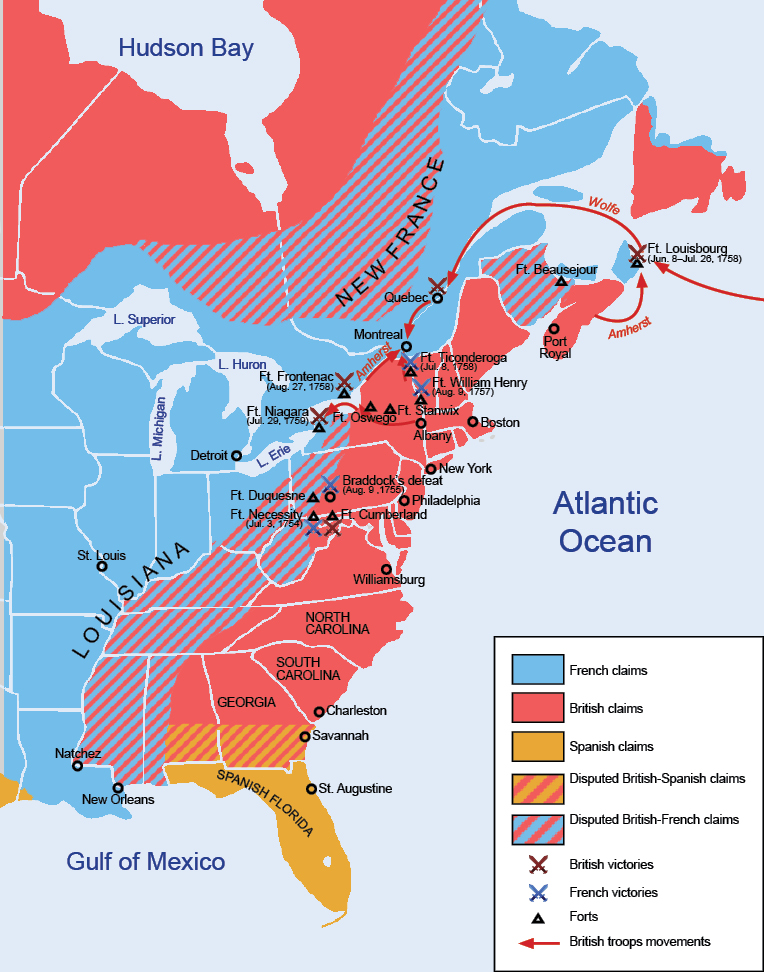
In India they became rivals of the English as the Mughal Empire disintegrated. However the French only established fortified trading outposts (as opposed to settler colonies) in India. After the English defeated them in the Seven Years War (aka the French and Indian War) they still retained a few ports on the East coast of India.

By 1700, France was acquiring a third of its textiles and all its spices from India (as the French discarded their woolens for cotton). To protect French textile manufacturers, the French made it illegal in 1686 to import India calico (although traders continued to smuggle it into the country.

Like England and Portugal, France developed a triangular trade involving Africa and the New World. In East Africa they traded cheap Indian cotton, rum, guns and cowrie shells* (from the Maldive islands) for slaves.** They transported the slaves to the French Caribbean colony of Saint Domingue,*** which they traded for sugar, indigo dye and coffee. In this way France provided 40% of Europe’s sugar, 50% of their indigo and 60% of their coffee. They traded their sugar to the Baltic states and Eastern Europe in return for iron, timber and grain.

By the late 18th century, Saint Domingue had 550,000 residents, of whom 30,000 were whites (mostly French). Twenty thousand were (mainly mixed race free people of color.

Prior to the French and Indian War, most of the interior US and Eastern Canada was occupied by the France. New France traded timber, dried fish and grain to the Caribbean for slaves and to Europe for manufactured goods.

In the 18th century, wars became global. During the Seven Years War, France, Spain, Austria, Russia and Sweden faced off against the UK, Prussia, Portugal and Hanover. (1756-1763). The France lost all their territories in India, the Caribbean, West Africa, the Atlantic Ocean and Eastern Canada.

The French simultaneously ceded all their territories east of the Mississippi except for St Pierre and Miquelon (off the coast of Newfoundland). They ceded their territory west of the Mississippi (except for New Orleans and Louisiana) to Spain.


*In the Maldives, women divers collected cowrie shells. which were valued as currency by many West African tribes.

**The French philosopher Raynal argued that colonization increased the despotism of kings and human cruelty. He was the first European to campaign to end slavery). His writings led to the formation of a French abolition movement.

***Modern day Haiti and Dominican Republic. By 1700 the, indigenous inhabitants of the island had all died out, allegedly from European diseases.

Film can be viewed free with a library card on Kanopy.

https://www.kanopy.com/en/pukeariki/watch/video/149323/149331

At Least 309 Infections and 16 Escaped Pathogens Linked to Lab Accidents

Between 2000 and 2021 at least 16 pathogens reportedly escaped from research laboratories, according to a new study published in The Lancet Microbe — but the study authors said their findings may “only represent the tip of the iceberg” in terms of numbers due to a lack of standard reporting requirements.

A team of researchers surveyed peer-reviewed articles and online reports in English, Chinese and German, looking for all indications that a pathogen accidentally “escaped” from a lab or that an infection was determined to be “laboratory-acquired” during the study period.

In addition to the 16 episodes of pathogenic “escape,” the researchers found 309 instances of lab-acquired infections caused by 51 different pathogens.

Seventy-seven percent of those infections were caused by bacterial pathogens, 13.9% were caused by viruses, 7.1% by parasites, 1.6% by fungi and less than 1% by a prion agent.

Eight of the cases were fatal, and six of those deaths were caused by bacteria, such as Yersinia pestis, which causes plague, or Neisseria meningitidis. One death was caused by Ebola virus.

The vast majority of infections occurred as an outcome of “procedural errors,” breaches of biosafety or risk mitigation procedures, which included using the wrong personal protective equipment, having inadequate training or mishandling samples.

Needlestick injuries, spills, splashes, open vials, animal bites or “unknown reasons” caused the remainder of the infections.

Most illnesses occurred in North America, Europe and Asia with the U.S. accounting for more than three-quarters of the infections. The majority of pathogen escapes were “internal,” meaning they were confined to the lab, but a few escaped into the broader community.

Laboratory-acquired infection case reports, including causal pathogens for each geographical region for the period from 2000 to 2021. Note that in 1 instance the geographic location of the LAI case was not stated. Credit: Stuart D. Blacksell et al.

Some of the more well-known examples of external escapes discussed in the report included a large-scale outbreak of Brucella in 2019, which leaked from a biopharmaceutical plant where the Chinese state produced animal brucellosis vaccines in Lanzou, China.

The factory had been using expired disinfectants and sanitizers, resulting in poor sanitization of the waste gas from its fermentation vats. The gas contained aerosolized Brucella, which the wind carried southeast toward the Veterinary Research Institute and nearby communities.

Initial brucellosis infections were identified at the research institute in November 2019 and the factory was shut down, but the spread could not be contained.

By November 2020, more than 10,000 people were infected with brucellosis, which causes fevers and muscular pain that can last from weeks to years.

In another highly-publicized incident of lab escape documented in the paper, a West Nile virus researcher — who had only 20 minutes of training in a P3 lab (or Biosafety Level 3, BSL3 lab) in Singapore — became infected in 2003 with the first SARS virus while working. The researcher exposed 84 contacts and risked reigniting the 2002-2004 SARS epidemic there, according to the Bulletin of the Atomic Scientists.

Another SARS lab escape happened in the Taiwan Military Institute of Preventative Research of the National Defence University, a P4 (BSL4) lab, in 2003. In this case, a researcher was careless in cleanup because “he was in a hurry,” and contracted SARS.

In an interview with The Defender, University of Illinois international law professor Francis Boyle, J.D., Ph.D., a bioweapons expert who drafted the Biological Weapons Anti-Terrorism Act of 1989, said:

“Generally speaking these lab leaks indicate that the respective labs are engaged in the research, development, testing and stockpiling of their respective offensive biological warfare weapons in violation of the Biological Weapons Convention and, here in the U.S., in violation of my Biological Weapons Anti-Terrorism Act of 1989.”

Boyle said that all BSL3 and BSL4 labs globally “must be shut down immediately before we have another COVID-19 pandemic.” He said he believes the pandemic  originated as an offensive biological warfare weapon with gain-of-function properties that leaked out of the Wuhan BSL4, in cooperation with the University of North Carolina’s BSL3.

Robert F. Kennedy Jr.’s new book, “The Wuhan Cover-Up: And the Terrifying Bioweapons Arms Race,” provides “definitive proof in support of that proposition,” he added.

A brief history of high-profile lab infections and escapes

Lab-acquired infections were first recorded as early as 1915, the Bulletin of the Atomic Scientists reported, when a survey identified 47 infections largely occurring because researchers used their mouths to suck pathogenic material into pipettes.

But there also have been several likely or confirmed laboratory escapes of high-consequence pathogens resulting in transmission beyond laboratory personnel, according to medical historian Dr. Martin Furmanski.

For example, H1N1 swine influenza — which was considered to be extinct in 1957 — broke out at Fort Dix in New Jersey in 1976, resulting in 13 soldiers being hospitalized and one death. An effort was made to vaccinate all Americans against the virus, although the immunization program was halted after 25 people died from the vaccine and no pandemic broke out.

The human H1N1 virus appeared in the Russia and China in 1977. Researchers determined in 2010 that it had been a lab-released strain, likely from a lab attempting to make an attenuated H1N1 vaccine in response to the U.S. swine flu pandemic concerns.

H1N1 spread rapidly worldwide, although it affected only people under 20, according to Furmanski.

A leak in an anthrax production facility in Sverdlovsk, USSR, in 1979 caused the deaths of about 60 people, Dr. Meryl Nass reported on Substack.

Between 1963 and 1978 in the United Kingdom, there were 80 cases of smallpox and three deaths that were the results of three escapees from two different accredited research institutions.

In 1995, a severe outbreak of Venezuelan equine encephalitis, which was hypothesized to have come from a lab, infected 85,000 people in Venezuela and Colombia, killed 300, injured 3,000 and resulted in 10 miscarriages.

A foot-and-mouth disease outbreak in the U.K. in 2007 that led to the culling of nearly 2,000 cows began four kilometers from a BSL4 lab, Furmanski reported, and was found to be carried into the broader community in contaminated mud stuck on construction vehicles.

Journalist and historian Chernoh Bah, journalist Sam Husseini and virologist Jonathan Latham have also argued that substantial evidence indicates the 2014-2016 Ebola Outbreak in West Africa may also have come from a BSL4 lab leak, U.S. Right to Know reported.

Recently researchers hypothesized that the 2022 Monkeypox outbreak came from a lab.

And of course, the long controversy over the lab origins of COVID-19 has been raging for the last several years and is covered in detail in Kennedy’s book.

CDC labs have some of the ‘worst regulatory histories in the country’

In the U.S., the Centers for Disease Control and Prevention (CDC) and the U.S. Department of Agriculture (USDA) jointly administer the Federal Select Agent Program (FSAP), which is meant to regulate work with dangerous and deadly pathogens.

Facilities from the public and private sector that work with 68 select agents and toxins must register with FSAP to be monitored, primarily through self-reporting and agency site visits.

Its website includes an annual report, which, among other things, includes a list of reported thefts, losses (failure to account for) and releases (infections/escapes). The 2022 report, for example, reports no thefts, six losses and 170 releases.

Since the program was created in 2003, there have been no thefts, deaths or cases of illness in the general public caused by the reporting entities, according to the website. But their reports do indicate that many people in the labs have required medical treatment.

Nass, a bioterrorism and anthrax expert and member of the Children’s Health Defense (CHD) scientific advisory committee, told The Defender there was a high incentive for countries and labs to cover up any outbreaks because the costs of revealing an outbreak are high — countries lose investment or must spend a lot of money on remediation and labs can be shut down.

Nass also raised concerns to The Defender about the CDC as the regulatory agency, given that Freedom of Information Act (FOIA) requests showed the agency itself had its permits secretly suspended for serious safety violations while working with bioterror pathogens.

Its own labs have been referred six times since 2003 to the Office of the Inspector General at the U.S. Department of Health and Human Services, which handles enforcement actions for select agent violations.

Examples of CDC violations included high-profile safety incidents at the agency’s headquarters in Atlanta that involved anthrax, Ebola and a deadly strain of influenza in the mid-2010s

[…]

In the history of the Selective Agent Program, only five labs have been suspended and another five faced repeated referrals for enforcement, the CDC reported to Congress.

The CDC’s own labs were part of this very small group, yet that information was kept hidden.

]…[

The authors of the Lancet study warned that the numbers of infections and escapes in their own study should be “interpreted with caution due to potential biases in voluntary reporting.”

“Without globalised formal reporting requirements, the data summarised here could only represent the tip of the iceberg,” they wrote.

They added that lab-acquired infections may be underreported because it can be difficult to discriminate between them and infections present in the community.

[…]

NIH director doubles down on commitment to gain-of-function research

The Lancet Microbe study release, which coincides with global concern over the possible “lab leak” origin of COVID-19, has raised growing awareness about gain-of-function research and public concern about biosecurity issues, with calls to end risky gain-of-function research becoming increasingly common.

U.S. health agencies, particularly the National Institutes of Health (NIH) and its sub-agencies – like the National Institute of Allergy and Infectious Diseases (NIAID) — have come under intense scrutiny as research has revealed that since 9/11 they have directed massive funding into dangerous gain-of-function research both in and outside of the country.

During this period, a plan was put in motion “to transform NIAID, under the direction of Dr. Anthony Fauci, into a de facto Defense Department agency,” Kennedy detailed in “The Wuhan Cover-Up.”

Yet, U.S. health officials have continually downplayed risks associated with gain-of-function research.

Dr. Monica M. Bertagnolli, the new director of the NIH — the position formerly held by Dr. Francis Collins — recently told The New York Times she had no plans to change course on funding gain-of-function research.

Responding to a reporter’s question about whether, given concerns raised by experts about the risky research, she planned to make any changes in NIH’s strategy, she said:

“The gain-of-function research that you’re specifically referring to is modifications that are done of potential pandemic pathogens, right? What if we can develop a vaccine way before we ever have to see a new virus that’s going to be another Covid-19 virus? That would be a huge benefit.

“But if we’re going to do that kind of research, we have to make sure that the risks are absolutely minimized and always be mindful that the benefits justify the risks.”

Boyle told The Defender this response was the “standard propaganda for these death scientists.”

He added:

“We all know that gain-of-function is a euphemism for offensive biological warfare weapons work, like Covid-19. All gain of function must be terminated.

“She made it clear that NIH will go full steam ahead on gain-of-function. The alleged pretext she uses is that we could use a vaccine against the next Covid-19, which is offensive biowarfare work with gain-of-function that leaked out of the Wuhan BSL4 — China’s Fort Detrick — in cooperation with UNC’s BSL3.”

The whole framework of her argument is deceptive, Boyle said, because “They use gain-of-function to develop the offensive biological warfare weapon in the first place, then reverse engineer it to develop a ‘vaccine’ in the event of blowback.”

[…]

Via https://childrenshealthdefense.org/defender/infections-pathogens-escape-laboratory-accidents/?utm_id=20240104