The Most Revolutionary Act

Uncensored updates on world events, economics, the environment and medicine

The Most Revolutionary Act
Unknown's avatar

About stuartbramhall

Retired child and adolescent psychiatrist and American expatriate in New Zealand. In 2002, I made the difficult decision to close my 25-year Seattle practice after 15 years of covert FBI harassment. I describe the unrelenting phone harassment, illegal break-ins and six attempts on my life in my 2010 book The Most Revolutionary Act: Memoir of an American Refugee.

Third Pilot Death, Fifth Collapse, This Week

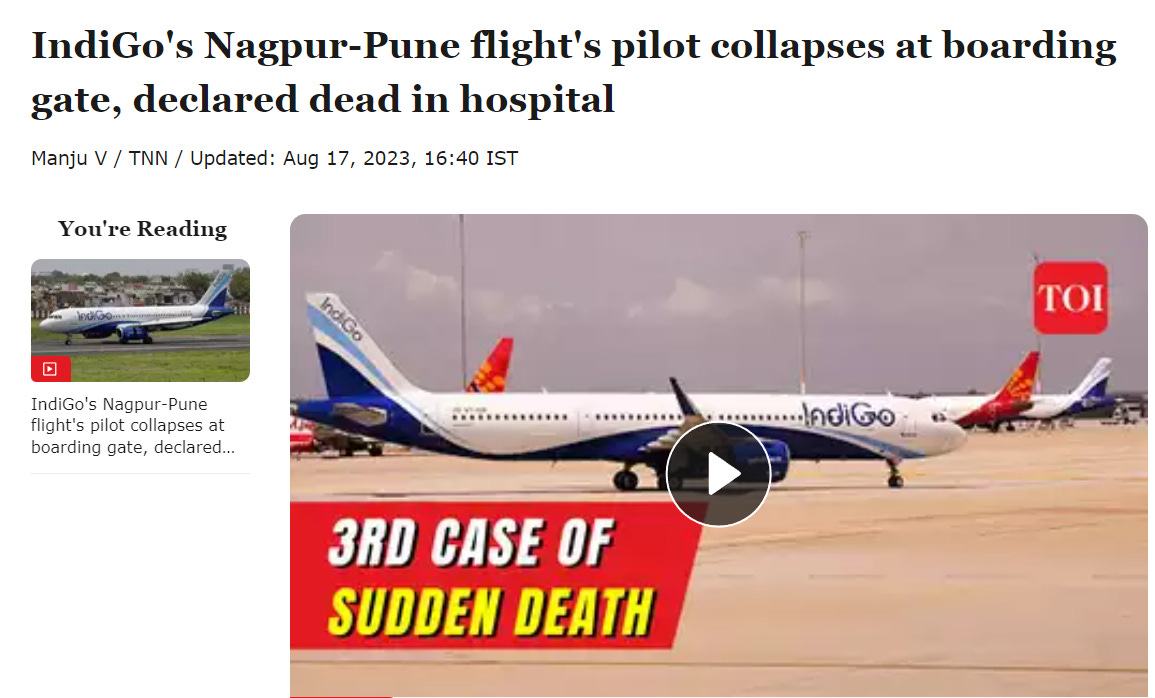
Aug.17, 2023 – IndiGo Pilot for Nagpur-Pune flight collapses at boarding gate, declared dead in the hospital

MUMBAI: An IndiGo pilot (identified as 40 year old Manoj Subramanium) who was to operate a flight from Nagpur to Pune, India, fell unconscious and collapsed at the boarding gate on Aug.17, 2023. He was taken to a hospital where he was declared dead, said sources.

This is the third case of sudden death involving pilots this week, with two of the deceased being Indian pilots.

On Wednesday, a senior pilot with Qatar Airways, who was flying from Delhi to Doha as a passenger, fell in on board and died. The flight QR579 was diverted to Dubai following the medical emergency. The pilot had earlier worked with Alliance Air and SpikeJet.

A statement from IndiGo is awaited.

3rd Pilot death this week, 5th incapacitation/collapse:

Aug.16, 2023 – Qatar Airways Flight QR579 (DEL-DOH) Delhi to Doha, Qatar, 51 year old pilot collapsed inflight and died, plane diverted to Dubai.

Aug.14, 2023 – LATAM Flight LA505 (MIA-SCL) Miami to Santiago, Chile – 2 hours into 8hr flight, 56 year old Captain Ivan Andaur collapsed and died in the lavatory – plane diverted to Panama City!

Aug.9, 2023 – United Airlines UAL1309 (SRQ-EWR) Sarasota to Newark, pilot had a heart attack and lost consciousness in flight

Aug.7, 2023 – TigerAIR Flight IT237 (CTS-TPE) Sapporo to Taipei, copilot had a medical emergency after landing plane in Taipei

[…]

Via https://makismd.substack.com/p/pilot-death-indigo-pilot-who-was

Are Vaccines Behind the Rapid Spread of Red Meat Allergy?

The lone star tick isn’t the only source of alpha-gal, a sugar linked to alpha-gal syndrome, also known as red meat allergy. Alpha-gal also is used in the manufacture of foods, personal care products, medical devices and drugs — including vaccines.

Recent news reports on the recent rapid spread of alpha-gal syndrome (AGS), or red meat allergy, blamed the lone star tick. That’s because the tick’s saliva contains trace quantities of a sugar, alpha-gal, a known human irritant that many researchers and clinicians believe induces the dangerous allergic responses that are the hallmark of AGS.

But the lone star tick isn’t the only source of alpha-gal. One of many sugars that attach to meat proteins and other animal-derived products, alpha-gal also is used in the manufacture of foods, personal care products, medical devices and drugs — including vaccines.

The Centers for Disease Control and Prevention (CDC) provides an informative, but incomplete list of vaccine ingredients containing alpha-gal, whose chemical name is galactose-alpha-1,3-galactose.

The CDC’s list includes bovine serum albumin, a protein produced from cow’s blood; gelatin, made from the bones and connective tissues of cows and pigs; magnesium stearate from numerous animal sources including red-meat animals; and glycerin, sourced from both animals and plants.

These substances, known as excipients, are added to many types of drug formulations to protect the more active ingredients from chemical and environmental degradation.

The U.S. Food and Drug Administration (FDA) categorizes glycerin, stearate and gelatin as “generally recognized as safe” (GRAS), but that designation applies only to foods, not to injected substances.

Serum albumin, the most abundant protein in mammalian blood, is not on the GRAS list but is consumed by ingesting beef and dairy products. Albumin is also used in many drugs and in beauty and personal care products.

Bovine serum albumin is itself an allergic irritant that can, along with other milk proteins, induce cow’s milk protein allergy in susceptible individuals. This is not the same as lactose intolerance, which results from the inability to break down milk sugars.

The Johns Hopkins excipients in vaccines list is interesting for the sheer number and chemical diversity of additives found in vaccines. Just focusing on the four ingredients the CDC says “may contain” alpha-gal, one finds 11 vaccines use bovine or calf serum, three contain glycerin, three contain stearate and nine use gelatin as an ingredient.

Two vaccines list both stearate and glycerin. An additional 22 vaccines contain various bovine extracts.

So could vaccines — and not a tick bite — be the principal source of alpha-gal exposure leading to sensitization, and rarely, to symptomatic AGS?

That hinges on whether alpha-gal is actually present in one or more of the four vaccine components of interest mentioned above.

Do vaccines contain alpha-gal or not?

Of the questionable ingredients, bovine serum albumin would be the prime suspect, as it’s found in so many vaccines, is independently associated with allergic reactions, and because many related mammalian proteins readily link to alpha-gal.

But alpha-gal does not attach to albumin natively, so any alpha-gal present in preparations containing albumin must be an impurity carried over from the protein’s manufacturing process.

However, that is unlikely because of how albumin is manufactured. The process, especially for food and drug applications, almost always includes chromatography, a method that efficiently separates proteins from very small molecules like alpha-gal.

How about the other suspected ingredients?

As noted previously, the CDC warns that gelatin, another vaccine ingredient of interest, may contain alpha-gal. An AGS advocacy website echoes this concern.

According to the Johns Hopkins Institute for Vaccine Safety, nine vaccines contain gelatin in quantities up to 15 mg per dose. These include vaccines against rabies, influenza and measles/mumps/rubella.

Whether a product contains alpha-gal depends on how the gelatin was sourced. Alpha-gal has not been found in gelatin derived from fish, but its presence in cow-derived gelatin is well-established.

A 2021 study described cases of severe anaphylaxis in individuals receiving vaccines containing gelatin. The authors stated:

“Gelatin-containing vaccines should be administered with caution or avoided in patients with AGS because of their high potential to activate basophils indicating a risk for anaphylaxis.”

In living systems, glycerine (also called glycerol) is a carrier molecule that helps transport fats and sugars throughout the body. Alpha-gal could be a side product of glycerin manufacture.

However, in contrast to the potential gelatin-alpha-gal connection, unbound alpha-gal and glycerin are similar enough chemically that some alpha-gal might sneak into the final product as an impurity.

A sugar closely related to alpha-gal attaches to glycerine — but this seems to occur only in plants.

Whether this sugar might also cause allergic reactions is unknown. But if it does, glycerine sourced from plants could pose a higher risk to individuals with alpha-gal sensitivity than similar products from cows.

Derived from stearic acid — biologically a fat — magnesium stearate is used in a variety of medicines, foods, and personal care products. Although stearic acid attaches to many other chemicals, it does not appear to combine with sugars.

The concern over magnesium stearate as a possible source of AGS is therefore limited to situations in which alpha-gal is a process impurity. Due to the chemical nature of both molecules, however, and how magnesium stearate is manufactured, this is practically impossible.

Table 1 summarizes these findings.

Vaccine ingredient of concern, according to CDC Source: mammals or plants? Attaches alpha-gal natively? # of vaccines
gelatin mammals yes 9
stearate both no 3
albumin mammals no 11
glycerin both possibly 3
bovine extract mammals very likely 22

Table 1. Vaccine ingredients associated with exposure to alpha-gal, their sources, type of association, and the number of vaccines containing the ingredient

Note that “bovine extract” is a chemically undefined product that may include any number of suspicious ingredients, according to the FDA:

“Animal-derived products used in vaccine manufacture can include amino acids, glycerol, detergents, gelatin, enzymes and blood.

“Cow milk is a source of amino acids, and sugars such as galactose. Cow tallow derivatives used in vaccine manufacture include glycerol.

“Gelatin and some amino acids come from cow bones. Cow skeletal muscle is used to prepare broths used in certain complex media.”

Bovine extract is found in all four ingredients — albumin, stearate, gelatin and glycerin — that the CDC says contain alpha-gal.

Perhaps not alpha-gal at all, but similar sugars

Since so many individuals carry alpha-gal antibodies but so few get sick, the connection between alpha-gal sensitivity (based on a positive antibody test) and symptomatic allergy is at the very least mysterious.

But what if exposure to alpha-gal may not even be necessary for those antibodies to exist?

Many sugars trigger an allergic response, but sometimes the body confuses the original source of exposure with something else it encounters later on.

Sugars of one type that elicit a response to sugars of another type are known as “cross-reactive carbohydrate determinants.” Reactivity to alpha-gal, as measured by antibodies to this irritant, could therefore arise through exposure to a chemically similar sugar.

[…]

Via https://childrenshealthdefense.org/defender/rapid-spread-red-meat-allergy-alpha-gal-sydrome-vaccines/

Is the MMR Vaccine a Fraud or Does It Just Wear Off Quickly?

mmr vaccine

Dr Mercola

Story at-a-glance

  • Ninety-five percent of children entering kindergarten in 2018 have received two doses of MMR vaccine, as have 92% of school children ages 13 to 17 years. In some states, the MMR vaccination rate is near 100%
  • Despite achieving a vaccination rate that theoretically should ensure vaccine-acquired herd immunity, outbreaks of mumps keep occurring, primarily among those who have been vaccinated
  • Mumps is making a strong comeback in 2018 among college students, with hundreds of outbreaks occurring on U.S. campuses over the past two decades
  • Research suggests the reemergence of mumps among young adults is due, at least in part, to waning immunity; protection from the vaccine is wearing off quicker than expected
  • According to a still-ongoing lawsuit filed in 2010, Merck is accused of falsifying efficacy testing of its mumps vaccine to hide its poor effectiveness. So, resurgence of mumps may be the result of using a vaccine that doesn’t offer much in terms of protection

In 1986, public health officials stated that MMR vaccination rates for kindergarten children were in excess of 95% and that one dose of live attenuated measles, mumps and rubella vaccine (MMR) would eliminate the three common childhood diseases in the U.S.1 In 1989, parents were informed that a single dose of MMR vaccine was inadequate for providing lifelong protection against these common childhood diseases and that children would need to get a second dose of MMR.2

Today, 95% of children entering kindergarten3 have received two doses of MMR vaccine, as have 92% of school children ages 13 to 17 years.4

In some states, the MMR vaccination rate is approaching 100%.5 Despite achieving the sought-for MMR vaccination rate for more than three decades, which theoretically should ensure “herd immunity,” outbreaks of both measles and mumps keep occurring — and many of those who get sick are children and adults who have been vaccinated.

Mumps Is Making a Comeback

As reported by Science Magazine6 and The New York Times,7 mumps is making a strong comeback among college students in 2018, with hundreds of outbreaks occurring on U.S. campuses over the past two decades. In summer 2017, the Minnesota Department of Health reported its largest mumps outbreak since 2006.8

According to research,9 the reason for this appears to be, at least in part, waning vaccine-acquired immunity. In other words, protection from the MMR vaccine is wearing off quicker than expected.

[…]

A Third Booster Shot May Be Added

According to public health officials, the proposed solution to boosting vaccine-acquired mumps immunity in the U.S. population is to add a third booster shot of MMR vaccine at age 18.

Unfortunately, adding a booster for mumps means giving an additional dose of measles and rubella vaccines as well, as the three are only available in the combined MMR vaccine or combined MMR-varicella (MMRV) vaccine. At present, a third MMR shot is routinely recommended during active mumps outbreaks, even though there is no solid proof that this strategy is effective.

Considering two doses of the vaccine are failing to protect young adults from mumps, adding a third dose, plus two additional doses of measles and rubella vaccines, seems like a questionable strategy, especially in light of evidence that the mumps vaccine’s effectiveness may have been exaggerated to begin with.

According to a lawsuit filed eight years ago, the manufacturer of mumps vaccine — which is also the sole provider of MMR vaccine in the U.S. — is accused of going to illegal lengths to hide the vaccine’s ineffectiveness. So, might this resurgence of mumps simply be the result of using a vaccine that doesn’t provide immunity to begin with?10 And, if so, why add more of something that doesn’t work? After all, the MMR vaccine is not without its risks, as you’ll see below.

Still-Pending Lawsuit Alleges MMR Fraud

In 2010, two Merck virologists filed a federal lawsuit against their former employer, alleging the vaccine maker lied about the effectiveness of the mumps portion of its MMR II vaccine.11 The whistleblowers, Stephen Krahling and Joan Wlochowski, claimed they witnessed “firsthand the improper testing and data falsification in which Merck engaged to artificially inflate the vaccine’s efficacy findings.”

According to Krahling and Wlochowski, a number of different fraudulent tactics were used, all with the aim to “report efficacy of 95% or higher regardless of the vaccine’s true efficacy.”12 For example, the MMR vaccine’s effectiveness was tested against the virus used in the vaccine rather than the natural, wild mumps virus that you’d actually be exposed to in the real world.

Animal antibodies were also said to have been added to the test results to give the appearance of a robust immune response.13

For details on how they allegedly pulled this off, read Suzanne Humphries’ excellent summary,14 which explains in layman’s terms how the tests were manipulated. Merck allegedly falsified the data to hide the fact that the vaccine significantly declined in effectiveness.15 By artificially inflating the efficacy, Merck has been able to maintain its monopoly over the mumps vaccine market.

This was also the main point of contention of a second class action lawsuit, filed by Chatom Primary Care16 in 2012, which charged Merck with violating the False Claims Act. Both of these lawsuits were given the green light to proceed in 2014,17,18 and are still pending.

In 2015, Merck was accused of stonewalling, “refusing to respond to questions about the efficacy of the vaccine,” according to a court filing by Krahling and Wlochowski’s legal team.19 “Merck should not be permitted to raise as one of its principal defenses that its vaccine has a high efficacy … but then refuse to answer what it claims that efficacy actually is,” they said. As of August 3, 2023, that lawsuit continues to sit in limbo in the federal court system.20

There’s No Such Thing as Vaccine-Acquired Herd Immunity

This certainly isn’t the first time vaccine effectiveness has been questioned. While herd immunity is thrown around like gospel, much of the protection vaccines offer has actually been shown to wane rather quickly. The fact is, vaccine-acquired artificial immunity does not work the same way as the naturally acquired longer-lasting immunity you get after recovering from the disease.

A majority of adults do not get booster shots, so most of the adult population is, in effect, “unvaccinated.” This calls into question the idea that a 95 percent-plus vaccination rate among children achieves vaccine-acquired “herd immunity” in a population. While there is such a thing as naturally acquired herd immunity, vaccine-induced herd immunity is a total misnomer.

Vaccine makers have simply assumed that vaccines would provide the same kind of longer-lasting natural immunity as recovery from viral and bacterial infections, but the science and history of vaccination clearly shows that this is not the case.

Vaccination and exposure to a given disease produce two qualitatively different types of immune responses. To learn more about this, please see my previous interview with Barbara Loe Fisher, cofounder and president of the National Vaccine Information Center (NVIC). As explained by Fisher:

“Vaccines do not confer the same type of immunity that natural exposure to the disease does … [V]accines only confer temporary protection … In most cases natural exposure to disease would give you a longer-lasting, more robust, qualitatively superior immunity because it gives you both cell mediated immunity and humoral immunity.

Humoral is the antibody production. The way you measure vaccine-induced immunity is by how high the antibody titers are. (How many antibodies you have.) The problem is, the cell mediated immunity is very important as well. Most vaccines evade cell mediated immunity and go straight for the antibodies, which is only one part of immunity.”

MMR Does Not Work as Advertised

It’s quite clear the MMR vaccine does not work as well as advertised in preventing mumps, even after most children in the U.S. have gotten two doses of MMR for several decades. Public health officials have known about the problem with mumps vaccine ineffectiveness since at least 2006, when a nationwide outbreak of mumps occurred among older children and young adults who had received two MMR shots.21

In 2014, researchers investigated a mumps outbreak among a group of students in Orange County, New York. Of the more than 2,500 who had received two doses of MMR vaccine, 13% developed mumps22 — more than double the number you’d expect were the vaccine to actually have a 95% efficacy.

Now, if two doses of the vaccine have “worn off” by the time you enter college, just how many doses will be needed to protect an individual throughout life? And, just how many doses of MMR are safe to administer in a lifetime?

Clearly there is far more that needs to be understood about mumps infection and the MMR vaccine before a third dose is added to the already-packed vaccine schedule recommended by federal health officials for infants, children and adolescents through age 18.

Mumps Virus May Have Mutated to Evade the Vaccine

Poor effectiveness could also be the result of viral mutations. There are a number of different mumps virus strains included in vaccines produced by different vaccine manufacturers in different countries. The U.S. uses the Jeryl-Lynn mumps strain in the MMR vaccine developed and sold in the U.S. by Merck. There’s significant disagreement among scientists and health officials about whether the mumps virus is evolving to evade the vaccine.

[…]

Be Aware of MMR Vaccine Risks

If a vaccine is indeed highly effective, and avoiding the disease in question is worth the risk of the potential side effects from the vaccine, then many people would conclude that the vaccine’s benefits outweigh the risks. They may even be in favor of an additional dose.

However, if the vaccine is ineffective, and/or if the disease doesn’t pose a great threat to begin with, then the vaccine may pose an unacceptable risk. This is particularly true if the vaccine has been linked to serious side effects. Unfortunately, that’s the case with the MMR vaccine, which has been linked to thousands of serious adverse events and hundreds of deaths. According to NVIC:25

“As of March 1, 2018, there had been 1,060 claims filed in the federal Vaccine Injury Compensation Program for injuries and deaths following MMR or MMR-Varicella (MMRV) vaccinations … Using the MedAlerts search engine, as of February 4, 2018, there had been 88,437 adverse events reported to the Vaccine Adverse Events Reporting System (VAERS) in connection with MMR or MMRV vaccines since 1990.

Over half of those MMR and MMRV vaccine-related adverse events occurred in babies and young children 6 years old and under. Of the MMR and MMRV vaccine related adverse events reported to VAERS, 403 were deaths, with over 60 percent of the deaths occurring in children under 3 years of age.”

Keep in mind that less than 10% of vaccine adverse events are ever reported to VAERS.26 According to some estimates, only about 1% are ever reported, so all of these numbers likely vastly underestimate the true harm.

Predicting a Cyber Pandemic More Destructive Than COVID

Dr. Joseph Mercola

Story at-a-glance

  • Over the past few years, a number of organizations have warned that the world is facing growing danger from hackers and cybercriminals, and could be facing a cyberattack large enough to take down our society as a whole
  • In June 2020, the World Economic Forum (WEF) warned that the world must prepare for an “inevitable global cyberattack,” a “COVID-like global cyber pandemic that will spread faster and further than a biological virus, with an equal or greater economic impact”
  • In December 2021, a 10-nation exercise simulated a scenario in which a cyberattack brought down the financial system worldwide. Responses and solutions included emergency liquidity assistance to banks, a globally coordinated bank holiday (bank closure), debt repayment grace periods, and a “coordinated delinking from major currencies,” meaning bank balances in USD, GBP and EUR were eliminated and replaced with a central bank digital currency (CBDC). In case of a real cyberattack on the financial system, we can therefore expect this to happen
  • At the end of 2020, hackers accessed the SolarWinds supply chain by delivering a backdoor malware through an infected SolarWind Orion software update. The malware infected the networks, systems and data of more than 30,000 public and private organizations, including local, state and federal agencies. It’s thought to be the largest and most devastating cyber breach to date
  • The end game of all these organized cyberthreats is to eliminate anonymity on the web under the auspices of “preventing cybercrime,” and to impose extreme centralization of the internet for the purpose of information control

Over the past few years, several organizations have warned that the world is facing growing danger from hackers and cybercriminals and could be facing a cyberattack large enough to take down our society as a whole. An effective cyberattack could compromise any device and system connected to the internet, including but not limited to:

Life-saving medical devices The internet of things (IoT) ecosystem (i.e., devices that run smart homes)
The internet of bodies (IoB) ecosystem Global financial systems
Energy grids Water treatment facilities
Government IT systems Military and defense infrastructure

Warnings and Predictions of Internet Doom

In June 2020, the World Economic Forum warned1 that the world must prepare for an “inevitable global cyberattack,” a “COVID-like global cyber pandemic that will spread faster and further than a biological virus, with an equal or greater economic impact.”

“Our ‘new normal’ isn’t COVID-19 itself — it’s COVID-like incidents. And a cyber pandemic is probably as inevitable as a future disease pandemic,” the WEF said.

In November 2020, the WEF followed up with a report co-created with the Carnegie Endowment for International Peace, which warned that the global financial system is failing to keep up with the ever-growing list of cyberthreats and is ill-equipped to defend against large-scale cyberattacks.2

To address this problem, the report called for greater coordination between government and industry, and for nations to cooperate more directly and intimately, rather than drafting a new treaty on international cybercrime.

Similarly, in March 2021, the Financial Services Information Sharing and Analysis Center (FS-ISAC) predicted that a cyberattack on the global financial system is practically inevitable, with ransomware and other extortion attacks topping the list of hazards.3,4

Another major target for cybercriminals and ransomware hackers is the health care industry, which has seen the largest increase in attacks — about double that of other industries.5

What Simulations and Exercises Tell Us About the Plan

As in the biosecurity arena, a number of tabletop exercises have been held to simulate a massive cyberattack. One such exercise took place in early December 2021 in Israel.6 The simulation was based on a scenario in which a cyberattack brought down the financial system worldwide.

Participants included treasury officials from Israel, the U.S., the U.K., United Arab Emirates, Austria, Switzerland, Germany, Italy, The Netherlands and Thailand, as well as representatives from the International Monetary Fund, the World Bank and the Bank of International Settlements (BIS).

Emergency responses presented during that exercise included emergency liquidity assistance to banks, a globally coordinated bank holiday (bank closure), debt repayment grace periods and SWAP/REPO agreements.

The response also included a “coordinated delinking from major currencies,” meaning bank balances in USD, GBP and EUR were eliminated and replaced with a central bank digital currency (CBDC).7

So, in the case of a real cyberattack on the financial system, we can probably expect this swap to happen. It’s also possible that if the rollout of CBDCs fails, a catastrophic systemic attack on the banking system could be used to force the issue.

At the time, former Pfizer executive Mike Yeadon, Ph.D., said he believed the simulation was a front for a planned financial reset in which most people will lose all their financial assets, thereby bringing about the WEF’s promise that you will “own nothing” by 2030.8

Preparing for a cyber pandemic more destructive than COVID also took place during the Cyber Polygon exercises of 2020 and 2021. This is yet another annual event staged by the WEF.

In 2020, the simulation involved a cyberattack against the global financial system.9 The following year, participants simulated a targeted supply chain attack on a corporate ecosystem resulting in industry collapses, mass unemployment, widespread rioting and global lockdowns.10,11 Solution trends that emerged from those exercises include:12

  • A movement toward digital identity schemes, which the WEF has previously stated will determine “what products, services and information we can access — or, conversely, what is closed off to us”13
  • “Fake news” being recognized as a “digital pandemic” that people must be protected from
  • A recommendation to strengthen public-private partnerships and collaboration
  • A recommendation to increase consolidation of corporate and state resources
  • A recommendation to target cryptocurrencies, especially those offering transactional anonymity, and the infrastructure used by them.14 This, even though only 0.34% of cryptocurrency transactions in 2020 were tied to criminal activity, down from 2% in 201915

As you can see, the solutions presented by these unelected globalists always require more surveillance and greater public-private collaboration that blurs the line between elected and unelected decision-makers. In the end, unelected globalists are demanding — and getting — more and more power to make decisions for humanity.

Recent Cyberattacks Reveal the Scope of the Problem

Cyberattacks are clearly increasing and getting larger in scope. This should come as no surprise, as the world is becoming increasingly digitized — and connected digitally. Hacking health records, for example, was near-impossible in years past when paper records were kept, but with the introduction of digital health records and the sharing of those records across institutions, hacking has become a relatively simple, and profitable, affair.

Recent cyberattacks demonstrating the scope of the problem include:

The 2016 Bangladesh Bank heist, where hackers absconded with $81 million in a matter of hours by targeting the bank’s SWIFT accounts (the international money transfer system banks use to transfer money between themselves). Hackers used the SWIFT credentials of employees at the Bangladesh Central Bank to request money transfers to bank accounts in the Philippines and other Asian banks.16

In 2020, a ransomware attack resulted in BancoEstado, one of the biggest banks in Chile, to temporarily shut down all branches. In this case, the bank’s internal IT network was infected with the REvil ransomware originating from an infected Office file opened by an employee. The file installed a back door to the bank’s network, which the hackers then used to install the ransomware.17

At the end of 2020, hackers accessed the SolarWinds supply chain by delivering a backdoor malware through an infected SolarWind Orion software update. The malware infected the networks, systems and data of more than 30,000 public and private organizations, including local, state and federal agencies. It’s thought to be the largest and most devastating cyber breach to date.18

In early August 2023, California-based Prospect Medical Holdings Inc. had to shut down certain services, including outpatient medical imaging and blood draw services, after a cyber breach was detected. Some of its hospitals and clinics also had to revert to paper records as IT systems were shuttered.

That same week, Pennsylvania-based Crozer Health also had to shut down its computer systems and close emergency rooms due to a system-wide ransomware attack.19,20

It experienced a similar attack in 2020,21 and apparently didn’t figure out how to prevent a repeat. According to cybersecurity experts, Crozer data was auctioned off in that 2020 attack after Crozer refused to pay the ransom.

Eliminating Online Anonymity Is the Endgame

So, where is all of this taking us? As explained by investigative journalist Whitney Webb in the short video at the top of this article, the end game is a) to eliminate anonymity on the web under the auspice of “preventing cybercrime” and b) to impose extreme centralization of the internet for the purpose of information control. threat to ‘democratic’ governments.

[…]

Global Cyber Utility Will Usher in Unprecedented Surveillance

In her article,23 Webb goes on to review the roles of the Financial Services Information Sharing and Analysis Center (FS-ISAC) and the WEF Partnership Against Cybercrime (WEF-PAC). Both are currently being positioned as a “main solution” to the catastrophic cyber pandemic predicted, by being set up as centers of global coordination of financial services and the protection thereof, with a “shared narrative” against cybercrime.

This new global “cyber utility” seeks to unite law enforcement agencies, cybersecurity firms, banks and other large corporations and “stakeholders” around the world under one umbrella to prevent cybercrime. For that to be feasible, WEF-PAC has noted that legislation may need to be revised to allow law enforcement agencies and government regulators to fuse their operations with the private sector, including entities they’re meant to oversee, regulate and prosecute for wrongdoing.

We’re already seeing this plan take shape, with the rapid consolidation of banks. The next step will be to merge the remaining banks with regulators and intelligence agencies, forming this new “cyber utility” entity.24

[…]

Via https://articles.mercola.com/sites/articles/archive/2023/08/16/cybercrimes-and-ransomware-attacks.aspx

Trump Indictment Distraction

Black Agenda Report

The latest Donald Trump indictment is no cause for celebration. The oligarchs still rule, the military industrial complex still gets public money, the criminal justice system he now faces is still constructed to ensnare Black people, and the democracy said to be protected doesn’t really exist.

There are many very serious issues which demand our attention at the current moment. July 2023 was the hottest month on record, with severe and deadly heat waves in the U.S. and the world. More than 4 million medicaid recipients have lost coverage after covid emergency programs ended, despite the fact that most of them are still eligible to receive that benefit. The U.S. continues to send money into the black hole of Ukraine while residents of Maui, Hawaii struggle to survive after devastating wildfires. The Biden administration dares to brag about a one-time payment of $700 to people who are now homeless while the military industrial complex is flush with a new infusion of $200 million.

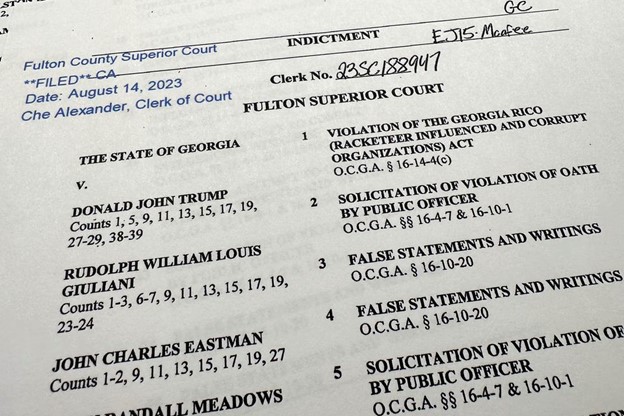
Any and all of these issues are fodder for serious discussion, but one wouldn’t know it because the fourth Donald Trump indictment was just handed down in Georgia and has pushed every other issue out of the news cycle. District Attorney Fani Wills indicted Trump and 18 others, charging them with 41 counts of conspiring to overturn Georgia’s election results in 2020.

Clearly an indictment, much less the fourth indictment, of a former president is a legitimate news story. But the latest Trump indictment is not just resulting in headlines and clicks. It is being used to legitimize the continued failings of the Democratic Party and to brainwash the public into an epidemic of American exceptionalist nonsense.

Van Jones , CNN’s resident Black clown reporter, waxed elegiac about the indictment. “This is a beautiful system that we have. People around the world don’t have this.” Jones was once a Trump supporter, then cried on the air when Joe Biden won, and is now spewing nonsense about an unjust criminal justice system and musing on things he knows nothing about.

This latest Trump indictment is an opportunity to tell the public how prosecutors operate, how they craft Racketeer Influenced and Corrupt Organizations (RICO) conspiracies, and how 161 separate acts can be used to make the case in a 98-page indictment. One of those acts involves Trump’s phone call to Georgia’s Secretary of State requesting a recount, “I just want to find 11,780 votes, which is one more than we have because we won the state.” The words are open to interpretation, but is a request for a recount a criminal act? They are if a prosecutor wants them to be and that is what should be discussed and debated if the corporate media are going to give these trials so much attention.

One needn’t be a Trump supporter to ask questions about these cases. The U.S. criminal justice system is far from beautiful. Prosecutors nearly always win because they threaten defendants who don’t accept plea agreements. In fact, guilty pleas are more common than actual trials and that is how the “beautiful” U.S. has become the world’s biggest jailer, with more people behind bars than any other country.

Every indictment is a choice, and in the case of Trump, a political choice. He causes much of his own troubles by making a call to a Secretary of State when someone else should have done it, or having an alcoholic Rudy Giuliani make a case for election fraud. But the question needs to be asked, would Trump face any of these indictments if he weren’t running for reelection? The determination to indict again and again is an indication of political intent, and not one that serves the needs of the people.

The word “democracy” has been elevated to sacred status of late, and its use and overuse are an indication that many people are protesting too much. Trump is said to endanger a democracy that doesn’t really exist. Joe Biden was chosen to be the democrats’ choice in 2020 before most voters had any say in the primary process. The party establishment pushed everyone else out and crowned a mediocrity with cognitive impairment to be the standard bearer against Trump, who was heartily disliked by half of the public and was bound to lose.

Surely the sitting president deserves scrutiny. He is running for re-election too and with an approval rating of only 40% , a reflection of low wages and inflation that have caused a record $1 trillion in credit card debt for American workers. Biden’s team can make up a term like Bidenomics and claim success if they want, but the people know better and an anemic approval rating is the result.

Yet there is little attention if any given to the struggles of working people. The record heat is a health risk and an economic one too, as low income people struggle to keep cool without getting any government assistance in a time of crisis.

The latest indictment is at the state level, which means Trump could not pardon himself should he ever become president again. Georgia also has mandatory sentencing , a legacy of mass incarceration meant to ensnare Black people, but ironically now threatening the white nationalist former president.

But why does the idea of Trump being in jail create so much excitement? The interloper who defeated the favored but hapless Hillary Clinton would suffer for his crime of defeating her but what else would change? Any feelings of satisfaction would be empty, as a president who broke the railroad workers strike prepares to run for office claiming to be “the most pro-union president in American history.”

Trump certainly provides spectacle and as perhaps the most polarizing president in history creates emotional reactions. But he is still an ex-president who is not responsible for any of the woes facing the public. There may be satisfaction in kicking him while he is down, but no one should be confused. Trump indictments or even guilty verdicts will do nothing to change anyone’s circumstances and coverage of his legal problems will move important discussions to the sidelines. There is no benefit in fantasizing about bad outcomes for Trump or about any supposed democracy that is being protected.

[…]

Via https://www.blackagendareport.com/trump-indictment-distraction

Hidden History: The Indian Nationalists Ambedkar, Bose and Jinnah

Dr Bhimrao Ramji Ambedkar

Episode 30 Nationalists Ambedkar, Bose and Jinnah

A History of India

Michael Fisher (2016)

Film Review

In this lecture, Fisher profiles three of India’s nationalist leaders who are often whitewashed out of history because they opposed Gandhi politically and philosophically.

Dr Bhimrao Ramji Ambedkar

Ambedkar played a major role in Indian independence by serving as the chair of its constitution writing committee its first law minister.

Born in 1891 in Mhow in western India, Ambedkar was a Mahar, a slightly higher level of Untouchable assigned to clearing ditches and enforcing decrees.* Mahars sometimes received grants of land for their services and sometimes worked as tenant farmers. Ambedkar’s male relatives had improved their status by enlisting in the Indian National Army as supply clerks (Mahars weren’t allowed to serve as infantry or cavalry). This enabled his father to send Ambedkar to school, even though he was required to sit in a separate room and use a separate water supply. Ambedkar would be the first in his family to graduate from secondary school.

Following his graduation from Bombay university, he received a scholarship from the principality of Baroda to study at Columbia University. After earning his doctorate in 1927, he completed a law degree at Grey’s Inn and a second doctorate from London School of Economics.

He returned to India to work as an administrator for the princely state of Baroda. After facing discrimination, he quit to became a political activist, using his law degree to further the rights of Untouchables in court actions. After working briefly with Gandhi to win Untouchables the right to access Hindu temples, the two parted ways over the best strategy for winning their full equality. Ghandi wanted them to first gain social acceptance by keeping their homes cleaner and imitating the behavior of higher caste Indians.

He opposed Ambedkar’s campaign to create separate Untouchable electorates (where only Untouchables could vote or stand for office), similar to those the British creating for Muslims. In fact, he embarked on a fast until death until Ambedkar agreed to abandon his campaign. In 1932 the two signed the Poona Pact, agreeing to campaign for 18% of India’s voting districts to be limited to Untouchable candidates with the proviso that the entire district would be eligible to vote.

Months before his death, Anbedkar renounced Hinduism and its caste system to covert to Buddhism, as did millions of his Untouchable followers.

Subha Chandra Bose

Subhas Chandra Bose: Life and Death of India's Hero - Historic Mysteries

Born in 1897 into the Kayaths (administrative) Jat in in Bengali, Bose successfully passed the Indian Civil Service Exam in 1919, but refused to join the ICS. Joining the Indian National Congress, he vigorously opposed many of Gandhi’s anti-industrialization policies. He believed it essential for India to embrace modern science and manufacturing to end its economic dependence on the UK and increase living standards for India’s poor.

He also opposed Gandhi’s passive resistance to British rule, organizing violent paramilitary activities against the British that landed him in jail 11 times.

After he became Indian National Congress president in 1938, Gandhi used his influence to force Bose to resign. One World War II started, the latter traveled to Germany to record radio broadcasts for Hitler calling for violent revolution in India. After the formation of the Quit India movement in 1942 led to massive domestic unrest, Hitler helped him organize British Indian Army troops captured in North Africa into the Free Indian Army (aka the Indian National Army). The German and Japanese subsequently transported him by submarine to Singapore, where British officers abandoned 70,000 British Indian Army troops when the Japanese invaded the island. Bose organized 40,000 of them to invade India on behalf of the Indian National Army. After they were joined by by Indian POWs the Japanese captured in Burma, Bose declared himself the prime minister of the provisional Indian government. Hi Indian National Army invaded a few regions of eastern India, surrendering to the British National Army in 1945.

Muhammad Ali Jinnah

Remembering Jinnah, the Indian Nationalist - The Wire

Descended from a long line of Hindu mercantile families who had converted to Islam, Muhammad Ali Jinnah was born in Gujjarat in 1876. Married at 16, he left his wife and family in 1893, to train as a barrister in London. On his return to India, he became an extremely prosperous (and the only Muslim) member of the Bombay bar. At 29, he became one of the few Muslims to join the Indian National Congress.

In 1913, seven years after its founding he also joined the Muslim League. After three years, he was elected permanent president. He continued his membership in the Indian National Congress and they held joint sessions in 1915-16, to draw up the Lucknow Pact, a HIndu-Muslim power sharing agreement.

After the INC (under Gandhi’s influence), adopted a number of Hindu religious symbols, Jinnah reigned from the INC in 1920. In 1929, he returned to Britain to practice law in 1929.

Thanks to British political reforms allowing one-sixth of India to vote in provincial elections, the Muslims of Bombay elected Jinnah (in abstentia) as their representative to the Central Legislative Assembly. After the INC renounced the Lucknow Pact, declaring Muslims were underserving of power sharing, his supporters urged him to return to India to become the sole voice of the Muslim League.

In 1939, the Muslim League supported the Viceroy of India’s declaration of war against Germany. Because he failed to consult with the Hindu majority, the INC categorically denounced it. This led to the jailing of many Hindu antiwar activists during World War II.


*The lowest level of Untouchables processed human waste and engaged in leather tannin (a process that involved soaking animal hides in urine).

Film can be viewed free with a library card on Kanopy.

https://www.kanopy.com/en/pukeariki/watch/video/366254/366229

Bill Gates Promotes ‘Net Zero’ as Climate Fix — Critics Call It a ‘Financial Scam’

In an interview with The Defender, environmental activist and food sovereignty advocate Vandana Shiva, Ph.D., said the growing “net zero” movement promoted by Bill Gates and other globalists is a scam allowing polluters to buy credits instead of reducing emissions, enabling land grabs and corporate control.

Shifting the world’s greenhouse gas emissions from today’s 52 billion tons to net zero over the next three decades, according to Gates, means “we need to find better ways to do pretty much everything” from the “food we eat” to the “buildings we live in,” because “[v]irtually every human activity produces greenhouse gas emissions.”

But when Gates refers to “net zero,” he does not mean actual zero, as in no emissions.

Adding the word “net” into the equation for redoing “virtually every human activity” substantially changes the meaning of “zero.”

And Gates has helped convince most countries of the world to add that small, poorly understood, seemingly harmless word “net” into their climate change pledges.

So what, exactly, does net zero emissions mean to Gates and others who share his ambitions?

Ecological activist Vandana Shiva, Ph.D., told The Defender:

“‘Net zero,’ as Bill Gates admits in his book, ‘How to Avoid a Climate Disaster,’ is not about polluters stopping their pollution. It is about polluters getting new profits by creating new markets for fake techno-fixes like geoengineering and fake food, and new forms of land grab through ‘carbon offsets.’

[…]

The future implications of net zero are far-reaching. The worldwide push for net zero has turned “carbon credits” into globally traded financial instruments, giving big corporations and billionaires a kind of “license to pollute.”

The global “carbon market” has established new ways for economic elites to grab land, profit from dubious technologies and attempt to corner the market on literally any activity that produces carbon, potentially encompassing “virtually every human activity,” in Gates’ words.

History of net zero and its potential for abuse

The concept of net zero existed primarily in academic papers and reports until it was incorporated into the 2015 Paris Agreement, at the urging of powerful advocates. Since then, the world’s commitment to “net” zero has exploded.

[…]

The Paris Agreement has led to the emergence of a global “carbon market” in which governments and private actors buy and sell credits by funding activities that reduce or avoid carbon emissions, or those that remove carbon from the atmosphere.

Removal credits can be obtained through technological methods of removal such as “direct air capture” — a technology as yet unproven at scale — or through land-based methods such as the preservation of forests and sequestering of carbon in farmland soil.

Big emitters that obtain credits can use them to “offset” their emissions, so they don’t actually have to make any cuts.

[…]

“The former Bank of England governor, Mark Carney, now heads the U.N. Net Zero initiative,” Shiva said, “which is being described as ‘changing the plumbing of the whole financial system forever.’”

With this kind of financial power behind it, the global drive for net zero has taken off since the 2015 Paris Agreement. By 2019, countries covering one-sixth of the global economy had made net zero pledges, and by 2021, net zero pledges covered nine-tenths of the global economy.

In July, Gates said the next U.N. climate conference — COP28, to be held Nov. 30-Dec. 12 — “will be a critical opportunity for the world’s leaders to come together and take real steps to accelerate our path to net-zero carbon emissions.”

‘Largely worthless’ carbon offsets and ‘dangerous’ geoengineering

Estimates are that the market for “carbon credits” could be $100 billion by mid-century.

Carbon credits have come under greater scrutiny in the last few years, however, as big corporations have bought large amounts of them in a public-relations effort to improve their environmental reputations. Critics call this “greenwashing.”

Research on offsets shows “the large majority are not real or are over-credited or both,” Barbara Haya, Ph.D., director of the Berkeley Carbon Trading Project, concluded.

[…]

President Joe Biden’s signature climate change law, the Inflation Reduction Act, was a financial “bonanza for the carbon capture industry,” according to Time, even though technological methods of “carbon capture” have never been proven to be economically feasible at scale.

Geoengineering — directly manipulating the Earth’s climate — is another potential source of carbon credits. Some startups are already trying to market geoengineering carbon credits with various schemes like spraying chemicals into the atmosphere to reflect sunlight or sequestering carbon in seagrasses.

While geoengineering is considered to be dangerous and premature at best, the White House nevertheless issued a report in June recommending that some forms of geoengineering should be studied, and mentioning the possible future involvement of “private actors.”

Buying up carbon credits — a ‘global gold rush’

In contrast to speculative and unproven technological methods of carbon removal, land-based carbon capture in forests and farmlands can sequester carbon on a significant scale.

With the race to acquire available carbon credits by 2050, there is a huge financial incentive for big players in the global economy to buy up land capable of producing carbon credits in a sort of global “gold rush.” Only those who own the limited number of land-based credits will be able to claim the right to emit greenhouse gases.

The global rush for land-based carbon credits was predicted by when the goal of net zero was first introduced. Some environmental activists were concerned the less-developed countries of the global south would be targeted.

Those predictions have turned out to be accurate.

The African nation of Liberia just announced it is conceding about 10% of its land — over 2 million acres of forest — to a company from the United Arab Emirates (UAE) called Blue Carbon LLC. This “transfer of pollution rights,” as the parties refer to it, will allow the UAE to “meet its climate commitments.” (UAE will be the site of the U.N.’s CoP28 later this year.)

Blue Carbon is in similar talks with Zambia and Tanzania.

Last year, Nigeria granted access to over 4 million acres of land to a U.S.-based company, African Agriculture Inc. The company plans to plant trees and then sell the carbon credits to high emitters.

Critics call deals like this “carbon colonialism,” because land-based carbon-credit schemes take land access away from local people and grant it to foreign governments and international financial interests. Moreover, the environmental benefits are often overblown.

In July, French President Emmanuel Macron traveled to Papua New Guinea to promote both a large conservation project and a $10 billion Liquid Natural Gas (LNG) investment in the country by French energy giant TotalEnergies.

A TotalEnergies executive claimed the carbon credits from the conservation project would be used to “offset” emissions from the LNG project.

The land rush for “carbon credits” is not limited to developing countries — it’s been making its way into industrialized Western countries.

“Scotland is on the global frontlines of The Great Net-Zero Land Grab,” reads one headline about multinational corporations and investment funds that have been pouring money into rural Scottish land, including the country’s carbon-rich peatlands.

In the Netherlands, despite fierce resistance from farmers, the Dutch government has been moving forward with plans to expropriate up to 3,000 farms to meet the country’s climate goals.

Dutch farmers are being targeted for a land grab, Shiva said.

Perhaps not coincidentally, in 2021, the Dutch bank Rabobank established the first pilot projects of the Rabo Carbon Bank. This followed a report that year by the European Commission laying out profitable strategies for “carbon farming.”

According to Rabo Carbon Bank’s CEO Barbara Baarsma, “the market potential is enormous.”

The drive to shut down farms can only be understood within the larger context of this potentially “enormous” global carbon market, with its voracious demand for land-based carbon credits.

A single oil company, Shell, would need land 3 times the size of the Netherlands for its net zero plans, according to some estimates.

The land-based credits that could be generated by shutting down thousands of Dutch farms could eventually be bought by investors, and then credited to big polluters elsewhere within the global market who could use them to “offset” their continuing emissions.

This dynamic may help explain why Gates bought 250,000 acres of U.S. farmland in recent years, a subject of much speculation as people wonder why Gates made himself America’s biggest “farmer.” Such a huge amount of land could position him to take advantage of the global carbon market.

As net-zero land grabs push out small and medium-sized food producers, people like Gates who are heavily invested in high-tech food companies that purport to be climate-friendly — fake meat producers, for example — are able to seize market share and take further control of the food supply.

Shiva said net-zero land grabs help bring about the vision of a high-tech food future promoted by Gates and Silicon Valley investors: “farming without farmers” and “food without farms.”

Food is Gates’ “new empire,” according to Shiva. His plans include “controlling land, controlling seeds, destroying real food to replace it with lab food, and eliminating farmers from farming altogether,” using patented seeds and various “climate-smart” technologies.

How far can the abuse of ‘net zero’ be taken in the future?

Beyond land grabs and dubious techno-fixes, the attempt by economic elites to corner the market on carbon credits has additional implications for the future.

In a future in which each individual citizen may have a personal carbon allowance — an idea that has been floated by some activists, politicians and international institutions — allowing carbon credits to be bought and sold would give economic elites a way to buy up the future “consumption rights” of everyone else.

[…]

Decentralizing is key to upending net zero

[…]

Small farmers using ecological methods stand in contrast to the billionaires and big corporations using net zero as an excuse to grab land and profit from carbon credits, controlling the food supply using industrial methods that are harmful to the environment and human health.

The key to an authentic, grassroots, ecologically sensible response to their efforts is to decentralize power, Shiva and other critics of net zero have suggested.

Financial schemes like net zero that pretend to address climate change, but in reality allow the top 1% to concentrate power over farmland and food, profit from dubious technologies, and exercise financial control over human activities that produce carbon — “virtually every human activity,” in Gates’ words — must be rejected.

A “shift from globalization driven by multinational corporations to progressive localization of our economies has become an ecological and social imperative,” Shiva wrote, “to protect both people’s lives and the environment.”

[…]

Via https://childrenshealthdefense.org/defender/bill-gates-net-zero-financial-scam-vandana-shiva/

EMF Exposure: 30 Years of Research


Joel M Moskowitz PhD

The preponderance of research published from 1990 through July 2023 has found significant effects from exposure to radio frequency radiation as well as to extremely low frequency and static electromagnetic fields. 

Dr. Henry Lai, Professor Emeritus at the University of WashingtonEditor Emeritus of the journal, Electromagnetic Biology and Medicine, and an emeritus member of the International Commission on the Biological Effects of EMF, has compiled summaries of the research on the biological effects of exposure to radio frequency (RFR) and extremely low frequency (ELF) and static electromagnetic fields (EMF). His set of abstracts which cover the period from 1990 to July 2023 constitute a comprehensive collection of the research.

Dr. Lai reports that the preponderance of the research has found that exposure to RFR or ELF EMF produces oxidative effects or free radicals, and damages DNA. Moreover the preponderance of RFR studies that examined genetic, neurological and reproductive effects has found significant effects. Among hundreds of studies of RFR, 70% to 89% reported significant effects. Among hundreds of studies of ELF and static fields, 74% to 91% reported significant effects.

Currently, there are about 2,500 studies in Dr. Henry Lai’s collection of research on the effects of exposure to RFR and static or ELF/static fields EMF. The abstracts for these studies can be downloaded by clicking on the links below.

Government and scientists who receive industry funding for their research often claim that research on the effects of exposure to EMF is inconsistent, and that more research is needed before health warnings are issued or regulatory exposure limits are strengthened.

In 2011, the International Agency for Research on Cancer (IARC) of the World Health Organization classified radio frequency radiation (RFR) “possibly carcinogenic to humans” (Group 2B). The IARC plans to review RFR again by 2024 because most peer-reviewed studies published in the past decade found significant evidence that RFR causes genotoxicity. Thus, the IARC will likely re-classify RFR to either “probably carcinogenic to humans” (Group 2A) or “carcinogenic to humans” (Group 1) at the next expert review.

Cell phones and other wireless devices also produce static and extremely low frequency (ELF) electromagnetic fields. ELF was classified by the IARC as “possibly carcinogenic to humans” (Group 2B) a decade before RFR received this classification.

The evidence for DNA damage has been found more consistently in animal and human (in vivo) studies than in studies of cell cultures (in vitro).

Summary of Results (July 2023)

Radio frequency radiation (RFR)

89% (n=297) of 333 RFR oxidative effects (or free radical) studies published since 1997 reported significant effects including 96% (n=89) of 92 studies with a SAR (specific absorption rate)  ≤ 0.40 W/kg.

70% (n=312) of 448 RFR genetic effects studies published since 1990 reported significant effects including 79% (n=103) of 131 studies of gene expression.

76% (n=322) of 423 RFR neurological studies published since 2007 reported significant effects.

82% (n=262) of 317 RFR reproduction and development studies published since 1990 reported significant effects. Among the studies that reported significant effects, 51 studies used an exposure with a SAR ≤ 0.40 W/kg and 31 studies had a SAR ≤  0.08 W/kg.

Extremely low frequency (ELF) and static electromagnetic fields

91% (n=282) of 311 ELF/static EMF oxidative effects (or free radical) studies published since 1990 reported significant effects.

84% (n=282) of 337 ELF/static EMF genetic effects studies published since 1990 reported significant effects including 95% (n=168) of 177 studies of gene expression.

91% (n=310) of 339 ELF/static EMF neurological studies published since 2007 reported significant effects.

74% (n=62) of 83 ELF/static EMF reproduction and development studies published since 1990 reported significant effects.

Links to download each set of abstracts

   RFR = radio frequency electromagnetic fields

   ELF = extremely low frequency or static electromagnetic fields

RFR Oxidative Effects studies

RFR Genetic Effects studies

RFR Neurological Effects studies

RFR Reproduction / Development studies

ELF Oxidative Effects studies

ELF Genetic Effects studies

ELF Neurological Effects studies

ELF Reproduction studies

Intermediate Frequency studies

List of 55 static / ELF low flux density studies that found effects

Feb 4, 2023 (Updated Aug 4, 2023)

Effects of Radio Frequency Radiation Exposure on Free Radical-Related Cellular Processes (290 studies)

Dr. Henry Lai, Professor Emeritus, Department of Bioengineering, University of Washington

This document contains abstracts for 332 studies published since 1997 that assessed the effects of radiofrequency radiation (RFR) exposure on free radical-related cellular processes.

See pages 180-207 for the Table that summarizes key details about each study.

Summary

  1. Of the 332 studies published from 1997- August, 2023, 297 (89%) studies reported significant effects; 36 (11%) studies found no significant effects.
  2. Change in cellular free radical status is a consistent effect of radiofrequency radiation.
  3. Effects can occur at low specific absorption rates (SAR) or power density of exposure. See 82 studies marked LI for low intensity (less than or equal to 0.4 W/kg); 79 LI studies found effects.
  4. Effects have been reported at different frequencies, exposure duration, and modulations, and in many different biological systems, cell lines, and animal species. These data support the assertion that “Radiofrequency radiation affects cellular free radical processes.”
  5. Most of the studies are live animal (in vivo) studies with long-term exposure, e.g., daily exposure up to months.
  6. Some studies used mobile phones or RFR-emitting devices for exposure (see Table). The SAR and characteristics of RFR in these studies are not well defined. However, these studies should not be overlooked because they represent real-life exposure scenarios. Waveform modulations of radiofrequency radiation during wireless communication usage probably play an important role in biological effects. They are not revealed in studies that used a simple form of radiation (e.g., continuous-wave or GSM) and spatially uniformed fields. Researchers in bioelectromagnetics should realize that the perfect RFR exposure system simulating real life exposures simply does not exist.

Click on the following link to download the 207-page document (pdf): Link

Via https://www.saferemr.com/2018/02/effects-of-exposure-to-electromagnetic.html

Nationwide Cellular Network Connects Election Equipment Giving Federal Government Access to Precinct Election Systems

Guest post by David and Erin Clements via Joe Hoft

A growing majority of Americans know the 2020 election was fraudulent. Many analysts who have been studying election integrity have concluded that there had to be a two-way connection between local election electronics (electronic poll pads, tabulators, election management systems, voter databases, etc.) and a centralized data collection system responsible for monitoring and manipulating the election. Fingers have rightly been pointed at all-inclusive election management software, the Albert Sensor system, Scytl and Edison, and the Election Infrastructure Information Sharing and Analysis Center (EI-ISAC).

[…]

While experts could understand the functional capabilities of how these programs manipulate elections at the county and state levels, one area of mystery remained.  Experts could not fully explain how systems within individual precincts which are supposedly “air-gapped” were adding votes in real-time – such as KnowInk poll pads in Texas that added hundreds of votes to the 2022 midterm election after the polls had closed.  To accomplish election fraud at individual polling places, it is necessary to have an air-interface with the supposedly “air-gapped” equipment networked at the polling place.

A year-long research project led by an election integrity investigator from Utah, Sophie Anderson, and communications engineer, Dr. Charles Bernardin, has uncovered the mechanism that is being used to connect our election equipment at polling places across the nation.

[…]

WHAT IS FIRSTNET?

The idea of a national cellular network dedicated to public safety was hatched in the wake of 9/11 when congested cell networks proved to be a bottleneck for first responders. In 2012, Congress created the First Responder Network Authority under the Department of Commerce to oversee the build-out of “FirstNet.” The original intent provided by its sponsors was that FirstNet would serve police, fire, and EMT services.  However, the scope was soon expanded to include all “critical infrastructure” – which included water, energy, and transportation infrastructure. (https://www.digi.com/solutions/by-technology/firstnet ).

Curiously, just days before Barack Obama left office, his administration’s Department of Homeland Security used the specter of “Russian interference” in the 2016 election as an excuse to declare election systems to be a part of that critical infrastructure.  As a result, the stage was set to roll election systems into FirstNet.

The original plan to build FirstNet was to create a separate network with nationwide coverage that used a dedicated cellular band portion known as Band 14. Years and billions of dollars later, AT&T had built out the FirstNet Band 14 network with the coverage shown in the map below.

AT&T’s FirstNet Band 14 Coverage

[…]

Almost instantly, FirstNet’s coverage increased from pockets of the country to cover most of the population and its voting locations as shown in the map below. This coverage assures electronic poll pads, election management systems, and tabulators with internet connection capabilities could be connected as “critical infrastructure” to the FirstNet network and given priority service, regardless of the presence or quality of local wired internet service.

Areas where FirstNet has ability to preempt existing cellular networks (source (https://www.nperf.com/en/map/5g))

THE PUSH TO CONNECT ELECTION SYSTEMS TO FIRSTNET

Just because the FirstNet cellular network was now available to be used for election systems, didn’t mean all local jurisdictions would connect. Some of them would need to be pushed. Coincidentally, public discussion of using the Election Assistance Commission’s (EAC) influence to push election jurisdictions nationwide to connect to FirstNet took place at a two-day Election Assistance Commission (EAC) Board of Advisers meeting in April 2019. The full transcript of the meeting is here.

[…]

The Board’s expectation of the need to deal with unprecedented national shelter in place orders during a presidential election amounts to an unbelievable prophetic foresight of what would occur leading up to, and during the 2020 election.   A similarly dark prophetic exercise called Event 201 was held by the Johns Hopkins Center for Health and Security in partnership with the World Economic Forum and the Gates Foundation where bureaucrats practiced controlling narratives during a “hypothetical” worldwide pandemic that would soon take over the planet in reality.

[…]

Ivey-Soto wanted the electronic poll pads (which have full access to the voter registration database and voter turnout) and the systems that transmit the election results to be connected to the FirstNet network. Fellow board member, Gema Howell, immediately latched on to Ivey-Soto’s idea of using preemption privileges to connect election equipment to the internet. The board lamented their lack of authority to force jurisdictions to connect to FirstNet. But they decided to use their leverage and connections in the federal government to push the use of the FirstNet cellular network for election systems.

EVIDENCE LOCAL JURISDICTIONS ARE CONNECTED TO FIRSTNET

There is a lot of hard evidence that the EAC Board of Advisors successfully carried out Daniel Ivey-Soto’s vision to connect the nation’s polling places to the FirstNet cellular network.

DALLAS COUNTY

For example, there is the official network diagram for election sites in Dallas County, Texas (shown below). The diagram shows both the electronic pollbooks and the tabulators connected to a cellular network with a two-way connection between the router at the polling place and the cellular network itself, which is connected to a central county data center.

Network diagram from Dallas County public presentation showing tabulators and pollbooks connected to a cellular network

The priority cellular services provided by Verizon to the Dallas County elections office was the subject of a May 2020 discussion hosted by Hans Olsen, former Department of Homeland Security employee. The goal of the talk was to explain how they “securely” connected election equipment to the cellular network during the March 2020 Primary election.  They also heavily advertised Cradlepoint modems which are used prolifically by public safety and critical infrastructure customers to connect to FirstNet.

Slide from Dallas County public presentation on using Cradlepoint modems to connect polling sites to cellular networks

[…]

The researchers believe the priority cellular network referenced in this talk is actually FirstNet. According to Dr. Bernardin, “The environment for the Government’s intrusion is partially determined by the IT people when they configure the router at the voter center… the IT manager sets up the private network with Wi-Fi protected access and a firewall. The router can be set to randomize the MAC address to keep the network from being identified, but the randomization can be shared with trusted people. The router provides a private, two-way connection between the election equipment and the FirstNet cellular network. Once this two-way connection is established, FirstNet can monitor real-time data that is passing through the election equipment – including who is turning out and how they are voting. This data can be remotely changed by a man-in-the-middle operating on the FirstNet network. In fact, the election results can be entirely fabricated with this clandestine configuration, and nobody would know.”

FLORIDA

Citizen researchers in St. Johns County, Florida coordinated with each other to document the Wi-Fi networks that were active at fifteen of the polling locations across their county. They discovered that a single cellular network that had been named “LetTheDogOut!” was serving all 15 voting locations in St. Johns County during the 2022 midterms.

Screenshot of Cellular Wi-Fi Network serving St. Johns County, Florida

This evidence indicates that St. Johns County was using a similar priority network setup as Dallas County, Texas, and that service was part of the nationwide “public safety” network.

[…]

SECRECY AND VULNERABILITY

[…]

Shockingly, according to Senator Ron Wyden, FirstNet is also exempt from congressional oversight. In a letter published in April 2023, Wyden stated concerns about the security of the FirstNet network and the likelihood that it could be hacked by bad actors:

[…]

INFRASTRUCTURE TO STEAL ELECTIONS

[…]

Revelations from the Snowden documents suggest that AT&T’s relationship with the federal government continues with the installing of surveillance equipment for the NSA in at least 59 domestic sites. Shortly after the corrupt election system failed to deliver the presidency to Hillary Clinton in 2016, even the Brennan Center for Justice expressed concern that the NSA was too cozy with our domestic communications infrastructure – a topic they are silent on now.

Does infrastructure exist that could change election results electronically in real-time without noticeable delay? Yes – such a thing could be facilitated at the national level by the FirstNet cellular network. All the players surrounding the deployment of FirstNet into elections are already on the suspect list of bad actors of every election integrity researcher as well being part of the group of people who were caught illegally censoring Americans who know 2020 was not a legitimate election.

[…]

Network diagram showing how FirstNet could be misused to interfere with election infrastructure

[…]

Via https://joehoft.com/bombshell-exclusive-nationwide-cellular-network-connects-election-equipment-and-gives-federal-government-access-to-election-systems-at-the-precinct-level/

Roundup Weed Killer Called Out as Bee Killer

Dr Mercola

Story at-a-glance

  • According to researchers at the University of Texas at Austin, glyphosate may kill bees by altering the bacterial composition in the bees’ guts, making them more prone to fatal infections
  • Researchers call for improved guidelines for glyphosate use, as current guidelines assume bees are not harmed by glyphosate-based herbicides
  • Roundup reduces beneficial bacteria in the colon of female rats. Regardless of the dose — 0.1 ppb, 400 ppm or 5,000 ppm — the animals’ gut bacteria underwent significant changes
  • Glyphosate’s primary mode of action is that it shuts down amino acid synthesis, followed by inhibition of protein synthesis necessary for plant growth. This also causes the plant to be more susceptible to soil microbes, including pathogens
  • Roundup, dicamba and 2,4-D promote antibiotic resistance by priming pathogens to more readily become resistant to antibiotics; all three herbicides increase antibiotic-resistance of E. coli and salmonella specifically

Use of glyphosate, a weed killer registered in 130 countries, has risen exponentially since the introduction of genetically engineered (GE) glyphosate-resistant crops. Between 1974 — the year glyphosate entered the U.S. market — and 2014, glyphosate use increased more than 250fold in the U.S. alone. Today, an estimated 300 million pounds are applied on U.S. farmland annually.

In 2018, globally, nearly 5 billion pounds (over 2 billion kilograms) of glyphosate were applied to farm crops each year.1 While GE crops were the catalyst for this tremendous surge in usage (since they were specifically designed to encourage farmers’ use of glyphosate), the chemical has also become a popular tool for desiccating non-GE grains and legumes, and that has also spurred its use.

About 70 different commonly consumed food crops are sprayed with glyphosate, so just because a food is not genetically engineered does not mean it’s free of glyphosate. As previously discussed in many articles, glyphosate and glyphosate-based weed killer formulations such as Roundup have been linked to a wide variety of human health consequences, including:

Non-Hodgkin lymphoma2
Impairing your body’s ability to produce fully functioning proteins3
Inhibiting the shikimate pathway (found in gut bacteria)
Interfering with the function of cytochrome P450 enzymes, required for activation of vitamin D and the creation of nitric oxide

Chelating important minerals4

Disrupting sulfate synthesis and transport5
Interfering with the synthesis of aromatic amino acids and methionine, resulting in folate and neurotransmitter shortages6
Disrupting your microbiome by acting as an antibiotic7
Impairing methylation pathways8
Inhibiting pituitary release of thyroid stimulating hormone, which can lead to hypothyroidism9,10

Alas, humans are not the only species suffering the effects of this widespread use of glyphosate. According to researchers at the University of Texas at Austin, glyphosate may also kill bees by altering the bacterial composition in the bees’ guts, making them more prone to fatal infections.11,12,13,14,15,16,17

Glyphosate Implicated in Bee Die-Offs

For years, researchers have struggled to pinpoint the reasons behind dramatically dwindling bee populations. This certainly isn’t the first time a pesticide has been implicated. Previous findings have shown neonicotinoid pesticides are particularly harmful to bees and other valuable insects such as butterflies.

In April 2018, the European Union banned the use of neonicotinoids as a result of such findings.18 Glyphosate, however, has long been considered harmless by U.S. regulators. This misconception is now crumbling in the face of mounting evidence to the contrary. Not only is glyphosate harmful to humans and mammals; insects, microbes and even the plants themselves are harmed in various ways.

According to the authors of this study,19 “bees rely on a specialized gut microbiota that benefits growth and provides defense against pathogens,” and “Exposing bees to glyphosate alters the bee gut community and increases susceptibility to infection by opportunistic pathogens.” Erick Motta, a graduate student at University of Texas at Austin and lead author told Science Daily:20

“We need better guidelines for glyphosate use, especially regarding bee exposure, because right now the guidelines assume bees are not harmed by the herbicide. Our study shows that’s not true … It’s not the only thing causing all these bee deaths, but it is definitely something people should worry about because glyphosate is used everywhere.”

How Glyphosate Kills Bees

Glyphosate works by targeting an enzyme called 5-enolpyruvylshikimate-3-phosphate synthase (EPSPS) in the shikimate pathway, found in plants and certain microorganisms. This EPSPS enzyme is found in most of the gut bacteria in bees, which is how they become susceptible to the toxic effects of the weed killer.

[…]

Bayer Dismisses Findings

As you’d expect, Bayer — which now owns Roundup after acquiring Monsanto earlier this year — issued a statement21 dismissing the findings, saying “No large-scale study has ever found a link between glyphosate and honey bee health issues,” and Motta’s paper “does not change that.”

[…]

Glyphosate Shown to Affect Microbiome in Rats

Other research22 has shown the glyphosate-based herbicide Roundup reduces beneficial bacteria in the colon of female rats. In fact, regardless of the dose — 0.1 part per billion (ppb), 400 parts per million (ppm) or 5,000 ppm — the animals’ gut bacteria underwent significant changes.

The study was conducted by Gilles-Éric Séralini, a French molecular biologist who has spent years researching GE food and the impact glyphosate has on human health.23

He is perhaps best known for his 2012 lifetime feeding study linking GE corn and Roundup to cancer. While pressure from Monsanto initially led to the retraction of Séralini’s study in November 2013, it was later republished in the Environmental Sciences Europe journal.24

In this rat study, some species of bacteria were found to be highly resistant to Roundup and the reason for this turned out to be because they do not have the EPSPS gene that glyphosate targets.

They also found that “these gut microbiome disturbances showed a substantial overlap with those associated with liver dysfunction in other studies.” According to Séralini, “The acceptable levels of glyphosate residues in food and drinks should be divided immediately by a factor of at least 1,000 because of these hidden poisons.”25

Glyphosate Also Impacts Plant Nutrition

Glyphosate’s primary mode of action is that it shuts down amino acid synthesis, followed by inhibition of protein synthesis necessary for plant growth. As a result, the plant dies. However, this also causes the plant to be more susceptible to soil microbes, including pathogens.

The reason for this is because the amino acids are also building blocks for other compounds that have defensive functions against soil pathogens. As a result, the plant becomes more susceptible to attack and infection by microorganisms in the soil.

Glyphosate also acts as a mineral chelator, and minerals such as zinc, copper and manganese, which are essential cofactors in many plant enzymes. Chelating or removing these minerals from the plants is largely responsible for impairing their protein synthesis as the enzymes involved in syntheses require the minerals to function. This then opens the plant up to attack.

Now, since glyphosate becomes systemic when applied to the plant, meaning the chemical is integrated into every cell of the plant, it also ends up passing through the roots into the soil. That’s in addition to that coming into contact with the soil surface during application. Once the glyphosate is in the soil, it acts as an antibiotic and a chelator, making valuable minerals unavailable to the plant.

While that’s bad enough, as this affects the nutrient content of the food, nutrients also become unavailable to the beneficial microorganisms living in the rhizosphere. What’s more, if the minerals are bound to glyphosate in the plant, there’s no way for your body to dissociate that bond to make the nutrients available when you eat it. Instead, those minerals will simply be excreted back out, or stored in your body right along with the glyphosate.

Roundup Creates Antibiotic Resistance

In 2015, researchers also discovered that commonly used herbicides promote antibiotic resistance by priming pathogens to more readily become resistant to antibiotics.26 Roundup, dicamba and 2,4-D were all found to increase the antibiotic-resistant prowess of E. coli and salmonella specifically.

The researchers speculate that this effect is caused by turning on a set of genes in the bacteria that activate porins, proteins that create toxic compounds that essentially “immunize” the bacteria to the antibiotic, thereby rendering it more resistant to the drug. Importantly, this change was found to occur at concentrations commonly found on farm fields, lawns, gardens and public parks.

A 2017 study27 published in the journal Microbiology set out to determine which of the ingredients in the commercial formulations were the cause of this effect, and results showed it’s the active ingredients — including glyphosate — that are to blame.

[…]

While the concentration of glyphosate necessary to induce antibiotic resistance is lower than that typically found as residue on food, adults could probably reach the level that causes antibiotic resistance by eating large amounts of food with low levels of residue, while children could also be at risk, according to the researchers.28

Heather Hendrickson, senior lecturer in molecular bioscience at Massey University, told the Genetic Literacy Project, “The message from the paper is clear, we need to reconsider our use of herbicides in light of the effect that they are having on the microbial world.”29

Monsanto Sued for Misleading Consumers

Monsanto’s main argument for Roundup’s safety has been that glyphosate (the active ingredient) works by targeting the EPSPS enzyme, found in plants but not people or animals. Alas, researchers have clearly demonstrated that glyphosate affects more than just plants, and the reason for this is because this enzyme also exists in microbes, including bacteria found in soil and the intestines of not only humans but also animals and even some insects.

“Aside from a probable cancer link, Roundup’s effect on gut bacteria also suggests the chemical may play a significant role in digestive issues, obesity, autism, Alzheimer’s disease, depression, Parkinson’s disease, liver diseases and many other chronic health problems. And, as revealed in the featured bee study, the chemical may also play a role in the bee die-offs experienced around the globe over the past decade.”

Since the company has refused to set the record straight, the Organic Consumers Association and Beyond Pesticides have sued Monsanto for false and misleading labeling.30 The lawsuit was filed in April 2017. Monsanto filed a motion to have the case dismissed, saying the label is accurate because “the enzyme targeted is not produced by the human body or found in human cells,” but U.S. District Judge Timothy Kelly rejected the motion.

In his May 1, 2018, ruling, Kelly stated, “The court concludes that Plaintiffs have adequately pleaded a claim that the statement at issue was false or misleading,” and that “defendants cannot dispute that the label’s statement that the enzyme at issue is ‘found in plants, but not in people’ is, at least on one reading, literally false.”

[…]

Via https://articles.mercola.com/sites/articles/archive/2023/08/15/glyphosate-kills-bees.aspx